

Our top picks for the best ranch chainsaws in 2026 are the EGO Power+ CS2000 20″ Chainsaw (Best Overall), the PROYAMA 68cc Gas Chainsaw 20″ 24″ Bar (Best Durability), the Husqvarna 460 Rancher 24 Inch (Best Premium), the Husqvarna 455 Rancher 20 in (Best Ergonomic Design), the Baococo 62cc 20 Inch Chainsaw (Best for Cold Climates), and the Greenworks 82V 20″ Cordless Chainsaw (Best Cordless).
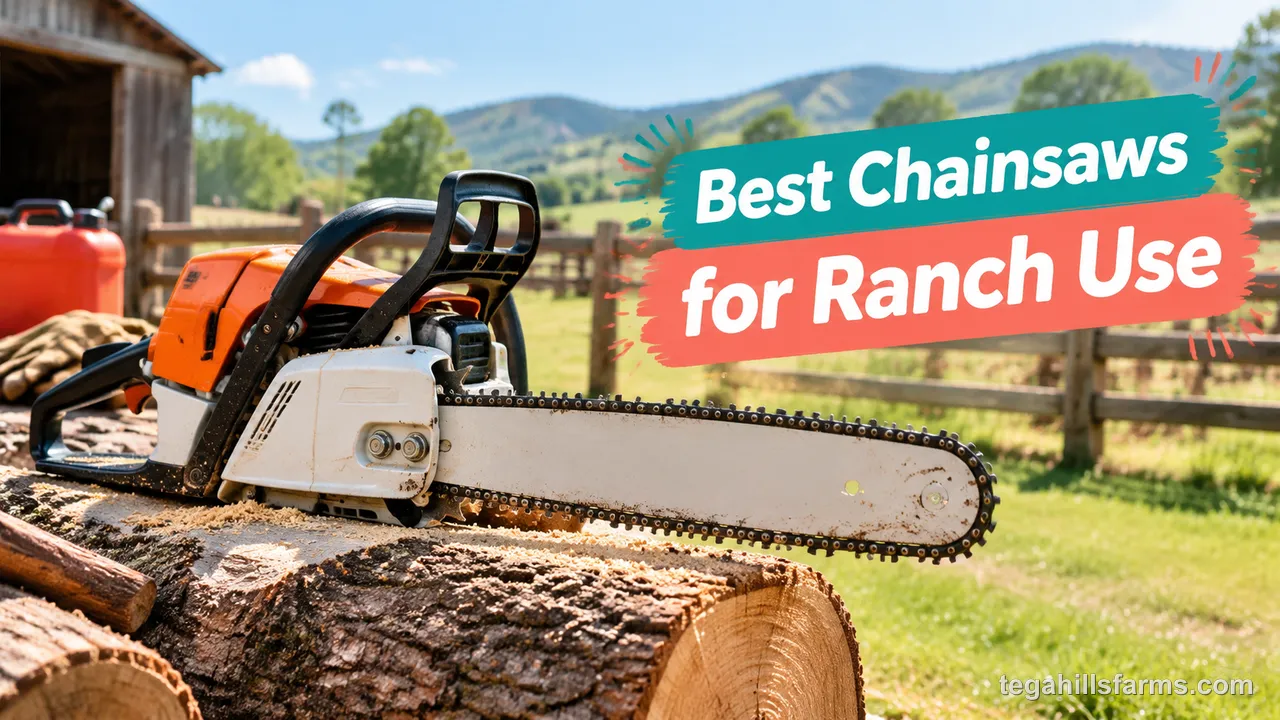
A ranch saw gets judged on different things than a yard saw. It has to handle thick rounds and fence-line brush in the same day, stay controllable after hours of cutting, and start reliably when the truck is parked a long way from the shop.
The real risk is picking the wrong power source for how you work. A battery saw that runs flat halfway down a fence line, or a gas saw that floods on a frosty morning, costs you a trip back to the house. On a big property, that trip can eat the rest of the afternoon.


If you already own batteries from one platform, that platform narrows the cordless choice before any spec does. A saw that shares packs with your trimmer and blower gives you spares without buying new ones.
What Does a Chainsaw Need to Handle on a Ranch?
Expect fence-line and brush clearing, storm-downed trees and large volumes of firewood, often in the same week and usually far from the shop.
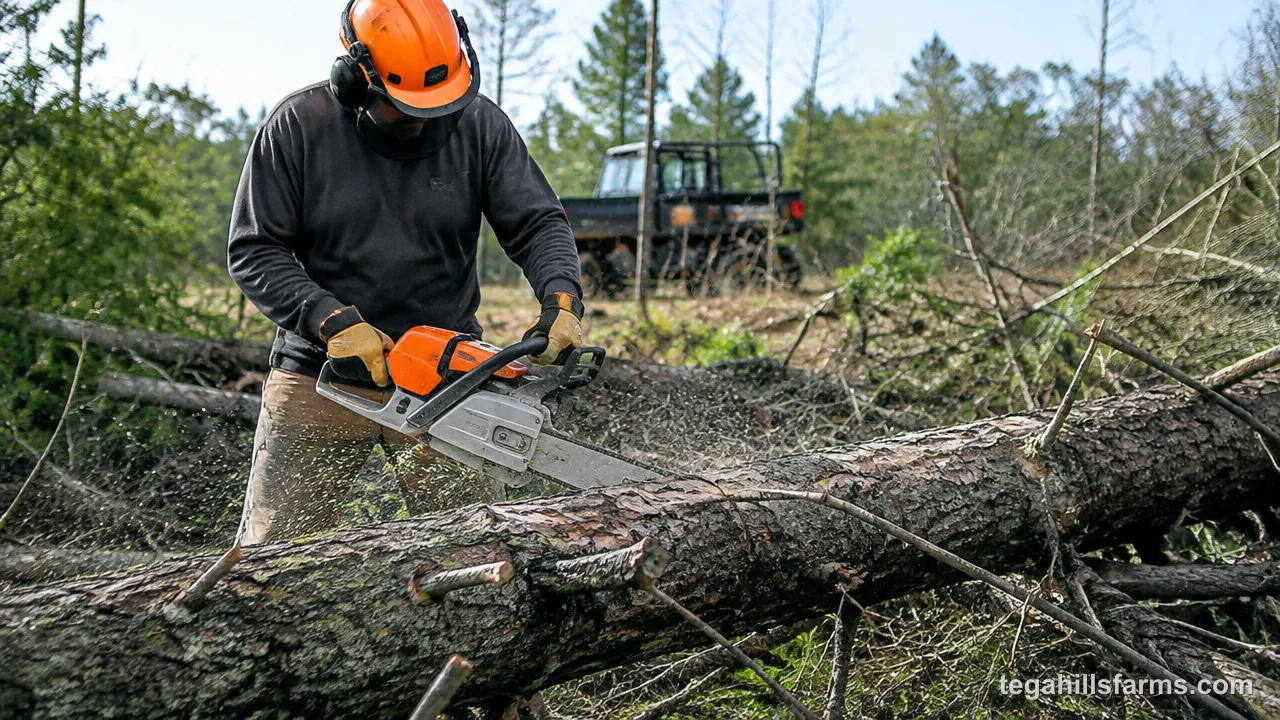
Several things set this work apart from a typical yard saw. A homeowner might cut for an hour after a storm and then store the saw for months. Ranch cutting runs for full days, so heat buildup, operator fatigue and the fuel or battery supply matter as much as raw power.
Wood size also changes constantly. You might cut thin brush along a fence in the morning and a thick trunk lying across a ranch road after lunch. That means one saw needs enough bar and engine for the big cut without being clumsy on small limbs. General land upkeep adds to the list: trimming limbs over trails, clearing overgrowth around pens and cutting back saplings that creep into pasture.
If your needs lean toward general property work rather than ranch chores, the overall guide to the best chainsaws covers a wider range of options.
The 6 Best Chainsaws for Ranch Use in 2026
The saws worth keeping in a ranch truck this year are the EGO Power+ CS2000 20″ Chainsaw, the PROYAMA 68cc Gas Chainsaw 20″ 24″ Bar, the Husqvarna 460 Rancher 24 Inch, the Husqvarna 455 Rancher 20 in, the Baococo 62cc 20 Inch Chainsaw and the Greenworks 82V 20″ Cordless Chainsaw.
The battery saws fit frequent light-to-medium cutting near the barn and shop, where a charger is close and you never handle fuel. The gas saws are built for long, heavy sessions out on the back acreage, where a fuel can refills the saw faster than any battery recharges. One of the gas saws is set up specifically for cold-morning starts, which matters if you clear storm damage through the winter.
#1 EGO Power+ CS2000 20″ Chainsaw — Best Overall
If you’d rather never mix fuel again, this is the battery saw to put on the ranch. Its brushless motor delivers power equivalent to a 55cc gas saw and drives the chain at up to 82 ft/s, which is enough for big branches and storm-downed trunks.
Key Specs:
- Model: CS2000
- Weight: 12.7 lb
- Power: brushless motor, 55cc gas equivalent
- Chain speed: up to 82 ft/s (25 m/s)
- Bar and chain: 20 in bar, 3/8-in pitch, 0.050-in gauge, 69 drive links
- Battery: any EGO 56V ARC Lithium (sold separately); up to 135 cuts on a 6×6 with a 6.0Ah pack
Detailed Review:
Full chisel teeth bite aggressively, so the chain pulls through hardwood rounds and storm-downed trunks instead of scraping at them. The 20-inch bar has the reach to drop large branches, take down tall trees and work through stumps. Because there’s no pull cord or choke, the saw is ready to cut the moment you pick it up after it has ridden in the truck all morning.
Runtime depends on the pack you pair with it. The recommended 6.0Ah battery carries the saw through a long run of firewood bucking per charge, and a smaller pack means swapping sooner. The saw works with every EGO 56V ARC Lithium battery, so owners who already run EGO tools can share packs and keep a spare charging in the shop.
The onboard display switches speed modes and shows battery charge and safety brake status, so you know how much cutting you have left before you head to the far pasture. The front LED work light is useful when storm cleanup runs past dusk or the power is out, and IPX4 weather resistance means a damp morning won’t keep it on the shelf. I’d point anyone already invested in EGO tools here first, since the one thing missing from the box is probably already on their shelf.
Pros:
- Brushless motor cuts like a 55cc gas saw.
- No fuel mixing, pull cord or choke.
- LED work light helps at dusk and during outages.
- Display shows charge, speed mode and brake status.
- Runs on any EGO 56V ARC Lithium battery.
Cons:
- Battery and charger are sold separately.
- Runtime depends on the size of pack you buy.
Who It’s For:
Ranch owners already running EGO 56V tools get the most from this saw, since their existing packs power it right away. It suits daily cutting around barns, fence lines and storm debris without hauling fuel cans. If you cut all day far from any outlet and have no spare batteries, a gas saw will serve you better.
Editor’s Verdict:
Gas-level cutting without fuel, a cord or a choke makes this an easy daily saw, as long as your EGO battery supply matches the size of your workload.
#2 PROYAMA 68cc Gas Chainsaw 20″ 24″ Bar — Best Durability
Heavy felling and storm cleanup call for a saw that takes abuse. This one pairs a 68cc, 4.5HP two-stroke engine with a magnesium alloy chain brake and case that resist deformation and wear through long cutting days.
Key Specs:
- Model: PCS68
- Engine: 68cc 2-cycle, 4.5HP
- Weight: 14.5 lb
- Bars included: 20 in and 24 in
- Chain brake and case: magnesium alloy
- Vibration control: built-in anti-vibration system
Detailed Review:
The magnesium alloy chain brake and case are what set this saw apart for rough ranch use. A hard, rigid housing resists deformation and wear when the saw takes knocks in a truck bed or during heavy felling. A chain brake that keeps its shape also stays dependable after long stretches of hard cutting.
Because it comes with both a 20-inch and a 24-inch bar, one saw can cover mixed wood sizes. The shorter bar keeps the saw nimble for limbing and fence-line brush. The longer bar gets through thick logs and large storm-downed trunks in fewer passes. The built-in anti-vibration system and ergonomic handle reduce hand fatigue, which keeps your control steady through long sessions.
The engine has more displacement than the one on the Husqvarna 460 Rancher, which helps in dense, wet wood, but the PROYAMA also carries more weight. The easy start system reduces how hard you have to pull. Even so, a two-stroke this size still means mixed fuel, a can riding along in the truck, and routine filter and plug care.
Pros:
- Magnesium alloy brake and case resist wear and deformation.
- Includes both 20-inch and 24-inch bars.
- Engine handles felling and thick logs with ease.
- Anti-vibration system eases hand fatigue on long days.
Cons:
- Two-stroke engine needs mixed fuel and regular upkeep.
- Heavier to carry than the battery saws here.
Who It’s For:
Owners who fell trees, buck thick logs and clean up after big storms will appreciate a saw built to take knocks. Swapping between the bars lets one saw handle both limbing and large trunks. If you want to skip fuel mixing and engine care entirely, look at a battery saw instead.
Editor’s Verdict:
Built around a tough magnesium housing and a big engine, this saw is made for heavy days, as long as you’re comfortable with two-stroke fuel and upkeep.
#3 Husqvarna 460 Rancher 24 Inch — Best Premium
Big-wood cutting every week rewards a stronger engine. The 60.3cc, 3.6HP X-TORQUE engine and the included 24-inch bar give this saw the reach and pulling power for large trunks and thick firewood.
Key Specs:
- Model: 970613934
- Engine: 60.3cc 2-cycle X-TORQUE, 3.6HP
- Weight: 13.2 lb
- Bar: 24 in included; recommended bar range 13–24 in
- Starting: Smart Start with combined choke/stop control
- Chain brake: inertia-activated
Detailed Review:
X-TORQUE engine technology keeps power up even at low RPMs, which matters most deep in a wide round. As dense wood slows the chain, a saw that holds its torque keeps cutting instead of bogging down. That means big logs go faster and the engine works less hard.
Smart Start reduces the effort of each pull. The combined choke/stop control lowers the risk of flooding, which is the problem that leaves you yanking a cord at the far end of the property. The inertia-activated chain brake engages from the saw’s own motion during kickback.
Air injection uses a centrifugal cleaning system to throw larger dust and debris out before it reaches the air filter. In dusty brush clearing, that keeps the filter cleaner for longer and protects the engine. The 7-degree offset front handle and LowVib technology make the long bar easier to control.
The Husqvarna 455 Rancher has the same recommended bar range and weight, but it runs a smaller engine and ships with a 20-inch bar. This saw gives you more displacement and reach for big wood. The 455 gives up some of that in exchange for a shorter setup that handles more quickly.
Pros:
- X-TORQUE engine holds power at low RPMs.
- Smart Start and choke/stop control reduce flooding.
- Air injection keeps debris away from the filter.
- Ships with a 24-inch bar for large logs.
- LowVib and offset handle ease long sessions.
Cons:
- Long bar feels front-heavy during light brush work.
- Two-stroke fuel mixing and engine care still required.
Who It’s For:
Anyone who regularly bucks large hardwood or fells mature trees will get the most from this saw’s torque and long bar. It also suits owners who want an engine that holds up to dust during brush clearing. If you mostly cut small limbs near the barn, the Husqvarna 455 Rancher, with its shorter included bar, swings more easily.
Editor’s Verdict:
For regular big-wood cutting, strong low-RPM torque, easy starts and a dust-resistant engine make this a dependable long-term saw.
#4 Husqvarna 455 Rancher 20 in — Best Ergonomic Design
Long cutting days are where this saw earns its place. A 7-degree offset front handle and LowVib dampeners cut down on the vibration reaching your hands, so your control stays steady late in the afternoon.
Key Specs:
- Model: 970613220
- Weight: 13.2 lb
- Bar: 20 in included; recommended bar range 13–24 in
- Handle: 7-degree offset front handle with LowVib dampeners
- Starting and safety: Smart Start, inertia-activated chain brake
Detailed Review:
The offset front handle angles the grip so it sits more naturally in your hand when you turn the saw for felling or bucking, which reduces wrist strain over a long day. LowVib technology uses dampeners to isolate the handles from engine vibration. Less buzz reaches your fingers, so your grip stays firm through the last cuts of the day.
The included 20-inch bar keeps the saw balanced for limbing, clearing fence-line brush and bucking firewood. It still accepts longer bars within its recommended range if bigger wood comes your way. Air injection spins larger dust and debris out before it reaches the filter, which helps engine life when you’re clearing dry brush.
Smart Start reduces the effort of each pull. The inertia-activated chain brake triggers from the saw’s own motion during kickback instead of relying on your hand to hit the guard. That automatic response matters most when you’re cutting alone and tired.
Compared with the larger engine on the Husqvarna 460 Rancher, this saw’s 56cc X-TORQUE engine gives up a little power in very large, dense rounds. In return, you get a setup that stays comfortable and controllable through long cutting days.
Pros:
- Offset front handle improves grip and control.
- LowVib dampeners reduce hand fatigue on long days.
- Inertia-activated chain brake responds to kickback automatically.
- Smart Start reduces pull effort.
Cons:
- Smaller engine than the 460 Rancher, so very large wood takes more effort.
- Requires mixed fuel and routine small-engine care.
Who It’s For:
If comfort decides how long you can keep cutting, this saw fits. It suits owners who spend full days limbing, clearing brush and bucking firewood. If you regularly fell very large trees, the extra displacement of the Husqvarna 460 Rancher will serve you better.
Editor’s Verdict:
Comfortable handling and easy starting make this a saw you can run from morning to dusk without fighting it.
#5 Baococo 62cc 20 Inch Chainsaw — Best for Cold Climates
Winter starting is where this saw stands out. A winterized carburetor with pre-heating helps the 62cc engine fire and run smoothly when frost covers the woodpile, which is exactly when a ranch owner in a cold region needs to clear storm-downed limbs.
Key Specs:
- Model: YYJ2601RB1822
- Engine: 62cc 2-cycle, EPA Phase III and CARB compliant
- Weight: 16.6 lb
- Bar: 20 in
- Carburetor: winterized with pre-heating
- Chain tensioning: tool-free
Detailed Review:
Cold fuel doesn’t vaporize well in a carburetor, and moisture can freeze in the intake on frosty mornings, so gas saws often stall right after starting in winter. The pre-heating carburetor warms the intake so fuel atomizes properly. That gives you fewer pulls and a steadier idle until the engine warms up.
Tool-free chain tensioning lets you tighten a chain that has stretched from heat and wear without hunting for a wrench. That convenience adds up when you’re far from the truck. The forged magnesium crankcase adds rigidity around the engine’s moving parts for long-term durability, and the 3D anti-kickback chain brake system adds a margin of safety.
At 16.6 lb, this saw is heavy, and you feel that weight when limbing at arm’s length or carrying the saw across a pasture. It’s better suited to bucking downed trees and firewood at ground level than to long stretches of overhead work. The engine meets EPA Phase III and CARB standards, which matters if you live where CARB rules apply.
Pros:
- Winterized carburetor with pre-heating helps cold starts.
- Tool-free tensioning makes field chain adjustments quick.
- Forged magnesium crankcase adds durability.
- EPA Phase III and CARB compliant engine.
Cons:
- Heavy at 16.6 lb, so overhead limbing is tiring.
- Two-stroke engine still needs mixed fuel and upkeep.
Who It’s For:
Ranchers in cold regions who cut through the winter, clearing ice-damaged limbs and keeping the woodpile stocked, will value a saw prepared for frosty starts. Tool-free tensioning suits anyone who adjusts chains out in the pasture. If you do a lot of overhead limbing, a lighter saw will be easier on your arms.
Editor’s Verdict:
Choose this saw when winter cutting is part of your routine. The pre-heating carburetor and field-friendly tensioning outweigh its extra heft.
#6 Greenworks 82V 20″ Cordless Chainsaw — Best Cordless
Barns, livestock and close neighbors are where this saw makes the most sense. It runs 3X quieter than a gas saw with low vibration, so you can clear a fallen limb near the house early in the morning without the noise of a two-stroke.
Key Specs:
- Model: 82CS34-4DP
- Motor: 4.6 hp (3.4kW) brushless direct drive, 55cc gas equivalent
- Weight: 12.35 lb
- Battery: 82V 4.0Ah (288 Wh), charger included
- Runtime: up to 205 cuts on 4×4 lumber per charge
- Bar: 20 in
Detailed Review:
The brushless direct-drive motor sends power straight to the chain with no belt or gearbox in between, delivering cutting power equivalent to a 55cc gas saw. Brushless motors waste less energy as heat, which helps them hold power through repeated cuts on storm debris and firewood.
There’s no gas, priming, pulling or fumes to deal with, which keeps the air clean inside a barn or shop. The automatic oiler has a flip-up cap and a transparent tank, so you can check the bar oil level at a glance. Heat-treated steel bucking spikes give the saw a pivot point against the log, and the wrap-around handle keeps a secure grip when you turn the saw sideways for felling.
Unlike the EGO Power+ CS2000, this saw comes with its battery and charger, so it’s ready to cut out of the box. The catch is compatibility. It doesn’t work with Greenworks 80V products, so batteries from older Greenworks tools won’t carry over, and heavier cutting days mean buying spare 82V packs.
Pros:
- Brushless direct-drive motor matches 55cc gas power.
- Battery and charger included in the box.
- Runs much quieter than a gas saw.
- Starts instantly with no priming or pulling.
- Transparent oil tank shows bar oil at a glance.
Cons:
- Not compatible with Greenworks 80V batteries or tools.
- Heavy all-day cutting needs spare 82V batteries.
Who It’s For:
Around barns, shops and close neighbors, a quiet saw with no fumes makes daily chores easier, and this one starts without priming. It fits owners starting a new cordless platform or already using Greenworks 82V tools. If you have a shelf of Greenworks 80V batteries, they won’t work in this saw.
Editor’s Verdict:
Quiet, fume-free and ready to cut out of the box, this saw handles everyday ranch chores without a fuel can, provided you plan around its 82V-only battery platform.
What Should You Look for in a Ranch Chainsaw?
The features that matter are the ones that let a saw finish a full day of mixed cutting far from the shop without stalling, wearing you out or refusing to start.
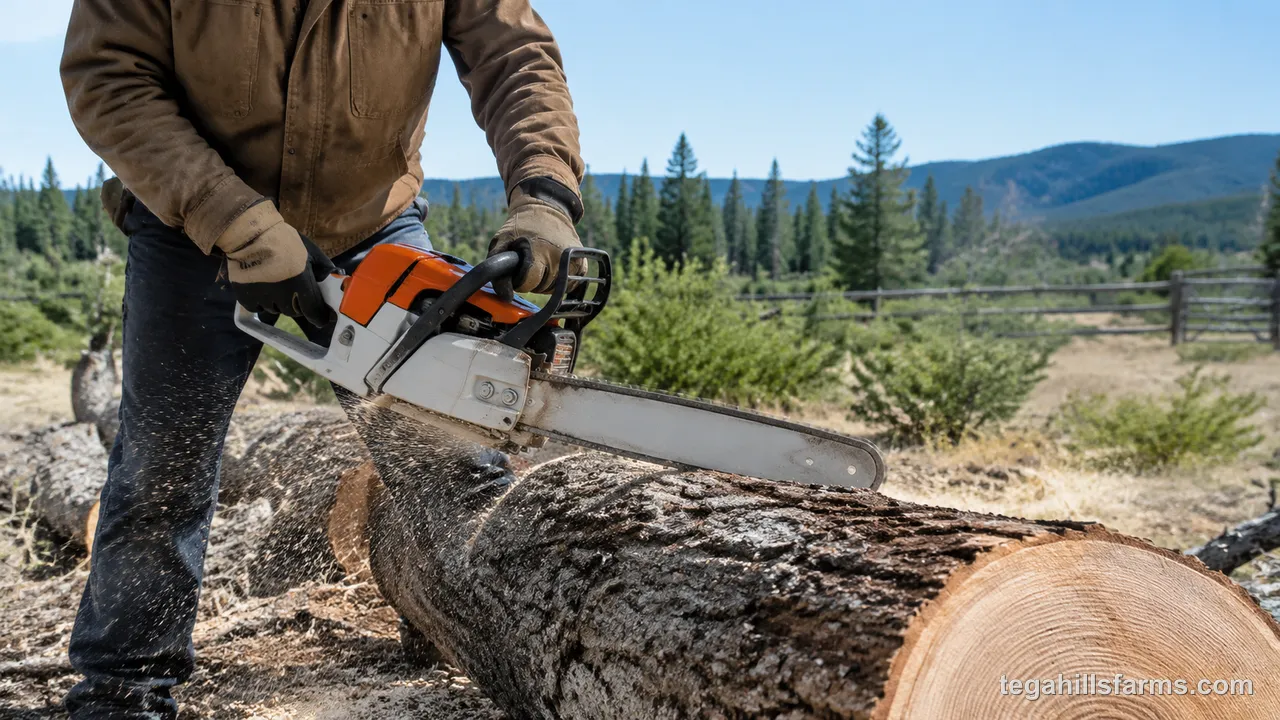
Spec sheets focus on peak power, but on a ranch a saw usually lets you down in some other way. The farther you are from the house, the more that failure costs you. If you’re new to saws altogether, the basics of how to choose a chainsaw are worth reading before you narrow down a ranch model.
How Long Should the Bar Be for Fence Lines and Firewood?
A 20-inch bar covers most ranch work, which is why it’s such a common length on saws like these. A longer bar is only worth it if you regularly fell or buck trunks wider than a 20-inch bar handles comfortably.
Bar length sets the largest log you can cut in a single pass. Cutting from both sides lets you handle bigger wood, but each extra cut adds time and raises the chance of pinching the bar. A longer bar also puts more weight out front and shifts the balance forward. That makes the saw harder to hold level while limbing and more likely to catch brush with the tip, which is where kickback starts.
That’s why a longer bar is mainly useful for big storm trunks and large firewood rounds. A saw that accepts more than one length, or ships with two, gives you that option without committing to it for every job. When you replace a worn bar, match your saw’s pitch and gauge first, then compare the best chainsaw bars for the length you need.
How Much Engine or Battery Power Does Ranch Cutting Need?
Match power to the wood you cut most often. Regular work in dense hardwood and large logs calls for a larger gas engine, such as the ones on the PROYAMA or the Husqvarna 460 Rancher. Brush, limbs and medium firewood are well within the range of a brushless battery saw rated as a 55cc gas equivalent.
Engine displacement determines how much fuel and air the engine burns per stroke, which translates into torque. Dense or wet green wood pushes back harder against the chain. A smaller engine slows down under that load, so cuts take longer and the engine runs hotter.
On a battery saw, voltage drives the motor’s power and amp-hours set the runtime. Long, continuous cuts in big logs draw heavy current, which drains packs faster and can trigger thermal protection that pauses the saw until it cools. Brushless motors waste less energy as heat, and a second charged pack is what keeps a cordless saw going through heavier sessions.
Which Handling Features Matter After Hours of Cutting?
Weight, vibration control and handle design affect late-day control more than horsepower does. A tired operator makes slower, sloppier cuts, so a lighter or better-dampened saw often gets more done than a more powerful one that wears you down.
Vibration travels from the engine into the handles and leaves your hands numb and tingling. Once your grip loosens, you have less control when the bar kicks or pinches. Anti-vibration mounts and dampeners isolate the handles from the engine, and an offset front handle lets your wrist stay in a more natural position when you turn the saw sideways.
Chain brake design matters too. An inertia-activated brake triggers from the saw’s own motion during kickback, so it can stop the chain even if your tired hand never reaches the guard. Extra weight adds up over a long day, especially when limbing at arm’s length.
Which Starting and Cold-Weather Features Are Worth Having?
Assisted starting, a combined choke/stop control and, if you cut in freezing weather, a winterized carburetor are the features that save you the most frustration. Battery saws avoid starting problems entirely because they have no carburetor or pull cord.
Cold fuel vaporizes poorly, so gas saws need more choke in winter, and over-choking floods the engine. A combined choke/stop lever reduces that guesswork, and assisted starting systems reduce the effort of each pull. A pre-heating carburetor warms the intake so the engine runs steadily instead of stalling right after it fires.
Cold reduces battery output, so keep packs indoors until you’re ready to cut. On a remote site, a saw that won’t start means a hike back to the truck, or a downed tree left across the road your cattle use.
Should a Ranch Chainsaw Be Gas or Battery?
Choose gas for long, heavy sessions far from power and battery for frequent shorter jobs near the barn and shop. Runtime and refueling decide this more than cutting power does.
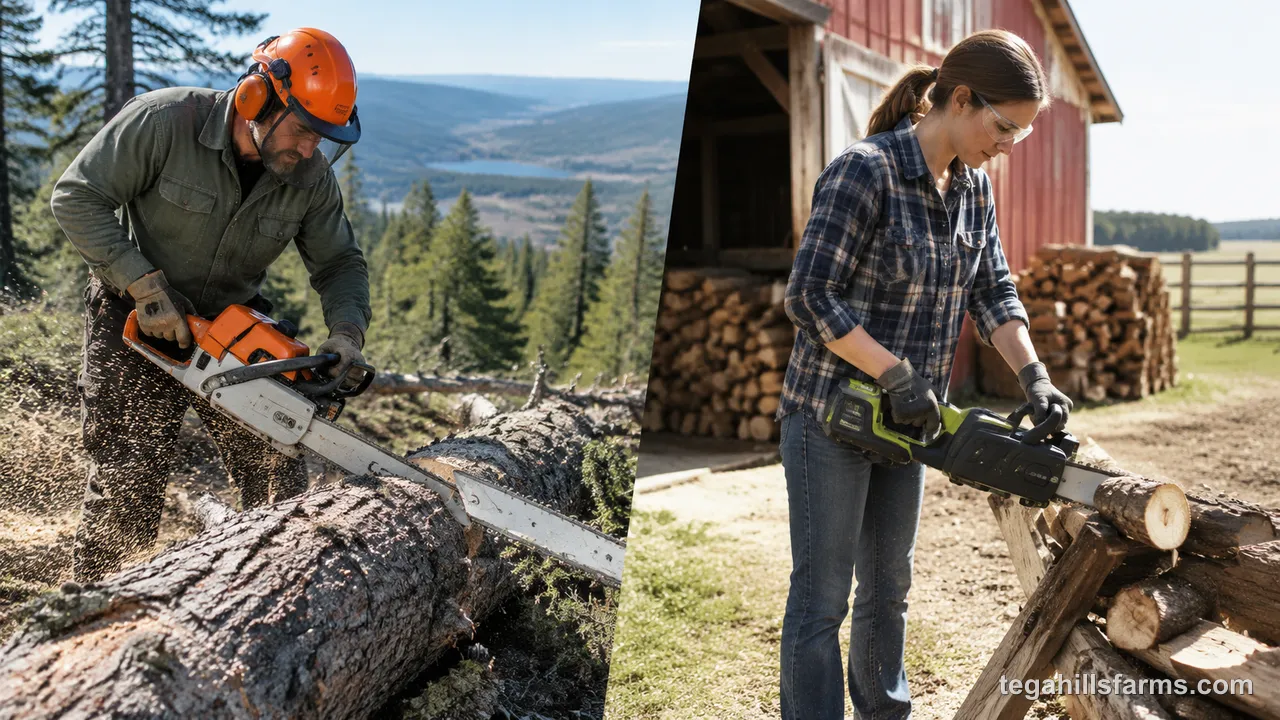
Both battery saws here are rated as 55cc gas equivalents, so the difference doesn’t show up in a single cut. It shows up across a full day: a gas saw refuels quickly from a can, while a battery saw needs a charged pack waiting. Noise, upkeep and starting also factor in, and the right choice depends on where most of your cutting happens.
When Does a Gas Chainsaw Make More Sense on a Ranch?
Gas is the better choice when you cut continuously in large or dense wood, work far from any charger, or face several days of storm cleanup. In those situations, a spare can of mixed fuel replaces a stack of batteries and refills the saw in moments.
A gas engine also delivers steady power from a full tank to an empty one, which helps when you’re bucking big rounds one after another. The trade-off is upkeep. A two-stroke needs fuel mixed with the correct oil ratio, regular air filter cleaning, an occasional spark plug change, and fresh fuel so the carburetor doesn’t gum up. If you’re comfortable with that routine, the best gas chainsaws give you the most cutting time per trip into the back acreage.
When Is a Battery Chainsaw Enough for Ranch Chores?
A battery saw is enough when most of your cutting is frequent short jobs near buildings: a limb across a fence, overgrowth around corrals, or small wood for the stove. It starts instantly, runs quietly around livestock and puts no fumes into a barn or shop.
Heavier work comes down to battery capacity and spares. A larger pack extends each session, and a second pack charging in the shop lets you keep going while the first one refills. Platform matters too. If your trimmer and blower already run on one brand’s batteries, a saw on the same platform gives you spare packs right away. For more cordless options, the best battery chainsaws cover saws across several platforms.
Which Chainsaw Fits Your Ranch Job?
Match storm cleanup and big firewood to the gas saws, brush and fence-line work near buildings to the battery saws, and frosty-morning cutting to the Baococo 62cc 20 Inch Chainsaw.
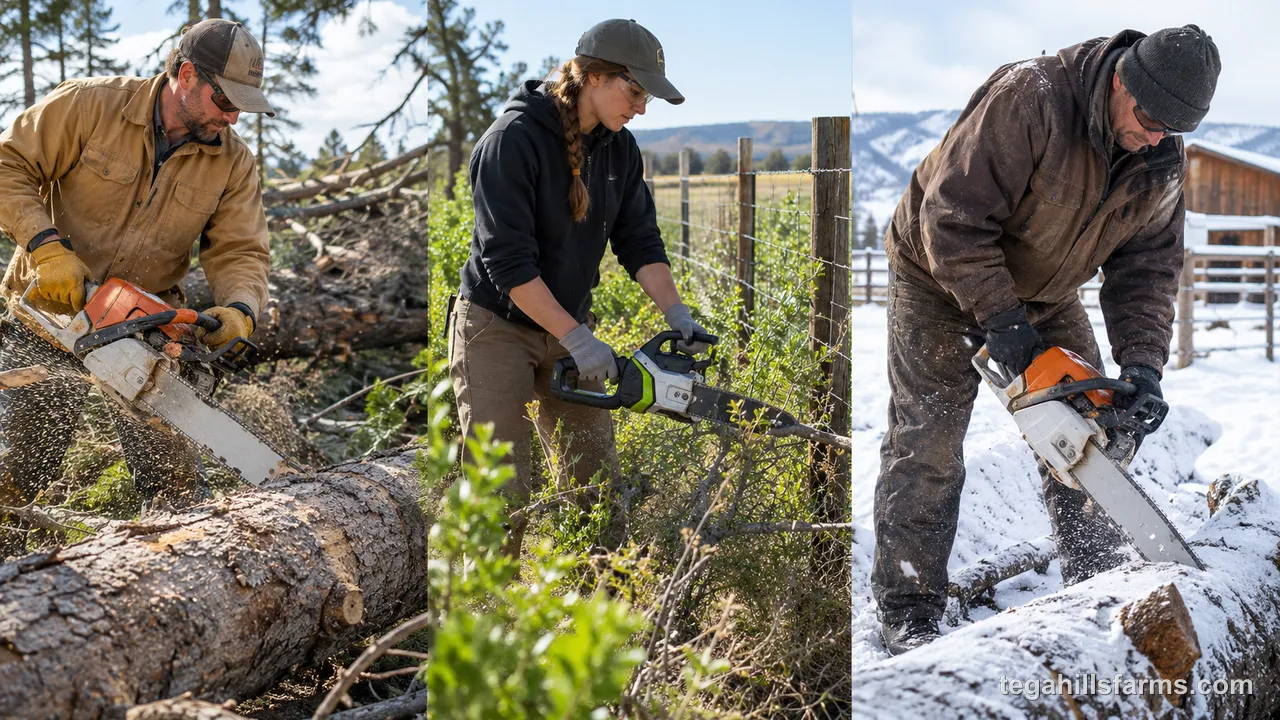
For downed trunks after a storm, the PROYAMA’s longer bar and the Husqvarna 460 Rancher’s torque handle the largest wood. Readers comparing the best chainsaws for storm cleanup should weigh reach and durability first.
For firewood, the Husqvarna 455 Rancher stays comfortable through long bucking sessions, and the 460 Rancher takes on bigger rounds. Both are strong options among the best chainsaws for cutting firewood.
For fence lines and brush near the barn, the EGO Power+ CS2000 and the Greenworks 82V start instantly and run quietly. In cold regions, the Baococo’s pre-heating carburetor keeps winter cleanup on schedule.
Most ranch cutting happens at the far edge of the property, out of earshot of the house and often with nobody else around. A bar pinched in a leaning trunk or a kickback that catches your leg leaves you handling the emergency alone, with help a long drive away and no one aware that you need it.
How Do You Stay Safe Cutting Alone Far From the House?
Solo cutting is safest when you wear full protective gear, keep the chain brake working, avoid cuts that can pinch or trap you, and make sure someone knows where you are and when to expect you back.
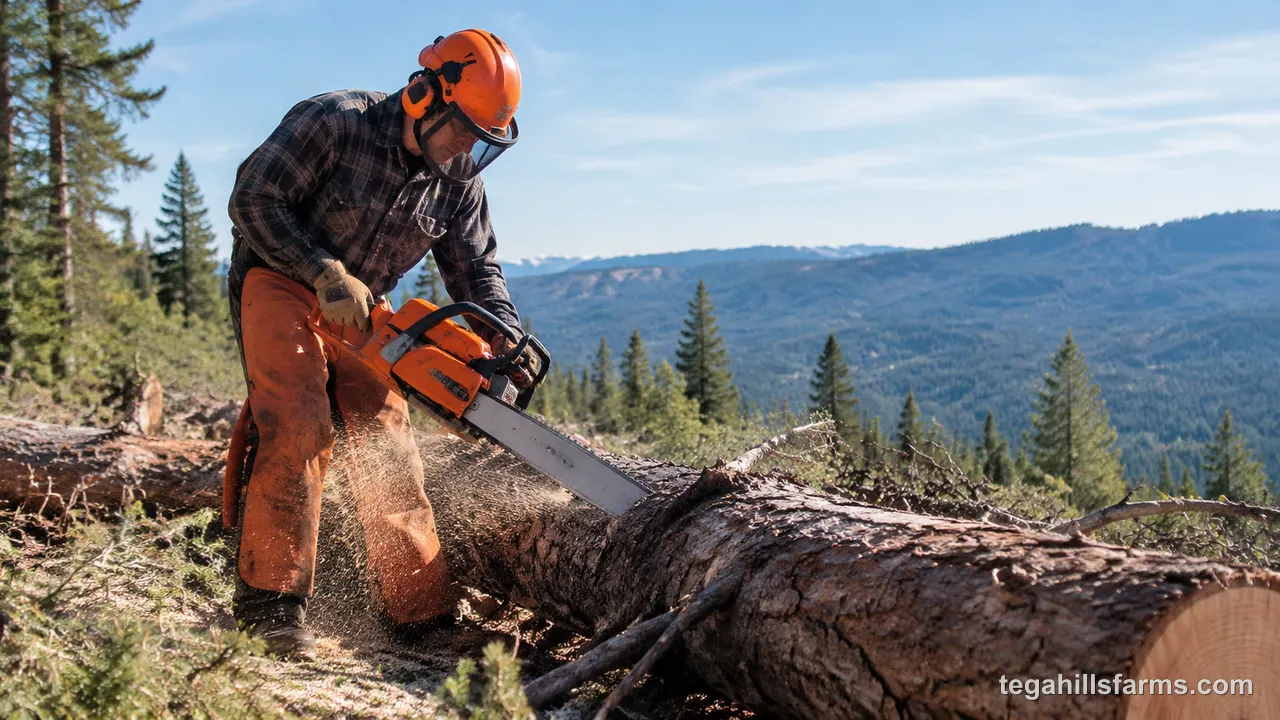
Chaps are the most important piece of gear, because their fibers clog the sprocket and stop the chain on contact. Add a helmet with a face screen and hearing protection, gloves and sturdy boots.
Kickback starts when the upper tip of the bar touches wood, so keep the nose clear, cut below shoulder height and stand to the side of the bar’s path. Test the chain brake before each session. Read how a log is supported before cutting, because wood under compression closes on the bar. Carry wedges so you can free a pinched bar without wrestling it.
Before heading out, tell someone your location and return time. Carry a phone, radio or satellite messenger where cell coverage drops out, and keep a first-aid kit with bleeding control in the truck. Never work under a hung-up tree or cut a bent, loaded limb from the side it will spring toward.
How Can You Tell a Chainsaw Is Wearing Out Before It Fails?
A dull chain shows up first: the saw makes fine dust instead of chips, needs pushing to cut and wanders off a straight line. That’s normal wear, and sharpening or replacing the chain fixes it. Hard starting and rising vibration that remain after basic service are the signs that the saw itself is wearing out.
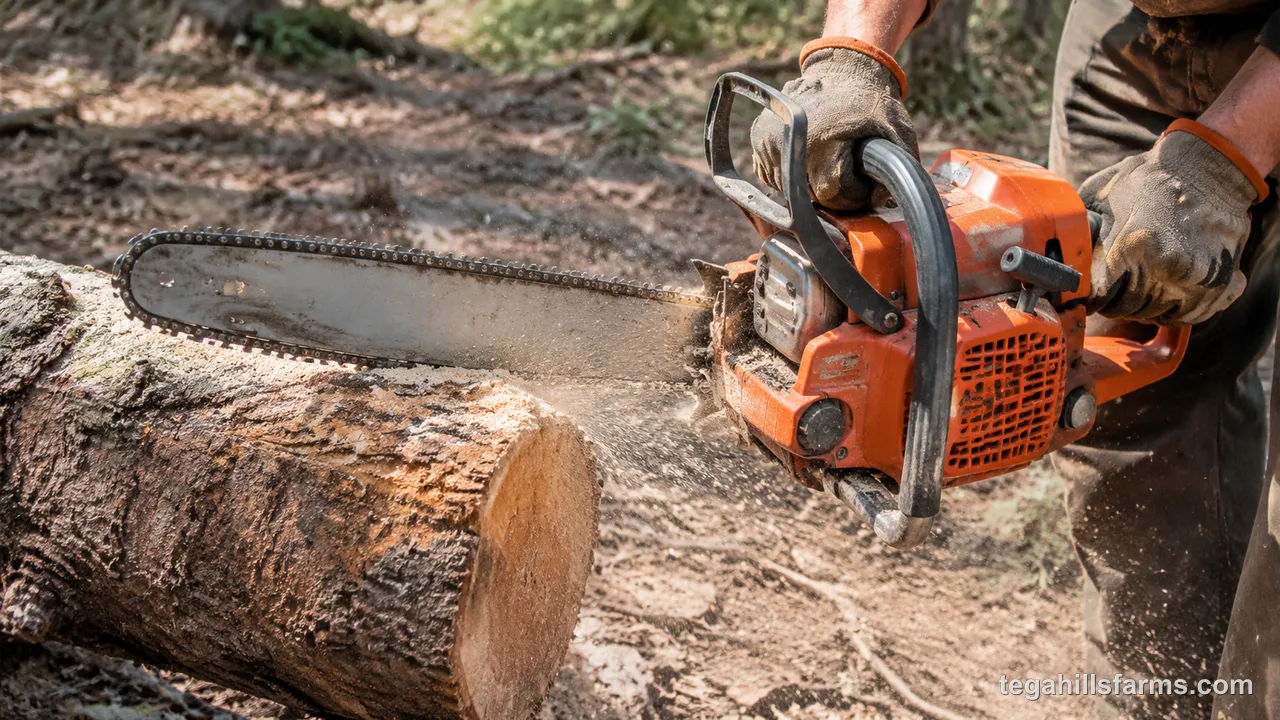
On the chain side, cutters filed back to their wear marks, cracked tie straps or stretch beyond the tensioner’s range mean it’s time for fresh chainsaw chains. Between replacements, chainsaw sharpeners keep a chain cutting fast through a long season. A bar with uneven or burred rails will cut crooked even with a sharp chain, so flip it regularly and replace it once the groove spreads.
On the engine side, if the saw is still hard to start or keeps losing power after fresh fuel, a new plug and a clean filter, worn rings or crank seals are the likely cause. A compression test at a repair shop tells you whether a rebuild makes sense. On a battery saw, shrinking runtime usually points to an aging pack, not a worn-out saw.
How Should You Store and Start a Chainsaw Through Cold Seasons?
Before storing a gas saw for the off-season, drain the tank or add fuel stabilizer, then run the carburetor dry. Store lithium batteries indoors, partly charged. These two habits prevent most spring starting problems.
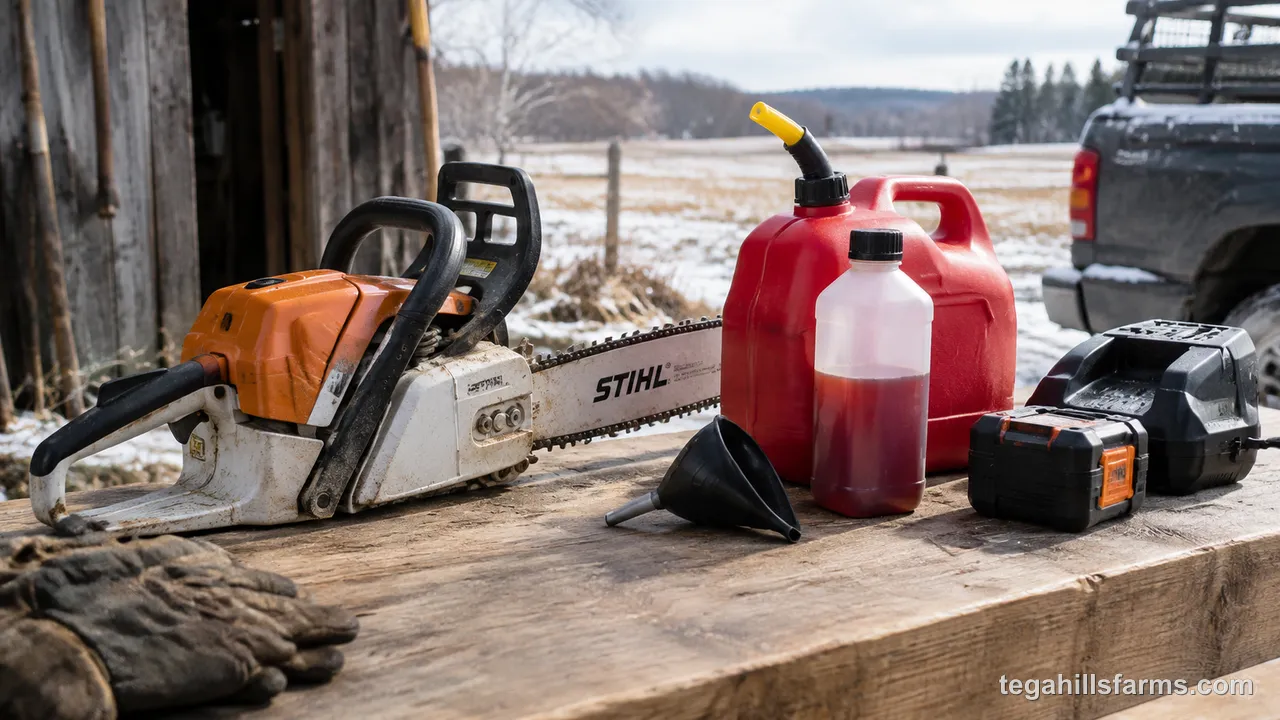
Gasoline oxidizes as it sits, and ethanol blends absorb moisture. Together they leave varnish in the tiny carburetor passages, which causes hard starts or no start at all. Stabilizer slows that breakdown, and running the saw dry removes the fuel that would leave deposits. Clean the bar and chain and oil them lightly before storage.
Lithium packs lose capacity faster when stored full, empty, or somewhere that freezes or overheats, so a room-temperature shelf is the best place for them. Charge them only once they’re above freezing. When work starts again, use freshly mixed fuel, follow the choke sequence in your manual, and warm cold batteries indoors before you use them.
Ranch Chainsaw FAQs
Can a battery chainsaw handle a full day of ranch cutting?
Yes, if you carry enough charged batteries. One pack covers a good stretch of light-to-medium cutting, but a full day of bucking large logs drains several. Rotating packs through a charger in the truck or shop keeps a battery saw working. Without spares, gas is the more practical choice for long days far from power.
Is a chainsaw or a pole saw better for high limbs?
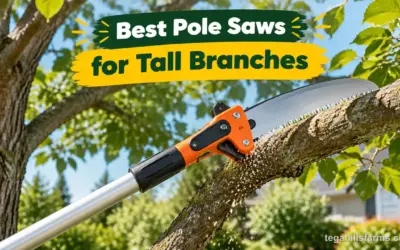
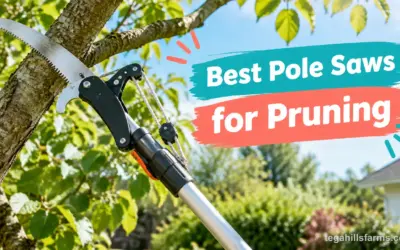
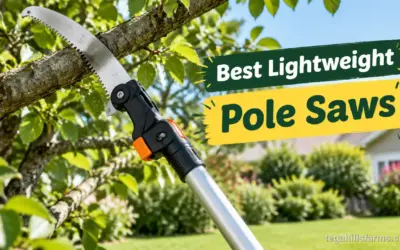
A pole saw is better for limbs above head height because it keeps you on the ground and out from under falling wood. Running a chainsaw above shoulder level raises kickback risk and strains your arms. For overhanging branches along fence lines and trails, the best pole saws give you that reach safely.
How often should you sharpen a chain during heavy ranch use?
Sharpen whenever the saw makes fine dust instead of chips or needs pushing to cut. During heavy use, that can mean a quick touch-up at every refueling. Sharpen right away after the chain hits dirt, rock or fence wire, since one strike can dull many cutters at once.
What fuel mix does a gas chainsaw need?
Most two-stroke chainsaws run on gasoline mixed with two-stroke oil, commonly at a 50:1 ratio, but always use the ratio listed in your saw’s manual. Mix fuel fresh, use a quality two-stroke oil, and don’t store mixed fuel for long, because ethanol blends absorb moisture and go stale.





Write Your Review
No reviews yet. Be the first to share your experience!