10 Best Planters: Expert Picks for 2026
Our top picks for the best planters in 2026 are YNNICO Self-Watering Planters Set (Best Overall), Rakukiri Galvanized Oval Raised Bed 5ft (Best Lightweight), Tegarbed Galvanized Oval Raised Bed 4ft 2-Pack (Best Easy Assembly), Keter Tapered Wood Look Planter 22″ 2-Pack (Best Large Capacity), Veradek Demi Series Raised Long Planter (Best for Cold Climates), Rakukiri Galvanized Oval Raised Bed 4ft 2-Pack (Best Rust-Resistant), Lechuza Classico 35 Self-Watering Planter (Best Premium), Bloem Ariana Self-Watering Planter 12″ (Best Budget), Lechuza Cube Cottage 40 Planter (Best for Containers & Patios), and Lechuza Delta 30 Tall Planter (Also Great). They range from small self-watering pots for a windowsill herb shelf to open-bottom steel beds that sit right on garden soil.
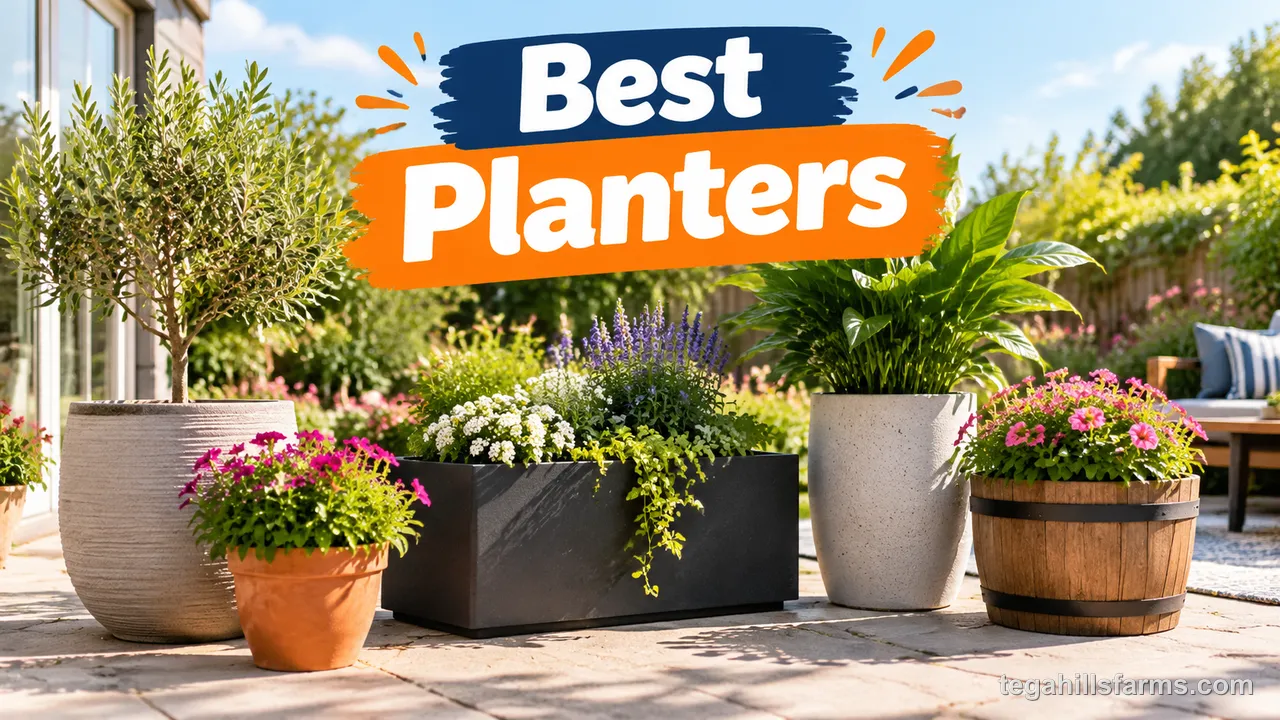
The planters differ in three ways: how each one handles water, how much root room it gives, and whether its material can stay outside through your winter. A planter that drains well and holds enough soil keeps roots evenly moist. That matters more to a pepper plant or a fern than the color of the pot.
A planter that doesn’t suit its spot works against the plant in it. A sealed pot drowns roots indoors, a thin dark one bakes soil on a sunny deck, and a porous one can crack after a single hard freeze. Matching the container to its location and its crop prevents all three problems.




If you grow food, check depth and material safety first. If you grow houseplants, check first how the planter keeps runoff off your floor.
The 10 Best Planters for Indoor and Outdoor Growing
YNNICO Self-Watering Planters Set, Rakukiri Galvanized Oval Raised Bed 5ft, Tegarbed Galvanized Oval Raised Bed 4ft 2-Pack, Keter Tapered Wood Look Planter 22″ 2-Pack, Veradek Demi Series Raised Long Planter, Rakukiri Galvanized Oval Raised Bed 4ft 2-Pack, Lechuza Classico 35 Self-Watering Planter, Bloem Ariana Self-Watering Planter 12″, Lechuza Cube Cottage 40 Planter and Lechuza Delta 30 Tall Planter cover windowsill pots, porch statement planters and open-bottom vegetable beds. Open-bottom steel beds let excess water drain into the soil beneath them. Closed containers have to handle every drop of water themselves, so knowing where your plants will live narrows the field quickly. Placement is also the first decision in how to choose a planter for any plant.
#1 YNNICO Self-Watering Planters Set — Best Overall
This set holds six pot sizes, which suits a houseplant collection that keeps growing. Each pot pairs several drainage holes with a deep bottom tray and an included wick string, so you can switch between top and bottom watering as plants settle in.
Key Specs:
- Pot sizes: 8, 7, 6.5, 6, 5.5 and 5 in
- Material: recyclable polypropylene plastic, matte black finish
- Sidewalls: 0.16 in (4 mm) thick
- Weight: 2.49 lb
- Watering: multiple drainage holes, bottom reservoir tray, wick string included
- Certification: Carbonfree Certified
Detailed Review:
The six sizes make this set practical for a mixed collection. Pots from 5 to 8 inches fit most small and medium home and office plants. When a pothos outgrows one pot, the next size up is already on the shelf.
Water handling is where this set does its best work. Several holes in each base drain excess water. Together with the watering lip, they let air reach the roots, so soil doesn’t stay soggy around them. The bottom tray is large enough to catch runoff, and the included string turns it into a wick for bottom watering. The water in the reservoir stays separate from the soil the roots grow in.
The recyclable polypropylene walls are 0.16 in (4 mm) thick, so a pot stays rigid when you lift it with a watered plant inside. The whole set still weighs only 2.49 lb. That makes it easy to move plants toward a brighter window as the seasons change.
The matte finish looks modern without drawing attention from the foliage, and black suits most shelves and desks. Plants with bold leaves or bright flowers stand out against it.
Pros:
- Six sizes make repotting easy as plants grow.
- Multiple drainage holes keep roots out of standing water.
- Deep bottom tray catches runoff on shelves and sills.
- Included wick string enables bottom watering.
- Thick sidewalls feel sturdy despite the light weight.
Cons:
- Small diameters limit it to small and medium plants.
- Black plastic heats up quickly in direct afternoon sun.
- Plain matte look won’t suit rustic or ornate decor.
Who It’s For:
Houseplant growers who keep several small plants on shelves, desks and windowsills will get the most from this set. One box covers several repotting stages and keeps runoff off furniture. Someone potting a single large floor plant or a vegetable crop needs a roomier container.
Editor’s Verdict:
A smart starter kit for indoor plants: graduated sizes, real drainage and an optional wick system in one matte black set.
#2 Rakukiri Galvanized Oval Raised Bed 5ft — Best Lightweight
At 5 pounds empty, this 60 × 29 × 11 in oval bed is light enough to carry to a new sunny spot before you fill it right where your tomatoes will grow. Its open bottom lets roots reach native soil.
Key Specs:
- Size: 60 × 29 × 11 in
- Soil needed to fill: 68 gallons
- Material: 0.03 in (0.8 mm) galvanized steel with double-layer anti-corrosion galvanizing
- Weight: 5 lb
- Base: open bottom
Detailed Review:
The oval shape is what lets a light frame hold this much soil. A curved wall spreads the outward push of wet soil evenly instead of concentrating it at four corners. The double-layer anti-corrosion galvanizing protects the thin sheet from constant contact with damp soil.
For vegetables, the open base is the feature I’d weigh most. Water drains straight into the ground instead of pooling, so roots don’t sit in a soggy layer after a storm, and they can grow into the native soil below for extra nutrients. That also means the bed belongs on a lawn or garden plot, not a patio.
The Tegarbed Galvanized Oval Raised Bed 4ft 2-Pack uses 0.04 in (1 mm) steel, so this bed’s 0.03 in (0.8 mm) sheet gives up some wall thickness for one larger growing area. You get a single long oval for a row of tomatoes and peppers instead of two smaller beds to fill and tend.
Hardware and instructions come in the box, and assembly is simple enough for older gardeners to handle alone. Order your soil before setup day, because a bed this size takes a lot of mix to fill.
Pros:
- Light frame is easy to position before filling.
- Oval walls spread soil pressure evenly.
- Open bottom drains freely into native soil.
- Double-layer galvanizing guards against corrosion.
- One-year warranty backs the purchase.
Cons:
- Open bottom means it can’t sit on decks.
- Oval ends leave less planting area than square corners.
- Filling it takes a large volume of soil.
Who It’s For:
Vegetable gardeners with an open patch of lawn or garden soil who want one long growing area fit this bed well, especially if they’ll set it up without help. Anyone gardening on a deck, balcony or paved patio should choose a closed container.
Editor’s Verdict:
Light to handle, simple to build and open to the soil below, this bed gives a vegetable garden real growing room for little setup effort.
#3 Tegarbed Galvanized Oval Raised Bed 4ft 2-Pack — Best Easy Assembly
First-season gardeners can have both beds standing in about 20 minutes, because the panels join with the included fasteners and need no tools. Each oval offers a full foot of root depth.
Key Specs:
- Size: 4 × 2 × 1 ft per bed, 2 beds included
- Growing space: 7+ cu ft
- Material: 0.04 in (1 mm) galvanized steel, corrugated panels, rolled edges
- Base: open bottom
- Assembly: tool-free, about 20 minutes
- Weight: 17.2 lb
Detailed Review:
Assembly is easy enough for a beginner. The illustrated instructions and included fasteners take you from flat panels to a finished bed with no drill or wrench. The smooth rolled edges protect your fingers while you line up the panels.
The corrugated 0.04 in (1 mm) galvanized steel adds strength where a filled bed needs it. The ridges stiffen each panel, so the walls keep their oval shape instead of bulging under wet soil. The bed still looks neat after a full season of watering.
A 12-inch depth suits most crops a first-time gardener plans to grow. Lettuce, peppers, strawberries and carrots all have room, and tomatoes or cucumbers grow well once you add a separate trellis or cage. Set over lawn or garden soil, the open bottom lets extra water drain away and lets roots grow beyond the frame.
Two beds also make planning easier for a newcomer. Put greens and herbs in one and fruiting crops in the other, and tall tomatoes won’t shade the lettuce.
Pros:
- Tool-free setup with included fasteners.
- Corrugated panels keep the walls in shape when filled.
- Rolled edges make handling safer.
- Foot-deep soil suits many vegetables and herbs.
- Two beds let you keep crops separate.
Cons:
- Climbing crops need a separate trellis.
- Open bottom limits it to ground placement.
Who It’s For:
If this is your first vegetable garden and you’d rather not open a toolbox, this pair gets you planting the same afternoon. A backyard or the edge of a lawn suits it well. Gardeners growing on a deck or balcony will want a sealed container.
Editor’s Verdict:
Quick to assemble and sturdy once filled, this pair takes the hardest part out of starting a vegetable garden.
#4 Keter Tapered Wood Look Planter 22″ 2-Pack — Best Large Capacity
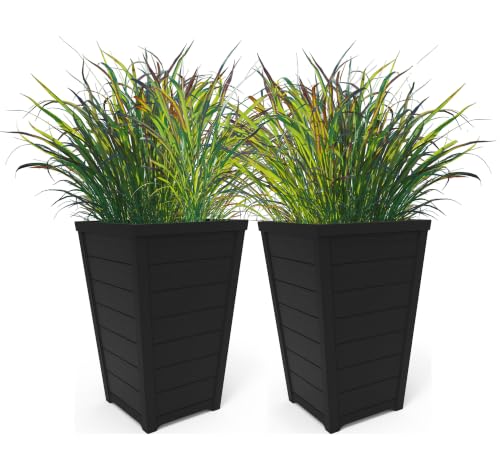
Big porch plants need soil volume, and each of these 22.4-inch-tall planters holds 12.4 gallons. The polypropylene resin won’t peel, dent or rust, so the wood look stays tidy beside a front door season after season.
Key Specs:
- Size: 14.5 in W × 14.5 in D × 22.4 in H
- Soil capacity: 12.4 gal per planter
- Material: polypropylene resin with wood-look finish
- Drainage: optional drainage holes
- Quantity: set of 2
Detailed Review:
The tall, tapered shape gives each planter a deep column of soil. That suits shrubs, ornamental grasses and big annual displays whose roots need room to grow downward. The larger soil mass also dries out more slowly than a short pot, so a midsummer porch planting needs water less often.
Polypropylene resin needs very little upkeep. It won’t peel or rust the way painted metal can, and it won’t dent if a mower or a dog bumps it. A rinse with a hose clears off dust and splashed soil.
Drainage holes are optional, so you decide how the pots handle water. Outdoors, open them before planting, because a container this size collects rain fast and waterlogged soil cuts off air to the roots. Indoors, leaving them closed protects the floor, though you’ll need to water carefully or set a nursery pot inside.
The Bloem Ariana Self-Watering Planter 12″ holds 3 gallons, and each Keter takes far more soil than that. It can anchor a much larger plant, but once filled it stays where you put it. Two matching planters also frame a front door or the top of porch steps evenly.
Pros:
- Generous soil capacity supports large plants.
- Resin won’t peel, dent or rust.
- Optional drainage holes adapt to indoor or outdoor use.
- Two matching planters frame a doorway.
Cons:
- Holes must be opened before outdoor planting.
- Filled planters are hard to reposition.
Who It’s For:
Homeowners dressing up a front porch, deck or patio with a matching pair of statement plants will appreciate the deep soil and low-maintenance resin. Gardeners who want something small to move around a sunny window, or a planter that waters itself, should pick a self-watering option.
Editor’s Verdict:
Two deep, rust-proof planters with a convincing wood look make a strong porch pairing for shrubs and big seasonal displays.
#5 Veradek Demi Series Raised Long Planter — Best for Cold Climates
Gardeners facing hard winters can leave this planter outside all year, since its plastic-stone composite is built for temperatures from -20 to +120 degrees and resists cracks, scratches, UV and fading. An acacia wood stand comes with it.
Key Specs:
- Size: 30 in L × 10 in W × 14.25 in H (19 in H on stand)
- Material: patented plastic-stone composite, fluted textured finish
- Temperature range: -20 to +120 degrees
- Stand: acacia wood, available in two colors
- Weight: 12.2 lb
- Made in: Canada
Detailed Review:
Freeze-thaw cycles are hard on outdoor containers, because water in damp soil expands as it freezes and presses on the walls. Veradek’s plastic-stone composite resists cracking under that stress. It also resists scratches, UV and fading, so the fluted finish keeps its color through summers in direct sun.
The planter’s long, narrow shape suits tight spaces. At 30 inches long and 10 inches wide, it can line a porch rail, separate a seating area from a walkway, or sit under a window without blocking traffic. The acacia stand raises the top to 19 inches, bringing herbs or trailing flowers closer to eye level.
The narrow width limits what grows well inside. Shallow-rooted plants such as herbs, lettuce, succulents and annual flowers suit it, while a large tomato plant would quickly outgrow the soil.
It’s designed and made in Canada, and the stand comes in two colors to match a deck or an indoor floor. I’d choose it for a modern porch or living room where the planter is as much a piece of decor as the plants in it.
Pros:
- Composite resists cracks, scratches, UV and fading.
- Handles both hot summers and hard freezes.
- Acacia stand raises plants to a comfortable height.
- Slim shape works as a low divider.
Cons:
- Narrow width limits it to compact plants.
- Long footprint needs a level stretch of floor.
Who It’s For:
Porches, decks and living rooms in places with snowy winters and hot summers suit this planter, especially where you want a modern row of herbs or flowers that doubles as a divider. Growers planning deep-rooted vegetables or a single large shrub will want a bigger, deeper container.
Editor’s Verdict:
Built to sit outside through freezes and heat waves, this composite trough brings a clean, modern line to porches and living rooms alike.
#6 Rakukiri Galvanized Oval Raised Bed 4ft 2-Pack — Best Rust-Resistant
Food growers get GRS-certified recycled metal that is BPA-free and free of heavy metals. Under the black anti-rust coating sits thickened galvanized steel built to withstand harsh weather year after year, and the open bottom lets herb and vegetable roots reach the soil below.
Key Specs:
- Size: 48 in L × 24 in W × 11 in H per bed, 2 beds included
- Material: GRS-certified recycled galvanized steel with anti-rust coating
- Safety claims: BPA-free, heavy metal-free
- Base: open bottom
- Assembly: bolt-and-nut, all hardware included
Detailed Review:
Two layers of protection keep this bed from corroding. The galvanized zinc layer shields the steel, and the anti-rust coating on top adds a second barrier against rain, sprinkler water and damp soil. Those are the conditions that make thin panels bend or rust.
Global Recycled Standard (GRS) certification verifies the recycled content and the production process behind the metal. Together with the BPA-free and heavy metal-free claim, it tells you what the bed is made of before you plant tomatoes, basil and lettuce you plan to eat.
The open bottom matters for rust as much as for roots. Water drains into the ground instead of sitting against the walls, and steel that stays wet corrodes faster. Deep-rooted herbs and vegetables can also grow past the frame into native soil.
Compared with the Rakukiri Galvanized Oval Raised Bed 5ft, this set gives you two shorter beds instead of one long one. That makes it easier to keep crops apart or fit the beds around a path. The bolt-and-nut assembly comes with all hardware included.
Pros:
- Anti-rust coating adds a second layer of protection.
- GRS-certified recycled metal with a BPA-free claim.
- Open bottom keeps water from pooling inside.
- Two beds fit around paths and corners.
- Bolt-and-nut assembly with hardware included.
Cons:
- Black coating can heat soil in full sun.
- Needs ground placement because of the open bottom.
Who It’s For:
Food gardeners who want their beds to last many seasons, and who care about recycled, BPA-free materials around their crops, will be happy with this pair. Gardeners who need a fully enclosed container for an indoor or balcony setup should look at a sealed planter.
Editor’s Verdict:
Coated, certified and open to the soil, this two-bed set is a durable home for herbs and vegetables you plan to eat.
#7 Lechuza Classico 35 Self-Watering Planter — Best Premium
For table and patio plants you’d rather not water every few days, this German-made planter uses an inorganic granulate to draw water from a reservoir up to the roots. A level indicator shows when to refill.
Key Specs:
- Size: 14 × 14 × 13 in; liner 13.2 in diameter
- Material: frost- and UV-resistant PP plastic, made in Germany
- Watering: self-watering system with inorganic granulate, water-level indicator
- Drainage: drainage plug for outdoor use
- Weight: 6.17 lb
- Finish: white matte
Detailed Review:
The watering system is what you pay for. A layer of inorganic granulate sits between the reservoir and the root zone and draws up the right amount of water, so roots stay evenly moist without sitting in a puddle. The water-level indicator removes the guesswork: you top up when it drops instead of poking a finger into the soil.
Outdoors, the drainage plug handles rain. Pull it, and excess water from a storm drains away instead of flooding the reservoir and drowning the roots. Leave it in indoors to keep floors dry.
The PP plastic resists frost and UV, so the matte white finish holds up on a sunny patio and through cold snaps. The planter is made in Germany, and its clean shape looks as natural on a dining table as on a deck.
The Bloem Ariana Self-Watering Planter 12″ drains outdoors through knock-out holes, which stay open once punched. The Classico’s plug lets you close the base again when a plant comes inside for winter. That flexibility is a real advantage for tender plants that move indoors when frost arrives.
Pros:
- Granulate layer keeps roots evenly moist.
- Water-level indicator shows when to refill.
- Removable drainage plug suits indoor and outdoor use.
- Frost- and UV-resistant PP holds up outdoors.
Cons:
- Priced well above simple plastic pots.
- Plug must come out for outdoor planting.
Who It’s For:
Busy plant owners who travel, forget watering days, or move tender plants between patio and living room will get the most from this planter. Gardeners furnishing a whole patio on a tight budget may prefer a simpler self-watering pot.
Editor’s Verdict:
Polished, precise and frost-ready, this planter makes steady watering nearly automatic for table and patio plants.
#8 Bloem Ariana Self-Watering Planter 12″ — Best Budget
Herb and vegetable growers who want an affordable start get a 3-gallon resin pot marked with food-safe plastic codes. A self-watering disk stores reserve water.
Key Specs:
- Capacity: 3 gal
- Size: 13 in top width × 7 in bottom width × 10.25 in H
- Material: resin, plastic codes 2 and 5
- Watering: self-watering disk included
- Drainage: sealed bottom, optional knock-out drainage holes
- Weight: 1.7 lb
Detailed Review:
The self-watering disk sits under the soil and holds reserve water that plants draw up as they need it. That buffer helps basil and parsley through a hot afternoon when the surface soil dries quickly.
The bottom ships sealed, so the pot can sit on a kitchen counter or hardwood floor without leaking. If you move it outside, punch out the knock-out holes so rain drains away instead of filling the pot. Once opened they stay open, so decide where the planter will live before you knock them out.
Food-safe plastic codes make it a reasonable home for a pepper plant, strawberries or a pot of mixed herbs. The tapered shape narrows from a 13-inch rim to a 7-inch base, which puts most of the soil in the upper part of the pot where shallow herb roots grow.
At 1.7 pounds empty, it moves easily between a sunny window and the patio. The pebble stone finish looks closer to stone than to a nursery pot, and I like it for kitchen herbs that sit in plain view.
Pros:
- Affordable way to try self-watering containers.
- Food-safe plastic codes suit herbs and vegetables.
- Sealed bottom prevents indoor leaks.
- Knock-out holes add outdoor drainage when needed.
- Light enough to move between rooms and patio.
Cons:
- Knock-out holes can’t be resealed once opened.
- Tapered base holds less soil than straight sides.
Who It’s For:
Cooks who want fresh herbs within reach, and beginners testing self-watering for the first time, fit this pot well. If you’re growing a large shrub or a floor plant, it will feel small, and a deeper, heavier container is the better match.
Editor’s Verdict:
Simple, safe for edibles and kind to your floors, this pot is an easy first step into self-watering.
#9 Lechuza Cube Cottage 40 Planter — Best for Containers & Patios
Shrubs, topiary and flowering plants on a patio get a square home with a rattan look and a drainage plug, so the same planter works outdoors in rain and indoors on tile. Its removable liner keeps planting clean.
Key Specs:
- Size: 15.4 in L × 15.4 in W × 15.7 in H
- Weight: 16 lb
- Watering: self-watering system with visual water-level indicator
- Liner: removable plant liner
- Drainage: drainage system with plug
- Finish: rattan look, recyclable material
Detailed Review:
The removable liner changes how you plant. You fill and plant the liner on a potting bench or tarp, then set it into the cube. That keeps soil off the patio and makes it easy to lift the plant out later for root pruning or a seasonal swap.
A reservoir lets the plant take water as it needs it, and a visual indicator shows when to refill. That helps with a dense shrub whose soil surface you can barely see. The drainage plug lets heavy rain out when the cube sits in the open, and closing it keeps runoff off indoor floors.
The square shape is almost as tall as it is wide, which gives boxwood, bay and other trimmed shrubs a solid, architectural look. Set in pairs by an entry or at the corners of a patio, the rattan finish looks like outdoor furniture rather than a garden pot.
Straight sides also let several cubes line up along a wall with no gaps between them. That lets you build a low line of flowering plants along a patio edge without digging a bed.
Pros:
- Removable liner keeps planting and repotting tidy.
- Visual indicator takes the guesswork out of watering.
- Drainage plug adapts to indoor or outdoor use.
- Rattan look blends with patio furniture.
Cons:
- Square shape suits shrubs more than trailing plants.
- Gets heavy once filled with soil and water.
Who It’s For:
Patio owners who want a neat shrub, bay tree or flowering display beside outdoor furniture will appreciate the rattan styling and the easy liner, and the indicator helps anyone who forgets to water. For a rustic or wood-themed porch, a wood-look planter matches better.
Editor’s Verdict:
Tidy to plant and easy to keep watered, this cube gives a patio shrub a polished, furniture-like setting.
#10 Lechuza Delta 30 Tall Planter — Also Great
This tall floor planter suits entryways and empty corners, standing 22 inches high on an 11.8-inch footprint. Its water-level indicator and removable liner let you refill a hidden reservoir instead of watering on a schedule, and the glossy poly-resin shell resists UV and impact.
Key Specs:
- Size: 11.8 in diameter × 22 in H (30 × 56 cm)
- Capacity: 2.1 gal (8 L)
- Material: shockproof, UV-resistant high-gloss poly-resin
- Watering: self-watering with removable liner, water-level indicator and plant substrate
- Weight: 7.72 lb
Detailed Review:
The planter and its inner liner differ in height, and the gap between them forms the water tank. Drainage holes in the inner pot let moisture move from the tank into the substrate. The indicator shows when the tank is full and when it needs more.
Start the way the design expects. Water from above for the first few weeks until the roots reach the reservoir, then fill the tank halfway. If the level drops over the next few days, fill it to max. Skipping that step leaves young roots dry above a full tank.
The reservoir costs you some planting room, because it fills part of the interior and cuts the space for soil below the pot’s full capacity. That suits a slim floor plant such as a snake plant or a young fiddle-leaf fig better than a bushy one. A larger version, 15.7 in across and 29.5 in tall, is also available.
The pot has a drainage hole, so it works outdoors as well as inside. When you compare the best tall planters, built-in watering and a glossy shell are what this one brings to a corner.
Pros:
- Hidden reservoir cuts down on routine watering.
- Indicator shows exactly when to refill.
- Removable liner and substrate come included.
- UV-resistant, shockproof shell works indoors and outdoors.
Cons:
- Reservoir reduces the space available for roots.
- Needs top watering for the first few weeks.
Who It’s For:
An entryway, hallway corner or home office with room for a vertical accent is where this planter shines, especially for people who travel or forget to water. Anyone potting a wide, bushy plant needs a broader container with more soil space.
Editor’s Verdict:
Slim, glossy and self-sufficient once roots reach the tank, this planter turns a bare corner into an easy-care plant spot.
Which Planter Material Suits Your Plants Best?
Lightweight plastics and composites suit most indoor and patio plants, galvanized steel suits in-ground vegetable beds, and porous clay or heavy concrete suits plants that like drier roots or need stability in wind. Material decides how fast soil dries, how much a planter weighs once full, and whether it survives a freeze. It affects plant health long after the pot looks good on the shelf.
How Do Plastic, Resin, and Stone Composite Planters Compare?
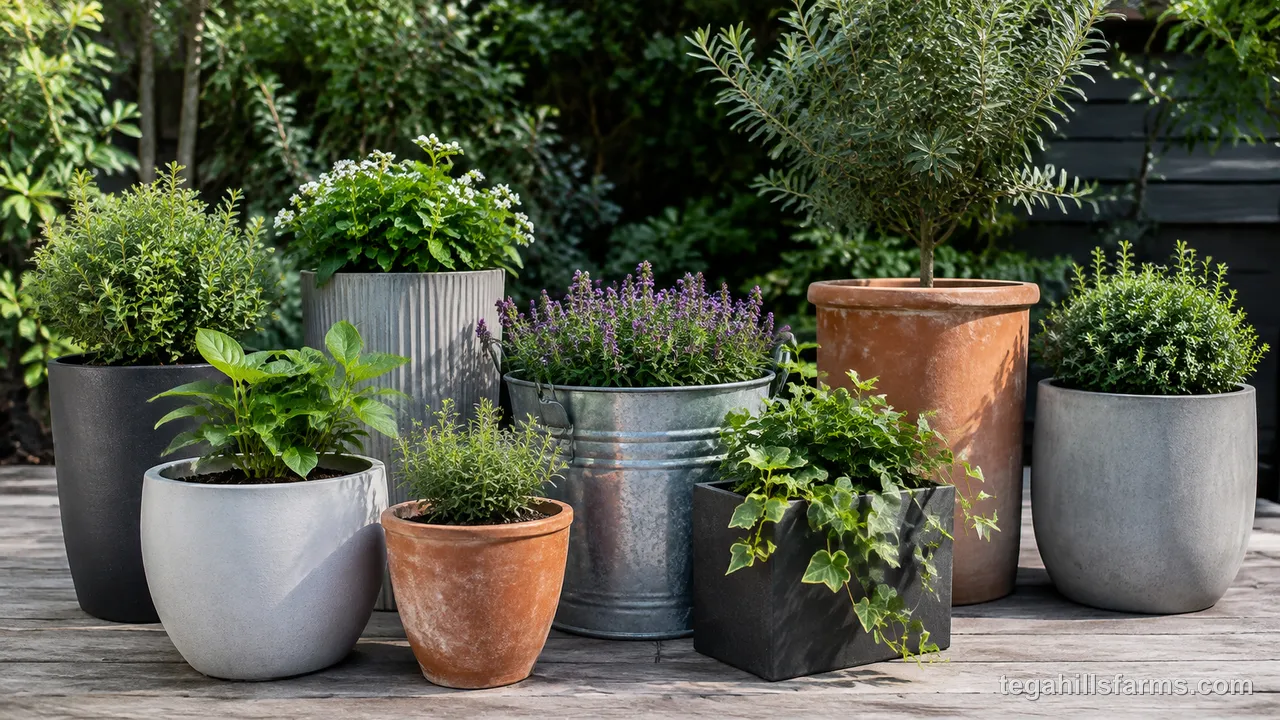
All three are non-porous, so they hold soil moisture longer than clay. They differ in rigidity, weight and how they handle temperature swings. Thin plastic is light and easy to move but can turn brittle after years of sun and frost. Thicker polypropylene resin, as in the Keter, resists peeling and denting even at a large size. Plastic-stone composite, used by Veradek, blends stone into the plastic for a heavier, textured wall that handles both heat and hard freezes.
For plants that dislike drying out, such as ferns, leafy greens and most tropical houseplants, that moisture retention is an advantage. Succulents in the same pots simply need water less often. When comparing the best plastic planters for outdoor use, look for UV resistance, which keeps color and strength in direct sun.
Is Galvanized Steel a Good Choice for Raised Beds and Planters?
Yes, for beds that sit on garden soil. The zinc coating on galvanized steel resists rust for many seasons, and curved or corrugated walls hold their shape under wet soil. Both Rakukiri beds and the Tegarbed pair use oval, open-bottom designs that drain straight into the ground.
Metal walls warm up in full sun. In a short northern season that heat helps soil warm early in spring. In a long southern summer it can dry out the edges of a bed, so mulch and steady watering matter more in hot zones. A bottomless bed also only works on the ground. For a deck or patio, a closed steel container with drainage holes, the kind you’ll find among the best metal planters, fits better.
Where Do Ceramic, Terracotta, and Concrete Planters Fit?
They suit plants that like drier roots and spots where a heavy pot helps. Unglazed terracotta is porous, so water evaporates through the walls. That protects rosemary, lavender and succulents from soggy soil, but thirsty plants dry out fast in summer. Glazed ceramic seals the surface, holding moisture closer to the way plastic does while adding weight and color. Concrete is the heaviest of the three, which keeps tall plants upright in wind.
Their weak point is cold. Porous clay and concrete absorb water, and when that water freezes it expands and can crack the wall. Where winters bring hard freezes, these pots need to come inside or be emptied before the first freeze. Once filled, none of them are easy to move.
How Big Should a Planter Be?
Match the planter to the plant’s mature root mass, not to the empty space on your porch. Deeper, wider soil holds more water and gives roots room, but a pot far too large for its plant stays wet and invites rot. Size also sets your watering routine, because a small pot can dry out in an afternoon while a large one buffers heat for days.
How Deep and Wide Should a Planter Be for Your Crops?
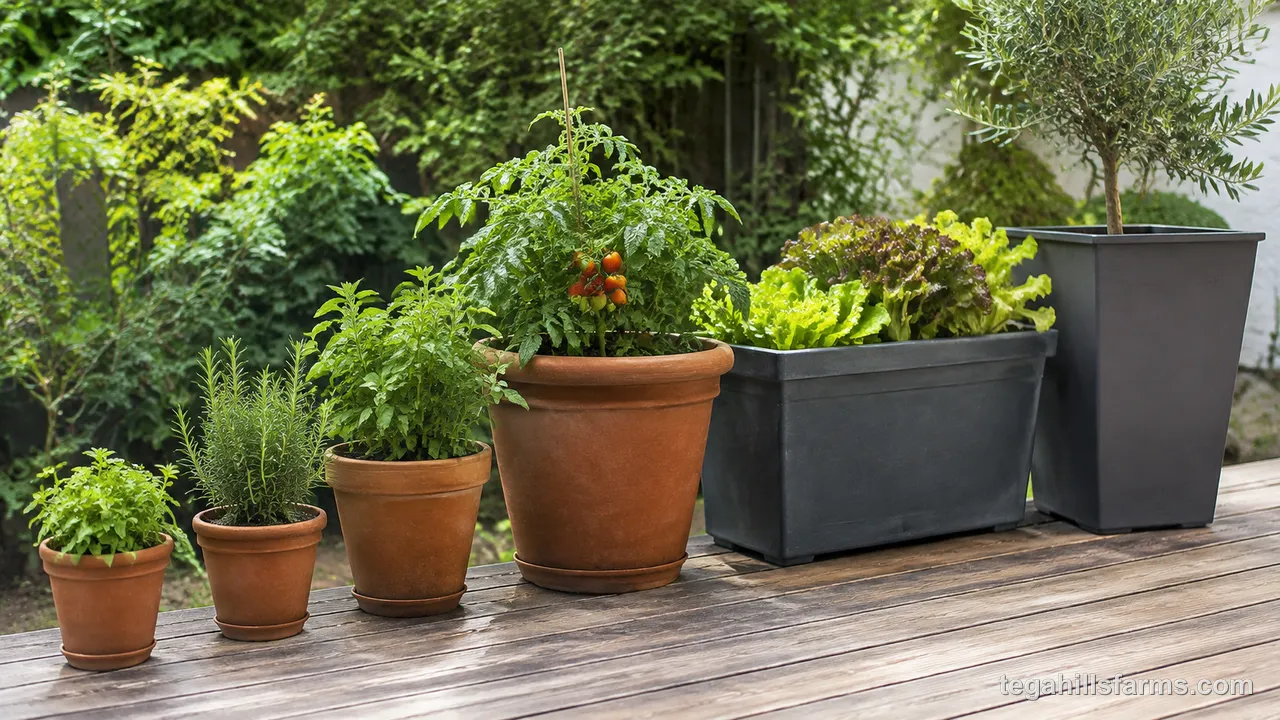
Leafy greens, radishes and most herbs grow well in about 6 inches of soil. Tomatoes, peppers, squash and carrots need 12 inches or more to root deeply and hold enough water. For sprawling crops, width matters as much as depth: a single tomato plant fills a wide pot fast, and crowded roots compete for the same moisture.
A pot that’s too small shows it quickly. Roots circle the inside wall, the soil dries within hours on a hot day, and fruiting plants drop their blossoms. In a pot that’s too shallow, carrots fork or stay stubby, and tall plants tip over in wind. A foot-deep raised bed handles most crops a first-time gardener plans to grow. When picking among the best planters for vegetables, check depth first, then width.
When Does a Large or Tall Planter Make Sense?
A large planter makes sense when the plant itself is large or thirsty. Shrubs, small trees, tomatoes and big mixed displays all benefit from extra soil, which buffers summer heat and lets you water less often. A deep pot by the front door also keeps a tall plant from tipping.
A bigger planter adds weight and needs more soil. A filled large container can be too heavy to move, may strain a balcony or deck, and takes a lot of potting mix to fill. A tall planter can also fail a small plant: when roots can’t reach the lower soil, that soil stays wet. If you’re shopping the best large planters, size up only as far as the plant will grow within a season or two.
How Do Drainage and Self-Watering Change the Way You Water?
Drainage controls how much water leaves the pot, and self-watering controls how evenly water reaches the roots. Together they decide whether plants risk rot, drought or neither, and how often you need to check them. Overwatering is the classic container mistake, because roots need air as much as moisture.
Do You Need Drainage Holes, Plugs, or an Open Bottom?
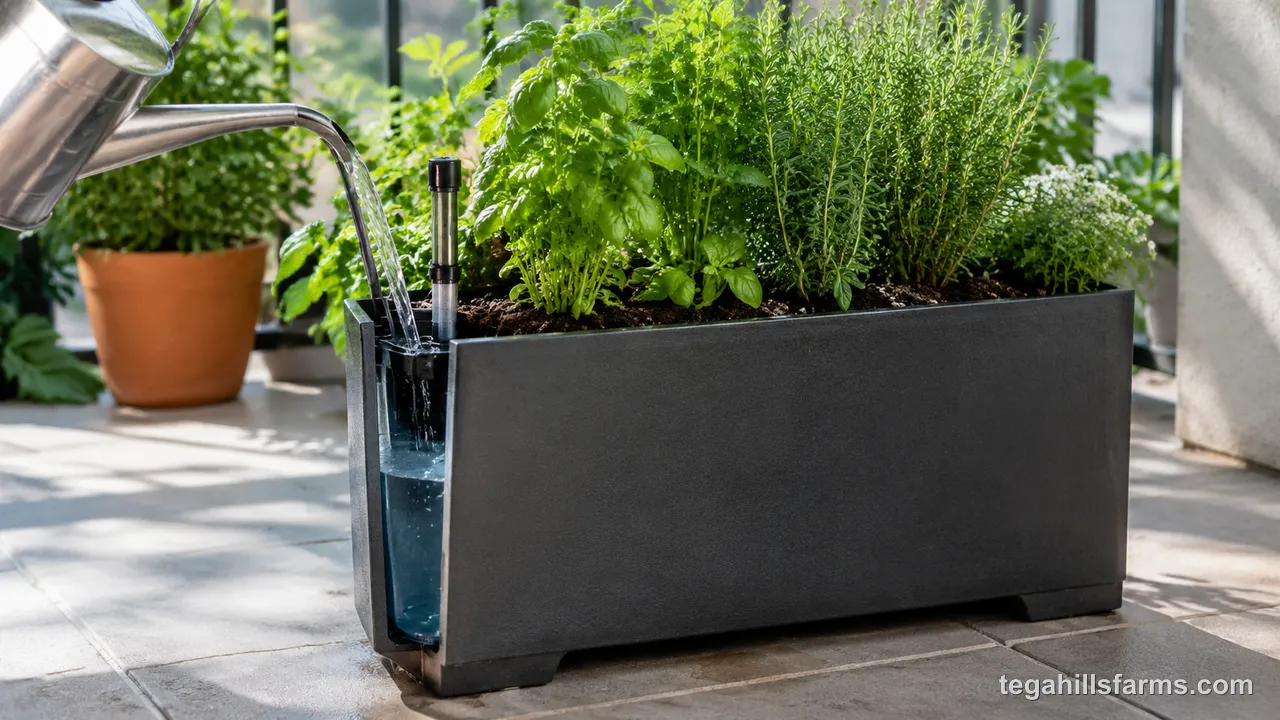
Every planter needs a way for excess water to escape, and the right type depends on where it sits. Without an outlet, water pools at the bottom and the roots in that zone rot. Drainage holes suit outdoor pots and indoor pots set on a saucer or tray, like the YNNICO set. A removable plug, as on the Lechuza Classico 35 and Cube Cottage 40, lets you close the base indoors and open it outside. A sealed bottom with knock-out holes, like the Bloem Ariana’s, starts leak-proof and converts once. Open-bottom beds let water drain into the soil below and only work on the ground.
Fabric pots handle drainage differently, letting water and air pass through their walls. The best grow bags for plants suit potatoes and tomatoes on a patio, where fast drainage prevents soggy roots.
Is a Self-Watering Planter Worth It?
For busy gardeners and houseplant owners, yes. A reservoir under the soil, connected by a wick, a granulate layer or a disk, keeps moisture steady and stretches the time between waterings. A level indicator tells you when to refill. Plants that like consistently moist soil gain the most, including tomatoes, basil and many tropical houseplants.
New plants still need watering from above until their roots reach the reservoir. The tank also takes up space that would otherwise hold soil. Plants that need to dry out between waterings, like cacti and succulents, can stay too wet. Railing boxes dry fast in wind, so they benefit from a reservoir too, and the best self watering railing planters put that system in a narrow box.
Where Will Your Planter Sit: Indoors, on a Patio, or in the Garden?
Leak protection matters most inside the home, resistance to sun and frost matters most outdoors, and contact with native soil matters most for in-ground vegetable growing. Light and appearance come next, because a planter that looks elegant on a living room floor can fade or crack on a south-facing deck.
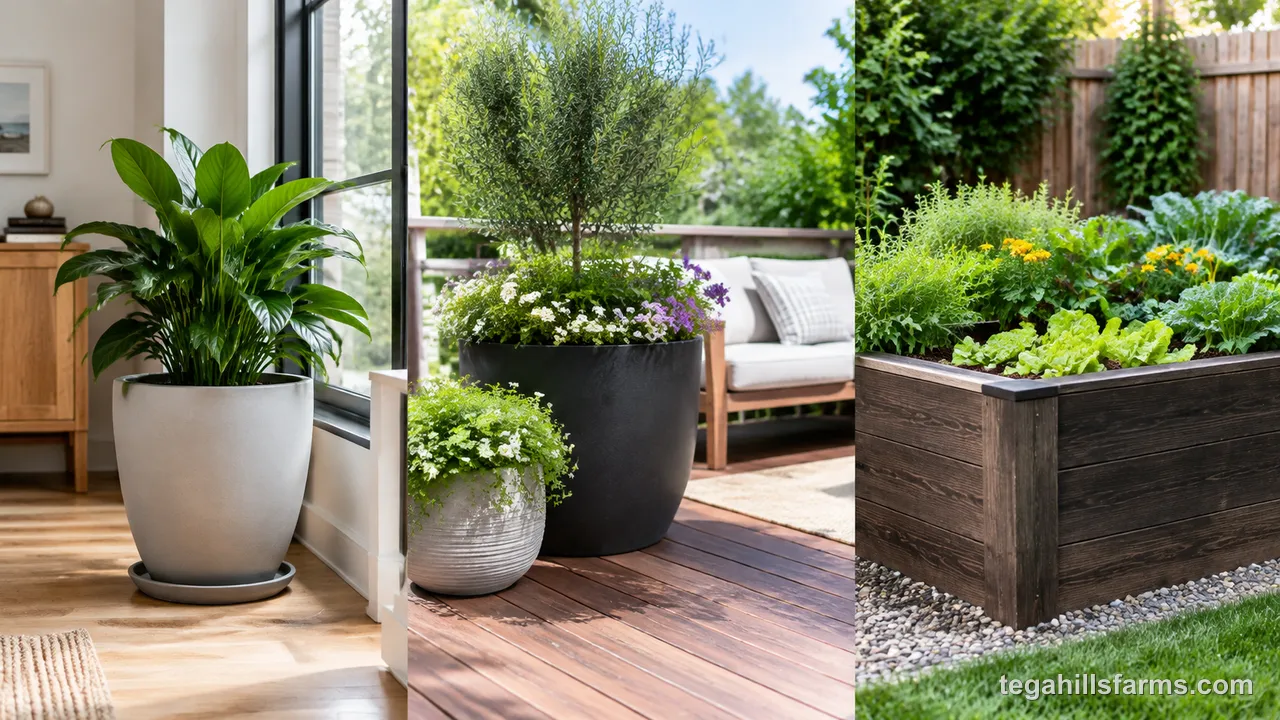
What Should You Look for in an Indoor Planter?
An indoor planter has to protect floors and furniture first. Look for a sealed bottom, a matching saucer or tray, or a removable liner that keeps water inside the pot. The YNNICO set catches runoff in a deep tray, the Bloem Ariana arrives with a sealed base, and the Lechuza liners hold soil inside a separate inner pot.
Style matters more indoors because you see the planter every day, so match its finish and color to the room. Size it to the plant, not the shelf. Indoor plants also use water more slowly than outdoor ones, which raises the risk of overwatering. The best indoor planters pair drainage with a way to catch the runoff.
Which Planters Hold Up on Patios, Porches, and Decks?
UV-stabilized plastic, resin, plastic-stone composite and galvanized steel hold up best outdoors because they resist sun, frost and impact. The Veradek composite, the Lechuza Classico 35’s frost- and UV-resistant plastic and the Keter’s rust-proof resin all fall into that group.
Sun does slow damage: UV breaks down untreated plastic, fades its color and makes the walls brittle. Wind tips tall, light planters, so heavier bases or wider footprints suit exposed decks. Temperature swings stress every material, and rain needs a way out, so drainage holes or plugs matter outdoors. Compare the best patio planters with your own exposure in mind, since a covered porch is far gentler than an open, south-facing deck.
When Is a Raised Bed Better Than a Pot?
A raised bed wins when you want many plants or deep-rooted vegetables in ground you already have. A pot wins when you need to move plants or have only hard surfaces. An open-bottom bed gives roots unlimited depth and drains into native soil. It can hold a whole crop plan, from rows of lettuce to tomato plants.
Pots give up that root space in exchange for flexibility. You can move them to follow the sun, bring tender plants indoors for winter, and grow on balconies, decks and patios where a bed can’t go. Their smaller soil volume is exposed on all sides, so they dry out faster and need watering more often than a bed in the same spot.
Which Planter Should You Choose for Your Situation?
First-season vegetable growers should start with the Tegarbed Galvanized Oval Raised Bed 4ft 2-Pack, and small indoor collections fit the YNNICO Self-Watering Planters Set. Those two cover the most common starting points: a sunny patch of lawn and a windowsill full of houseplants.
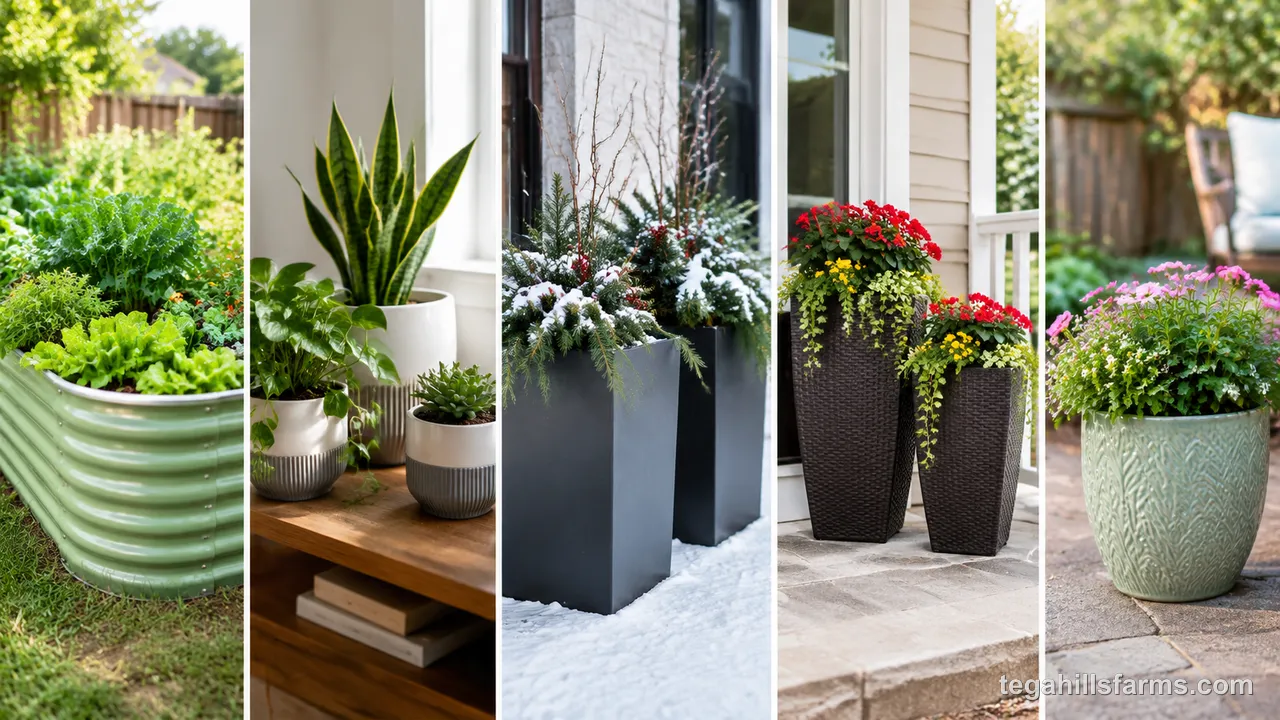
If you want one long vegetable bed that you can carry and set up alone, choose the Rakukiri Galvanized Oval Raised Bed 5ft. If you’re growing edibles you want to keep in place for many seasons, the Rakukiri Galvanized Oval Raised Bed 4ft 2-Pack has the extra rust protection. Gardeners in cold-winter zones who want a planter that stays outside all year should look at the Veradek Demi Series Raised Long Planter. A front porch that needs a bold display suits the Keter Tapered Wood Look Planter 22″ 2-Pack, and a patio shrub suits the Lechuza Cube Cottage 40 Planter. On a tight budget, the Bloem Ariana Self-Watering Planter 12″ brings self-watering to kitchen herbs. Frequent travelers get the most from the Lechuza Classico 35 Self-Watering Planter or the Lechuza Delta 30 Tall Planter. On a balcony where weight and wind matter, look at the best balcony planters and the best railing planters, which keep the floor clear.
Some planters are sold for flowers only, and nothing on the box says whether the plastic, coating or recycled metal touching your soil was made with edible crops in mind. If you plant tomatoes and basil in the wrong one, you’ll be eating food grown in a container whose materials you know nothing about.
Which Planter Materials Are Safe for Growing Food?
When you grow edibles, look for food-safe plastics with recycling code 2 (HDPE) or 5 (polypropylene). Untreated wood, unglazed terracotta, and galvanized or coated steel with a clear safety claim are also good choices. The Bloem Ariana is marked safe for fruits, vegetables and herbs. The Rakukiri Galvanized Oval Raised Bed 4ft 2-Pack carries GRS certification along with a BPA-free and heavy metal-free claim.
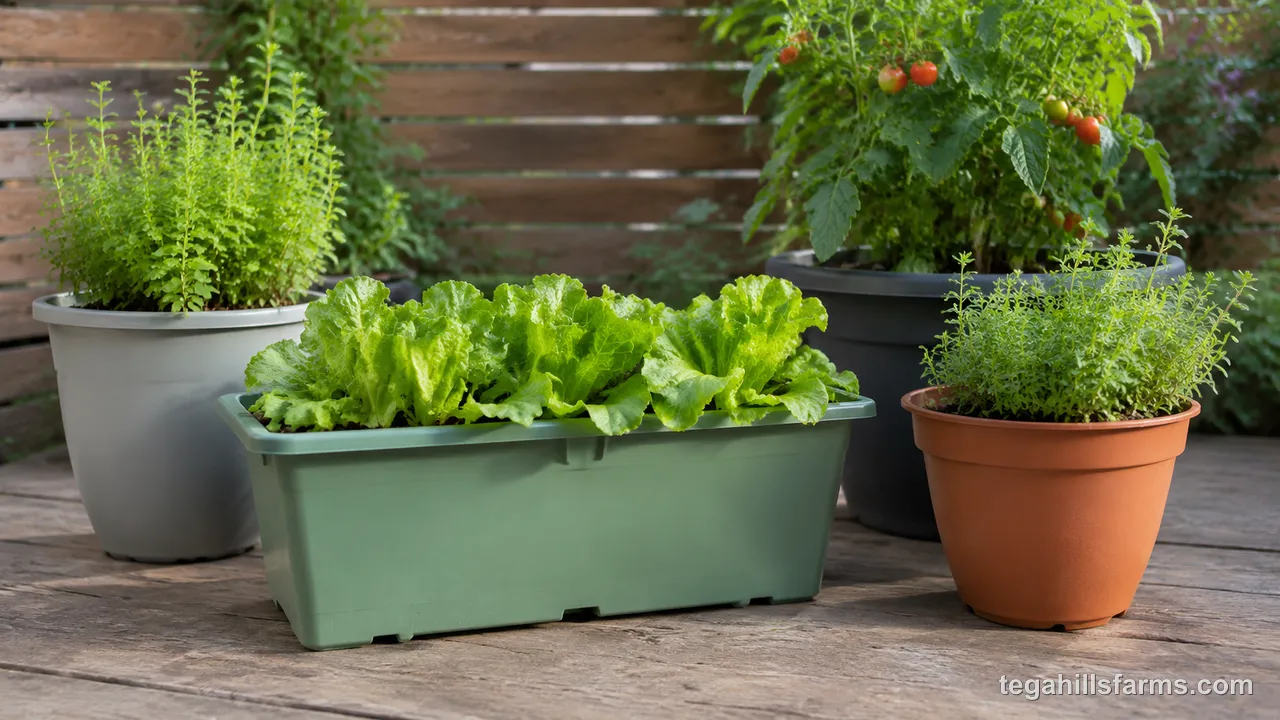
Be careful with materials that leave you guessing. Older pressure-treated lumber, painted metal of unknown origin, and decorative glazes not rated for food contact can leach unwanted compounds into soil over time. A recycled-content claim describes where a material came from, not whether it’s safe around food, so look for a separate food-safety statement. If you prefer wood, compare the best wood planters by whether the boards are untreated. When a product makes no statement either way, ask the manufacturer directly before you plant anything you’ll eat.
Is a Heavier Planter a Better Planter?
Heavier is better only where stability matters more than flexibility. Examples include a tall plant on a windy deck or rooftop, an entry where a planter mustn’t get knocked over, or a spot you never plan to change. Concrete and thick ceramic stay put in gusts and look substantial, so the best ceramic planters and the best concrete planters suit permanent displays.
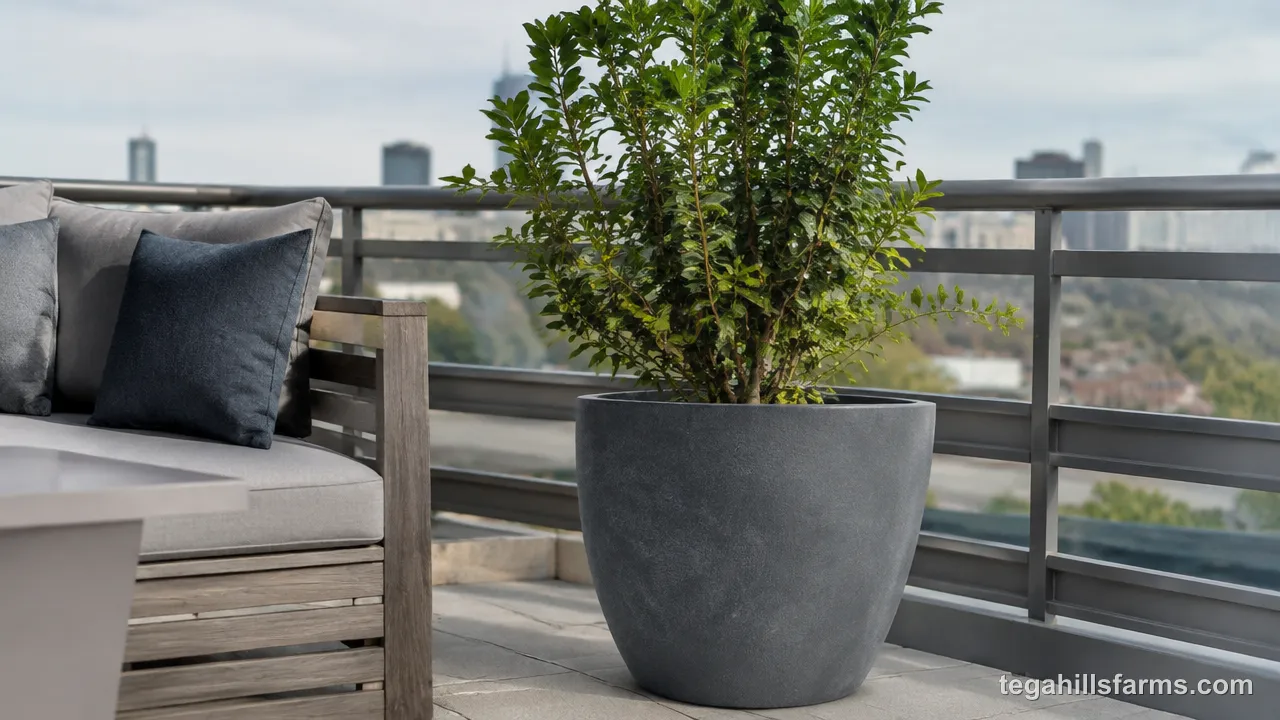
Weight makes everything else harder. A heavy pot filled with wet soil can be too much to lift, and moving it indoors each season becomes impractical. It also adds load to balconies and older decks, so check what your structure is rated to carry before setting large containers on it. Light plastic and resin planters stay stable when you place them in sheltered corners or group them to block the wind. They also let you follow the sun, rearrange a patio, or bring tender plants inside before frost. For renters and balcony gardeners, I’d lean toward the lighter option.
How Do You Keep Planters from Cracking or Fading Over Winter?
Empty or bring in porous planters before the first hard freeze, and keep the rest dry and raised off the ground. Terracotta, ceramic and concrete left full of wet soil crack when trapped water freezes and expands. Check your USDA zone. Where winters bring repeated freezes, store these pots in a garage or shed, or tip them on their sides under cover. Frost-rated plastic and composite planters, like the Veradek or the Lechuza Classico 35, can stay outside. Set them on pot feet so the drainage holes don’t freeze shut against the patio.
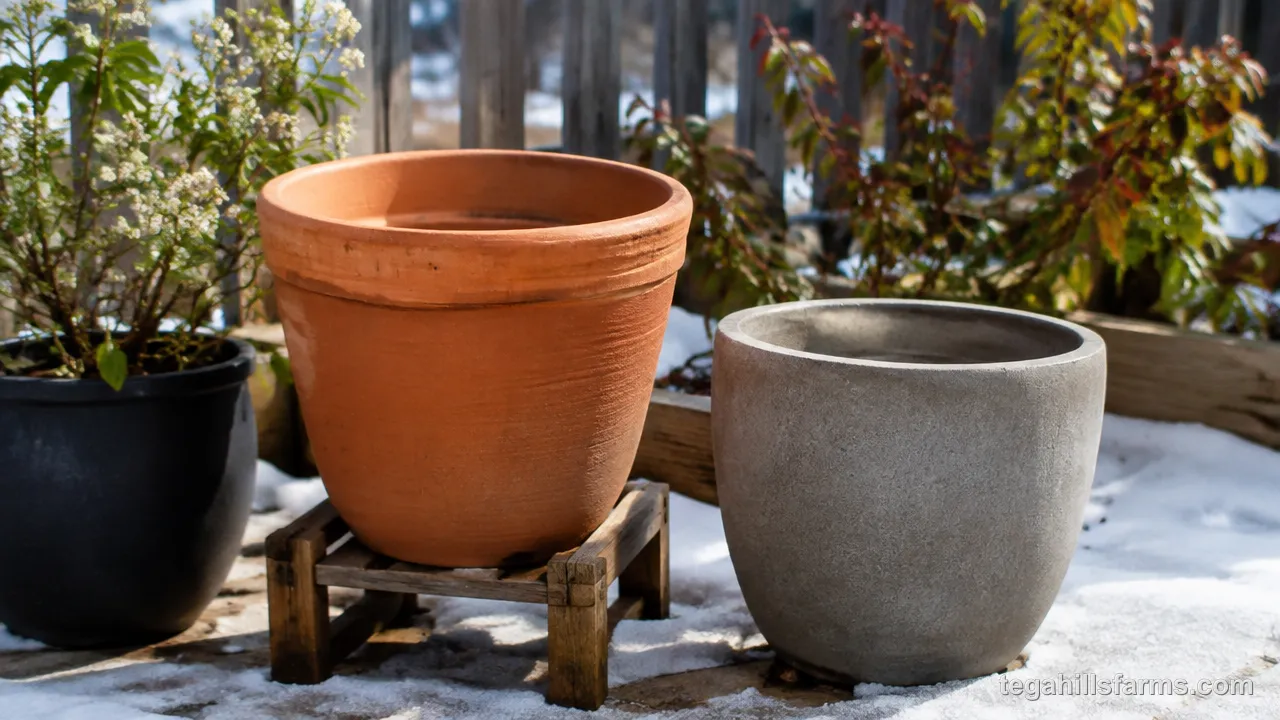
Watch for early warning signs all year:
- Hairline cracks near the rim
- Faded or chalky color from UV
- White powder or brown spots on galvanized steel
- Walls that bow outward
A faded pot still works. A crack that widens after each freeze, or rust that eats through the metal, means it’s time to replace the planter before soil spills out. In mild southern zones, sun damage is the bigger risk, so move exposed planters into shade during the hottest months.
Planter FAQs
Do planters need saucers?
Indoors, yes, unless the planter has a sealed bottom, a removable liner or a built-in reservoir that keeps water inside. A saucer catches runoff from drainage holes and protects floors and furniture. Outdoors, saucers are optional, but empty them after rain so roots don’t sit in standing water that leads to rot.
Can you use indoor planters outdoors?
You can if the material handles sun and cold and the pot can drain. Plastic without UV protection fades and turns brittle, and a sealed bottom fills with rain. Choose pots with drainage holes, knock-outs or a removable plug, and bring porous or decorative indoor pots back inside before freezing weather arrives.
How often should you check a self-watering reservoir?
Check the indicator every few days at first, since new plants need water from above until their roots reach the reservoir. Once the plant settles, you’ll learn its pace. A tomato in summer heat empties a tank fast, while a houseplant in winter may go much longer. Refill whenever the indicator drops.
What should you do with a planter that has no drainage holes?
Use it as a decorative cover. Plant in a nursery pot with holes, set it inside, and pour out any water that collects at the bottom after watering. If the material allows, you can drill holes with the right bit instead. Planting directly into a sealed pot traps water around the roots.
Can you grow several herbs in one planter?
Yes, as long as they share the same water needs. Basil, parsley and chives like evenly moist soil and grow well together. Rosemary, thyme and oregano prefer drier roots and do better in a separate pot. When choosing among the best herb planters, pick one wide enough that each herb has room to spread.
More Guides on Best Planters
- Best Planters for Trees
- Vertical Wall Planters