9 Best Raised Garden Beds: Expert Picks, Ranked for 2026
Our top picks for the best raised garden beds in 2026 are Vego garden 17″ Raised Garden Bed (Best Overall), Vego garden Raised Garden Bed 8x2ft (Best Rust-Resistant), Vego garden 17″ Modular Raised Bed (Best for Small Spaces), BIRDSINYARD 5 in 1 Raised Bed 8x3x1ft 2-Pack (Best Easy Assembly), Land Guard Raised Garden Bed 8x4x1ft 2-Pack (Best Value), Land Guard Oval Raised Garden Bed (Best Budget), SnugNiture 3-Pack Oval Raised Garden Bed (Best Ergonomic Design), Land Guard 8×4×2 ft Galvanized Garden Bed (Best Durability), and Vego garden 17″ 4′ x 10′ Raised Bed (Best for Large Yards).
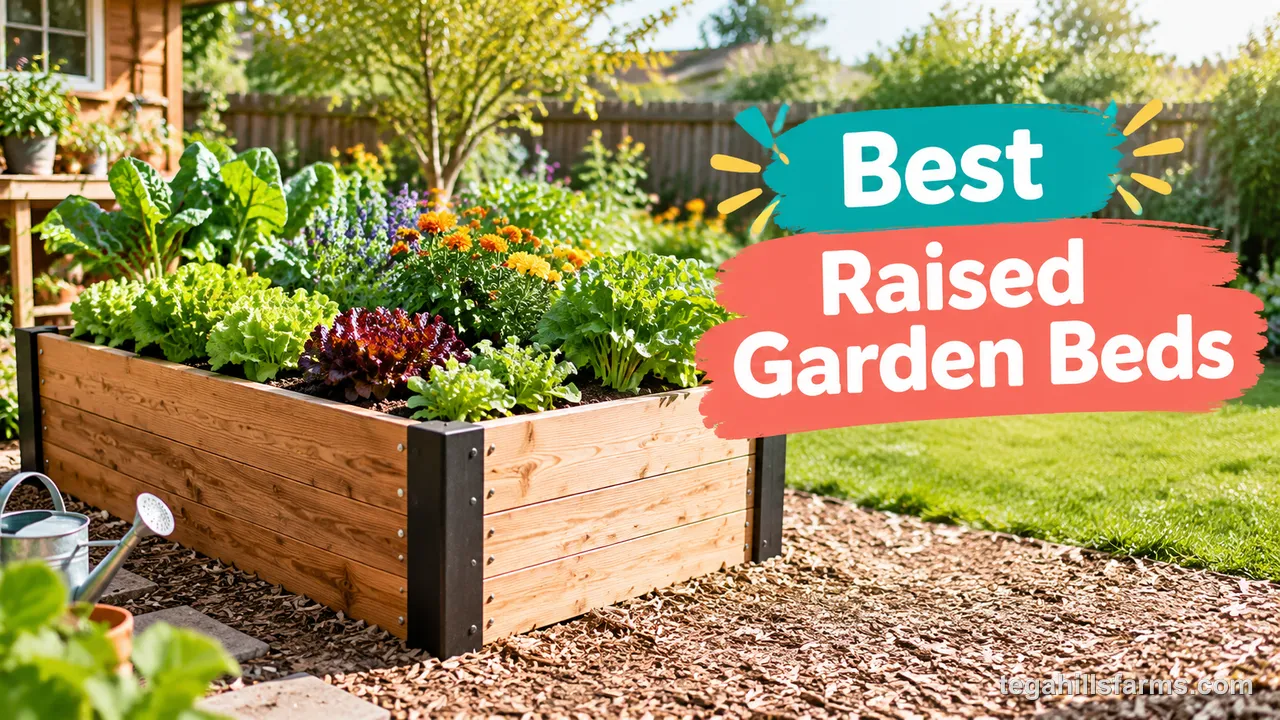
Every one of these beds is steel, so they differ in how the steel is protected, how deep the soil sits and how the bed goes together. The coating decides whether seams rust after a few wet winters. Depth decides which crops have room to root, and an open base lets water drain into the ground instead of pooling around roots.
Two concerns tend to hold back first-season gardeners: whether a metal box will rust or bow under wet soil, and whether its finish belongs next to food crops. Thick, braced panels with a layered coating handle the first, and a finish described as food-safe or non-toxic handles the second.

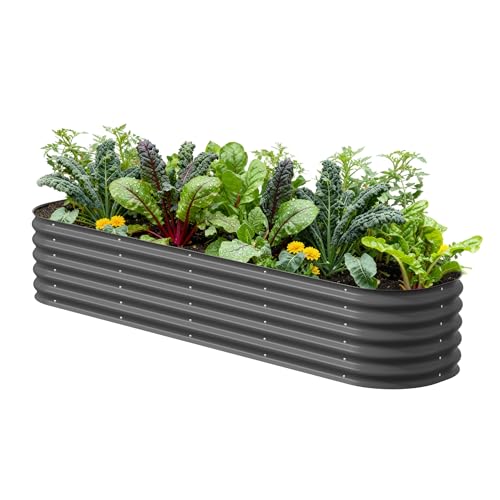
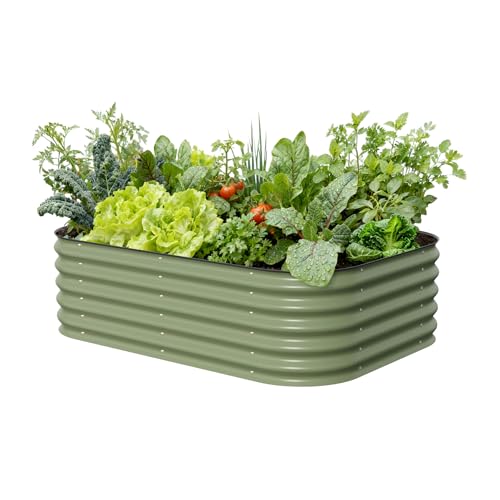

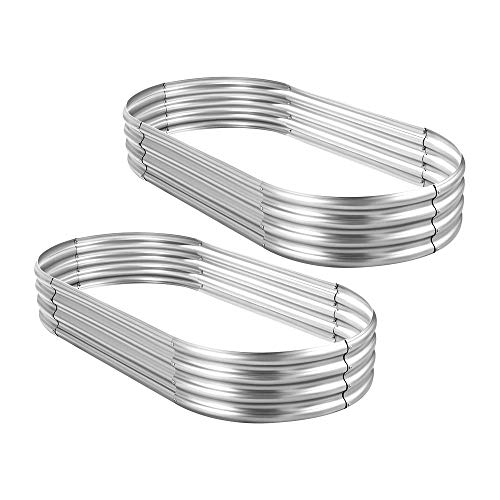
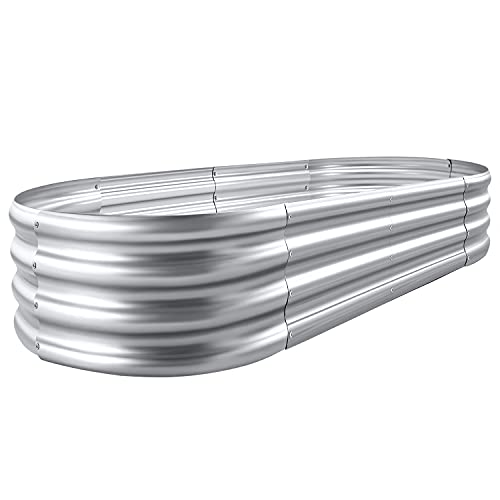


Before you compare sizes, watch where the sun falls on your yard or patio across a full day. The spot you have settles the footprint long before the style of the bed does.
How Do You Choose the Right Raised Garden Bed?
A good bed keeps its shape and soil for years while giving roots deep, well-drained room to grow; color and styling matter far less. A bed that bows or rusts means shoveling out soil and rebuilding, and a bed that is too shallow or holds water stunts crops no matter how well you feed them. Your own body counts too, because the wall height sets how far you bend every time you weed or pick. If you’re still sorting out size and layout, the basics of how to choose a raised garden bed start with the space you have, and durability and root room come right after.
Which Material Lasts Longer: Metal or Wood?
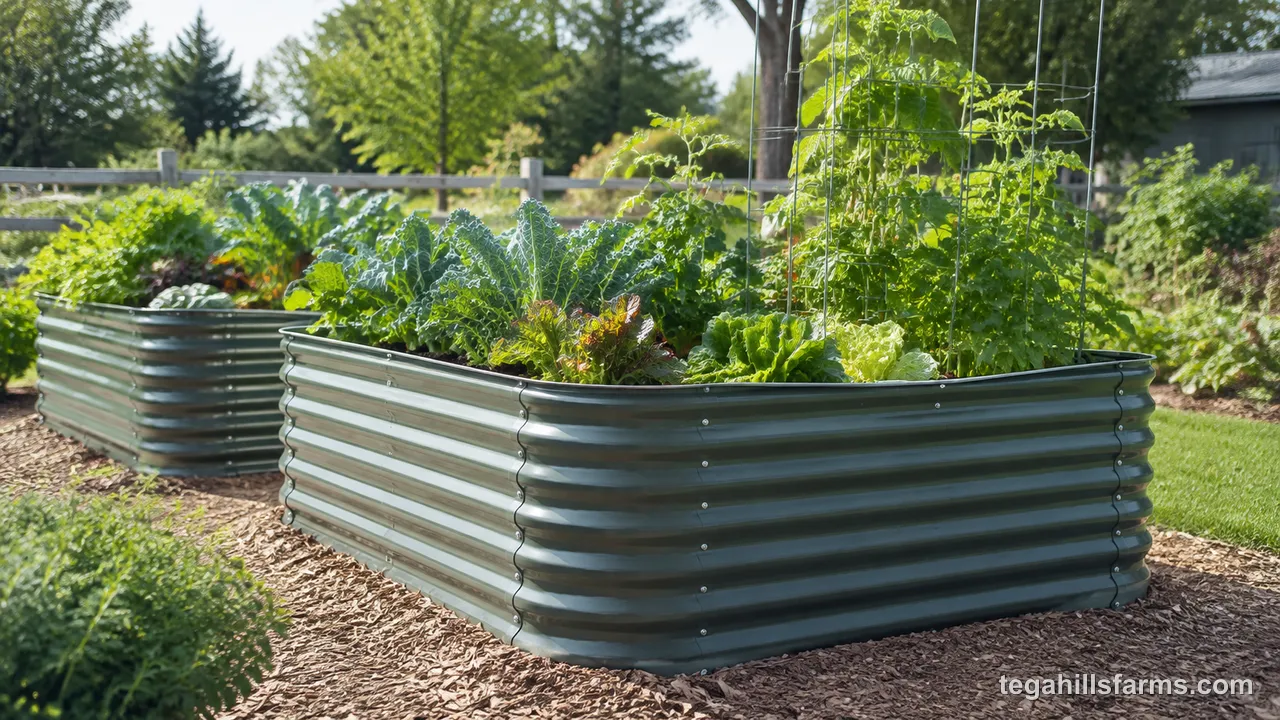
Coated or galvanized steel outlasts wood in most yards because it can’t rot, while cedar resists decay for years and fir or pine softens much sooner. Wood fails where it stays wet, at the soil line and the corners, so even good cedar eventually loosens and needs replacing.
Steel’s weak point is rust, which is why the coating matters more than the metal itself: zinc galvanizing and painted or alloy finishes keep water away from the bare steel underneath. Metal walls also warm the soil faster in spring, which helps gardeners in short northern seasons plant earlier, though in hot southern zones the soil along the walls can dry out sooner. Every bed I recommend here is steel for that reason. Once it’s assembled, there’s no rot to fight and very little upkeep beyond checking the seams each spring.
How Tall Should a Raised Garden Bed Be?
Height sets two things at once: how much soil your roots get and how far you bend to reach it. Lettuce, spinach, radishes and most herbs grow happily in a bed about a foot deep, while tomatoes, carrots, potatoes, squash and broccoli do better with more soil below them.
Deeper soil also drains better and holds moisture longer between waterings, because water has room to move down and away from the crown of the plant instead of sitting near the surface. The beds in this lineup run from one foot to two feet tall, with several at 17 inches.
Wall height changes your posture as well. A taller bed brings the soil surface up toward your hands, so weeding and harvesting take less kneeling and stooping. If knees or back are your real limit, the best raised garden beds for seniors focus on taller designs where bending matters most.
Does an Open Base Matter for Drainage?
Yes. An open base drains better and lets roots grow past the bottom of the bed into the native soil below. Water that would pool in a closed box seeps straight into the ground, keeping roots out of soggy, airless soil where rot starts, and roots that reach the earth find extra moisture during dry spells.
The ground underneath decides how well this works. Heavy clay drains slowly, so loosening it with a garden fork before filling helps water move through. Yards with gophers or voles need hardware cloth across the bottom, and an open bed set on a patio or deck lets wet soil and water run out underneath.
The 9 Best Raised Garden Beds of 2026
Our top picks are Vego garden 17″ Raised Garden Bed, Vego garden Raised Garden Bed 8x2ft, Vego garden 17″ Modular Raised Bed, BIRDSINYARD 5 in 1 Raised Bed 8x3x1ft 2-Pack, Land Guard Raised Garden Bed 8x4x1ft 2-Pack, Land Guard Oval Raised Garden Bed, SnugNiture 3-Pack Oval Raised Garden Bed, Land Guard 8×4×2 ft Galvanized Garden Bed and Vego garden 17″ 4′ x 10′ Raised Bed. Depth splits them most: the Vego beds and the SnugNiture set stand 17 inches tall and the Land Guard 8×4×2 ft reaches two feet, while the one-foot BIRDSINYARD and Land Guard beds fill with less soil and keep you working closer to the ground.
#1 Vego garden 17″ Raised Garden Bed — Best Overall
This kit changes shape as your garden plan does. One box of panels builds 10 different layouts, each with 17-inch walls that give roots deep, well-drained soil and bring weeding closer to your hands.
Key Specs:
- Height: 17 in
- Configurations: 10 layouts from one kit
- Material: VZ 2.0 steel (zinc, magnesium and aluminum coated steel with AkzoNobel paint)
- Weight: 41.74 lb
- Edging: heavy-duty rubber, oval shape with no sharp corners
- Color: Olive Green
Detailed Review:
The panels are VZ 2.0, a zinc, magnesium and aluminum coated steel finished with USDA-approved AkzoNobel paint and built for a life of 20-plus years. Its corrosion performance was verified at the Texas A&M National Corrosion & Materials Reliability Lab, and that matters in a garden bed because rust at the seams is what usually retires metal beds early.
One kit assembles into any of 10 configurations, so you can build a long bed along a fence this year and a squarer layout later from the same panels. Assembly means fitting the panels and tightening fasteners, with no carpentry involved.
The oval shape leaves no sharp corners, and heavy-duty rubber edging caps the top rim where hands and forearms rest while you weed. At 41.74 pounds, the kit is substantial, so set it up where you want it to stay.
Vego builds the bed as part of a larger system, with add-ons such as a cover system, arched and wall trellises and a gopher net. That lets you grow the bed into a fuller setup over a few seasons, and I’d point anyone whose plans keep changing toward this one first.
Pros:
- Builds into 10 layouts from one kit.
- Deep walls give roots generous room.
- Rubber edging protects hands along the rim.
- Coated steel is built for decades outdoors.
Cons:
- The 41.74-pound kit is a chore to reposition.
- Deep walls need a lot of soil to fill.
Who It’s For:
Gardeners who keep rearranging their yard will get the most from this bed, since it can be rebuilt into a new shape instead of replaced. It also suits anyone tired of kneeling to weed. Renters who move beds around often may prefer something easier to carry.
Editor’s Verdict:
Choose this bed if you want one rust-resistant steel kit that adapts to your garden for years and keeps the soil within easy reach.
#2 Vego garden Raised Garden Bed 8x2ft — Best Rust-Resistant
Narrow side yards and fence lines suit this bed well. Its VZ 2.0 steel pairs a zinc, magnesium and aluminum coating with a painted finish, so the long, slim run is built to last 20-plus years in rain and snow.
Key Specs:
- Footprint: 8 ft x 2 ft
- Height: 17 in
- Configurations: 9 layouts from one kit
- Material: VZ 2.0 coated steel with AkzoNobel paint
- Weight: 10 lb
- Color: Modern Gray
Detailed Review:
VZ 2.0 layers zinc, magnesium and aluminum over the steel, then adds a paint finish, so moisture has two barriers to get through before it reaches bare metal. That layered protection makes the bed a sound choice for damp corners, low spots that stay wet after storms and yards that see heavy snow.
The 8-by-2-foot footprint is long and slim, so you can reach the center from either side without stepping into the soil. Keeping your feet out of the bed keeps the soil loose and well aerated, and the shape fits along a fence, driveway or garage wall where a wider bed would block the path.
The kit is modular, with 9 possible configurations, so the same panels can become a shorter, squarer bed if the long run stops fitting your space. The walls stand 17 inches tall, the oval design leaves no sharp corners, and heavy-duty rubber edging covers the rim.
At 10 pounds, the kit is easy to carry into place before you fill it. Assembly comes down to fitting panels and tightening fasteners.
Pros:
- Layered coating guards the steel against rust.
- Slim shape lets you reach the middle easily.
- Nine layouts from one set of panels.
- Rubber edging softens the top rim.
Cons:
- Narrow width crowds sprawling crops like squash.
- Long shape needs a straight, level strip of ground.
Who It’s For:
Anyone gardening along a fence, wall or driveway edge will appreciate how this bed fits a strip of ground that wider beds can’t use. Gardeners in rainy or snowy climates get a finish built for long exposure. Growers planning wide plantings of squash or melons will want a broader bed.
Editor’s Verdict:
Pick this bed for wet, exposed spots, where its layered coating protects the steel and its slim shape keeps every plant within reach.
#3 Vego garden 17″ Modular Raised Bed — Best for Small Spaces
On a patio or in a tight urban yard, this compact kit still gives roots 17 inches of soil to grow into. Six layouts let it fit an awkward corner.
Key Specs:
- Height: 17 in
- Configurations: 6 layouts from one kit
- Material: VZ 2.0 coated steel with AkzoNobel paint
- Weight: 10 lb
- Edging: heavy-duty rubber, oval shape with no sharp corners
- Color: Olive Green
Detailed Review:
Small spaces rarely offer a clean rectangle, and the 6-in-1 modular design works around that. One kit builds 6 different shapes, so you can square it off for a balcony corner or stretch it along a railing, then rebuild it if you move.
A small footprint doesn’t mean shallow soil here. The 17-inch walls give tomato and pepper roots room to spread, and they raise the planting surface so you aren’t kneeling on concrete to pull weeds.
The VZ 2.0 steel and its paint finish are built for 20-plus years outdoors. The oval design leaves no sharp corners, and the heavy-duty rubber edging on top helps in tight quarters, where you brush past the bed more often than you would in an open yard.
The kit weighs 10 pounds, so carrying it up stairs or across a deck before assembly is easy. Once filled, though, a bed this deep holds a heavy load of wet soil, so check what your balcony or deck can carry before you start shoveling.
Pros:
- Six layouts adapt to awkward corners.
- Light kit is easy to carry upstairs.
- Deep walls suit tomatoes and peppers.
- Rubber edging protects you in tight spaces.
Cons:
- Small footprint limits how many crops fit.
- Filled bed gets heavy for decks and balconies.
Who It’s For:
Patio, balcony and small-yard gardeners who want real root depth without giving up much floor space will find this a good fit. Its flexible layouts also help renters whose next home may have a different layout. If you have open ground and want room for big plantings, a larger bed serves you better.
Editor’s Verdict:
Buy it when space is tight but you still want deep soil, a rust-resistant finish and a bed that can change shape later.
#4 BIRDSINYARD 5 in 1 Raised Bed 8x3x1ft 2-Pack — Best Easy Assembly
If you’ve never built a raised bed, start here. The set includes detailed instructions and the installation tools, and each of the two galvanized beds can be arranged in five shapes or joined to the other for a larger custom layout.
Key Specs:
- Size per bed: 8 x 3 x 1 ft (also builds 9 x 2 x 1, 7 x 4 x 1, 6 x 5 x 1 or 10 x 1 x 1 ft)
- Quantity: 2 beds
- Material: 0.02 in (0.5 mm) galvanized steel with rust-resistant coating
- Base: open bottom
- Edging: folded edge with no sharp corners
- Supports: bracing rods
Detailed Review:
The kit ships with the installation tools and detailed instructions, so you don’t need anything from your own garage, and the build takes a few simple steps. For a beginner, that removes the usual stumbling block of hunting for the right driver or socket halfway through.
Each bed reshapes into five footprints, from a long, narrow run to a near-square block. Because you get two, you can join them into a longer bed, an L-shape or one larger custom shape, which lets you start small and expand next season without buying more hardware.
The steel is 0.02 inch (0.5 mm) thick with a rust-resistant coating, and bracing rods help the walls hold their shape. The Land Guard Raised Garden Bed 8x4x1ft 2-Pack uses thicker sheet, averaging 0.03 inch (0.78 mm), so these panels give up some stiffness and depend more on the bracing rods when soil is wet and heavy.
The folded top edge has no sharp corners, which protects small hands, and the open bottom drains straight into the ground. At one foot tall, it suits salad greens, herbs and flowers more than deep root crops.
Pros:
- Tools and detailed instructions come in the box.
- Two beds offer five layouts each, or combine.
- Folded edge keeps the rim free of sharp corners.
- Open bottom drains straight into the ground.
Cons:
- Thinner steel flexes more than heavier-gauge beds.
- Shallow height keeps you bending to tend plants.
Who It’s For:
Beginners who want to plant this season without wrestling with hardware should start here, and families with kids in the garden will appreciate the folded edges. Growers focused on deep root crops, or anyone who wants to avoid bending, will be happier with a taller bed.
Editor’s Verdict:
Expect a quick, frustration-free build and a flexible set of beds that suits a first vegetable garden well.
#5 Land Guard Raised Garden Bed 8x4x1ft 2-Pack — Best Value
This set puts two full-size beds in one box. Together they hold 57.12 cubic feet of soil, and the double-galvanized steel averages 0.03 inch (0.78 mm) thick, so the walls stay rigid under wet soil.
Key Specs:
- Size: 8 x 4 x 1 ft per bed, set of 2
- Soil volume: 57.12 cu ft total
- Material: Q195 galvanized steel with double-layer anti-corrosion galvanizing
- Sheet thickness: 0.03 in (0.78 mm) average, up to 0.06 in (1.56 mm)
- Base: open
- Assembly: about 5 minutes
Detailed Review:
Two 8-by-4-foot beds in one set give you enough room to split crops between them and rotate plant families from year to year, which cuts down on soil-borne disease. For the money, that’s a lot of growing space and a quick path to a real vegetable garden.
The sheet is Q195 galvanized steel with a double layer of anti-corrosion galvanizing, averaging 0.03 inch and reaching 0.06 inch (1.56 mm) at the points where it is reinforced. Next to the 0.02-inch (0.5 mm) steel of the BIRDSINYARD 5 in 1 Raised Bed 8x3x1ft 2-Pack, these panels resist bowing better when wet soil presses outward, and each bed is a foot wider, though that extra width means reaching in from both long sides.
The oval structure strengthens the joints so they don’t loosen or deform, and the beds can come apart and be reused for years. Setup takes about 5 minutes, and the open base lets roots run down into the ground.
At one foot tall, each bed suits greens, herbs, onions and bush beans. The shallower depth also means less soil to buy, which keeps the cost of filling two large beds reasonable.
Pros:
- Two large beds come in one set.
- Thick, double-galvanized steel resists bowing.
- Assembles in about five minutes.
- Panels can be taken down and reused.
Cons:
- One-foot walls mean more bending at harvest.
- Wide beds need access from both long sides.
Who It’s For:
Households ready to grow a real share of their own vegetables on a modest budget get the most from this set. It also suits anyone who likes rotating crops between beds each year. If bending is hard on your back, a taller bed will be kinder to you.
Editor’s Verdict:
Count on this set for plenty of sturdy growing space at an affordable price, with steel thick enough to hold its shape for years.
#6 Land Guard Oval Raised Garden Bed — Best Budget
A first raised bed doesn’t have to be a big purchase. This 4-by-2-foot oval is built from double-galvanized Q195 steel, holds 7.14 cubic feet of soil and goes together in about 5 minutes.
Key Specs:
- Size: 4 x 2 x 1 ft
- Soil volume: 7.14 cu ft
- Material: Q195 galvanized steel with double-layer anti-corrosion galvanizing
- Sheet thickness: 0.03 in (0.78 mm) average, up to 0.06 in (1.56 mm)
- Weight: 5 lb
- Base: open
Detailed Review:
This small oval is an inexpensive way to find out whether raised-bed gardening suits you. It fits beside a patio, at the end of a driveway or in a corner of the lawn, and its small soil volume keeps the cost of filling it low as well.
The low price doesn’t come with flimsy walls. The Q195 sheet averages 0.03 inch and reaches 0.06 inch (1.56 mm) in its heavier-gauge sections, with a double layer of anti-corrosion galvanizing, and the oval shape strengthens the joints so they stay tight instead of deforming. You can take it apart and reuse it for years.
At 5 pounds, the bed is easy to carry and reposition before you fill it, and assembly takes about 5 minutes. The open base drains straight into the ground below.
The one-foot depth and compact footprint suit lettuce, herbs, radishes, strawberries or a couple of pepper plants. Sprawling vines and deep root crops will outgrow it quickly, so treat it as a starter bed or a small addition to a bigger garden.
Pros:
- Affordable entry into raised-bed gardening.
- Thick double-galvanized steel for its size.
- Light, easy-to-move kit at five pounds.
- Quick assembly in about five minutes.
Cons:
- Small footprint fits only a handful of plants.
- Shallow walls don’t suit deep root crops.
Who It’s For:
Curious beginners testing raised-bed gardening without committing much money are the natural match, along with anyone who wants a small herb or salad bed by the back door. Anyone planning tomatoes, squash or a full season of vegetables will run out of room fast.
Editor’s Verdict:
Start here if you want a sturdy, inexpensive first bed for herbs and greens that you can build around later.
#7 SnugNiture 3-Pack Oval Raised Garden Bed — Best Ergonomic Design
At 17 inches tall, these oval beds bring the soil up to where weeding and harvesting take far less stooping, and you get three of them to arrange however your yard allows. Rubber edging cushions the rim.
Key Specs:
- Size: 46 x 23.6 x 17 in per bed
- Quantity: 3 beds
- Base: open
- Edging: safety rubber edging
- Structure: thickened oval design with improved anti-corrosion and rust resistance
- Color: Brown
Detailed Review:
Each bed stands 17 inches tall, so the soil surface sits closer to your hands and your knees spend less time on the ground. The safety rubber edging along the rim gives you a softer place to lean or rest an arm while you thin seedlings.
Three separate beds open up layouts a single box can’t. You can line them up in a row, set them on either side of a path, or tuck one by the kitchen door for herbs, and each is narrow enough to reach across from one side.
The thickened oval structure resists deforming and carries improved anti-corrosion and rust resistance. Each bed has an open base, and the kit includes detailed instructions and an accessories package, so setup takes a short time.
Next to the one-foot BIRDSINYARD 5 in 1 Raised Bed 8x3x1ft 2-Pack, these beds take more soil to fill, but they spare you the constant bending that shallow beds demand.
Pros:
- Tall walls reduce bending at every task.
- Rubber edging adds comfort along the rim.
- Three beds allow flexible garden layouts.
- Narrow width lets you reach across easily.
Cons:
- Deep walls take a lot of soil to fill.
- Smaller individual beds limit sprawling crops.
Who It’s For:
If kneeling or bending has started to cut your gardening time short, these beds are worth a close look. They also suit anyone who likes separate beds for herbs, salad greens and flowers. Those who want one large open bed for wide plantings should look at a single bigger kit.
Editor’s Verdict:
Consider these beds if your back and knees set the pace in the garden; the height and padded rim make every visit easier.
#8 Land Guard 8×4×2 ft Galvanized Garden Bed — Best Durability
Deep-rooted crops get room to stretch in this two-foot-tall bed. Reinforced cross bars and fixed piles keep the coated steel panels from warping or leaking soil through years of sun, rain and snow.
Key Specs:
- Size: 8 x 4 x 2 ft (24 in deep)
- Soil volume: 64 cu ft
- Material: upgraded coated steel plate with anti-rust and anti-corrosion finish
- Paint: environmentally friendly, does not pollute soil
- Reinforcement: cross bars and fixed piles
- Base: open
Detailed Review:
Reinforced cross bars and fixed piles help the panels hold their shape, which prevents the bowing and soil leakage that a bed this deep would otherwise invite as heavy, wet soil presses outward. That bracing is the reason I’d trust this bed to stay straight season after season.
The coated steel plate resists rust and corrosion through long exposure to sun, rain and snow. Environmentally friendly paint covers every part and doesn’t pollute the soil, so the finish is a good match for food crops.
At two feet tall, this bed offers 64 cubic feet of growing space. That depth suits beans, broccoli and other medium- to deep-rooted crops, and the bottomless design lets roots keep going into the ground while excess water drains away.
Filling it takes a large amount of soil, so layering logs, branches or coarse compost in the bottom before adding a quality mix cuts down on what you have to buy. Assembly follows detailed instructions and takes a short time.
Pros:
- Two-foot depth suits deep-rooted crops.
- Cross bars and piles prevent warping.
- Coated steel handles sun, rain and snow.
- Soil-safe paint suits vegetable growing.
Cons:
- Filling it takes a large amount of soil.
- Very large bed is permanent once filled.
Who It’s For:
If you want a bed that stays put for many seasons and you grow broccoli, beans or other deep-rooted crops, this one rewards the effort. The height also helps anyone who’d rather not kneel. Gardeners working with limited soil or a small patio will find a shorter bed easier to fill.
Editor’s Verdict:
Built for heavy soil and long exposure, this deep bed earns a permanent spot in a serious vegetable garden.
#9 Vego garden 17″ 4′ x 10′ Raised Bed — Best for Large Yards
With up to 40 square feet in a single bed, this kit gives a dedicated vegetable gardener room for a real season’s harvest, and its 17-inch walls keep all that soil within comfortable reach. It builds 23 different ways.
Key Specs:
- Footprint: 4 x 10 ft, up to 40 sq ft
- Height: 17 in
- Configurations: 23 build options
- Material: VZ 2.0 steel with protective coatings
- Coating: USDA-compliant, food-safe, non-toxic
- Lifespan: 20+ years
Detailed Review:
Up to 40 square feet in one bed leaves room for tomatoes, peppers, beans and greens side by side, and a bed this size can produce up to 100 pounds of produce in a season. That’s enough space to plan successions, so a spring planting of peas can give way to summer squash in the same soil.
With 23 ways to build, the kit can become a long border bed, a squarer block or a layout that wraps a corner of the yard. That flexibility helps you fit it around trees, fences and paths without leaving awkward dead ground.
The VZ 2.0 steel and its protective coatings resist rust and decay for decades, and the USDA-compliant, food-safe coating is non-toxic. When this much of your food grows against the walls, a finish made for edible crops is worth having.
The 17-inch walls give roots room, improve drainage and spare you some bending across a long day of planting. In the full 4-by-10 layout, leave a path along both long sides so you can reach the middle without stepping on the soil.
Pros:
- Up to 40 square feet in one bed.
- 23 build options fit irregular yards.
- Food-safe coating suits edible crops.
- Deep walls help roots and ease bending.
Cons:
- Needs a large volume of soil to fill.
- Takes up significant ground once assembled.
Who It’s For:
Gardeners with open ground who want to grow a large share of their own vegetables will make full use of this bed. Its flexible shapes help in yards with trees or paths to work around. If your space is a patio or a narrow side yard, a compact modular kit fits better.
Editor’s Verdict:
Go with this bed when you have the room and want a long-lasting, food-safe steel garden big enough to feed a household through the season.
Which Raised Garden Bed Fits Your Space and Garden Style?
Your available ground and the crops you plan to grow narrow these picks fastest, because footprint limits how many plants fit and depth limits how far their roots go. A bed that suits a balcony herb garden will frustrate someone planning rows of tomatoes and squash, and a large plot bed overwhelms a small patio just as quickly.
Which Bed Works Best for Patios and Small Spaces?
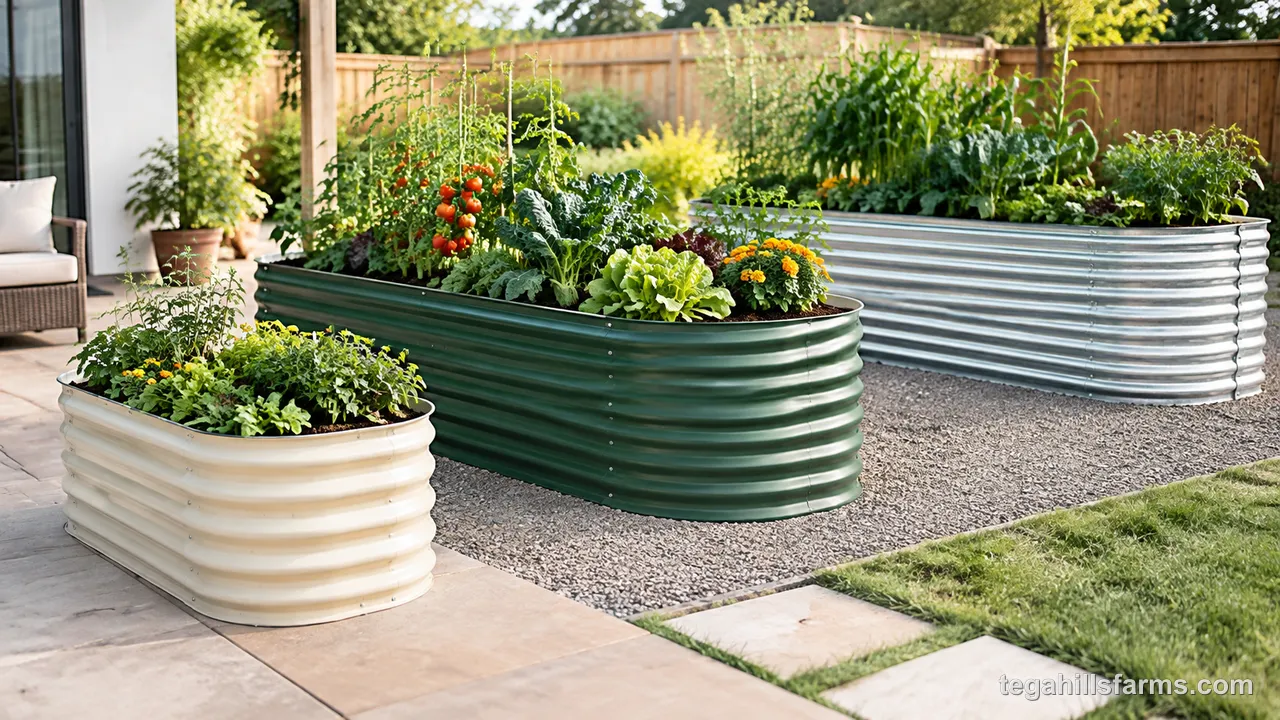
The Vego garden 17″ Modular Raised Bed fits patios and tight yards well, since its 6-in-1 design reshapes to suit a corner while keeping a deep root zone. The Land Guard Oval Raised Garden Bed suits an even smaller spot at 4 by 2 feet, and the SnugNiture 3-Pack Oval Raised Garden Bed splits growing space into separate beds you can tuck wherever they fit.
Smaller footprints change what you can grow. Compact beds hold fewer plants, so sprawling squash, melons and pumpkins crowd out everything else, while peppers, herbs, greens and a staked tomato make better use of limited soil. For planters built around balconies and decks, the best raised garden beds for small spaces offer more compact shapes to compare.
Which Bed Suits Large Yards and Big Harvests?
The Vego garden 17″ 4′ x 10′ Raised Bed gives you up to 40 square feet in one bed, with 23 ways to build it around trees and paths. For more total area spread across separate beds, the Land Guard Raised Garden Bed 8x4x1ft 2-Pack holds 57.12 cubic feet of soil between its two beds, and the BIRDSINYARD 2-pack joins into longer or custom-shaped runs.
Larger beds change how you plant and work. Wide beds need access from both long sides so you never step on the soil and compact it, and long runs make it easy to plant in blocks and rotate crop families each year. If a standard footprint suits your yard, the best 4×8 raised garden beds are a practical starting point for a first big vegetable plot.
Which Beds Give Deep-Rooted Crops Enough Room?
The Land Guard 8×4×2 ft Galvanized Garden Bed offers the deepest soil here at two feet, which suits broccoli, beans and other medium- to deep-rooted crops. The 17-inch Vego beds and the SnugNiture 3-Pack Oval Raised Garden Bed come next, with ample room for tomatoes, carrots and potatoes.
Depth also changes how you water. Deep soil holds moisture longer, so you can water less often but more thoroughly, soaking until water reaches the lower roots. The one-foot beds dry out faster in summer heat and may need watering every day in hot southern zones.
How Do You Set Up and Fill a Raised Garden Bed?
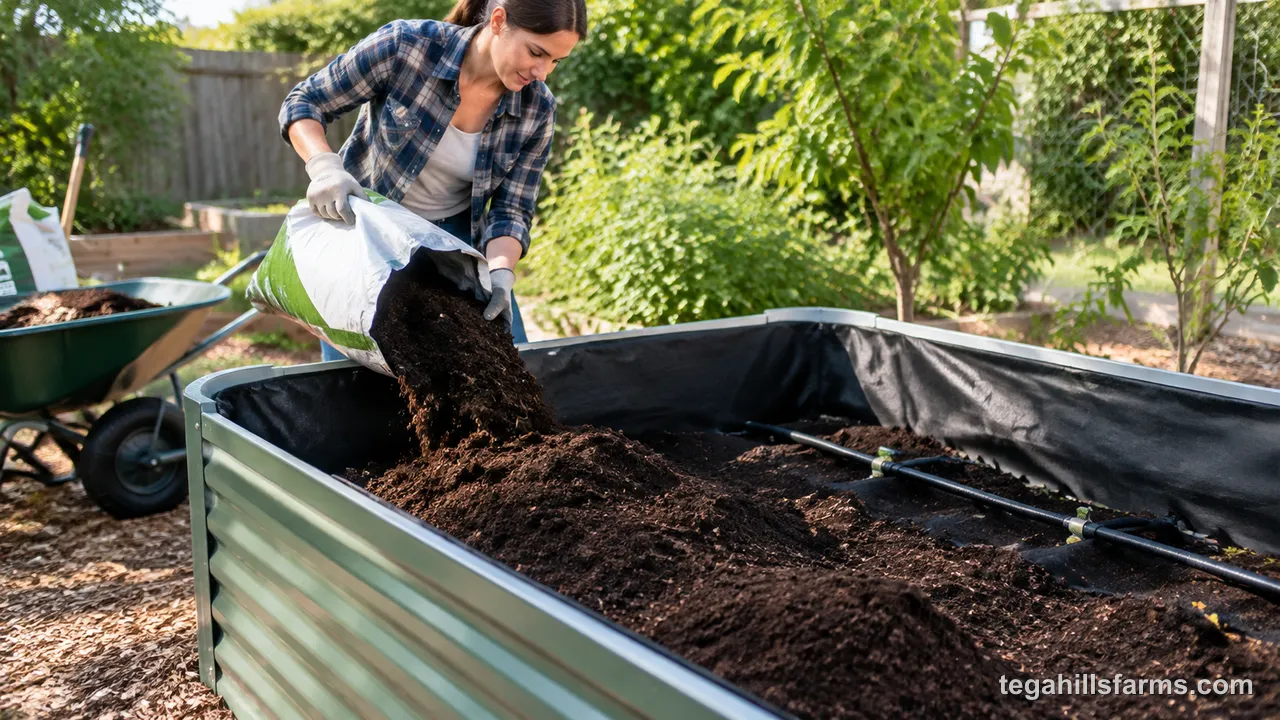
A raised bed is only as good as what fills it, so the first job after assembly is building loose, fertile soil that drains well; accessories come second and mostly save time. Set the bed in its final spot before filling, because moving a box full of wet soil is far harder than getting the placement right once.
What Soil Works Best in a Raised Bed?
A good raised bed mix blends screened topsoil with plenty of compost, giving roots loose, crumbly soil that drains freely yet holds moisture and nutrients. Plain dirt dug from the yard tends to compact inside a bed’s walls, squeezing out air and draining poorly, and heavy fill like clay or subsoil turns waterlogged after rain. Bagged potting mix alone is too light and dries out quickly in a deep bed.
Your USDA zone shapes the details. In short northern seasons, dark, compost-rich soil in a metal bed warms quickly in spring for earlier planting. In hot southern zones, a layer of mulch over the soil slows evaporation and keeps roots cooler. Top up with fresh compost each season, since the mix settles and breaks down over time.
Which Add-Ons Make a Raised Bed Easier to Manage?
Irrigation, liners, gopher wire and trellises each fix one specific problem, so add them when that problem shows up in your garden. Drip lines and soaker hoses deliver water evenly at the soil line, which helps long beds where hand watering leaves dry spots, and the best raised bed irrigation kits hook up to a garden hose.
A breathable fabric liner keeps soil from washing out at the seams and slows weeds creeping up from below, so raised bed liners earn their place on open-base beds set over grass or weedy ground. Gopher wire belongs under any bed in a yard with burrowing pests, and a trellis lets cucumbers and pole beans climb instead of sprawling across the soil.
Zinc is the coating that keeps most of these beds from rusting, and that same layer sits against the soil where carrots, lettuce and tomatoes draw water all season. A bed with a thin or flaking finish can leave you tearing it out after a few years, or second-guessing every harvest that comes out of it.
Is Galvanized Steel Safe for Growing Vegetables?
Galvanized and coated steel is a sound choice for vegetable beds. The zinc coating stays stable in the near-neutral soil most vegetables prefer, and zinc is a micronutrient plants already take up in small amounts.
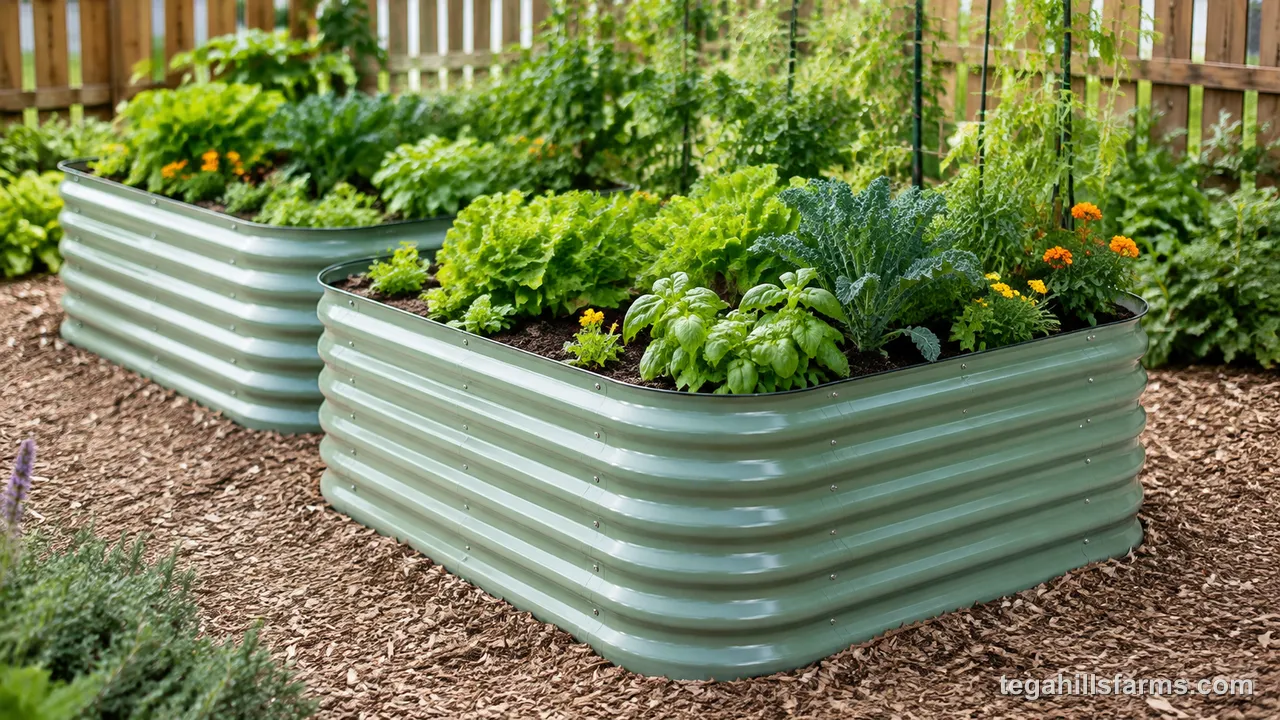
The coating exists to protect the steel. Zinc corrodes slowly in place of the iron underneath, and painted or alloy finishes add a second barrier between soil moisture and metal. Some beds go further: Vego’s VZ 2.0 beds carry a USDA-compliant, food-safe coating, and the Land Guard 8×4×2 ft bed uses an environmentally friendly paint that doesn’t pollute the soil.
Cautious gardeners can check a few things before planting. Look for a bed that names a food-safe or non-toxic finish, make sure the coating arrives free of chips and flaking, and avoid strongly acidic soil, since acid speeds up zinc breakdown; acid-loving blueberries are better off in a separate container. If you’d rather stick with painted or alloy-coated metal, the best steel raised bed planters make it easy to compare finishes side by side.
How Can You Tell a Bed That Lasts From One That Fails Early?
A bed’s lifespan shows in its build before you buy and in its seams after a few seasons outdoors. Price alone won’t tell you which one you’re getting, whether you’re shopping raised garden beds under $100 or comparing the best raised garden beds under $200; the panels, coating and bracing will.
What Signs Point to a Durable Bed?
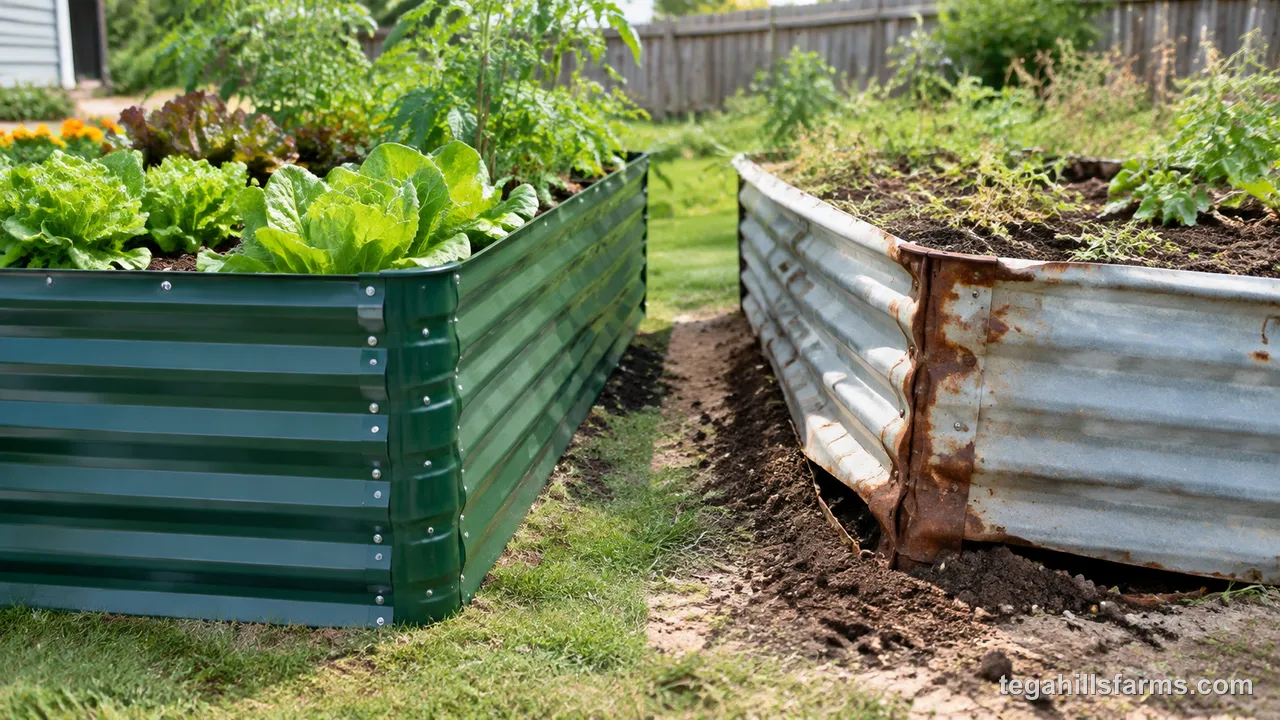
Sheet thickness, coating layers, reinforcement and finished edges are the build details that predict a long life. Thicker steel resists the outward push of wet soil, so walls stay straight instead of bowing in the middle of a long side.
A double galvanized layer, or zinc plus a paint or alloy coating, gives moisture two barriers to get through before it reaches bare metal. Cross bars, bracing rods or fixed piles on long or deep beds carry the load the panels can’t handle alone.
Edges matter too. A folded or rubber-capped rim adds stiffness along the top and won’t cut your hands while you work. A bed that names neither a sheet thickness nor a coating type is a reason to keep looking.
What Are the Warning Signs a Bed Is Wearing Out?
Rust at seams, bolt holes or the soil line, walls that bow outward, and soil spilling from gaps are the clearest signs a bed is wearing out. Surface rust on a scratch is cosmetic and can be wire-brushed and touched up with paint, but rust that flakes through the sheet means the coating has failed.
Slight bowing usually responds to an added cross brace or a stake driven against the wall. If the bend keeps growing each season, the panel is losing strength, and retightening loose bolts every spring helps you catch that early.
Replace the bed once holes open through the steel or bracing no longer holds the walls straight, because soil loss and collapse only speed up from there. Swapping it out in the off-season, with no crops in the ground, makes the job far easier.
Raised Garden Bed FAQs
Which vegetables should you not grow in a raised bed?
Sprawling and space-hungry crops fit raised beds poorly. Pumpkins, watermelons and winter squash vines spill over the walls and smother neighbors, corn needs a large block to pollinate well, and perennial asparagus ties up a bed for years. Grow these in the ground, or let vines trail over the edge onto a path.
Do you need a liner in a metal raised garden bed?
No, a liner is optional in an open-base metal bed. It helps when weeds or grass creep up from below, when soil washes out at the seams, or when you want a barrier between soil and steel. Choose breathable landscape fabric rather than plastic, which traps water and blocks drainage.
Does a metal raised bed get too hot for plants?
Metal walls warm soil faster than wood, which helps in spring and in short northern seasons. In hot southern summers, soil right against the wall can heat up and dry out, so water deeply, mulch the surface and keep heat-sensitive plants like lettuce a little away from the walls.
Where should you place a raised garden bed for the best sun?
Place it where it gets six to eight hours of direct sun, since tomatoes, peppers, squash and other fruiting vegetables need full sun to set a good crop. Running a long bed north to south lets both sides share the light evenly, and level ground keeps water from pooling at one end.
Can you put a raised garden bed on a patio or deck?
Yes, but an open-base bed lets water and soil run out underneath, which stains concrete and keeps decking wet. Set it on boards with drainage gaps or line the bottom with breathable fabric, and confirm your deck can carry the weight of wet soil before filling a deep bed.
More Guides on Best Raised Garden Beds
- Best Raised Bed Planters for Strawberries
- Best Raised Bed Planters for Vegetables
- Best Raised Garden Beds Under $300
- Best Raised Garden Beds Under $500
- Best Raised Bed Planters for Tomatoes
- Best Raised Bed Planters for Herbs
- Best Self Watering Raised Bed Kits
- Best 4×10 Raised Garden Bed
- Best Raised Bed Kits With Covers
- Best Raised Bed Kits With Wheels
- Best 2×4 Raised Garden Bed
- Best 2×8 Raised Garden Bed
- Best Composite Raised Bed Kits
- Best Tall Raised Garden Beds
- Best Plastic Raised Bed Kits
- Best Fabric Raised Bed Kits
- Best Large Raised Bed Kits
- Best Round Raised Bed Kits
- Best Deck Raised Bed Kits
- Best Raised Bed Trellis