

Natural pest control in a raised bed works by layering defenses. Physical barriers such as garden mesh and hardware cloth keep insects and animals off the crop. Companion plants confuse or distract pests, and targeted organic sprays handle the outbreaks that get past the first two. Healthy soil ties it all together, because a well-fed, evenly watered plant can shrug off feeding damage that would stall a stressed one.
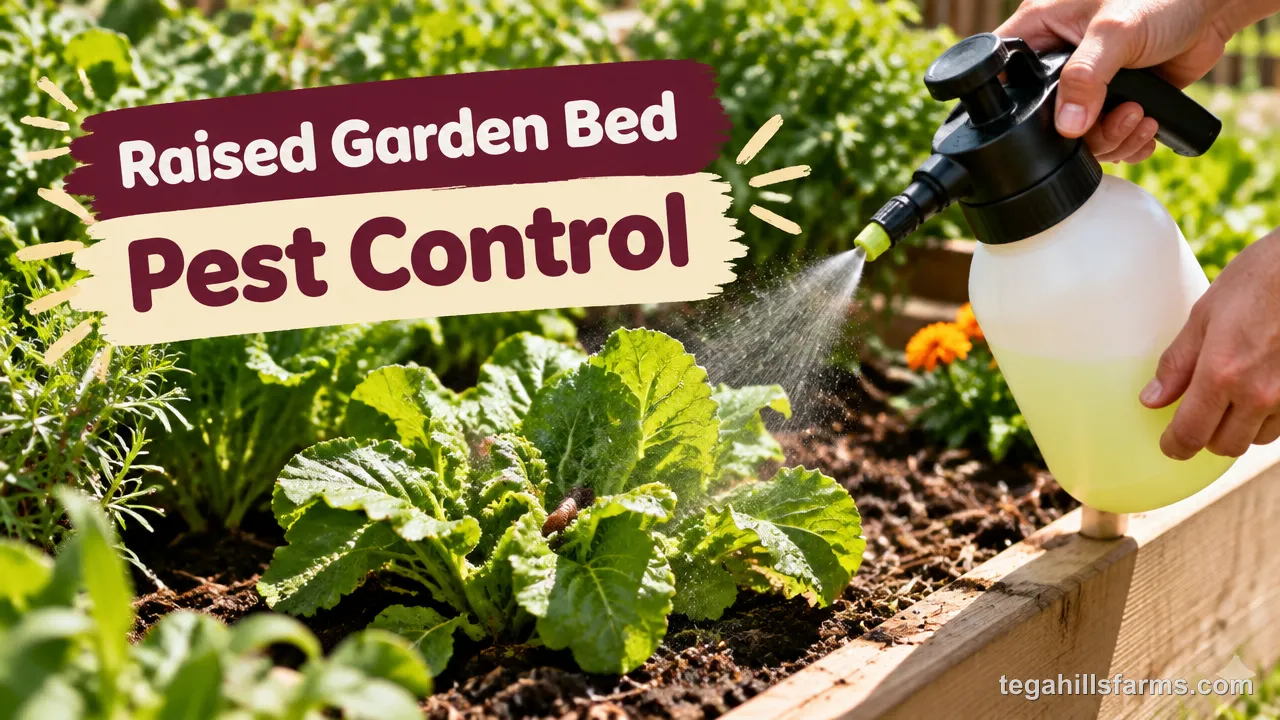
The right method depends on what is eating your plants. A flea beetle and a groundhog both chew leaves, but the beetle slips through bird netting and the groundhog tears through insect mesh. Matching the barrier or treatment to the pest saves you from buying every product on the shelf and still losing the lettuce.
Home gardeners usually have two worries. The first is keeping sprays safe around food they plan to eat. The second is protecting crops without shutting out the bees that pollinate squash, cucumbers and melons. Both concerns shape when you cover a bed, which spray you reach for, and how you time each application.
Walk the bed in the morning and turn over a few leaves before you buy anything. The damage pattern usually names the culprit, and the cheapest fix is often a cover installed before that pest shows up.
Why Natural Pest Control Works Better in Raised Beds
A raised bed gives you a defined, contained growing space where barriers, soil and plantings are controlled together, so natural methods protect the whole crop instead of chasing pests across an open garden.
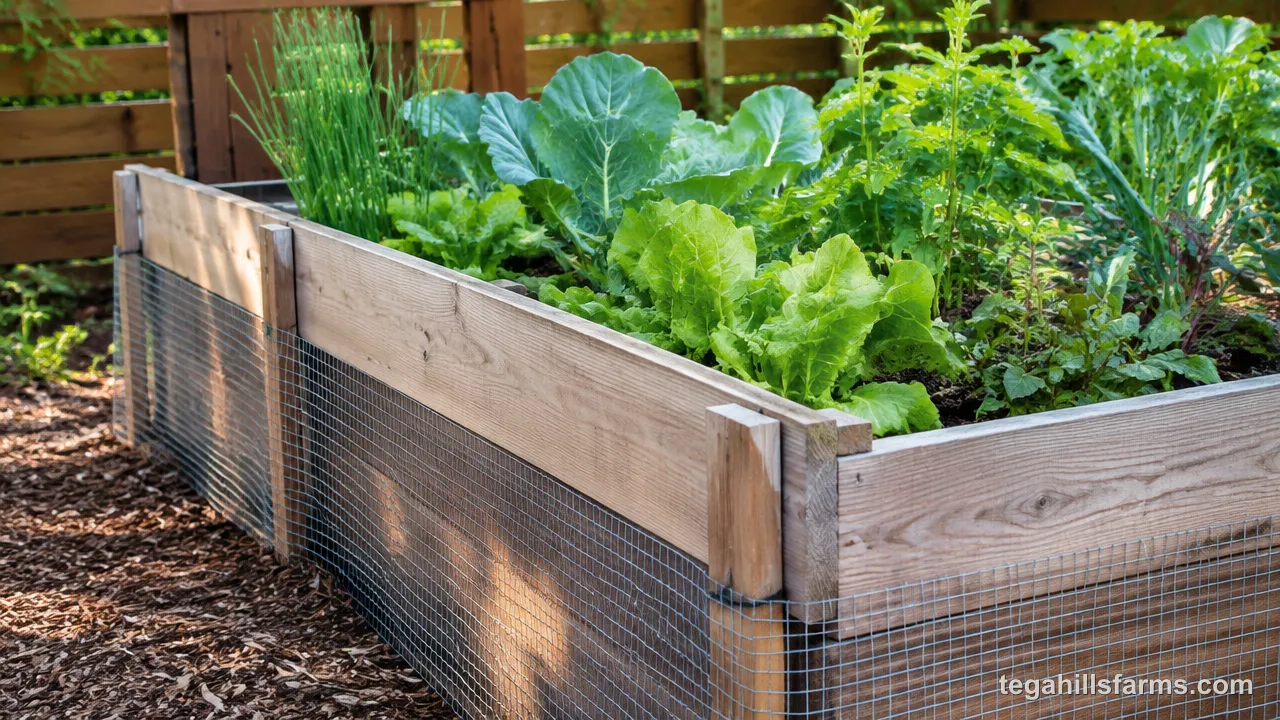
The walls give mesh and netting a solid edge to clip or staple to, which closes the gaps that ground-level rows leave open. You fill the bed yourself, so its soil can start cleaner than an old in-ground plot where weed seed and overwintering larvae have built up for years.
Width matters as much as walls. A bed kept 2 to 4 feet wide lets you reach every plant from the edge. That means you can spot the first aphid cluster or chewed leaf early and treat it without stepping on and compacting the soil.
Natural methods rely on prevention more than knockdown, so they work best when the plant itself is strong. Choosing a bed with the right height and depth gives you control over soil quality and drainage, which keeps plants vigorous enough to resist pests before they take hold. The guide on how to choose a raised garden bed covers the features that support strong growth from the start.
What Physical Barriers Stop Pests Without Chemicals
The size of the pest decides the barrier: fine mesh stops insects that fly or hop onto leaves, while sturdier netting and wire stop birds and mammals that would push through or chew fabric.
Getting the match wrong costs you twice. Netting sized for birds lets aphids walk straight in, and light insect mesh tears the first time a raccoon leans on it. Timing also decides whether any barrier works. Cover the bed before the pest arrives, because covering it after eggs are already on the leaves traps the next generation inside with your crop.
Garden Mesh and Micromesh for Small Insects
Black screen-type garden mesh with openings of about an eighth of an inch keeps out larger flying insects such as cabbage moths and many beetles. The tiniest pests, including aphids, flea beetles, thrips and whiteflies, need micromesh, which is woven finer still.
Denser fabric blocks more insects, but it also cuts more light and airflow. Choose the density that stops the pest you actually have, rather than defaulting to the finest weave for every bed. Lettuce and brassicas tolerate the shading of micromesh well. Heat-loving crops do better under a more open weave when only larger insects are the problem.
Seal every edge. Small insects crawl through any gap, so tuck the mesh under the bed lip, clip it to the walls, or weigh the hem down with boards or bricks along the full length.
Netting and Hardware Cloth for Larger Animals
Bird netting protects ripening berries and tomatoes from birds and keeps deer from browsing a bed. Squirrels can chew through it, though, and raccoons can pull it apart. Hardware cloth is the answer for persistent animals. It is a stiff welded-wire mesh with small square openings that rabbits, groundhogs, squirrels and raccoons can’t chew through or claw open.
Chicken wire sits between the two. It is light and easy to shape, and it keeps rabbits off greens when stretched taut around a bed. Its twisted hexagonal openings are larger, however, and the thin wire bends under a determined raccoon or a digging groundhog.
Pick the lightest material that holds against your specific animal. Hardware cloth costs more and is harder to cut. It also lasts for many seasons, and that makes up the difference in a yard where groundhogs return every spring.
Installing Hoops and Frames to Support Covers
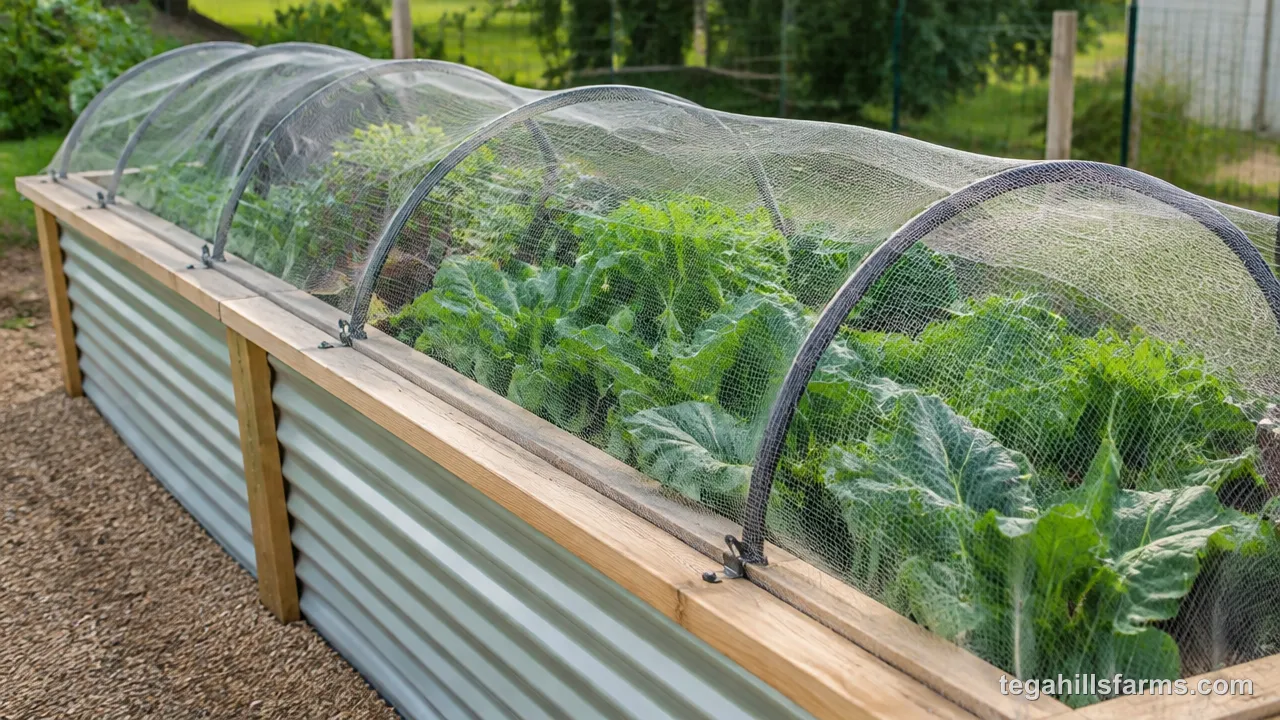
Hoops spaced every couple of feet along the bed hold mesh or netting above the foliage. That spacing matters, because insects feed and lay eggs right through fabric that rests on leaves. Flexible hoops of PVC, fiberglass or bent metal conduit are the simplest option. Push the ends into the soil along the inside of the walls, or slide them into pipe clamps screwed to the boards so wind can’t lift them.
Build the arch for the plant’s mature height, not its seedling height, so the cover never presses down on growing tops. A bed narrow enough to reach across lets a single hoop span the width without sagging in the middle.
A lengthwise ridge pole or tied cord along the top keeps the hoops evenly spaced. It also stops the cover from drooping between them after rain.
How Companion Planting Deters Common Pests
Companion plants protect a crop by masking its scent, repelling pests with strong aromatic oils, or drawing insects onto a plant you care less about.
None of these effects stops an infestation outright. They lower the pressure so that barriers and hand-picking can handle the rest, which is why companions earn their space in a crowded bed rather than replacing other methods. Interplanting also changes how much room each crop gets, so plan companions alongside what to plant in a raised garden bed before you order seeds.
Marigolds for Aphids and Beetles
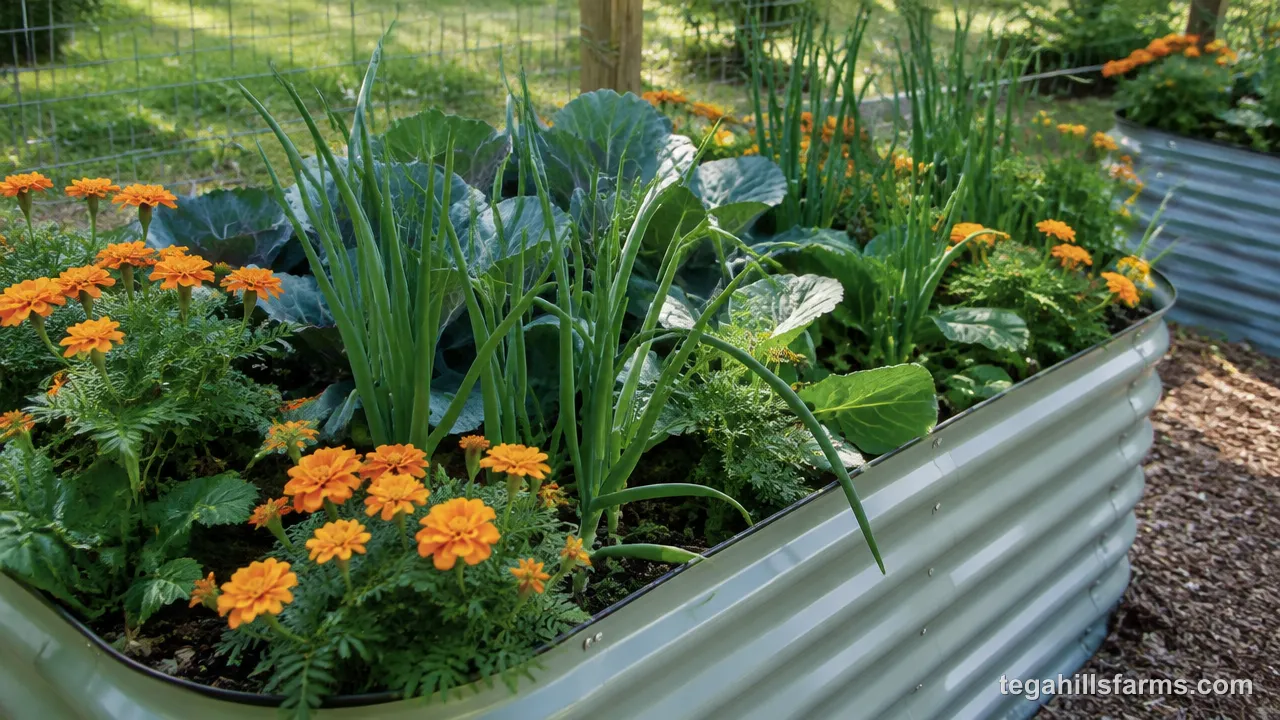
Marigolds help in two different ways. Their strongly scented foliage can make neighboring crops harder for aphids to find. Their open flowers also feed hoverflies and lacewings, whose larvae eat aphids.
With Japanese beetles, marigolds work as a trap crop rather than a repellent. The beetles often gather on the blooms, where you can knock them into a jar of soapy water before they move to your beans.
Plant marigolds as a border along the bed edges and at the corners, or tuck single plants between tomatoes and peppers. A row of them around a strawberry patch works too. Keep them from shading low crops, since crowding reduces airflow and invites the spider mites that thrive on stressed leaves.
Alliums and Herbs Between Vegetables
Garlic, onions, chives, rosemary and peppermint work by smell. Their strong oils mask the scent that cabbage moths follow to kale, broccoli and cabbage, where those moths lay the eggs that become cabbageworms. Flea beetles and leaf miners also have a harder time locating host plants in mixed plantings than in a solid block of a single crop.
Place alliums in short rows or clumps between brassicas and greens rather than in a separate corner, because the scent has to be close to the crop to interfere.
Peppermint spreads aggressively through bed soil, so grow it in a pot sunk into the bed. Rosemary overwinters outdoors only in warmer USDA zones. In colder zones, grow it in a container you can bring indoors before frost.
Which Organic Sprays and Dusts Control Soft-Bodied Insects
How the pest feeds and moves decides which organic treatment works: contact sprays must hit the insect directly, while stomach-acting and barrier products wait for the pest to eat or crawl across them.
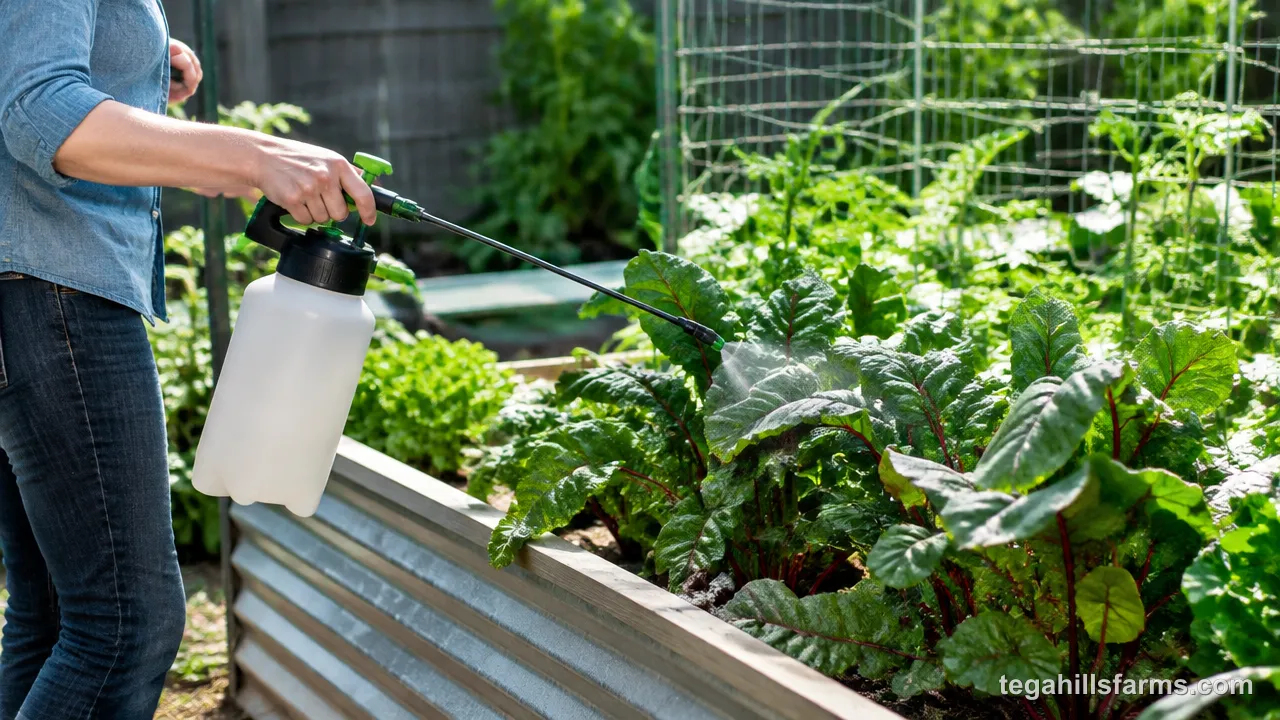
Choosing well protects more than the crop. Even plant-based treatments can harm bees and beneficial insects when sprayed on open flowers. Apply early in the morning or in the evening when pollinators are less active. Test any spray on a few leaves a day before covering a whole plant, and follow the label on every product.
The differences come down to how each treatment reaches the pest:
| Treatment | How it works | Main targets | When it stops working |
|---|---|---|---|
| Plant-oil and soap sprays | Breaks down the soft outer layer on contact | Aphids, spider mites, whiteflies, mealybugs | Once dry, no lasting effect |
| Bt (Bacillus thuringiensis) | Stops caterpillars feeding after they eat treated leaves | Cabbageworms and other caterpillars | Breaks down in sunlight and rain |
| Diatomaceous earth | Scratches and dries out crawling pests | Slugs, snails, ants, flea beetles | When wet or washed away |
Oil and Soap Sprays for Aphids and Mites
Oil and soap sprays kill aphids, spider mites, whiteflies and mealybugs by breaking down their soft outer layer and smothering them on contact. Ready-made blends such as EARTH’S ALLY Insect Control use plant oils including rosemary, clove and peppermint. A homemade option is a mild solution of pure Castile soap in water.
These sprays leave no lasting residue, so they only kill the insects they actually wet. Spray the undersides of leaves and new growth, where aphids and mites cluster. Repeat when you see live insects again, and always repeat after rain, following the label interval for commercial products.
Avoid spraying in midday heat or full sun. Oil and soap on warm leaves can scorch tender foliage, especially on young greens.
Bt for Caterpillars and Worms
Bt is a soil bacterium, Bacillus thuringiensis, that only harms caterpillars. When a cabbageworm eats a treated leaf, a protein from the bacterium damages its gut, and it stops feeding. Bees, ladybugs and lacewings aren’t affected, which makes products such as Monterey Bt a selective choice for brassica beds full of beneficial insects.
Bt does affect butterfly caterpillars, so spray only the crops that show damage, not the flowers nearby. Sunlight and rain break it down, so reapply after storms.
Leaf miners are a poor fit for Bt. Their larvae tunnel inside the leaf, out of reach of anything sprayed on the surface. Picking off and destroying the mined leaves works better.
Diatomaceous Earth for Slugs and Crawling Insects
Diatomaceous earth (DE) is a powder of fossilized algae shells. Its microscopic sharp edges scratch the waxy coating of crawling pests, which then dry out and die. Use food-grade DE. Dust a ring around plant stems and a line along the inside of the bed walls to stop slugs, snails, ants and flea beetles as they move toward the crop.
DE only works while dry. Rain, dew and overhead watering clump it into a harmless paste, so reapply a fresh light dusting once the surface dries after each soaking.
Keep it off open flowers, because it harms bees the same way it harms pests. Wear a dust mask when applying it, since the fine powder irritates the lungs.
How to Keep Deer, Rabbits, and Raccoons Out of Raised Beds
Larger animals get into a raised bed over the top or under the walls, so lasting protection blocks both routes at once.
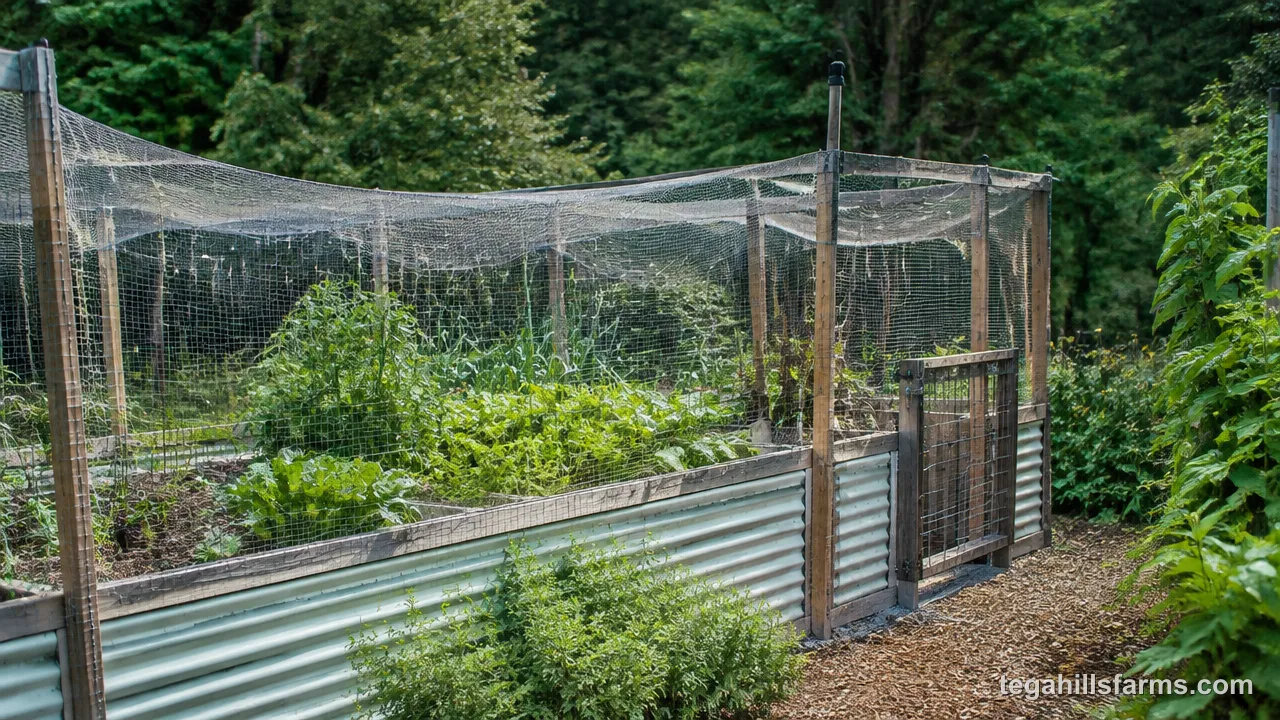
Bed height alone stops very little. A bed at least 6 to 8 inches tall gives roots room to grow, but rabbits hop right in, and voles, rats and mice tunnel up from below. Raccoons and squirrels climb, and neighborhood cats treat freshly turned soil as a litter box.
Wall height also sets how much soil your crops have, which is why how deep a raised garden bed should be depends on both your plants and the animals in your yard. Deciding which animals you are dealing with comes first. The tracks, droppings and bite marks they leave tell you whether to build down, up, or both.
Burying Fencing to Stop Digging Animals
Hardware cloth laid across the bottom of the bed before you fill it stops voles, gophers and groundhogs from tunneling up into the root zone. Run it flush to the walls and staple it to the bottom boards so animals can’t squeeze around the edges.
For a fence around the bed, bury the bottom of the rabbit fence several inches deep. Bend the buried section outward into an L shape, so an animal that starts digging at the fence line hits wire instead of open soil.
Choose heavier galvanized hardware cloth for anything going underground. Thin wire rusts faster in damp soil, and a single rusted gap reopens the tunnel route.
Tall Fencing and Overhead Netting for Deer and Raccoons
Deer jump rather than dig, so a fence only stops them if it is taller than they can clear. When fencing the whole garden isn’t practical, bird netting stretched over hoops works because deer avoid getting tangled in mesh.
Raccoons and squirrels climb any fence that lacks a top. For them, the bed needs a lid. That can be a hinged frame covered in hardware cloth, or hardware cloth fastened over hoops and clipped tight to all four walls.
Check local rules before putting up a tall perimeter fence, since height limits vary by town and HOA. A covered cage over each bed avoids that question entirely. It also protects against raccoons, squirrels and deer with a single structure you can lift off at harvest.
How Soil Health and Mulch Reduce Pest Pressure
Healthy soil and steady moisture make plants less vulnerable to pests, because a well-rooted, unstressed plant outgrows minor feeding damage that would stall a weak one.
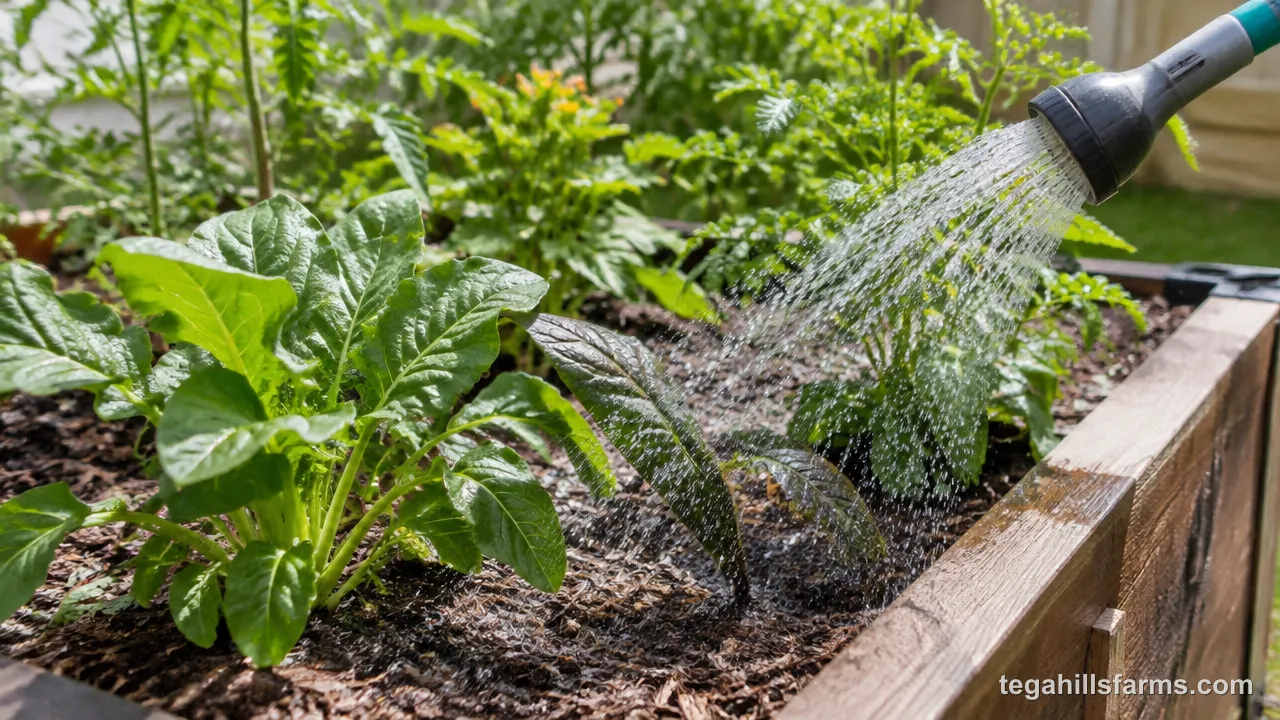
Water is the first lever. Plants need at least 1 inch of rainfall or irrigation per week for healthy growth. Drought-stressed plants invite spider mites, which thrive in hot, dry conditions.
Feeding matters in the other direction. Heavy doses of nitrogen push out soft, lush growth that aphids favor, so steady compost does more for pest resistance than a strong fertilizer.
A 2- to 3-inch-deep layer of bark or pine mulch around the base of the plants keeps moisture even and the soil cooler. Pull mulch back slightly from stems, because in damp spells it can shelter slugs right at the plant. The soil mix you start with matters most, so settle how to fill a raised garden bed before the first planting.
What Pest Damage Looks Like on Common Vegetables
The way a pest feeds leaves a signature, and the shape of the damage plus what is left behind usually identifies the culprit before you ever see the insect.
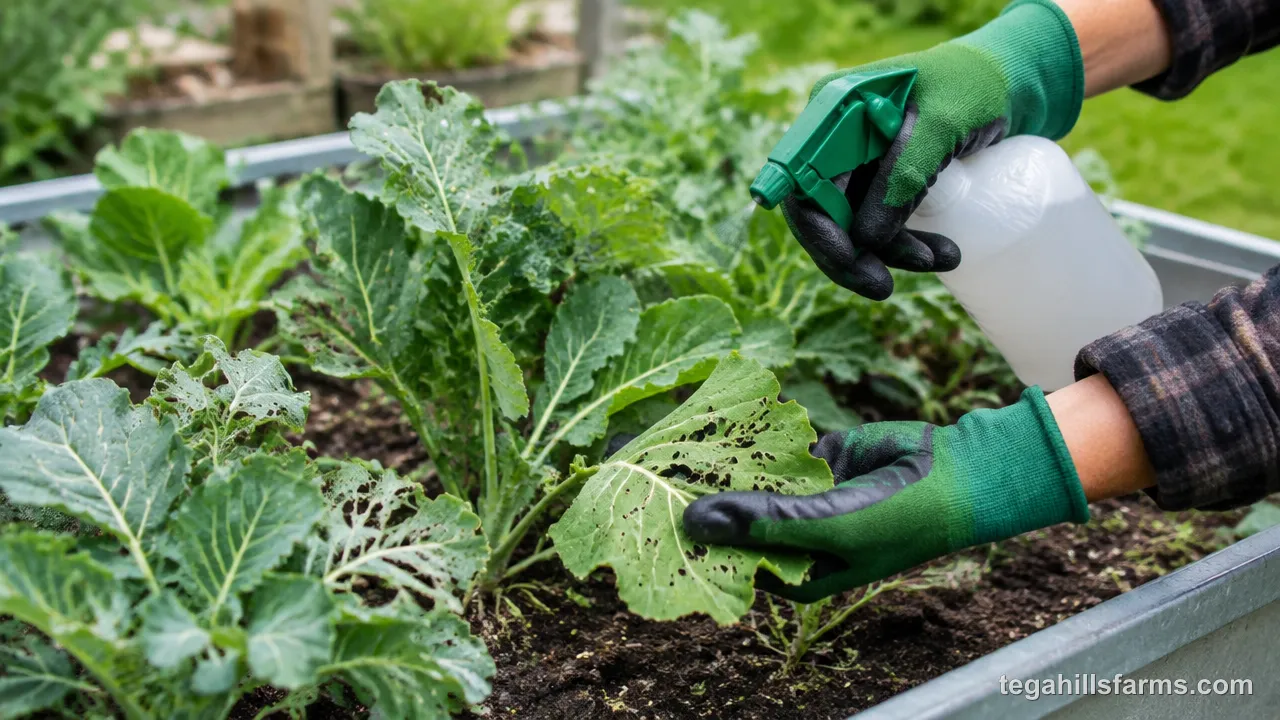
Identifying the pest first keeps you from spraying for aphids when slugs are the problem, or from killing the ladybugs that were already cleaning up your beds. Many pests feed at dawn, at dusk or overnight. Check the undersides of leaves at those times, and the evidence becomes much easier to read.
Chewing Damage Versus Sucking Damage
Holes and ragged edges mean a chewing insect, while pale speckling, yellowing and curling mean a sucking insect.
Among chewers, Japanese beetles skeletonize leaves, eating the tissue between the veins until a lacy frame remains. Cabbageworms chew ragged holes in brassicas, and flea beetles pepper eggplant, radish and arugula leaves with tiny shot holes. Leaf miners leave winding pale tunnels inside the leaf.
Among sucking insects, aphids cluster on new growth and cause curling. Spider mites cause fine pale stippling, often with faint webbing underneath. Thrips leave silvery streaks, and stink bugs leave cloudy, hard spots on tomatoes and peppers.
Slime Trails, Frass, and Droppings
Shiny, dried slime trails on leaves and soil point to slugs or snails. These pests chew irregular holes at night and hide during the day, so check with a flashlight after dark.
Small dark green or black pellets on lower leaves are frass, the droppings of caterpillars feeding above them. Look directly overhead for cabbageworms on brassicas or hornworms on tomatoes, which blend in well with the foliage.
Rodents leave different clues. Voles create surface runways and gnaw stems right at the soil line. Rats and mice leave droppings near covered beds, where they nest under the fabric. Wear gloves when cleaning up rodent droppings, and remove anything that gives them shelter.
When to Cover Your Raised Bed and When to Leave It Open
Keep the bed covered from seeding or transplanting until flowering, then uncover crops that depend on insect pollination, such as squash, cucumbers and melons.
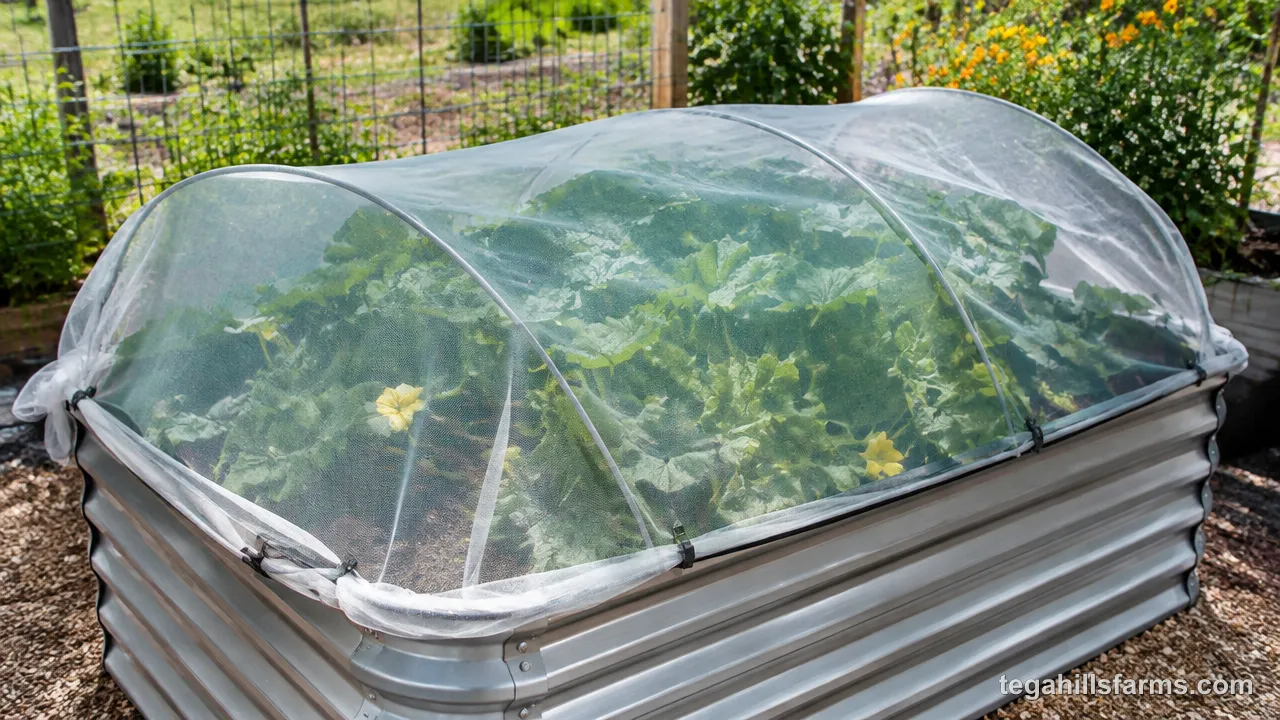
The seedling and transplant stages need protection most, because flea beetles and cabbageworms can strip a young plant before it has enough leaves to recover.
Leafy greens, brassicas and root crops are harvested for their leaves or roots, not fruit, so they can stay covered all season. Tomatoes and peppers mostly pollinate within each flower and tolerate a cover longer, though open access to bees still improves fruit set.
For squash and cucumbers, remove the garden mesh or row cover once female flowers appear. You can also open it on mornings when bees are active and close it in the evening. If pest pressure is too heavy to uncover at all, hand-pollinate with a small brush, moving pollen from male flowers to female ones.
Colorado potato beetles, squash vine borers and flea beetles spend the winter in the soil and leftover stems of the same bed they fed on last summer. Plant the same crop family in that spot next spring and those pests emerge right under your new mesh, already inside the barrier you built to keep them out.
Rotating Crops and Cleaning Beds Between Seasons
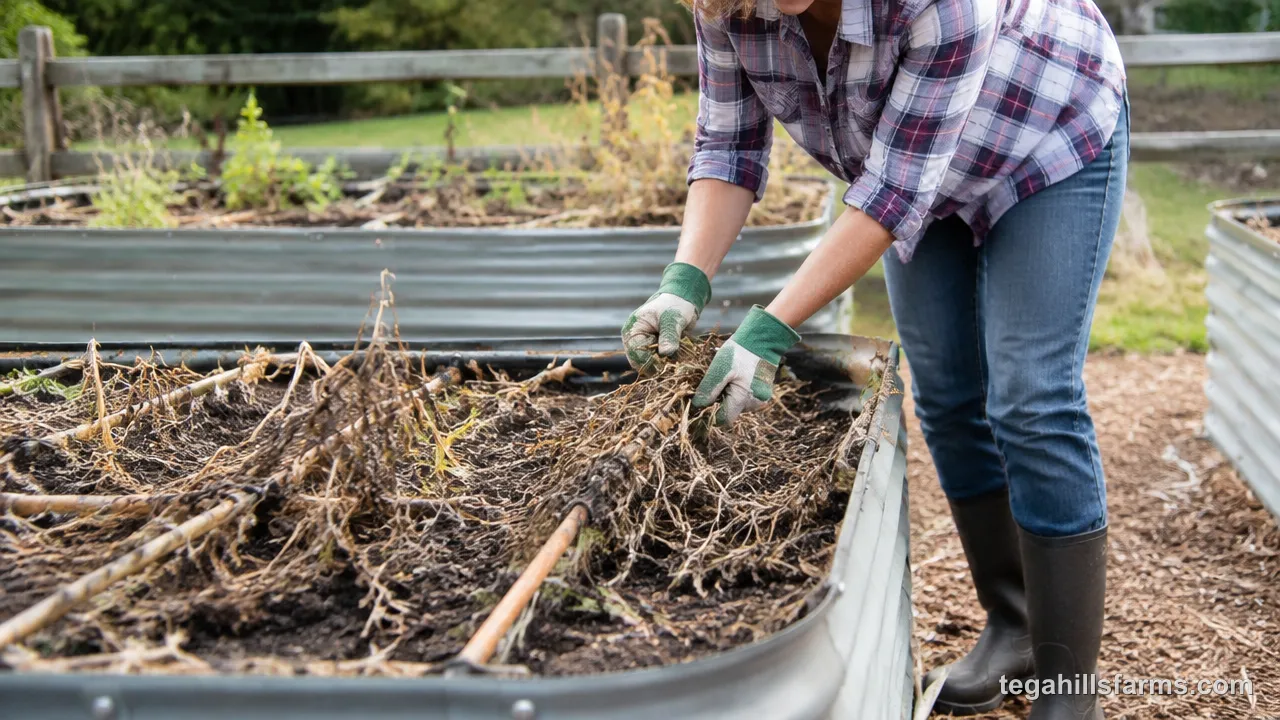
Moving each crop family to a different bed or section every year, and clearing out spent plants in fall, breaks the life cycle of pests that overwinter as eggs, larvae or pupae where their host crop grew.
Rotate by family, not by individual crop. Tomatoes, peppers and eggplant share pests, as do kale, broccoli and cabbage, and squash, cucumbers and melons. Gardeners with several beds can rotate families among them. With a single bed, divide it into sections and move each family to a new section, waiting a few years before it returns to its original spot.
At season’s end, pull infested or diseased plants and bag them rather than composting them, since a home pile rarely gets hot enough to kill eggs. Lightly turn the top layer of soil to expose pupae to birds and cold. Weeds left standing over winter shelter aphids and flea beetles, so the steps for how to stop weeds in raised garden beds pay off for pest control too.
Common Questions About Natural Pest Control in Raised Beds
How do I clean garden mesh at the end of the season?
Shake off loose soil and leaves, then soak the mesh in a tub of water with mild soap. Rub off sticky residue and insect eggs by hand, and rinse with a garden hose. Skip the washing machine, which can snag and stretch fine weaves. Let the mesh dry completely before folding.
How should I store mesh and row covers over winter?
Dry them completely so mildew can’t weaken the fibers. Fold them loosely, label each by size, and store them in a sealed bin out of sunlight. A closed bin matters because mice shred stored fabric for nesting. Sunlight breaks down synthetic mesh over time, so keep covers out of the sun when not in use.
How often should I reapply organic sprays?
Oil and soap sprays leave no lasting effect, so reapply whenever live insects reappear and after every rain. Bt also breaks down in sunlight and rain and needs reapplying after storms. For any commercial product, follow the interval printed on the label rather than spraying on a fixed schedule.
Can I combine barriers with organic sprays?
Yes, and the combination works well. Inspect plants before closing a cover, and treat any aphids or caterpillars you find so survivors aren’t sealed inside with the crop. If an outbreak starts under the mesh, open it, spray the affected plants, let the leaves dry, and secure the edges again.
Does diatomaceous earth still work after it rains?
Wet diatomaceous earth stops working because moisture dulls its effect on pests, and heavy rain washes much of it away. Once the soil surface dries, sprinkle a fresh light dusting around stems and along the bed walls. Keep it off flowers so foraging bees aren’t harmed.


Write Your Review
No reviews yet. Be the first to share your experience!