7 Best Window Boxes (2026): Expert Picks
Our top picks for the best window boxes in 2026 are VIVOSUN Self-Watering Planter 6-Pack 10.5in (Best Overall), Mayne Fairfield Window Box 36in White (Best for Cold Climates), Mayne Fairfield Window Box 48in Black (Best Durability), Mayne Fairfield Window Box 60in White (Best Large Capacity), Veradek Demi Series Round Window Box (Best Budget), Mayne Nantucket Window Box 24in (Best Lightweight), and Mayne Yorkshire Window Box 60in (Best Premium).
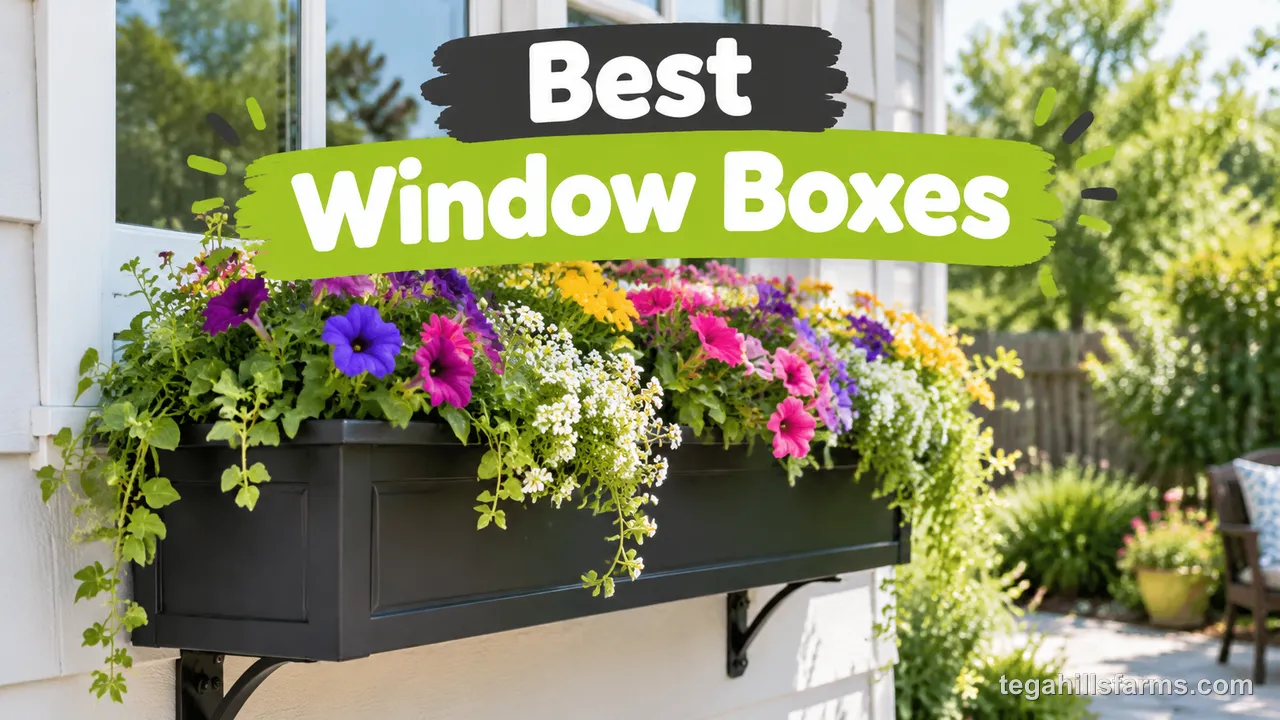
A window box that thrives through a full season needs four things. It needs a material that shrugs off sun and frost, a length that suits your window, enough soil to keep roots from drying out by afternoon, and a dependable way to handle water.
Weight is the concern that catches most gardeners off guard. A box that feels light in the store becomes much heavier once it’s packed with wet potting mix and a full reservoir. That loaded weight is what your siding, sill and brackets have to hold all summer.


If you travel often or your box faces hot afternoon sun, a self-watering design keeps plants from wilting between waterings. On a shaded wall in a rainy climate, a box with open drainage holes usually gives you enough control.
What Should You Look for in a Window Box?
A box earns its spot on your wall by keeping roots evenly moist and insulated while staying solidly mounted, because it hangs exposed on every side with far less soil than a garden bed. Those jobs, more than color or trim style, sit at the heart of how to choose a window box that still looks full in late summer.
Which Window Box Material Holds Up Best Outdoors?
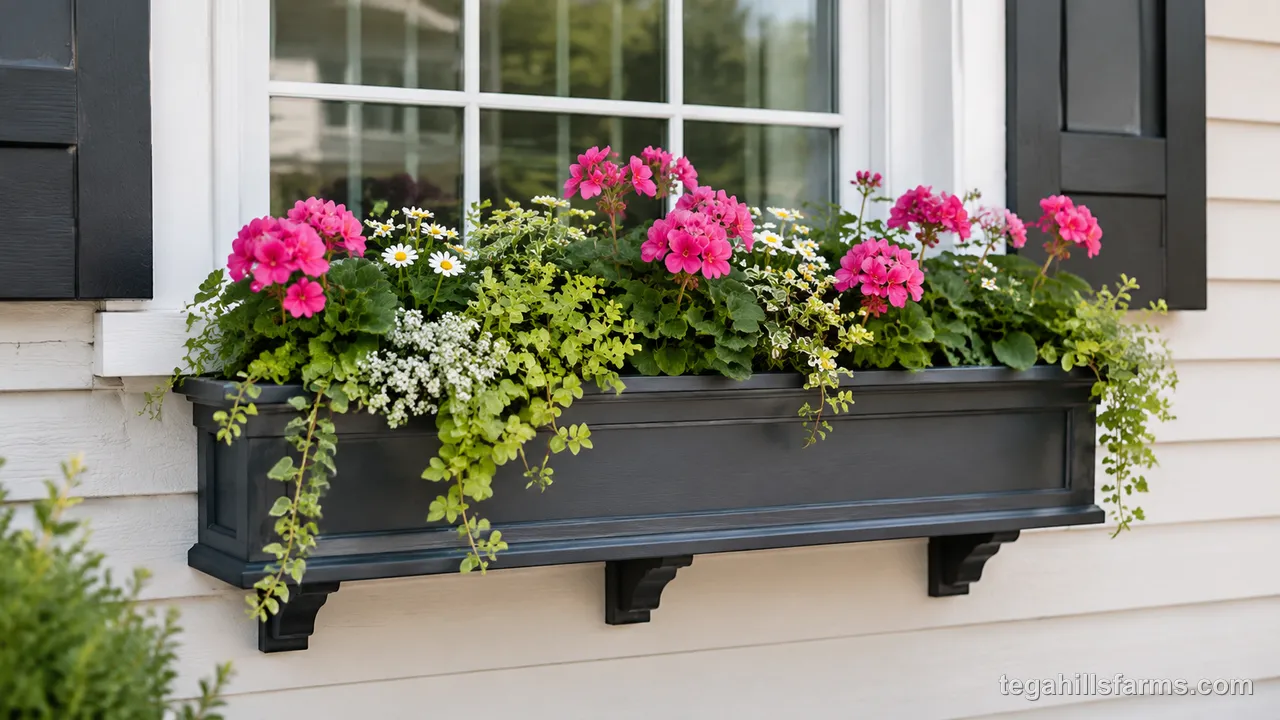
Polyethylene resin, vinyl and plastic-stone composite handle outdoor conditions with the least upkeep, while wood and metal each bring a trade-off you’ll need to manage. Polyethylene flexes instead of cracking when soil freezes, stays light, and holds its color longer when the resin contains UV inhibitors. Vinyl is more rigid, so it keeps crisp lines and won’t rot, which is why the best PVC window boxes often pass for painted trim from the street.
Plastic-stone composite adds heft and a textured, stone-like surface that stays steady in wind, though it takes more effort to mount. Wood insulates roots well, but it rots unless you choose a decay-resistant species, and for herbs or vegetables it should be untreated. Metal looks sharp, yet it heats quickly in direct sun and can cook roots against a south- or west-facing wall, so anyone eyeing the best metal window boxes should plan on a liner or a shadier spot.
How Big Should a Window Box Be for Your Window?
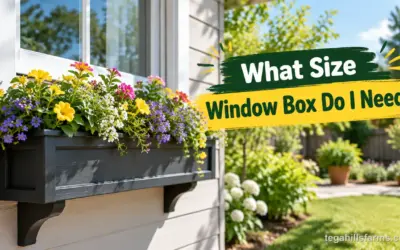
Match the box length to the width of the window, or let it run a little past the trim on each side. Then choose the deepest, widest box your wall can safely carry, because soil volume decides how quickly plants dry out. A box that looks right but holds only a thin layer of soil will wilt on the first hot afternoon.
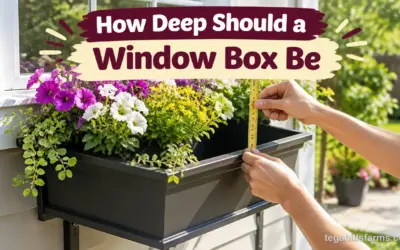
Depth matters most for roots. Shallow boxes suit succulents, thyme and compact annuals, while tomatoes, peppers and large mixed plantings need extra depth to anchor and stay moist. Front-to-back width gives you room to layer an upright plant at the back, mounding fillers in the middle and trailing plants that spill over the front edge.
Proportion still counts from the street. A box much shorter than the window looks like an afterthought, and one far longer than the trim can overpower a small facade.
Why Do Drainage and Self-Watering Matter?
Drainage keeps roots from sitting in water, and a self-watering reservoir keeps them from drying out; the right box handles both. Without drainage holes or an overflow outlet, rain collects at the bottom, air is pushed out of the soil and roots start to rot. That damage shows up as yellow leaves even though the soil looks wet.
A self-watering box holds water in a reservoir under the planting container, and the potting mix draws it upward by capillary action as the surface dries. An overflow outlet sets the top of that reservoir, so a downpour drains away instead of flooding the root zone. That design suits hot, sunny walls, busy schedules and windows you can’t reach easily.
On a shaded wall in a wet climate, or for succulents that want to dry out between drinks, simple drainage holes give you more control. The trade-off is that they drip onto the sill or siding below.
The 7 Best Window Boxes of 2026
The best window boxes for 2026 are VIVOSUN Self-Watering Planter 6-Pack 10.5in (Best Overall), Mayne Fairfield Window Box 36in White (Best for Cold Climates), Mayne Fairfield Window Box 48in Black (Best Durability), Mayne Fairfield Window Box 60in White (Best Large Capacity), Veradek Demi Series Round Window Box (Best Budget), Mayne Nantucket Window Box 24in (Best Lightweight), and Mayne Yorkshire Window Box 60in (Best Premium). Nearly all of these store water in a reservoir beneath the soil, while the Veradek uses pre-drilled drainage holes. Your first decision is whether your schedule and sun exposure favor a reservoir or open drainage; length and empty weight then decide what your window and wall can carry.
#1 VIVOSUN Self-Watering Planter 6-Pack 10.5in — Best Overall
Narrow kitchen sills and herb collections are where this set shines. Each planter separates soil from a detachable water reservoir with absorbent wicking strips, and a side viewing window shows the water level, so basil and mint stay evenly moist between refills.
Key Specs:
- Pack size: 6 planters, 10.5 in each
- Weight: 3.96 lb
- Material: Plastic
- Watering: Two-layer self-watering system with water-absorbent strips
- Water check: Side viewing window
- Extras: 10 plant labels
Detailed Review:
The inner container lifts the potting mix above the reservoir, and water-absorbent strips at its base draw moisture upward as the soil dries. That keeps the root zone damp without staying saturated, the condition that leads to root rot in basil, rosemary and thyme. Water goes in through a top opening, so refills don’t splash soil across the sill.
Each planter is a separate unit, which lets you give mint its own container and keep it from smothering slower herbs. The plastic body resists corrosion and stays light enough to carry to a brighter window as the sun’s angle shifts through the seasons. The large reservoir detaches for cleaning, plant swaps or a quick check on how much water is left.
Once roots mature, you can lift a plant out of the soil and keep growing it hydroponically in the same container, a handy option for cuttings and herbs you snip daily. Among the best self watering window boxes, this set is designed around narrow sills and kitchenettes. I’d reach for it first when the goal is a steady supply of kitchen herbs.
Pros:
- Detachable reservoir makes water changes and refills simple.
- Side window shows the water level at a glance.
- Separate planters keep spreading herbs like mint contained.
- Converts to hydroponic growing once roots mature.
- Plant labels included for tracking varieties.
Cons:
- Compact containers hold too little soil for deep-rooted vegetables.
- Lightweight plastic can shift in gusts on an open ledge.
- Separate reservoirs each need their own refill check.
Who It’s For:
Apartment gardeners with a sunny kitchen sill, and anyone who wants basil, chives or mint within reach of the stove, will get the most from this set. It also suits renters who can’t mount anything outside. If you want one continuous trailing display across an exterior window, a long wall-mounted box fits that goal better.
Editor’s Verdict:
Pick this set for self-watering herbs on a sill; separate reservoirs, a water-level window and the hydroponic option make it unusually flexible for its compact size.
#2 Mayne Fairfield Window Box 36in White — Best for Cold Climates
Northern gardeners who leave boxes up all year should start here. Its double-wall polyethylene body insulates roots and potting mix from outdoor temperature swings, and it’s made for four-season use with very little winter preparation, which spares you a fall teardown in cold zones.
Key Specs:
- Length: 36 in
- Weight: 13.5 lb
- Material: 100% high-grade polyethylene resin with UV inhibitors
- Construction: Double-wall
- Watering: Self-watering reservoir with built-in overflow
- Mounting: Brackets included
Detailed Review:
The double-wall body is what sets this box apart in cold regions. The second wall slows how quickly the root zone chills on a frosty night and heats on a bright afternoon, so perennials, spring bulbs and cool-season plantings face gentler swings than they would in thin single-wall plastic.
Inside, the planting container sits directly in the water reservoir, and capillary action pulls moisture up into the potting mix. The built-in overflow lets heavy rain and snowmelt escape instead of flooding the roots, which matters most in early spring when soil thaws and refreezes. Draining the reservoir before a hard freeze keeps ice from forming under the root zone.
The resin is shock resistant and stands up to impact, chemicals and extreme weather, so a cold, stiff box is less likely to crack if a ladder or snow shovel bumps it. Built-in UV inhibitors keep the white finish from fading on a sunny wall. Mounting brackets come with it, along with a 15-year warranty.
Pros:
- Double-wall shell insulates roots against cold snaps.
- Self-watering reservoir cuts down on routine watering.
- Built-in overflow drains excess rain and snowmelt.
- Mounting brackets come included.
- UV inhibitors keep the white finish from fading.
Cons:
- A full reservoir adds weight the brackets must carry.
- The white finish shows soil splashes and grime quickly.
Who It’s For:
If your boxes stay on the house through snow and thaw, this one gives roots the insulation that northern winters call for. The white finish blends with light siding and painted trim. Gardeners who need to fill a wide picture window will get more planting room from the Mayne Fairfield Window Box 60in White.
Editor’s Verdict:
Choose this box when winter matters as much as summer blooms; the double wall and overflow drainage protect roots through repeated freeze and thaw.
#3 Mayne Fairfield Window Box 48in Black — Best Durability
For a long run of seasons on a sun-baked wall, this black box holds up. Its high-grade polyethylene resin is highly shock resistant, and built-in UV inhibitors limit sun damage so the finish keeps its color instead of fading, extending the box’s overall lifespan.
Key Specs:
- Length: 48 in
- Weight: 20 lb
- Material: 100% high-grade polyethylene resin with UV inhibitors
- Construction: Double-wall
- Watering: Self-watering with built-in overflow
- Warranty: 15 years
Detailed Review:
Durability here starts with the resin, which is highly shock resistant and holds up to impact, chemicals and extreme weather. The double-wall design adds stiffness, so the long sides are less prone to bowing outward under the weight of wet soil.
A black finish in full sun takes a heavy dose of heat and ultraviolet light, the combination that turns ordinary plastic gray and brittle. Built-in UV inhibitors slow that breakdown, so the finish keeps its depth and the walls keep their strength season after season. The second wall also buffers roots from the extra heat a dark surface collects.
Water sits in a reservoir below the planting container, and capillary action draws it into the potting mix while a built-in overflow drains any excess. At 20 lb empty, this box is noticeably heavier than the Mayne Fairfield Window Box 36in White at 13.5 lb. That extra weight buys you more planting length but calls for a sturdier fastening job, and mounting brackets are included.
Pros:
- Shock-resistant resin handles bumps, chemicals and extreme weather.
- UV inhibitors help the black finish resist fading.
- Double-wall construction keeps the long body rigid.
- Self-watering reservoir includes a built-in overflow.
- Mounting brackets and a 15-year warranty included.
Cons:
- Black surface soaks up heat on sunny walls.
- Heavier to lift and mount than the shorter Fairfield.
Who It’s For:
Homeowners tired of replacing faded or split boxes will appreciate this one, especially against dark trim, modern siding or a wall that takes strong afternoon sun. Anyone who would rather install a lighter box without help may find the Mayne Nantucket Window Box 24in easier to lift and level.
Editor’s Verdict:
Expect this box to stay rigid and dark-toned through years of sun and frost, thanks to shock-resistant resin and built-in UV inhibitors.
#4 Mayne Fairfield Window Box 60in White — Best Large Capacity
Wide picture windows need a box that spans them. This Fairfield runs 60 inches with a double-wall body and a self-watering reservoir underneath, so a long run of flowers or herbs shares one water supply and stays evenly moist between refills.
Key Specs:
- Length: 60 in
- Weight: 23 lb
- Material: 100% high-grade polyethylene resin with UV inhibitors
- Construction: Double-wall
- Watering: Self-watering with built-in overflow
- Mounting: Brackets included
Detailed Review:
Length is the point of this box. A long run of potting mix gives you room for an upright centerpiece, mounding fillers and trailing plants spilling over the edge. The larger soil mass also holds moisture longer than a short box does on a hot afternoon.
The planting container sits inside the reservoir, so capillary action waters the whole planting from a single fill instead of several separate boxes. The built-in overflow sheds excess rain, and the double-wall body insulates roots through all four seasons while UV inhibitors protect the white finish.
At 23 lb before any soil goes in, the weight climbs sharply once the reservoir is full and the potting mix is wet. Mounting brackets are included, but they need to go into studs, framing or masonry anchors, not siding alone.
The Mayne Yorkshire Window Box 60in matches this length in vinyl and weighs 26 lb. That makes this polyethylene Fairfield the easier of the two long boxes to lift into place, while the Yorkshire suits gardeners who prefer vinyl.
Pros:
- Long body spans wide windows in one planting.
- A single reservoir waters the whole box.
- Double-wall resin insulates roots across four seasons.
- Brackets and built-in overflow included.
Cons:
- Loaded weight demands fastening into framing or masonry.
- Long, heavy box is awkward to level alone.
Who It’s For:
Anyone dressing a wide front window or a long stretch of wall under the eaves will appreciate the continuous planting space, especially for layered displays with trailing plants. It also fits gardeners who want fewer boxes to refill. Small windows and walls that can’t take much load call for a shorter, lighter box.
Editor’s Verdict:
Hang this one where a short box would look lost; its long self-watering reservoir keeps a big planting evenly moist with less daily attention.
#5 Veradek Demi Series Round Window Box — Best Budget
Fluted edges inspired by Roman columns give this box a classic look on a sill or patio. Underneath the styling is a plastic-stone composite rated for -20 to 120°F and resistant to cracks, scratches and UV fading, with a 9-gallon planting capacity and pre-drilled drainage holes that let extra water escape.
Key Specs:
- Dimensions: 36 in L x 8.5 in W x 8.75 in H
- Planting capacity: 9 gallons
- Weight: 12.2 lb
- Material: Plastic-stone composite
- Temperature range: -20 to 120°F
- Drainage: Pre-drilled holes
Detailed Review:
The plastic-stone composite gives this box a subtle textured finish that reads closer to cast stone than molded plastic. It resists cracks, scratches, UV and fading, and its temperature rating means it can stay out through a northern winter or a southern summer without special care.
With a 9-gallon planting capacity in a body 8.75 in tall, annuals, most herbs and compact greens have room to root down and hold moisture between waterings. Pre-drilled drainage holes let excess water escape, so a heavy-handed pour or a summer storm won’t leave roots sitting in a soggy layer.
The Mayne Fairfield Window Box 36in White shares the same length but pairs polyethylene with a self-watering reservoir, so the choice between them comes down to style and watering habits. This Veradek wins on looks with its fluted edges, while the Fairfield stores water for gardeners who can’t check their boxes often.
It’s an affordable way to get a stone-look planter, and it’s designed and made in Canada. On a sill, front step or patio table, the fluted front stays in plain view.
Pros:
- Fluted, column-inspired edges add a classic architectural look.
- Composite resists cracks, scratches and UV fading.
- Handles both hot and cold climates outdoors.
- Pre-drilled drainage holes guard against overwatering.
- Budget-friendly price for a stone-look planter.
Cons:
- Open drainage holes drip onto sills or surfaces below.
- Fluted styling may clash with modern or rustic homes.
Who It’s For:
Shoppers watching their spending who still want a planter with character will like this box on a windowsill, front step or patio table. It handles hot southern summers and cold northern winters alike. If your home leans rustic or minimalist, the Roman-inspired fluting may feel out of place.
Editor’s Verdict:
Buy this planter for classic fluted style and all-weather composite toughness at an affordable price; it handles heat, frost and heavy rain without fuss.
#6 Mayne Nantucket Window Box 24in — Best Lightweight
Small windows and easy installs suit this compact box. At 8 lb empty with steel wall brackets in the box, it’s a manageable hang, and its self-watering reservoir with integrated overflow keeps a short row of herbs or flowers hydrated without waterlogging the roots.
Key Specs:
- Length: 24 in
- Weight: 8 lb
- Material: UV fade-resistant polyethylene
- Watering: Self-watering with integrated overflow drainage
- Mounting: Steel wall brackets included
- Warranty: 15-year limited residential
Detailed Review:
At 8 lb empty, this box is easy to lift, hold level and fasten in place, and it puts less load on the wall before any soil goes in. The steel wall mount brackets come in the box, and complementary accessories are sold separately if you want to customize the setup.
Short boxes hold less soil, so they dry out faster than long ones on a hot day. The self-watering reservoir offsets that by keeping plants consistently hydrated, while the integrated overflow drainage releases excess water before roots sit wet.
The UV fade-resistant polyethylene keeps its color through sun and harsh weather, and the box is made in the USA with a 15-year limited residential warranty. For anyone comparing 24 inch window boxes for a kitchen, bathroom or dormer window, this one pairs a compact length with the hardware needed to hang it.
The difference shows next to the Mayne Yorkshire Window Box 60in, which weighs 26 lb empty and covers far more window but needs a stronger wall and a second pair of hands. The Nantucket trades planting length for an install most gardeners can handle on their own.
Pros:
- Light empty weight makes lifting and leveling easy.
- Steel wall brackets come in the box.
- Integrated overflow keeps roots from sitting in water.
- Made in the USA with a 15-year limited residential warranty.
Cons:
- Short length leaves little room for layered plantings.
- Small soil volume needs reservoir checks during heat waves.
- Extra accessories are sold separately.
Who It’s For:
Gardeners with a small kitchen, bathroom or dormer window, and anyone hanging a box without help, will find this one manageable. It holds a tidy row of herbs or compact annuals with little fuss. If you want a full, layered display across a wide window, the Mayne Fairfield Window Box 60in White gives you far more room.
Editor’s Verdict:
Start here for a self-watering box you can lift, level and mount without a struggle; the steel brackets and overflow drainage cover the essentials.
#7 Mayne Yorkshire Window Box 60in — Best Premium
Long front windows deserve a box with a finished, architectural look. The Yorkshire pairs UV fade-resistant vinyl with a self-watering reservoir, integrated overflow drainage and steel wall brackets, and optional accessories sold separately let you customize it to match your trim.
Key Specs:
- Length: 60 in
- Weight: 26 lb
- Material: UV fade-resistant vinyl
- Watering: Self-watering with integrated overflow drainage
- Mounting: Steel wall brackets included
- Warranty: 15-year limited residential
Detailed Review:
Vinyl gives this box a smooth, rigid body that suits a formal front window and pairs naturally with painted trim. The UV fade-resistant finish holds its white color through sun and harsh weather, and its premium price makes the most sense when the box is a focal point of the facade.
The self-watering reservoir keeps a long planting consistently hydrated, which matters on a box this size because the ends of a long trough can dry unevenly when you water by hand. Integrated overflow drainage sends storm water out before it saturates the root zone.
At 26 lb empty, it outweighs the polyethylene Mayne Fairfield Window Box 60in White at 23 lb, so the vinyl look comes with a heavier install. Steel wall mount brackets are included, and they belong in studs or masonry anchors since wet soil and a full reservoir add far more weight.
Complementary accessories sold separately let you customize the box, and a 15-year limited residential warranty backs it. I’d save it for the window guests see first, where its finish and length earn their keep.
Pros:
- Vinyl body has a smooth, trim-friendly finish.
- UV fade resistance keeps the white bright outdoors.
- Self-watering reservoir with overflow serves a long planting.
- Steel brackets included; accessories allow customizing.
- Backed by a 15-year limited residential warranty.
Cons:
- Heavy body makes installation easier with a helper.
- Premium price is hard to justify for a secondary window.
Who It’s For:
When curb appeal is the goal and a long front window is the stage, this box belongs there. It suits gardeners ready to invest in a polished look and a solid mounting job. If your wall can’t take much load, the Mayne Nantucket Window Box 24in is far easier to hang.
Editor’s Verdict:
Invest in this box when a long front window needs a polished, customizable focal point; the vinyl finish and steel brackets are made for years of residential use.
How Do These Window Boxes Compare?
The clearest divide is self-watering reservoir versus open drainage, followed by length and empty weight, since those decide how often you water and how strong your mounting must be.
| Window box | Watering | Material | Length | Empty weight | Mounting |
|---|---|---|---|---|---|
| VIVOSUN Self-Watering Planter 6-Pack 10.5in | Two-layer self-watering | Plastic | 10.5 in per planter | 3.96 lb | Sill or shelf |
| Mayne Fairfield Window Box 36in White | Self-watering, built-in overflow | Double-wall polyethylene resin | 36 in | 13.5 lb | Brackets included |
| Mayne Fairfield Window Box 48in Black | Self-watering, built-in overflow | Double-wall polyethylene resin | 48 in | 20 lb | Brackets included |
| Mayne Fairfield Window Box 60in White | Self-watering, built-in overflow | Double-wall polyethylene resin | 60 in | 23 lb | Brackets included |
| Veradek Demi Series Round Window Box | Pre-drilled drainage holes | Plastic-stone composite | 36 in | 12.2 lb | Sill, patio or tabletop |
| Mayne Nantucket Window Box 24in | Self-watering, integrated overflow | Polyethylene | 24 in | 8 lb | Steel brackets included |
| Mayne Yorkshire Window Box 60in | Self-watering, integrated overflow | Vinyl | 60 in | 26 lb | Steel brackets included |
If your window calls for 36 inch window boxes, the Fairfield and the Veradek split along watering: the Fairfield stores water in a reservoir behind a double wall, while the Veradek uses pre-drilled drainage holes and a fluted composite finish. Among 48 inch window boxes, the black Fairfield sits between the shorter and longer resin models in weight, a practical middle ground for a standard pair of windows.
For the widest openings, both long Mayne boxes include brackets; the Fairfield is lighter to hang, and the Yorkshire swaps resin for vinyl. Small windows favor the Nantucket, and indoor sills or shelves favor the VIVOSUN set.
What Grows Well in a Window Box?
Plant choice comes down to direct sun, box depth and your USDA Hardiness Zone, because a hanging box heats, dries and freezes faster than ground soil. Light matters more than any variety name on a seed packet, since a sun-loving herb in a shaded spot grows leggy and sparse.
Which Herbs and Vegetables Suit a Window Box?
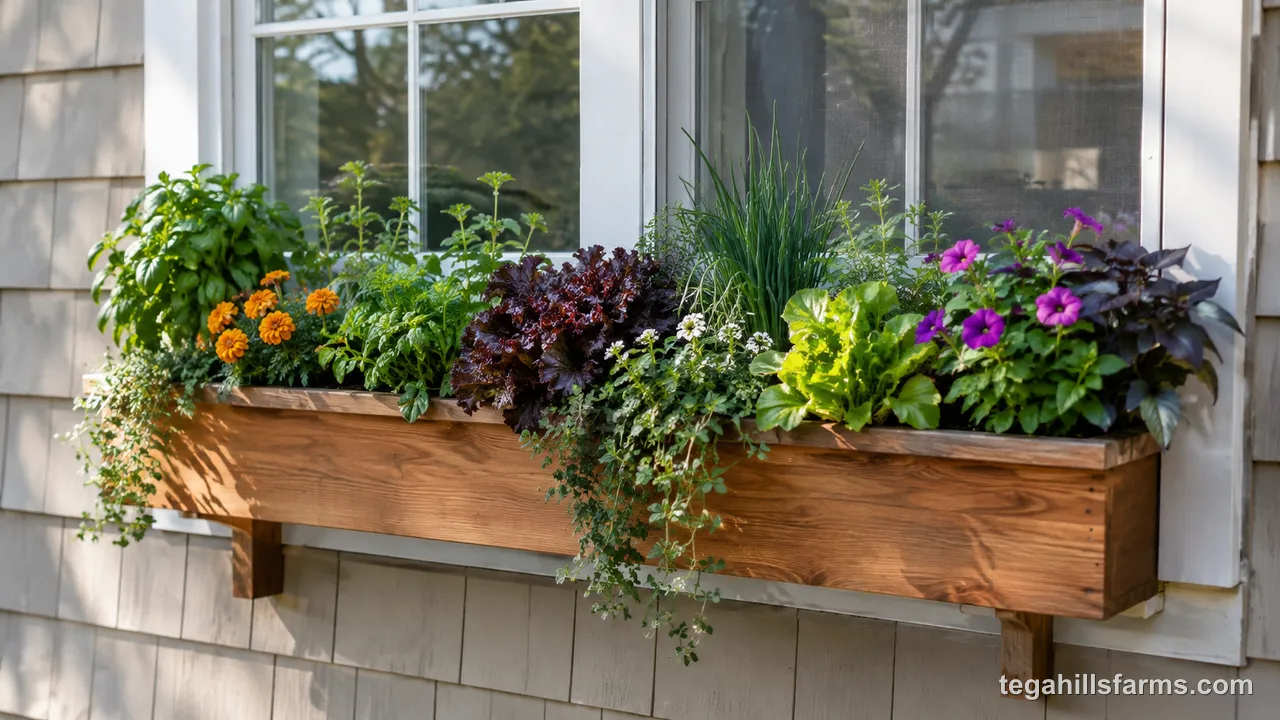
Shallow-rooted herbs and leafy greens are the most dependable edibles for a window box: basil, thyme, oregano, chives, parsley, lettuce, spinach, arugula and radishes all stay productive in compact root space. Mint belongs in a container of its own because its runners crowd out neighbors, a point worth weighing when you compare the best window boxes for herbs.
Light decides most of the rest. Basil, thyme and oregano want full sun, meaning at least six hours of direct light, while lettuce, spinach and parsley tolerate a box that gets morning sun and afternoon shade.
Season length shapes timing. In warm southern zones, greens bolt quickly in summer heat, so grow them from fall through spring; in short northern seasons, wait until after your last frost date to plant basil. Deeper boxes open the door to bush beans, compact peppers and dwarf cherry tomatoes, which is where the best window boxes for vegetables earn their extra soil.
How Do You Plant a Window Box for Color in Every Season?
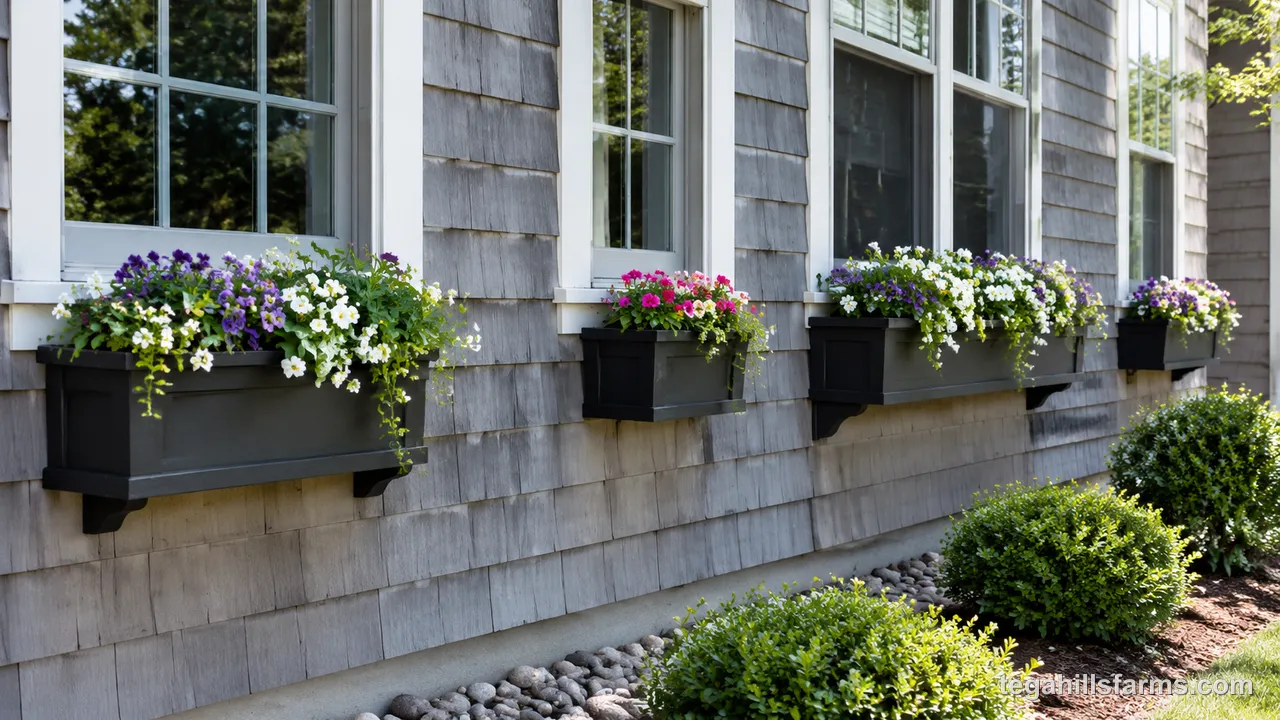
A thriller, filler and spiller arrangement keeps a window box colorful, and swapping plants as the weather turns carries that color through the year. The thriller is an upright plant at the back or center, the filler is a mounding plant that covers the soil, and the spiller trails over the front edge to soften the box against the wall.
Cool-season pansies, violas and ornamental kale carry spring and fall in most zones, and in mild southern zones they often bloom straight through winter. Summer belongs to heat-lovers such as geraniums, petunias, calibrachoa and sweet potato vine.
In cold northern zones, replace spent annuals in late fall with evergreen boughs, berried branches and pinecones pressed into the soil. They hold their look until spring planting.
How Do You Mount and Maintain a Window Box?
A safe setup depends on fastening for the loaded weight, not the empty weight, and on keeping water moving through the soil rather than pooling around roots. Most failures trace back to a bracket screwed only into siding or a drainage path nobody checked until the leaves turned yellow.
Which Brackets and Mounts Work for Your Wall?
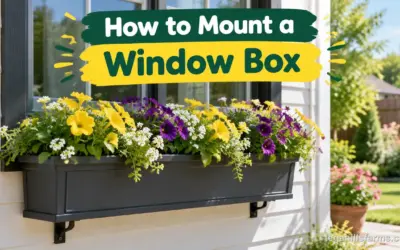
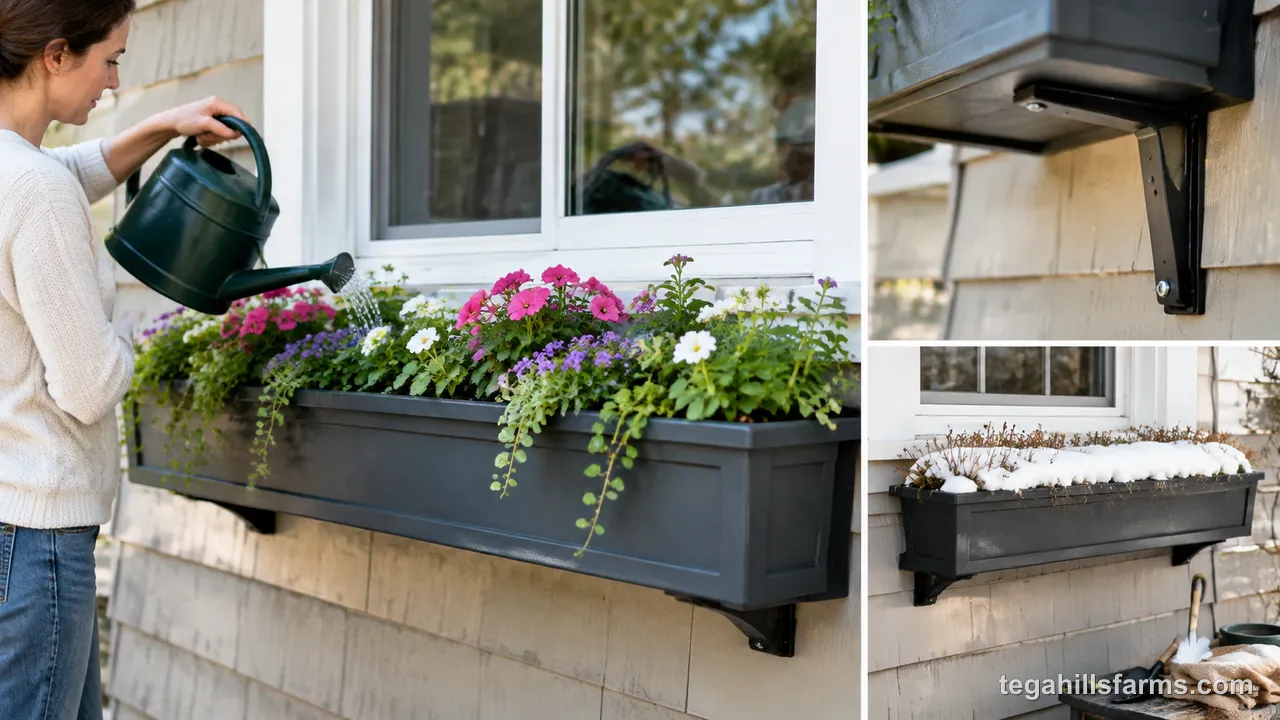
The bracket and fastener have to suit what’s behind the siding: screws should reach solid framing on wood-framed homes, brick and stone need masonry anchors, and vinyl or aluminum siding alone can’t carry a planted box. Space the brackets as the manufacturer recommends, and make sure their rating covers the box once it’s full of wet soil and water, not just its empty weight.
Buying one of the best window boxes with brackets takes the guesswork out of hardware, but confirm the included brackets match your wall type before drilling. Renters, brick walls you’d rather not drill, and homes under strict HOA rules point toward the best no drill window boxes, which rest on the sill, hook over a railing or clamp to the window frame. Freestanding sill planters also work wherever the sill is deep and level enough to hold them securely.
How Should You Water and Winterize a Window Box?
Water a standard box whenever the top inch of potting mix feels dry, which can mean daily in July on a sunny wall, and top up a self-watering reservoir whenever its gauge or fill opening shows it running low. Clear drainage holes and overflow outlets each spring and after heavy storms, since a clogged opening turns a healthy box into a soggy one.
Before the first hard freeze, drain the reservoir and pull spent annuals so ice doesn’t form around the roots or inside the box. In cold zones, either fill the box with evergreen cuttings for winter color or empty it and store it out of the weather. In mild zones, keep watering winter pansies during dry spells, because cold wind dries soil faster than you’d expect.
A fresh coat of color in May can hide a box that has already started to fail, because UV slowly breaks down plastic and constant moisture works into wood grain and corner joints. The damage usually surfaces in the hottest stretch of summer, when a hairline crack opens, the soil dries out in a day and a full planting wilts before you notice.
How Can You Tell a Durable Window Box from One That Will Fail?
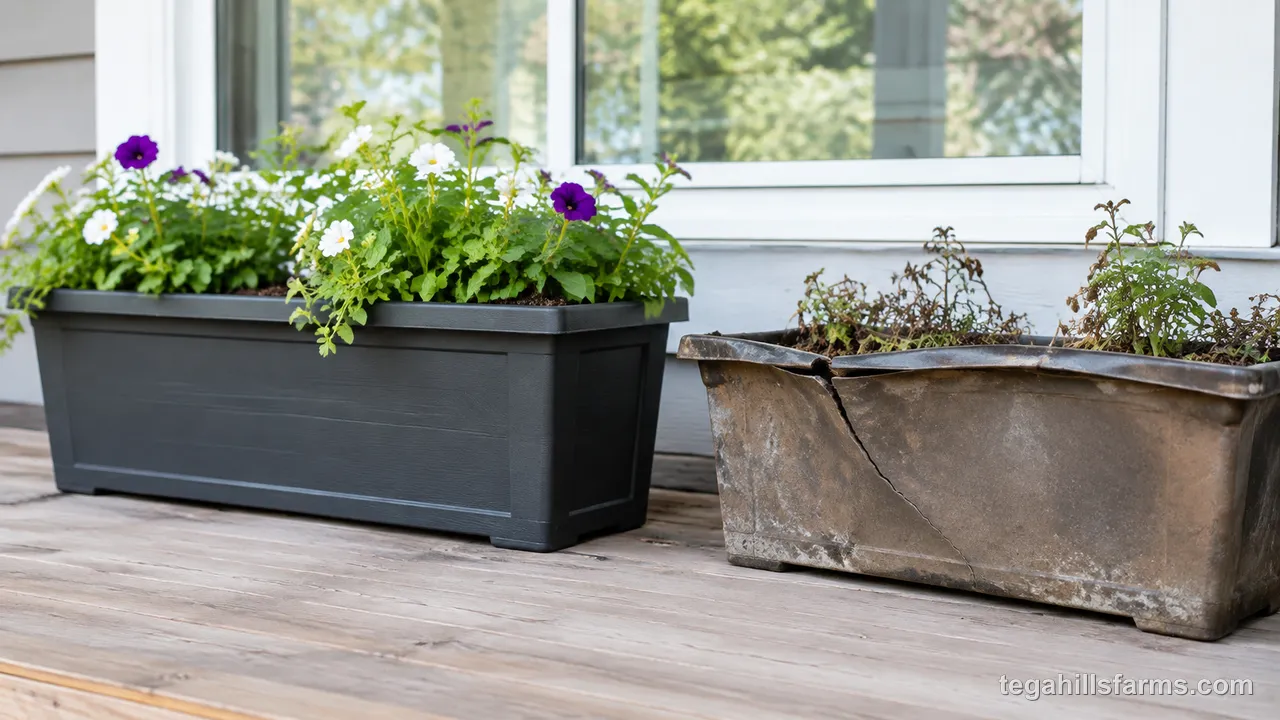
A durable box shows its quality before you buy it: UV-stabilized resin or vinyl, thick or double walls that don’t flex when you press the sides, rot-resistant wood joined with stainless or coated screws, and a long warranty. A box likely to fail feels thin and flexible, has sharp molding seams at the corners, or uses untreated softwood held together with staples.
Wood buyers should look for naturally decay-resistant species, which is why cedar and redwood dominate the best wood window boxes; the best cedar window boxes also hold up without chemical treatment around edible plants.
Older boxes signal they’re near the end with a chalky or faded surface, hairline cracks at corners and drainage holes, sides that bow away from the brackets, soft or dark spots in wood, and rust streaks below hardware. Once a crack runs through a wall or the box sags on its mounts, replace it before it gives way under a full load of wet soil.
Is a Lightweight Window Box Safer Once It Is Full of Wet Soil?
A lightweight box is easier and safer to install, but it only stays light until you fill it. Wet potting mix and a full reservoir often weigh far more than the box itself, and that loaded weight is what the wall, sill and brackets carry all season. The empty weight on the label tells you how hard the box is to lift, not how strong the mount must be.
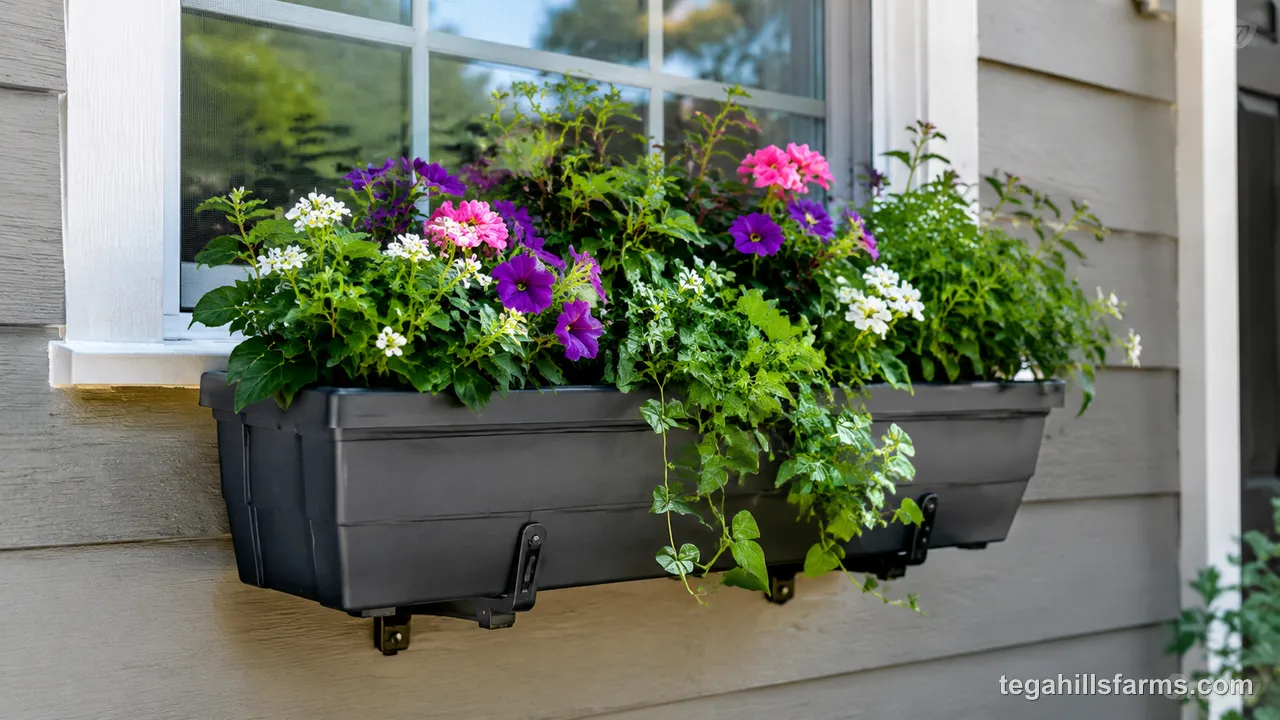
That’s why the best lightweight window boxes still need brackets fastened into framing or masonry, and why a long box needs extra support points along its length. Lighter materials help most where the mounting surface itself is limited, such as older wooden sills, shallow ledges and compact balconies, which is where the best window boxes for small spaces shine. After a heavy rain, check the brackets for any tilt, since saturated soil is the heaviest the box will ever be.
Which Window Box Setups Work on Railings and Balconies?
Railing and balcony setups hold a box with saddle brackets or adjustable hangers that grip the rail, so the deciding factors are rail width, rail strength and which side the box hangs on. Measure the top of the rail before buying, since a hanger that’s too wide lets the box rock and one that’s too narrow won’t fit.
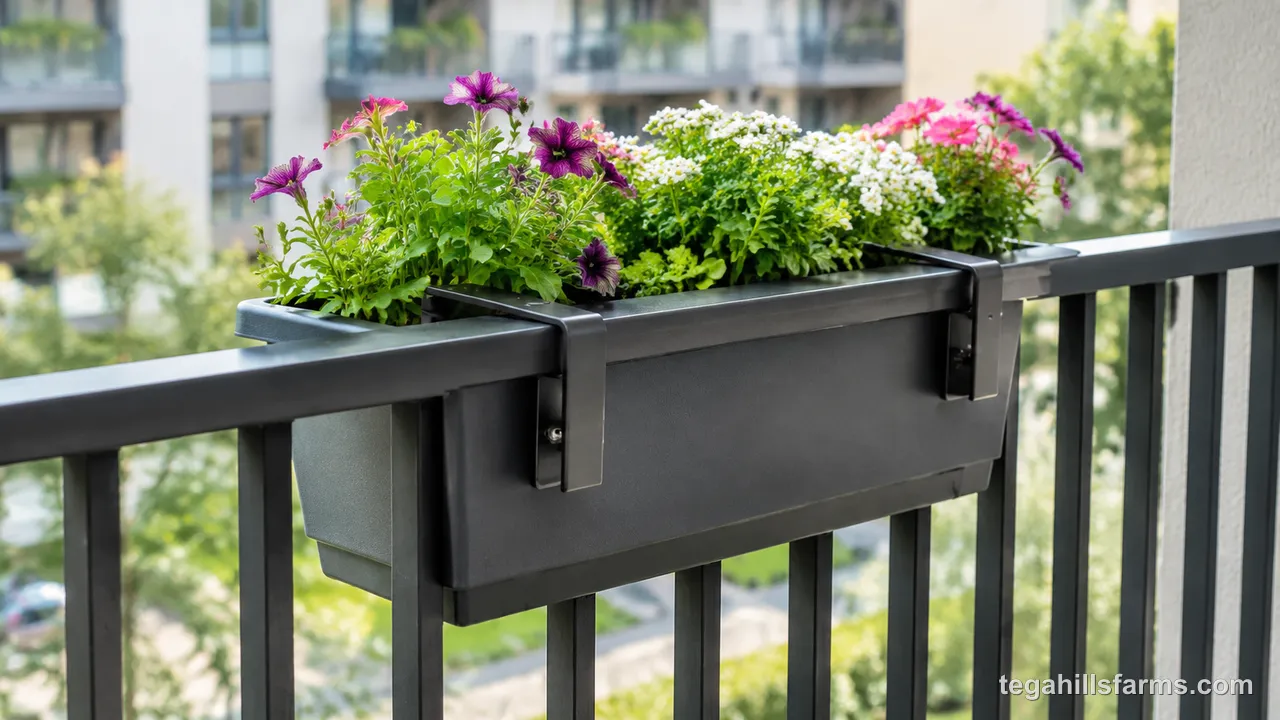
Hang boxes on the inside of a balcony rail wherever people walk below, and keep them low enough to stay out of the strongest wind on upper floors. Self-watering designs reduce drips onto neighbors, which matters in apartments and condos. Many buildings and HOAs regulate what can hang from railings, so check local rules before you install.
Shoppers comparing the best railing window boxes should confirm the hanger fits their rail profile, while the best balcony window boxes also need to suit the weight limit and sun exposure of that balcony.
Can You Use a Window Box Indoors as Well as Outdoors?
A window box works indoors as long as it can’t leak onto the sill: a self-watering planter or a box set in a drip tray is the safe choice, while a box with open drainage holes and no tray will leave water marks or rot a wooden sill. Inside, light is the bigger limit, because window glass and walls cut the direct sun a plant receives.
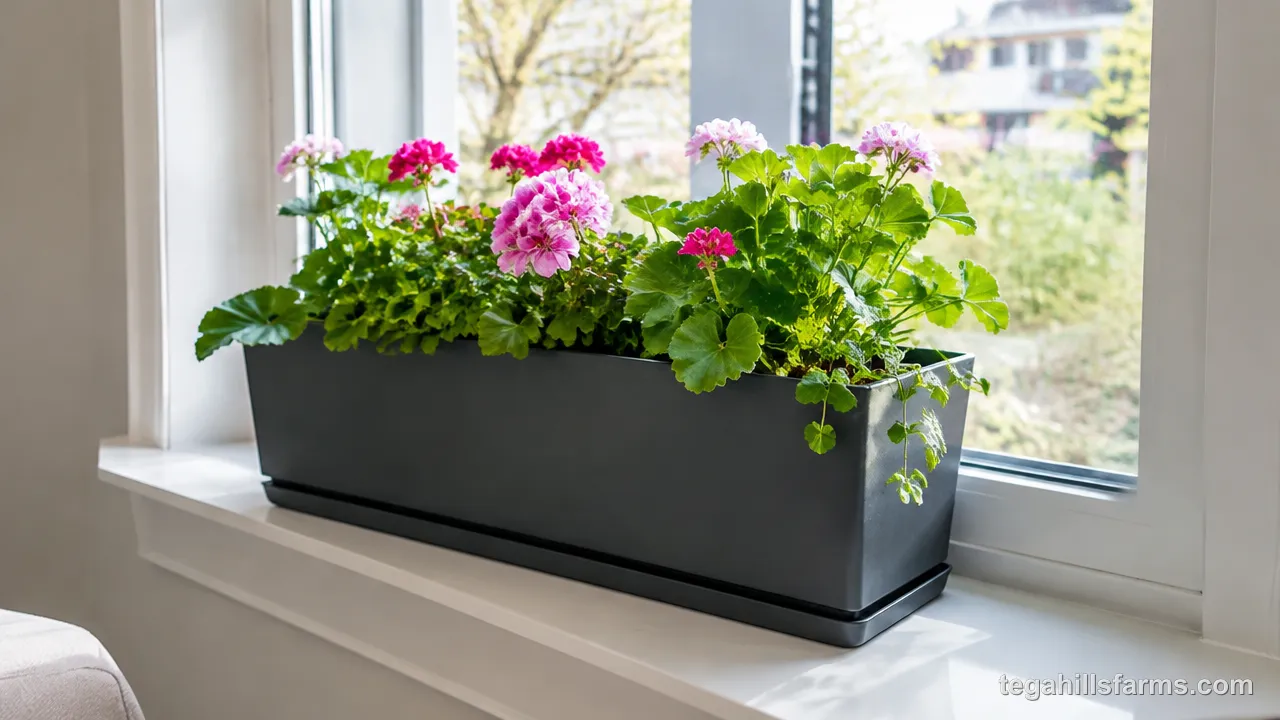
A south-facing window gives basil, chives and parsley their strongest chance indoors, while east- or west-facing windows suit lettuce, mint and succulents. In a dim room, a small LED grow light fills the gap through winter. The VIVOSUN Self-Watering Planter 6-Pack 10.5in fits this setting well, since its reservoir and side water-level window keep watering tidy on a kitchen sill. Outdoor boxes can come inside for winter too, as long as you clean them and check the soil for pests first.
Window Box FAQs
What is a good window box if you’re on a tight budget?
Plastic and composite boxes give the most value because they resist rot and need little upkeep, and the Veradek Demi Series Round Window Box offers a fluted, stone-look finish at an affordable price. Shoppers with a firm spending limit can compare window boxes under $50, or step up to window boxes under $100 for longer self-watering models.
How many plants should go in a window box?
Plant a window box more densely than a garden bed, because it’s a display meant to look full within weeks. Space plants so they just touch at maturity, setting the thriller first, then the fillers, and finishing with spillers along the front edge. Plant tags list mature spread, which tells you how closely each one can sit.
What soil should you use in a window box?
Use a quality potting mix, never garden soil, which compacts in a container, drains poorly and can carry weed seeds and pests. Potting mix stays light and airy, so roots get both water and oxygen. Mix in a slow-release fertilizer at planting time following the label, and refresh or replace the mix each spring.
Do you need a liner in a window box?
Plastic, resin, vinyl and composite boxes don’t need a liner. Wood boxes last longer with a plastic or coir liner that keeps wet soil off the boards, and metal boxes benefit from one that insulates roots from hot walls. Any liner needs drainage holes that line up with the box so water can still escape.
More Guides on Best Window Boxes
- Best Window Boxes for Strawberries
- Best Window Boxes Under $30
- Best PVC Window Boxes