

PVC and galvanized steel boxes usually start well under $100, cedar starts a little above that, and copper and fiberstone boxes run into the high hundreds and beyond. That puts the box you need for a few herbs at a very different price from one built to frame the front of an old brick house.
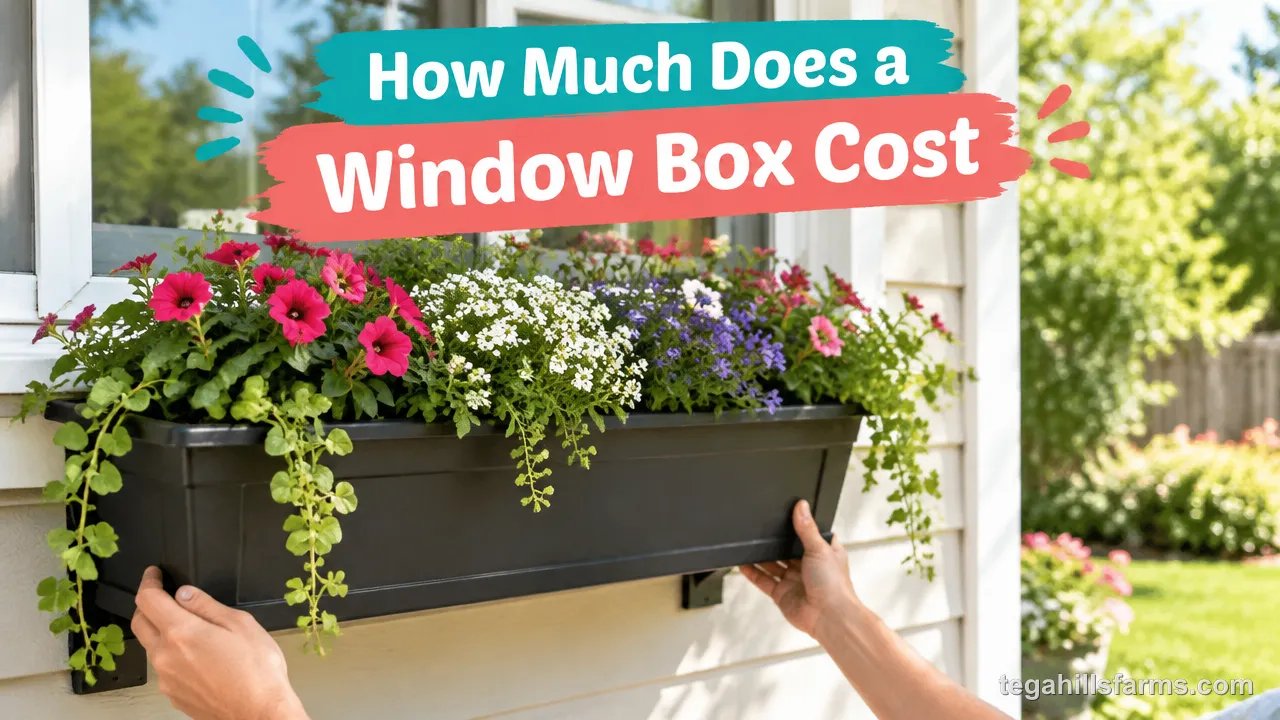
Material sets the floor, but the final number also depends on how long and tall the box is, how much decorative detail it carries, and whether it fits a standard window or needs custom sizing. Brackets, a liner, potting mix and plants come on top of the box itself, and you buy the plants again every season.
The real worry for most gardeners isn’t the sticker price. It’s paying for a box that warps or rusts after a few summers, or one too shallow to hold enough moist soil for the plants you want.
Measure your window and decide what you want to grow before you start comparing prices. Trailing petunias, a row of basil and a mix of tall and spilling plants each need a different depth, and depth affects both the price and how often you’ll be out with the watering can.
How Much Does a Window Box Cost Overall?
Ready-made boxes run from under $50 for a small steel or galvanized planter to well over $1,000 for a large handcrafted copper or fiberstone piece, so the spread is much wider than most gardeners expect.
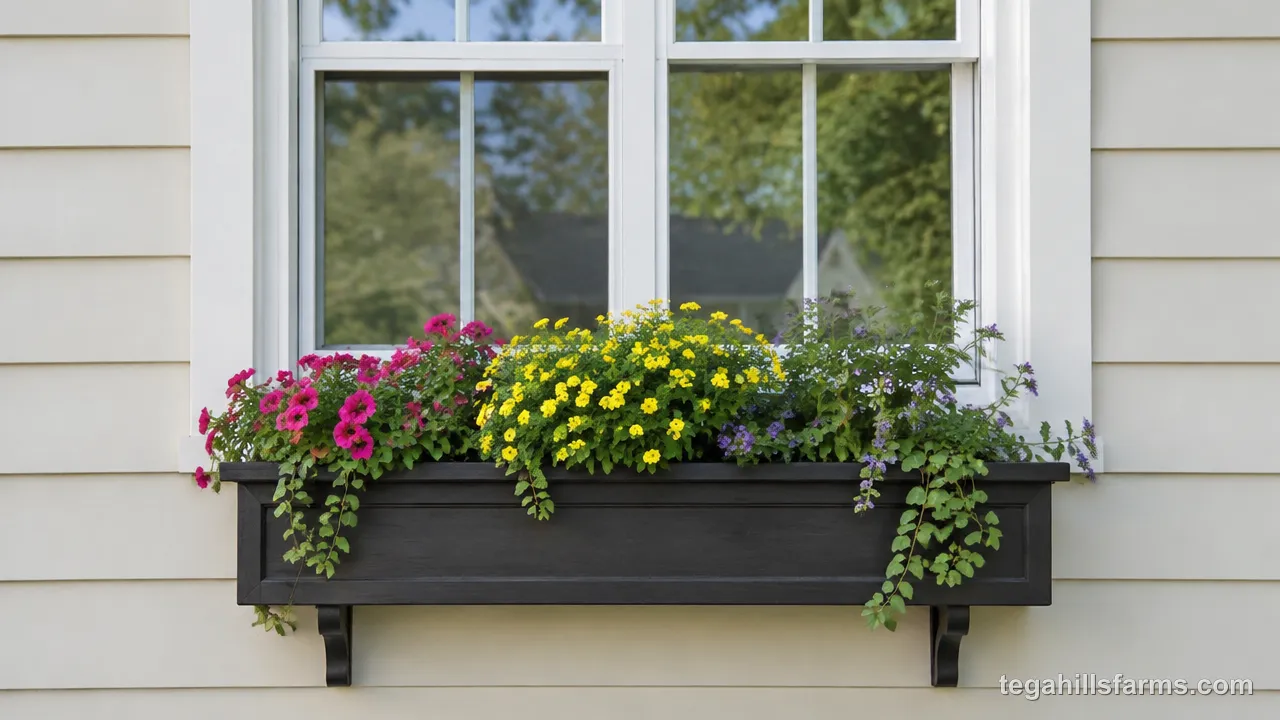
The range is that wide because several separate choices stack on one another. Material comes first: molded plastic and thin sheet metal are cheap to make, while cedar boards, hand-worked iron and copper sheet cost far more before anyone builds the box. Then length and height scale the price, because a longer, deeper box uses more material and holds more soil. Style adds to it, since raised panels, scrollwork and special finishes take extra labor. Custom sizing costs more than buying a standard length off the shelf, and specialty brands charge a premium for craftsmanship and matched accessories.
Beyond the box, you’ll pay for mounting brackets, often a liner, potting mix and plants, and maybe a self-watering insert. Those extras can change the total a lot, especially on a cheaper box.
Building your own box is a separate route with its own cost picture. You trade money for time and a bit of carpentry.
If you’re still weighing material, size and style before you set a budget, our guide on how to choose a window box walks you through those decisions first.
What Does Each Window Box Material Cost?
What the box is made of decides its starting price more than length, style or brand, and it also decides how the box treats your plants over the years.
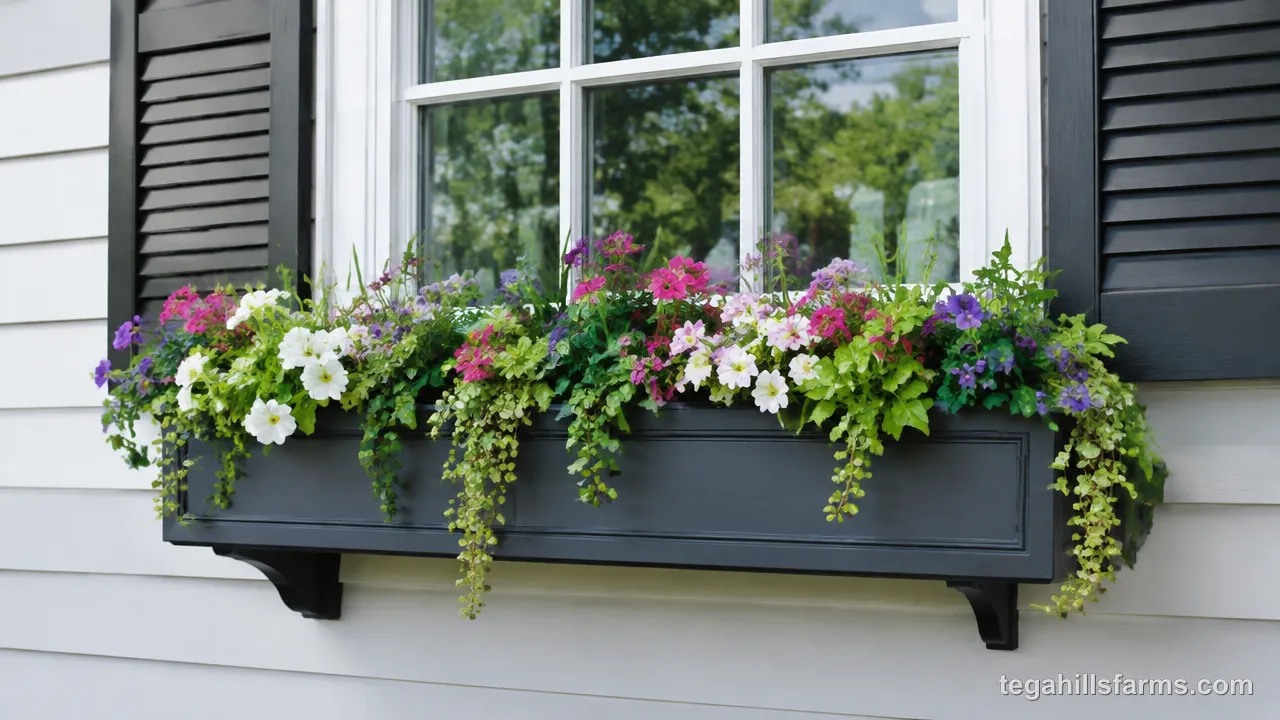
A wooden box keeps the root zone cooler in summer than thin metal in full sun does. A plastic box holds moisture longer than an open wire frame. Some materials need resealing or repainting, while others shrug off frost and rain for years. Price follows those differences fairly closely, from mass-produced budget options up to handcrafted premium pieces. Knowing what your money buys at each level helps you avoid paying copper prices for a box that only needs to hold a summer of marigolds.
How Much Do PVC Window Boxes Cost?
A simple modern-style PVC box usually starts at about $80, a traditional style at about $105, and an ornate black Charleston-style box at about $150. The 2-in-1 PVC designs, which hang as a box or slip inside another box as a liner, run from roughly $50 to about $265 depending on size and variant.
PVC stays in the budget-to-mid tier because the boxes are molded in large runs from plastic, so there’s no lumber to mill and no metal to cut, weld or finish by hand. That lets a gardener put a clean-looking box on a window without paying for craftsmanship.
Within that tier, the price climbs with length and height, since a longer, deeper box uses more plastic and needs a stiffer build to hold wet soil without bowing. Decorative raised panels, molded trim and specialty finishes like a glossy black add more, because those boxes come from more complex molds and sell in smaller numbers.
PVC suits gardeners who want a box that won’t rot against damp potting mix and doesn’t need repainting every few years. It’s a good fit for vinyl-sided homes, rentals where the landlord allows mounting, and beginners growing flowers or herbs for the first time. A plain 2-in-1 box is also a sensible way to try a window box before spending more on wood or metal.
How Much Do Cedar Window Boxes Cost?
Cedar boxes usually run from about $125 at the small, simple end to around $400 for long or more detailed designs. That puts them above PVC, because you’re paying for real boards that someone cut, joined and finished.
Several things move a cedar box within that range. Thicker boards cost more but hold their shape better against swelling and drying, which matters when the soil inside is wet one day and baked the next. Length matters too, since every extra foot means more lumber and more weight to support. Joinery shows up in the price: screwed butt joints are quick to build, while tighter joints and reinforced corners take more labor and hold up longer. Custom dimensions cost more than stock lengths, and a prefinished box with stain or sealant applied costs more than a raw one you finish yourself.
Most of what you pay for is in the wood itself. Cedar’s natural oils help it resist rot, and the boards insulate the root zone better than thin metal, so roots stay cooler on a hot summer afternoon. Homeowners pick cedar for curb appeal as well. Its warm grain suits cottages, farmhouses and craftsman homes, and if you leave it unfinished it weathers to a soft silver-gray that many people like just as much.
How Much Do Galvanized and Wrought Iron Window Boxes Cost?
Metal boxes cover the widest spread of any material. Galvanized boxes run from about $45 to about $350, steel box-and-liner sets are among the least expensive boxes you can buy, hayrack-style wire baskets run from about $45 to about $225, and wrought iron starts near $290.
Galvanized and plain steel stay affordable because the boxes are formed from sheet metal with little hand finishing. Within that group, the price climbs with length and with tapered shapes or powder-coated black finishes. A steel box sold as a set with its liner costs a bit more, but it saves you a second purchase and guarantees the liner fits.
Hayrack baskets are open wire frames with a curved front, and they cost more as the frame gets longer and the wirework more decorative. Because the frame is open, the liner isn’t optional. A coco fiber liner is what holds the potting mix and lets excess water drain away, so its cost belongs in the price you compare, and it will need replacing after a season or two of sun and rain.
Wrought iron starts so much higher because it’s real metalwork: heavy bars bent and joined into scrolls and grilles, often by hand. The more ornamentation and the longer the frame, the higher the price. Like a hayrack, a wrought iron frame usually needs a liner or an inner box to hold the soil.
How Much Do Copper and Fiberstone Window Boxes Cost?
Real copper boxes run from roughly $340 to about $840, and fiberstone boxes from roughly $375 to about $975. The most elaborate handcrafted designs sit at the very top of the market, near $1,160 for a large size.
Copper is expensive before anyone shapes it, because the raw sheet metal costs far more than steel or plastic. The boxes are usually formed and soldered by hand, and that labor adds to the price, especially on long or detailed pieces. Fiberstone, a fiberglass-type composite with a stone-like surface, costs more for different reasons: it’s molded and finished to look like cast stone or aged barrels, and those finishes take time to get right. In both materials, size and custom orders push the price toward the top of the range.
For that money you get a box built to stay on the house for many years. Copper weathers from a bright penny shine to a brown and eventually green patina without rotting or needing paint. Fiberstone gives you the look of stone without the weight of solid stone, which is easier on brackets once the soil is wet, and it stands up to frost and sun.
This tier makes sense for homeowners planning to stay put, for historic or formal facades where a plastic box would look out of place, and for a single statement window rather than a whole row.
What Makes Window Box Prices Go Up or Down?
Once material is settled, length and height move the price most, followed by decorative style, custom sizing and the seller’s brand premium.
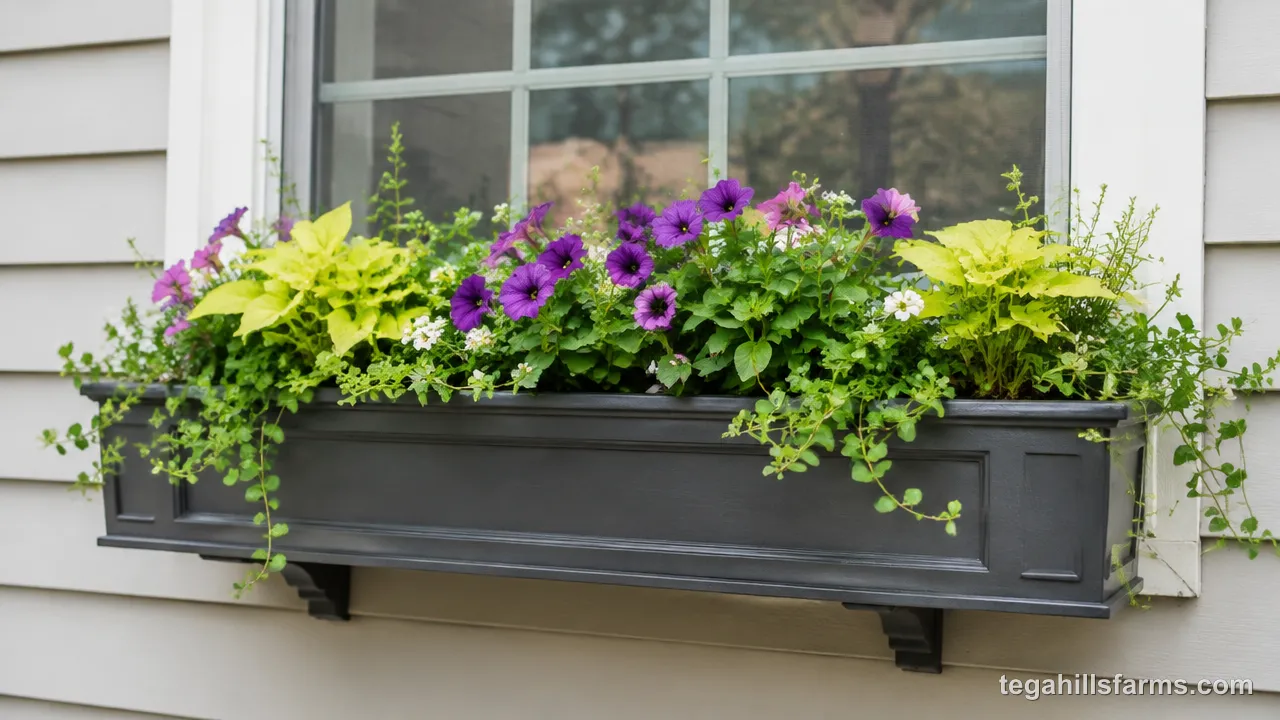
Length scales the price closely. A steel box-and-liner set runs about $40 at 24 inches, about $52 at 30 inches and about $65 at 36 inches, and the same pattern holds across every material because a longer box needs more material and a sturdier build to carry wet soil. Measuring your window carefully, and knowing what size window box you need, keeps you from paying for extra length that overhangs the frame.
Height matters for your plants as much as for your budget. An 8-inch box is the standard height and works on one-story homes and for most flowers. A 10-inch box gives roots more room, looks better in proportion on a two-story house, and has space for a back row of upright plants with trailing plants in front. The extra depth costs more, but it also holds more moist potting mix, so the box dries out more slowly on a hot afternoon. Thinking through how deep a window box should be for your plants helps you decide whether the taller size is worth it.
Style adds cost through labor. Raised panels, scrollwork, brackets built into the design and specialty finishes all take more time than a plain front. Custom dimensions cost more than standard lengths because the box is made to order. Specialty retailers and well-known brands also charge for their craftsmanship and matching accessories.
You can bring the price down without changing material. Pick a standard length close to your window width, choose a plain front, and buy a box sold with its liner. Each of those choices cuts cost without making the box any worse for your plants.
What Extra Costs Come With a Window Box?
The box is only the first purchase: mounting hardware, a liner, potting mix and plants all come on top, and plants and soil come back as a cost every planting season.
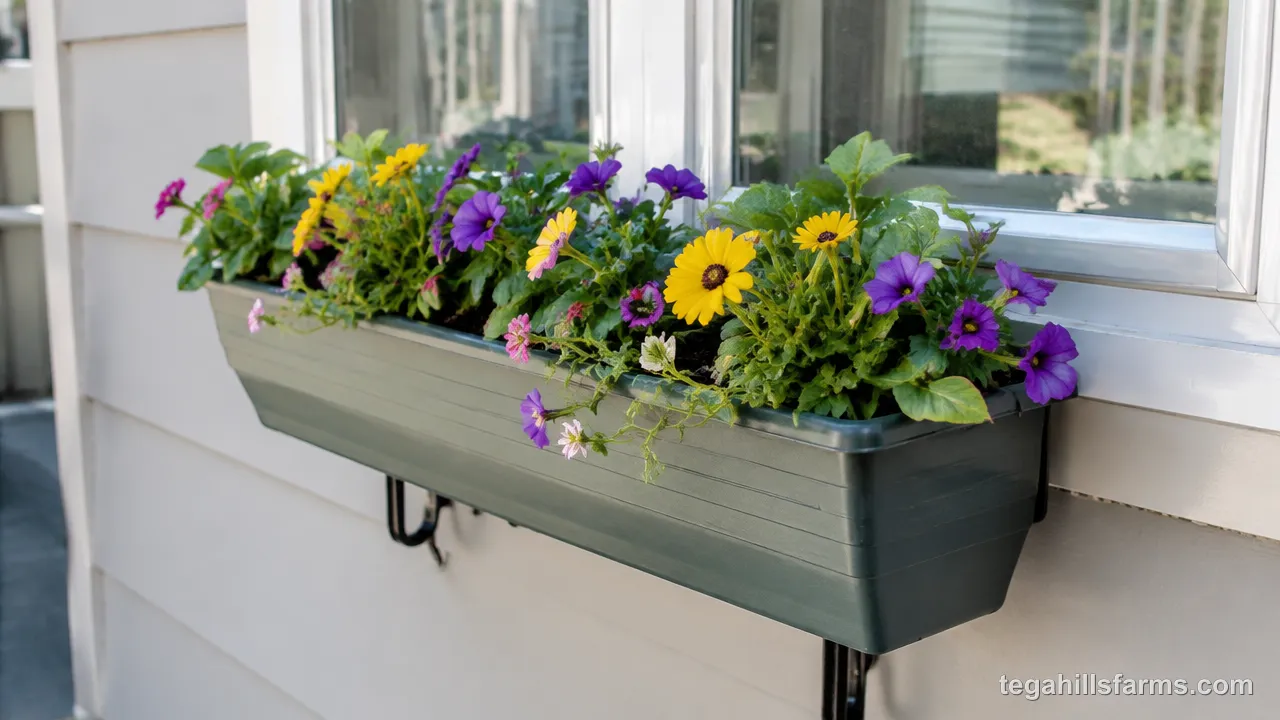
That seasonal cost surprises people the most. Annual flowers finish in fall, potting mix settles and wears out, and each spring you’re refilling and replanting the same box. The plants you choose decide how big that bill gets, so it helps to think about what to plant in a window box before you buy, since perennial herbs and hardy trailing plants can stretch a planting across more than one season in many USDA zones. Watering systems are optional, but they’re the one add-on that can save plants rather than just hold them.
How Much Do Brackets and Liners Add to the Cost?
Window box brackets start at about $15, and a replacement coco fiber or plastic liner usually costs roughly $10 to $30 for common lengths. That makes them small next to the box price, but they decide whether the box stays on the wall and how well the roots drain.
Brackets matter because a box full of wet potting mix is heavy, and the weight grows after every watering and rainstorm. The hardware has to carry that load for years without loosening. Your wall type changes what you need. On siding you’ll want brackets screwed into solid framing behind the siding, not just the siding itself. On brick you’ll need masonry anchors and a masonry bit, which adds a little to the cost and the work. Learning how to mount a window box for your wall before you buy keeps you from ordering hardware that won’t hold.
Liners do a different job. A coco fiber liner breathes and drains quickly, which keeps roots from sitting in water, but it dries out faster in summer and needs replacing every season or two. A plastic liner holds moisture longer and lifts out, so you can swap seasonal plantings without digging in the box itself. Make sure it has drainage holes, though, or the root zone turns soggy.
Steel box-and-liner sets bundle those parts and save you a second purchase. You’ll still need to buy brackets separately unless the set says otherwise.
Is a Self-Watering Window Box Worth the Extra Cost?
A self-watering box costs well above a plain PVC box of similar size. Mayne’s self-watering window boxes, for example, run from about $190 to about $280. For many gardeners the extra money is worth it, because it buys a water reservoir that keeps the root zone evenly moist between waterings.
The reservoir sits under the potting mix, and the soil wicks water up from it as the roots dry the soil above. Plants get a steady drink instead of swinging between soaked and parched, which matters most for thirsty plants like petunias, herbs such as basil, and anything in a south- or west-facing window. In a hot southern summer, an ordinary box in full sun can dry out within a day, and the reservoir stretches that time out.
What you’re really paying for is fewer trips to the window with a watering can and fewer wilted plants after a busy weekend. Busy gardeners, people who travel and anyone with a box that’s hard to reach get the most out of one.
You can skip it if your box sits in part shade, if you grow drought-tolerant plants that prefer to dry out between drinks, or if you’re happy to water every day. For those windows, a standard box with good drainage does the job for less.
Where Can You Buy a Window Box?
Big-box stores and online marketplaces carry the widest choice of budget boxes, while specialty window box sellers handle premium materials, custom lengths and matching liners and brackets.
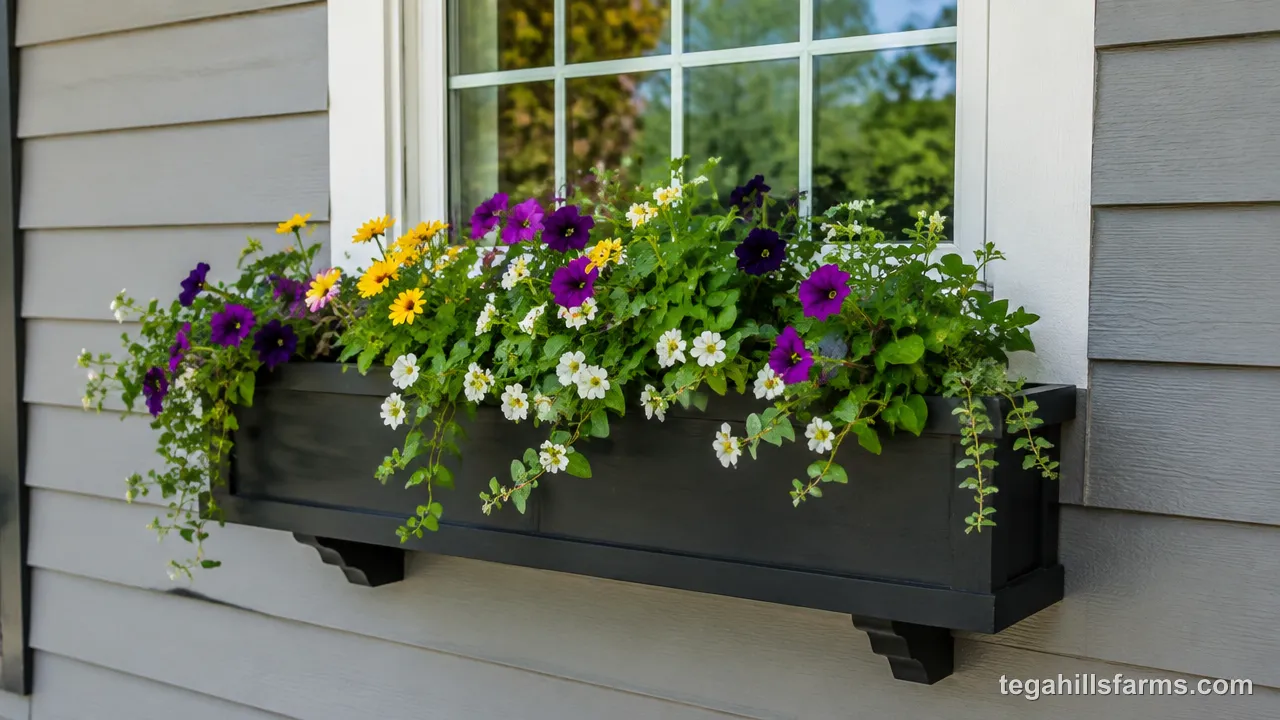
Home Depot and Lowe’s stock PVC, plastic and galvanized boxes in standard lengths, which makes them handy when you want to see a box in person and take it home the same day. Amazon and Wayfair add a much wider selection from many brands, from inexpensive steel planters to cedar and wrought iron. The price spread is large, but you’ll need to check each listing for size, height and whether brackets or a liner come included, since that varies from one seller to the next.
Specialty sellers such as Hooks & Lattice, Kinsman Garden and Mayne focus on window boxes and the parts that go with them. They tend to offer several heights, a long run of lengths, custom sizing, and boxes sold as sets with liners or matching brackets. That focus is also why a single specialty catalog can show such a wide overall range: the same store may sell a small wire hayrack basket and a long handcrafted copper box, and the price list has to cover both.
Choose the channel by the material and budget you have in mind. For a plain PVC or galvanized box in a standard length, a big-box store or marketplace keeps the cost low. For cedar, copper, fiberstone, wrought iron or an unusual window size, specialty sellers usually have more choice and accessories that fit without guesswork.
How Much Does It Cost to Build a Window Box Yourself?
A simple wooden box usually costs about $30 to $60 in lumber, screws and sealant, which is less than most ready-made boxes, as long as you already own a drill and a saw.
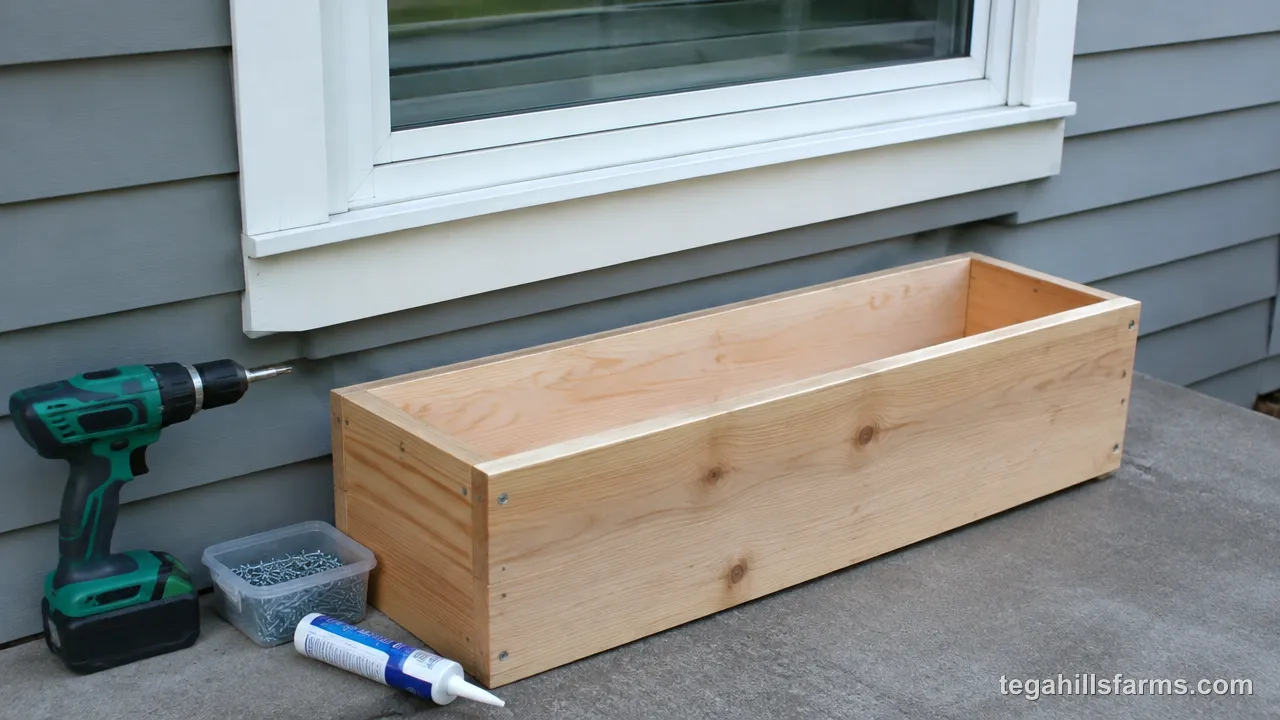
Lumber is the biggest variable. Cedar boards cost more than pine but resist rot without much help. If you’re growing herbs or salad greens, untreated wood is the safer choice for the soil touching your food. Exterior screws and a water-based sealant or stain add a little more, and a liner adds a bit more again if you want one. If you don’t own a drill or saw, buying them can wipe out the savings on a single box, though they pay off over several boxes or other garden projects.
Time and skill are the real trade-off. A basic box takes an afternoon of measuring, cutting, drilling drainage holes and assembling, and a first attempt may come out a little out of square. A ready-made cedar box usually has cleaner joinery and a more even finish, and a PVC box won’t need resealing at all. A homemade box built from good cedar and sealed well can last as long as a store-bought wooden one. Pine left unsealed will soften much sooner.
Brackets and liners are still extra either way, so add them to your DIY budget just as you would for a bought box.
Building makes the most sense if you like woodworking, need several boxes, or have an odd window size that would otherwise mean a custom order. Buying makes more sense if you want a polished finish right away or a material like PVC or copper that you can’t easily work at home.
Which Window Box Fits Your Budget?
Budget shoppers do best with PVC or galvanized steel, mid-range budgets open up cedar and wrought iron, and premium spending makes sense for copper or fiberstone on a house that suits them.
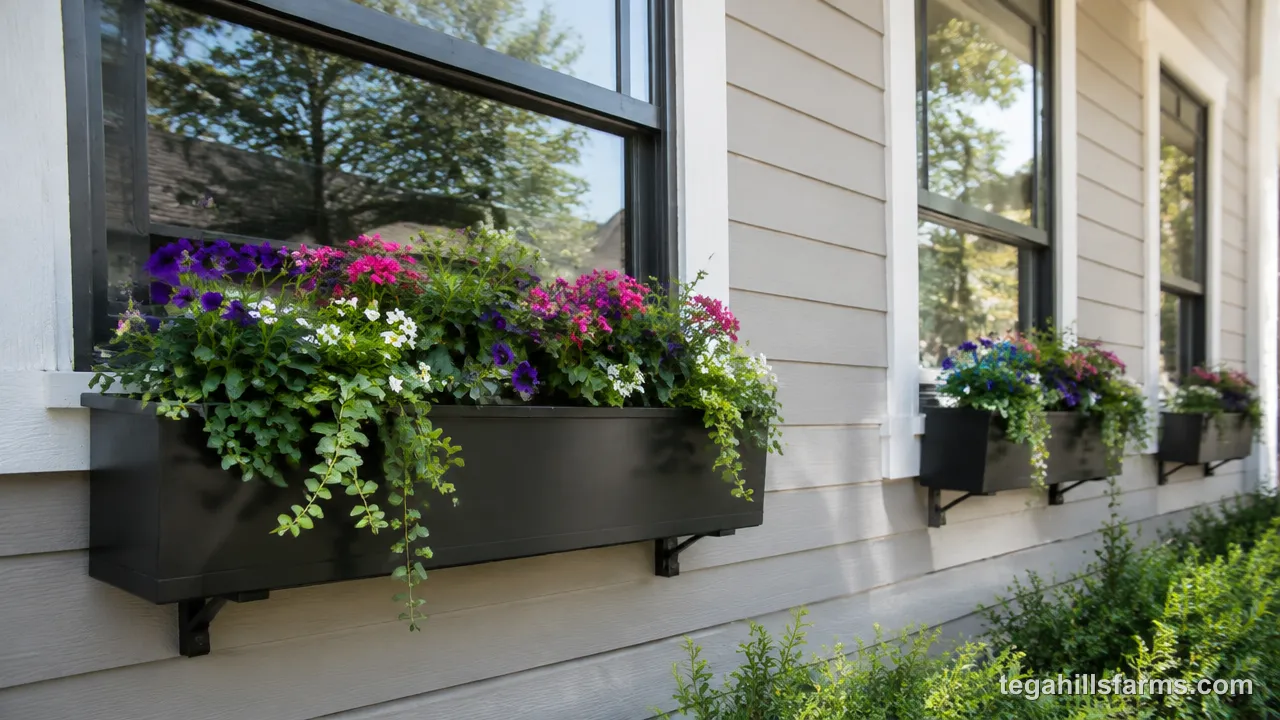
PVC and galvanized boxes work well on vinyl-sided and modern homes, on rentals, and for anyone trying a window box for the first time. They hold up to wet soil and weather with little care. For a beginner, I’d lean toward a plain PVC box with drainage holes, because it forgives overwatering better than an open frame and won’t need repainting while you’re still learning what your window can grow.
Stepping up to cedar makes sense when the box is part of the look of the house, especially on cottages, farmhouses and craftsman homes where real wood fits the trim. Wrought iron suits older homes, brick facades and formal windows, where an ornate frame with a liner looks right in a way plastic doesn’t.
Copper and fiberstone are worth the money when you plan to stay in the house for years and want one or two windows to make a strong impression. A historic home, a grand front entry or a facade where stone and aged metal already appear can carry these materials well. On a simple ranch house, the same money usually goes further on cedar boxes for several windows.
Within a few seasons, a thin plastic box left in full sun can bow under wet soil, unsealed pine softens at the corners, and bare steel starts leaving rust streaks down light-colored siding. Once that happens, you’re paying for a replacement box, new brackets and a fresh round of planting, and the stained wall underneath needs attention too.
When Does a Cheap Window Box Cost More in the Long Run?
A cheap box costs more over time when it needs replacing every few seasons, while a box that lasts a decade with little care ends up the better deal even if it cost more at first.
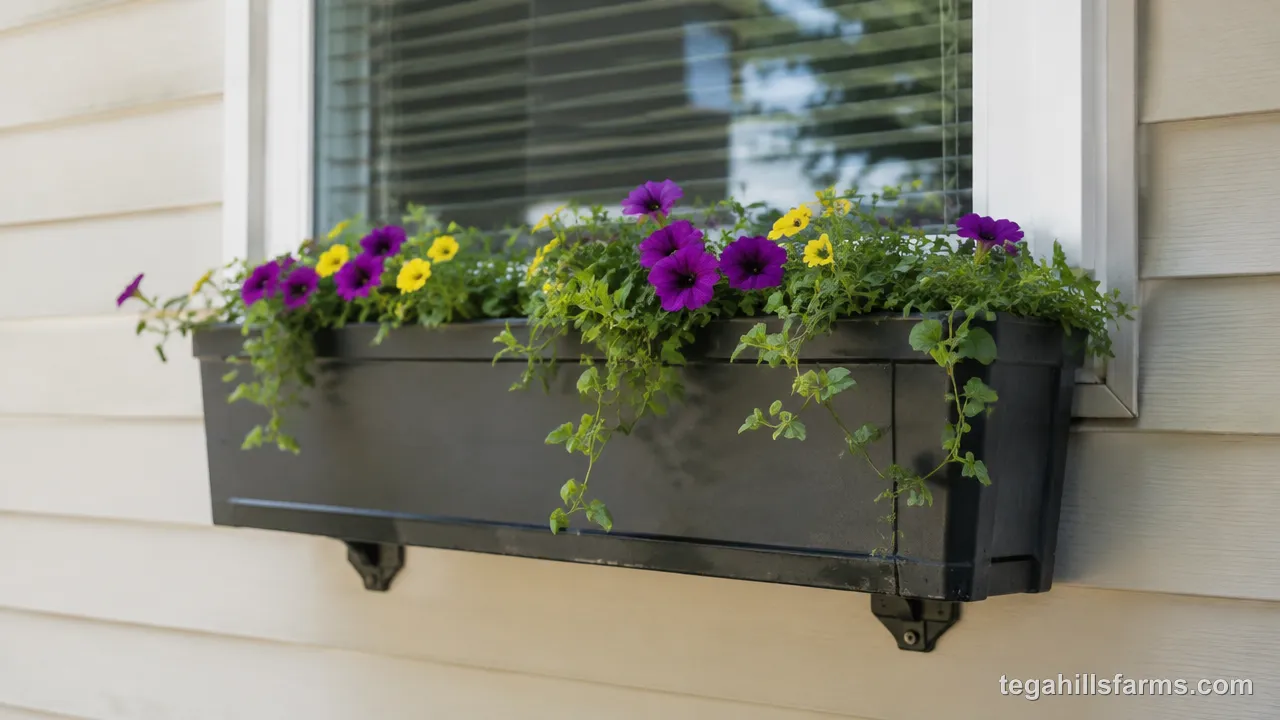
PVC and fiberglass-type boxes need almost no upkeep: no sealing, no painting, and no rot against damp potting mix. Wood needs resealing or repainting every few years to keep moisture from working into the boards, and even cedar eventually gives out at the corners and bottom. Unless a metal box is galvanized, powder-coated or copper, it can rust, and the rust shows first along seams and drainage holes where water collects.
Watch for the warning signs. A front panel that bows outward, color that has faded to chalky, wood that feels soft when you press it with your thumb, cracks along the bottom, and rust that flakes rather than just stains all mean the box is failing. Soft or cracked wood and rust that has eaten through metal are the points where replacing makes more sense than repairing, because a weakened box can split under the weight of wet soil.
A bargain box that lasts two summers and then takes its plants down with it ends up costing more than a sturdier box bought once.
Are Window Boxes a Good Idea?
Yes, for most homes a window box is money well spent. It adds curb appeal, gives you a place to grow herbs and flowers even without a yard, and lets you match a planting style to the look of the house.
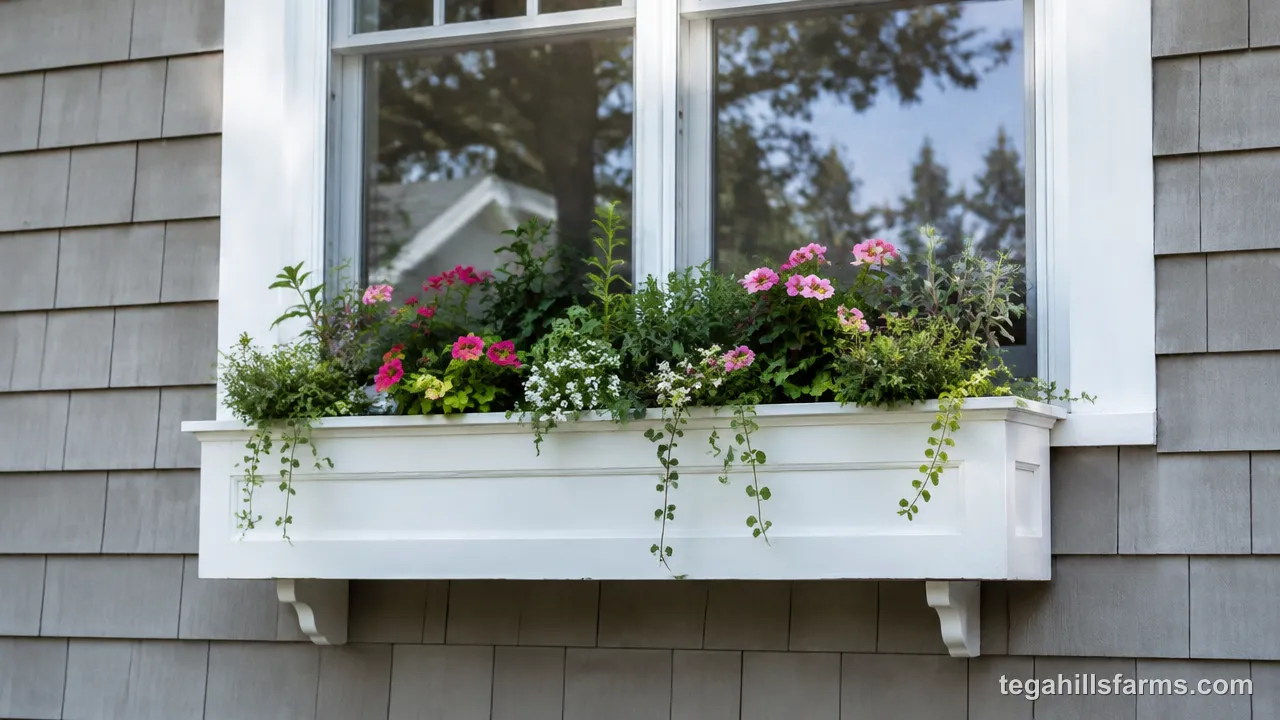
For apartment dwellers and anyone with a small lot, a window box can be the whole garden. A sunny box can hold basil, parsley and thyme within arm’s reach of the kitchen, or a season of flowers you see every time you look outside. From the street, a planted box makes even a plain facade look cared for.
The downsides are real, though, and worth planning for. Window boxes hold a small amount of soil, so they dry out quickly and may need water daily in a hot summer. Most need replanting each season as annuals finish. Mounting takes some work, and a box full of wet soil puts real weight on the wall, so the brackets have to be secure and the siding or brick behind them sound.
Gardeners who walk past the window often, enjoy a little daily watering, and have a spot with at least a few hours of sun get the most out of one.
What Do You Put in the Bottom of a Window Box?
Start with drainage holes and a liner if your box needs one, then fill straight to the top with potting mix. A layer of gravel or other filler at the bottom usually doesn’t help drainage, and it can make it worse.
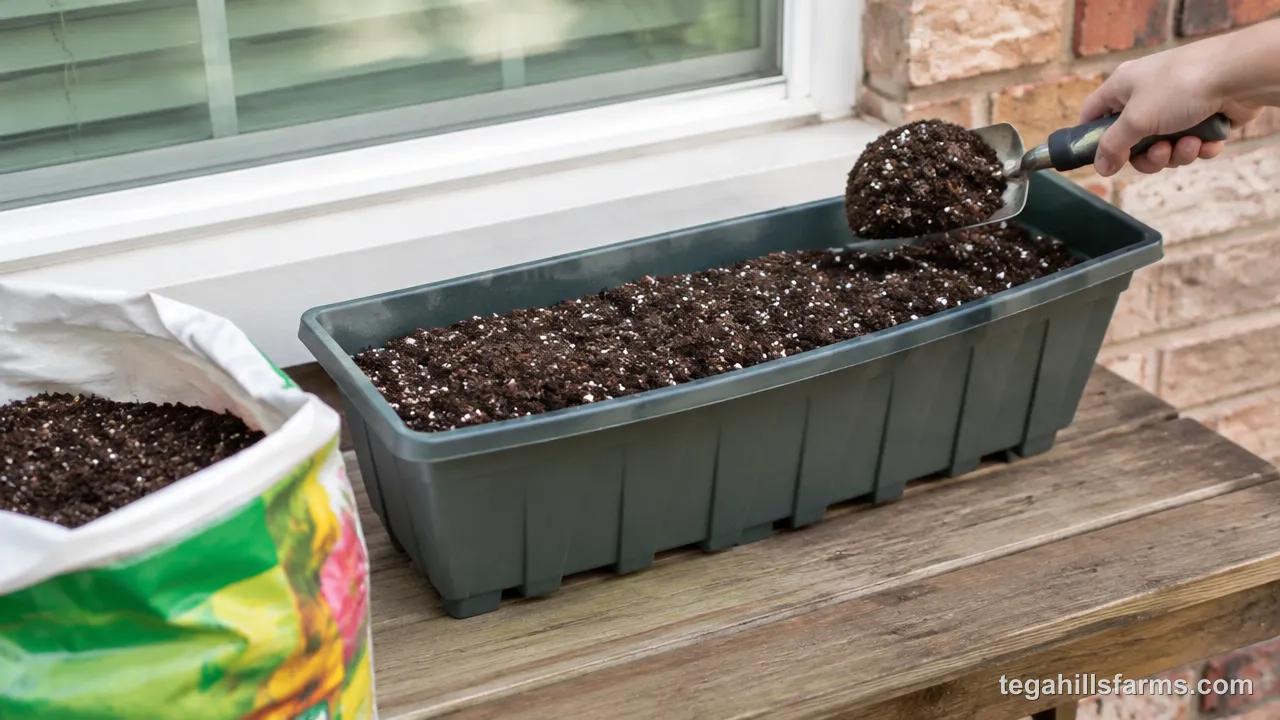
The reason has to do with how water moves through soil. Water doesn’t flow easily from fine potting mix into coarse gravel, so it collects in the soil just above the gravel layer. That raises the soggy zone closer to the roots instead of draining it away, which is the opposite of what most gardeners expect. Gravel also adds weight to a box that’s already heavy when wet, and it takes up space roots could use.
Good drainage comes from holes in the bottom of the box or liner and a quality potting mix, not garden soil, which packs down and holds too much water. If the holes are small or few, drilling a couple more does more good than any bottom layer.
A coco fiber liner changes things a little because the fiber itself drains, so water seeps out across the whole bottom. In a hayrack or open frame, you just set the liner in and fill it with potting mix. Some gardeners lay a small piece of landscape fabric over the drainage holes in a solid box to keep potting mix from washing out, and that works fine without blocking the water.

Write Your Review
No reviews yet. Be the first to share your experience!