9 Best Log Splitters: 2026 Expert Picks Compared Side by Side
Our top picks for the best log splitters in 2026 are the BILT HARD 6.5-Ton Electric Log Splitter (Best Overall), BILT HARD 6.5-Ton Log Splitter (Best for Small Spaces), Evernexta 7-Ton Electric Log Splitter (Best Easy Assembly), Sun Joe LJ10M Manual Log Splitter (Best Durability), Landworks 20-Ton Gas Log Splitter (Best Gas-Powered), SuperHandy 25-Ton Gas Log Splitter (Best Lightweight), SuperHandy 20-Ton Hydraulic Log Splitter (Best Performance), Champion 27-Ton Gas Log Splitter (Best Premium), and Boss Industrial 3PT22T25 Log Splitter (Best Large Capacity). The range covers electric, manual, gas and tractor-mounted designs, so the right one depends more on your wood and your power access than on the tonnage figure alone.
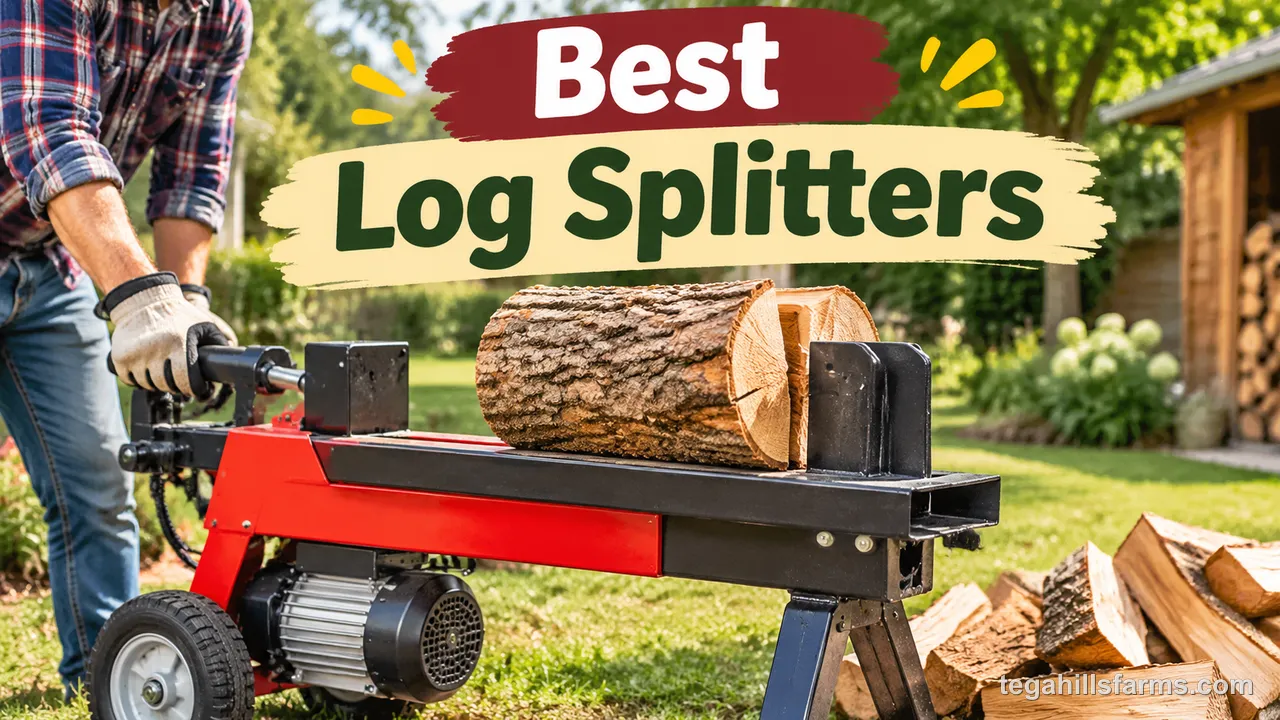
Splitting force is only part of the decision. Log diameter and length capacity decide what fits on the beam, cycle time sets the pace of a long session, and the power source decides whether you split beside the garage or out at the woodlot.
The real risk is a mismatch. With too little force, the ram stalls on knotty oak and you end up back at the maul. With too much, you store, fuel and maintain a heavy machine sized for a job you don’t have.




Before you compare models, measure the widest rounds in your pile and note where the nearest outlet is. Those two facts narrow the field quickly.
What Matters Most When Choosing Log Splitters?
Splitting force matched to your wood, log capacity that fits your biggest rounds, and a power source you can reach settle most buying decisions, while cycle time and portability shape how a long session feels. Force keeps the ram moving when the wedge hits knots or dense grain. With too little, the round stalls halfway. Capacity is a hard limit, because a round longer or wider than the splitter accepts will not fit. Electric power needs an outlet within cord reach. Gas runs anywhere but adds fuel and engine upkeep. Weighing those three against your own woodpile narrows the field of the best log splitters for firewood quickly.
The 9 Best Log Splitters of 2026
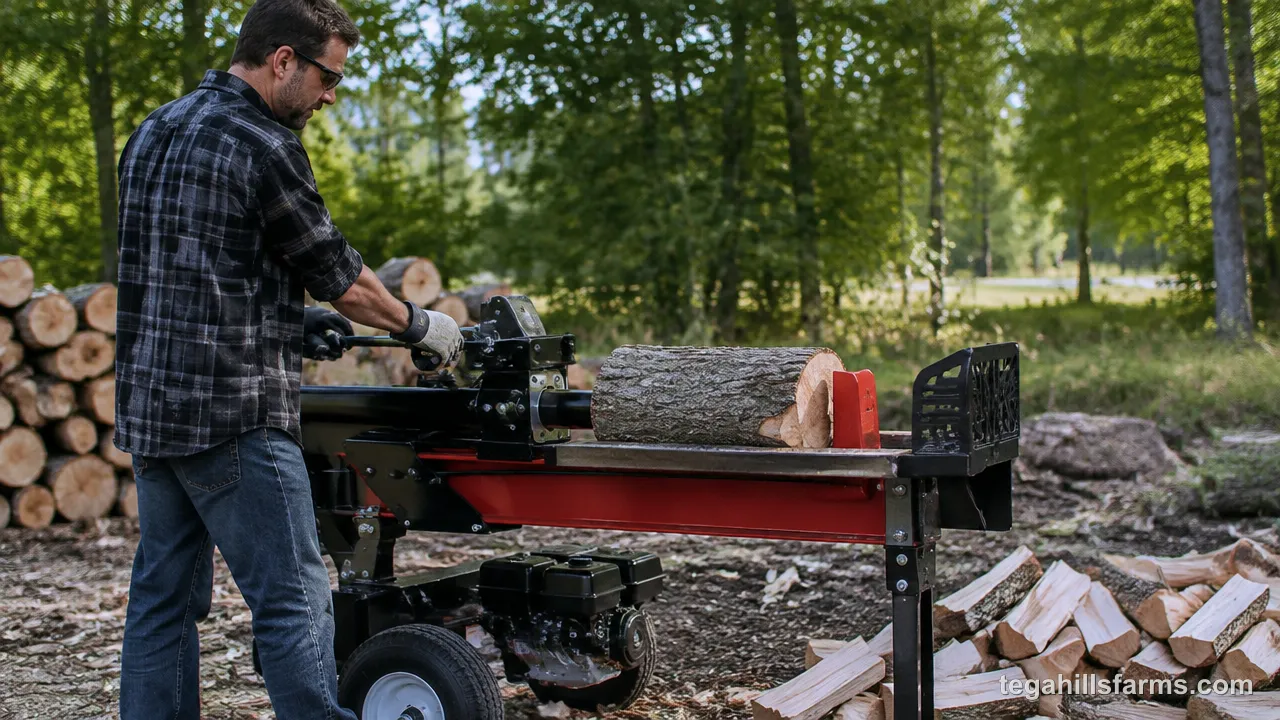
Our top picks for 2026 are the BILT HARD 6.5-Ton Electric Log Splitter, BILT HARD 6.5-Ton Log Splitter, Evernexta 7-Ton Electric Log Splitter, Sun Joe LJ10M Manual Log Splitter, Landworks 20-Ton Gas Log Splitter, SuperHandy 25-Ton Gas Log Splitter, SuperHandy 20-Ton Hydraulic Log Splitter, Champion 27-Ton Gas Log Splitter and Boss Industrial 3PT22T25 Log Splitter. The main dividing line is power access. The BILT HARD Electric and the Evernexta suit stove wood split beside an outlet, and the Sun Joe needs no power at all. The Landworks, SuperHandy and Champion gas units bring the force that wide hardwood demands to anywhere you can wheel or tow them, and the Boss Industrial mounts on a tractor’s three-point hitch.
#1 BILT HARD 6.5-Ton Electric Log Splitter — Best Overall
Homeowners who split stove wood near an outlet will get steady use from this electric splitter. Its 15-amp motor drives 6.5 tons through rounds up to 9.8 inches across and 20.5 inches long, with no fuel to mix, no exhaust, and a quieter run than a gas engine.
Key Specs:
- Splitting force: 6.5 tons
- Motor: 15 amps, up to 3,400 RPM
- Log capacity: up to 9.8 in diameter, 20.5 in length
- Cycle time: 18 seconds
- Weight: 98 lb
- Wheels: 5.7 in transport wheels
Detailed Review:
A 15-amp motor spinning up to 3,400 RPM drives the hydraulic ram to 6.5 tons, and the precision gears and copper motor windings hold that force constant through the whole stroke. That steady push suits seasoned, straight-grained stove wood, which opens cleanly along the grain. Twisted or knotty pieces ask more of any machine at this rating, so keep a maul nearby for the odd stubborn one.
The 18-second cycle includes the ram’s reset, so a modest pile moves at a comfortable rhythm. Two-hand controls require both hands on the controls while the wedge travels, which keeps your fingers out of the split.
Because it runs on electricity, it produces no carbon monoxide and runs quieter, so splitting beside an open garage door or under a shed roof is practical. Run it on an extension cord no longer than 49 ft with a cross-section of at least 3.3 mm², on a circuit with a 40-amp breaker.
The horizontal full beam rides on 5.7-inch wheels, so moving its 98 pounds across a driveway takes a tilt and a pull. The 90-day warranty is short for a hydraulic tool, so run a few rounds through it as soon as it arrives.
Pros:
- 15-amp motor runs with no fuel, oil changes or exhaust.
- Two-hand controls keep your hands away from the wedge.
- 18-second cycle includes the ram’s reset.
- 5.7-inch wheels make the 98-pound unit easy to roll.
Cons:
- Extension cord limits keep you close to an outlet.
- 90-day warranty is short for a hydraulic tool.
- 9.8-inch diameter limit rules out wide hardwood rounds.
Who It’s For:
Wood-stove owners who split near the house and want a machine that starts with the flip of a switch will get steady use from it. It also fits anyone working in an open garage or close to neighbors, where exhaust and engine noise cause trouble. Buyers facing wide, knotty hardwood rounds need more force.
Editor’s Verdict:
A practical, low-upkeep splitter for stove-length wood, as long as your splitting spot is within reach of a heavy-duty extension cord.
#2 BILT HARD 6.5-Ton Log Splitter — Best for Small Spaces
Garages and sheds where every bit of floor counts suit this compact splitter. It stands upright on its end when the job is done, and its 5.7-inch rear wheels and integrated handle let you roll it out, split rounds up to 20.5 inches long, and then park it back against the wall.
Key Specs:
- Splitting force: 6.5 tons
- Log capacity: up to 20.5 in long, 9.8 in diameter
- Frame: full beam with steel wedge
- Wheels: 5.7 in rear wheels
- Storage: stands upright
Detailed Review:
Standing it upright on its end turns the beam’s length into height, which frees the floor space a horizontal machine would otherwise take up all winter. The integrated handle gives you a solid grip for tipping it up and easing it back down. In a garage shared with a car and a mower, that storage option is the main reason to choose it.
The 5.7-inch rear wheels and the handle work like a hand truck: tilt it back and roll it to the woodpile instead of carrying it. Small wheels roll easily on concrete and pavers, but soft lawn takes more effort.
A full-beam frame and steel wedge carry 6.5 tons of splitting force, which suits ordinary stove-length firewood. Logs up to 20.5 inches long and 9.8 inches in diameter fit, and the straightforward operation makes it easy to break those rounds into manageable pieces.
Keep your expectations matched to that rating. Dense, knotty rounds call for more force than this compact design is built to deliver, so it works best as a dedicated stove-wood splitter rather than a woodlot workhorse.
Pros:
- Stores upright to free up garage floor space.
- Integrated handle makes tipping and rolling simple.
- Full-beam frame and steel wedge add strength.
- Handles logs up to 20.5 inches long.
Cons:
- Rear-wheel layout means tilting it back to move it.
- Small wheels take more effort on soft lawn.
- 6.5-ton force struggles with knotty hardwood.
Who It’s For:
If your splitter has to share the garage with a car, a mower and bikes, this layout earns its place because it parks upright against a wall. Homeowners splitting ordinary stove wood will find its force plenty. People processing big, gnarly hardwood rounds should look at a gas model instead.
Editor’s Verdict:
Choose it when floor space is tighter than your woodpile. Upright storage and a built-in handle make this capable stove-wood splitter easy to live with.
#3 Evernexta 7-Ton Electric Log Splitter — Best Easy Assembly
First-time owners who dread a long setup only need to attach the transport wheels before this splitter is ready. After that, 7 tons of hydraulic force at 2,900 PSI and a 17-second cycle with automatic ram return handle stove wood from 2 to 10 inches across, with no gasoline or exhaust.
Key Specs:
- Splitting force: 7 tons at 2,900 PSI
- Motor: 15 amps
- Cycle time: 17 seconds with automatic return
- Log capacity: 2–10 in diameter, up to 20.5 in long
- Dimensions: 36.6 × 9.8 × 18.3 in
- Wheels: 6 in transport wheels
Detailed Review:
Setup comes down to attaching the transport wheels, so your first session with this splitter goes to wood instead of an assembly manual. For someone who has never owned a splitter, a short path from box to woodpile means fewer chances to get a step wrong.
The motor powers a 7-ton hydraulic system rated at 2,900 PSI. The reinforced steel wedge concentrates that pressure along a single edge so the grain gives way. The 17-second cycle comes with automatic ram return, so the ram pulls back on its own while you set the next round.
Rounds from 2 to 10 inches in diameter and up to 20.5 inches long fit, which covers wood for fireplaces, wood stoves and backyard fire pits. With no gasoline, fuel mixing or exhaust, it works right next to the house, and the two-hand safety control keeps both hands on the controls through each stroke.
Its compact 36.6 by 9.8 by 18.3-inch footprint and 6-inch wheels make it easy to roll around a garage and park along a wall. It belongs on any shortlist of the best electric log splitters for owners who split close to an outlet.
Pros:
- Only the transport wheels need attaching before use.
- 7-ton system rated at 2,900 PSI.
- Automatic ram return keeps the cycle at 17 seconds.
- No gasoline, fuel mixing or exhaust.
Cons:
- Needs an outlet within extension-cord reach.
- 10-inch diameter limit stops it on big rounds.
Who It’s For:
Anyone new to splitters who wants a short setup and clean, fume-free running near the house will like it. It also fits fireplace and fire pit users who split modest rounds. Owners of wide, knotty hardwood need a gas splitter with more force.
Editor’s Verdict:
Expect quick setup and steady electric splitting for fireplace and stove wood, as long as your rounds stay within its diameter range.
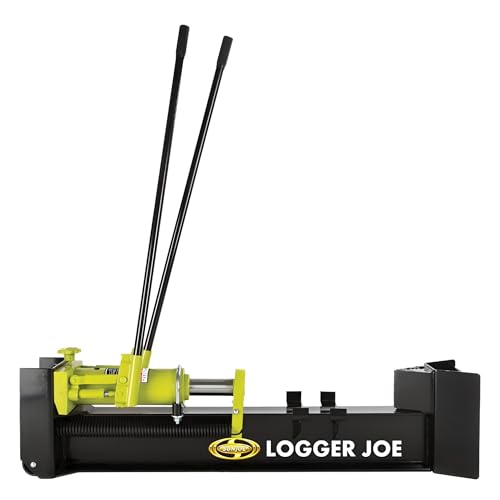
#4 Sun Joe LJ10M Manual Log Splitter — Best Durability
A solid steel frame and a hand-operated hydraulic pump leave nothing to fuel, charge or tune up, so this splitter still works after a long season sitting in the shed. Its 2-speed pump delivers 10 tons of force.
Key Specs:
- Splitting force: 10 tons
- Power: manual 2-speed hydraulic pump
- Log capacity: up to 18 in long, 8 in wide
- Frame: solid steel
- Weight: 87 lb
- Model: LJ10M
Detailed Review:
With no engine, motor or cord, this splitter has very little that can fail while it sits between seasons: a solid steel frame, a hydraulic cylinder and a hand pump. That simplicity suits a cabin, a campsite or a back corner of the property where power never reaches.
The 2-speed pump builds up to 10 tons of hydraulic force by hand. The trade-off is pace. Every split takes a series of steady pump strokes, so a large pile becomes a workout rather than a quick chore.
Logs up to 18 inches long and 8 inches wide fit the beam. The log cradle keeps split halves from dropping to the ground, so you are not bending for every piece, and the ram return spring resets the ram between splits.
At 87 pounds on rear wheels, it is a very different machine from the Champion 27-Ton Gas Log Splitter, which weighs 465 pounds and needs a hitch to move. You give up that machine’s 27 tons of force, but you gain a splitter you can load into a truck bed or tuck into a shed corner.
Pros:
- Runs without gas, oil or electricity.
- Solid steel frame is built for years outdoors.
- Log cradle catches split halves before they fall.
- Ram return spring resets the ram between splits.
Cons:
- Hand pumping makes every split slow and tiring.
- 8-inch width limit excludes larger rounds.
Who It’s For:
Cabin owners, campers and anyone splitting where no outlet reaches will appreciate a splitter that needs neither fuel nor power. It suits occasional burners who split small batches for a fireplace or fire pit. Households that heat with wood all winter will find the hand pumping too slow.
Editor’s Verdict:
Built to sit idle and still work when needed, it rewards patient owners with dependable splitting and nothing to fuel or charge.
#5 Landworks 20-Ton Gas Log Splitter — Best Gas-Powered
If you split out at the woodpile, far from any outlet, this gas splitter brings real force anywhere you can roll it on its 10-inch wheels. A 7HP engine pushes 20 tons through rounds up to 16 inches across.
Key Specs:
- Engine: 7HP gas
- Splitting force: 20 tons
- Pump: 2-stage Bucher hydraulic gear pump
- Log capacity: up to 20 in long, 16 in diameter
- Cycle time: 7.5 seconds with rapid auto return
- Wheels: 10 in transport wheels
Detailed Review:
A 7HP gas engine paired with a 2-stage Bucher hydraulic gear pump gives this splitter 20 tons of force and a 7.5-second cycle with rapid auto return. A 2-stage pump moves the ram quickly at low pressure, then switches to high pressure when the wedge meets resistance. That is how it keeps cycles short without giving up force.
Rounds up to 16 inches in diameter and 20 inches long fit the horizontal full beam, which covers a wide range of seasoned hardwood. The engine delivers a smooth, linear power curve, so the wedge keeps pushing at a constant rate instead of lurching through the grain.
With no cord or outlet involved, you can split at the woodlot, along the back fence or beside a neighbor’s downed tree. The engine has to run outside with proper ventilation, and the hydraulic fluid ships separately, with AW32 as the grade to buy.
The 10-inch transport wheels roll it from site to site without a trailer. For owners who split away from the house, it holds its own among the best gas log splitters.
Pros:
- 7.5-second cycle keeps a big pile moving.
- 2-stage Bucher pump balances speed and force.
- Splits rounds up to 16 inches in diameter.
- Works anywhere without an outlet or cord.
Cons:
- Ships without hydraulic fluid; AW32 is sold separately.
- Outdoor-only operation rules out splitting in a garage.
- Gas engine adds oil and fuel upkeep.
Who It’s For:
Homeowners with a woodlot, or a pile far from the house, get the most from a splitter that carries its own power. It fits people burning hardwood through the heating season who want short waits between splits. Anyone who has to split inside a garage or shed needs an electric model instead.
Editor’s Verdict:
Pick it if you split away from the house and want quick cycles. Plan time for engine upkeep and buy the hydraulic fluid up front.
#6 SuperHandy 25-Ton Gas Log Splitter — Best Lightweight
At 90 pounds, this gas splitter is easy to handle for its 25 tons of force. A half-beam frame, 10-inch polyurethane wheels and a folding handle let one person roll it to the woodpile, where the 7HP AlphaWorks engine takes on logs up to 24 inches in diameter.
Key Specs:
- Engine: 7HP AlphaWorks
- Splitting force: 25 tons
- Pump: 2-stage Bucher hydraulic gear pump
- Log capacity: up to 20 in long, 24 in diameter
- Cycle time: 12 seconds
- Weight: 90 lb
Detailed Review:
The half-beam frame is how this splitter keeps its weight to 90 pounds while still carrying a 7HP AlphaWorks engine and a 2-stage Bucher pump. Add 10-inch polyurethane wheels and an ergonomic folding handle, and one person can wheel it to the woodpile, then fold the handle down to save space in the shed.
Diameter capacity reaches 24 inches, with logs up to 20 inches long, so wide rounds of oak or maple can go straight onto the beam instead of being quartered with a chainsaw first. It also works in horizontal or vertical position, which helps when a round is too heavy to lift.
The SuperHandy 20-Ton Hydraulic Log Splitter makes the trade-off clear. This model takes rounds up to 24 inches across against that splitter’s 16 and weighs 90 pounds against its 130, but its 12-second cycle is slower than the 20-ton’s 7.5 seconds. If your pile is mostly wide rounds, I’d take the extra diameter over the faster reset.
Pros:
- 90 pounds keeps it manageable for one person.
- Folding handle and 10-inch wheels make moving easy.
- Accepts rounds up to 24 inches in diameter.
- Works in horizontal or vertical position.
Cons:
- 12-second cycle slows big batches of small rounds.
- Hydraulic fluid not included; AW32 recommended.
- Gas engine limits it to outdoor use.
Who It’s For:
Splitting solo, without a truck or tractor to haul gear, is where a lighter gas machine pays off. Owners of wide oak or maple rounds who still want to wheel the splitter by hand will find it a good fit. If a quick reset matters more than diameter capacity, the SuperHandy 20-Ton Hydraulic Log Splitter suits you better.
Editor’s Verdict:
Light enough to wheel by hand yet sized for wide rounds, it’s a smart buy for anyone splitting on their own.
#7 SuperHandy 20-Ton Hydraulic Log Splitter — Best Performance
A 7.5-second cycle keeps the pile moving. Its AlphaWorks 7HP four-stroke OHV engine and 2-stage Bucher pump drive 20 tons through logs up to 16 inches across and 20 inches long, so heating-season splitting goes quickly.
Key Specs:
- Engine: AlphaWorks 7HP 4-stroke OHV gas
- Splitting force: 20 tons
- Pump: 2-stage Bucher hydraulic gear pump
- Cycle time: 7.5 seconds
- Log capacity: up to 20 in long, 16 in diameter
- Weight: 130 lb
Detailed Review:
The 7.5-second cycle sets a quick rhythm, so a long session runs at your loading pace rather than the machine’s. Over a full afternoon, those saved seconds add up to more split wood and less standing around. The AlphaWorks engine’s smooth, linear power curve keeps the wedge moving evenly through tough grain.
That speed comes from an AlphaWorks 7HP four-stroke OHV engine driving a 2-stage Bucher gear pump to 20 tons of force. Logs up to 16 inches in diameter and 20 inches long fit the horizontal full beam and steel wedge, a range that handles stove and fireplace wood well.
The 130-pound platform rides on 10-inch tubeless polyurethane wheels, so there are no tires to air up before splitting season, and the ergonomic folding handle shortens it for storage. Gas power frees you from cords and outlets, so the splitter can go wherever the wood was cut, though the engine must run outdoors with good ventilation.
Pros:
- 7.5-second cycle keeps long sessions moving.
- Smooth power curve from the AlphaWorks engine.
- Tubeless polyurethane wheels never need air.
- Folding handle shortens it for storage.
Cons:
- 16-inch diameter limit means very thick rounds will not fit.
- Hydraulic fluid is sold separately.
- Engine needs outdoor use and regular upkeep.
Who It’s For:
People who heat with wood and work through a big pile every fall will value the quick rhythm. It suits hardwood users who want gas power without a towing setup. Anyone whose rounds run especially wide should consider the SuperHandy 25-Ton Gas Log Splitter, which accepts larger diameters.
Editor’s Verdict:
Quick cycles and a smooth engine make this a dependable workhorse for anyone burning through a full woodpile each season.
#8 Champion 27-Ton Gas Log Splitter — Best Premium
Rural owners who tow gear behind an ATV or UTV can take this splitter straight to a downed tree on its 16-inch tires. A 224cc engine supplies 27 tons of force.
Key Specs:
- Splitting force: 27 tons
- Engine: 224cc Champion single-cylinder OHV
- Cycle time: 16 seconds, auto-return valve
- Towing: up to 45 mph, 2-inch ball hitch coupler, 16-inch tires
- Weight: 465 lb
- Warranty: 2-year limited, free lifetime technical support
Detailed Review:
A 224cc Champion single-cylinder OHV engine drives 27 tons of splitting force, which gives you margin on dense, knotty hardwood that would bog down a lighter machine. It converts from horizontal to vertical in seconds, so heavy rounds can be rolled into place instead of lifted onto the beam.
The 16-second cycle runs on a dependable auto-return valve capable of more than 220 cycles per hour, and the expanded operator area gives you room to stage rounds and clear splits. Together, those features suit long days working through a large woodpile.
Towing is built into the design. An extended tongue, a 2-inch ball hitch coupler and 16-inch tires let it follow most ATVs and UTVs at up to 45 mph. At 465 pounds, it moves by hitch rather than by hand, so plan where it will park between jobs.
This is a premium purchase, and Champion backs it with a 2-year limited warranty and free lifetime technical support. For owners who split every season, that support is part of what the higher price buys.
Pros:
- 27 tons gives margin on dense, knotty hardwood.
- Converts from horizontal to vertical in seconds.
- Tows behind most ATVs and UTVs.
- 2-year limited warranty plus lifetime tech support.
Cons:
- 465 pounds means it moves only by hitch.
- Premium price is hard to justify for occasional use.
- Extended tongue adds length to store.
Who It’s For:
Landowners who clear storm damage or cut hardwood from their own woodlot are the natural fit, especially with an ATV or UTV already in the barn. It also suits anyone who wants vertical splitting for heavy rounds. Occasional burners with a modest stack will pay for capacity they never use.
Editor’s Verdict:
For serious firewood producers, this towable splitter pairs 27 tons of force with warranty support that backs its premium price.
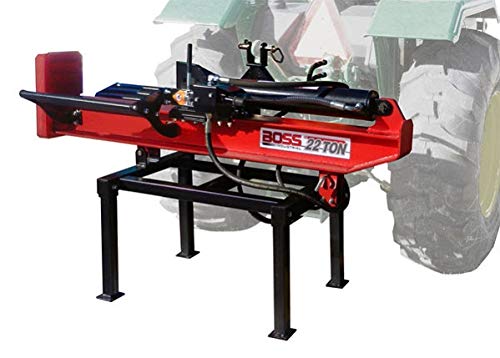
#9 Boss Industrial 3PT22T25 Log Splitter — Best Large Capacity
Tractor owners can turn their three-point hitch into a firewood station with this splitter. It mounts to Category 1 and Category 2 hitches, delivers 22 tons of force and takes logs up to 25 inches long on extra-wide trays, all with one-hand operation.
Key Specs:
- Splitting force: 22 tons
- Hitch: Category 1 and Category 2 three-point
- Log length: up to 25 in
- Controls: one-hand operation
- Log trays: extra wide
- Weight: 442 lb
Detailed Review:
The three-point mount means this splitter rides on the tractor itself, so you drive it to the downed tree instead of towing a second machine. It fits Category 1 and Category 2 hitches, which covers many compact and utility tractors, but check your tractor’s lift capacity against the splitter’s 442 pounds.
Logs up to 25 inches long fit, which beats the 20.5-inch limit on the BILT HARD 6.5-Ton Electric Log Splitter and lets you cut longer rounds for a large firebox without trimming them down. The trade-off is that this splitter only works where the tractor goes, while the BILT HARD plugs into a household outlet.
Twenty-two tons of splitting force handle dense hardwood, and the extra-wide log trays hold heavy rounds and split halves off the ground. That keeps big pieces where you can reach them and away from your feet.
One-hand operation leaves your other hand free to steady or reposition a log between strokes. Keep that hand well clear of the wedge whenever the ram moves, and wear gloves and eye protection.
Pros:
- Mounts to Category 1 and Category 2 hitches.
- Splits logs up to 25 inches long.
- Extra-wide trays keep heavy rounds off the ground.
- One-hand operation frees a hand to position logs.
Cons:
- Requires a tractor with a compatible three-point hitch.
- 442 pounds calls for adequate tractor lift capacity.
- One-hand control lacks the safeguard of two-hand designs.
Who It’s For:
Acreage owners who already run a compact or utility tractor get a splitter that rides along to every downed tree. It suits anyone cutting long rounds for a large firebox. Without a tractor, a towable gas model makes more sense.
Editor’s Verdict:
Mount it once, and the tractor becomes a mobile splitting station for long, heavy rounds.
How Many Tons Does a Log Splitter Really Need?
The right rating is the force your toughest rounds demand, plus a margin for knots, not the largest figure printed on the box. Splitting force is what keeps the ram moving once the wedge meets resistance. With too little, the ram stalls mid-stroke with the wedge buried. With too much, you pay in weight, storage space and engine upkeep that never earns its keep.
How Does Wood Type Change the Force You Need?
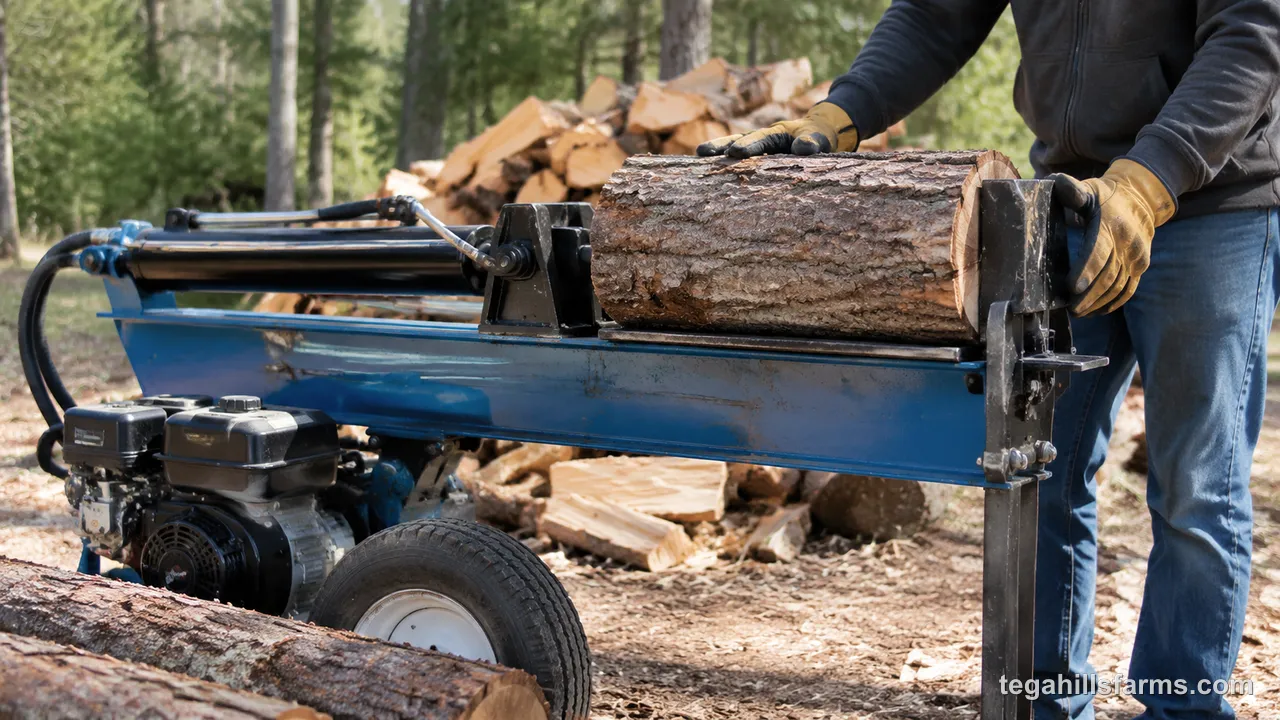
Dense hardwoods like oak, hickory and elm need far more splitting force than softwoods such as pine, spruce or fir, and knotty or twisted grain raises the demand on any species. A wedge works by forcing wood fibers apart along the grain. In dense hardwood, those fibers are packed tighter and bound more firmly, so the ram has to push harder before the round gives way.
Grain matters as much as species. Straight-grained ash or pine opens almost as soon as the wedge bites. Elm’s interlocking fibers, and the grain that wraps around a knot, force the wedge to tear through wood instead of separating it.
An undersized splitter shows it quickly: the ram slows, the motor or engine labors, and the wedge stops partway with the round clamped on it. Then you have to back the ram off and finish the job with a maul. If oak and hickory fill your stack, the best log splitters for hardwood carry the force margin those rounds call for.
How Do Log Diameter and Length Affect the Choice?
A splitter has to fit your longest round on the beam and have enough force for your widest one, because the resistance a round puts up grows with its diameter. Length capacity is a hard stop. A round longer than the ram’s travel will not sit between the wedge and the push plate, so cut your rounds to suit both your firebox and the machine.
Diameter is a softer limit, but it matters just as much. A wide round has more wood fiber for the wedge to separate, and big rounds often hide knots and crotches, so a force rating that handles stove-sized pieces can stall on trunk sections. Wide rounds also put heavy loads on the beam and wedge with every stroke, which is where a stiff, full-length beam and solid welds pay off. If your pile includes trunk sections from mature trees, the best heavy duty log splitters are built for that kind of load.
Electric or Gas: Which Log Splitter Suits Your Yard?
Electric splitters fit owners who split near an outlet and want quiet, fume-free work, while gas splitters suit anyone who needs more force or splits far from power. The deciding factor is rarely which type is stronger on paper. It comes down to where your woodpile sits, how close the nearest outlet is, and how many rounds you face each season.
How Do Power and Splitting Speed Compare?
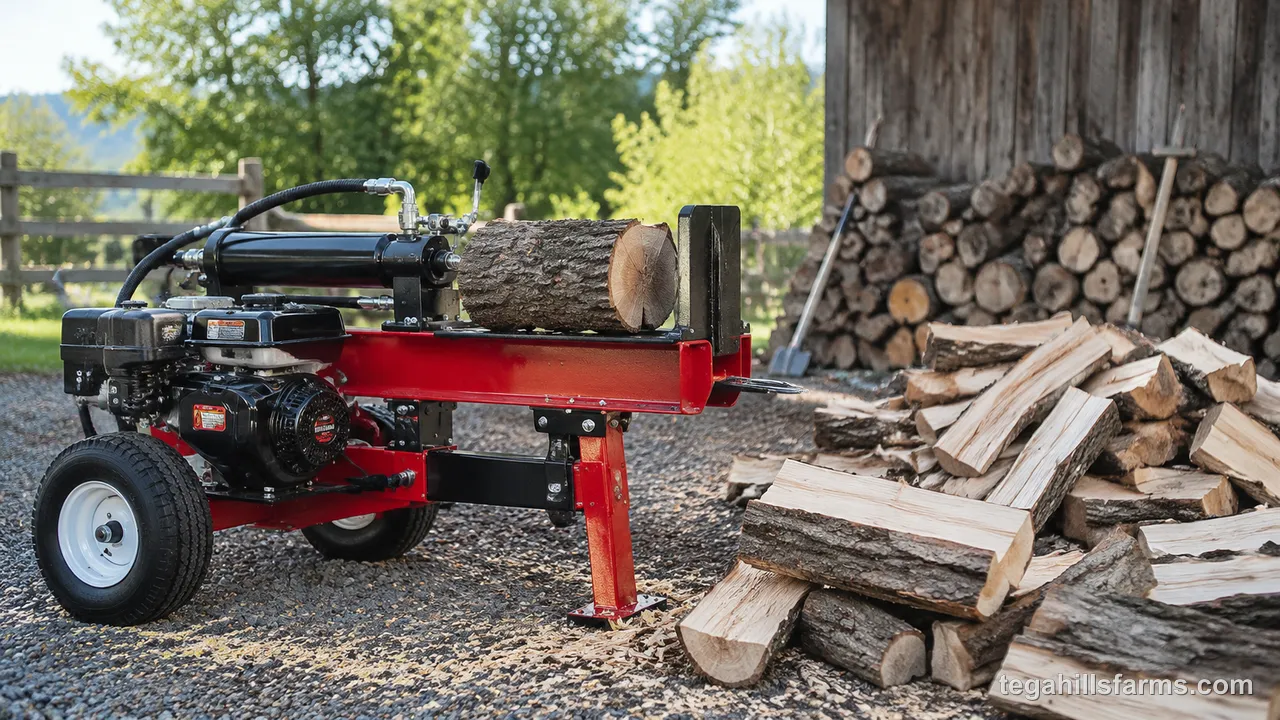
Gas splitters generally carry higher force ratings and faster cycles than electric ones, because a gas engine can drive a large 2-stage hydraulic pump, while an electric motor is capped by what a household circuit can supply. That ceiling is why plug-in models sit at the lower tonnage ratings and why their cycles tend to run longer.
With a pile of mixed logs, the difference shows up in how far you get without stopping. An electric splitter handles straight, modest rounds at a steady pace and leaves the knotty, oversized ones for the maul. A gas splitter can take the whole pile in one session, and a quick cycle means the ram is ready for the next round almost as soon as you are.
For a small stack, speed alone won’t decide it. If most of your wood is stove-length and straight-grained, an electric model’s slower reset costs you very little.
What Changes for Noise, Fumes and Maintenance?
An electric splitter runs quieter and produces no exhaust, so it can work in an open garage or near a property line. A gas engine adds oil changes, fresh fuel, spark plug checks and an outdoor-only rule. Exhaust is the deal-breaker indoors: a gas engine produces carbon monoxide, which builds up quickly in any enclosed space.
Noise changes where and when you can work. A small engine at full throttle calls for hearing protection and won’t win you friends on a tight suburban street early on a Saturday. With close neighbors, I’d lean electric for that reason alone, and the best quiet log splitters are built around the same idea.
Upkeep is the other half of the comparison. A gas splitter needs oil changes on the engine maker’s schedule, fuel that is stabilized or drained before storage, and an occasional new spark plug. Both types need hydraulic upkeep: check the fluid level and keep the filter clean.
Where Can Each Type Be Used?
An electric splitter can only work as far from an outlet as a properly rated extension cord reaches, while a gas splitter works anywhere you can roll or tow it. A long or undersized cord drops voltage, which makes the motor run hot and lose force, so stay within the length and gauge limits your manual lists.
Yard size usually settles the question. On a small lot, the woodpile tends to sit near the garage, and an electric model fits that setup well. On acreage, trees come down far from the house, and it’s easier to bring a gas splitter to the wood than to haul every round back to an outlet. That is the situation the best log splitters for large yards are built for.
Which Log Splitter Type Fits the Way You Work?
Ram orientation and how the machine is powered decide how much lifting each round takes and where the splitter can live, and both matter to your back as much as the force rating does. A layout that suits your body and storage space turns a long splitting day into steady work instead of a strain.
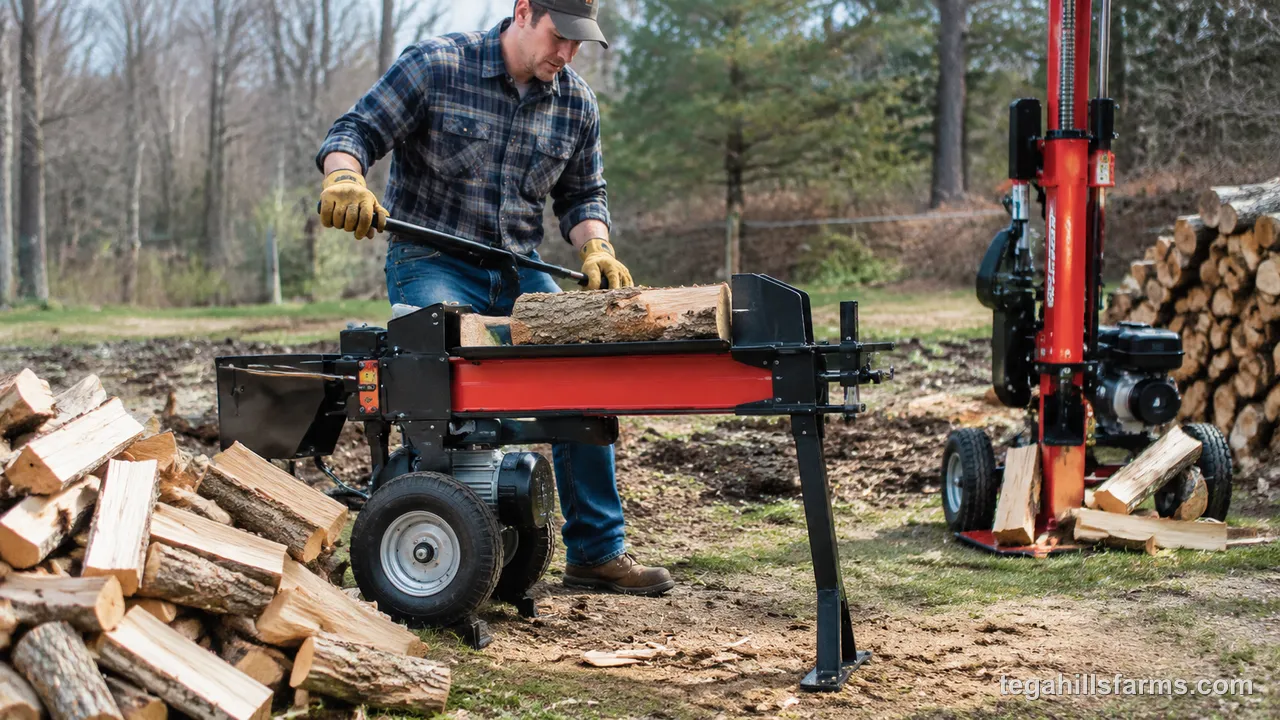
Horizontal, Vertical or Two-Way: What Is the Difference?
A horizontal splitter has you lift every round onto a beam at about waist height. A vertical setup lets you roll a heavy round onto a base plate and split it where it stands, which saves your back on big pieces. Two-way models convert between the two, so you can work stove-sized wood horizontally and switch to vertical when a trunk section is too heavy to lift.
Horizontal is the faster layout for moderate rounds. The log sits in a cradle, the split halves stay at working height, and loading the next piece takes one motion. Vertical splitting is slower for small wood because you bend to stand each piece on the plate, but it removes the heaviest lifts of the day.
If your stack mixes stove wood with some big rounds, a two-way machine covers both without a second tool, and the best horizontal vertical log splitters are the place to start. If everything you burn is light enough to lift comfortably, a horizontal splitter keeps the work quicker.
When Does a Manual Splitter Make Sense?
A manual splitter makes sense when you split only occasionally, have no power at the woodpile, or want a machine with almost nothing to maintain. Hand-pumped hydraulic models deliver real force by trading speed for effort. Each split takes a run of pump strokes, which suits a fireplace or fire-pit habit but turns a winter’s worth of heating wood into a long job.
Kindling splitters are simpler still: a fixed wedge you drive small pieces onto with a mallet, useful for starting fires rather than processing rounds. Neither type needs fuel, oil or a cord, and both store in a corner of the shed. If that low-upkeep trade fits your burning habits, the best manual log splitters cover both styles.
Which Features Matter Besides Tonnage?
Beyond force, daily use is shaped by how fast the ram resets, how the machine moves around the yard, and the controls that keep your hands clear. You deal with these details on every round, and they weigh as heavily as tonnage when you work out how to choose a log splitter for a full season of firewood.
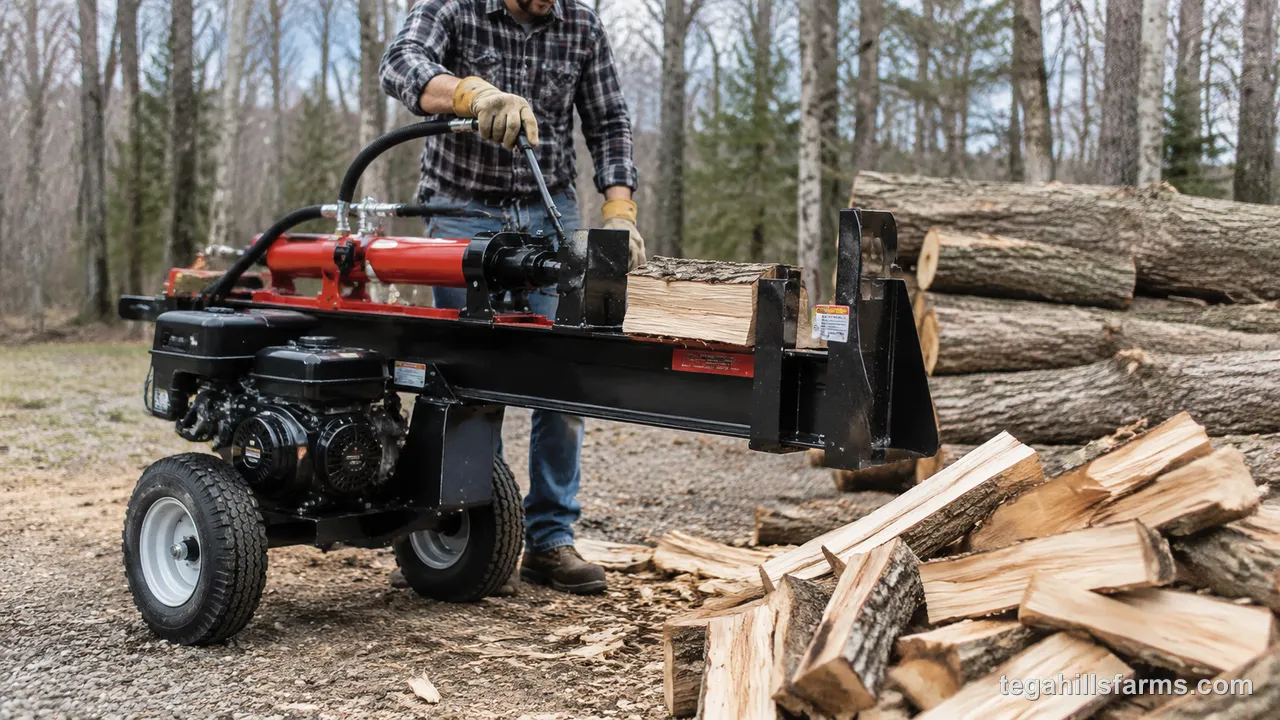
Why Does Cycle Time Matter?
Cycle time is how long the ram takes to push through a full stroke and return, and it sets the pace of every split you make. With a short cycle, the ram is back by the time you’ve lifted the next round, so you keep a steady rhythm. With a slow one, you stand holding a log while the push plate comes home.
That waiting adds up over a full pile. It stretches the session and keeps you on your feet longer, and standing with a heavy round tires you faster than steady loading does. Auto-return helps further: the ram resets on its own once a split finishes, so your hands are free to clear the halves and set up the next piece.
How Much Do Wheels, Weight and Towing Matter?
Wheels and weight decide whether you bring the splitter to the wood or haul the wood to the splitter. Small wheels roll easily on concrete and pavers but dig into soft lawn, while larger tires ride over grass, gravel and ruts with far less pulling.
Weight cuts both ways. A heavier frame stays steady under hard splits, but past a certain point you need a vehicle to move it. A lighter machine with a folding handle is easier to store and to wheel around by hand. Towable splitters solve the distance problem with a ball hitch coupler and road-ready tires, so an ATV, UTV or truck can pull them to a downed tree, and the best towable log splitters are built for exactly that. Three-point models skip wheels entirely and ride on a tractor.
What Safety Controls Should You Look For?
Two-hand controls are the first feature to look for, because they require one hand on each control while the ram moves, which keeps both hands out of the split zone. One-hand designs leave a hand free to steady the log, a convenience that only stays safe if that hand never drifts toward the wedge.
Log cradles catch split halves before they drop, which keeps heavy pieces off your feet and stops you from reaching into the beam to retrieve them. Gear matters as much as controls. Wear safety glasses, work gloves and sturdy boots, add hearing protection around a gas engine, and keep children and pets well back from the work area. Only one person should run the controls at a time.
Which Log Splitter Matches How Much Firewood You Burn?
Occasional burners get by with a manual or compact electric splitter, regular wood heaters need a portable gas model, and heavy users belong on a towable or tractor-mounted machine. If a fire pit and some winter evenings by the fireplace are the whole job, a hand pump or a plug-in splitter at the budget end keeps cost and storage low, and compact machines like these are what the best log splitters for home use are built around. That is also the class to focus on when you compare log splitters under $500. Heating a house with wood changes the math, because a mid-range gas splitter with quick cycles turns a season’s pile into a few weekends of work. Landowners clearing storm damage or selling firewood can justify premium towable or three-point machines, since their force and throughput save hours that a lighter splitter would cost.
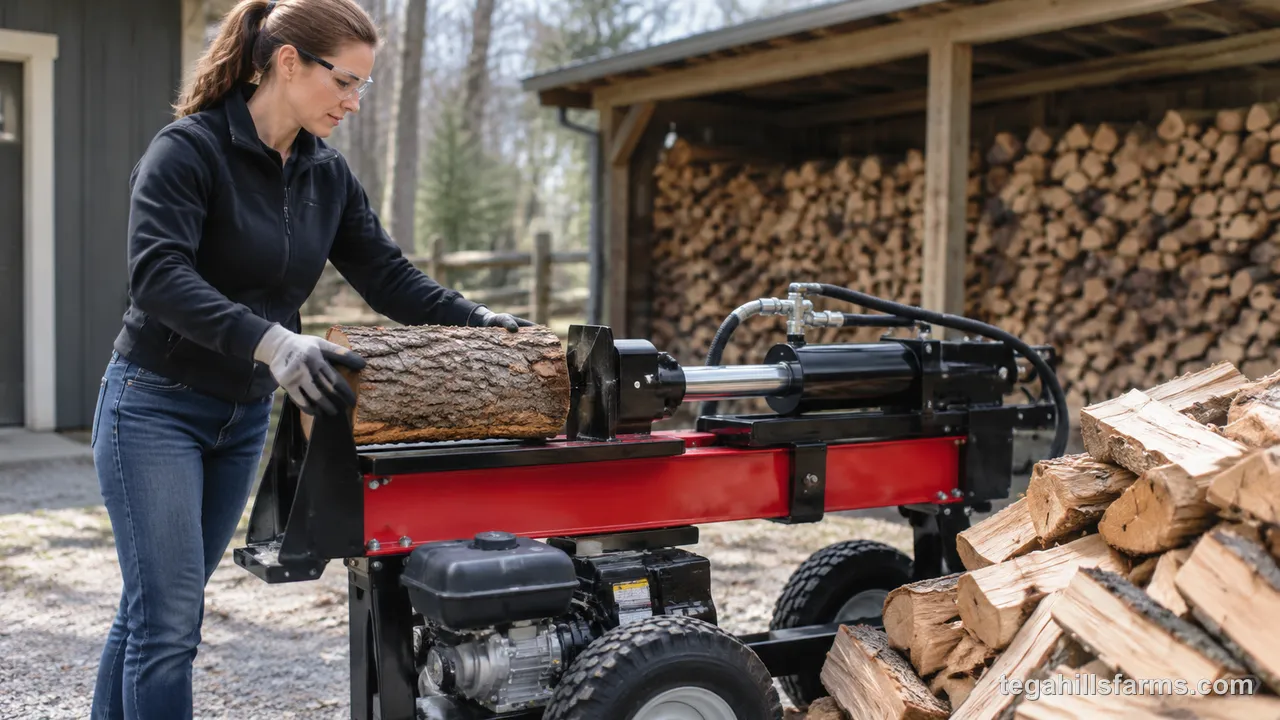
Hydraulic fluid darkens and seals harden over seasons of splitting, and the first sign is often a ram that creeps through a stroke it once finished easily. A small weep at a fitting looks harmless until the cylinder loses pressure in the middle of a cold-weather splitting day, leaving you with a half-split pile and a machine you can’t trust.
How Can You Tell a Worn Log Splitter from One Still Worth Using?
A log splitter is still worth using when the hydraulics hold pressure, the ram moves at its usual speed, and any seepage stops once you tighten a fitting. It is on the way out when fluid weeps from the cylinder seals, the ram slows or stalls on wood it used to split, or the beam and wedge show cracks or bends.
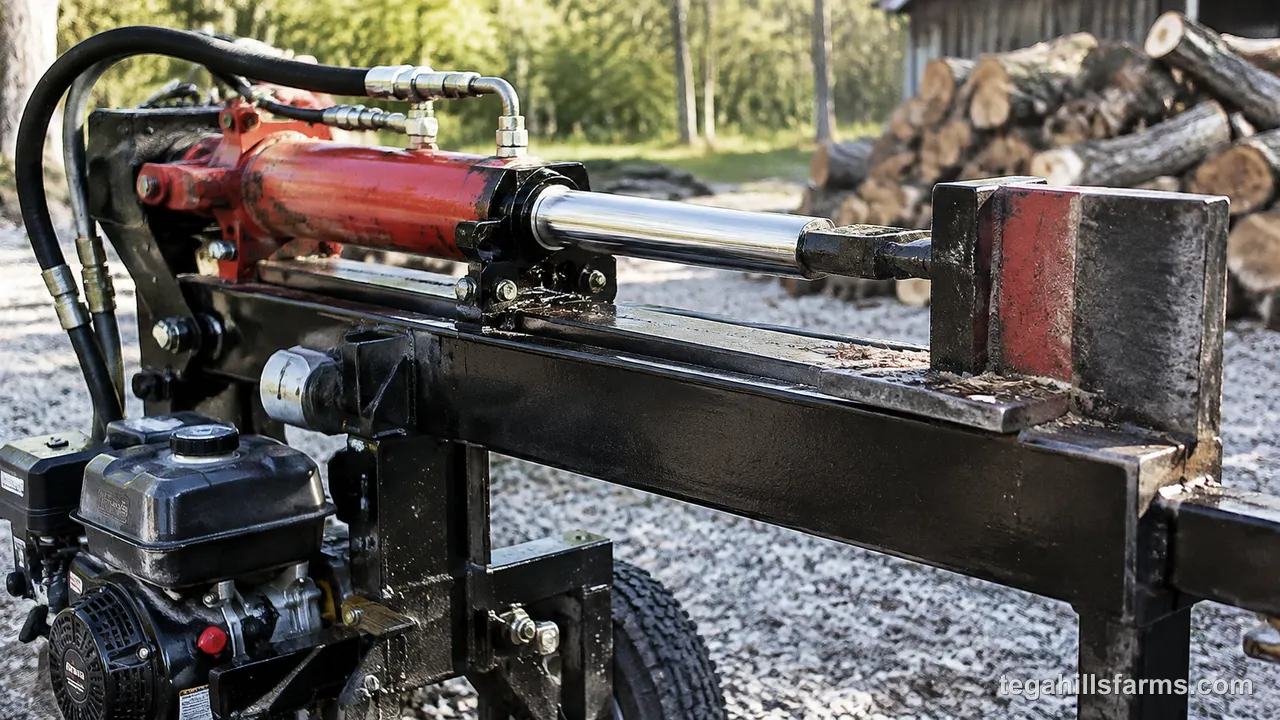
Fluid tells you a lot. Milky fluid means water has gotten in, and dark fluid with a burnt smell points to overheating. Either way, drain it, refill with the grade your manual specifies, and replace the filter. A ram that creeps or loses force usually needs new seals, which is a routine repair.
Repair stops making sense when the beam is cracked, when the cylinder rod is scored, or when the pump and cylinder both need replacing and the parts approach the cost of a new machine. A splitter that gets regular fluid changes, a clean filter and dry storage can stay in service for many seasons.
Is a Bigger Splitter Always the Smarter Buy?
No. The smarter buy is the smallest splitter that handles your densest, widest rounds without stalling, because every step up in force brings more weight, storage space, fuel and upkeep that you carry all year.
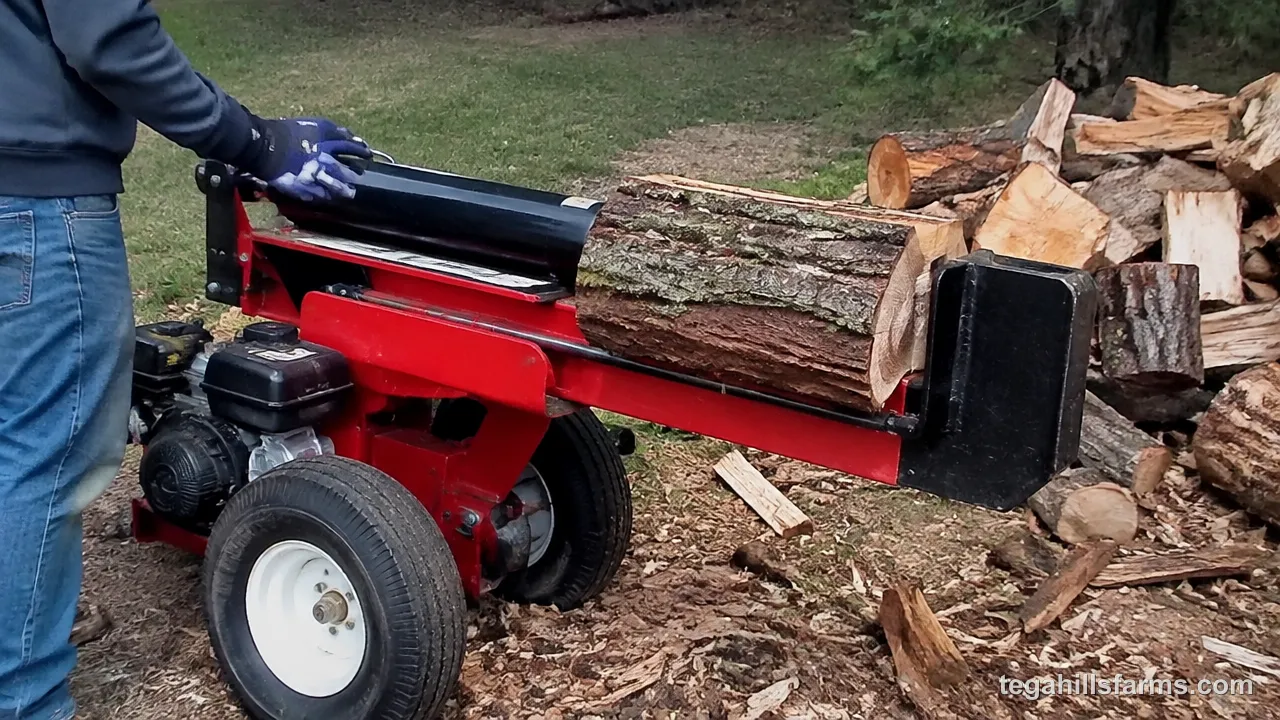
Overbuying shows up the first time you move the machine. A towable splitter sized for trunk sections means hitching a vehicle for a stack of stove wood, finding parking for a long frame, and changing engine oil on a machine that runs only a handful of afternoons a year. Underbuying causes the opposite problem: the ram stalls on knotty oak, you finish the pile with a maul, and the splitter ends up replaced.
Match the machine to your actual wood. Measure your widest rounds, note the species you burn and how much you split each year, then read independent reviews of the exact model you’re considering, paying attention to how it handled wood like yours.
Does Engine Brand Matter on a Gas Log Splitter?
Engine brand affects how easily a gas splitter starts, how simple it is to find parts, and how readily a local shop will service it. It says nothing about the hydraulic pump, cylinder or beam that do the actual splitting, and a reliable engine on a weak pump still makes a slow splitter.
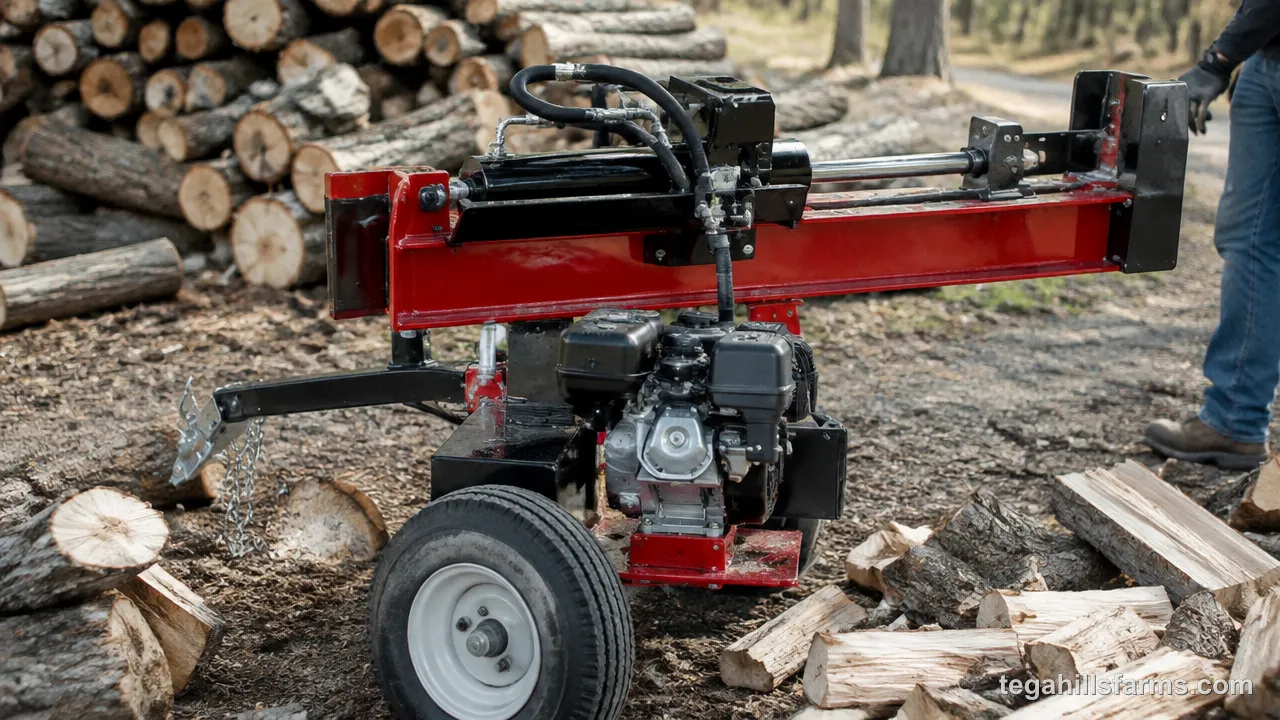
Honda-powered splitters draw a lot of searches because Honda’s small engines have a long reputation for easy starting and wide parts availability, and that reputation is a fair reason to pay attention. Other engines, including ones sold under splitter makers’ own brands, can serve well if parts and service are easy to get where you live. Made-in-USA searches deserve a closer look, because the assembly location rarely covers every component, so check where the engine and pump come from.
Weigh the engine together with the pump maker, the beam construction and the warranty, and compare the best log splitter brands on all of those rather than on the engine badge alone.
Log Splitter FAQs
What extension cord should I use with an electric log splitter?
Use the shortest heavy-gauge outdoor extension cord that reaches, and stay within the length and gauge limits in your splitter’s manual. Plug into a GFCI-protected outdoor outlet, uncoil the cord fully, and route it away from the beam and the log path so a falling half or your boots never land on it.
Does a log splitter come with hydraulic fluid?
Not always. Several gas splitters ship with an empty reservoir, and starting the engine without fluid can damage the pump. Check the manual for the fluid type, commonly AW32, then fill the reservoir, run the ram through a few strokes to push out trapped air, and top off the level before splitting.
How should I store a log splitter over winter?
Keep it dry and under cover, with the ram retracted so the cylinder rod isn’t exposed to rust. For a gas model, add fuel stabilizer or run the carburetor dry, and change the oil before storage. Wipe down the beam and wedge, and check the hydraulic fluid and hoses before your first spring session.
Can I run a gas log splitter in a garage?
No. A gas engine produces carbon monoxide, which can build to dangerous levels in a garage even with the door open. Run gas splitters outdoors in open air, away from windows, doors and vents. If you need to split under a roof, an electric splitter is the safer choice.
What should a first-time owner do before the first split?
Read the manual, check the hydraulic fluid and engine oil, and wear safety glasses, gloves and sturdy boots. Start on straight-grained, modest rounds to learn how the controls and ram feel, keep one person on the controls, and clear the area of children, pets and tripping hazards.
More Guides on Best Log Splitters
- Best Log Splitters Under $1000
- Best Log Splitters for Small Yards
- Best Log Splitters Under $300
- Best Log Splitters for Homeowners
- Best Log Splitters for Softwood
- Best Lightweight Log Splitters
- Best Horizontal Log Splitters
- Best Hydraulic Log Splitters
- Best Kinetic Log Splitters
- Best Log Splitter Wedges