9 Best Lawn Mowers: 2026 Top Picks Worth Buying
Our top picks for the best lawn mowers in 2026 are the Greenworks 60V 21″ Self-Propelled Mower (Best Overall), EGO Power+ LM2135SP 21″ Self-Propelled Mower (Best Lightweight), EGO Power+ LM2134SP-2 21″ Self-Propelled Mower (Best Battery Life), EGO Power+ LM2244SP-2 22″ Self-Propelled Mower (Best Premium), Worx WG752 40V 21″ Cordless Mower (Best for Small Yards), YARDMAX YG2860 22″ 201cc Self-Propelled Mower (Best Gas-Powered), Husqvarna 410iQ Robotic Lawn Mower (Best for Hilly Terrain), Baikemon 40V 19″ Cordless Lawn Mower (Best Budget), and Honda HRX-BE 21″ Battery Lawn Mower (Best Large Capacity).
The right mower depends less on peak specs than on fit: how big and steep your lawn is, whether you already own batteries from one brand, how much effort you want to put into pushing, and where the machine will live between cuts.
Reliability sits under every one of those choices. A mower has to start on the first try, keep its blade speed when the grass is thick or damp, and not turn into a weekend repair project, which is why power source and upkeep weigh as heavily as cutting width.


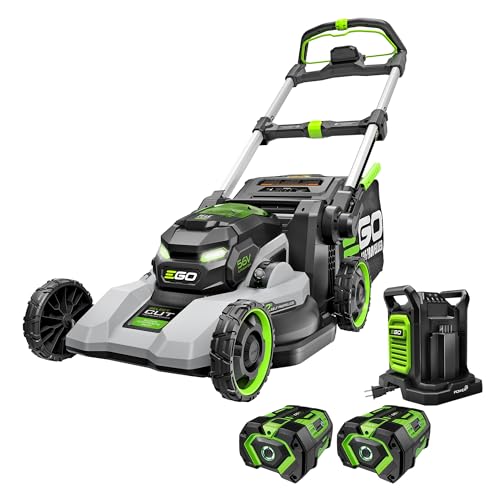


If an EGO, Greenworks, Worx or DEWALT battery already runs your trimmer or blower, start with the mower on that same platform, since one set of packs and one charger can then serve the whole yard.
What Matters Most When Choosing Lawn Mowers?
Power source and drive type shape most of the ownership experience, with deck width, battery platform, storage space and warranty deciding how well a mower fits your yard and garage.
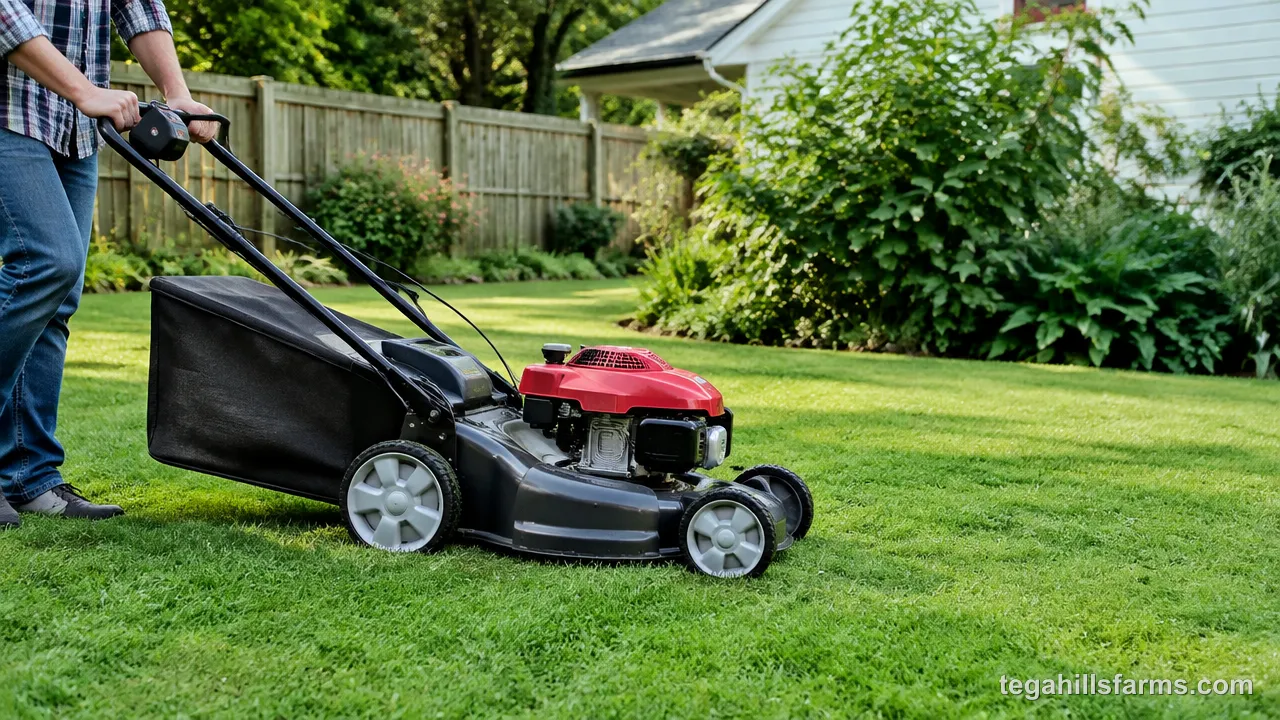
Gas, battery or robot determines how the mower starts, how loud it runs and how much seasonal upkeep you take on. Self-propel drive changes the effort on slopes and in thick grass, while a push mower stays lighter and simpler. Deck width trades fewer passes against tight-space maneuverability.
The battery platform matters more than its runtime number suggests, because sharing packs with a trimmer or blower spares you a second charger and lets later tools be bought without batteries. Storage is a practical filter too: a folding handle or vertical storage can decide whether a mower fits beside the car. Warranty terms are worth reading closely, since battery coverage often runs on a different clock than the tool itself.
The 9 Best Lawn Mowers of 2026
Ranked in order, the picks are the Greenworks 60V 21″ Self-Propelled Mower, EGO Power+ LM2135SP 21″ Self-Propelled Mower, EGO Power+ LM2134SP-2 21″ Self-Propelled Mower, EGO Power+ LM2244SP-2 22″ Self-Propelled Mower, Worx WG752 40V 21″ Cordless Mower, YARDMAX YG2860 22″ 201cc Self-Propelled Mower, Husqvarna 410iQ Robotic Lawn Mower, Baikemon 40V 19″ Cordless Lawn Mower and Honda HRX-BE 21″ Battery Lawn Mower. These mowers differ most in how they get their power and how much of the mowing they leave to you, so match those two to your lawn before comparing anything else.
#1 Greenworks 60V 21″ Self-Propelled Mower — Best Overall
Rear-wheel drive and a pair of 4.0Ah batteries make this the mower I’d hand to most owners of a larger suburban lawn with a few slopes. Its packs also run more than 75 Greenworks 60V tools.
Key Specs:
- Motor: 60V brushless
- Batteries: two 4.0Ah, included
- Coverage: up to 3/4 acre per charge
- Drive: rear-wheel self-propelled, pace adjustable on the go
- Modes: mulch, bag, side discharge, turbo leaf pickup
- Weight: 65.04 lb
Detailed Review:
Rear-wheel drive gives this mower its footing on slopes and in thick grass, and the pace adjusts while you walk, so you can ease along a flower bed and speed up across open turf without stopping. The brushless motor draws from both batteries for a rated coverage of up to 3/4 acre per charge. That figure shrinks on hills and in dense growth, so treat it as the flat-lawn number.
Day to day, it behaves the way a cordless machine should: instant starts, zero emissions and operation Greenworks rates at three times quieter than gas mowers. That matters if you mow early on a Saturday or share a fence line with neighbors. LED headlights stretch the mowing window into dawn and dusk.
The 4-in-1 deck handles mulching, bagging and side discharge, and the turbo leaf pickup mode turns the mower into a fall cleanup tool. At just over 65 pounds, it rolls easily into a garage but isn’t something you’ll want to lift often.
Greenworks backs both the tool and its batteries with a 4-year limited warranty, and those packs move straight into its 60V trimmers, blowers and chainsaws. It deserves a place among the best self propelled lawn mowers for anyone who wants one battery system across the whole yard.
Pros:
- Rear-wheel drive holds traction on slopes and thick grass.
- Two batteries come in the kit.
- Turbo leaf pickup doubles as fall cleanup.
- Packs fit Greenworks 60V trimmers, blowers and chainsaws.
- Warranty covers the batteries as well as the tool.
Cons:
- Coverage drops on hills and in dense grass.
- Batteries only fit Greenworks 60V tools.
Who It’s For:
Homeowners with a larger suburban lawn, a few slopes and a yearly leaf cleanup will get the most from this kit, especially if a Greenworks 60V trimmer or blower already sits in the garage. Anyone mowing a tiny, flat lot with tight storage could get by with a lighter, simpler push mower.
Editor’s Verdict:
A well-rounded cordless kit that pairs real slope traction with leaf pickup and a broad tool platform, backed by a warranty that covers the batteries too.
#2 EGO Power+ LM2135SP 21″ Self-Propelled Mower — Best Lightweight
At 55.3 pounds with a single battery, this EGO is easy to steer around beds and simple to roll into a crowded garage. Its 7.5Ah pack recharges in about an hour on the included Rapid Charger.
Key Specs:
- Battery: 56V 7.5Ah ARC Lithium, included
- Runtime: up to 60 minutes
- Cutting torque: up to 7.0 ft-lbs
- Drive: Touch Drive, 0.9–3.1 mph
- Weight: 55.3 lb
Detailed Review:
Touch Drive engages with palm pressure on the handle, and a dial at your fingertips sets the speed across its range. Because this kit carries one battery instead of two, there’s less mass to swing around at the end of each row or bump over a curb.
The Select Cut system ships with three interchangeable lower blades, mulching, high-lift bagging and extended runtime, plus the upper blade. You’d run the mulching blade for routine cuts, switch to high-lift when bagging, and reach for the extended-runtime blade when a single charge has to stretch.
Against the two-battery LM2134SP-2 from EGO, this model gives up a large slice of runtime but sheds a lot of weight, a trade I’d make for a moderate lawn and a cramped garage. The quick recharge makes a second session the same afternoon realistic, and the brushless motor keeps vibration low through the handle.
That battery works in every EGO power tool, and the mower accepts any EGO 56V ARC Lithium pack. For anyone already invested in the 56V system, it’s a natural pick among the best ego lawn mowers.
Pros:
- Single battery keeps the mower easy to handle.
- Palm-pressure Touch Drive with a fingertip speed dial.
- Three swappable lower blades for mulching, bagging or runtime.
- Battery recharges in about an hour.
- Pack runs every EGO 56V tool.
Cons:
- One battery limits each session to about an hour.
- Interchangeable blades add parts to store and swap.
Who It’s For:
If an EGO 56V trimmer or blower already lives in your garage, this mower lets that battery pull double duty on a moderate lawn. Buyers who need long, uninterrupted sessions on a big property should look at the two-battery LM2134SP-2 instead.
Editor’s Verdict:
Easy to steer, quick to recharge and fully compatible with EGO’s 56V batteries, this is a sensible mower for moderate lawns and crowded garages.
#3 EGO Power+ LM2134SP-2 21″ Self-Propelled Mower — Best Battery Life
Owners of bigger lawns who hate stopping mid-job belong here. Two 56V 6.0Ah batteries run this EGO for up to 100 minutes on a single charge, and the same packs power the rest of the EGO lineup.
Key Specs:
- Batteries: two 56V 6.0Ah ARC Lithium, included
- Runtime: up to 100 minutes
- Drive: Touch Drive, 0.9–3.1 mph
- Warranty: 5-year tool, 3-year battery
- Weight: 96 lb
Detailed Review:
The second battery is what separates this kit from the single-pack LM2135SP, and it buys noticeably longer sessions per charge. When the mower is parked, either pack can move to an EGO blower or trimmer for cleanup.
Carrying that extra battery pushes the weight to 96 pounds, far more than its single-battery sibling. You feel it on tight turns, when backing out of corners and whenever the mower has to be lifted. Touch Drive handles the forward work, so the heft mostly shows up at the ends of rows.
The cutting hardware matches the LM2135SP, with the same 7.0 ft-lbs of cutting torque, the same Select Cut blade set and the same eight height positions. The brushless motor runs with low vibration, and LED headlights cover dawn and dusk mowing when a long session pushes into the evening.
EGO backs the mower with a 5-year tool warranty and the batteries with a 3-year warranty. For a machine bought to carry long sessions season after season, that coverage on both pieces matters more than any single spec on the box.
Pros:
- Two batteries carry long sessions on one charge.
- Spare pack runs other EGO 56V tools.
- Eight height positions from 1 to 4 inches.
- Five-year tool warranty.
Cons:
- Second battery adds weight you feel on every turn.
- Hard to lift over steps or into a truck.
Who It’s For:
A big, open lawn and a habit of mowing it all at once make this kit worth the extra heft, and EGO 56V owners can split the two packs between the mower and their other tools. Anyone who has to lift a mower up steps will find the single-battery LM2135SP easier to handle.
Editor’s Verdict:
Pick this one when runtime matters more than heft; the two-pack kit and split tool-and-battery warranty make it a dependable machine for long mowing days.
#4 EGO Power+ LM2244SP-2 22″ Self-Propelled Mower — Best Premium
Dense, fast-growing turf is where this EGO earns its place, with up to 10.6 ft-lbs of cutting torque driving the blade as fast as 3,200 RPM. Its composite deck shrugs off rust and dents.
Key Specs:
- Deck: 22-inch Super Composite
- Cutting torque: up to 10.6 ft-lbs, blade speed up to 3,200 RPM
- Batteries: two 56V 6.0Ah ARC Lithium, 560W charger included
- Runtime: up to 90 minutes
- Deck warranty: 10-year limited
- Weight: 120 lb
Detailed Review:
That cutting force far exceeds the 7.0 ft-lbs of the LM2134SP-2. Extra torque keeps the blade from bogging when it hits a dense patch, so you can hold your walking pace instead of slowing down to let the motor recover.
The 22-inch Super Composite deck is the other reason to step up. It resists dents, rust and corrosion, the usual ways a steel deck wears out where wet clippings sit, and EGO covers it with a 10-year limited warranty.
Two 56V 6.0Ah batteries rate it for up to 90 minutes, slightly less than the LM2134SP-2 with the same pair of packs, likely because the stronger motor and wider deck ask more of each charge. The included 560W charger tops them up, and the Select Cut kit here pairs a high-performance lower blade with a high-lift bagging blade. Touch Drive works the same palm-pressure way as the other EGO picks.
At 120 pounds, it takes real effort to load into a truck bed, roll up a step or steer without the drive engaged. That weight is the price of the bigger deck and motor.
Pros:
- High cutting torque resists bogging in dense grass.
- Composite deck resists dents, rust and corrosion.
- Ten-year limited deck warranty.
- Two batteries and a 560W charger included.
Cons:
- Heavy to lift, load or move without drive.
- Wider deck is tougher through narrow gates.
Who It’s For:
Buyers who mow dense, quick-growing grass and plan to keep a mower for many seasons get the full value of the stronger motor and rust-proof deck. People with a narrow side gate or steps up to the backyard may prefer the LM2134SP-2, which weighs less.
Editor’s Verdict:
Expect a stronger cut and a deck that shrugs off rust and dents, in exchange for serious weight and a firm commitment to EGO’s 56V battery line.
#5 Worx WG752 40V 21″ Cordless Mower — Best for Small Yards
Its fully collapsible handle lets this push mower store upright, which matters when garage floor space is scarce. Two 20V 5.0Ah PowerShare Pro batteries and a dual charger come in the box, so the kit is ready to mow the day it arrives, and those packs fit the wider PowerShare lineup too.
Key Specs:
- Power: 40V from two 20V PowerShare Pro batteries
- Recommended lawn size: up to 1/2 acre
- Drive: push
- Cutting heights: 7 positions, 1.5–4 in, single lever
- Modes: mulch, bag, rear side discharge
- Weight: 55.6 lb
Detailed Review:
AeroDeck vents push more air through the cutting chamber, which keeps clippings moving instead of clumping under the deck and fills the collection bag more completely. On a small lawn mowed every week, that means fewer stops to clear a clog and fewer trips to the compost pile.
IntelliCut sensors raise cutting speed when the grass thickens and dial it back in thinner areas to conserve runtime. Worx rates its second-generation brushless motor at 40% more power and 10% longer runtime than its first-gen brushless design.
This is a push mower, so there’s no drive to engage, and you supply all the forward effort. On a flat, compact lot that trade is easy to accept; on a slope it becomes work.
A single lever moves the deck through all seven heights, and the included mulch plug and discharge chute switch between modes. An onboard gauge shows remaining charge, and the batteries fit more than 140 WORX PowerShare tools and outdoor equipment.
Pros:
- Collapsible handle allows upright storage.
- Vented deck resists clogging and fills the bag well.
- Sensors boost blade speed only where grass is thick.
- Single lever sets all seven heights.
- Batteries and dual charger included.
Cons:
- Push-only design leaves all the effort to you.
- Runs on a pair of 20V packs, not one.
Who It’s For:
Anyone with a compact, mostly flat lot and a garage where every bit of floor counts will appreciate a mower that stands upright out of the way. Worx 20V PowerShare owners can slot in batteries they already have. Hilly yards call for a self-propelled machine instead.
Editor’s Verdict:
Space-saving storage and a clog-resistant deck make this a smart push mower for tidy small lawns, with sensors that spend battery only where the grass demands it.
#6 YARDMAX YG2860 22″ 201cc Self-Propelled Mower — Best Gas-Powered
For owners who’d rather refill a tank than wait on a charger, this 201cc YARDMAX keeps gas simple with an automatic choke that skips priming. A six-speed CVT matches the drive to your walking pace.
Key Specs:
- Engine: 201cc gas
- Deck: 22-inch, 3-in-1
- Drive: front-wheel, 6-speed CVT
- Starting: automatic choke, no priming
- Deck care: cleanout port, single-lever height adjustment
- Weight: 95.7 lb
Detailed Review:
A six-speed shift lever on the CVT lets you set drive speed to your stride, and because the transmission is continuously variable, the change feels smooth rather than a jump between gears. Front-wheel drive rides on high wheels with rubber tires that carry an aggressive spiked tread, which adds traction and maneuverability on uneven turf.
The automatic choke removes the priming and choke steps that make gas mowers fussy on the first start of the season. A deck cleanout port clears clippings from the underside without tipping the mower, and a single lever handles height changes.
With gas, runtime ends only when the tank does, and refueling takes a couple of minutes instead of a charging cycle. That suits long sessions on a big lot or overgrown grass that would drain a battery quickly.
Owning it means changing oil, replacing spark plugs and treating or draining fuel before winter storage. At 95.7 pounds, it’s a substantial machine to swing around at row ends, though the drive takes care of the forward work.
Pros:
- Automatic choke skips priming and choking.
- Six-speed CVT matches pace smoothly.
- Spiked tread tires grip uneven turf.
- Deck cleanout port speeds underside cleaning.
- Refueling takes minutes instead of a recharge.
Cons:
- Needs oil changes, fresh fuel and winter prep.
- Engine noise and exhaust come with every mow.
Who It’s For:
Owners who already keep a gas can and do their own oil changes, or who mow long sessions that would outlast a battery, will feel at home with this mower. Anyone who wants quiet early-morning mowing and no seasonal engine prep will be happier with a cordless machine.
Editor’s Verdict:
Choose it for straightforward gas power with fewer starting headaches, as long as you accept the engine upkeep that comes with owning it.
#7 Husqvarna 410iQ Robotic Lawn Mower — Best for Hilly Terrain
Slopes up to 45% are within reach for this wire-free robot, which maps your lawn through an app instead of a buried boundary wire. Set it once and it mows on schedule.
Key Specs:
- Navigation: EPOS positioning, no boundary wire
- Slope capability: up to 45%
- Coverage: up to 1/2 acre
- Cutting height: 1–4 in, set in the app
- Security: anti-theft alarm, GPS tracking
- Warranty: 4-year
Detailed Review:
Instead of walking behind a mower, you map the lawn once in the Husqvarna Connect app by driving the robot around, marking mowing areas and stay-out zones. EPOS positioning keeps it on that virtual map with centimeter-level accuracy, and onboard radar helps it steer around obstacles.
Larger wheels and a durable bumper carry it across paths and driveways between lawn sections. On a hilly yard, that slope rating removes the weekly job of pushing a heavy mower up a grade, which is the main reason to consider it over the walk-behind picks.
From the app you can change cutting height, adjust the schedule, switch between random, striped and checkerboard patterns and install software updates. When it gets dirty, it’s hose-washable.
An anti-theft alarm and GPS tracking protect a machine that lives outside, backed by a 4-year warranty and a year of free replacement blades. Setup takes more effort than unboxing a walk-behind, and Husqvarna supports it with a Welcome Guide, how-to videos and a US-based support hotline. When slopes are the main obstacle, it holds its own among the best robot lawn mowers.
Pros:
- Virtual boundaries set by app, no buried wire.
- Handles slopes up to 45%.
- Radar helps steer around obstacles.
- Anti-theft alarm with GPS tracking.
- Includes a year of replacement blades.
Cons:
- Still needs a trimmer for edges and corners.
- Mapping the lawn takes setup time before mowing.
Who It’s For:
Busy households with a hilly, moderately sized lawn and a phone in hand get the most from a mower that runs itself on a schedule. People who enjoy mowing, or whose yards are full of narrow strips and clutter, will still want a walk-behind and a trimmer.
Editor’s Verdict:
Hand off routine mowing on a sloped yard to a machine that maps itself, guards against theft and keeps fresh blades coming for its first year.
#8 Baikemon 40V 19″ Cordless Lawn Mower — Best Budget
Existing DEWALT 20V MAX owners can run this brushless mower on batteries they already own. Battery and charger are sold separately, so the savings hinge on having those packs on your shelf, though the built-in carry handle and fully collapsible handle make it easy to stash almost anywhere.
Key Specs:
- Battery: DEWALT 20V MAX XR compatible (up to 8.0Ah), sold separately
- Cutting width: 19 in
- Cutting heights: 6 positions, 0.98–2.76 in
- Modes: mulch, bag (13-gallon / 50 L bag)
- Weight: 34 lb
Detailed Review:
At 34 pounds, this mower is easy to push and move around the yard. The carry handle and collapsible handle make it easy to haul up steps or tuck into a small shed, and the 3-position handle adjusts for taller or shorter users.
It accepts DEWALT 20V MAX XR batteries up to 8.0Ah but not the POWERSTACK line, so check your packs before ordering. Without DEWALT batteries on hand, adding a pack and charger changes the math entirely.
The 19-inch cutting width covers less ground per pass than the 21-inch decks on the Greenworks, Worx and smaller EGO picks, which adds passes on a bigger lawn but helps around beds and tight corners. Six height settings top out at 2.76 inches, below the EGO LM2135SP’s 4-inch maximum, so it suits grass kept short better than turf left long through summer.
When you bag, the large bag and its rated 88% collection rate mean fewer emptying stops. Mulching is the other mode when you’d rather leave clippings on the lawn.
Pros:
- Light enough to carry by its built-in handle.
- Runs on DEWALT 20V MAX XR batteries you may own.
- Collapsible handle folds for compact storage.
- Large bag with a high collection rate.
Cons:
- Battery and charger cost extra without DEWALT packs.
- Low top cutting height limits tall-grass settings.
- Narrower cut means more passes on open lawns.
Who It’s For:
DEWALT 20V MAX users with a small, flat yard and limited storage get a capable mower without buying into a new battery system. Lawns kept long through summer heat suit a mower with a higher top setting, such as the EGO LM2135SP.
Editor’s Verdict:
For DEWALT battery owners, this is an inexpensive, easy-to-store way to mow a small lawn without adding another charger to the garage.
#9 Honda HRX-BE 21″ Battery Lawn Mower — Best Large Capacity
Buyers who want a cordless mower with gas-class muscle and room to grow should look here. Honda’s motor matches the power and torque of its GCV gas engines, and a second battery bay can double the runtime of the included 12Ah pack once you add another.
Key Specs:
- Battery: 12Ah lithium-ion, second bay (extra pack sold separately)
- Runtime: up to 45 minutes, about 0.37 acre per charge
- Drive: e-Select Drive, 0–4 mph
- Cutting heights: 7 positions, 0.75–4 in
- Warranty: 5-year residential, 90-day commercial
- Weight: 99 lb
Detailed Review:
That gas-class torque holds blade speed in tough mowing conditions, and the Twin Blade MicroCut system uses four cutting surfaces to chop clippings finer, so more of them fit in each 2.2-bushel bag. Clip Director lets the 4-in-1 Versamow mulch, bag, discharge or shred leaves with no attachments.
The second bay sits empty until you buy another 12Ah pack. Unlike the EGO LM2134SP-2, which ships with two batteries, this kit starts with one, so plan on that addition if your lawn outgrows a single charge.
e-Select Drive changes speed at the touch of a button, and a dual-lever system sets cutting height. Safety hardware includes a blade control button and lever against accidental blade rotation, a rear shield, a discharge guard and an automatic shutoff after 3 minutes of blade-control inactivity or a motor overload.
Honda supports the mower through its nationwide service network with parts available, which keeps it repairable over the long haul rather than disposable when one component fails. The 5-year residential warranty covers it top to bottom.
Pros:
- Motor matches the torque of Honda GCV gas engines.
- MicroCut blades make finer clippings per bag.
- Second battery bay doubles runtime with another pack.
- Nationwide Honda service and parts support.
- Five-year residential warranty.
Cons:
- Ships with one battery despite two bays.
- Heavy to steer with the drive disengaged.
Who It’s For:
Shoppers who trust a local Honda dealer and want a cordless mower whose runtime can grow with a second pack will be well served. If you’d rather have two batteries in the box from day one, the EGO LM2134SP-2 ships that way.
Editor’s Verdict:
Honda brings gas-class torque, a fine-clipping mulching system and real dealer support to battery mowing; adding a second pack turns it into a long-session machine.
Battery, Gas or Robot: Which Type of Mower Suits You?
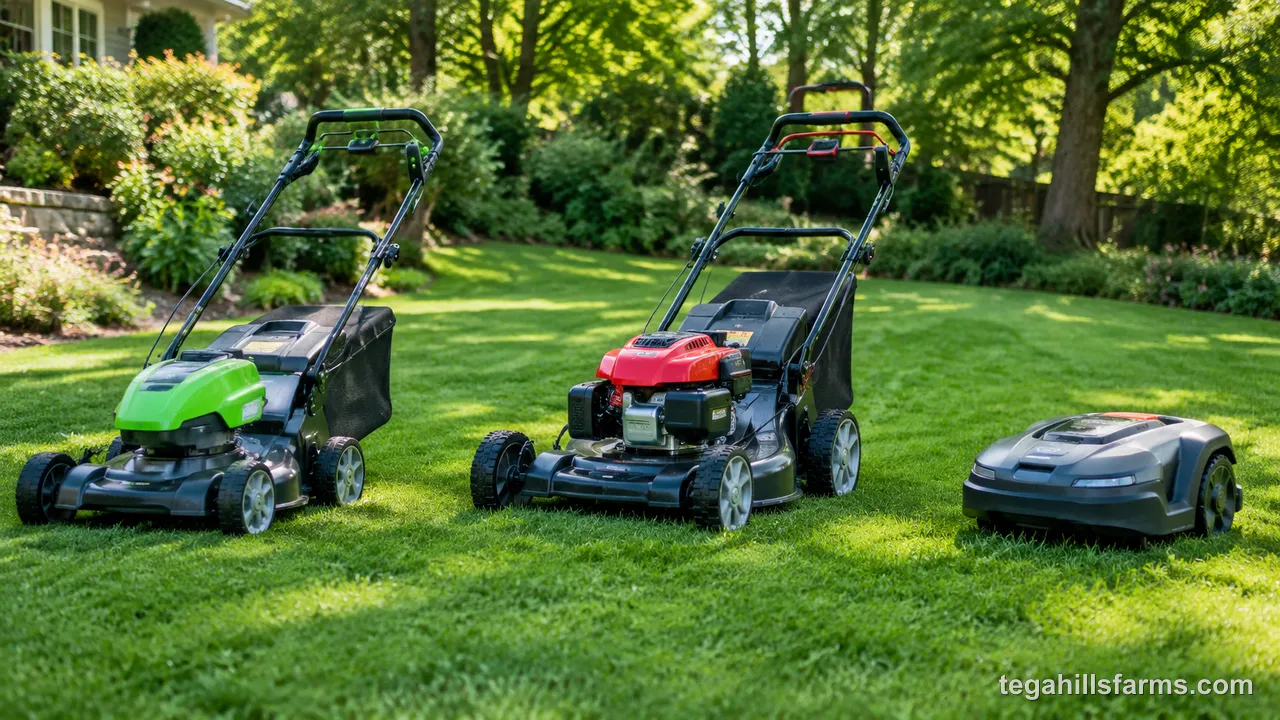
The deciding factors are how much upkeep you’ll accept and how much of the mowing you want to do yourself, because power source and drive shape both more than any single spec. Noise counts too if you mow early or live close to neighbors.
Is a Battery Mower Strong Enough to Replace Gas?
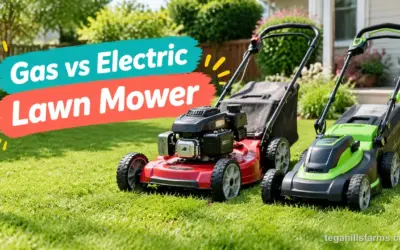
Yes, for most home lawns. Brushless battery mowers now start instantly, run far quieter and need no oil, fuel or spark plugs, and the stronger models hold blade speed in thick grass much the way a gas engine does.
The difference shows up across a season. A cordless owner charges packs and brings them indoors for winter, while a gas owner changes oil, replaces plugs and deals with fuel that goes stale in the tank. Starting is the other everyday gap: a battery mower spins up with a button, while even a well-kept gas engine can be stubborn after months in the shed.
Gas still makes sense when one session outlasts the batteries you own, when the lawn is often overgrown and tall, or when you’d rather refill a tank in a minute than wait on a charger. If quiet starts and low upkeep appeal, compare the best battery lawn mowers; if long, uninterrupted sessions matter more, the best gas lawn mowers remain the practical route.
Push vs. Self-Propelled: Does Drive Assist Matter?
Drive assist matters on slopes, in thick grass and with heavier mowers, where pushing turns a routine cut into a workout. Self-propel takes the forward effort off your arms and legs, and a variable-speed control lets you slow down around beds and pick up pace on open stretches, which adds up over a long session.
A push mower still makes sense on a compact, level lot. There’s no transmission to wear out, nothing extra drawing on the battery, and a lighter machine is easier to swing through tight loops and lift into storage. On a cordless mower, that also means every bit of charge goes to the blade. For those yards, the best push mowers trade drive hardware for lower weight and simpler upkeep.
When Does a Robot Mower Make Sense?
A robot mower makes sense when the lawn is open and reasonably tidy and you’d rather hand off mowing entirely. Because it cuts often and takes only a little off each time, the grass stays at an even height between weekends, and quiet battery operation lets it run on a schedule without bothering anyone.
The limits are real. It can’t trim edges or reach tight strips, toys, hoses and fallen branches get in its way, and the first mapping session takes real setup time. If crisp edges and quick touch-ups matter, the best walk behind lawn mowers still handle that job, usually alongside a string trimmer.
What Specs Matter Most When Choosing a Mower?
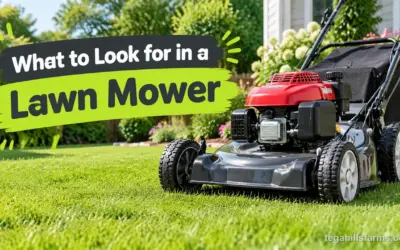
Read every spec as a yard outcome rather than a number, since the same figure can help on one lot and hurt on another. Sizing those trade-offs to your lot is the core of how to choose a lawn mower you’ll still like after a few seasons.
How Do Deck Width and Cutting Height Affect Mowing?
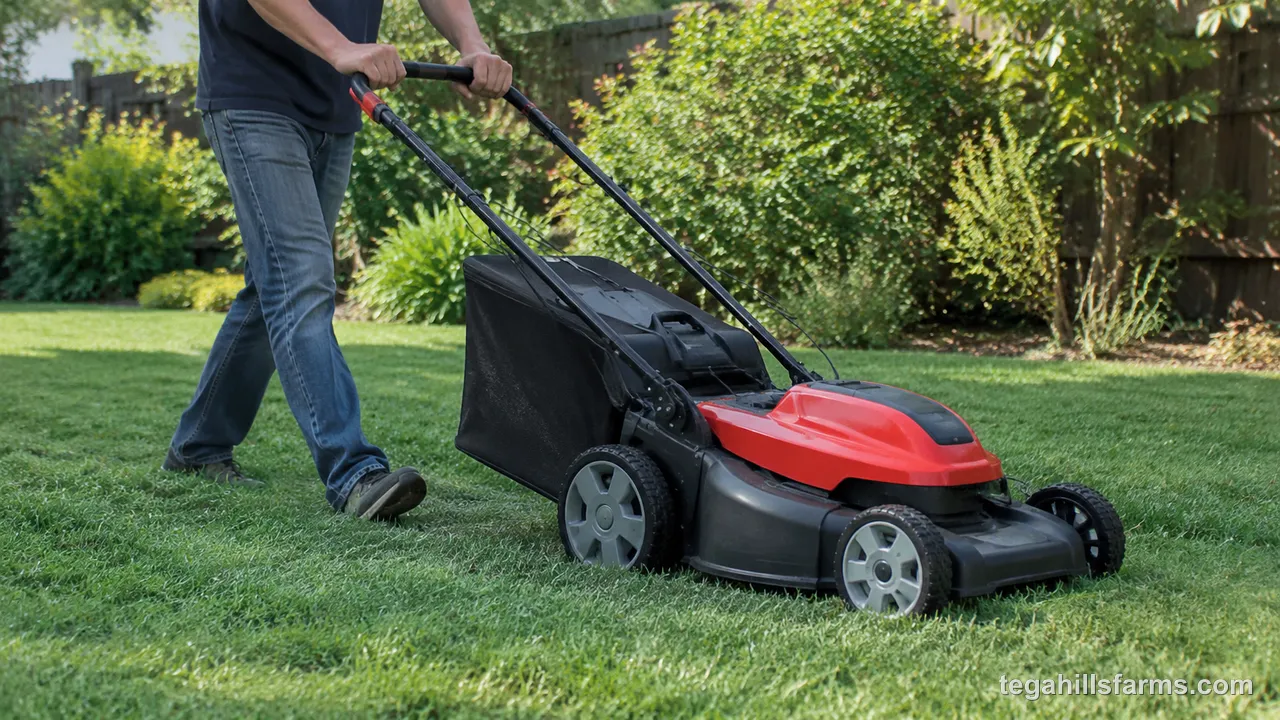
A wider deck cuts more grass per pass, so an open lawn gets done in fewer trips back and forth. The cost shows up in tight places: a wide deck is harder to steer through a side gate, between raised beds or along a narrow strip beside the house, and it usually adds weight.
Cutting height matters as much as width because grass health depends on it. Raising the deck in summer heat leaves longer blades that shade the soil and hold moisture, while a slightly lower setting suits cooler spring and fall growth. Cool-season grasses generally prefer a taller cut than warm-season types like Bermuda.
The widely used rule is to remove no more than one-third of the blade height in a single mow, so a broad height range helps when growth gets ahead of you. A single-lever adjustment makes those seasonal changes quick instead of a chore at each wheel.
What Do Battery Voltage, Amp-Hours and Runtime Mean?
Voltage mostly tells you which battery family a mower belongs to, and within one brand a higher-voltage platform generally points to more power on tap. Comparing voltages across brands says little on its own, because motor design and blade setup matter just as much.
Amp-hours measure capacity: on the same platform, a higher-Ah pack stores more energy and runs longer. Multiplying volts by amp-hours gives watt-hours, a fairer way to compare stored energy between brands.
Runtime ratings assume easy conditions. Thick or wet grass, hills, bagging and heavy use of self-propel all pull the real number down, so a rating is best read as a ceiling.
The platform itself deserves as much weight as the runtime figure. One set of packs and one charger can run the mower, trimmer and blower, and later tools can be bought without batteries. I’d weigh platform fit above a small runtime advantage every time, because that choice follows you for years.
Why Do Weight, Bagging and Storage Matter?
Weight decides how the mower handles off the lawn as much as on it. A heavy machine feels planted with the drive engaged, but it’s harder to lift into a truck, carry up steps or push across a slope when the drive is off.
Clipping modes change your cleanup. Mulching returns finely cut clippings to the soil as nutrients and skips the emptying, bagging leaves a clean finish and doubles as leaf pickup in fall, and side discharge helps when the grass has gotten too tall to mulch.
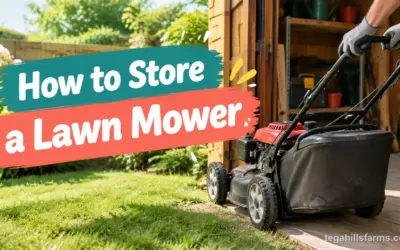
Storage is the factor that gets overlooked until delivery day. A folding handle or vertical storage can free up a garage bay, and a wall bracket for the battery or charger keeps packs off the cold floor.
How Big a Mower Does Your Yard Need?
Match deck width and battery capacity to the time you’re willing to spend behind the handle, not just to acreage, so a small lot gets a nimble machine and a big lawn gets enough runtime to finish in one go.
Small and Suburban Lots
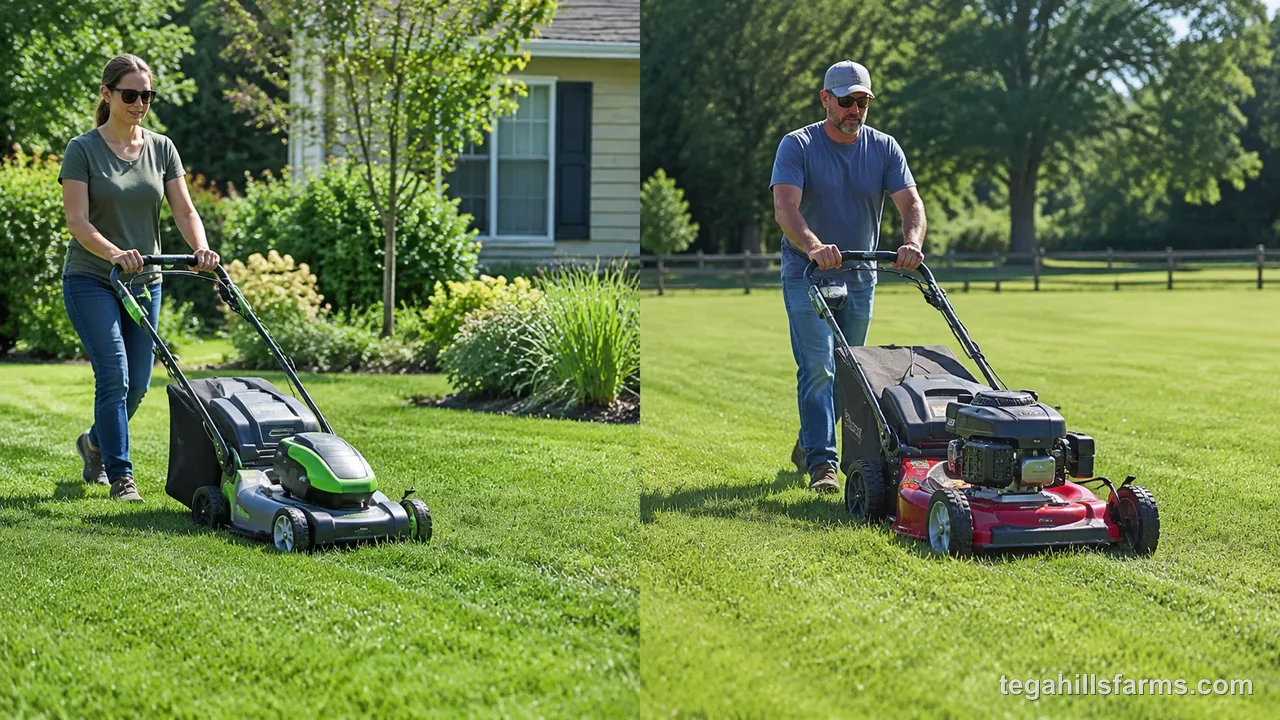
Compact, lightweight push or cordless models fit small lots best because maneuverability matters more than coverage there. A typical suburban yard is broken up by beds, fences, trees and a narrow side strip, and a light mower turns around those shapes without a fight.
Storage often decides the rest. A collapsible handle, vertical storage or a carry handle lets the mower share a garage or small shed with bikes and bins. On a level lot, a push mower spends its whole battery on the blade, which stretches each charge.
A robot is a reasonable alternative for a small, uncluttered lawn if you’d rather not mow at all. For more options sized to tight spaces, see the best lawn mowers for small yards.
Medium to Large Lawns
Bigger lawns reward wider decks, self-propel drive and more stored energy, because the time spent walking grows with every extra row. A slightly wider deck saves passes across open ground, and self-propel keeps a long session from wearing you out.
Runtime becomes the bottleneck on a cordless mower. A second battery or a kit that ships with two packs lets you finish without a mid-mow recharge, and a gas engine removes the limit altogether as long as the tank has fuel.
Once mowing on foot eats most of a weekend morning even with a capable self-propelled machine, a ride-on mower starts to make sense. Until that point, the best lawn mowers for large lawns cover the walk-behind options built for longer sessions.
How Do Slopes and Thick Grass Change the Choice?
Traction and motor torque matter far more once a lawn tilts or thickens, because a mower that’s fine on flat, trimmed turf can slide on a grade or stall in dense growth.

Hills and Uneven Ground
Rear-wheel drive handles slopes better because weight shifts toward the back wheels as you climb or as the bag fills, which keeps them pressed into the turf. Front-wheel drive turns more easily when you tip the front up at row ends, but it loses grip going uphill.
Wheel size and tread matter on bumpy lawns. Larger wheels roll over dips and roots instead of scalping them, and aggressive tread holds on loose or uneven turf. With any walk-behind, mow across the face of a slope rather than up and down, so the mower can’t roll back toward you.
A lighter machine is easier to hold on a side hill, and a robot rated for steep grades takes you off the slope entirely. The best lawn mowers for hills focus on traction and control, while the best lawn mowers for uneven ground favor wheels and decks that ride over lumps without scalping.
Thick and Wet Grass
Motor torque decides whether the blade keeps its speed when it hits a dense patch; a mower short on torque slows down, leaves ragged strips and drains its battery faster. High-lift blades and vented decks help by moving clippings out of the cutting chamber before they pack in.
Wet grass is harder on any mower. Damp clippings clump, clog the chute and stick to the deck, the blade tears rather than slices, and wet turf is slippery underfoot. Waiting until the morning dew dries, raising the cutting height and taking narrower passes through tall growth all lower the load.
For lawns that grow fast and dense, the best lawn mowers for thick grass prioritize torque and airflow, and the best lawn mowers for wet grass add deck designs that resist clumping.
Which Mower Should You Pick for Your Situation?
Start from the batteries you already own and the shape of your lawn, because those two facts narrow the field faster than any spec sheet.
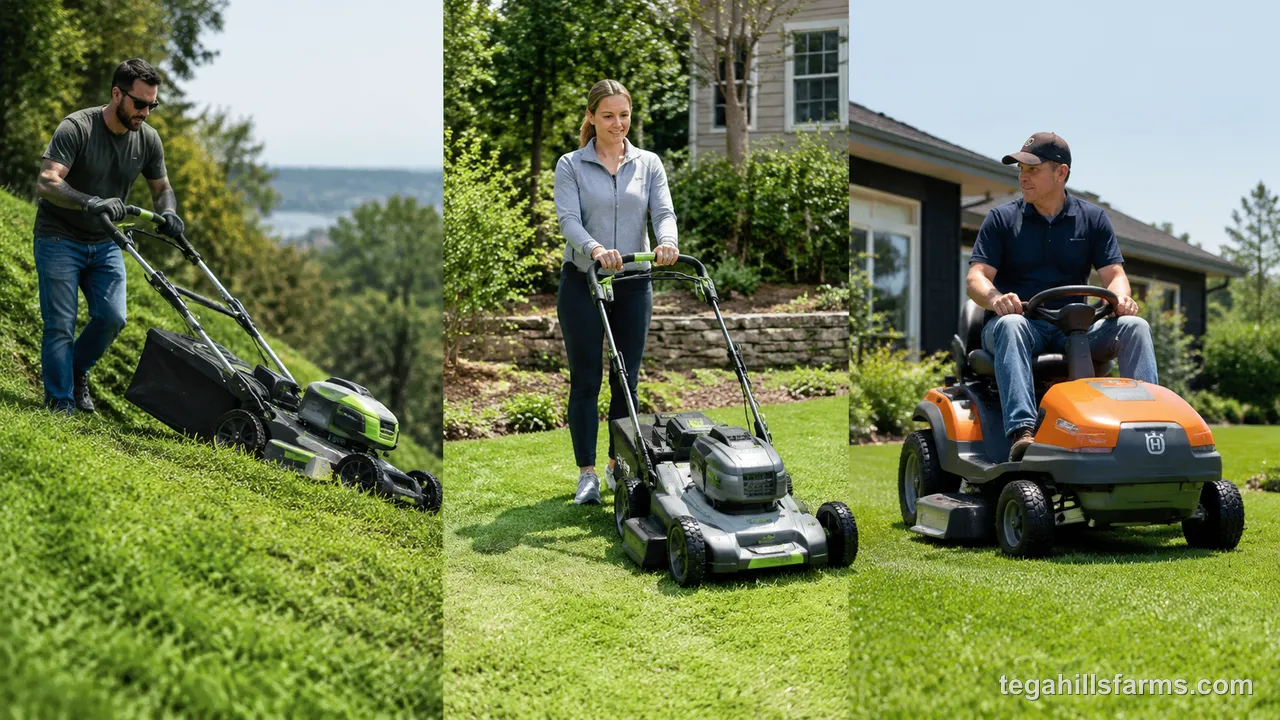
- Choose the Worx WG752 for a small, flat lot with tight storage, or the Baikemon if DEWALT 20V MAX packs already live in your garage.
- Choose the Greenworks for a larger suburban lawn with slopes and fall leaves, especially if you use Greenworks 60V tools.
- Choose an EGO if you’re on the 56V platform: the LM2135SP for easy handling, the LM2134SP-2 for long sessions, or the LM2244SP-2 for dense turf and a deck built to last.
- Choose the YARDMAX if you prefer gas and don’t mind engine upkeep.
- Choose the Husqvarna 410iQ for a sloped yard you’d rather not mow yourself.
- Choose the Honda HRX-BE if local dealer service matters most.
Lithium packs fade gradually rather than failing all at once, and a winter in a freezing shed or a summer in a hot garage speeds that decline. A worn pack quietly cuts each mowing session short, and it’s easy to blame the mower, replace a perfectly good machine and end up with the same short runtime the first time you reuse the old battery.
How Can You Tell When a Mower Battery Is Wearing Out?
A wearing battery shows itself through shorter runtime on the same lawn under the same conditions. If you used to finish with charge to spare and now run out partway through, the pack has lost capacity, even if it still charges to full.
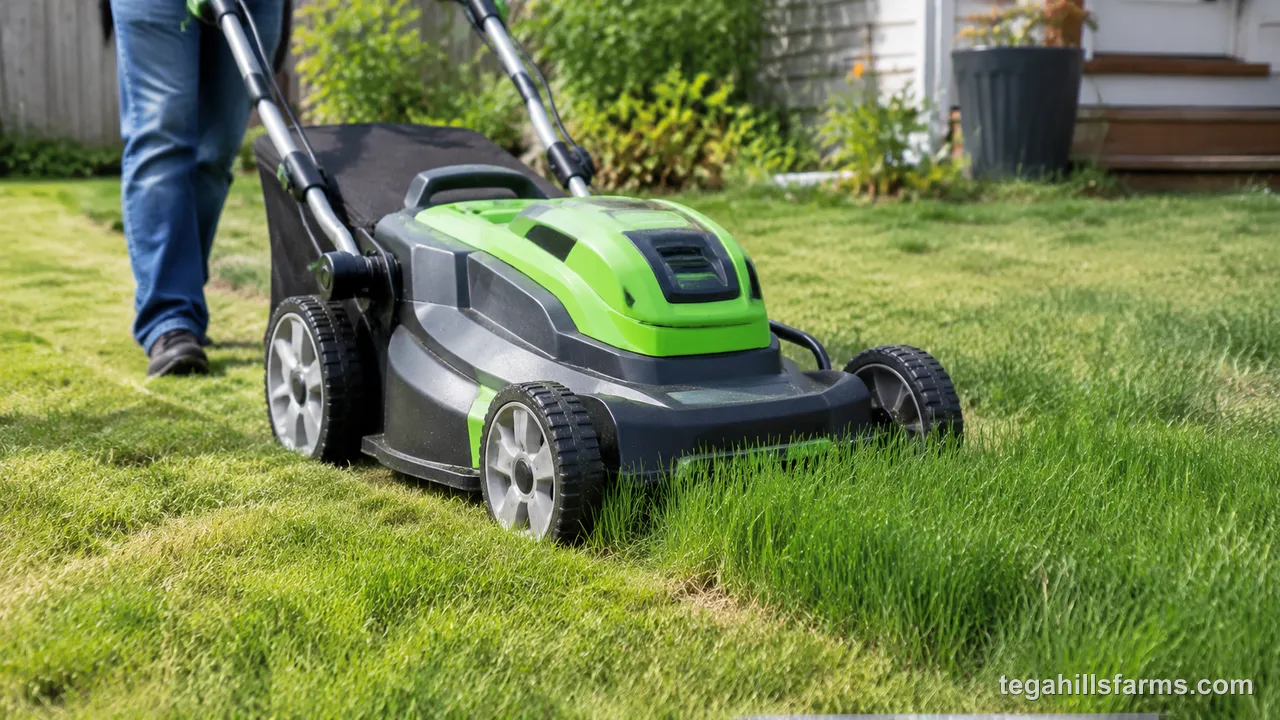
Other signs follow the same pattern. The mower may bog down or cut out in thick grass earlier than it used to, the charge gauge may drop quickly after a fresh charge, and charging can behave oddly, finishing suspiciously fast or triggering an error on the charger.
Storage habits make the biggest difference to lifespan. Keep packs indoors in a cool, dry spot over winter, away from freezing temperatures and summer heat, and store them partly charged as the manufacturer recommends rather than full or empty.
When the deck, wheels and motor are in good shape, a new pack restores the mower and usually makes more sense than replacing the whole machine, especially on a platform where that battery also runs other tools. Replacing the mower is the better move when the deck is rusting through, the drive is failing or the brand no longer sells compatible packs.
How Do You Avoid Wasting Money on the Wrong Mower?
The most expensive mistake is buying a mower that doesn’t match how you’ll own it. Several traps show up again and again in cordless and gas shopping alike.
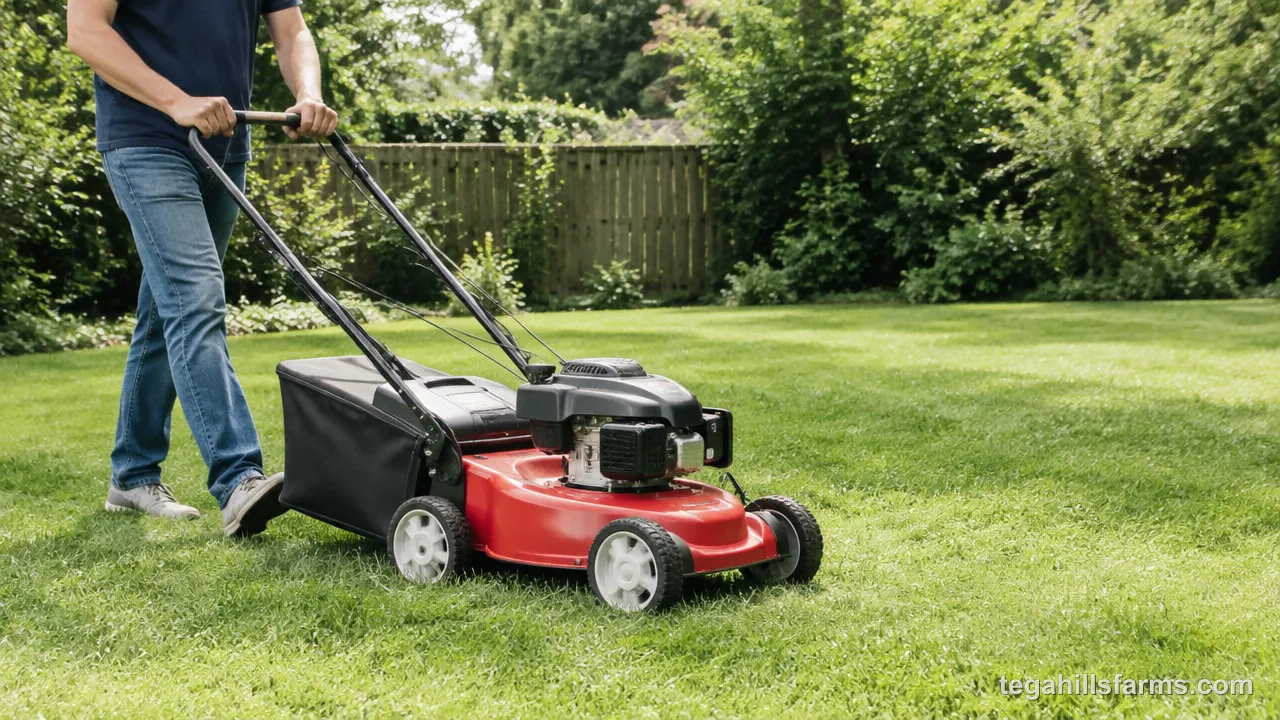
- Bare-tool listings: some cordless mowers ship without a battery or charger, which is a bargain only if you already own compatible packs.
- Platform lock-in: a mower on a battery line that fits none of your other tools leaves you with an orphan charger and no shared packs.
- Too much machine: a wide, heavy mower that won’t fit your gate, your shed or your garage corner becomes a daily nuisance.
- No service nearby: a mower with no local dealer or parts supply can turn a small failure into a replacement.
Measure your gate and storage space before you order, and check which batteries the mower actually accepts. If budget is the hard limit, start with the best lawn mowers under $300, or step up to lawn mowers under $500 when you want more included in the kit.
What Upkeep Keeps a Mower Cutting Cleanly Every Season?
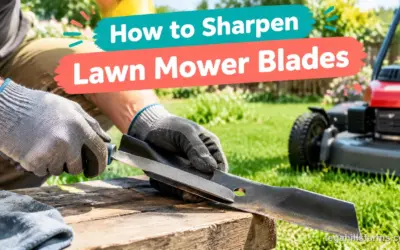
A sharp blade does more for cut quality than any other habit. A dull blade tears grass instead of slicing it, leaving frayed brown tips that stress the lawn and invite disease, so sharpening at least once a season, more often if you hit sticks or sandy soil, keeps the cut clean. Lawn mower blade sharpeners make that a quick garage job, and when a blade is bent or worn thin, the best lawn mower blades are a cheap fix compared with a ragged lawn.
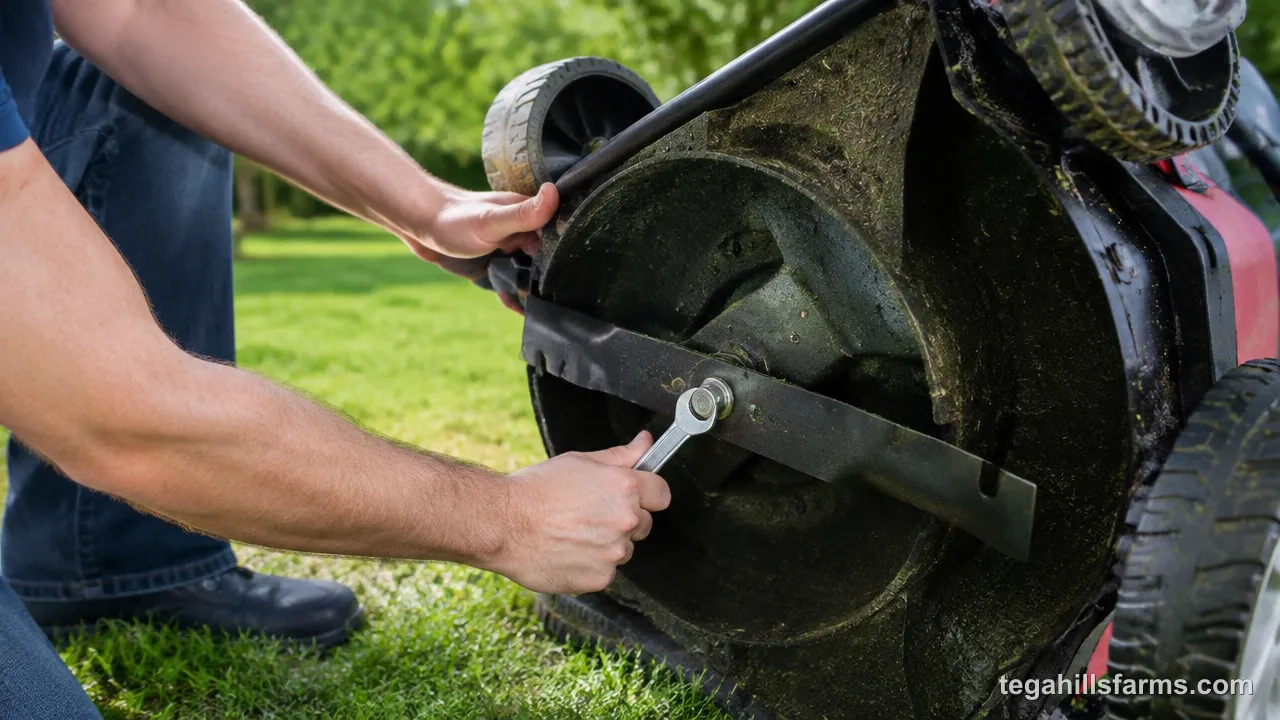
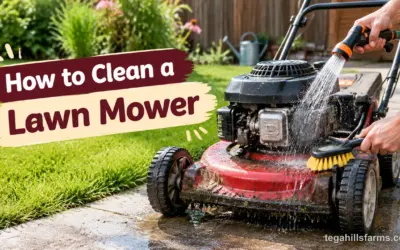
Clippings caked under the deck choke airflow, which hurts bagging and mulching and holds moisture against the metal. Clearing the underside after mowing, especially after damp cuts, keeps the deck working and slows rust.
Gas mowers need fresh fuel and oil. Fuel left in the tank over winter goes stale and gums up the carburetor, so add stabilizer or run the tank dry before storage. Battery mowers ask less: bring the packs indoors for the off-season and wipe down the deck before it goes into storage.
Lawn Mower FAQs
When is the best time of year to buy a lawn mower?
Late summer and fall usually bring clearance pricing as stores make room for winter equipment, while early spring offers the widest selection before demand peaks. If your current mower is barely hanging on, a fall purchase also gives you the off-season to settle on a battery platform without rushing.
Are riding or zero-turn mowers worth considering instead?
They’re worth it when walking behind a mower takes too much of your week. Riding mowers add comfort and a wider cut for big, open properties, while zero-turn models pivot tightly around trees and beds but feel less stable on slopes. Compare the best riding lawn mowers and the best zero turn mowers before deciding.
How long does a lawn mower last?
Care matters more than brand. A walk-behind that gets sharp blades, a clean deck and proper off-season storage can serve for many seasons, while a neglected one wears out quickly. On cordless models, the battery pack is often the first part to need replacing, and the mower itself keeps going.
Which lawn mower brands are worth shortlisting?
Shortlist by how you’ll own the mower. Honda stands out for dealer service and parts support, EGO and Greenworks for broad battery platforms, Husqvarna for robotic mowing, and Worx for compact cordless designs. A side-by-side look at the best lawn mower brands helps when you’re weighing support, warranty and tool ecosystems together.
More Guides on Best Lawn Mowers
- Best Push Mower With Electric Start
- Best Remote Control Brush Mower
- Best Lawn Mowers Under $1000
- Best Lawn Mowers Under $2000
- Best Lawn Mowers Under $3000
- Best Lawn Mowers for Wet Grass
- Best Lawn Mower Accessories
- Best Commercial Lawn Mowers
- Best Greenworks Lawn Mowers
- Best Tow Behind Lawn Mowers
- Best Corded Electric Mowers
- Best Lawn Mowers for Hills
- Best Mulching Mower Blades
- Best Electric Lawn Mowers
- Best Zero-Turn Mowers
- Best Gas Lawn Mowers
- Best EGO Lawn Mowers
- Best Push Mowers
- Best Reel Mowers