

Mulching returns finely cut grass clippings to the lawn, where they break down and feed the soil. Bagging collects them and takes them off the lawn. That one difference decides most of what follows: how your soil gets fed, how the lawn looks the day you mow, and how much work you take on afterward.
The choice depends on a handful of conditions rather than a single right answer. The deciding factors are how often you can mow, whether the grass is wet or overgrown, whether the lawn has disease or weeds going to seed, and what your mower’s deck is built to do.
Most homeowners worry about thatch, a messy lawn and wasted fertilizer. Mulching has a reputation for causing thatch that it mostly doesn’t deserve. Bagging has a hidden cost: the nutrients in every bag leave with the clippings, and your fertilizer routine has to replace them.
For a healthy lawn you mow on a regular schedule, mulching is the lower-cost habit. Keep the bagger for the days when the grass gets away from you.
What Is the Difference Between Mulching and Bagging?
Mulching recuts clippings into small pieces and drops them back into the turf, while bagging blows clippings into a collection bag so they leave the lawn entirely. Where the clippings end up drives every other tradeoff.
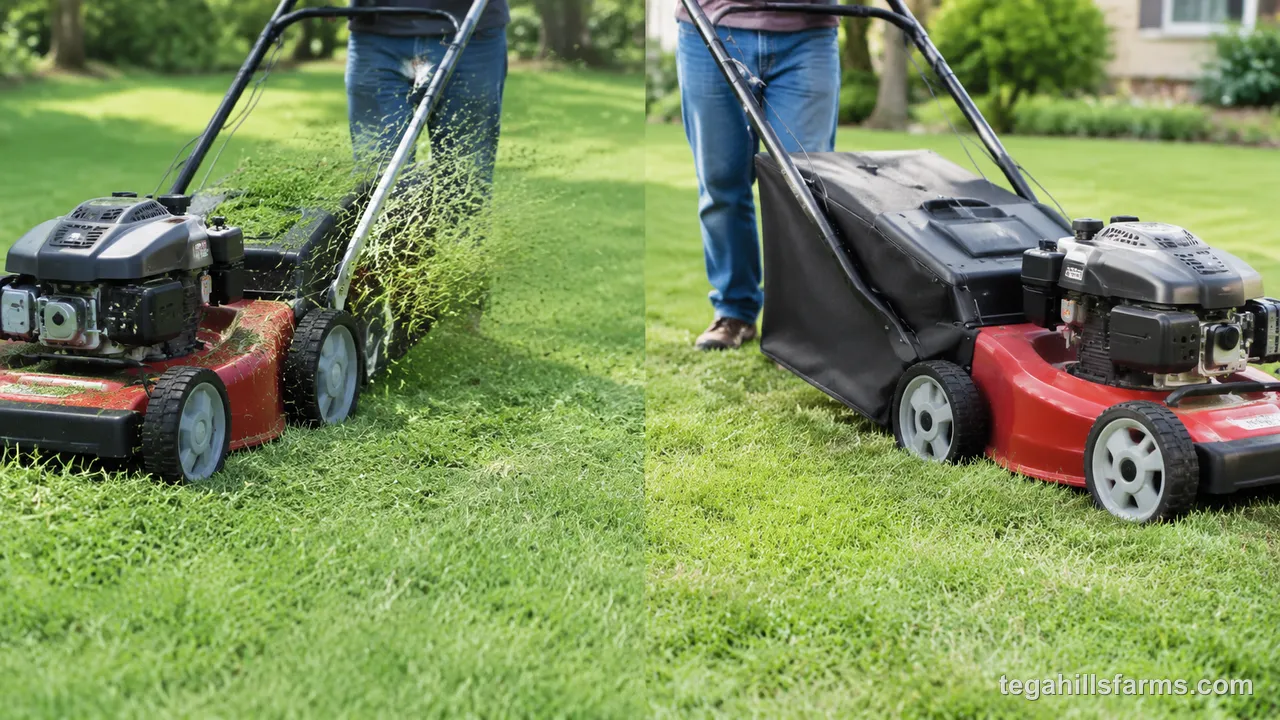
A mulching deck keeps clippings circulating under the dome so the blade cuts them several times before they fall between grass blades to the soil surface. A bagging setup uses the same blade lift to push clippings up a chute into a rear or side bag, which you empty and haul away. The mower and blade are often the same; what changes is whether the discharge opening is plugged or connected to a bag. Basic operation, like starting, setting the deck and walking a mowing pattern, is covered in how to use a lawn mower, and it applies to both methods.
| Factor | Mulching | Bagging |
|---|---|---|
| Where clippings go | Back into the turf | Into a bag, then off the lawn |
| Soil nutrients | Returned to the soil | Removed with the clippings |
| Finished look | Fine clippings settle out of sight | Cleanest surface |
| Wet or overgrown grass | Clumps and smothers turf | Handles it better |
| Disease and weed seeds | Spreads them back onto the lawn | Removes them |
| Mowing frequency needed | More frequent, lighter cuts | Flexible |
| Extra work after mowing | Little | Emptying, hauling, bag care |
If you are still picking a machine, our guide on how to choose a lawn mower explains which deck and blade features make mulching or bagging easier.
What Does Mulching Do to Your Soil and Lawn?
Mulching feeds the soil and holds in moisture, but it asks for lighter, more frequent mowing in return. Those benefits depend on how small the clippings are when they hit the ground, so your mowing habits matter as much as the method.
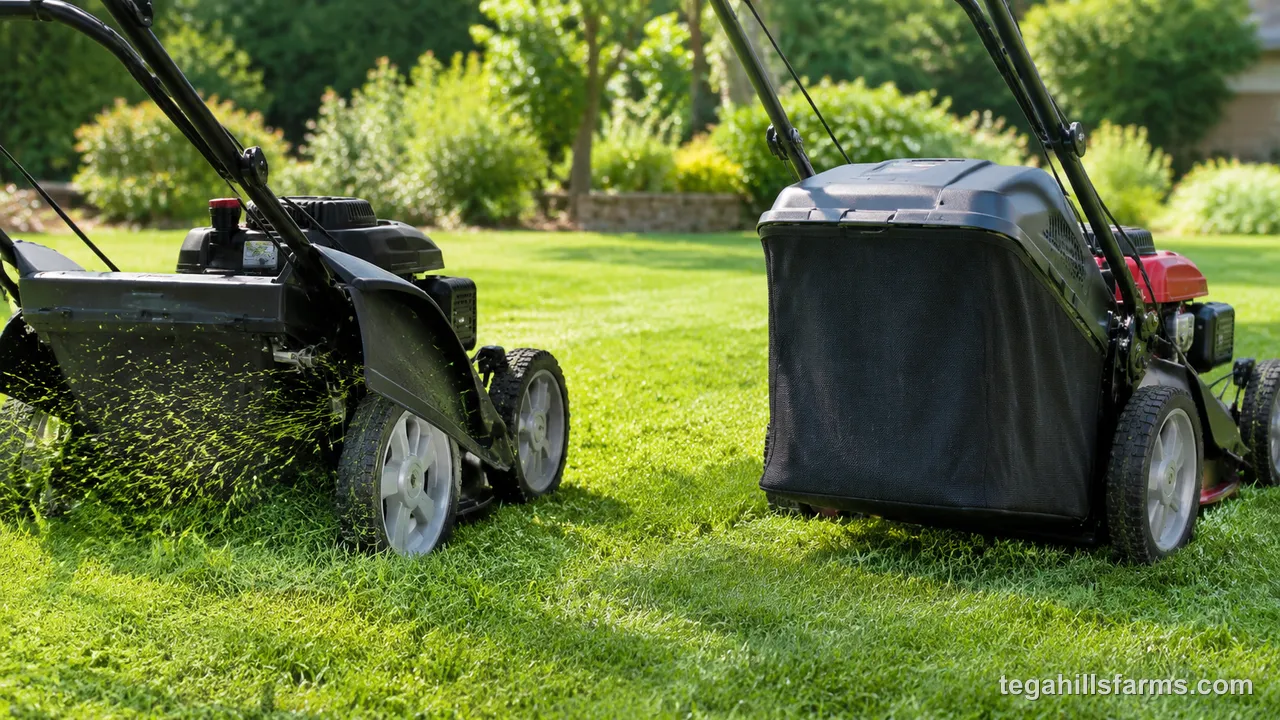
How does mulching feed the soil?
Fresh grass clippings carry nitrogen, phosphorus and potassium, the same three nutrients on a bag of lawn fertilizer. When the clippings are cut fine and settle onto the soil, microbes and earthworms break them down and release those nutrients back to the roots. Mulched clippings can supply as much as one-third of a lawn’s annual feeding requirement, which means fewer fertilizer applications or lighter ones.
That benefit builds slowly. Soil chemistry changes over seasons, so an 8-month comparison built on 80 soil tests is a short window, and results from one yard and soil type don’t carry neatly to every lawn. What holds up across lawns is the mechanism: clippings left on the turf return nutrients that bagging carries to the curb.
Does mulching cause thatch?
Mulching rarely causes thatch, because thatch isn’t made of clippings. Thatch is the layer of stems, runners, rhizomes and roots that builds up between the green blades and the soil. Those tissues are tough and slow to decay, while grass clippings are mostly water and soft leaf tissue that breaks down quickly. Small, nitrogen-rich clippings usually disappear within a few weeks.
Buildup becomes more likely under other conditions. Heavy nitrogen feeding pushes fast top growth, frequent shallow watering keeps roots near the surface, and compacted soil slows the microbes that break down organic matter. Vigorous spreading grasses also lay down runners faster than they decay. A mulching blade that cuts clippings finely lowers the risk further, since smaller pieces reach the soil and decompose sooner.
What does mulching ask of you in time and effort?
Mulching works only when you mow often enough that each cut stays short. During peak growth, that can mean mowing 2–3 times per week to keep clippings small enough to sink into the turf and break down. A busy schedule that lets the lawn go a week or more in spring makes that hard.
Skipping a mow changes the outcome. Longer grass produces longer clippings that the blade can’t recut finely, so they sit on top in clumps instead of dropping out of sight. You end up raking, bagging or making a second pass anyway. Mulching also packs damp grass into the underside of the deck, and that buildup cuts airflow, so scraping the deck regularly is part of the routine.
What Does Bagging Do to Your Soil and Lawn?
Bagging gives you the cleanest finish and removes problem material, but it also pulls nutrients out of the lawn and adds cleanup work. The clippings themselves are still useful once they’re in the bag.
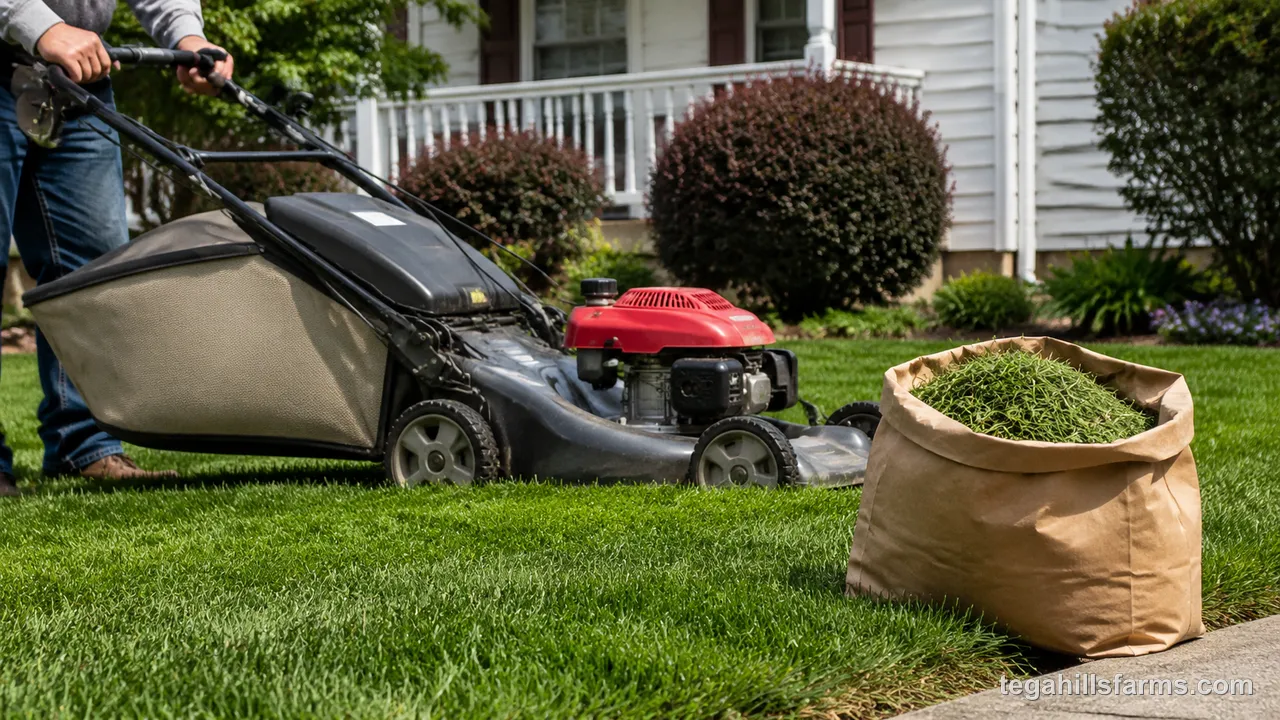
What does bagging do better than mulching?
Bagging leaves the lawn spotless, which matters before a gathering or on a front yard where loose clippings show. A bagging attachment pulls up clippings that would otherwise sit on top, so the stripes and color of the turf show cleanly the same day.
Its bigger advantage shows up when the grass has problems. Clippings from a lawn with fungal disease carry spores, and returning them spreads the infection across the yard with every pass. Weeds that have gone to seed drop those seeds back into the turf when mulched. Bagging takes both off the lawn. It also handles overgrown or damp grass that a mulching deck can’t break down, and in fall it collects leaves along with the clippings.
What does bagging take away from your lawn?
Every bag of clippings carries nitrogen, phosphorus, potassium and organic matter away from the soil. Those nutrients came from your soil and your fertilizer, so removing them means the lawn has to be fed again to make up the difference.
Over a full season of bagging, that shifts more of the feeding work onto your fertilizer routine. You apply more product or apply it more often to keep the same color and density. The organic matter that clippings would have added to the soil also goes missing, and that matter feeds the earthworms and microbes that keep soil loose and help it hold water. On a lawn with healthy soil, the effect is gradual. On thin or sandy soil, it shows sooner.
How much extra work does bagging create?
Bagging adds a stop-and-empty routine to every mow. In thick spring growth, a rear bag fills quickly, so you stop, unhook it, carry it to a bin or compost pile and reattach it, sometimes several times on one lawn.
Damp grass makes it worse. Wet clippings pack into the chute and the throat of the bag, the mower stops collecting and starts leaving trails, and you have to shut it off and clear the clog. The bag fabric also needs care: put away damp and full of residue, it molds and the mesh clogs, which cuts airflow and collection the next time. Shaking it out and letting it dry after each use, and knowing how to clean a lawn mower deck and chute, keeps the bagger collecting the way it should.
What can you do with bagged clippings?
Bagged clippings work well as compost, garden bed mulch or yard waste pickup. In a compost pile they count as a nitrogen-rich “green,” so mix them with dry leaves or other browns in thin layers; piled thick on their own, they mat into a slimy, smelly layer.
As mulch in vegetable or flower beds, spread them thin and let them dry first so they don’t heat up or form a crust. Thin layers also hold moisture and suppress weeds around plants.
Some clippings should not be reused. Grass with fungal disease or weeds gone to seed belongs in the yard waste bin, not the compost. Clippings from a lawn recently treated with herbicide can harm garden plants, so check the product label before using them in beds or compost.
Mulching or Bagging: Which Fits Your Situation?
The deciding factor is the condition of the grass on mowing day, with mulching winning on dry, regularly mowed turf and bagging winning when the grass is wet, overgrown or carrying problems. Season, grass type and who uses the yard shift the balance further.
Wet or tall grass: which method handles it better?
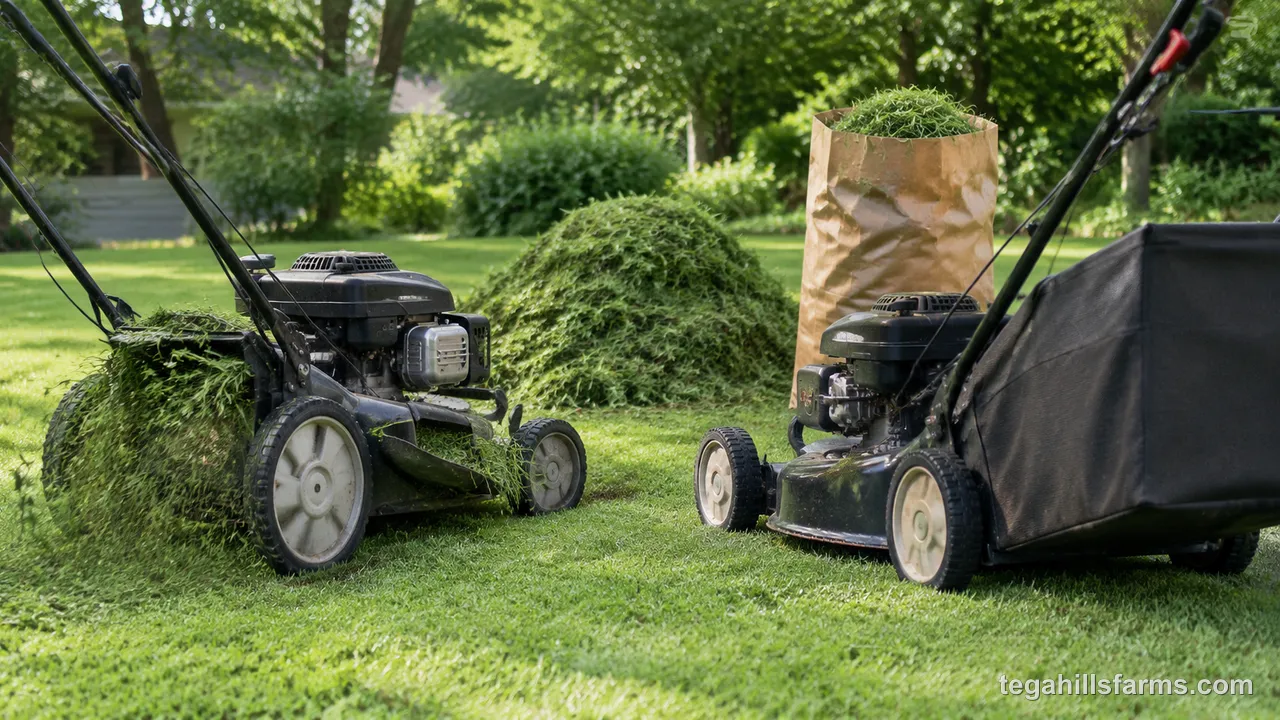
Bagging handles wet or overgrown grass better because it removes clippings that mulching can’t break down. Heavy, damp clippings stick together under a mulching deck, and long clippings can’t be recut finely enough to drop between grass blades. Both end up in clumps on top of the turf, where they block light and air and can yellow the grass underneath.
A bagger avoids that by taking the heavy material off the lawn, though wet grass can still clog the chute. If you can wait, let the lawn dry before mowing. For overgrown grass, raise the deck and take the height down over two or more mows rather than scalping it in one pass; how short to cut grass covers the target heights for each grass type. Once the lawn is back to normal height and dry, mulching works again.
Bagging wins on wet or overgrown grass, and mulching takes over once the lawn is dry and back on a regular schedule.
Lawn disease and weeds: should you mulch or bag?
Bagging is the better call when the lawn has fungal disease or weeds going to seed. Fungal problems such as brown patch or dollar spot spread through spores on infected leaf tissue, and mulching scatters those clippings across healthy turf with each pass. Weed seed heads cut and dropped back into the lawn give the next crop of weeds a head start.
Mulching does no harm on a clean lawn, and the nutrients it returns help turf stay thick enough to crowd out weeds. The issue is only what the clippings carry. Bag during an outbreak or while weeds are in seed, mow the affected area last so you don’t carry spores across the yard, and switch back to mulching once the problem clears.
Bagging wins during active disease or while weeds are seeding, and mulching wins on healthy turf.
Does the season or grass type change the answer?
Growth speed shifts the balance more than the calendar does. Cool-season grasses such as Kentucky bluegrass and tall fescue grow fastest in spring and fall, while warm-season grasses such as Bermuda, St. Augustine and zoysia surge in the summer heat. During those peak windows, mulching asks the most of your schedule, because the lawn outgrows a light cut quickly.
In slower periods, such as midsummer heat for cool-season lawns or the cooler shoulders of the season for warm-season lawns, mulching is easy because each mow removes little. Fall adds a new factor: leaves. A mulching mower can shred a light leaf layer into the turf, while a thick layer is easier to bag.
Mulching wins during steady or slow growth, and bagging earns its place during the fastest flush or under heavy fall leaf drop.
What about pets, kids and allergies?
Bagging suits households with grass allergies better, because it removes the pollen-laden clippings that otherwise dry and stir up on the lawn. Mulching leaves clippings that are fine and settle into the turf, so they track indoors less than the long, loose clippings of a skipped mow, but they still sit on the surface for days as they break down.
Bagging has its own exposure: emptying the bag releases dust and pollen right into the face of whoever does it, so an allergy sufferer shouldn’t be the one handling the bag. For kids and pets playing on the lawn, a well-mulched lawn and a bagged one look and feel much the same once the clippings settle.
Bagging wins for households with grass allergies, and mulching works fine for pets and kids when clippings are cut fine.
How Do You Mulch Correctly?
Mulching works when the mower is set up to recut clippings, you take light, frequent cuts and you mow at a steady pace. Miss one of the three and clippings end up on top of the lawn instead of in it.
What mower setup does mulching need?
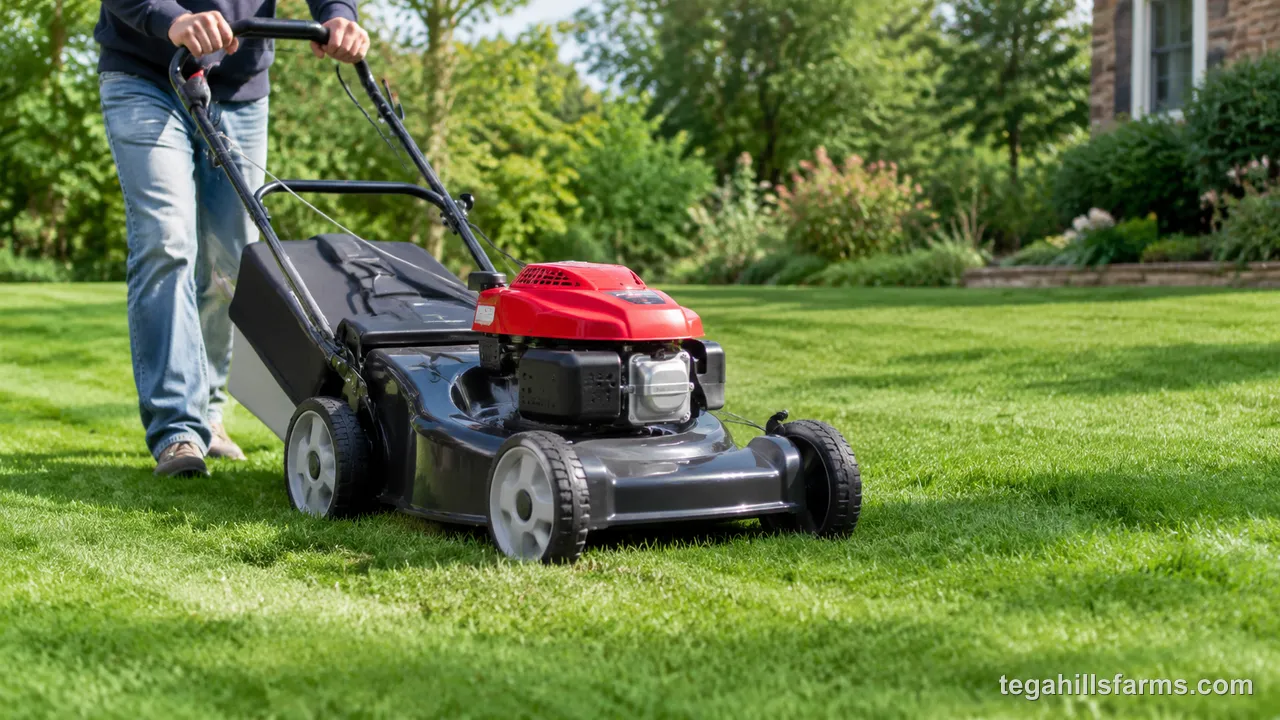
A mulching mower needs a closed discharge and a blade that recuts. Most mowers do this with a mulching plug that seals the rear or side chute, and a mulching blade with extra curved cutting edges that keep clippings circulating under the deck. A domed or sealed deck helps hold clippings in the cutting path long enough to be chopped several times.
Blade condition matters as much as blade shape. A dull blade tears grass instead of slicing it, leaving ragged tips that turn brown and larger, stringy pieces that don’t fall into the turf. Sharp edges cut clippings small and clean, which is the whole point of mulching. Learning how to sharpen lawn mower blades, or having it done each season, keeps that cut clean through the mowing year.
How often and how much should you cut?
Cut no more than a third of the grass blade in a single mow. That limit keeps clippings short enough to slip between blades to the soil, where they break down. Long clippings from a heavier cut sit on top, mat together and shade the grass underneath.
Growth speed sets your schedule, not a fixed day of the week. In peak growth, holding to the one-third limit can mean mowing several times a week; in slower stretches, once a week may be plenty. Watch the height rather than the calendar, and mow when the lawn is about a third taller than your target height. For schedules by season and grass type, see how often to mow the lawn.
Do you have to mow slower when mulching?
A slower pace helps mulching because the blade gets more time to recut each clipping before it drops. Walk too fast, or run a self-propelled drive at its top speed, and the deck pushes through more grass than it can chop, so clippings come out longer and leave trails behind the mower.
Overlapping each pass by a few inches spreads clippings more evenly and catches strips the deck missed. On thick growth or after a delayed mow, a second pass at a right angle to the first recuts clippings left on top and scatters any small clumps. That second pass costs a few minutes and saves raking later.
Should You Mulch or Bag?
Mulch by default on a healthy, regularly mowed lawn, and bag only when the grass is wet, overgrown, diseased or full of weed seed. I’d keep the bagger for those situations rather than making it a weekly habit, because mulching returns nutrients that bagging carries away.
Choose based on your conditions:
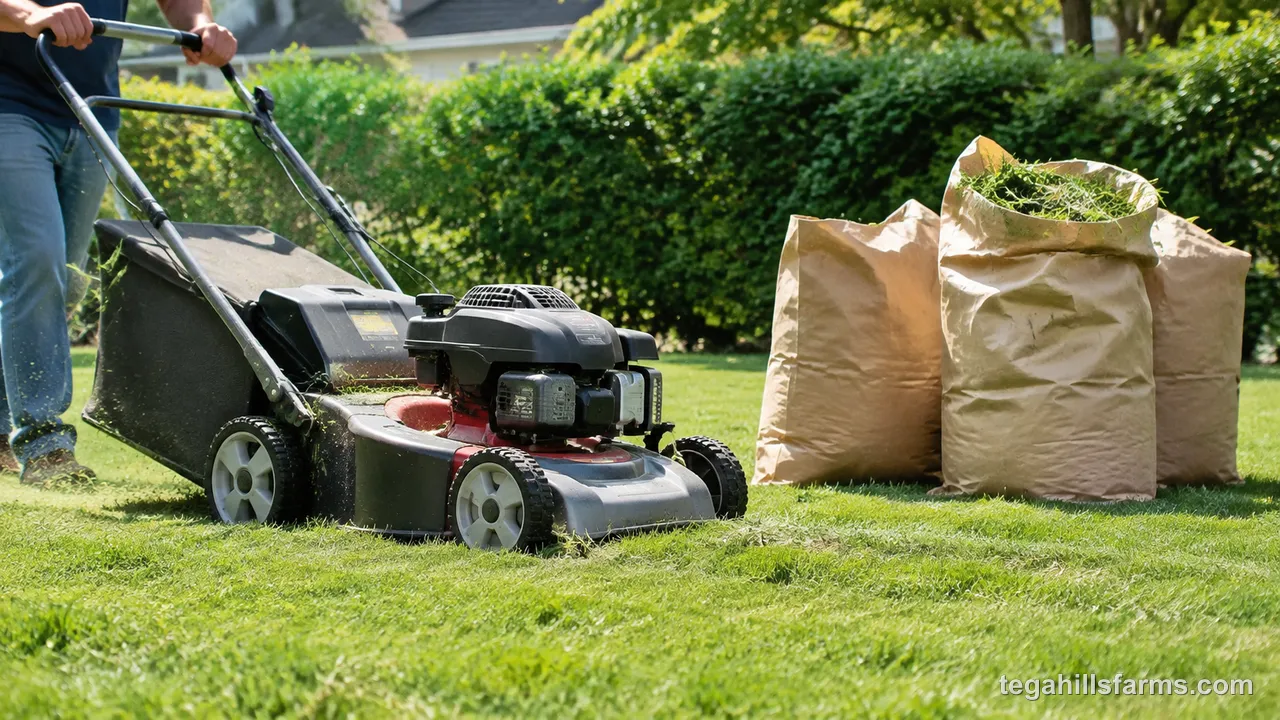
- Choose mulching if you mow often enough to take a light cut each time, the lawn is healthy and you want to lean less on fertilizer.
- Choose bagging if the grass is wet or overgrown, the lawn has an active disease or seeding weeds, someone at home has grass allergies or you want the cleanest finish for an event.
Many owners switch between the two through the season, and that is the practical answer: mulch most mows, bag when the lawn calls for it.
A row of wet clippings left in the turf after a delayed mow looks harmless the first day, but it blocks light and holds moisture against the grass beneath it. Within days, those strips can turn yellow and start to look like disease, and the fix becomes raking and reseeding instead of mowing.
What Goes Wrong When Mulching Is Done Poorly?
Poor mulching shows up as clumps, matted rows and yellow patches, while good mulching leaves no clippings in sight within a day or two. On a healthy mulched lawn, clippings drop into the turf and the surface looks almost as clean as a bagged one.
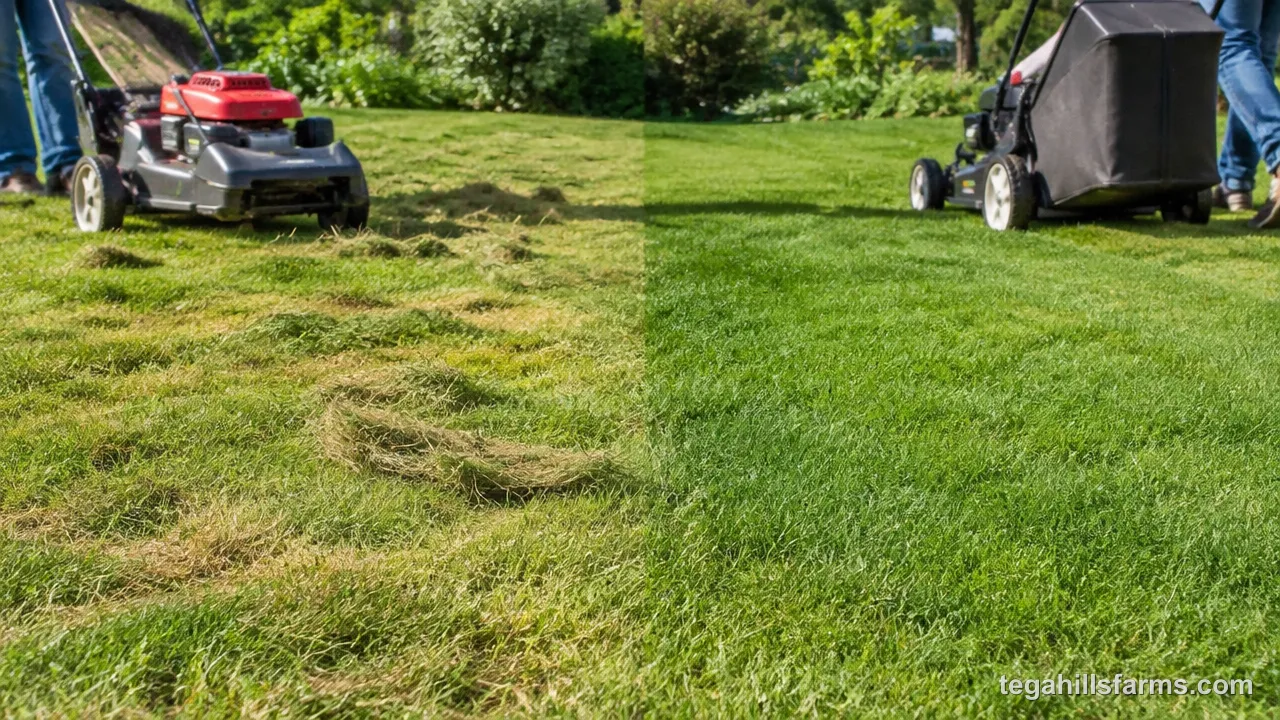
Trouble starts when clippings are too long, too wet or too many. Clumps form behind the mower and sit on the grass, and rows of matted clippings follow each pass. Under those mats the turf yellows from lost light and trapped moisture, and the damp layer can invite fungal disease. A spongy feel underfoot and slow-draining soil point to thatch building up, usually from heavy feeding and shallow watering rather than from clippings alone.
Those signs tell you when to change course. If clumps keep appearing, bag the next mow or two while you get the height back under control, sharpen the blade and shorten the time between mows. Return to mulching once a normal cut leaves the surface clean.
Where Does Side Discharge Fit In?
Side discharge throws clippings out of a side chute in a spray, and it handles thick or overgrown grass better than either mulching or bagging. Because nothing is recut or collected, the deck clears heavy, tall growth without clogging, which makes it useful for the first cut of the season, a lawn left during a vacation or rough areas like field edges.
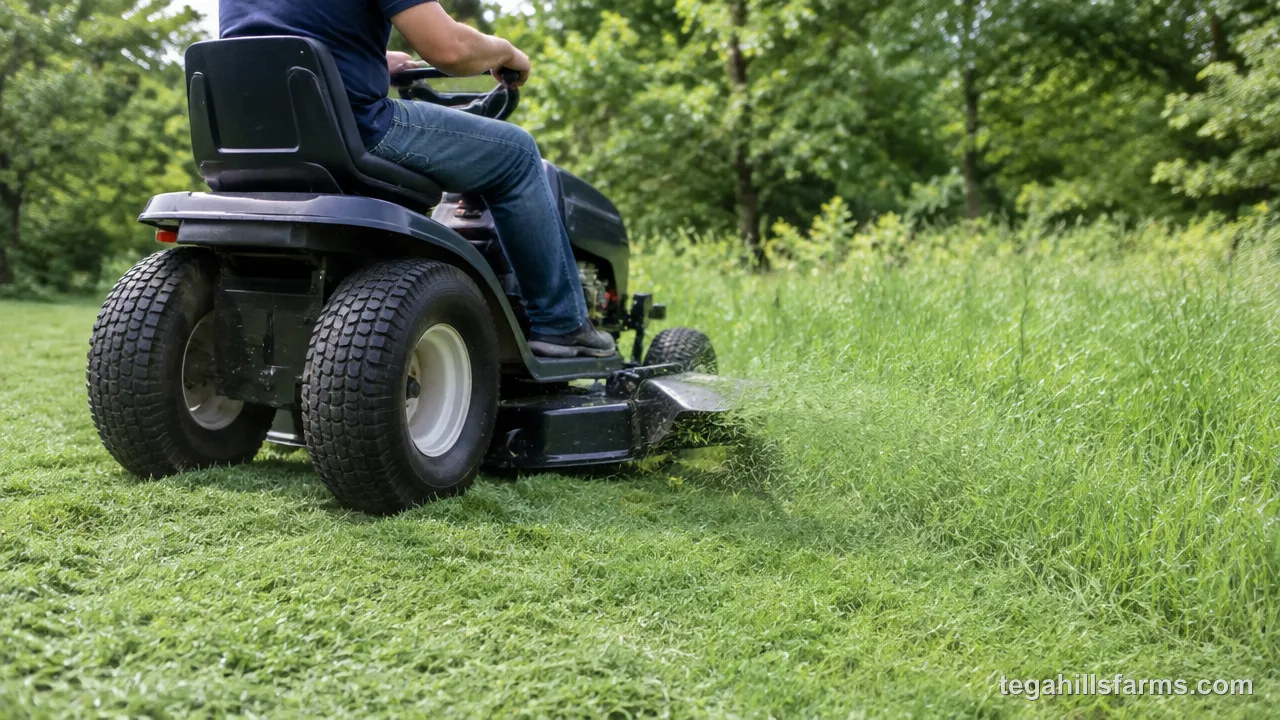
The drawbacks show up on the lawn afterward. Clippings land in windrows that can smother grass the same way clumps do, so you often follow with a mulching pass or rake. The chute also throws clippings, and sometimes debris, onto beds, sidewalks and driveways, so you need to aim the discharge away from them and keep people and pets clear.
Side discharge works best as a recovery tool. Use it to bring overgrown grass back under control, then switch back to mulching or bagging for routine mowing.
Does Your Mower Need Special Gear to Mulch or Bag?
Most walk-behind mowers sold today can mulch and bag out of the box, so the gear question is mostly about older machines and riding mowers. A three-in-one walk-behind typically includes a mulching plug and a rear bag; if yours lacks one, a mulching kit or a matching bag is a low-cost add-on from the manufacturer.
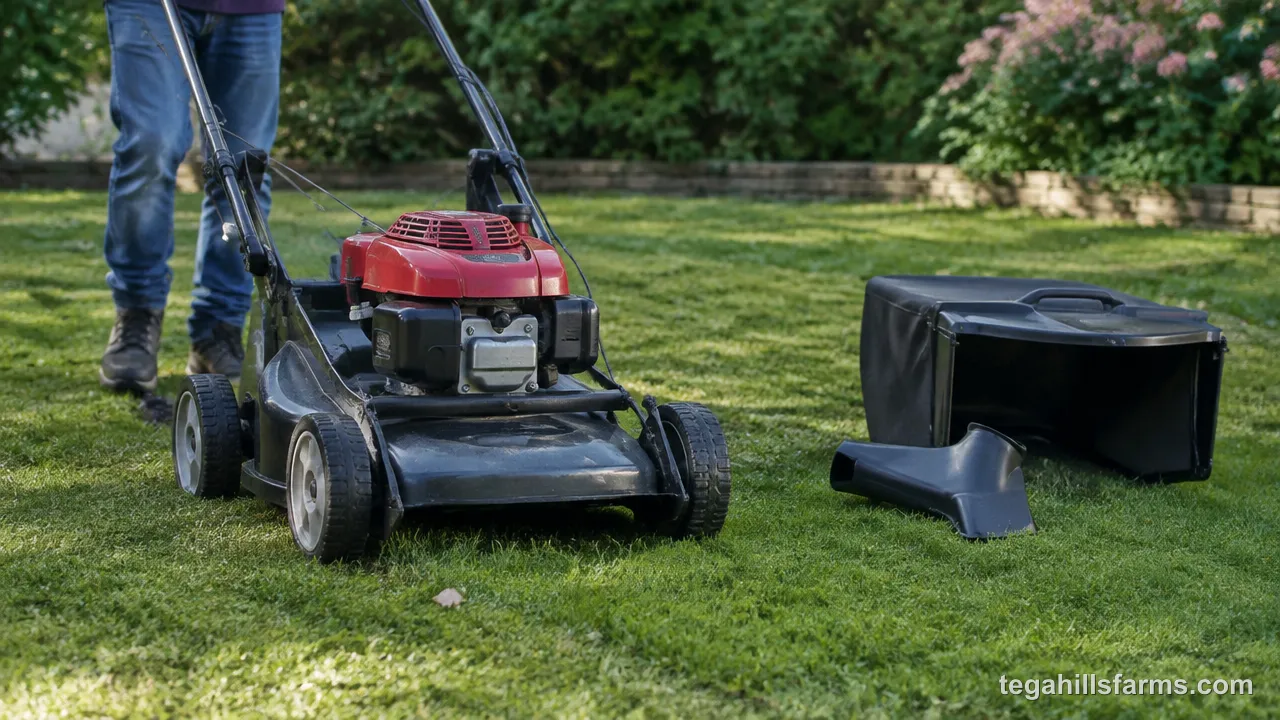
A mulching blade is the upgrade most worth buying on a mower that only came with a standard blade, because it changes how finely clippings are cut. A blade that doesn’t fit your deck model wastes money, so match the part number.
Riding mowers and zero-turns are different. A bagging system for them is a significant add-on, often a multi-bin collector with its own chute and sometimes a blower, so it only pays off if you bag regularly. A mulching kit for those decks is a more modest purchase.
Deck design also matters: budget mowers with shallow, simple decks tend to mulch less finely than mid-range and premium models with deeper domes. For how those tiers break down, see how much a lawn mower costs.
Mulching vs Bagging FAQ
What is the rule of thirds for mowing?
The rule of thirds means removing no more than a third of the grass blade in one mow. Cutting more stresses the grass and produces long clippings that mulching can’t break down, so they clump on top. Following it keeps clippings short enough to settle into the turf and decompose.
Does mulching cause thatch?
Rarely. Thatch is made of tough stems, runners and roots that decay slowly, while clippings are soft and mostly water, so they break down quickly when cut fine. Thatch problems usually come from heavy nitrogen feeding, shallow watering or compacted soil, and mulching on top of those conditions adds little.
Are grass clippings the same as tree mulch?
No. Grass clippings are high in nitrogen and break down within weeks, so they feed soil quickly but don’t last as a ground cover. Wood or bark mulch is carbon-rich and lasts much longer, which makes it better for beds. Use clippings in thin layers and refresh them often.
Do local yard waste rules affect whether I should bag?
They can. Some communities, including many in California, require clippings to go in a green-waste or organics cart rather than the trash, and some limit how much yard waste they collect. Check your city or county rules; where disposal is restricted or costly, mulching avoids the problem entirely.
Can I mulch and bag with the same mower?
Yes, most walk-behind mowers switch between the two. Insert the mulching plug to mulch, or remove it and attach the bag to collect. Riding mowers usually need a separate bagging system or mulching kit, so check what came with your deck.
Write Your Review
No reviews yet. Be the first to share your experience!