

The right lawn mower is the one sized and built for your yard: a mower type that matches your lot, a power source you will keep running, a deck that fits your gates and shed, enough engine for your grass, a drive system for your terrain and a clipping system that suits how tidy you want the lawn to look.
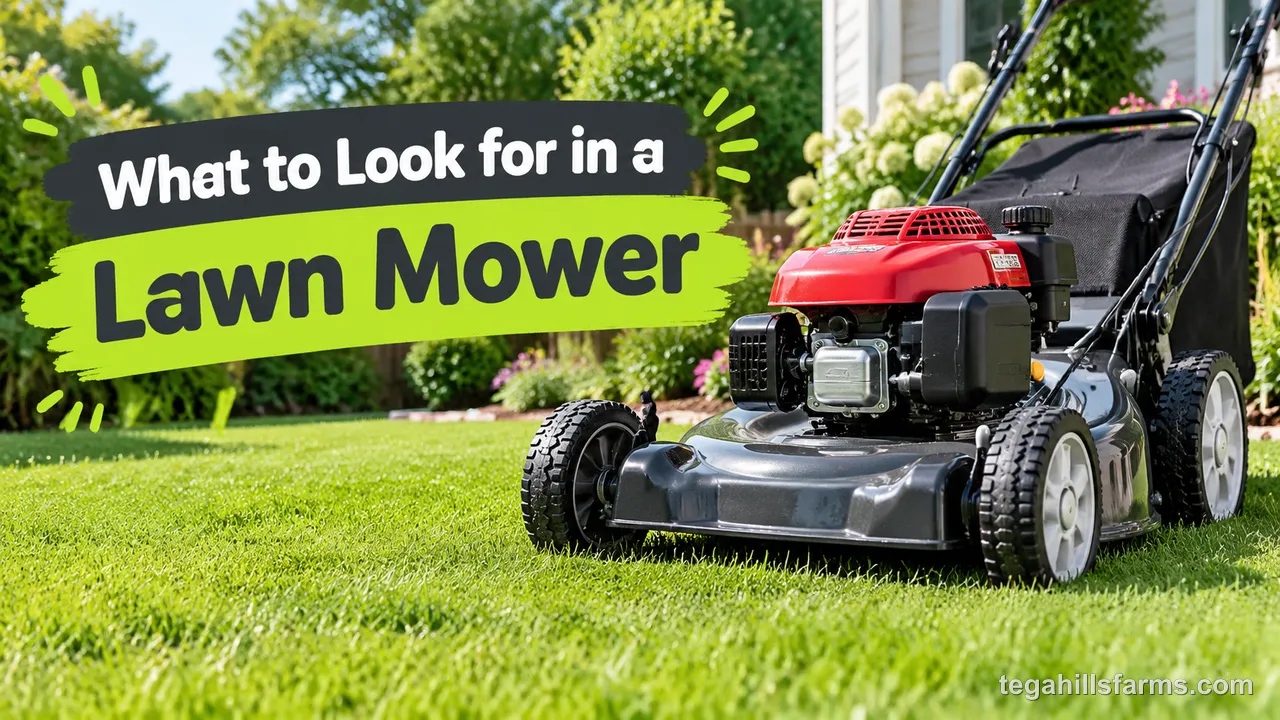
Yard size sets the starting point because it decides whether you walk behind the machine or ride it. Power source comes next, since gas, battery and corded mowers differ in run time, noise and the upkeep they ask of you. Deck width, engine power, drive wheels and mulching ability then refine the choice within that class.
Most homeowners worry about the same mistake: paying for a machine that does not fit. That can mean a riding mower crammed into a garage built for a push mower, a battery that runs out halfway through a thick spring lawn, or a gas engine that will not start after sitting all winter.
What Should You Look for in a Lawn Mower?
Start with yard size and layout, then weigh the power source, cutting width, engine, drive, clipping handling and convenience features, because each one changes how long mowing takes and how much work the machine asks of you.
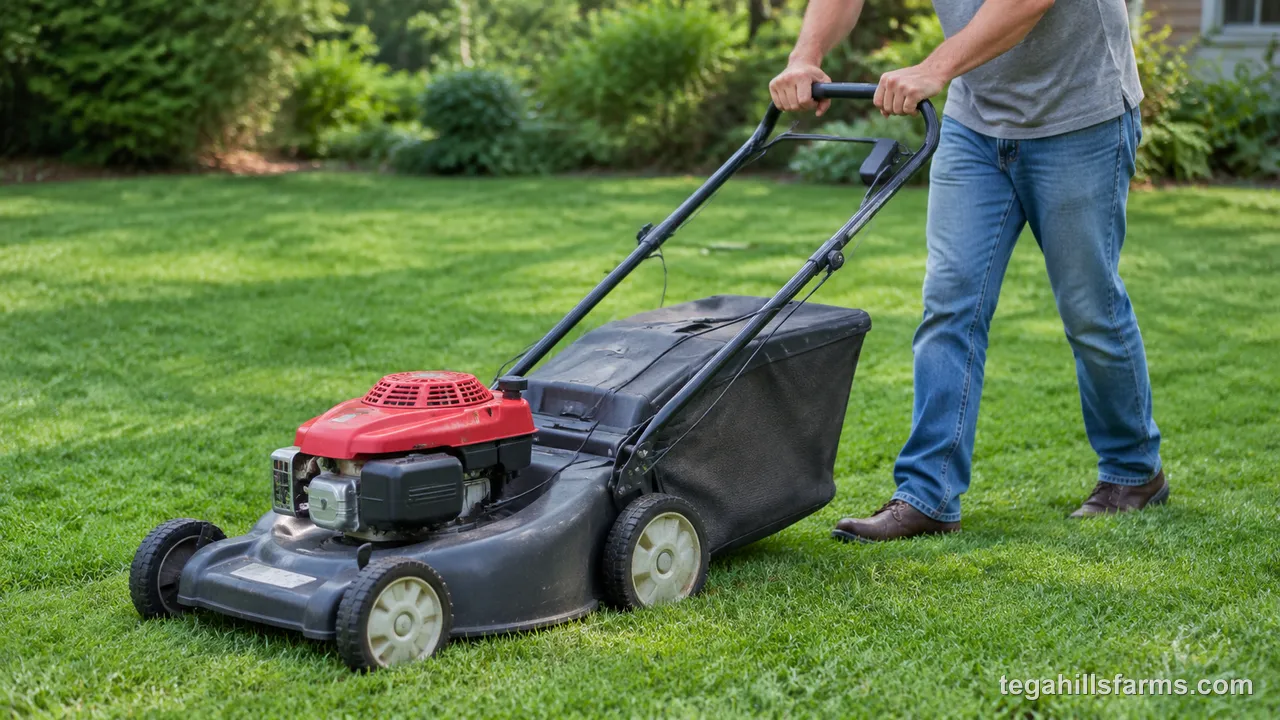
Mower type decides whether you push, walk behind a self-propelled machine or ride, and the wrong class costs either time or storage space. Power source sets how long the mower runs before it needs fuel or a charge, how loud it is and how much engine care you sign up for. Cutting width controls how many passes the lawn takes and whether the mower fits through your gate.
Engine power matters most when grass grows thick or tall, because a weak engine bogs and leaves a ragged cut. Drive wheels decide how the mower handles slopes and tight turns. Clipping handling sets whether grass goes back into the lawn, into a bag or out the side in rows. Convenience features such as the starting system and height lever shape every single mowing.
For the full step-by-step buying process, see our guide on how to choose a lawn mower, which ties these criteria to your own yard.
Which Type of Lawn Mower Fits Your Yard Size?
Yard size narrows the field first: walk-behind mowers handle small and mid-size lawns, while riding mowers and zero-turns take over on larger acreage, and the yard’s layout decides between machines in each group.
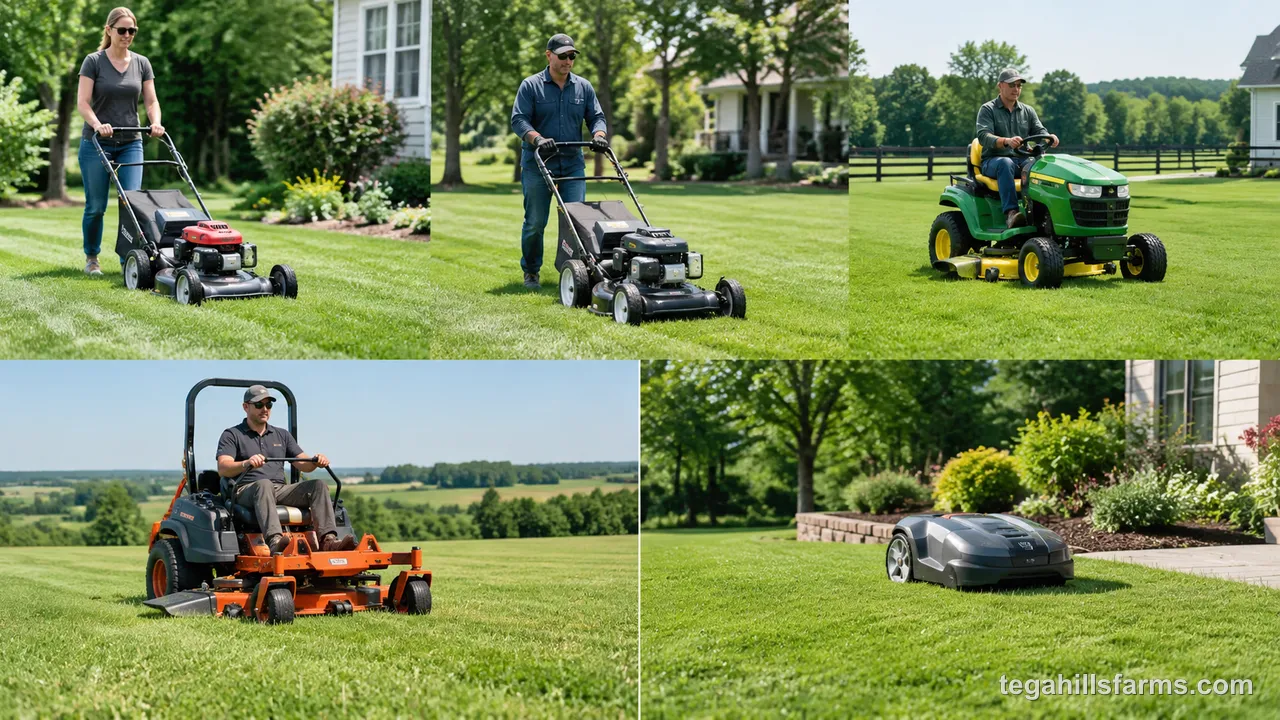
No spec can rescue a mower from the wrong class, because a powerful push mower still takes hours on two acres and a riding mower still cannot reach behind a tight garden bed. Price tiers follow the same ladder, from about $300 at the low end for a gas push mower to upward of $5,000 for lawn tractors and zero-turns, so how much a lawn mower costs depends far more on class than on brand.
Push and Self-Propelled Mowers for Small and Mid-Size Lawns
Push mowers fit lawns from about a quarter-acre to half an acre, and self-propelled walk-behinds stretch that range to roughly three-quarters of an acre. Decks on this class run 20 to 22 inches wide, so the mower rolls through a standard garden gate and stores in a corner of the garage.
Power source shifts the ideal lot size within that class. Gas walk-behinds, usually built with a 21- or 22-inch deck, suit a quarter-acre to a half-acre. Battery walk-behinds, most of them 21 inches wide, fit lawns of one-third of an acre or less because one charge sets the limit.
A self-propelled drive turns the wheels for you, so your job becomes steering rather than shoving. That matters on long lawns, gentle slopes and when a full grass bag adds weight behind you. The jump from half an acre to three-quarters comes from that drive, not from a wider deck, since decks stay about the same size.
On a very small, flat lawn, a reel vs a rotary mower is also worth weighing, since a manual reel needs no fuel or charging at all.
Lawn Tractors and Rear-Engine Riders for Larger Yards
A riding mower replaces a walk-behind once the lawn passes about half an acre, and riding becomes the clear choice beyond three-quarters of an acre. At that size, walking the lawn takes long enough that seat time pays for itself every week.
Rear-engine riders are the compact end of the class, with decks 28 to 42 inches wide and engines in the 12 to 20 hp range. Lawn tractors carry the engine up front and most use 42- to 48-inch decks, with wide-deck versions at 54 inches or more for covering open ground in fewer passes.
Riders ask for space in return. A tractor needs dedicated floor space in a garage or shed because it cannot fold or stand on end. Its turning radius also means it swings wide around trees and beds, which leaves more edges for a string trimmer. A rear-engine rider gives up deck width to fit tighter spaces and smaller sheds.
Zero-Turn and Robotic Mowers: When Do They Make Sense?
A zero-turn mower makes sense on open lawns larger than half an acre without too many hills, where it pivots around trees and beds without the wide swing of a tractor. Common decks run 42 to 50 inches. Top speed is higher than most owners need, and a steady 3.5 to 4 mph gives an even cut.
Slopes are where a zero-turn struggles. Steering and braking both run through the rear drive wheels, so the mower can lose grip and slide on wet or steep ground. Check the manual’s slope limit before buying one for a hilly lot.
A robotic mower suits a lawn with clear boundaries, gentle grades and few obstacles, where it can cut a little every day. It needs a boundary wire or satellite positioning set up first, a lawn kept clear of toys and debris, and a string trimmer for the edges it cannot reach. Grass that has already grown tall is beyond what a robotic mower is built to handle.
Gas, Battery or Corded: Which Power Source Suits Your Lawn?
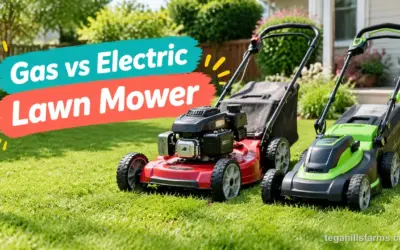
Gas runs longest and handles the heaviest grass but needs the most upkeep, battery starts at a button press and runs quieter within the limit of a charge, and corded never runs out but reaches only as far as the cord.
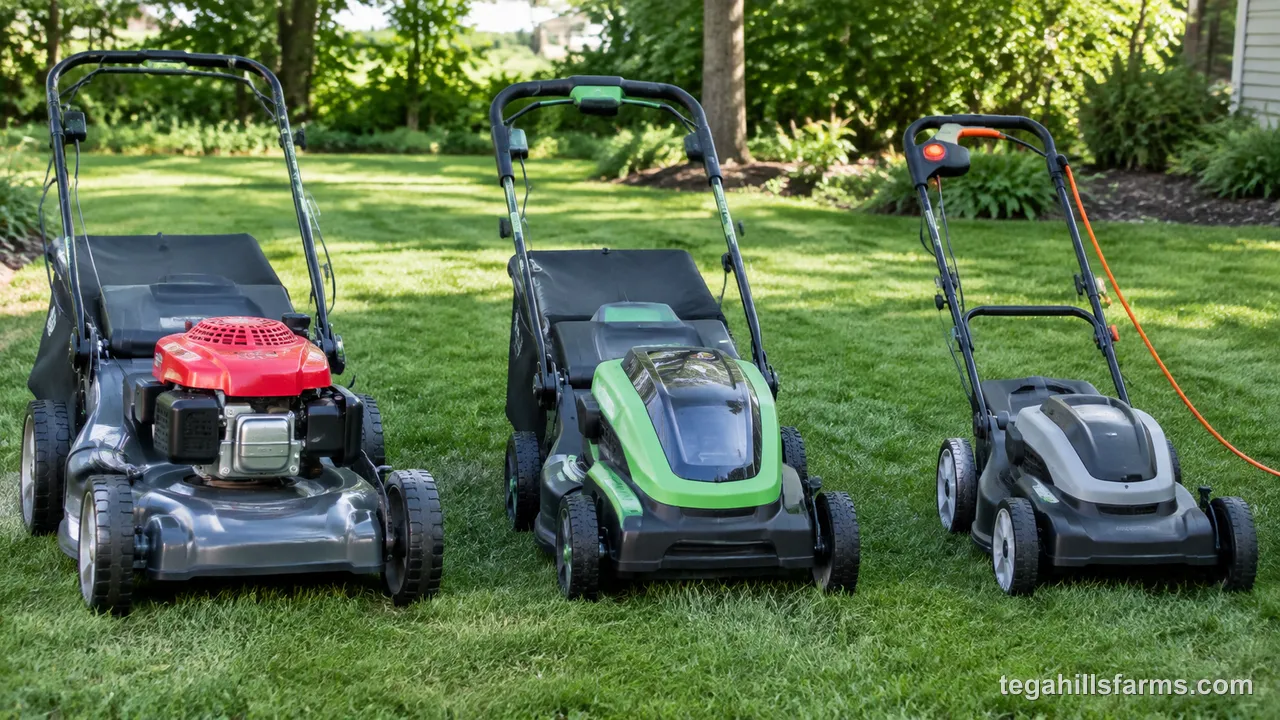
Noise and starting effort favor the electric options, while range and power favor gas. For homeowners stuck between the two most common choices, gas vs battery lawn mowers comes down mainly to yard size and how much engine care you are willing to do.
Gas Mowers: Power, Range and Upkeep
A gas engine holds blade speed in thick, tall or damp grass where a smaller electric motor slows down, and a refill takes a minute, so run time has no practical limit. That is why gas walk-behinds stay the default for lots from a quarter-acre to a half-acre and why nearly every riding mower on larger yards burns gasoline.
The cost is maintenance and noise. A gas engine needs regular oil changes, a spark plug and an air filter that stay in good shape, and fuel that does not sit long enough to go stale in the carburetor. Fuel left in the tank over winter is the most common reason a mower refuses to start in spring.
Gas mowers are also loud and give off exhaust, which matters if you mow early or near open windows. If you already do your own oil changes on other equipment, none of this adds much to the weekend.
Battery Mowers: Voltage, Amp-Hours and Run Time
Voltage tells you how much power the motor can draw to keep the blade spinning in heavy grass, and amp-hours tell you how much energy the pack stores. Multiply the two and you get watt-hours, which is the closest single measure of how much lawn one charge covers.
On a typical walk-behind, a charge usually handles about a third of an acre, so battery mowers fit lots of one-third of an acre or less. Self-propelled battery models spend part of the charge turning the wheels, so they cover less ground unless you run a larger pack or carry a spare. Thick, tall or wet grass shortens run time further because the motor draws more current to hold blade speed.
The battery platform matters as much as the mower. If you already own a trimmer or blower from one brand, a mower on the same platform shares those packs, which gives you a spare and avoids buying a second charging system. Battery riding mowers now cover bigger lots too, with decks of 42 to 54 inches.
Corded Electric Mowers: Who Still Benefits From a Cord?
A corded mower suits a small, simple yard close to an outdoor outlet, where it avoids both fuel and battery charging and starts every time you plug it in. It is light and quiet, and it asks almost nothing in upkeep beyond blade care.
The cord sets the limit. Reach ends at the outlet plus the length of an outdoor-rated extension cord, and the outlet should be GFCI protected. Every tree, bed and swing set becomes something the cord can snag on.
Mowing with a cord also changes your pattern. You start near the outlet and work away from it, flipping the cord over the cut side so the deck never runs across it. On a yard with many obstacles, that routine gets tedious fast.
How Wide Should the Cutting Deck Be?
Deck width trades mowing time against fit: a wider deck cuts more grass per pass, while a narrower one slips through gates, around beds and into a smaller storage space.
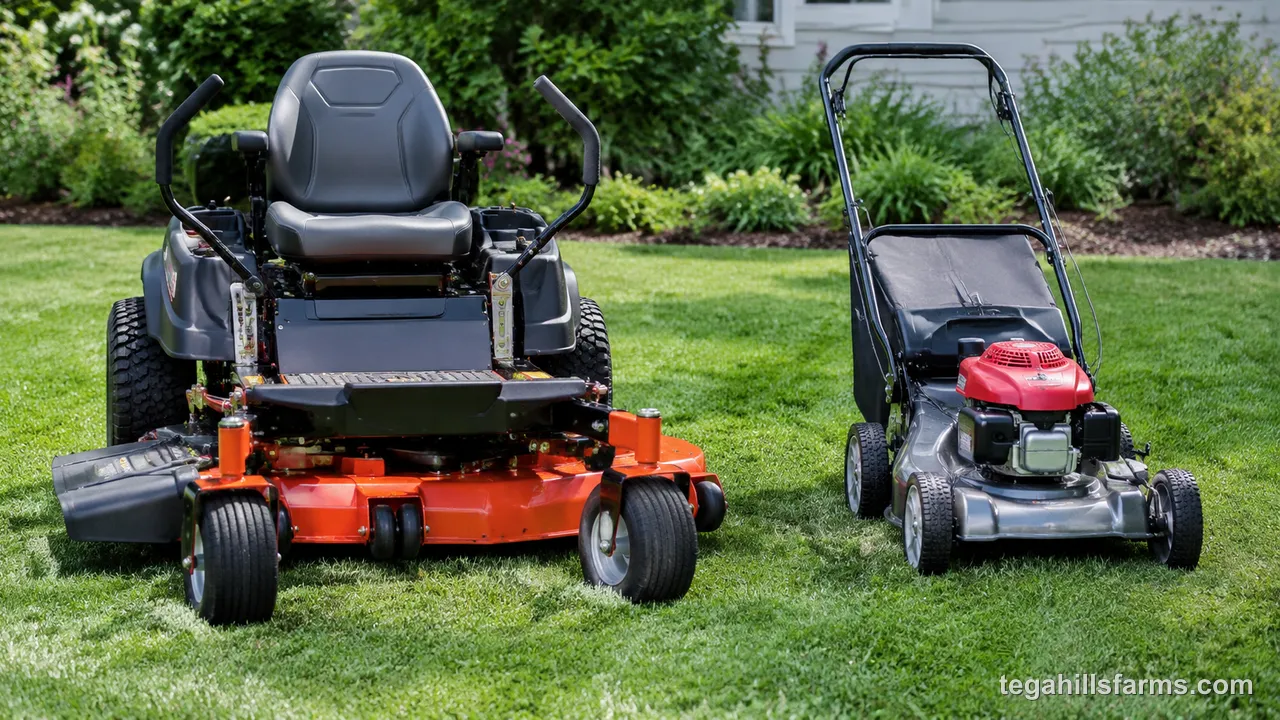
The typical widths follow the mower class. Walk-behinds stay narrow enough to roll through a garden gate, while riding mowers and zero-turns use far wider decks that need a wide gate, driveway access or a dedicated shed. Choosing a width means measuring your narrowest gate and your storage spot before you look at cut time.
Wide Decks: Fewer Passes, More Storage Space
A wider deck shortens mowing time on open lawns because each pass clears more ground, so a large, mostly unbroken yard finishes in fewer laps. That gain shows up every week of the season, which is why the widest decks belong on open acreage.
The cost lands elsewhere. A wide deck needs more floor space and a gate opening wide enough to pass through. It also cannot tuck in close to fences, bed edges or tree trunks, so more strips are left for a string trimmer afterward.
On uneven ground, a wide deck bridges dips and catches humps, which can scalp the high spots down to soil. On a bumpy lawn, a slightly narrower deck with a higher cutting height often gives a cleaner result than the widest option.
Narrow Decks: Tight Gates, Beds and Obstacles
A narrow deck suits yards broken up by fences, curved beds, trees and play equipment, because it follows edges closely and turns in tight spaces. Less grass is left behind at the edges, so trimming afterward takes less time.
Narrow decks also keep the mower light and compact. A walk-behind with a folding handle stores in a garage corner or shed, and it rolls through a standard gate without any planning.
The cost appears on open ground. Each pass clears less grass, so a wide, uninterrupted lawn takes more laps and more time. If your yard mixes a tight backyard with a large open front, the open section usually decides whether a narrow deck is still worth it.
How Much Engine Power Does a Lawn Mower Need?
Engine power decides whether the blade keeps its speed in thick or tall grass: walk-behind gas mowers are usually rated by displacement in cc, while riding mowers and zero-turns are rated in horsepower.
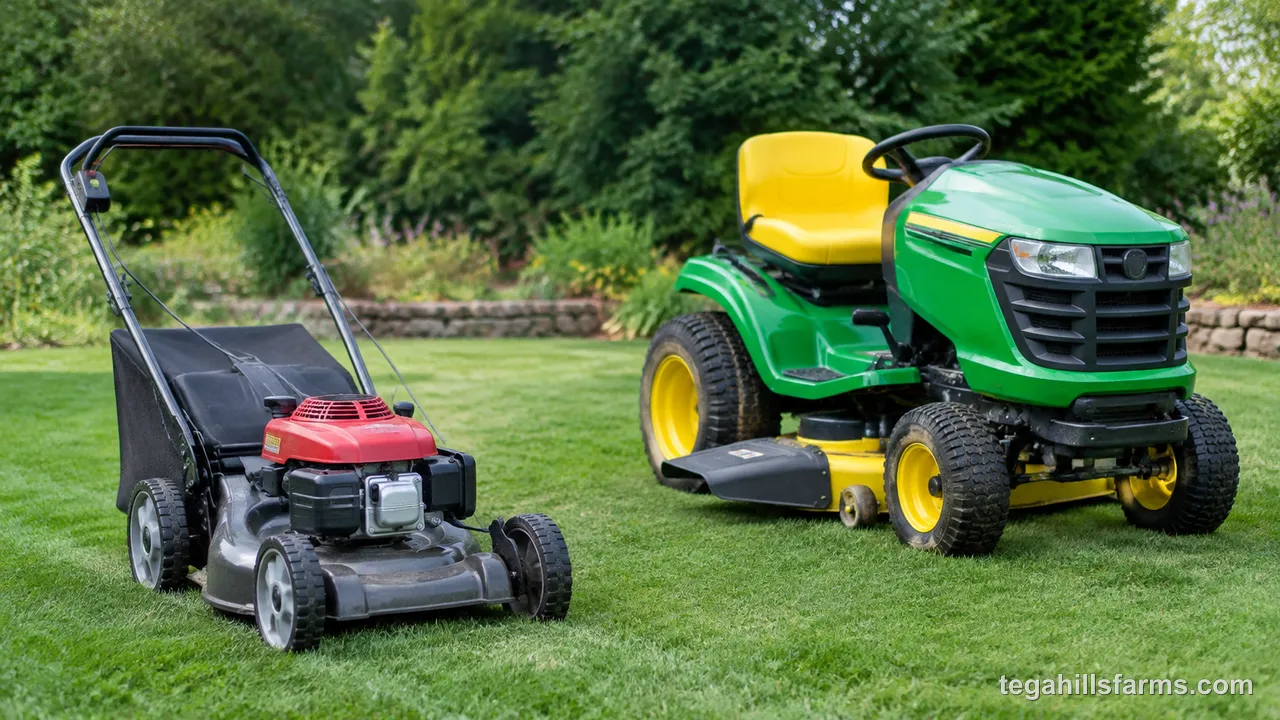
These ratings measure different things, so a cc figure on a push mower cannot be compared with a horsepower figure on a tractor. Some walk-behind makers also list torque instead of displacement. Compare engines only within the same mower class.
Engine Size on Push and Self-Propelled Mowers
Displacement measures the volume of the engine’s cylinder, and a larger engine generally holds blade speed better when grass is dense or damp and when it also has to drive the wheels. That makes the extra size worth having on thick turf, on self-propelled models and when you bag clippings.
Power ratings vary by manufacturer. Some brands list cc, some list torque, and testing conditions differ, so the most useful comparison is between models within one brand’s lineup.
For a modest lawn mowed on schedule, a base engine cuts just as cleanly as a bigger one. An overhead-valve, or OHV, design places the valves in the cylinder head, which helps the engine run cooler and burn fuel more completely than older side-valve layouts. For an owner, that usually means easier starts and a longer engine life.
Horsepower on Riding Mowers and Zero-Turns
Horsepower climbs with deck width and acreage. Rear-engine riders and lawn tractors cover a range of 12 to 20 hp. Zero-turns and front-engine tractors sized for 1 to 3 acres typically carry 14 to 16 hp with decks of at least 38 inches. Large zero-turns and garden tractors for more than 3 acres move up to 18 hp and beyond, paired with 44- to 54-inch decks.
The link is mechanical. A wider deck spins longer blades, or more of them, and the engine has to keep their tips at full speed through the whole pass. More acreage also means the engine works under load for longer each session.
The ranges overlap because the classes overlap: a large rear-engine rider and a compact tractor can share both deck size and engine. Judge horsepower against your deck width and acreage rather than against the class name on the box.
Front-Wheel or Rear-Wheel Drive: Which Is Better for Your Terrain?
Front-wheel drive suits flat lawns with many turns, while rear-wheel drive grips better on slopes and in thick grass.
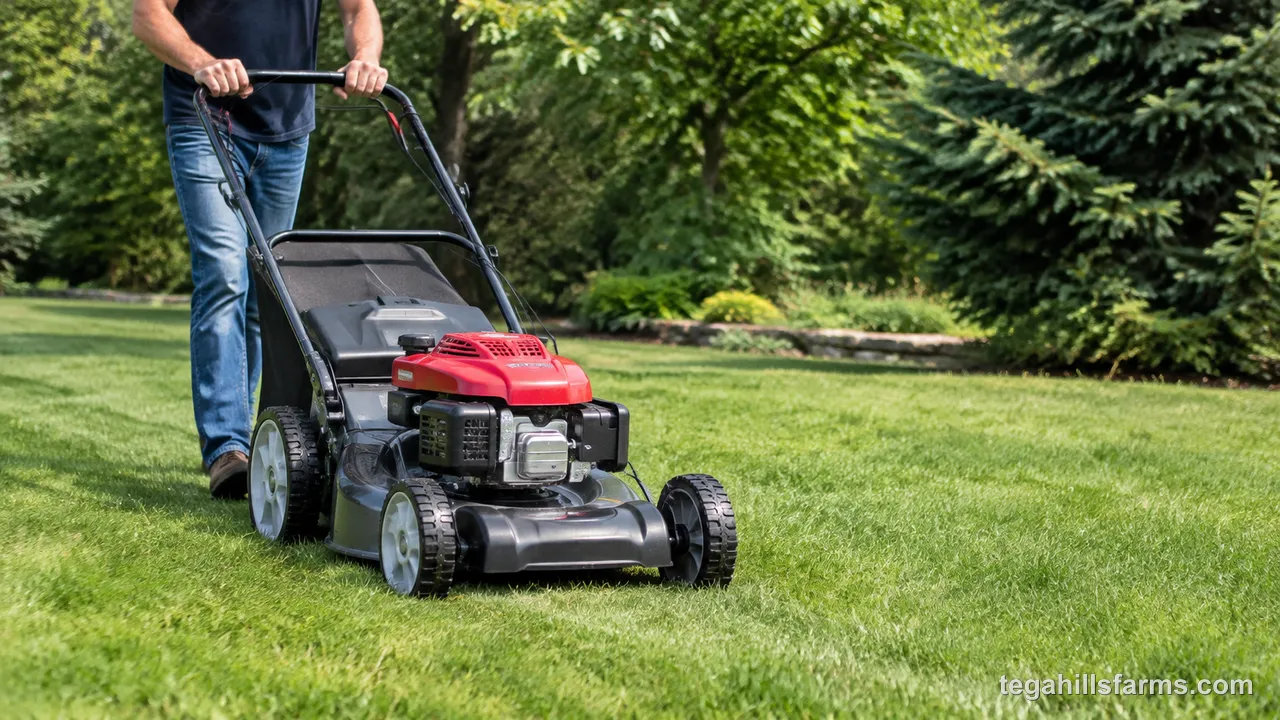
A plain push mower has no drive at all and works well on small, flat lawns where pushing takes little effort. The drive choice only matters once you move to a self-propelled walk-behind.
Front-Wheel Drive: Easier Turning on Flat, Open Lawns
Front-wheel drive makes turning easy because you press down on the handle, the powered front wheels lift off the ground and the mower pivots on its rear wheels. That suits small yards with trees, beds and other obstacles you steer around often.
Traction drops as weight shifts to the back of the mower. A rear bag that fills with clippings pulls weight off the front wheels, so they start to spin before the bag is full. The same thing happens going uphill, when the mower’s weight tips backward onto the unpowered wheels.
On a flat lawn where you mulch or side-discharge, neither problem comes up much, and the easier turning wins.
Rear-Wheel Drive: Better Traction on Slopes and Thick Grass
Rear-wheel drive keeps traction on slopes and in heavy grass because the mower’s weight, and the weight of a filling bag, sits over the driven wheels. Going uphill pushes even more weight onto them, so the mower keeps pulling where front-wheel drive would slip.
Steering stays steadier too, since the front wheels are free to guide the mower. For a sloped yard or one where you bag most of the season, I’d lean toward rear-wheel drive.
The cost is turning. Pivoting means lifting or dragging the driven wheels, so tight turns around obstacles take more effort. Safe slope limits vary by model, so check the manual for your mower. Learning how to use a lawn mower on a grade, including mowing across the slope with a walk-behind, matters as much as the drive type.
Mulching, Bagging or Side-Discharge: How Should the Mower Handle Clippings?
A mower can mulch clippings back into the lawn, bag them or side-discharge them in rows, and the right choice depends on how often you mow and how clean a finish you want.
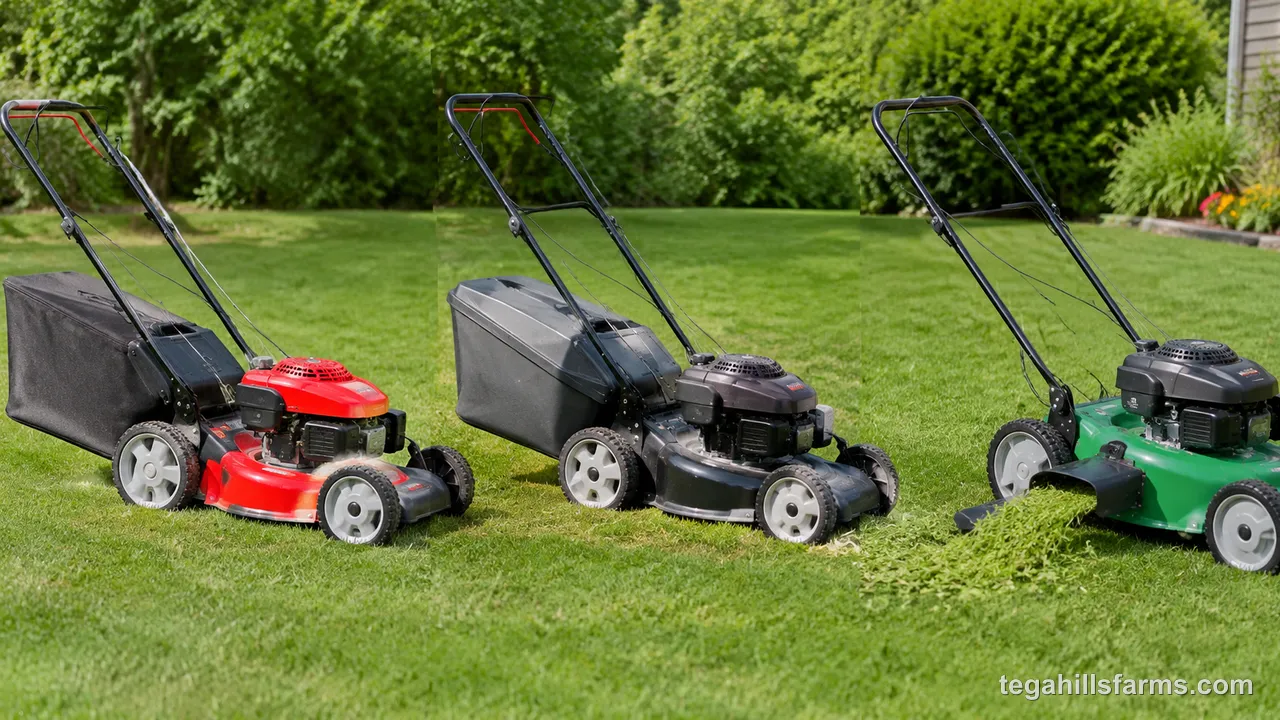
Many walk-behinds switch between all three with a plug or chute. The fuller debate over mulching vs bagging centers on lawn health, while for buying, what matters is which modes the deck supports and how easily it changes between them.
Mulching: What the Deck and Blade Need to Do
Mulching recuts clippings into fine pieces that drop down into the turf and break down quickly, returning nutrients and moisture to the soil. Done well, it leaves no visible clippings on top of the lawn.
That takes a deck built to keep clippings circulating under it, usually an enclosed or domed shape. A mulching blade with extra cutting edges chops each clipping several times before it falls. The engine or motor has to hold blade speed throughout, because a slowing blade drops clippings before they are cut fine.
Mulching struggles with wet grass, which clumps instead of dispersing, and with overgrown grass, where the volume exceeds what the deck can chop. In both cases, clumps stay on the lawn and can smother patches.
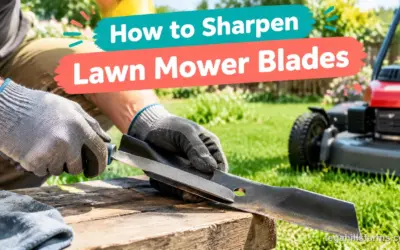
A sharp blade matters more for mulching than for any other mode, since a dull edge tears grass instead of slicing it. Knowing how to sharpen lawn mower blades keeps mulching performance from fading by midsummer.
Bagging and Side-Discharge: When Each Makes Sense
Bagging gives the tidiest finish and doubles as a leaf collector in fall. It also removes weed seed heads instead of scattering them across the lawn. The trade is time spent stopping to empty the bag, which happens often when grass is thick, so bag capacity and how easily it detaches matter.
Side-discharge fits overgrown grass, rough areas and weedy patches where mulching would clog and bagging would fill in minutes. The mower never stops, which makes it the fastest mode on tall growth.
The cost is rows of clippings left on the lawn and grass thrown onto beds, driveways and sidewalks. Aim the chute away from hardscape and mow so the discharge lands on grass you will cut next.
Which Convenience Features Are Worth Having?
The features that change daily use are the starting system, cutting-height adjustment and easy cleanup, while extras that only lengthen a spec sheet rarely change how the mower cuts.
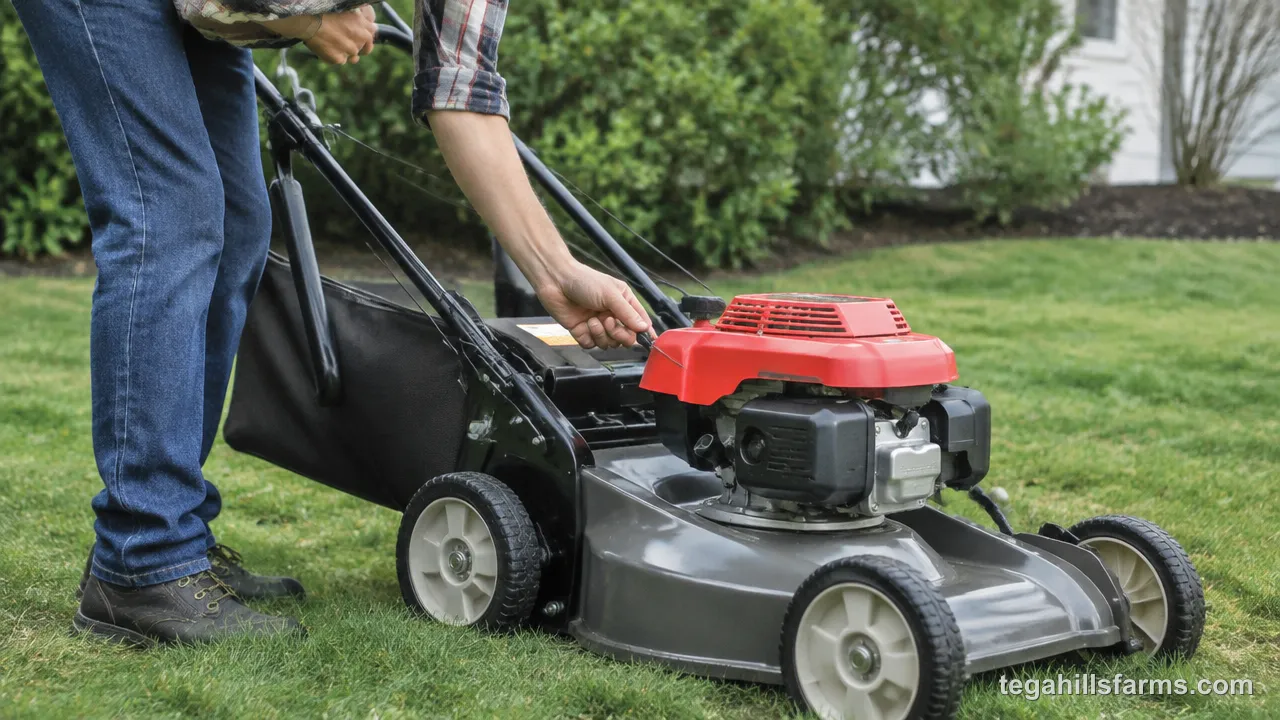
For someone who is not a mechanic, the best feature is one that removes a chore or a source of frustration. Judge each feature by whether it makes the mower easier to start, set and keep clean.
Starting Systems and Engine Reliability
Pull-start is the simplest system on a gas mower, and it relies on a clean carburetor and fresh fuel. Electric push-button start on a gas mower uses a small onboard battery to turn the engine over, which saves effort but adds a battery that needs charging. A battery mower starts with a button and a bail lever every time.
Starting trouble shows up most after storage, when stale fuel has gummed the carburetor. Engine traits that help a gas mower keep starting include an OHV design and an automatic choke that removes priming from the routine.
Fuel habits matter more than any feature. Fresh fuel with a stabilizer, or a tank run dry before winter, prevents most spring starting problems.
Noise and Vibration
Gas mowers are much louder than battery mowers, because the engine’s exhaust and combustion add a steady roar on top of the blade noise. A battery mower produces mostly blade and motor sound, so early-morning mowing near neighbors is far less disruptive. With gas, hearing protection is a sensible habit.
Vibration follows the same split. A gas engine sends vibration through the handle, which tires hands over a long session, while battery mowers run smoother.
When noise matters to you, check for a sound rating and read reviews of the exact model for comments on noise and handle vibration. Padded or isolated handles reduce the buzz on gas models.
Cutting Height Adjustment and Cleanup Features
Easy height adjustment lets you raise the deck in summer heat and lower it in cooler months, which keeps the lawn healthier and helps you avoid cutting too much at once. A single-lever control moves the whole deck in one motion. Per-wheel adjusters require setting each wheel separately, which takes longer and risks an uneven cut if one wheel ends up a notch off.
A deck wash port is a garden hose fitting on top of the deck. You connect the hose, run the mower briefly, and water scours the underside. That reduces the caked grass that cuts airflow and weakens both mulching and bagging.
Rinsing after each use is the easiest part of how to clean a lawn mower, and it helps the deck last longer.
What Is the One-Third Rule and Why Does It Matter When Choosing a Mower?
The one-third rule says to remove no more than one-third of the grass blade’s height in a single mowing, because cutting more stresses the plant and leaves more clippings than the deck can handle.
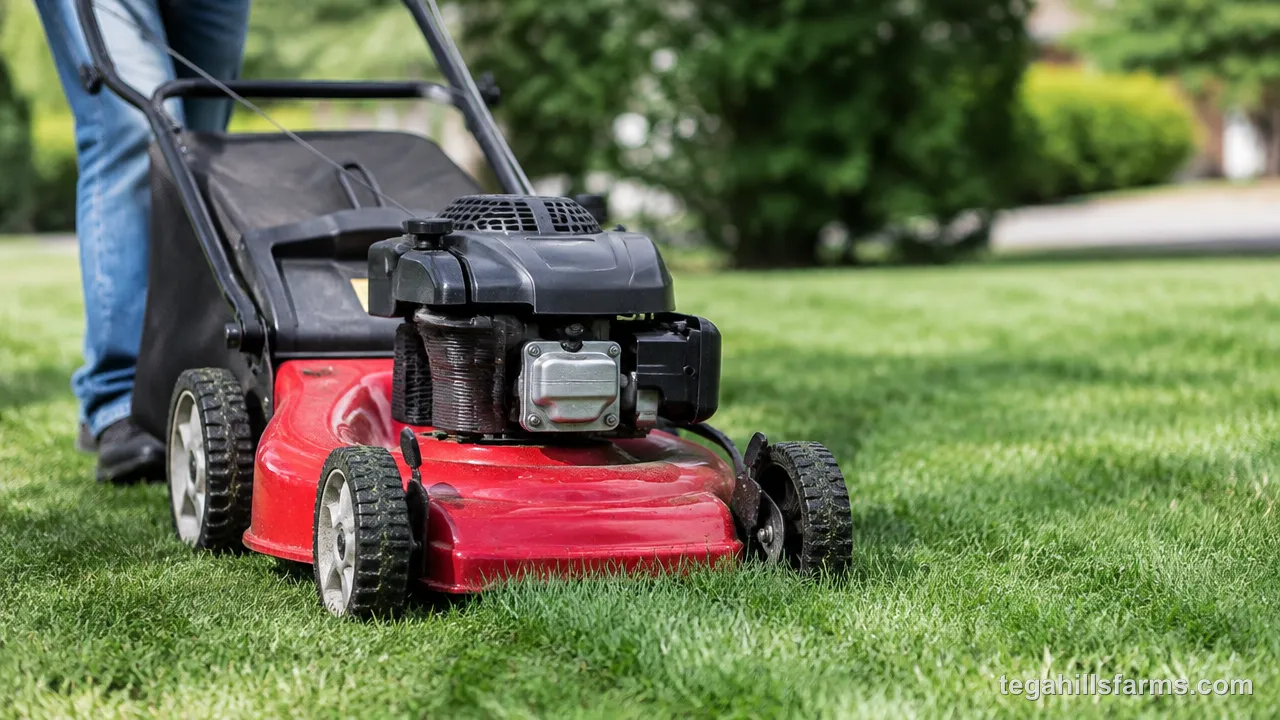
The rule connects directly to mower features. Your mower’s height range has to reach high enough for your grass type, since a deck that tops out too low forces you to cut more than a third whenever the lawn gets ahead of you. Deciding how short to cut grass for your turf tells you which height settings you actually need.
Engine power and mulching ability matter when growth outpaces your schedule. A strong engine and a well-designed mulching deck handle a heavier cut without clumping, while a weak one leaves rows of wet clippings.
When the lawn gets ahead of you, raise the deck for one mowing, then step it back down over the next few cuts. Matching how often to mow the lawn to the growing season keeps each cut within the rule and keeps a smaller mower working comfortably.
A small, flat suburban lot gets the same clean cut from a basic mower as it does from one loaded with a big engine, a wide deck and a long list of extras. Money spent on features a small lawn never uses is money that did not go toward a sharper blade, a better deck or a more reliable engine, and that shortfall shows up the first spring the cheaper parts bog down in thick growth while the extras sit idle.
Is a More Expensive Lawn Mower Worth It?
A more expensive mower pays off when the yard is large, sloped or thick with grass and when you plan to keep the machine for many seasons. On a small, flat lawn, most premium features add cost without changing the cut.
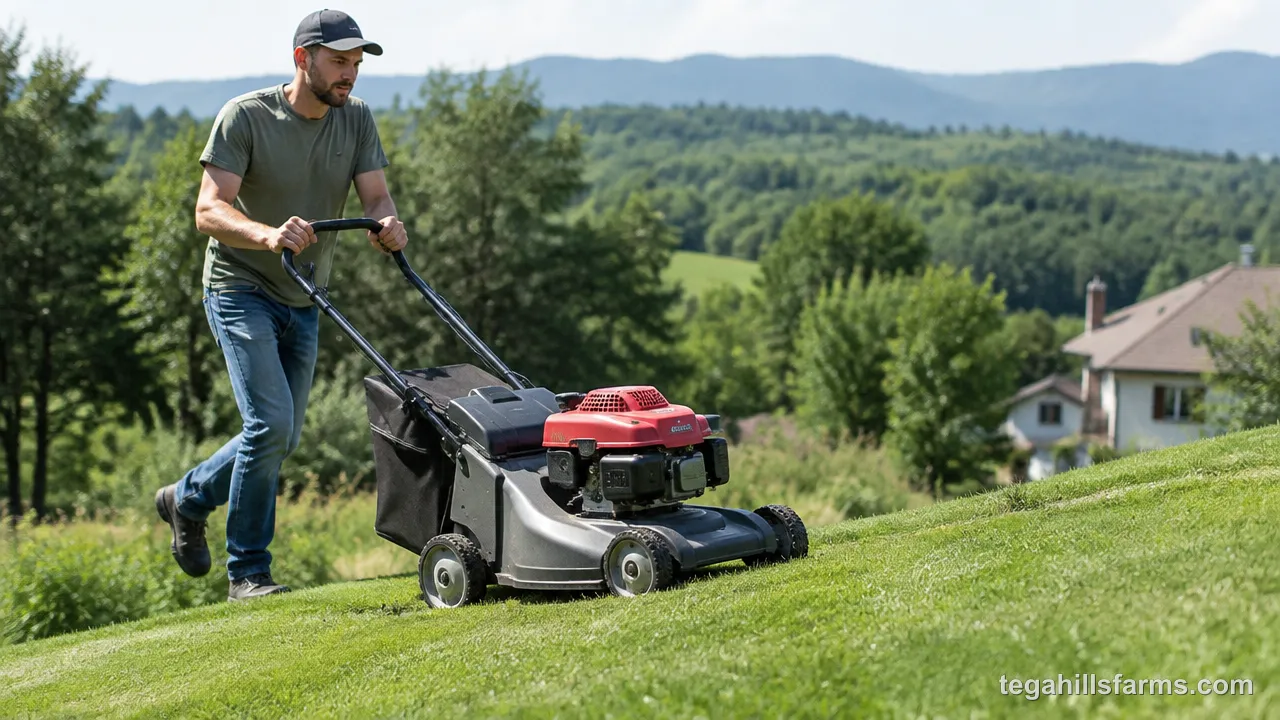
The upgrades that earn their price solve a real problem in the yard. A stronger engine helps on dense turf. Rear-wheel drive helps on slopes. A heavier deck, a larger battery or a second pack help on bigger lots, and sturdier components help anyone who mows weekly for years.
Features wasted on a small, flat yard include a wide deck that will not fit through the gate, an engine sized for acreage and multi-speed drive on a lawn that takes twenty minutes on foot.
A simple way to decide is to list what makes your yard hard: its size, slopes, grass thickness, obstacles and storage space. Then pay for features that address one of those problems and skip the rest. I’d rather see a buyer put that money into a better blade and deck than into extras the lawn never calls on.
How Do You Judge Lawn Mower Brand Reliability?
A dependable mower shows three signs: a known engine maker behind it, parts and service you can get locally, and owner reviews that do not keep repeating the same failure.
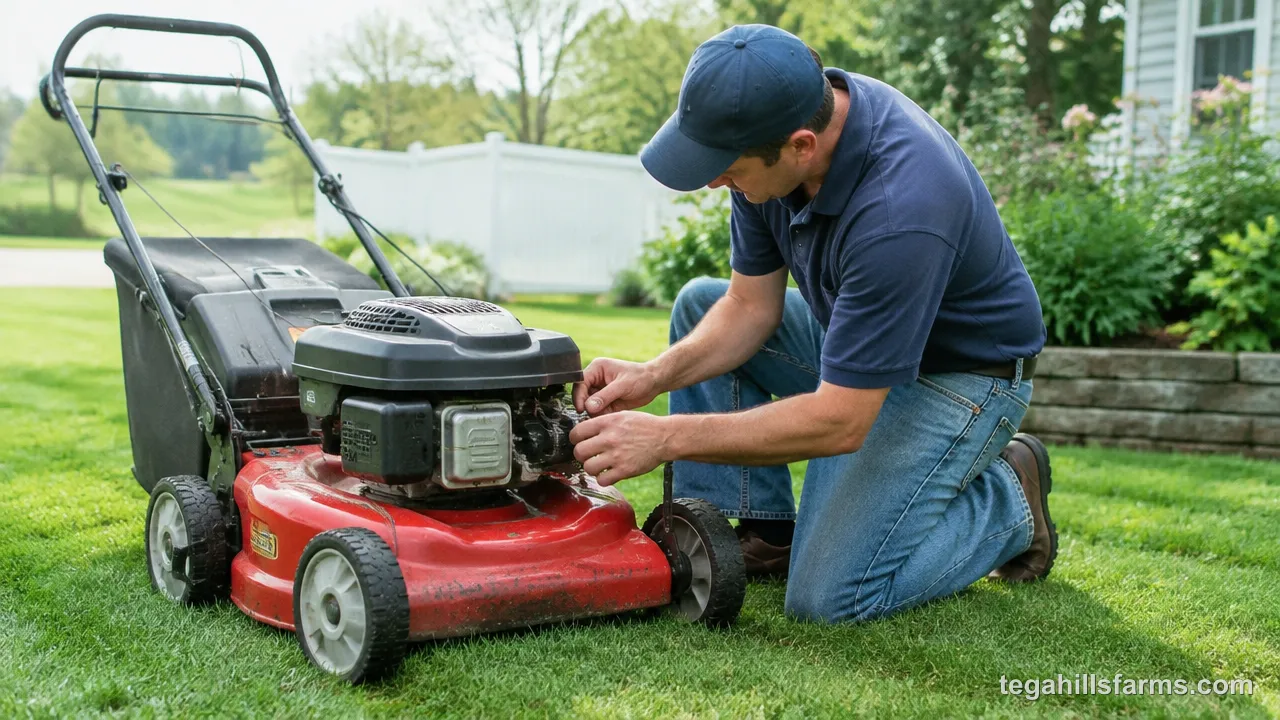
Many mower brands use engines from a small number of engine makers, such as Briggs & Stratton and Honda. Check the engine name and model, then look at that engine maker’s own parts and service information, since the engine is the part most likely to need attention.
Parts availability matters as much as the badge. Blades, air filters, drive belts and spark plugs should be easy to buy, and a nearby dealer or repair shop that services the brand saves you from shipping a mower or waiting weeks for parts.
When you read reviews for the exact model, look for patterns rather than single complaints. The same issue showing up again and again, such as hard starting, a failing drive belt or a rusting deck, says more than any one bad experience.
For broader data, Consumer Reports publishes reliability findings from owner surveys that you can check before buying.
What Storage Space and Upkeep Should You Plan For?
Storage and upkeep rarely appear on a spec sheet, yet they decide whether a mower fits your garage and your weekends. The biggest gaps between gas and battery mowers show up over winter and in the routine work an engine needs between mowings.
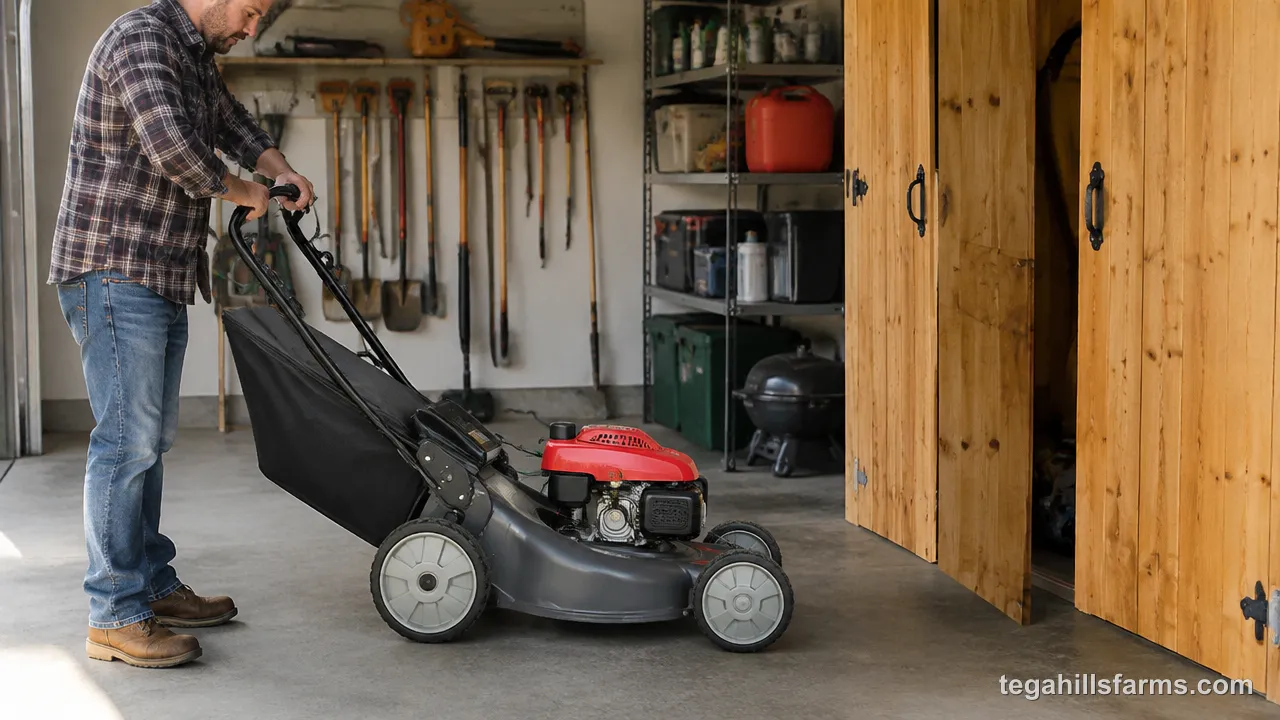
Where to Keep Gas and Battery Mowers Over Winter
A walk-behind mower stores best in a garage or shed, and a fold-down handle shrinks its footprint enough to tuck it against a wall. Many battery mowers and some gas models also stand on end for vertical storage, but a gas mower should only be stored upright if the manual says it is designed for it, since oil and fuel can leak.
A cold garage is fine for a gas mower once the fuel is stabilized or the tank is run dry. A battery pack needs more care: bring it indoors, away from freezing temperatures and high heat, and store it at the charge level the manufacturer recommends.
Riding mowers need dedicated floor space year-round, and their starting battery benefits from a maintainer during the off-season. The full routine of how to store a lawn mower covers the cleaning and fuel steps that prevent spring trouble.
Routine Upkeep a Gas Engine Asks For
A gas engine needs oil changes on the schedule in the manual, a spark plug replaced when it fouls or wears, and an air filter cleaned or replaced so the engine breathes freely. Fuel care runs through all of it: fresh gasoline, a stabilizer for fuel that sits, and a dry tank before long storage.
None of these tasks is difficult, but each takes time, tools and a place to work. Skipping them shows up as hard starts, rough running and shorter engine life.
A battery mower removes nearly all of that work. There is no oil, spark plug, air filter or fuel to manage, which leaves blade sharpening, cleaning the deck and storing the battery properly. For a buyer who dreads engine maintenance and has a lawn within one charge’s reach, I’d pick battery without much hesitation.
Do Climate and Grass Type Change Which Mower You Need?
Climate and grass type change the mower you need when turf grows fast or thick, springs run wet or growth surges with the seasons. Those conditions call for more engine power, stronger mulching and a wider height range than a slow-growing lawn ever demands.
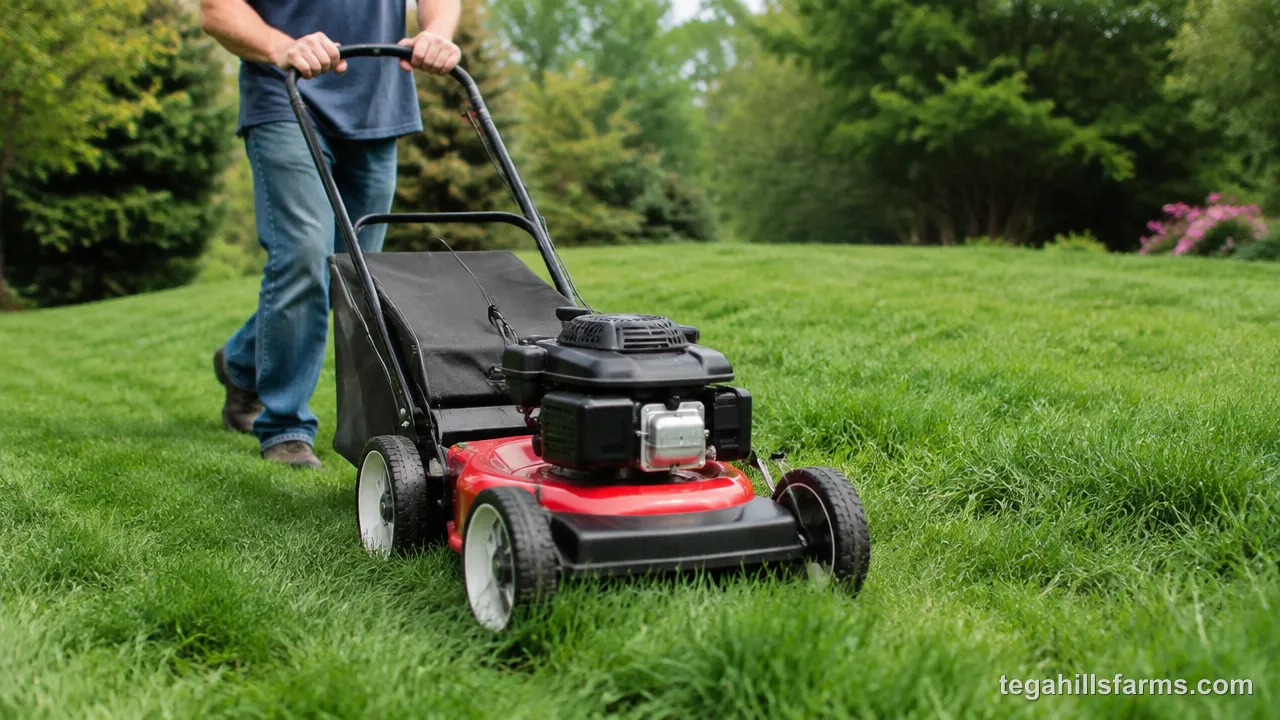
In the South, warm-season grasses such as Bermuda, St. Augustine and Zoysia form dense mats in summer heat, which rewards a strong engine and a sharp blade. St. Augustine is kept tall, so the deck needs high settings.
Across the North and Midwest, cool-season grasses like Kentucky bluegrass and tall fescue surge in spring and again in fall. That spring flush can outrun a small battery and overwhelm a mulching deck, and summer heat calls for raising the cut.
Where springs stay wet, as in the Pacific Northwest and much of the East, damp grass clumps under the deck, so bagging or side-discharge and rear-wheel traction help. In drier parts of the West, slower growth lets a lighter mower keep up.
What Else Do Buyers Ask About Choosing a Lawn Mower?
How much horsepower is enough for a typical yard?
Walk-behinds under about three-quarters of an acre are rated by engine displacement, so horsepower only matters for riders. Rear-engine riders and lawn tractors run 12 to 20 hp, zero-turns for 1 to 3 acres carry 14 to 16 hp, and lots over 3 acres call for 18 hp and up.
Is a self-propelled drive worth paying extra for?
A self-propelled drive is worth it on lawns approaching three-quarters of an acre, on slopes and when you bag clippings, since the wheels do the pushing. On a small, flat lawn you mulch, a plain push mower does the same job with less weight and nothing extra to maintain.
What size mower suits a small yard?
A walk-behind with a 20- to 22-inch deck suits small yards up to about half an acre. Battery models, most with 21-inch decks, fit lawns of one-third of an acre or less on a single charge. A narrow deck also clears garden gates and stores easily in a garage corner.
What does a robotic mower need from the yard?
A robotic mower needs clear boundaries set by a wire or satellite positioning, gentle slopes and a lawn kept free of toys, branches and debris. It works best mowing a little every day on grass that is already maintained, and edges along fences and beds still need a string trimmer.
Do I need a riding mower for a one-acre lawn?
A one-acre lawn falls into riding mower territory, since walk-behinds top out around three-quarters of an acre even with a self-propelled drive. Choose a lawn tractor for open, gently sloped ground, a zero-turn for open, flat lawns with many trees, and a rear-engine rider when storage space is tight.


Write Your Review
No reviews yet. Be the first to share your experience!