

Running a mower safely comes down to a short routine: check the fuel, oil or battery and clear the yard, start the machine the way its power source requires, cut high enough that you only take the top of the grass, work in overlapping rows, and shut it down so the blade has stopped and the power is disconnected before you touch anything underneath.
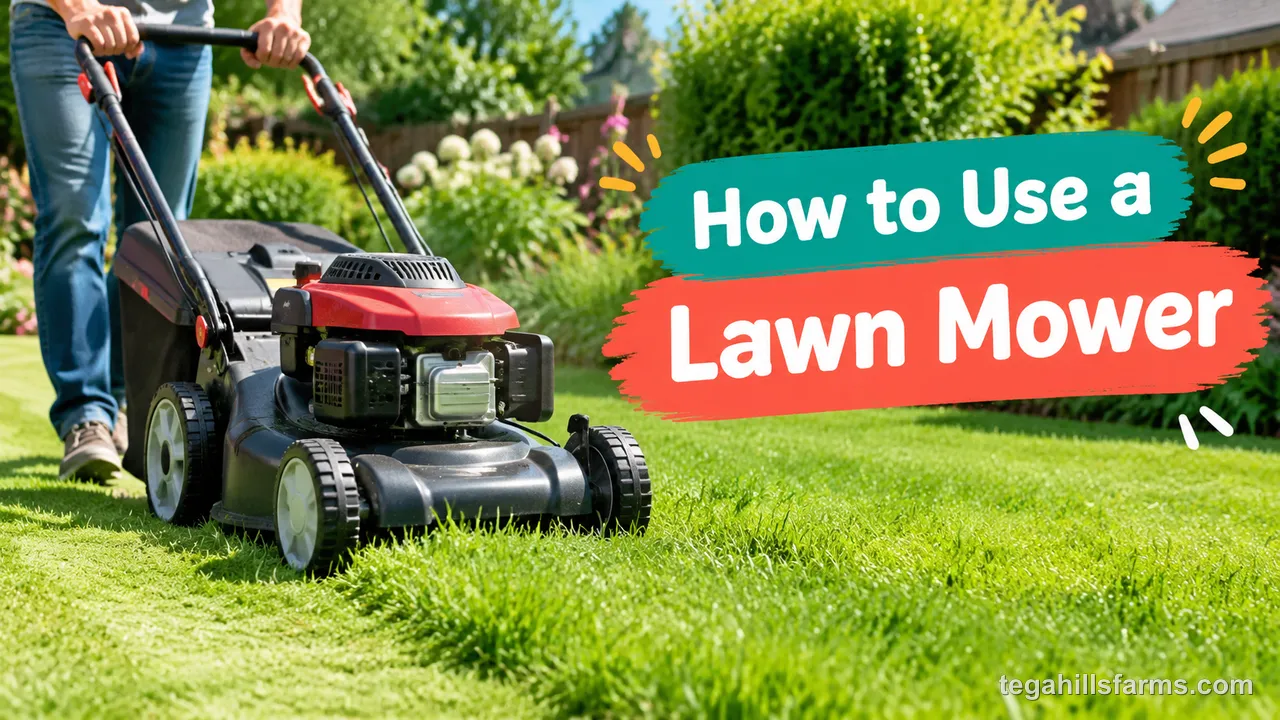
The power source changes most of that routine. A gas engine needs fuel drawn into the carburetor and a firm pull on the cord. A battery or corded model starts with a button and a squeeze of the bar. A riding mower adds a seat switch, a brake and a separate blade control, so the same lawn calls for different habits depending on what is parked in your garage.
Most beginners worry about the same things: hands and feet near a spinning blade, rocks thrown across the yard, and an engine that quits halfway through the lawn. Nearly all of those problems trace back to a few minutes of checks before the cut and a deliberate shutdown after it.
What Should You Do Before You Start a Lawn Mower?
Every mow starts with a fuel, oil or charge check, a sweep of the lawn for debris, and a look under the deck, because each one catches a problem before the blade is spinning.
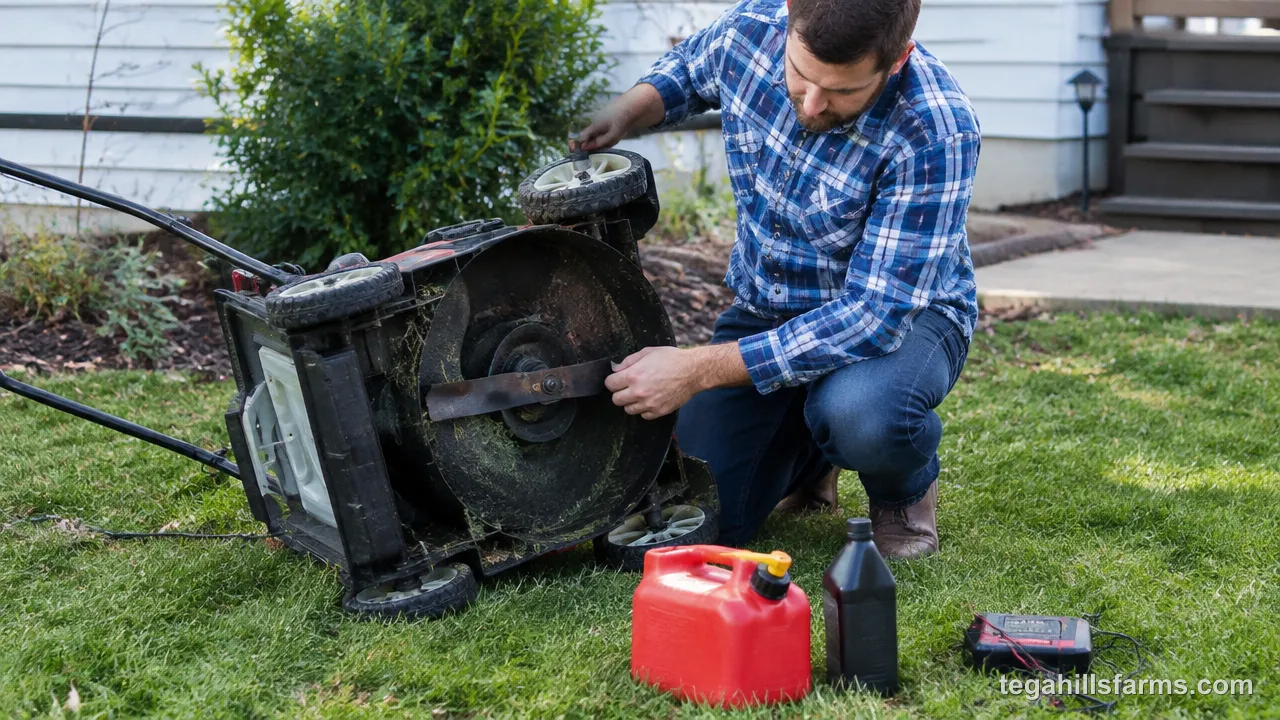
On a gas mower, fill the tank with fresh gasoline and check the oil on the dipstick with the mower sitting level. Gas left in the tank since last season is the most common reason a mower refuses to start, so it pays to look before you pull the cord. A battery mower fails differently: a pack that was stored half-empty or not fully clicked into place will stop the motor partway through the job, so charge it the night before. A corded electric mower depends on the cord itself, so run your hand along it for nicks and plug an outdoor-rated extension cord into a GFCI outlet.
Next, walk the lawn and pick up sticks, rocks, pinecones, dog toys and the garden hose. The blade throws anything it catches out of the discharge chute hard enough to break a window or hurt someone standing nearby.
With the power disconnected, check underneath the deck. The blade should be tight on its bolt, with no string or wire wrapped around it, and the deck should not be packed with dried clippings. Learning how to clean a lawn mower after each use keeps that buildup from choking the next cut.
Finish by putting on sturdy closed-toe shoes and long pants. If you are still deciding which machine suits your yard, read how to choose a lawn mower before you buy.
How Do You Start and Run a Lawn Mower?
The power source decides the start-up sequence, so follow the steps for the machine you actually own rather than a generic routine. Treating a gas engine like an electric motor, or the reverse, is how beginners end up with a flooded carburetor or a mower that seems dead when it only needed its safety key. Every walk-behind type shares one control, though: the safety bar on the handle, which shuts off the blade the moment you let go. Holding it is part of starting any of them, and releasing it is how you stop.
How Do You Start a Gas Push or Self-Propelled Mower?
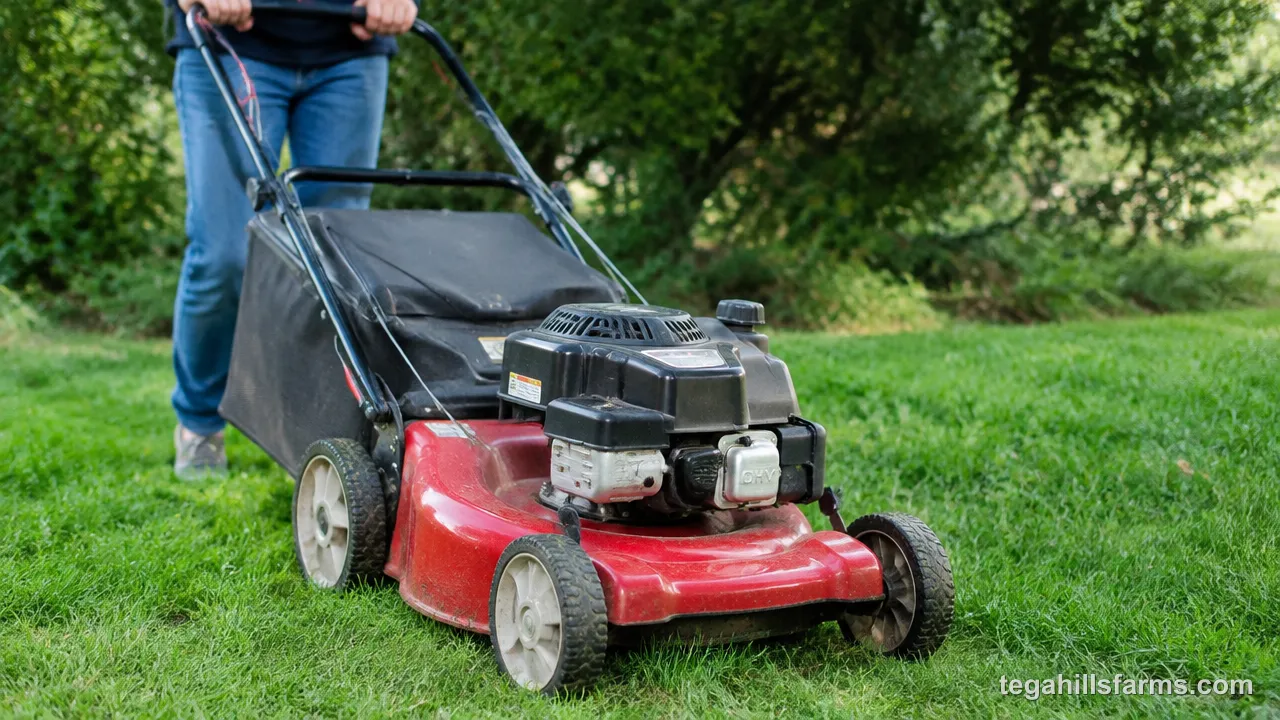
A gas mower starts in a fixed order: set the throttle, prime the engine, hold the safety bar and pull the cord. Move the throttle lever to a mid-to-high position, then press the prime button 3–4 times. Hold the safety bar against the handle, pull the starter cord slowly until you feel resistance, then give it one firm, full stroke. If the engine coughs without catching, pull again rather than priming more.
Priming pushes a small amount of gasoline into the carburetor, so a cold engine gets the rich mix it needs to fire. A warm engine already has fuel vapor in it, which is why pressing the prime button after you have just been mowing usually floods it instead of helping. Some mowers use a choke lever instead of a primer, and many newer engines handle that step automatically, so check which control yours has before your first start.
On a self-propelled model, the drive engages only after the engine is running, through a second lever or bail on the handle. Squeeze it gradually and let the wheels set the pace; walking at the drive’s speed keeps the cut even and saves your arms. If yours has a speed control, choose a slow setting until you know how it pulls. Pushing against the drive or yanking it back on every turn wears you out and strains the transmission, so release the drive lever at the end of each row and turn the mower with your hands.
How Do You Start a Battery or Corded Electric Mower?
An electric mower starts with no priming and no pull cord: seat the battery or plug in the cord, engage the safety key or start button, then squeeze the bar. Slide the battery in until it clicks, since a pack that is not fully seated can cut out the first time the mower bumps over a root. Many models require you to hold the start button and squeeze the bar together, which keeps the motor from running if a child presses one by accident.
A corded mower needs cord management more than technique. Loop the extension cord through the strain-relief hook on the handle so a tug does not pull the plug loose. Start mowing near the outlet and work away from it, flipping the cord over to the already-cut side at each turn so it always trails behind you and never crosses the blade’s path.
With a battery mower, watch the charge indicator on the pack or the handle. Tall or wet grass draws more power than a regular trim, so start every mow with a full pack, and if your lawn takes longer than one charge lasts, a second battery saves you a long wait in the middle of the yard.
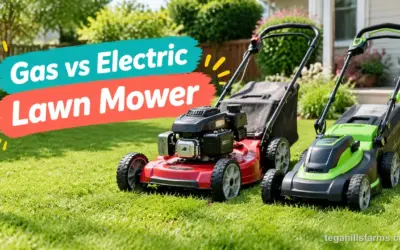
Day to day, there is no oil to check, no fuel to go stale and no cord to pull, and the mower runs quietly enough to use early without bothering the neighbors. That shorter list of chores is the main practical gap between gas vs battery lawn mowers for a beginner.
How Do You Operate a Riding, Zero-Turn or Reel Mower?
Riding mowers start only when you are seated and the controls are in a safe position; a reel mower has no engine at all and works the moment you push it. On a lawn tractor, sit down, press the brake pedal, and turn the key. On a zero-turn, the lap bars must be pushed out to the neutral position before the engine will start. In both cases, a seat switch kills the engine if you stand up while the blades are running.
Engage the blades with the blade switch or lever only after the engine is running and you are on the grass, and disengage them before crossing a driveway or gravel. A lawn tractor steers with a wheel like a car. A zero-turn steers with two lap bars, each controlling one rear wheel: push both forward to go straight, pull both back to reverse, and move one forward and one back to spin in place. Because each bar drives its wheel directly, a small movement produces a sharp change in direction, so make your first passes slowly in an open area until the response feels predictable.
A reel mower works by pushing. The wheels drive gears that spin a cylinder of curved blades against a fixed bottom blade, cutting the grass with a scissor action. It cannot chop down tall growth, so it needs shorter, more frequent cuts, and twigs or tall weed stalks will jam it. It does its best work on small, flat lawns with fine-textured grass. The tradeoffs between a reel vs a rotary mower come down to that cut quality against tolerance for neglect.
How Do You Mow a Lawn Correctly?
How much you cut and the path you take decide whether the lawn looks even and recovers quickly or turns brown and patchy within days. A beginner who gets the height right but runs the same lines every week still ends up with ruts, and one who mows in tidy rows but cuts too low still stresses the grass. Awkward spots are a third concern, since slopes and obstacles are where most mowing accidents and missed strips happen. Get those three habits right on the first mow and the lawn and the machine both last longer.
What Is the One-Third Rule and How Does It Set Your Cutting Height?
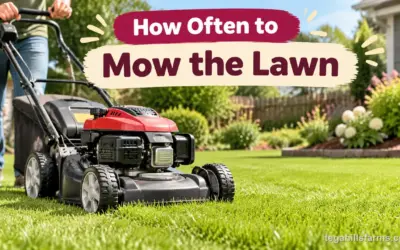
On an established lawn, never remove more than one-third of the grass blade in a single mowing. If you want to keep the grass at 2 inches, set the mower to 2 inches and mow once the grass reaches 3 inches. Waiting until it hits 5 inches and cutting it back to 2 in one pass is what turns a green lawn brown.
The blade is where grass makes its food, so cutting off too much of it at once forces the plant to draw on its root reserves to regrow. Do that repeatedly and the roots shrink, the grass thins, and weeds move into the bare spots. Long clippings from an overdue cut also clump on top of the lawn and smother the grass beneath them. Knowing how short to cut grass for your type of turf tells you where to set the deck, and the one-third rule then decides how often to mow the lawn during fast spring growth.
Most walk-behind mowers adjust height with a lever at each wheel or a single lever that moves the whole deck. Set every wheel to the same notch, or the cut will come out lopsided. Raise the deck a notch in shaded areas, where taller blades catch more of the limited light, and during summer heat, when longer grass shades the soil and holds moisture.
New grass waits before its first cut. Newly laid sod needs about two weeks to root in. A newly seeded lawn needs one to two months of establishment, and you should cut it only after all the seed has germinated and the grass reaches one and one-half times its recommended height.
Which Mowing Pattern and Direction Should You Use?
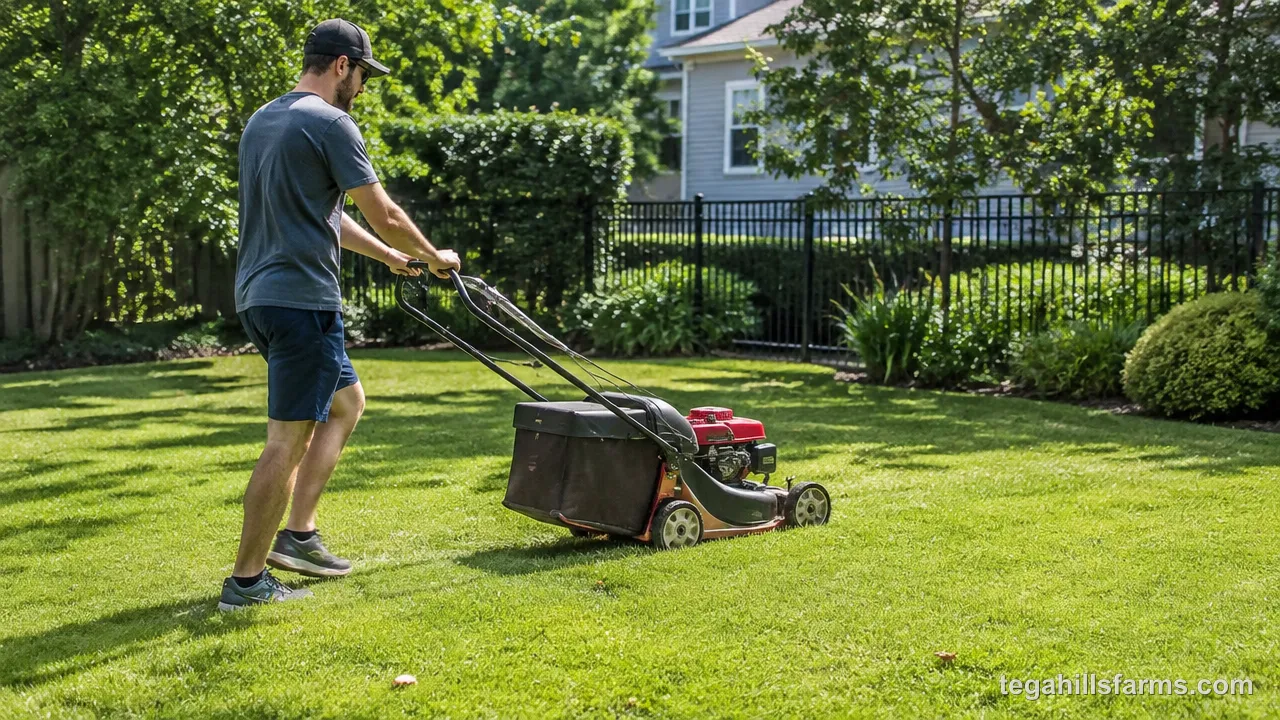
Mow in straight, overlapping passes and change direction every time you mow. Let each new pass overlap the previous strip slightly, so the wheel tracks from one row fall on grass already cut and no thin ridges are left standing between rows.
At the end of each row, turn on grass you have already cut. With a walk-behind, press down on the handle to lift the front wheels and pivot, which avoids scuffing the turf. Alternate the direction from one mowing to the next, running north–south one week and east–west or diagonal the next. Repeating the same lines packs the soil into ruts under the wheels and trains the grass to lean one way, a grain that the blade then skims over instead of cutting cleanly.
Stripes come from grass bent in opposite directions. Blades bent away from you reflect more light and look lighter, while blades bent toward you look darker. A rear roller bends the grass more firmly than the wheels, so mowers with one produce sharper stripes, and the airflow from the discharge adds a little of the same effect.
Plan where the clippings will land. On a side-discharge mower, start along the edge of the walk or flower bed so the chute points out into the lawn, and the clippings stay on the grass instead of the pavement or the mulch.
How Do You Mow Slopes, Corners and Obstacles Safely?
The safe direction on a slope depends on the machine. With a walk-behind mower, go across the slope, so that if you slip, you fall uphill and away from the deck rather than sliding under it. With a riding mower, go straight up and down, because driving across a slope puts the machine’s weight on the downhill wheels and can roll it.
A slope is too steep to mow when you cannot stand on it comfortably, when the wheels start slipping, or when a riding mower feels like it is tilting. Any hesitation on your part is reason enough to switch to a string trimmer for that bank.
Trim around trees, fence posts, mailboxes and bed edges before the main passes, so the mower can run straight lines without stopping to back up. Approach fence lines with the discharge pointed away from the fence, which keeps clippings and stones from bouncing back at you. Slow down for narrow gates and tight corners, and release the drive on a self-propelled mower so you can steer it through by hand. Keep the deck off tree trunks, since scraped bark opens the tree to disease.
Wet grass changes everything on uneven ground. Your shoes lose grip, a walk-behind can slide out from under you, and a riding mower’s tires can lose traction on a slope it handles easily when dry. Wait for the lawn to dry before mowing any incline.
How Do You Mow Safely and Shut a Mower Down Correctly?
Personal protection and a deliberate stop sequence are what keep hands, feet and eyes away from the blade, both while it spins and in the seconds after you let go of the bar. Most mower injuries happen in those two windows: when something is thrown or reached for during the cut, and when someone assumes a quiet machine is a safe one. Building both habits from the first mow matters more than any feature on the machine.
What Safety Gear and Habits Should You Follow?
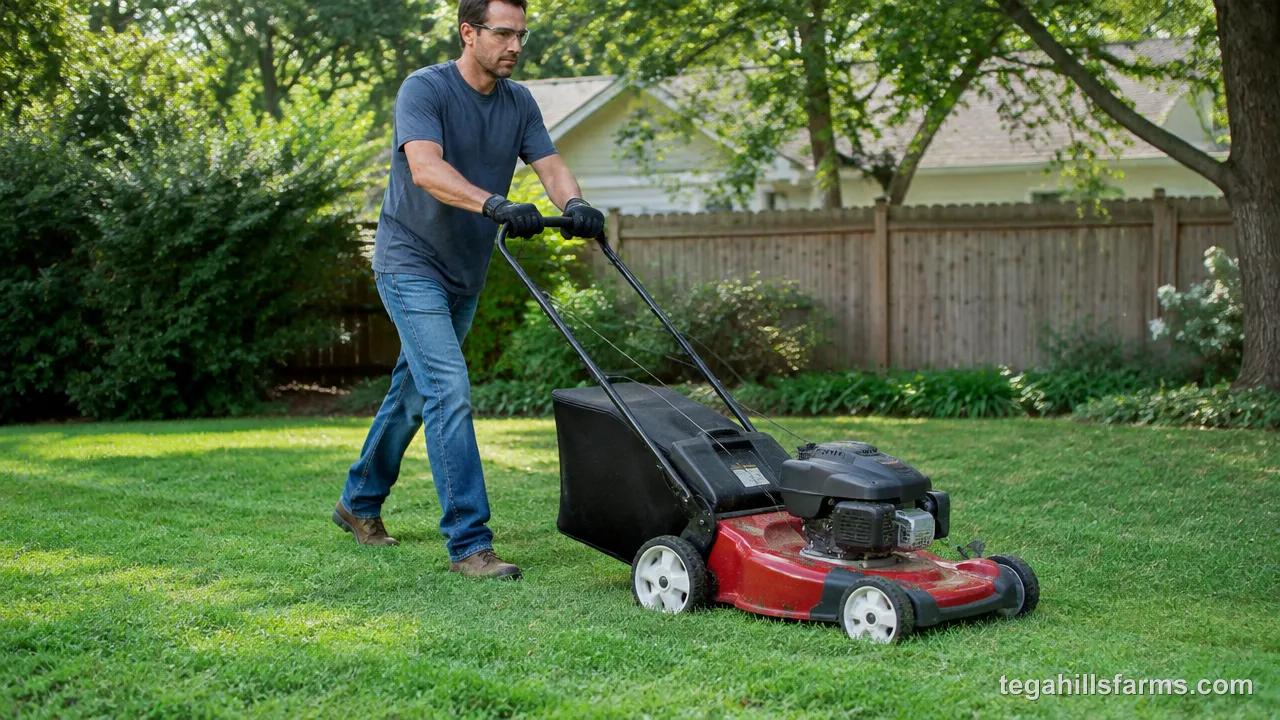
The gear that matters is eye protection, hearing protection, closed-toe shoes with grip and long pants, along with a few habits that keep people away from the blade.
Safety glasses stop the small stones and wood chips the blade throws even after you have cleared the yard. Hearing protection matters most with a gas engine, which runs loud enough to damage hearing over a season of weekly mowing; a battery mower is quieter, though earplugs still help on long jobs. Shoes with real tread keep your feet under you on damp grass, and long pants take the sting out of anything kicked up from the deck.
Keep children and pets inside while you mow, and never give a child a ride on a riding mower. A child who runs into the yard can appear in your path faster than you can stop, and a riding mower backing up is especially dangerous because you are looking forward.
Never reach under the deck while the mower is running, and never lift a walk-behind by its deck while the engine or motor is on. Both put your fingers within reach of the blade.
A clogged discharge chute is the most tempting place to reach in. Clearing a clog by hand is dangerous because the blade may still be turning, and freeing the jammed grass can let a stalled blade spin again. Shut the mower off, disconnect the power, and pull the clog out with a stick.
How Do You Turn Off a Lawn Mower the Right Way?
Release the safety bar or switch, wait until the blade has stopped completely, then disconnect the power before you do anything under the deck. On a gas mower, that means pulling the spark plug wire off the plug. On an electric mower, remove the battery or the safety key, or unplug a corded model.
The blade keeps spinning briefly after you let go because a heavy steel blade carries momentum, even on mowers with a blade brake. Listen for the whirring to stop entirely before you bend down. Disconnecting the power matters because turning the blade by hand also turns the crankshaft on a gas engine, and that can fire it. On an electric mower, a seated battery means a bumped switch can start the motor.
Let a hot engine cool before refueling. Gasoline spilled on a hot muffler or engine block can ignite, so top off the tank at the start of your next mow instead of right after the last one.
For a corded mower, unplug the extension cord from the outlet first, then coil it loosely and store it somewhere dry. Bring a battery pack indoors, since chargers and packs last longer away from extreme garage temperatures. When the mowing season ends, knowing how to store a lawn mower properly keeps the fuel system and the battery in shape for spring.
If you need to tip a gas mower to reach the blade, tilt it with the air filter and carburetor side facing up. Tipping it the other way lets oil run into the air filter and fuel leak from the carburetor, which leads to heavy smoke or a hard start.
Why Won’t a Lawn Mower Start, and What Can You Check?
A gas mower that will not start usually has stale fuel, low oil, a fouled spark plug, a dirty air filter or a flooded or gummed carburetor, and checking them in that order solves most cases at home.
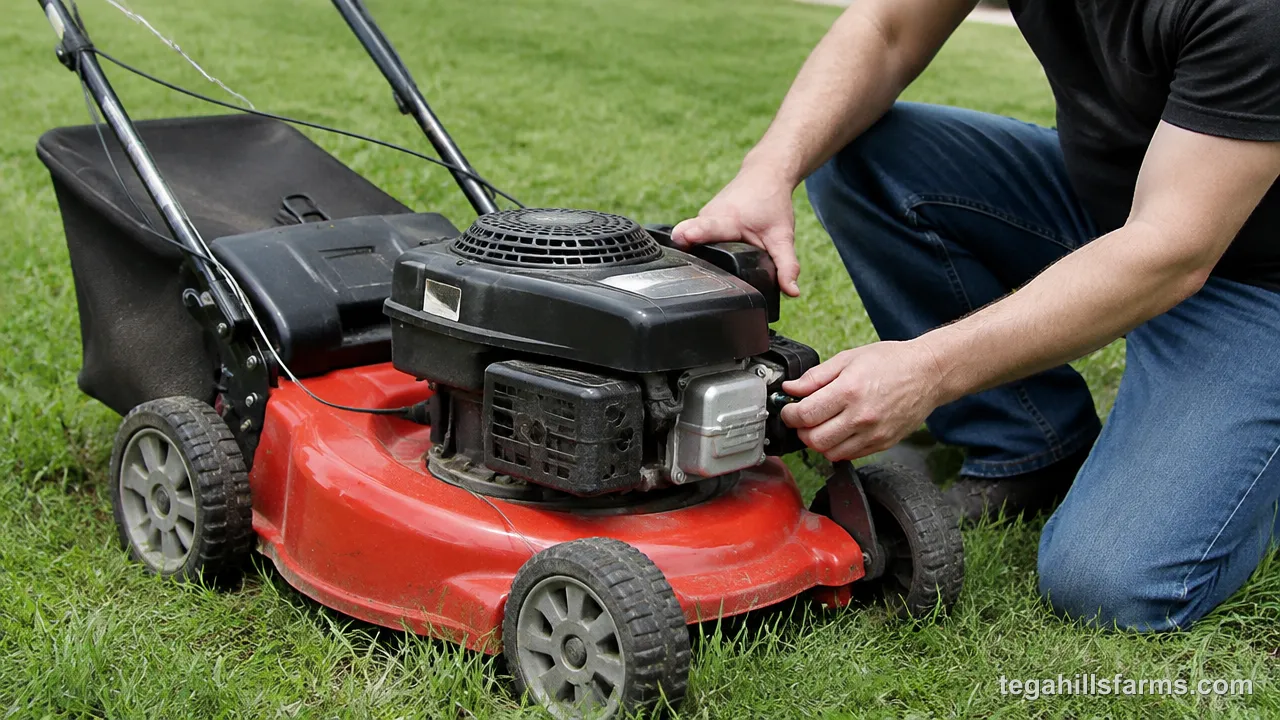
- Stale fuel: Gasoline breaks down over time, so a mower stored with old gas in the tank may crank without firing, or start and then sputter. Drain the old fuel and refill with fresh gas.
- Low oil: Some engines have a low-oil shutoff sensor that stops the engine from running when the oil level drops. The cord pulls normally, but nothing happens, or the engine dies right after starting. Top off the oil with the mower level.
- Fouled spark plug: A plug coated in carbon or oil produces a weak spark or none. You get no sound at all, or an engine that coughs without catching. Pull the plug, and clean or replace it.
- Dirty air filter: A clogged filter starves the engine of air, so it starts, runs rough and then stalls, often with black smoke. Clean a foam filter or replace a paper one.
- Flooded or gummed carburetor: Too much priming floods it, and you will smell gas; waiting a while lets the fuel evaporate. Old fuel left over winter can leave gummy deposits that block the small fuel passages, causing an engine that starts only with priming and dies as soon as it warms up.
Battery mowers have a shorter list. Reseat the battery until it clicks, confirm it is charged, and check that the safety key is fully inserted.
Fuel, oil, filters and spark plugs are simple home jobs. A carburetor that needs cleaning inside or rebuilding, an engine that will not turn over at all, or a battery mower that stays dead with a charged pack are the points where a repair shop saves you time and guesswork.
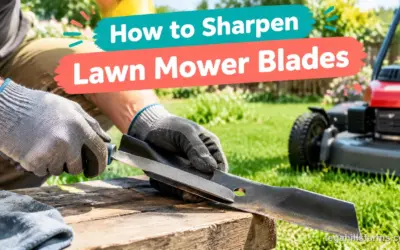
A blade that has gone dull does not cut the grass so much as tear it, leaving ragged tips that turn brown and frayed a few days after you mow. Because the damage shows up later, it is easy to blame drought or disease and start treating a lawn that only needed a sharper edge on the mower.
What Mistakes Do Beginners Make When Mowing?
The most damaging mistakes are mowing wet grass, cutting too short, running a dull blade, repeating the same direction, and mowing in the midday heat. Each one either stresses the grass or works the machine harder than it needs to.
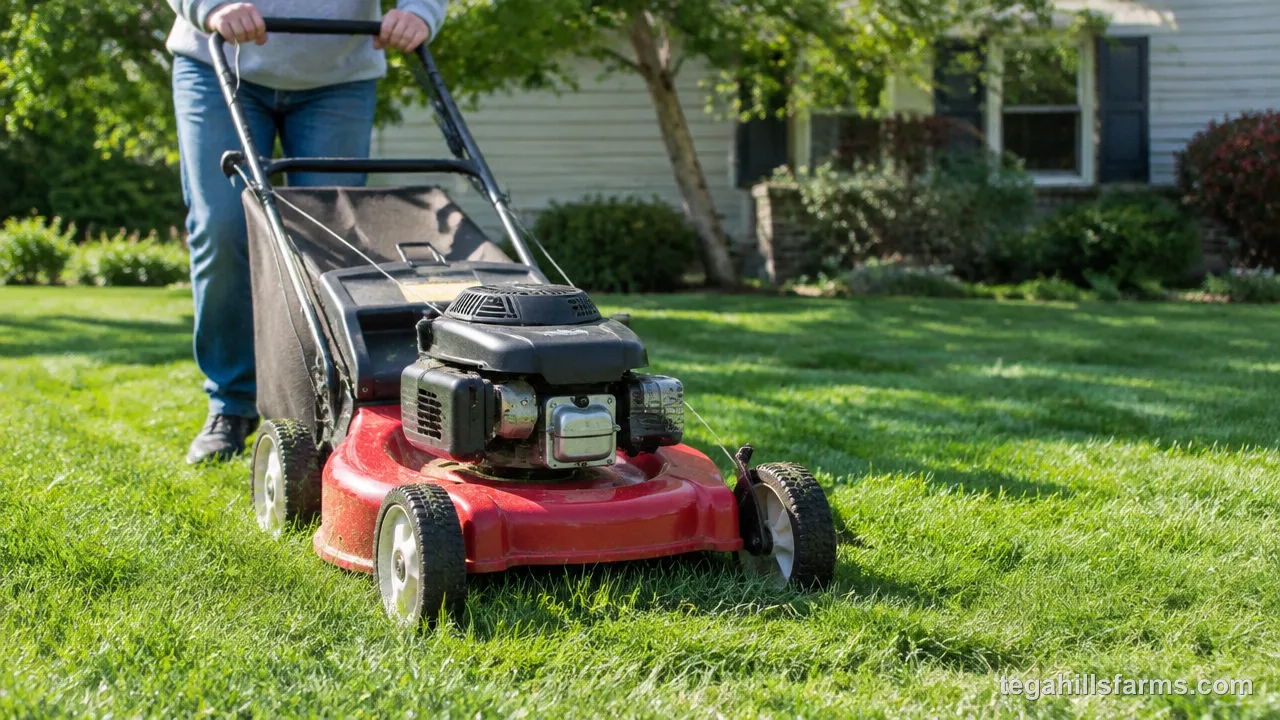
Wet grass sticks together in heavy clumps that clog the deck and the discharge chute and smother the lawn where they land. Wait until the dew or rain has dried.
Cutting too low, or scalping, strips the grass down to its stems and exposes the soil, which dries the roots and invites weeds. Raise the deck and cut more often instead.
A dull blade is the mistake that most often goes unnoticed, since the mower still runs normally while the grass tips turn brown and shredded behind it. Learning how to sharpen lawn mower blades, or having a shop do it, restores a clean cut that heals quickly.
Mowing the same lines every week cuts ruts into the soil and leaves the grass leaning one way. Alternate the pattern each time.
Mowing during the hottest part of the day adds stress to grass that is already losing water. Mow in the morning after the dew dries or later in the afternoon as the heat eases.
Lawn Mower Usage FAQ
What is the best time of day to mow?
Mid-morning, once the dew has dried, is the best time to mow. The grass is dry enough to cut cleanly and has the rest of the day to recover before evening. Late afternoon works too. Avoid midday heat, which stresses freshly cut grass, and early dew, which clumps and clogs the deck.
Can a beginner learn on a riding mower?
Yes, and a lawn tractor with a steering wheel is the easier place to start. Practice on a flat, open part of the yard at low throttle with the blades disengaged until stopping and turning feel natural. A zero-turn takes more practice, because its lap bars respond sharply to small movements.
How is the first cut on a new lawn different?
New sod and newly seeded lawns both wait longer than an established lawn before their first cut, and seeded grass should grow taller than its usual height first. When the time comes, mow on dry soil with a sharp blade, take off only the top of the grass, and avoid sharp turns that tear young roots.
Should you bag clippings or leave them on the lawn?
Leave short clippings on the lawn in most cases, because they break down quickly and return nutrients to the soil. Bag them when the grass is overgrown, wet or diseased, or when you are picking up fall leaves along with it. The tradeoffs of mulching vs bagging come down to your lawn’s condition and how often you mow.
How much should you expect to spend on a mower?
Lawn mowers range from about $50 to $5,000 or higher, depending on the type and features. Manual reel mowers sit at the low end, push and self-propelled models in the middle, and riding and zero-turn mowers at the top. Knowing how much a lawn mower costs by type, and what to look for in a lawn mower, helps you match the budget to your yard.



Write Your Review
No reviews yet. Be the first to share your experience!