

A battery-powered electric mower is the better fit for most small and mid-size lawns. It starts with a button, needs no oil or fuel, and cuts nearly as evenly as gas. A gas mower still has the advantage on large lots, where one charge can’t finish the job, and in heavy grass that would drain a pack fast.
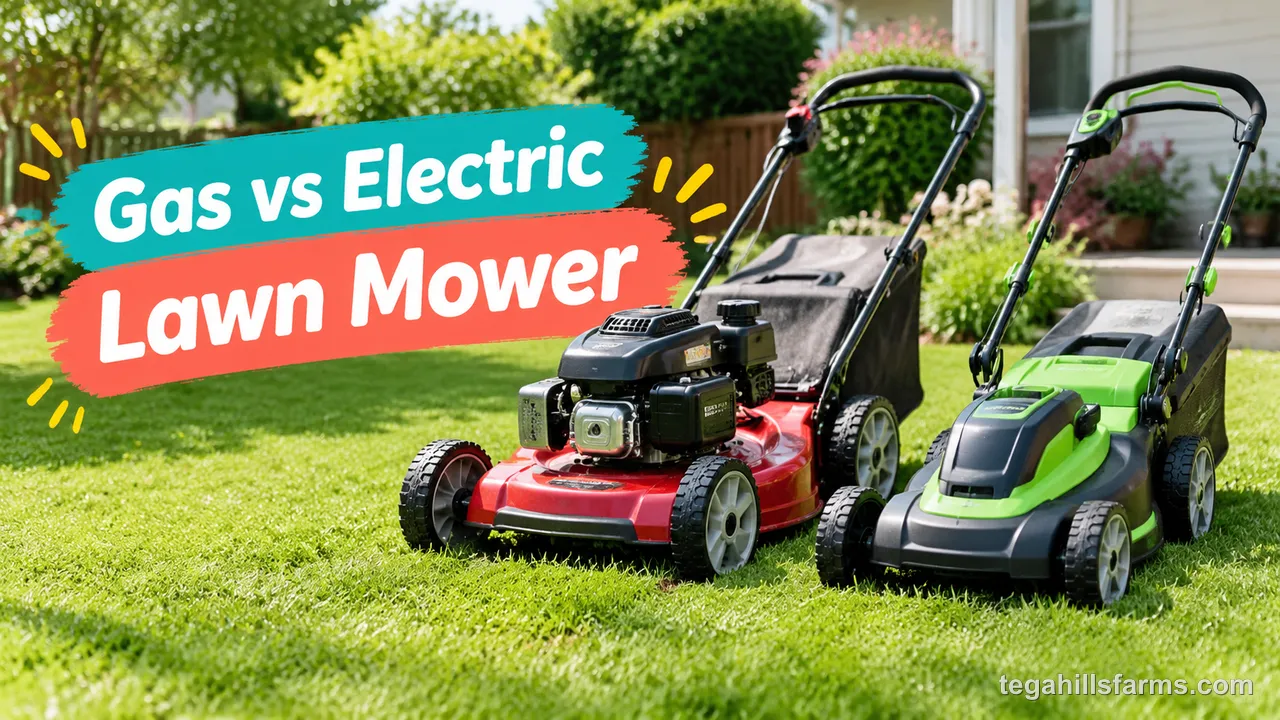
The decision usually comes down to a few practical questions. How much grass do you cut in one session? How much routine engine care are you willing to do? How loud can the machine be on your street? Where will it sit between mowings?
Runtime is what holds most homeowners back from switching. A gas mower keeps running as long as there’s fuel in the can. A battery mower stops when the pack is empty. The size, slope and density of your lawn decide whether that limit ever affects you.
If you already own cordless trimmers or blowers, check which battery platform they run on before you shop. A mower from the same line can share those packs, which makes the battery side of the choice cheaper and simpler.
What Is the Difference Between a Gas and an Electric Lawn Mower?
A gas mower spins its blade with a small gasoline engine, while an electric mower in this comparison means one driven by a battery-powered motor running on a rechargeable lithium-ion pack.
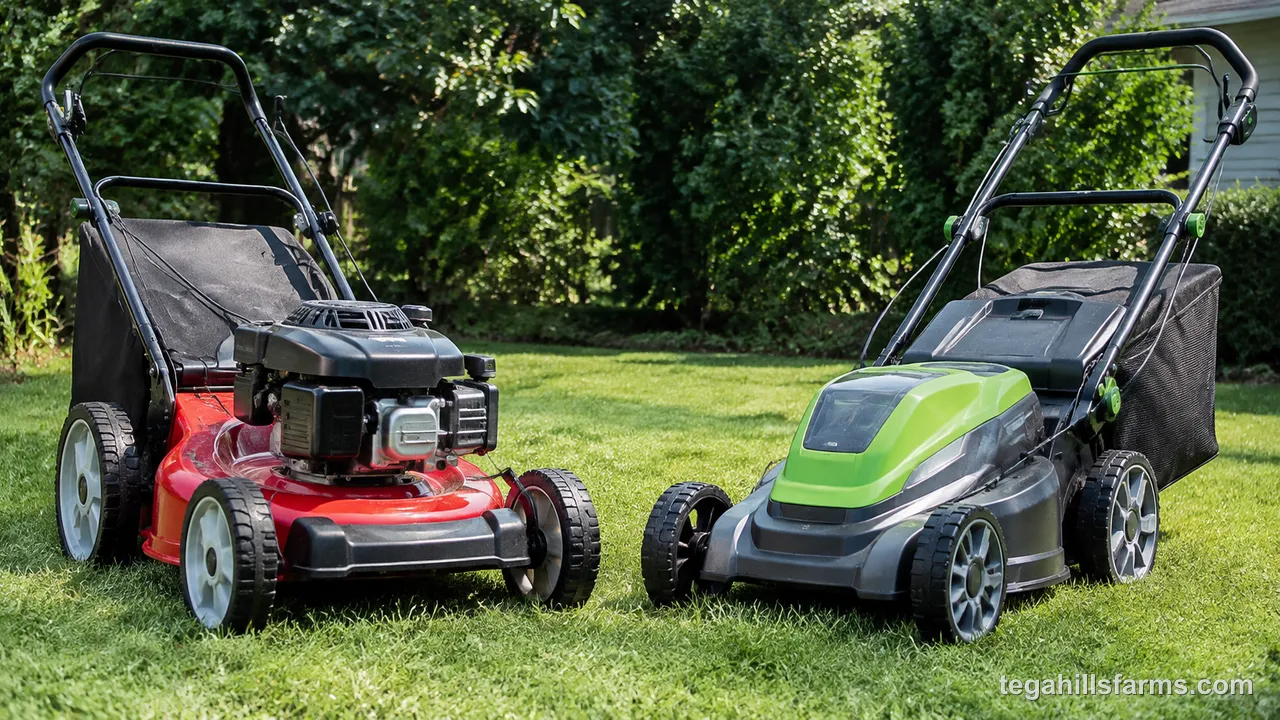
That one change shapes everything else. The engine needs fuel, oil, a spark plug and a carburetor that stays clean. In exchange, it runs as long as you keep the tank filled. The battery mower drops all of that engine work. It takes on a different limit: the pack holds a fixed amount of energy, and recharging takes far longer than pouring in gas. Gas tends to suit owners of larger lawns who don’t mind routine small-engine care. Battery tends to suit owners of small and mid-size yards who want something quiet that starts every time.
The two power types line up like this on the factors that matter most in a typical yard:
| Factor | Gas | Electric (battery) |
|---|---|---|
| Power source | Gasoline engine | Lithium-ion battery and electric motor |
| Run time | As long as fuel lasts | Limited by pack capacity |
| Refill | Quick fuel top-up | Recharge or swap packs |
| Routine upkeep | Oil, spark plug, air filter, fuel care | Pack care, blades, deck |
| Noise | Loud engine | Much quieter |
| Exhaust at the mower | Yes | None |
| Best lawn size | Larger lawns | Small and mid-size lawns |
If you’re still weighing every mower type, from push to riding, start with how to choose a lawn mower before you settle on the power source.
How Do Gas and Electric Mowers Compare on Cut Quality and Power?
On a well-kept lawn, the two leave a nearly identical finish. The real gap appears when grass gets thick, tall or wet and the motor or engine has to hold blade speed under load.
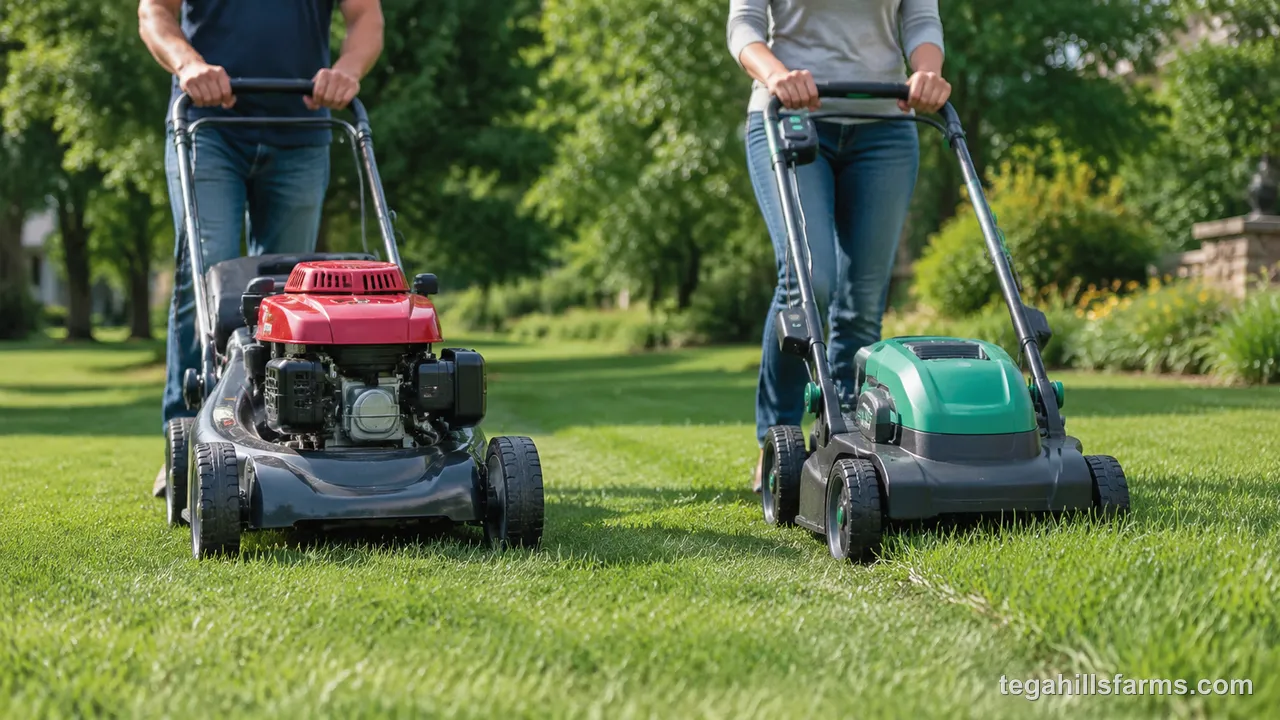
This matters because the finish is what you look at all week. A mower that bogs down leaves ragged tips, clumps and uneven stripes that undo the rest of your effort.
Cut Evenness and Finish
The difference in evenness is too small for most homeowners to notice. Gas mowers average 4.7 for cutting evenness on a 1-to-5 scale, and electric mowers average 4.5.
The spread among electric models matters far more than that gap. Individual electric mowers score anywhere from 2.0 to a perfect 5. A well-chosen battery mower can match or beat a typical gas machine, while a weak one leaves a visibly rougher lawn. The specific model counts for more than the power source.
Cutting height also shapes the finish on both types. Setting the deck too low scalps high spots and exposes uneven ground. A slightly higher cut lets the blade trim the tips cleanly and hides minor dips in the yard. If you’re unsure how short to cut grass for your turf type, set that first, because the wrong height spoils the result from any mower.
Gas keeps a slight edge on evenness overall, but a well-rated electric mower matches it on a typical suburban lawn.
Mulching, Bagging and Side Discharge
Mulching is close to a tie. Gas mowers average 4.7 and electric mowers 4.6, though some weaker electric models fall as low as 3. Good mulching depends on the deck holding clippings in the cutting chamber long enough for the blade to chop them again. That only works while the blade stays at full speed. When thick grass slows the blade, clippings drop out in strips instead of disappearing into the turf.
Bagging relies on airflow. The spinning blade creates lift that pushes clippings up the chute and into the bag. A gas engine pulls from a full tank to keep that airflow strong in heavy grass. A battery motor has to draw more current to do the same, which shortens the charge.
Side discharge asks the least of either type, because clippings only have to leave the deck.
For mulching, deck design matters more than power type. Gas holds a small edge when you bag heavy, damp clippings.
Thick, Tall and Wet Grass
When the load rises, a gas engine holds its torque because it draws from fuel energy that stays steady until the tank runs low. A battery motor answers the same load by pulling more current. That drains the pack faster, and blade speed drops if the motor can’t keep up. Wet grass adds weight and sticks under the deck on both types. Self-propel drive puts its own drag on the battery as you push through dense growth.
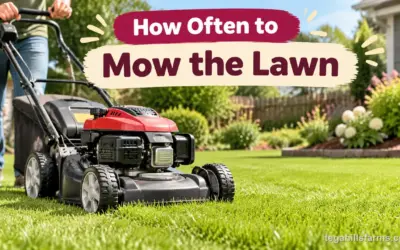
Larger battery machines have narrowed the gap. Sunseeker’s push mower range, for example, offers decks up to 22 inches and motors rated at 3000W. Mowing schedule matters just as much: knowing how often to mow the lawn during peak growth keeps each pass light enough for a battery mower to handle without strain.
Gas has the advantage on neglected or overgrown grass. Electric keeps up when you mow on schedule.
How Long Does a Battery Mower Run Compared With a Gas Mower?
Gas run time is limited only by the fuel tank, while a battery mower stops when its pack is drained. That caps how much lawn you can finish in one session without a break.
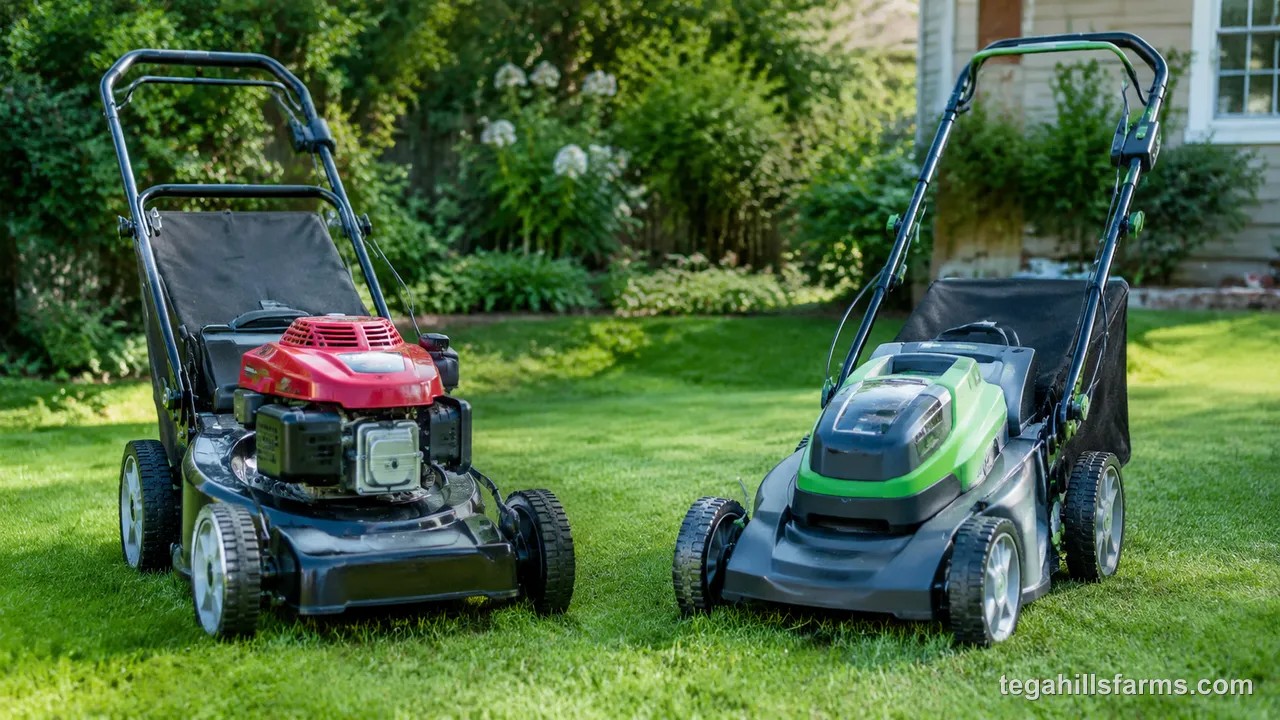
The difference shows up in how your mowing day goes. A gas mower is back to work after a quick refill. A battery mower either needs a second pack or a long wait at the charger.
Run Time and Area Covered Per Charge
A battery walk-behind mower typically runs 45 to 50 minutes per charge. Across battery mowers in general, the range is wider: 30 to 60 minutes, depending on pack capacity and lawn conditions.
In practical terms, one charge covers about a quarter acre comfortably, even with gentle slopes. On flat, open ground with no obstacles to steer around, that stretches to about half an acre. Electric zero-turn riding mowers carry much larger packs, and some cover more than an acre on a single charge.
A gas mower has no fixed limit. When the tank runs low, you refill it and finish the lawn. The only real cap is how long you want to stay out mowing.
If your lawn sits inside what one charge covers, the pack limit never comes into play, and electric is all you need. Gas wins when your lawn regularly takes longer than one pack lasts.
Charging Time and Spare Batteries
A drained battery mower pack recharges in less than an hour and a half. A gas tank refills in moments. That gap is why a single pack is the weak point on larger lawns.
A second pack removes most of the problem. You swap in the fresh one, keep mowing, and charge the empty pack while you work. A higher-capacity pack extends each session instead, which helps if you’d rather not stop at all. Both options add cost, so they make the most sense on lawns that fall just past what one charge finishes, or on hot, humid days that drain packs faster than normal.
Electric closes much of the runtime gap with a spare pack. Gas still refuels faster than any charger.
What Cuts Battery Run Time Short
Anything that makes the motor work harder pulls more current and empties the pack sooner. Slopes force the motor and the self-propel drive to work against gravity. Self-propel mode itself takes power that would otherwise go to the blade. Tall or wet grass adds resistance on every pass. A wide deck spins a longer blade through more grass at once, and bagging asks the blade to produce extra airflow.
Run time ratings assume favorable conditions: dry grass at a normal height on fairly level ground. A hilly yard with thick turf can finish well short of the listed figure. Plan with a margin rather than reading the rating as a promise.
Gas handles all of these conditions far better. Electric owners with hilly or overgrown yards should buy a larger pack or a spare.
Which Needs More Upkeep, a Gas or an Electric Mower?
A battery mower removes the engine work entirely: no oil, spark plug, air filter or fuel to manage. Both types still need sharp blades and a clean deck.
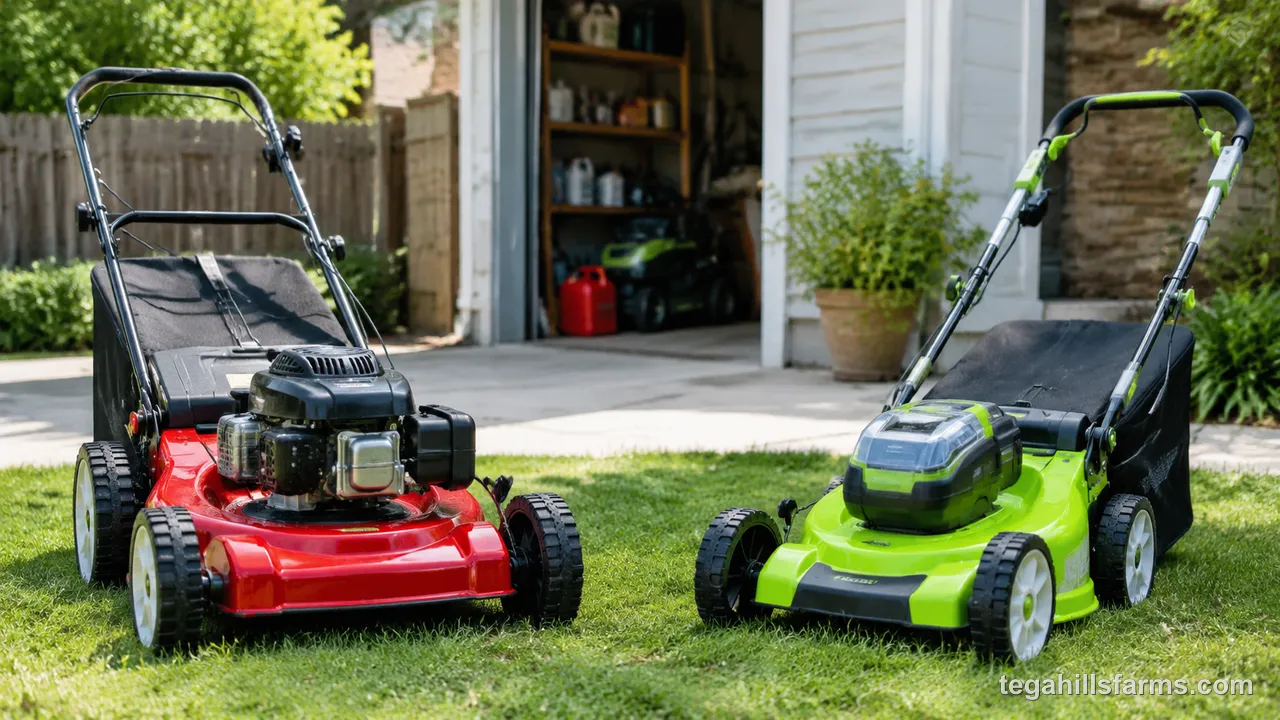
This difference is the main reason owners switch. Skipped engine care is what leaves a gas mower refusing to start on the first warm weekend of spring.
Gas Engine Upkeep: Oil, Spark Plug, Carburetor and Fuel
A gas mower needs a short list of jobs done every year. The oil gets changed at least once a season, because dirty oil wears the engine faster. The air filter needs cleaning or replacement, since a clogged filter starves the engine of air and makes it run rough. The spark plug wears and fouls over time, which leads to hard starting and misfires.
Fuel is where most problems begin. Gasoline left in the tank for months goes stale and leaves varnish behind. That varnish clogs the tiny passages in the carburetor, and the result is surging, stalling or a mower that won’t start at all. Adding fuel stabilizer, or running the tank dry before storage, prevents most of it. Ignoring it can mean a carburetor cleaning or replacement.
None of these jobs is hard with basic hand tools, but every one has to happen on schedule. Electric wins clearly on routine upkeep, especially if you don’t want to pick up a wrench.
Battery Mower Upkeep and Pack Replacement
A battery mower has no oil changes, no spark plug, no air filter, no carburetor and no stale fuel. That list covers most of what goes wrong with gas mowers.
The care it adds is mostly about the pack. Store batteries indoors at moderate temperatures, avoid leaving them fully drained for long periods, keep the contacts clean and dry, and charge them the way the manufacturer recommends. These habits slow the gradual capacity loss that every lithium-ion pack goes through.
That gradual loss leads to the one larger recurring expense. Eventually the pack holds too little charge to finish your lawn, and a replacement costs $100 to $300, sometimes more. You may go many seasons before you need one, but it’s worth knowing the cost before you buy into a platform.
Electric still asks for far less hands-on upkeep. Just budget for a pack replacement at some point.
Blades, Deck Cleaning and Off-Season Storage
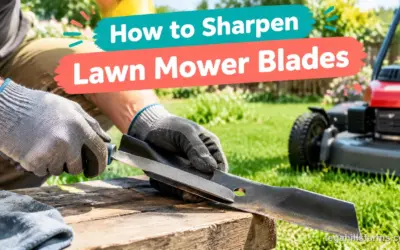
Blade care applies to both types. Sharpen the blade at least once a season, and more often if you mow a lot or hit sticks, roots or rocks. A dull blade tears grass, which leaves brown, ragged tips and makes the mower work harder. Knowing how to sharpen lawn mower blades saves a trip to a repair shop. Clippings caked under the deck also block airflow and hurt mulching and bagging, so scrape or brush the deck after mowing. On a battery mower, keep water away from the motor and battery area.
Storage is where the two types differ. A gas mower needs its fuel stabilized or drained before winter. A battery mower needs its pack removed and stored indoors, away from freezing temperatures. Check the full steps for how to store a lawn mower before the first frost.
Electric is simpler to put away for winter. Both need the same blade and deck care.
How Do Noise, Emissions and Local Rules Compare?
Battery mowers run noticeably quieter and produce no exhaust at the mower, while gas mowers face growing local restrictions in some states and cities.
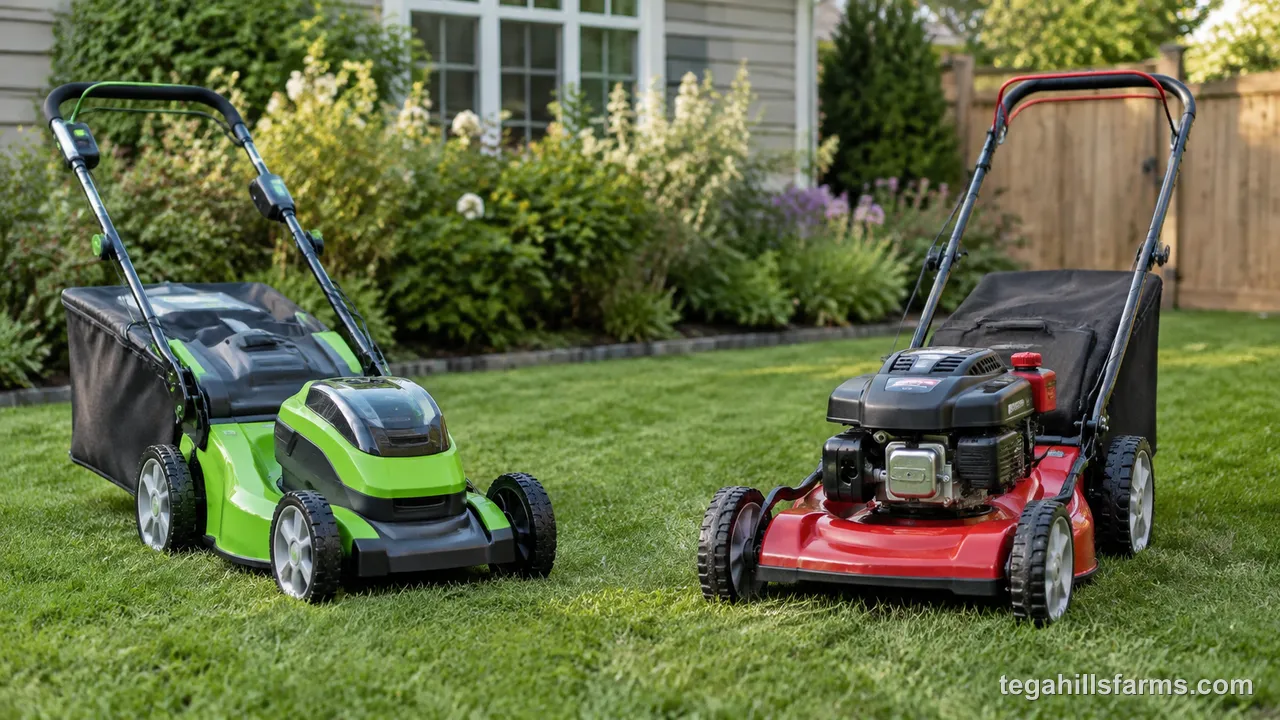
These factors decide when you can mow without bothering anyone, what you breathe while you mow, and whether a new gas mower will stay practical to own where you live.
Noise and Operator Comfort
A gas engine is loud because of combustion and exhaust. That noise runs the whole time the engine is on, even when the blade isn’t cutting. Hearing protection is a sensible habit with gas. A battery mower makes mostly blade and airflow noise. The motor stops when you release the bail, so there’s quiet between passes and while you move lawn furniture.
That difference changes your mowing hours. With close neighbors, a sleeping baby or local quiet-hour rules, a battery mower lets you mow early on a weekend morning without starting the day for the whole block. There is also less vibration, which makes long sessions easier on your hands and arms.
Electric wins on noise and comfort, especially in tightly packed neighborhoods.
Emissions and Fumes
A small gas mower engine burns fuel with much simpler emission controls than a car engine. The exhaust ends up right where you’re walking, and on a still day you breathe it for the whole session. In storage, the fuel can and the mower’s tank give off gasoline vapor into the garage.
A battery mower has no tailpipe and no fuel smell. Its emissions shift to the power plants that supply your electricity, so the overall benefit depends on your local grid mix. It’s still cleaner where you stand, because nothing burns at the mower.
Electric is the clear winner on fumes at home. The broader environmental benefit depends on how your power is generated.
Are Gas Mowers Being Phased Out?
Not nationwide, and not for mowers you already own in most places. California is the best-known example of a state moving away from gas yard equipment. Its rules target the sale of new gas-powered small engines rather than machines already in use.
Elsewhere, the picture varies by state and city. Some places focus on new sales, others limit the hours or types of equipment you can run, and many have no restrictions. Because these rules keep changing, check your state and city regulations before buying, especially if you plan to keep the mower for many years. Parts and service availability for gas models could also tighten where new sales are restricted.
Gas mowers remain legal to own and run in most places. Electric is the lower-risk choice if your area is moving toward restrictions.
Do Battery Mowers Have Real Drawbacks Compared With Gas?
Yes. Battery mowers trade convenience for limited coverage per charge, an eventual pack replacement, and less reserve power in heavy grass.
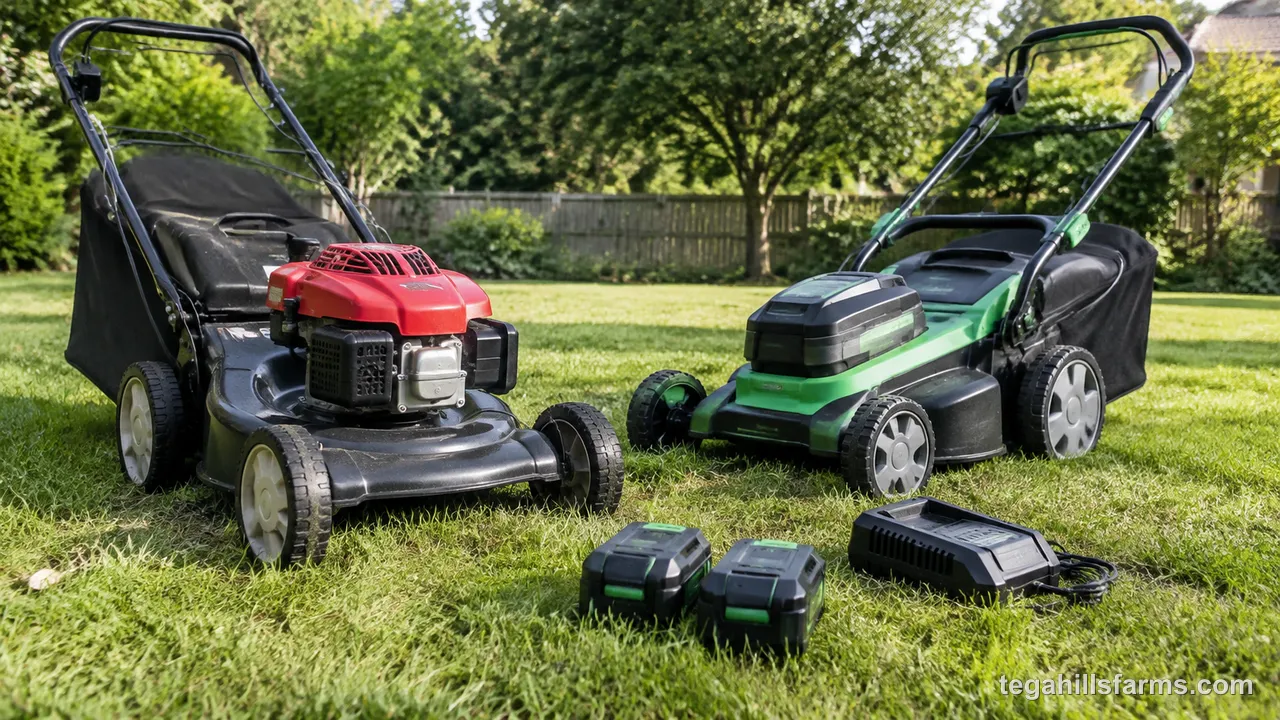
Coverage is the drawback that matters most. On a large lawn, one pack won’t finish the job, so you either wait at the charger or pay for a second pack. A gas mower avoids that entirely with a quick refill. For owners of a half acre or more, this single limit often decides the purchase.
The pack is the other real cost. Lithium-ion capacity fades with age and use, and a replacement is a significant expense compared with the small consumables a gas engine needs each season. It doesn’t come every year, but it does come eventually.
Heavy grass exposes the power gap. When turf grows thick, tall or wet, a battery motor draws more current, run time drops, and the cut can suffer if blade speed falls. A gas engine handles that load more easily.
Some complaints are overstated. Battery mowers aren’t maintenance-free, since the blade still needs sharpening at least as often as on a gas mower. That’s shared upkeep, though, not a battery weakness. On small and mid-size lawns, cut quality is close enough to gas that most homeowners won’t see a difference. Runtime never comes up when one charge covers the yard. For those lots, the drawbacks that matter are pack replacement and occasional heavy-grass slowdowns.
Which Type Fits Your Yard Size and Grass?
Lawn size decides most of this choice, because it determines whether one battery charge finishes the job or a gas tank is the simpler route.
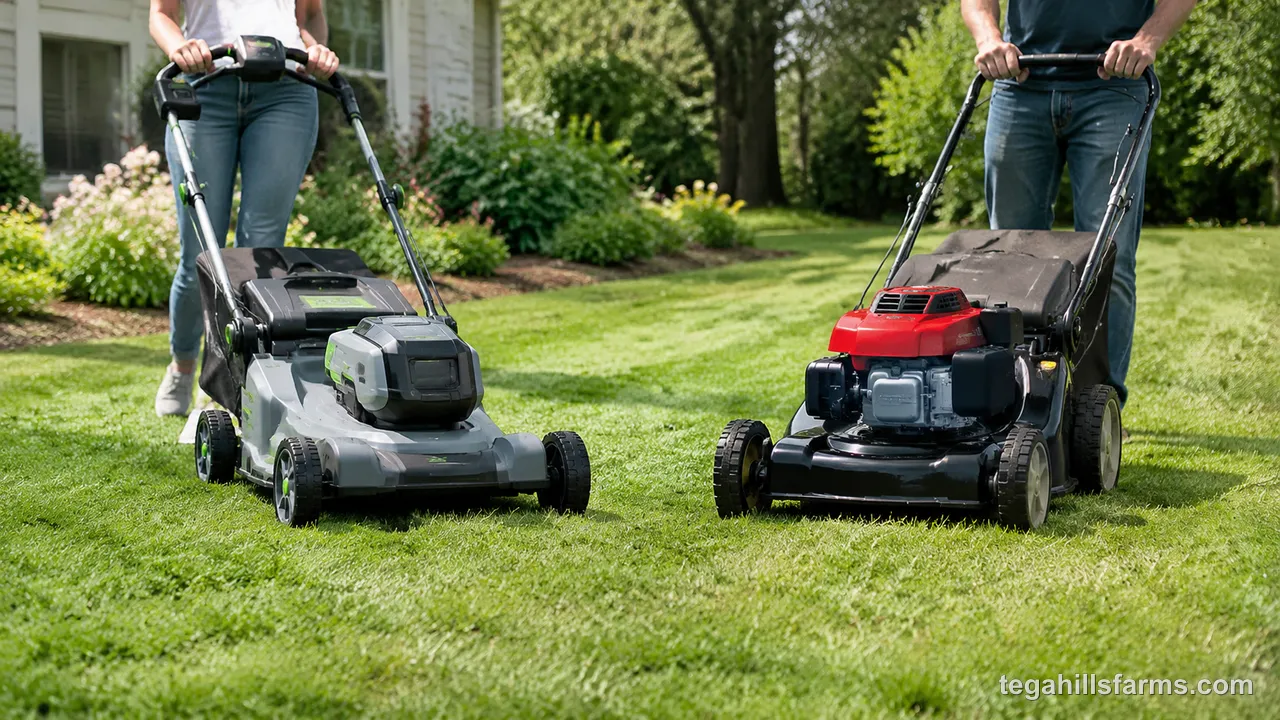
Size also shapes deck width, drive type and storage, the other factors that decide what to look for in a lawn mower once the power source is settled.
Small Lots
On a small suburban lot, a battery walk-behind mower covers the whole lawn on one charge, so its main weakness never comes into play. Without an engine or fuel tank, it’s lighter to push, easier to maneuver around beds and trees, and simpler to store in a crowded garage or shed. There’s no fuel can to keep around either. Pressing a button instead of pulling a cord also matters if you mow only once a week and don’t want a balky engine every time.
Gas still makes sense on a small lot in one case: you already own a gas mower that runs reliably. Replacing a working machine just to switch power types rarely pays off.
For a new purchase on a small lot, electric is the clear pick.
Mid-Size Yards
The middle range is where the choice gets close. A mid-size lawn may sit right at the edge of what one pack covers. Flat, open ground lets a single charge stretch furthest, while slopes, trees and flower beds push actual coverage back toward the lower end.
Grass type matters here too. Dense turf grows thick and works the motor harder, which drains the pack faster than a fine, thin lawn does. Once a lawn reaches half an acre or more, gas becomes the easier recommendation, because it finishes in one session without any pack planning.
The deciding question is whether you’ll swap packs. A spare battery makes electric work well across most mid-size yards. If you’d rather mow straight through, gas is simpler.
Large Lots and Acreage
On large lawns, gas walk-behinds and gas riding mowers remain common for a simple reason. They run as long as the tank lasts and refuel in moments, so a big property gets finished in one session. A walk-behind battery mower would need several packs, or several days, to cover the same ground.
Electric zero-turn riding mowers have changed that picture. Some models run close to 2 hours and cover nearly 2 acres on a single charge, which puts many large suburban and semi-rural lots within reach. They still need a long recharge afterward, and properties beyond that range push back toward gas.
Gas remains the default for true acreage. An electric zero-turn now makes sense for lots that fall within what one charge covers.
Which Should You Choose: Gas or Electric?
Choose electric for a small or mid-size lawn and low upkeep. Choose gas for large lots, overgrown grass or long sessions without breaks.
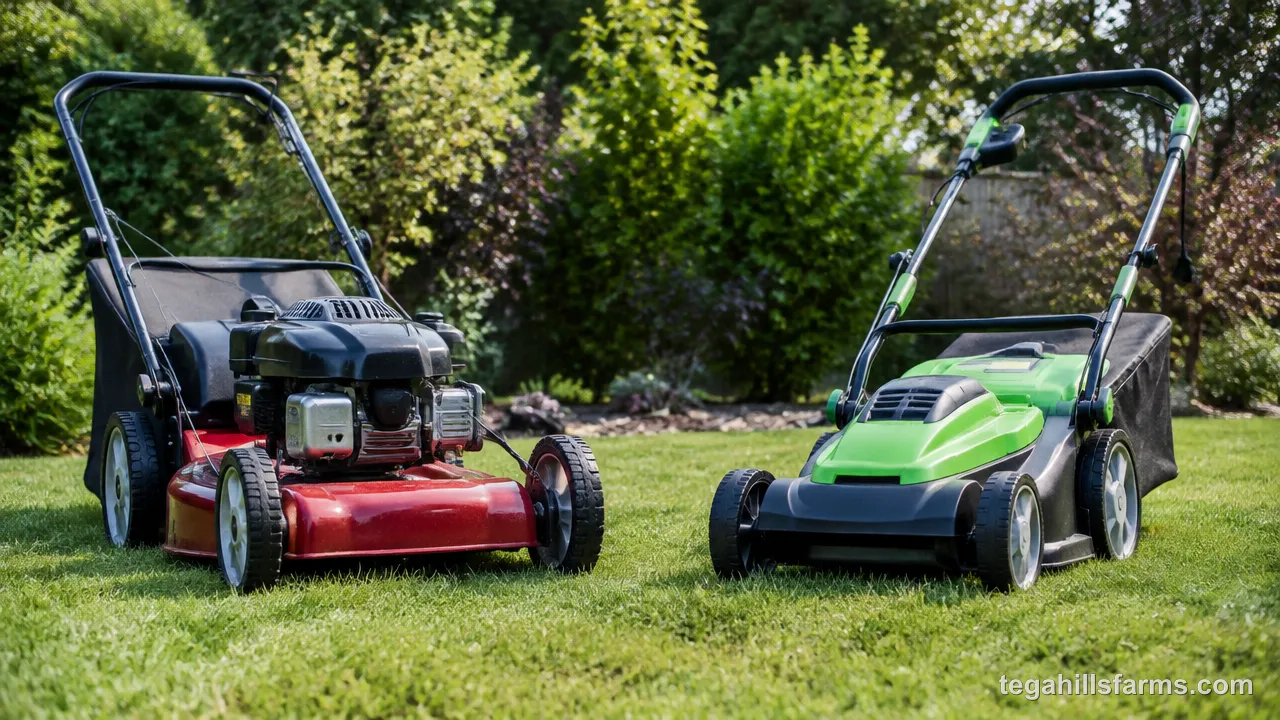
- Choose electric if your lawn fits within one or two packs, you mow regularly, you don’t want to manage oil and fuel, or you have close neighbors who’d appreciate a quieter morning.
- Choose electric if you already own cordless yard tools on a platform that offers a mower.
- Choose gas if your lawn regularly outlasts a battery pack, your grass often grows tall or thick between mowings, or you’d rather refuel than plan around charging.
- Choose gas if you’re comfortable with seasonal engine care and live where gas equipment faces no restrictions.
I’d lean battery for most homeowners whose lawns don’t stretch past a single charge, because reliable starting and less upkeep matter more week to week than the small gap in cut quality. Once the power type is settled, check how much a lawn mower costs in your size and drive class to set a realistic budget.
A lithium-ion pack rarely fails all at once; it loses a little capacity each season, so a lawn that once finished on one charge slowly starts needing a break near the last few strips. Miss that slow decline and you may buy a new pack while the old one still has life left, or replace the whole mower when only the battery was worn.
How Can You Tell a Battery Pack Is Wearing Out?
The clearest sign is a shorter run time on the same lawn under the same conditions. If the strip of grass you finish before the mower stops keeps shrinking, the pack is losing capacity. Other signs include the mower cutting out under load while the charge indicator still shows power, a noticeable drop in blade speed, charging that takes longer than it used to or stops early, and fault lights on the charger.
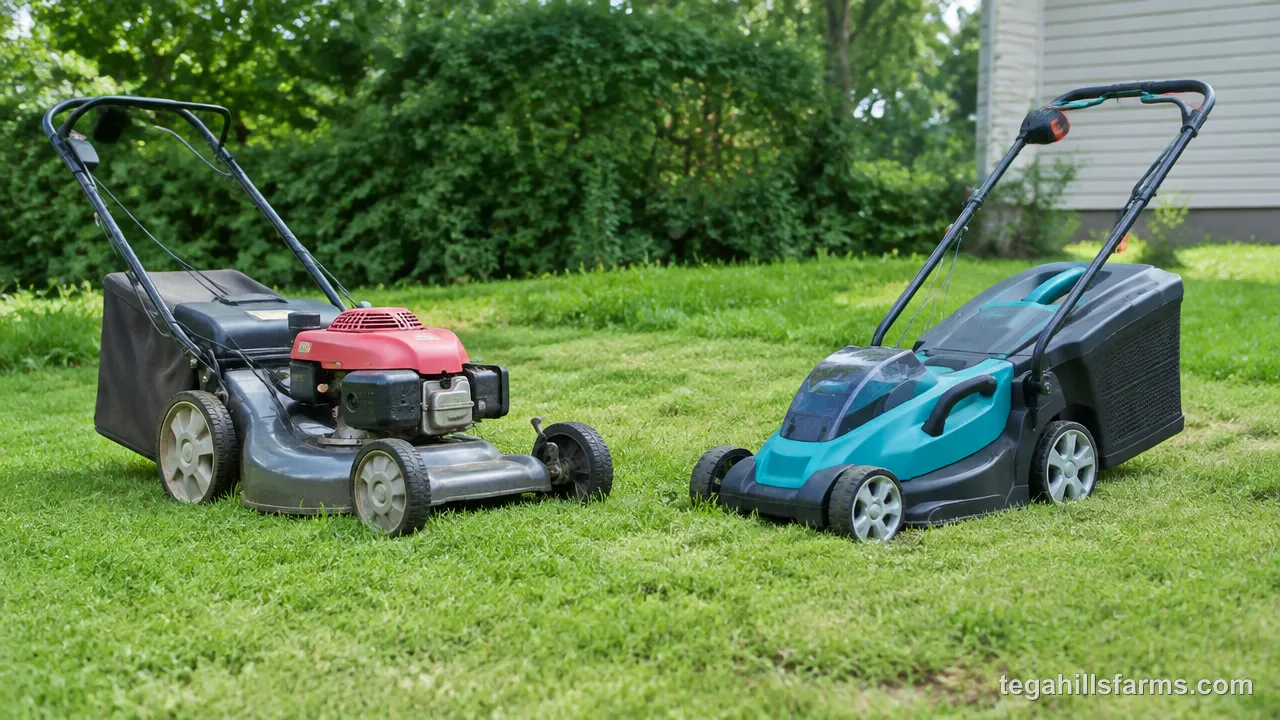
Physical damage is a different matter. A swollen, cracked or unusually hot pack should be taken out of service right away and recycled according to the manufacturer’s instructions.
Before buying a new pack, confirm the pack is actually the problem. If you can borrow another battery from the same platform, run it on your mower. If it performs normally, your original pack is worn and replacing it restores run time. If the mower still stalls or struggles, look at the mower itself. A dull or bent blade or a clogged deck raises the load and drains any pack early, and a motor or switch fault needs service rather than a new battery.
How Do Hot and Cold Weather Affect Battery and Gas Mowers?
Cold reduces how much power a lithium-ion pack can deliver, so early-spring and late-fall mowing can run shorter than midsummer sessions. Never charge a pack that’s below freezing. Bring it inside and let it warm to room temperature first, and store packs indoors over winter instead of in an unheated shed.
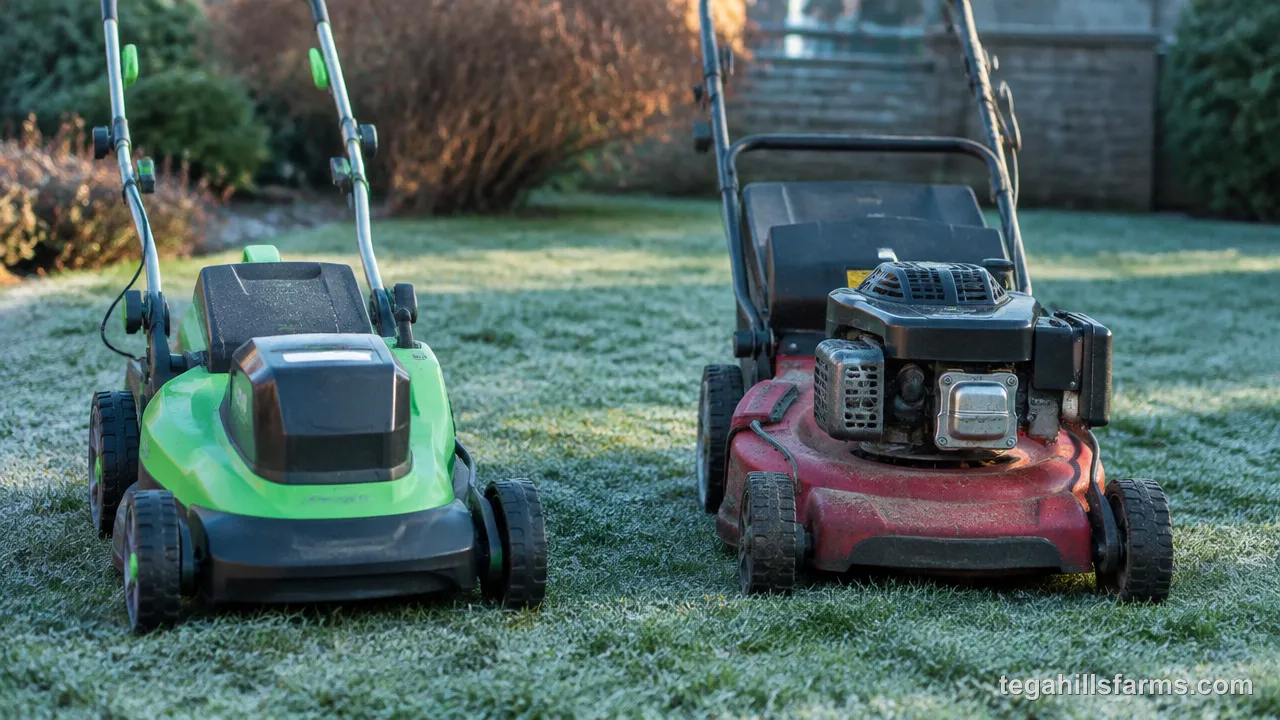
Heat causes different problems. A pack that comes off the mower hot should cool down before it goes on the charger, and batteries shouldn’t sit in direct sun or a closed vehicle. Hot, humid mowing days also drain packs faster than mild ones, so summer sessions may end sooner than expected.
Gas engines have seasonal problems of their own. Cold makes them harder to start because fuel vaporizes less readily, which is why choke settings and fresh fuel matter in spring and fall. Stale fuel left from last season makes cold starts even harder. In summer heat, a gas engine runs hotter, so keeping the oil at the right level protects it during long sessions. Owners in cold-winter regions face more battery storage decisions, while owners in hot-summer regions see more run-time loss during the peak growing season.
Why Does the Battery Platform Matter Before You Buy?
Most cordless yard tool makers build their tools around one battery system, so a single pack can run the mower, the string trimmer and the leaf blower. Staying on one platform means you buy fewer batteries and chargers, and the large pack that comes with a mower can give your trimmer or blower a much longer run time.
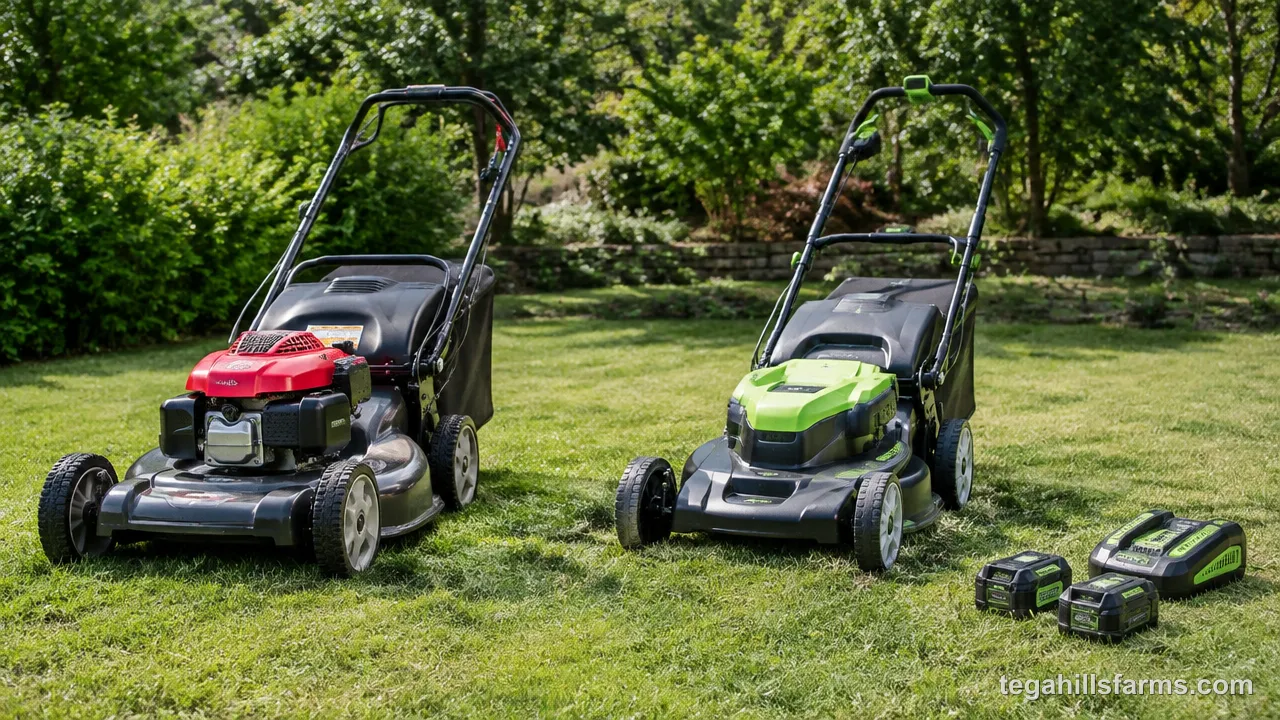
Buying a mower from a different platform does the opposite. You end up with two sets of packs and two chargers, and neither works with the other brand’s tools. Different brands’ batteries aren’t interchangeable, even at the same voltage, because the pack shapes and connections differ.
Before you shop, check the brand and voltage of the cordless tools you already own and see whether that line includes a mower that fits your lawn. If it doesn’t, compare the cost of starting a new platform with keeping your current tools, since replacing everything at once is a bigger investment than the mower alone.
Are Corded, Robot or Electric Zero-Turn Mowers Worth Considering?
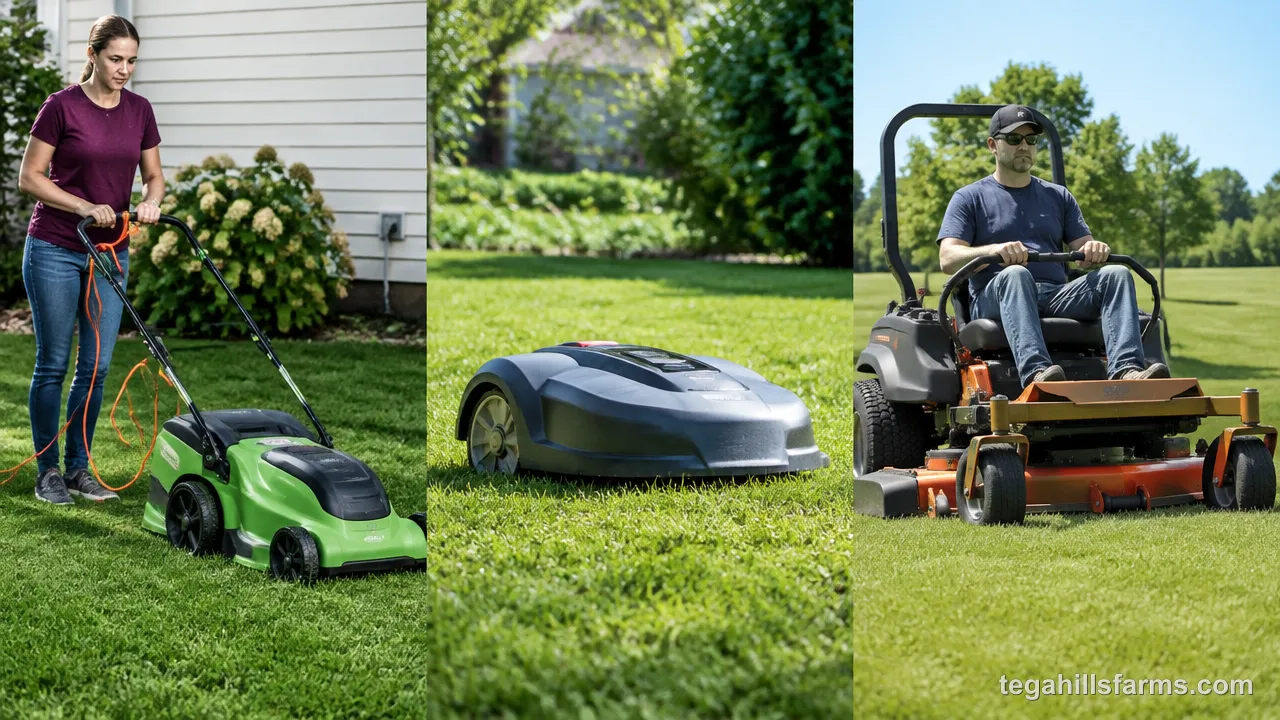
Each fits a narrower situation than a gas or battery walk-behind mower. Corded mowers suit very small, simple lawns near an outlet. Robot mowers suit owners who want the lawn kept trimmed with little hands-on work. Electric zero-turns suit large properties where a walk-behind battery mower can’t keep up.
Corded Electric Mowers
A corded mower removes the battery limit completely. It runs as long as it stays plugged in and never needs a pack replacement. It’s also light and simple, with almost no upkeep beyond the blade and deck.
The cord brings its own limits. Your reach ends where the extension cord ends, and you have to steer the cable around trees, beds and the mower’s own path so you don’t run over it. Use an outdoor-rated extension cord sized for the mower’s power draw, and plug into a GFCI-protected outlet for safety near damp grass.
For a very small, open lawn close to an outdoor outlet, a corded mower is a sensible, low-cost alternative to battery. On lawns with many obstacles, or lots that stretch far from the house, managing the cord quickly becomes a chore, and a battery mower makes more sense.
Robot and Electric Zero-Turn Mowers
A robot mower cuts a little grass often, working on its own within boundaries you set up. It suits owners who’d rather not mow at all and have a fairly simple layout. Lawns split into several separate areas, or with lots of obstacles, take more setup and may still need occasional touch-ups by hand. Robots also leave fine clippings that settle back into the turf, so there’s nothing to bag.
An electric zero-turn riding mower sits at the other end of the scale. Its coverage per charge reaches well beyond any walk-behind battery mower, which makes it the electric option for large suburban and semi-rural properties. It suits owners who want to leave gas behind but have too much lawn for a push mower, as long as they can plan around a long recharge between sessions.
Gas vs Electric Lawn Mower FAQs
Do electric lawn mowers last as long as gas mowers?
The mower itself often does, because an electric motor has far fewer wearing parts than a gas engine. There’s no oil, spark plug or carburetor to fail. The battery is the part that wears out over time, and replacing the pack restores run time without buying a whole new mower.
Can you use a battery mower in the rain?
Avoid it. Mowing in rain or on soaked grass puts water near the motor and battery contacts, packs wet clippings under the deck and tears the grass instead of cutting it cleanly. Wait until the lawn dries, and store the mower and its packs somewhere dry and sheltered.
Is a battery mower cheaper to run than a gas mower?
Day to day, it skips gasoline, oil, spark plugs and air filters, so routine running costs are lower. The trade-off is an eventual pack replacement. Before you buy, check what a spare or replacement pack costs for the specific model you’re considering.
Can a battery mower handle a hilly yard?
Yes, on gentle slopes, though climbing drains the pack faster than mowing flat ground, especially with self-propel engaged. On a steep or large hillside lot, plan for a spare pack or a higher-capacity battery. Gas handles sustained hills with less concern about run time.
Do battery mowers need a tune-up?
Not in the gas-engine sense. There’s no oil change, spark plug or carburetor cleaning. You still need to sharpen the blade, clean clippings from the deck, check that the wheels and height adjusters move freely, and store the battery indoors during the off-season.

Write Your Review
No reviews yet. Be the first to share your experience!