9 Best Sprinklers: 2026 Top Picks and Buying Guide
Our top picks for the best sprinklers in 2026 are Melnor XT Oscillating Sprinkler 4500 sq ft (Best Overall), Melnor 65165AMZ XT Turbo Sprinkler (Runner Up), Orbit Tripod Zinc Impact Sprinkler 56667 (Best Durability), Orbit H2O-Six Gear-Drive Sprinkler 58573 (Best Lightweight), Melnor Turbo Oscillating Sprinkler 2800 sq ft (Best Budget), Eden 96216 Turbo Oscillating Sprinkler (Best for Large Yards), Orbit 56281 Oscillating Sprinkler (Also Great), Gardena ZoomMaxx Oscillating Sprinkler (Best Premium), and Gardena Classic Fox Spray Sprinkler 1951-20 (Best for Small Yards).
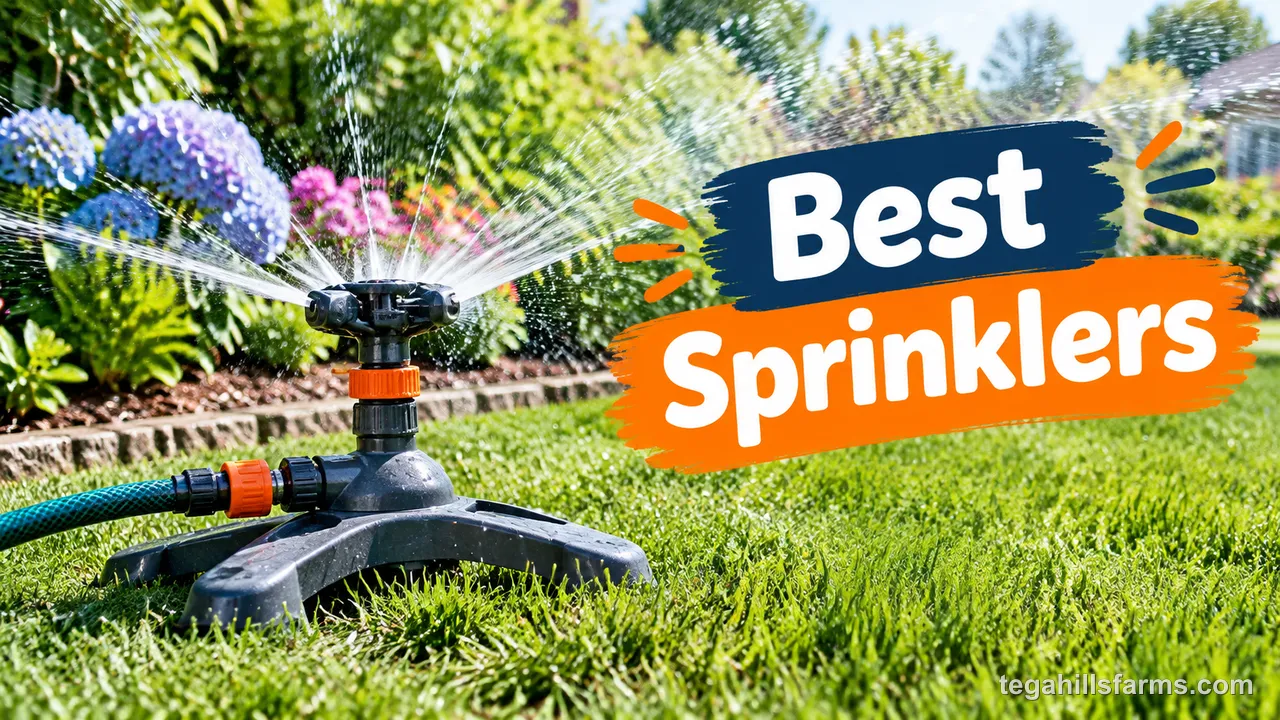
These sprinklers differ in four ways that change how they work on your lawn. The first is how closely the spray pattern matches the shape of the grass. The second is how precisely you can set range and width. The third is how well the drive tolerates grit in the water. The last is how easy the sprinkler is to carry from one zone to the next.
Most homeowners fight uneven water: dry corners at the far end of the pattern, puddles near the base, and spray landing on the driveway instead of the grass. That waste usually comes from a pattern that doesn’t fit the yard, or from a hose supply that can’t push water as far as the sprinkler was designed to throw it.




Before you shop, pace off the lawn and note its shape: a rectangle, a circle, or an odd outline with beds cutting into it. That one observation narrows the type faster than any coverage figure on the box.
What Matters Most When Choosing Sprinklers?
Spray pattern fit, adjustable range and width, and drive durability decide whether a sprinkler waters the lawn evenly or soaks the sidewalk. Oscillating arms lay down a rectangle, while impact and gear-drive heads throw a circle. If the pattern doesn’t match the lawn, you get dry corners or overspray. Range and width controls let one sprinkler shrink for a narrow side yard and stretch for the main lawn. The drive matters over time, because grit from well water or sediment in the hose can stall a geared motor. A filter or a dirt-resistant drive extends its service. Base design matters too: a sprinkler you move often should be light, and one left in place should stay steady. Our guide on how to choose a sprinkler goes deeper into measuring a lawn and matching it to a pattern.
The 9 Best Sprinklers of 2026
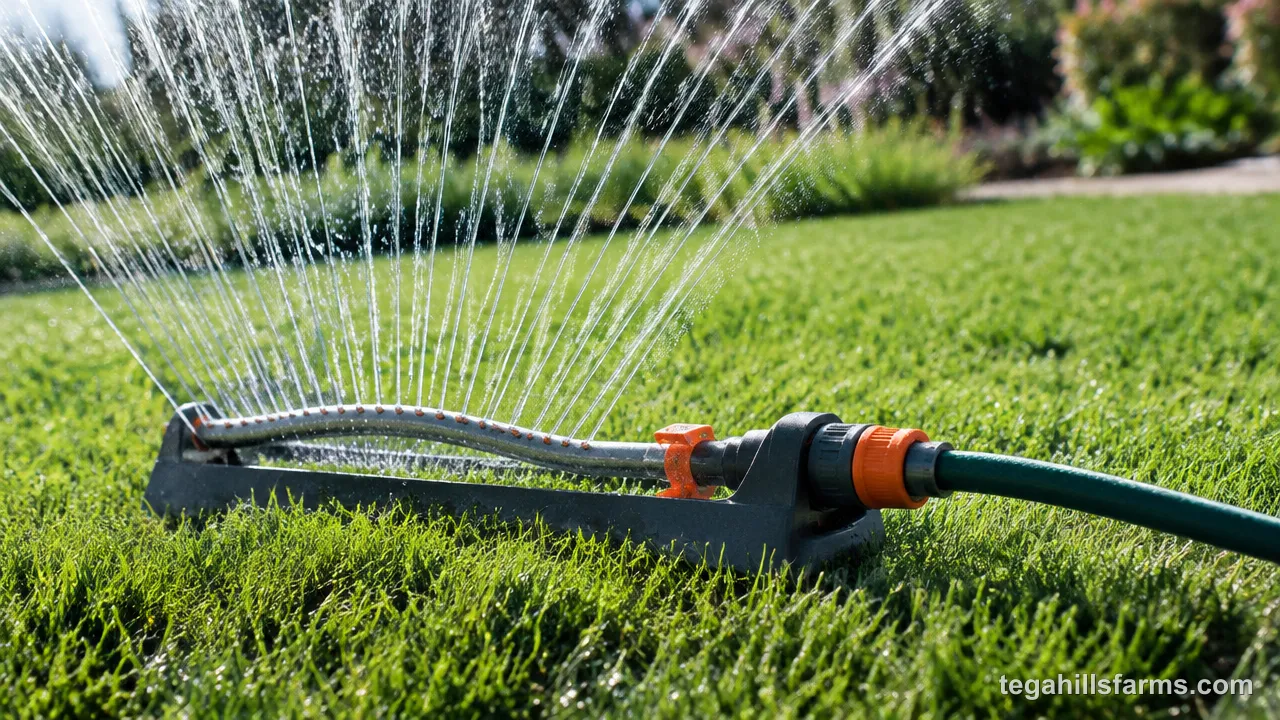
Our top picks for the best sprinklers in 2026 are Melnor XT Oscillating Sprinkler 4500 sq ft, Melnor 65165AMZ XT Turbo Sprinkler, Orbit Tripod Zinc Impact Sprinkler 56667, Orbit H2O-Six Gear-Drive Sprinkler 58573, Melnor Turbo Oscillating Sprinkler 2800 sq ft, Eden 96216 Turbo Oscillating Sprinkler, Orbit 56281 Oscillating Sprinkler, Gardena ZoomMaxx Oscillating Sprinkler, and Gardena Classic Fox Spray Sprinkler 1951-20. The rocking-arm oscillators lay down rectangles for typical suburban lawns. The impact, gear-drive and spray heads throw circles for open ground, corners and small beds. If the rocking-arm style already fits your lawn, the best oscillating sprinklers offer a deeper comparison within that one design.
#1 Melnor XT Oscillating Sprinkler 4500 sq ft — Best Overall
This Melnor adapts to almost any lawn layout. Its 20 precision nozzles reach up to 4,500 sq ft, and its Zoom Control and TwinTouch width and range controls can pull that pattern down to a newly seeded patch or a single flower bed.
Key Specs:
- Model: 65167AMZ
- Coverage: Up to 4,500 sq ft
- Nozzles: 20 precision nozzles
- Controls: TwinTouch width and range, Zoom Control, Watering Width Indicators
- Drive: InfinityDrive Turbo Motor with Dirt-Resistant Drive
- Warranty: Melnor Limited Lifetime Warranty
Detailed Review:
TwinTouch controls change the width and the range of the pattern independently. That lets you pull the side spray away from a fence without shortening how far water travels down the lawn. Zoom Control then scales the whole pattern at once, from a small patch of new seed out to the sprinkler’s full footprint.
The Watering Width Indicators mark each width setting visually. Oscillating sprinklers usually need resetting every time they move between zones. With visible markers, you can return to a setting that worked last week instead of guessing again, which also means less trial and error for hands that tire of repeated adjusting.
Inside, the InfinityDrive Turbo Motor uses a Dirt-Resistant Drive that keeps the arm rocking smoothly when grit slips past the hose washer. The Melnor Limited Lifetime Warranty stands behind that drive. If you like this adjustment approach, you can compare the best melnor sprinklers in other styles.
I’d steer anyone whose lawn changes shape from front yard to back toward this model. It adapts to each area, so you don’t need a second sprinkler.
Pros:
- Zoom Control shrinks the pattern for seeded patches or beds.
- Width indicators make favorite settings easy to repeat.
- TwinTouch controls set width and range separately.
- Dirt-resistant drive handles grit in the water supply.
Cons:
- Rectangular pattern covers round or curved areas unevenly.
- Several separate controls take a few tries to learn.
Who It’s For:
Homeowners whose yard mixes a broad lawn with smaller beds and seeded patches will get the most from this sprinkler. The zoom and width controls reshape one pattern for each area. Gardeners watering a round or irregular space would do better with a circular-pattern head.
Editor’s Verdict:
Flexible enough for a whole lawn yet gentle enough for a seed patch, this Melnor takes most of the guesswork out of setting up an oscillating sprinkler.
#2 Melnor 65165AMZ XT Turbo Sprinkler — Runner Up
Well water is hard on sprinkler drives. This Melnor’s Dirt-Resistant Drive is built to oscillate smoothly on well water, and its 20 precision nozzles still spread water across up to 4,500 sq ft of lawn or garden.
Key Specs:
- Model: 65165AMZ
- Coverage: Up to 4,500 sq ft
- Nozzles: 20 precision nozzles
- Controls: TwinTouch width and range, Watering Width Indicators
- Drive: Dirt-Resistant Drive, designed for well water
- Warranty: Melnor Limited Lifetime Warranty
Detailed Review:
Water from a private well often carries fine sand and mineral grit, and that debris wears an oscillating gearbox faster than clean municipal water. Melnor built this model’s Dirt-Resistant Drive to run smoothly on well water. That matters because a stalled arm turns an even rectangle into a single soaked stripe.
It shares much of its design with the Melnor XT Oscillating Sprinkler 4500 sq ft: the same nozzle count, the same rated coverage and the same TwinTouch controls for setting width and range separately. Watering Width Indicators mark each setting, so you can move the sprinkler between the front and back lawns and restore each pattern quickly.
The bundle includes quick connect fittings. These let you snap the sprinkler on and off the hose without twisting threads each time, which helps hands that tire of gripping wet couplings. On a yard split into several zones, those fittings save a lot of fumbling over a season.
The Melnor Limited Lifetime Warranty covers the sprinkler, which adds peace of mind for a drive that works against grit every time it runs.
Pros:
- Dirt-resistant drive is designed to run on well water.
- Quick connect fittings speed up hose changes.
- Width indicators help repeat settings between zones.
- TwinTouch controls adjust width and range separately.
Cons:
- Rectangular spray wastes water on curved lawn edges.
- Rocking arm drifts off target in gusty wind.
Who It’s For:
Anyone pulling irrigation water from a private well should look at this model first, since the drive is designed for the grit that supply carries. It also suits gardeners who switch tools on one hose often. If you have clean city water, you gain less from the drive design.
Editor’s Verdict:
Choose this Melnor when sediment in your water supply has stalled sprinklers before, because its drive is built for exactly that problem.
#3 Orbit Tripod Zinc Impact Sprinkler 56667 — Best Durability
For open lawns where spray has to clear shrubs or tall perennials, this adjustable tripod raises the metal impact head above the obstacles. Its zinc body is built heavy-duty.
Key Specs:
- Model: 56667Z
- Weight: 3.9 lb
- Spray pattern: Full 360-degree circle
- Build: Heavy-duty zinc, metal impact head, precision high-pressure nozzle
- Mount: Adjustable-height portable tripod
- Warranty: One-year limited
Detailed Review:
The metal impact head and precision high-pressure nozzle send a strong stream around a full circle. That gives consistent watering on wide lawns with nothing in the way. Because the head is metal rather than plastic, it holds up better to being bumped by a mower or dragged by the hose.
The adjustable tripod is this sprinkler’s main advantage. Raising the head lets the stream clear shrubs, tall perennials or a raised border that would block a sprinkler sitting on the grass, and it improves how far the spray reaches. The sturdy legs keep the head upright while it runs.
The heavy-duty build costs you some portability. It is much heavier than the Orbit H2O-Six Gear-Drive Sprinkler 58573, so it works best set up once per session rather than carried across the yard several times. Spreading the tripod legs also takes longer than pushing a spike into turf.
I’d pick it for a big, open lawn ringed by shrubs, where spray height matters more than how often the sprinkler moves.
Pros:
- Tripod raises spray above shrubs and tall plants.
- Metal impact head and zinc body feel solid.
- Full-circle pattern delivers consistent water across open lawns.
- Height adjusts to match surrounding plantings.
Cons:
- Heavy build makes frequent repositioning tiring.
- Circular pattern leaves square lawn corners dry or overlapped.
- Tripod takes more setup than a spike base.
Who It’s For:
Owners of large, open lawns bordered by shrubs or tall beds will appreciate the raised spray, which reaches past plantings a ground-level head can’t clear. It suits someone who sets a sprinkler once per session. Gardeners who carry their sprinkler around often, or who have limited arm strength, will find it heavy.
Editor’s Verdict:
Built from zinc and metal instead of lightweight plastic, this tripod impact sprinkler is the one to buy when sturdiness and spray height matter more than portability.
#4 Orbit H2O-Six Gear-Drive Sprinkler 58573 — Best Lightweight
Gardeners who move a sprinkler several times per session will appreciate this one. At 0.7 lb on a metal T-spike, the gear-drive head pulls out of the turf easily, and six spray patterns let it adapt to beds, strips and corners.
Key Specs:
- Model: 58573N
- Weight: 0.7 lb
- Spray patterns: Six
- Spray control: Four-position flow control
- Rotation: Adjustable up to a full 360 degrees with collar tabs
- Mount: Metal T-spike
Detailed Review:
The gear-drive head sits on a metal T-spike that pushes straight into turf. Setup means connecting the hose and stepping the spike in, with no base to level and no legs to spread.
Collar tabs set the arc anywhere up to a full circle, and the rotating head controls trim how far the spray travels. The four-position spray control fine-tunes the flow. Together, they let you water a quarter-circle corner by the patio, then a full circle in the middle of the lawn, without swapping sprinklers.
Six spray patterns cover varied spaces, from a narrow strip along the driveway to an open patch of grass. The light weight matters for older gardeners or anyone with sore wrists, because carrying it between zones never means lugging a heavy base.
A spike needs soft ground to grip. On compacted or rocky soil, it can lean or work loose while the head turns.
Pros:
- Light enough to carry between zones without strain.
- Metal T-spike anchors quickly in soft turf.
- Collar tabs set partial arcs or full circles.
- Six spray patterns adapt to beds and strips.
Cons:
- Spike struggles in rocky or compacted soil.
- Several controls take time to set correctly.
Who It’s For:
If your garden is a patchwork of corners, strips and small lawn sections, this spike sprinkler moves with you and adjusts its arc for each spot. It also suits gardeners who want something light to carry. If you water one large rectangle at a time, an oscillating model will serve you better.
Editor’s Verdict:
Light, quick to stake and adjustable from a corner arc to a full circle, this Orbit makes moving a sprinkler around the yard much less of a chore.
#5 Melnor Turbo Oscillating Sprinkler 2800 sq ft — Best Budget
Smaller lawns rarely need a full-size oscillator, and this Melnor waters up to 2,800 sq ft evenly through 16 precision nozzles. Sliding range adjusters keep spray off the sidewalk.
Key Specs:
- Model: 65148AMZ
- Coverage: Up to 2,800 sq ft
- Nozzles: 16 precision nozzles
- Drive: InfinityDrive Turbo geared motor
- Controls: Sliding range adjusters
- Warranty: Melnor 7-Year Limited Warranty
Detailed Review:
The InfinityDrive Turbo Motor is a geared design. It moves the arm in smooth, steady sweeps instead of jerky ones that leave bands of wet and dry turf. Melnor also designed it for longer product life, which matters on a sprinkler that runs all season.
Sliding range adjusters shorten the spray at either end, so water stops at the edge of the lawn instead of soaking a fence or walkway. The included quick connect bundle lets you click the sprinkler on and off the hose. That small convenience adds up when one hose serves several tools.
Saving money here means giving up reach. Compared with the Melnor XT Oscillating Sprinkler 4500 sq ft, this model has fewer nozzles and a smaller maximum footprint, so a large lawn takes more moves to cover. Its 7-year limited warranty is also shorter than the lifetime coverage on the Melnor XT models, though it is still generous for a value-minded oscillator.
Pros:
- Geared motor keeps the oscillation smooth and steady.
- Sliding range adjusters cut overspray onto walks.
- Quick connect bundle comes in the box.
- Backed by a Melnor 7-year limited warranty.
Cons:
- Smaller footprint means more moves on big lawns.
- Rectangular spray suits rectangles, not curved beds.
Who It’s For:
Buyers with a modest, rectangular front or back lawn who want dependable oscillation at a friendly price will find this sprinkler a good fit, and the range adjusters keep water on the grass. If your lawn is sprawling, you’ll spend more time moving it than you’d like.
Editor’s Verdict:
Spend less here and you still get a geared motor, adjustable range and quick connects, which covers what most small rectangular lawns actually need.
#6 Eden 96216 Turbo Oscillating Sprinkler — Best for Large Yards
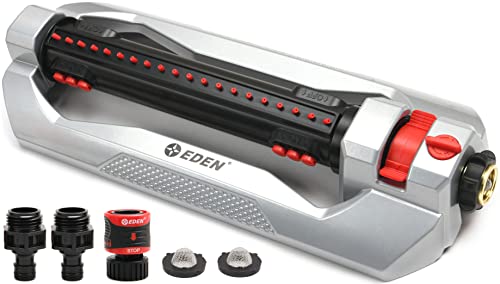
Wide lawns that stretch past the reach of standard oscillators suit this Eden, which spreads water across up to 4,973 sq ft from 20 precision nozzles. Flow, width and range all adjust.
Key Specs:
- Model: 96216
- Coverage: Up to 4,973 sq ft
- Nozzles: 20 precision nozzles
- Weight: 1.03 lb
- Base: Aluminum
- Controls: Flow control knob, width adjustment, sliding range tabs, three nozzle switches per side
Detailed Review:
Its rated footprint is larger than that of the Melnor XT Oscillating Sprinkler 4500 sq ft, so a big lawn needs fewer moves to water end to end. The aluminum base gives it sturdy footing while the arm sweeps.
Width adjustment switches between wide and narrow spray, and sliding tabs set how far the water travels. Three on/off nozzle switches on each side close off individual jets, which keeps spray off a driveway that runs along one edge. The flow control knob then regulates pressure and volume, so you can soften the spray for beds or push it harder across open turf.
That reach depends on your water supply. The maximum coverage assumes the faucet and hose deliver strong pressure and flow, and a long or narrow hose will shrink the pattern noticeably. Eden includes quick connects and filters, and the filters help keep grit away from the nozzles that create the wide spread.
Pros:
- Rated coverage handles large lawns with fewer moves.
- Nozzle switches shut off jets beside driveways.
- Flow knob softens spray for beds.
- Aluminum base keeps the sprinkler steady.
- Filters help protect nozzles from grit.
Cons:
- Full reach needs strong water pressure and flow.
- Many adjustments take time to dial in.
Who It’s For:
Large-lot homeowners with long rectangular lawns get the most from this Eden, since its broad pattern and nozzle switches cover big areas while sparing the edges. It also works for anyone who wants fine control over spray. If your water pressure is weak, you won’t see its full reach.
Editor’s Verdict:
Pair this Eden with a strong faucet and a wide-diameter hose, and it handles long lawns with fewer moves and precise edge control.
#7 Orbit 56281 Oscillating Sprinkler — Also Great
Orbit kept this oscillator simple. You connect the hose and set the custom pattern dial, and its metal base holds steady while it waters up to 4,000 sq ft of a typical residential lawn.
Key Specs:
- Model: 56281Z
- Coverage: Up to 4,000 sq ft
- Weight: 1.7 lb
- Base: Metal
- Controls: Custom pattern dial, adjustable oscillation
Detailed Review:
This sprinkler puts its pattern options on a single custom dial, and the oscillation adjusts to set how far the arm sweeps. Setup stays quick: connect it to the hose, pick a pattern and let it run. That suits anyone who doesn’t want to relearn the controls each time.
The metal base gives the sprinkler stable footing while the arm rocks back and forth. It still carries easily between the front and back yards. Orbit built it to stand up to outdoor weather, but like any sprinkler it should come indoors before a freeze.
Among the oscillating options, its coverage falls between the Melnor Turbo Oscillating Sprinkler 2800 sq ft and the Eden 96216 Turbo Oscillating Sprinkler. That makes it a sensible match for an average suburban lawn. If you like Orbit’s straightforward approach, you can compare the best orbit sprinklers across other styles.
Pros:
- Pattern dial keeps setup quick and simple.
- Metal base gives stable footing during oscillation.
- Adjustable oscillation trims the sweep length.
- Light enough to move between front and back yards.
Cons:
- A single dial allows less fine-tuning than separate controls.
- Rectangular pattern misses curved lawn edges.
Who It’s For:
Typical suburban yards with a mostly rectangular lawn suit this Orbit, especially if you want a sprinkler you can set up without reading instructions. If you’re watering curved or irregular beds, a circular or adjustable-arc head will fit those shapes better.
Editor’s Verdict:
Simple to run and steady on its metal base, this Orbit covers an average lawn without a learning curve.
#8 Gardena ZoomMaxx Oscillating Sprinkler — Best Premium
Precise stepless control over range, width and water volume lets this Gardena fit your lawn’s size exactly. Its removable fine filter keeps sand out.
Key Specs:
- Model: 08127-20
- Weight: 3.3 lb (1.5 kg)
- Adjustment: Stepless range and spray width
- Water control: Continuous water volume adjustment
- Filter: Integrated, removable fine filter
- Origin: Made in Germany
Detailed Review:
Range and width adjust smoothly instead of clicking between preset positions. You can match the pattern to the exact edge of the lawn rather than settling for the nearest setting and accepting a wet strip of pavement.
The water volume control adjusts flow continuously to fine-tune the watered area. That helps when a narrow side lawn needs a lighter pattern than the main yard. The sturdy base lets you set the sprinkler wherever you want, including spots where a spike wouldn’t hold.
The integrated fine filter catches sand and dirt before they reach the nozzles, and the dirt sieve lifts out for rinsing. A clog becomes a quick cleanup instead of a reason to replace the sprinkler. It is heavier than the Orbit 56281 Oscillating Sprinkler, which helps it sit steady but makes carrying it a little more work.
I’d save this one for gardeners who enjoy dialing in a pattern exactly and want a sprinkler that is easy to keep running for many seasons.
Pros:
- Stepless range and width match lawn edges precisely.
- Water volume control fine-tunes the watered area.
- Removable fine filter makes cleaning simple.
- Sturdy base lets it sit anywhere on the lawn.
Cons:
- Heavier body takes more effort to carry.
- Rectangular pattern still misses curved corners.
Who It’s For:
Detail-minded gardeners who want spray to stop exactly at the lawn’s edge, and who don’t mind paying more for that precision, will value this Gardena. Its cleanable filter also suits anyone on gritty water. If you want a light sprinkler to move often, a spike model will be easier.
Editor’s Verdict:
Expect precise, stepless control and easy filter cleaning from this German-made sprinkler, which rewards owners who want their watering patterns exact.
#9 Gardena Classic Fox Spray Sprinkler 1951-20 — Best for Small Yards
Small front gardens and flower beds suit this spike sprinkler, whose fine spray mist waters a circle no more than 36 ft (11 m) across. Its soft jet is gentle on sensitive plants.
Key Specs:
- Model: 01951-20
- Coverage: Up to 36 ft (11 m) diameter
- Weight: 0.22 lb
- Spray: Fine, gentle spray mist
- Mount: Stable ground spike
- Warranty: 5-year Gardena warranty; made in Germany
Detailed Review:
The fine spray jet breaks water into a soft mist that settles onto foliage and soil instead of pounding them. That protects tender seedlings and flowers from being flattened, and it keeps soil from splashing onto their leaves. This gentleness is the main reason to choose it for beds and borders.
Its coverage is deliberately small, and lowering the water pressure shrinks the circle further. That lets you water a tiny front garden without soaking the sidewalk. The same limit is why it isn’t meant for large open lawns, where you would have to move it again and again.
The spike fixes it firmly in the lawn or a bed, and it pulls out just as easily when you want to water another section. It weighs even less than the Orbit H2O-Six Gear-Drive Sprinkler 58573, so it moves around beds with almost no effort.
The 5-year Gardena warranty covers it well beyond a single season, which is reassuring for a sprinkler this small and inexpensive to run.
Pros:
- Fine mist waters seedlings and sensitive plants gently.
- Spike holds it securely in lawn or bed.
- Lowering pressure shrinks the circle for tiny spots.
- Very light and easy to reposition.
- Backed by a five-year Gardena warranty.
Cons:
- Small circle makes it impractical for large lawns.
- Fine mist drifts easily on windy days.
Who It’s For:
Front gardens, narrow side yards and flower beds full of delicate plants are where this little sprinkler shines, because its soft mist won’t batter blooms. Renters and casual gardeners will like how easily it moves. If you have a broad open lawn, you need a sprinkler with much more reach.
Editor’s Verdict:
Gentle enough for seedlings and compact enough to keep spray off the sidewalk, this Gardena is a smart fit for small, densely planted spaces.
Which Type of Sprinkler Fits Your Lawn Best?
Lawn shape should decide the type more than size does, because each design throws water in a fixed geometry: a rectangle or a circle. Matching that geometry to your yard keeps corners from going dry and water off the pavement. It also affects how easily the sprinkler moves between zones over a long summer of watering.
Oscillating Sprinklers for Rectangular Lawns
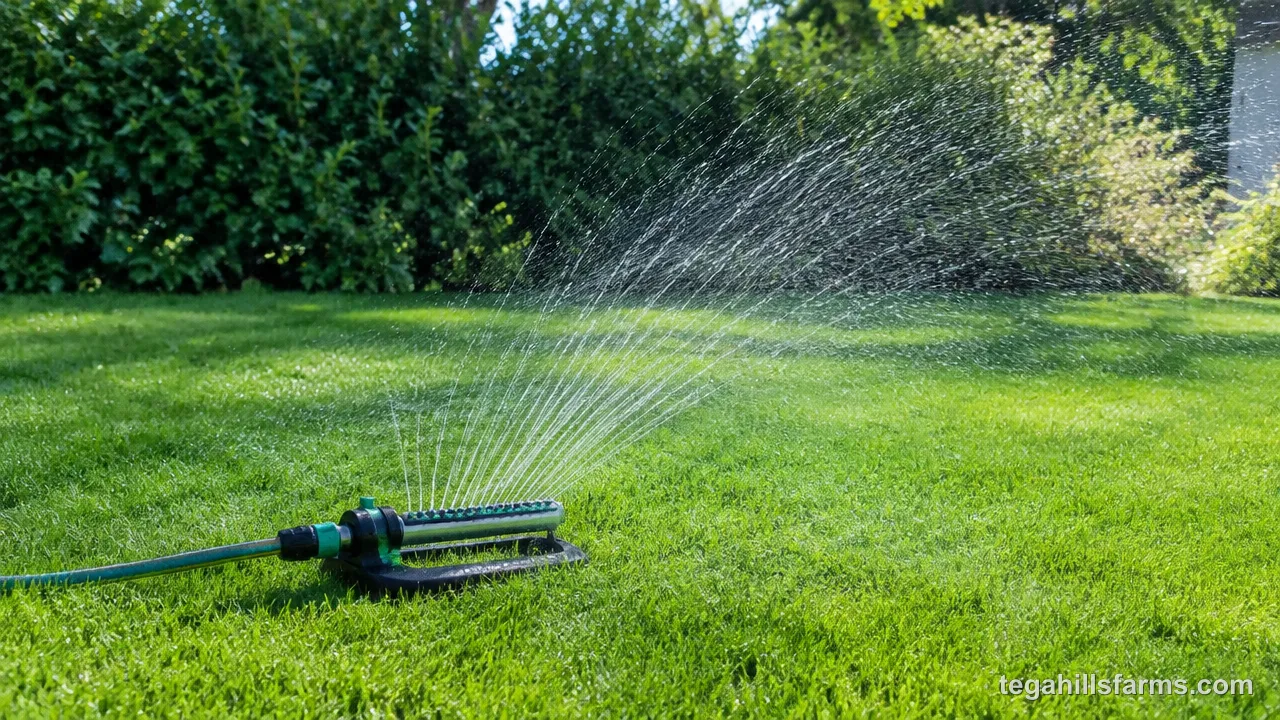
An oscillating sprinkler is the natural match for a rectangular lawn. A curved tube of nozzles rocks slowly from side to side and lays down a rectangle of water. Setup is simple: place the sprinkler in the middle of the area, choose how far the arm sweeps, and it spreads moisture fairly evenly across the space.
Most models add range and width controls, so you can trim the rectangle to fit a narrower strip or pull it back from a walkway.
The fine streams arc high into the air. Wind pushes them off target, and evaporation takes more of the water on hot afternoons. On curved or irregular lawns, the rectangle either spills onto beds and paving or leaves the rounded edges dry. In those yards, a circular head fits better.
Impact and Rotary Sprinklers for Open Space
Impact heads usually reach farther, while rotary heads run quieter. Both throw water in a circle or a partial arc. An impact head shoots one heavy stream that a spring-loaded arm knocks aside in steady pulses. That produces large droplets that resist wind and carry far across open lawns. The same rhythm makes the familiar loud ticking, which can bother neighbors during early-morning watering.
Rotary sprinklers spin one or more streams with gears or water power. They run quietly and usually lay water down more gently, which suits a lawn next to a patio or a bedroom window. Their reach is generally shorter than a strong impact head, and many need decent pressure to turn smoothly.
For a wide, open lawn with nothing to clear, compare the best impact sprinklers. For quieter coverage close to the house, the best rotary sprinklers make more sense.
Gear-Drive, Turret and Spike Sprinklers for Flexible Setups
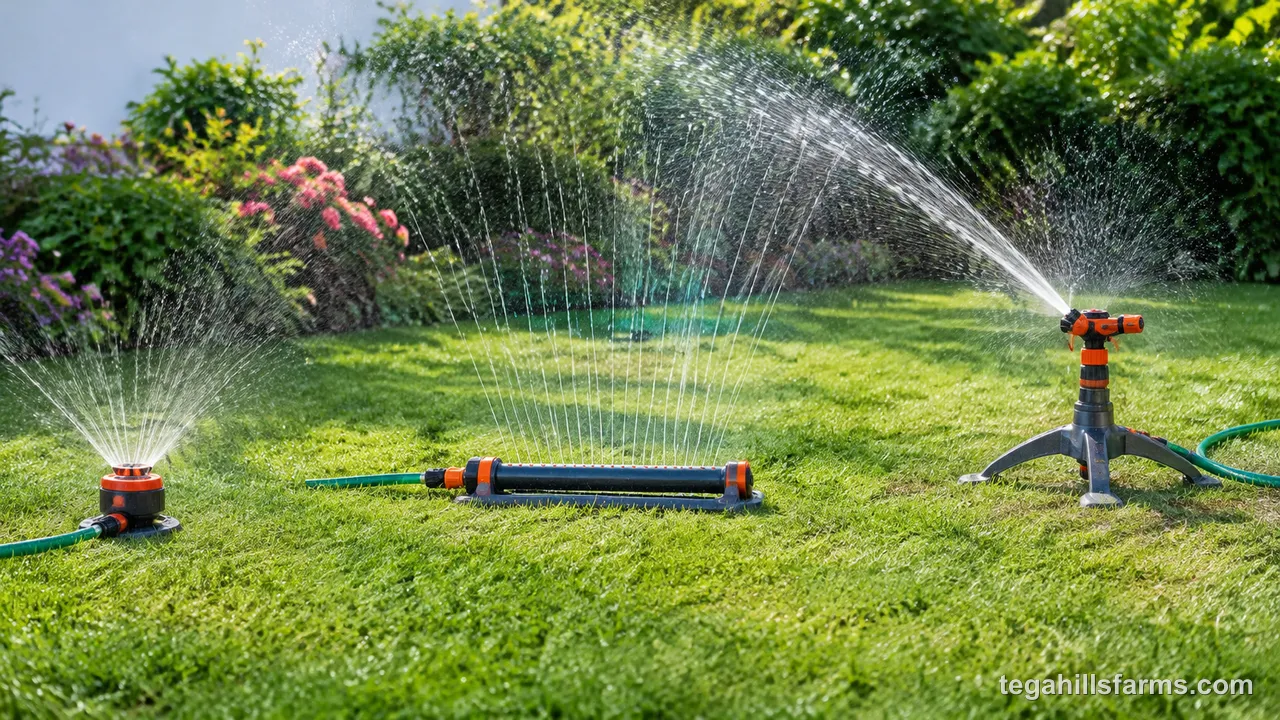
These designs suit yards with odd shapes and mixed plantings, where one fixed pattern won’t fit. A gear-drive head turns a stream smoothly through enclosed gears, and adjustable collars set it to water anything from a narrow wedge to a full circle. A turret sprinkler carries several spray patterns on a rotating dial. Turning the top switches between a fan, a circle, a strip or a soft shower without changing sprinklers.
“Spike” describes the mount rather than the head: the sprinkler sits on a pointed stake instead of a weighted base. The stake holds the head steady in soft turf, and it pulls out quickly. That makes spike models the easiest to carry between a small bed, a side yard and a corner by the patio. In compacted or rocky soil, though, the stake won’t go in cleanly.
Which Sprinkler Works Best for Your Yard Size?
Yard size sets how much reach you need, but overspray is the hidden drawback of choosing more reach than your lawn can use. A sprinkler sized to the space puts water on grass rather than on pavement and fences. It also soaks the whole lawn evenly in fewer moves, which is why sizing deserves as much attention as the spray pattern.
Small Yards and Patios
Small yards need a compact sprinkler with a gentle spray and a modest pattern. An oversized pattern sends much of its water onto the patio, the driveway and the fence. That runoff is wasted, and once you shorten run times to stop the puddles, the lawn itself ends up underwatered.
The Gardena Classic Fox Spray Sprinkler 1951-20 suits this space because its fine mist and small circle stay inside tight borders. The Orbit H2O-Six Gear-Drive Sprinkler 58573 adapts its arc to corners and strips. Light, spike-mounted designs matter here, because small properties often need the sprinkler moved between a front bed and a back patch. For more compact options, see the best sprinklers for small yards.
Medium Lawns
Adjustable oscillating sprinklers are the practical choice for medium lawns. Their rectangle matches the typical suburban lot, and their controls trim it to fit. On a lawn this size, the problem is rarely too little reach. It is spray landing beyond the edges.
Range controls shorten how far the arm throws water, and width controls narrow the sweep, so the pattern stops at the walkway instead of crossing it. Being able to adjust the pattern matters more than maximum reach, because surplus coverage only turns into overspray.
The Melnor XT Oscillating Sprinkler 4500 sq ft, Orbit 56281 Oscillating Sprinkler and Melnor Turbo Oscillating Sprinkler 2800 sq ft all suit this group. The Melnor Turbo is the leaner choice when the lawn is on the smaller side.
Large Lawns and Open Spaces
Large lawns need three things: wide coverage, a water supply strong enough to drive it, and a build sturdy enough to sit outside through long sessions. Wide coverage cuts the number of moves. But every coverage figure on a box is a maximum reached under strong pressure and flow. On an average faucet with a long hose, the real pattern is smaller. The Eden 96216 Turbo Oscillating Sprinkler and the Orbit Tripod Zinc Impact Sprinkler 56667 both perform better with a short hose run and good flow.
Sturdiness matters too. A sprinkler left in the middle of a big lawn gets stepped on, dragged by its hose and baked in the sun, and metal bases and zinc bodies stand up to that wear better than thin plastic. For more wide-area options, the best sprinklers for large lawns go further into reach and durability.
How Does Water Pressure Affect Sprinkler Performance?
Lower water pressure shortens spray reach, shrinks the real coverage area and makes even patterns patchy, so a sprinkler on a weak supply rarely matches its box claim. Pressure pushes water through the nozzles and powers the motor or arm. When it drops, streams fall short, the far end of an oscillating rectangle stays dry, and impact arms may stop ticking around. Long hoses, a narrow hose diameter and other fixtures running at the same time all cut the pressure that reaches the sprinkler. Simple spray heads and oscillators with a flow control knob cope better on a gentle supply, while impact heads need a strong stream to drive their arm. A shorter, wider hose often restores more reach than a new sprinkler would. Homes on weak municipal or well supplies can compare the best sprinklers for low water pressure.
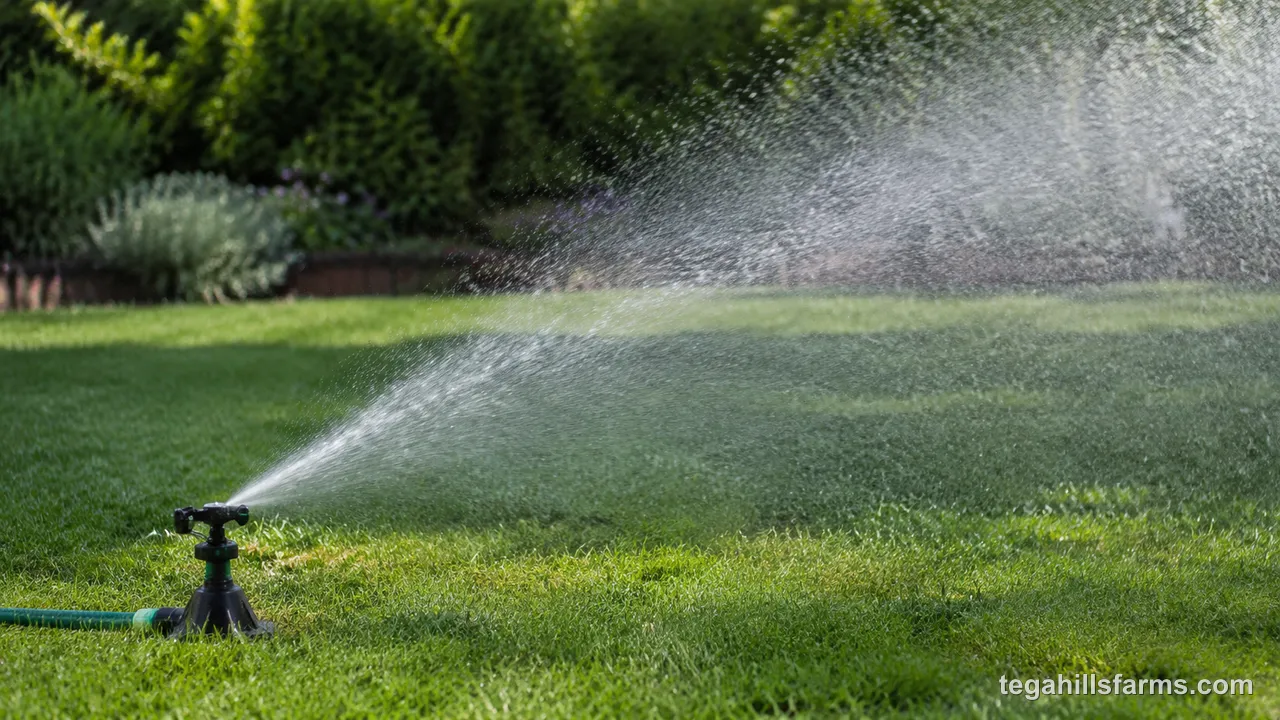
Should You Choose an Above-Ground or In-Ground Sprinkler?
Above-ground hose sprinklers offer flexibility and easy setup, while in-ground heads offer automation and hands-off watering for homeowners willing to install a permanent system. A portable sprinkler connects to a garden hose in moments and goes wherever the dry patch is. That makes it the easier starting point for renters and casual gardeners. The downsides are moving it around and remembering to turn it off. In-ground heads pop up from buried lines on a timer, so the lawn gets watered at dawn with no hose to drag. Installation involves trenching and a backflow device, and rules vary by area, so check local codes first. If you’re planning that upgrade, compare the best in ground sprinkler heads. For narrow strips and beds, sprinkler hoses are a middle ground that lies along the planting.
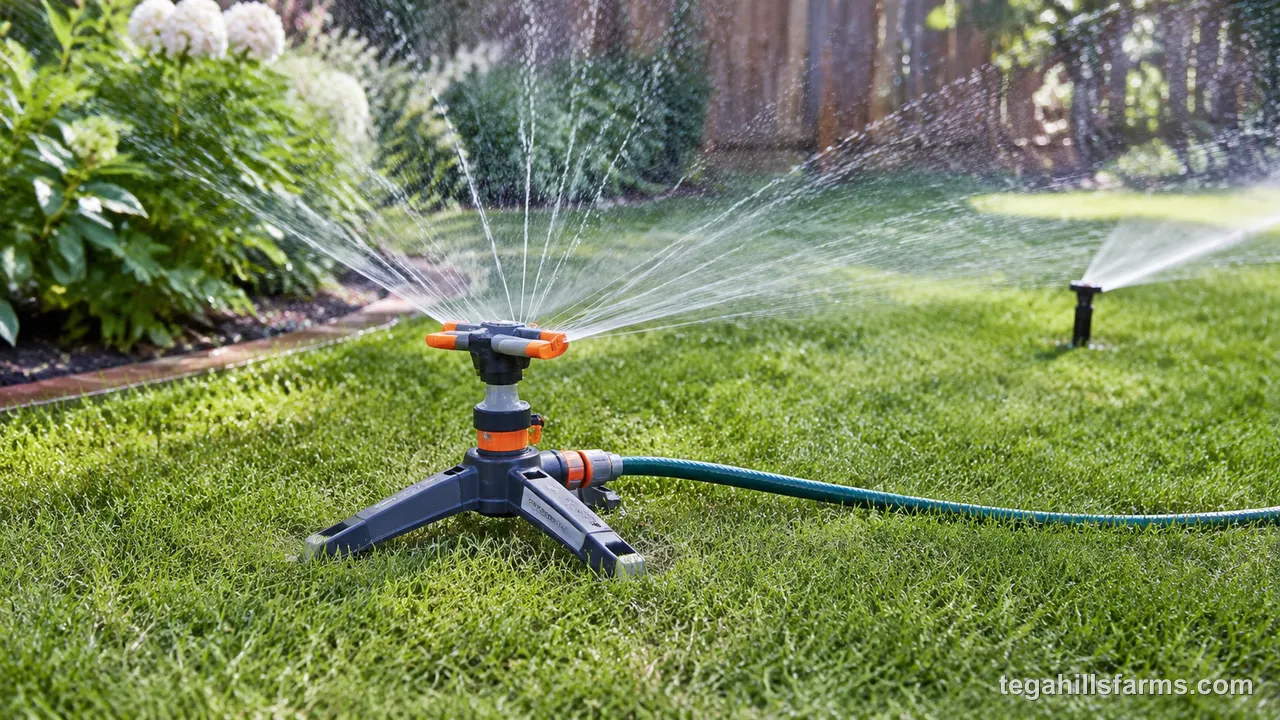
Hard water leaves a chalky film inside nozzles season after season, and summer sun slowly turns plastic housings brittle. Long before a sprinkler stops working altogether, it starts leaving dry stripes beside soggy patches, and a lawn watered by a worn head can brown in streaks even while the water bill climbs.
How Long Does a Sprinkler Last, and When Should You Replace It?
A sprinkler lasts as long as its drive, nozzles and housing keep producing an even pattern. That depends more on water quality, sun exposure and winter care than on how many years it has been in use. A sturdy metal base, a filter and a warranty that covers the drive all point to a longer service life. Thin plastic left on the lawn all summer wears out first.
Signs a Sprinkler Is Wearing Out
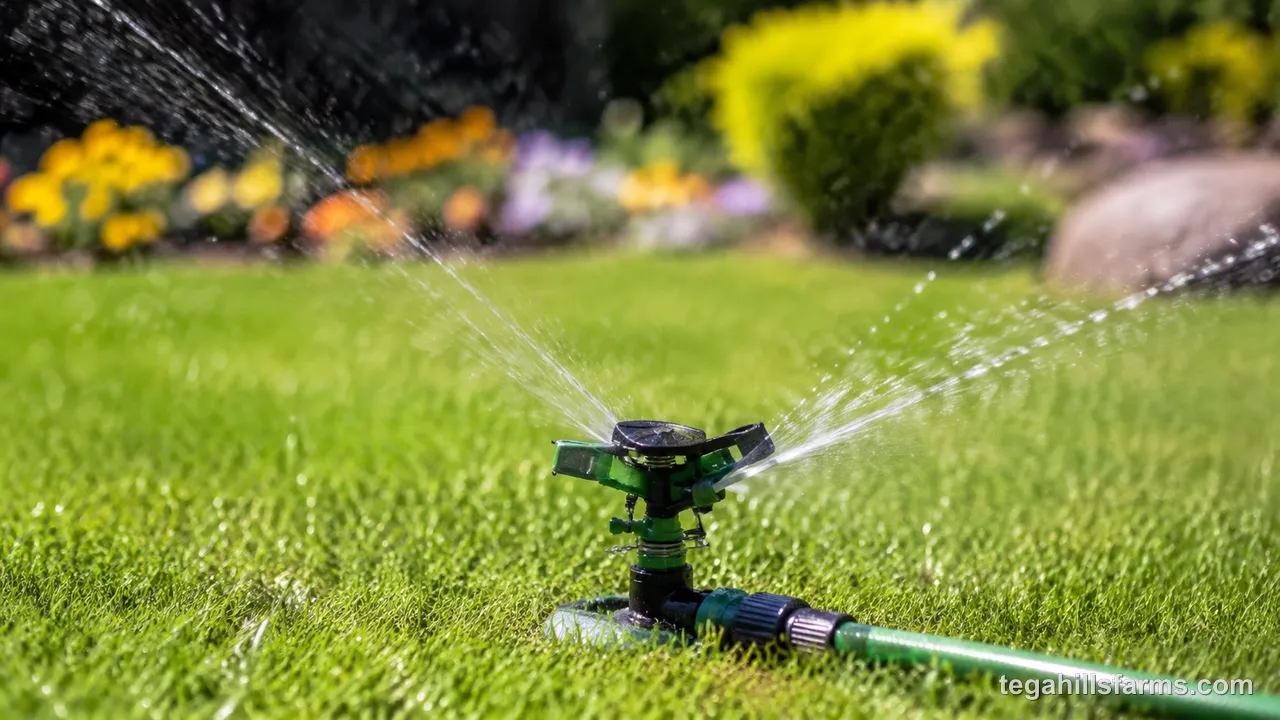
Uneven spray is usually the first sign, and it is often a cleaning job rather than a reason to replace the sprinkler. When a few jets on an oscillator fire weakly or sideways, mineral scale or grit is partly blocking them. Soaking the nozzle bar in white vinegar and clearing each hole with a pin often restores the pattern.
An arm that stalls, sticks at one end or sweeps in jerks points to the drive. Rinsing the inlet filter or flushing water through the hose connection sometimes frees it. A geared motor that keeps sticking after cleaning is worn inside, and few hose sprinklers are worth opening up.
Other signs mean it’s time to replace: a cracked housing, a leak at the hose connection that a new washer doesn’t fix, or a spike bent beyond straightening. Once a sprinkler leaves dry stripes even after cleaning, replacing it protects both the lawn and the water bill.
How to Clean and Store a Sprinkler for Winter
Water trapped inside a sprinkler expands as it freezes and can split the housing or crack the nozzle bar. Before the first hard frost, the sprinkler needs to be clean, dry and indoors.
Start by flushing it. Run clean water through the inlet with the nozzles open, then remove and rinse any inlet filter or dirt sieve. Soak a scaled nozzle bar in white vinegar and clear stubborn holes with a pin, working gently so the openings don’t widen.
Next, drain it completely. Tip and rotate the sprinkler so water runs out of the arm and motor housing, then let it air-dry somewhere warm before you put it away. Store it in a garage, shed or basement out of direct sun. Keep the hose washer and quick connect fittings with it so nothing goes missing by spring. With that care, the drive and nozzles keep working smoothly for many more seasons.
What Is the Best Way to Water Newly Seeded Grass With a Sprinkler?
New seed needs gentle, even moisture several times a day. Use a fine spray that dampens the surface without moving the seed. A hard stream from an impact head or a high-pressure jet washes seed into low spots, leaving bare patches in one place and clumps in another.
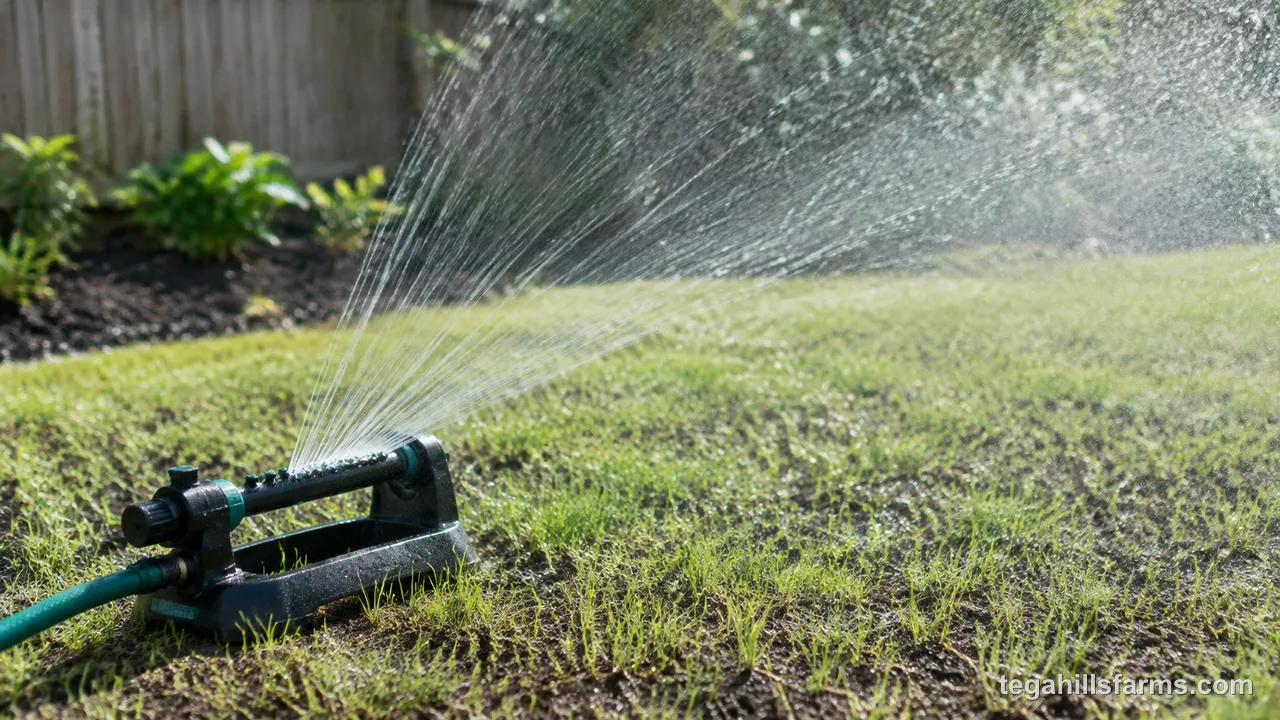
A gentle oscillator zoomed in to the seeded area keeps the drops small, and so does a fine-mist spray head. The Melnor XT Oscillating Sprinkler 4500 sq ft can pull its pattern down to just the patch with its Zoom Control.
Keep cycles short. The goal is to keep the top layer of soil consistently damp, not soaked, because seed that dries out after it starts to sprout dies quickly. As the seedlings establish, shift gradually to longer, less frequent sessions, which pushes the roots deeper. Once the new grass is ready for its first mowing, water it like an established lawn.
How Can You Water Efficiently Without Wasting Water?
Two habits cut most waste: matching the spray pattern to the planting and watering in the early morning. That way water reaches the roots before heat and wind take their share. Runoff starts when a sprinkler applies water faster than the soil can absorb it. On clay or slopes, two shorter sessions with a pause between them soak in better than one long run.
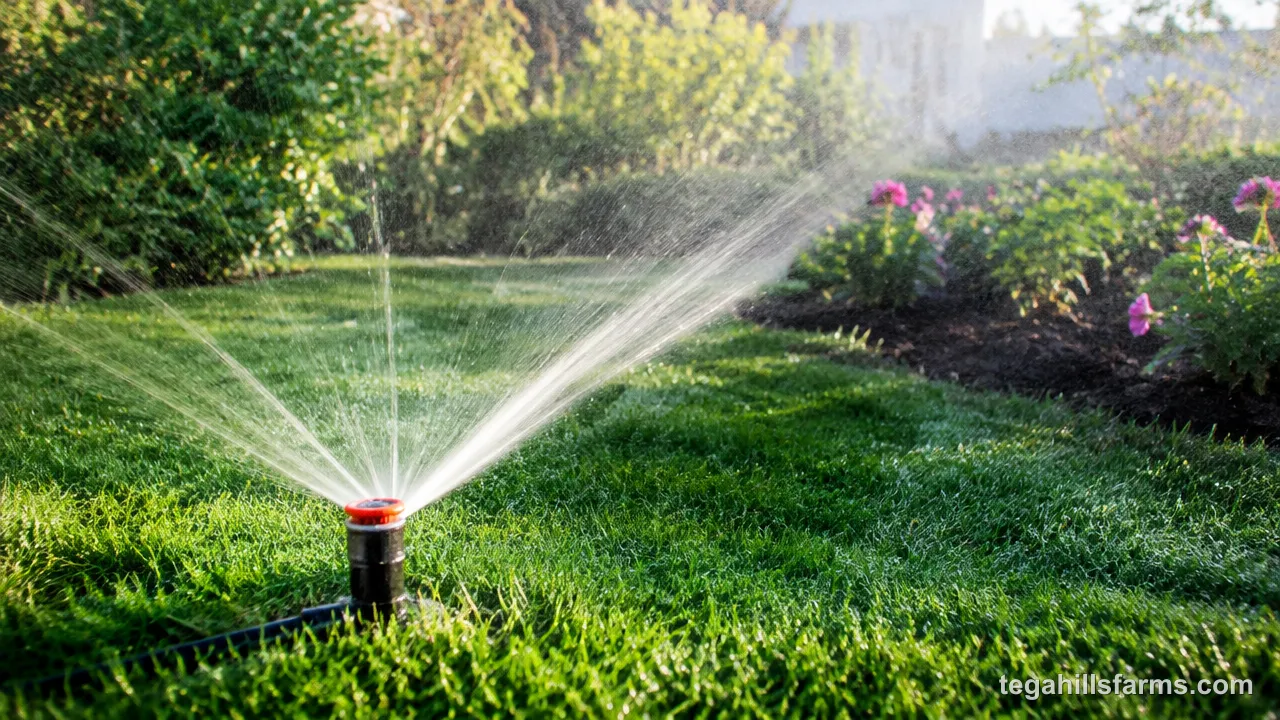
Overspray comes from patterns that don’t fit, like a rectangle on a curved lawn or a full circle in a corner. Trim range and width, close side nozzles next to pavement, and set arcs to stop at the edges. Evening watering leaves foliage wet overnight, which invites fungal disease. Midday watering loses more to evaporation.
Beds and borders need gentler treatment than turf. A soft, low spray reaches the soil without battering blooms or splashing mud onto leaves. For plantings like these, compare the best sprinklers for flower beds.
What Else Do Buyers Ask About Sprinklers?
What type of sprinkler is most effective?
The most effective type is the one whose pattern matches your lawn’s shape. Oscillating sprinklers suit rectangular lawns, impact and rotary heads suit wide open or round areas, and fine-spray or spike models suit small beds. A matching pattern puts water on the grass instead of the pavement, which matters more than raw reach.
How much water does a lawn need each week?
Most established lawns do well with about an inch of water per week, rain included. Apply it in one or two deep sessions rather than daily sprinkles. To find your run time, set a few straight-sided containers across the sprinkler’s pattern and time how long they take to fill.
What time of day should you run a sprinkler?
Early morning is the best time. Wind is usually calmer, less water evaporates, and the grass dries as the day warms, which limits fungal disease. Midday loses more water to evaporation, and evening watering leaves blades wet overnight. Many towns restrict watering days or hours in summer, so check your local rules.
Is the coverage on the box realistic?
Treat advertised coverage as a maximum. Manufacturers rate it under strong pressure and flow, so a long hose, a narrow hose diameter or other taps running at once will shrink the pattern. Check what your sprinkler actually covers on your own faucet, then plan your watering zones around that real footprint.
Can you leave a sprinkler outside all year?
It’s better not to. Sun exposure makes plastic brittle over time, and water left inside can freeze and crack the housing or nozzle bar. Drain the sprinkler, let it dry and store it indoors once frost threatens, so the drive and nozzles keep working for many more seasons.
More Guides on Best Sprinklers
- Best Rain Bird Sprinklers
- Best Gilmour Sprinklers
- Best Hunter Sprinklers
- Best Orbit Sprinklers