7 Best Leaf Blowers: Expert Picks for 2026 Compared
Our top picks for the best leaf blowers in 2026 are YOOVL 650 CFM Cordless Leaf Blower (Best Overall), EGO Power+ LB6504 650 CFM Leaf Blower (Best Cordless), EGO Power+ LB7654 765 CFM Leaf Blower (Best Battery Life), EGO Power+ LB8803-2 880 CFM Leaf Blower (Best Performance), Greenworks 80V 700 CFM Leaf Blower (Best for Large Yards), DEWALT 20V MAX XR DCBL722B Leaf Blower (Best Quiet Option), and ALDIPRO 850 CFM Leaf Blower for Milwaukee M18 (Best Lightweight).
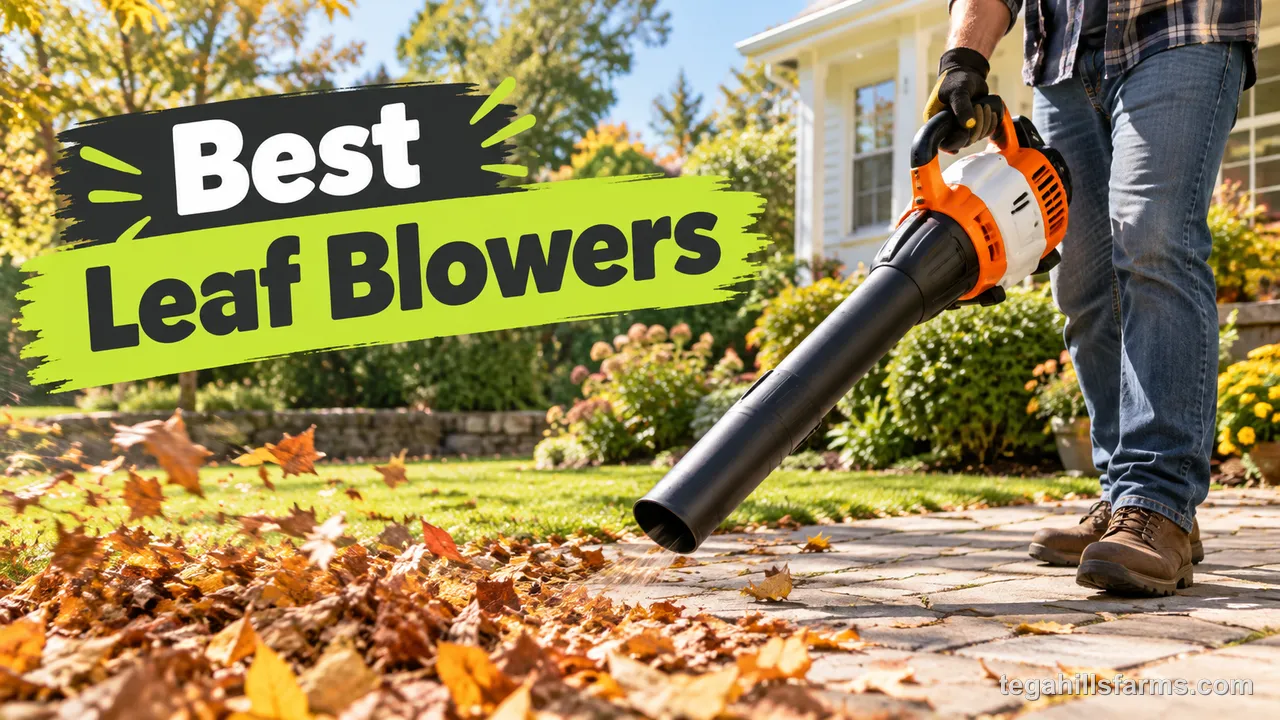
What separates them comes down to a few things: airflow and air speed for wet debris, battery runtime and charge time, weight over a long session, noise near your neighbors, and whether the blower uses the same batteries as tools you already own.


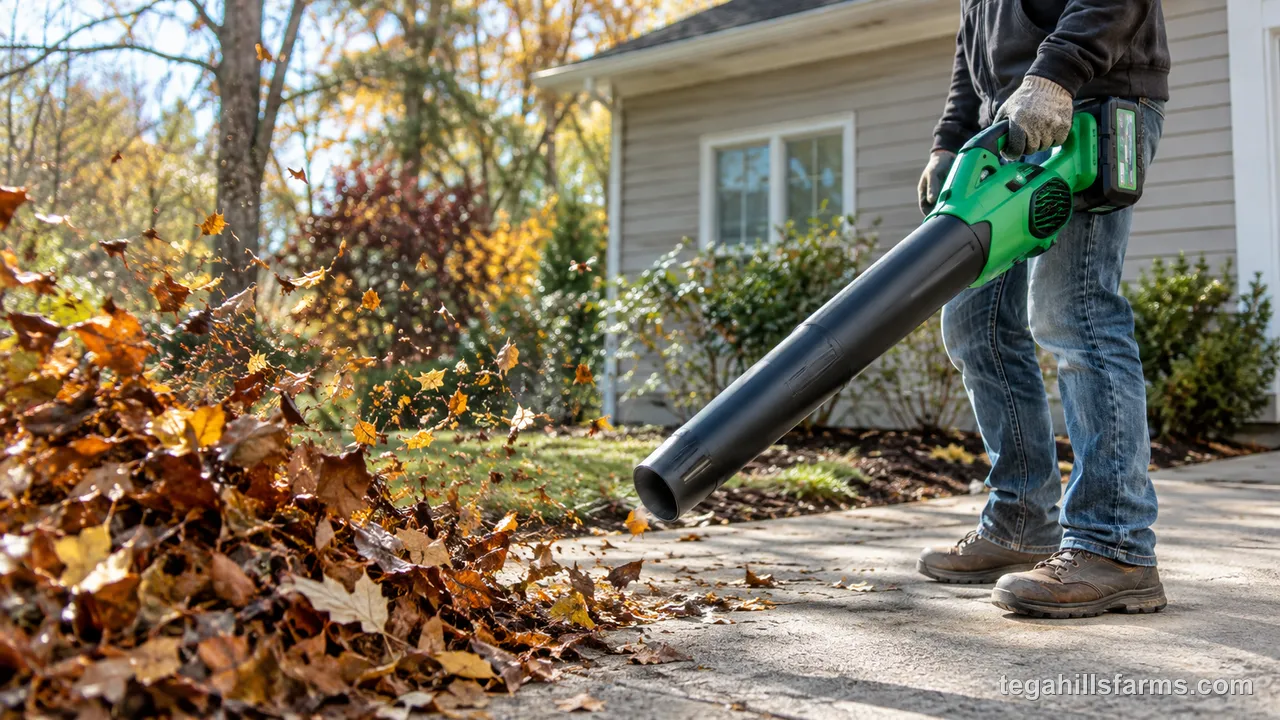
Most buyers want to know two things about a battery blower. Can it shift wet, matted leaves, and will it last through a full fall cleanup? Turbo modes on the stronger models handle the first. A second battery or a fast charger handles the second, so runtime and battery platform deserve as much attention as raw airflow.
Can a Cordless Leaf Blower Replace a Gas Model?
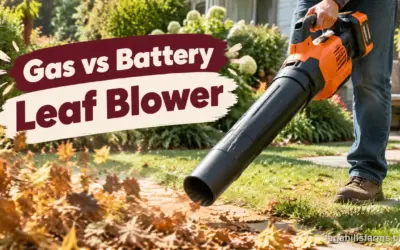
For most homeowners, yes: today’s battery blowers move wet leaves and packed debris with airflow that once took a small engine, without the pull cord, fuel mix or exhaust. That is why each of these 7 picks runs on batteries.
Gas still makes sense on acreage where cleanup takes most of a day. Refilling a tank takes moments, while a battery needs a charge or a stack of spare packs, and the best gas leaf blowers suit that kind of all-day workload. A corded model fits a small lot within reach of an outdoor outlet, since you never wait on a charge. For the wide middle ground of suburban yards, the best cordless leaf blowers give strong airflow with far less upkeep: no oil changes, no spark plugs and no stale fuel to drain before winter storage.
The 7 Best Leaf Blowers of 2026, Compared and Ranked
Ranked in order, the lineup runs YOOVL 650 CFM Cordless Leaf Blower, EGO Power+ LB6504 650 CFM Leaf Blower, EGO Power+ LB7654 765 CFM Leaf Blower, EGO Power+ LB8803-2 880 CFM Leaf Blower, Greenworks 80V 700 CFM Leaf Blower, DEWALT 20V MAX XR DCBL722B Leaf Blower and ALDIPRO 850 CFM Leaf Blower for Milwaukee M18. The battery decides most purchases. The YOOVL, the Greenworks and all three EGO models come with batteries. The DEWALT and ALDIPRO are bare tools, so they only make sense if their batteries are already in your garage. After that, it’s a question of wet versus dry leaves, because the higher-airflow models only justify their extra power when the debris is heavy.
#1 YOOVL 650 CFM Cordless Leaf Blower — Best Overall
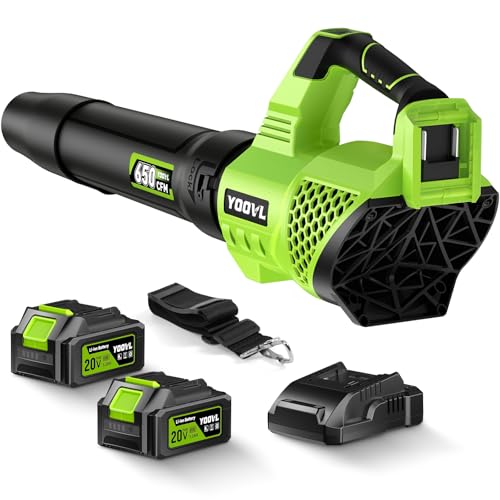
If you’re buying your first battery blower, look at the YOOVL first. It comes with two 20V 5.2Ah batteries, a fast charger and a shoulder strap, and its three speed modes cover everything from porch dust to light snow, so you don’t need anything else to get started.
Key Specs:
- Airflow: up to 650 CFM
- Speed settings: 3 modes (low, medium, high)
- Batteries: two 20V 5.2Ah packs with fast charger
- Runtime: up to 150 minutes with both batteries
- Included: blower tube, extension nozzle, shoulder strap
- Model: LB-8184
Detailed Review:
The three speed modes make the YOOVL useful all year, not just in fall. Low clears fresh grass clippings and porch dust without scattering mulch. Medium handles dry leaves and general debris, and high takes on heavy wet piles and light, fluffy snow on a walk or driveway.
The runtime rating counts both packs, and the fast charger refills the first battery while the second one is working. That rotation keeps a long fall session going, which is where a single-battery kit usually runs into trouble.
Its airflow matches the EGO LB6504, and the kit adds a second battery that the EGO kit doesn’t include. The adjustable shoulder strap moves the weight from your wrist to your shoulder. The balanced body is designed for one-handed use, which keeps your aim steady when you’re working leaves out from under shrubs.
If you don’t own any battery platform yet, I’d choose this over the bare tools in this lineup, because everything you need is in the box.
Pros:
- Two 5.2Ah batteries let you swap packs mid-cleanup.
- Three speed modes cover clippings, dry leaves and wet piles.
- Shoulder strap takes weight off your wrist.
- Clears light snow, dust and garage debris as well.
- Fast charger and extension nozzle come in the box.
Cons:
- Three fixed modes allow less fine-tuning than a speed dial.
- Handles light, fluffy snow, not heavy snow.
- Airflow trails the higher-output EGO and ALDIPRO picks.
Who It’s For:
This is the natural pick for anyone buying a first battery blower who wants a complete kit. Batteries, charger and strap arrive together, and the speed modes handle patio dust, dry leaves and light snow. If you already own EGO or Milwaukee batteries, a blower on that platform makes more sense.
Editor’s Verdict:
A well-rounded kit that covers leaves, clippings and light snow without extra purchases, with a spare battery ready as soon as the first one runs down.
#2 EGO Power+ LB6504 650 CFM Leaf Blower — Best Cordless
If you own an EGO mower or trimmer, start here. The LB6504 runs on the same 56V ARC Lithium battery as more than a hundred EGO tools, and its turbo mode pushes up to 650 CFM at 180 MPH through wet leaves and caked grass.
Key Specs:
- Airflow: up to 650 CFM, 180 MPH in turbo
- Variable speed: 225–470 CFM with lock-on button
- Battery: 56V 5.0Ah, up to 90 minutes per charge
- Charging: 100 minutes with the CH2100 charger
- Weight: 12.9 pounds
- Warranty: 5-year tool, 3-year battery
Detailed Review:
You’ll use the variable speed dial more than any other control. Pull the trigger, set the airflow anywhere in the dial’s range, and the lock-on button holds it there, so you don’t have to keep squeezing the trigger down a whole driveway. Turbo sits above that range for wet leaves, caked grass and small rocks that the steady settings leave behind.
The brushless motor keeps vibration low, which your hands will notice on a long session. The turbine fan design lets this handheld outperform premium gas blowers. Both included nozzles are useful: the tapered one concentrates air to pry up stuck debris, and the spread nozzle sweeps a wider band across a patio.
The battery is the bigger reason to buy it. It fits every EGO 56V tool, so one charged pack can go from the mower to the blower on the same afternoon. The included charger refills it between rounds.
With the battery attached, you’ll feel the weight on long sessions, so plan a few short breaks. The five-year tool warranty is reassuring on a blower you’ll run every fall.
Pros:
- Lock-on dial holds your speed without trigger pressure.
- Battery fits every EGO 56V tool.
- Turbo mode moves wet leaves, caked grass and rocks.
- Tapered and spread nozzles are included.
- Five-year tool warranty, three-year battery warranty.
Cons:
- Heavier in hand than the EGO LB7654.
- One included battery means recharge breaks on long jobs.
- Charging takes longer than with the LB7654’s charger.
Who It’s For:
If you already have an EGO mower or trimmer, this blower runs on the 56V batteries you own and adds a lock-on dial for steady cleanup. It also suits buyers who are starting on EGO and plan to add tools later. If holding a blower tires you quickly, the lighter LB7654 is easier to carry.
Editor’s Verdict:
Choose it as much for the battery platform as for the blower. The lock-on dial and turbo mode make it a dependable all-season cleanup tool in any EGO household.
#3 EGO Power+ LB7654 765 CFM Leaf Blower — Best Battery Life
Buy this one for long EGO cleanups with less waiting. It gets up to 90 minutes from its 5.0Ah battery, and the included CH3200 charger refills that pack in 70 minutes, so a second session the same afternoon is realistic.
Key Specs:
- Airflow: up to 765 CFM, 200 MPH in turbo
- Cruise control: 260–580 CFM
- Battery: 56V 5.0Ah, up to 90 minutes per charge
- Charging: 70 minutes with the CH3200 charger
- Weight: 9.5 pounds
- Warranty: 5-year tool, 3-year battery
Detailed Review:
Compared with the LB6504, this model wins on most measured points. It’s lighter, it moves more air in turbo and across its cruise range, and its included charger refills the same capacity battery faster. Both get the same runtime per charge, so the benefit is getting back to work sooner, not longer runtime from one pack. The LB6504 has one advantage: a gentler low speed setting, which only matters around loose mulch and flower beds.
The cruise control dial holds a steady airflow without your finger on the trigger. Turbo takes over for wet leaves, caked grass and rocks along a gravel edge. A brushless motor keeps vibration low on long passes.
Tapered and spread nozzles come in the box, so you can switch between a focused stream for stuck debris and a wide sweep across open pavement. It also takes any EGO 56V ARC Lithium pack, so a battery borrowed from your mower lets you keep going past one charge.
If you clear the whole yard in one long session, I’d take this over the LB6504. The faster charger is what makes a second round the same afternoon practical.
Pros:
- Lighter than the LB6504 with more turbo airflow.
- Faster charger shortens breaks between sessions.
- Cruise dial holds airflow without trigger pressure.
- Runs on any EGO 56V ARC Lithium battery.
Cons:
- Only one battery comes in the box.
- Lowest speed setting is stronger than the LB6504’s.
Who It’s For:
Anyone who clears the whole yard in one long session gets real value from the quick recharge between rounds. It’s also a good EGO handheld if heavier blowers tire your arm. If heavy, wet debris is a regular problem in your yard, the LB8803-2 pushes more air.
Editor’s Verdict:
This lighter, faster-charging EGO is an easy pick for anyone already on the 56V platform who wants strong airflow without a heavy blower on the arm.
#4 EGO Power+ LB8803-2 880 CFM Leaf Blower — Best Performance
Heavy fall cleanups with soaked, matted leaves call for the LB8803-2. Its turbo mode reaches 880 CFM and 200 MPH, and two 4.0Ah batteries come in the kit, so a fresh pack is ready when the first one runs down.
Key Specs:
- Airflow: up to 880 CFM, 200 MPH in turbo
- Cruise control: 270–700 CFM
- Batteries: two 56V 4.0Ah packs, up to 90 minutes
- Display: digital readout for performance, charge and cruise-lock
- Warranty: 5-year tool, 3-year battery
Detailed Review:
No other blower here pushes as much air. The difference shows on jobs that stall smaller blowers: wet leaves stuck to a lawn after rain, clippings caked on concrete, debris packed along a fence line. Turbo pairs that volume with high air speed, so the stream both lifts debris and moves it.
The digital display shows performance, battery charge and whether cruise-lock is on, so you know how much charge is left before you head to the far corner. Its cruise dial goes well above the LB7654’s range, so you can do more of the yard in cruise. That saves turbo, which drains a pack quickly, for the wet patches.
Two batteries come in the box. Each is smaller than the single battery in the other EGO kits, but with one charging while the other works, a fall cleanup keeps moving, and both fit any EGO 56V tool. Tapered and spread nozzles, a brushless motor and the EGO warranty round out the package.
On a small lot with dry leaves, most of this airflow goes unused, and a lower-output handheld does that job just as well.
Pros:
- Turbo mode reaches up to 880 CFM for heavy, wet debris.
- Two batteries let you swap packs mid-job.
- Digital display shows charge and cruise-lock status.
- Wide cruise range covers dry and heavy debris.
- Batteries work across EGO’s 56V tool lineup.
Cons:
- Far more airflow than small, dry-leaf yards need.
- Each 4.0Ah pack is smaller than other EGO kit batteries.
Who It’s For:
Yards where leaves stay wet and heavy through fall, or where debris packs into corners and fence lines, justify this much air. EGO owners also get extra packs to share with their 56V tools. If your leaves are mostly dry, a lower-airflow model such as the LB7654 covers the job.
Editor’s Verdict:
For wet, matted leaves and packed debris, its airflow and two-battery kit keep a heavy cleanup moving when you can’t wait for dry weather.
#5 Greenworks 80V 700 CFM Leaf Blower — Best for Large Yards
If you have a large yard, start with this one. Its 80V brushless motor delivers 700 CFM and 170 MPH in turbo boost from a body that weighs 5.84 pounds, so you can cover a lot of ground before your arm tires.
Key Specs:
- Airflow: 700 CFM, 170 MPH turbo boost
- Platform: 80V with 2.5Ah battery and charger
- Weight: 5.84 pounds
- Noise: 74 dB
- Controls: variable speed with cruise control
- Model: BL80L2515
Detailed Review:
Light weight is what makes this blower practical on a big property. A heavy blower wears down your shoulder over a long session. The Greenworks moves more air than the EGO LB6504 in a much lighter body, so it stays easy to aim along beds and fence lines.
The 80V brushless motor outperforms a 27cc gas blower and runs about 40% quieter than gas models, with no pull cord, fumes, fuel or oil to deal with. Turbo boost is designed for wet leaves and stubborn debris, the kind of material that slows a lawn cleanup in late fall.
Variable speed with cruise control lets you hold a lower setting on open lawn and save turbo for the wet patches, which makes the battery last longer on big jobs. That matters because the kit comes with one 2.5Ah battery. A second 80V pack is a natural add-on for fall sessions on a large lot.
The brushless design also helps the motor last longer than a brushed one. That counts on a blower that has to cover a lot of ground every fall.
Pros:
- Light body stays easy to aim on long sessions.
- Turbo boost handles wet leaves and stubborn debris.
- Cruise control holds a steady airflow setting.
- No fuel, oil or pull cord to manage.
- Battery and charger come in the kit.
Cons:
- Only one 2.5Ah battery comes in the kit.
- Runs louder than the DEWALT DCBL722B.
Who It’s For:
Property owners with wide lawns and plenty of trees, especially where leaves come down wet, get the right mix of airflow and easy handling here. If you already own Greenworks 80V tools, it runs on batteries you have. If quiet operation decides your purchase, the DEWALT DCBL722B runs noticeably quieter.
Editor’s Verdict:
Pick this one when you have a lot of ground to cover. The light body and turbo boost make a large, leafy property much less tiring to clear.
#6 DEWALT 20V MAX XR DCBL722B Leaf Blower — Best Quiet Option
If you have close neighbors or a tight lot, consider the DEWALT. It runs at 62 dB(A) with a brushless motor and weighs 5.4 pounds, so a patio or side-yard cleanup stays low-key for the people next door.
Key Specs:
- Airflow: up to 450 CFM, 125 MPH with concentrator
- Noise: 62 dB(A)
- Weight: 5.4 pounds
- Motor: brushless with axial fan
- Controls: variable trigger with speed lock
- Power: 20V MAX XR, battery and charger sold separately
Detailed Review:
Low noise is the main reason to buy this blower. It runs quieter than the Greenworks. That matters on a small lot where the house next door is a few steps from your driveway and a weekend-morning cleanup carries straight through an open window.
The axial fan design moves air straight through the tube to get the most output and run time from each charge. The brushless motor adds run time and motor life on top of that. The variable trigger with speed lock gives you fine control around beds, steps and parked cars.
The trade-off for that quiet is airflow. It moves less air than any other blower here, and its top speed comes with the concentrator attached. Dry leaves, grass clippings and debris on walks are where it does well. A soaked lawn takes more passes than it would with the Greenworks or the EGO LB8803-2.
It comes as a bare tool, so it fits best in a garage that already has DEWALT 20V MAX batteries and a charger. The low weight also makes it easy to hang on a wall hook.
Pros:
- Quiet operation suits close neighbors and early starts.
- Light body is easy to aim in tight spaces.
- Speed lock holds airflow without trigger pressure.
- Runs on DEWALT 20V MAX batteries you may own.
Cons:
- Moves less air than any other blower here.
- Battery and charger are sold separately.
- Wet, heavy leaves take extra passes.
Who It’s For:
Townhouse owners and anyone on a tight suburban lot with close neighbors will appreciate how quietly this blower works. DEWALT 20V MAX owners can run it on batteries they already have. If heavy, wet leaves are a regular fall chore, the Greenworks or the EGO LB8803-2 pushes considerably more air.
Editor’s Verdict:
Quiet, light and easy to control, this is the blower I’d recommend for cleaning patios and walks next to neighbors who would notice a louder machine.
#7 ALDIPRO 850 CFM Leaf Blower for Milwaukee M18 — Best Lightweight
Milwaukee M18 owners get a light blower without starting a new battery system. At 4.2 pounds, the ALDIPRO combines two 18V packs into a 36V system for 850 CFM and 200 MPH, though batteries and a charger are sold separately.
Key Specs:
- Airflow: 850 CFM, 200 MPH
- Power: 36V from two Milwaukee M18-compatible 18V batteries
- Weight: 4.2 pounds
- Controls: variable speed trigger, cruise control dial, turbo button
- Included: rubber-tipped detailing nozzle, shoulder strap
- Warranty: 1 year
Detailed Review:
This blower needs both batteries installed to run, and that dual setup is where its power comes from: two 18V packs combine into 36V to drive the brushless motor. A battery management system stops the motor before the packs discharge too deeply, which protects batteries you also use on other M18 tools.
The rubber-tipped short tube is what sets it apart. It won’t scratch siding, patio furniture or a car’s clear coat if it bumps them, so the same tool can dry a washed car and clear a deck. A dedicated turbo button handles standing water and heavy wet leaves.
With both batteries in, the weight shifts to reduce the downward pull on your wrist. The cruise control dial holds a steady airflow while the shoulder strap carries the load. The variable speed trigger goes from a gentle breeze for flower beds up to full force.
The housing is made of impact-resistant composites designed to survive drops and rough outdoor use. The one-year warranty covers mechanical faults.
Pros:
- Runs on Milwaukee M18 batteries you may already own.
- Rubber-tipped nozzle won’t scratch cars or siding.
- Turbo button gives quick bursts for wet leaves.
- Cruise control and shoulder strap ease long sessions.
- Battery management system protects packs from deep discharge.
Cons:
- Batteries and charger are not included.
- Won’t run unless both batteries are installed.
- One-year warranty is shorter than EGO’s tool coverage.
Who It’s For:
Milwaukee M18 users with spare packs in the garage are the natural buyers, since this blower runs on those batteries. Car owners who want one tool for drying a washed vehicle and clearing the driveway will get real use from the rubber nozzle. If you don’t have compatible batteries, a complete kit like the YOOVL is simpler.
Editor’s Verdict:
Ideal for M18 households: dual-battery power and a scratch-safe nozzle make it as useful in the driveway as on the lawn.
What Do CFM and MPH Mean on a Leaf Blower?
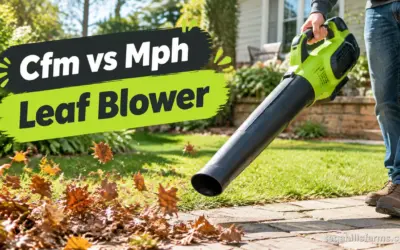
Cubic feet per minute measures how much air a blower moves, and miles per hour measures how fast that air leaves the tube. Volume decides how big a pile you can push, and speed decides whether stuck debris comes loose. Reading the two together is the core of how to choose a leaf blower, because a strong figure in one can hide a weak one in the other.
What Does CFM Tell You About Moving Leaves?
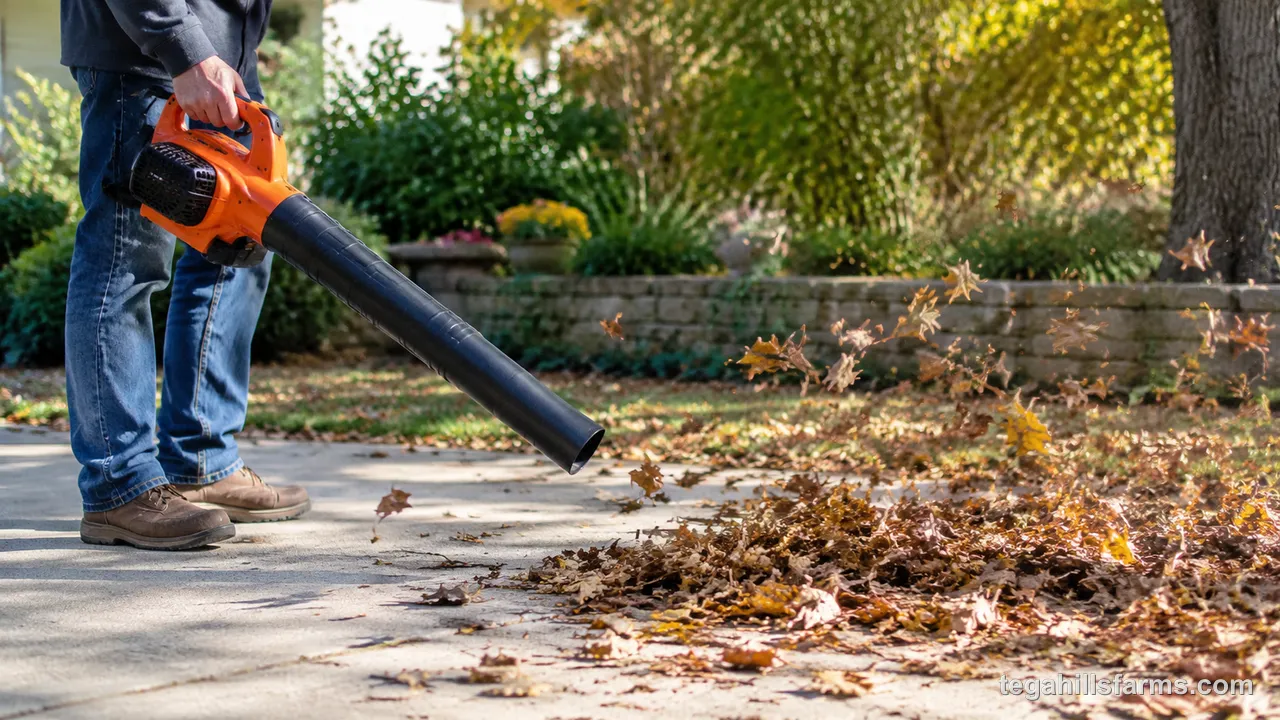
CFM tells you how wide a swath of leaves a blower can push at once. A high-CFM blower moves a broad wall of air, so a pile of dry leaves travels as one mass instead of breaking into stragglers you have to chase.
Low CFM works fine on a patio or walk. On an open lawn, though, you make more passes because the air column covers less ground, and each extra pass costs battery and time. So CFM matters most for volume jobs, like clearing a lawn under big trees or moving a season’s worth of leaves onto a tarp or to the curb.
Among these picks, airflow runs from the DEWALT at the low end to the EGO LB8803-2 at the top, with the Greenworks and the LB7654 in between.
What Does MPH Tell You About Loosening Debris?
MPH is the force at the nozzle that pries loose wet leaves, grass clippings stuck to concrete and debris wedged in cracks. A fast, narrow stream hits a matted leaf hard enough to lift its edge, so the airflow can get underneath and carry it off.
Speed alone can mislead you. A blower with high MPH and low CFM blasts one small spot clean but moves little volume, so you end up clearing the yard one patch at a time. High CFM with low MPH has the opposite problem: it sweeps dry leaves well but slides over anything stuck down.
The useful reading is both numbers together, measured under the same conditions. A speed figure taken with a narrow concentrator nozzle or in turbo won’t match what you get on an everyday setting.
How Do You Match a Leaf Blower to Your Yard?
Yard size, the debris you deal with and how long a typical session runs decide the fit, because each pushes you toward a different balance of weight, airflow and battery capacity. A blower that’s great on one of these can be a poor match on another, so the most powerful model isn’t automatically the right one.
Which Blower Suits a Small Yard and Which Suits a Large One?
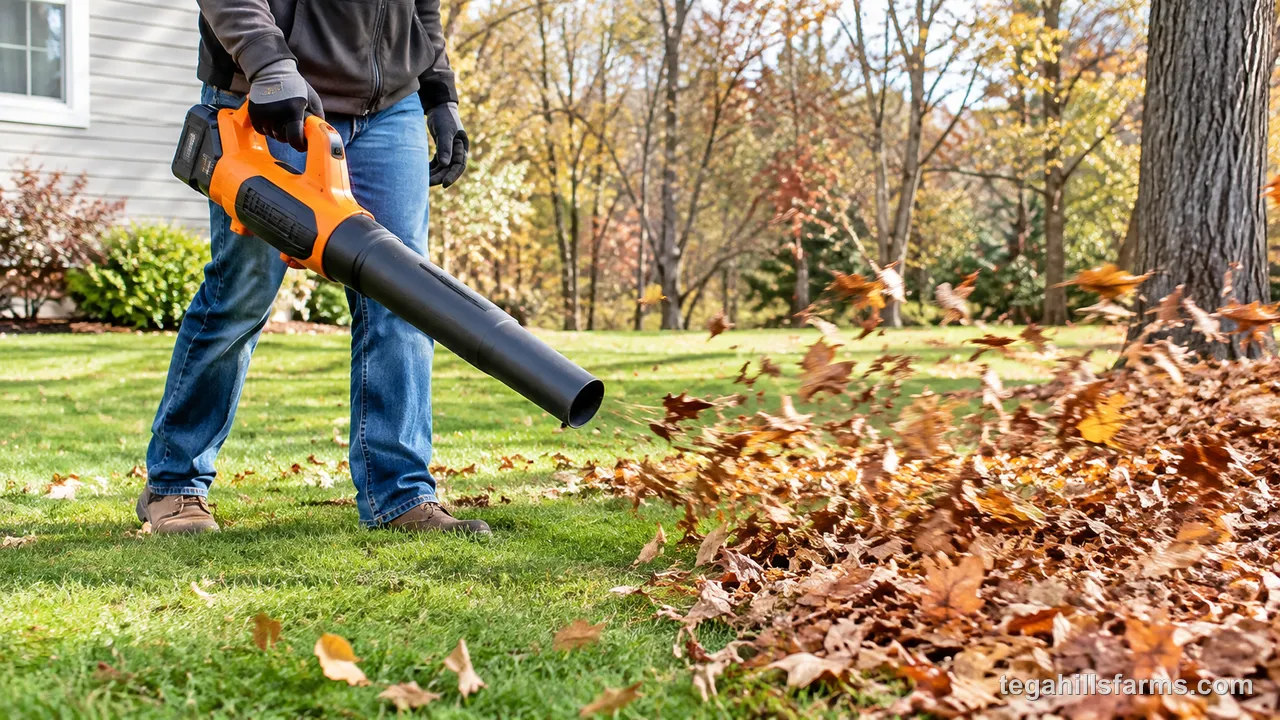
On a small yard, light weight and easy handling matter more than peak airflow. The job is short, and you spend most of it aiming around beds, steps and parked cars. The DEWALT and the ALDIPRO fit that pattern, since both are easy to point into tight spots and quick to put away.
On a larger property, airflow and endurance matter more. Every extra pass across an open lawn adds up, and a blower with high CFM and a spare battery finishes before your arm or the pack gives out. The Greenworks pairs strong airflow with a light body, and the EGO LB8803-2 adds a second battery.
Mid-size lots fall in between, where the EGO LB7654 or the YOOVL kit handles both tight corners and open grass. If one session on your lot regularly runs past a single battery, compare the best leaf blowers for large yards before settling on a handheld.
What Handles Wet, Heavy Leaves and Packed Debris?
Wet, matted leaves need high air speed and a turbo mode working together. Water makes leaves heavy and sticks them to grass and concrete, so the blower first has to lift the edge with a fast stream, then move the soaked mass with volume.
That’s what turbo modes are for. The EGO models, the Greenworks and the ALDIPRO all have one, and the YOOVL’s high mode is designed for heavy wet piles, so these handle soaked fall debris in fewer passes. Lower-output blowers have trouble here. They move the dry top layer and leave the wet layer underneath, and you end up raking what the blower couldn’t move. The DEWALT is better suited to dry leaves and walks than to a soaked lawn.
Timing helps as much as hardware. Leaves that have dried for a day take far less power to move than the same leaves the morning after rain. If you deal with wet piles every fall, compare the best leaf blowers for wet leaves for heavier-duty options.
How Long Should a Battery Last for Your Cleanup?
How far one charge gets you depends on battery capacity in amp-hours, whether you have a second pack, and how much of the session you spend in turbo. Turbo draws far more power than a low cruise setting, so “up to” runtime figures describe light-duty use. A session spent mostly in turbo ends much sooner.
A second battery is the simplest fix. The YOOVL and EGO LB8803-2 kits include two packs, and every EGO blower shares batteries with the rest of EGO’s 56V lineup. A fast charger works almost as well, because it refills a pack during a short break.
For a quick weekly pass over a patio and walks, one pack usually covers it. For fall cleanups under big trees, plan on a spare or a charger fast enough to keep up.
Which Matters More in a Leaf Blower: Light Weight or Low Noise?
Neither wins outright: light weight matters most on big lots and long sessions, while low noise matters most on tight lots where houses sit close together.
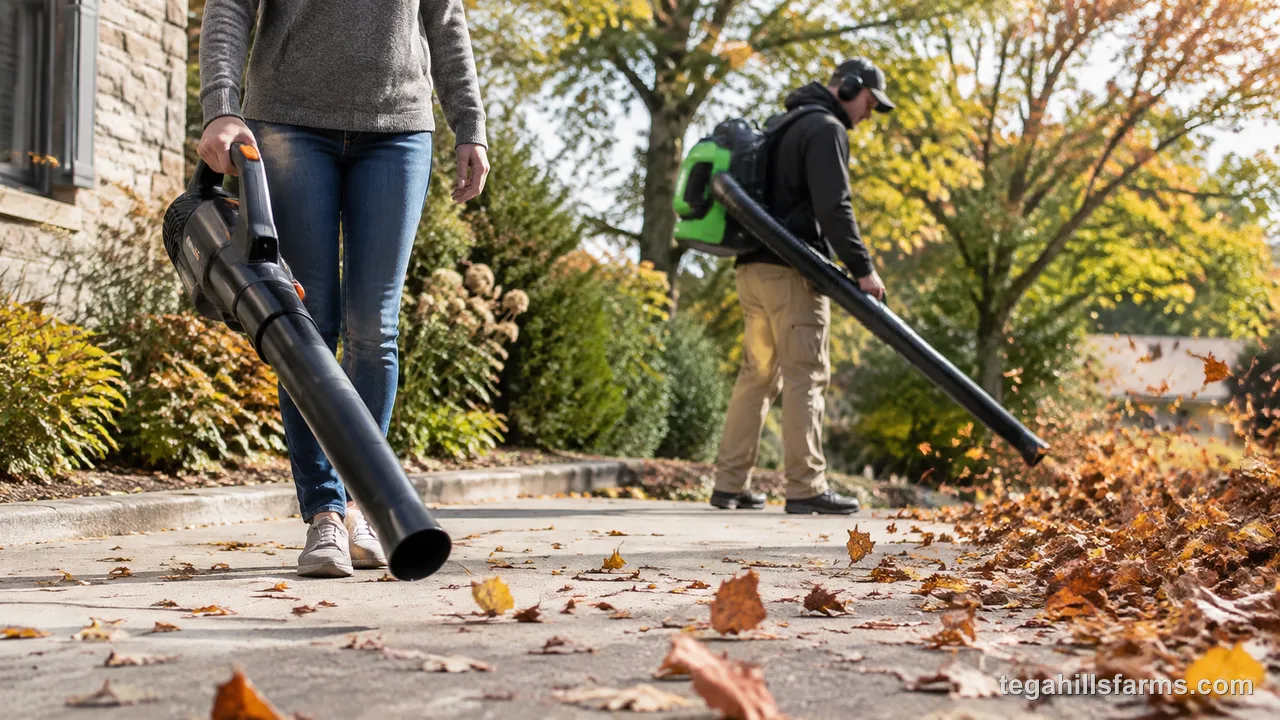
You feel weight in your forearm and shoulder. A blower that’s comfortable for a quick patio pass can wear you down over a long fall cleanup. The ALDIPRO, DEWALT and Greenworks are all easy to carry, while the EGO LB6504 is the one you’ll feel by the end of a long job. If your cleanups run long, the best lightweight leaf blowers are the group to compare.
Noise affects the people around you more than it affects you. Battery blowers are already much quieter than gas, and the DEWALT runs noticeably quieter than the Greenworks. That matters before work, on weekend mornings, or when the next driveway is a few steps away. Some towns limit blower noise or operating hours, so check your local rules. The best quiet leaf blowers are your shortlist if those rules or close neighbors set your priority.
The catch is airflow. The DEWALT is both light and quiet, but it moves the least air here, so on a lot with heavy, wet leaves, raw airflow matters more than either weight or noise.
Does Battery Platform Matter When Choosing a Leaf Blower?
Yes: the packs already in your garage often decide the purchase, because a blower that shares them with your mower, trimmer or drill saves you from storing and maintaining a second set of batteries and chargers.
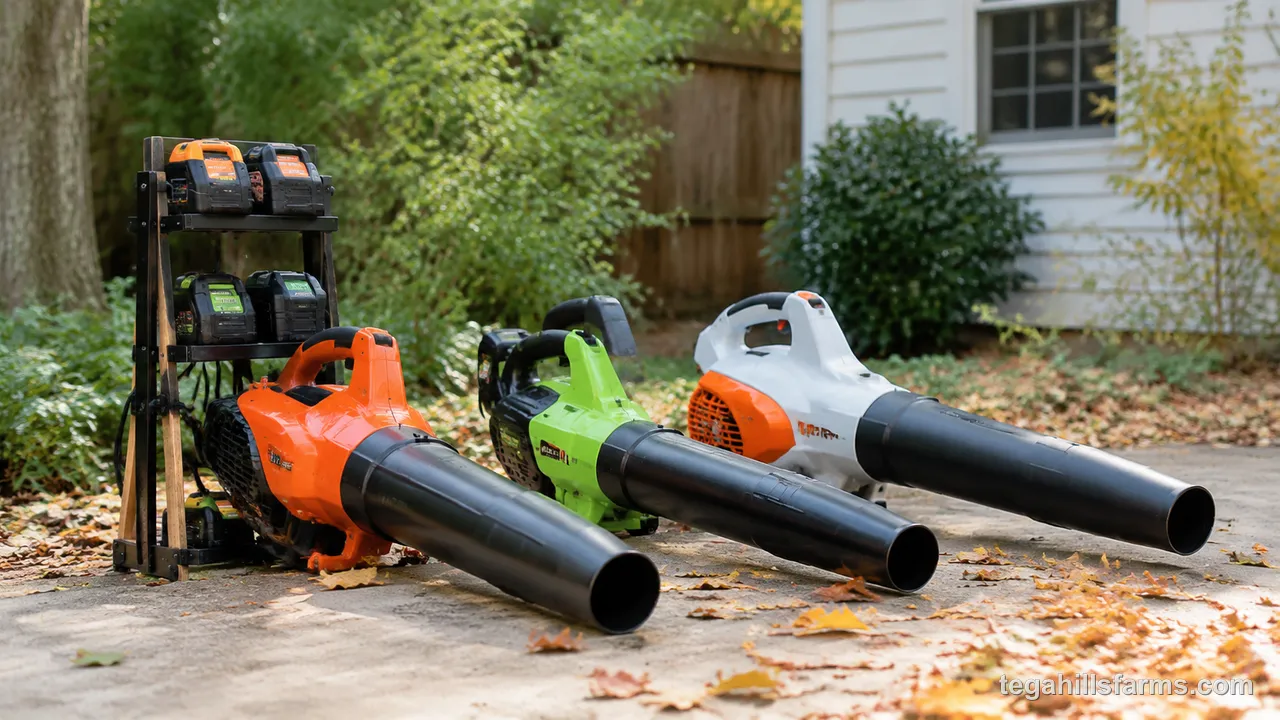
The platforms behind these picks split into kits and bare tools:
- EGO 56V ARC Lithium: the LB6504, LB7654 and LB8803-2 all come with batteries, and every EGO pack fits every EGO tool, so the blower adds to the platform you already mow with.
- Greenworks 80V: the kit includes a battery and charger, and extra packs extend long fall sessions.
- DEWALT 20V MAX: sold as a bare tool, it only makes sense if you already have DEWALT batteries.
- Milwaukee M18-compatible: the ALDIPRO runs on two 18V packs at once. It’s made by ALDIPRO, not Milwaukee, so its warranty comes from ALDIPRO.
- YOOVL 20V: a complete kit with two batteries and a charger, the simplest start if you don’t own any platform yet.
When you’re comparing leaf blower brands rather than individual models, think about the battery lineup behind each one. You’ll likely keep those batteries longer than the blower, and they’ll shape which trimmer or mower you buy next.
Which Leaf Blower Should You Buy?
Start with your biggest constraint: the YOOVL for a complete starter kit, an EGO model if you already own EGO tools, and a bare tool if your batteries are DEWALT or Milwaukee M18.
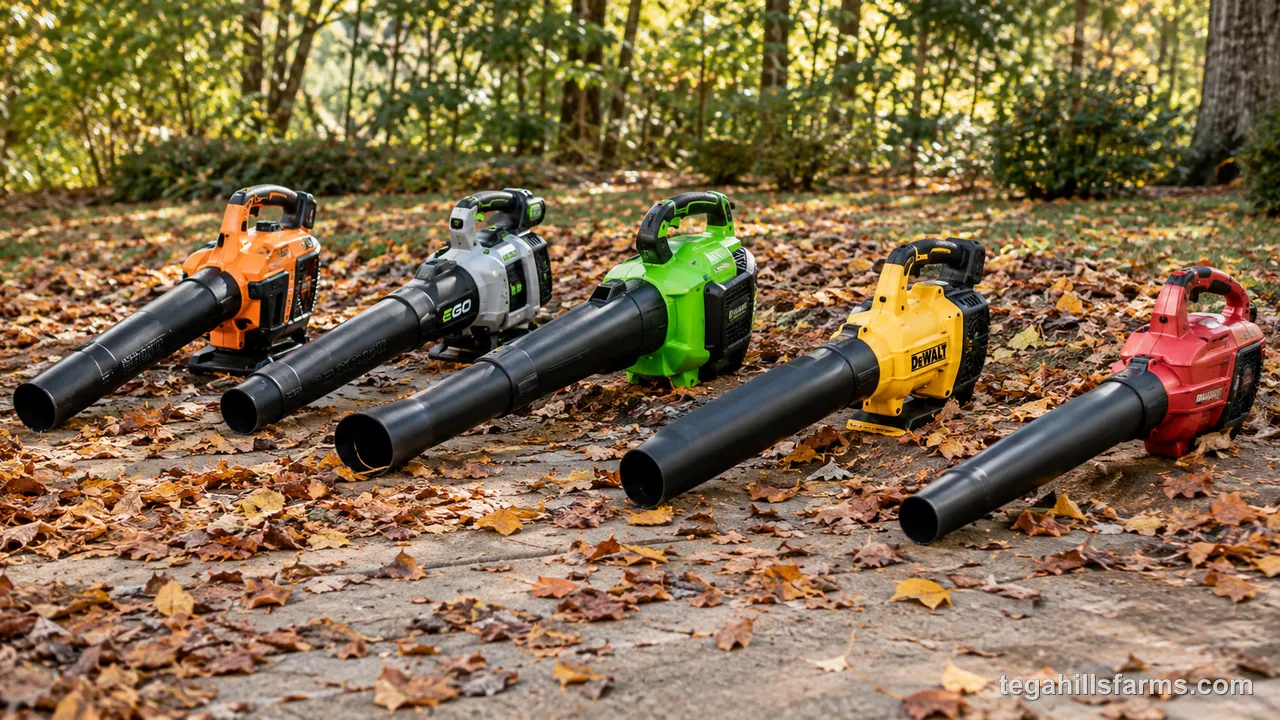
- No battery platform yet: YOOVL 650 CFM Cordless Leaf Blower, with two batteries, a charger and a strap in the box.
- EGO household: the LB6504 for the lock-on dial, or the LB7654 for a lighter body and faster recharge.
- Wet leaves and heavy debris: EGO Power+ LB8803-2, which reaches up to 880 CFM in turbo.
- Large lot and long sessions: Greenworks 80V, light enough to carry across a big property.
- Close neighbors: DEWALT DCBL722B, for low-noise cleanup near other houses.
- Milwaukee M18 batteries and light handling: ALDIPRO, a bare tool with a scratch-safe nozzle.
The airflow figure printed on a blower’s box is usually a turbo number taken at peak settings, while most of a real cleanup happens on a cruise setting well below that. Two blowers with similar headline CFM can feel very different on your lawn, and buying on the bigger number alone can leave you running turbo constantly and draining the battery just to get the performance you expected.
Why Do Listed Power Numbers Often Overstate Real Performance?
Most listed airflow and speed figures describe a blower at its peak: turbo mode, a fresh battery and sometimes a concentrator nozzle that narrows the stream to raise speed. You’ll spend most of a cleanup at a cruise or middle setting, so the headline number is the ceiling, not what actually moves your leaves.
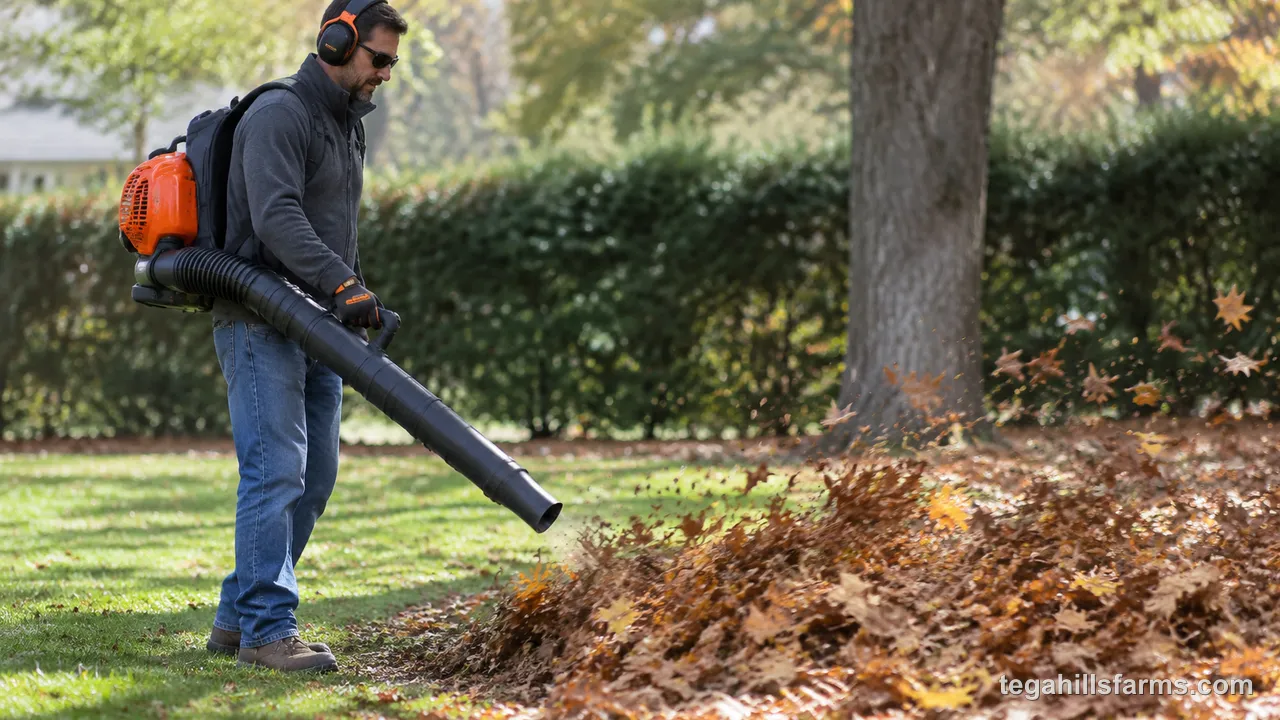
Measuring conditions vary too. Some brands rate airflow at the fan housing, before the air loses energy through the tube, while others rate it at the nozzle, so two identical-looking CFM figures can describe different things. A speed figure tied to a specific nozzle, like the DEWALT’s concentrator rating, tells you more than one with no conditions attached.
Runtime claims work the same way, because an “up to” figure almost always reflects the lowest setting. To separate believable specs from marketing, look for a listed variable or cruise range next to the turbo figure, as EGO gives for its handhelds, and read CFM and MPH as a pair. A blower that publishes its everyday range is telling you how it will behave across most of your yard.
How Can You Tell a Leaf Blower Battery Is Wearing Out?
A battery is wearing out when you get noticeably shorter sessions on the same setting you’ve always used, or when turbo fades early while the blower still runs fine on low. A fresh or borrowed pack is a quick test. If the blower runs at full strength on a good battery, the motor is fine and only the pack needs replacing.
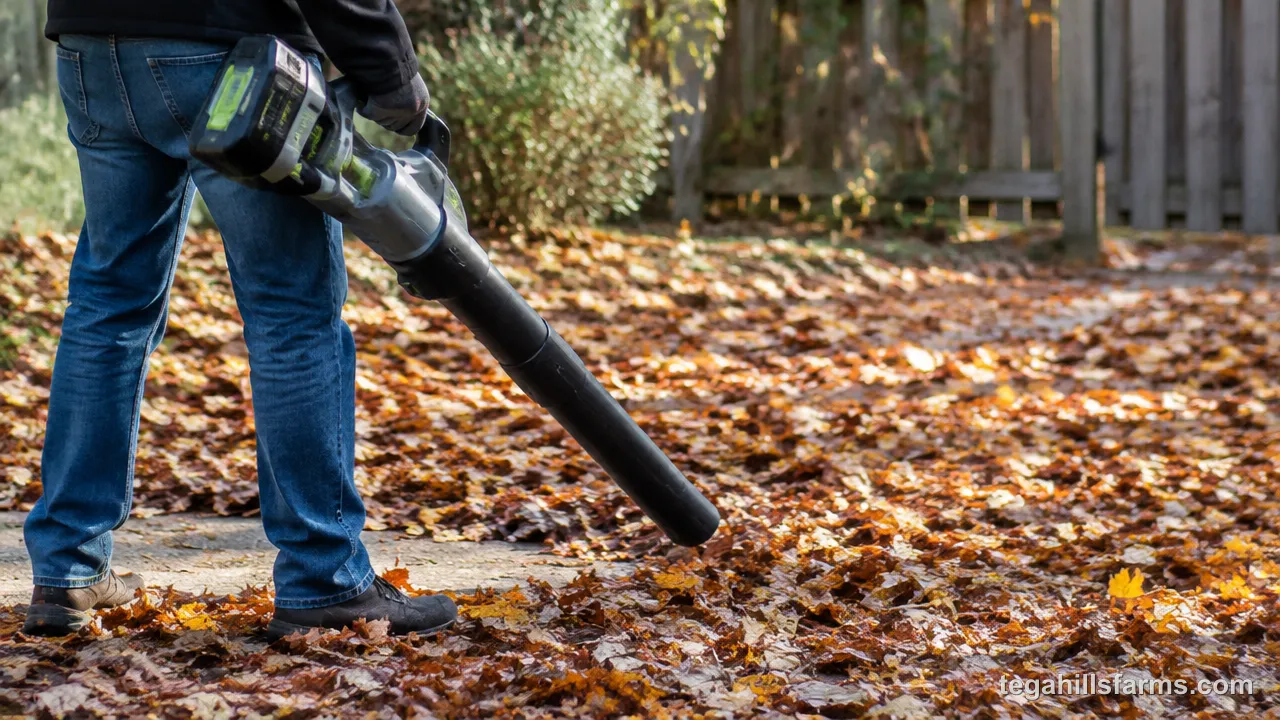
Other signs point the same way. A pack that gets unusually hot while charging, takes much longer to charge than it used to, or makes the charger flash an error code has lost capacity or developed a fault. A swollen or cracked case means stop using it. Take that pack out of service and recycle it at a battery drop-off, not in the trash.
Winter storage decides how many seasons a pack lasts. Keep batteries indoors, away from freezing sheds and hot garages, partly charged rather than full or empty, and off the charger. Top them up before spring cleanup, and check the battery warranty before buying a replacement, since some cover several seasons.
Are You Buying More Blower Than Your Yard Needs?
On a small, tidy yard, most of what a high-output blower adds goes unused. Turbo-level airflow for soaked leaf mats, a second battery, a digital display and a wide cruise range all solve problems that a patio, a short driveway and a few shade trees rarely create. An oversized blower also costs you weight and storage space every time you take it off the shelf.
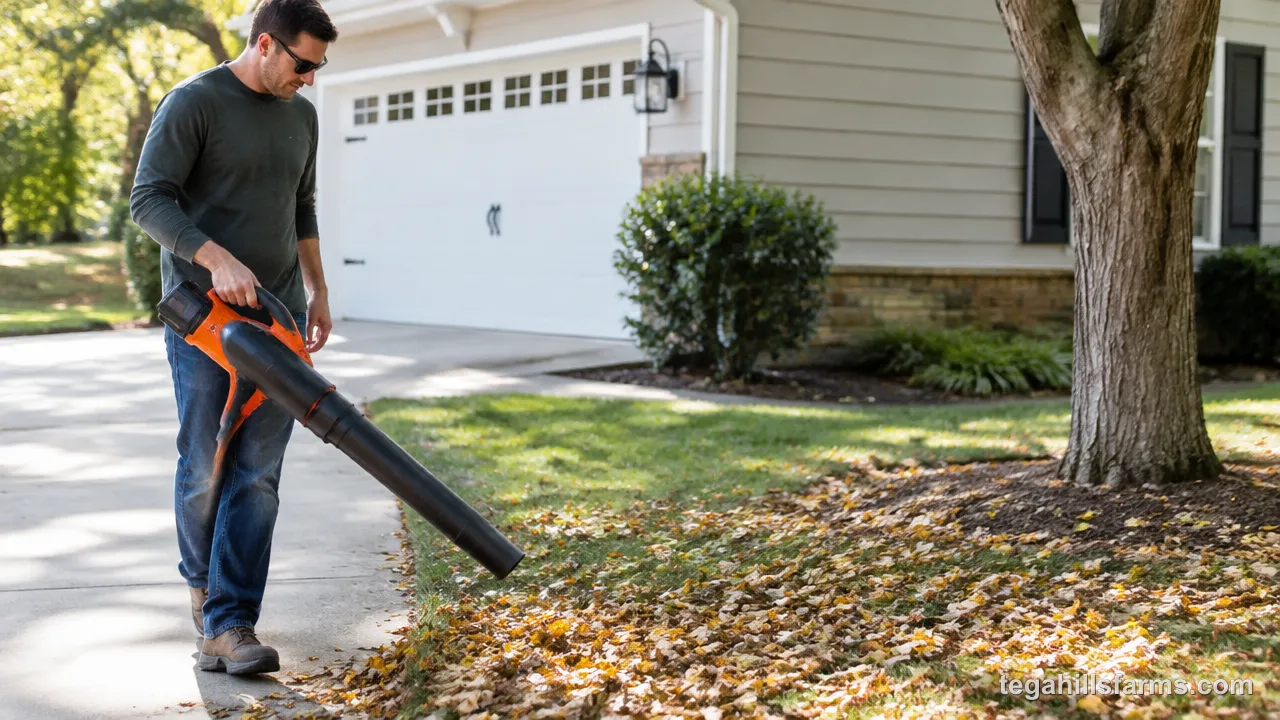
Extra capacity is worth it when your yard calls for it: big trees that drop leaves for weeks, wet fall weather that mats leaves into the lawn, gravel or long drives, or plans to clear light snow off walks in winter. In those cases, the stronger EGO models or the Greenworks fit better than a light blower you’d push past its limit every weekend.
Right-sizing usually means one well-matched blower, plus a spare battery only if your sessions need it. If you have a patio, a walk and a few beds, you can start with the best leaf blowers under $100, then step up to leaf blowers under $200 when fall cleanup regularly outlasts a single small battery.
Leaf Blower FAQs
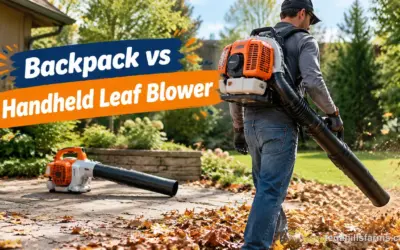
Is a backpack leaf blower better than a handheld?
A backpack blower puts the weight on your shoulders and hips, which makes long sessions on big properties easier, and many backpack models have more power than handhelds. A handheld is quicker to grab, simpler to store and plenty for patios and suburban lawns. Compare the best backpack leaf blowers if your cleanups run for hours.
When does a wheeled leaf blower make sense?
A wheeled blower makes sense on wide, open ground such as acreage, long paved drives or parking areas, where it pushes a large volume of leaves while you walk behind it. It’s harder to steer around beds and up slopes, and it needs real storage space. For properties that size, the best wheeled leaf blowers are worth a look.
Can a cordless leaf blower clear snow?
Light, fluffy snow, yes. A strong battery blower on its high or turbo setting quickly clears a dusting from steps, walks, decks and cars, and some models, such as the YOOVL and ALDIPRO, are designed with that use in mind. Wet, heavy or packed snow is too much for a handheld blower, so use a shovel or snow blower instead.
Do you need hearing protection with a battery leaf blower?
Battery blowers run quieter than gas models, but a blower is still loud up close, especially in turbo, and the noise is right next to your ears the whole session. Earplugs or earmuffs are a sensible habit. Wear safety glasses too, since the air stream can throw grit, twigs and small stones back at you.
Can you use a leaf blower to dry a car?
Yes, and it’s better than towels for pushing water out of mirrors, grilles and trim gaps. Use a clean blower and start at the roof, working down. A rubber-tipped nozzle like the ALDIPRO’s protects the clear coat if you bump the paint. With a hard plastic tube, keep a little distance from the surface.
More Guides on Best Leaf Blowers
- Best Leaf Blowers for Small Yards
- Best Leaf Blowers Under $300
- Best Leaf Blowers for Homeowners
- Best Leaf Blowers for Gutters
- Best Handheld Leaf Blowers
- Best Electric Leaf Vacuums
- Best Corded Leaf Blowers
- Best Gas Leaf Vacuums