

Gas leaf blowers still hold a small lead in raw leaf-moving power, most of all on leaves packed into grass, while battery leaf blowers win on noise, handling and upkeep. For a typical suburban yard, that tradeoff favors battery. For a big, heavily wooded property where leaves pile up for weeks, it still favors gas.
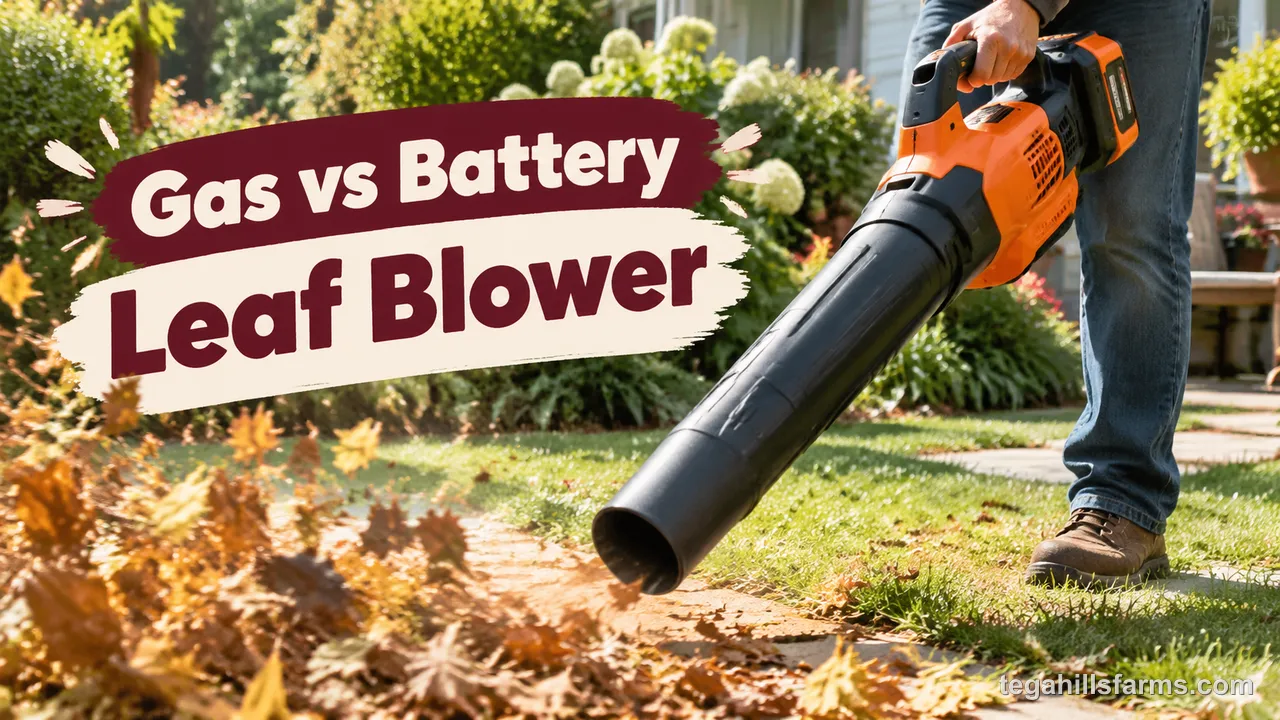
The choice comes down to five things you notice on cleanup day: how well each type sweeps and loosens leaves, how long it runs before you stop to refuel or recharge, how loud it is, how it feels in your hands after a long session, and how much care it needs between seasons.
Most buyers bring one of two worries. The first is that a battery model will run out of charge or power partway through a heavy fall cleanup. The second is that a gas model won’t start after sitting in the garage since last fall. Both worries are fair, and each one fits a different kind of owner.
Before comparing specs, look at where leaves collect in your yard. Loose leaves on open lawn and pavement are easy work for either type. Wet mats in mulch beds and fence corners are where the difference between the two shows up.
What Is the Real Difference Between a Gas and a Battery Leaf Blower?
Gas models burn fuel in a two-stroke or four-stroke engine, while battery models spin an electric motor fed by a lithium-ion pack. A two-stroke engine runs on gasoline with oil mixed in. A four-stroke engine keeps its oil in a separate reservoir, the same way a car engine does.
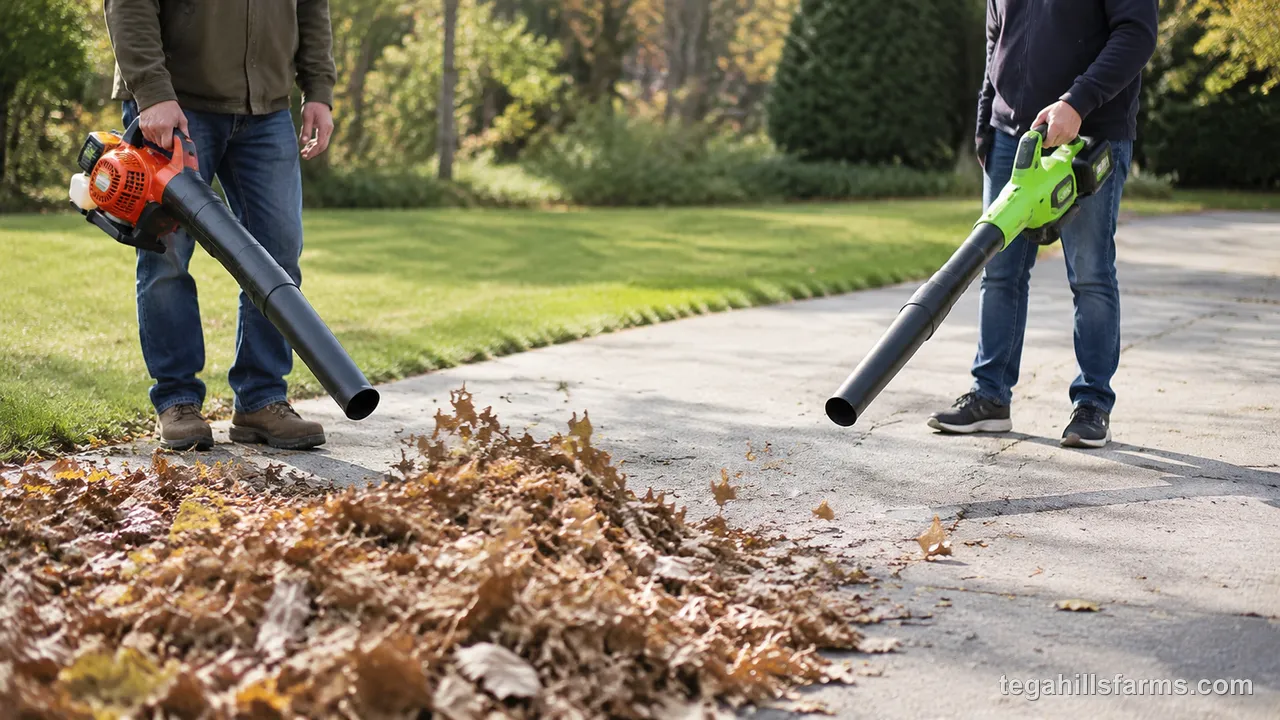
A battery blower has no fuel system. You press the trigger and it runs, and how much power it delivers and for how long depends on the pack. That basic difference in power source decides how each machine performs in five practical areas: power, runtime, noise, handling and upkeep.
This table lines up both types on those criteria:
| Criterion | Gas | Battery |
|---|---|---|
| Sweeping dry leaves | Slight edge on average | Close behind, best models match gas |
| Loosening matted leaves | Stronger | Weaker on average |
| Runtime | Runs as long as the tank lasts, quick refill | Limited by the pack, recharge or swap |
| Noise | Louder at the ear and at a distance | Quieter, not silent |
| Handling | More vibration, heavier feel | Easier to carry and steer |
| Upkeep | Fuel, spark plug, air filter, carburetor | Battery care and a clear intake |
Fuel type is only one part of the decision. Airflow, weight and whether you want a handheld or backpack unit also matter, and how to choose a leaf blower covers those factors beyond fuel type.
Which Is More Powerful, Gas or Battery?
Gas has the edge on average. The gap is slim with dry leaves and wider with leaves matted into grass. The kind of leaf mess you deal with most often decides whether that gap matters, because a blower that pushes loose leaves easily can still struggle to peel a wet layer off the lawn. Spec-sheet numbers on the box don’t capture that difference well.
How Do They Compare at Sweeping Dry Leaves?
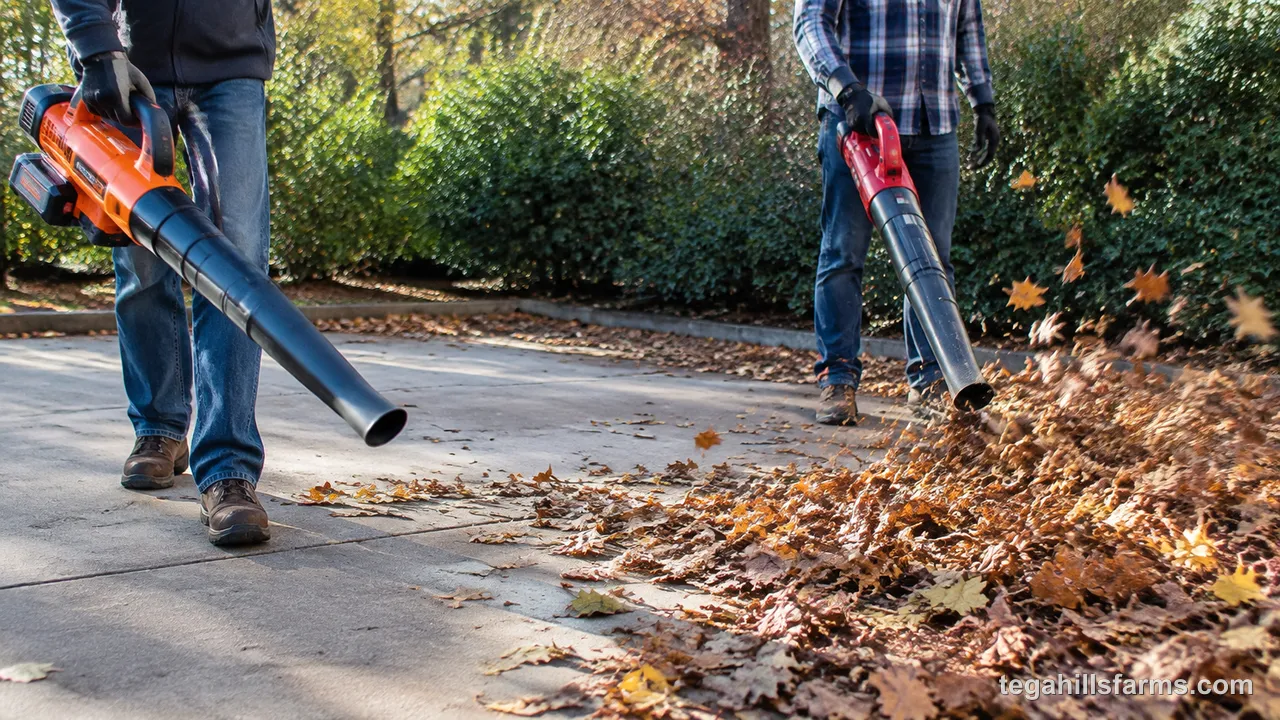
For dry leaves, the two types finish almost even. In Consumer Reports testing, gas models averaged 4.6 for sweeping on a scale that tops out at 5.5. Battery models averaged 4.4, and the best models of each type reached the same 5.2.
For a homeowner clearing a lawn, patio or driveway, an average battery blower gives up very little to an average gas model. A well-chosen battery model gives up nothing, because the top scores are identical. Dry leaves sit loosely on the surface, so a steady stream of air moves them whether a motor or an engine is driving the fan.
The bigger risk on the battery side is picking a weak model. Battery blowers vary much more in sweeping ability, and the weakest one tested scored just 0.5. That spread means the specific model matters more with battery than with gas, so check reviews for the exact model you’re considering.
Gas wins sweeping by a narrow margin on average, but a strong battery blower ties it. For dry leaves, picking a good model matters more than picking a fuel type.
Which Handles Stuck and Wet Leaves Better?
Gas pulls clearly ahead once leaves are pressed into turf or packed into corners. In the same testing, gas models averaged 4.1 for loosening and battery models averaged 3.5, with the top gas model reaching 4.8. That gap is wider than the gap in sweeping.
Loosening takes a concentrated, high-speed stream that gets under a leaf and lifts its edge before the bulk airflow can carry it. An engine holds that output steadily. Many battery models reach similar force only in a boost mode that drains the pack faster.
The gap matters most on lawns where leaves sit for weeks, in mulch beds where they settle between wood chips, along fence lines, and after rain, when the leaves weigh more and stick to each other. It matters much less if you clear leaves every few days, before they have time to mat down.
Gas wins loosening, and the advantage counts most when leaves stay on the ground long enough to pack down or get soaked.
Do CFM and MPH Ratings Settle the Question?
No. The two ratings describe different jobs, and neither one alone predicts how a blower will perform. CFM is the volume of air moved per minute. It decides how big a pile you can push across the lawn. MPH is the speed of the air at the nozzle. It decides how well the stream pries stuck leaves loose.
A blower with high MPH and modest CFM can strip a wet mat off a walkway and still push a broad pile slowly. The reverse combination moves piles easily but skims over matted leaves. Comparing cfm vs mph for a leaf blower makes sense only when both figures are measured the same way.
Battery models add a complication. Headline figures often come from turbo or boost mode, which drains the pack quickly and is meant for short bursts. Gas and battery models compare fairly only when you look at CFM and MPH measured in the mode you’ll actually use most.
How Do Runtime and Refueling Compare?
A gas blower runs until the tank is empty and refills in moments, while a battery blower stops when the pack drains and needs a recharge or a spare pack. Which approach works better depends on how long your typical cleanup lasts. A short weekly pass and a full afternoon of fall leaves put very different demands on each type.
How Long Can a Gas Blower Keep Going?
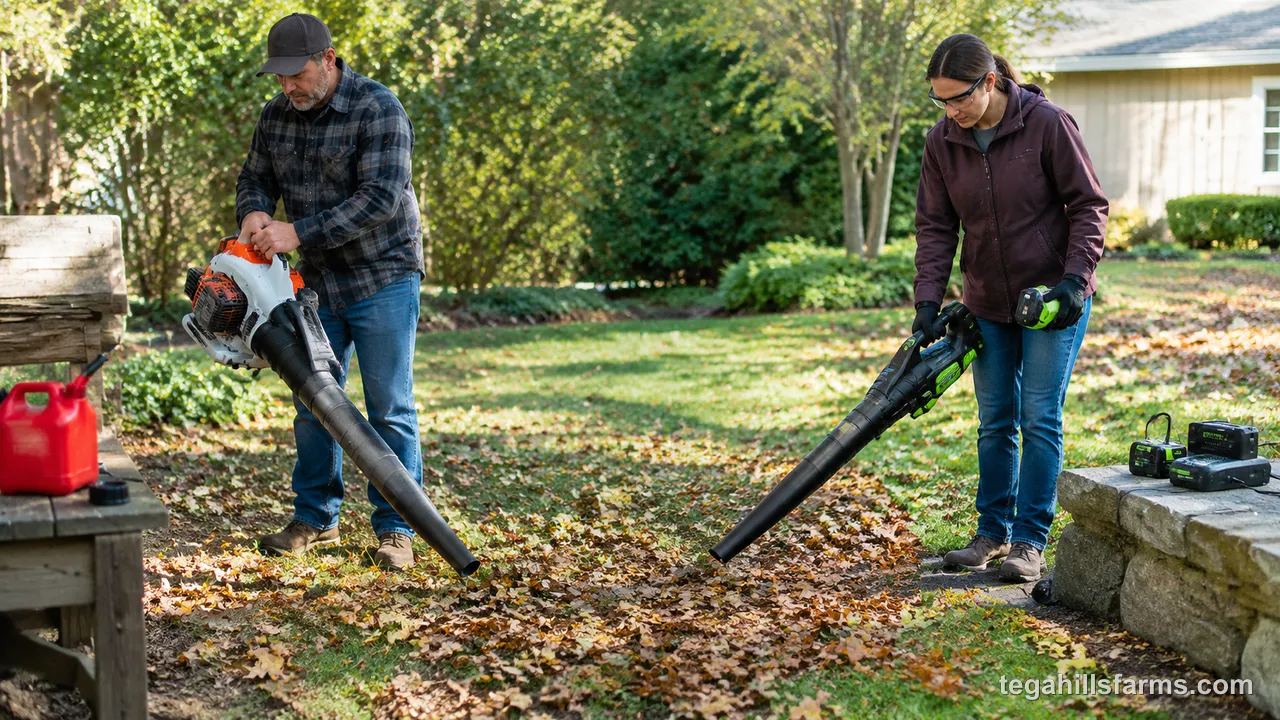
A gas blower keeps running as long as there is fuel in the tank, and refilling takes moments, so a long session goes on with barely a pause. That is why gas still suits afternoon-long cleanups on big lots.
The tradeoff is fuel handling. A two-stroke engine needs oil mixed into the gas at the ratio in the owner’s manual, and the wrong mix can damage the engine. A four-stroke engine skips the mixing but still needs its separate oil checked. Either way, you keep a gas can in the garage, add stabilizer if the fuel will sit, and replace it before it goes stale.
For a casual user who blows leaves a few times each fall, that routine of mixing, spills and fuel smell can outweigh the runtime benefit.
Gas wins on uninterrupted runtime, and that advantage counts most when cleanups run long.
How Long Does a Battery Blower Run on One Charge?
Runtime depends on how much energy the pack stores and how hard the motor draws on it. Amp-hours measure capacity, and higher voltage packs deliver more power. A larger pack on the same platform runs longer.
Power mode changes runtime the most. High-power or turbo mode pulls current much faster than normal mode, so a pack that covers a full patio cleanup on the standard setting can drain partway through on boost. Charging also takes time, which means one pack can turn a long job into a stop-and-wait session.
A second battery solves most of that. You swap packs and put the empty one on the charger, so the work continues. For smaller yards, one charge often finishes the job, and runtime stops being a concern.
Gas keeps the runtime edge. Battery closes that gap only when the job fits within the packs you have on hand.
Which Is Quieter in a Neighborhood?
Battery blowers are clearly quieter, though not silent. Gas models scored worst for noise both at the operator’s ear and at a distance. On a noise scale where a lower score means louder, gas averaged 1.7 at the user’s ear and battery averaged 2.9.
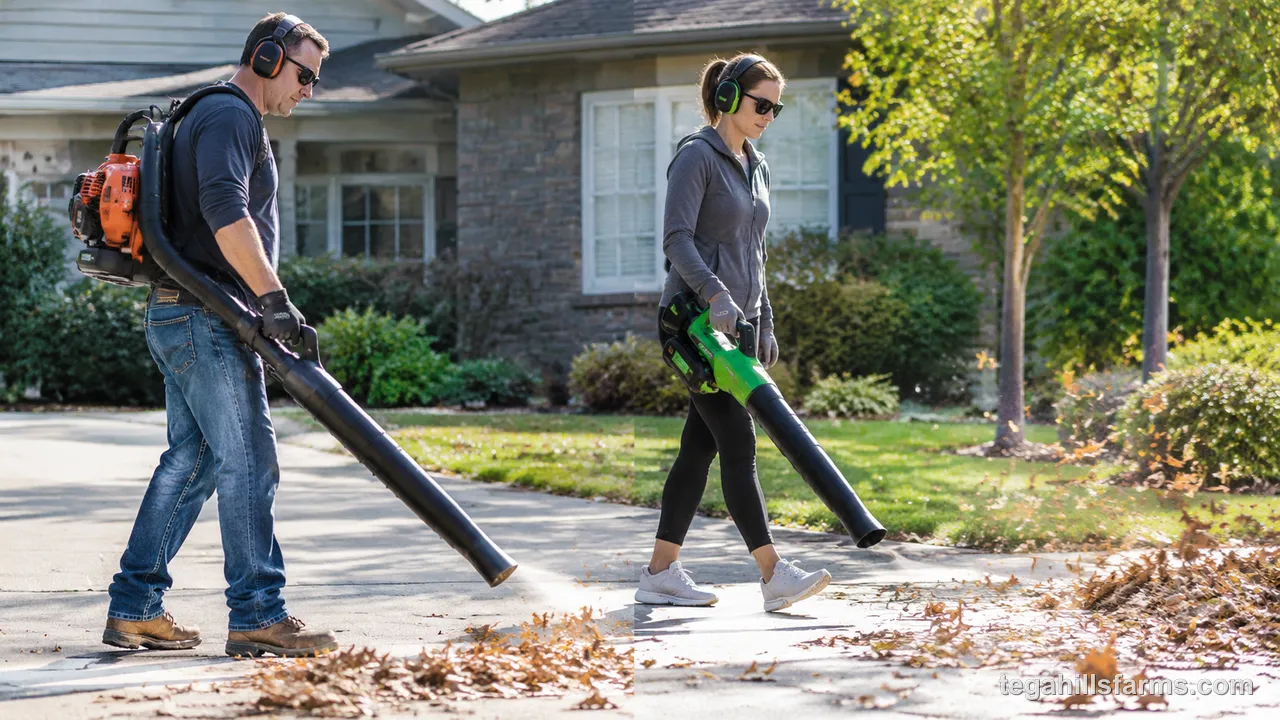
The gap widens at 50 feet, which is roughly what the people next door hear: gas averaged 2.5 there and battery averaged 4.8. That difference shapes how much your yard work bothers other people. A battery blower is much easier to run early on a Saturday morning or in a yard close to a neighbor’s bedroom window.
The type of sound also differs. A gas engine puts out a low drone that carries through walls and windows. A battery blower makes a higher whine from the fan that fades faster with distance. Up close, both are still loud enough that hearing protection is a good idea with either.
Noise also affects the operator. An hour of engine roar, along with the vibration, wears you down faster than the steadier sound of a motor.
Battery wins on noise, and the advantage matters most when you work near houses or early in the day.
Which Is Easier to Carry and Control?
Battery blowers handle better on average, scoring higher for balance and control, though the best gas models match the best battery ones. Handling scores averaged 3.6 for gas and 4.4 for battery, and the top models of each type reached 4.9.
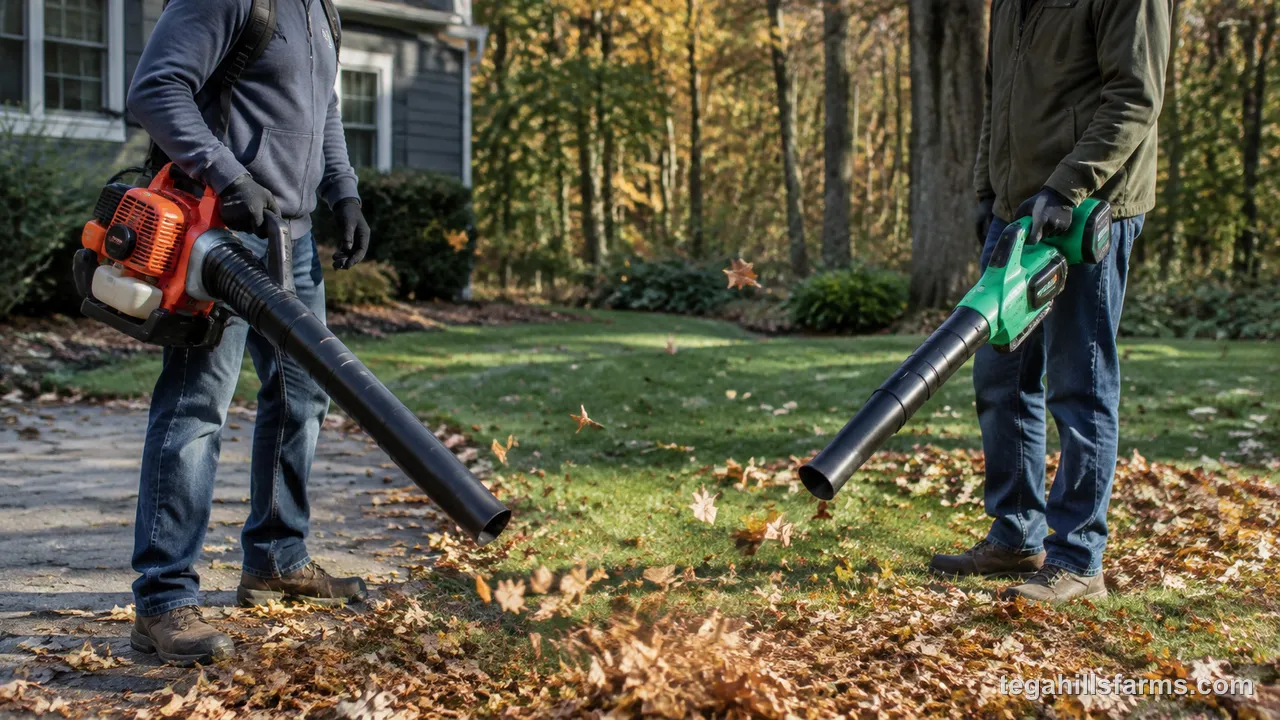
A handheld gas blower carries an engine and a fuel tank, and the engine sends vibration through the handle. Over a long session, that vibration tires your grip and forearm. A battery blower has a smoother-running motor and less vibration. Its weight sits mostly in the pack, though a large pack adds noticeable heft to the handle.
Style changes this balance. A backpack unit moves the weight onto your shoulders and hips with a harness, which makes even a heavier gas engine manageable for hours. A handheld unit puts the full weight on one arm.
Technique matters as much as weight. Nozzle angle, walking pace and working with the wind all affect fatigue, which is where knowing how to use a leaf blower pays off.
For handheld work, battery wins on handling. Gas backpack units narrow the gap during long sessions.
Which Needs More Upkeep, Gas or Battery?
Gas blowers need regular engine care, while battery blowers need little beyond battery care and a clear intake. The deciding factor is how much hands-on time you’re willing to spend between uses, and whether small-engine work feels like a chore or a routine to you.
What Does a Gas Blower Ask of Its Owner?
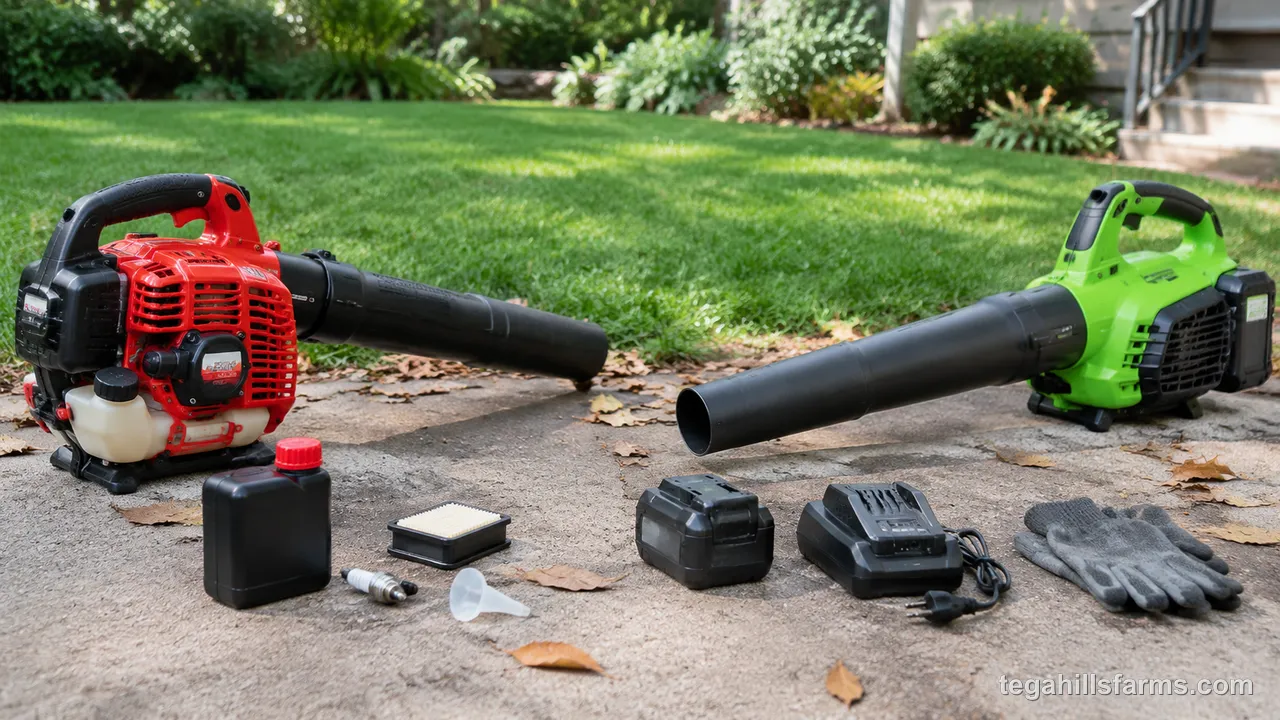
A gas blower starts reliably only if you keep up with fresh fuel, a clean spark plug, a clean air filter and a carburetor free of varnish. Most hard starts come back to the fuel.
Gasoline breaks down as it sits over months. As it degrades, it leaves a gummy residue in the carburetor’s small passages, and an engine that ran fine in November refuses to catch in spring. Ethanol blends also draw in moisture. That is why owners add stabilizer or run the tank dry before storage.
The spark plug fouls over time, especially in a two-stroke engine burning oil with the fuel, so replace it on the schedule in the manual. A dusty air filter starves the engine of air, which costs power and makes it run poorly.
If your leaf blower won’t start even with fresh fuel, check the carburetor and spark plug next.
Gas needs more upkeep. That makes it a good fit only for owners who don’t mind basic small-engine work.
What Does a Battery Blower Ask of Its Owner?
Most of a battery blower’s care goes to the pack. The motor itself needs nothing routine.
Lithium-ion packs last longest when you avoid running them completely empty and then leaving them that way. Store them partly charged, keep them out of a hot car or a freezing shed, and use the charger made for that platform. Keep the battery contacts clean, and clear leaves from the intake screen so the motor isn’t working against a blockage.
That’s the full list: no fuel to mix, no plug to change, no carburetor to clean.
Battery wins on upkeep, especially for owners who don’t want to handle fuel.
How Should You Clean and Store Either Type?
Both types need a clear intake and a clean housing. Debris pulled into the intake screen cuts airflow and makes the motor or engine run hot. After each session, knock loose any leaves stuck to the screen and wipe off the housing.
Off-season storage is where the two types differ. A gas blower needs its fuel system prepared: either run the tank dry or add stabilizer and run the engine briefly so treated fuel reaches the carburetor, following the manual. A battery blower only needs the pack removed and stored indoors, partly charged, away from extreme heat and cold.
Battery storage is simpler. Gas storage takes a few extra minutes, and skipping it is the most common reason a blower won’t start the next season.
Which Type Fits Your Yard and How You Work?
Battery suits most small and mid-size suburban lots, while gas fits large, heavily wooded properties and long or frequent sessions. The two factors that decide it are how many leaves land on your property each fall and how long you work at a stretch.
Is Battery Enough for a Small or Mid-Size Lot?
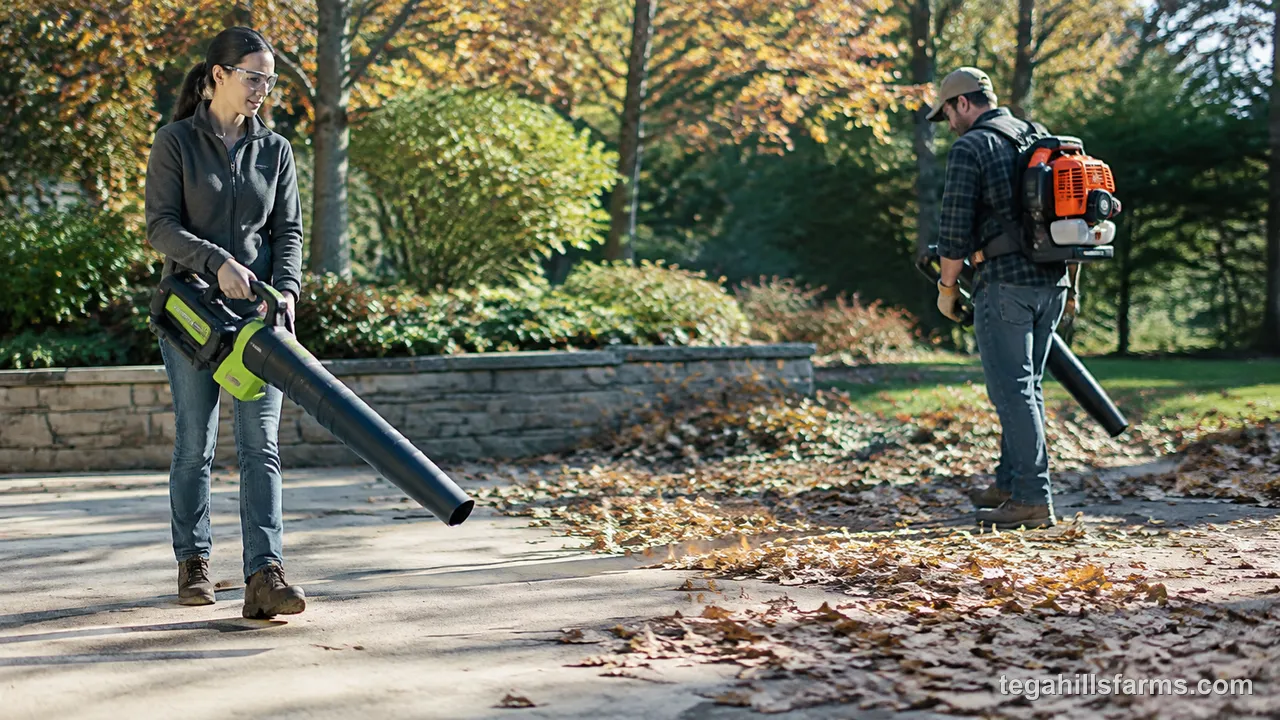
For most suburban lots, yes. A good battery blower has enough sweeping power for lawns, patios and driveways, and it adds the quiet operation and low upkeep that make frequent short sessions easy.
On a modest yard, runtime and power rarely become limits. The job usually ends before the pack does, and leaves cleared every few days don’t have time to mat down. A spare battery makes sense when one charge runs out partway through a fall cleanup, or when a few big trees drop a heavy load at once.
Price depends on pack size and on whether you buy a kit or a bare tool. Check how much a leaf blower costs before you pick a kit.
Choose battery if you have a typical suburban lot, clear leaves often enough that they stay loose, and want quiet operation.
When Does a Large Property Call for Gas?
A large property calls for gas when it combines lots of ground, heavy tree cover and long sessions. The more leaves fall and the longer they sit, the more gas’s loosening power and quick refueling matter.
A wooded property can drop more leaves in a weekend than a small lot sees all fall. Those leaves often get wet and pack down before you reach them. A gas backpack blower handles that job well because it delivers steady output for hours, refuels in moments, and carries its weight on your back.
A battery backpack model can still compete. It carries a larger pack and spreads the weight across your shoulders. With spare packs, it covers more ground than a handheld battery unit.
Choose gas if you have a large property with heavy tree cover, let leaves collect between cleanups, or work for long stretches with no time to recharge.
What About Frequent or Professional Use?
Frequent use puts the most strain on batteries. Daily use cycles packs hard and shortens their life, and keeping a crew running means owning many packs and chargers.
That is why many landscaping crews stay with gas. A refill takes moments in the field, and an engine problem can often be fixed on site. A battery-based crew needs a charging plan that keeps pace with the work.
The calculation changes for a homeowner who uses a blower often and already owns a mower or trimmer on one battery platform. Shared packs cost nothing extra to use, and a spare pack from another tool can extend runtime.
Choose gas for daily heavy work. Choose battery if you already own packs on that platform and your sessions fit within them.
Lithium-ion cells deliver less power in the cold, and late-autumn mornings are when leaves are heaviest with dew and rain. A battery blower that cleared the patio easily in September can stall on that same patio in November, leaving behind a soggy layer that sticks harder as the day goes on.
How Do Cold Weather and Wet Leaves Change the Result?
Cold weather lowers battery output, while gas engines keep their power once they’re running, even if they take more effort to start. A lithium-ion pack’s chemical reactions slow down in the cold, so a chilled pack delivers less power and drains sooner. A gas engine may need the choke and a few extra pulls on a cold morning, but after it warms up it runs at full output.
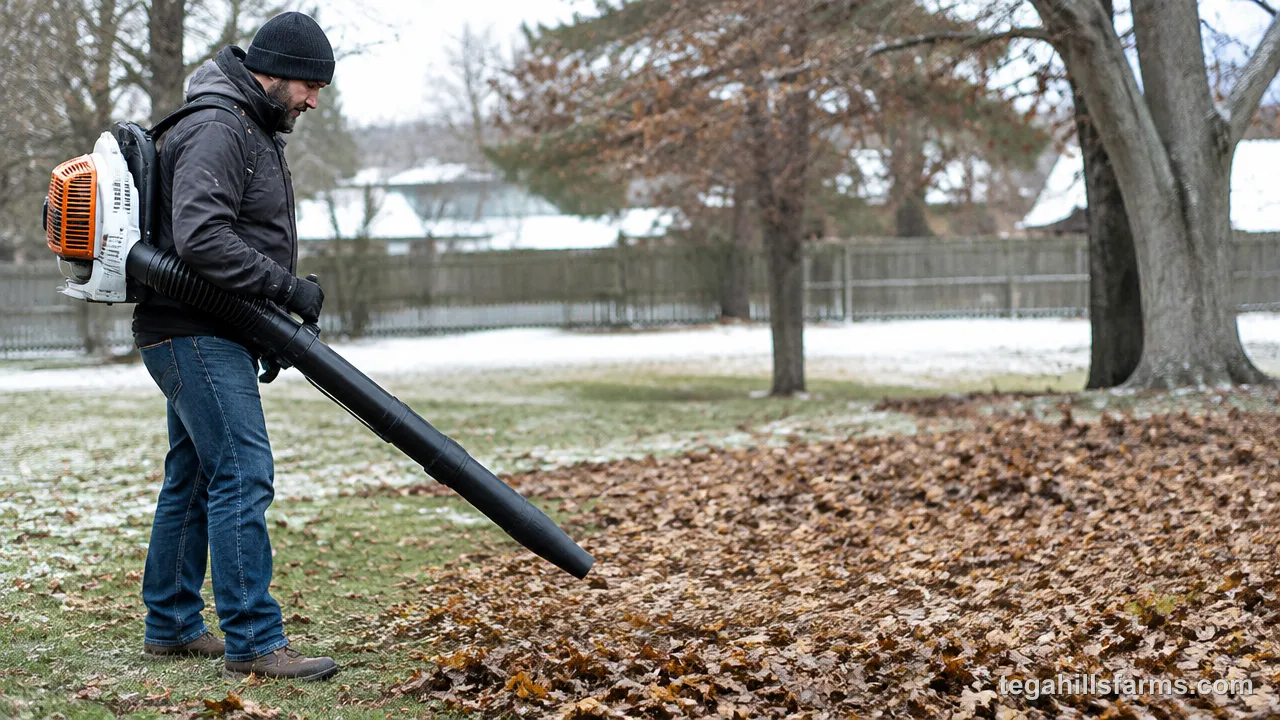
Wet leaves make that difference more noticeable. Damp leaves weigh more and stick to the turf and to each other, which calls for loosening power, the area where gas already leads. A dusting of light snow on a path does the same thing. Gas can clear it, while a cold battery pack may only push it around.
A few habits help either type. Keep battery packs indoors and bring them out just before you start. Give a gas engine a minute to warm up before you put it under full load. When you can, wait until midday, when leaves have dried a little, and use a narrow nozzle to focus the airflow on wet mats.
When Does a Battery or Engine Start to Wear Out?
A worn battery pack shows it through shorter runtime, weaker airflow, a pack that won’t take a full charge, or fault lights on the charger. Replacing the pack usually brings the blower back, as long as the motor still runs cleanly.
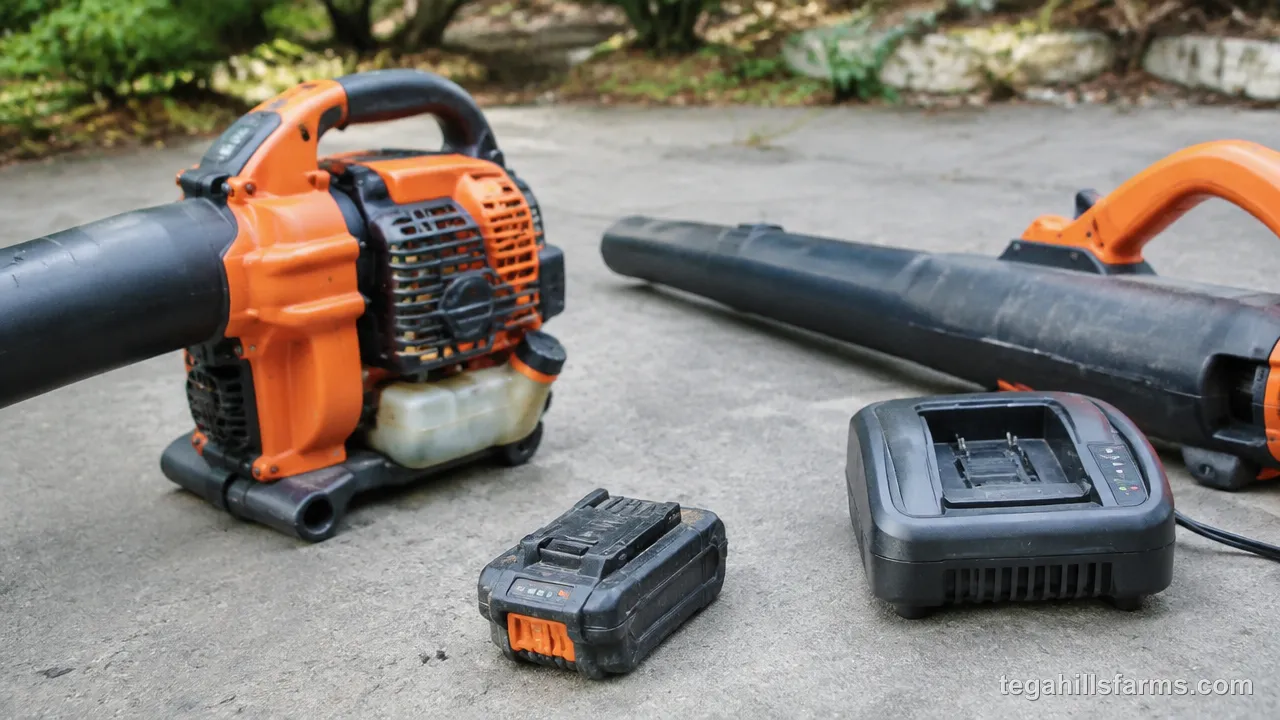
A worn gas engine shows it through hard starting even with fresh fuel, blue or heavy smoke, lost power under load, or an engine that surges. Some of those problems clear up with a new plug or a cleaned carburetor. Repeated carburetor rebuilds or a loss of compression usually mean replacing the blower makes more sense than another repair.
Knowing these signs helps you choose a type that fits your use. Heavy daily use wears out battery packs faster, and long storage periods without fuel prep are hard on engines. Both affect how long leaf blowers last in real use.
Do Local Rules Limit Gas Leaf Blowers?
Yes, in some places. A growing number of cities, towns and HOAs restrict gas leaf blowers, and those rules can decide which type you buy.
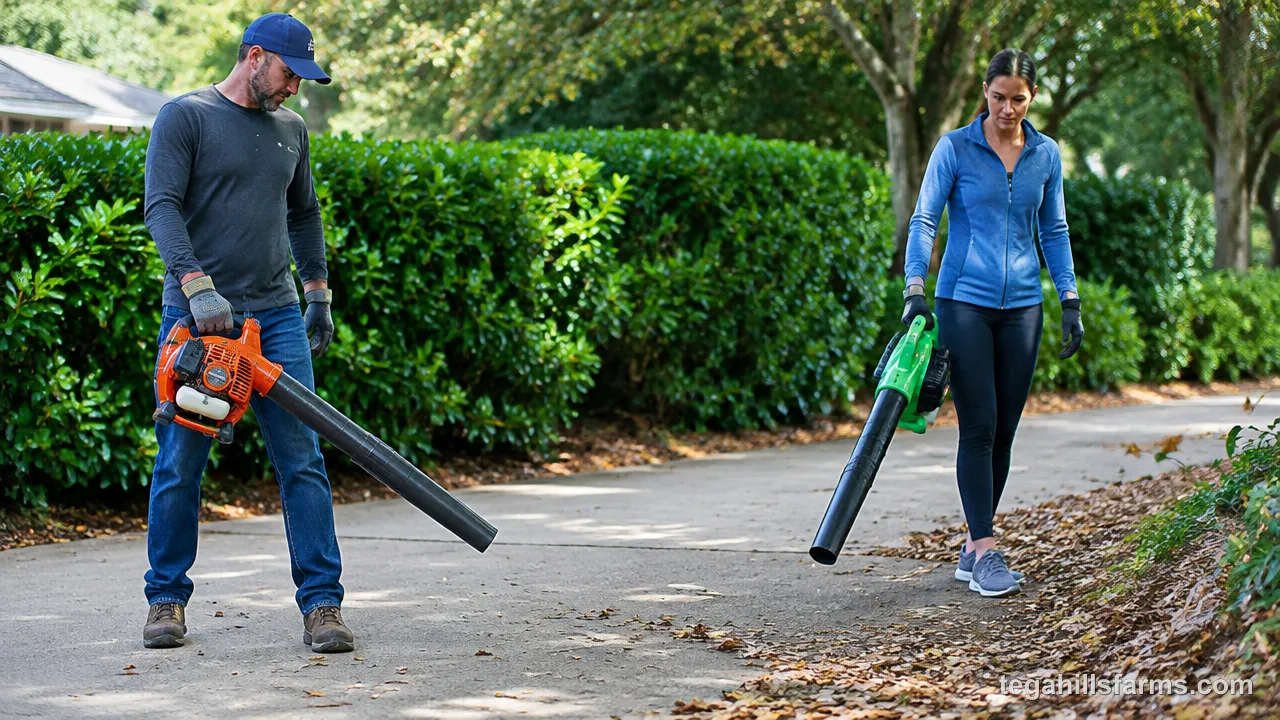
The restrictions take a few common forms: noise limits, hours when blowers may run, seasonal bans, and in some areas, outright bans on gas models. Some rules cover all blowers, not only gas ones, so a battery model can still face limits on hours.
Check your city or county ordinance and your HOA rules before you buy. A gas blower that is legal in your county may still be restricted by your neighborhood covenants.
How Do Emissions and Operator Health Compare?
A gas blower puts exhaust and fumes right where you’re standing, while a battery blower produces no exhaust at the point of use. Two-stroke engines burn oil along with fuel, so the exhaust is noticeable when you’re holding the blower close to your face for an hour.
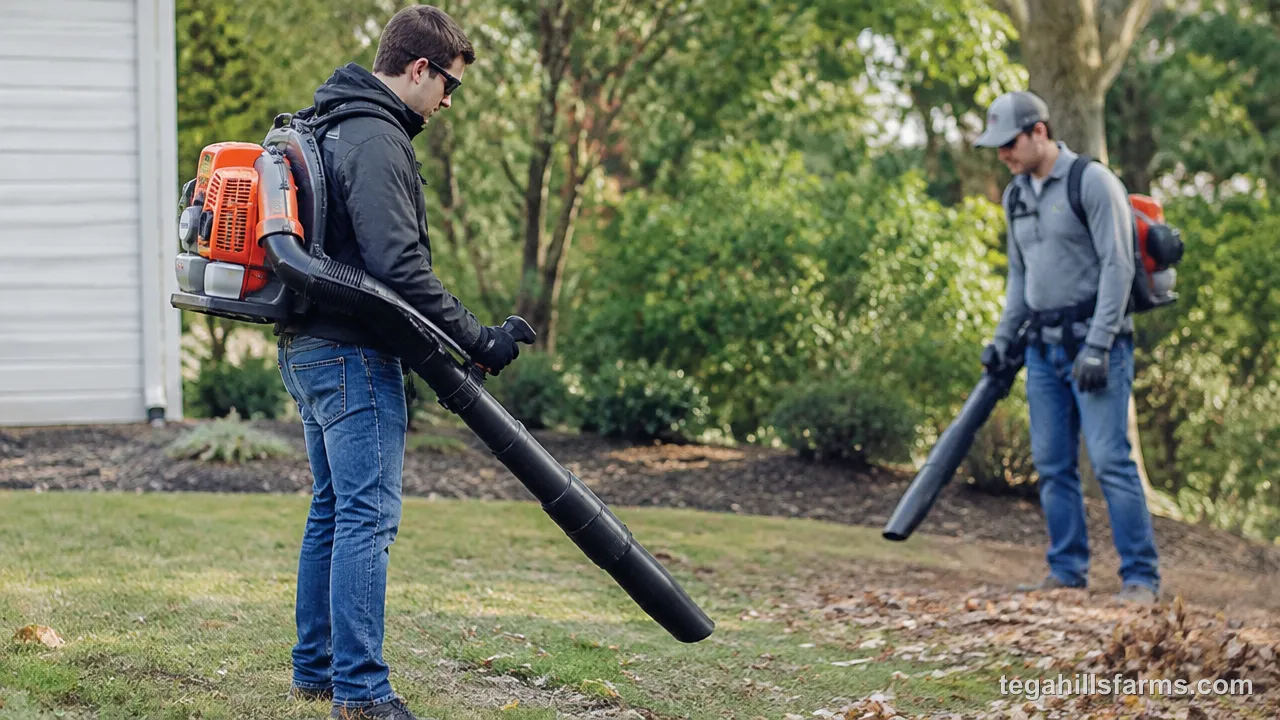
Vibration also affects the operator. An engine sends more vibration through the handle than a motor does, and long sessions with a vibrating tool tire your hands and arms. Battery models are smoother to hold, which makes a long cleanup easier on your body.
Battery models do have an environmental footprint of their own. Manufacturing the battery and generating the electricity to charge it both have environmental costs. Overall, a battery blower is cleaner and easier on the operator during use, but it is not free of impact.
Are Corded or Battery Backpack Blowers a Middle Ground?
Yes, for owners who find neither a gas nor a handheld battery blower a perfect fit. A corded electric blower runs as long as it’s plugged in and has no battery or fuel to manage. It is also light and quiet. Its limit is reach: an extension cord ties you to an outlet and drags through flower beds. A corded model suits a small lot near the house. Use an outdoor-rated extension cord and a GFCI-protected outlet.
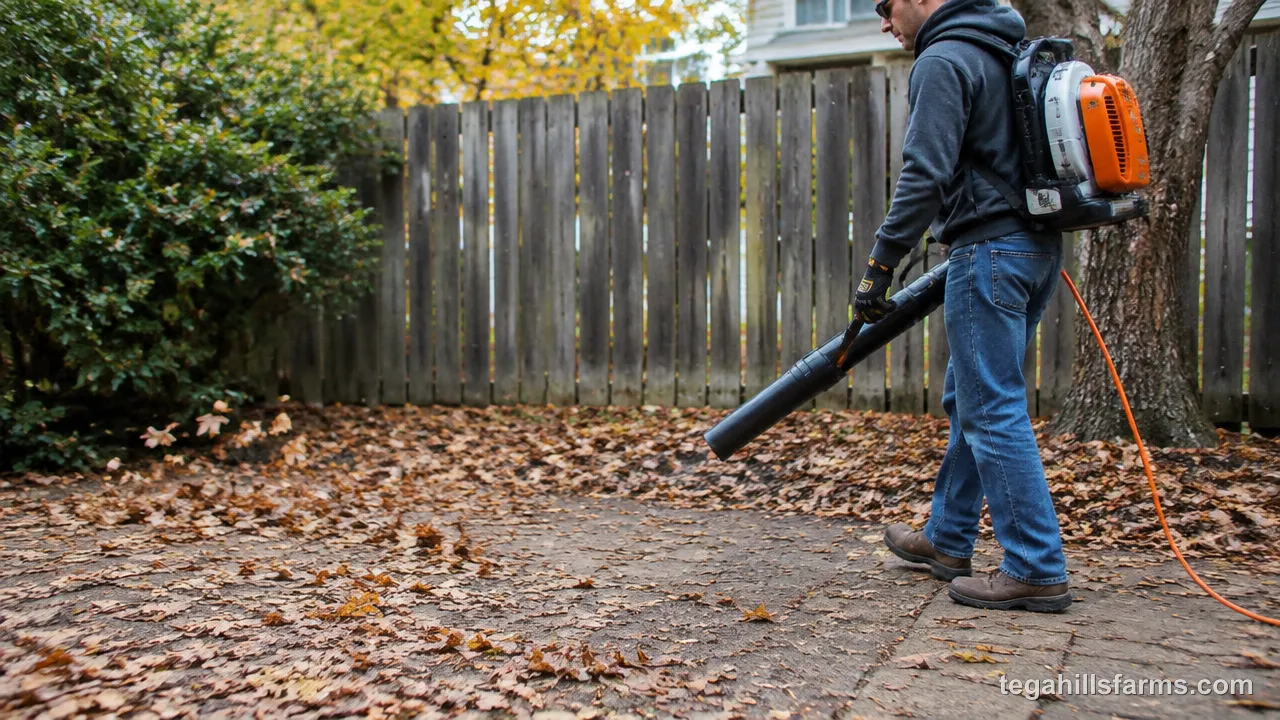
A battery backpack blower sits between a handheld battery model and gas. It carries a larger pack on your back for more runtime and power, and the harness spreads the weight across your shoulders. It suits owners of larger lots who want to avoid fuel and engine care.
Choosing between backpack vs handheld leaf blowers comes down to how long you work at a stretch and how much weight you want to hold in one hand.
Gas vs Battery Leaf Blower FAQs
Why do some people still avoid electric leaf blowers?
The main concerns are platform lock-in, reliability under heavy use, and power on wet or matted leaves. Battery packs usually work only within one brand’s platform, so the first purchase locks in future tools. Owners with large, wooded lots also worry about running out of power on a big cleanup.
Can a battery leaf blower replace gas for an average yard?
For most average suburban yards, yes. A well-chosen battery blower sweeps dry leaves as well as a good gas model, runs quieter, and needs much less upkeep. A spare pack covers longer fall cleanups. Gas still makes sense for heavy leaf loads that sit until they mat down.
Are gas or battery leaf blowers better for wet leaves?
Gas is better. Wet leaves need loosening power, and gas blowers outperform battery models there on average. Cold weather widens the gap because chilled battery packs lose output. If you use battery, keep packs warm before use and use a narrow nozzle to focus the airflow on damp leaves.
Does MPH or CFM matter more on a leaf blower?
It depends on the job. CFM moves large piles of loose leaves across open ground, while MPH lifts leaves stuck in grass or corners. Look at both figures together, measured in the same mode, and treat a battery model’s turbo rating as a short-burst figure, not its everyday output.


Write Your Review
No reviews yet. Be the first to share your experience!