

A leaf blower pushes leaves across the ground with a stream of air, while a leaf vacuum pulls them in and stores or shreds them. The blower is lighter and faster over open ground. The vacuum finishes the job by collecting the leaves.
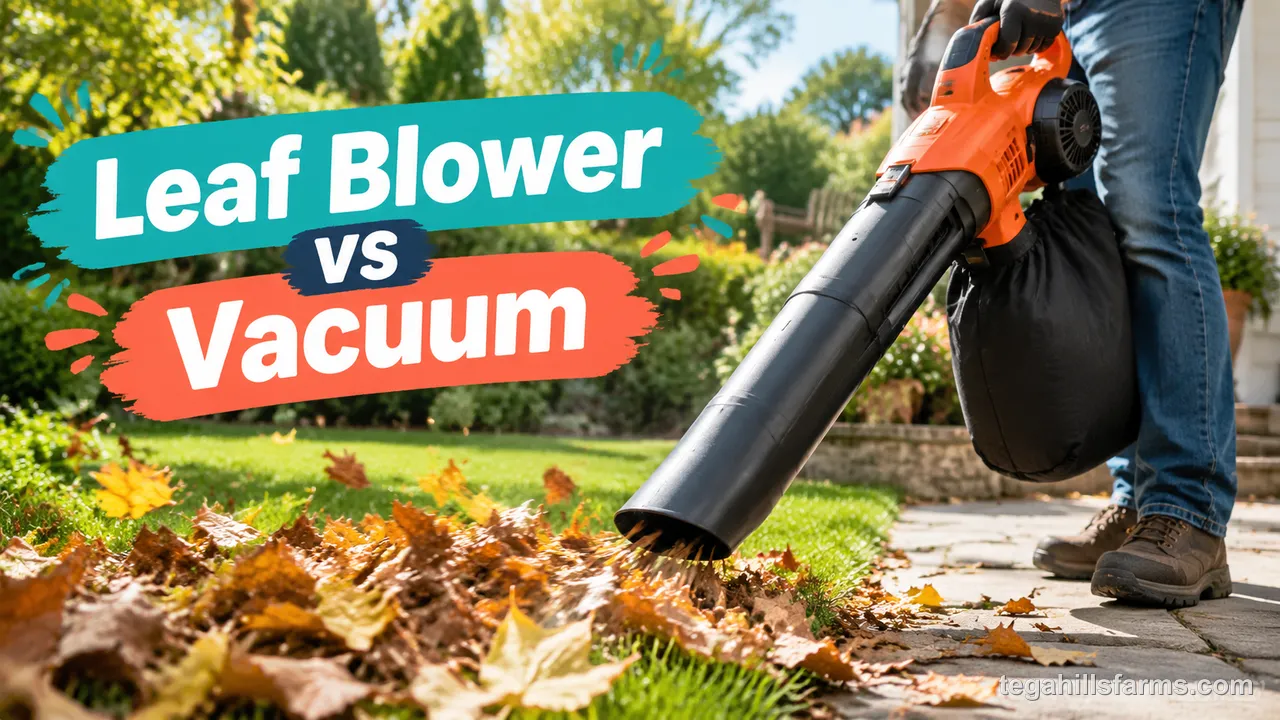
The right pick depends on how wet your leaves are, how loud and heavy you can tolerate the tool being, and what you want to happen to the leaves afterward. Power source and yard layout shift the answer too.
The usual regret is buying suction for a job it handles poorly, such as damp leaves and twigs that clog the tube. The other is buying airflow, then realizing you still have to rake or bag every pile.
Picture the last step of your cleanup before you buy. If you will bag or mulch the leaves anyway, suction saves a trip. If you only need a clear patio and driveway, airflow is enough.
What Is the Difference Between a Leaf Blower and a Leaf Vacuum?
A leaf blower pushes leaves with a stream of moving air, while a leaf vacuum pulls them in through suction and stores or shreds them in a bag. That one difference drives almost every trade-off between the two tools.
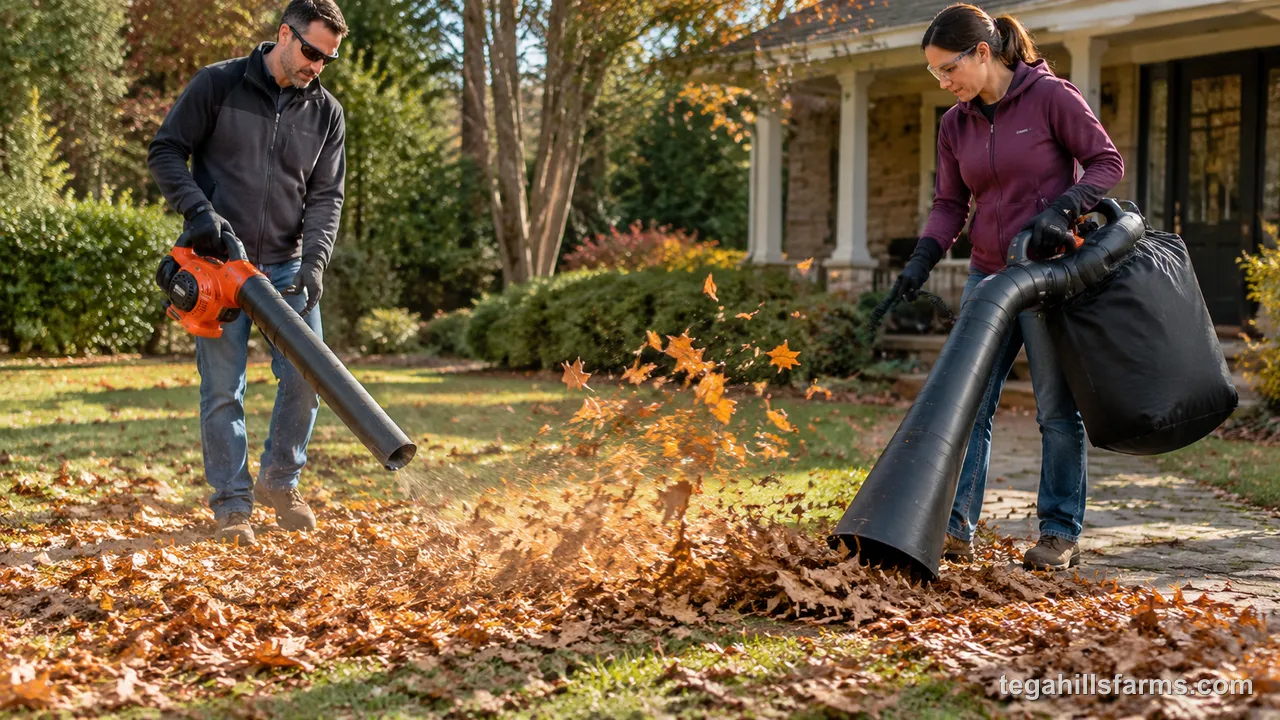
A blower is a lightweight tool with no bag. You aim the nozzle, and leaves roll into a pile or off the edge of a walkway. The work does not end there, because someone still has to rake, tarp or bag the pile.
A vacuum reverses the airflow. Leaves travel up a tube into a collection bag, and many models chop them on the way through. Hauling a full bag takes effort, but the leaves are gone.
Many machines do both. A leaf blower vacuum, often called a blower vac, switches between modes by swapping the tube and attaching a bag. If you are still working out what kind of machine you need overall, our guide on how to choose a leaf blower covers the full buying decision.
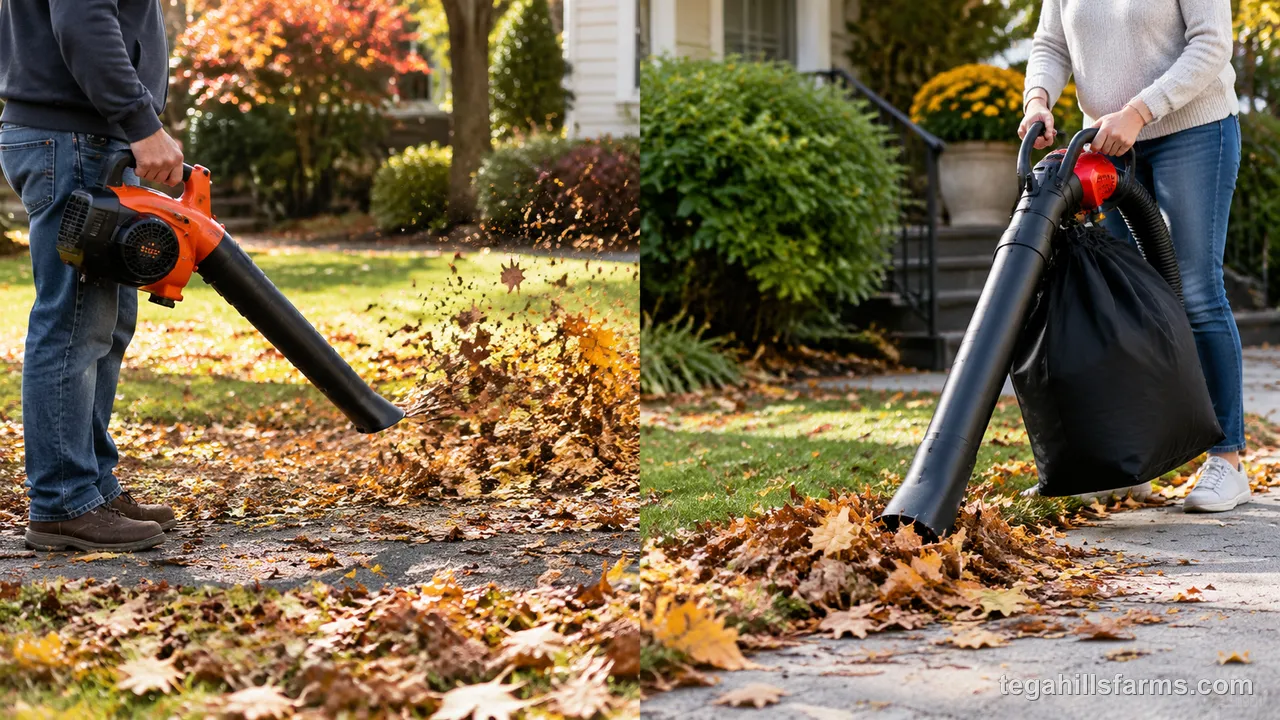
How Do a Leaf Blower and a Leaf Vacuum Compare Side by Side?
A blower wins on speed and light weight, and a vacuum wins on cleanup. Which one suits you depends on leaf condition, noise and carrying comfort, and what happens to the leaves afterward.
Which Handles Wet and Dry Leaves Better?
Dry leaves move easily with either tool, but wet, matted leaves resist both airflow and suction. A blower can usually peel a damp layer loose with steady passes, though it takes longer.
Dry leaves are light and loose, so a modest airstream rolls them along the ground. A vacuum lifts them just as readily and, in mulching models, shreds them on the way in.
Wet leaves stick to each other and to the grass. A blower has to break that bond before it can move anything. A vacuum has the same problem, and damp material tends to cling inside the tube and slow the impeller. I would not promise any vacuum clears soaked leaves cleanly, so treat that as a limit to plan around.
Airflow volume and air speed both play a part here. Our breakdown of cfm vs mph leaf blower ratings shows which number matters when leaves are stuck down.
If your yard stays wet through fall, wait for a dry afternoon before vacuuming.
Which Is Quieter and Easier to Carry?
A blower without a bag is lighter to carry, while a vacuum gets heavier as the bag fills. Noise depends more on the model and power source than on the tool type.
On a long cleanup, bag weight is what you feel. A handheld blower stays the same weight from start to finish. A vacuum starts light and gains pounds with every pass, which tires your shoulder on a full session. How the weight is carried also changes comfort, and backpack vs handheld leaf blower covers that choice in detail.
For noise, measuring conditions matter. Blowers rated Fair or Poor for noise run at least 85 dBA in blowing mode, measured at the operator’s ear. Models rated Very Good or Excellent meet 65 dBA measured at 50 feet, a common local limit.
Those numbers describe models, not categories. Check a specific model’s noise rating before you commit.
What Happens to the Leaves Afterward?
A blower leaves leaves in piles you still rake or bag, while a vacuum collects them in a bag, and mulching models shrink them first. That downstream effort often decides which tool feels easier.
After blowing, you have a pile and a second job. After vacuuming, you have a bag to empty. Bag capacity is only a few cubic feet per fill, depending on how well the machine shreds and how big the bag is, so large yards mean frequent trips to the compost bin.
Shredding is where mulching models earn their keep. Manufacturers advertise reducing leaf volume to about 1/16 of the original. Consumer Reports found real results closer to a third or a quarter across multiple models.
That is still a meaningful drop, but it is not the dramatic number on the box. Expect fewer bags, not a handful of dust.
What Are the Pros and Cons of a Leaf Blower?
A leaf blower moves leaves fast with a light body, but it leaves the collecting to you. It earns its place in open areas and falls short once the leaves need to go somewhere.
What Does a Leaf Blower Do Well?
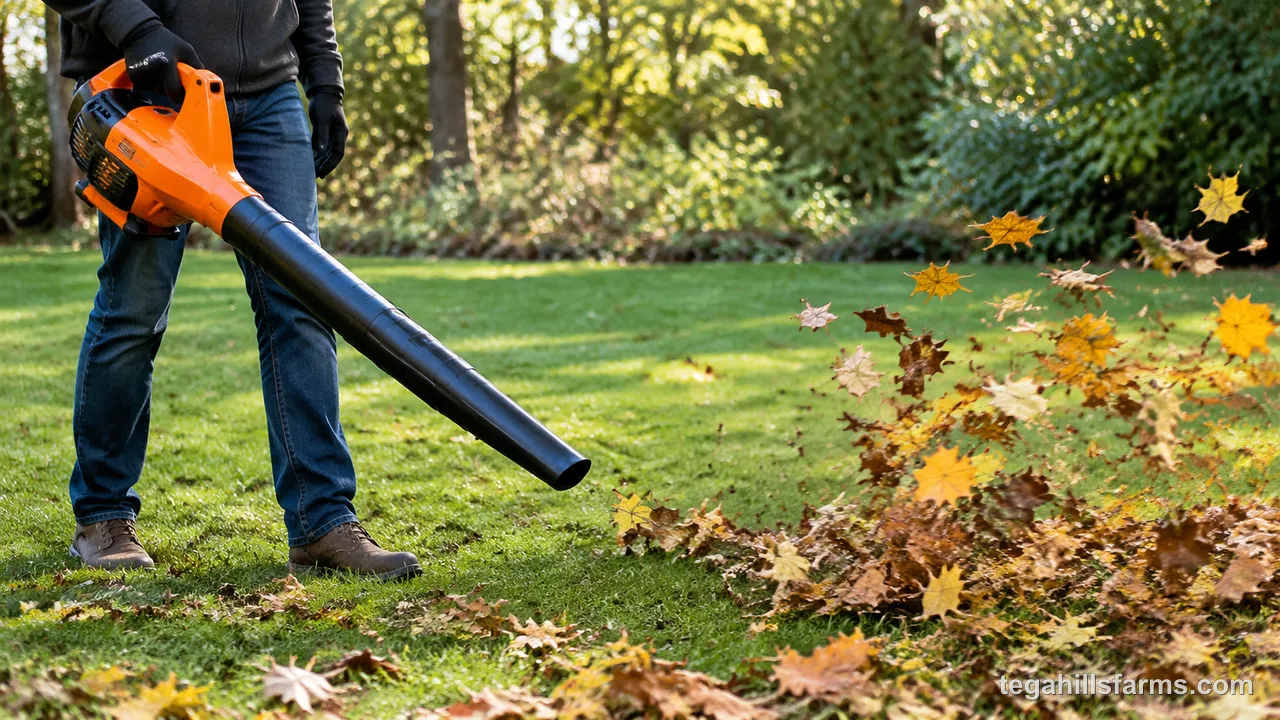
A blower’s biggest strengths are fast clearing of open ground and hard surfaces and a light body you can carry all afternoon. It is the quickest way to get leaves off a patio, driveway or walkway.
Without a bag or shredder, a blower stays compact and easy to store. You can work at your own pace, covering ground in long sweeping passes.
Hard surfaces are where it shines. Leaves lift off pavers and concrete in seconds, and the same airstream clears grass clippings and other light debris from paths.
It also takes little setup. There is no bag to fit and no tube to swap, so a ten-minute cleanup really is ten minutes. If your routine is a quick weekly tidy, that simplicity is the main selling point.
Where Does a Leaf Blower Fall Short?
A blower moves leaves instead of removing them, and it is loud while it scatters debris. Every pile it makes still needs raking, tarping or bagging.
That means a second round of work, and the first round can create new problems. A gust of wind sends your pile back across the lawn. Debris and dust can drift into a neighbor’s yard, which is where noise complaints and strained relations tend to start.
Noise adds up over a full session. Even a cordless model is audible down the block, and early-morning blowing is rarely welcome.
Be honest about what you are buying: speed now, effort later. If you hate the raking step, a blower alone will not fix that.
What Are the Pros and Cons of a Leaf Vacuum?
A leaf vacuum collects and shreds leaves, which saves cleanup steps, but it is heavier, slower and fussier than a blower. You gain capability and give up simplicity.
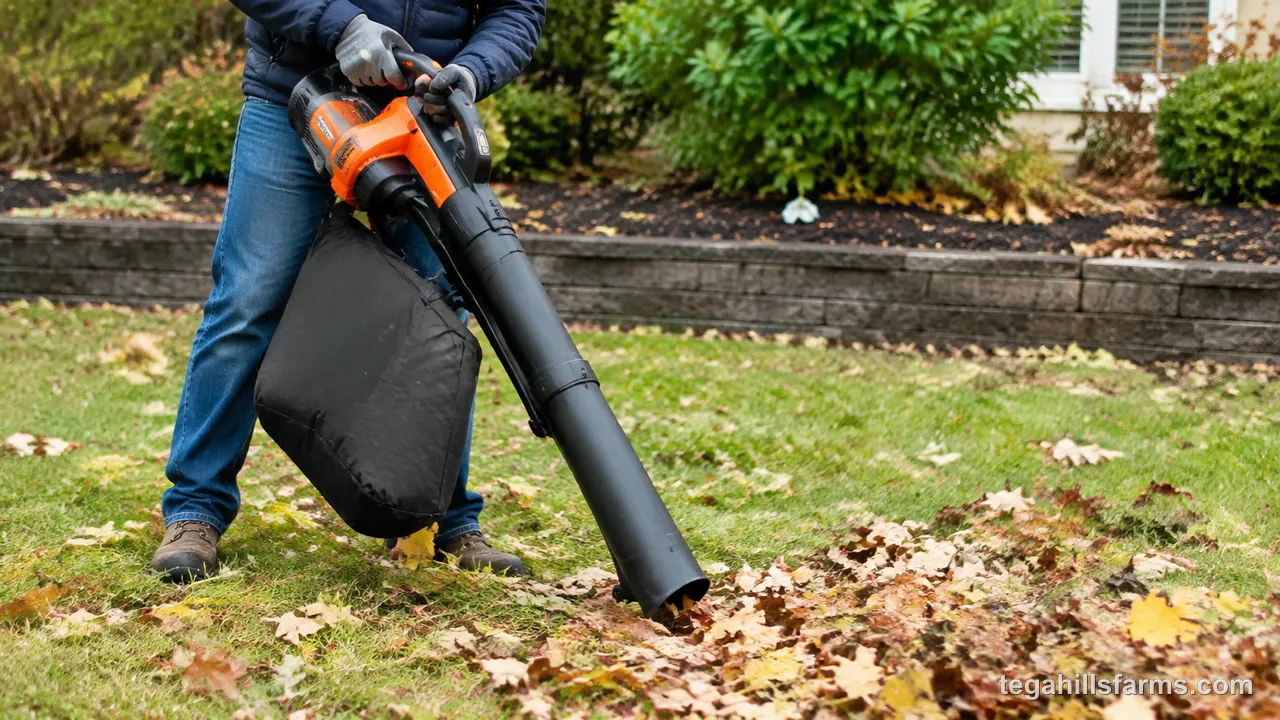
What Does a Leaf Vacuum Do Well?
A leaf vacuum collects and shreds leaves, which cuts bagging trips and produces usable mulch. That makes it a good fit for tidy yards and planted beds.
Suction takes leaves out of the picture instead of rearranging them. Nothing blows back, and nothing drifts onto a neighbor’s lawn.
Mulching models shrink the load before it reaches the bag. Fewer bags means fewer trips to the curb or compost pile. The shredded leaves also work as a light mulch around shrubs and beds, so the cleanup produces something useful.
Vacuums are also gentler near planting areas. You can pick up leaves near a bed without throwing mulch across the lawn.
Where Does a Leaf Vacuum Fall Short?
A vacuum gets heavier as the bag fills, covers ground slower than a blower, and clogs on damp leaves or twigs. You also have to stop and empty the bag.
On a big yard, that stop-and-empty rhythm eats time. A blower sweeps a wide area in a few passes, while a vacuum works a narrow strip and needs a pause every few minutes.
Clogs are the other everyday annoyance. Small branches, acorns and wet clumps can jam the tube or bind the impeller, and clearing a jam means shutting the machine off.
Bag weight and bulk matter in storage too. A vacuum with its tube and bag takes more shelf space than a blower.
Is a Leaf Blower Vacuum Combo Worth It?
Yes, a leaf blower vacuum is worth it: it switches between blowing and vacuuming with one tube and bag swap, and it suits small to mid-size yards with limited storage. One motor covers two jobs.
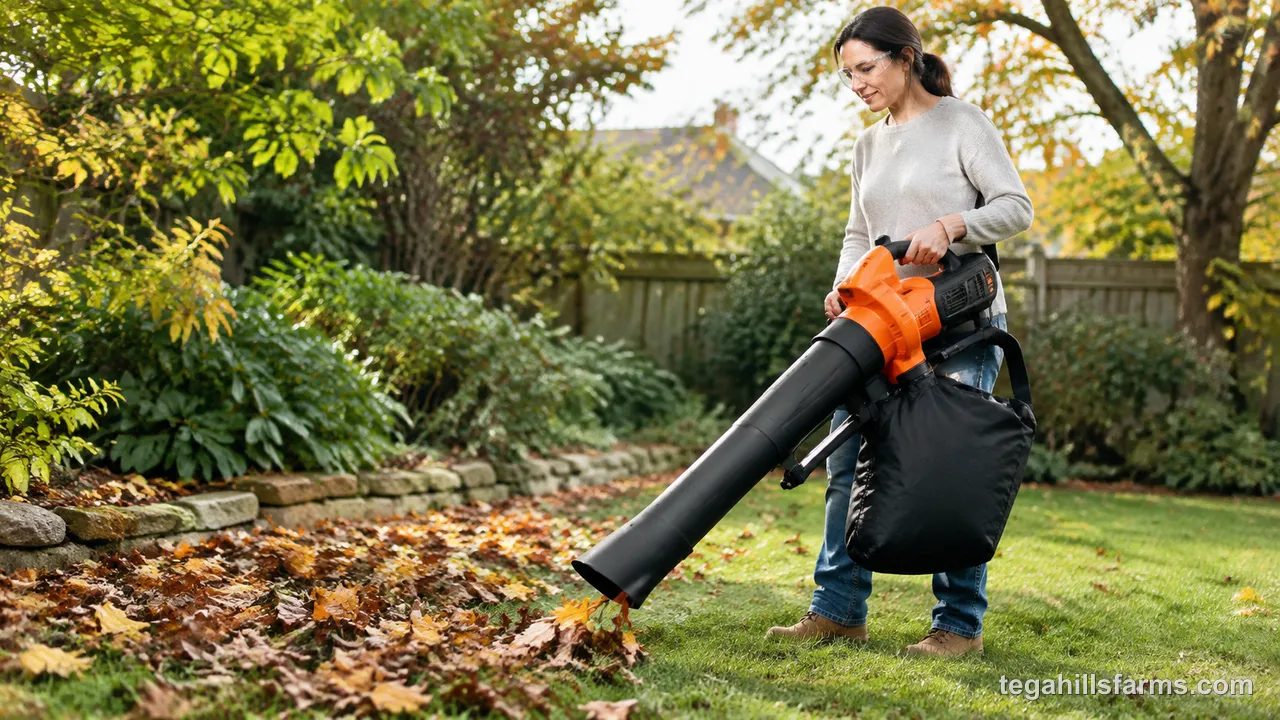
The compromise is that a combo rarely matches a dedicated machine at either task. For most homeowners, convenience outweighs that gap.
Can a Leaf Blower Be Used as a Vacuum?
A plain blower cannot collect leaves; only a blower vac with a vacuum tube and bag can. The vacuum mode needs an intake path and a place for the leaves to go.
On a blower vac, you remove the blowing tube, attach the vacuum tube, and fit the bag. Some switch quickly, others take a minute and a tool or two.
The same motor does both jobs, but not equally well. The Toro Ultra Blower Vac, for example, lists 340 CFM in blow mode and 405 CFM in vacuum mode, with air speed up to 260 mph.
Small branches are the main limit. Twigs can jam the tube or the shredder, so clear them by hand first. Our guide on how to use a leaf blower covers the mode switch and the safe way to clear a jam.
When Does a Blower Vac Make Sense?
A blower vac makes sense on small to mid-size yards where storage space is tight and you want one machine for both jobs. It is a practical choice for suburban lots with a few trees.
One unit takes one spot in the garage. You blow leaves off the patio, then switch modes and vacuum the beds. For many yards that covers the whole season.
The trade-offs are weight and focus. A combo carries the extra parts of a vacuum even when you are only blowing, so it feels heavier than a plain blower. In vacuum mode it will not match a dedicated unit’s bag size or shredding power.
If your yard is large or heavily wooded, a separate blower and vacuum will probably serve you better.
Which Power Source Works Best: Gas, Battery or Corded?
Choose gas for large yards and freedom from cords, battery for quiet and easy storage, and corded electric for steady power near an outlet. Each choice shifts mobility, upkeep, noise and runtime.
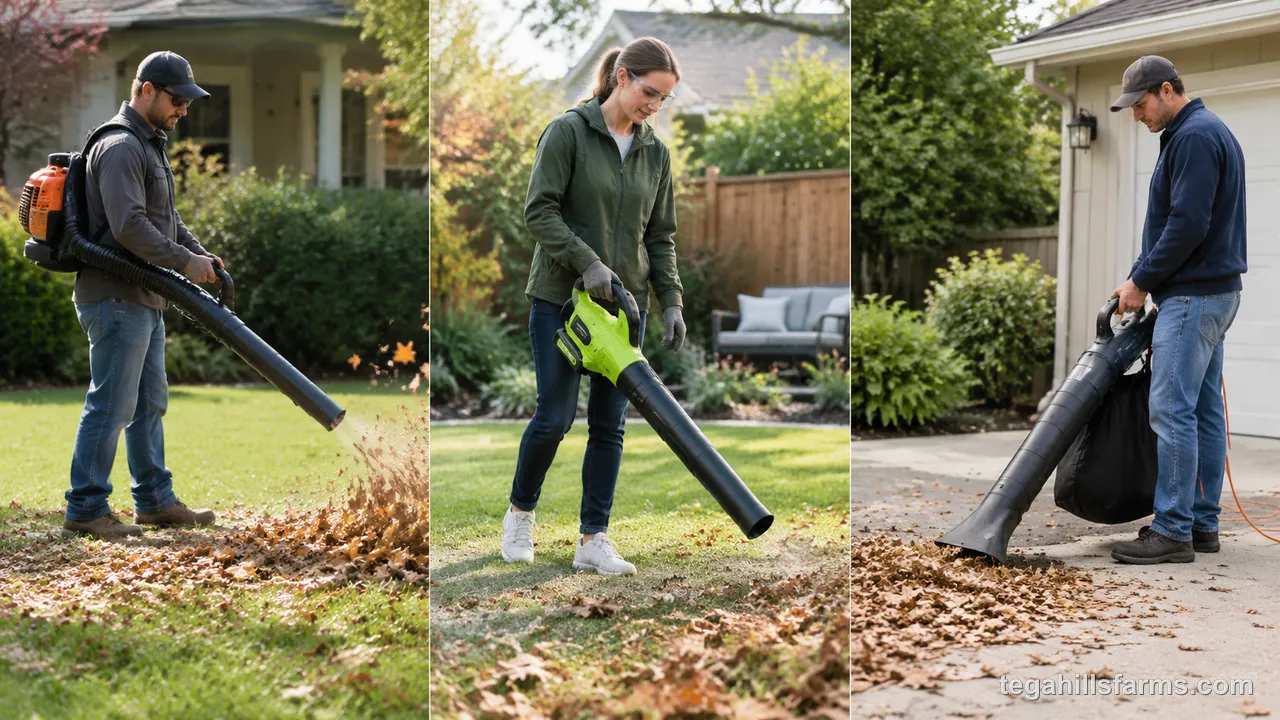
For a closer look at the first two, see gas vs battery leaf blower.
When Does a Gas Model Make Sense?
A gas model suits large yards because it runs without cords or battery limits, in exchange for engine upkeep. Gas also tends to deliver the most power for heavy leaf fall.
You can work as long as you have fuel. Backpack gas blowers spread the weight across your back, which helps on long sessions.
The cost is maintenance. You mix or buy fuel, change spark plugs, and store the machine properly. After sitting over winter, a gas engine can be stubborn. If yours balks, see why a leaf blower won’t start for the usual causes.
Local rules matter too. Some areas restrict gas blowers.
Gas makes sense if you have the yard for it and do not mind routine small-engine work.
Is a Cordless Battery Model Enough?
A cordless blower is enough when runtime covers your yard and you can recharge between sessions. Battery models are quieter, simpler to store and need no fuel.
Runtime is the number to check. The Worx WG543E LeafJet lists 23 minutes of runtime and a 60-minute charge time. That suits a small yard, but a big property could outlast one battery.
A second battery fixes that. Battery lifespan is the other factor, since packs wear down over several seasons. For a realistic picture of ownership, read how long do leaf blowers last.
Store batteries indoors over winter and keep them partly charged. That small habit helps them last longer.
Who Should Choose a Corded Electric Model?
A corded electric model suits small yards close to an outlet, with steady power and very little upkeep. There is no fuel or battery to manage.
The Craftsman Corded Electric Backpack lists 450 CFM and 260 MPH, so corded does not have to mean weak. It starts every time you plug in.
The limit is reach. An extension cord can only go so far, and it snags on shrubs, trees and furniture. You also have to avoid running over the cord.
If your leaves fall within cord range of the house, corded is the lowest-hassle option.
Which Type Fits Your Yard Best?
A blower wins on small yards, patios and walkways, a backpack-style blower handles large lawns and heavy leaf fall, and a vacuum is gentler around garden beds and delicate plants. Layout matters as much as leaf volume.
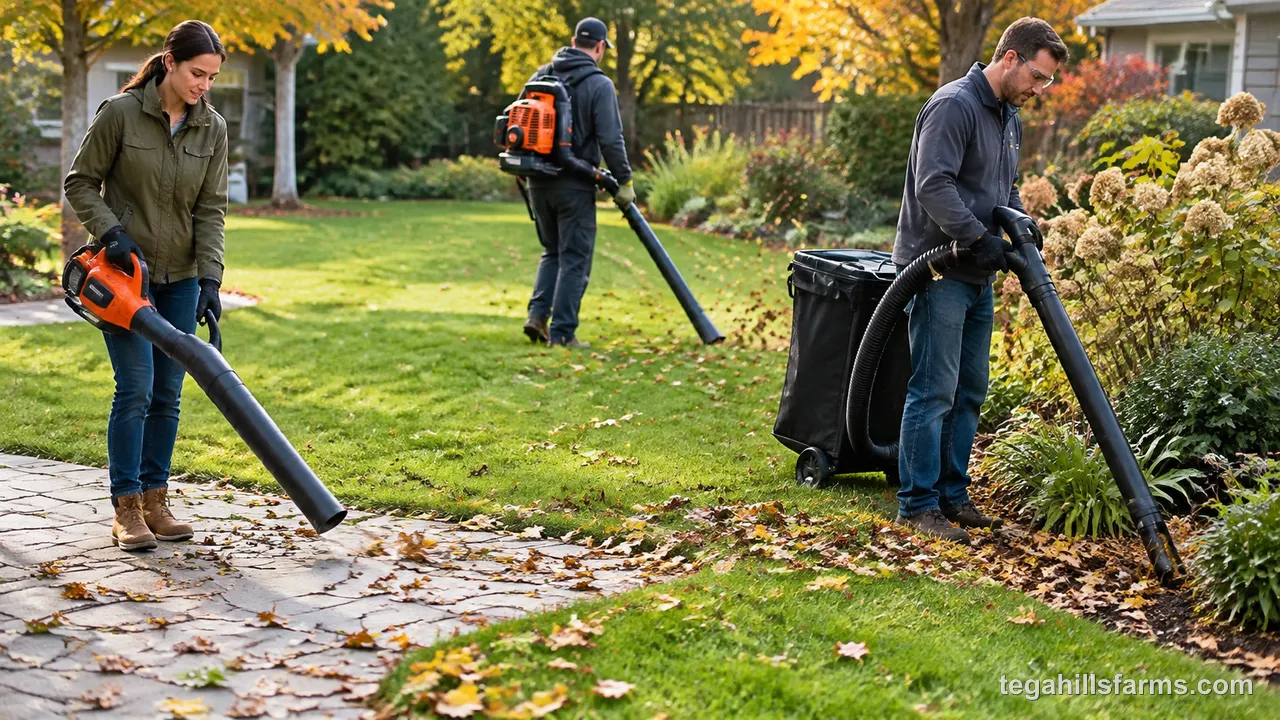
What Works for Small Yards, Patios and Walkways?
A light blower is the best fit for small yards, patios and walkways, because it clears hard surfaces fast and stores easily. A vacuum helps in corners and around furniture.
On a small lot, a blower finishes in minutes. You do not need much power, so a corded or small battery model works well. Pushing leaves into one corner and bagging them is quick when the area is compact.
A vacuum is useful where air would scatter things. Between patio chairs or along a fence line, suction picks up leaves without chasing them around.
If you want one tool, a lightweight blower or a blower vac keeps things simple.
What Works for Large Lawns and Heavy Leaf Fall?
Coverage and power matter most on large lawns, so a backpack-style blower usually beats a vacuum there. A vacuum’s bag fills often and slows a big job.
With many trees, you face a lot of leaves. A strong blower can drive them into long rows across open grass, and one pass moves a wide swath.
A vacuum would need frequent stops to empty the bag. That makes it the slower choice on big properties unless you really want mulch.
A common approach is to blow leaves into a central area and then vacuum or bag them there. A gas or high-capacity battery backpack suits that style. Choose by workload, not by the biggest number on the box.
What Works Around Garden Beds and Delicate Plants?
A vacuum is the gentler choice around garden beds, because airflow can scatter mulch and damage tender plants. Suction lifts leaves without throwing material across the bed.
A strong airstream pushes mulch and soil out of place. It can also bend or tear young plants.
Vacuuming picks leaves up cleanly, and a mulching model chops them into small pieces you can leave on the bed. If you only have a blower, use low speed and keep the nozzle angled away from the plants.
For planted areas, suction is the safer pick.
Should You Buy a Leaf Blower, a Leaf Vacuum or Both?
Buy a leaf blower for open lawns and hard surfaces, a leaf vacuum for beds and mulch, or a blower vac if storage is tight. Owning both makes sense when your yard has both big open areas and planted beds.
I lean toward a blower vac for most suburban lots, because it handles the patio and the beds with one machine. A big, wooded property is the exception, where a strong blower plus a separate vacuum earns its space.
Think about the last step. If you bag or mulch everything anyway, suction pays off. If you only need clear paths, airflow does the job.
Budget shapes the choice too, and our breakdown of how much does a leaf blower cost walks through what to expect.
On a wide, flat lawn, a blower herds leaves into long rows, and a vacuum bag fills again every few passes. Neither tool simply rolls across the grass and picks leaves up as it goes. What changes when a machine with rotating brushes does that work for you?
How Does a Leaf Blower Compare With a Lawn Sweeper?
A lawn sweeper collects leaves with rotating brushes into a hopper, so it needs no blowing or suction, and it works best on flat lawns. You push it or tow it behind a tractor.
On big, open, even turf, a sweeper can cover ground quickly while collecting as it goes. There is no pile to rake afterward.
It loses on slopes, where the brushes and hopper are awkward to control. It also struggles in tight areas like beds, steps and corners, where a blower or vacuum can reach.
A blower wins on versatility. It clears patios, walkways and gaps between plants. A vacuum is better for shredding and for working near beds.
Choose a sweeper only if your lawn is large and mostly flat. Otherwise, it adds another bulky machine to store.
Should You Remove Fallen Leaves or Leave Them as Mulch?
Fallen leaves feed soil and shelter insects, but a thick layer smothers turf, so shredding them is the middle path. How much you remove depends on how heavy the layer is.
A light cover of leaves breaks down and returns nutrients to the soil. In beds and under trees, it also gives insects a place to overwinter.
On the lawn, a deep mat blocks light and traps moisture, which can harm grass. That is the case for removing or shredding leaves from turf.
A mulching vacuum fits this approach. It shreds leaves into small pieces that settle into beds or break down faster. If you only blow leaves, consider moving them off the lawn and into beds or a compost area instead of a curbside bag.
Are Gas Leaf Blowers Restricted Where You Live?
Yes, many places set noise limits or gas blower restrictions, and California is a well-known example. Check local rules before you buy a machine you may not be allowed to run.
Restrictions come from cities, counties and states. Some limit sound levels, some limit hours of operation, and some restrict gas models in certain seasons or areas. Rules differ widely across the US, so no single answer applies everywhere.
California has tightened rules on gas-powered small engines, and many local governments there add their own limits. Quieter battery and corded models generally fit within noise limits more easily.
Look up your city and county ordinances, and your homeowners association rules if you have one. A quick check can save you from returning a new machine.
What Wears Out or Clogs First on Blowers and Vacuums?
Clogged tubes, damaged impellers and worn bags are the first things to fail on blowers and vacuums. Most of these problems start from twigs, damp leaves and rough handling.
A clogged tube is the common one. Wet clumps and small branches pack into the tube and cut airflow. You can usually clear it by unplugging or shutting off the machine and removing the blockage by hand.
The impeller is the fan that creates suction in vacuum mode. Hard objects like stones can chip or bend it, which makes the machine noisy and weak. A damaged impeller often means replacing the part.
Bags wear at the seams and zipper. Small tears let dust and shredded leaves escape.
Cleaning is enough for clogs and buildup, and our guide on how to clean a leaf blower covers the routine. Replace parts when you see cracks, bent blades or torn bags.
Leaf Blower vs Vacuum: Frequently Asked Questions
Which is better for wet leaves, a blower or a vacuum?
A blower is usually the safer choice for damp leaves. Steady passes can peel a wet layer loose, while a vacuum tends to clog. For heavy, soaked leaves, waiting for a drier day makes either tool work better.
Is a mulching vacuum worth it?
It is worth it if you want fewer bags and usable mulch for beds. Mulching gives real shrinkage, though less than box claims. If you rarely bag leaves or mulch them, a blower alone may be enough.
Which blower vac models are worth comparing?
The Toro Ultra Blower Vac and the Stihl SH 56 C-E are two to compare. The Stihl lists 412 CFM at 159 MPH, so it moves more air at a lower speed. Check the mode switch and bag design for your yard.
Are battery blowers quiet enough for neighbors?
Battery models are generally quieter than gas, but noise varies by model. Check a model’s noise rating and where it was measured. Even a quieter machine is best used at reasonable hours.
Can a vacuum pick up twigs and acorns?
Small twigs and acorns can jam the tube or damage the impeller. Rake or pick up larger debris first, and use the vacuum on leaves and light material.



Write Your Review
No reviews yet. Be the first to share your experience!