

Most homes need a generator between 5,000 and 7,000 watts for the basics like a refrigerator, sump pump, lights and a few outlets, 7,000 to 10,000 watts to run most appliances (including HVAC in a small home), and 10,000 to 20,000+ watts for whole-home power with central air. Where you land depends on what you run and how hard it hits at startup.
The sizing method is simple. List the appliances you want running, add their steady draw, then check the biggest startup surge and leave a small margin.
The worry runs both ways. Buy too small and the breaker trips just when the fridge compressor kicks on. Buy too big and you haul around extra weight, noise and cost for capacity you never use.
Before you compare any models, write down the one or two motor-driven appliances you can’t do without. Those startup surges, not the lights, usually decide the number.
What Does Generator Size Mean: Running Watts vs. Starting Watts?
Generator size is the electrical load a unit can supply, rated in running watts for steady output and starting watts (also called surge watts) for brief peaks.
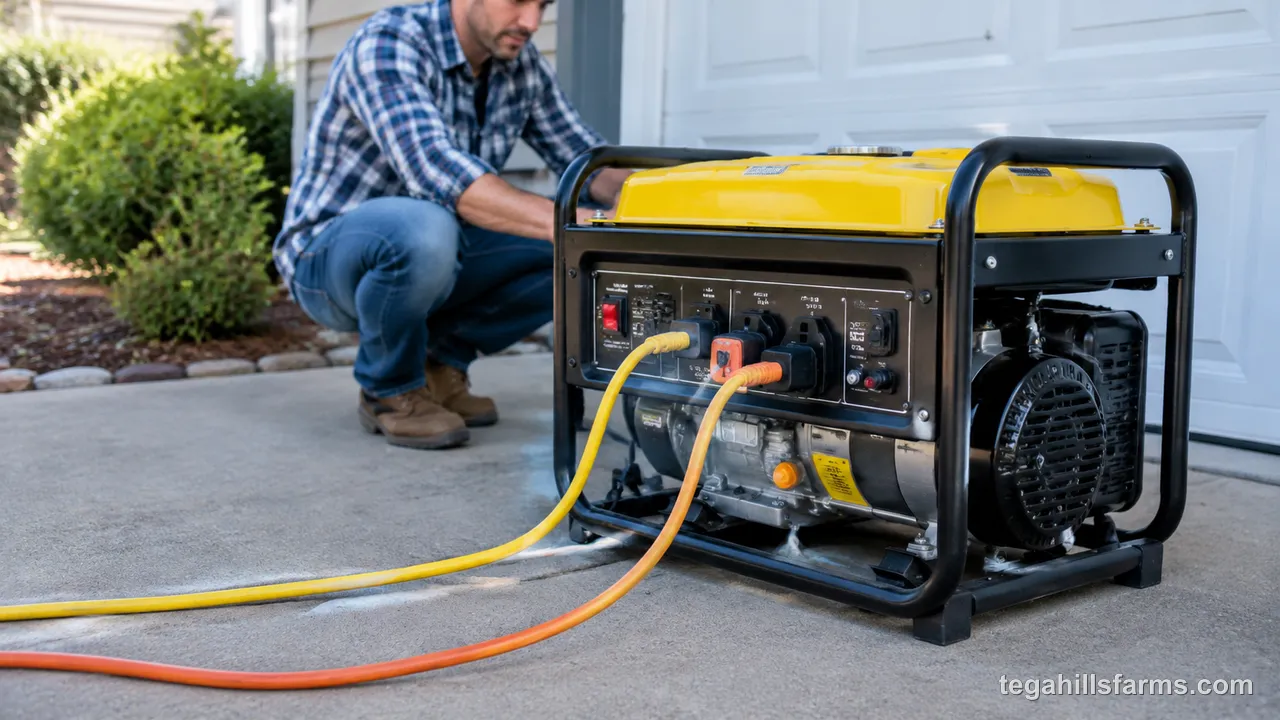
Running watts are what the generator holds hour after hour. Starting watts are the short burst it can deliver when a motor kicks on, usually for a few seconds. Motors in refrigerators, pumps and air conditioners need far more power to start than to run, so the surge number matters as much as the steady one.
Watts convert to kilowatts (kW): 1 kW equals 1,000 watts, so a 7.5 kW label means 7,500 watts. Be careful with the number on the box, though. It is often the peak rating, not what the unit sustains, so check the running figure before you trust it.
Wattage is only one part of the decision, and if you are still weighing features and fuel types, our guide on how to choose a generator covers the rest.
How Do You Match a Generator to Your Home’s Power Needs?
Matching a generator to your home comes down to the appliances you pick, how running and starting watts combine, and the safety cushion you add. Work through them in that order and the final number mostly falls out on its own.
Which Appliances Do You Want Running During an Outage?
Sort every load into must-run, nice-to-have or skip, and size the generator for the first group plus whatever you can stagger.
Start with what an outage really threatens. That is usually the refrigerator, a sump pump, a few lights, a phone-charging spot and a furnace fan in cold weather. Write those down first.
Next come comfort items like a TV, a microwave or a coffee maker. They matter less, and most are short-use loads you can run when nothing big is cycling. Skip the rest. The electric dryer, the oven and the pool pump can wait until the grid is back.
A short list is the cheapest route to a smaller generator. A list that tries to keep the whole house normal is how people end up shopping for a unit twice the size they need.
How Do Running Watts and Starting Watts Fit Together?
The generator has to carry the total running watts of everything on at once while absorbing the largest single startup surge.
Motor-driven appliances are where the two numbers split apart. A compressor or pump draws steady power once it spins, but it needs a hard shove to get there. Lights, a TV and a laptop barely surge at all.
Honda’s example household shows how this plays out. A refrigerator, furnace, five lights, a TV and a microwave add up to 5,300 starting watts and 2,900 running watts, yet a 3,000-watt generator carries all of it. Startup surges rarely stack, since motors seldom kick on in the same second.
That is why you size for the steady total plus the biggest surge, not for every starting number added together. For a step-by-step version of the math, see how to size a generator.
How Much Safety Cushion Should You Leave?
A cushion of 10 to 20 percent above your running and starting total keeps the generator from tripping when two big appliances start at once.
Without any margin, a small miscount puts the unit at its limit every time a compressor cycles. A modest buffer absorbs that and lets the engine run without strain.
Don’t pad it heavily, though. Every extra layer of safety pushes the number toward a bigger machine, and a bigger machine costs more, weighs more and burns more fuel. Treat the cushion as protection against overload, not as cover for every future what-if.
If you expect a real change, such as adding central air later, plan for that load directly instead of inflating the margin.
Which Appliances Demand the Most Power When They Start?
The appliances that surge hardest are refrigerators and freezers, sump pumps and well pumps, and central air and HVAC. Each can demand far more at startup than its running draw suggests, which is why they often set the generator size.
How Much Power Do Refrigerators and Freezers Need?
A refrigerator runs on about 700 watts but can pull over 2,000 watts for a few seconds when the compressor starts.
That gap is the catch. A generator that looks big enough on running load alone can stall or trip the moment the compressor kicks in. Freezers use the same kind of compressor and behave the same way.
The fix is to size for the surge, not the steady draw. It also helps to let the fridge start while few other loads are running, so its jolt doesn’t land on top of a pump or furnace fan.
The compressor cycles on and off all day, so the surge repeats many times over a long outage. Count it every time.
What About Sump Pumps and Well Pumps?
A sump pump runs closer to 1,000 watts, and its motor needs extra headroom to start, while a well pump is often the deciding load for rural homes.
Both are motor loads, so the startup surge sits well above the steady draw. A sump pump protects the basement, which makes it a must-run item in wet seasons. A well pump supplies water for drinking, flushing and bathing, and for many rural households it sets the generator size on its own.
Check the nameplate or manual for the pump’s starting watts or amps. Pump size and design vary a lot, so a rough guess here is how people end up undersized.
If the pump is the biggest motor on your list, size around it, then stagger everything else.
Can a Generator Run Central Air and HVAC?
A generator can run central air and HVAC only if it is large enough for the startup surge, and that one load is what moves a home from a small portable unit to a large one.
Central air is the biggest load most homeowners ask a generator to carry. It is also why sources quote such different sizes for the same house.
Heating matters too, and the type of system changes the answer. A gas furnace mainly needs its blower fan, which is a modest load. A heat pump or electric resistance heat can demand far more, so check the equipment nameplate before you decide.
Skipping HVAC keeps the generator smaller. In mild weather many households go without it, or cool one room with a window unit instead. If you do want central air covered, you are shopping in the middle and upper size tiers, and the rest of the list should be built around it.
How Big of a Generator Does Your Home Size Call For?
Smaller homes can get by on essentials-only backup, mid-size homes need a bigger unit once central air is on the list, and larger homes call for whole-home coverage. Square footage is only a rough guide, because the appliance list decides the final number.
Small Homes and Essentials-Only Backup
A home under 1,000 square feet typically needs 8 to 12 kW (8,000 to 12,000 watts) for whole-home coverage, while essentials-only backup can drop to 5 to 8 kW (5,000 to 8,000 watts).
Essentials-only means the refrigerator, a sump pump, the furnace fan and a few lights and outlets. That is a short list, and it keeps the generator compact.
Floor area is a weak predictor here. Two small homes can need very different units if one cooks, heats and dries clothes with gas and the other does it all with electricity. Start from the circuits you want powered, then pick the size.
Mid-Size Homes Around 1,500 to 2,000 Square Feet
Homes of 1,000 to 2,000 square feet typically need 12 to 18 kW for whole-home coverage, and central air is the load that decides whether you land at the low or high end.
Sources disagree on this size because they answer different questions. Some quote a portable unit that runs chosen circuits. Others quote standby capacity meant to carry everything at once. Both can be right for the same house.
Electric versus gas appliances shift the answer too. An all-electric home of this size needs noticeably more than one with a gas range, dryer and water heater.
If you don’t need everything at once, a mid-range portable can serve this home when you pick circuits and stagger the big motors. Whole-home coverage is the path that pushes toward the larger numbers.
Larger Homes and Whole-Home Coverage
Homes over 2,000 square feet typically need 18 to 22 kW or more to carry everything at once.
At this size the heavy loads multiply. Central air, often on more than one zone, sits alongside an electric range, a dryer and a water heater. Those loads add up fast, which drives the generator size up.
That’s why standby units dominate here. They connect to the panel directly and start on their own, with no extension cords. Getting that much power into the house safely is a separate job, covered under how to power house with generator.
What Can Common Generator Sizes Actually Run?
A 3,000-watt unit covers the essentials, a 7,500-watt unit handles several major appliances at once, and a 12,000 to 15,000-watt unit can carry central air plus the rest of the house. Find the class that matches your appliance list and you’ve narrowed the shopping a lot.
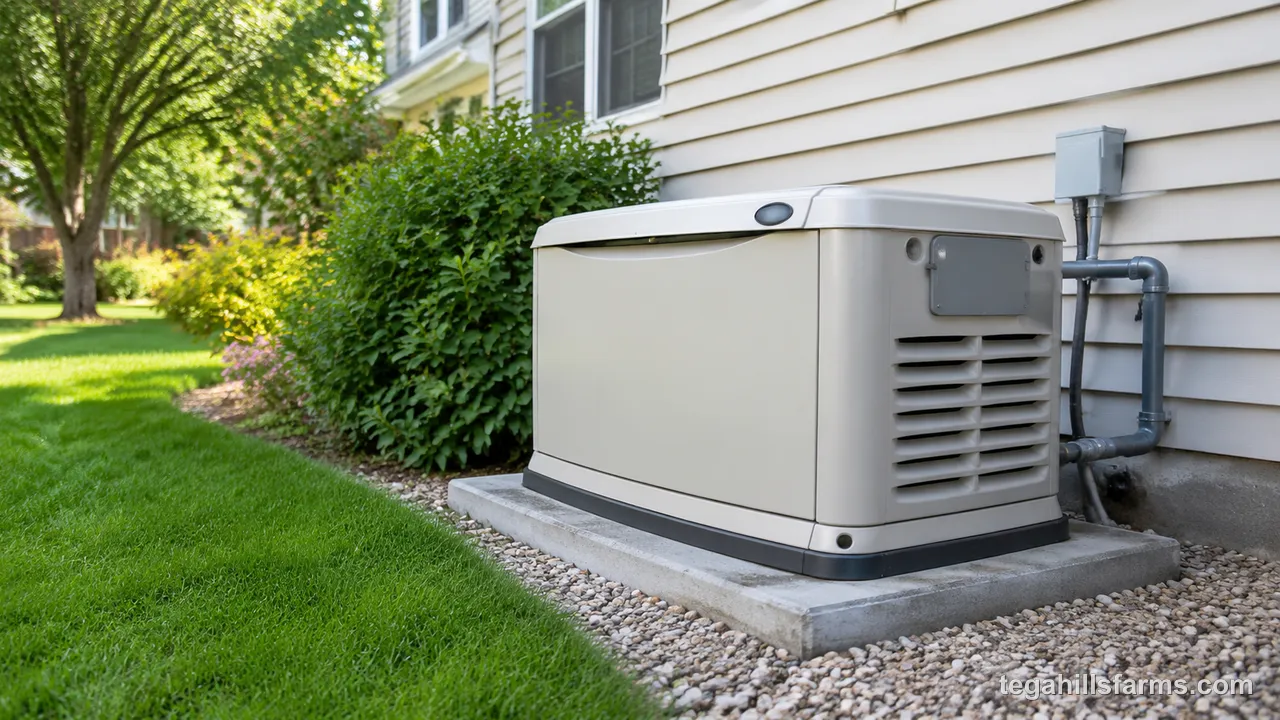
What Can a 3,000-Watt Generator Run?
A 3,000-watt generator runs a refrigerator, lights and electronics, but not central air.
The example household from earlier, with a refrigerator, furnace, five lights, a TV and a microwave, fits in this class without giving anything up. That covers the core of most outage plans. Heavy loads like an electric dryer, range or water heater are out of reach, and so is a central AC unit.
Many compact units in this class are inverter models. The common follow-up question, how does an inverter generator work, has a short answer: it converts raw engine output into clean, steady power, which suits phones, laptops and TVs. Inverter units also tend to run quieter and lighter than conventional ones.
Stagger the fridge, furnace fan and microwave and this size stretches further. Run them all at once and you’ll find its limit.
What Can a 7,500-Watt Generator Run?
A 7,500-watt generator covers several major appliances at once, such as a refrigerator, sump pump, furnace fan and a few circuits of lights and outlets.
In a smaller home it can handle HVAC as well. That is the main step up from the small class, and it makes this size popular for portable whole-circuit backup.
Load choices still matter. Central air, an electric range and a dryer running together will exceed it, so you decide which of them runs and when. Starting the big motors one at a time keeps the surge manageable.
For many households this is the sweet spot between a unit that handles the essentials and one sized for every circuit. It’s big enough to be flexible without turning into a heavy, thirsty machine.
What Can a 12,000 to 15,000-Watt Generator Run?
A 12,000 to 15,000-watt generator can carry central air alongside a refrigerator, lights and other major appliances.
This is whole-home capacity for many houses. Several heavy loads can run together, and the startup surges have room to land without tripping the unit. The tradeoff is size: these generators are heavy, loud and thirsty compared with smaller ones, and they usually need a proper hookup.
Pairing two smaller units can be a reasonable alternative to buying one large generator. It lets you run one for light loads and bring in both for the heavy ones, and the method is covered under how to parallel generators.
Buy this class only if your list truly includes central air plus other large loads. If it doesn’t, you are paying for capacity you’ll rarely use.
Should You Size a Portable or a Standby Generator?
A portable generator is enough for essential circuits, while a standby generator makes more sense for whole-home coverage with automatic startup. The same household can be sized very differently depending on which path it takes.
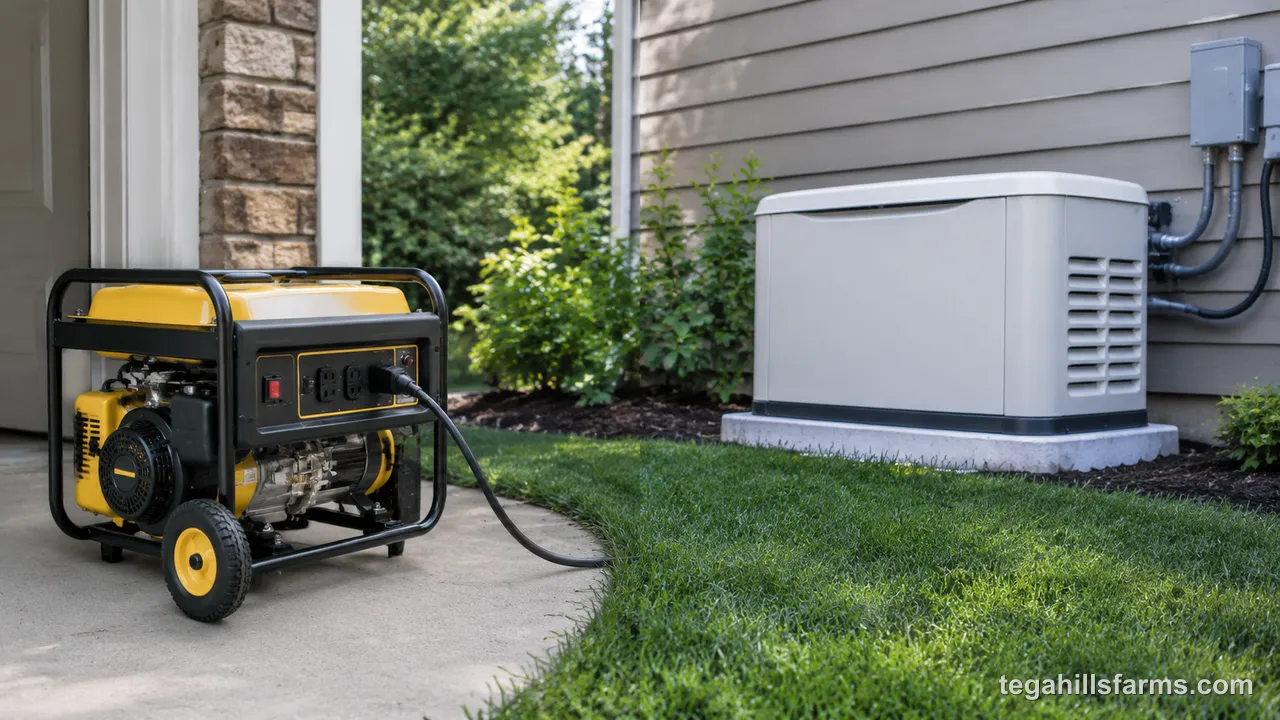
When a Portable Generator Is Enough
A portable generator is enough when you only need essential circuits like the refrigerator, lights and a pump.
A portable unit sized for essentials costs less and can be stored when not in use. It fits households with short, occasional outages and a modest appliance list.
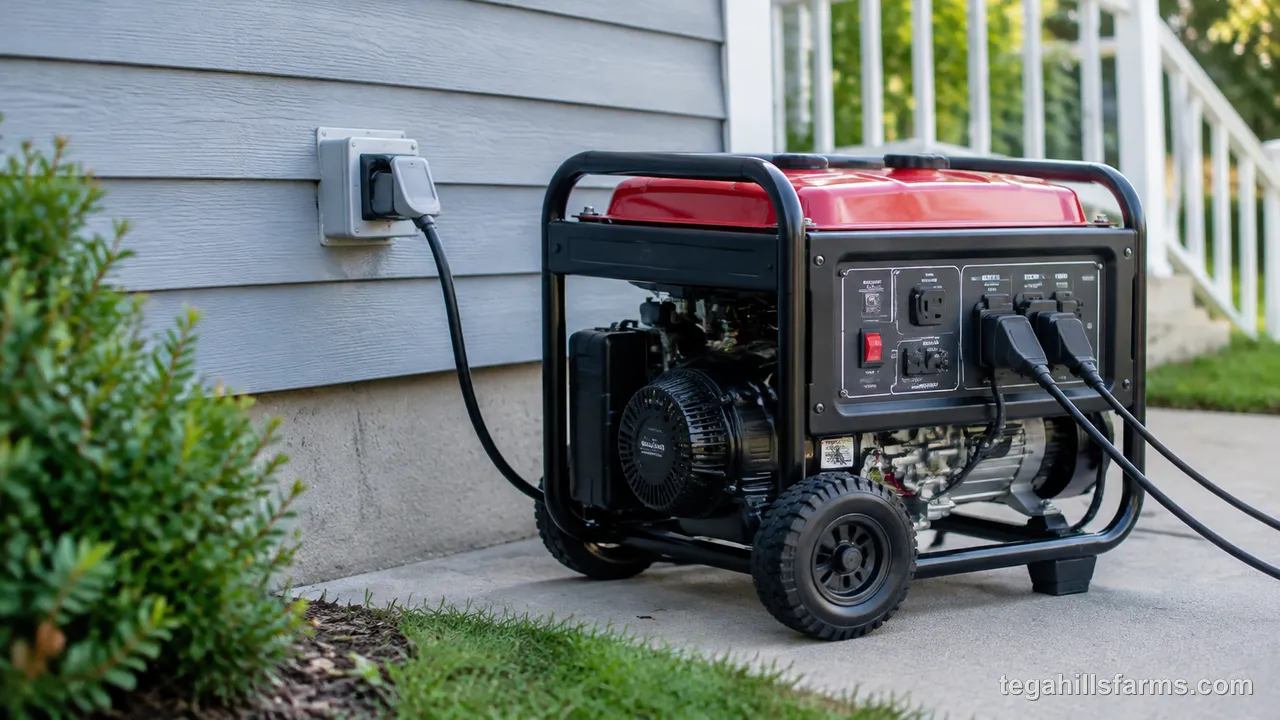
The safe way to connect it to the house is a transfer switch. It lets you power chosen circuits from the panel and keeps generator power from feeding back into the grid, which protects utility workers. Without one, you’re running extension cords to individual appliances. The details of how to install a generator transfer switch are a job for an electrician, and that guide covers what the work involves.
When a Standby Generator Makes More Sense
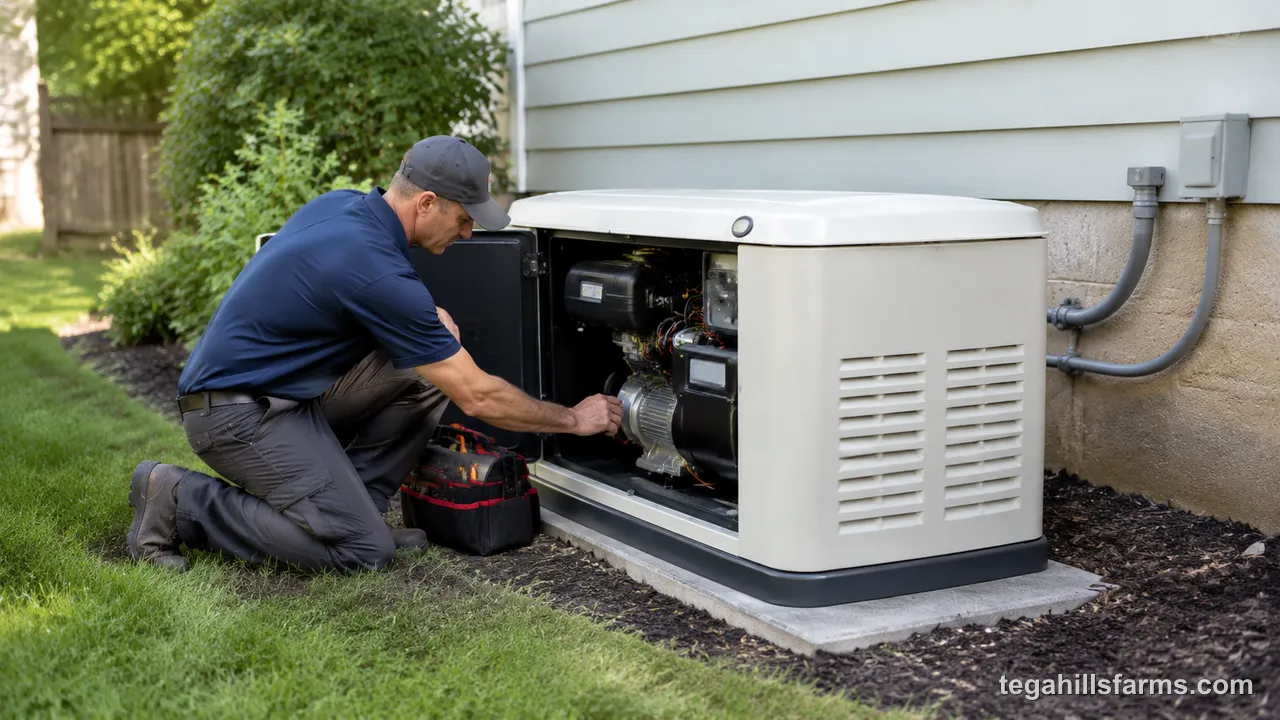
A standby generator makes more sense for homeowners who want whole-home coverage with automatic startup, running on natural gas or propane.
It starts on its own when the power drops, which matters if you travel, work from home or have medical equipment. Fuel supply shapes the choice. Natural gas comes from the utility line and doesn’t run out, while propane depends on tank size and refills.
Installed cost is part of the decision. As a rough reference, a home standby setup often lands around $8,000 to $16,000, covering the unit, system materials and installation. For the full picture, how much does a generator cost breaks it down by type.
What Happens If a Generator Is Too Small or Too Big?
A too-small generator overloads and trips, while a too-big one wastes weight, noise and money. The right target sits in the middle: a unit that fits your appliance list with a modest margin.
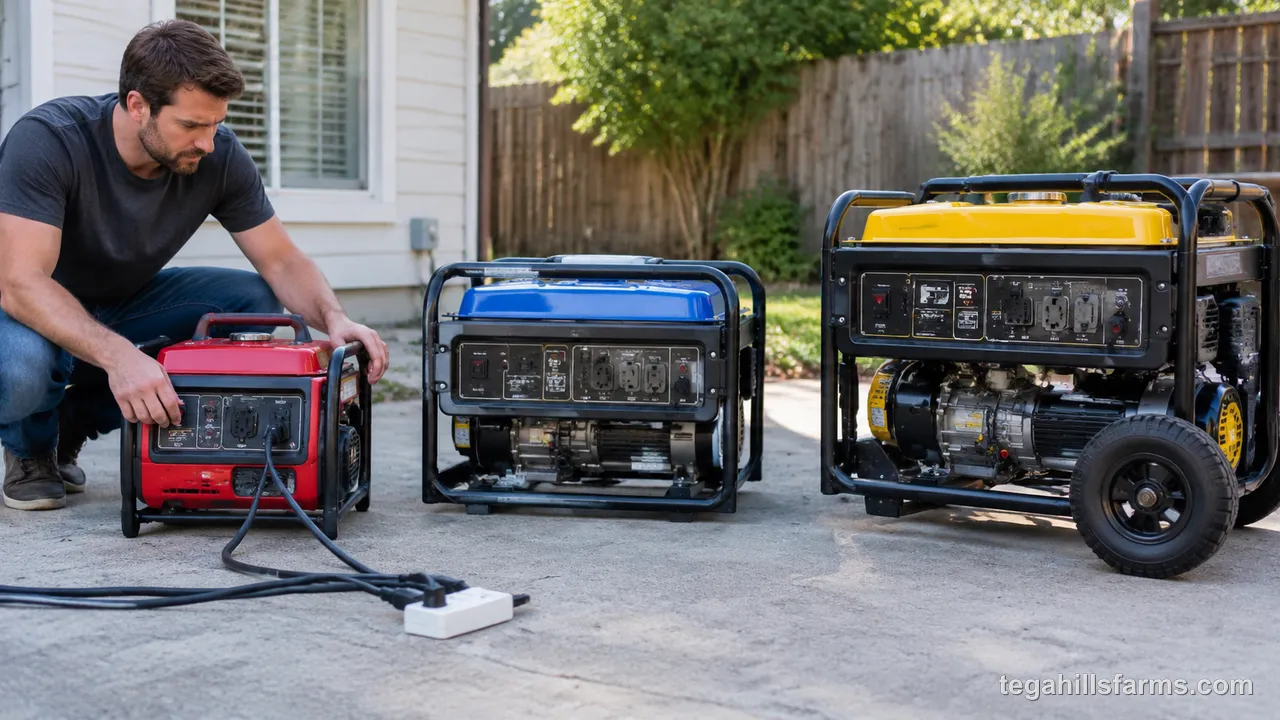
Problems With a Generator That’s Too Small
An undersized generator overloads, trips its breaker or stalls when a motor starts, and it can leave the appliances it was meant to protect without power.
The failure usually comes at the worst moment. The fridge compressor starts, the surge exceeds what the unit can deliver, and the breaker trips or the engine bogs down. Repeated overloads also put strain on the generator and on the motors it feeds.
The cost is more than inconvenience. A sump pump that stops during a storm or a freezer that warms overnight is the kind of loss a generator exists to prevent. Saving money on a unit that can’t carry your must-run list defeats the purpose.
Problems With a Generator That’s Too Big
An oversized generator adds weight, noise and purchase cost without adding useful capacity.
It is harder to move, more awkward to store and louder in the yard. It also burns fuel to idle through a load it barely notices, since engines typically run less efficiently far below their rating.
You pay for headroom you never touch. Paying for capacity you never use is the same trap behind the question are expensive generators worth it, where the answer turns on features rather than raw size.
When you flip the main breaker over to generator power, the refrigerator compressor, sump pump and furnace fan can all ask for their startup surge in the same few seconds. That pile-up is what makes a home look like it needs a far bigger machine than it really does. Which loads can wait a minute, and which ones can’t?
How Can Load Management Let You Buy a Smaller Generator?
Load management lets a smaller generator cover a home that first looked too demanding, by staggering startups and shedding loads.
Run the big appliances one at a time instead of all at once. Let the refrigerator and furnace fan start separately, and turn off the TV and lights while they do. In the same example household, that approach brings the minimum down to 1,600 watts.
Shut off what you don’t need. Nothing about a generator says the dryer, oven or pool pump has to run during an outage, and each one you skip cuts the peak.
Handle EV charging separately. It is a large, steady load, so charge only when little else is running, or wait until grid power returns.
Compare that with oversizing. Buying a large unit to run everything at once is expensive and rarely necessary. Smart sizing plans the order and keeps the generator matched to the loads you actually run.
How Do Fuel Type and Runtime Affect the Size You Pick?
Fuel type changes usable output: gasoline usually delivers the full rated watts, while propane and natural gas typically give up some of it.
That matters when you’re close to the edge of a size class. A dual-fuel unit rated for a given output may deliver less on propane, so size with the lower figure in mind if that’s your fuel. Natural gas standby units are sized with the same idea, and their supply is steady.
Load level affects fuel use. A generator working near its limit burns far more than one running a light load, and fuel burn rises with load, so how much gas will your generator use depends mostly on how hard it works.
Runtime follows the same logic. In a long outage, how long can a generator run depends on tank size and load, and a smaller load stretches each fill. Gasoline needs refills and safe storage, propane depends on tank capacity, and natural gas avoids the refill problem. Pick the fuel that fits how long outages last where you live.
How Can You Tell If a Generator Is Undersized or Properly Sized?
An undersized generator shows itself through repeated breaker trips, engine bogging and flickering lights.
Trips happen when a surge exceeds what the unit can deliver. Bogging is the engine sagging under load, and you can hear it slow down. Lights that dim or flicker when a big appliance starts point to the same problem: demand outrunning supply.
A well-matched generator behaves differently. The engine sound stays steady, the lights hold, and the big motors start without a fuss. There’s no constant strain, and no sense that the unit is working at its limit.
If a unit struggles, try staggering startups and shedding loads before replacing it. If it still can’t keep up, your list outgrew the size class. If the machine simply won’t crank, that is a generator won’t start problem rather than a sizing one.
How Should You Size a Generator for Storms and Long Outages?
Size for a storm by covering food, water and safety loads first, and treat HVAC as a deliberate choice rather than a default.
Long outages change priorities. The refrigerator, freezer, sump pump and any medical equipment matter most, while comfort loads can rotate in as fuel allows. The debate is over HVAC. In hot, humid regions like the Gulf Coast, cooling can be a health question over several days, while in northern winters the furnace fan and heat matter more. Running HVAC pushes the size and fuel use up, so many households run the fridge, a pump and fans and skip the AC.
Fuel storage, placement and gear belong to generator hurricane preparation, so size is only part of storm readiness.
Over many days, run the generator in blocks and cycle the refrigerator and freezer instead of running everything nonstop. Shut it off and let it cool before refueling. Keep it outdoors, well away from windows, doors and vents, to avoid carbon monoxide, which is covered under how to use a generator.
Generator Sizing FAQs
What size generator do I need to run a refrigerator?
A small portable generator, in the 3,000-watt class, covers a refrigerator plus lights and a few electronics. Size for the compressor’s startup surge, not just its steady draw, because the surge is well above what the fridge uses once it’s running.
What size generator do I need for a 2,000 square foot house?
It depends on whether you want whole-home coverage or just essentials. Whole-home sizing for a house this size sits in the mid-size band covered above, while a portable unit sized for essential circuits can be much smaller. The appliance list and central air decide it.
What is the difference between watts and kilowatts?
One kilowatt equals 1,000 watts, so a 7.5 kW generator is a 7,500-watt unit. They measure the same thing at different scales. Check whether the number on the label is the running figure or the starting peak before comparing models.
Should I buy a bigger generator for future needs?
Add a modest margin and plan for loads you’ll likely add, like a central air upgrade. Buying far above today’s list adds weight, noise and cost for capacity you may never use. Size for realistic needs, not every possibility.
Does the rated wattage mean the generator can run that much continuously?
Not always. Running watts is the continuous figure, while the higher rating is a short peak for startup surges. A unit rated for a peak can’t hold that number hour after hour, so size your steady load against the running rating.
Write Your Review
No reviews yet. Be the first to share your experience!