
8 Best Pond Pumps: 2026 Expert Picks and Comparison
Our top picks for the best pond pumps in 2026 are Hurmovae 1800 GPH Pond Pump (Best Overall), Danner Pondmaster Pond-Mag 700 GPH (Best Durability), Tetra Pond Water Garden Pump, 1081 GPH (Best Large Capacity), Alpine Corporation PEG3000 (Best Compact), Aquascape Aquasurge 91017 (Best Premium), Aquascape AquaSurge 4000 (91019) (Best for Professionals), OASE AquaMax Eco Classic 3600 (Best Performance), and VIVOSUN 800GPH Submersible Pump (Best Budget).
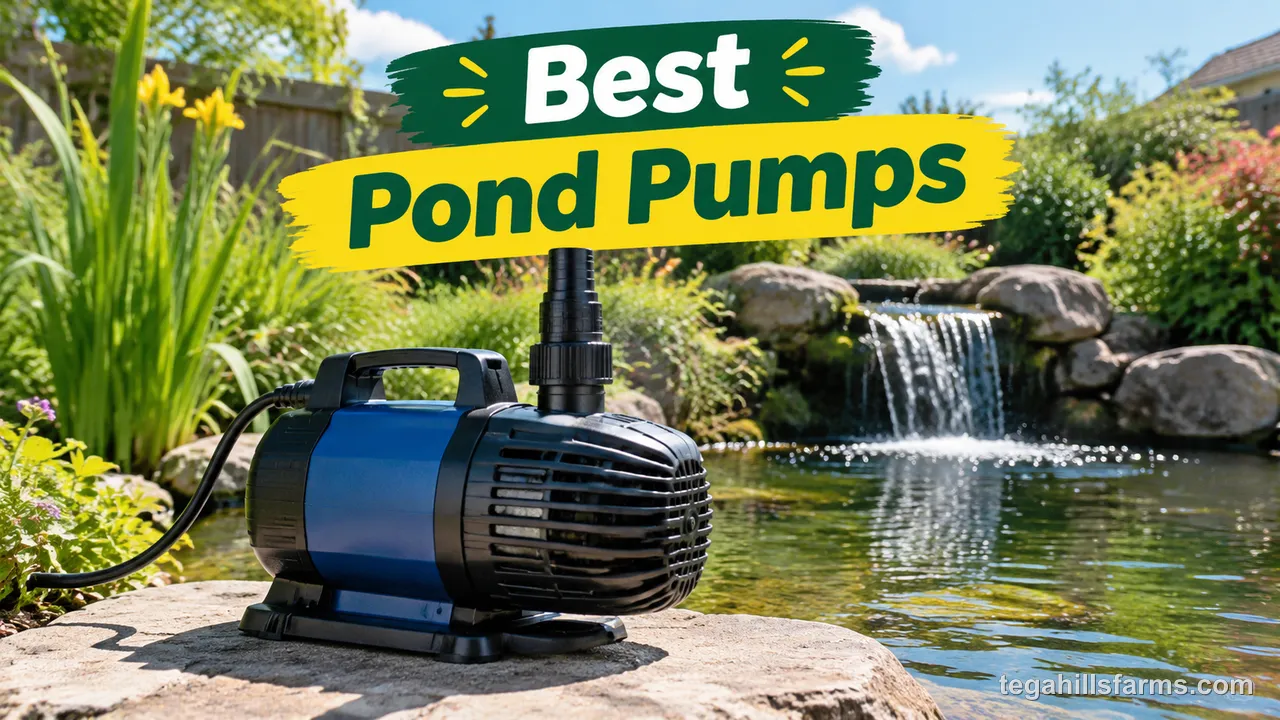
The right pump for your pond delivers enough flow at the height your waterfall or fountain actually sits. It also draws modest power while running around the clock and opens up for cleaning without a toolbox. Flow rating, motor design, intake protection and cord reach all affect how a pump fits your yard.
A lot of pond trouble traces back to a mismatched pump. Some pumps look strong on the box but only dribble at the top of a waterfall, and others churn a small pond while running up the electric bill. Fish and the beneficial bacteria in your filter depend on steady circulation, so a pump that clogs or overheats can turn clear water green fast.

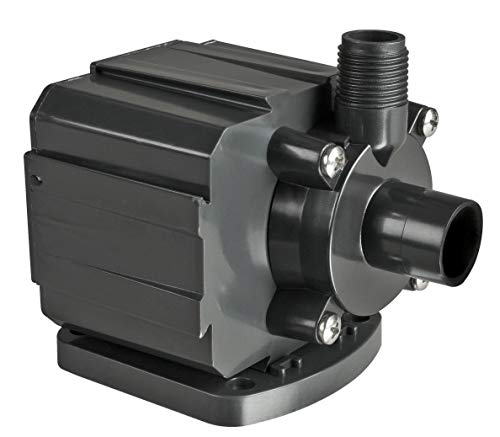


Before you shop, measure the height from the pond surface to the top of your waterfall or fountain outlet. That one measurement tells you more about which pump will work than the flow rating printed on the box.
What Matters Most When Choosing Pond Pumps?
Flow at your real lift height, pond volume and motor design decide whether a pump keeps water clear and features running, with energy draw and cleaning access close behind. Flow sets how fast the whole pond passes through the filter, but only the flow left after the water climbs to your waterfall does any work. Volume and fish load tell you how much circulation the pond needs. Motor design shapes how much power the pump uses running day and night and how well it holds pressure at height. If you’re planning a pond from scratch, the step-by-step guide on how to choose a pond pump walks through the measurements to take before you shop.
The 8 Best Pond Pumps of 2026
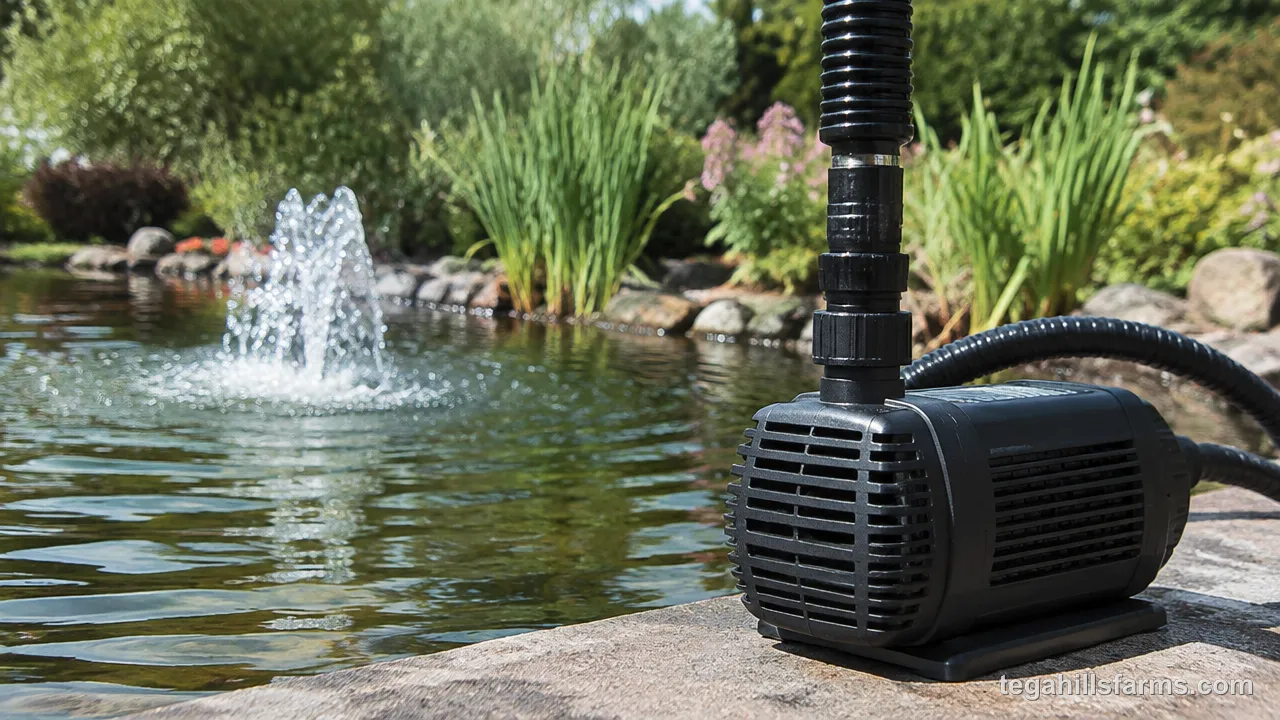
Our top picks for the best pond pumps in 2026 are Hurmovae 1800 GPH Pond Pump, Danner Pondmaster Pond-Mag 700 GPH, Tetra Pond Water Garden Pump, 1081 GPH, Alpine Corporation PEG3000, Aquascape Aquasurge 91017, Aquascape AquaSurge 4000 (91019), OASE AquaMax Eco Classic 3600, and VIVOSUN 800GPH Submersible Pump. Smaller units like the Danner and VIVOSUN draw little power and suit fountains and modest fish ponds. The two Aquascape pumps and the OASE pull more watts to deliver the flow a skimmer-fed waterfall needs.
#1 Hurmovae 1800 GPH Pond Pump — Best Overall
Start here if one pump has to run a fish pond, a fountain and a modest waterfall. Its oil-free magnetic-drive motor moves up to 1,800 GPH on 100 watts, and a mesh cover backed by a nylon filter bag keeps debris away from the impeller between cleanings.
Key Specs:
- Max flow: 1,800 GPH
- Max lift: 14 ft
- Power: 100 watts
- Motor: oil-free magnetic drive, IPX8 epoxy-sealed
- Power cord: 20.3 ft
- Weight: 6.6 lb
Detailed Review:
Rated flow only holds with the outlet right at the water surface. Every foot of lift, every extra length of tubing and every narrow fitting cuts the output. The generous lift ceiling gives this pump real reserve, so a waterfall spillway set above the pond still gets usable flow instead of a trickle.
The outlet rotates through 180 degrees. That lets you point it straight at the tubing run instead of bending hose around the pump body and choking flow at the kink. Behind the mesh cover sits a removable nylon filter bag that catches fine debris before it reaches the impeller. Under trees, that bag needs regular rinsing, because a loaded bag restricts the intake just like a clogged screen.
The cover, rotor and shaft come off without tools, and the ceramic shaft resists the grit wear that builds up over a season of nonstop running. Thermal protection cuts power at 221°F (105°C), which protects the motor if a clogged intake makes it overheat. The 20.3-foot cord also reaches much farther than the 6.5-foot lead on the VIVOSUN 800GPH Submersible Pump. That matters when the nearest GFCI outlet sits back by the house.
Pros:
- Oil-free magnetic drive keeps operating noise low.
- 180° outlet aims flow without bending tubing.
- Mesh cover plus filter bag protects the impeller.
- Rotor and shaft come out without tools.
- Long cord reaches outlets set well back.
Cons:
- Filter bag clogs quickly under leaf-dropping trees.
- Works best fully submerged, which limits on-land installs.
Who It’s For:
Homeowners whose fish pond also feeds a fountain or a modest waterfall will get the most from this pump. It covers both jobs from one unit and cleans up without tools. If your waterfall sits well above the water and needs heavy volume, a larger asynchronous pump will serve you better.
Editor’s Verdict:
A well-balanced submersible that pairs strong flow with quiet running and easy cleaning, making it a dependable default for a typical backyard fish pond.
#2 Danner Pondmaster Pond-Mag 700 GPH — Best Durability
Pick this one for a small pond or filter loop that never shuts off. Its magnetic drive has no mechanical seals to wear out, and it draws only 70 watts while working either fully submerged or plumbed inline outside the water.
Key Specs:
- Max flow: 700 GPH
- Power: 70 watts, 1.6 amps (120V/60Hz)
- Connections: 1/2-inch FPT inlet, 1/2-inch MPT outlet
- Power cord: 18 ft
- Dimensions: 5.0 x 3.8 x 4.2 in
- Weight: 4.17 lb
Detailed Review:
This pump’s durability comes from its simple design. The magnetic drive spins the impeller through a sealed housing, so there are no mechanical seals to dry out, crack and start leaking, which is a common failure point on shaft-driven pumps. Danner built it for continuous duty, which matches how a pond pump is actually used: running day and night for months.
It runs either fully submerged or plumbed inline outside the pond. Inline mounting keeps the pump dry and within reach, so a checkup means opening a box at the pond edge instead of fishing a slimy unit off the bottom. The 1/2-inch FPT inlet and MPT outlet take standard threaded fittings. That small connection limits you to narrow tubing, though, which loses more flow to friction on long runs.
Power draw is 70 watts and 1.6 amps, below the 100 watts the Hurmovae 1800 GPH Pond Pump pulls. The trade-off is volume: the Hurmovae moves far more water, so the Danner makes sense where steady circulation matters more than a showy waterfall. I’d choose it for a filter loop that has to run for years with minimal attention. The 18-foot cord also gives you room to place it without an extension cord.
Pros:
- No mechanical seals to wear out or leak.
- Runs submerged or inline outside the pond.
- Low 70-watt draw suits round-the-clock running.
- Compact body tucks into filters and small vaults.
Cons:
- Modest flow can’t feed tall or wide waterfalls.
- Half-inch fittings restrict tubing size and add friction.
Who It’s For:
Anyone running a small fish pond, a filter loop or a water garden that never shuts off will appreciate a pump built for continuous duty and minimal upkeep. Builders who want a dramatic waterfall should look at a higher-flow pump, because this one is built for steady circulation rather than volume.
Editor’s Verdict:
Simple, seal-free and built to run nonstop, it trades raw flow for years of low-attention circulation in smaller setups.
#3 Tetra Pond Water Garden Pump, 1081 GPH — Best Large Capacity
Built for larger backyard ponds, this pump feeds filters, waterfalls and fountain heads from one unit. It pairs up to 1,000 GPH with a 14.7-foot lift ceiling and ships with an adapter for 1 1/4-inch tubing, so wide hose to a waterfall connects without a trip to the hardware store.
Key Specs:
- Max flow: up to 1,000 GPH
- Max lift: 14.7 ft
- Recommended pond size: 500 to 1,000 gallons
- Tubing adapter: fits 1 1/4-inch tubing
- Weight: 10 lb
- Warranty: 3-year limited
Detailed Review:
Tetra sizes this pump for ponds in the 500 to 1,000 gallon range, and its flow rating lines up with that range. The full volume cycles through the filter at a healthy pace instead of lingering in dead corners. If your pond sits in that size range, compare it against other 1000 GPH pond pumps before you commit.
The lift ceiling gives real reserve for a waterfall or fountain head placed above the surface. Compared with the 10-foot lift ceiling on the VIVOSUN 800GPH Submersible Pump, the Tetra keeps usable flow at heights where the smaller pump would barely move water. That reserve comes in a 10-pound body, so set it where you can lift it out without wading in.
The included adapter fits 1 1/4-inch tubing, and wide tubing loses less flow to friction on a long run to a waterfall than narrow hose does. Because one pump with this much lift can feed a filter and a falls together, you avoid splitting the jobs between two units with separate plumbing. Tetra backs it with a 3-year limited warranty.
Pros:
- Flow rating fits mid-size and larger backyard ponds.
- Lift reserve keeps waterfalls and fountain heads running.
- Included adapter accepts wide 1 1/4-inch tubing.
- Backed by a 3-year limited warranty.
Cons:
- 10-pound body is harder to lift out for cleaning.
- Oversized for patio fountains and small water gardens.
Who It’s For:
Owners of a larger backyard pond who want one pump to power the filter, a waterfall and a fountain head will find this a natural fit, especially if they plan to run wide tubing. People with a patio fountain or a small water garden will be better off with something smaller and easier to hide.
Editor’s Verdict:
Strong lift reserve and a wide-tubing adapter make it a practical single-pump answer for bigger ponds that feed several features at once.
#4 Alpine Corporation PEG3000 — Best Compact
Choose this pump when a large waterfall or fountain needs serious flow but the basin or vault leaves little room for equipment. Its 8 x 6 x 5-inch body moves up to 3,000 GPH on 132 watts.
Key Specs:
- Max flow: 3,000 GPH
- Power: 132 watts
- Dimensions: 8 x 6 x 5 in
- Weight: 5.94 lb
- Mounting: vertical or horizontal
- Support: 3-year support program
Detailed Review:
This pump moves a lot of water from a small package. Its body tucks into a cramped basin or vault where a bulkier pump would sit awkwardly or poke above the waterline. Because it mounts either vertically or horizontally, it adapts to the space you have instead of forcing you to dig out more room.
It runs quietly, which matters beside a patio, a koi pond or a bird habitat where pump hum carries. Alpine built the components for long-term submersion, so the pump is meant to stay in the water all season rather than come out between uses.
Power draw is 132 watts. The OASE AquaMax Eco Classic 3600 moves more water but pulls 150 watts, so the Alpine gives up some flow for a lower draw. That’s a fair trade when the feature doesn’t need the extra volume. Alpine backs the pump with a 3-year support program, and if you’ve settled on this flow class, compare it against the best 3000 GPH pond pumps before buying.
Pros:
- High flow from a small, easy-to-hide body.
- Mounts vertically or horizontally to fit the space.
- Runs quietly beside patios and koi ponds.
- 132-watt draw keeps nonstop running costs in check.
Cons:
- Too much flow for small ponds or gentle fountains.
- Strong current can stir sediment in shallow basins.
Who It’s For:
If your equipment space is cramped but the waterfall or fountain still needs serious volume, this pump handles both. It also suits koi keepers who sit near the water and want quiet operation. Anyone with a small pond or a gentle bubbler will find the flow far more than the feature needs.
Editor’s Verdict:
Big flow, a small footprint and flexible mounting make this a smart choice for large features squeezed into tight spaces.
#5 Aquascape Aquasurge 91017 — Best Premium
Skimmer and filter-vault builds are where this asynchronous pump fits best. It moves up to 2,193 GPH on 160 watts, and five discharge sizes from 3/4 inch to 2 inches let it connect to the plumbing your system already has.
Key Specs:
- Max flow: 2,193 GPH
- Max lift: 12.47 ft
- Power: 160 watts
- Discharge sizes: 3/4, 1, 1 1/4, 1 1/2 and 2 in
- Power cord: 20 ft
- Warranty: 3-year limited
Detailed Review:
This asynchronous pump is designed to sit inside a skimmer, a waterfall filter or a pondless waterfall filter vault, a layout common in professionally built ponds. The asynchronous motor pairs high flow with energy-efficient running, which adds up on a pump that never shuts off.
The range of discharge sizes lets it connect to the pipe your system already uses without a stack of reducers. That flexibility pays off in a retrofit, where the old plumbing stays put and the new pump has to match it.
Next to the Hurmovae 1800 GPH Pond Pump, it moves more water but draws 160 watts instead of 100, and its lift ceiling sits below the Hurmovae’s 14 feet. That makes the Aquascape a better match for a skimmer-fed stream or a modest falls, while the Hurmovae keeps more flow when the outlet sits high.
It sits in the premium price tier, and you’re paying for a pump engineered around skimmer and vault systems, plus a 20-foot cord and a 3-year limited warranty. A simple fountain won’t use most of what that engineering offers.
Pros:
- Designed to sit inside skimmers and filter vaults.
- Five discharge sizes match most existing plumbing.
- Asynchronous motor runs efficiently around the clock.
- 20-foot cord and 3-year limited warranty included.
Cons:
- Premium price for a mid-range flow rating.
- 12.47-foot lift ceiling limits tall waterfalls.
Who It’s For:
Pond builders working with a skimmer and waterfall filter, or a pondless waterfall vault, will appreciate a pump made for that exact layout. It also suits anyone replacing a worn pump in an established system who needs to match existing plumbing. A simple fountain or small pond doesn’t need this level of engineering.
Editor’s Verdict:
Engineered for skimmer and vault systems, it justifies its premium cost through efficient running and plumbing flexibility rather than sheer volume.
#6 Aquascape AquaSurge 4000 (91019) — Best for Professionals
Contractors and serious hobbyists building big waterfalls will get the most from this pump. Its asynchronous motor pushes up to 3,947 GPH with an 18.55-foot lift ceiling, and the oil-free, fish-safe design means a koi pond never sits beside a motor that could leak oil into the water.
Key Specs:
- Max flow: 3,947 GPH
- Max lift: 18.55 ft
- Power: 215 watts
- Discharge sizes: 3/4, 1, 1 1/4, 1 1/2 and 2 in
- Power cord: 20 ft
- Weight: 12.1 lb
Detailed Review:
This pump moves a large volume of water, and its lift ceiling leaves pressure to spare for a tall, wide waterfall. The asynchronous motor delivers that output efficiently, which matters on a pump this size that runs around the clock.
It sits horizontally or vertically, and the compact body fits inside skimmers and waterfall filter systems. Multiple fittings and a rotating discharge let you line the outlet up with existing pipe, which cuts down on adapters in a tight vault.
Rubber feet absorb vibration so the pump stays quiet against a hard vault floor, and the oil-free design keeps koi safe from contamination. The corrosion-resistant housing is built for year-round outdoor use in any climate. Compared with the Aquascape Aquasurge 91017, you gain a lot of flow and lift, but the draw climbs from 160 to 215 watts, so the extra capacity only pays off when the feature needs it.
Aquascape includes a 3-year limited warranty and U.S.-based support, which helps contractors who need answers on a job site. That support matters most when a pump failure means a callback to a client’s yard.
Pros:
- Pushes enough flow for large, tall waterfalls.
- Oil-free, fish-safe design protects koi.
- Rubber feet reduce vibration and noise.
- Corrosion-resistant housing handles year-round outdoor use.
- Includes 3-year warranty and U.S.-based support.
Cons:
- 215-watt draw raises the cost of nonstop running.
- 12.1-pound body is heavy to pull from a vault.
Who It’s For:
Contractors installing large waterfalls and serious hobbyists rebuilding a big koi pond get the most value from this pump’s output and support. Anyone with a modest pond or a single fountain would be paying for electricity to move water the feature will never use.
Editor’s Verdict:
Professional-grade output, fish-safe construction and solid support make this pump worth its higher running cost on large, demanding builds.
#7 OASE AquaMax Eco Classic 3600 — Best Performance
Large waterfalls on a moderate power budget suit this pump. It moves up to 3,600 GPH on 150 watts and connects to 1-, 1 1/2- or 2-inch tubing as well as Schedule 40 pipe, so it fits both quick hose builds and permanent PVC plumbing.
Key Specs:
- Max flow: 3,600 GPH
- Max lift: 13 ft
- Power: 150 watts
- Tubing connectors: 1, 1 1/2 and 2 in, plus Schedule 40
- Weight: 12.3 lb
- Warranty: 3-year limited
Detailed Review:
The flow rating is high for a 150-watt draw, which matters on a pump that will run day and night all season. The lift ceiling covers waterfalls and streams set at a moderate height above the pond.
The connector options work with flexible hose in a quick build and rigid PVC in a permanent one. Wide connections matter at this flow level, because forcing that much water through narrow hose loses a large share of the output to friction.
Next to the Aquascape AquaSurge 4000 (91019), the OASE draws 150 watts instead of 215 but gives up some flow and a lot of lift. That makes it the lower-draw choice for a broad, low feature, while the AquaSurge suits tall falls. If I were choosing between the two, I’d decide based on spillway height, not pond size.
A 3-year limited warranty covers the pump. At 12.3 pounds it’s a heavy unit to lift out for cleaning, so place it where you can reach it without wading in.
Pros:
- High flow on a moderate 150-watt draw.
- Fits flexible tubing or rigid Schedule 40 pipe.
- Wide connectors keep friction losses low.
- Backed by a 3-year limited warranty.
Cons:
- Modest 13-foot lift won’t feed high spillways well.
- 12.3-pound body is bulky to service.
Who It’s For:
Water gardeners building a broad stream or a wide, low waterfall will appreciate high flow without a heavy electric draw. It’s also a good match if you plan to plumb with rigid PVC. For a tall waterfall high above the pond, a pump with more lift will keep the sheet of water fuller.
Editor’s Verdict:
Efficient, high-volume and flexible on plumbing, it fits any large, low-profile water feature that runs all season.
#8 VIVOSUN 800GPH Submersible Pump — Best Budget
Small fountains and aquariums are where this low-cost pump works best. It moves up to 800 GPH on 50 watts, and a control knob plus three interchangeable nozzles let you dial the spray to suit the feature without buying extra parts.
Key Specs:
- Max flow: 800 GPH
- Max lift: 10 ft
- Power: 50 watts, 110–120V
- Dimensions: 4.33 x 3.5 x 4.1 in
- Power cord: 6.5 ft
- Weight: 1.94 lb
Detailed Review:
A control knob sets the flow, and swapping among the three nozzles changes the spray pattern and pressure. One small pump can drive a bubbling urn one season and a statuary fountain the next. Output drops as lift rises, so the modest lift ceiling suits a low spout better than a tall spray.
The compact body hides easily behind a rock or inside a fountain basin. You can set it flat, stick it to an angled or vertical surface, or rotate it by hand to aim the outlet, which helps in containers where the floor isn’t level. Disassembly takes no tools, so clearing algae from the impeller is a quick job.
The 50-watt draw keeps round-the-clock running cheap, and the pump works in fish tanks, hydroponic systems and irrigation setups as well as fountains. Its weak point is the 6.5-foot cord, far shorter than the 18-foot lead on the Danner Pondmaster Pond-Mag 700 GPH. Plan on an outlet close to the feature, or use an outdoor-rated extension cord plugged into a GFCI outlet. If a fountain is your main project, the best pond pumps for fountains cover more options built for that job.
Pros:
- Control knob and three nozzles adjust flow easily.
- Small body hides inside basins and planters.
- Mounts flat, angled or vertical.
- Tool-free disassembly speeds up cleaning.
- Budget-friendly price for small features.
Cons:
- Short 6.5-foot cord limits placement near outlets.
- Flow is too modest for filters on larger ponds.
Who It’s For:
First-time pond keepers, fountain builders and aquarium owners who want an inexpensive pump they can tune by hand will get good use from this one. It also works for hydroponic setups. Anyone circulating a large fish pond or a filter loop needs far more flow than this pump delivers.
Editor’s Verdict:
Cheap to buy, cheap to run and easy to tune, it’s a sensible starter pump for fountains and small water features.
How Much Flow Does a Pond Pump Need?
Enough volume to cycle the whole pond at your outlet’s real lift height is the target, so the GPH printed on the box is a starting point, not the answer. Buying on that headline number alone often leads to a waterfall that trickles or a pump that churns a small pond into a muddy swirl. Two things set the number you actually need: the height the water has to climb and the size of the pond.
How Does Lift Height Change Real Flow?
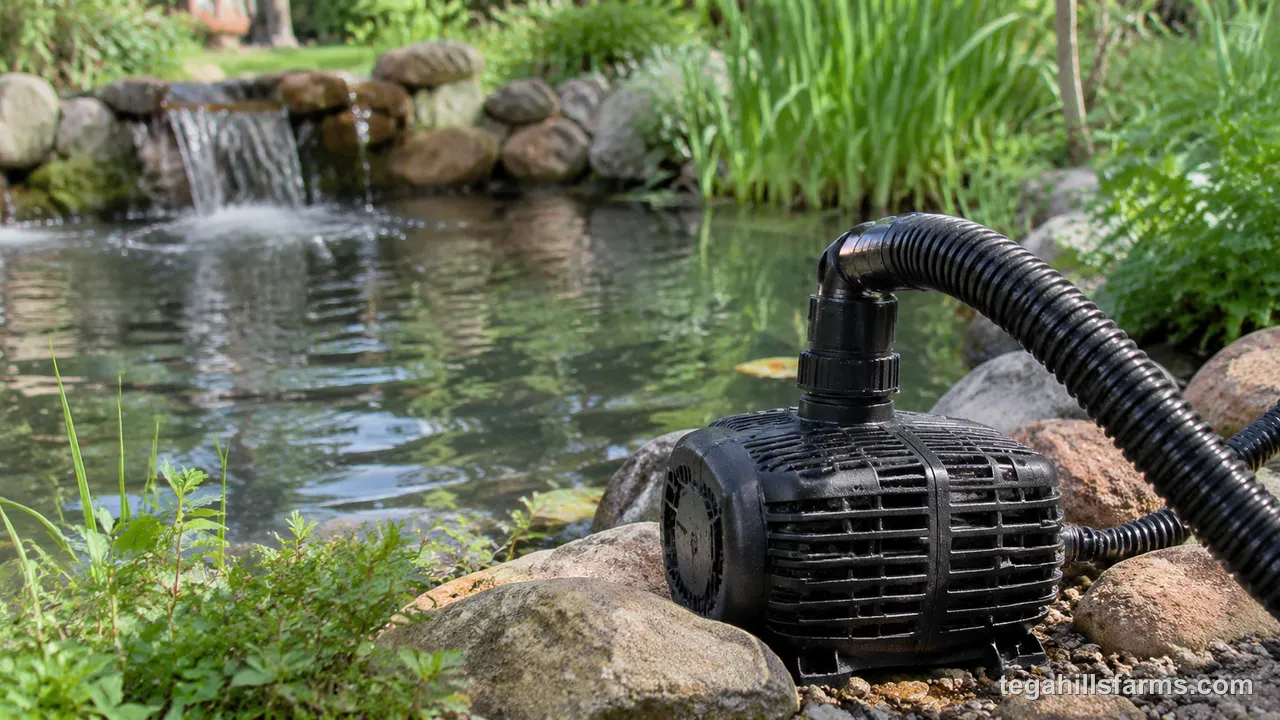
Rated flow is the most a pump moves with its outlet right at the water surface, and real output falls as soon as the water has to climb or travel through tubing. Lift, also called head height, is the vertical distance from the pond surface to the highest point the water reaches. At a pump’s maximum lift, flow drops to zero.
Tubing adds its own resistance. Every extra foot of hose, every elbow and every narrow fitting acts like added height, which is why wide tubing and short runs keep more of the rated flow. For a waterfall, measure from the water surface to the spillway lip, then read the pump’s performance chart at that height instead of trusting its headline GPH. A fountain works the same way, except the nozzle itself adds resistance, so a tall spray needs extra lift beyond the height of the basin.
How Do Pond Size and Features Set the Right Pump Size?
Pond volume sets the baseline. A common rule of thumb is to move the full volume through the pump about once an hour, then adjust up or down for what the pond holds and feeds. To estimate gallons, multiply length by width by average depth in feet, then multiply by 7.48, the number of gallons in a cubic foot.
Fish push the target up. A heavily stocked koi pond produces more waste, so faster circulation through the filter keeps ammonia from building, while a lightly stocked water garden full of plants can run slower. A waterfall raises the number further, since the spillway needs enough volume across its width to form a sheet rather than a dribble. The filter sets a ceiling, because pushing water through it faster than its rated range sends debris straight back into the pond.
For a small patio pond, the best 500 GPH pond pumps are often enough. A mid-size fish pond with a filter and stream usually needs one of the 2000 GPH pond pumps.
Which Type of Pond Pump Fits Your Setup?
The right design depends on where the pump can sit and how much plumbing your pond already has, since those two facts decide how easily you install, prime and service it. The choice also sets your electric draw and your cleaning routine for as long as the pump runs, so settle it before comparing flow ratings.
Submersible or External Pond Pump: Which Is Better?
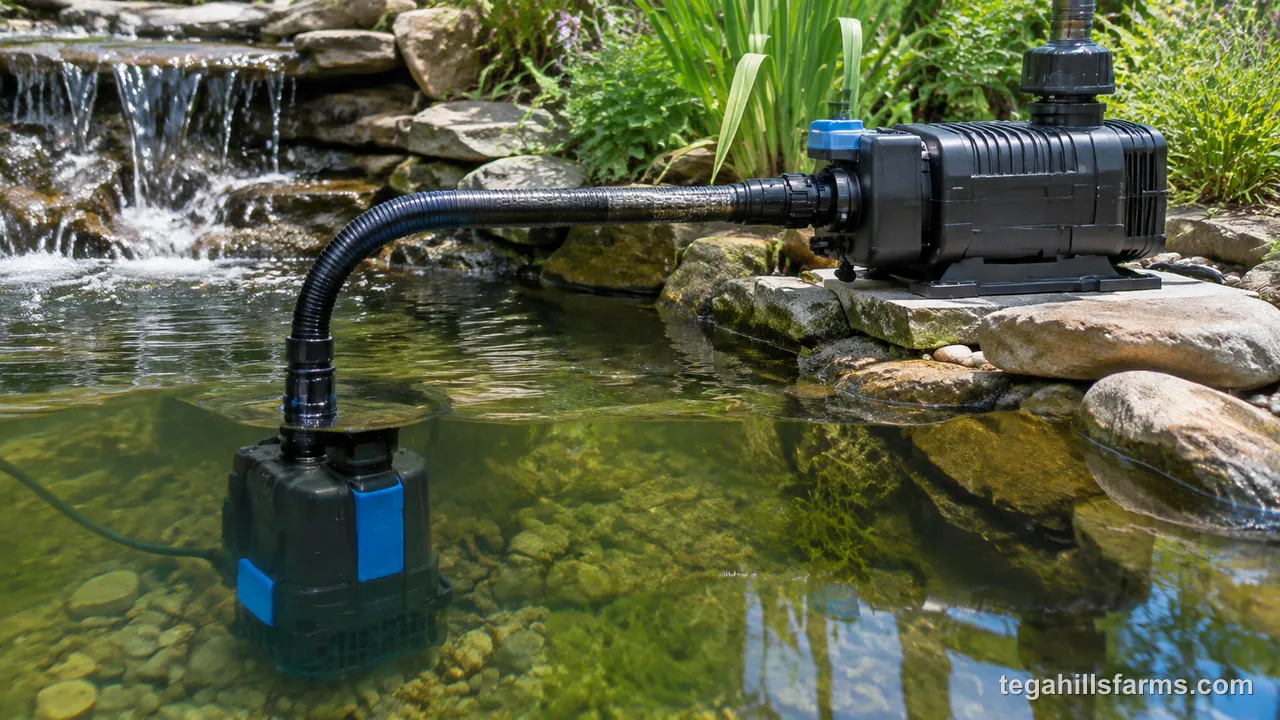
A submersible pump is the better fit for most backyard ponds. An external pump makes more sense in large, plumbed systems where service access and efficiency matter more than easy installation. Submersibles sit on the pond floor or inside a skimmer, need no priming, and the surrounding water muffles motor noise. That’s why submersible water pumps go in with nothing more than tubing and a power cord.
External pond pumps sit beside the pond and draw water through a pipe, so they need priming or placement below the water line to stay flooded. They’re louder in open air and need a dry, ventilated spot. In exchange, you can service them without wading in, and they pair well with pressurized filters and long plumbing runs. Some pumps cover both roles: the Danner Pondmaster Pond-Mag 700 GPH runs either fully submerged or plumbed inline outside the water.
Magnetic Drive or Asynchronous: What Is the Difference?
Magnetic-drive pumps suit fountains and small to mid-size ponds where low wattage and simplicity matter. Asynchronous pumps suit skimmer-fed waterfalls that need high flow and pressure. In a magnetic-drive pump, the motor is sealed away from the water and spins the impeller through a magnetic field, so no shaft passes through a seal that could leak. The Hurmovae 1800 GPH Pond Pump and the Danner Pondmaster both use this design, and the downside is that magnetic-drive pumps tend to lose flow quickly as lift rises.
An asynchronous pump uses an induction motor whose rotor turns slightly behind the magnetic field, which produces more torque. That torque holds flow better at higher lift and moves large volumes efficiently, which is why both Aquascape pumps use it for skimmer and filter-vault systems. Expect more weight and higher wattage, which only pays off when the feature needs the volume.
What Features Matter Beyond Flow Rate?
Running cost, noise and cleaning access shape day-to-day ownership more than a bigger flow number does, because a pond pump runs around the clock for months at a time. Details that look minor on a spec sheet become things you deal with every week of the season.
How Do Energy Draw and Noise Affect Ownership?
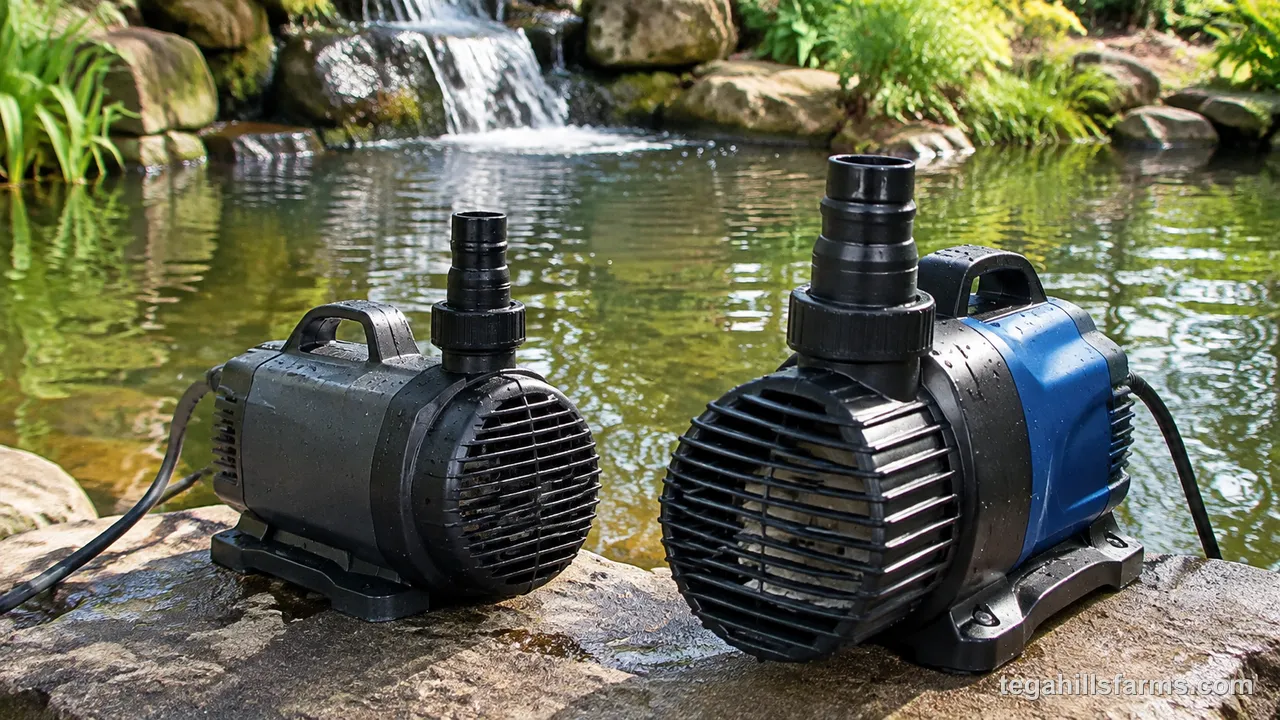
Wattage is the spec that shows up on your electric bill, because a pond pump typically runs around the clock through the warm months, and in many fish ponds all year. A pump that draws more power than the pond needs costs extra every hour it runs, so matching wattage to the flow you actually use saves more than any efficiency claim.
Noise comes from motor hum and from vibration traveling into whatever the pump sits on. Submersion muffles most motor sound, magnetic-drive designs run with few moving parts, and rubber feet like those on the Aquascape AquaSurge 4000 (91019) keep vibration from passing into a hard vault floor. If the pond sits next to a patio or a bedroom window, start your search with the best quiet pond pumps.
What Build, Cleaning and Warranty Details Are Worth Checking?
Housing, waterproofing and intake protection decide how long a pump survives. Cleaning access and cord length decide how much you’ll dread maintenance day. Look for a corrosion-resistant or ABS housing and an epoxy-sealed motor, since constant submersion will find any weak seal. Thermal protection shuts the motor off before a clogged intake lets it overheat, which can save the pump during heavy leaf drop.
A mesh cage or filter bag over the intake keeps debris off the impeller, and tool-free access to the rotor turns cleaning into a quick rinse at the pond edge instead of a project. Cord length matters because outdoor pumps should plug into a GFCI-protected outlet, and a short cord pushes you toward an extension cord. A 3-year limited warranty, which Tetra, OASE and Aquascape offer on their models here, gives you recourse if the motor fails early.
Which Pond Pump Works Best for Your Water Feature?
Start with what the moving water has to do and where the pump has to sit, because those two facts rule out more pumps than any spec comparison. A pump that excels in one role can be wasteful or underpowered in another, so choose based on your setup first and the model second.
What Pump Suits a Waterfall or Fountain?
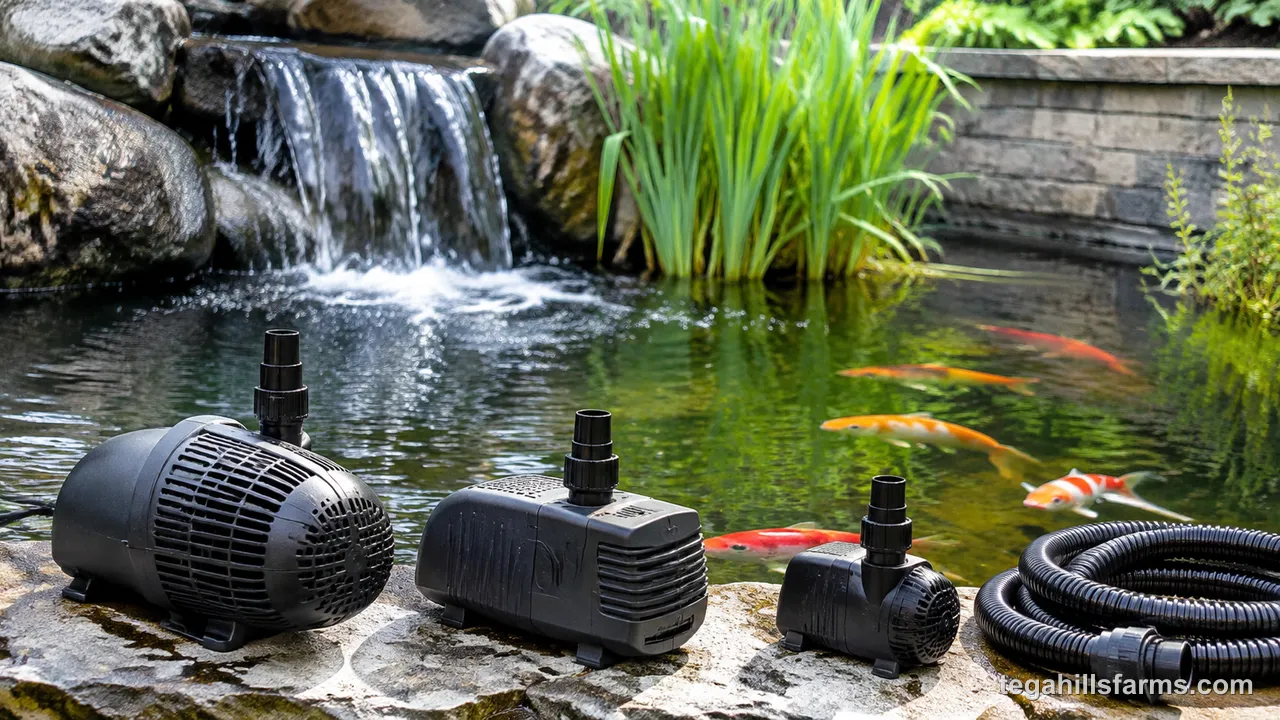
Waterfalls and fountains need strong flow at the height they actually run, plus outlets and fittings that match the plumbing, so lift matters more here than anywhere else in the pond. A waterfall needs volume across the full width of the spillway. The Aquascape AquaSurge 4000 (91019) and the OASE AquaMax Eco Classic 3600 handle that job, with the AquaSurge better suited to taller falls thanks to its higher lift.
Fountains care more about pressure and spray control than raw volume. Interchangeable nozzles on the VIVOSUN 800GPH Submersible Pump and the Hurmovae 1800 GPH Pond Pump let you shape the spray, and the Hurmovae’s rotating outlet aims tubing without kinks. If a waterfall is the main feature in your yard, the best waterfall pumps cover pumps built specifically for that job.
What Pump Is Best for a Koi or Fish Pond?
Koi and fish-heavy ponds need a pump that runs nonstop, stays fish-safe, and shuts itself down before a clog or overheat becomes a failure. Fish waste builds up fast, and the beneficial bacteria in a biofilter only work while water keeps flowing through them, so even a short outage can lead to cloudy water and stressed fish.
An oil-free design matters because a lubricated motor that fails can leak into the water. The Aquascape AquaSurge 4000 (91019) is built oil-free and fish-safe, and the Hurmovae 1800 GPH Pond Pump pairs an oil-free magnetic drive with thermal protection. For a small koi pond on a filter loop, the continuous-duty Danner Pondmaster Pond-Mag 700 GPH is a steady option. Intake screens keep small fish and fry away from the impeller, and the best pond pumps for koi ponds narrow the choice for heavily stocked water.
What Pump Works for a Small Pond or Tight Space?
A small pond or container water garden needs a pump that fits the space, mounts where you can reach it, and lets you turn the flow down so it doesn’t churn the water. The VIVOSUN 800GPH Submersible Pump does all three: it hides behind a rock, sticks to angled or vertical surfaces, and its control knob turns the output down. The Danner Pondmaster Pond-Mag 700 GPH fits small filter boxes or runs inline outside the basin, which frees up room in a tight vault. When a compact space still has to feed a big feature, the Alpine Corporation PEG3000 packs high flow into a small body and mounts vertically or horizontally.
Impellers wear down and shafts loosen long before a pump stops outright, so the first sign is usually a waterfall that runs a little thinner each week. Fish and the bacteria in the biofilter feel that drop well before you hear the motor grind. Left alone, a tired pump keeps running just well enough to hide the problem while the water clouds over and the fish start gasping at the surface.
How Can You Tell a Pond Pump Is Wearing Out?
A pond pump is wearing out when it moves noticeably less water than it used to even after a thorough cleaning, makes new rattling or grinding sounds, or keeps tripping its thermal protection or the GFCI. Weak flow alone usually points to a clogged intake, so clean the pump before you replace it.
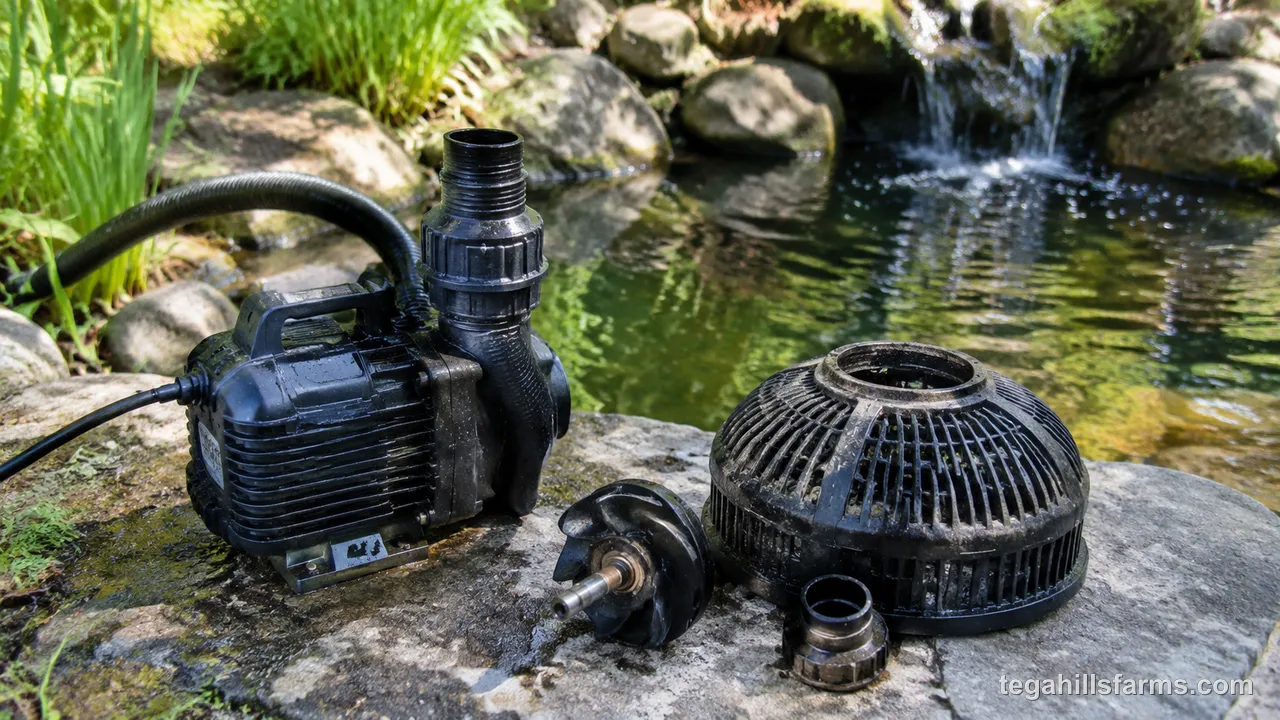
Start with the intake screen or pre-filter, then the impeller chamber, where string algae and grit wrap around the rotor. Check the impeller for chipped blades and the shaft for grooves or wobble, since worn parts let the rotor rattle and cut output even with a clear intake. Better pond pump filters ahead of the intake slow that wear by keeping grit away from the rotor.
Replacement makes more sense than repair when the housing is cracked, the cord is damaged, or the pump trips the GFCI, because those point to water reaching the electrical side, which isn’t safe to patch. A sealed motor that runs hot and shuts off with a clean intake is also near the end of its life.
Why Does an Oversized or Undersized Pump Waste Money?
A wrong-sized pump wastes money either way. An oversized pump draws more watts than the pond needs every hour it runs, creates turbulence that stirs up sediment and stresses fish, and can push water through a filter faster than the filter can trap debris. An undersized pump draws fewer watts but leaves the waterfall thin, the far corners stagnant and the biofilter short on flow, so you often end up buying a second pump.
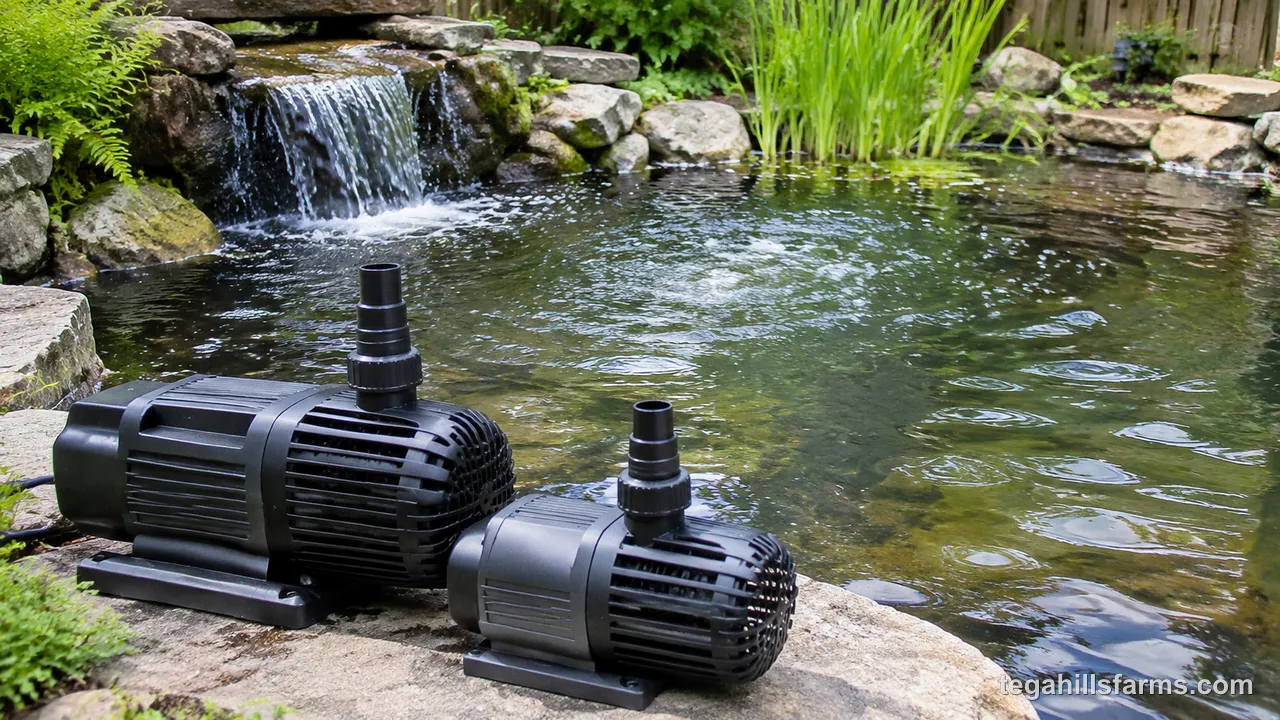
That’s why a bigger flow rating isn’t automatically better. The right pump delivers the flow your pond needs at its real lift and no more. For fountains and small water gardens, pond pumps under $50 often cover the job, while the best pond pumps under $100 step up to the flow a small fish pond with a filter needs. Larger ponds and skimmer systems justify mid-range and premium pumps, where efficiency at high flow pays off over long run times.
Can Solar or Battery Pumps Run a Pond?
Solar and battery pumps can only handle light jobs: birdbath fountains, small water gardens and decorative spray, not a fish pond that needs circulation around the clock. A solar pump runs on direct sunlight, so output drops when clouds pass and stops at night unless a battery stores power for later.
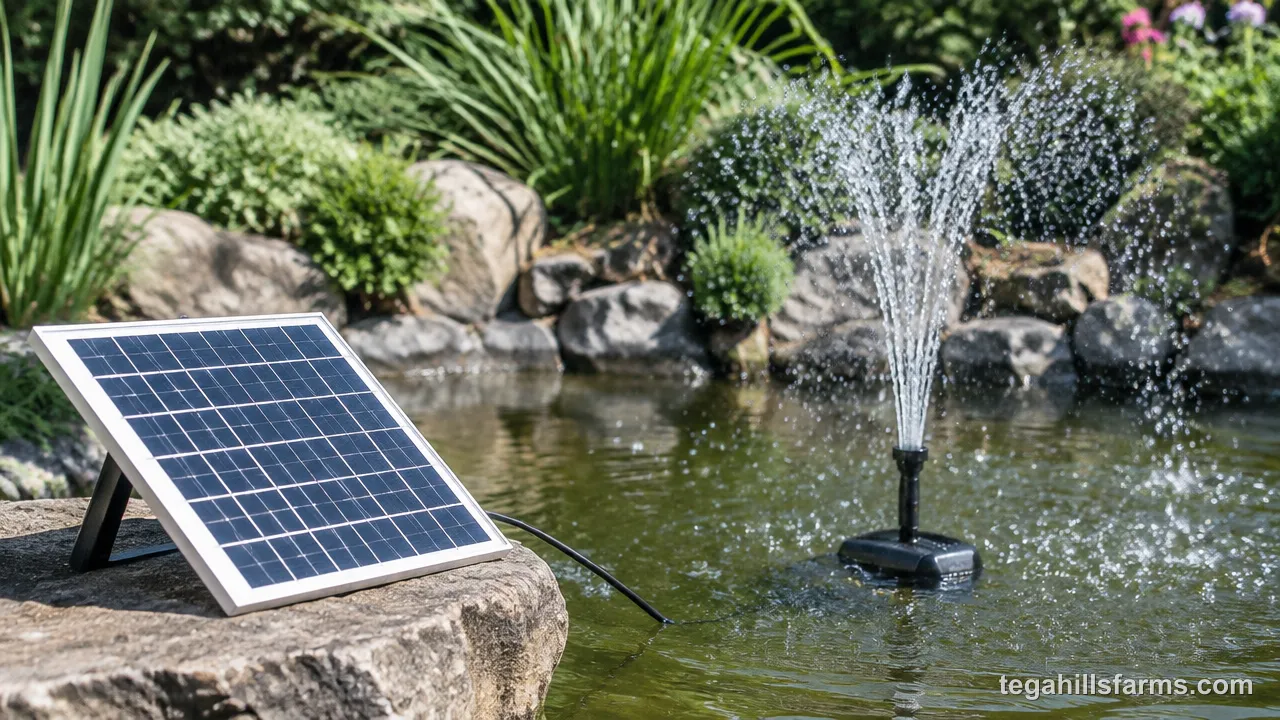
That intermittent flow is the core problem for fish. The biofilter’s bacteria need steady water movement, and oxygen levels in a stocked pond drop overnight, exactly when a solar pump shuts down. Battery packs extend run time but still have to recharge, and the larger the pump, the faster it drains them. For a sunny patio fountain, solar water pumps save you from running an outdoor cord, and the best battery powered pond pumps make sense where no outlet is within reach. For a koi pond, keep a plug-in pump for the main circulation and use solar only for decorative features.
Can a Utility or Transfer Pump Work in a Pond?
A utility or transfer pump can help with pond work, but it shouldn’t run the pond. These pumps are built for intermittent jobs like draining a flooded basement or emptying a hot tub, so their motors aren’t designed for continuous duty and can overheat when left running for days. Not every model is fish-safe either, and an open intake can pull in small fish.
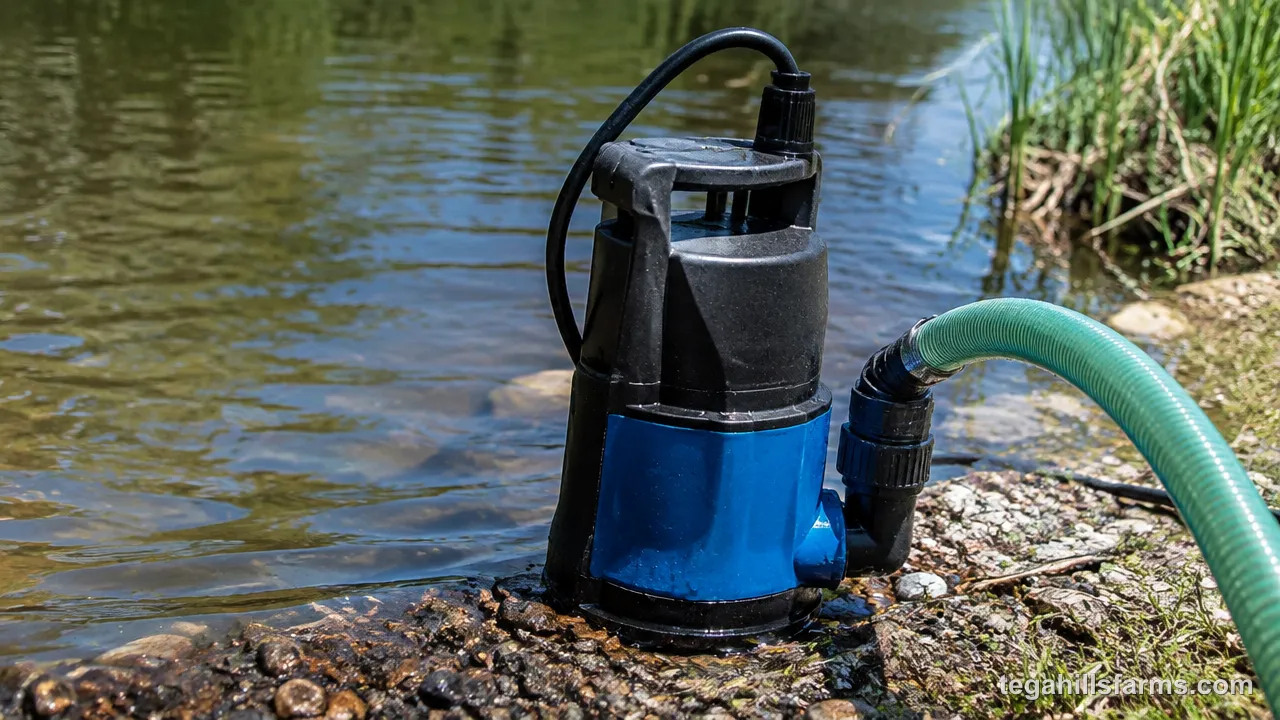
Where they help is on cleanout day. A transfer pump with a garden hose connection lets you move fish into a holding tub filled with pond water, drain the basin quickly, and clean the liner and rocks while the pond is empty. Run it with a screened intake or inside a mesh bag so it doesn’t pick up debris or fish, and switch back to the pond pump for daily circulation once the water is refilled.
Pond Pump FAQs
Should a pond pump run around the clock?
Yes, if the pond has fish or a biofilter. The bacteria that break down fish waste need constant flow, and oxygen drops once water stops moving, especially on warm nights. A purely decorative fountain with no fish can run on a timer, but switch off a fish pond’s pump only for cleaning.
Is a submersible or external pond pump better?
A submersible pump is better for most backyard ponds because it installs with tubing and a cord, needs no priming and runs quietly underwater. An external pump makes sense for large ponds with plumbed pressure filters, where you want to service the pump without reaching into the water.
How many GPH does my pond need?
Your pond needs enough flow to meet the standard turnover rule of thumb, measured at the lift height your outlet sits at, not at the surface. Heavily stocked koi ponds and wide waterfalls need more, while lightly stocked water gardens can get by with less. Estimate volume first, then choose a pump with some extra capacity.
Why does my pond pump flow less than its rating?
The rating is measured with the outlet at the water surface, so any lift cuts real output, and tubing length, elbows and narrow fittings cut it further. A clogged intake screen or worn impeller also reduces flow. Clean the intake first, and if flow stays weak at the same height, the impeller may need replacing.
More Guides on Best Pond Pumps
- Best Pond Pumps Under $200
- Best Little Giant Pond Pumps
- Best Beckett Fountain Pumps
- Best 3000 GPH Pond Pumps