
How to Choose a Pond Pump – GPH and Volume Guide
Choosing the right pond pump starts with matching flow in gallons per hour to your pond’s actual volume, features, and plumbing — not just picking the biggest number on the box.
A healthy pond typically needs to turn over its entire volume every one to two hours, with koi ponds and waterfall features often pushing that requirement higher. Get the math wrong in either direction and you either waste energy or starve your filter and oxygen levels.
The trick is to calculate baseline GPH from real measurements, then add the demand from waterfalls, fountains, and filters, and finally correct for the head height and pipe friction that quietly cut delivered flow. Each step below builds on the last so the number you shop for is the number you will actually see at the outlet.
Below, we walk from GPH basics through volume, feature, and head calculations to picking the pump type that delivers that true flow efficiently.
What Does GPH Mean and Why Does Turnover Rate Matter for Your Pond?
GPH means gallons per hour — the volume a pond pump moves in one hour — and turnover rate is how long it takes to circulate your pond once. For most backyard ponds, that goal is once per hour; for lightly stocked water gardens, once every two hours can work.
Think of GPH as raw capacity and turnover as the health standard. If you have a 1,000-gallon pond, a pump delivering a true 1,000 GPH at your plumbing’s head height gives you a 1x hourly turnover, while 500 GPH gives you a 0.5x rate. Algae control, filtration, and oxygen all depend on that rate staying consistent, not just on paper. This is also why rated flow and delivered flow are different — friction and lift reduce what reaches the waterfall. If you want a broader view of the models that deliver those flow rates, our guide to the best pond pumps breaks down the options by pond size and feature.
How Do You Calculate Your Pond Volume and Base GPH Requirement?
Calculating your base GPH requires measuring pond volume accurately, applying the turnover rule, and increasing flow for koi or heavy fish loads. Skip any of the three and your baseline will be off before you add features.
This sequence matters because each step corrects the last. An inflated volume estimate leads to an inflated GPH target; applying the wrong turnover interval hides whether your fish load actually needs once-per-hour circulation. Next, we measure, convert, and adjust.
How to Measure Irregular Ponds and Convert to Gallons
Irregular ponds are measured by averaging length and width, multiplying by average depth, and converting cubic feet to gallons. This averaging method accounts for the curves and shelves most ponds have.
For a rectangular pond, measure length x width x average depth in feet to get cubic feet, then multiply by 7.48 to get gallons. For an irregular shape, take several length and width measurements at the widest points, average them, and do the same for depth — measure the deep center and the shallow edges. For a kidney shape that averages 10 x 6 x 2 feet deep, that is 120 cubic feet, or about 898 gallons. If math is not your preference, a pond pump gph calculator can run the same length-width-depth conversion quickly, but always use average depth, not maximum depth, to avoid overstating volume.
Applying the Turnover Rule to Get Your Baseline GPH
The turnover rule sets baseline GPH at pond gallons divided by desired turnover hours. A 1x per-hour rate means GPH equals total gallons; a 1x per-two-hours rate means GPH equals half your gallons.
For example, that 900-gallon pond needs about 900 GPH for hourly turnover or 450 GPH for two-hour turnover. Water gardens with few fish and plenty of plants often do fine at the slower rate, while ponds with any fish load are safer at the hourly rate. This baseline is your minimum before adding waterfalls or filters, so do not shop yet. If you are still deciding where your pond falls on that spectrum, see what size pond pump do i need for a quick reference between volume and turnover goals before you add head loss.
When Should You Increase GPH for Koi or Heavy Fish Loads?
Increase GPH above baseline when you keep koi or heavy fish loads because higher waste, oxygen demand, and filtration needs overwhelm the standard turnover. Koi produce far more ammonia than goldfish or plants alone.
In practice, koi ponds do best with turnover of once per hour or even faster, and many keepers target 1.5x per hour when stocking density is high. That 900-gallon example stocked with koi would move from 900 GPH to 1,000-1,350 GPH baseline, plus extra for any bead or pressure filter that restricts flow. The upgrade is not about power for its own sake; it keeps dissolved oxygen up and gives your biological filter enough passes per day to process waste.
How Much GPH Do You Need for Waterfalls, Fountains, and Filters?
Waterfall, fountain, and filter demand often exceeds basic turnover, requiring weir-width GPH for waterfalls, lift-matched GPH for fountains, and flow-corrected GPH for pressure filters and UV clarifiers.
These features do not share the same flow number, so you need to calculate each and then size for the highest combined demand. Below that, your filter starves; above it, you can throttle back with a valve or variable-speed control.
Calculating Waterfall GPH by Weir Width and Desired Sheet Effect
Waterfall GPH is set by weir width: about 100 GPH per inch for a light trickle and 150-200 GPH per inch for a solid sheet. Wider weirs and the look you want drive the number more than pond size does.
A 12-inch spillway needs roughly 1,200 GPH for a thin trickle and 1,800-2,400 GPH for a full, glassy sheet. A 24-inch weir needs double that. Measure the actual lip where water sheets over, not the pump outlet. For small streams and gentle cascades on backyard ponds, many owners choose the lower end to save energy and reduce splash loss, while formal waterfalls need the higher range. If waterfalls are the main reason you are sizing up, look at options built for continuous head pressure in our guide to the best waterfall pump to match that per-inch math to a real pump curve.
How to Size GPH for Fountain Height and Nozzle Type
Fountain GPH depends on desired spray height and nozzle type, checked against the pump’s lift curve — not just its max GPH. Height and pattern determine the head the pump must overcome.
A wide, low bell nozzle can create a pleasing display at 2-3 feet of lift with modest GPH, while a narrow jet aiming for 5-6 feet needs far more pressure and flow at that height. Manufacturer curves show GPH at 0, 2, 4, and 6 feet of head — use the GPH at your target height, not the zero-head maximum. Add one foot of head for every vertical foot the nozzle sits above the water surface, and remember wind will shear tall sprays, so size slightly above minimum for outdoor exposure.
Why Pressure Filters and UV Clarifiers Change Your GPH Requirement
Pressure filters and UV clarifiers change your GPH because filters add friction that cuts flow and UV units need minimum dwell time to work. The two effects pull in opposite directions.
A pressure filter can reduce delivered GPH by 15-30% once media loads with debris, so a pump rated 1,200 GPH might deliver under 900 GPH through the filter. At the same time, many UV clarifiers list a minimum and maximum flow — too fast and water passes without enough exposure, too slow and you risk overheating. Always check the filter’s recommended flow range and size your pump to sit inside it. For setups where clarity is the priority, choosing the right pairing from the best pond pump filter options helps you stay in that sweet spot without overworking the pump.
How Do You Factor In Head Height and Pipe Loss (Total Dynamic Head)?
Total Dynamic Head combines vertical lift, pipe friction loss, and fittings loss to show true delivered GPH at your pond, which is always lower than the box rating. You must add all three before you read a pump curve.
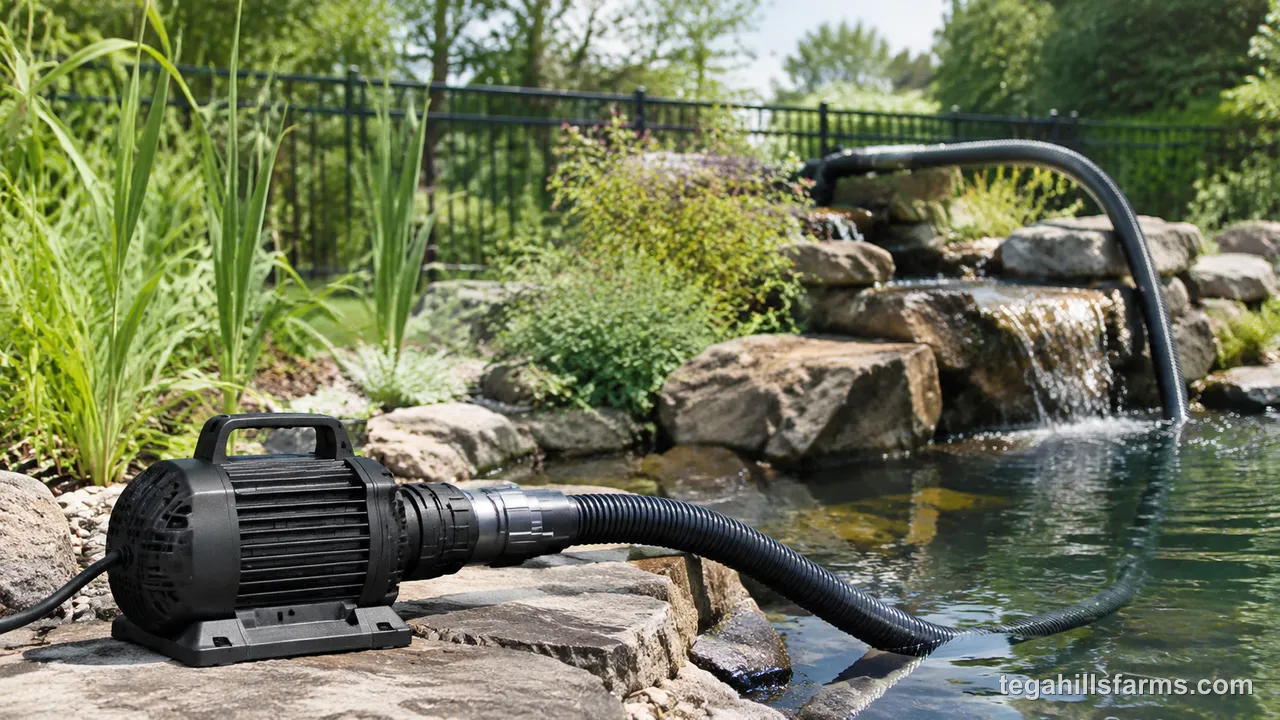
Rated GPH is measured at zero head on a test bench. Your pond adds real-world resistance. Once you know TDH in feet, you can look up what any pump actually delivers at that height and stop guessing.
Measuring Vertical Lift From Pump to Waterfall Outlet
Vertical lift is the straight vertical distance from the pump’s waterline to the waterfall outlet, not the length of the hose. This is the dominant part of TDH.
Stand a level from pond surface to the lip where water exits and measure that height in feet. A pump sitting 2 feet below the surface that pushes to a waterfall 3 feet above the surface has 5 feet of lift, even if the hose runs 20 feet horizontally. Horizontal run alone does not add feet of head, but it does add friction covered next. Get this number right first because every foot of lift cuts GPH measurably on most pond pump curves.
How Pipe Length, Diameter, and Fittings Reduce Delivered GPH
Pipe length, smaller diameter, and fittings add friction head that further reduces delivered GPH. Longer runs and tight tubing quietly steal flow you paid for.
As a rule, use the widest tubing the pump outlet allows — stepping down from 1.5 inches to 1 inch on a 20-foot run can add several feet of equivalent head. Each 90-degree elbow adds roughly 1-2 feet of equivalent head, and check valves and reducers add more. A 15-foot run of 1-inch best submersible pump hoses with two elbows can add 3-5 feet to your TDH, turning a 5-foot lift into an 8-10 foot effective head. When planning the route, keep hoses as short and straight as possible and avoid unnecessary adapters, and if you need to compare hose options, our notes on best pond pump tubing explain how diameter choice affects that hidden loss.
How to Read a Pump Curve to Choose True GPH at Your TDH
A pump curve maps GPH at each foot of head so you can match required GPH to your calculated TDH. Find your TDH on the horizontal axis and read the GPH the pump still delivers there.
Suppose you need 1,200 GPH at 8 feet of TDH. Pump A rated 1,500 GPH max might only deliver 850 GPH at 8 feet, while Pump B rated 2,000 GPH delivers 1,250 GPH at the same head — Pump B is the correct pick even though both claim enough on the box. Always size from the curve’s value at your TDH, not the headline max. If the curve shows flow dropping sharply past 6 feet, choose a model with a flatter curve or increase pipe diameter to lower TDH.
Which Pond Pump Type Matches Your Calculated GPH and Setup?
The right pump type depends on submersible versus external placement and mag-drive, direct-drive and hybrid efficiency and lifespan for your calculated GPH.
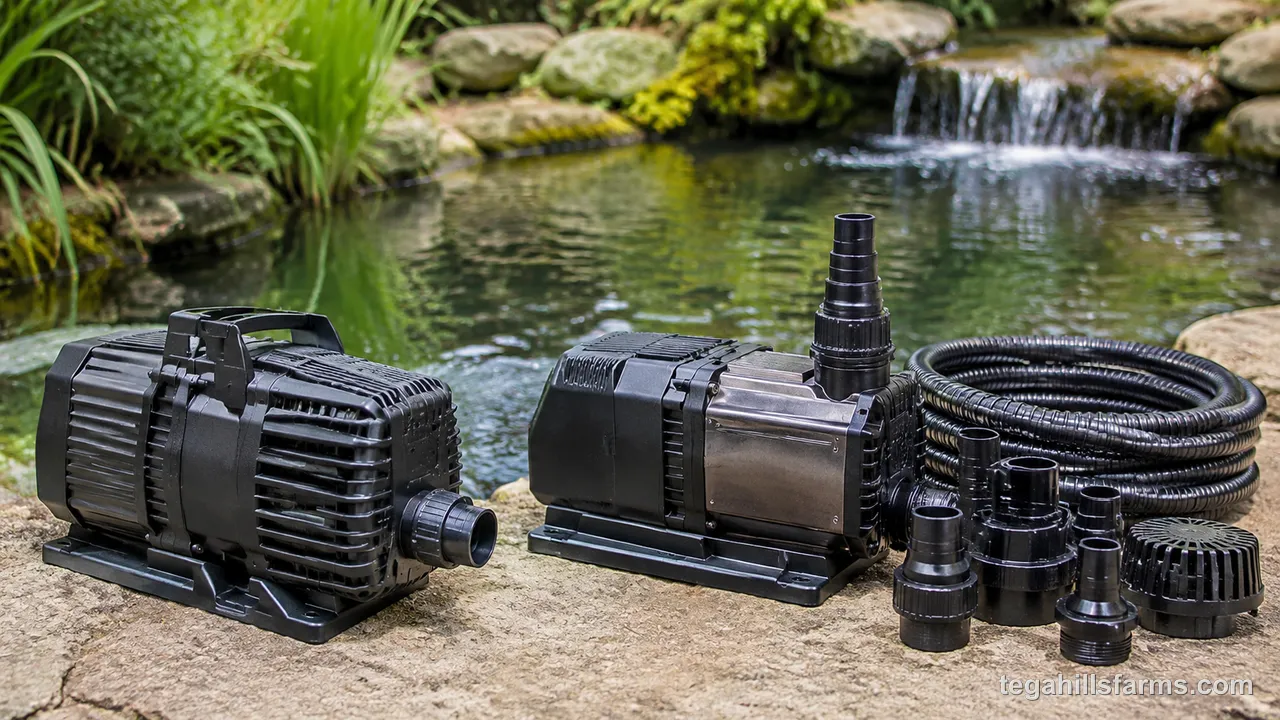
Small to medium ponds and simple waterfall runs often favor one technology, while large ponds and high-head filtration loops favor another. The choice is not just GPH — it is how that GPH will be maintained year after year.
When Does a Submersible Make Sense Versus an External Pump?
Submersible pumps win for smaller ponds and easy installs, while external pumps win for large ponds and high, continuous flow. The breakpoint is usually around 3,000-5,000 GPH and complex plumbing.
A submersible sits in the pond or skimmer, needs no priming, and runs quietly underwater — ideal when you want simple tubing to a single waterfall. An external pump sits on shore, stays cooler, is easier to service without wading in, and typically moves large volumes more efficiently at higher head. For a 600-gallon water garden, a submersible is almost always simpler and costs less to install; for a 5,000-gallon koi pond feeding a pressure filter and a wide weir, an external saves energy long term. Explore dedicated picks for each approach in our roundups of the best submersible water pump and the best external pond pump to align your TDH with the right form factor.
How Do Mag-Drive, Direct Drive, and Hybrid Pumps Differ on Efficiency and Lifespan?
Mag-drive pumps are most energy-efficient for light to moderate head but deliver less pressure, direct-drive pumps deliver high pressure and longevity at higher wattage, and hybrid pumps split the difference. Each trades watts for durability differently.
Mag-drive (asynchronous) units use a magnetic impeller with no direct shaft seal, so they draw fewer watts per GPH and run with low maintenance, but they lose flow quickly as head rises. Direct-drive pumps use a sealed motor shaft and handle high head and continuous 24/7 duty for years, yet draw more power and cost more upfront. Hybrids combine a mag-drive motor with a more robust impeller design to improve head tolerance while keeping efficiency reasonable. Match mag-drive to submersible water features under 6-8 feet of TDH, and consider direct or hybrid when your TDH pushes past that or your filter manufacturer requires sustained pressure.
Are You Oversizing or Undersizing Your Pond Pump? Common Mistakes to Avoid
Both oversizing and undersizing waste money — undersizing starves filters and waterfalls, oversizing wastes energy and can scour biological media, and ignoring head height makes either mistake likely. Most buying errors come from sizing to the box number instead of delivered GPH.
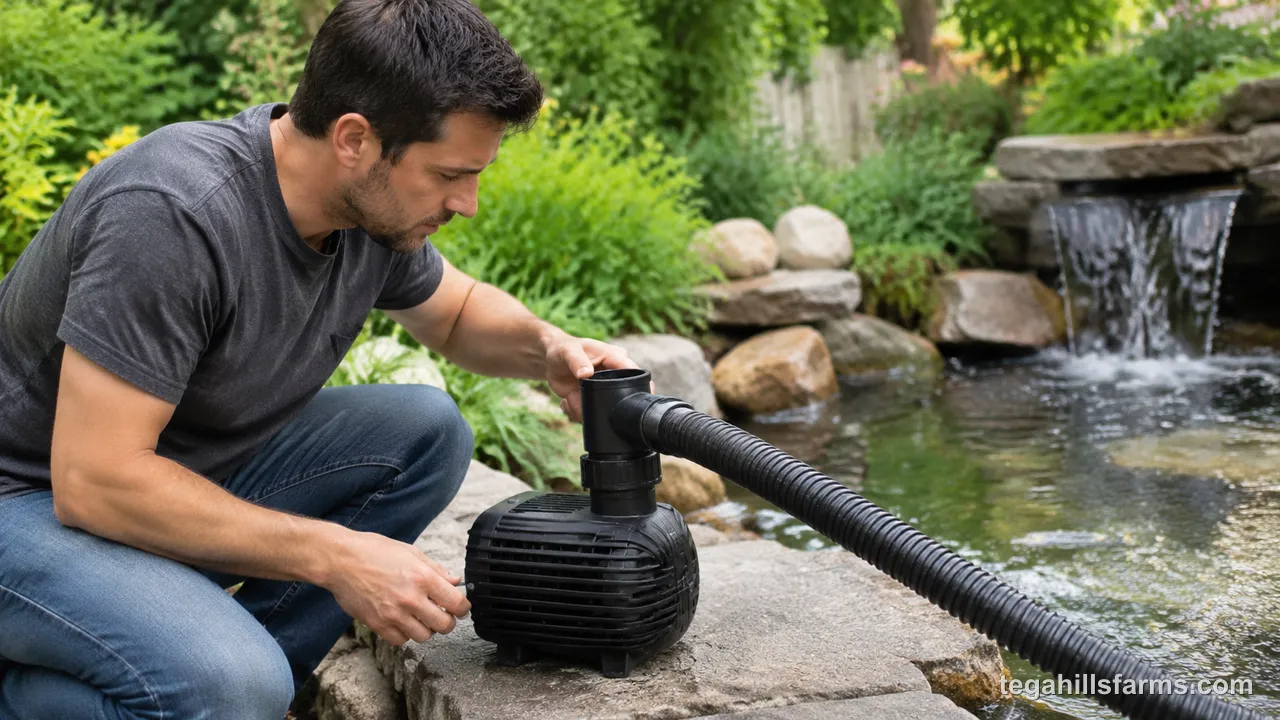
A pump that is 30% too small will leave your waterfall as a dribble and your UV clarifier under-flowed, while a pump 50% too large forces you to choke it with a valve, which still draws near-full watts and can erode filter media. The fix is to calculate volume, add feature demand, add TDH, and then pick the smallest pump that still meets that true GPH at that TDH. If you want that selection to stay cheap to run, compare efficiency on the picks in our guide to the best energy efficient pond pumps, and if you keep koi, verify the rate against the needs covered for the best pond pumps for koi ponds where turnover and waste load raise the floor.
You have now mapped pond volume to baseline GPH, added waterfall and fountain demand, and corrected for Total Dynamic Head to find the flow you will actually get at the outlet.
Choosing a pump is not just about hitting a number on a chart — long-term cost, efficiency, and how the system behaves in winter or after a year of biofilm also decide whether that GPH stays reliable.
The notes below zoom into those rarely covered details so you can keep the flow you calculated without overpaying to run it.
How to Spot Inflated GPH Claims and Choose Honest Performance
Inflated GPH claims show only max flow at zero head without a pump curve — honest performance lists GPH at multiple head heights so you know delivered flow. Marketing max numbers always look bigger than the flow you will see in the pond.
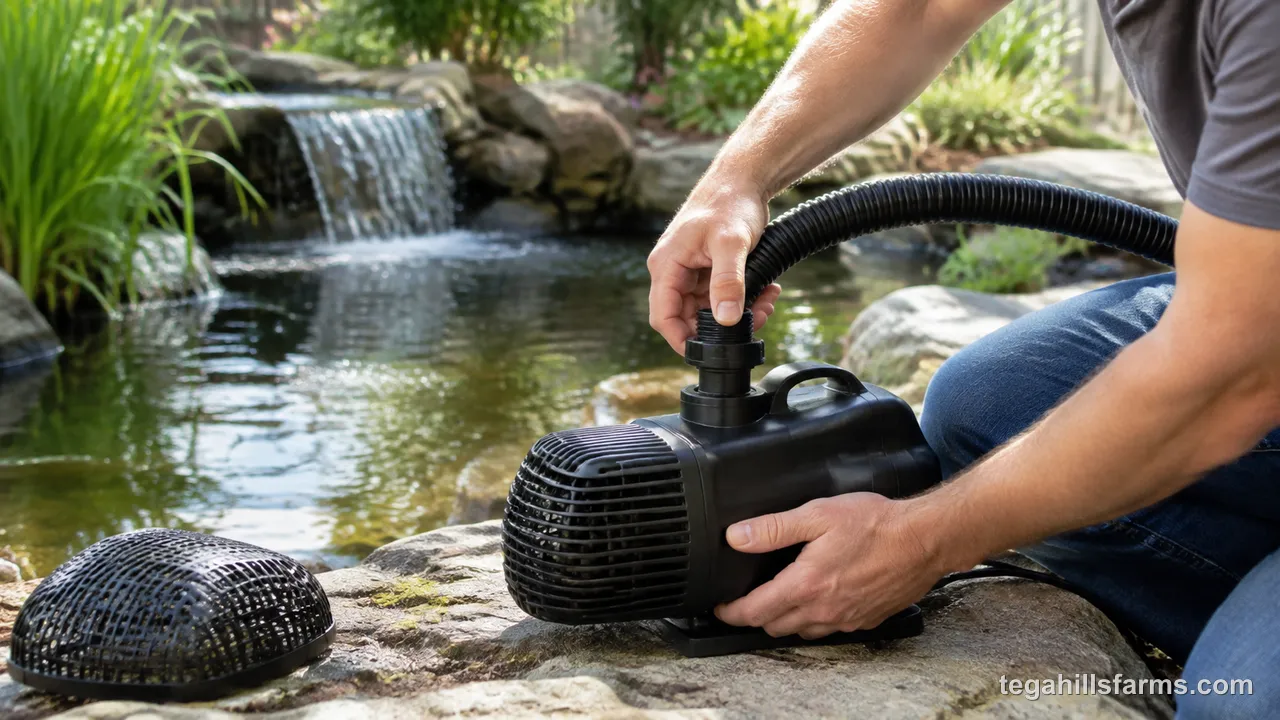
Before you buy, look for a chart showing GPH at 0, 2, 5, and 10 feet of head, and be wary of listings that quote a single large GPH with no head context or wattage. A pump claiming 2,000 GPH that hides its 800 GPH at 5 feet is less useful than a pump honestly rated 1,500 GPH that still delivers 1,200 GPH at that height. Cross-check the curve against your TDH, confirm the outlet diameter matches your tubing to avoid added friction, and prefer brands that publish both watts and GPH at head — that transparency is what lets you predict whether today’s purchase still meets turnover after a season of biofilm.
What Small Details Determine Whether Your Chosen GPH Stays Efficient?
Whether your chosen GPH stays efficient depends on watts per GPH at your head and maintenance factors like pre-filters, tubing, and seasonal care that quietly cut flow after installation. The number on day one is not the number on day 300.
Running cost and upkeep determine long-term value more than peak output. Two small details sort pumps that stay close to rated efficiency from those that drift away month by month.
Why Watts per GPH Matters More Than GPH Alone
Watts per GPH matters more than GPH alone because two pumps can deliver the same flow while drawing very different power over thousands of hours per year. Operating cost compounds faster than purchase price.
A pump delivering 1,200 GPH at 8 feet while drawing 120 watts costs noticeably less to run 24/7 than one delivering the same 1,200 GPH at 180 watts — that 60-watt gap adds up to hundreds of kilowatt-hours annually. Divide watts by delivered GPH at your TDH to compare, not at zero head. To put that math in dollars for continuous duty, see how much electricity does a pond pump use, which shows how a higher-efficiency motor pays back even when its upfront tier is higher.
How Pre-Filters, Tubing, and Seasonal Care Keep Rated Flow Real
Pre-filters, tubing condition, and seasonal care keep rated flow real by preventing clog-related friction that silently raises TDH. Without them, delivered GPH falls even though the pump has not failed.
A clogged intake pre-filter can cut flow 20-40% before you notice the waterfall thinning, and kinked or algae-lined tubing adds friction that mimics extra head height. Rinse pre-filters weekly in season, replace tubing that has narrowed with biofilm, and winterize or raise the pump if ice risk traps it. These habits also extend service life — neglecting them is a common reason pumps fall short of the lifespan discussed in how long do pond pumps last, where simple cleaning often adds a year or more of steady turnover.
Quick Answers: Choosing and Calculating Pond Pump GPH
How often should my pond water turn over?
Turn over the pond once per hour for fish ponds and once every two hours for plant-only water gardens. That means GPH equal to total gallons for hourly, or half that for two-hour turnover. Increase toward hourly if you feed heavily or keep koi, where oxygen and waste move the goalpost.
How do I quickly size GPH without measuring every curve?
Multiply average length x width x average depth in feet, convert with 7.48 to gallons, then match GPH to your turnover goal. Add waterfall and filter demand, then add head height and friction to get TDH. Use the pump curve at that TDH, not the max rating, to pick.
Can I use one pump for both filtration and a waterfall?
Yes, if the pump meets the combined flow at your TDH and stays inside the filter’s recommended flow range. Plumb with a tee and ball valves so you can balance flow between the filter loop and the waterfall weir without starving either side.
What happens if my head height is higher than I thought?
Every extra foot of head lowers delivered GPH, so recheck vertical lift and pipe friction before you upsize the pump. Often widening tubing from 1 inch to 1.5 inches or straightening elbows recovers more flow for less cost than jumping to the next pump size.
Do solar pumps change how I calculate GPH?
Solar pumps still need the same GPH math, but flow varies with sunlight so you must size for cloudy-day output. For 24/7 filtration and fish health, grid or battery backup is usually needed unless the pond is lightly stocked and tolerant of intermittent flow.
More Guides on How to Choose a Pond Pump
- How to Keep a Pond Pump From Freezing
- Submersible vs External
- How Much Does a Pond Pump Cost
- How to Winterize a Pond Pump
- Why a Pond Pump Has Low Flow
- Solar vs Electric Pumps
- How to Install a Pond Pump
- How to Set up a Pond Pump
- How to Clean a Pond Pump
- How to Store a Pond Pump
- How to Use a Pond Pump
- Why a Pond Pump Isn’t Working
- How to Fix a Leaking Pond Pump