

An inverter generator turns the alternator’s raw output into DC, then uses an electronic inverter to rebuild clean, stable AC for the outlets. Because the inverter sets the output, the engine can run at whatever speed the load needs.
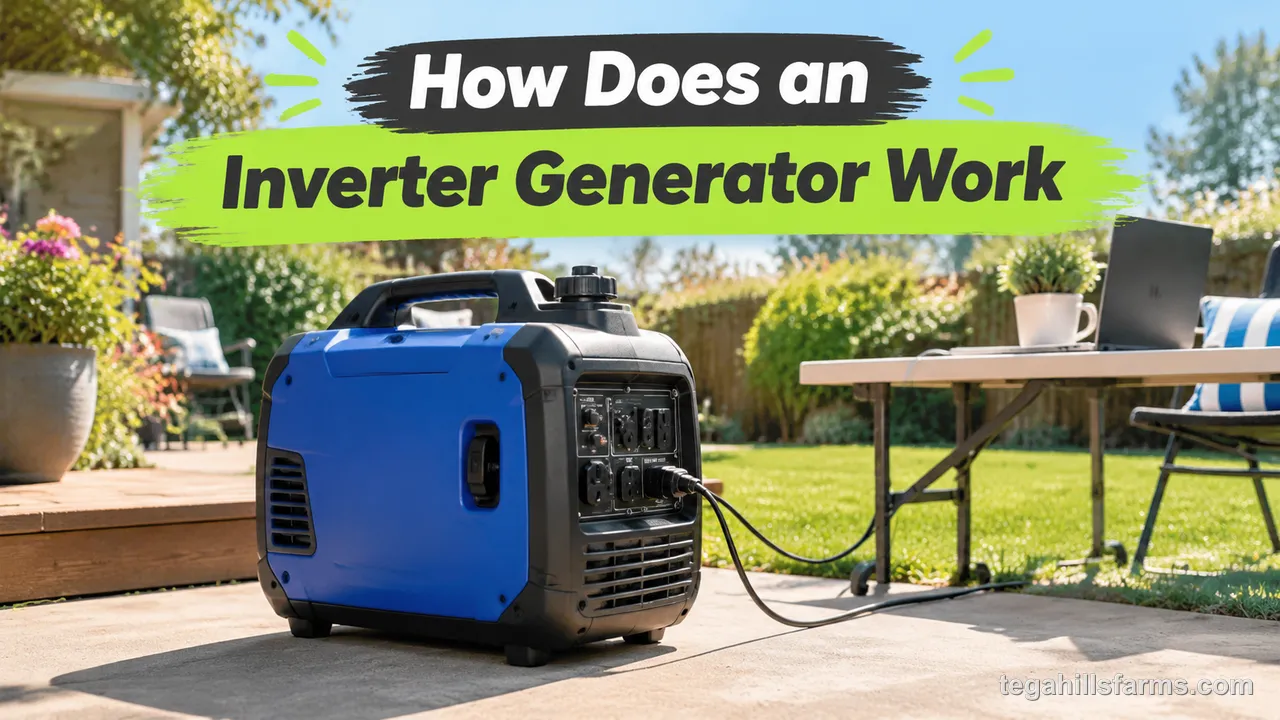
Four things separate one inverter generator from another: output quality, noise, run time and the wattage it can supply. Output quality depends on how smooth the waveform is, and the rated distortion figure is the number to read.
Most owners worry about two things. Can the machine safely power laptops, phones and a refrigerator, and is the added complexity worth it over a conventional generator? The answers follow from how each stage hands power to the next.
Before comparing models, list what you want to power and note which items have motors. Motor start-up demand often sets the minimum size more than the running load does.
What Is an Inverter Generator?
An inverter generator is a portable generator that makes power in stages and rebuilds it electronically, instead of sending raw engine output straight to the outlets.
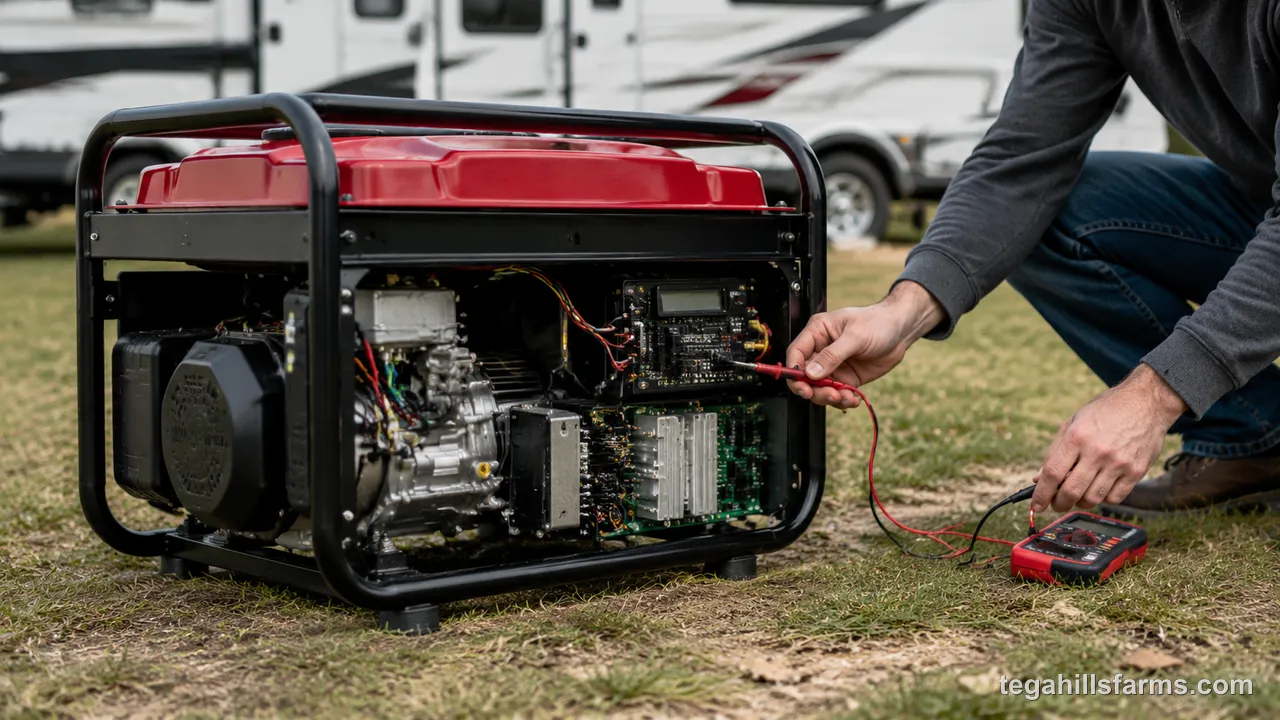
Inside, an alternator makes rough AC, electronics convert it to DC, and an inverter turns it back into steady AC. The result behaves much like wall power.
Owners pick one because it runs quieter, uses less fuel at light loads, and is gentler on phones, laptops and other electronics. These units also tend to be lighter than a conventional generator of similar capacity.
If you are still deciding between generator types, our guide on how to choose a generator walks through the full decision.
How Does an Inverter Generator Work Step by Step?
Power passes through engine and alternator, rectifier and inverter, and a fourth piece, engine speed control, lets the motor match the load.
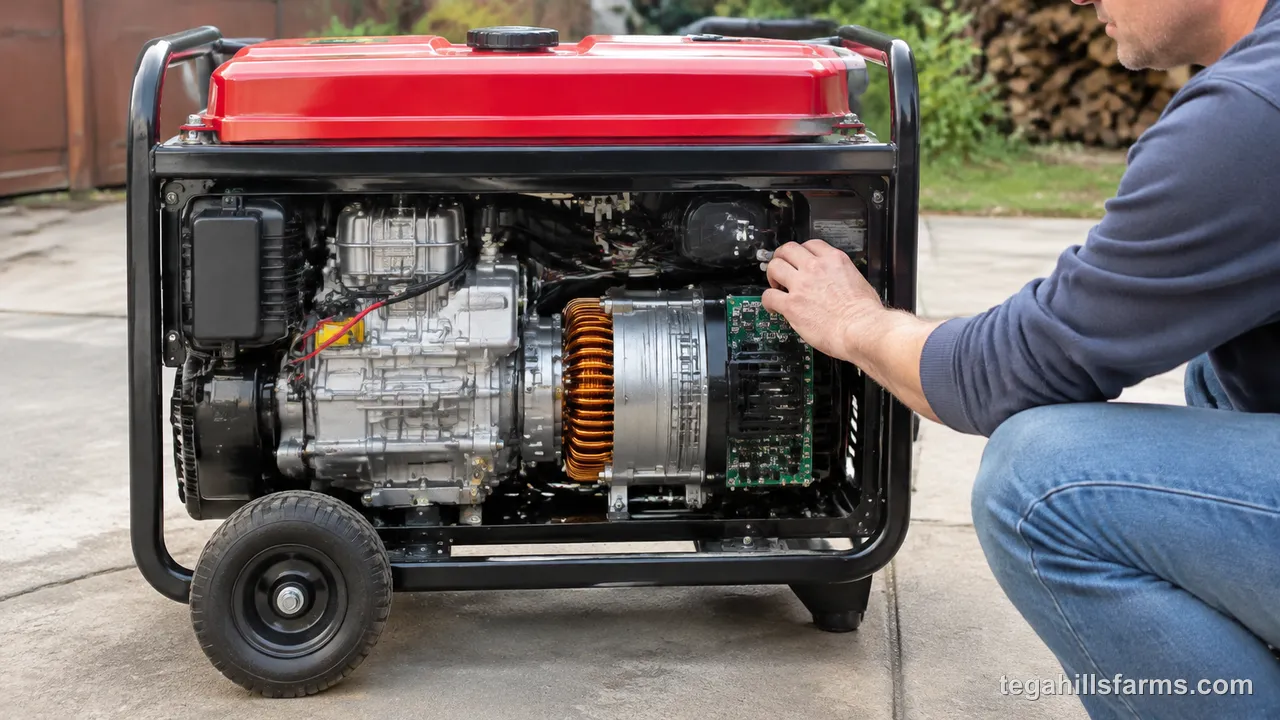
Engine → Alternator (raw AC) → Rectifier (DC) → Inverter (clean AC) → Outlets
Each stage fixes a problem the previous one creates. Follow the chain in order and the reason for each step becomes clear.
Engine and Alternator: Where the Raw Power Starts
The engine spins a permanent magnet alternator, which produces raw, unregulated AC whose frequency follows engine speed.
Permanent magnets supply the magnetic field on their own, so the alternator can produce usable voltage even when the engine turns slowly. That is what lets the motor idle down at light loads.
The raw output is not fit for your outlets. Its voltage and frequency rise and fall with the engine, and most electronics expect neither to wander. So the next stage cleans up the mess.
Rectifier: Turning Raw AC Into DC
The rectifier converts the alternator’s raw AC into DC, a steady current that flows in one direction.
It does this with electronic components that let current pass one way only. Once the power is DC, it has no frequency at all.
That matters because the engine’s speed no longer decides what your devices see. The DC stage acts as a buffer between a motor that speeds up and slows down and an outlet that must stay steady.
Inverter: Rebuilding Clean AC From DC
The inverter switches the DC back into household-style AC, shaped into a smooth sine wave at a fixed voltage and frequency.
A microprocessor controls the switching, so it holds output at the US standard of 120 volts and 60 Hz regardless of what the engine is doing. Tight control over the switching keeps total harmonic distortion low.
Some manufacturers describe only this last stage as “DC to AC.” It is the same machine described from the inverter onward. With the output now independent of the engine, the motor is free to change speed.
Engine Speed Control: Why the Motor Doesn’t Run Flat Out
Because the inverter sets the output frequency, the engine speed can rise and fall with the load instead of staying at one fixed RPM.
You notice this at the campsite or on the back patio. With a light load the engine idles down, so the unit is quieter and burns less fuel.
When a heavy appliance kicks in, a load-based throttle raises the RPM to meet the demand. A short pause before the engine catches up is normal.
What Does Clean Power Mean for Your Devices?
Clean power is a smooth, stable waveform with low total harmonic distortion, the kind of output that sensitive electronics are built to expect.
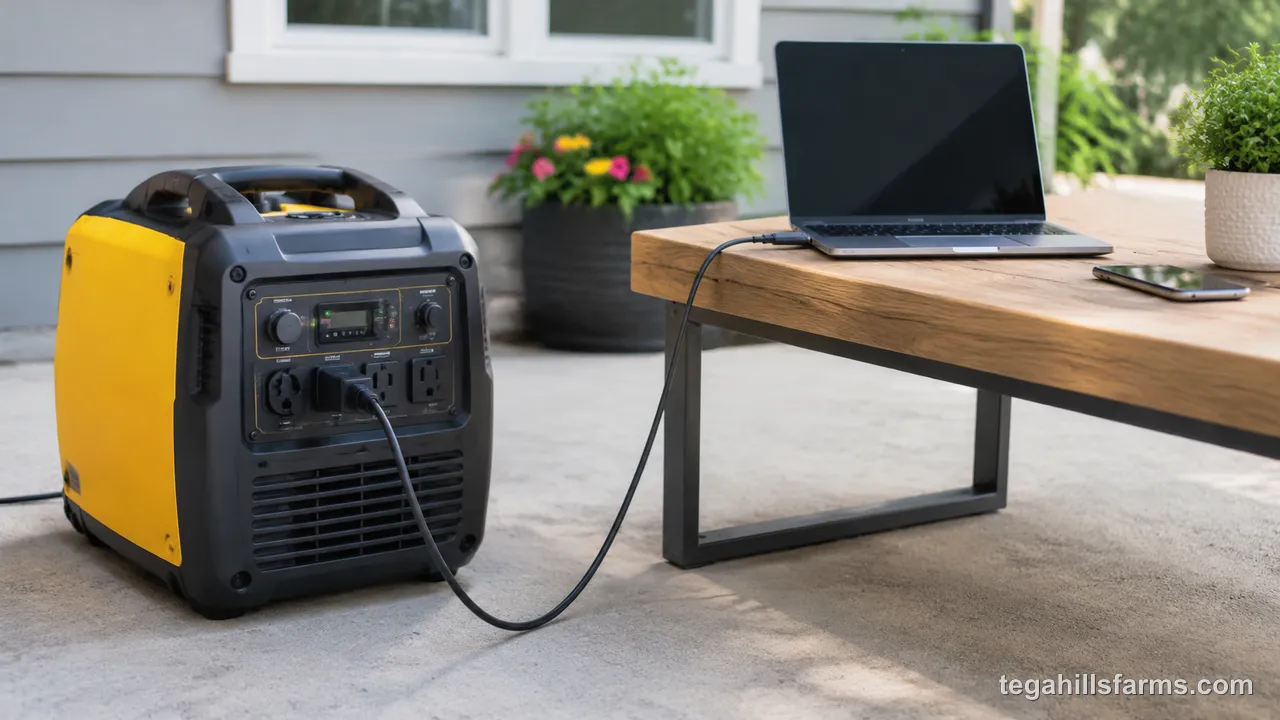
Rough output can make chargers run hot or cause sensitive gear to misbehave. Two questions follow: how to read the distortion rating, and which of your devices care.
What Total Harmonic Distortion Tells You
Total harmonic distortion (THD) measures how far the output strays from a perfect sine wave, and a lower percentage means cleaner power.
Inverter generators are typically rated at 3% or less THD. A conventional generator sends alternator output more directly to the outlets, so its waveform generally follows the engine and is rougher.
On a spec sheet, treat THD as a quick filter. If you plan to charge laptops or run electronics with sensitive controls, look for a published figure at or under that mark. A missing rating is a reason to ask before buying.
Which Devices Actually Need Clean Power
Laptops, phones, medical equipment and appliances with electronic controls benefit most from a stable waveform.
Their power supplies and control boards assume smooth input. For medical devices, check the maker’s guidance on generator power.
Simple loads shrug off rougher output. Basic motors, work lights and heating elements care little about waveform quality. A fridge sits in between: its compressor motor tolerates a rougher waveform, but newer models with electronic controls prefer clean power.
How Is an Inverter Generator Different From a Conventional Generator?
An inverter generator wins on fuel use at part load and noise and portability, while a conventional generator wins on raw output and upfront cost where power quality matters less.
Engine Speed and Fuel Use
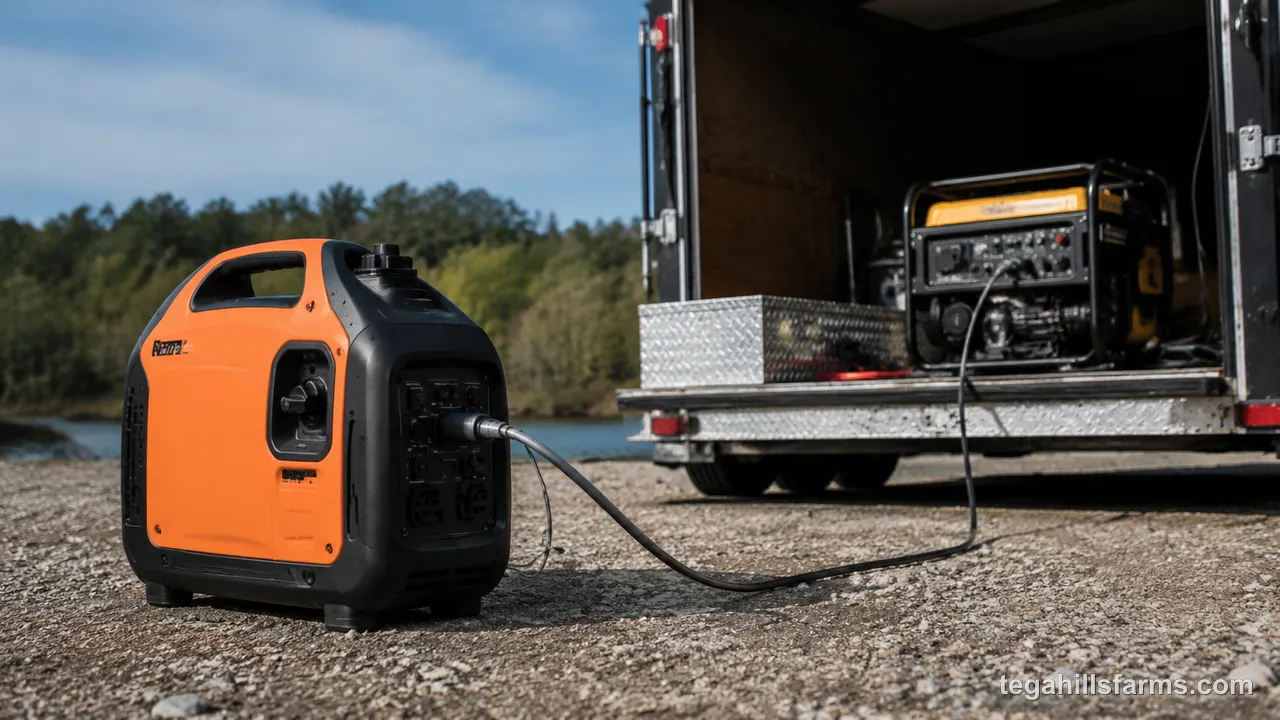
A conventional generator holds a constant 3600 RPM, while an inverter generator’s engine adjusts its speed to the load.
A fixed-speed engine keeps burning fuel at the same pace whether you run one lamp or a full load. A variable-speed engine throttles back, so a given tank usually lasts longer at partial load.
At full load the gap narrows, since both engines are working hard. The savings show up for owners who mostly power a few small items. The question of how much gas will your generator use depends on the model and the load you put on it.
Noise and Portability
An engine that slows down at light load is quieter, and inverter generators usually add a closed enclosure that muffles sound further.
That matters around a campsite or a neighbor’s fence. Decibel figures depend on distance and load, so compare ratings that state the measuring conditions.
Inverter units are also built smaller and lighter for their class, so one person can often carry them. The trade-off is capacity: for a given size and weight, a conventional generator typically delivers more watts.
Power Quality and Upfront Trade-Offs
Conventional generators suit rough, high-wattage jobs where waveform quality matters less, while inverter generators fit electronics and quiet use.
Power tools, a job-site compressor or a pump don’t care about a rougher waveform, and a conventional generator delivers that capacity at a lower purchase price. If your list is laptops, phones, routers and a fridge, the cleaner output earns its place.
Many owners end up choosing by the sensitive items on their list. If none are on it and you need maximum wattage, the conventional design is hard to argue against.
What Are the Pros and Cons of an Inverter Generator?
Inverter generators offer clean output, quiet running and lower part-load fuel use, and they cost you in purchase price, output ceiling and repair difficulty.
Where Inverter Generators Come Out Ahead
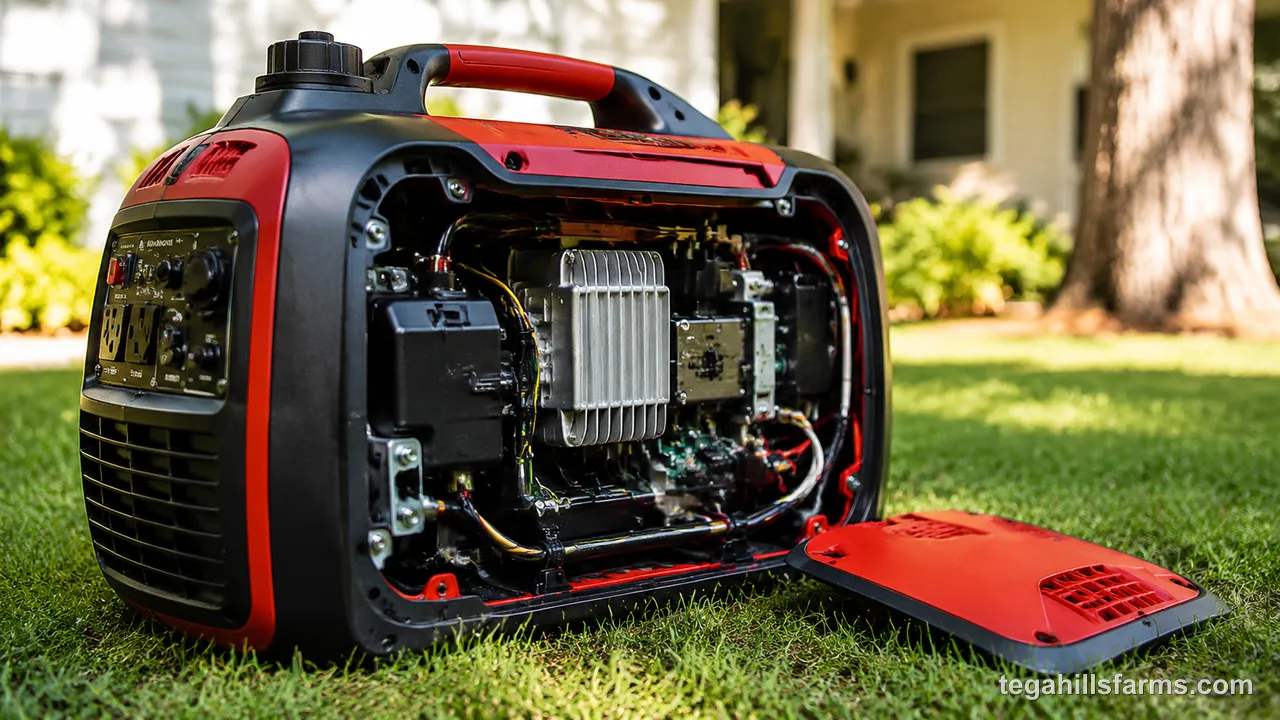
Each strength traces back to a stage in the power chain.
- Clean output: the inverter rebuilds a smooth sine wave, so electronics see stable power.
- Low noise: with the engine freed from fixed speed, it idles down at light loads, and the enclosure muffles what remains.
- Part-load fuel economy: the same load-based throttle burns less fuel when demand is low.
- Easy carrying: a smaller engine and compact enclosure give a lighter frame for the class.
These benefits stack. A quiet, efficient machine that can safely charge a laptop suits most home and travel uses.
Where Inverter Generators Fall Short
The main limits are higher purchase cost, a ceiling on output for the size, and harder repairs for owners who do their own work.
In Consumer Reports’ ratings, a top 5,000-watt inverter generator sells for around $4,000, while a top 7,500-watt conventional generator runs around $850. If you are weighing those price tags, the questions how much does a generator cost and are expensive generators worth it come down to how much the clean output is worth to you.
Repairs are harder because the electronics sit between the alternator and the outlets. A bad inverter board is a replacement job, not a quick fix with a wrench. Output limits matter too. If you need to run a lot at once, a single inverter unit may be too small.
Is an Inverter Generator Right for Your Home, Camping, or RV?
Yes, an inverter generator suits partial home backup and camping or RV trips thanks to clean output, low noise and a light frame, but whole-house or heavy-tool loads call for a larger unit.
Home Backup and Sensitive Electronics
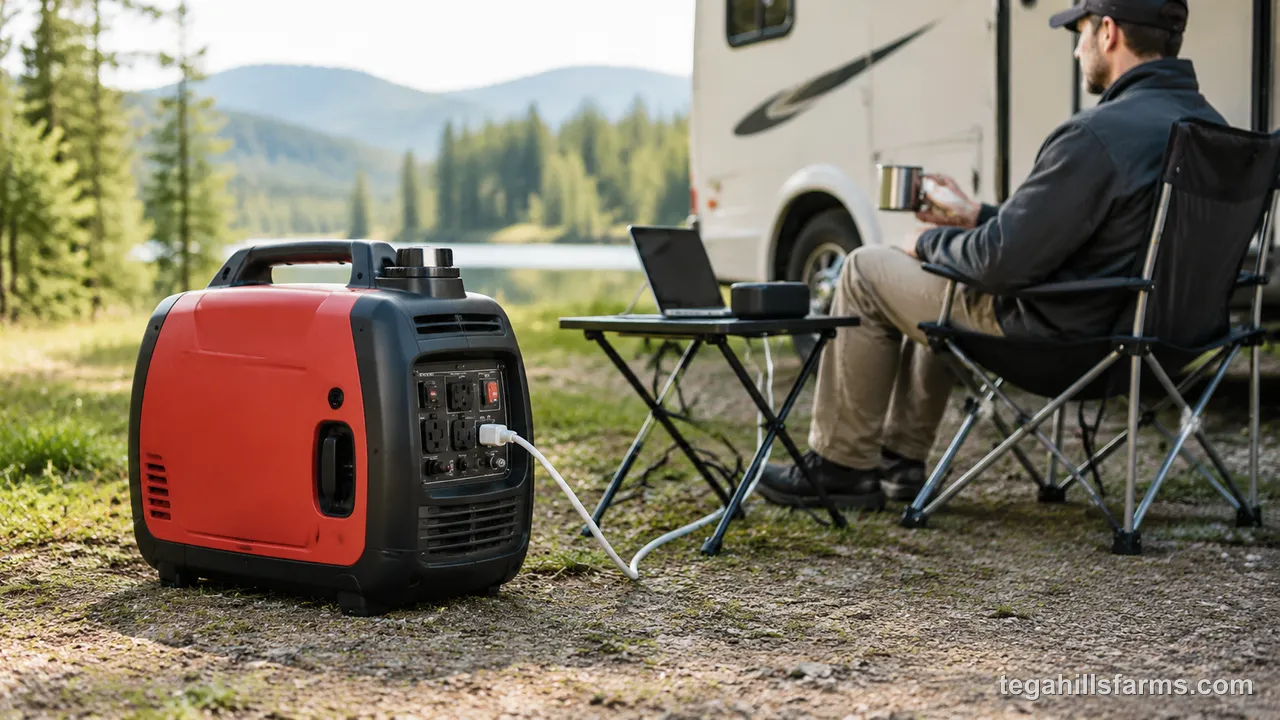
An inverter generator can keep essentials running during an outage: a fridge, lights, internet gear and phone chargers.
The output limit is what decides how far it goes. A single unit won’t carry an electric range, central air and a well pump at the same time, so you pick which circuits matter most.
Connecting to your home’s panel needs the right equipment and a safe setup, and an electrician should handle it. Our walkthrough on how to power house with generator covers the options, and how to install a generator transfer switch explains what the switch does and why backfeeding through an outlet is dangerous.
Camping, RV and Tailgating
Low noise, light weight and stable output make an inverter generator a good match for campgrounds, RVs and tailgates.
Campgrounds often enforce quiet hours, and a unit that idles down at light loads is easier on neighbors. The stable output also means you can charge phones, cameras and laptops off-grid without worry.
RV air conditioners are the usual sticking point. Their start-up surge can exceed what a small inverter generator delivers, which may call for a larger unit or a paired setup.
How Do You Match Size and Run Time to Your Needs?
Size and run time come down to matching wattage to your devices and reading run time ratings correctly.
Matching Wattage to Your Devices
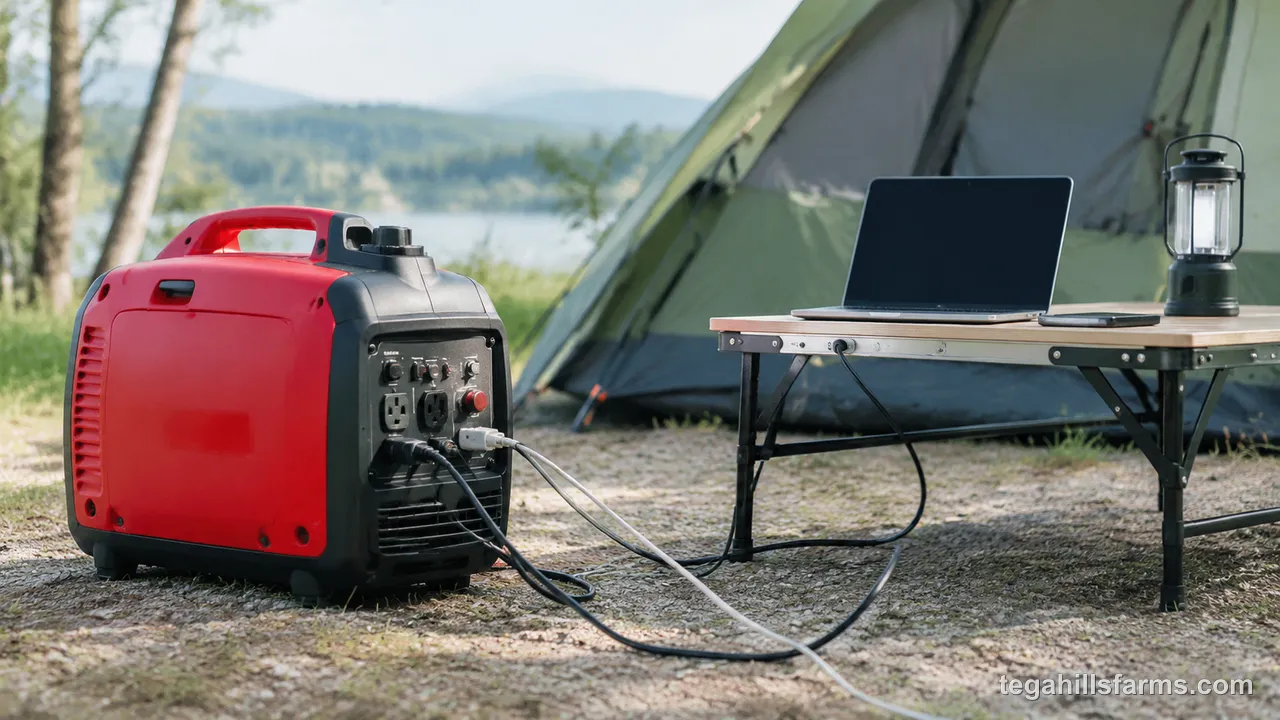
Running watts are what a device draws continuously, and starting watts are the brief surge it needs to get going.
Appliance labels list the running figure. Anything with a motor, such as a refrigerator compressor, a sump pump or an air conditioner, needs extra headroom to start, so the generator’s surge rating has to cover the biggest start-up on your list.
Resistive loads like lamps and heaters barely surge at all. Add up the running watts of everything you want on at once, then confirm the largest motor can start on top of that. Our guide on how to size a generator walks through the full method.
Reading Run Time Ratings Correctly
Manufacturer run time claims depend on load level and tank size, so a figure means little without the conditions behind it.
Honda lists the EU1000i at up to 6.8 hours, the EU2200i at up to 8.1 hours, the EU3200i at up to 8.6 hours, the EU3000iS at up to 20 hours and the EU7000iS at up to 16 hours. The Predator 9500 is listed at 9 to 17 hours, a spread that shows how much one machine’s run time shifts with load.
“Up to” figures usually reflect a light load, and a heavier load shortens the run. Compare the load condition first, then the hours. The separate question of continuous operation over days is covered in how long can a generator run.
Can You Run Two Inverter Generators in Parallel?
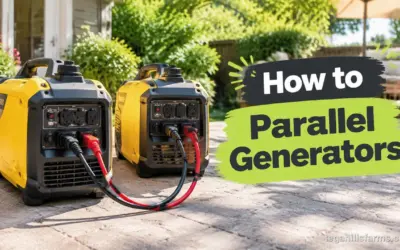
Yes, models with parallel capability can be linked with a parallel kit, which joins two matching units for more combined capacity.
Parallel setups add flexibility compared with one large unit. You can run a single generator for light loads and save fuel, then connect the second when demand climbs.
Two smaller units are also easier to carry than one big machine, and if one fails, the other can still cover essentials. Parallel operation generally requires compatible models, usually the same brand and series, and the manufacturer’s own kit. Our guide on how to parallel generators covers the hookup step by step.
How Do You Run and Maintain an Inverter Generator Safely?
Run the generator outdoors and well away from the house, and keep up regular maintenance and test runs so it starts when you need it.
Safe Placement and Carbon Monoxide
Place the generator at least 20 feet from your home, with the exhaust pointed away from the house, windows and doors.
Engine exhaust carries carbon monoxide, a gas you can’t see or smell that can build up fast indoors. A garage with the door open or a closed-in porch is not outdoors for this purpose.
Install battery-backed CO alarms inside the home. Some generators also have a built-in CO sensor that shuts the engine down, which is a useful extra layer but doesn’t replace an alarm. Our guide on how to use a generator covers safe startup and shutdown.
Routine Maintenance and Test Runs
Run the generator at least once a month for about 15 minutes, even if you haven’t needed it.
Regular runs keep fuel moving through the system and the engine ready. Check the oil level before each start and change it on the schedule in your manual. Use fresh fuel, and add a stabilizer or drain the tank before long storage.
A neglected unit usually shows it the same way: stale fuel gums up the fuel system, and the engine cranks without firing or dies after a few seconds. If that happens, our page on generator won’t start walks through the likely causes.
Two spec pages for the same class of generator can describe the conversion in different words, one listing an AC to DC to AC chain and another only a DC to AC inverter. A shopper who reads both can easily conclude the machines work differently and rule out a good unit over wording. So which description is the accurate one?
Why Do Some Sources Say AC to DC to AC and Others Only DC to AC?
Both describe the same machine: the AC to DC to AC version covers the whole chain from the alternator, while the DC to AC version starts at the DC stage.
The alternator always produces AC first, and the rectifier converts it to DC. The inverter then turns that DC into clean AC. That is the full AC to DC to AC path.
Manufacturers who write “DC to AC” are describing the inverter stage, the part that creates the output you plug into. Neither wording means a different design or a lesser unit. When two spec pages disagree on the chain, check the output rating and THD figure instead.
Inverter Generator or Portable Power Station: Which Fits Better?
A portable power station fits silent, short-duration use, while an inverter generator fits long runs with refueling.
A power station is a battery with an inverter built in. It makes no noise or exhaust, so it works indoors for small loads like a laptop, router or CPAP. When the battery is empty, you need a wall outlet or solar panels to recharge it.
An inverter generator keeps going as long as you can add fuel. That matters in a storm outage, where the grid may be down for days and wall power for recharging is not available. Fuel then becomes the deciding factor: gas stations can be closed or out of supply, so stored fuel matters. Our page on generator hurricane preparation covers fuel storage and placement before the season starts.
Many households keep both: the power station for quiet overnight essentials and the generator for the heavy lifting.
What Are the Warning Signs of an Overloaded or Worn Inverter Generator?
The main warning sign is the overload indicator, and rough running, unstable output or oil and fuel trouble point to a unit that is being pushed too hard or wearing out.
An overload light means the load is above what the unit can supply. Unplug something, let the unit recover, and restart it. If the light keeps returning with the same load, you need a larger generator or a smaller load.
Surging, sputtering or a hunting engine sound suggests fuel problems or a dirty carburetor. Flickering lights or chargers that cut in and out suggest unstable output, which can mean an inverter fault. Low oil, a burning smell or smoke are reasons to shut down immediately.
Rest the unit after a one-off overload. Service it when rough running or oil problems persist. Replace it when repairs start costing more than the machine is worth.
Inverter Generator FAQs
Can an inverter generator run a refrigerator?
Yes, as long as the unit covers the fridge’s starting watts, not just its running watts. The compressor draws a short surge when it kicks on. Check the label on your fridge, add anything else you plan to run, and leave headroom so the generator isn’t overloaded each cycle.
Is an inverter generator safe for laptops?
Yes. The inverter’s smooth, low-distortion waveform is close to wall power, which is what laptop chargers, phones and other electronics are designed around. Keep the generator under its rated load, and use a surge-protected power strip for extra margin against sudden load changes.
Can an inverter generator run in the rain?
Not uncovered. Water on the outlets or controls creates a shock risk, so run it under an open-sided canopy or generator tent that keeps rain off and still vents exhaust. Never move it into a garage or onto a closed-in porch to stay dry, because carbon monoxide builds up fast in enclosed spaces.
Can you leave an inverter generator running overnight?
It can run overnight if it has enough fuel and sits outdoors, well away from the house. Keep a working CO alarm inside, check the oil level before you start, and let the engine cool before refueling. Many owners top off the tank before bed so it doesn’t run dry unattended.

Write Your Review
No reviews yet. Be the first to share your experience!