

Using a generator comes down to five habits: run it outdoors, check oil and fuel before every start, add loads one at a time, refuel only after it cools, and shut it down in order. Skip any of them and you risk carbon monoxide, a stalled engine or a fire.
The right routine depends on your starting system and how the unit connects to your home. A recoil model needs a different sequence than an electric start, and a transfer switch changes how you power circuits.
Most owners worry about getting it wrong during an outage, in the dark, with a storm still moving through. Fumes, overloads and improvised connections are the mistakes that hurt people and equipment.
Read your manual’s start and stop sequence once while the power is still on. It’s far easier than learning it by flashlight.
What Should You Know Before Running a Portable Generator?
A portable generator is a gasoline-powered engine paired with an alternator that supplies temporary electricity during an outage, and it must always run outdoors.
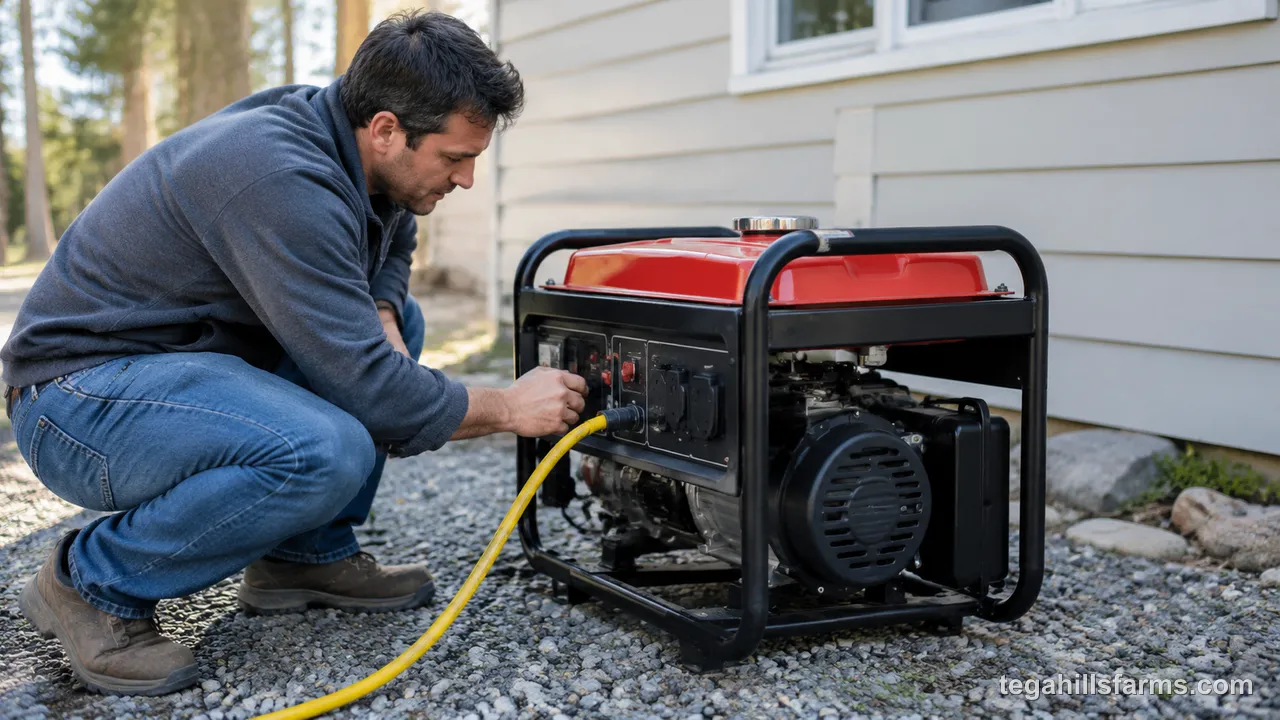
That outdoor rule exists because engine exhaust carries carbon monoxide, which you can’t see or smell. A garage, a porch or an open door doesn’t make indoor running safe.
Read the owner’s manual before the first start. It shows where the fuel valve, choke, engine switch and oil fill sit on your exact model, and those controls vary more between brands than you’d expect. Learn them in daylight so you aren’t guessing later.
Look at the outlets and breaker on the unit too, since they set what it can feed. Before you plug anything in, it also helps to know how to choose a generator that suits the circuits you plan to run.
Where Should You Put a Generator to Avoid Carbon Monoxide?
Safe placement rests on distance from the house, a working carbon monoxide alarm and a dry, level setup. Each one closes a different path for exhaust fumes to reach you.
How Far Should a Generator Sit From the House?
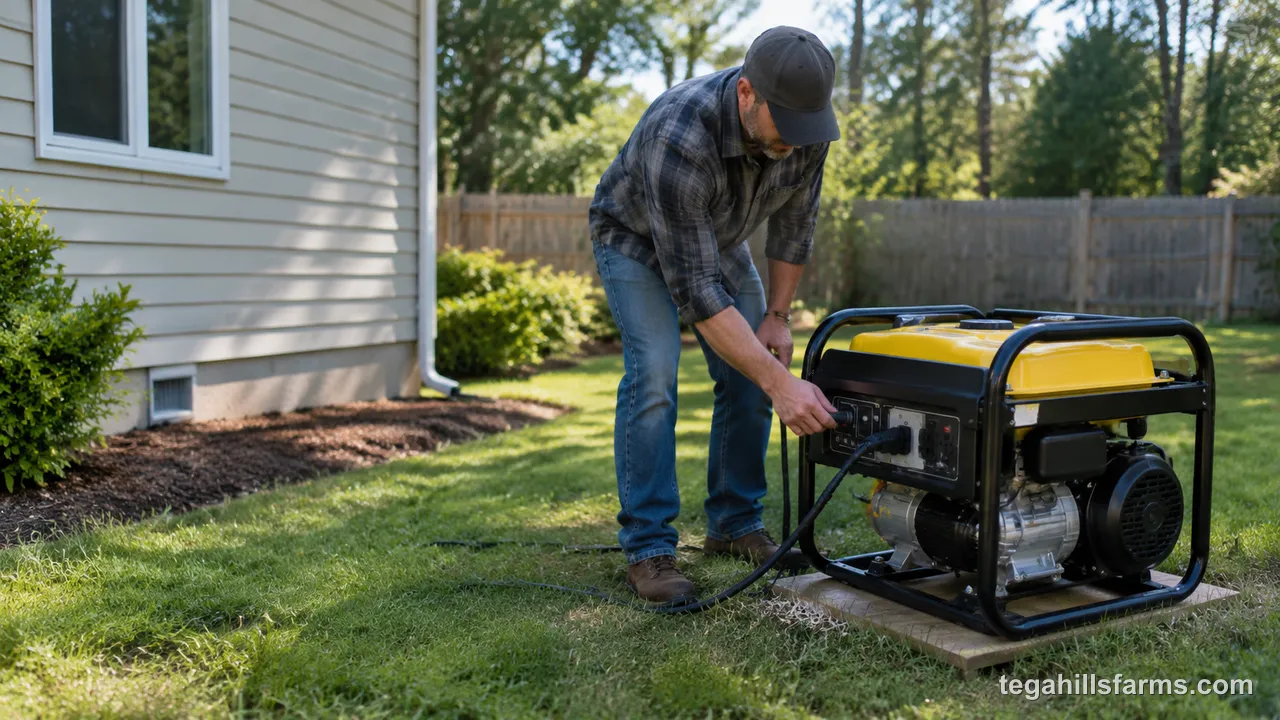
Keep the generator outdoors and well away from doors, windows and vents so exhaust can’t drift inside. Point the exhaust away from the house, not toward it.
Sources give different distance guidance, and no single number guarantees safety because wind and layout change where fumes travel. That’s why the manual and your local rules come first. The manufacturer’s label or manual states the requirement for your model, and local codes may add their own.
When in doubt, move the unit farther out. A longer cord is a small price compared with fumes seeping through a window you forgot about.
Do You Need a Carbon Monoxide Alarm When Running a Generator?
Yes, you need working carbon monoxide alarms inside the home, because the gas is invisible and odorless. You can be affected before you notice anything is wrong.
Place alarms near sleeping areas and on each level of the house. Choose models with battery backup, since the power will be out, and test them before storm season.
If an alarm sounds, get everyone outside into fresh air right away. Call 911 or your local emergency number from outside, and don’t go back in until responders say it’s safe. Treat the alarm as a requirement, not a backup plan.
Can You Run a Generator in Rain or on Uneven Ground?
Yes, you can run a generator in rain if it sits on level, dry ground under a cover that keeps water off but leaves the sides open. Never run it in a garage, shed or under a tent with walls.
A purpose-made generator tent or an open-sided canopy works well. Keep the cover clear of the hot engine and exhaust, and make sure air moves freely around the unit.
Ground matters too. A tilted generator can trip the low-oil shutoff or starve the engine of fuel, so set it on a firm, flat spot. A solid pad or boards under the frame keep it from sinking into wet soil, and keeping the outlets dry protects you from shock.
How Do You Start a Generator Step by Step?
Starting a generator is a short routine built on pre-start checks, a pull cord or electric start, and no-start fixes when the engine won’t catch. Your starting system decides which steps apply.
What Should You Check Before the First Start?
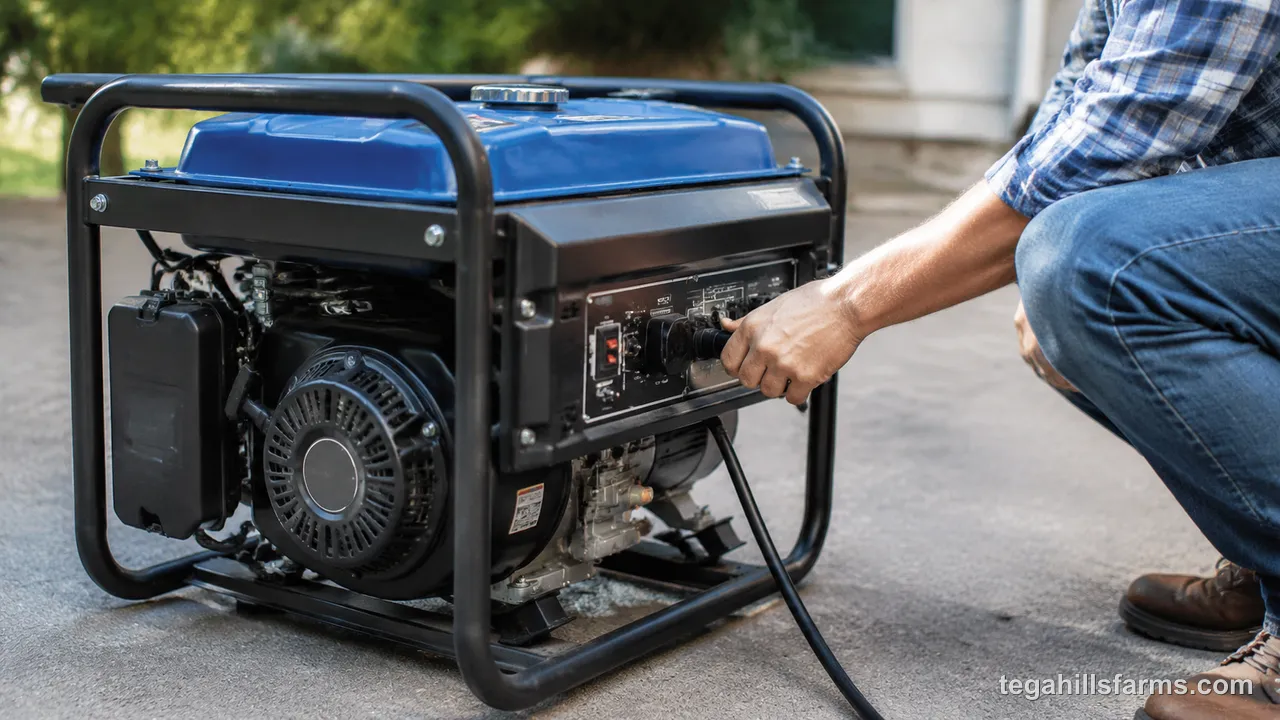
Before every start, confirm the oil level, the fuel, secure connections and that nothing is plugged in. These four checks prevent most startup damage.
Check oil with the generator on level ground, and top it up to the mark in the manual. Use fresh gasoline, not fuel left over from last season. Look over the unit for loose fittings, damaged cords or debris near the engine.
Leave every appliance unplugged and the breakers off. Starting under load strains the engine.
The very first run differs. Many new units ship without oil, and the manual may add break-in notes, so read it before you pour fuel. After that, the same quick check becomes a habit you finish in a minute.
How Do You Start a Generator With a Pull Cord?
To start a recoil generator, open the fuel valve, switch the engine on, set the choke and give a steady pull, then ease the choke off as the engine warms.
Each control has a job. The fuel valve lets gasoline reach the carburetor. The engine switch enables ignition. The choke restricts air so a cold engine gets a richer mixture and catches.
Pull the cord smoothly until you feel resistance, then pull through with a firm, even stroke. A hard yank doesn’t help and wears the recoil.
Once the engine fires, move the choke off gradually. A warm engine needs less choke, and eventually none. Let it settle before you connect anything.
How Do You Use Electric Start on a Generator?
Electric start uses a key or push button to turn the engine with a small onboard battery, so you skip the pull cord. The pre-start checks, fuel valve and choke steps still apply on most models.
Turn the key or press the button and release it as soon as the engine catches. Holding it longer strains the starter. If the engine doesn’t fire after a short try, pause and look for the cause instead of cranking repeatedly.
The battery can go flat if the unit sits unused, which is a good reason to keep it charged. Many electric start models also include a pull cord backup, and that backup is worth knowing how to use when the battery is dead.
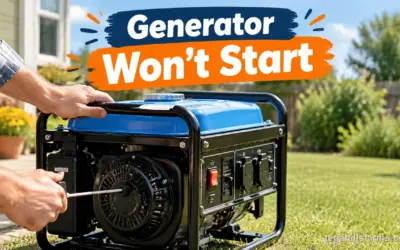
What Should You Check If the Generator Won’t Start?
When a generator won’t start, check the fuel valve and choke first, then stale fuel, a clogged carburetor, the spark plug and the low-oil shutoff, in that order.
A closed fuel valve or wrong choke setting is the easiest fix, and it happens more than people admit. Next, consider the fuel. Gasoline that sat in the tank leaves gum that clogs the small passages in the carburetor.
If the carburetor is gummed up, the engine may sputter or refuse to run at all. Pull the spark plug to see whether it’s fouled or wet, and replace it if it looks worn. Also check the oil, because many units shut the engine off when oil is low.
If none of that helps, the problem is deeper and a service shop is the safer call.
How Do You Connect Appliances and Power the House Safely?
Plugging in directly suits a few essentials, a transfer switch is the safe way to power the house, and backfeeding through a conversion cable is never safe. The method you pick decides how much of the home you can run.
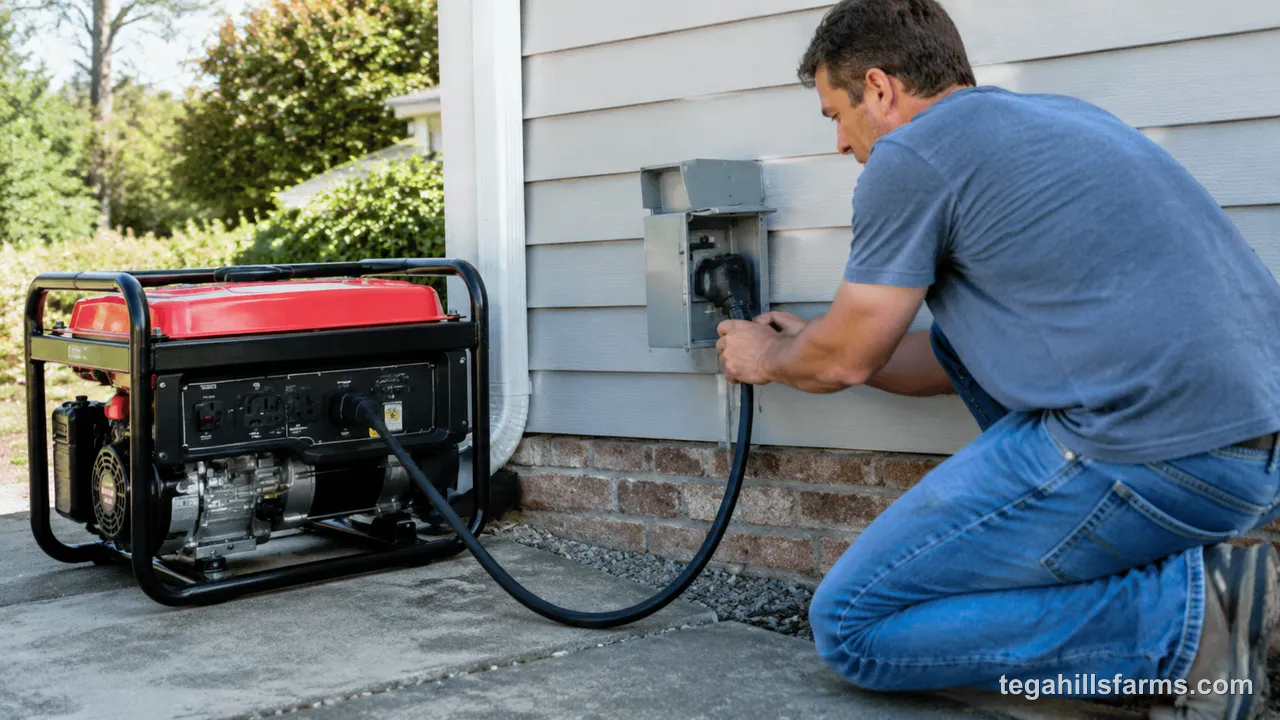
Can You Plug Appliances Straight Into the Generator?
Yes, you can plug appliances straight in using heavy-duty, outdoor-rated extension cords, which is the simplest option for a few essentials like a refrigerator and a lamp.
Cord condition matters. Check for cuts, frays and warm spots, and uncoil the cord fully so heat doesn’t build up. Make sure the cord is rated for the load you’re putting on it, and keep connections off wet ground.
A surge protector helps protect electronics such as a TV or a computer from voltage swings. Plug it into the generator, then plug the electronics into it.
The limit is reach. You can only run what the cords can get to, and keeping a door or window closed on a cord is a habit to avoid. For more than a handful of items, a transfer switch is the better tool.
How Does a Transfer Switch Power the House?
A transfer switch powers the house by moving chosen circuits from the utility to generator power through an inlet box, with no cords across the floor.
You pick the circuits you want, such as the refrigerator, furnace fan and a few lights. When the power goes out, you connect the generator to the inlet box and flip the switch. Honda, for one, lists manual switches that expand up to 16 circuits and says its Universal Transfer Switch can make a generator’s effective capacity as much as 20% larger. That helps a smaller unit go further.
Have a licensed electrician install it. The guides on how to power house with generator and how to install a generator transfer switch cover each side in more detail.
Why Is Backfeeding Through a Conversion Cable Dangerous?
Backfeeding means feeding generator power into house wiring through a conversion cable, and it can energize utility lines, endangering line workers and your household.
When power flows backward through your service, it can reach the lines outside. A crew working to restore power may assume those lines are dead. That makes backfeeding a risk to people you’ll never meet.
It also puts your home at risk. The wiring can overheat, and the generator can be damaged when utility power returns. Backfeeding also carries legal risk in many places.
If you want more than extension cords can reach, skip the shortcut and use a transfer switch.
How Much Load Can a Generator Handle?
Generator load is the total power your running appliances draw at once, and managing it comes down to running and starting watts, turn-on order and overload signs.
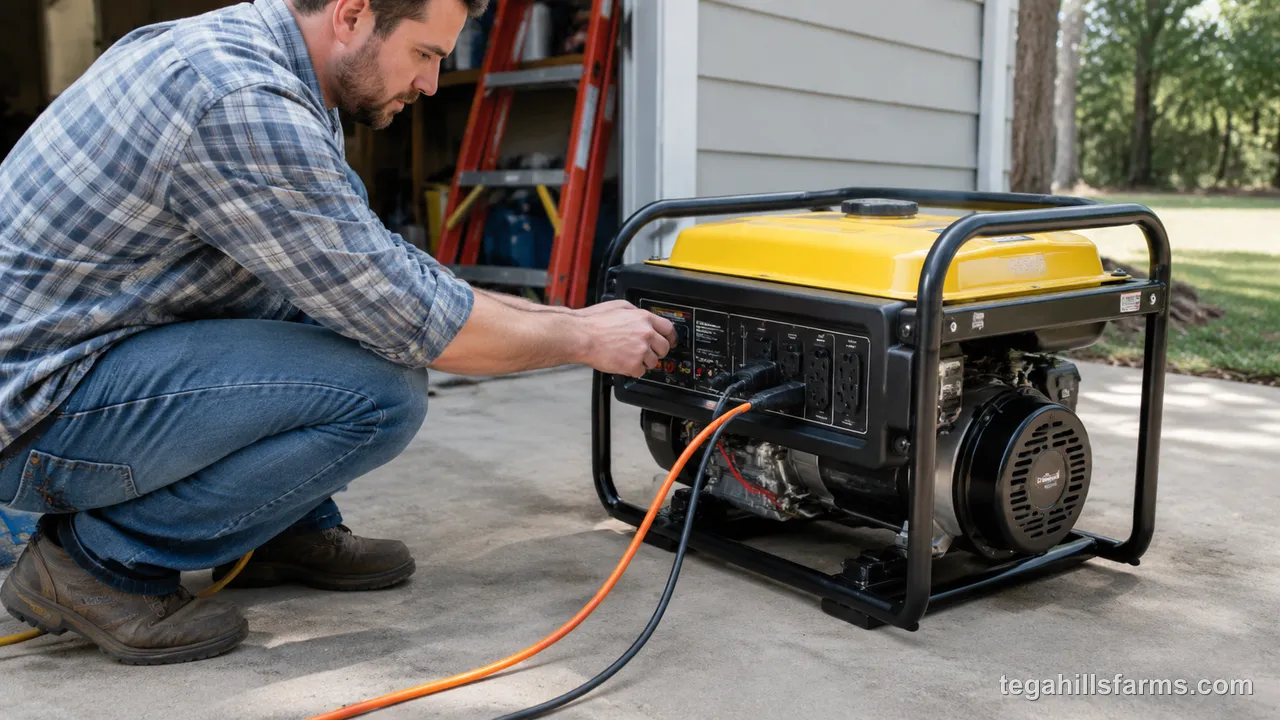
What Is the Difference Between Running and Starting Watts?
Running watts are what an appliance draws continuously, while starting watts are the brief surge a motor needs to get going. Refrigerators, freezers and well pumps all surge on startup.
That surge can be well above the running figure, so a generator that handles an appliance while it runs may still stall when it starts. You need to match both numbers to the generator’s ratings.
Look for the figures on the appliance label or in its manual. Some labels list watts, others list amps and volts, and the manual may give both. Add up the highest surge you expect, not just the running total.
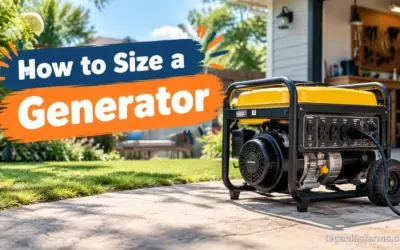
For the full method, how to size a generator walks through it step by step.
In What Order Should You Turn Appliances On?
Start the largest motor load first, then add smaller loads one at a time while the engine settles. This keeps surges from stacking on top of each other.
Begin with something like the refrigerator or well pump, since its surge hits when the generator has the most spare capacity. Wait until the engine sounds steady before you add the next item.
Then bring on the smaller loads: lights, a fan, a phone charger. Sensitive electronics go last, after the engine has found a steady rhythm.
If you rush and switch everything on at once, the engine can bog down or trip a breaker. A calm routine, repeated the same way each time, keeps the unit running smoothly.
What Are the Signs of an Overloaded Generator?
An overloaded generator shows up as a tripped breaker, an engine that bogs down or dimming lights. Any of these means you’re asking for more than it can give.
Unplug the last item you added, or the biggest load, first. Then let the engine recover before resetting the breaker. Running an overloaded unit builds heat and wears the engine.
If it happens often, the generator may simply be too small for what you need. How big of a generator do i need helps you work out a better fit.
Until then, run fewer appliances at once, and rotate them instead of running everything together.
How Do You Refuel a Generator Safely?
Refueling is a short safety routine: add fuel only after the engine is off and cool, then plan around how long a tank lasts.
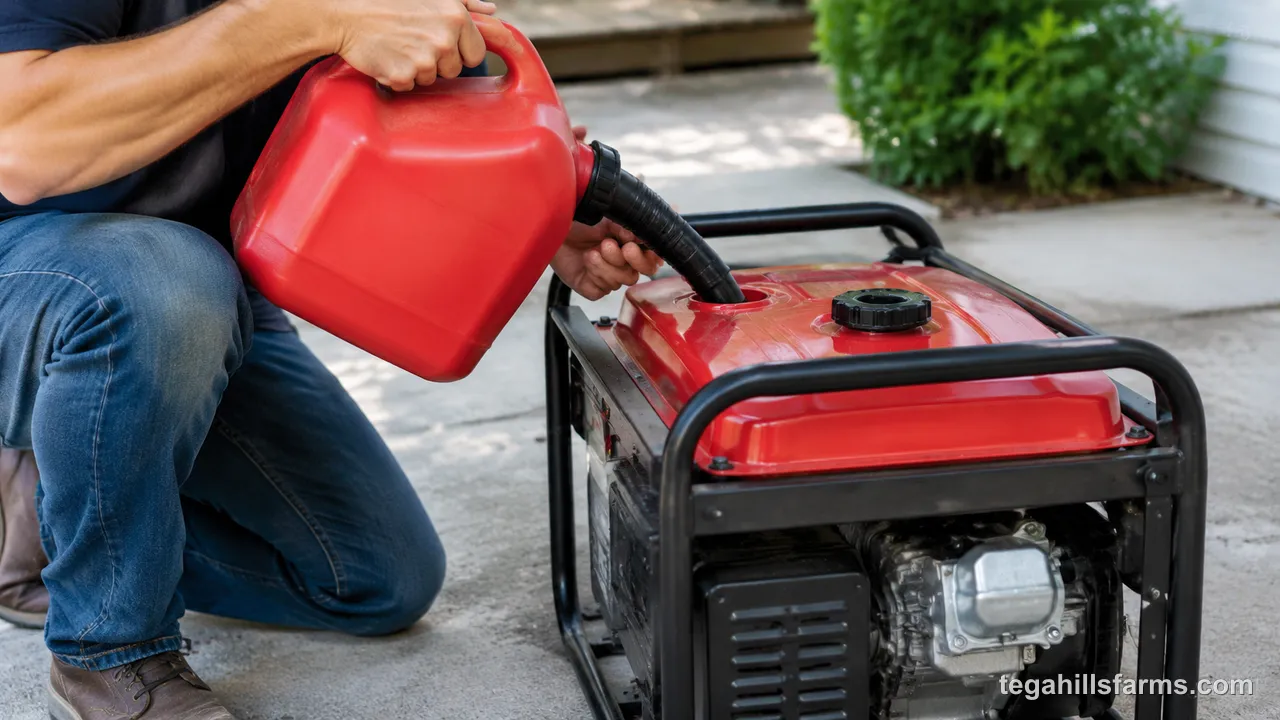
When and How Should You Add Fuel?
Add fuel only after you shut the engine off and let it cool. Gasoline spilled on a hot engine or exhaust can ignite.
Turn the generator off and give it time to cool. Move the fuel into the tank from an approved container, using a funnel to keep the stream steady. Work outdoors, away from any flame, spark or cigarette.
Fill slowly and stop short of the top, since fuel expands and needs room. Wipe up any spill before you restart, and cap the container tightly. Keep the container well away from the generator once you finish.
It’s tempting to top off a running unit to save time. Don’t. The few minutes you save aren’t worth the fire risk.
How Long Does a Tank of Fuel Last?
A tank lasts as long as its size and the load allow: a bigger tank and a lighter load stretch the time between refills.
During a long outage, plan refills ahead. Keep enough fuel on hand before the storm, and schedule refueling at natural shutdown points instead of waiting until the tank is nearly empty. Running dry is hard on the engine and leaves you in the dark.
For consumption figures, the guides on how much gas will your generator use and how long can a generator run go deeper.
How Do You Shut Down a Generator Properly?
Shut a generator down in order: unplug loads and switch off breakers, let the engine run briefly unloaded, then close the fuel valve and let it cool.
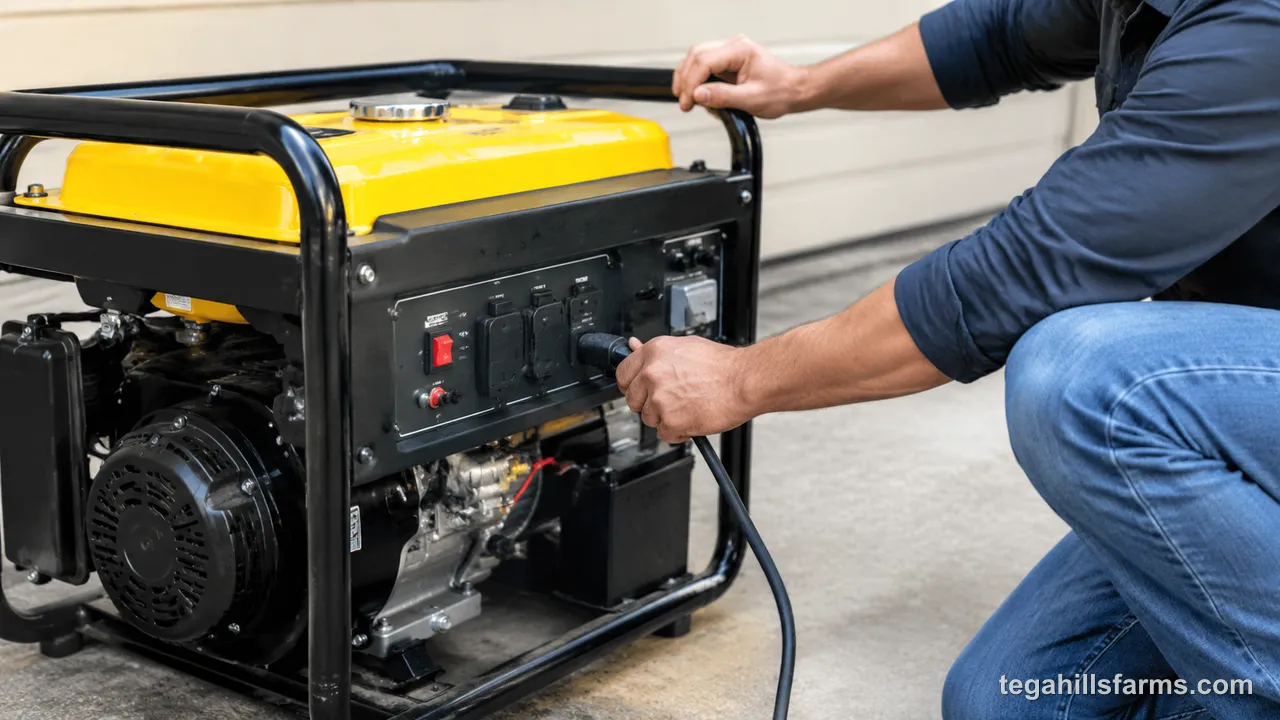
1. Turn off and unplug the appliances. If you use a transfer switch, switch it off, or turn off the breakers.
2. Let the engine run briefly with nothing attached, so it settles.
3. Turn the engine switch off.
4. Close the fuel valve.
5. Let the unit cool before you cover it or refuel.
Removing the loads first protects both the appliances and the generator from a sudden drop. Closing the fuel valve stops fuel from sitting in the carburetor.
Fuel left sitting in the tank gums up the carburetor over time. That’s why a generator that ran fine last season can refuse to turn over on the one night the grid goes down. What does it take to keep yours ready for that night?
How Do You Keep a Generator Ready Between Outages?
Keeping a generator ready comes down to regular exercise and fresh fuel storage, two habits that decide whether it starts when a storm hits. Readiness for storm season is covered more fully in generator hurricane preparation.
How Often Should You Exercise a Generator?
Run the generator every couple of months so the carburetor and starting system stay healthy. A unit that sits idle is the one that fails when you need it.
A short session is enough. Start it, let it warm up, run it under a modest load, then shut it down properly. While it runs, listen for rough running and look for leaks.
Problems show up now instead of in the middle of an outage. A hard start, a stumbling engine or a dead battery is much easier to fix on a calm afternoon, and the habit costs very little time.
How Do You Store Fuel So It Doesn’t Go Stale?
Keep fuel fresh by adding fuel stabilizer, storing it in approved containers and using up older fuel before it goes stale.
Fresh fuel burns cleanly. Stale fuel leaves gum and varnish that clog the carburetor, which is the most common reason a generator won’t run after sitting. Stabilizer slows that breakdown, though it doesn’t make fuel last forever.
Rotate your supply by using older fuel first and refilling with new. Keep containers sealed and stored away from heat and living spaces.
Before long storage, drain the tank, or follow the manual’s storage steps. An empty, dry system is much less likely to cause trouble later.
Does a Dual-Fuel or Inverter Generator Run Differently?
Dual-fuel models add a propane option, and inverter models run quieter by matching engine speed to load, while the core routine stays the same as a standard gasoline unit.
On a dual-fuel generator, you pick the fuel with a selector, open the propane tank valve and connect the hose. The checks, load sequencing and shutdown still apply. Propane also doesn’t go stale the way gasoline does, which makes it easier to keep ready.
Inverter generators throttle the engine up and down with demand, so they run quieter and use fuel more sparingly under light loads. They also deliver steadier power, which is gentler on electronics. How does an inverter generator work explains the technology in detail.
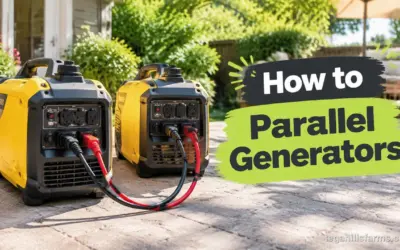
Two compatible units can sometimes be linked for more output. How to parallel generators covers when that makes sense. Placement, carbon monoxide and refueling rules don’t change with any of these types.
Generator Usage FAQs
Can you run a generator under a cover in the rain?
Yes, as long as the cover keeps rain off while leaving the sides fully open. Use a purpose-made generator tent or a canopy with no walls, set the unit on level, dry ground, and keep the exhaust clear so fumes can’t pool. Never run it in a garage, shed or enclosed porch.
Can a generator run overnight?
Yes, a generator can run overnight if it sits outdoors with a full tank, a light load and working carbon monoxide alarms inside. Plan to shut it down and refuel on a schedule instead of letting it run dry, because adding fuel to a running or hot engine is a fire risk. Check the manual for limits.
Can you plug a generator into a wall outlet?
No. Plugging a generator into a wall outlet with a double-male cord backfeeds your home wiring and can energize utility lines, putting line workers and your family at risk. It can also damage the generator. Use a transfer switch or run extension cords straight to your appliances instead.
Can a generator power a refrigerator?
Yes, but a refrigerator pulls a startup surge well above its running draw, so check the starting watts on its label against your generator’s rating. Plug it in first, while the load is light, using a heavy-duty outdoor-rated cord, then add smaller items one at a time.
Write Your Review
No reviews yet. Be the first to share your experience!