How to Choose a Leaf Blower: Gas vs Battery vs Corded Guide
Start with the power source. Gas suits big properties and heavy, wet debris far from an outlet. Battery suits most suburban yards, where quick starts and no fuel matter most. Corded suits small lots within reach of an outdoor outlet. After that, form factor, airflow ratings and weight decide whether the machine you bring home actually fits your lot and your back.
Six factors drive the decision:
- power source
- how you carry it (handheld, backpack or wheeled)
- air volume and air speed
- yard size and debris type
- weight and noise
- the budget and upkeep you’re willing to take on
Each one changes what a spec sheet means for your yard. A blower that looks strong on paper can still be the wrong pick for a narrow side yard or a neighborhood with early-morning noise limits.
The real risk is mismatch. With too little blower, you spend a Saturday chasing wet leaves around the same flower bed. With too much, you pay for weight, noise and capacity that a small lot never uses, and you may own a gas engine that sits unstarted most of the year.
Size up the job before the machine. Walk the lot in fall and note three things: where leaves pile up, how far the farthest corner sits from an outdoor outlet, and whether neighbors are close enough to hear a gas engine at dawn. Those three observations rule out whole categories faster than any spec sheet.
What Actually Matters When Choosing a Leaf Blower?
The right machine matches your yard size, the debris you clear and how long you work in one session, because those three set the power source, airflow and weight you need.
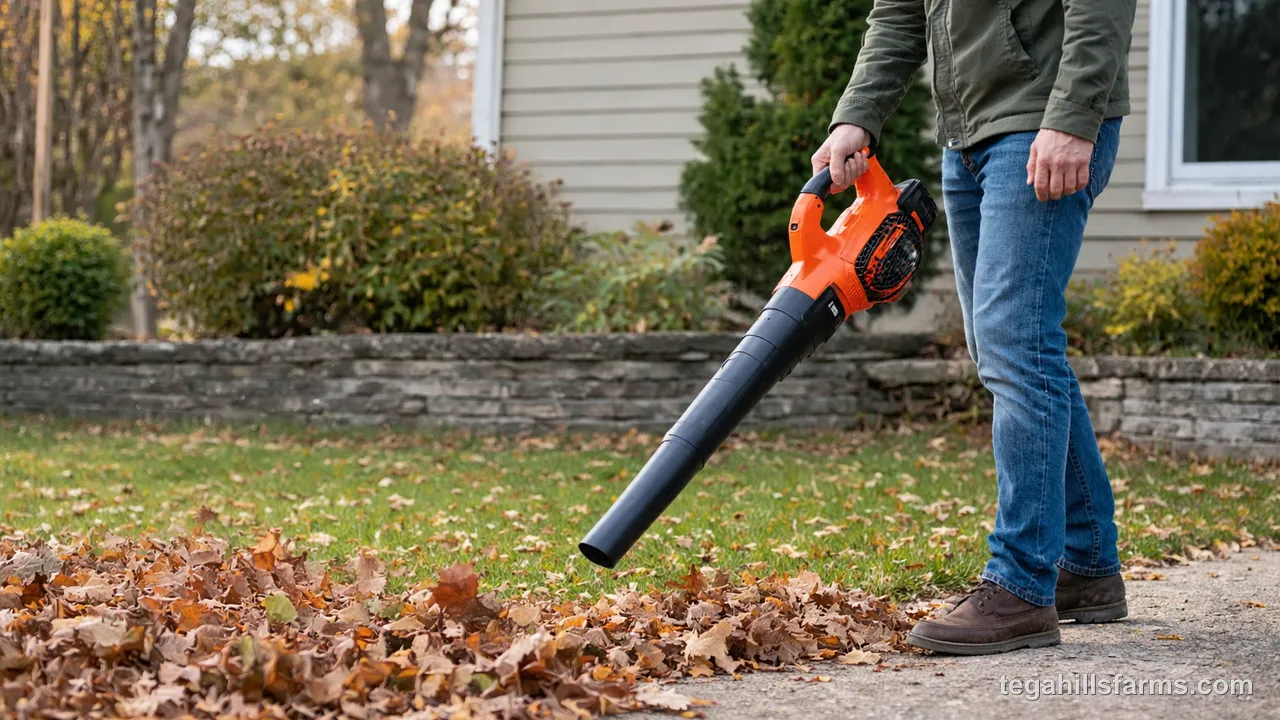
Power source sets runtime and upkeep:
- Gas runs until the tank is empty.
- A battery runs until its charge is gone.
- A corded unit runs as far as its extension cord reaches.
Form factor sets comfort, since the same weight feels different held at arm’s length than carried on a harness. Airflow ratings decide whether dry leaves, matted wet leaves or acorns actually move. Noise and weight matter most on close-set suburban lots, where neighbors hear every cleanup and a heavy tool decides how often you use it. For a wider look at strong options across every power type and size, browse our picks for the best leaf blowers before narrowing to a specific fuel source.
Which Power Source Fits Your Yard: Gas vs Battery vs Corded?
How far you work from an outlet and how long a typical cleanup runs decide which fuel makes sense. Each option trades runtime against weight, noise and upkeep in its own way.
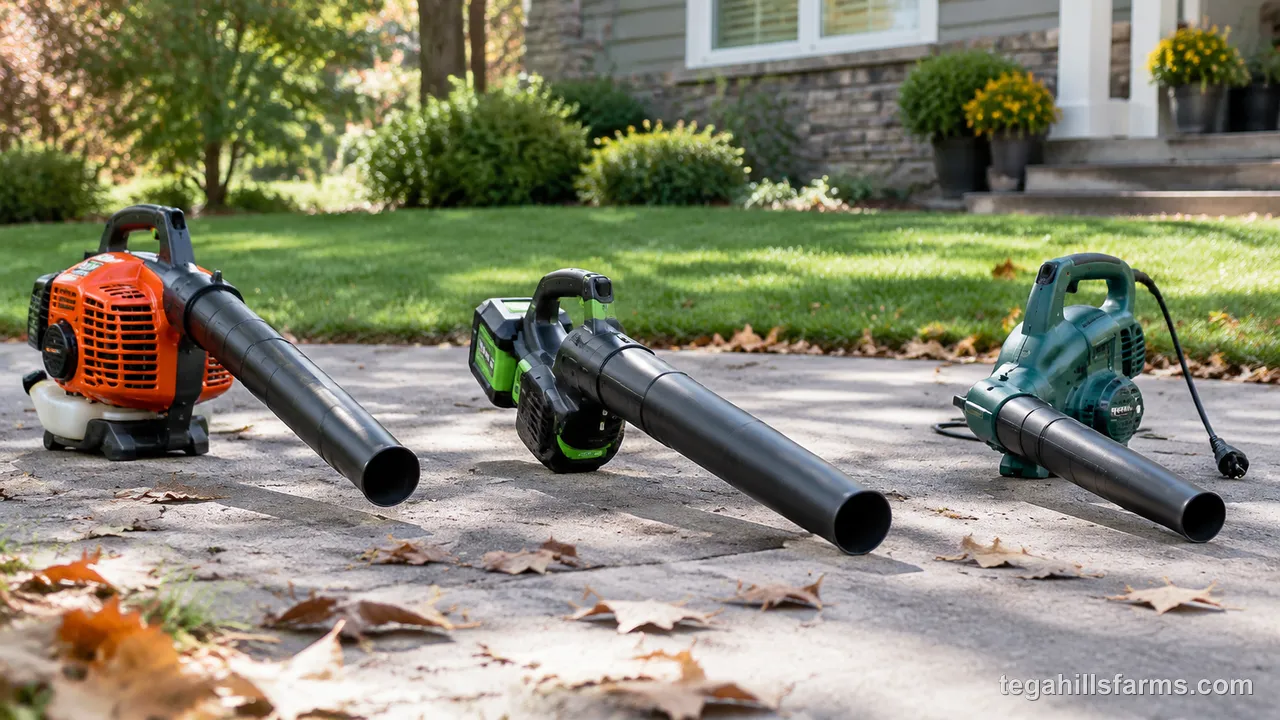
A wrong pick here is expensive to undo. A battery blower bought for a wooded lot ends up needing extra packs. A gas blower bought for a townhouse patio adds fuel and engine care to a quick job.
The three compare like this on the points that settle most decisions:
| Factor | Gas | Battery | Corded electric |
|---|---|---|---|
| Runtime | As long as fuel lasts; refills in seconds | Limited by charge; spare packs extend it | Unlimited while plugged in |
| Range | Anywhere | Anywhere | Ends where the extension cord ends |
| Output | Strongest for heavy, wet debris | Varies with motor and battery | Light to moderate debris |
| Starting | Pull start | Push button or trigger | Switch |
| Noise | Loudest | Quieter | Quieter |
| Upkeep | Fuel, spark plug, air filter, off-season prep | Charging habits and battery care | Cord inspection |
When Is a Gas Leaf Blower the Right Choice?
Gas earns its noise and upkeep on large properties, wooded lots and long fall cleanups far from any outlet. A tank refills in seconds and the engine holds full output until it runs dry, so the last pass of the day blows as hard as the first.
The costs come with ownership. Most handheld and backpack gas blowers run two-stroke engines that need oil mixed into the fuel. Ethanol-blended gas left in the tank can gum up the carburetor over a long off-season. Spark plugs and air filters need periodic attention, and a pull start can take patience on a cold morning.
Noise is the other cost. Gas blowers typically run between 90 and 102 decibels. That’s loud enough that hearing protection belongs in the kit and early cleanups can strain things with the neighbors.
If that tradeoff fits your property, compare the best gas leaf blowers on engine size and harness comfort, not peak airflow alone.
When Does a Battery Cordless Blower Make More Sense?
Battery power fits most suburban yards best. Cleanups there are short, so push-button starts, no fuel and lower noise matter more than unlimited runtime. Electric and battery models generally land between 65 and 78 decibels, which makes a weekend-morning cleanup far less disruptive to the houses next door.
The limits sit in the battery itself. Runtime ends when the charge does, cold weather cuts output, and packs wear with age. Plan on a replacement battery as a real future cost.
The battery platform matters as much as the blower. I’d start with the battery system you already own for a mower or trimmer, since a bare-tool blower on that platform shares packs and chargers. When you compare models, judge the best cordless leaf blowers on the battery included in the kit as well as the motor.
Where Does a Corded Electric Blower Still Win?
Small lots, decks, patios and garages within reach of an outdoor outlet are still where plug-in power wins. A corded blower runs as long as it stays plugged in. With no engine or battery pack on board, it carries less weight, and there’s no fuel to buy or pack to replace.
The cord is the whole tradeoff. Range ends where the extension cord does, so the far corner of a deep backyard may be out of reach. The cord also drags through flower beds, snags on patio furniture and has to be kept clear of the airflow so it doesn’t whip across the work. For a compact, mostly hard-surface property, that inconvenience costs less than buying and maintaining batteries or an engine.
Which Form Factor Should You Carry: Handheld, Backpack, or Wheeled?
Session length and lot size decide how the machine should ride on your body. Weight that feels trivial for a few minutes becomes the limit on a long fall cleanup.
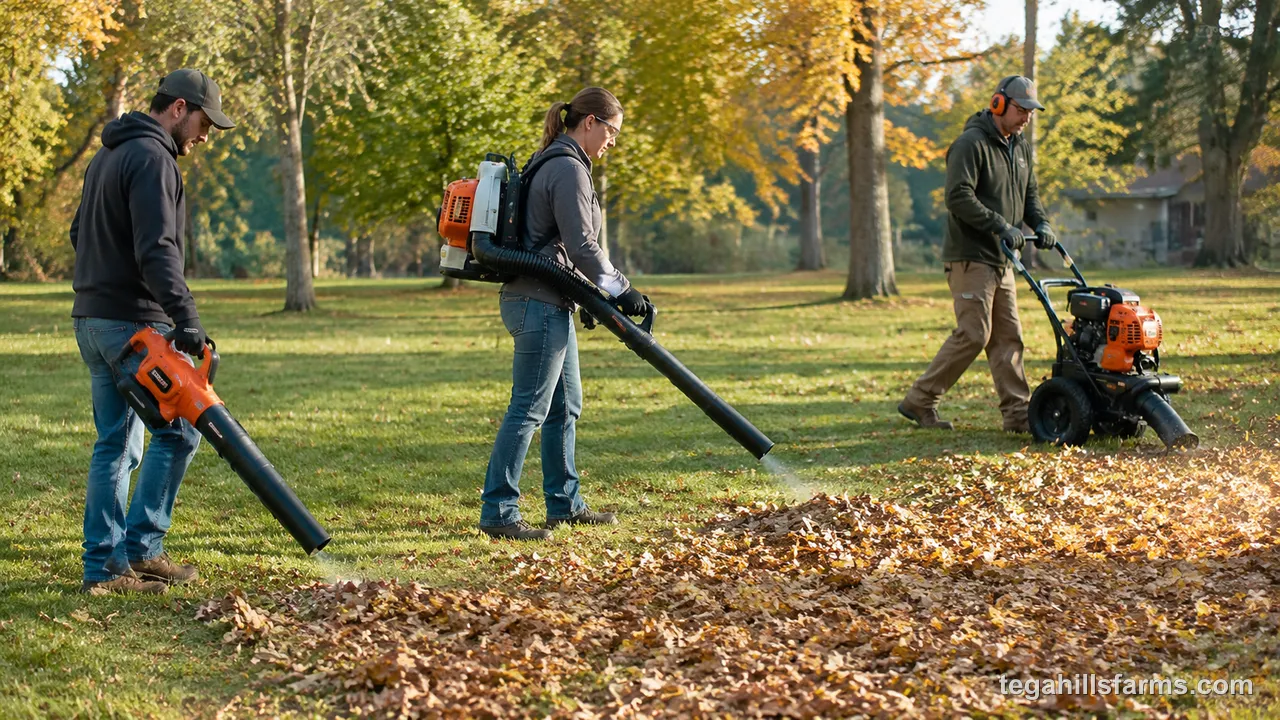
With the wrong style, arm and shoulder fatigue ends the session before the leaves are gone. Each style also changes storage space and price. Match the machine’s bulk to the jobs you do every week, not to the biggest job of the year.
Is a Handheld Blower Enough for Your Lot?
Yes, for driveways, patios, decks and typical suburban lots, a handheld covers the job. It’s also the easiest style to store, start and steer around tight beds. Clearing walkways after mowing, sweeping a garage floor and moving a modest leaf pile to the curb all fit comfortably within what a handheld does well.
The limit is your arm. All the weight hangs from one hand, so long sessions on a heavily treed lot turn into stop-and-rest cleanups. A shoulder strap helps, and so does a model with a well-balanced tube that doesn’t pull your wrist downward. For small and medium properties where cleanups stay short, the best handheld leaf blowers deliver plenty of airflow without the bulk of a harness.
Do You Need a Backpack Blower for Longer Clearing Sessions?
Yes, once cleanups run long or the lot has enough trees to bury the lawn every fall. The harness moves the weight from your arm to your hips and shoulders, so you can keep working well past the point where a handheld would force a break. Backpack designs also typically carry larger engines or battery packs than handhelds.
That comfort costs money, storage space and some convenience. A backpack unit takes longer to put on, feels like overkill for a quick patio pass, and won’t fit on a shelf the way a handheld does. The harness itself makes the difference: padded shoulder straps, a hip belt and an adjustable tube handle keep the load from digging in as the session wears on.
If fall cleanup on your lot is a long job rather than a quick sweep, compare the best backpack leaf blowers on harness design as closely as on airflow.
When Does a Wheeled or Walk-Behind Blower Make Sense?
Acreage, long driveways and properties with heavy leaf volume justify a fan on wheels. On that kind of ground, a handheld or backpack needs several passes to match one wheeled pass. You push it like a mower, so the engine’s weight rides on the wheels instead of your body, and the large fan moves wide swaths of leaves across open ground.
It’s a poor fit anywhere tight. Stairs, narrow side yards, flower beds and decks are out of reach, and the machine needs storage space close to what a push mower takes. Plan on keeping a handheld alongside it for detail work near the house.
How Much Power Do You Really Need? CFM, MPH, and Controls Explained
Air volume and air speed working together, not either rating alone, decide whether debris actually moves. Variable speed settings and battery capacity decide how long it keeps moving.

Buy too much airflow and you pay for it in price, weight and noise. Buy too little and wet mats stay stuck to the lawn. Read the volume and speed ratings first, then the controls, to keep the purchase matched to the leaves you actually have.
What Do CFM and MPH Actually Do in the Yard?
Air volume, rated in cubic feet per minute (CFM), pushes a wide pile across the lawn. Air speed, rated in miles per hour (MPH), lifts leaves stuck in grass and pries debris out of cracks. A blower with high speed and low volume cuts a narrow, sharp jet. One with high volume and modest speed shoves a broad wave that struggles with anything pressed down.
Rated conditions matter when you compare. Husqvarna lists its Leaf Blaster 350iB at 1,105 CFM and 153 mph on turbo, measured 5 inches from the nozzle. The EWORK EK-01GYG is rated at 85 mph on turbo. Figures like these only compare cleanly when they’re taken the same way, so check where and on which setting each number was measured. The practical side of CFM vs MPH for a leaf blower comes down to the debris on your lot.
How to Match Power to Dry Leaves, Wet Leaves, and Heavy Debris?
Each debris type calls for a different balance of volume and speed:
- Loose fallen leaves on a lawn or driveway move with modest airflow from almost any machine. Volume matters more than speed for pushing those piles.
- Wet leaves mat together and cling to grass. You need high air speed to peel them up and enough volume to keep them moving once they lift.
- Pine needles weave into turf and respond better to speed than to volume.
- Acorns, sweetgum balls and small sticks are heavy for their size. They need strong output on both ratings and a narrow nozzle to concentrate the jet.
- Gravel driveways call for lower speed, so the stones stay put while the leaves go.
- Gutters add height and a narrow channel. That usually means a gutter attachment kit plus a blower with real speed behind it.
On a damp, shaded lot, the gap between a compact entry blower and a high-output model shows up on the first pass. The best leaf blowers for wet leaves pair high speed with enough volume to finish the job.
Do Variable Speed and Battery Specs Change Real Runtime?
Yes, and on a battery blower the speed setting changes runtime more than any other choice you make in the yard. Turbo pulls the most current. A pack that lasts through a full cleanup on a mid setting can empty quickly when the trigger stays pinned.
A variable-speed trigger or dial lets you use only the air a job needs: low for a patio, higher for wet leaves. Cruise control holds a set speed without squeezing the trigger, which saves your hand and keeps power use steady.
Battery ratings work like a fuel tank and an engine size:
- Amp-hours set capacity, so a higher-Ah pack runs longer at the same setting.
- Voltage sets how much power the motor can draw.
A spare charged battery is the simplest way to stretch a session. On gas blowers, throttle control mainly saves fuel and noise, because a quick refill already removes the runtime limit.
How Do Yard Size, Debris Type, and Noise Shape Your Pick?
Lot size sets how much blower you need. Neighbors, local ordinances and your own stamina set how loud and heavy it can be.
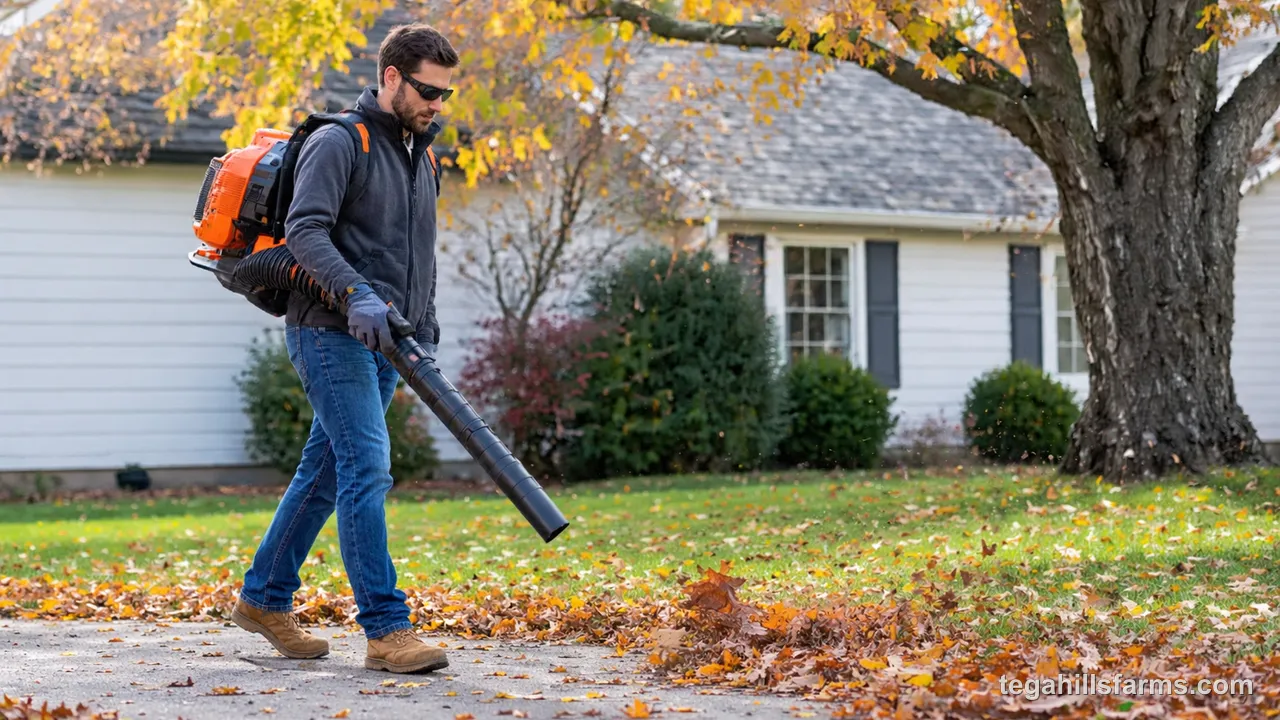
Those limits narrow the field before you compare specs. A powerful machine is still the wrong one if you can’t run it during the hours you have free or carry it long enough to finish.
Should You Size the Blower to Your Lot?
Yes. A small suburban property rarely needs more than a handheld battery or corded unit, while larger acreage calls for runtime and comfort that only bigger machines deliver. On a compact lot, cleanups are short and the outlet or charger is never far away. The best leaf blowers for small yards favor light weight and easy storage over peak airflow.
Larger properties shift the math. Once trees drop leaves across most of the lawn and cleanups stretch through a morning, a backpack gas blower or a high-output battery backpack with spare packs keeps you working without constant breaks. Open acreage is where a wheeled unit starts paying for itself. For bigger lots, the best leaf blowers for large yards put runtime and carrying comfort ahead of compact size.
How Much Do Weight and Noise Affect Daily Use?
Quite a bit. How heavy and how loud a machine is decides how often you’ll reach for it and what hours you can use it.
Husqvarna lists the Leaf Blaster 350iB at 10.2 lb. A machine in that range held at arm’s length gets heavy over a long session, so a lighter model or a harness matters more the longer you work. Lighter handhelds suit quick, frequent cleanups, especially if a heavy tool wears you out.
Noise sets your schedule. The gap between gas and electric models is wide enough that a battery blower can run early on a weekend without drawing much attention. A gas engine at full throttle carries well past your property line. Some towns and HOAs restrict gas blower use or limit operating hours, so check your local ordinance and HOA rules before buying a gas unit for a dense neighborhood.
What About Budget, Maintenance, and Useful Extras?
How often and how long you blow should set the spending tier. Extra money mostly buys runtime, airflow and durability, not features you’ll notice on a small lot.
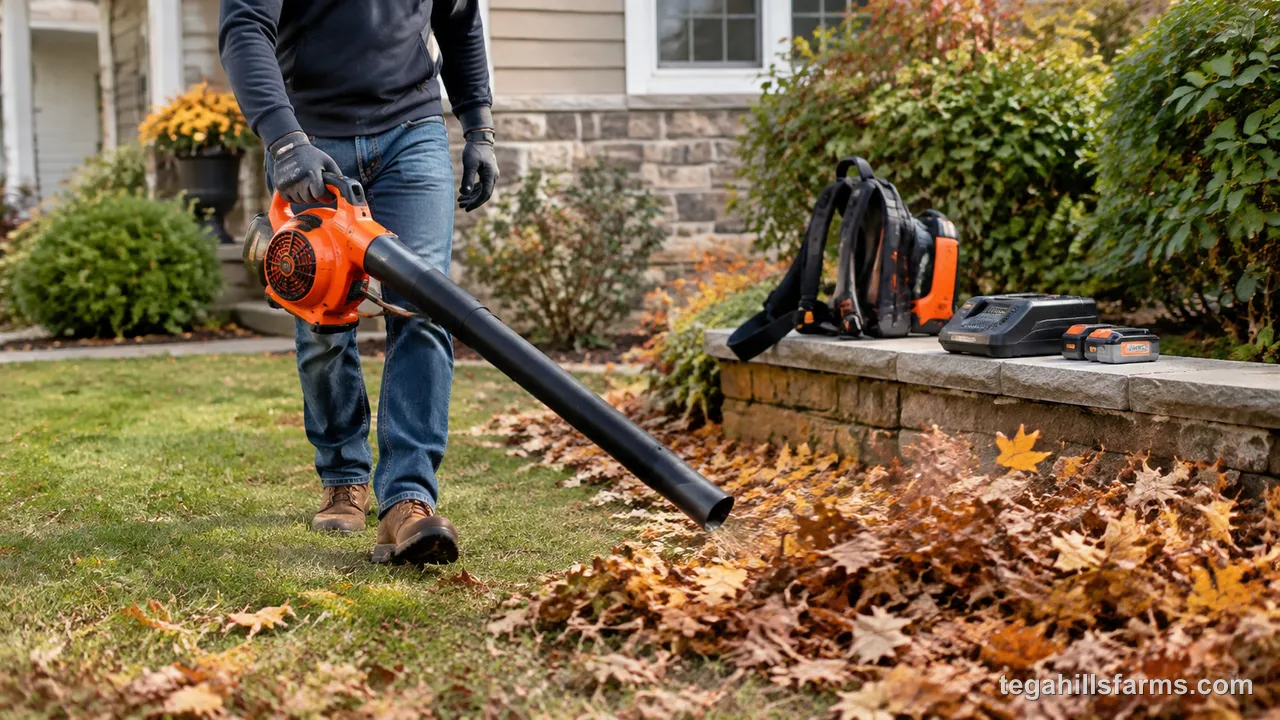
Spending at the right tier keeps you from paying for capacity you never use. It also keeps you from buying twice when a light-duty machine wears out under heavy fall work.
How to Set a Budget Without Overpaying?
Spending tiers break down roughly like this:
- Entry-level: mostly corded units and small battery handhelds. They handle light cleanups on small lots, and the best leaf blowers under $100 sit in this tier.
- Mid-range: a stronger motor, a larger battery or an entry gas engine. This covers most suburban yards with trees.
- Premium: backpack gas units and high-output battery systems built for long sessions and heavy debris.
Watch how battery models are sold. A tool-only listing looks cheaper but leaves out the pack and charger, while a kit includes them, so compare like with like. On most suburban lots, I’d put extra money toward a second battery before a bigger motor. For a tier-by-tier breakdown, see how much a leaf blower costs.
What Maintenance and Extras Add Real Value?
Upkeep and extras add value only when they match how you use the machine. A gas engine needs routine fuel and engine care. A battery unit needs sensible charging habits. Accessories pay off only when they serve a real job on your property.
Gas upkeep means fresh fuel, a clean air filter and a spark plug in good shape. Neglecting any of them shows up as hard starts and weak output. Battery care is lighter: charge with the matching charger and keep packs out of extreme heat, such as a car trunk in summer.
The accessories worth paying for:
- Vacuum and mulcher kit: turns the blower into a leaf vacuum that shreds debris into a bag. It’s useful for beds and patios where you’d rather collect than blow.
- Gutter kit: adds extension tubes and a curved nozzle for clearing gutters from the ground.
- Shoulder strap: takes strain off your wrist during longer handheld cleanups.
A battery left on a freezing garage shelf all winter, or a cheap third-party charger bought to replace a lost one, can sideline a blower that was the right pick in every other way. The machine can be the right size and power and still let you down through the fuel, packs, cords and replacement parts around it. Ignore those details and the first spring cleanup can end with a pack that won’t hold a charge or an engine that won’t fire.
Keep It Running: Rare Ownership Details Most Guides Skip
After the purchase, a blower stays reliable when its output matches real jobs and its batteries, fuel and parts get proper care. Those habits decide whether it starts on the first pull or button press next fall. None of them shows up on a spec sheet, so they’re easy to overlook at the store and costly to learn later.
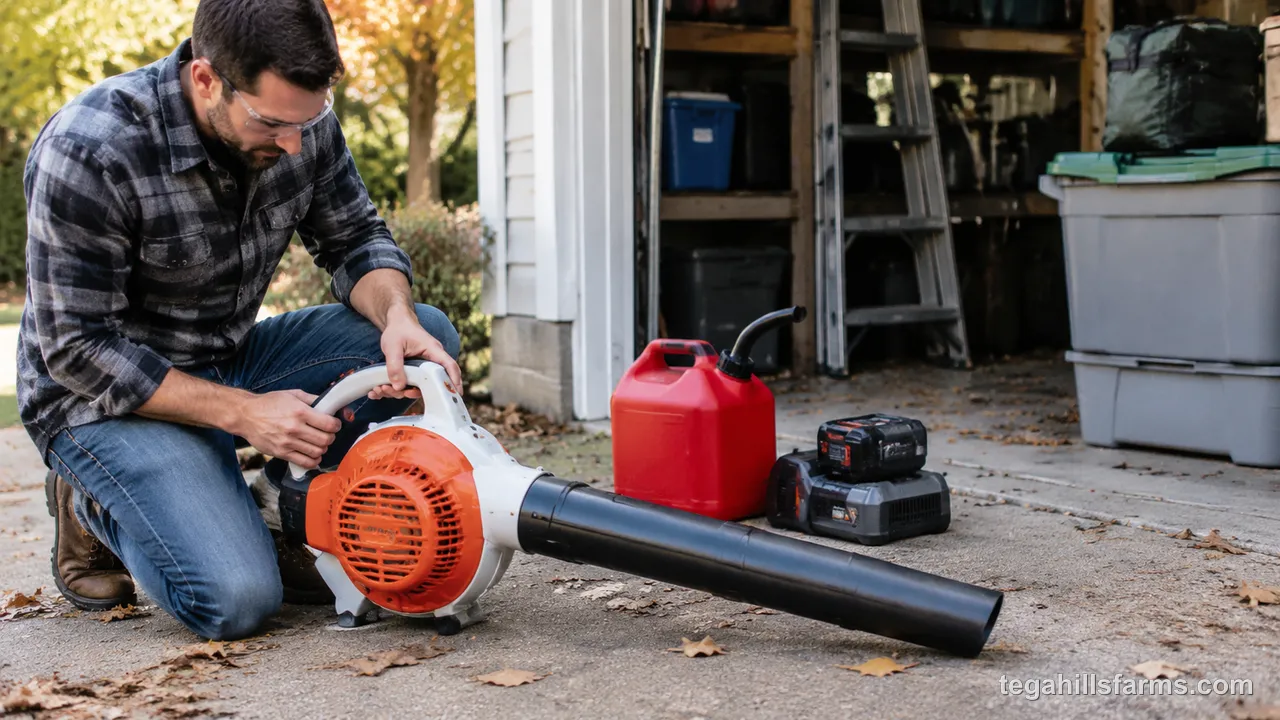
Are You Buying More Blower Than You Need?
Often, yes. A blower with far more airflow than your lot needs costs more, weighs more and makes more noise. On a small yard, it scatters mulch, blasts gravel off the driveway and pushes debris into corners you then clean by hand. On battery models, running a high-output machine on turbo for every job also drains packs faster than the work requires.
Cords waste money and create a real hazard:
- Indoor extension cords aren’t built for wet grass or sun exposure.
- An undersized cord can overheat under a blower’s load.
- Chaining several short cords together adds connections that can pull apart or end up sitting in puddles.
Use one outdoor-rated cord sized for the blower’s amp draw and plug into a GFCI outlet. Check the jacket for cuts before each use.
How to Spot Genuine Parts and Store It Right?
Buy batteries, chargers and replacement parts from the manufacturer or an authorized dealer, and match the part number in your owner’s manual before ordering. Counterfeit batteries and chargers often show these signs:
- prices well below the genuine item
- misspelled labels
- missing safety certification marks
- vague claims about model compatibility
A bad charger can damage a pack or create a fire risk. Choosing among the best leaf blower brands with a wide dealer network makes genuine parts easier to find years later.
Storage finishes the job. Keep battery packs indoors at room temperature and partly charged, not in a freezing garage. For gas units, either run the tank dry or add fuel stabilizer and run the engine long enough to draw it into the carburetor. Stale fuel left over winter is a common reason a leaf blower won’t start in spring. Clean the intake screen before putting the machine away.
Quick Answers for Choosing a Leaf Blower
Is a battery leaf blower strong enough for wet leaves?
A battery blower with strong air speed can lift wet leaves, especially on turbo, but that setting drains the pack quickly. For a heavily wooded lot that stays damp through fall, a gas blower or a battery model with spare packs keeps you working until the job is done.
Do gas leaf blowers need special fuel?
Two-stroke models need gasoline mixed with two-stroke oil at the ratio printed in the owner’s manual. Four-stroke models take straight gas and have a separate oil fill. Fresh fuel matters for both, and premixed canned fuel is a simple option if you only run the blower a few times a season.
How long does a leaf blower battery run on one charge?
Runtime depends on the pack’s amp-hours and the speed you use. The same blower can last through a full cleanup on a low setting and empty quickly on turbo. Check the manufacturer’s runtime rating for the exact battery you’re buying, and count a second pack as part of the cost for larger yards.
Should I get a leaf blower or a leaf vacuum?
A blower moves leaves faster across open lawn. A vacuum collects and shreds them for bagging, which suits beds, patios and spots where you’d rather not leave piles. Many blowers convert with a vacuum kit, so choosing between a leaf blower vs a vacuum often comes down to whether you compost, bag or blow leaves into the woods.
How long will a leaf blower last?
Upkeep shapes lifespan as much as price does. A gas blower that gets fresh fuel and proper off-season storage, or a battery blower whose packs stay out of extreme heat and cold, stays dependable for many seasons. Care habits, build quality and how hard the machine works each fall together decide how long leaf blowers last.