

For most gas mowers, adding fuel stabilizer to a full tank and running the engine for a few minutes is the simpler and more reliable way to get through the off-season. Draining the tank is the better fit when the mower will sit for a very long or unknown stretch, when the gas in it is already old, or when the machine is going somewhere that bans fuel.

The right method depends on three things: how long the mower will sit, whether your gas is an ethanol blend, and how comfortable you are handling fuel and working around a carburetor. A mower parked in the garage over one winter needs less than one going into a rented unit until next fall.
The real enemy is gas that breaks down inside the carburetor. As it goes stale, it leaves a sticky varnish in jets and passages small enough to clog. That clog is behind most spring no-start problems, and it is far easier to prevent than to clean out.
Fuel is only part of the job. Clean the deck, change the oil, service the plug and blade, and pick a dry spot away from flames, and the mower should start on the first or second pull when the grass starts growing again.
Does a Lawn Mower Really Need Special Prep Before Storage?
Yes. Stale gas, caked clippings and a dull blade all get worse over months of sitting, and they show up as a hard start and a ragged first cut next season.
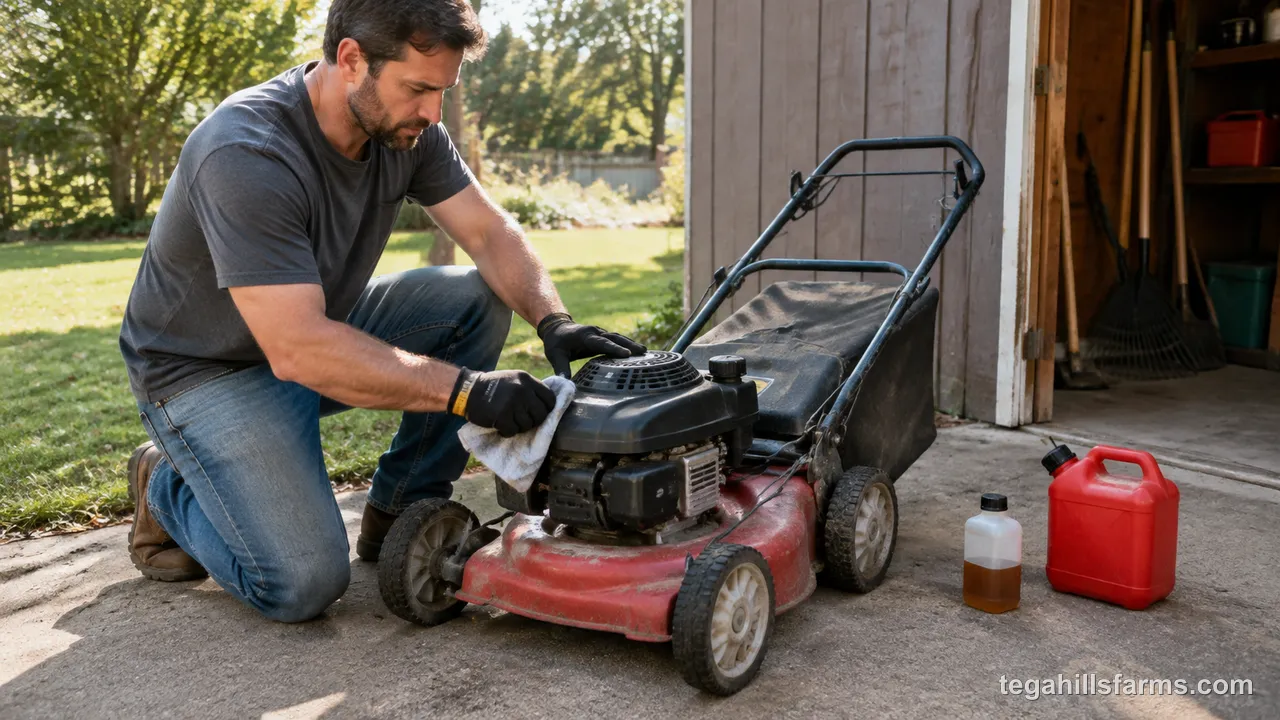
Gas left untreated in the tank and carburetor slowly oxidizes and leaves gum that blocks fuel flow, so the engine can’t get a proper mixture. Wet clippings packed under the deck hold moisture against bare steel, and rust starts at the weld seams and blade mount. Old oil carries acids and combustion byproducts that sit on internal parts the whole time the engine is idle.
None of this damage is dramatic in a single winter. It adds up across seasons, and it is cheaper to prevent with an hour of prep than to fix with a carburetor rebuild.
If storage space is part of your decision, our walkthrough on how to choose a lawn mower covers how machine type affects where it can live.
Fuel Stabilizer or Draining the Tank: Which Is Better for Storing a Mower?
Fuel stabilizer is the better pick for most homeowners storing a mower over one winter. Draining the tank is the better pick for long, uncertain storage or for moving the mower somewhere that prohibits fuel.
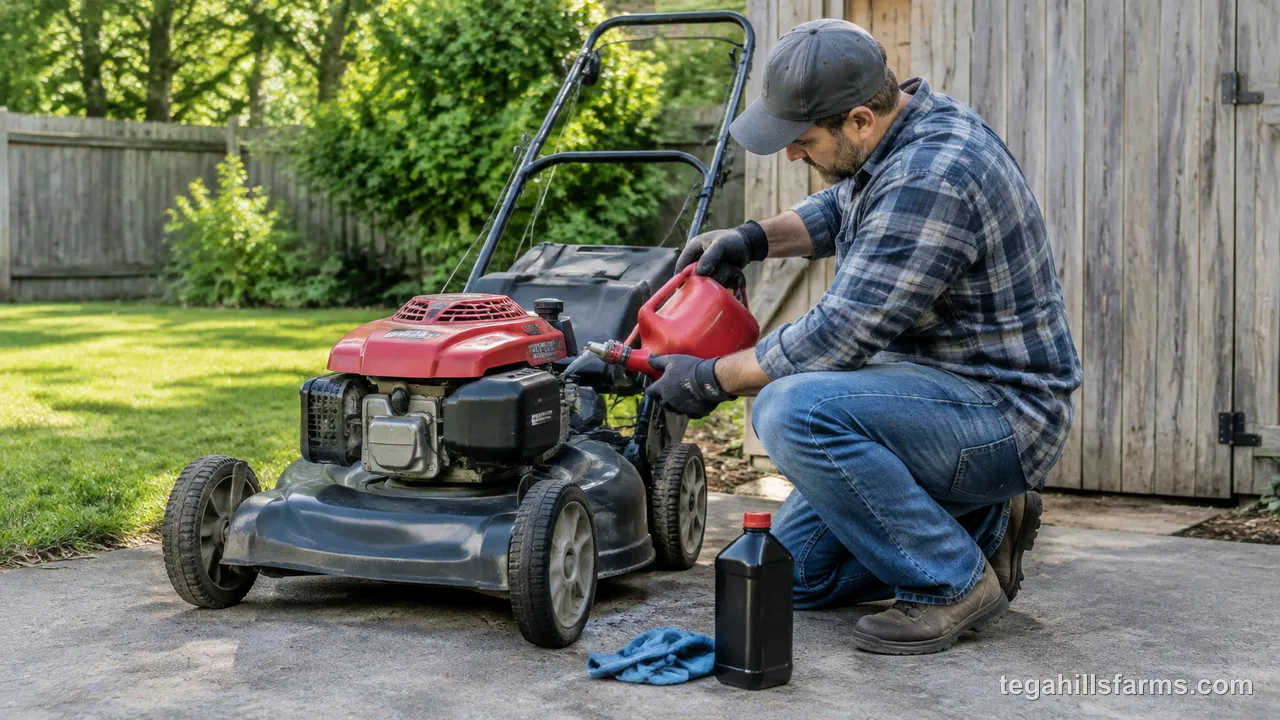
Two factors decide it: how long the machine will sit, and how much hands-on fuel work you want to do. Both methods protect the carburetor when done right. They differ in effort and in the risks they bring.
How Does Fuel Stabilizer Protect Gas During Storage?
Fuel stabilizer slows the oxidation that turns gasoline into gum, so the fuel in the tank and carburetor stays usable through storage instead of leaving varnish behind. The difference is large. Untreated gas can start to deteriorate in as little as 60 days. STA-BIL Storage is rated to keep fuel fresh for up to 24 months, and STA-BIL 360 Protection, which is meant for every fill-up as well as for storage, is rated for up to 12 months.
The dosage on the STA-BIL label is 1 oz. per 5 gallons of fuel. Mixing it into a gas can is easier than trying to dose a small mower tank accurately.
Order matters, because stabilizer only protects the fuel it reaches:
- Add stabilizer to fresh gas in the can.
- Fill the mower tank nearly full. A full tank leaves less air space for condensation to form.
- Run the engine for a few minutes so treated fuel replaces the untreated gas in the carburetor bowl and lines.
If you skip the run step, the carburetor still holds untreated gas, and that is exactly where varnish does its damage.
What Does Draining the Tank or Running It Dry Involve?
Draining removes the fuel entirely, so nothing is left to go stale and no gas vapor sits in your storage space. Work outdoors with the engine cool. Siphon or pump the tank into an approved fuel container, then start the mower and let it run until it stalls, which burns off what remains in the lines and carburetor bowl. Some carburetors have a drain screw or bowl nut that lets you empty the last bit directly.
This method has drawbacks. Handling gas means spills and fumes, and drained fuel has to be used in another machine or disposed of properly. Running until it stalls rarely empties the carburetor completely, so a thin film can still dry into residue. A completely dry fuel system can also let some gaskets and seals dry out over a long idle period.
Check your owner’s manual before you choose this route. Some engine makers recommend stabilized fuel over running the tank dry for these reasons.
Which Fuel Method Fits Your Mower and Storage Time?
For a standard push mower parked over one winter, stabilizer is the better choice. It takes a few minutes, involves no fuel transfer, and keeps the carburetor wet with protected gas. I’d recommend it to most homeowners because each step is hard to get wrong.
Ethanol-blended gas makes treatment more important, not less. Ethanol absorbs moisture from the air, so blended fuel left sitting can separate and corrode small passages. Stabilizer slows this. Ethanol-free gas, where it is sold locally, also keeps better if your mower lives in a damp space.
Draining makes more sense in three situations:
- The mower will sit longer than a single off-season, or you don’t know when you’ll use it next.
- The gas already in the tank is old, so there’s nothing worth protecting.
- The mower is going into a rental unit or vehicle where fuel isn’t allowed.
If your manual names one method, follow it, because the engine maker knows its own fuel system.
How Do You Winterize a Lawn Mower Step by Step?
Winterizing means cleaning the outside first, then servicing the engine and blade with the engine cool and the spark plug wire disconnected, so nothing on the machine corrodes or degrades over the off-season.
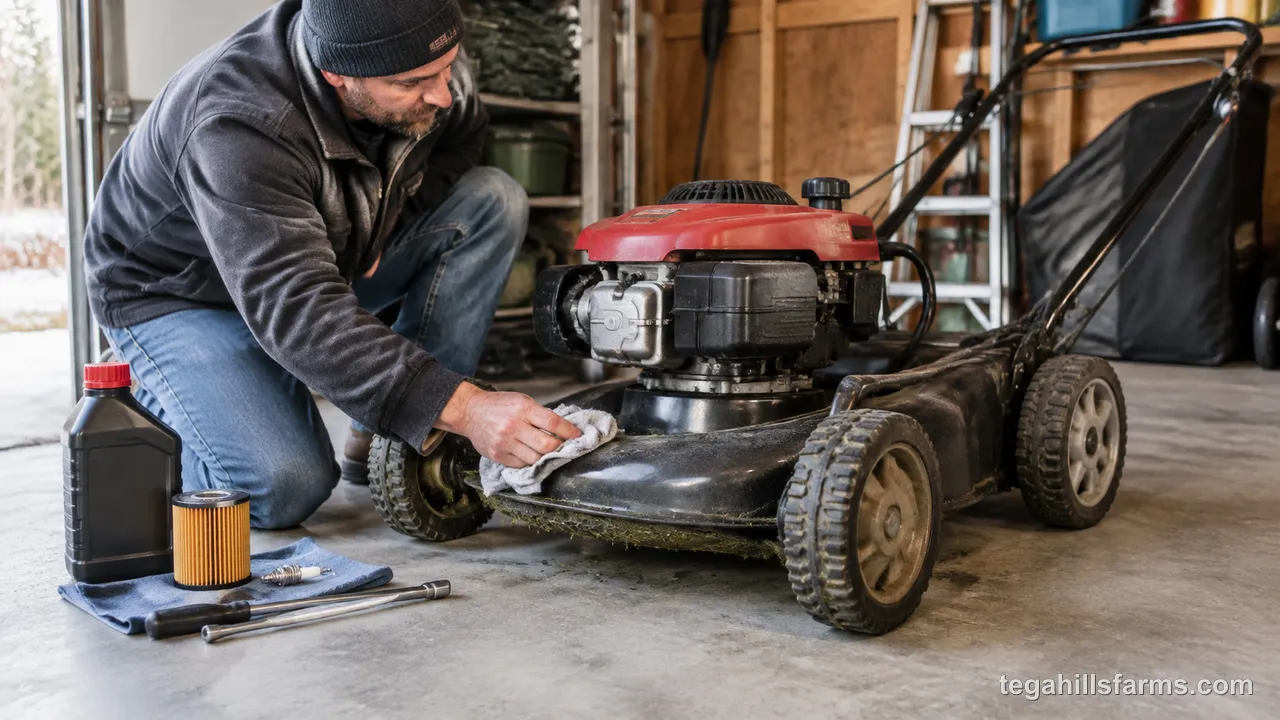
The order follows the work itself. Debris comes off before you tip the mower for engine service, and blade work comes last because it needs the plug disconnected anyway. Each task protects either how the engine starts or how cleanly it cuts once the season begins.
Clean the Deck and Exterior Before Putting the Mower Away
Clippings left under the deck stay damp for weeks and hold moisture against the steel, so rust spreads from the underside even in a dry garage. Cleaning them off before storage removes the moisture and the debris that rodents use for nesting.
Turn the engine off, let it cool, and pull the spark plug wire so the blade can’t turn the engine over. Scrape packed grass from the deck with a plastic or wooden scraper, then brush off the cooling fins and the area around the engine shroud. If you tip the mower for access, keep the air filter and carburetor side up so oil and fuel don’t run where they shouldn’t.
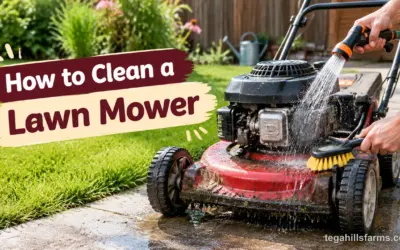
For washout ports, hose techniques and what to avoid spraying, see how to clean a lawn mower before you put the machine away.
Change the Oil, Check the Air Filter and Replace the Spark Plug
Used oil holds acids and combustion byproducts that sit on bearings and cylinder walls all winter, so draining it before storage leaves clean oil protecting those surfaces. Change it after a short run, while the oil is warm and flows out with its contaminants. Most mower engines take straight 30 weight, but go by your owner’s manual, since some engines call for a different grade.
The air filter and spark plug are both about starting. A clogged filter starves the engine of air and makes the mixture too rich, and a fouled or worn plug gives a weak spark. Both make spring starts harder. Swap or clean the filter now, and install a new plug, gapped to spec.
Fogging oil is optional. Spraying it into the carburetor intake or plug hole coats the cylinder against rust during a long idle period, which is most useful in damp storage.
Should You Sharpen the Blade Before Storage?
Yes. Blade service belongs on the storage checklist because doing it now means the mower is ready to cut on the first warm weekend instead of waiting on a grinder or a repair shop. A dull blade tears grass instead of slicing it, which leaves ragged, browning tips on your first mow of the year.
Disconnect the spark plug wire before you put a hand or a wrench near the blade. Turning the blade by hand can turn the engine over. Mark the blade’s bottom side before removal so it goes back on the right way, and check it for bends or cracks while it’s off. A damaged blade should be replaced, not sharpened.
The steps for removing, sharpening and balancing are covered in how to sharpen lawn mower blades.
Where Is the Best Place to Store a Lawn Mower?
A dry, enclosed space away from any open flame or pilot light is the right place. The choice usually comes down to moisture control, ignition risk and floor space.
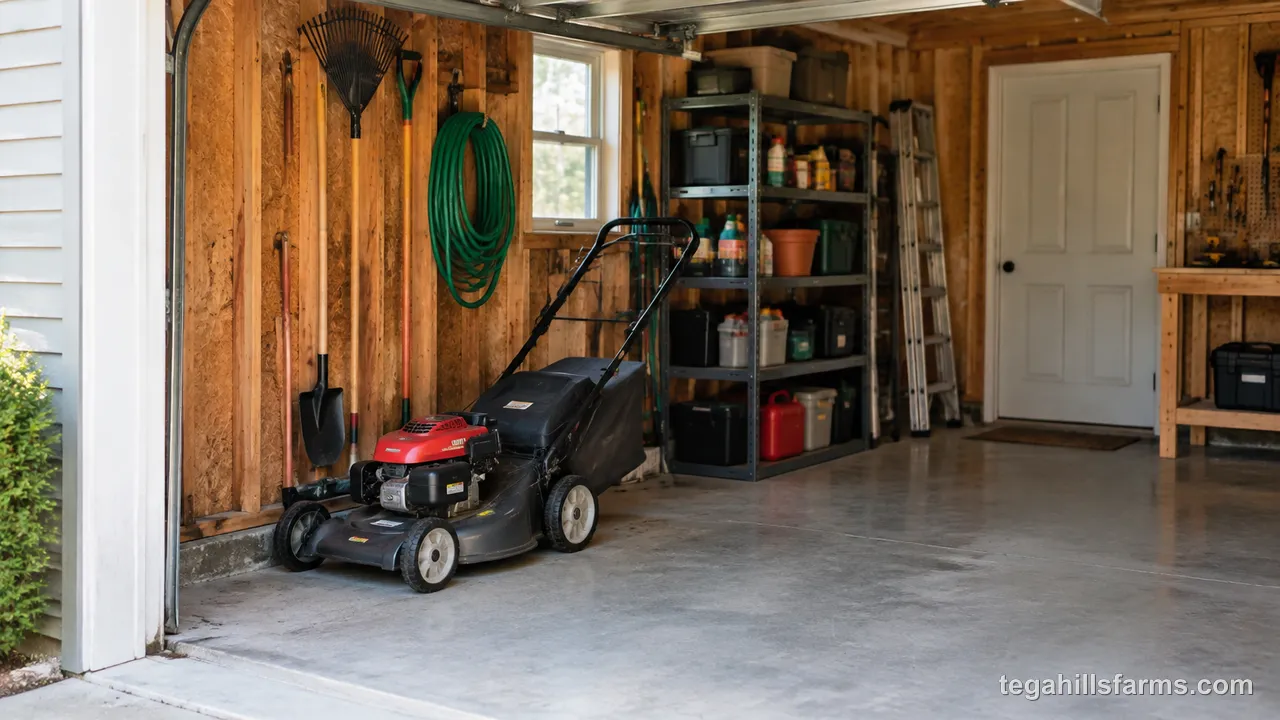
A garage or shed works for most owners, as long as the spot keeps rain and ground damp off the machine and fuel vapor away from ignition sources. When space at home runs short, a rented unit or vertical storage can solve the problem.
Garage or Shed: What Works and What to Avoid
A garage is usually the better spot because it stays drier, swings less in temperature, and locks more securely than most sheds. Smaller temperature swings mean less condensation forming on metal and inside the fuel tank overnight.
The main garage hazard is ignition. Park the mower well away from furnaces, water heaters, clothes dryers and any appliance with a pilot light. Gas vapor from the tank is heavier than air and can drift along the floor to a flame.
A shed keeps fuel vapor out of the house, but it brings other problems. Thin walls let temperatures swing widely, which causes condensation, and a dirt or concrete floor wicks up ground moisture. Set the mower on a pallet or rubber mat, keep the vents clear so damp air can escape, and seal gaps where mice get in. Put a lock on the door, since sheds are an easy target for theft.
Is a Self Storage Unit a Practical Option for a Mower?
A self storage unit is practical when a condo, apartment or crowded garage leaves no room at home, and it keeps the mower out of the weather all winter.
Read the rental agreement before you load anything. Storage facilities commonly prohibit gasoline and other flammables, so plan on draining the tank and running the engine dry rather than using stabilizer. Many also want oil-containing equipment on a drip tray. A climate-controlled unit limits condensation better than a drive-up unit with a roll-up door. Check whether your homeowner’s or renter’s policy covers property kept off-site.
How Can You Save Floor Space with Upright or Wall Storage?
Some mowers are built to stand on end, which frees up floor space without any special prep. The Briggs & Stratton Mow ‘n’ Stow is designed to store upright at a 110° angle, and the company says this cuts its garage footprint by 70%. Because the engine is designed for that position, you can stand it up without the usual oil and fuel concerns.
A standard gas mower is different. Tipped on end, it can leak oil into the cylinder or air filter and leak gas from the tank vent, so the tank needs to be empty and the oil handled first. Your manual will say whether the engine tolerates vertical storage at all.
Wall hangers and pulley shelving systems suit lighter machines, especially battery mowers with the pack removed. Pulley systems lift the mower overhead, which helps in a one-car garage but needs solid ceiling joists.
If you’re still shopping, storage method is worth weighing alongside what to look for in a lawn mower, since a foldable handle or upright design can matter as much as cutting width in a tight garage.
Should You Cover a Lawn Mower in Storage?
Indoors, a breathable covering such as a moving blanket is worth using to keep dust and debris off. Outdoors, any cover must let moisture escape, because a sealed wrap holds condensation against metal and speeds up rust.
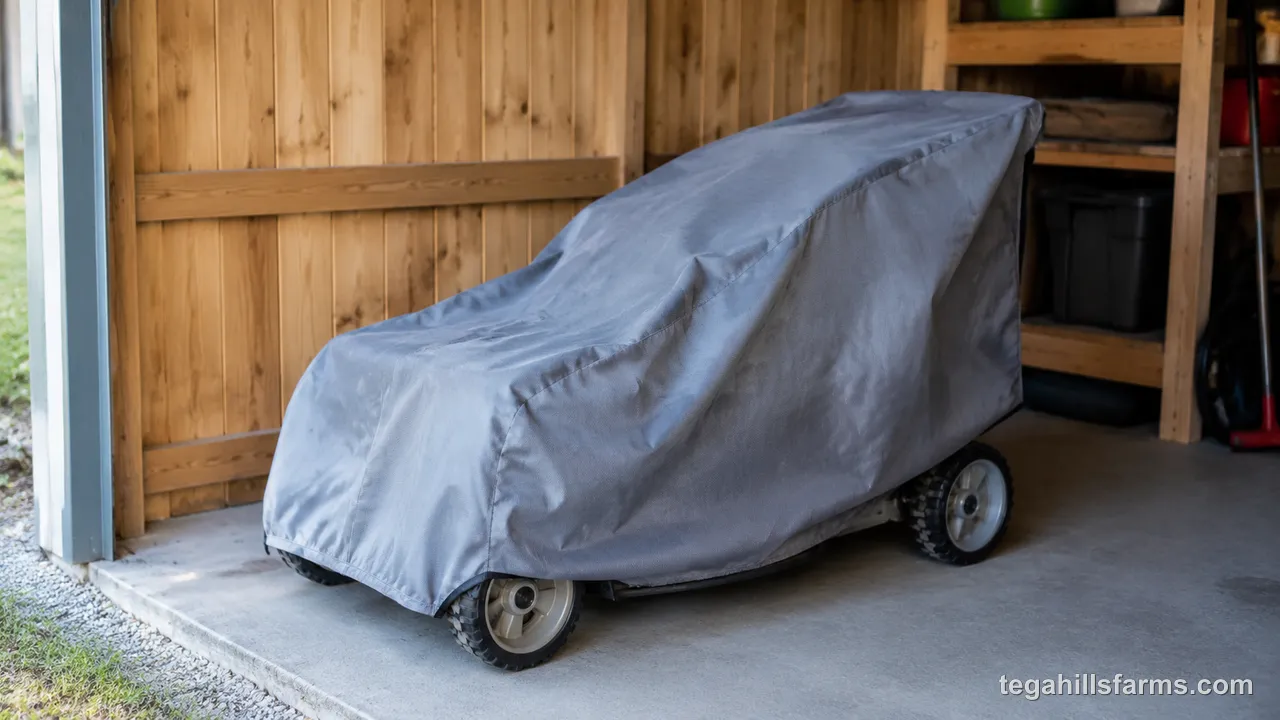
In a garage or shed, a cover mainly keeps sawdust, cobwebs and bird droppings off the engine and controls. A moving blanket or a tarp draped loosely, open at the bottom, does that while letting air move underneath. Wait until the engine and muffler are fully cool before covering.
Outdoor storage is the harder case. A plastic tarp wrapped tight traps humid air, and daily temperature changes condense it on the deck and engine. If the mower has to sit outside, use a vented equipment cover, raise the machine off the ground, and leave the bottom open for airflow.
How Do You Get a Stored Mower Running Again in Spring?
Start with fuel condition and oil level, then reconnect the spark plug wire, and check the blade and tires before the first pull.
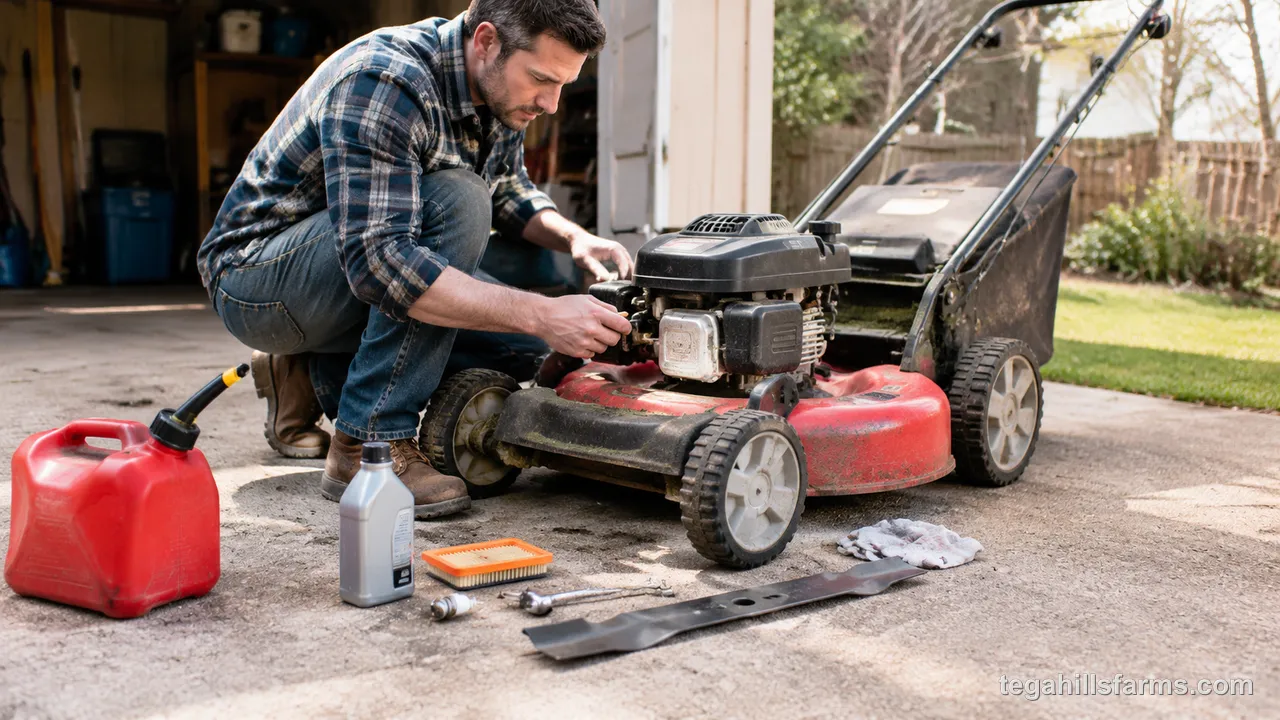
- Fuel: Stabilized gas can usually be burned. If the tank was drained, or the gas smells sour or looks dark, refill with fresh gas.
- Oil: Check the dipstick and top off if needed.
- Spark plug: Push the boot firmly onto the plug.
- Blade and tires: Confirm the blade bolt is tight, and check pneumatic tires for low pressure.
If the engine won’t start, a clogged carburetor jet from stale fuel is the usual cause. Cleaning the carburetor or having a shop service it fixes most cases.
For startup technique and safe operating habits, see how to use a lawn mower.
Gas that sat untreated in a carburetor all winter dries into a varnish that coats the fuel jets, and those jets are smaller than a pinhole. On the first warm Saturday, that mower cranks and cranks without firing, and even fresh gas in the tank changes nothing because the fuel can’t get past the blockage.
What Happens to a Mower That Is Stored Wrong?
The most common result of poor storage is a gummed-up carburetor. Close behind are rust on the blade and deck, moisture in the oil, and rodent nests in the air filter or under the shroud. A carburetor clogged with varnish is the costliest of these, because it usually means a full cleaning or replacement before the engine will run properly.
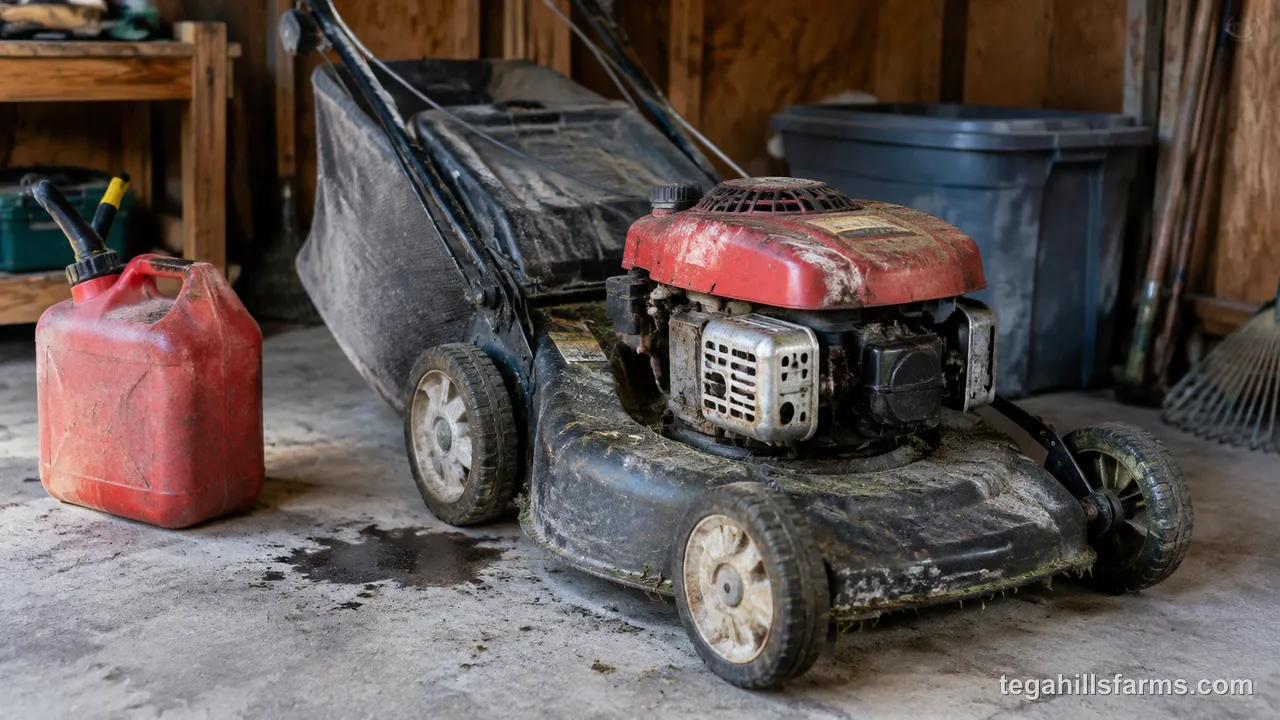
Rust starts where clippings were left packed under the deck. A well-stored deck comes out with a dull but sound surface. A neglected one shows flaking scale along the seams, and over several seasons it can rust through.
Moisture in the oil appears when a mower sits in a humid shed on old oil. Pull the dipstick and the oil looks milky instead of clear amber.
Rodents are the failure owners least expect. Mice pack the air filter housing with nesting material and sometimes chew wiring. A mower stored clean, raised off the floor and in a sealed space usually comes out with only a little dust on it. Pop the air filter cover before the first start of the season, since a blocked filter on a nested mower can keep it from running.
How Do You Store Riding, Battery and Robot Mowers?
Storage needs change with the machine. Gas riding mowers follow the same fuel and engine steps as a push mower, plus a few extras. Battery, corded and robot mowers skip fuel and oil entirely, and battery care becomes the main job. Model-specific details come from each manufacturer’s manual.
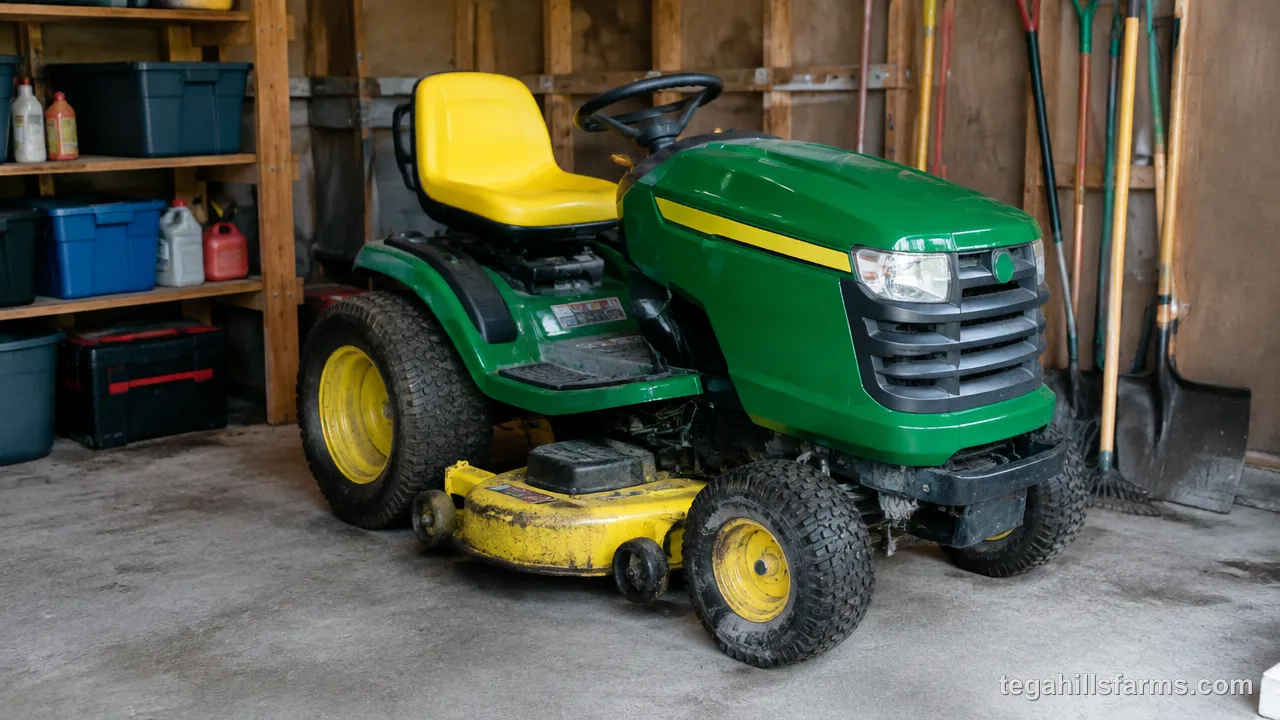
Riding Mowers and Garden Tractors
The fuel, oil, filter, plug and cleaning steps apply to a riding mower the same way. The tank is just bigger, so stabilizer dosing and draining take more fuel. Clean under the deck and around the engine before storage, because a larger deck traps more clippings.
The starter battery needs attention that a push mower doesn’t. A lead-acid battery left connected can slowly drain and may be damaged by sitting discharged in the cold. Charge it fully, then either disconnect the negative cable or keep it on a battery maintainer, following the manual’s instructions.
Size limits where it can go. A riding mower needs a flat, dry parking spot. Uneven ground stresses the frame and tires, and a damp floor rusts the deck from below. Check tire pressure before storage and again in spring, since tires lose air over months.
Transmissions, PTO systems and hydraulics vary by model, so follow the manufacturer’s storage guidance for anything beyond the basics.
Battery, Corded and Robot Mowers
Electric mowers drop the fuel and oil steps, so storage is mostly about the battery and keeping the machine clean and dry. Scrape the deck as you would on a gas mower, then remove the lithium-ion battery pack and store it indoors in a dry place. Garages and sheds can get too cold or too hot for lithium-ion cells. The right storage charge level and temperature limits come from the battery maker’s manual.
Corded mowers are the simplest. Clean the deck, store the mower dry, and coil the extension cord loosely after checking it for cuts or crushed sections.
Robot mowers such as Mammotion models need the mower and, in many cases, the charging dock brought inside for winter. Follow the manufacturer’s off-season instructions for the battery and docking station.
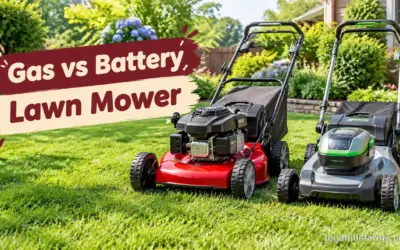
If the gas-versus-electric question is still open, how each type handles the off-season is one of the clearer differences between gas vs battery lawn mowers.
Lawn Mower Storage: Quick Answers to Common Questions
How long does gas last in a lawn mower?
Untreated gas can start breaking down well within a single off-season, which is why it causes so many spring no-starts. Treated with stabilizer, fuel stays usable for many months, depending on the product. Ethanol blends absorb moisture and degrade faster in damp storage, so treat or drain the tank before any long idle period.
Should I leave gas in my mower over winter?
Leave it only if it’s stabilized and you’ve run the engine long enough to pull treated fuel into the carburetor. A nearly full tank of treated gas also limits condensation. If the gas is untreated, old, or the mower is going into a facility that bans fuel, drain it and run the engine until it stalls.
What is the one-third rule for mowing?
The rule is to never remove more than a third of the grass blade’s height in a single cut. Cutting more stresses the grass and can scalp the lawn. For the season’s last mow, keep cutting at your normal height rather than scalping it short. Ideal heights by grass type are covered in how short to cut grass.
How often should I mow when the season starts?
Let the grass growth rate set the schedule, not the calendar. In early spring growth is slower, then speeds up as the weather warms, so the interval shortens as the season goes on. Stick to the one-third rule as you adjust. For a schedule by grass type and season, see how often to mow the lawn.
Do I need to start a stored mower during the winter?
No. A properly winterized mower doesn’t need to be run during storage. Starting it briefly and shutting it off before it reaches full operating temperature can leave moisture inside the engine, which works against the prep you did. Leave it alone until spring, then go through the startup checks.








Write Your Review
No reviews yet. Be the first to share your experience!