
9 Best Walk Behind Lawn Mowers: Top Picks Reviewed for 2026
Our top picks for the best walk behind lawn mowers in 2026 are the Greenworks 60V 21″ Self-Propelled Mower (Best Overall), Casince Cordless Lawn Mower 17″ (Best Budget), EGO Power+ LM2135SP 21″ Self-Propelled Mower (Best Battery Life), Greenworks 80V 21″ Self-Propelled (Best Cordless), PowerSmart EasyCut 18″ 144cc (Best Easy-Start), PowerSmart EasyDrive Pro 22″ 170cc (Best for Hilly Terrain), Baikemon 40V 19″ Cordless Lawn Mower (Best Lightweight), EGO Power+ LM2200SP 22″ Self-Propelled (Best Durability), and Honda HRX-BE 21″ Battery Lawn Mower (Best Premium).
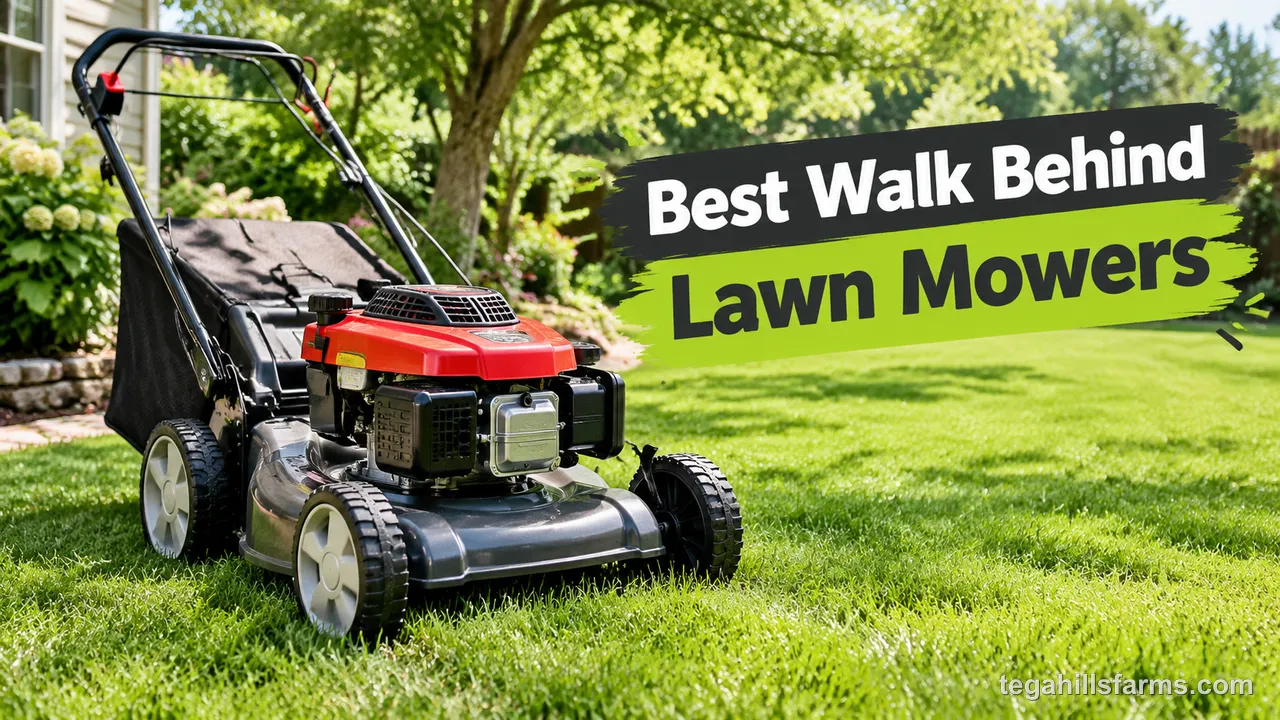
Across all 9 picks, the choice turns on a few yard-level questions: how wide a deck your lawn can use, whether a battery charge or a gas tank fits your mowing session, whether you need drive assistance on slopes, and how much weight you can lift into storage.
The worry behind most of these decisions is simple. You want a mower that starts every time, finishes the lawn without quitting halfway, and doesn’t turn into a weekend repair project.


If you already own cordless tools, the battery you have is a strong tiebreaker. A mower that runs on your existing EGO 56V, Greenworks 60V or 80V, or DEWALT 20V MAX packs gives you a spare battery on day one and saves shelf space for chargers.
What Is a Walk-Behind Lawn Mower?
You steer this machine on foot from behind a handlebar, with a single cutting deck under the frame that you either push yourself or let powered wheels pull forward, instead of riding on it.
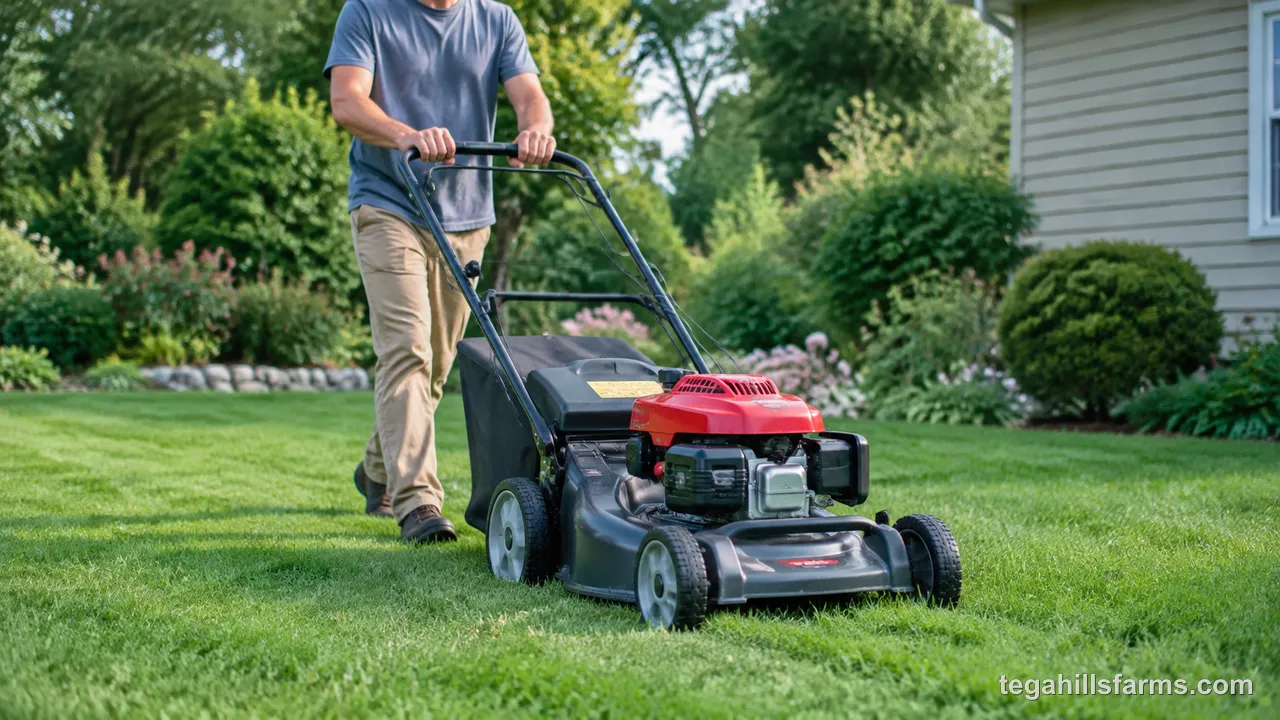
Two splits shape the category. Power comes from either a gas engine or a battery pack, and that choice sets your upkeep, noise level and how long a session can run. Drive is either push, where your arms supply all the forward motion, or self-propelled, where the wheels do the work and you just guide the mower.
Walk-behind models are one slice of a much bigger field, so if you are still weighing mower types, start with our overview of the best lawn mowers. For a step-by-step look at sizing a machine to your property, see how to choose a lawn mower.
The 9 Best Walk Behind Lawn Mowers of 2026
The Greenworks 60V 21″ Self-Propelled Mower, Casince Cordless Lawn Mower 17″, EGO Power+ LM2135SP 21″ Self-Propelled Mower, Greenworks 80V 21″ Self-Propelled, PowerSmart EasyCut 18″ 144cc, PowerSmart EasyDrive Pro 22″ 170cc, Baikemon 40V 19″ Cordless Lawn Mower, EGO Power+ LM2200SP 22″ Self-Propelled and Honda HRX-BE 21″ Battery Lawn Mower cover battery and gas, push and self-propelled. The split that matters most is weight against effort: the heavier self-propelled machines climb slopes and carry full bags for you, while the light cordless models are easier to lift, carry and store.
#1 Greenworks 60V 21″ Self-Propelled Mower — Best Overall
Average-size yards get gas-like cutting here without the gas. Rear-wheel drive and two 4.0Ah batteries carry this machine through up to 3/4 acre per charge, and the same packs run more than 75 Greenworks 60V tools.
Key Specs:
- Deck: 21 in
- Power: 60V brushless motor, two 4.0Ah batteries
- Coverage: up to 3/4 acre per charge
- Drive: rear-wheel self-propelled, adjustable pace
- Cutting modes: mulch, bag, side discharge, turbo leaf pickup
- Weight: 65.04 lb
Detailed Review:
The 60V brushless motor draws from two 4.0Ah batteries, which is what lets it finish up to 3/4 acre on a single charge. Splitting the load across two packs gives you a long working window before either needs the charger, though coverage shifts with grass height and walking pace.
Rear-wheel drive helps on slopes and through thick patches, and you can change pace on the go. That means slowing down along beds and walkways, then opening up on straight runs without fighting the handle.
The 4-in-1 setup covers mulching, bagging, side discharge and a turbo leaf pickup mode, so the same deck handles summer clippings and fall leaves. LED headlights extend mowing into dawn and dusk, and the motor starts instantly with no pull cord, oil or emissions.
Greenworks backs both the tool and the battery with a 4-year limited warranty, and the 60V packs fit more than 75 tools in the line, from trimmers to blowers to chainsaws. If you plan to move the rest of your yard kit off gas, I’d start with a platform this broad.
Pros:
- Two batteries cover up to 3/4 acre per charge.
- Rear-wheel drive grips slopes and thick grass.
- Four cutting modes, including turbo leaf pickup.
- Batteries fit more than 75 Greenworks 60V tools.
- 4-year limited tool and battery warranty.
Cons:
- At 65.04 lb, it’s awkward to lift into a truck.
- Coverage drops in tall or dense grass.
Who It’s For:
Homeowners with an average lawn who want quiet, cord-free cutting without oil changes will get the most from it, especially if a Greenworks 60V trimmer or blower already sits in the garage. If you need to carry a mower up steps regularly, a lighter cordless machine will treat your back better.
Editor’s Verdict:
Pick it for a quiet, low-upkeep mower that drives itself, cuts four ways and shares batteries with a large 60V tool family.
#2 Casince Cordless Lawn Mower 17″ — Best Budget
Small lawns and cramped storage suit this budget machine. Two 20V 4.0Ah batteries run it for up to 40 minutes, and at 31 lb it lifts onto a shelf or into a car trunk without a second pair of hands.
Key Specs:
- Deck: 17 in
- Cutting height: 6 positions, 1 to 3 in
- Motor: brushless, 3000 RPM, 1200W max
- Batteries: two 20V 4.0Ah
- Runtime: up to 40 minutes, up to 5,380 sq ft per charge
- Grass bag: 13 gal (50 L)
Detailed Review:
The 17-inch deck keeps this mower narrow enough to slip between raised beds and along fence lines, and the six height settings from 1 to 3 inches cover routine residential cutting. A brushless motor spinning at 3000 RPM with up to 1200W max output holds blade speed steady through ordinary grass.
Two 20V 4.0Ah batteries share the work, giving up to 40 minutes and up to 5,380 sq ft per charge under test conditions. Tall or damp grass will shorten that, so it fits a lawn you keep on a regular schedule. Starting takes one button and a pull bar, with no cord to yank.
Next to the EGO Power+ LM2135SP 21″ Self-Propelled Mower, the budget trade-offs are easy to see: a narrower deck (17 versus 21 inches), a lower top cutting height (3 versus 4 inches), and up to 40 minutes of runtime against the EGO’s 60. In return, you get a far lighter machine that tucks into a corner.
Shoppers holding to a tight spending cap will find more options among walk behind lawn mowers under $300.
Pros:
- At 31 lb, it carries and stores with little effort.
- Two-battery setup runs up to 40 minutes.
- Brushless motor holds steady speed in routine grass.
- One-button start with a simple pull bar.
- 13-gallon bag holds plenty between empties.
Cons:
- The 17-inch deck means more passes on open lawns.
- Top cutting height stops at 3 inches.
Who It’s For:
If your lawn is small, broken up by beds and paths, or you store gear in a tight shed or garage corner, this is an easy machine to live with on a modest budget. Anyone mowing long, open stretches every week should look at a wider self-propelled model instead.
Editor’s Verdict:
Choose it when easy carrying and simple starts matter more than deck width or long runtime on a modest lawn.
#3 EGO Power+ LM2135SP 21″ Self-Propelled Mower — Best Battery Life
With a 56V 7.5Ah battery delivering up to 60 minutes on one charge, this EGO suits larger yards that one pack has to finish in a single session. Palm-activated drive keeps the walk easy.
Key Specs:
- Deck: 21 in
- Battery: 56V 7.5Ah, up to 60 minutes per charge
- Torque: up to 7.0 ft-lbs
- Drive: Touch Drive self-propelled, 0.9 to 3.1 mph
- Weight: 55.3 lb
Detailed Review:
Up to 60 minutes from a single 56V 7.5Ah pack means you rarely stop to swap batteries mid-lawn. The included EGO POWER+ Rapid Charger (CH5500) refills that battery in 60 minutes, so a second session the same day is realistic.
Touch Drive engages the self-propel system with the pressure of your palm, and a dial at your fingertips sets speed anywhere from 0.9 to 3.1 mph. You can crawl along a flower bed edge and pick up pace on open turf without letting go of the handle.
Select Cut lets you swap the lower blade to match conditions: mulching for regular cuts, high-lift for bagging, and an extended-runtime blade when you want the battery to stretch further. Up to 7.0 ft-lbs of cutting torque and eight height positions from 1 to 4 inches cover a tight summer trim as well as tall spring growth.
The included battery works with every EGO power tool, and the mower accepts any EGO 56V ARC Lithium pack. Compared with the EGO Power+ LM2200SP 22″ Self-Propelled, this model gives up deck width and torque, but it ships with its battery and charger, so it’s ready to mow out of the box.
Pros:
- Single battery runs up to 60 minutes.
- Rapid charger refills the pack in an hour.
- Palm-activated drive with a fingertip speed dial.
- Three interchangeable lower blades included.
- Battery works across all EGO power tools.
Cons:
- Swapping lower blades adds a step between jobs.
- At 55.3 lb, it’s bulky to lift.
Who It’s For:
Owners of bigger lawns who hate stopping to swap packs, and anyone already invested in EGO 56V tools, will appreciate how far one charge goes here. A homeowner trimming a tiny patch of grass would be better served by something smaller and simpler to handle.
Editor’s Verdict:
Buy it if one charge needs to cover a full mow, with flexible blade options and fine speed control along for the ride.
#4 Greenworks 80V 21″ Self-Propelled — Best Cordless
Gas holdouts ready to go cordless should look here first. A brushless motor on a durable 21-inch steel deck, rear-wheel drive and a 4.0Ah battery rated for up to 1/2 acre give it the muscle to replace an engine without the fumes or the pull cord.
Key Specs:
- Deck: 21 in steel
- Power: 80V brushless motor, 4.0Ah battery, rapid charger
- Coverage: up to 1/2 acre per charge
- Drive: rear-wheel self-propelled, variable speed
- Weight: 74.95 lb
- Warranty: 4-year limited tool and battery
Detailed Review:
The 80V brushless motor provides more torque, quiet operation and longer life, and it runs 3x quieter than gas. That lets you mow early on a weekend without an engine drone carrying over the fence.
Rear-wheel drive with variable speed control keeps traction and maneuverability in your hands, which pays off on slopes and as the bag fills. The LED headlight extends useful mowing into early morning and late evening, and the rapid charger shortens the wait between sessions.
Against the Greenworks 60V 21″ Self-Propelled Mower, this model covers up to 1/2 acre on one 4.0Ah battery versus the 60V’s up to 3/4 acre on two packs, and it weighs 74.95 lb to the 60V’s 65.04 lb. What you get for that extra weight is a higher-voltage platform shared with more than 75 Greenworks 80V tools.
Greenworks covers the tool and battery with a 4-year limited warranty. Coverage still depends on grass condition and how you mow, so thick spring growth will bring that 1/2-acre figure down.
Pros:
- Brushless 80V motor runs 3x quieter than gas.
- Rear-wheel drive with variable speed control.
- LED headlight allows early and late mowing.
- Battery fits more than 75 Greenworks 80V tools.
Cons:
- At 74.95 lb, it’s heavy to lift and load.
- One 4.0Ah pack covers up to 1/2 acre.
Who It’s For:
Anyone leaving gas behind for good, or already running Greenworks 80V trimmers and blowers, gets real cutting power plus battery sharing. If you regularly lift a mower up stairs or into a hatchback, the Baikemon 40V 19″ Cordless Lawn Mower will be far easier to handle.
Editor’s Verdict:
Expect quiet, gas-free power and solid traction, as long as the extra weight doesn’t bother you at storage time.
#5 PowerSmart EasyCut 18″ 144cc — Best Easy-Start
If you want a gas mower that fires up without fuss, the 144cc OHV engine here pairs a recoil starter with an auto choke, so there’s no lever to set before each pull. The compact deck slips through tight spaces.
Key Specs:
- Engine: 144cc 4-cycle OHV, recoil start, auto choke
- Deck: 18 in steel
- Cutting height: 6 positions, 1.5 to 3.9 in
- Modes: bag, side discharge, mulch
- Wheels: 7 in
- Weight: 55 lb
Detailed Review:
Auto choke handles the fuel mixture for a cold start, so you skip the choke lever and just pull the recoil starter. The 144cc 4-cycle OHV engine runs on straight gasoline, with no oil mixing at the pump.
The 18-inch steel deck and heavy blade chop clippings fine, and a vortex tunnel design spreads them evenly across the lawn. Seven-inch wheels and the narrow deck let you work around trees, swing sets and tight corners without a lot of back-and-forth.
Three modes cover bagging into the easy-to-empty rear bag, side discharge for tall growth, and mulching. The 6-position dual-lever height adjustment runs from 1.5 to 3.9 inches, and assembly needs no tools; you just unfold the handle. The ergonomic handle keeps your grip comfortable through a full session.
As a push mower, it leaves every bit of forward motion to you, which you’ll feel on slopes. It also carries the routine upkeep of any small gas engine. Readers holding to a firm spending cap can compare more choices among walk behind lawn mowers under $500.
Pros:
- Auto choke and recoil starter simplify cold starts.
- 7-inch wheels turn easily in tight spaces.
- Bag, side discharge and mulch modes included.
- Tool-free assembly; just unfold the handle.
Cons:
- Push design means you supply all forward effort.
- Gas engine needs oil, plug and filter upkeep.
Who It’s For:
Gas loyalists with a compact yard full of obstacles will like how easily it starts and turns. Steep yards call for drive assistance, so look at the PowerSmart EasyDrive Pro 22″ 170cc instead, since its rear-wheel drive does the pushing on slopes.
Editor’s Verdict:
Count on simple starts and nimble handling from this compact gas mower, provided you accept routine engine upkeep.
#6 PowerSmart EasyDrive Pro 22″ 170cc — Best for Hilly Terrain
Sloped and uneven lawns are where this mower earns its keep. Rear-wheel drive grips hills and rough ground, while the 170cc OHV engine keeps a 22-inch cutting path moving through thick grass.
Key Specs:
- Engine: 170cc 4-stroke OHV, recoil start, auto choke
- Deck: 22 in steel, heavy-duty blade
- Drive: rear-wheel self-propelled
- Cutting height: 1.5 to 3.9 in
- Modes: mulch, rear bag, rear discharge
- Weight: 68 lb
Detailed Review:
Self-propelled rear-wheel drive is the reason to buy this mower: it adds traction on slopes and uneven terrain and cuts the pushing effort that wears you out on a hillside. The 170cc 4-stroke OHV engine gives the blade reliable power in thick grass and on larger yards.
Against the PowerSmart EasyCut 18″ 144cc, this model adds drive and a 22-inch cutting path versus 18 inches, so you finish open lawns in fewer passes. The cost of those gains is weight: at 68 lb this mower is noticeably heavier than the EasyCut, which you feel when loading it into a truck or backing it into a shed corner.
The 3-in-1 system switches between mulching, rear bagging and rear discharge to match changing lawn conditions, and cutting height runs from 1.5 to 3.9 inches. Auto choke and a recoil start keep cold starts as simple as on the smaller PowerSmart.
The steel deck and heavy-duty blade are built to last season after season. Assembly needs no tools, and the folding handle shrinks the footprint for storage, which offsets some of the bulk.
Pros:
- Rear-wheel drive reduces effort on slopes and rough ground.
- 22-inch path finishes open lawns in fewer passes.
- Folding handle tucks it away for storage.
- Auto choke with recoil start.
Cons:
- At 68 lb, it’s a heavy lift into a truck.
- Gas engine adds fuel and oil upkeep.
Who It’s For:
Yards with hills, dips and dense turf put this machine’s drive and engine to good use, especially for owners comfortable with a gas routine. If you have to carry a mower up steps or store it on a shelf, its bulk works against you.
Editor’s Verdict:
Lean on this one when slopes and thick grass leave you worn out behind a push mower.
#7 Baikemon 40V 19″ Cordless Lawn Mower — Best Lightweight
DEWALT owners can add a mower here without buying another battery platform. It runs on DEWALT 20V MAX XR packs up to 8.0Ah, weighs 30 lb, and its fully collapsible handle plus built-in carry handle make moving and storing it easy.
Key Specs:
- Deck: 19 in
- Battery: DEWALT 20V MAX XR, up to 8.0Ah (battery and charger sold separately)
- Cutting height: 6 positions, 0.98 to 2.76 in
- Modes: mulch and bag, 13 gal (50 L) bag
- Handle: 3-position adjustable, fully collapsible
- Weight: 30 lb
Detailed Review:
The battery and charger are not included, so this mower makes the most sense when DEWALT packs are already on your shelf. It takes DEWALT 20V MAX XR batteries rated up to 8.0Ah and does not work with POWERSTACK batteries, which is worth checking before you order.
At 30 lb with a built-in carry handle, it lifts into a trunk or onto a shelf without strain. The fully collapsible handle shrinks it further for storage, and the 3-position handle adjustment fits users of different heights.
The brushless motor turns a 19-inch cutting path, and a central lever sets six heights from 0.98 to 2.76 inches. You can mulch or bag, and the 13-gallon bag with an 88% collection rate means fewer trips to the compost pile.
Next to the EGO Power+ LM2135SP 21″ Self-Propelled Mower, whose heights reach 4 inches, this mower tops out at 2.76 inches. That suits a lawn kept trimmed short more than one you let grow shaggy between cuts.
Pros:
- At 30 lb, it’s easy to carry and push.
- Runs on DEWALT 20V MAX XR batteries you may own.
- Fully collapsible handle saves storage space.
- 13-gallon bag with an 88% collection rate.
Cons:
- Battery and charger are sold separately.
- The cutting height range tops out at 2.76 inches, so very tall grass may need a first pass at a higher setting from another mower.
- Not compatible with DEWALT POWERSTACK batteries.
Who It’s For:
Tool-shed regulars already running DEWALT gear, plus anyone who needs a mower light enough to lift without strain, fit this model well. Shoppers with no DEWALT batteries face a separate battery and charger purchase before the first mow.
Editor’s Verdict:
Grab it if you own DEWALT packs and want a mower you can lift, fold and stow without strain.
#8 EGO Power+ LM2200SP 22″ Self-Propelled — Best Durability
Owners planning to keep one mower for many seasons get a 22-inch cast aluminum deck covered by a lifetime warranty, plus up to 11.1 ft-lbs of cutting torque. The battery is extra.
Key Specs:
- Deck: 22 in cast aluminum, lifetime warranty
- Torque: up to 11.1 ft-lbs, blade speed up to 3,350 RPM
- Runtime: up to 70 minutes with a 56V 10.0Ah battery (sold separately)
- Drive: Touch Drive self-propelled, speed dial
- Weight: 83.8 lb
Detailed Review:
The deck takes every rock strike and every coat of wet clippings, so a warranty that never runs out on it protects the part of the mower that sees the most abuse. Cast aluminum is the material choice behind that lifetime coverage.
Up to 11.1 ft-lbs of cutting torque and blade speeds up to 3,350 RPM keep the blade turning through heavy growth. Next to the EGO Power+ LM2135SP 21″ Self-Propelled Mower and its 7.0 ft-lbs, that’s a clear step up in cutting force, along with a wider 22-inch deck.
Runtime reaches up to 70 minutes with a recommended 56V 10.0Ah battery, which you buy separately along with a charger. Any EGO 56V ARC Lithium battery fits, so owners already on EGO can move a pack over from another tool.
Select Cut ships with high-performance and high-lift bagging lower blades plus an upper blade, and Touch Drive engages the self-propel with your palm while a dial sets speed. The catch is mass: 83.8 lb takes real effort to load or wrestle into a crowded garage.
Pros:
- Cast aluminum deck carries a lifetime warranty.
- Up to 11.1 ft-lbs of cutting torque.
- Up to 70 minutes on a 10.0Ah battery.
- Works with every EGO 56V ARC Lithium battery.
Cons:
- Battery and charger are not included.
- At 83.8 lb, loading and storing take effort.
Who It’s For:
Buyers who keep equipment for the long run and already own EGO 56V batteries get the most from this mower’s sturdy deck and strong torque. Someone starting from scratch should factor in the separate battery and charger, or consider the EGO Power+ LM2135SP 21″ Self-Propelled Mower, which includes both.
Editor’s Verdict:
Invest here if deck longevity and cutting force top your list and you already have EGO batteries to share.
#9 Honda HRX-BE 21″ Battery Lawn Mower — Best Premium
Premium buyers who want gas-class torque without an engine will find it in Honda’s battery motor, which matches the power of the brand’s GCV gas engines. Twin bays let you double the 45-minute runtime with a second pack.
Key Specs:
- Deck: 21 in
- Battery: 12Ah lithium-ion, up to 45 minutes or about 0.37 acre per charge; 2 battery bays
- Drive: e-Select Drive, 0 to 4 mph
- Cutting height: 7 positions, 0.75 to 4 in
- Modes: mulch, bag, discharge, leaf shred; 2.2-bushel bag
- Weight: 99 lb
Detailed Review:
Honda’s motor delivers the same power and torque as its GCV gas engines, holding RPMs in tough mowing conditions. The 4-in-1 Versamow system with Clip Director moves between mulching, bagging, discharge and leaf shredding with no attachments, and the twin-blade MicroCut system’s four cutting surfaces chop clippings fine enough to pack more into each bag.
e-Select Drive adjusts speed from 0 to 4 mph with a button, a wider range than the 0.9 to 3.1 mph on the EGO Power+ LM2135SP 21″ Self-Propelled Mower. Dual levers set seven heights from 0.75 to 4 inches.
One 12Ah battery runs up to 45 minutes, and the second bay doubles that with an extra pack sold separately. A blade control button and lever prevent accidental blade rotation, a rear shield and discharge guard contain debris, and the motor shuts off after 3 minutes of blade inactivity or on overload.
Honda backs these mowers with a nationwide service network and parts, plus a 5-year residential warranty covering the mower top to bottom and 90 days for commercial use. At 99 lb, though, it’s a lot of mower to back into a shed.
Pros:
- Motor matches the torque of Honda GCV gas engines.
- Second battery bay doubles runtime with an extra pack.
- 4-in-1 Versamow switches modes without attachments.
- Nationwide service network with parts available.
- 5-year residential warranty covers the whole mower.
Cons:
- At 99 lb, it’s hard to lift or load.
- Second battery is sold separately.
Who It’s For:
For a buyer who wants dealer support, fine-cut bagging and a warranty that covers the whole machine, this is the battery mower to shortlist. Tight storage and tight budgets are a poor match; its weight and premium tier make lighter, simpler machines the better fit there.
Editor’s Verdict:
Reach for it when long-term service support, refined bagging and precise speed control justify paying for the top tier.
Should You Buy a Battery or Gas Walk-Behind Mower?
The decision rests on how much ground one session must cover and how much routine upkeep you’ll accept, because cordless packs trade refueling for a charge window while engines trade quiet for longer sessions. Both power sources cut a clean lawn; what changes is the routine around the mowing, from how you start the machine to what it needs between seasons.
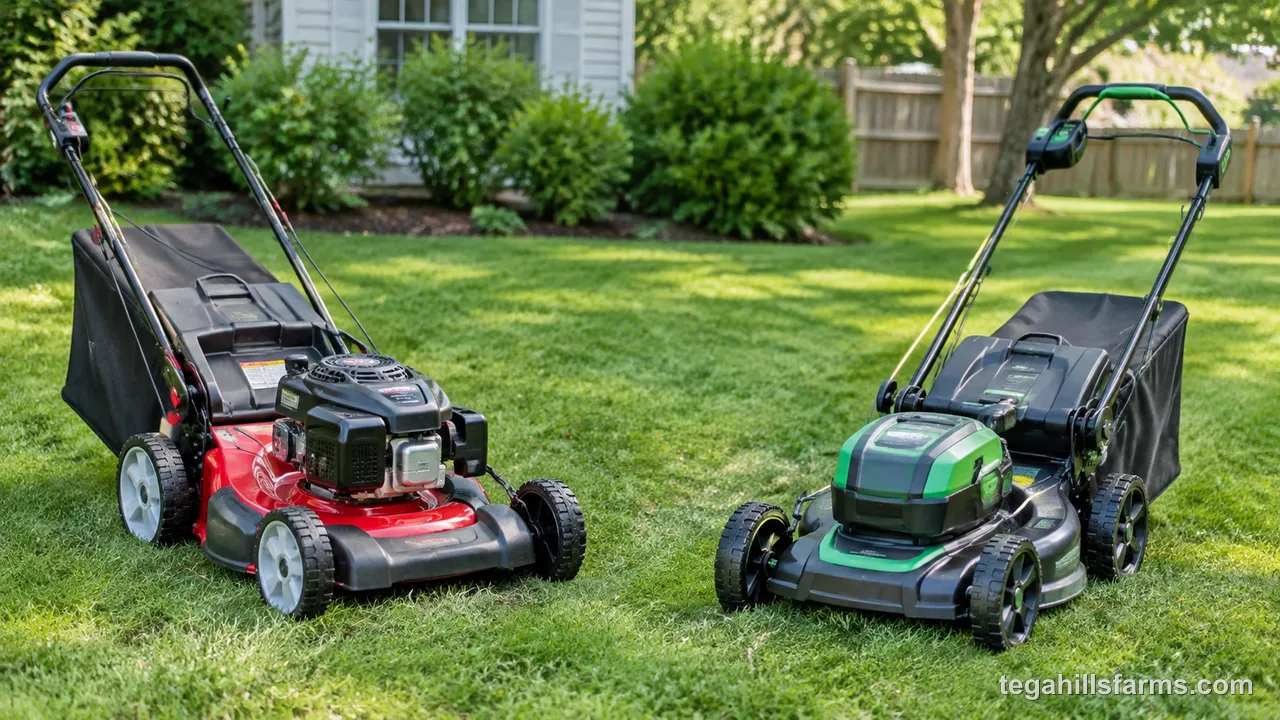
How Do Power and Runtime Compare Between Battery and Gas?
A gas engine keeps running as long as there’s fuel in the tank, while a battery mower stops when its pack runs dry, so the real gap shows up on big lawns and in heavy grass rather than on a routine weekly cut. Higher-end battery models now claim torque equal to or beyond comparable gas engines, which means cutting power is rarely the weak point anymore.
Runtime is. The motor draws harder in tall or wet grass, so a battery drains faster exactly when the lawn is toughest. Refueling a gas mower takes a minute; recharging takes real time, which is why a spare battery or a second battery bay matters so much on larger properties.
A shared battery platform softens that limit. If your trimmer and blower run on the same packs, you already own a backup. That’s the strongest argument for comparing the best battery lawn mowers within the brand you already use.
How Do Upkeep, Noise and Starting Compare?
Battery mowers start with a button and need little more than a clean deck, a sharp blade and sensible battery storage, while a gas mower adds oil changes, spark plugs, air filters and fuel that goes stale over a long layoff.
Starting follows the same split. Auto choke and a recoil starter have made gas mowers far less temperamental, but you still pull a cord, and a mower stored with old fuel can refuse to fire in spring. A battery machine either has charge or it doesn’t.
Noise changes when you can mow. A battery mower runs quiet enough for an early start without bothering neighbors, while a gas engine is loud enough that hearing protection is a sensible habit. If you enjoy doing your own small-engine work and want unlimited run time, the best gas lawn mowers still make sense; if you’d rather skip the oil and fuel routine, battery wins.
Is a Self-Propelled Mower Worth It Over a Push Mower?
Yes, on slopes, thick grass and long bagging sessions, because driven wheels move the machine’s weight for you; on a small, flat lawn, pushing by hand costs little extra effort.
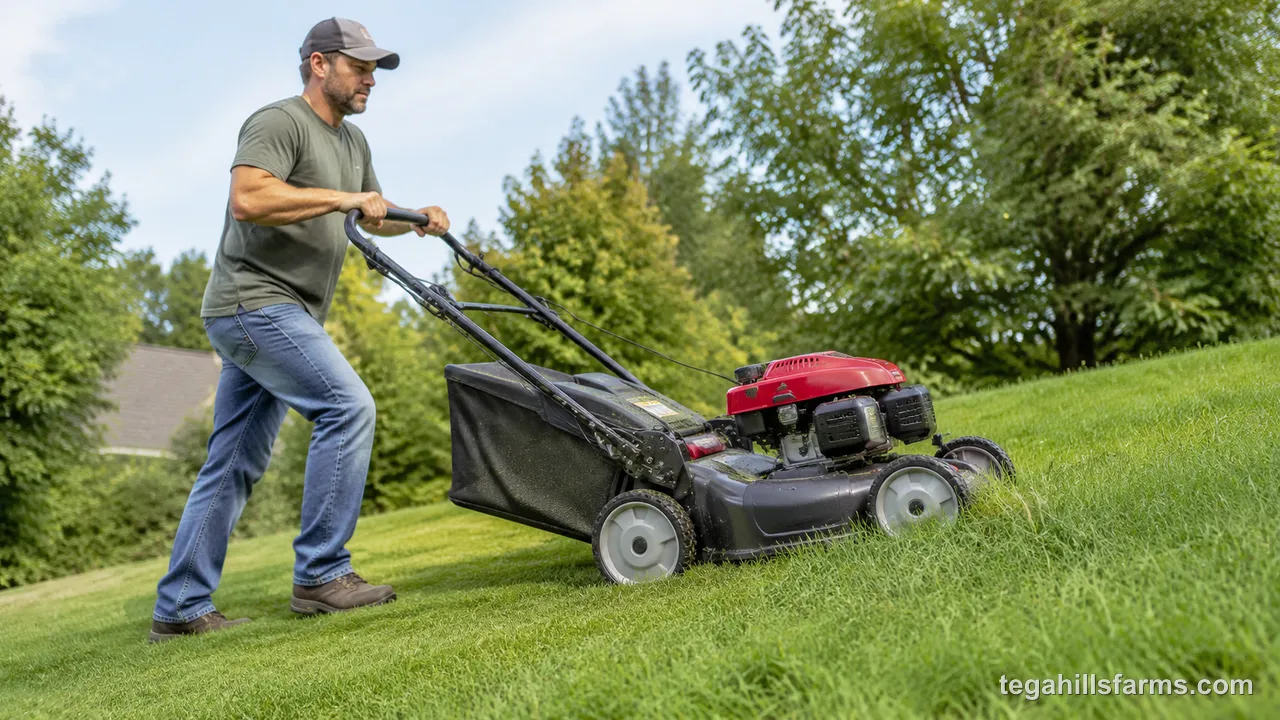
Drive assistance matters most when weight builds up. A filling grass bag, a heavy battery pack or a larger engine all add mass you’d otherwise shove forward on every pass, and on a hill that load adds up quickly. Variable speed controls let you match the mower’s pace to your walk instead of being dragged along.
The trade-offs are weight and complexity. Drive systems add parts and pounds, which makes a self-propelled mower heavier to lift and store. For tight, level lots with few obstacles, a lighter machine you push yourself is simpler and easier to put away.
If drive assistance fits your lawn, compare the best self propelled lawn mowers; if your yard is flat and compact, the best push mowers will cover it without the extra bulk.
How Do You Match a Walk-Behind Mower to Your Yard?
The machine that fits is the one sized to the ground you actually cut and the space you store it in, not the one with the biggest numbers. A deck too wide for a gated side yard, or a mower too heavy to lift onto a shelf, turns every mowing day into a small fight. Getting those basics right also keeps you from paying for capacity your lawn will never use.
What Deck Width Suits Your Yard Size?
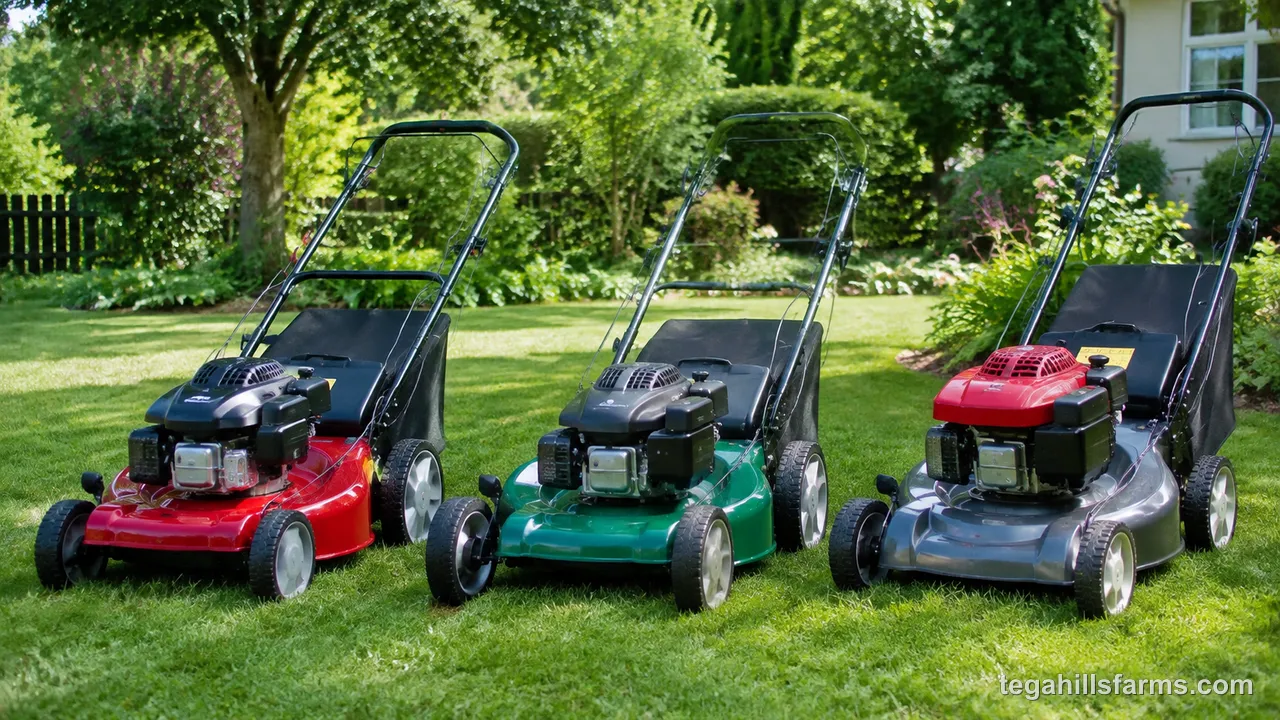
Deck width sets how much grass you cut per pass, so a wider deck finishes open lawns in fewer trips while a narrower one works more easily around beds, trees and tight corners. Most full-size walk-behinds sit around 21 or 22 inches, and compact models run narrower.
On a lawn full of obstacles, a wide deck saves little time because you’re constantly turning and trimming around things. On a long, open stretch, every extra inch of cutting path trims the number of passes and the total time behind the handle.
Gates and side passages are the constraint people forget. Measure the narrowest opening the mower has to pass through before choosing a wide deck. For yards between a compact lot and a big open lawn, the best walk behind lawn mowers for medium yards balance width with maneuverability.
How Do Grass Thickness and Moisture Affect Your Choice?
Dense or damp grass loads the blade, so an engine bogs down and a battery motor draws more power and runs out sooner. Wet clippings also stick to the deck and clog bags, which strains any machine.
Higher torque helps the blade hold speed through heavy growth, and a self-propelled drive keeps the mower moving when the deck starts to drag. Blade choice matters too: a high-lift blade moves heavy clippings into the bag, while side discharge handles tall, wet grass that would otherwise pack the chute.
Raising the cutting height for the first pass through overgrown turf takes much of the load off. Lawns that stay thick all season deserve a look at the best lawn mowers for thick grass.
How Much Storage Space and Lifting Weight Can You Handle?
Walk-behind mowers range from light cordless models around 30 lb to premium self-propelled machines near 100 lb, and that weight decides whether you can lift the mower into a truck, onto a shelf or up a step without help.
Folding and collapsible handles shrink the footprint so a mower fits beside bikes or under a workbench. Built-in carry handles help with lighter models, while heavier self-propelled machines usually roll in and stay on the floor.
Gas mowers add a storage wrinkle: tipping one the wrong way can let oil seep where it shouldn’t, so check the manual before storing it on end. Look at the space and the lifting you’ll actually do each week before choosing.
Can a Walk-Behind Mower Handle Slopes and Uneven Ground?
Yes, on moderate grades with rear-wheel drive, mowed across the face of the hill rather than up and down, but steep or wet banks call for a different tool.
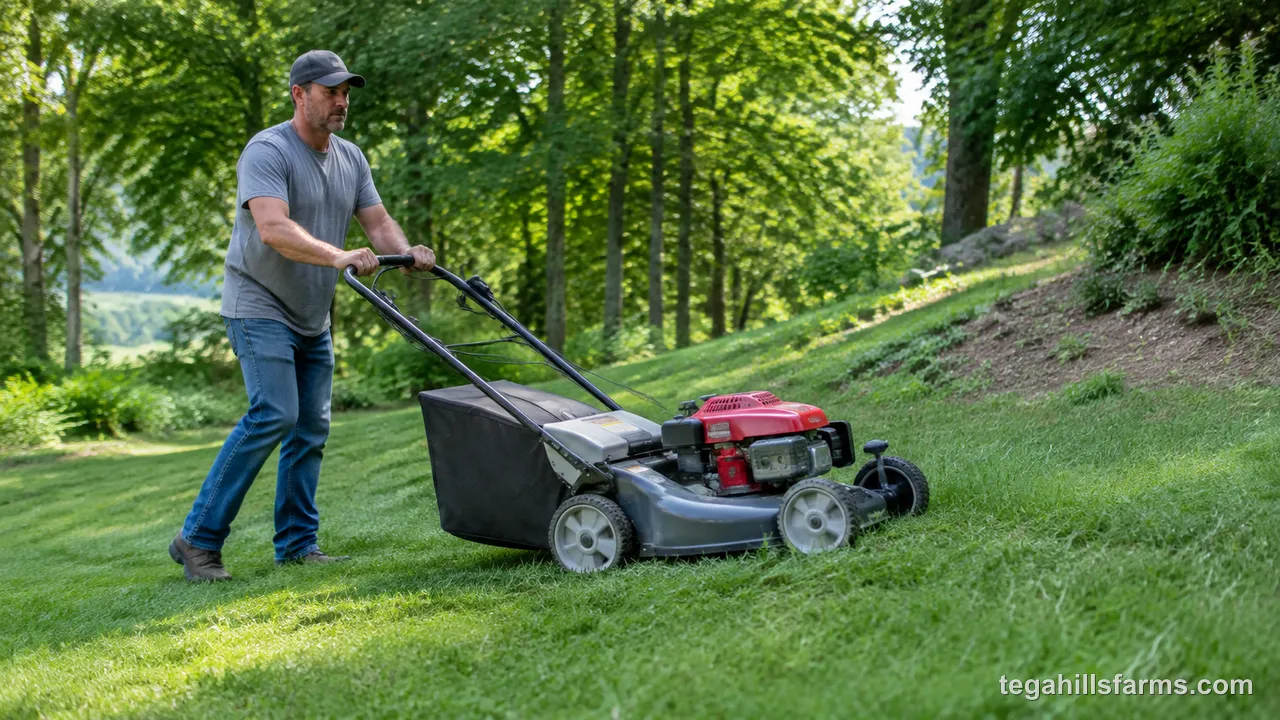
Rear-wheel drive helps because your weight on the handle presses down on the rear wheels as the mower climbs, so the driven wheels keep their grip. Front-wheel drive loses traction in the same situation as the front of the mower lifts. Larger rear wheels also roll over bumps and ruts more smoothly.
Mowing across a slope keeps the mower below you if you slip, which is why that’s the standard safe practice for walk-behinds. Wet grass on a hill is slippery underfoot, so wait for it to dry and wear shoes with good traction.
For hilly lots, the best lawn mowers for hills narrow the field to machines with strong traction. Banks too steep to walk safely are better handled by a string trimmer or by remote control brush mowers.
Which Mower Features Make a Real Difference?
How clippings leave the deck and the controls under your hands shape every mowing session more than headline power figures. Those details decide whether you finish with a tidy lawn and a rested back or with clumps to rake and a sore shoulder.
Is Mulching, Bagging or Side Discharge Right for Your Lawn?
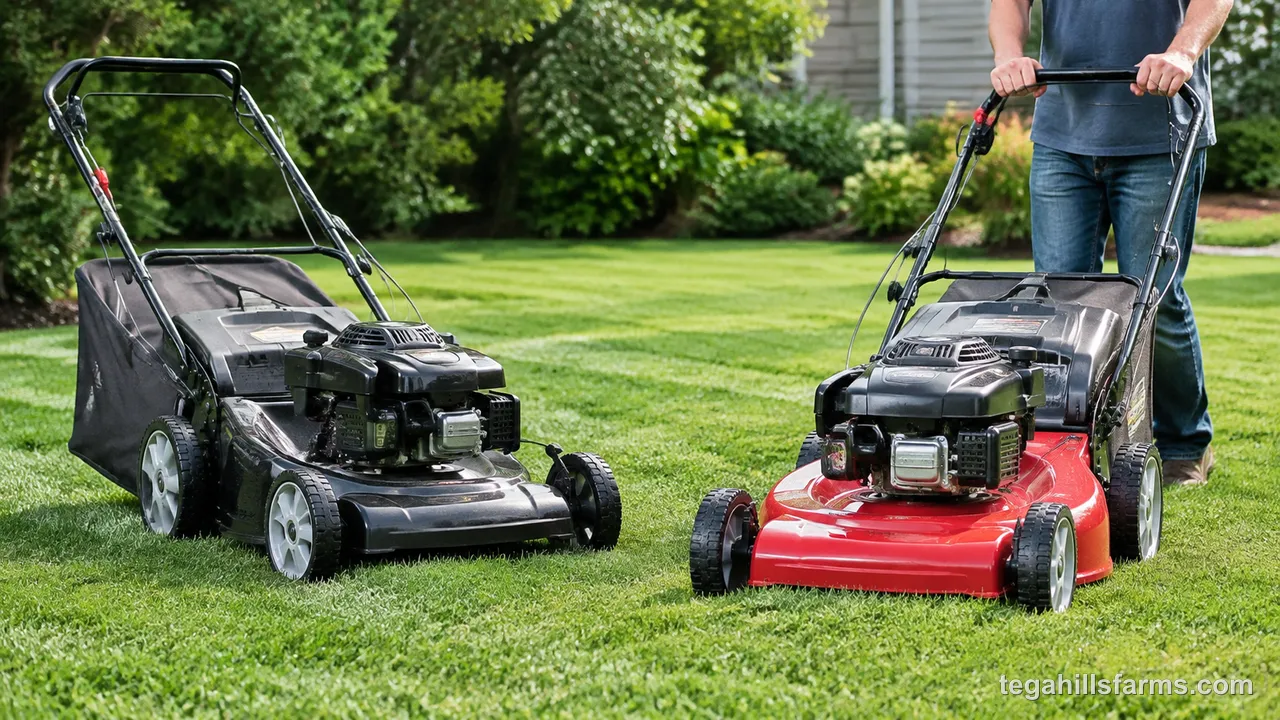
Mulching suits regular mowing of dry grass, bagging suits tidy lawns, leaf cleanup and overgrown patches, and side discharge suits tall or wet grass that would clog a bag.
A mulching setup chops clippings fine and drops them back into the turf, where they break down and return nutrients, but it struggles when the grass is too long or damp. Bagging leaves the cleanest finish and collects leaves and weed seed heads, at the cost of stopping to empty the bag. Side discharge throws clippings out the side without clogging, which makes it the fallback for rough first cuts in spring.
Blade setup matters: mulching blades cut clippings smaller, while high-lift blades push more air to fill the bag. In fall, mulching leaves directly into the lawn saves raking, and the best walk behind lawn mowers for mulching leaves handle that job best.
Which Drive, Handle and Height Controls Reduce Effort?
Variable speed control and an adjustable handle reduce effort most, while single-lever height adjustment and headlights are welcome extras rather than essentials.
Speed controls come as palm bars, fingertip dials or buttons. The best ones let you slow down along beds and speed up on open turf without changing your grip, which keeps the mower from pulling you along. An adjustable handle sets the bar at a height where your arms stay relaxed, which matters more over a long session than most specs.
Height adjustment ranges from one central lever to separate levers at each wheel. A single lever makes seasonal changes quick. Headlights help if you mow before work or after dinner, but they won’t change how the mower cuts.
The runtime printed on a battery mower’s box comes from short, dry grass on level ground, which is rarely the lawn you face after a week of rain. Push through thick, damp turf with the drive engaged and the pack can quit with a strip still standing, leaving you waiting on the charger while the cut grass mats down.
Why Does Battery Runtime Fall Short of the Label, and How Do You Prevent It?
Rated runtime assumes light, dry grass on flat ground, so tall growth, moisture, self-propel drive, bagging and high-lift blades all cut into it. Each of those adds load to the motor, and the battery drains faster under that load.
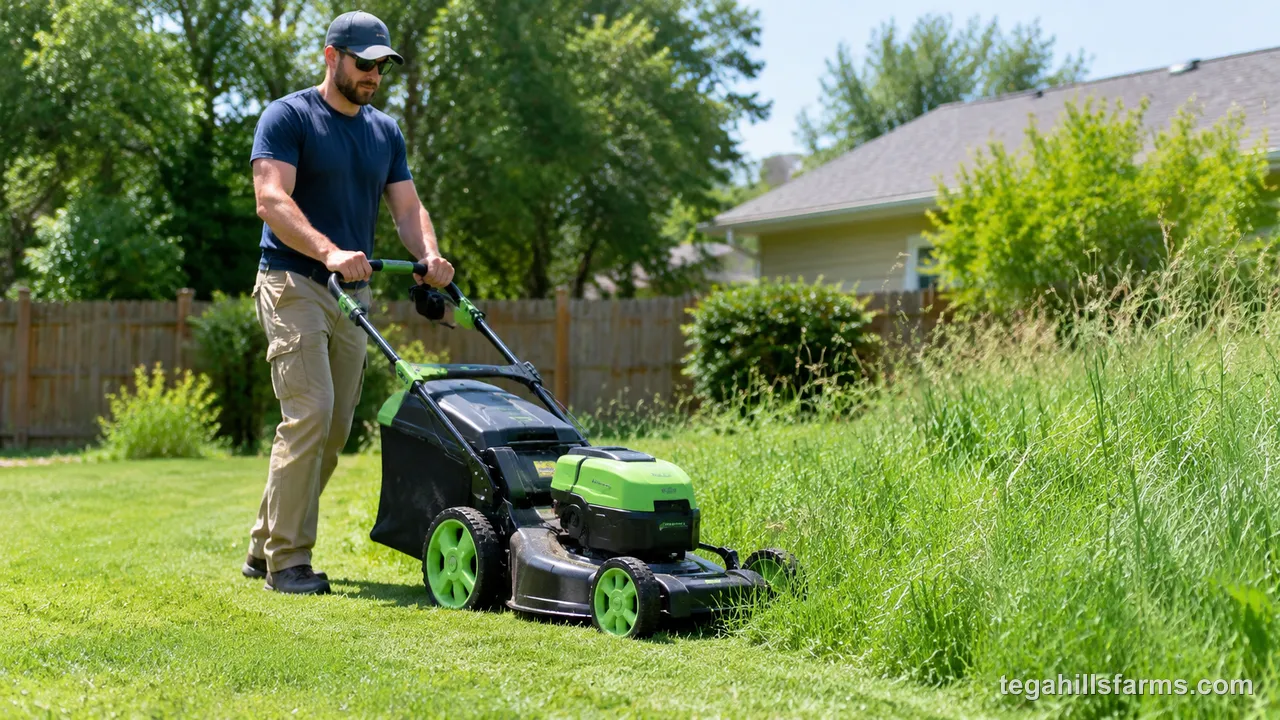
You can plan around most of it. Mow more often so the grass never gets tall, raise the cutting height in thick spring growth, and mulch only when the lawn is dry. Engage the drive on hills and heavy stretches rather than the whole lawn. A sharp blade also cuts with less drag than a dull one. On larger properties, keep a second charged battery ready.
Storage protects the pack between seasons. Bring batteries indoors for winter rather than leaving them in a freezing garage or a hot shed, keep them in a cool, dry spot, and store them at the charge level the manufacturer recommends instead of full or empty.
What Safety Controls and Standards Apply to Walk-Behind Mowers?
Walk-behind power mowers sold in the US must meet the CPSC safety standard for walk-behind power lawn mowers (16 CFR Part 1205), which centers on stopping the blade quickly when you let go of the controls and on shielding you from the blade and thrown debris.
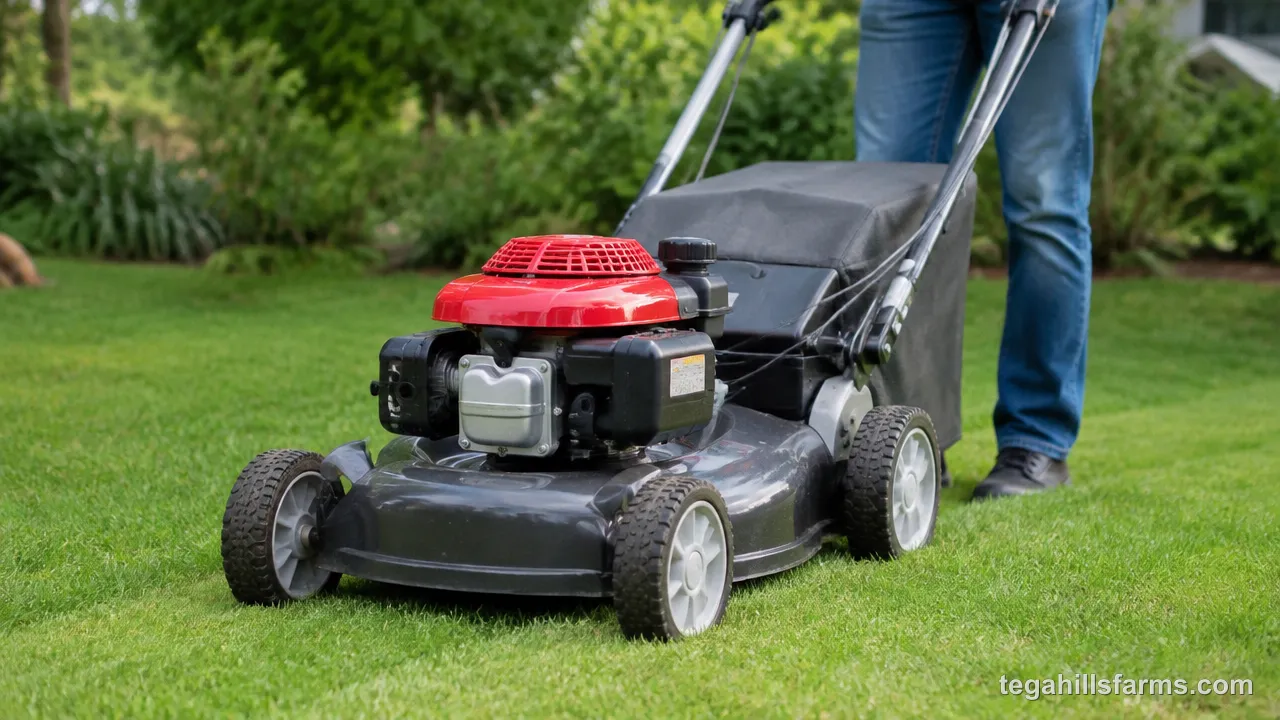
In practice, that shows up as an operator presence control: a bar or lever you hold against the handle, which stops the blade when released. Many battery models add a safety key or a two-step blade start so the blade can’t spin by accident. Rear shields and discharge guards keep stones, sticks and clippings from flying toward your feet, and some models shut off automatically if the blade sits idle or the motor overloads.
On a product page, look for the blade control setup, a rear shield or flap, a discharge guard and, on battery models, a removable safety key. Then do your part by walking the lawn first and picking up anything the blade could throw.
What Should You Do When a Walk-Behind Mower Won’t Start?
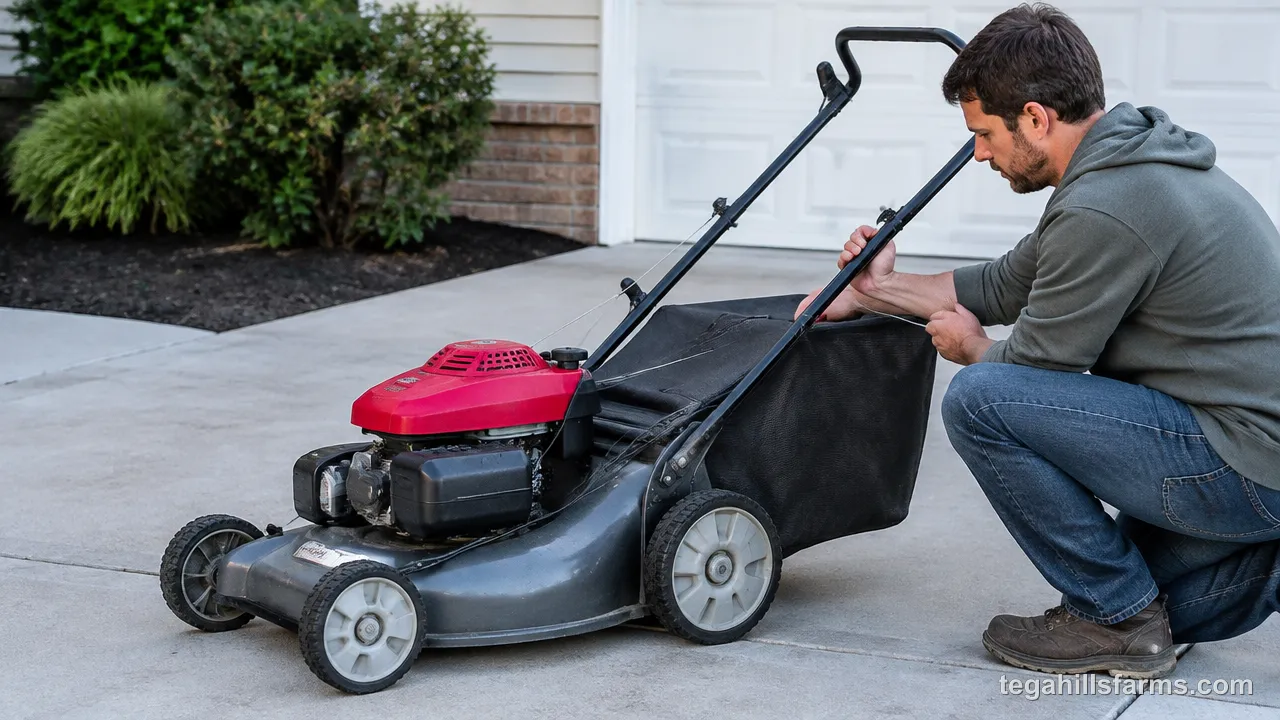
A no-start usually comes down to something you can check in the driveway, and the first job is to make the mower safe before your hands go anywhere near the blade. Those quick checks separate a simple fix from a problem worth a trip to a repair shop.
Why Won’t a Gas Mower Start, and What Should You Check?
Stale fuel is the most common cause, especially after winter, followed by a fouled spark plug, a clogged air filter or a choke used the wrong way. Before checking anything, turn the engine off, let it cool and disconnect the spark plug wire so it can’t fire while you work.
Drain old gas and refill with fresh fuel; next season, add stabilizer before storage. Pull the spark plug and look for carbon or oil fouling, then clean or replace it. Check the air filter and replace it if it’s caked with dust. On auto choke models, just pull the starter; on manual choke models, set the choke for a cold start and open it once the engine runs. Remember the blade control bar has to be held for the engine to run.
Stop and call a shop if the mower still won’t start with fresh fuel, a clean plug and a clean filter, if you smell leaking fuel, or if the blade hit a rock and the mower now vibrates.
Why Won’t a Battery Mower Run, and What Should You Check?
Most battery mowers that won’t run have a battery that isn’t fully seated, a pack that’s out of charge, or a safety key or bar that isn’t engaged. Push the battery in until it clicks, and check its charge indicator before anything else.
Next, confirm the safety key is inserted and that you’re following the start sequence, usually holding the bail bar while pressing the start button. Temperature matters: a battery that’s very cold or hot may refuse to run until it returns to room temperature. If the mower cut out mid-mow, it may have hit its overload protection in thick grass; clear the deck, raise the cutting height and try again.
A fading battery shows itself through much shorter runtime than it used to deliver, failing to hold a charge, or warning lights on the charger. At that point, check the warranty terms before buying a replacement pack.
How Do You Judge Which Walk-Behind Brands Will Last?
Longevity shows up in things you can verify before buying: parts and service availability, the warranty terms the maker states in writing, the deck material, and how many tools share the battery platform.
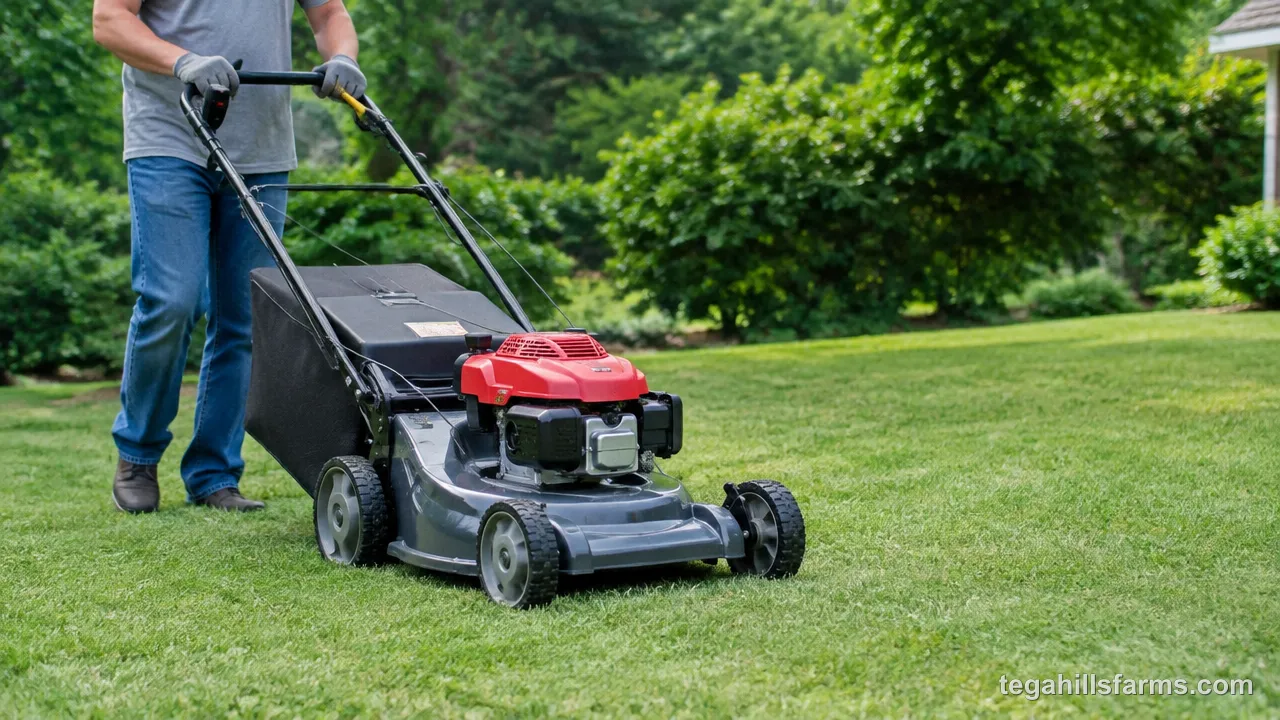
Parts and service decide whether a broken wheel or worn blade means a quick fix or a new mower. A brand with a service network and parts you can order keeps a mower running for years. Warranty length and scope show how confident a maker is; read whether coverage includes the battery, the deck and the whole machine, or just the motor.
Deck material affects how the mower ages, since the deck takes every impact and stays wet with clippings. A battery platform with a wide range of tools also tends to stick around, which protects the batteries you’ve already bought.
Long-running names such as Toro, EGO and Honda are worth checking against those points rather than trusting the badge alone. For a broader comparison, see the best lawn mower brands.
What Else Do Buyers Ask About Walk-Behind Mowers?
When should I move from a walk-behind to a riding or zero-turn mower?
Step up when mowing sessions stretch longer than you can comfortably walk, or when one battery and a spare no longer finish the lawn. Compare the best riding lawn mowers for steady, open acreage, and look at the best zero turn mowers if you trim around many trees and beds.
Is it worth staying with one battery platform?
Yes, for most homeowners. Staying on one platform means every battery you own can power your mower, trimmer and blower, so you always have a backup pack. It also cuts down on chargers and shelf clutter. Switching brands later means starting your battery collection over, so pick a platform with the tools you’ll want.
How long should a walk-behind mower last?
Lifespan depends more on upkeep than on the badge. Keep the blade sharp, clean the deck after mowing, store batteries indoors in winter and, on gas models, change the oil and use fresh fuel. The length and scope of the maker’s warranty is a reasonable signal of how long the machine is built to run.
Can I mow wet grass with a battery mower?
You can, but it’s rarely worth it. Wet clippings clump, clog the bag and stick under the deck, and the extra load drains the battery faster. Footing on damp slopes also gets slippery. Wait until the grass dries if you can; if you can’t, raise the cutting height and use side discharge.
Do I need to sharpen the blade on a battery mower?
Yes. A dull blade tears grass instead of cutting it, which leaves ragged, browning tips and makes the motor work harder, shortening runtime. Sharpen or replace the blade at least once a season, more often if you hit sticks or sandy soil. Remove the battery before touching the blade.
More Guides on Best Walk Behind Lawn Mowers
- Best Walk Behind Lawn Mowers Under $800