
10 Best Robot Lawn Mowers in 2026: Expert Picks to Buy
Our top picks for the best robot lawn mowers in 2026 are MOVA LiDAX Ultra 1000 (Best Overall), Segway Navimow i210 AWD (Best Battery Life), Mammotion LUBA 3 AWD 3000 (Best Premium), Mammotion LUBA mini 2 AWD 1500H (Best Precision Cutting), Mammotion LUBA 2 AWD 5000HX (Best for Large Yards), Segway Navimow i105N (Best Quiet Option), Husqvarna Automower 550 (Best for Professionals), Segway Navimow i215 LiDAR (Best Easy-Start), ECOVACS Goat O1000 RTK (Best Lightweight), and MOVA LiDAX Ultra 3000 AWD (Best for Hilly Terrain).
Picking among them comes down to four traits of your yard: how much lawn the mower has to maintain, how steep its worst grade is, how much tree cover and building shadow sits over the grass, and how many borders need a clean edge. Each of those lines up with a specific spec, such as the rated lawn area, the climb rating, the navigation system and the edge-cutting design.


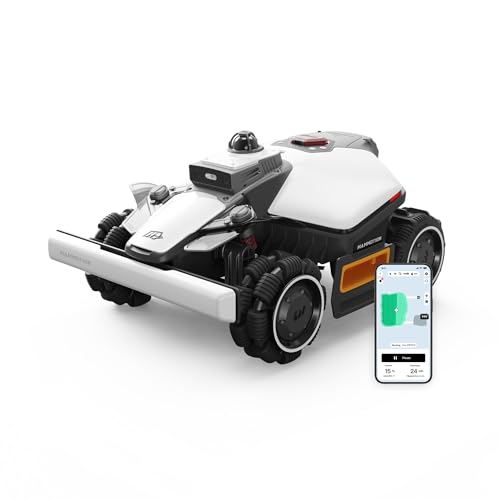


The real question is whether a robot will finish your lawn on its own, without stalling on a root, losing its position under a tree or disappearing from the yard. Drive layout, sensor design and theft protection answer that more than battery size or app features do.
Are Robot Lawn Mowers Worth It for Your Yard?
They pay off on lawns mowed weekly and on grades within the machine’s climb rating, since it trims a little on its own schedule; dense tree cover or overgrown grass favors a conventional mower instead.
Frequent light trims leave clippings short enough to settle back into the turf, so there’s no bagging, and the work happens while you’re at the office or running errands. The trade-off shows up at the start: setup and mapping need some attention, edges still need occasional trimming, and these machines aren’t built to hack down grass that has gotten away from you, because their top cutting heights stop near 4 in. A yard you mow only a few times a season gets little from a robot that wants to cut constantly.
If you’re still weighing a robot against a push or riding machine, our guide to the best lawn mowers lays out every mower type side by side.
How Do You Match a Robot Mower to Your Yard?
Your yard’s toughest stretch, whether that’s the steepest bank, the shadiest corner or the longest border, decides the right robot more than its average square footage does. A machine that handles a flat front lawn easily can still stall on a backyard slope or wander under a maple, and you won’t be there to rescue it. Sizing a robot to the hardest part of the map keeps it working when nobody is watching.
How Much Lawn Can One Robot Mower Cover?
Rated lawn size is the total area a mower can maintain across its weekly schedule, while coverage per charge is how much it cuts before docking to recharge. The Segway Navimow i210 AWD shows the gap: it’s rated for a quarter acre but covers only part of that per charge, so it keeps the lawn tidy across several charge cycles rather than in a single run.
Yard shape eats into that capacity. Every separate zone, narrow passage and island bed adds travel time between cutting passes, and if you limit mowing to daytime hours so the robot isn’t out when kids or pets are, it has less time to work through its rated area.
Treat the rating as a ceiling for an open, simple lawn, and pick a model rated comfortably above your square footage when the layout is broken up. The best robot lawn mowers for large yards carry the headroom sprawling properties need, while the best robot lawn mowers for small yards keep you from paying for capacity a compact lot never uses.
What Slope and Terrain Can a Robot Mower Handle?
Drive layout sets the climbing ceiling: four-motor all-wheel-drive designs such as the MOVA LiDAX Ultra 3000 AWD are rated for 80% grades, while the rear-wheel-drive MOVA LiDAX Ultra 1000 is rated for 45%. Extra driven wheels keep pushing when the rear pair starts to slip, which is what separates a mower that crests a bank from one that slides back down it.
Tread and suspension handle the rest of the terrain. Off-road tread bites into turf on climbs, and adaptive suspension keeps the wheels planted over roots, ruts and holes so the cutting disc doesn’t scalp a high spot. The obstacle clearance rating tells you the tallest root or curb lip the mower can climb onto rather than stop at.
Read any climb rating as a best case on firm, dry turf with good traction. Your steepest bank needs margin below that figure, especially where it stays damp after rain or in shade.
Why Do Cutting Height and Edge Trimming Matter?
Cutting height decides how the lawn looks and how well it holds up in heat, and edge design decides how much trimming you still do by hand. App-adjustable height makes seasonal changes easy: a slightly lower cut during fast spring growth, a higher one in summer so the grass shades the soil.
Cutting width changes the pace. A wide disc clears more ground per pass on open lawns, while a narrow deck maneuvers more easily through tight beds and side yards.
At the borders, a dedicated edge disc or an edge-riding mode, where the mower runs a wheel onto the pavement, brings the cut close to walls, fences and beds. Without one, a band of grass remains along every border, and that band means another trimmer session each week.
Which Navigation System Works Best for a Robot Mower?
The amount of open sky over your lawn decides which navigation suits it: satellite positioning thrives in open yards, while LiDAR and camera systems keep their bearings under trees and beside tall walls. Your tolerance for setup work narrows it further, since some systems run out of the box and others need an antenna or a wire laid first.
How Does RTK Satellite Navigation Work?
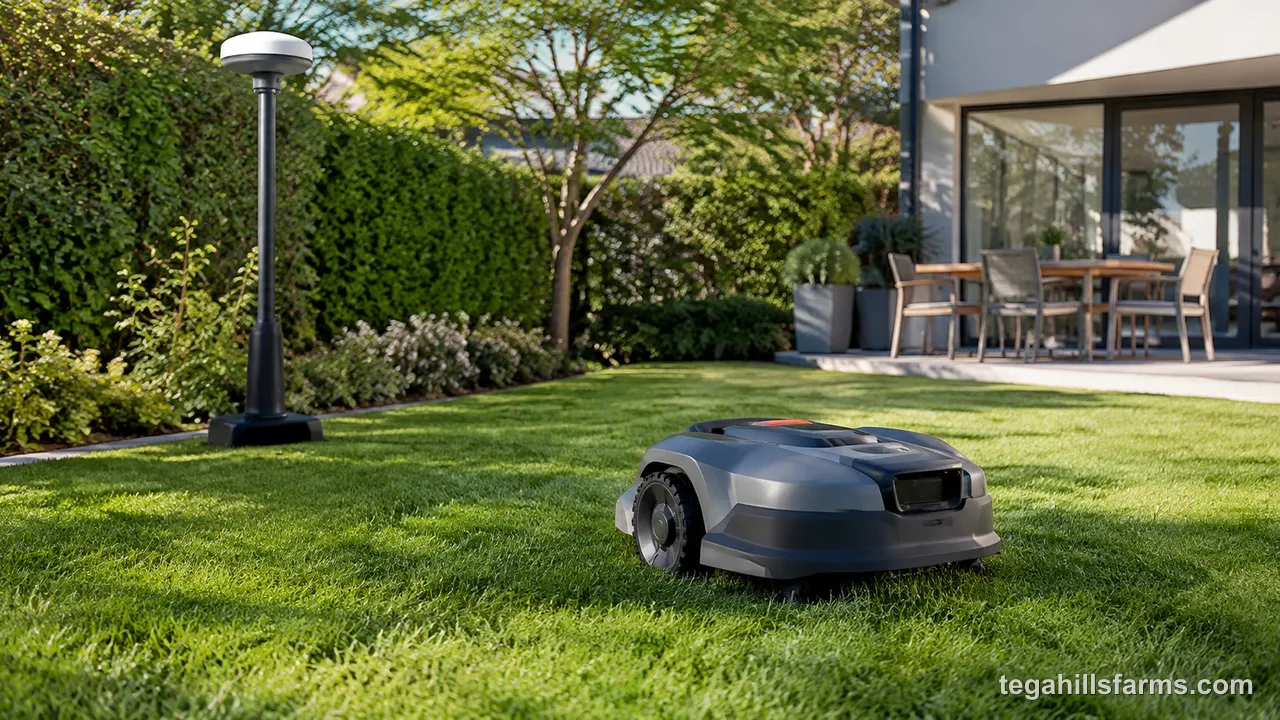
RTK, short for Real-Time Kinematic, sharpens satellite positioning to centimeter level by comparing the mower’s GPS readings with a correction signal from a known fixed point. That point can be a base-station antenna you mount in the yard, or a network RTK service that streams corrections over the internet, which skips the antenna but depends on a steady connection.
Satellite signal is the weak link. Dense tree canopy, a tall house wall or a narrow side yard between buildings blocks part of the sky, and the mower’s position starts to drift or drop out. Hybrid systems answer that by letting cameras or LiDAR take over in those spots, which is why the best robot lawn mowers with gps navigation now pair RTK with vision.
How Do LiDAR, AI Vision and Boundary Wire Compare?
LiDAR is the most self-sufficient approach: it builds a 3D map with laser ranging, needs no satellites or wires, and keeps working in shade, under trees and in low light. AI vision uses cameras to recognize obstacles and lawn edges, and it excels at telling a toy from a tree root, but on its own it depends on decent light, so it’s usually paired with RTK or LiDAR. Boundary wire, a loop staked or buried around the lawn, works regardless of sky or light, but it takes installation labor, a re-route every time you change a bed, and a repair whenever an edger or a burrowing animal cuts it.
| Factor | LiDAR | AI vision | Boundary wire |
|---|---|---|---|
| Setup effort | Low, auto-mapping | Low, usually paired with another system | High, wire must be laid |
| Reliability in shade | Strong | Depends on light | Strong |
| Obstacle handling | 3D detection | Recognizes object types | Needs bumpers or added sensors |
| Ongoing upkeep | Firmware updates | Keep the lens clean | Wire repairs and re-routing |
If digging is a deal-breaker, the best robot lawn mowers with no perimeter wire rely on LiDAR, vision or RTK instead.
What Matters Most When Choosing Robot Mowers?
Climb rating, navigation fit and rated lawn area decide whether a robot finishes the job unattended, while edge finish, zone control and theft protection decide how much work and worry remain.
The first group is pass or fail. A mower that can’t climb your bank or hold its position under your trees will stall no matter how good its other specs look. The second group separates a lawn you never think about from one that still needs weekly trimming and a watchful eye. Zone control matters on lots split by a driveway or the house itself, and theft protection such as GPS alerts, 4G tracking and PIN locks matters where the mower is visible from the street. Warranty length and after-sales support count too, because a robot is a connected device that relies on firmware updates for years.
The 10 Best Robot Lawn Mowers of 2026
MOVA LiDAX Ultra 1000, Segway Navimow i210 AWD, Mammotion LUBA 3 AWD 3000, Mammotion LUBA mini 2 AWD 1500H, Mammotion LUBA 2 AWD 5000HX, Segway Navimow i105N, Husqvarna Automower 550, Segway Navimow i215 LiDAR, ECOVACS Goat O1000 RTK and MOVA LiDAX Ultra 3000 AWD are our top picks for the best robot lawn mowers in 2026. The split that shapes the decision is drive and footprint: the AWD Mammotion machines and the LiDAX Ultra 3000 AWD are built to climb steep ground and cover more of it, while the Navimow i105N and Goat O1000 RTK trade reach for a light body and quick setup on small lawns.
#1 MOVA LiDAX Ultra 1000 — Best Overall
If your quarter-acre lawn wraps around beds, paths and play gear, this mower maps it with 360° 3D LiDAR and AI vision, so there’s no wire to bury and no RTK antenna to mount. Setup stays simple.
Key Specs:
- Rated lawn area: 1/4 acre
- Navigation: 360° 3D LiDAR + AI vision, wire-free and RTK-free
- Max slope: 45%
- Cutting height: 1.2–3.9 in, adjusted from the app
- Edge cutting: within 2 in of walls and hedges
- Weight: 30 lb
Detailed Review:
The LiDAR-and-vision pairing is what makes this mower easy to live with in a complicated yard. It builds a 3D map at centimeter accuracy without satellites, so a house wall or a tree line doesn’t throw it off, and dim or harsh light doesn’t change how it navigates. You power it on and it maps the lawn itself.
Edge work is where it saves you trimmer time. UltraTrim 1.0 cuts within 2 in of walls, hedges and raised edges, a movable disc reaches into gaps, and on flush lawn-to-pavement borders the mower rides the edge for a clean line.
Rear-wheel drive and off-road wheels take it up 45% slopes and over obstacles up to 1.6 in, while AI vision recognizes more than 300 obstacle types, from patio furniture to small toys. Dual maps with up to 150 zones let you run separate plans for a front and back yard, or a second property, without buying a second mower.
U-shaped path planning keeps the passes even, and the mower resumes exactly where it stopped after recharging. Real-time tracking and alerts when it leaves the mapped area come with the link module. I’d point most first-time buyers with a typical suburban lot here, because it removes both the wire installation and most of the edge trimming.
Pros:
- Maps the yard without wires or an RTK antenna.
- Cuts within 2 in of walls and hedges.
- Recognizes more than 300 obstacle types.
- Dual maps and up to 150 zones.
- Cutting height adjusts from the app.
Cons:
- Rear-wheel drive caps climbing at 45% slopes.
- Real-time theft tracking requires the separate link module.
Who It’s For:
Homeowners with a busy, irregular lawn, full of flower beds, paths and play equipment, or split into a separate front and back yard, who want a wire-free robot they can set up without digging. Owners of steep or sprawling properties are better served by an all-wheel-drive model with a larger coverage rating.
Editor’s Verdict:
Pick this one for a complicated suburban lawn: it maps without wires or satellites, trims close to edges and keeps separate yards on separate maps.
#2 Segway Navimow i210 AWD — Best Battery Life
Compact, sloped lots suit the i210 AWD well. Its on-demand drive feeds extra power to the wheels only when the terrain calls for it, which helps a 5.1Ah battery cover up to 2,690 ft² per charge.
Key Specs:
- Rated lawn area: 0.25 acre
- Battery: 5.1Ah, up to 2,690 sq ft per charge
- Drive: all-wheel drive with Electronic Stability Control
- Max slope: 45% (24°)
- Cutting height: 2–3.6 in; cutting width: 7.1 in
- Navigation: Network RTK + vision, up to 20 zones
Detailed Review:
The adaptive drive adds force only on climbs and rough patches instead of running every wheel at full power all the time. Less energy spent on flat ground means more lawn per charge, and when the battery does run down, the mower docks, recharges and resumes where it stopped.
Electronic Stability Control keeps it steady on 45% slopes, and the concentric third wheel lets it make true zero-turns without scraping the turf at each turnaround. That matters on a sloped lawn, where a skidding pivot can tear up the grass.
Setup runs on EFLS Network RTK, so there’s no base-station antenna to mount. One-tap auto mapping and tri-frequency RTK with vision bring it to centimeter-level accuracy in minutes, and GPS alerts reach your phone if someone lifts it or it leaves its zones.
The 7.1 in cutting width is the cost of that compact build. It needs more passes than a wide-deck machine such as the Mammotion LUBA 2 AWD 5000HX, whose dual-blade disc cuts up to 15.8 in, so the i210 relies on long scheduled runs rather than quick sessions.
Pros:
- On-demand drive saves energy on flat ground.
- Network RTK setup needs no base-station antenna.
- Stability control steadies it on 45% slopes.
- Zero-turn third wheel avoids scraping the lawn.
Cons:
- Narrow 7.1 in cutting width means more passes per job.
- Network RTK depends on a steady internet connection.
- Cutting height tops out at 3.6 in.
Who It’s For:
Owners of a small, hilly lot who’d rather not mount an antenna or bury wire, and who want a mower that works through a full schedule without fuss. If your lawn is broad and open, a wide-deck machine like the Mammotion LUBA 2 AWD 5000HX will finish it in fewer passes.
Editor’s Verdict:
Choose the i210 AWD when slopes and runtime matter more than cutting width; its drive system makes every charge count.
#3 Mammotion LUBA 3 AWD 3000 — Best Premium
For demanding lawns with steep banks, tree canopy and curbs, the LUBA 3 AWD 3000 combines 360° LiDAR, NetRTK and dual-camera AI vision, switching between sensors as conditions change. It also climbs 80% slopes.
Key Specs:
- Navigation: 360° LiDAR + NetRTK + dual-camera AI vision
- Max slope: 80% (38.6°); steps over 2 in (50 mm) obstacles
- Cutting: two 165W motors with 6-blade discs; height 1.0–2.7 in
- Battery: up to 12Ah, up to 175 minutes per charge
- Mowing rate: up to 5,400 sq ft per hour
- Zones: up to 30, plus no-go areas
Detailed Review:
Three navigation systems working together is what you pay the premium for. The LiDAR sweeps 360° horizontally and 59° vertically with up to 230 ft of range, building a dense point cloud from ground level to the tree canopy, while NetRTK supplies corrections and the dual cameras handle fast object recognition. When one sensor’s view degrades, the mower switches to another instead of stopping.
Four independent motors and an omni wheel let it climb 80% slopes and pivot cleanly, and the adaptive suspension steps over curbs, roots and thresholds up to 2 in high. That combination matters where a lawn runs down to a driveway or across exposed roots.
The two 165W cutting motors spin 6-blade discs and adjust speed and power to grass density, so thick spring growth doesn’t bog down the cut. Up to 12Ah of battery gives it up to 175 minutes per charge at a mowing rate of up to 5,400 sq ft per hour.
Perimeter-only, zigzag, checkerboard and adaptive zigzag patterns, up to 30 zones and no-go areas round out the controls, and a cleaning stand and extra blade set come in the box. The cutting height tops out at 2.7 in, so if you keep a tall fescue lawn, the MOVA LiDAX Ultra 1000’s 3.9 in ceiling fits better.
Pros:
- LiDAR, NetRTK and cameras back each other up.
- Climbs 80% slopes with four independent motors.
- Steps over curbs and roots up to 2 in.
- Adjusts cutting power to grass density.
- Includes a cleaning stand and spare blades.
Cons:
- Premium pricing reflects the triple-sensor navigation.
- Low 2.7 in maximum height limits tall-grass lawns.
Who It’s For:
Buyers with a tough, mixed lawn of steep grades, heavy tree cover, roots and curbs, who want layered sensor backup and accept a premium price for it. Anyone who keeps grass long through summer should look at a mower with a taller height range, such as the MOVA LiDAX Ultra 1000.
Editor’s Verdict:
Expect few dead ends with the LUBA 3 AWD 3000; layered navigation and four-motor drive justify the higher price on lawns that defeat simpler robots.
#4 Mammotion LUBA mini 2 AWD 1500H — Best Precision Cutting
Small, complex lawns with many borders suit the LUBA mini 2 AWD 1500H, because a dedicated edge cutting disc trims the line where grass meets pavement or mulch while the main disc mows. Height changes happen in the app.
Key Specs:
- Rated lawn area: 0.37 acre
- Navigation: 360° LiDAR (360° × 45° field of view) + dual-camera AI vision
- Cutting: main disc with automatic height adjustment + dedicated edge disc
- Drive: AWD, two 88W motors; 80% slopes; steps over 1.8 in (45 mm)
- Coverage per charge: about 3,770 sq ft (350 m²)
- Zones: up to 20
Detailed Review:
Two cutting discs give this mower its finish. The main disc mows the lawn while a separate edge disc handles borders where one side is grass and the other is a different surface, so the line along a walkway or a bed comes out clean instead of leaving a fringe.
The main disc’s height adjusts automatically through the app, which makes it simple to lower the cut for spring growth or raise it during a summer dry spell. Its LiDAR and dual cameras give it redundant sensing that spots distant objects early, so it plans around them rather than stopping repeatedly, and physical bumpers back both up.
DropMow handles one-off jobs: set the mower down, press Mow & Start and it cuts from its current heading with no saved map. Smart battery management lets you cap the charge level, for example at 80%, topping up to full only right before a scheduled task, and Off-Peak Charging lets you choose when the mower draws power.
Two 88W motors, all-wheel drive and adaptive suspension let it climb 80% slopes and step over roots or thresholds up to 1.8 in. Location uploads continue in low-power standby, so tracking doesn’t stop overnight.
Pros:
- Dedicated edge disc trims borders cleanly.
- Cutting height adjusts automatically from the app.
- DropMow handles one-off jobs without mapping.
- Charge limit and off-peak charging protect the battery.
Cons:
- Coverage stops at 0.37 acre.
- Two cutting discs mean more blades to maintain.
Who It’s For:
Detail-minded homeowners whose lawns are carved up by walkways, garden beds and patios, and who dislike a ragged strip along every border. It also fits anyone who wants battery-care controls built into the app. Large, open properties need a mower with a bigger coverage rating.
Editor’s Verdict:
Buy the LUBA mini 2 AWD 1500H for crisp borders on a compact, complex lawn; its edge disc does work you’d otherwise do with a trimmer.
#5 Mammotion LUBA 2 AWD 5000HX — Best for Large Yards
Big, rough properties are where this mower earns its keep. Its dual-blade disc cuts a path up to 15.8 in wide and covers up to 13,000 sq ft per charge, while a 1.25-acre rating and 50 mowing zones let it manage front yard, backyard and roadside strips.
Key Specs:
- Rated lawn area: 1.25 acres (max 1.48 acres)
- Cutting width: up to 15.8 in (400 mm); height 2.2–4.0 in
- Coverage per charge: up to 13,000 sq ft (1,200 m²)
- Drive: 165W four-wheel drive, 80% (38°) slopes
- Connectivity: 4G, Bluetooth and Wi-Fi
- Weight: 41 lb
Detailed Review:
The wide dual-disc deck is the reason this mower keeps up with acreage. Each pass clears more ground than the 7.1 in disc on the Segway Navimow i210 AWD, and with up to 13,000 sq ft per charge it finishes big sections before returning to the dock, then resumes where it left off.
Off-road ability is the other half. The 165W four-wheel drive climbs 80% slopes and pushes through potholes, rough terrain and tall, thick grass without getting stuck, which matters on large lots that are rarely flat.
UltraSense AI Vision works alongside RTK, so the mower keeps cutting under trees where satellite signal drops out. Its visual positioning recognizes lawn boundaries well enough to ride the edge for zero-distance edge cutting, and it identifies more than 200 objects and picks an avoidance strategy for each.
Up to 50 zones cover front and back lawns, roadsides and no-go areas such as pools or flower beds. With 4G, you can check its status from anywhere, GPS tracking shows where it is, and lost mode blocks unauthorized use. Checkerboard and diamond grid patterns add striping if you want it.
Pros:
- Dual-disc deck cuts up to 15.8 in wide.
- Covers up to 13,000 sq ft per charge.
- Vision plus RTK keeps mowing under trees.
- 4G tracking and lost-mode anti-theft.
- Manages up to 50 zones.
Cons:
- 41 lb build is heavy to carry between yards.
- 2.2 in minimum height won’t suit short-cut lawns.
Who It’s For:
Rural and estate-size homeowners with broad, uneven lawns, several separate mowing areas and some tree cover, who want a robot that handles all of it. Small suburban lots don’t need this much deck or coverage, and a compact model such as the Segway Navimow i105N fits better there.
Editor’s Verdict:
Count on the LUBA 2 AWD 5000HX for acreage: a wide deck, strong four-wheel drive and vision-backed RTK keep big, rough lawns on schedule.
#6 Segway Navimow i105N — Best Quiet Option
Homeowners on tight suburban lots, with neighbors close by, get a mower rated at 58 dB(A) that can run without drawing attention, guided by RTK with vision support even under trees. It covers lawns up to 1/8 acre.
Key Specs:
- Rated lawn area: 1/8 acre
- Noise: 58 dB(A)
- Navigation: EFLS 2.0 RTK + vision, AI-assisted mapping
- Obstacle detection: 140° camera, 150+ object types
- Zones: up to 12
- Warranty: 3 years
Detailed Review:
At 58 dB(A), the i105N can run on a schedule that suits you rather than one built around your neighbors, which matters on small lots where the lawn borders the next house. Its 24 lb body is also easy to lift over a step or carry to a side yard.
EFLS 2.0 pairs customized RTK with vision, and that vision layer keeps positioning stable under trees and through narrow corridors. Setup is wire-free: you guide the mower with your phone to draw virtual boundaries, and AI-assisted mapping follows the lawn’s clear edges on its own, though the GNSS antenna does need mounting.
A 140° camera with built-in AI detects more than 150 types of common garden objects, which goes beyond what bumper or ultrasonic sensors can do. The mower changes mowing direction after full coverage to limit wheel tracks, recharges itself and keeps going until the job is done.
The app handles up to 12 zones with separate schedules and directions, remote control and over-the-air updates. Theft location requires the optional Access+ and 4G add-on, and the mower is covered by a full 3-year warranty.
Pros:
- Rated at 58 dB(A) for close-quarters mowing.
- Vision-assisted RTK holds position under trees.
- Camera recognizes more than 150 object types.
- Full 3-year warranty.
- 24 lb body is easy to carry.
Cons:
- Rated for only 1/8 acre.
- Theft tracking needs the optional 4G add-on.
- GNSS antenna needs mounting during setup.
Who It’s For:
Townhouse and small-lot owners who share fence lines and want lawn care that stays low-key, plus anyone who values a full warranty on their first robot. Larger lawns outgrow it, and the Segway Navimow i210 AWD steps up in coverage.
Editor’s Verdict:
Go with the i105N for a small lawn beside close neighbors; low noise, solid camera detection and a full warranty make it an easy first robot.
#7 Husqvarna Automower 550 — Best for Professionals
Built for fleet use on properties up to 1.25 acres, the Automower 550 suits groundskeepers and owners of large, divided lawns who manage mowers like equipment. Triple guide wires spread the work evenly.
Key Specs:
- Rated lawn area: 1.25 acres
- Navigation: triple guide wires, 5 start points, GPS
- Max slope: 45%
- Fleet tools: Husqvarna Fleet Services, Automower Connect app
- Smart home: Amazon Alexa and Google Home
- Weight: 33 lb
Detailed Review:
The guide-wire system is what makes this an operator’s machine. Three guide wires and five start points let the mower reach distant or divided sections quickly, so it spends less time searching and mows evenly instead of overworking the area near the charging station.
Large, coarse-tread wheels give it traction on 45% slopes and rough ground. That rating sits below the 80% figure of the Mammotion LUBA 2 AWD 5000HX, so the 550 fits rolling commercial grounds better than steep residential banks.
Fleet management is the professional draw. Through Husqvarna Fleet Services and the Automower Connect app, a crew can geofence each mower, control it remotely and track theft across several sites, and Alexa or Google Home support covers simpler home use. Flexible charging station placement eases installation on awkward grounds.
Setup is the trade-off. Laying guide wires takes planning and labor that wire-free robots skip, and a cut wire becomes a repair job, so this mower makes the most sense when you’re installing once and running it for many seasons.
Pros:
- Built for fleet use on large properties.
- Guide wires and 5 start points spread mowing evenly.
- Fleet Services adds geofencing and theft tracking.
- Works with Alexa and Google Home.
Cons:
- Guide wires take labor to install.
- 45% slope rating limits very steep ground.
- A damaged wire interrupts mowing until repaired.
Who It’s For:
Landscape crews, property managers and owners of large, divided grounds who want to track their mowers through an app and dashboard like any other equipment. Homeowners who want a robot running without installation work should pick a wire-free model, and steep banks call for the Mammotion LUBA 2 AWD 5000HX.
Editor’s Verdict:
Treat the Automower 550 as professional equipment: worth the wire installation on big commercial-style grounds where fleet tracking and even coverage pay off.
#8 Segway Navimow i215 LiDAR — Best Easy-Start
You can take the i215 LiDAR out of the box and start mowing, because its solid-state LiDAR and vision navigate without boundary wires or antennas. One-tap auto mapping does the rest.
Key Specs:
- Rated lawn area: 0.37 acre
- Navigation: solid-state LiDAR + vision, no wires or antennas
- Max slope: 45%, off-road wheels with Electronic Stability Control
- Cutting: 100W motor, 6-blade disc, 7.1 in width, 2–4 in height
- Noise: 59 dB(A)
- Weight: 32.41 lb
Detailed Review:
Setup really is drop-and-mow. With no boundary wire and no antenna, you skip installation entirely, run one-tap auto mapping and the mower gets to work. Alexa and Google Home voice control let you start or stop it without opening the app.
Solid-state LiDAR paired with onboard vision sensors gives it satellite-free navigation with 3D awareness that works day or night. AI VisionFence detects more than 200 obstacle types with 0.4 in accuracy, and GeoSketch puts up to 20 zones on a realistic, editable map.
Off-road wheels and Electronic Stability Control handle 45% slopes, and the 100W motor drives a 6-blade disc for steady results in dense or fast-growing grass. Its 4 in maximum height tops the Navimow i210 AWD’s 3.6 in, a better fit for lawns kept long in summer heat. EdgeSense ride-on mode follows fences and pathways for clean edges.
Security covers GPS, geofencing, lift detection and Apple Find My alerts, and the mower auto-docks during extreme weather. The in-app Doodle tool lets you sketch custom mowing patterns.
Pros:
- Starts mowing out of the box, no wires or antennas.
- LiDAR and vision navigate day or night.
- Apple Find My and lift alerts for security.
- Auto-docks during extreme weather.
- Alexa and Google Home voice control.
Cons:
- 7.1 in cutting width means more passes on open lawns.
- 45% slope limit falls short on steep banks.
Who It’s For:
First-time robot buyers who want minimal setup work, with no digging and no antenna to mount, and who like controlling devices by voice. Owners of very steep ground should consider a model rated for steeper slopes, such as the MOVA LiDAX Ultra 3000 AWD.
Editor’s Verdict:
Start here if setup has kept you from buying a robot; LiDAR navigation lets the i215 map and mow on day one without wires.
#9 ECOVACS Goat O1000 RTK — Best Lightweight
The Goat O1000 RTK weighs 23.58 lb, light enough to carry between a front and back lawn, and its LiDAR-enhanced RTK auto-maps lawns up to 1/4 acre without boundary wire. Setup takes about 5 minutes.
Key Specs:
- Rated lawn area: 1/4 acre (10,890 sq ft)
- Weight: 23.58 lb
- Navigation: RTK + vision + 3D ToF, LiDAR-enhanced
- Max slope: 45% (24°)
- Narrowest passage: 2.3 ft
- Setup time: about 5 minutes
Detailed Review:
The light body changes how you live with a robot. At 23.58 lb, it’s simple to lift over a step, carry to a separate patch of lawn or bring into the garage when the season ends, without the strain of a heavier machine like the 52 lb MOVA LiDAX Ultra 3000 AWD.
Navigation combines RTK, vision and 3D time-of-flight sensing for centimeter-level positioning, and that mix keeps it reliable around trees and complex landscaping. Intelligent route planning lays down neat patterns with fewer missed areas.
AIVI 3D obstacle avoidance recognizes lawn furniture, toys, trees and pets, and the mower slips through passages as narrow as 2.3 ft. That helps on side yards squeezed between a house and a fence, and it climbs 45% slopes along the way.
The ECOVACS app lets you create zones, set no-go areas, adjust cutting height and schedules, and watch progress in real time. Its limit is size: the 1/4-acre rating keeps it to small and mid-size suburban lawns.
Pros:
- 23.58 lb body is easy to carry.
- Wire-free setup in about 5 minutes.
- Fits through passages as narrow as 2.3 ft.
- RTK, vision and 3D ToF combine for positioning.
Cons:
- Coverage stops at 1/4 acre.
- 45% slope rating limits steep yards.
Who It’s For:
Homeowners who’d rather lift and stash a mower than wrestle it, including renters and anyone with steps up to a side lawn, and whose grass covers a modest suburban lot. Steep or sprawling yards call for a heavier all-wheel-drive machine.
Editor’s Verdict:
Consider the Goat O1000 RTK when portability and quick setup top your list for a small lawn; it maps fast and never feels like a chore to move.
#10 MOVA LiDAX Ultra 3000 AWD — Best for Hilly Terrain
Steep, wet and uneven yards suit this mower, since four 116W hub motors and an advanced suspension carry it up 80% slopes and over obstacles up to 2.4 in. It needs no wire or RTK station.
Key Specs:
- Rated lawn area: 0.75 acre; up to 0.25 acre per charge
- Drive: four 116W hub motors, 80% slopes, 2.4 in obstacles
- Navigation: 360° 3D LiDAR + AI dual vision, wire-free and RTK-free
- Cutting: 15.8 in width, 12 blades, 1.2–3.9 in height
- Battery: 36V, 243Wh
- Weight: 52 lb
Detailed Review:
Four high-torque hub motors drive every wheel, so this mower keeps climbing on 80% grades, well beyond the 45% rating of the rear-wheel-drive LiDAX Ultra 1000. The suspension resists tipping, and floating cutting discs follow the ground’s contours, keeping the cut even across humps, dips and wet grass instead of scalping high spots.
Navigation runs on 360° 3D LiDAR and AI dual vision, so there’s no boundary wire or RTK base station, and it recognizes more than 300 obstacle types, including toys, pets and garden furniture. UltraTrim 2.0 with Edge-Riding leaves only 1.2 in of uncut grass along boundaries.
Theft protection is thorough: 3 years of free 4G for real-time tracking and instant alerts, an automatic lock that opens only with the correct PIN, and TrueGuard monitoring around the clock. A 3-year warranty and 24/7 after-sales support back the hardware.
Per-charge coverage is the trade-off. The 36V, 243Wh battery and 12-blade dual disc handle up to 0.25 acre per charge against a 0.75-acre rating, so a full lawn takes multiple charge cycles, though automatic recharging and U-path planning keep that hands-off. At 52 lb, it’s also heavy to move by hand.
Pros:
- Four hub motors climb 80% slopes.
- Floating discs keep the cut even on rough ground.
- Leaves only 1.2 in of uncut edge grass.
- Includes 3 years of free 4G tracking.
- 3-year warranty with 24/7 support.
Cons:
- Covers 0.25 acre per charge, so full lawns need recharges.
- 52 lb body is hard to carry.
Who It’s For:
Hillside homeowners whose lawns roll over banks, ditches and soggy low spots, and who want theft protection that keeps working long after the purchase. Flat, compact lots don’t need this much drive, and a lighter mower such as the ECOVACS Goat O1000 RTK is easier to handle there.
Editor’s Verdict:
Rely on the LiDAX Ultra 3000 AWD for steep, wet ground; four hub motors and floating discs keep the cut even on grades that stall a rear-drive mower.
How Do the Top Picks Compare Side by Side?
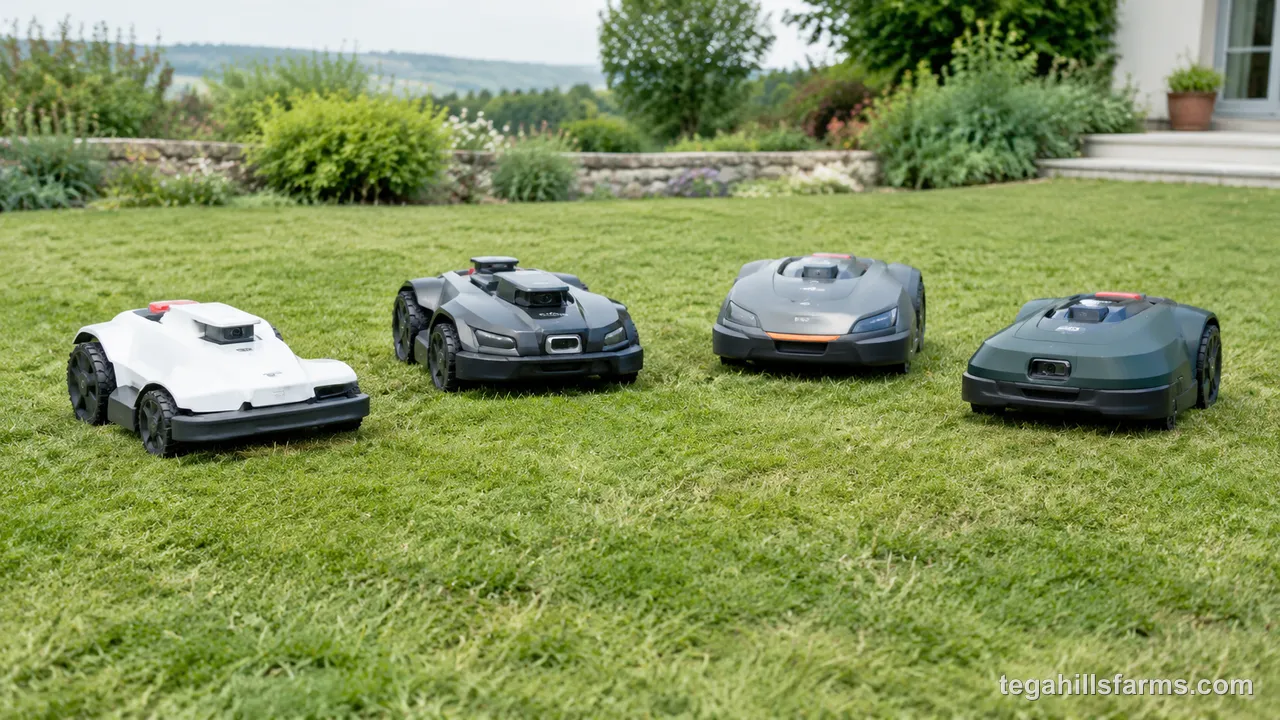
Climb ratings split into two groups, 45% and 80%, and navigation divides into RTK-based, LiDAR-based and guide-wire systems, so slope and tree cover narrow the field before lawn size does.
| Mower | Rated lawn area | Max slope | Cutting height | Navigation | Battery / coverage per charge |
|---|---|---|---|---|---|
| MOVA LiDAX Ultra 1000 | 1/4 acre | 45% | 1.2–3.9 in | 3D LiDAR + AI vision | — |
| Segway Navimow i210 AWD | 0.25 acre | 45% | 2–3.6 in | Network RTK + vision | 5.1Ah; up to 2,690 sq ft |
| Mammotion LUBA 3 AWD 3000 | — | 80% | 1.0–2.7 in | LiDAR + NetRTK + AI vision | Up to 12Ah; up to 175 min |
| Mammotion LUBA mini 2 AWD 1500H | 0.37 acre | 80% | Automatic, set in app | LiDAR + AI vision | About 3,770 sq ft |
| Mammotion LUBA 2 AWD 5000HX | 1.25 acres (1.48 max) | 80% | 2.2–4.0 in | RTK + AI vision | Up to 13,000 sq ft |
| Segway Navimow i105N | 1/8 acre | — | — | RTK + vision | — |
| Husqvarna Automower 550 | 1.25 acres | 45% | — | Guide wires + GPS | — |
| Segway Navimow i215 LiDAR | 0.37 acre | 45% | 2–4 in | Solid-state LiDAR + vision | — |
| ECOVACS Goat O1000 RTK | 1/4 acre | 45% | Set in app | RTK + vision + 3D ToF | — |
| MOVA LiDAX Ultra 3000 AWD | 0.75 acre | 80% | 1.2–3.9 in | 3D LiDAR + AI dual vision | 36V, 243Wh; up to 0.25 acre |
Rated area and slope figures are maximums under good conditions, and wet grass, loose soil and a broken-up layout all cut into them, so leave margin on both. When a firm budget comes before the specs, the best robot lawn mowers under $1000 and robot lawn mowers under $2000 narrow the choices by cost first.
Which Robot Mower Should You Buy for Your Situation?
The MOVA LiDAX Ultra 1000 fits busy, irregular layouts, steep ground calls for the MOVA LiDAX Ultra 3000 AWD or Mammotion LUBA 3 AWD 3000, and broad acreage for the Mammotion LUBA 2 AWD 5000HX.
The rest of the lineup maps to narrower needs:
- Small lot with close neighbors: Segway Navimow i105N, rated low on noise and backed by a full warranty.
- Easiest possible setup: Segway Navimow i215 LiDAR, which starts out of the box without wires or antennas.
- Compact yard with many borders: Mammotion LUBA mini 2 AWD 1500H and its dedicated edge disc.
- Small, sloped lot with long mowing schedules: Segway Navimow i210 AWD.
- A mower you’ll carry often: ECOVACS Goat O1000 RTK.
- Commercial or multi-site grounds: Husqvarna Automower 550 with fleet management.
Under a dense maple canopy or beside a two-story wall, an RTK mower can lose the satellite fix it steers by and stop in place with a positioning error. That leaves you coming home to an uncut strip and a stranded machine, a problem that repeats with every scheduled run until the cause in the yard is dealt with.
What Are the Real Downsides of Owning a Robot Mower?
There are real drawbacks: positioning dropouts near trees and buildings, roots and hard edges that stall the machine, theft exposure, dependence on an app and the brand’s after-sales support, and noise when the lawn sits close to a bedroom window. Most of these shrink with the right model and setup, but app reliance and support quality come with the brand you choose.
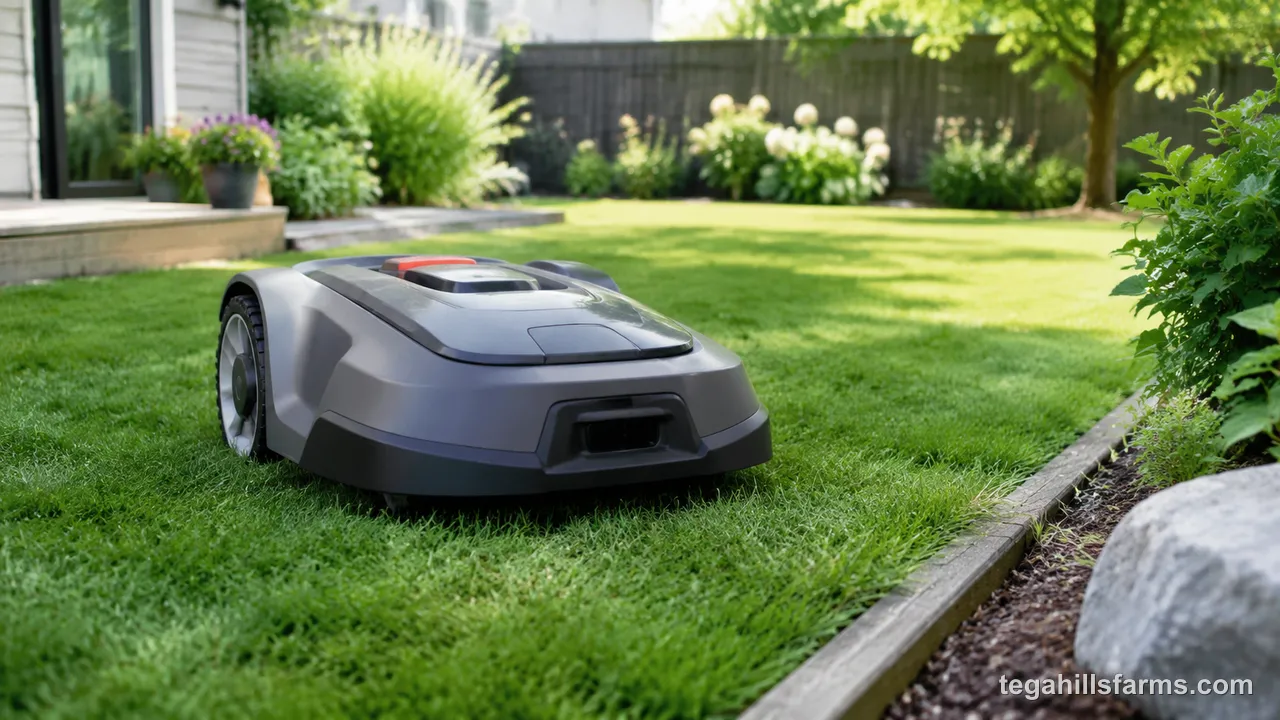
Dropouts are the most common frustration in shaded yards, and a model that adds LiDAR or vision to RTK keeps working where satellites fade. Stalls on roots, curbs and edges come down to obstacle clearance and suspension, so match those ratings to the worst spot in your lawn and set no-go zones around anything taller.
Theft risk grows wherever the mower is visible from the street. GPS alerts, 4G tracking and PIN locks make a stolen robot hard to use or resell, though some brands sell cellular tracking as an add-on. Firmware updates and app access also tie you to the manufacturer for years, so a warranty and responsive support carry real weight. Noise is easiest to manage with a low-noise model and a daytime schedule.
Why Do Slope Ratings Show Different Numbers Between Listings?
Percent grade and degrees describe the same incline in different units, and because they don’t scale evenly, the figures look far apart: 45% is about 24°, and 80% is about 38.7°. Rounding adds more variation, which is why the same 80% rating appears as 38.6° for the Mammotion LUBA 3 AWD 3000 and 38° for the LUBA 2 AWD 5000HX.
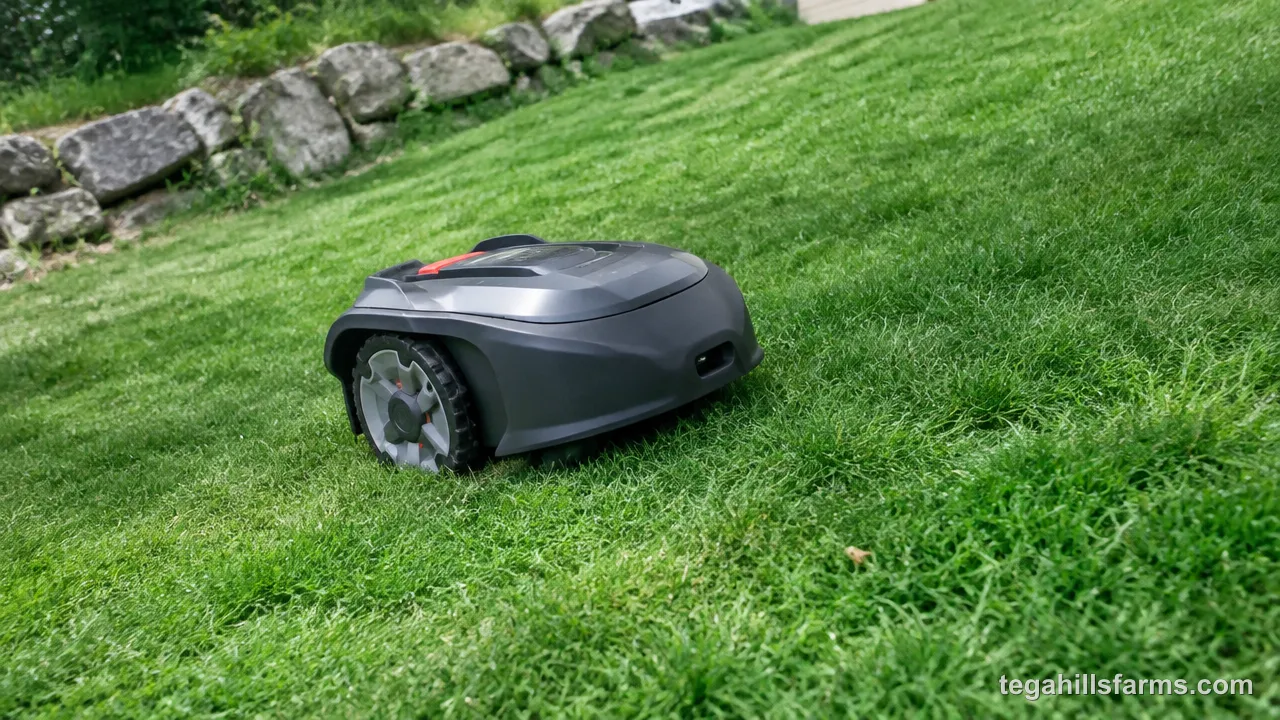
Percent grade is rise over run, so a 100% slope climbs 1 ft for every 1 ft forward, which is 45°, not a vertical wall. Mixing up the two units is the easiest way to overestimate what a mower can handle.
Real climbing ability falls short of the rating once conditions change. Wet grass cuts traction sharply, rear-wheel-drive designs lose grip sooner than all-wheel-drive ones, and loose soil or thatch gives tires less to bite into. Mowing across a slope also asks more of a robot than climbing straight up, because the machine has to resist sliding sideways. If your yard includes a serious bank, the best robot lawn mowers for slopes leave margin above your steepest grade.
How Long Does a Robot Mower Last Before It Wears Out?
Most of a robot mower’s wear lands on the parts that cut and the part that stores power, and both give warning signs well before the machine quits. Catching those signs early keeps cut quality and runtime from sliding season after season. Clearing packed clippings from the underside and wheels after damp runs also keeps the drive and discs moving freely.
When Do the Blades Need Replacing?
Replace them as soon as grass tips look torn or frayed rather than cleanly sliced, the cut turns patchy, or the deck starts to rattle or vibrate. Robot mowers use small razor-style blades that dull faster than a push mower’s blade because they run almost daily, and a dull edge tears the leaf, leaving brown tips across the lawn within a few days.
Check the blades after the mower hits a stone, root or toy, since a single nick can unbalance the disc and shake the motor. Replace the whole set at once so the disc stays balanced. Spare blades matter for that reason, and several models ship with a set, including the Mammotion LUBA mini 2 AWD 1500H, Segway Navimow i105N and MOVA LiDAX Ultra 3000 AWD.
How Do You Keep the Battery From Wearing Out Early?
You can slow battery wear by not holding it at full charge while the mower sits idle, charging at sensible times and storing it properly over winter. Lithium cells age faster when they sit full for long stretches or endure heat and freezing temperatures.
The Mammotion LUBA mini 2 AWD 1500H builds both charge controls into its app: you set a charge limit, such as 80%, and the mower only tops up to full right before a scheduled task, while Off-Peak Charging lets you pick the hours when it charges. For the off-season, clean the mower, store it indoors somewhere cool and dry, and follow the manufacturer’s storage instructions for charge level and periodic top-ups.
Robot Lawn Mower FAQs
Can a robot lawn mower work in the rain?
Many robot mowers keep running in light rain, but wet grass cuts raggedly and reduces traction on slopes. Some models respond to weather on their own, such as the Segway Navimow i215 LiDAR, which auto-docks during extreme weather. Scheduling runs for dry periods gives a cleaner cut and keeps clippings from clumping under the deck.
Does a robot mower need a boundary wire?
Not anymore. Wire-free models such as the MOVA LiDAX Ultra 1000, Segway Navimow i215 LiDAR and ECOVACS Goat O1000 RTK map the lawn with LiDAR, RTK, vision or a mix, and you draw boundaries in an app. The Husqvarna Automower 550 uses guide wires, which take more installation work.
What happens if someone lifts or steals a robot mower?
Most connected models alert your phone the moment the mower is lifted or leaves its zones. Beyond that, the MOVA LiDAX Ultra 3000 AWD locks itself until the correct PIN is entered, and the Mammotion LUBA 2 AWD 5000HX offers a lost mode that blocks unauthorized use while GPS tracking shows its location.
Does a robot mower cut cleanly along fences?
It gets close but usually leaves a narrow strip of grass. Edge-riding designs, which run a wheel onto pavement, and dedicated edge discs such as the one on the Mammotion LUBA mini 2 AWD 1500H trim tighter along borders. Along fences, walls and raised beds, expect a thin band that still needs occasional trimming.
Does a robot mower replace a string trimmer?
No, but it cuts down how often you use one. The robot handles open lawn and most borders, while grass against fence posts, around tree trunks, beside raised beds and in spots the mower can’t reach still needs a trimmer. Most owners end up trimming every few weeks rather than every weekend.
More Guides on Best Robot Lawn Mowers
- Best Robot Lawn Mowers Under $1500
- Best Robot Lawn Mowers Under $500