How to Choose a Log Splitter: Power, Tonnage & Type Explained
Choose a log splitter by matching its force to the hardest, widest rounds in your woodpile, then picking a power source that suits where you split and how much wood you go through each season. Gas machines handle heavy hardwood and long sessions away from the house. Electric machines handle lighter loads close to an outlet.
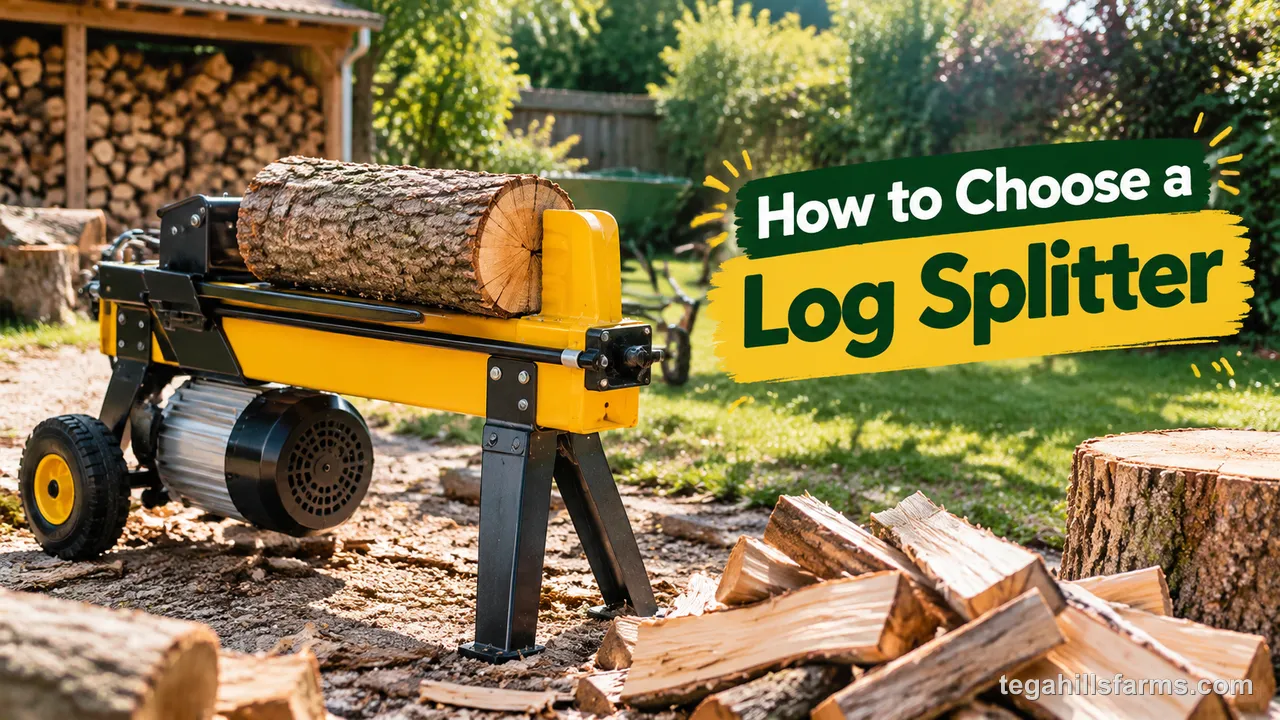
The specs that decide the fit are tonnage, power source, cycle time, orientation and portability. Each one changes something you notice in the yard: whether the ram stalls halfway through a round, how many splits you get before your back gives out, and whether the machine fits in your garage once the pile is stacked.
Most buyers worry about one of two mistakes. They buy too little force and watch the wedge stop dead in a knotty oak crotch, or they buy far more machine than their wood needs and end up with something loud, heavy and hard to store.
Before you look at any model, measure the widest round you plan to split and note the species. Those two facts narrow the field faster than any brochure.
What Does Tonnage Actually Mean for a Log Splitter?
It is the maximum force the hydraulic ram can push a log into the wedge with, a ceiling rating rather than the force applied on every split. Most of your splits will use only part of that number. The rating still matters because it decides which rounds the machine can open at all, and which ones will stop it halfway. If you are still comparing overall categories, the best log splitters give you a quick sense of how tonnage bands line up with real machines before you narrow your search by power source.
How Is Splitting Force Measured and What Does the Rating Cover?
Manufacturers calculate the rating from the system’s maximum hydraulic pressure multiplied by the area of the cylinder’s piston, then convert the result to tons. It is a calculated figure, not a reading taken while splitting real wood. It describes the most force the cylinder can produce when the pump reaches full pressure.
The rating leaves out several things that affect your workday. It doesn’t tell you how fast the ram moves, so two machines with the same tonnage can split at very different paces. It says nothing about wedge sharpness, which changes how much of that force reaches the wood fibers. It also doesn’t show whether the engine or motor can hold pressure through a long session. For those answers you need the cylinder, pump and engine specs together.
Why Do Diameter, Hardness and Moisture Matter More Than the Number Alone?
The force a split takes depends on how much wood fiber the wedge must tear apart at once, and that changes with every round. Diameter sets how much fiber is in the way. Species sets how tightly those fibers hold together. Moisture changes how cleanly they let go.
Hardness differences are larger than most people expect. On the Janka scale, which measures the force needed to press a steel ball into the wood, aspen and basswood rate around 350–420 lbf, while hickory and black locust rate 1,700–1,820 lbf. Osage orange reaches 2,040 lbf. Janka measures dent resistance rather than splitting, but it ranks species closely enough to show why a machine that breezes through aspen can bog down on locust.
Moisture adds another variable, since the same species can split cleanly green and turn tough once it is half-dried. For a species-by-species pairing with force classes, see our log splitter tonnage guide.
Should You Choose Gas, Electric, or Another Power Source?
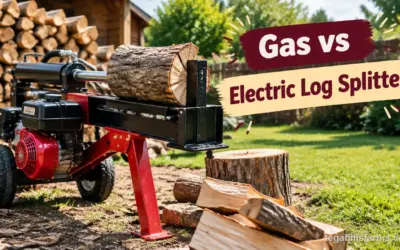
Gas fits heavy hardwood, large volumes and work far from an outlet. Electric fits lighter wood split near the house, and manual or kinetic models fit small budgets or fast, light splitting. The power source also determines how loud the machine runs, how much upkeep it needs and where you can store it between seasons. Those ownership costs often weigh more over the years than the gap in force.
What Are Gas Log Splitters Best At and Where Do They Fall Short?
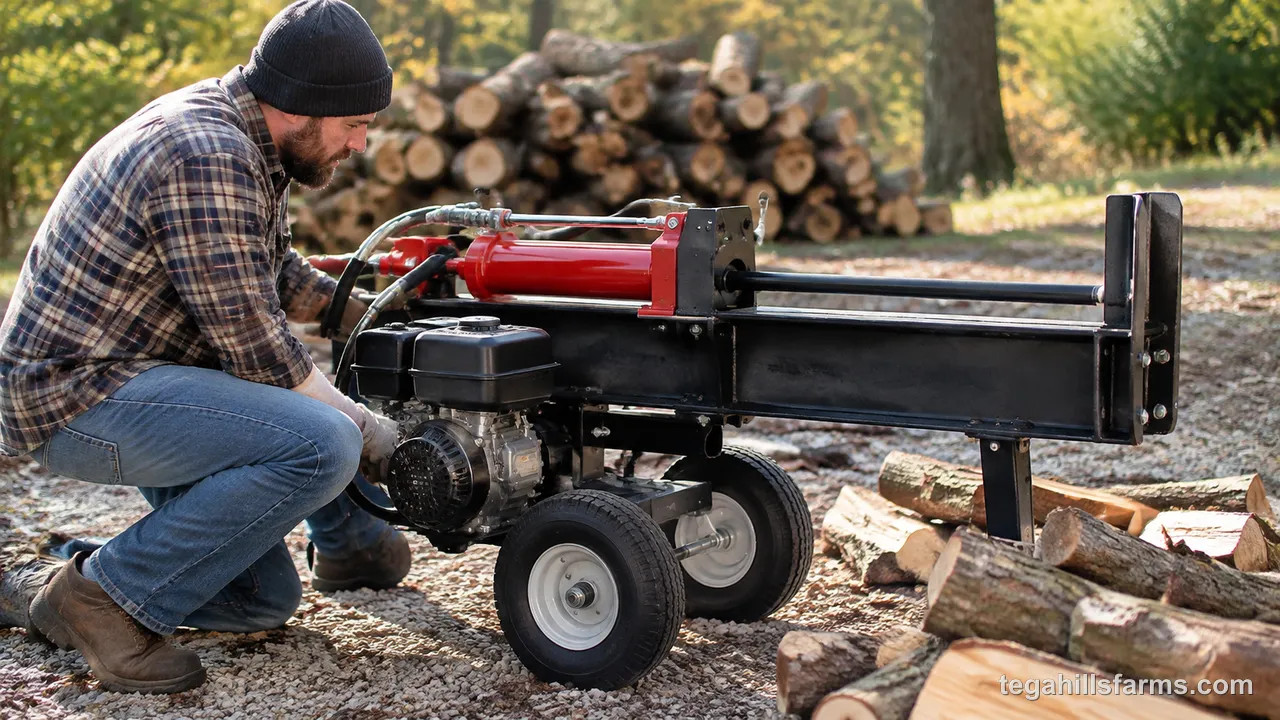
Gas splitters are the right call when you burn mostly hardwood or split at a woodlot with no power nearby. Gas machines deliver 20 tons and up to 30 or more, enough to push through big oak rounds that would stall a smaller unit. Without a cord, you can tow the machine to where the trees came down instead of hauling every round to the garage.
That capability comes with real upkeep. The engine is loud enough to require hearing protection, and its exhaust means you have to run it outdoors. Gasoline goes stale in storage, the engine oil needs changing, and a neglected carburetor is the most common reason these machines sit idle in spring. Most units are heavy enough to need a tow hitch. If oak or hickory is your main fuel, the best gas log splitters are where to start comparing.
When Does an Electric Log Splitter Make More Sense?
Electric splitters make more sense when your wood is mostly softwood or modest hardwood rounds and you split near the house or garage. They produce 6 to 10 tons from a 1.5 to 2 HP motor that plugs into a standard household outlet. That is plenty for straight-grained pine and small, clean hardwood pieces.
They run much quieter than gas, give off no exhaust and start at the push of a button with no fuel to manage, so working on a driveway in a neighborhood is realistic. Their limits are the cord and the force ceiling. Plug into a GFCI-protected outlet, use the extension cord gauge the manual specifies, and expect stalls on knotty oak. If that fits your woodpile, the best electric log splitters cover the range of compact models.
Where Do Manual, Kinetic and Hydraulic Models Fit?
Manual splitters, either foot- or lever-pumped hydraulic jacks or slide-hammer designs, cost the least and need no fuel or cord. They are slow, which makes them a fit for kindling and a few rounds a week rather than a winter’s supply.
Kinetic splitters spin up a heavy flywheel and release its stored energy into the wedge in one fast stroke. They cycle much faster than hydraulic units, but their force ratings aren’t directly comparable to hydraulic tonnage. Stringy wood that needs a sustained push can stop them.
Most gas and electric splitters are hydraulic, and that steady, continuous push is what grinds through elm and knotty crotches. For high volume and tough wood, a hydraulic machine is still the safest choice.
How Much Tonnage Do You Need for Your Wood and Volume?
Size the machine to your hardest, widest rounds rather than your average log, then add a buffer for knots and crotches if you split a full season’s supply. An undersized machine wastes time on resets and stalled rounds. An oversized one costs you storage space, weight and fuel it never uses. The right class sits just above the toughest wood you regularly handle.
How Does Wood Species and Moisture Change the Force You Need?
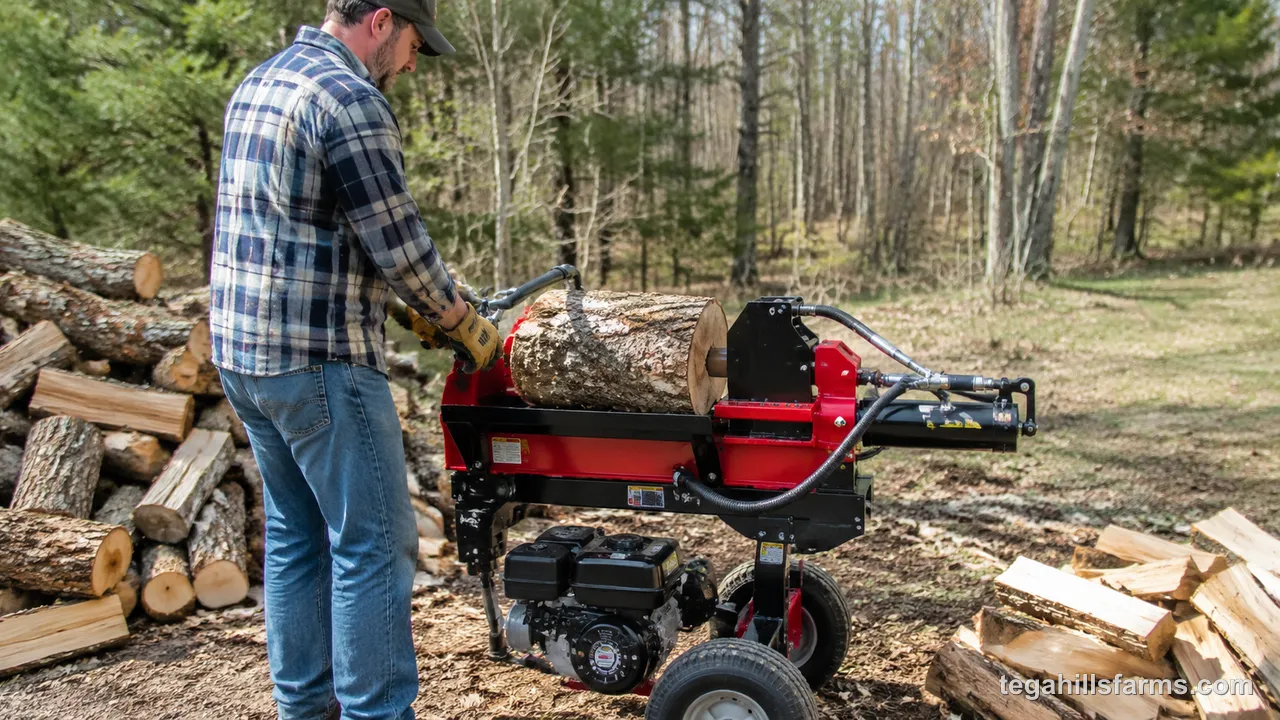
Hardwood needs noticeably more force than softwood, and the gap shows up in the Janka numbers. Pine and cedar rate around 860–900 lbf. Red and white oak sit at 1,290–1,360 lbf, and sugar maple and birch reach 1,450–1,470 lbf. Ash and American beech fall between them, around 1,300–1,320 lbf.
Softwoods usually have straight grain that opens along its length with little resistance, so even a small electric machine keeps a steady pace. If your pile is mostly conifers, the best log splitters for softwood will save you from paying for force you won’t use.
Moisture changes the picture within a species. Many hardwoods split cleanly while green. Fully seasoned rounds with checks running across the end grain often pop apart because the wedge has a crack to follow. Rounds caught halfway through drying can turn tough and fibrous. Frozen wood tends to split more readily, which is why many owners save their stubborn rounds for a cold morning.
How Do Log Diameter, Knots and Interlocking Grain Affect Sizing?
A wider round puts more fiber in front of the wedge, so a machine that handles small pieces of a species can stall on a large round of the same tree. Measure the diameter of your biggest pieces, and check the length against the beam’s maximum log capacity, since an overlong round won’t fit no matter how much force the machine has.
Knots and crotches cause the most stalls. Where a branch joins the trunk, the grain runs in two directions, so the wedge has to cut across fibers instead of separating them. Elm and sweetgum are tougher still because their interlocking grain twists around itself and holds together after the wedge is buried. If your pile includes trunk crotches or either of those species, choose a class above the minimum for the species. That margin turns a stall into a slow, completed split.
Which Tonnage Class Fits Occasional vs Heavy Firewood Cutting?
Small softwood rounds need only 4 to 7 tons, which puts occasional fire-pit or shoulder-season splitting well within reach of an electric machine kept by the house. That class also fits a homeowner who takes down a tree every few years and splits it over a few weekends.
If you heat with mixed hardwood all winter, look to the gas class, where machines reach into the 20s and beyond. Big, knotty hardwood like oak or elm calls for 27 tons or more, and the best log splitters for hardwood sit in that range for good reason.
Acreage owners who split several cords a year should weigh cycle speed alongside force, because hours at the machine add up quickly. I’d rather own slightly more force than the pile strictly needs, since a single stubborn crotch can eat more time than the extra capacity costs.
How Do Hydraulics, Engine Power and Cycle Time Work Together?
Force comes from cylinder bore and pump pressure, speed comes from pump flow in gallons per minute (GPM), and the motor needs enough horsepower to drive that pump under load. A machine with a big tonnage label and an undersized pump will split, just slowly. Reading these specs together shows how a splitter will actually perform once the wood starts resisting.
How Does Cylinder Size, Pump GPM and Engine HP Determine Real Power?
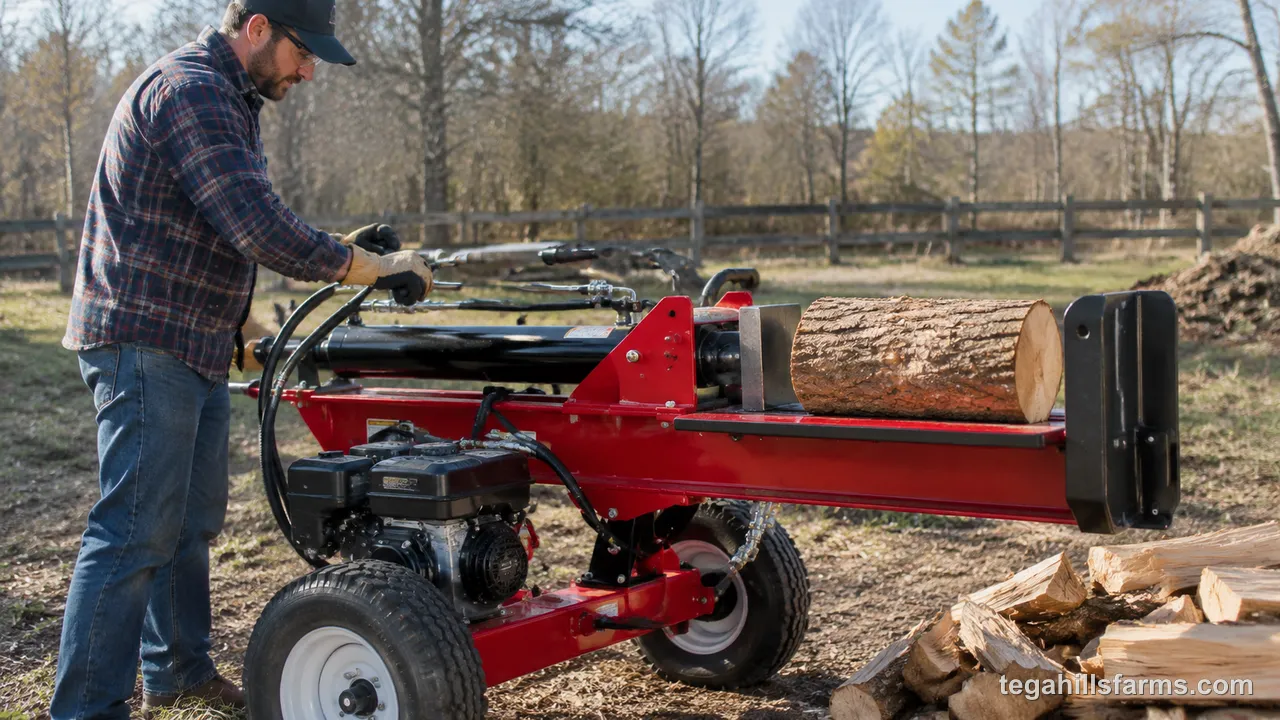
Force equals hydraulic pressure multiplied by the piston’s area, so a wider cylinder bore produces more tons at the same pressure. A wider bore also holds more oil, so each stroke takes longer to fill unless pump flow rises to match. That is the trade-off behind every rating: more force without more flow means a slower ram.
The pump’s GPM determines how quickly oil fills the cylinder. The engine has to turn that pump at full pressure without bogging. Gas engines run from 5 HP on entry machines to 14 HP and up on fast, high-tonnage units. At the commercial end, processor-fed machines use pumps of 28 GPM and up, driven by engines of roughly 14 HP and more. When comparing the best hydraulic log splitters, look for spec sheets that list cylinder bore, pump GPM and engine size together, because any one of them alone hides the weak link.
Why Does Cycle Time and Auto-Return Matter for Productivity?
Cycle time directly sets how many rounds you split in an hour, and two features shorten it most. A two-stage pump moves a large volume of oil at low pressure so the ram travels quickly to the log and back. When the wedge meets resistance, it shifts to a smaller, high-pressure stage. You get speed on the empty part of the stroke and force where the wood pushes back.
An auto-return valve sends the ram back to its starting point once it reaches full extension, so you can let go of the lever and reach for the next round. Over a long session, those few seconds per split add up. Published cycle times are measured with no log in place, so real splits run slower, especially on knotty wood.
Which Orientation and Features Fit Your Yard, Storage and Body?
Horizontal machines work for rounds you can lift to waist height, while vertical or horizontal-vertical designs let you roll heavy rounds into place instead of lifting them. Weight and footprint decide whether the machine suits your garage and trailer. The right combination depends as much on your back and storage space as on your wood.
Do You Need Horizontal, Vertical or a Horizontal-Vertical Combo?
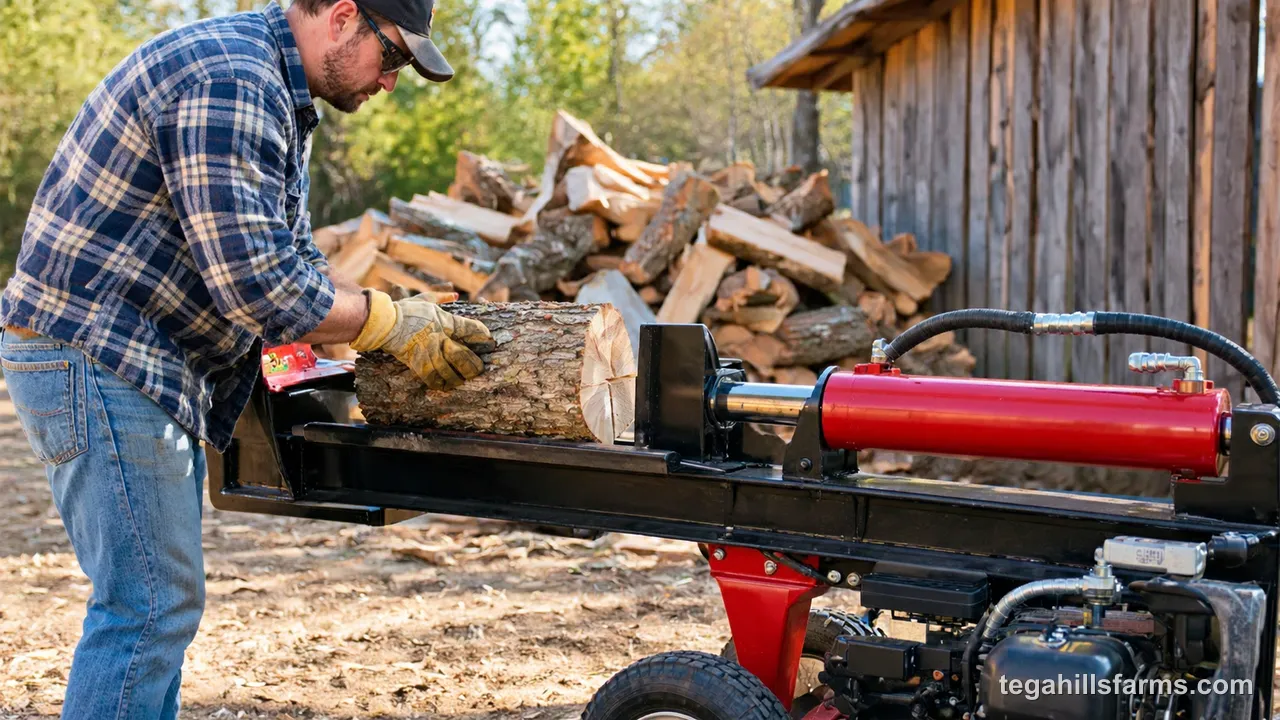
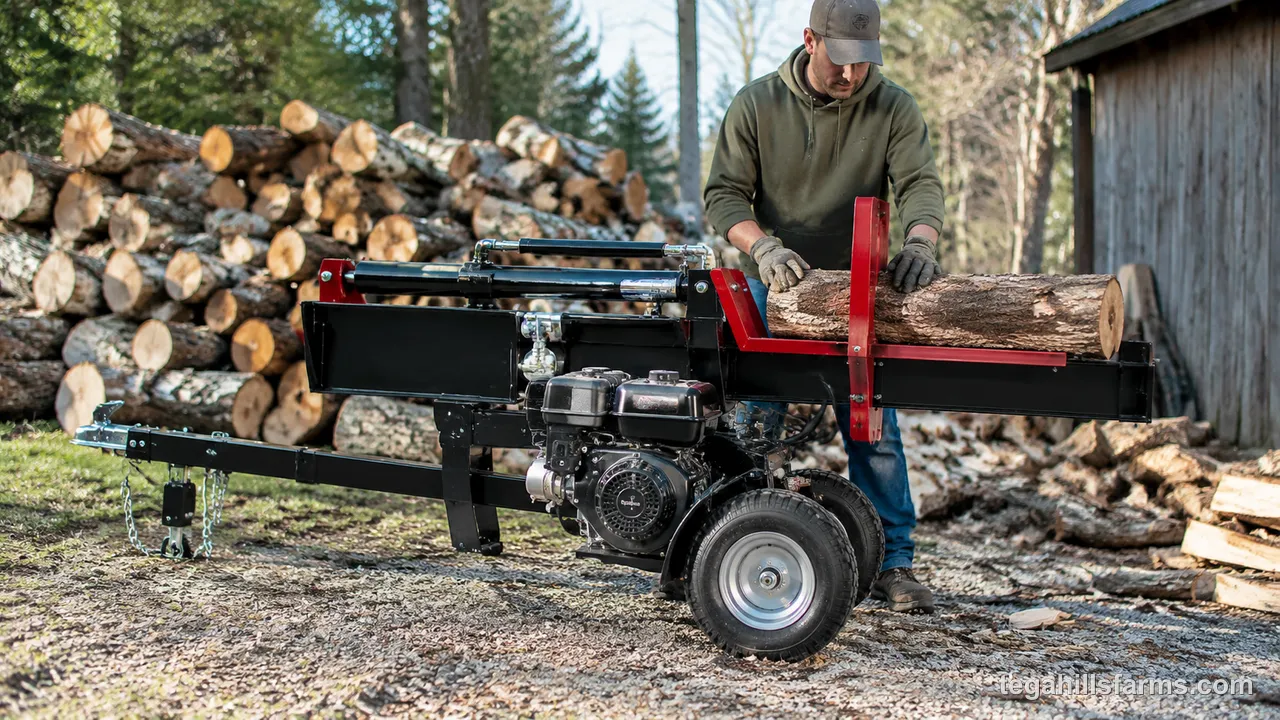
A horizontal splitter holds the log on a beam at about waist height, so you lift every round onto it. That works well for small and medium rounds, but repeatedly lifting large hardwood rounds wears you out long before the machine tires.
A vertical setup stands the beam upright, so you roll a heavy round under the wedge and split it at ground level without lifting. The trade-off is posture: you stand over the work and bend to clear split pieces.
A horizontal-vertical combo pivots between the two positions, using horizontal for routine pieces and vertical for the rounds too heavy to lift. If your pile mixes small limbs with big trunk sections, the best horizontal vertical log splitters handle both without straining you.
How Do Weight, Towable Design and Storage Footprint Affect Choice?
Compact electric splitters are light enough to roll on small wheels and store on a garage shelf or workbench, which suits a small lot with no shed. Larger gas machines come with a tow hitch and road wheels so you can pull them behind a truck or tractor, but they need a parking spot of their own.
Check the footprint with the tongue folded and the beam in its storage position, then compare it with the space you have. Gas units also need ventilated storage away from pilot lights and other ignition sources, because fuel vapors linger. If you plan to tow on public roads, confirm in the manual that the machine is rated for highway towing rather than yard use only.
Which Helpers Actually Save Your Back: Log Lift, Cradle and Wedge Type?
A hydraulic log lift does the most for your back when you split large hardwood horizontally, because it raises heavy rounds onto the beam so you don’t have to. Cradles and catch trays hold split halves at working height, so you aren’t bending to the ground after every stroke.
Wedge type affects output more than effort. A 4-way wedge produces four pieces per stroke, which speeds up high-volume splitting of straight-grained wood, while a 2-way wedge handles tough rounds more reliably. Machines that accept a removable 4-way wedge give you both options. For a few rounds a weekend, these helpers are a nice extra. For a full cord or more, they are worth paying for.
A splitter that ran fine in October can sit through winter with water in its hydraulic oil and varnish forming in the carburetor, then push the ram sluggishly on the first oak round of spring. Worn cylinder seals rarely fail all at once; they bleed off pressure gradually until the machine stalls on wood it once split easily, and by then the repair bill covers a pump or cylinder instead of a cheap seal kit.
What Small Details Determine Long-Term Reliability and Cost?
Most splitters lose force slowly through wedge wear, seal wear and fluid neglect, none of which appears on a spec sheet. Catching that wear early keeps repairs limited to inexpensive parts and keeps the machine pushing at its rated force season after season. The habits involved take minutes, and they matter more to long-term cost than the purchase price.
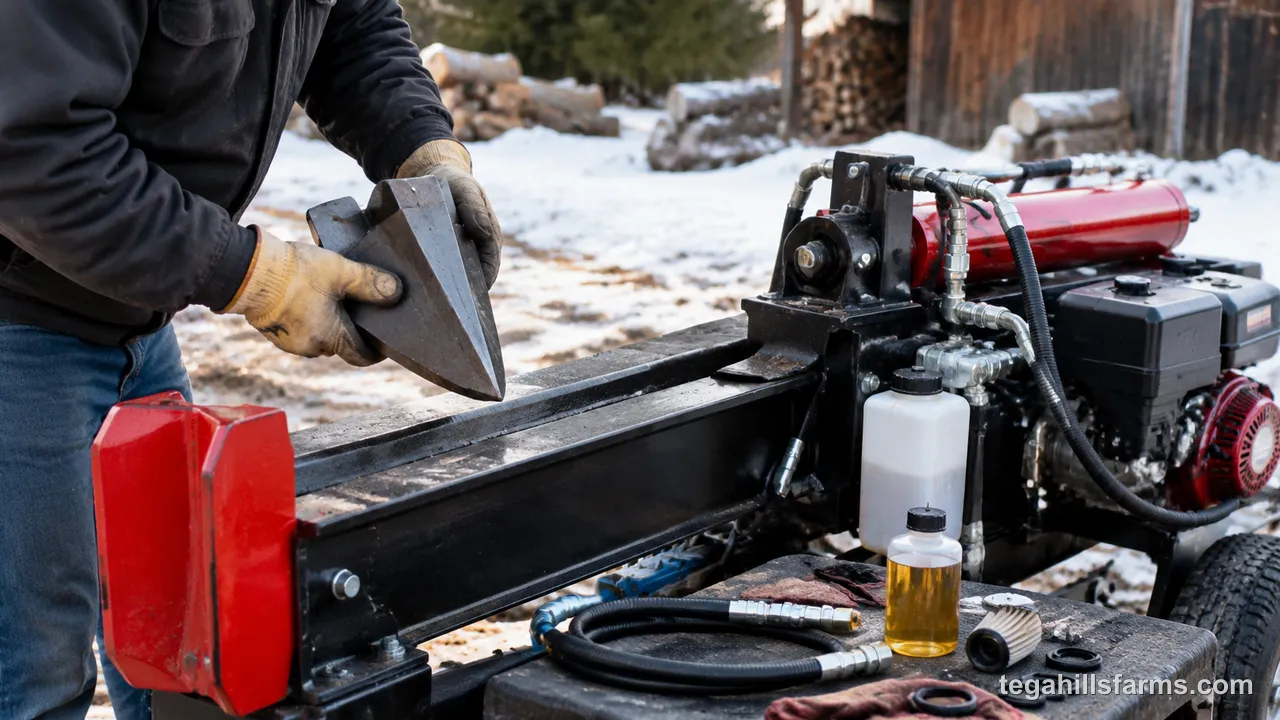
How Do Wedge Choice and Hydraulic Seals Affect Force and Maintenance?
A 4-way wedge spreads the ram’s force across four cutting edges, so the same machine stalls sooner on tough wood than it would with a 2-way wedge. Use the 2-way for knotty oak and crotches, and save the 4-way for straight-grained rounds. A dull edge has the same effect, since it has to crush fibers before separating them. If you’re replacing a worn or bent wedge, the best log splitter wedges show which designs fit common beams.
Hydraulic seals show wear before they fail. Watch for oil film on the cylinder rod, a ram that creeps back under load, slower strokes or a reservoir level that keeps dropping. Seal kits are far cheaper than a new cylinder, so replacing them at the first sign of weeping protects both force and budget.
What Fluid, Storage and Winter Care Habits Prevent No-Pressure Failures?
Check the hydraulic fluid level before each session. Low fluid lets the pump draw air, which shows up as whining, jerky strokes and lost pressure. Use the fluid type the manual specifies and change it and the filter on the manufacturer’s schedule, because contaminated oil wears the pump and seals together.
On gas models, add fuel stabilizer or run the carburetor dry before long storage, and change the engine oil before you put the machine away. When a log splitter won’t start after sitting all winter, stale fuel is the first thing to check. In cold weather, let the engine idle for a few minutes so the hydraulic oil thins out before you load the first round. Storing the machine under cover keeps rain and condensation out of the reservoir vent.
Choosing a Log Splitter: Quick Answers
What drives the price of a log splitter?
Price rises with force and power source. Manual splitters cost the least, electric models fall in the middle, and gas machines cost the most, especially high-tonnage towable units with log lifts and two-stage pumps. Checking how much a log splitter costs by class before you shop helps you set a realistic budget.
How long will a log splitter last with regular use?
Lifespan depends mostly on upkeep. Hydraulic cylinders and pumps can run for many seasons when the fluid stays clean and the seals get replaced as they wear. Gas engines need oil changes and fuel care to keep up. Knowing how long log splitters last helps you weigh a sturdier frame against a lower price.
Can an electric log splitter handle oak?
It can handle small, straight-grained oak rounds, especially seasoned pieces with end checks. Large rounds, crotches and knotty sections usually exceed its force and stall the ram. If oak makes up most of your heating wood, a gas machine in the higher tonnage classes is the more practical choice.
What safety gear should a first-time user wear?
Wear safety glasses, snug work gloves and steel-toe boots, and add hearing protection with gas engines. Only one person should operate the controls, and hands should stay clear of the wedge and ram while the lever is engaged. Keep bystanders, children and pets well back from the beam during every stroke.