

A log splitter costs anywhere from a few hundred dollars for a small electric unit to several thousand for a heavy gas machine. Skid steer attachments and commercial splitters cost more again, and the biggest commercial units reach well into five figures. Buying usually wins if you split firewood every season. Renting makes more sense for a one-time storm cleanup or a year when you only have a few rounds to deal with.
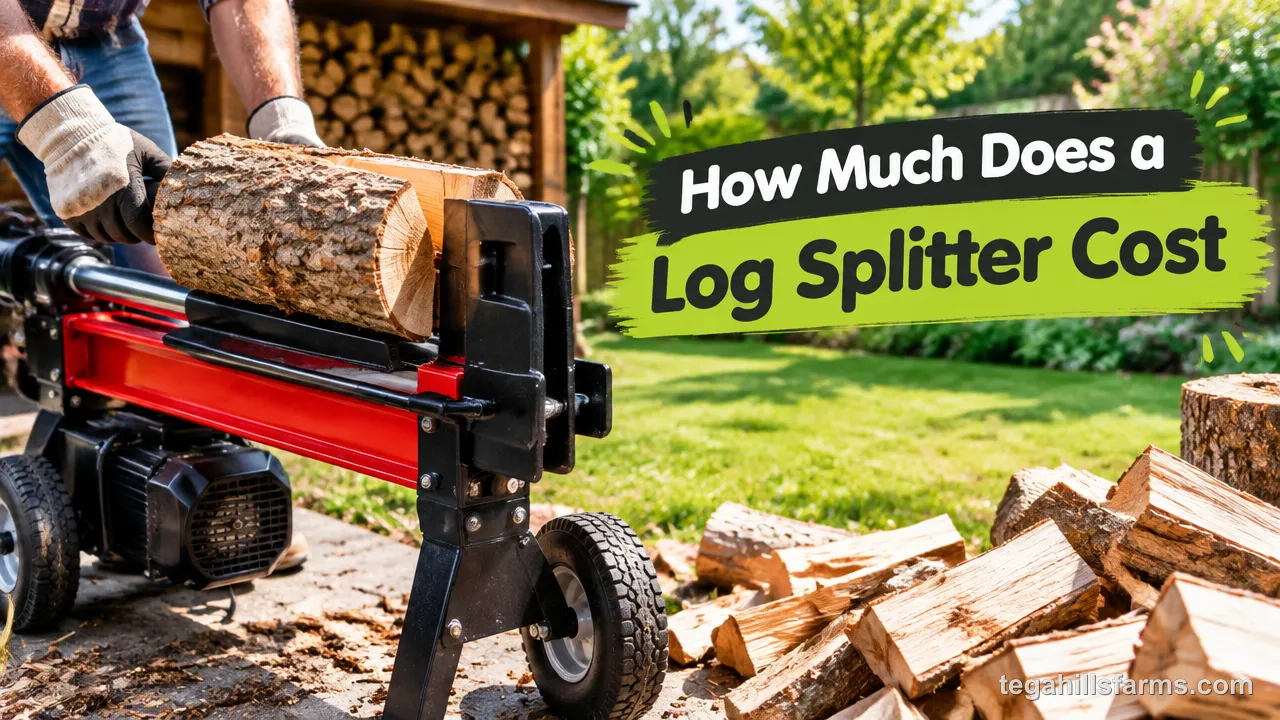
Within each of those bands, the price moves with splitting force, engine quality, beam design and how the machine is powered or mounted. A 20-ton gas splitter with a wheeled frame and a 42-ton attachment that runs off a skid steer’s hydraulics are priced on completely different terms.
The sticker price is only part of the cost. Fuel, hydraulic oil, accessories and freight all add to it. The bigger risk is choosing the wrong size: paying for force your woodpile never needs, or buying too light and replacing the machine after one hard winter of knotty oak.
How Much Does a Log Splitter Cost?
Homeowner machines run from a few hundred dollars to about $4,500. Attachments and commercial splitters start around $3,000 and climb past $40,000.
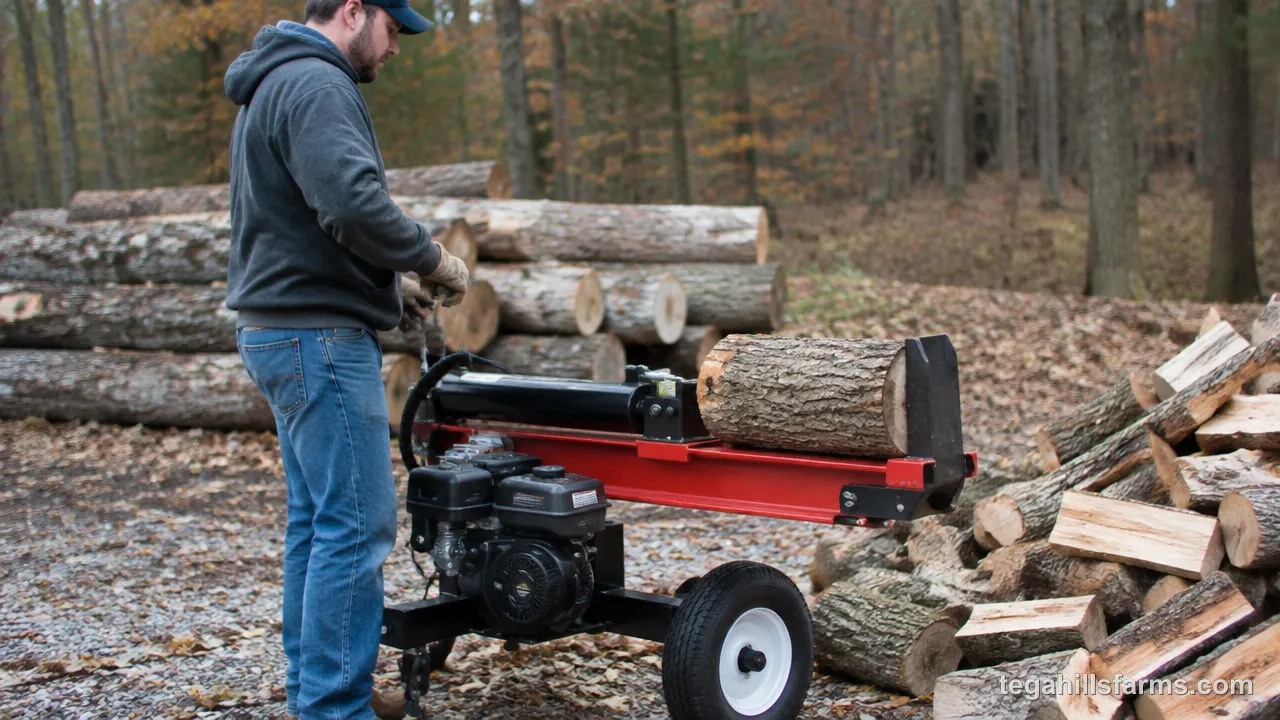
Tonnage pushes the price up first, because more force needs a bigger cylinder, a stronger pump and a heavier beam to contain it. A brand-name engine such as a Kohler adds cost over a generic engine, and it usually starts more reliably as it ages. Build matters as well: a machine whose beam tilts between horizontal and vertical costs more than a fixed horizontal one. Mounting style can pull the price in either direction. A splitter that borrows hydraulic power from a tractor or skid steer skips the engine, while a towable commercial unit with a log lift and a large pump costs far more than a homeowner model.
Price is only one piece of the decision. If you are still narrowing down what you need, our guide on how to choose a log splitter covers the full set of factors.
How Much Does Each Type of Log Splitter Cost?
The power source and the mounting style set a splitter’s price band more than any other feature. A machine that carries its own engine and wheels is priced differently from one that draws power from equipment you already own.
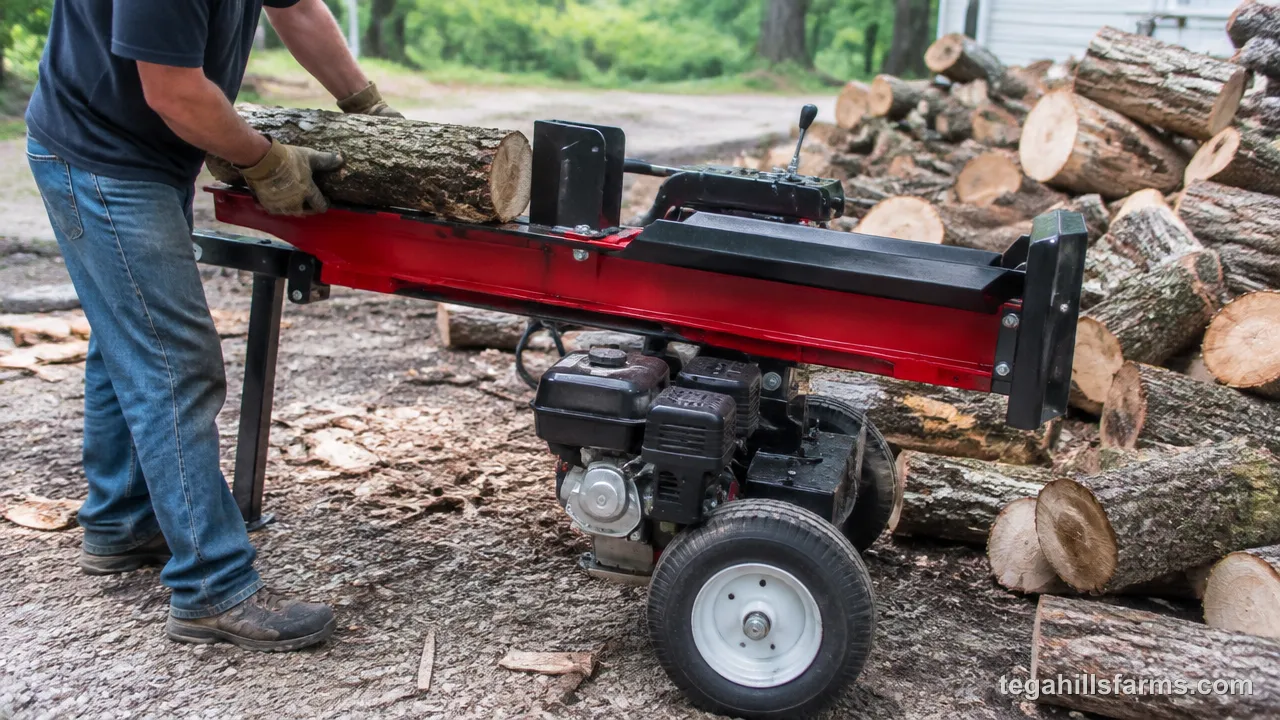
That makes the right type depend as much on what sits in your garage or barn as on the wood you split. If you own a tractor or skid steer, you can buy just the splitting hardware. If you don’t, the engine, pump and trailer frame are part of what you pay for, and they also add to what you maintain.
What Do Electric and Gas Log Splitters Cost?
Electric splitters run roughly $300 to $1,000. Gas splitters start around $800 for an entry 20-ton model and pass $4,000 for 24- to 30-ton machines whose beam converts between horizontal and vertical.
Electric models stay cheap because a motor and a small pump are all they need. They are quiet and exhaust-free, so you can run one in a garage, plugged into a GFCI outlet through a short, heavy-gauge extension cord. The tradeoff is force and speed. Electric units sit at the light end of the tonnage scale, which suits seasoned, straight-grained rounds better than big green hardwood.
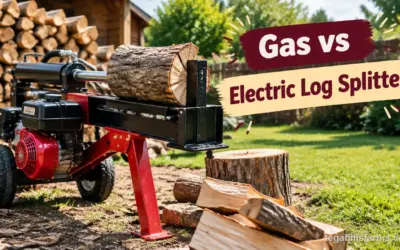
A gas splitter costs more upfront and brings an engine to maintain: oil changes, a spark plug, and stabilized fuel over winter. In return you get more tonnage, a towable frame you can take to the woodpile, and vertical splitting on convertible models, so you don’t have to lift heavy rounds onto the beam. The engine brand and the tonnage rating account for most of the price spread within the gas category. Our side-by-side of gas vs electric log splitters covers the rest of the comparison.
What Do Kinetic, 3-Point, and Skid Steer Splitters Cost?
Kinetic splitters run roughly $2,500 to $4,000. Three-point hitch models for tractors fall around $1,000 to $3,000. Skid steer attachments run about $3,000 to $7,500, depending on tonnage and stroke length.
A kinetic splitter stores energy in spinning flywheels and releases it into the ram almost instantly, so it splits in a fraction of a hydraulic machine’s cycle. That speed only pays off if you can keep the machine fed. For one person working alone, a cycle faster than about 10 seconds usually means the splitter waits on you, and keeping up takes a helper.
Three-point and skid steer splitters cost less than their tonnage suggests because they have no engine. You pay for the beam, cylinder and valve, and your tractor or skid steer supplies the hydraulic power. Within attachments, price rises with tonnage and with stroke length, since a longer stroke on a 24-, 30- or 36-inch model handles longer firewood. These attachments make sense only if you already own the host machine and are willing to run its engine for hours while you split.
How Much Do Commercial Log Splitters Cost?
Commercial splitters start around $10,000. Mid-tier series run into the low-to-mid teens, and top-end machines exceed $40,000.
The price reflects production speed and durability, not just splitting force. These machines use heavier beams, larger pumps and engines rated for long daily runs. They often add hydraulic log lifts, adjustable multi-way wedges and outfeed tables, so one round becomes several pieces per stroke without anyone lifting it by hand. Every one of those features cuts the minutes per cord, which is how a firewood business earns its money.
Firewood sellers, tree services and farms that process wood by the truckload need this class. A homeowner heating one house will never work a commercial machine hard enough to justify the cost, and a quality towable gas splitter handles that workload easily.
How Does Tonnage Affect Log Splitter Price?
Price climbs with splitting force. A basic 20-ton gas splitter sits at the entry point of gas pricing, while 30- to 42-ton machines occupy the upper end of the towable and attachment ranges.
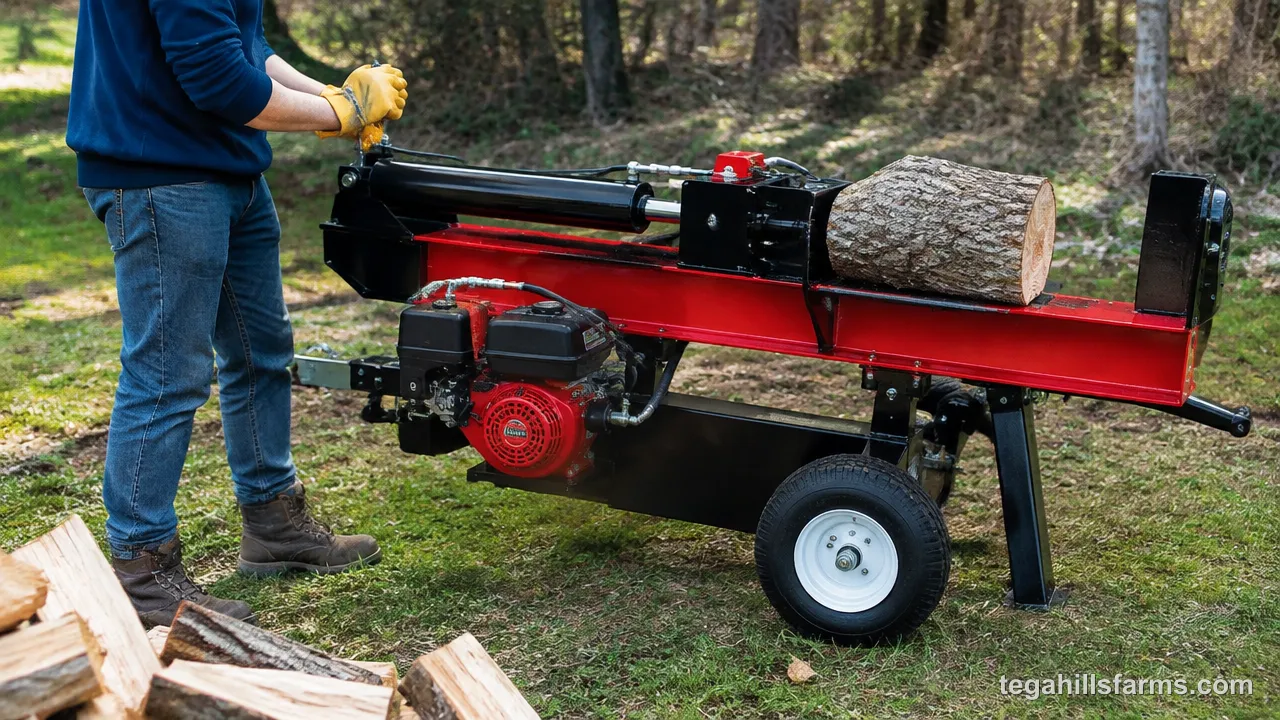
Extra tonnage costs money because every part has to scale with it: a wider cylinder, a stronger pump, a thicker beam and a frame that won’t flex under load. Whether that pays off depends on the wood you actually split, not the biggest round you can imagine. Wood species, grain and moisture all change how much force a round needs, and a log splitter tonnage guide matches those conditions to specific force ratings in more detail.
What Do Lower-Tonnage Splitters Cost and Handle?
Light electric splitters stay under about $1,000. Twenty-ton gas machines start just over $800, and well-built 24-ton gas units run toward $4,000 once you add a convertible beam and a better engine.
This tier handles the wood most homeowners burn. Seasoned, straight-grained rounds of pine, ash, poplar or other softer hardwoods split cleanly on a light electric unit, and a 20- to 24-ton gas machine adds enough force for moderately sized oak and maple. Seasoned wood is easier because drying opens checks in the end grain, and the wedge follows those cracks.
Lower-tonnage machines struggle with knots, crotches where two limbs meet, twisted grain, and green wood that is still full of moisture and holds together. On a light unit, those rounds either stall the ram or need several passes from different angles. If most of your wood comes as clean, seasoned firewood lengths, this tier covers the job. If you take storm-felled trees as they come, you will run into its limits.
Is Paying for 30 Tons or More Worth It?
Yes, if you regularly split rounds 24 inches across or larger, or a lot of knotty, dense or green hardwood. At that size and toughness, force matters more than cycle speed. Machines in this class run roughly $2,500 to $7,500, depending on whether you buy a kinetic unit, a towable hydraulic splitter or a skid steer attachment.
Higher tonnage pushes through knots and interlocked grain that would stall a lighter ram. That means fewer rounds you have to reposition or set aside, and less time with a sledge and wedge. It also matters for volume. If you split several cords a season, a machine that rarely stalls saves real hours.
The extra force goes unused if your wood is mostly seasoned, straight-grained and modest in diameter. A splitter only uses as much force as the round requires, so a 42-ton machine splits clean pine no better than a 20-ton one. You would be paying for a heavier frame to tow and store, and possibly a slower cycle, with no benefit at the woodpile.
What Other Costs Come With Owning a Log Splitter?
Beyond the purchase price, plan for fuel or electricity, hydraulic oil and filter changes, and accessories or freight on heavier machines.
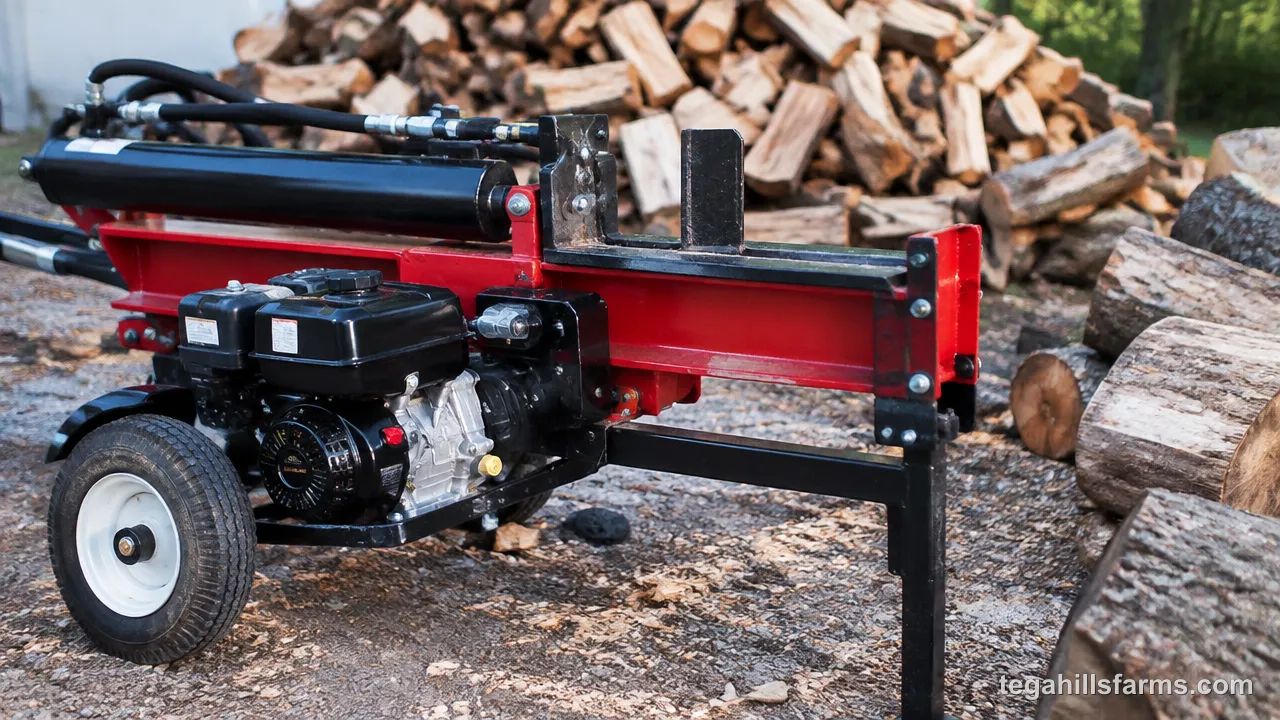
Which costs matter depends on the type. An electric splitter costs little to run and has almost no engine upkeep. A gas machine adds engine maintenance on top of its hydraulics. A large towable or commercial unit can carry a delivery charge that makes a noticeable difference to the total. Routine upkeep also affects how long log splitters last, because neglected hydraulic fluid and dirty filters wear out the pump and seals well before the beam or frame shows any age.
How Much Does It Cost to Run and Maintain a Log Splitter?
Electric splitters are the cheapest to run, because a motor drawing household current uses little power for a few hours of splitting and needs no engine service. Gas splitters cost more over time: fuel, engine oil, a spark plug, and fuel stabilizer or a drained carburetor before winter storage.
Every hydraulic splitter, whatever powers it, needs its hydraulic fluid and filter changed on the manufacturer’s schedule. Contaminated fluid wears the pump and scores the cylinder, and those are the most expensive parts to replace. Skid steer and three-point models skip the engine, but they put hours on your host machine’s engine and hydraulics instead.
Repairs usually fall into a few categories: leaking seals and hoses, a worn pump, a sticking control valve, and, on gas units, starting trouble from stale fuel or a gummed carburetor. If your log splitter won’t start after sitting all summer, old fuel is the first thing to check. Most of these problems are cheap to prevent and expensive to ignore.
Which Accessories and Delivery Fees Add to the Price?
Freight is the add-on most buyers overlook. Some direct sellers price heavy machines at the factory and charge delivery by distance, around $1.50 per mile, so a buyer far from the plant pays noticeably more than the listed price.
Among accessories, a multi-way wedge pays for itself first if you split a lot of wood. It turns one stroke into four or more pieces, which cuts the number of cycles per cord. A hydraulic log lift is worth adding if you handle heavy rounds or have a sore back, since getting rounds onto the beam is the hardest physical part of the job.
Stands and work tables are optional. They help with an electric splitter, which is easier on your back at waist height. A towing kit or hitch adapter matters only if your splitter’s coupler doesn’t match your truck or ATV. A fitted cover is a small cost that keeps rain out of the controls and engine during storage.
Is It Worth Buying a Log Splitter vs. Renting?
Buying pays off when you split firewood every year, while renting wins for one-time jobs like storm cleanup or a light season.
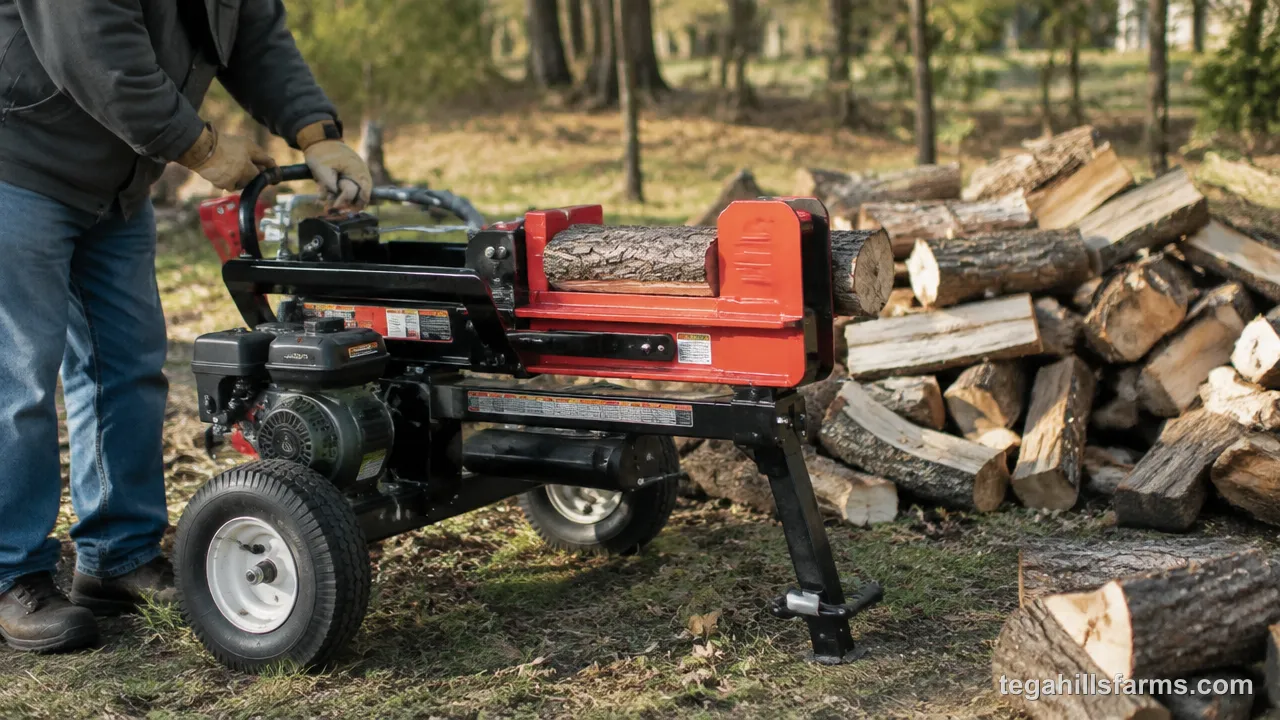
The break-even logic is simple. Add up how many rental days you would need each year, multiply by the local day rate, and compare that total with the purchase price plus upkeep over the years you expect to keep the machine. Then factor in what renting can’t give you: splitting on your own schedule instead of rushing through a pile in one day. Either way, the work is the same. Knowing how to use a log splitter safely, including hand placement and one person on the controls, matters as much with a rental as with your own machine.
When Does Buying a Log Splitter Make Sense?
Buying makes sense if you heat with wood every winter, have a steady supply from your own land or a regular source, or simply want to split when it suits you.
For regular firewood users, the math tips quickly. A household that burns wood all season needs splitting days every year, and owning removes the repeated rental fees plus the time spent picking up and returning a machine. A steady wood supply works the same way. Wood that comes in through the year can be split as it arrives, which helps it season faster because split wood dries much quicker than whole rounds.
Convenience is the other reason to own, and it is easy to undervalue. Splitting an hour at a time on a cool evening is easier on your body than a full rental day, and you never have to work around a rental yard’s calendar. A well-maintained splitter also holds its value on the used market, which recovers part of the purchase price if your needs change.
When Is Renting a Log Splitter the Better Choice?
Renting is the better choice for a single storm cleanup, wood you split only every few years, or a household with no room to store a towable machine. Rental yards commonly charge somewhere around $75 to $150 a day for a towable gas splitter, and many offer half-day rates.
Renting is also a cheap way to test a tonnage class. A day with a 25-ton machine on your own wood shows whether that force is enough before you commit to buying one. Rental machines also come with no maintenance, storage or winterizing to deal with.
The drawbacks show up in timing and logistics. Demand peaks in fall and after big storms, which is exactly when you are most likely to need one, so reserve early. You will need a truck with the right hitch, and a full day’s rental pushes you to finish the whole pile in one go, which is hard work on your own. Rental units can also be worn from heavy use, with tired hydraulics that cycle slower than a new machine.
Where Can You Buy a Log Splitter at the Best Price?
Home improvement and farm-supply stores suit most homeowners, while direct-from-manufacturer sellers and used listings cover heavy machines and tight budgets.
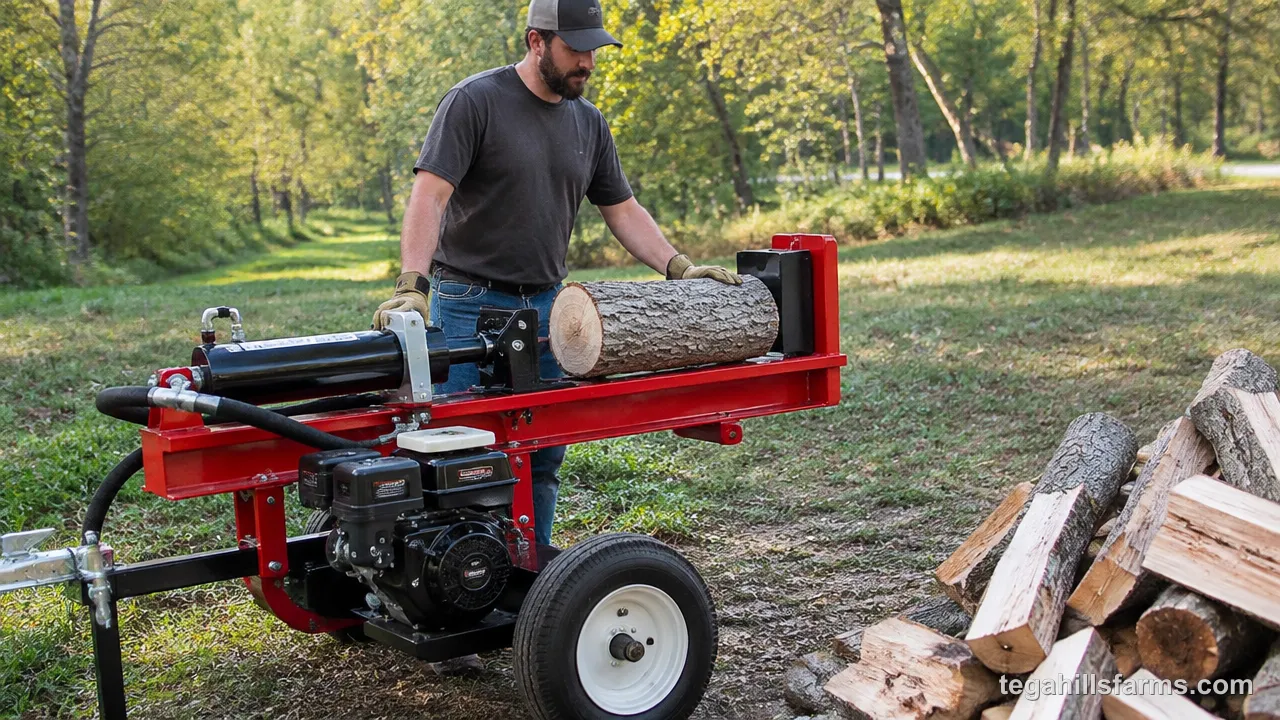
Big-box and farm stores stock mostly electric and homeowner gas splitters, from the few-hundred-dollar range up through the mid-thousands. Their advantage is support: you can inspect the machine, bring it back to the store for warranty work, and often pick it up the same day. The tradeoff is a narrower selection of heavy-duty and specialty models.
Online marketplaces have the widest selection and frequent sale pricing, but returning a crated machine that weighs several hundred pounds is a hassle, and warranty service depends on how responsive the seller is. Direct-from-manufacturer sellers are the main source for skid steer attachments and commercial machines, and they can answer detailed questions about specs, though freight is usually extra. Used listings offer the lowest prices, with no warranty and no recourse if the hydraulics fail a month later.
A used splitter at a fraction of the new price looks like an easy win, especially in spring when sellers clear out their garages. The problem is that a worn pump or a scored cylinder can look fine in the driveway and then fail on the first tough round, leaving you with a repair bill that can approach the cost of a new machine.
What Should You Check Before Buying a Used Log Splitter?
Before paying for a used splitter, check five things: fresh hydraulic leaks, the condition of the cylinder rod, how the engine and pump perform, wear on the wedge and beam, and how the machine cycles under a real load. New homeowner gas machines already range from under a thousand dollars to several thousand, so a used one priced at a fraction of that is only a bargain if those five checks come out clean.
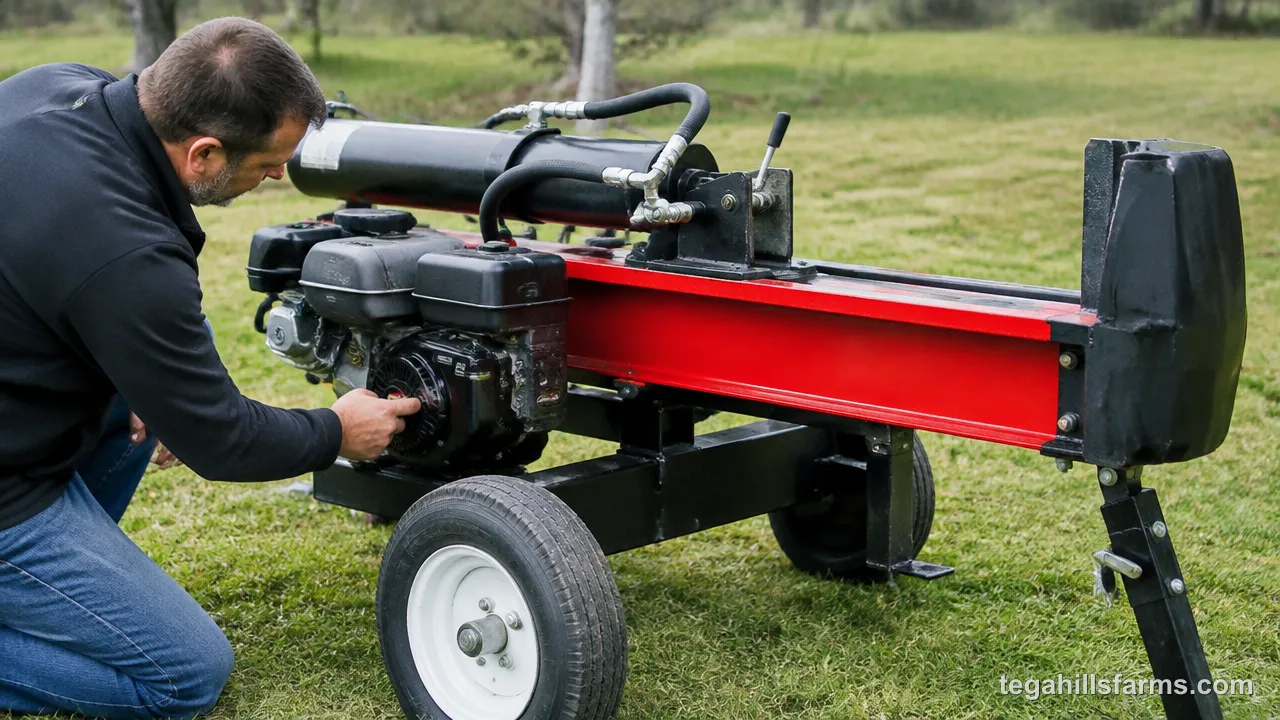
Look under the machine and around hose fittings for wet oil, which points to failing seals. Run a hand along the cylinder rod: pitting, rust or scoring will chew up the seals each time the rod retracts. Start the engine cold. A gas unit that needs a lot of pulls, smokes or surges has engine work ahead of it.
Check the wedge for mushroomed or chipped edges, and check the beam for cracked welds or bends. Then split a tough round. A healthy splitter pushes through steadily, while a worn pump slows down, groans or stalls well short of its rated force. Milky or dark hydraulic fluid in the reservoir is another sign to walk away, because it means water contamination or overheating that has already worn internal parts.
How Can You Avoid Overspending or Underbuying on a Log Splitter?
To avoid both mistakes, size the splitter to your biggest regular rounds and your yearly volume, not to the rare monster log or the lowest price on the shelf.
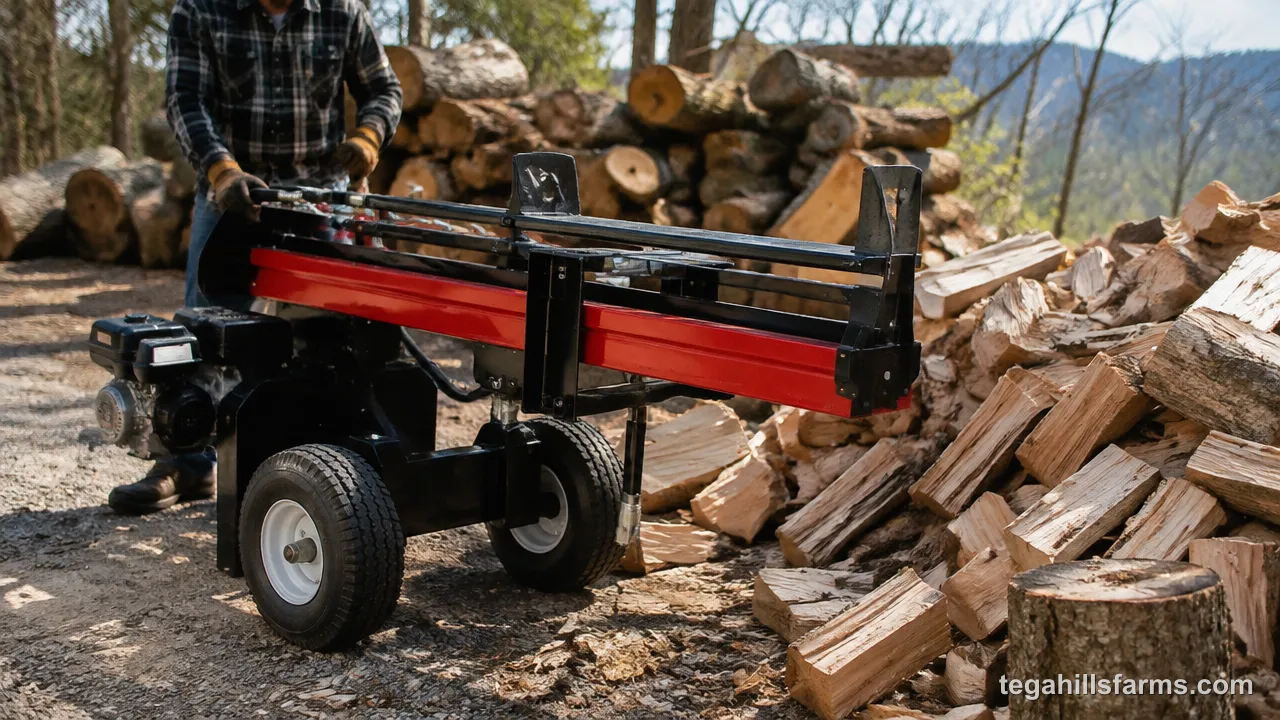
Overspending usually shows up as tonnage your wood never needs, commercial features like log lifts and fast cycles for a few weekend sessions a year, or a kinetic machine bought for speed when you split alone and can’t feed it fast enough. Each of those adds cost, weight and storage space without splitting your wood any better.
Underbuying shows up in use. The ram stalls on knotty rounds, a piece rides up the wedge without splitting, or a slow cycle stretches a pile into several weekends. Lifting heavy rounds onto a horizontal-only beam is another sign, since it wears you out long before the woodpile is finished. These problems tend to push owners into a second purchase within a few seasons, which costs more than buying the right machine the first time.
I’d base the decision on the wood you have already been splitting. If your largest regular rounds and the toughest species in your pile split cleanly on a machine in the middle of the range, buy that tier and put the difference toward a multi-way wedge or good hydraulic fluid.
Log Splitter Cost FAQs
How much should I spend on a good log splitter for home use?
For most homeowners, a quality gas splitter in the 20- to 25-ton range offers the best balance. It handles seasoned oak and maple, tows to the woodpile and lasts for years with basic care. Spend more only when your wood is consistently large, knotty or green, or you split several cords each season.
Are cheap log splitters reliable?
Budget splitters work for light, occasional use on seasoned, straight-grained wood. Problems usually start when they are pushed past that, with seals leaking under strain or a generic engine that becomes hard to start. If you burn wood all winter, put the savings into a better-built machine with a reputable engine and accessible replacement parts.
Is an electric log splitter cheaper to run than a gas one?
Yes. An electric splitter draws modest household current and needs no oil changes, spark plugs or fuel stabilizer, so its running cost stays low. Gas machines add fuel and engine upkeep on top of the hydraulic maintenance that both types share. The tradeoff is that electric models offer less force and must stay near an outlet.
Does a log splitter pay for itself?
It can if you heat with wood every year. Compared with renting each season, ownership removes repeated rental fees and lets you split on your own schedule, and a well-kept machine keeps decent resale value. For one-time cleanup or very occasional use, renting usually costs less overall.
Do longer-stroke splitters cost more?
Yes. Longer strokes need a longer cylinder and beam, so price rises with stroke length on otherwise identical models. A longer stroke matters if you cut firewood longer than your stove needs or process long rounds for resale. For standard stove-length wood, a shorter stroke does the job and also cycles faster.
Write Your Review
No reviews yet. Be the first to share your experience!