How to Choose a Window Box – Sizing, Materials & Mounts
Choosing a window box comes down to four decisions: a length that suits the window and its trim, a material that holds up in your climate, mounting hardware matched to your wall and to the weight of wet soil, and drainage that keeps roots out of standing water. The plants you want to grow sit behind every one of those choices, because they decide how much soil the box needs and how quickly it dries out.
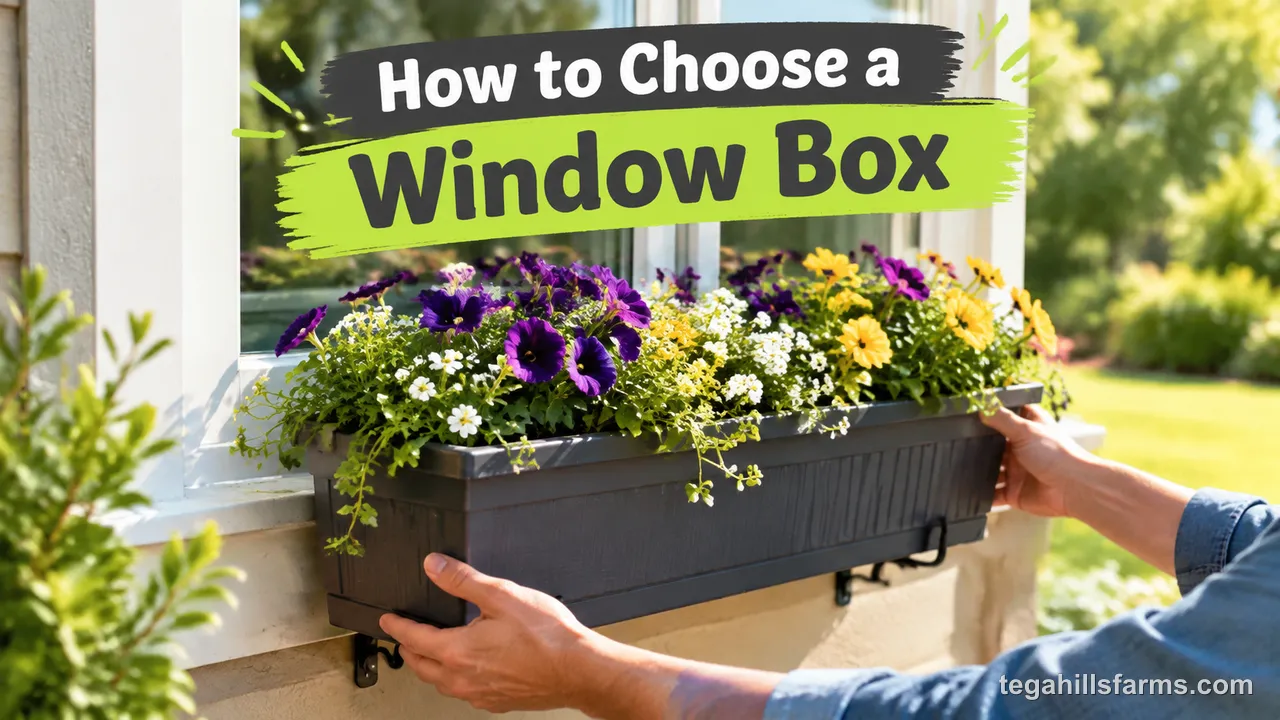
Size and proportion come first, since they are visible from the street and set the soil volume. Material follows, trading a natural look against weight, rot resistance and upkeep. Mounting depends on whether your wall is wood siding, vinyl, brick, stucco or a deck railing.
The real risk with a first box is one that looks right in spring and fails by midsummer. Sagging brackets, rotting boards and plants yellowing in waterlogged soil nearly always trace back to weight, drainage and hardware, so those checks matter as much as color or style.
Measure the window and check the wall surface before you shop. Those two facts rule out more options than any style preference will.
How Do You Measure Your Window for the Right Window Box Size?
Start from the window’s outside trim width, choose a box about that long or slightly longer, and set height and depth by what you plan to grow.
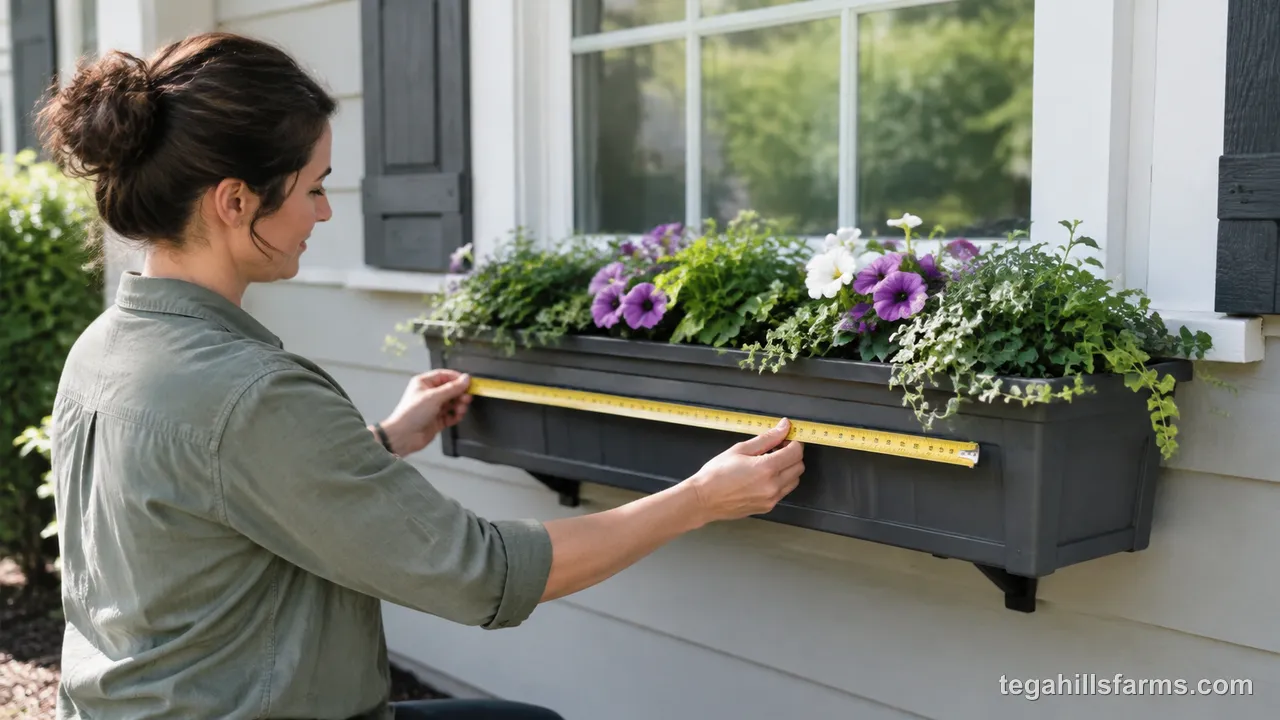
A box sized by eye tends to look stubby under a wide window or crowded against shutters. The depth you pick also decides how much soil roots can draw water from on a hot afternoon, so a measurement that includes the trim and any shutters works for both curb appeal and plant health. If you’re still weighing styles and materials, compare the best window boxes before you commit to a size.
What Length and Width Looks Balanced Under Your Window?
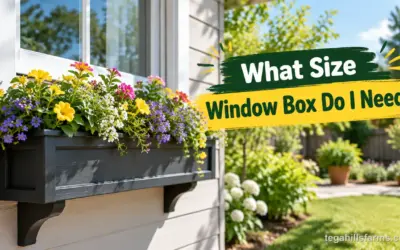
Without shutters, a box looks balanced when it runs the full width of the window and extends up to 8 inches longer, measured left to right across the outside trim. With shutters, the box can run under them for up to a third of the shutter width. Going farther hides the shutters and makes the window look cramped.
Width, meaning front to back, is set by the sill and the brackets rather than by looks. A wider box holds more soil, but it also sits farther out from the wall, which adds leverage on the screws or brackets once the soil is soaked. A box that overhangs a narrow sill can tip forward unless brackets carry it from below.
Bay windows, paired windows and very wide openings change the math, and working out what size window box you need for those starts with the same trim-to-trim measurement.
How Tall and Deep Should Your Window Box Be?
A standard window box stands 8 inches high, while extra-large boxes reach 10 inches tall, and that extra height means more soil around the roots. More soil holds more water, so the box dries out more slowly on hot days and roots can spread instead of circling the bottom.
Shallow-rooted plants such as lettuce, thyme, pansies and most trailing annuals do well in a standard box. Larger herbs, compact peppers and dense mixed plantings benefit from the extra-large size, because their roots fill a small soil volume quickly and wilt between waterings.
Scale matters as well. Under tall windows or on a two-story façade, a taller box keeps its proportion from the sidewalk, while the same box under a small cottage window can look heavy. Root depth by crop is the main factor in how deep a window box should be for vegetables versus flowers.
Which Window Box Material Is Best for Durability, Weight and Maintenance?
Cellular PVC and fiberglass need almost no upkeep, rot-resistant cedar suits edible plants and a natural look, and metal trades heat buildup for strength and a long service life.
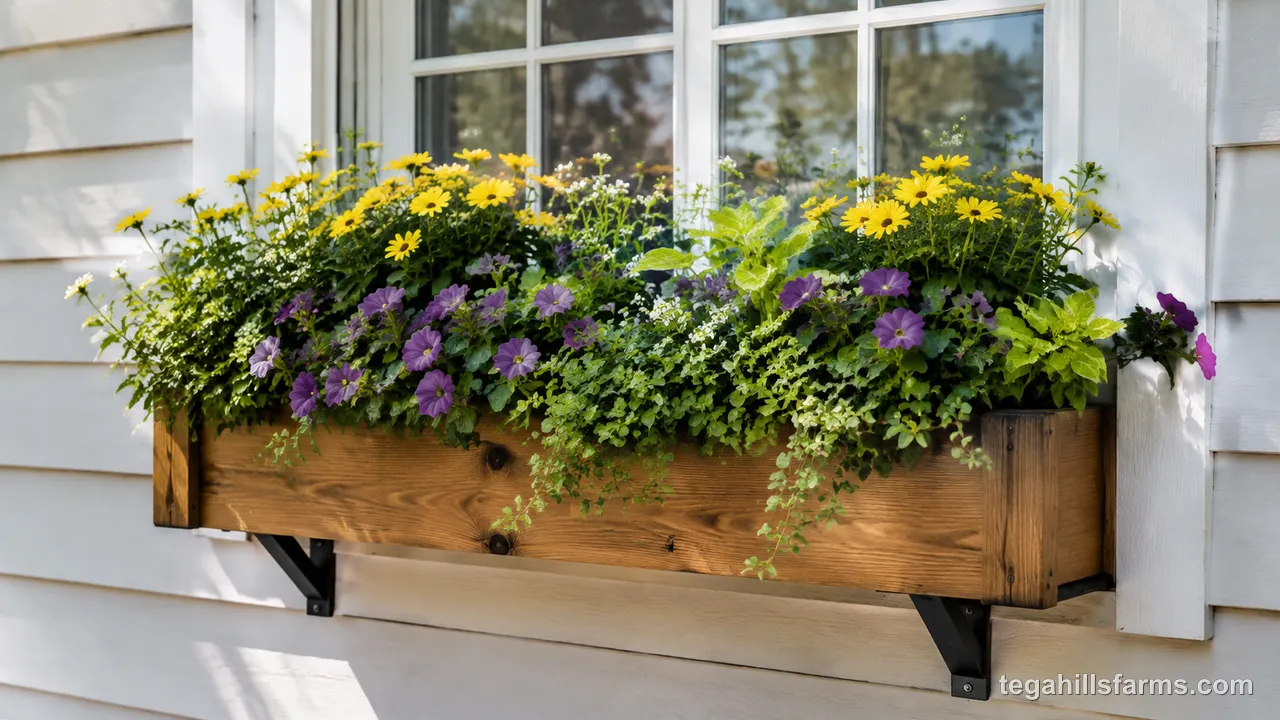
Climate decides which weakness matters most: freeze-thaw cycles crack brittle plastics, humid summers test wood, and strong afternoon sun heats metal. Weight matters on any wall mount, because the material adds to the soil and water load the hardware has to carry.
The common materials compare on length range, weight, upkeep and main drawback as follows.
| Material | Typical lengths | Weight | Upkeep | Main weakness |
|---|---|---|---|---|
| Wood (cedar, redwood) | 24–72 in | Moderate | Oil or seal the exterior | Rots if it stays wet |
| Vinyl | 24–36 in | Light | Wash only | Can turn brittle in hard freezes |
| Cellular PVC | 24–72 in | Light to moderate | Wash only | No natural wood grain |
| Fiberglass | 24–96 in | Light | Wash only | Higher price |
| Fiberstone | 24–72 in | Heavy | Wash only | Weight on wall mounts |
| Aluminum | 24–72 in | Light | Wash only | Heats up in full sun |
| Copper | 24–72 in | Moderate | Let patina form or polish | Heats up in full sun |
| Galvanized steel | 24–72 in | Heavy | Touch up scratches | Rusts where the coating is scratched |
| Wrought iron | 24–72 in | Heavy | Repaint as needed | Rusts without paint; needs a liner |
Are Wood Window Boxes Right for a Natural Look and Edible Plants?
Wood is the right call for a natural look and for herbs or salad greens, provided it is cedar or redwood. Both contain natural oils that slow rot and deter insects, so untreated boards can hold soil without chemical preservatives sitting next to edible roots.
Upkeep is where wood asks more of you. Boards swell when soaked and shrink as they dry, and that movement loosens joints over time, so screwed joints hold up better than staples or nails. An exterior oil or sealer on the outside, plus a liner or plastic insert inside, keeps soil moisture off the wood and extends its life. Skip interior paint on any box meant for edibles.
Pine and other untreated softwoods rot much faster than cedar, so their lower upfront cost rarely lasts. Joinery and board thickness separate the best cedar window boxes from ones that split early.
When Should You Choose PVC, Vinyl or Fiberglass?
Choose a synthetic box when you want something that never rots, never needs painting and keeps its color through years of sun. Cellular PVC is a solid foam-core board that cuts and mills like wood, so it can copy raised-panel and trimmed styles while ignoring moisture entirely.
Vinyl is the lightest and simplest option, but it comes in a narrower length range, and thin, low-grade vinyl can chalk, fade or turn brittle after hard freezes. Look for UV-stabilized material if the box faces south or west. Fiberglass resists cracking in frost, stays light and is made in the longest runs of any material, which suits wide picture windows and long porch rails.
Because none of these absorb water, they hold soil moisture longer than wood. That helps in hot climates and calls for good drainage in rainy ones. For a trimmed, painted look without the upkeep, the best pvc window boxes are a strong place to start.
Are Metal Window Boxes Better for Strength and Longevity?
Metal gives you a strong, long-lasting box, but each metal handles rust, weight and heat differently. Aluminum is light and does not rust, which makes it the easiest metal to wall-mount, and powder-coated finishes keep it looking clean.
Copper weathers to a green-brown patina and lasts a very long time. Galvanized steel depends on its zinc coating, so it holds up until a scratch exposes bare steel; touching up nicks stops rust before it spreads. Wrought iron is usually an open frame that holds a coco liner, and its weight suits railings and sturdy masonry better than siding.
The shared drawback is heat. Metal conducts sun into the soil, and in a south- or west-facing window roots can cook by midafternoon. A liner or insert adds a buffer, and lighter finishes absorb less heat.
How Do You Choose the Right Mounting Method for Your House?
Match the hardware to the wall material and to the weight of the box with soaked soil, then check whether lease or HOA rules limit drilling.
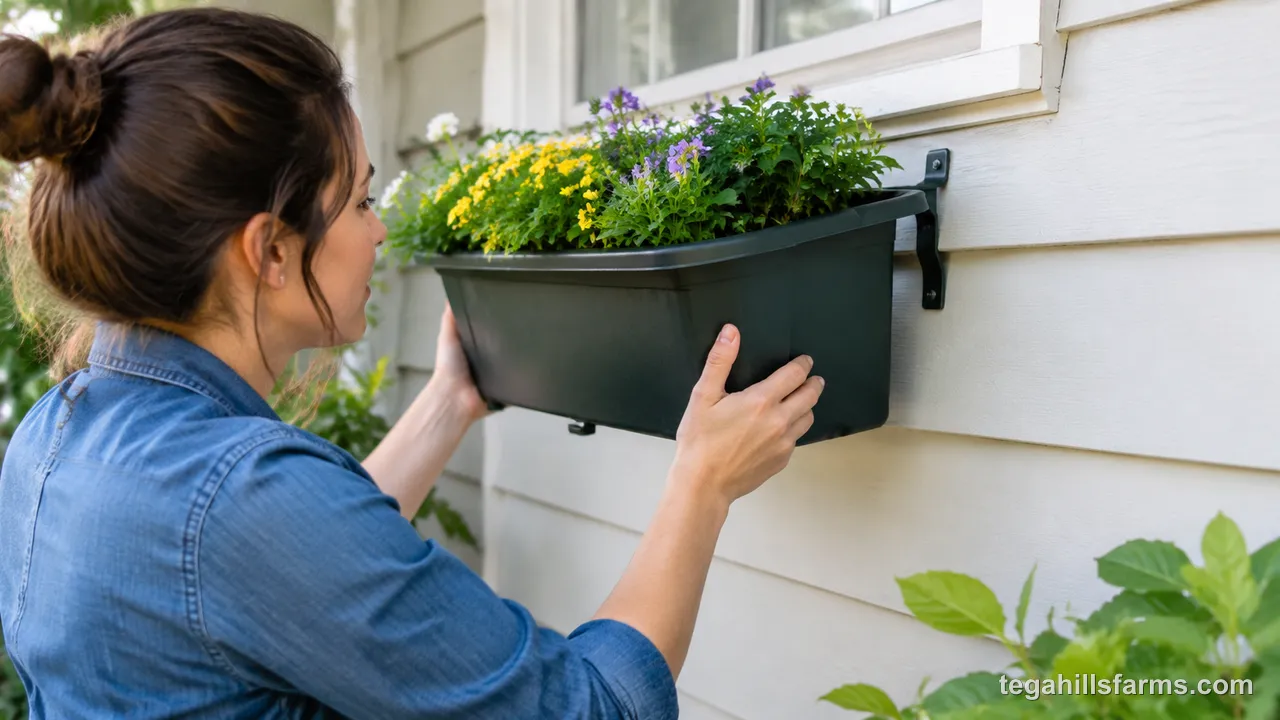
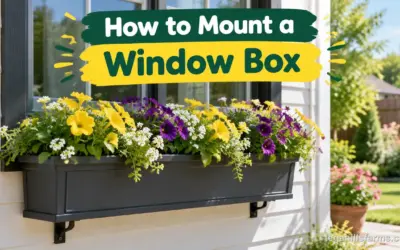
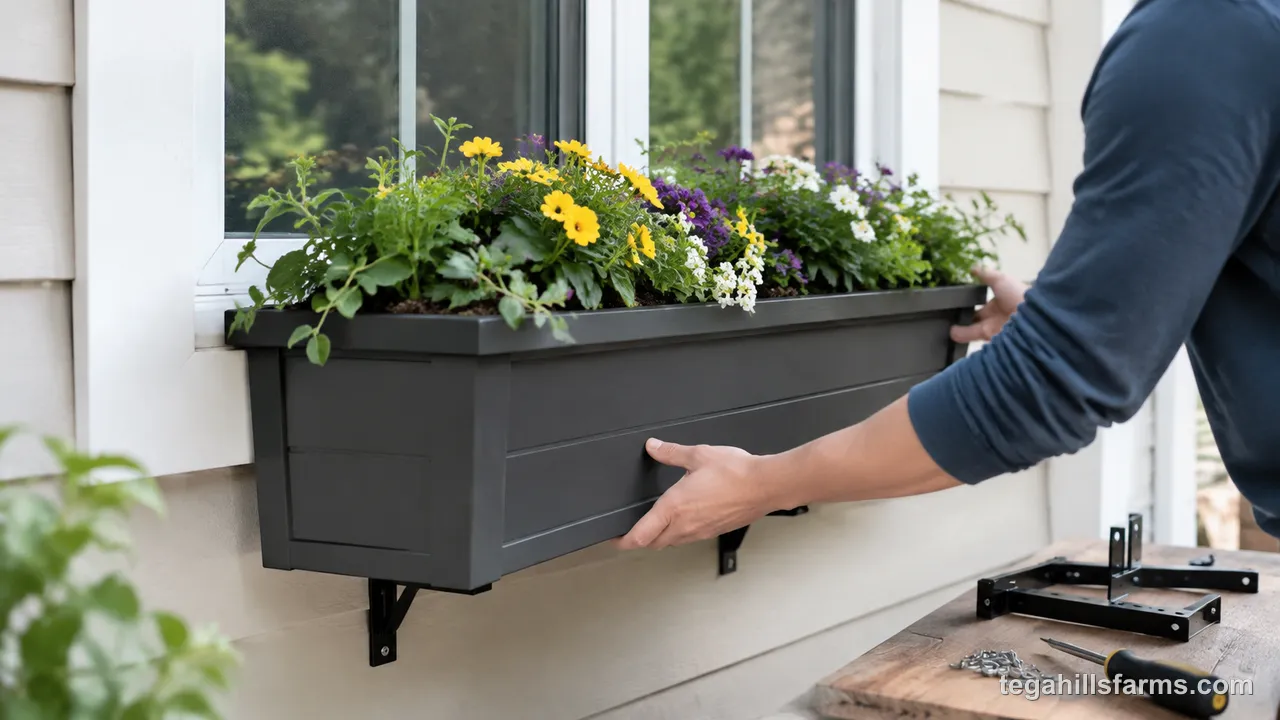
Wet potting mix is far heavier than dry, so hardware that holds an empty box on installation day can loosen after a summer of storms and daily watering. Wood framing, vinyl siding and brick each take fasteners differently, and some boxes ship with cleats or railing brackets while others assume you’ll supply your own. Once the method is settled, the steps for how to mount a window box follow from that choice.
Should You Use a Direct Mount or a Cleat Mount on Siding and Masonry?
A direct mount, with screws driven through the back of the box into wall framing, works on wood siding when you can hit studs or solid blocking, and it is the simplest install. Its weakness is water: a box screwed flat against siding traps moisture behind it, so add spacers that leave an air gap.
A cleat mount uses two interlocking beveled strips, one fixed to the wall and one to the box. The load spreads along the whole strip, and the box lifts off for replanting or winter storage without unscrewing anything.
Brick, stone and stucco need masonry anchors set with a masonry bit. Drive them gently into stucco, which cracks when fasteners are overtightened. On vinyl siding, fasten through a mounting block rather than the vinyl itself so the siding can still expand and contract with temperature swings.
What Brackets Work Best for Railings, Decks and Balconies?
Adjustable railing brackets suit decks and balconies best, because they hook over the top rail and tighten to its width, so the box hangs without a single hole in the wood. Fixed brackets are made for one rail size, so measure the rail before buying, especially composite or metal railings, which often differ from standard wood dimensions.
Wall-mounted brackets, often L-shaped and decorative, support a box from below under windows and on porch walls. They carry weight better than screws through the back of a box because the load rests on the bracket arm instead of pulling fasteners outward.
On balconies, a box hung over the outside edge can drip water onto neighbors below, and some buildings ban it outright. Check your building rules, or hang the box on the inside of the rail.
Can You Mount a Window Box Without Drilling?
Yes. Siding hooks, brick clips, over-the-rail brackets and freestanding stands all hold a window box without a hole in the wall, which suits renters and homes under HOA rules. Siding hooks slide up between overlapping vinyl siding panels and lock in place, while brick clips grip the face of a single brick.
Weight is the limit. Each hook or clip carries a set load, and a long box full of wet soil can exceed it, so pair no-drill hardware with a lightweight material, a shorter length and potting mix rather than garden soil. Check the manufacturer’s weight rating against the box when fully watered.
For windows with no siding or rail to grab, a freestanding stand set below the window gives the same look. The best no drill window boxes pair a light body with hardware built for that load.
What Liners, Drainage and Watering Features Do You Need?
Every window box needs drainage holes, a liner matched to its material, and, in hot sunny spots, a water reservoir that feeds roots between waterings.
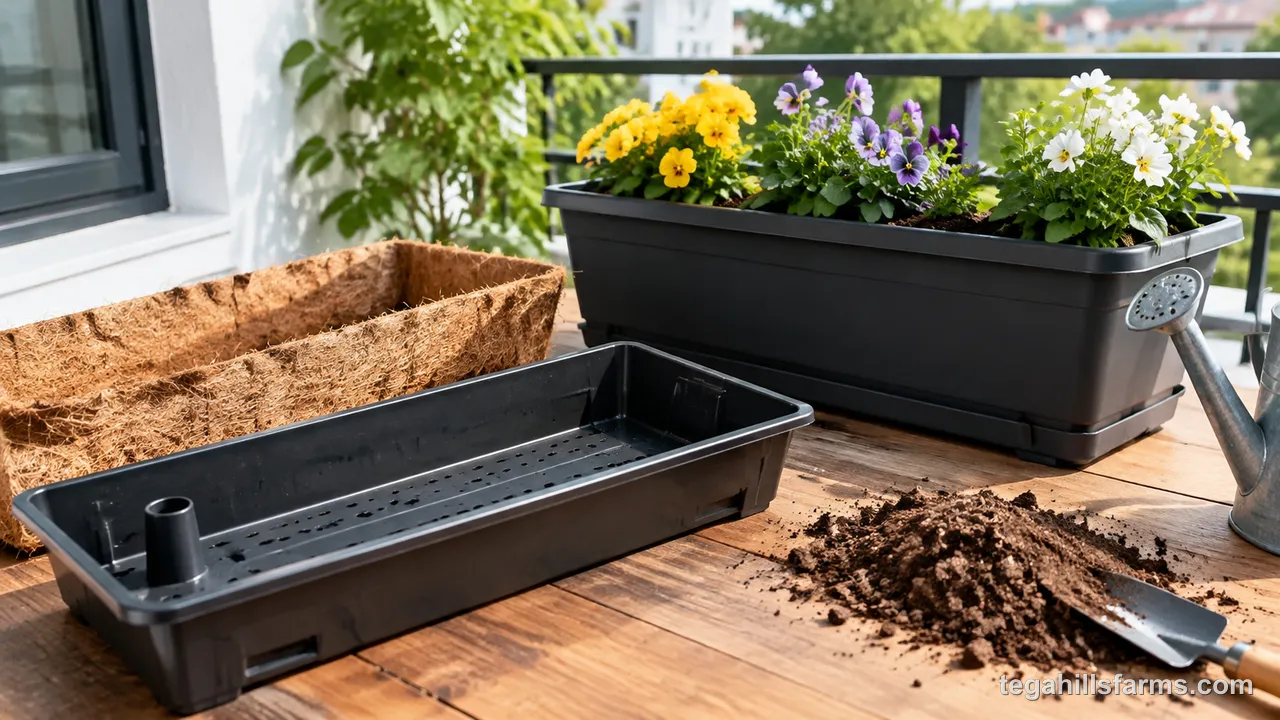
A window box holds a small volume of soil exposed to wind and sun on several sides, so it swings between soaked and bone-dry much faster than a garden bed. Keeping that swing narrow does more for plant health than any style decision.
Why Is Drainage the Most Important Feature to Check?
Drainage comes first because a box that holds water drowns roots no matter how good the plants or soil are. Waterlogged soil pushes out the air roots need, they suffocate, and root rot sets in, often showing as wilting that looks like thirst and tempts you to water even more.
Look for several holes spread along the bottom rather than one, and drill extra holes in plastic or wood if needed. Feet or spacers that lift the box slightly let water escape instead of pooling underneath. Skip the old advice about a gravel layer: it raises the saturated zone into the roots instead of draining it. Think about where the runoff lands, too, since constant drips can stain siding or the sill below.
Do You Need a Coco Liner or Moss Liner?
An open wire or wrought-iron frame needs a fiber liner to hold soil, while a solid box benefits more from a plastic insert. Coco-coir liners, pressed from coconut husk fiber, hold moisture while letting air reach the roots, and they mold to the frame’s curve. Preserved sphagnum moss looks softer and more natural but dries faster and sheds, so moss-lined boxes need more frequent watering in summer.
Plastic liners and removable inserts hold water best and keep wet soil off wood and metal boxes. They also let you pre-plant a spare insert and swap it in for the next season. Punch holes in any plastic liner to match the box’s drainage, and replace a coir or moss liner once it thins and soil starts slipping through.
When Is a Self-Watering Reservoir Worth It?
A self-watering reservoir earns its place on south- and west-facing windows, in full-sun spots with long hot summers, and for anyone who travels. The reservoir sits under the soil, and water wicks upward as roots draw moisture down, which evens out the dry-wet cycle that stresses plants in small boxes.
The payoff shrinks in shade or cool, rainy climates, where soil already stays moist and a full reservoir can keep roots too wet. An overflow hole at the reservoir’s fill line prevents that by letting excess rain drain away. A filled reservoir also adds weight, so confirm the mounting hardware can handle it. For herbs and greens that turn bitter or bolt when they dry out, I’d choose a reservoir model for any sunny window.
How Do You Match Window Box Style to Your Home and Plants?
Choose a profile and color that echo your trim and siding, then plan plants around the window’s hours of direct sun and your USDA Hardiness Zone.
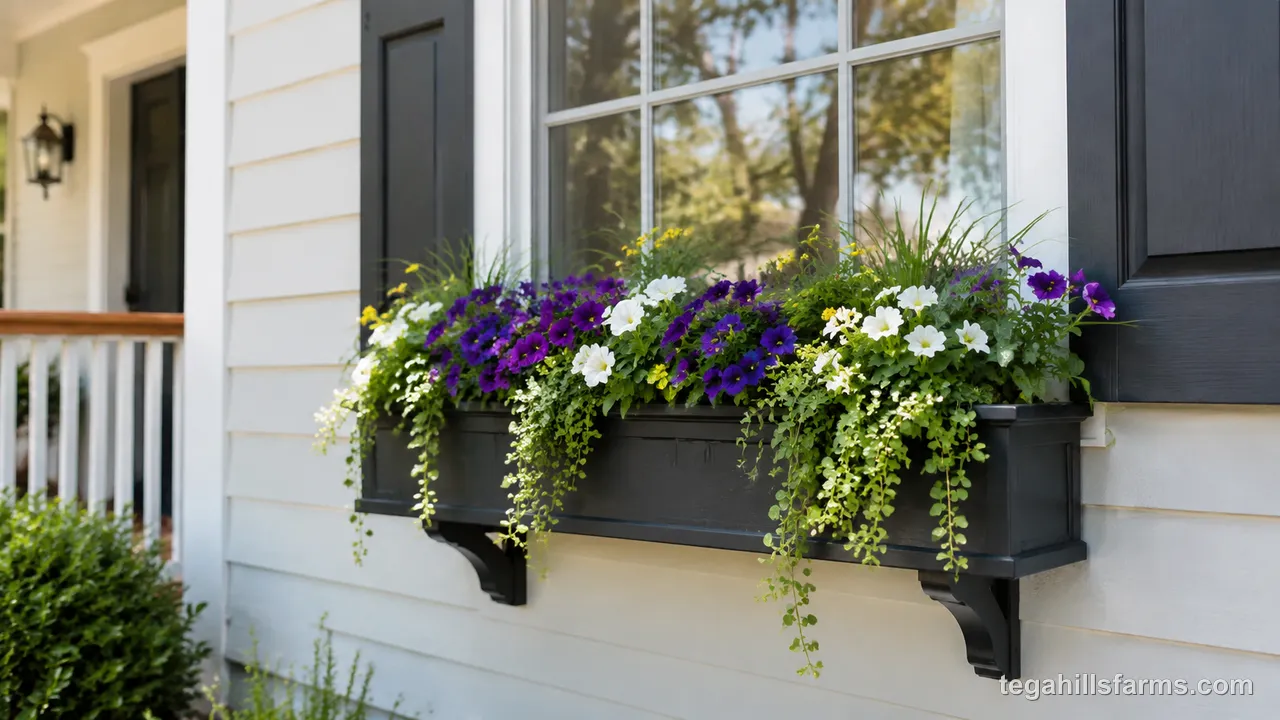
Style shapes how the house reads from the street, while sun and zone decide whether the plants inside thrive, so the two need planning together. A dark metal box that looks sharp on a modern façade also heats soil in a west window, which changes what will grow well in it.
Which Colors and Shapes Suit Your House Style?
Straight-sided rectangular boxes suit colonial, traditional and most suburban homes, especially in white or a color matched to the trim. Farmhouse exteriors pair well with board-and-batten or plank-front wood boxes in white, natural cedar or soft gray. Modern homes look cleanest with slim metal or smooth fiberglass boxes in black, charcoal or bare galvanized steel. Rustic and cottage homes suit raw cedar, flared fronts or wrought-iron frames with coco liners.
Color does a quiet job. A box matched to the trim recedes so the flowers carry the color, while a contrasting shade turns the box itself into a feature. Dark finishes absorb more heat, so they work best on windows that get morning sun or shade.
What Should You Plan to Grow Based on Sun and USDA Zone?
Sun rules out more plants than anything else, so start there. Full sun, meaning six or more hours of direct light, suits geraniums, petunias, lantana, rosemary, thyme and basil. Part shade suits impatiens, begonias, lettuce and parsley, and full shade calls for coleus and ferns. Trailers such as sweet potato vine, creeping Jenny and ivy soften the front edge in the light each one prefers.
Your USDA zone matters for anything you hope to overwinter. Soil in a box mounted off the ground freezes harder than garden soil, so perennials need a hardiness rating colder than your zone. Season length counts too: northern gardens get a short run for warm-season herbs, while southern gardens can keep cool-season greens going through winter.
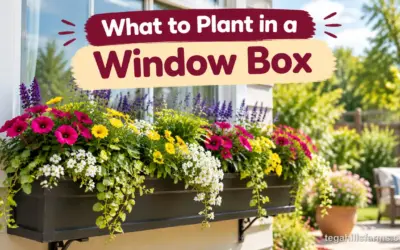
Rotating by season, with pansies in spring, annuals in summer, mums in fall and evergreen cuttings in winter, keeps the box full, and each swap is a fresh chance to rethink what to plant in a window box for that exposure.
A window box that looked solid in May can be pulling its screws out of the siding by August, because every summer storm soaks the soil and adds weight the original hardware never had to carry. Water dripping behind the box can stain paint and rot trim long before the box itself shows damage, and by the time it’s visible, the wall repair costs more than the box did.
How Do You Avoid a Window Box That Fails Early?
Most early failures come from rusting hardware, water trapped against the wall, soil that is too heavy and freeze damage. Each takes a few minutes to check before planting and saves both the box and the wall behind it.
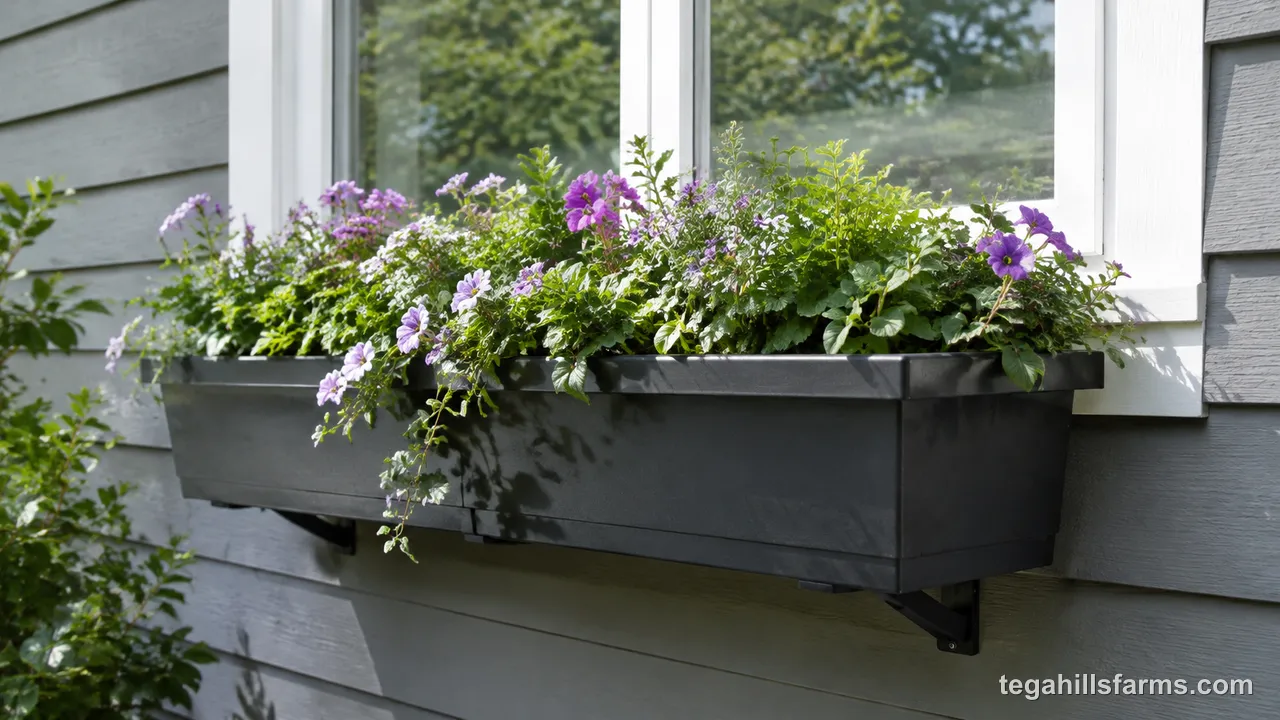
- Hardware: Stainless steel or hot-dip galvanized screws and brackets resist rust, while plain zinc-plated hardware corrodes, weakens and leaves rust streaks down the siding.
- Air gap: Spacers between the box and the wall let siding dry out, which prevents hidden rot and peeling paint behind the box.
- Soil weight: Potting mix stays lighter and drains better than garden soil, which compacts and holds water.
- Load check: After the first deep watering, press gently on the front edge. Any flex or gap at the fasteners means the box needs more support.
- Freeze protection: In cold zones, empty or take down fragile boxes before hard freezes, since expanding frozen soil splits joints and cracks brittle materials.
- Joints and seams: Glued-only corners loosen with wet-dry cycles, so look for screwed or mechanically fastened joints and inspect them each spring.
- Overhead safety: Boxes above doorways, walkways or upper-story windows need fasteners rated well beyond the filled weight, because a falling box can injure someone below.
What Determines the Real Cost and Long-Term Value?
Material, length and the extras around the box set what a window box really costs, and long-term value depends on how many seasons it lasts for what you paid.
Vinyl and molded plastic sit at the entry level. Cedar, cellular PVC and aluminum fill the middle tier, while copper, long fiberglass runs, fiberstone and custom wrought iron sit at the top. Within any material, price climbs with length, because longer boxes use more material and need sturdier hardware.
The box is rarely the whole bill. Brackets or cleats, liners or inserts, and enough potting mix to fill a long, tall box add up, and the soil volume grows quickly as you move to extra-large sizes. Self-watering designs add a reservoir to the cost as well.
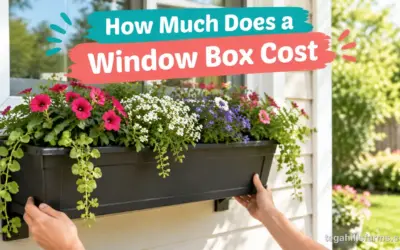
Value comes from replacement cycles. A budget box that cracks after a hard winter and needs replacing may end up costing more than a better-built one that lasts for many seasons. Prices vary by region and retailer, so check how much a window box costs in your chosen material and length before budgeting for the extras.
Quick Answers for First-Time Window Box Growers
Do window boxes come assembled?
Most plastic, vinyl, fiberglass and metal boxes arrive ready to use, while many wood and cellular PVC boxes ship flat with screws for simple assembly. Mounting hardware may or may not be included, so check for brackets or cleats before buying, and plan to supply fasteners suited to your wall.
How often should you water a window box?
In summer heat, a full-sun window box often needs water daily, and sometimes twice in hot, windy weather, because its small soil volume dries quickly. Push a finger into the soil first; if the top inch feels dry, water until it runs from the drainage holes. Shady boxes need far less.
Can you use garden soil in a window box?
No, use a quality potting mix instead. Garden soil packs down in a container, drains slowly and holds too much water, which invites root rot and adds weight to the mounting hardware. Potting mix stays loose and airy, and blending in compost adds nutrients for vegetables and herbs.
What is the most common mistake with a first window box?
Overcrowding combined with poor drainage. Packing in too many plants makes them compete for a small soil volume, so they wilt fast and need constant watering. Add a box with too few drainage holes, and roots end up sitting in soggy soil. Leave room for growth and confirm drainage before planting.
Should you bring a window box inside for winter?
In cold USDA zones, empty or take down fragile boxes, especially vinyl and fiberstone, since frozen wet soil can crack them. Cedar, metal and fiberglass boxes can stay up if they drain freely. Filling them with evergreen cuttings keeps winter color on the house without risking live roots.