

Annual flowers, trailing plants and most kitchen herbs grow well in a standard-size window box. Perennials, woody herbs and compact tomatoes need a noticeably deeper box. Shallow roots spread sideways near the surface, while longer and woodier roots keep reaching down until they hit the bottom.
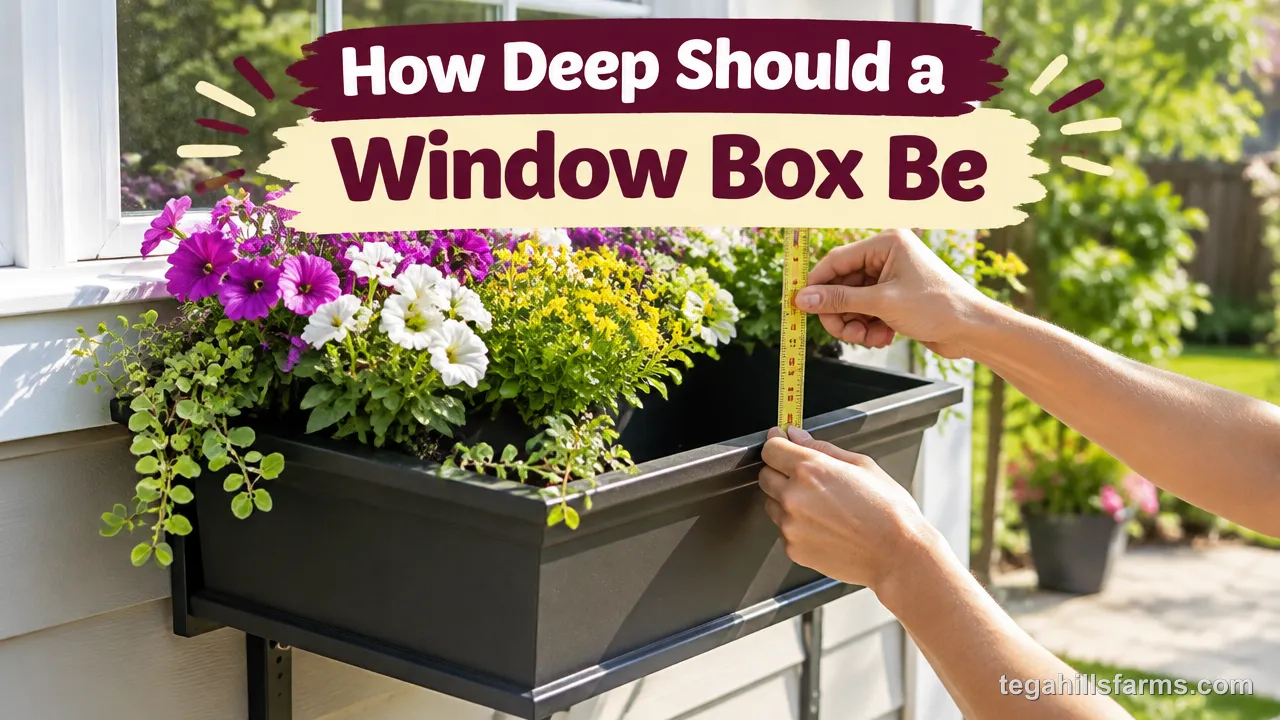
The right depth depends on three things: what you plan to grow, how much sun and wind the wall gets, and what the sill and siding can safely hold. A box facing hot afternoon sun loses water much faster than one on a shaded north wall, so the same plants can need different boxes on different sides of the house.
The main tension is between moisture and weight. More soil holds water longer and protects roots from heat, but every extra inch of wet potting mix adds load to the brackets. A good choice gives the roots enough room without hanging more soil off the house than the plants will use.
How Deep Should a Window Box Be?
Aim for at least 8 inches front to back, with a similar depth of soil from the rim down. That is enough room for annuals, trailing plants and most herbs to root through a full season.
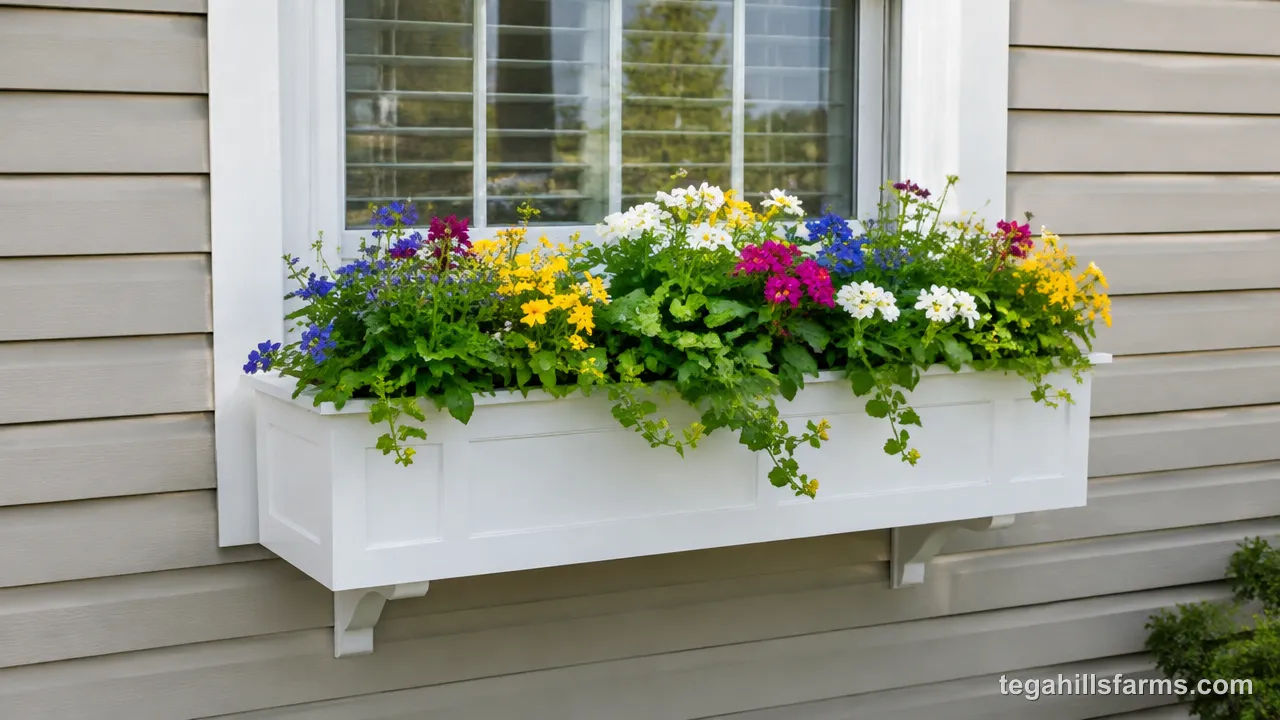
The extra space matters because roots take water and nutrients from the soil around them. A narrow box gives them little soil to explore, so they fill it quickly and run out of moisture between waterings. A deeper box holds a larger reserve. Its center stays damp longer, and the soil near the roots warms and cools more slowly than it does in a thin strip of mix.
Depth also has to fit the box’s height and the sill below it. A box that sticks out far past a shallow sill looks top-heavy and puts more leverage on the brackets. A box that is tall but narrow tips forward once the soil is wet. In practice, a box that is about as deep as it is tall looks balanced, and it holds its weight close to the wall.
If you are still weighing every decision beyond depth, our guide on how to choose a window box walks through style, material and fit in one place.
What Do Depth, Width and Height Mean on a Window Box?
Depth is the front-to-back measurement, height is the distance from the bottom to the rim, and length is the side-to-side span along the window. Height also sets how deep the soil column can be.
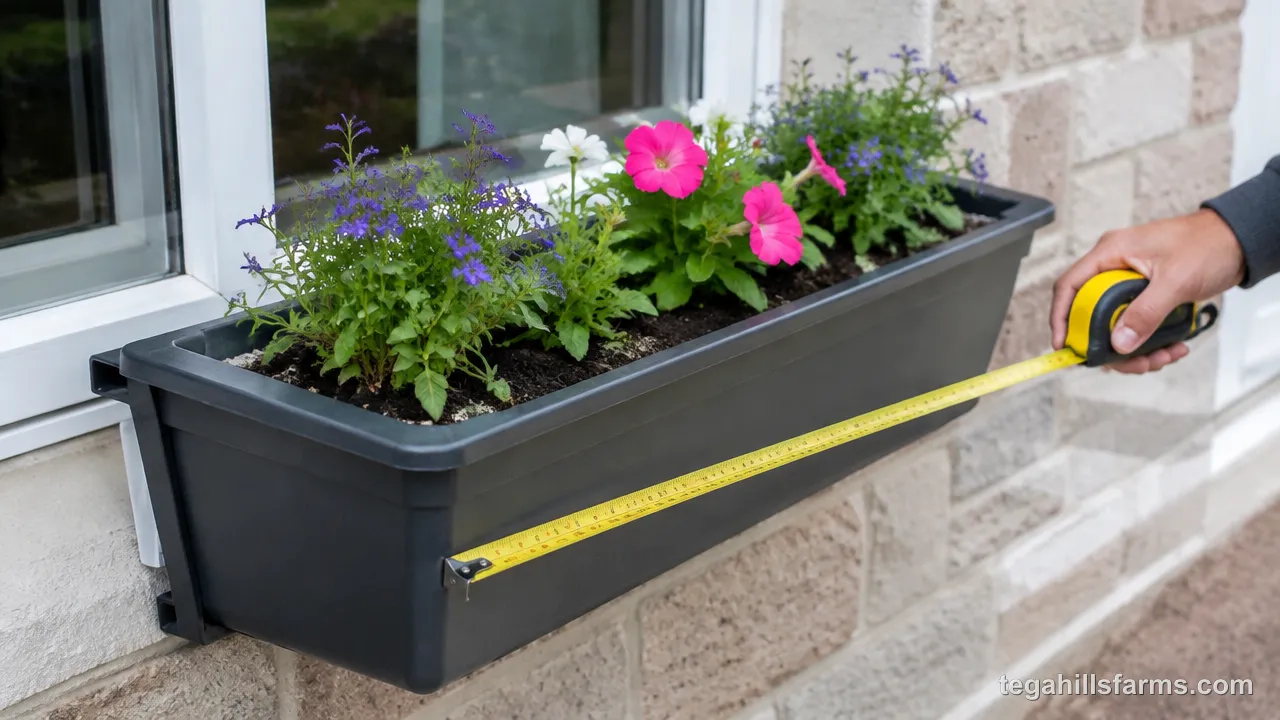
An 8-inch height is the standard and works well for annual flowers with small root systems. Extra-large boxes reach 10 inches tall. They are common on larger homes with tall first-floor windows set high on the wall and on second-floor windows, where a bigger box stays in proportion from the ground.
Some use “width” for front to back, and others use it for length. Before buying, look for three separate numbers and match them by size. The longest figure is the length. Of the two shorter figures, check which one describes the rim-to-bottom measurement. Interior measurements matter more than exterior ones, because thick walls and rolled rims take up planting space.
How Deep Should a Window Box Be for Each Type of Plant?
Root habit decides it. Shallow, fibrous roots do well in a standard box, while taproots, woody stems and heavy feeders need more soil below and behind them. The choice of plants comes before the box, because a box that suits one group can starve another. Matching them at the start saves you from replanting in midsummer.
Annual Flowers and Trailing Plants
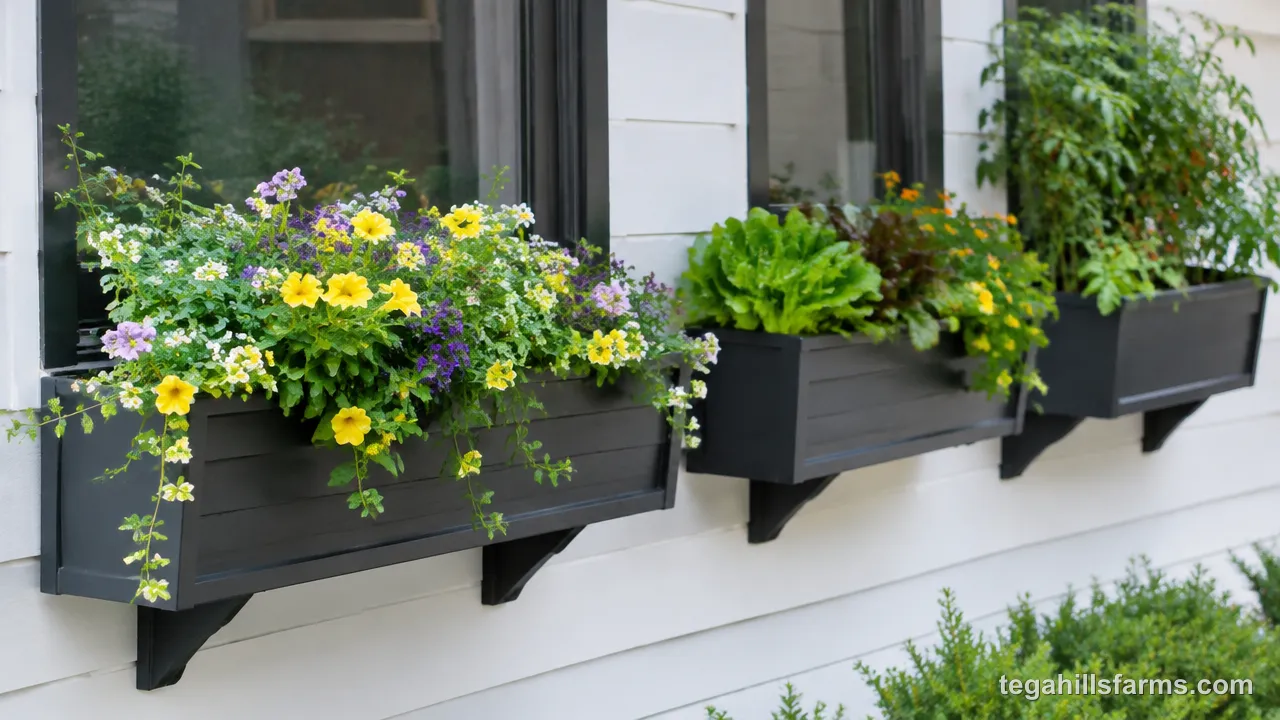
Petunias, geraniums, calibrachoa and trailing vines such as sweet potato vine get by in a modest box because their roots form a dense, shallow mat instead of driving downward. A standard box gives them enough room to root across the full length.
The catch is summer heat. These plants bloom heavily and drink heavily, so a box packed with them can dry out within a day in full sun. Every plant draws on the same small volume of soil, and crowding makes that worse: shared roots compete for water, and the flowers fade first when the box goes dry. Leave room between plants at planting time, even if the box looks sparse for the first few weeks. For combinations that fill out without fighting each other, look into what to plant in a window box before you buy plants by the flat.
Perennials, Herbs and Leafy Greens
Leafy greens and soft herbs are the easiest fit for a standard box. Lettuce, spinach, basil, parsley and chives root shallowly and are usually harvested or replaced within a season, so they never need a large root system. Mint fits too, and a box keeps its runners from spreading through the garden.
Perennials and woody herbs work differently. Thyme, rosemary, sage and lavender build a permanent, woody root system that grows larger each year. Hardy perennials such as heuchera and sedum have to survive winter in the box. In a shallow box, the whole root ball freezes and thaws with the air temperature, which is how perennials die over winter in colder USDA zones. A deeper box surrounds the roots with more soil, and that soil buffers the temperature swings.
If you want plants to come back next spring, I’d lean toward the deepest box your wall can support. Annual greens and soft herbs can stay in a shallower one.
Can You Grow Tomatoes in a Window Box?
Yes, but only the smallest types, and only in a box deeper and roomier than standard. Micro-dwarf cherry tomatoes such as ‘Tiny Tim’ and ‘Red Robin’, plus compact determinate patio varieties, stay small enough to stand up in a window box and still set fruit.
Tomatoes are heavy feeders and heavy drinkers, and their roots go much deeper than a petunia’s. Give them a box with clearly more soil depth and front-to-back room than an annual planting, and space them generously so each plant has its own share of mix.
A standard box falls short in a few cases. Indeterminate varieties outgrow it and topple once fruit loads the stems. A shallow box on a hot south- or west-facing wall dries out between morning and evening, and uneven moisture leads to split fruit and blossom-end rot. A short season in a northern zone also leaves little time for fruit to ripen. Under those conditions, a deep patio container on the ground is the better place for tomatoes.
How Long Should a Window Box Be Compared to the Window?
The window’s frame sets the length: measure between the shutters, across the trim, or across the opening itself, depending on what surrounds the window.
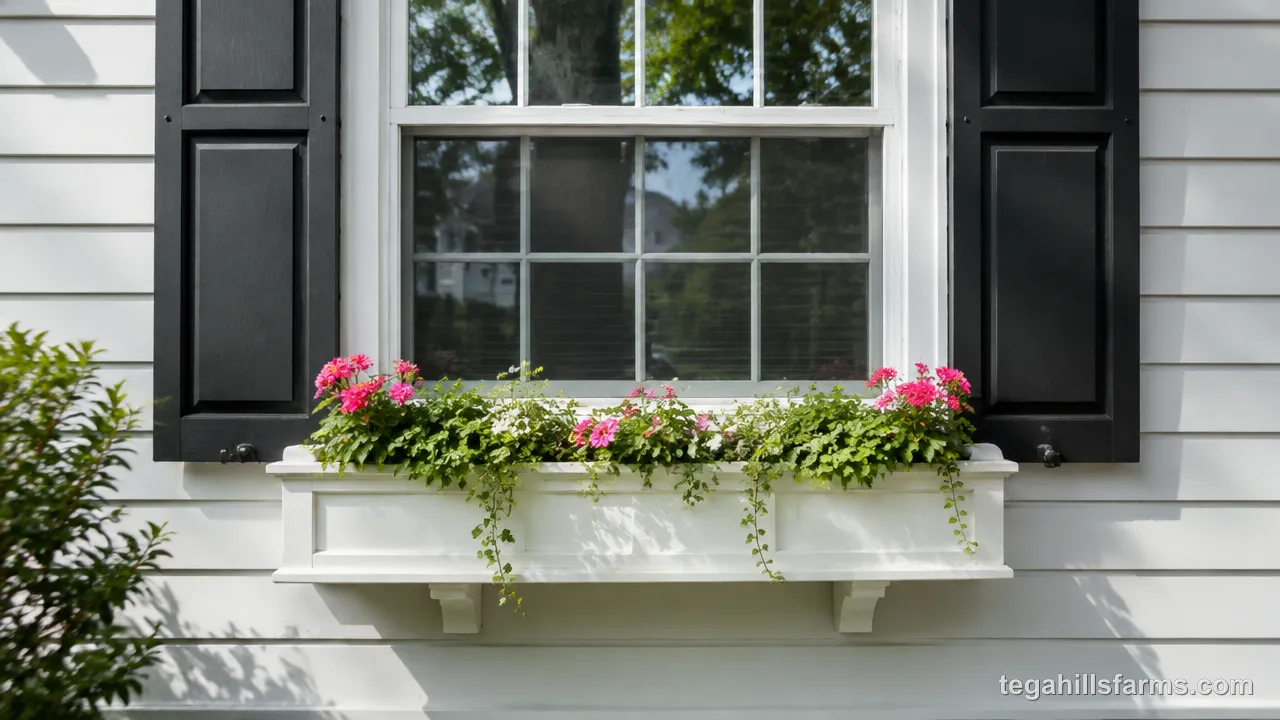
- Window with exterior shutters: measure from the inside edge of the left shutter to the inside edge of the right shutter, then add 4 to 6 inches.
- Window with trim but no shutters: measure from the outside edge of the left trim to the outside edge of the right trim.
- Window with no shutters or trim (brick or stone): measure from the inside left edge to the inside right edge of the opening in the wall.
A box that matches or slightly overhangs the frame looks anchored to the window. A short box looks like an afterthought. Length and depth work together. A long box that is also deep holds a lot of soil and weight, so the longer the window, the more carefully you should plan the depth and brackets. For the full sizing picture, including proportions for tall and wide windows, check what size window box you need before you order.
Why Does Depth Change Watering and Root Health?
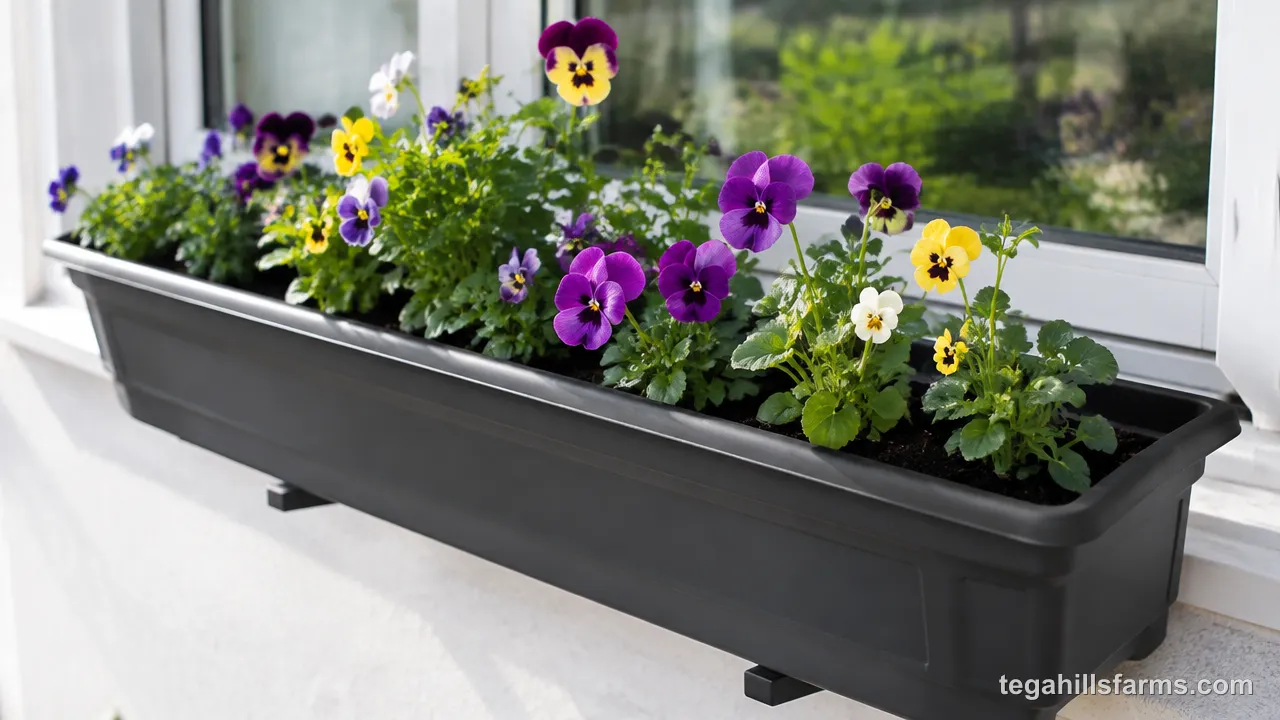
A deeper box holds more soil volume, and more soil means longer moisture retention and steadier root temperatures. Together, those decide how often you water and how much stress plants handle in summer. The effect is small on a mild, shaded wall and much larger on an exposed one. That is why the same plants can need daily watering in one box and do well on a twice-weekly routine in another.
How Soil Volume Affects Drying Out and Root Space
In a hot, sunny or windy spot, a shallow box loses moisture from the surface and the sides at once. The small volume of soil has little reserve, so the root zone can go from damp to dry within a single afternoon. A deeper box dries from the top down while its center stays moist, which gives you a wider window to water before plants wilt.
Temperature follows the same pattern. The thin soil in a shallow box heats up quickly against a sunny wall and cools fast at night. Roots handle those swings poorly and slow their growth. More soil absorbs heat more slowly, so the root zone stays closer to an even temperature.
Your USDA zone changes how much this matters. In hot southern zones with long summers, the extra depth often means watering once a day instead of twice. In cooler northern zones, a shallower box can be manageable through summer, but deeper soil still protects roots from early fall frosts.
Do Self-Watering Reservoirs Need Extra Depth?
Yes. A self-watering reservoir sits at the bottom of the box and takes up space roots would otherwise use, so the box has to be taller overall to give the same planting depth. A box with a deep reservoir can look generous from outside and still hold a fairly shallow layer of soil above the water.
When you compare self-watering boxes, judge them by the depth of soil above the reservoir platform, not by the outside height. The reservoir makes up for some lost soil by feeding water upward through a wick or soil column. That helps thirsty annuals, but it doesn’t add root room for perennials or tomatoes. For deep-rooted plants, choose a self-watering box only if its soil layer alone meets the depth those plants need.
What Should Go in the Bottom of a Window Box?
Drainage holes come first. Without them, water collects at the bottom and roots rot no matter how good the soil is. Add a liner or a thin gravel layer only when your box’s construction calls for one. Everything placed in the bottom of the box takes space away from soil, so each layer has to earn its place against the root room it costs.
Do Drainage Holes and a Gravel Layer Help?
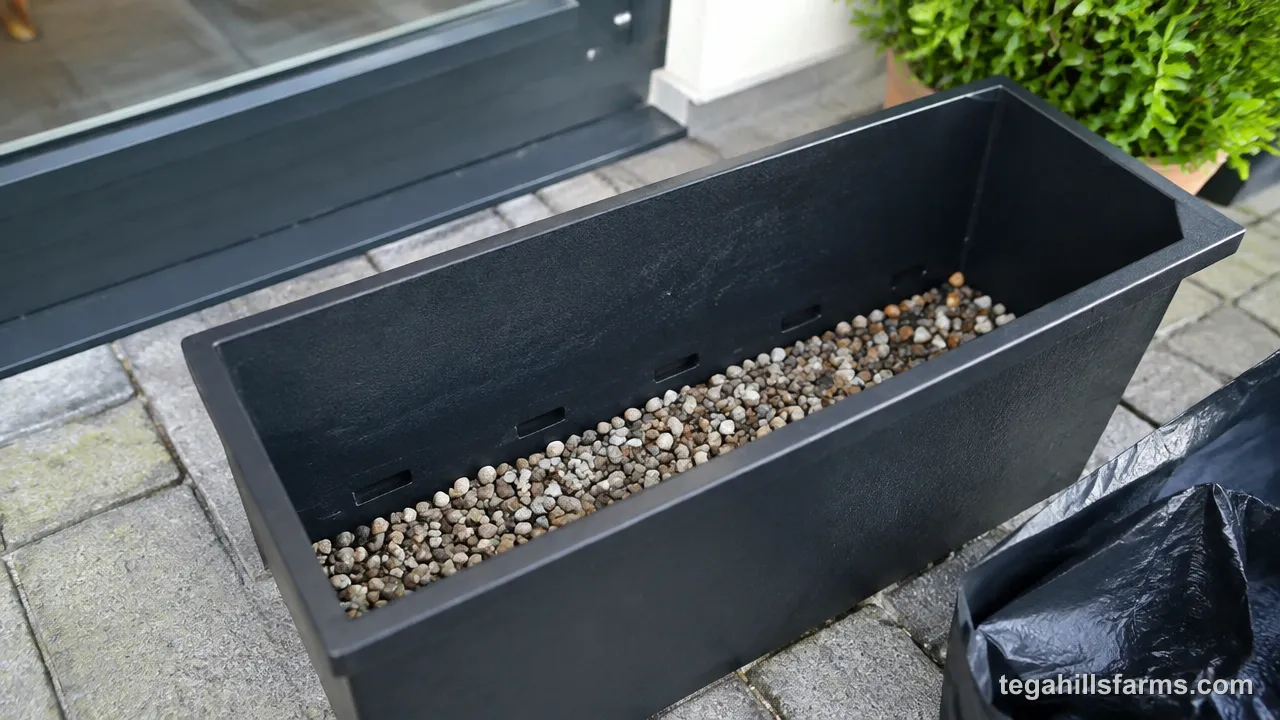
Drainage holes are the part you can’t skip. Water moves downward through the soil, and without an exit it pools at the bottom and fills the air spaces roots need. Waterlogged roots suffocate and rot, and plants in soggy soil wilt the same way plants in dry soil do, which confuses many beginners. Spacing the holes about every 6 inches along the bottom lets water drain evenly instead of collecting in the corners.
A gravel layer is more of a trade-off. In some homemade boxes, about 1 inch of gravel added before the soil keeps mix from washing out of the holes and lifts the soil above standing water. Every inch of gravel also removes an inch of root space, and a sharp change from fine soil to coarse gravel can hold water above the gravel instead of letting it drain. In a box with good holes, a piece of landscape fabric or mesh over each hole keeps soil in without taking up depth.
How Do Liners and Potting Mix Fit Into the Depth?
A liner, an insert pot or a decorative outer box makes the actual planting depth shallower than the box looks. A plastic insert sits inside the outer shell, so the soil depth is whatever the insert holds, minus any gap at the bottom. Coir and fabric liners take up less room, but they still sit inside the frame and reduce the interior a little.
Inserts have one real advantage: you can lift out a whole planting and swap in the next season’s display without digging. Measure the insert itself, not the decorative box, when you check whether your plants will have enough depth.
Use a light potting mix, not garden soil. Garden soil packs down in a confined box, squeezes out air and drains slowly. Potting mix stays loose and airy, so the roots get oxygen even in a shallow space.
Does the Material Change How Deep a Window Box Needs to Be?
Yes. Thick walls insulate roots and allow a slightly shallower box, while thin walls give more planting space but less protection from heat and cold.
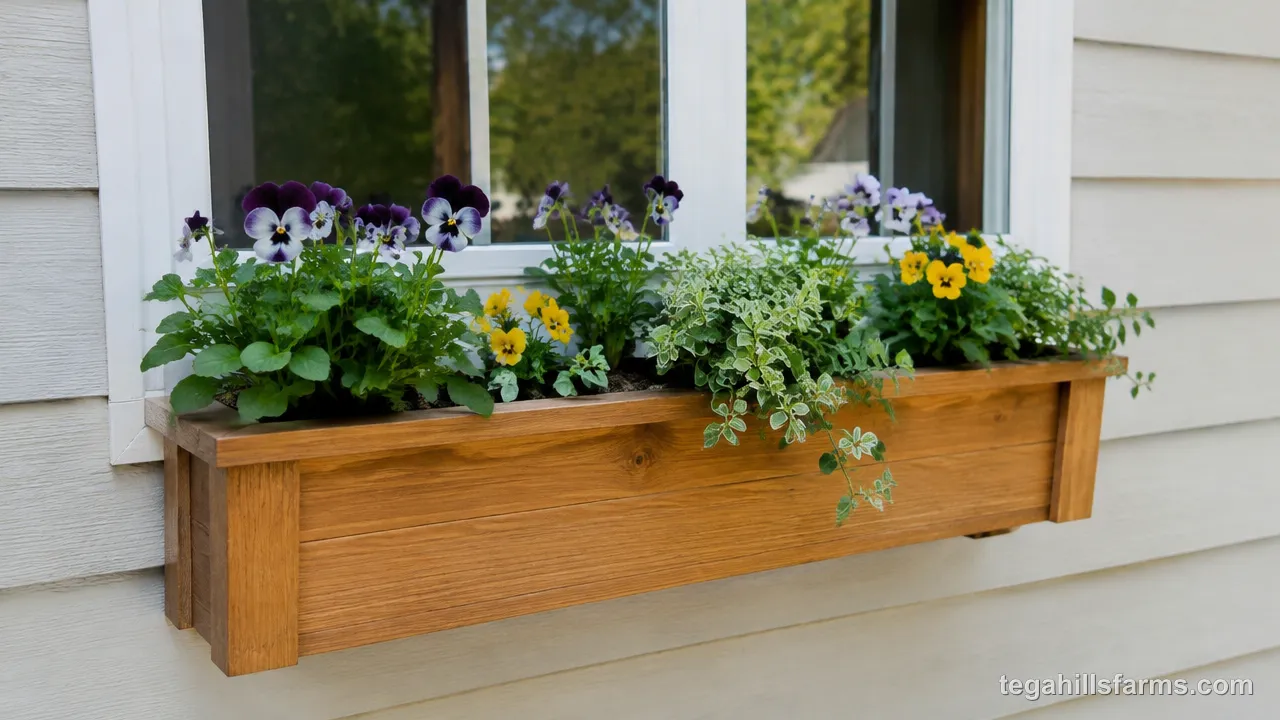
Cedar is the classic choice. Its thick boards insulate the soil against summer heat and winter cold, and the wood resists rot naturally. The board thickness reduces interior space, though, so a cedar box needs slightly larger outside dimensions to hold the same amount of soil.
Cellular PVC looks like painted wood and never rots. It can be as thick as wood and insulates in a similar way, but it is heavier than fiberglass.
Fiberglass has thin, strong walls, so more of the box’s volume holds soil. It is also lightweight, which helps on walls with limited support. Thin walls insulate less, which makes depth more important for keeping roots cool.
Wrought iron frames, including hay rack planters, hold a coir liner in an open basket. The rounded shape gives a shallow root zone at the edges, and air passing through the liner dries the soil quickly. These suit annuals better than perennials.
Material also affects price. A thick cedar or cellular PVC box usually costs more than a liner and frame, so it helps to look at how much a window box costs before choosing between them.
How Does Box Depth Affect Weight and Mounting?
Every extra inch of depth adds more wet soil, so a deeper box needs stronger brackets and anchoring into the wall’s structure. The load is easy to underestimate, because an empty box feels light and the real weight only appears after the first heavy watering. Planning supports for that full, saturated load prevents sagging boxes, pulled fasteners and damaged siding.
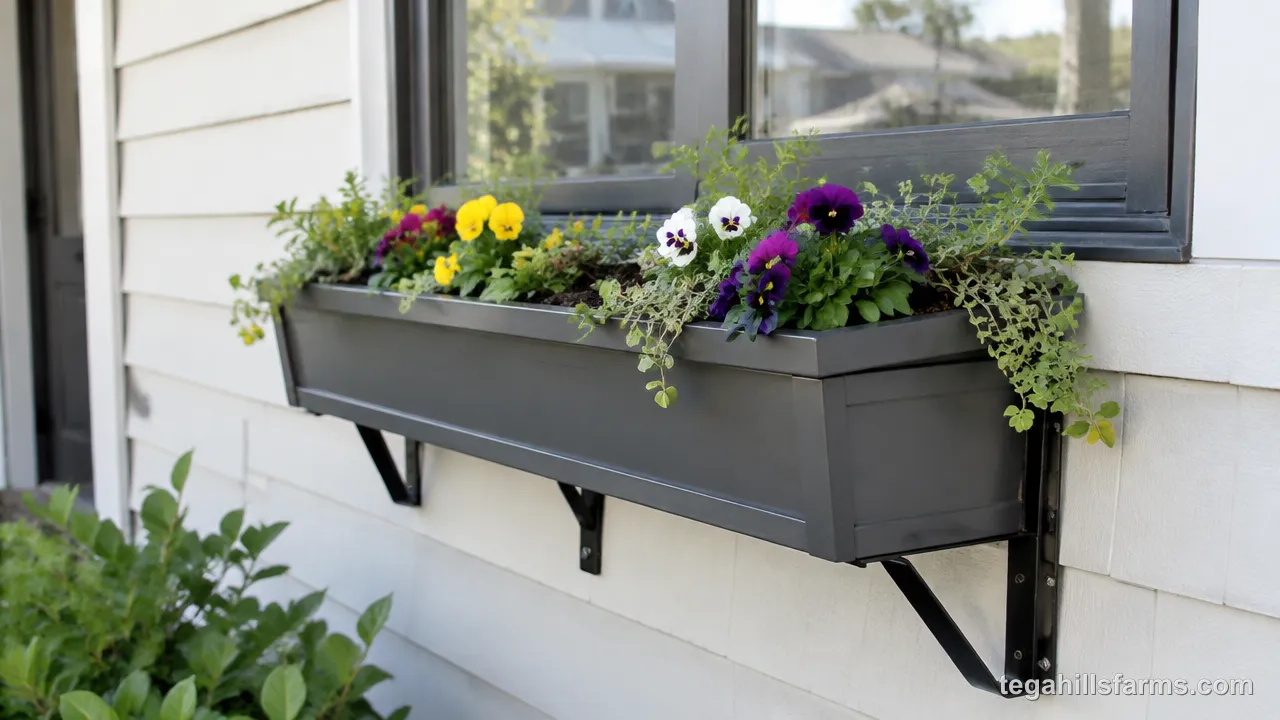
How Heavy Does a Filled Window Box Get?
A filled window box is much heavier than it looks, because potting mix soaks up water and holds it in every pore. A dry box you can lift during planting can become a load the wall carries all season once it is wet. One very large homemade planter held about 160 pounds of dirt, before counting the water the soil absorbed.
Depth and length multiply each other. Making a box deeper adds soil along its entire length, so a long box that is also deep gains weight much faster than either change alone would suggest. Lighter choices ease the strain. A light potting mix weighs far less than garden soil when wet, and a fiberglass or thin-walled box adds little weight of its own. Choosing the depth your plants actually need, rather than the deepest box available, is the simplest way to keep the load reasonable.
What Brackets and Fasteners Suit a Deeper Box?
Wood siding is the easiest wall to work with. Lag bolts driven through the bracket into the wall framing behind the siding hold a heavy box securely, while screws that only reach the siding can pull loose under a wet load. Brick and stone need masonry anchors set into the mortar or the masonry itself. Vinyl siding flexes, so brackets should go through to solid framing rather than resting on the panels.
A deeper box needs sturdier supports placed closer together, because the extra weight puts more leverage on each bracket. Decorative corbels carry weight well and look like part of the house. Over-the-rail brackets and hook systems avoid drilling altogether and work on deck railings or for renters who can’t put holes in siding. Before buying hardware, read up on how to mount a window box, so the supports match both the box’s weight and your wall material.
By mid-July, a box that looked fine in May can have plants that wilt every afternoon even after a morning watering, and roots poking out of the drainage holes. Those are the first signs that the soil can no longer hold enough water for the roots, and a box left that way loses its flowers or crop before the season is half over.
How Can You Tell a Window Box Is Too Shallow or Too Deep?
Plant behavior shows the problem. Daily wilting, stunted growth and roots escaping through the bottom mean the box is too shallow. A heavy box that stays soggy long after watering, with plants that grow no better than usual, means it is deeper than the plants need. Each problem has a different fix, so it helps to know which one you have before changing anything.
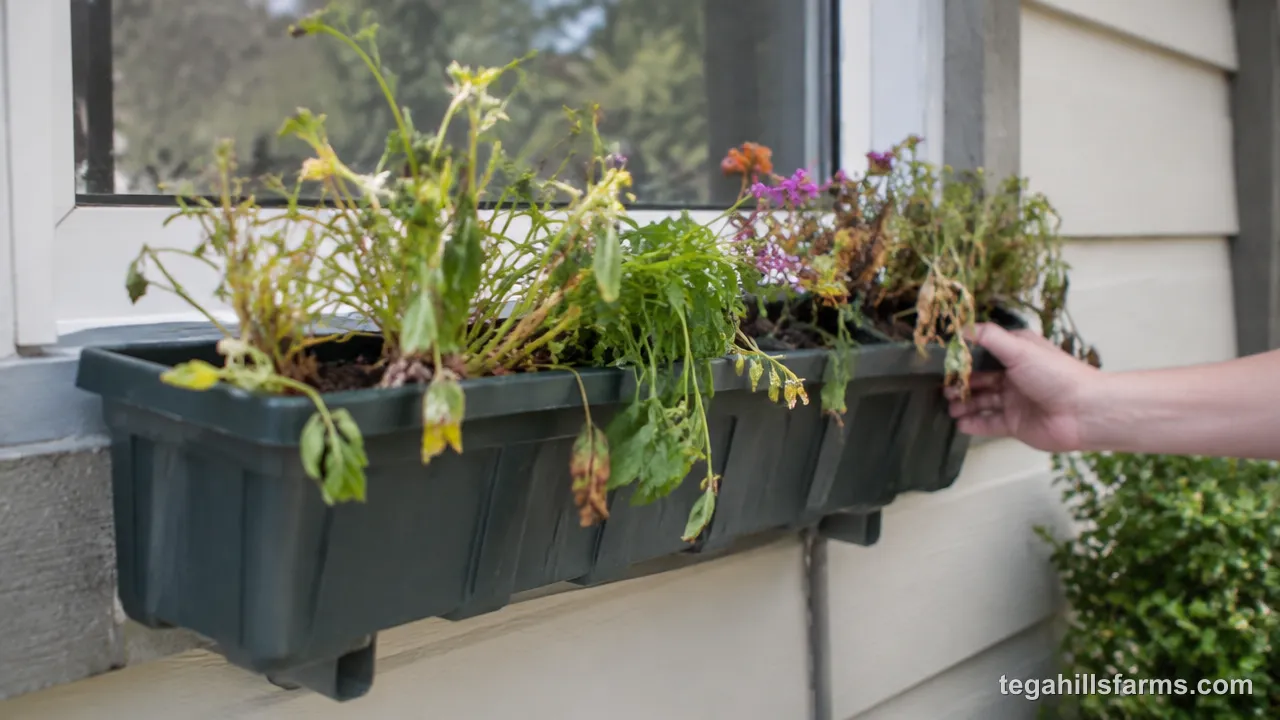
Signs a Window Box Is Too Shallow
Wilting by afternoon, even after watering in the morning, is the clearest sign. The soil runs out of water before the day’s heat passes. Stunted growth follows, because roots that fill the box early have nowhere left to go. Roots circling the bottom or growing out of the drainage holes confirm that the plants have run out of room.
You don’t have to start over. Water more often during hot spells, add mulch on top of the soil to slow evaporation, or pull a plant or two so the rest have more soil. When the season ends, move deep-rooted plants into a larger container and keep the shallow box for annuals and greens.
When Extra Depth Is Wasted Soil and Weight
A deeper box isn’t automatically better. Shallow-rooted plants such as petunias or lettuce never reach the lower soil in an oversized box, so that soil adds weight without helping growth. The lower layer also stays wet long after the top dries, because no roots are drawing water from it, and that soggy zone invites root rot and fungus gnats.
The extra weight also strains brackets and siding all season. If your box is much deeper than your plants need, fill the bottom with a raised insert or choose deeper-rooted plants next season so the soil gets used. For a new box, match the depth to the plants first.
What Depth Should You Use When Building a Cedar Window Box?
Start with the board width, because it sets both the height and the planting depth of a homemade box. Lumber is sold by nominal size, so a 1×8 cedar board is about 7¼ inches wide and ¾ inch thick. After you subtract the bottom board, the soil depth is a little less than the board’s width. Choose a wider board if you plan to grow perennials or compact tomatoes.
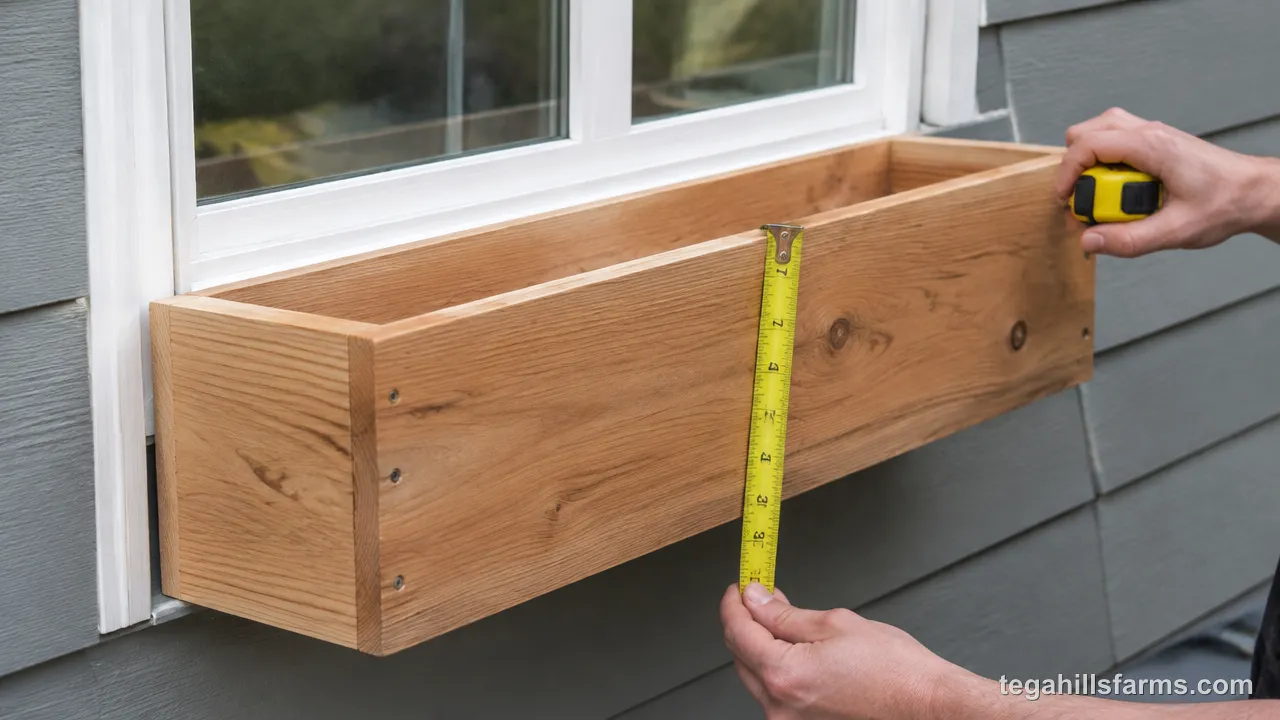
Joint angles determine whether the front-to-back depth stays consistent. Square butt joints give a box with the same depth at the top and bottom. A sloped front with angled cuts at the ends looks lighter on the wall, but it narrows toward the bottom and leaves less root room where roots need it most.
Drill drainage holes along the bottom board at regular intervals before assembly, and use exterior-rated screws so the joints don’t loosen once the wood swells. Good plans list the board widths, cut angles and a full cut list. Choose plans whose depth matches what you intend to plant.
Window Box Depth FAQ
Can herbs grow in a narrow window box?
Yes. Soft herbs such as basil, parsley, chives and mint grow well in a narrow box because their roots stay shallow. Water them often, since a narrow box dries quickly in sun. Woody herbs like rosemary and thyme are a poorer fit and do better in a deeper box where their roots can spread.
What if my windowsill is shallow?
Mount the box on brackets below the sill instead of resting it on top. Brackets carry the weight and let you choose a box with enough planting depth, independent of how far the sill sticks out. Keep the box close to the wall so the load stays centered over the supports.
Does a deeper window box need more fertilizer?
Not more often. A deeper box holds more nutrients, and they leach out more slowly than in a shallow box that you water constantly. Feed according to what you grow: heavy-blooming annuals and tomatoes need regular feeding, while herbs and greens need less. Follow the fertilizer label for amounts.
Does a liner reduce planting depth?
Yes, slightly. Coir and fabric liners take up a little space inside the frame. A plastic insert reduces depth more, because the soil sits inside the insert instead of the outer box. Measure the liner or insert itself to judge how much root room your plants will actually have.
Can I put a shallow box on a second-floor window?
You can, but a shallow box there is hard to water often enough. The extra-large boxes used on upper floors are deeper and taller, and they hold moisture longer. That matters when reaching the box with a watering can or garden hose takes effort.
Write Your Review
No reviews yet. Be the first to share your experience!