

A window box should run at least the full width of your window measured across its trim, or a little longer when shutters or an overhang frame it. It should also be deep enough to hold the roots of whatever you plan to grow. The wall decides the length. The plants decide the depth and height.
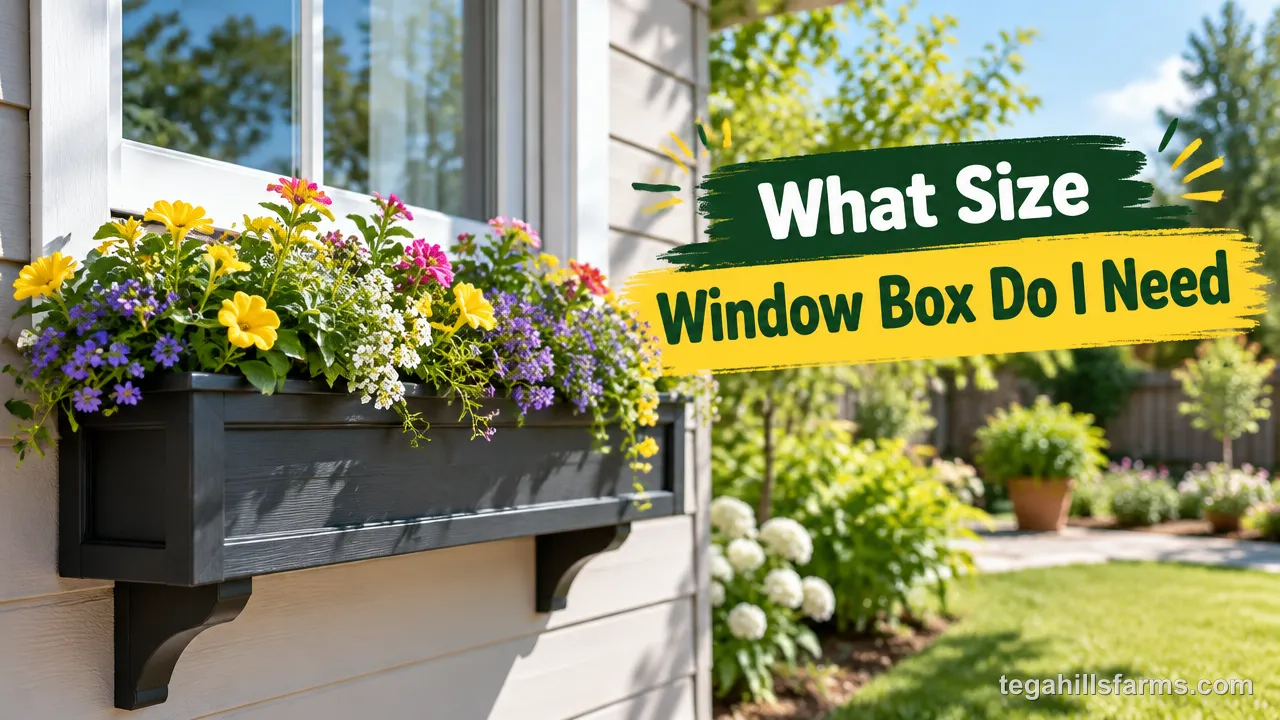
Three dimensions shape the choice: length, height and depth, and front-to-back width. Each one answers a different question. Length is about how the box looks against the house. Depth and height are about how much soil the roots have. Width is about how much room a root ball and a few trailing stems get before the box sticks out too far from the wall.
The trouble most gardeners run into comes from a box that looked fine in a catalog photo. Once it is on the wall, it can sit short under the window, or it can hold so little soil that the plants wilt by afternoon in July. Both problems are easier to prevent with a tape measure than to fix after planting.
Before you shop, decide what you want to grow. A box of shallow-rooted annuals and a box of small evergreens can hang under the same window and still need very different depths.
Which Window Box Size Fits Your Window?
Three measurements settle it: length, taken from the window and the wall around it, height and depth, set by your plants’ roots, and front-to-back width, set by how much soil the crop needs.
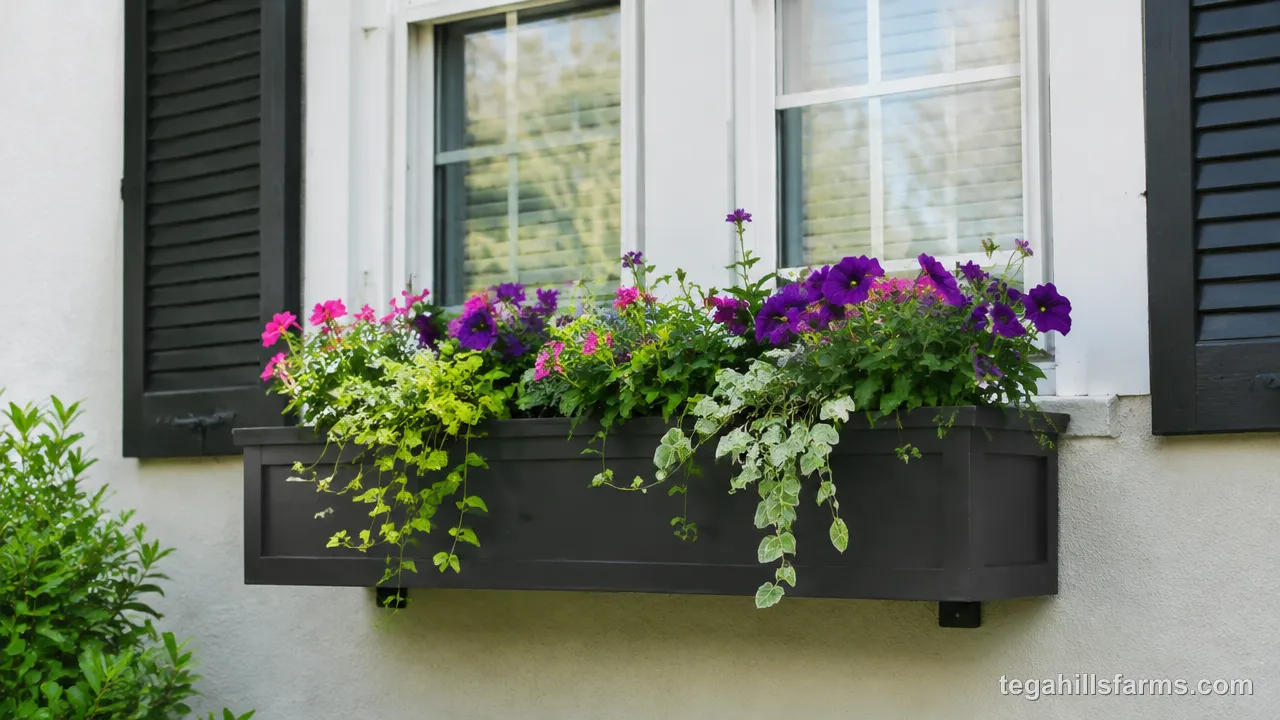
Length is a measuring job because the box reads as part of the window frame, so the trim, shutters or brick edge give you a fixed reference to work from. Depth works differently. No measurement of the house tells you how far a geranium’s or a lettuce plant’s roots want to reach, so the plants make that call.
When length goes wrong, you see it right away. The box looks lopsided or stingy under the window, and the planting never fills the frame. When depth goes wrong, it takes longer to show. The soil dries fast, the roots run out of room by midsummer, and the plants start to sulk.
Measure in this order on your own house: length first, then depth and height, then where the box sits under the sill, a quick preview against the wall, and finally the weight your wall has to carry. Size is only one part of the decision, and the full picture of how to choose a window box also covers material, mounting and what you plan to grow.
How Long Should a Window Box Be?
The right length depends on whatever frames the window, whether that is trim, shutters or the edge of a brick opening, so the wall settles this dimension rather than the plants. The frame is what your eye uses to judge proportion from the yard. Because of that, the first job is to see where the frame starts and stops on your house before you pull out the tape. A box sized to the glass alone often looks too small once it hangs under a wide band of trim.
What Length Works for Windows With Trim or Shutters?
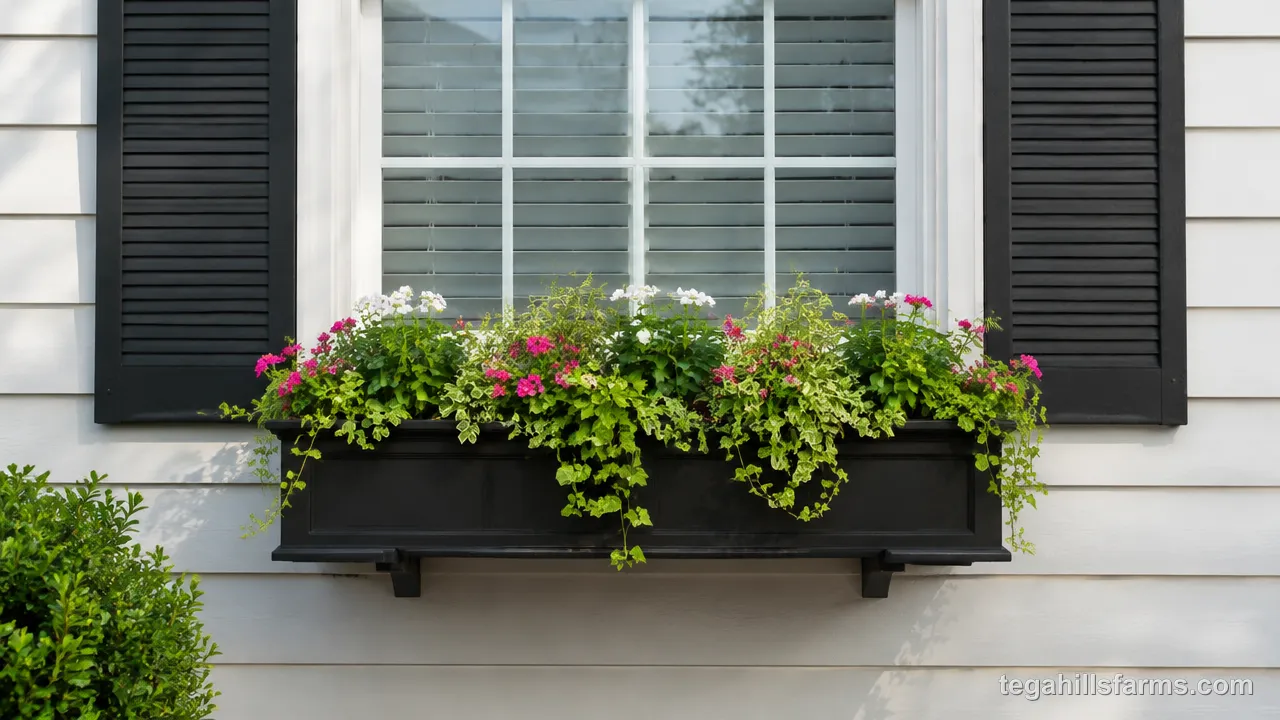
On siding with trim, measure from the outer left edge of the trim to the outer right edge. A box that spans the full trim lines up with the frame. From the street it looks like it belongs to the window instead of hanging under it as an afterthought. If you measure only the glass, the box sits inside the trim lines, and that gap at each end makes the planting look pinched.
Shutters change the reference point. Measure from the inside edge of the left shutter to the inside edge of the right shutter, then add 4–6 inches. That allowance lets the box fill the visual space the shutters frame. Without it, you get a stubby box with bare wall showing at each end. Because the extra length is modest, the box ends just under or slightly past the shutters, so the box doesn’t collide with them.
Before you order, check the wall itself. Look for anything along the length the box will cover, such as a downspout, an outdoor light or a hose bib. Also see whether the shutters actually swing or are fixed in place. Working shutters need clearance above the box so they can still close. Fixed shutters give you more freedom to run the box a little longer. A few minutes spent looking at the wall saves you a box that fits on paper and then bumps into a fixture on installation day.
What Length Fits a Brick Opening or a Window Without Trim?
For a brick or masonry wall with no trim, the box length should match the width of the opening in the wall. In that case the brick edge works as the frame. The window is recessed into the masonry, and the hard line where brick meets window is what your eye reads as the border. Measure straight across that opening from one brick edge to the other. A box that matches it looks built-in. A box that runs past it sits awkwardly against the brick on each side.
A window with no trim on siding has no frame to measure from, so you build the proportion yourself. Take the width of the window and add about 8 inches, which gives roughly 4 inches of overhang on each side. That overhang keeps the box from looking cramped. With no trim to hide the edges, a box cut exactly to the window can look skimpy, while a little extra on each side makes the planting look generous and settled.
The wall material decides the reference point because each surface gives your eye a different edge to measure against. On brick, that edge is fixed and obvious, so the box follows it. On plain siding, there is no edge at all, so you add a margin on purpose to give the box presence.
Should a Window Box Be Wider Than the Window?
A box at least as long as the window usually looks right, and a shorter one nearly always looks undersized. Proportion is part of the reason. A box that stops short of the window edges leaves the glass looking bigger and the planting looking smaller. Plants add to the effect. A full box spills over its ends with trailing stems, and that spill only reads as abundant when the box underneath runs the full width.
The exception is a tight fit, such as a window squeezed between shutters that can’t be moved or a narrow brick reveal. There, a box slightly shorter than the window is the practical choice, and a trailing plant at each end can soften the gap.
Very wide windows and rows of windows give you two options. One long box under a run of windows draws a continuous line of color across the house. That works well when the windows sit close together. Separate boxes suit windows spaced apart, because a single box stretched across bare wall looks odd.
The practical payoff of a longer box is more soil, which means more room for plants to fill in and more moisture held between waterings. When you are unsure between two lengths, I would lean toward the longer one. The planting will look fuller, and the roots will have more to work with.
How Deep and Tall Should a Window Box Be for Your Plants?
This dimension comes down to what the roots need and how often you want to water, not to anything about the window. Getting a feel for how deep a window box should be starts with the plant’s root zone. A shallow box suits small root systems and a gardener who doesn’t mind watering often. A deeper box suits bigger plants and a busy summer schedule. The window only enters the picture later, when you check that a tall box still clears the sill.
Standard or Extra-Large Height: Which Do Your Roots Need?
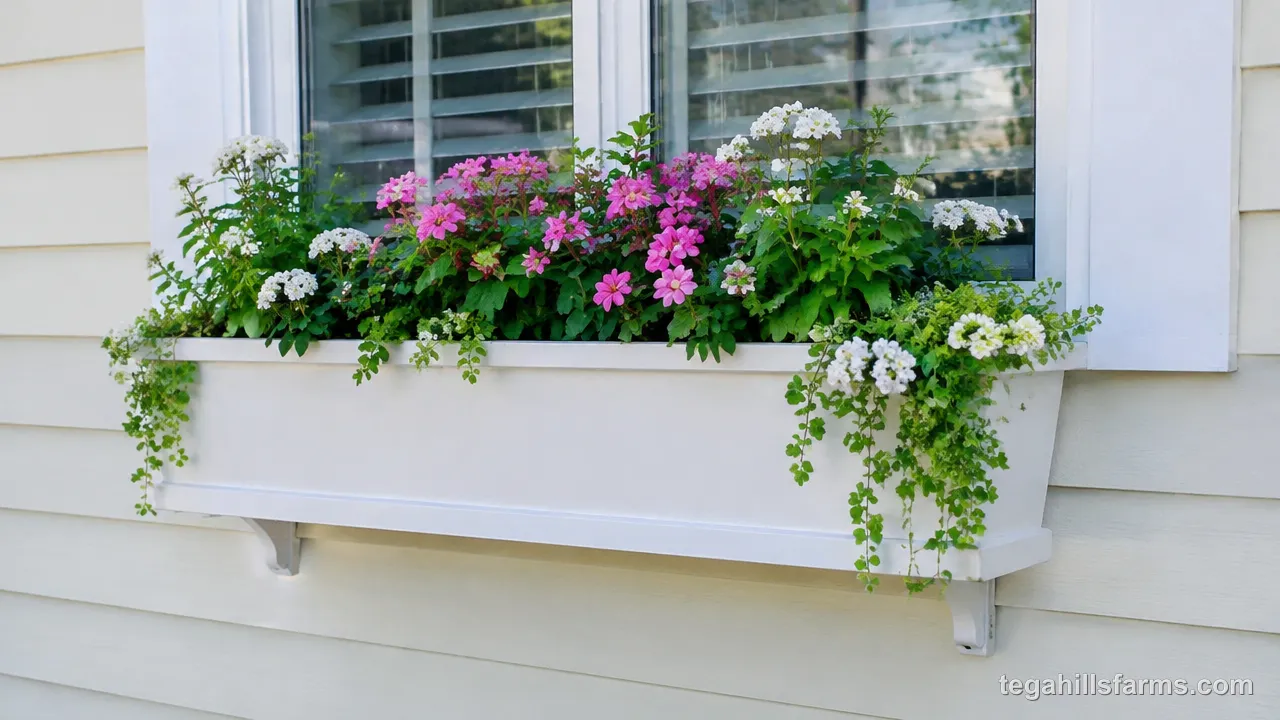
A standard window box is about 8 inches tall. An extra-large box is about 10 inches. That difference matters more than it sounds. Shallow-rooted annual flowers and most herbs do fine in the standard height, because their roots stay near the surface and they’re replanted each season anyway. Perennials, small evergreens and deeper-rooted vegetables do better in the extra-large size. Their roots keep growing season after season and need somewhere to go.
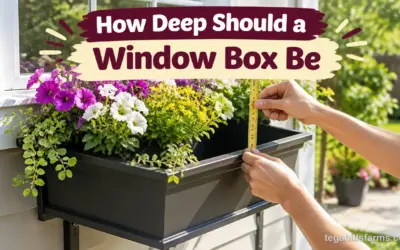
As a general guideline, give the soil at least 8–10 inches (20–25 cm) of depth. That gives roots room to spread and holds enough moisture between waterings. Larger vegetables and bigger flowering plants may want more, so the plants you choose should guide the size more than the window does. Sorting out what to plant in a window box before you buy saves you from matching a deep-rooted crop to a shallow box.
Soil volume is also your buffer against summer heat. More soil holds water longer, so an extra-large box needs watering less often. Its deeper soil also stays cooler around the roots on a hot afternoon. A shallow box in full sun can dry out within a day and leave plants wilting by evening. That is a common struggle with window boxes in hot southern summers.
Self-watering boxes need their own allowance. The water reservoir sits under the soil and takes up part of the box’s height. If you want a self-watering model, choose one tall enough that the soil above the reservoir still meets the root depth your plants need.
How Wide Front to Back, and How Many Plants Fit?
Most window boxes run about 8–12 inches (20–30 cm) from front to back. That suits most windows. The width has to make room for a root ball plus a row of trailing plants along the front edge. A box too narrow forces you to choose between upright plants and spillers. A box too wide sticks out from the wall and starts to look heavy. Wider boxes may also need extra brackets to carry the added soil.
Length sets how many plants fit. Annuals can be planted close together for a full look from day one, because they only need to last one season and will fill in quickly. Perennials need wider spacing, since they keep growing and will crowd each other the following year. Overcrowding stresses roots. They compete for the same small pocket of water and nutrients, and the whole box declines faster in summer heat.
Drainage matters more as boxes get longer. Drill drainage holes about every 6 inches along the bottom, so water drains along the whole length instead of pooling at one end. A long box with only a hole or two can stay soggy at one end and dry at the other. Roots sitting in standing water lose access to air and begin to rot, and plants in that end often yellow and collapse before the rest of the box shows any problem.
How Far Below the Sill Should You Mount a Window Box?
For windows that swing outward, such as casement and awning windows, mount the box 6–8 inches below the sill. For sliding and double-hung windows, about 1 inch below the sill works.
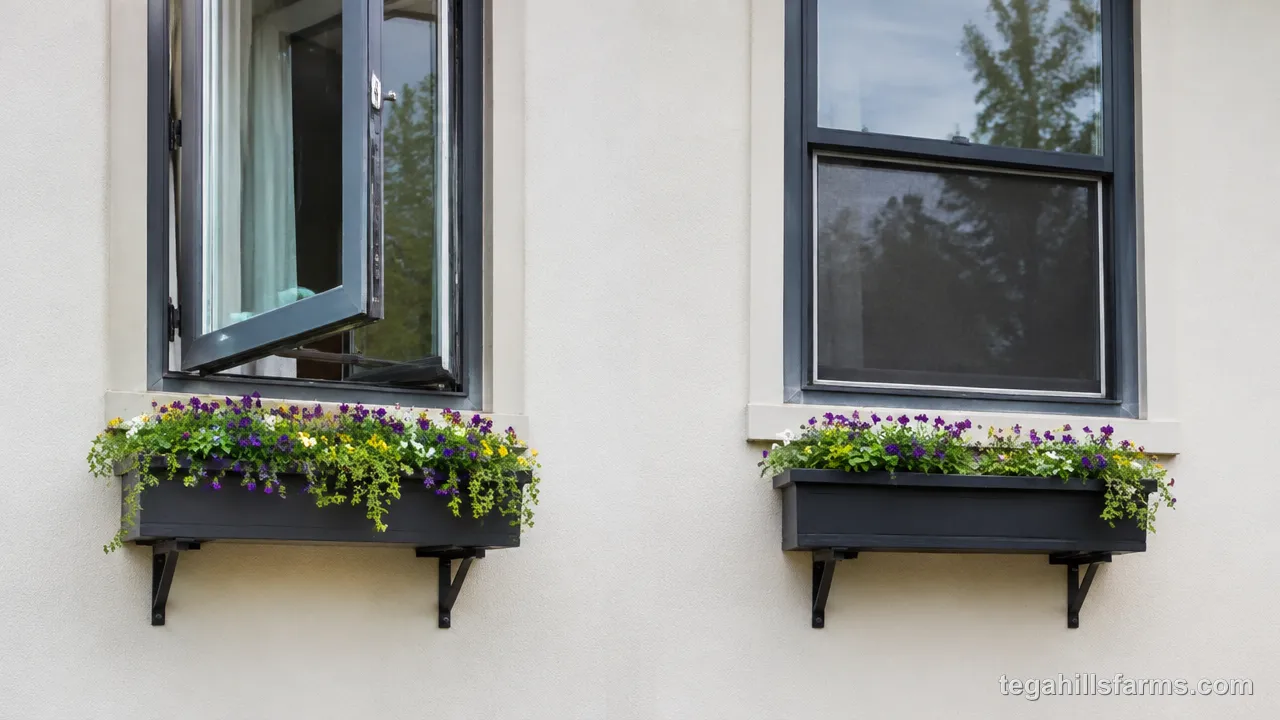
The bigger gap for outward-swinging windows exists because the sash needs room to open. Plants growing up from a box mounted tight to the sill will block a casement window or get crushed every time it opens. Sliding and double-hung windows move within their own frame, so the box can sit almost against the sill without getting in the way.
The gap also affects the plants. A little space between the foliage and the glass lets air move, which helps leaves dry after rain and keeps them from pressing against a window that heats up in afternoon sun. It changes how the box looks, too. A box set close under the sill reads as part of the window from both inside and outside, and you see the flowers when you look out.
Mounting errors show up in both directions. Too close, and the plants block the sash or rub against the glass. Too far down, and the box seems to float on the wall, disconnected from the window it is meant to dress. The hardware and spacing details of how to mount a window box matter just as much as the measurements, since the brackets have to land at the right height.
How Do You Measure and Preview the Size Before Buying?
Measure edge to edge across the frame, adjust for shutters or brick, pick the height from your plants, and then preview the box against the wall before you order. Working in this order means each measurement builds on the last:
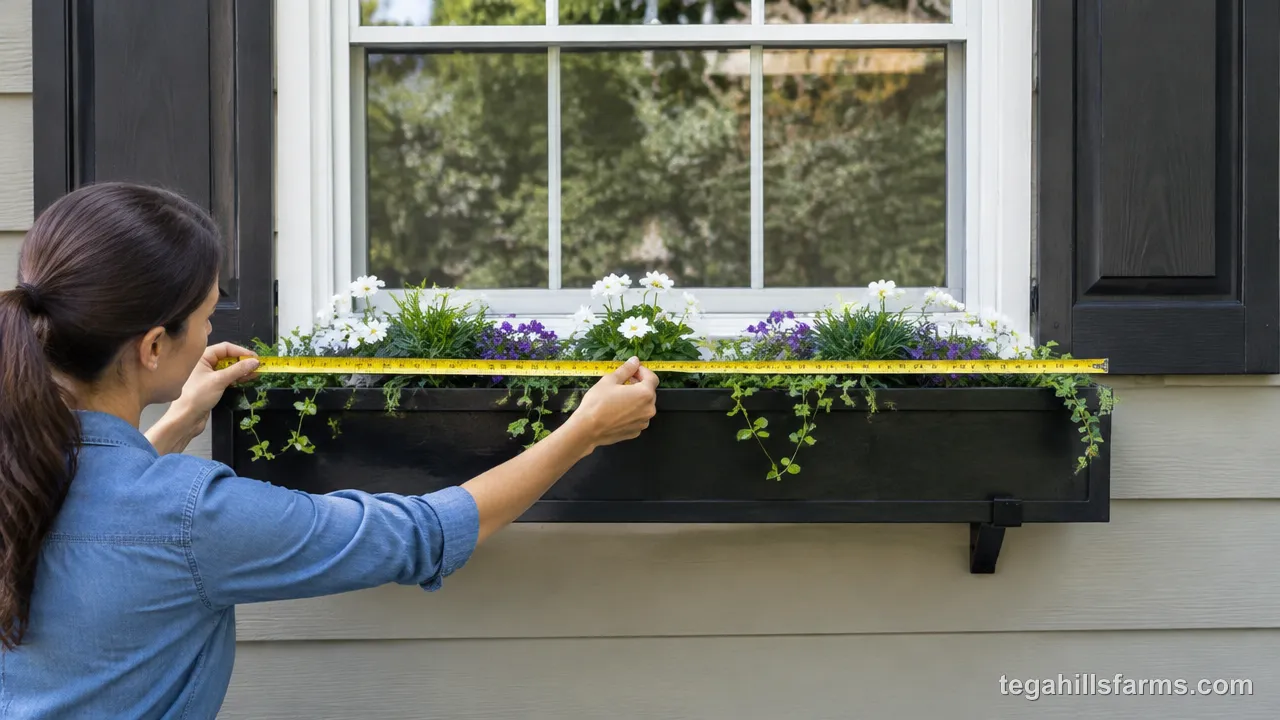
- Measure the window or its trim from outer edge to outer edge.
- If shutters frame the window, measure between their inside edges and add the shutter allowance.
- If the window sits in brick, measure across the opening instead.
- Choose standard or extra-large height based on what you plan to grow.
- Preview the size on the wall before ordering.
For the preview, use the paper towel trick. Tape paper towels or a roll of paper against the wall at the length and height you plan to buy, right where the box would hang. Then walk out to the yard or the sidewalk and look at it the way neighbors will see it.
That step catches what a tape measure can’t. A box that seemed generous on paper can look skimpy under a wide window once it’s on the house. One that seemed modest can look bulky on a small cottage. Seeing the paper outline against your siding, trim and the size of the house tells you whether to go longer or taller. Trimming or adding a few sheets of paper costs nothing, while returning a box costs time and shipping.
Does House Style or Window Height Change the Size You Need?
It does: a large house or a second-floor window usually needs a longer, extra-large box, while a modest cottage window can carry a standard one.
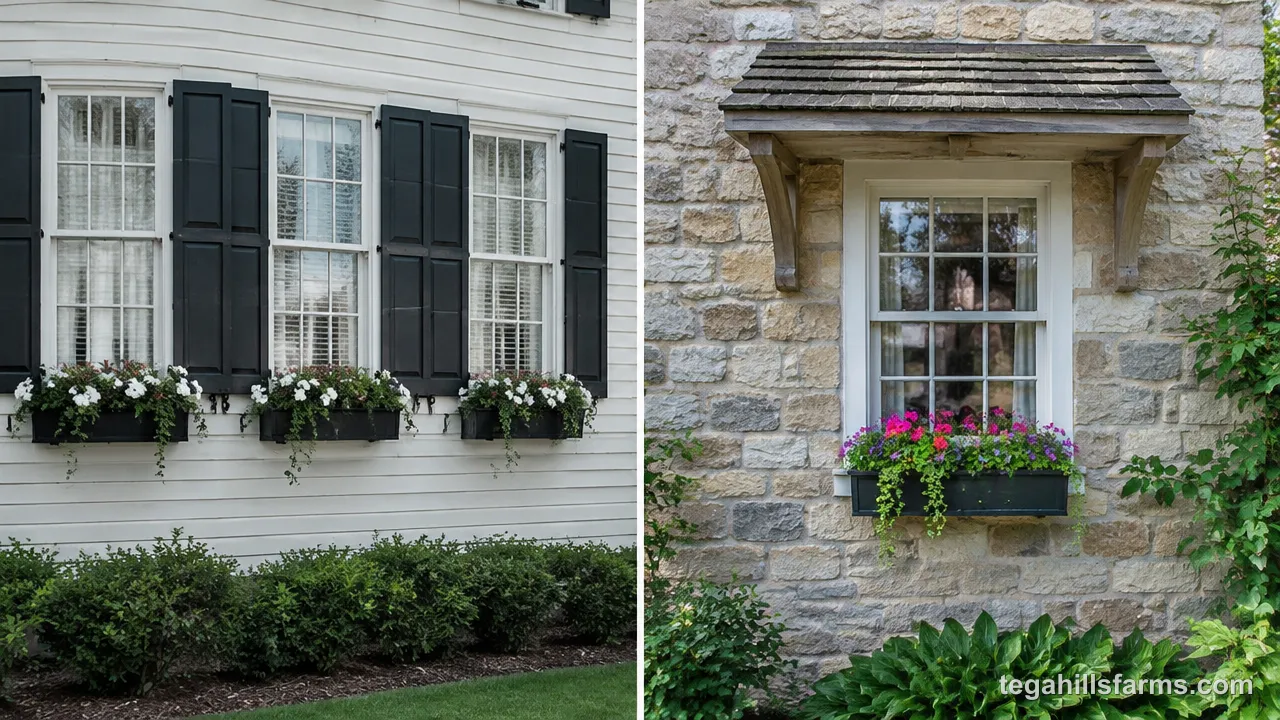
Distance is the reason. A box on a second-floor window, seen from the street, looks smaller than it is, and a standard box can almost disappear against a tall facade. The extra length and height of a larger box keeps it in proportion with the house, and a fuller planting has a better chance of being noticed from far away. A cottage window seen up close from a porch or front walk needs much less to look generous. An oversized box there can crowd the window and overwhelm the house.
Upper windows add a practical problem: watering. If you have to lean out a window or set up a ladder to water, you will want to do it as rarely as possible. A larger-volume box holds more moisture between waterings, which means fewer trips. A self-watering box with a reservoir can stretch the time between refills further. For hard-to-reach windows, I would choose the deeper box, even if a standard one would look fine. The plants will hold up better between the times you can reach them.
Can Your Wall Hold a Filled Window Box?
Yes, as long as the box is fastened with brackets sized for its full weight and anchored into solid framing with lag bolts, not just the siding. A filled box weighs far more than an empty one, because wet soil is dense. Every extra inch of length or depth adds more soil, and more weight, that the wall has to carry.
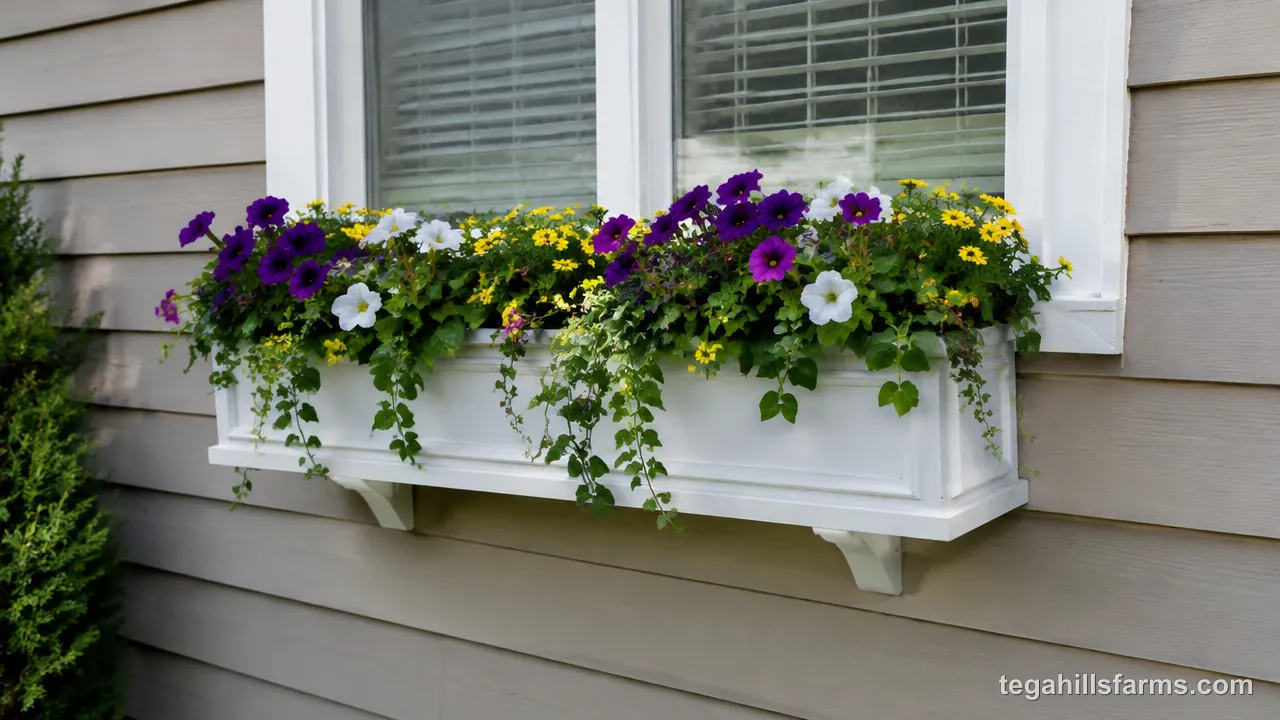
For a sense of scale, one large homemade planter held about 160 pounds of dirt and was secured with five big lag bolts. That is the weight of an adult hanging on the wall under the window, and it rises after a heavy rain. Siding alone isn’t made to carry that load. The fasteners need to reach the wall studs or the framing behind them.
The box material changes the starting weight:
- PVC and fiberglass are lightweight and add little before soil goes in.
- Cedar is heavier, but it’s still manageable for most brackets.
- Wrought iron frames are heavy on their own, even though they usually hold a liner instead of solid walls.
- Copper boxes add metal weight on top of the soil.
A lighter box leaves more of the bracket’s capacity for soil and water. A heavier one uses some of that capacity before you plant anything. Check that each bracket is rated for the full, filled load of the box rather than its empty weight. When in doubt, add another bracket along a long box. A bracket that bends or pulls loose drops soil, plants and box all at once.
A window box that’s a little too small rarely looks wrong the day you plant it, because young plants sit neatly in fresh, moist soil. By midsummer, the roots have filled every inch, the soil dries out between morning and evening, and the plants that looked fine in May begin to wilt and thin out right when you want them at their fullest.
What Happens When a Window Box Is Too Small?
A box that is too short or too shallow shows it in two ways: it looks lopsided under the window, and its soil dries out within a day in full sun. You will also see crowded roots circling the bottom of the box, leaves that wilt every afternoon, and flowers that thin out instead of spilling over the edges. A well-sized box holds moisture through a hot day and gives roots room to spread, so the plants stay fuller from early summer into fall.
You don’t have to tear the box down to fix it. Switch to shallow-rooted annuals and herbs that are content with less soil, and save deeper-rooted perennials for a bigger container. A self-watering insert can steady the moisture if the box has room for it. On a wide window, a second box hung beside the first fills out the length and doubles the soil. If the size is still not working by season’s end, plan on a longer or deeper box next spring and measure the frame again before you buy.
When Standard Sizes Don’t Fit: Custom or DIY Window Boxes
A custom box makes sense when your window doesn’t fit stock sizes, such as an unusually wide or narrow opening, or a deep brick reveal where the box has to sit inside the masonry. A maker will need the exact measurements: the width of the opening or trim, the depth of any reveal, and how far below the sill the box will hang. Tell them what you plan to grow too, so the height and depth match the roots. A custom build also changes how much a window box costs, since you are paying for a box made to your exact measurements instead of one off the shelf.
Building your own box gives you full control. You set the length to your frame, and you pick the depth and height based on your plants. The tradeoff is weight. A homemade planter filled with wet soil gets heavy, so the box needs solid joints, sturdy bottom boards and bracing that can carry the soil without bowing. Build it stronger than you think it needs to be, and anchor it to the wall framing just as you would a store-bought box.
Window Box Size FAQs
What is the standard window box size?
A standard window box comes in the shorter of the two common heights, which suits shallow-rooted annual flowers and herbs. Its front-to-back width fits most windows. The length isn’t standard, though. It should come from your own window, trim or brick opening, so measure the frame before buying any box labeled “standard.”
Can a window box be longer than the window?
Yes. On windows without trim, a box that runs a little past each side of the window looks generous and balanced. With shutters, adding some length beyond the space between them fills the frame. Keep the extra modest, so the box still reads as part of the window rather than a shelf on the wall.
How many plants fit in a window box?
That depends on the box length and the plants. Annuals can be packed closely for an instantly full look, since they only need one season. Perennials need wider spacing, because they keep growing and will crowd each other the next year. When the roots fill the box quickly and wilt daily, the planting is too dense.
Is one long box or several boxes better for a wide window?
One long box gives a continuous line of color across a wide window or a group of windows set close together. Several boxes suit windows spaced apart, where one box would stretch across bare wall. Separate boxes are also lighter individually, which makes them easier to lift, hang and support securely.
Can a window box go in front of a casement window?
Yes, if you mount it far enough below the sill for the sash to swing open past the plants. Mounted too close, the window either hits the foliage or can’t open at all. Choose plants that stay compact near the top of the box, and keep tall growth trimmed back.
Write Your Review
No reviews yet. Be the first to share your experience!