
8 Best Railing Planters: 2026 Expert Picks Ranked
Our top picks for the best railing planters in 2026 are the Dahey Railing Planter Box 15″ 3-Pack (Best Overall), Karlliu Railing Planter Box 24″ 2-Pack (Best Rust-Resistant), Emsco Group Bloomers Railing Planter 24″ (Best Budget), Emsco Group Bloomers Railing Planter White (Best Lightweight), Veradek Demi Series Railing Planter (Best Premium), Dogetgd Railing Planter Box 36″ 2-Pack (Best Durability), LáLáGreen LaLaGreen Rail Planter 20″ 2-Pack (Best for Containers & Patios), and Veradek Block Series Railing Planter (Best for Cold Climates).
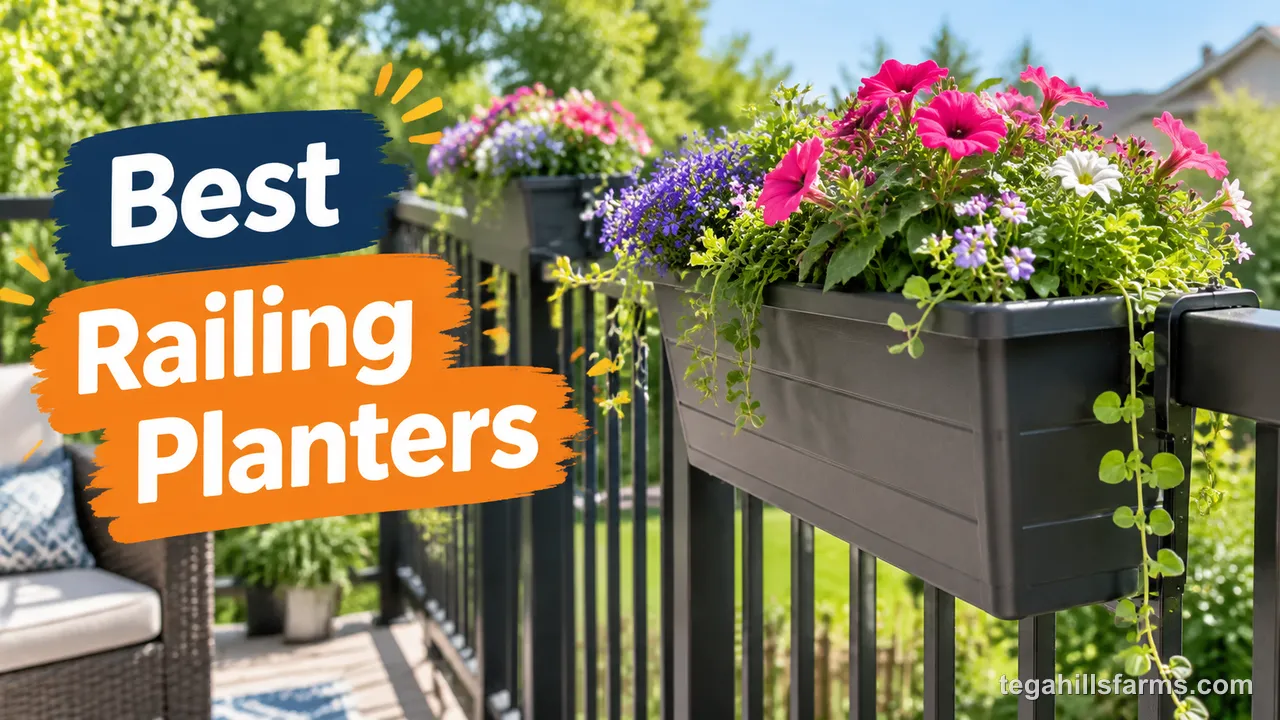
Choosing well starts with the rail itself. Its width and shape limit which hooks or brackets will grip, and the box’s material, depth and drainage then decide whether roots stay healthy through a full season.
The real risks on a rail are a box that slips, tips or drips. Wet soil adds a lot of weight, wind pushes against tall plants, and runoff from drainage holes lands on whatever sits below, so stability and water control matter as much as looks.


Measure the top of your rail with a tape before anything else, because a box that looks perfect online does you no good if its hooks won’t close over your cap.
What Is a Railing Planter and Where Does It Work Best?
It’s a box or basket that clips over the top rail with hooks or an adjustable bracket, putting herbs, flowers and compact vegetables at hand height without using any floor space.
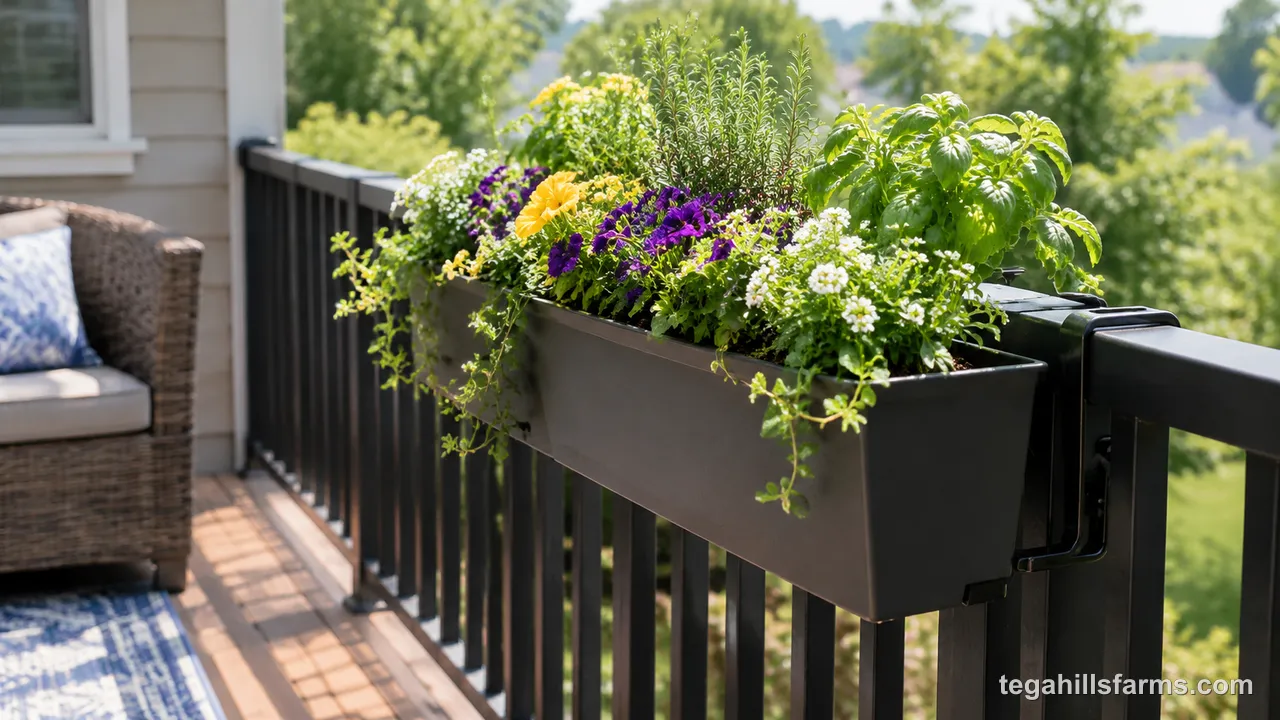
That makes it most useful where floor area is tight or already spoken for: apartment balconies, narrow porches and decks where chairs and a grill take up the boards. A rail facing south or west usually gets the six or more hours of direct sun that most vegetables and flowering annuals need, while an east-facing rail suits leafy greens and herbs that wilt in hard afternoon heat. Raising plants to rail height also keeps them away from rabbits and saves your back from bending.
On a small balcony, a rail box often works alongside floor containers chosen from the best balcony planters, with the rail handling herbs and trailing flowers. If you are still weighing which kind of container suits your outdoor space, comparing the best planters across every major style will narrow it down, and the basics of how to choose a planter apply to drainage and sizing on any pot.
How Do You Choose a Railing Planter That Fits Your Rail?
Fit with your rail comes first, because a box that can’t grip your rail’s width and shape won’t hang safely no matter how much soil it holds. After that, choices about build and water handling shape whether roots thrive or struggle through heat, rain and cold, and how often you’ll need to step out with a watering can.
How Wide Is Your Rail, and Which Brackets Fit?
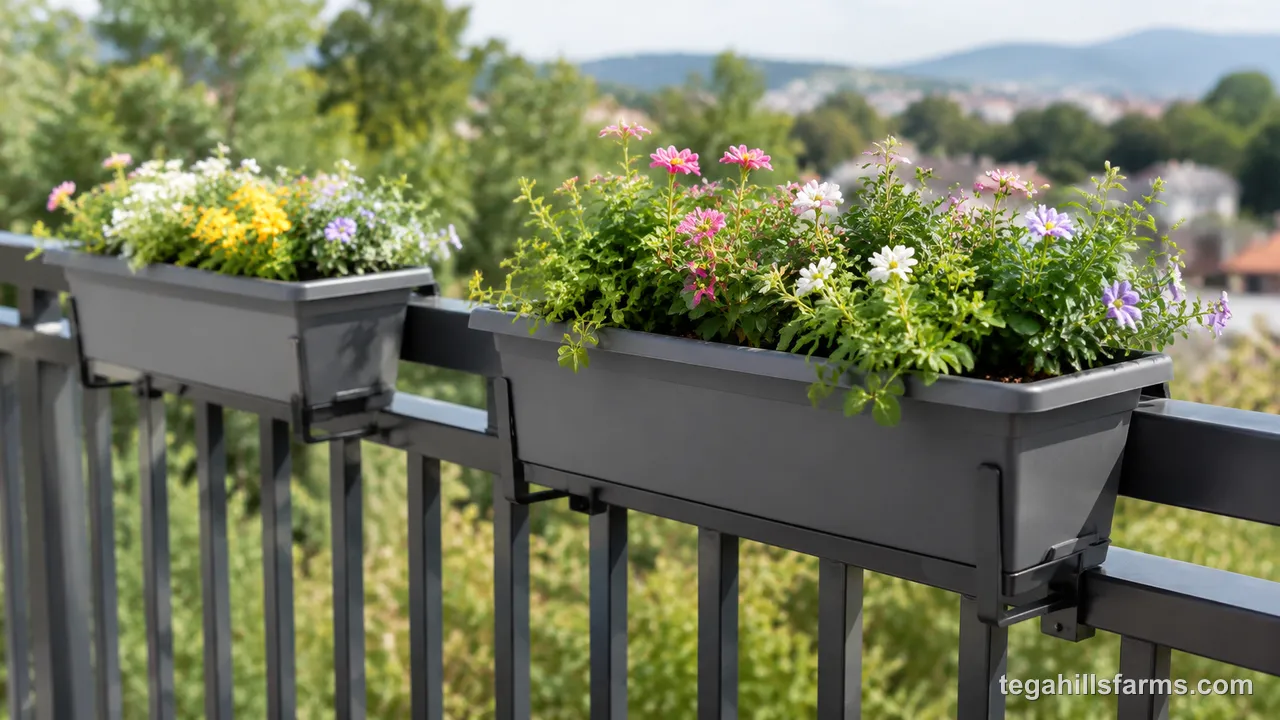
Measure the actual top of your rail before shopping, because lumber is sold by nominal size rather than real size. A rail called a 2×4 measures about 1.5 by 3.5 inches, and a 2×1 is closer to 1.5 by 0.75 inches, so buying by the name alone can leave a hook too tight to close.
Bracket style then decides how far that measurement can stretch. Fixed hooks, like those on the Dahey set, fit slim rails up to 2.7 inches and nothing wider. Adjustable brackets cover a range: the Dogetgd bracket spans 0.8 to 2.5 inches, the white Emsco Group fasteners take 1.25 to 3.875 inches, and the Veradek brackets reach 5.5 inches on the Demi Series and 6 inches on the Block Series. Clip-on stabilizers, like those on the terracotta Emsco Group box, are sized for specific lumber rails.
Round iron rails grip best with hooks or brackets that wrap around them rather than sit flat, and curved or glass rails usually need a different mounting approach altogether.
Which Material Holds Up Best Outdoors?
Each of these materials survives outdoors, but they fail in different ways: resin can shift in wind, powder-coated steel rusts only where its coating chips, and plastic-stone composite resists UV and cracking at the cost of weight.
Polyethylene resin, used on both Emsco Group boxes, and the high-grade plastic of the Veradek Block won’t rot, rust or crack in freezing weather. Their solid walls hold soil moisture longer, which suits thirsty herbs and annuals, though the lighter boxes need firmer fastening on a windy rail. Gardeners who like that low-maintenance profile can also compare the best plastic planters for floor and patio use.
Powder-coated steel, on the Karlliu and Dogetgd planters, is strong and resists rust as long as the coating stays intact. Dark metal absorbs sun, so roots can warm up on a hot afternoon; the Karlliu’s coco fiber liner offsets that by letting air through, though it dries faster in summer. More styles show up among the best metal planters.
Plastic-stone composite on the Veradek Demi resists UV, fading and cracks, and its mass keeps it steady while adding load to the rail.
What Length, Depth and Weight Suit Your Rail?
Length sets how many plants fit, depth sets which plants will root well, and filled weight sets how hard the rail and bracket have to work.
A longer box lets you run a row of herbs or a mixed planting with a trailing front edge, while short boxes suit a few herbs or a single splash of color. Depth matters more than length for crop choice: most herbs, leaf lettuce and annual flowers root happily in about 6 inches of soil, while peppers, bush beans and deeper perennials need more.
Weight cuts both ways. Light resin is easy to lift and adds little load, but an empty or freshly planted box can shift in a gust until it’s secured. Heavy composite and metal stay steady in wind, yet once the soil is soaked the combined load climbs well beyond the empty weight, so check older rails and fasteners before hanging them.
Which Drainage and Watering Features Matter?
Drainage holes are the one feature every rail box needs, because soil that stays waterlogged starves roots of oxygen and leads to root rot. Removable plugs, where a box has them, let you hold water in during a heat wave and reopen the holes in a rainy spell.
A coco liner drains through its whole surface and breathes well, which protects roots from soggy soil but means more frequent watering in summer and some drips on the surface below. A self-watering reservoir works the other way, storing water under the soil and wicking it up as roots draw it down, often with an indicator showing when to refill. For busy or forgetful gardeners, a reservoir keeps plants alive through a long weekend away.
8 Best Railing Planters for Balconies, Decks and Porches
Our top picks for the best railing planters in 2026 are the Dahey Railing Planter Box 15″ 3-Pack, Karlliu Railing Planter Box 24″ 2-Pack, Emsco Group Bloomers Railing Planter 24″, Emsco Group Bloomers Railing Planter White, Veradek Demi Series Railing Planter, Dogetgd Railing Planter Box 36″ 2-Pack, LáLáGreen LaLaGreen Rail Planter 20″ 2-Pack and Veradek Block Series Railing Planter. Weight against stability splits them first: the resin boxes lift on and off in seconds but need firm fastening in wind, while the composite and metal boxes stay planted and ask more of the rail underneath. Watering splits them next, since a reservoir or a breathable liner changes how often you’ll be out with the can.
#1 Dahey Railing Planter Box 15″ 3-Pack — Best Overall
Narrow porch rails get a matched trio of herbs or flowers here. Each metal box measures 15.74 inches long with drainage holes already in the base, and the detachable hooks let you space all three along a short run of rail or hang them on a wall or window.
Key Specs:
- Pack: 3 metal planter boxes, black
- Planter size: 15.74″ x 6.10″ x 5″
- Hook: 4″ x 2.7″ x 0.7″, fits rails up to 2.7″ wide
- Drainage: holes in the base; more can be drilled
- Weight: 3.3 lb
- Model: JJJJ044D
Detailed Review:
The rectangular iron bucket carries soil right out to the corners, where a tapered or round pot would lose space, so roots of basil, lettuce or petunias spread evenly instead of crowding the center. At 5 inches deep, it suits herbs, salad greens, strawberries and annual flowers, while carrots, peppers and tomatoes need a deeper container.
Drainage holes are already punched in each base, which lets excess water escape after a heavy rain instead of pooling around the roots. On a shady porch where soil stays wet longer, you can drill a few more holes to speed drainage.
The hooks ship detached, so plan a few minutes to fasten each bucket to its hook before hanging. Because the hook opening has a set width, it fits slim metal and wood rails but won’t close over a flat-laid 2×4 cap.
Splitting the planting across three boxes is the reason I’d hang this set before a single long trough on a narrow porch: an aggressive mint stays in its own bucket, and a struggling plant can be swapped out without disturbing the rest. The same buckets brighten brick walls, sheds and windows when the rail is full.
Pros:
- Three separate boxes let you space plants along the rail.
- Rectangular shape keeps soil volume out to the corners.
- Drainage holes come pre-made in every base.
- Hooks also hang on walls, windows and sheds.
Cons:
- Hooks fit only slim rails, not wide deck caps.
- Hooks and buckets need assembly on arrival.
- Shallow depth rules out deep-rooted vegetables.
Who It’s For:
Porch and balcony gardeners with slim metal or wood rails who want a tidy row of herbs, strawberries or annual flowers will be well served by this set. Anyone who likes keeping plants separated by box will appreciate the split design. Owners of thick, flat-topped deck rails should look for an adjustable bracket instead.
Editor’s Verdict:
Pick this set for a slim rail when you want three tidy boxes of herbs or flowers rather than one long trough.
#2 Karlliu Railing Planter Box 24″ 2-Pack — Best Rust-Resistant
Coco fiber lining gives roots air and moisture at once. Wrapped around it, a powder-coated carbon steel trough shrugs off rain on a fence or porch rail, and its bracket adjusts four ways without tools.
Key Specs:
- Pack: 2 planters with coco fiber liners, black
- Size: 24″ L x 7″ W x 5.5″ H
- Frame: carbon steel with rust-resistant powder coating
- Bracket: adjustable, four installation options, tool-free
- Model: KL-GD-24WB-2301-2
Detailed Review:
The carbon steel frame carries a rust-resistant powder coating, which seals the metal from rain and dew so corrosion has no bare steel to start on. That coating lets the trough stay outdoors year-round, though a deep scratch from a trowel can expose steel, so a dab of touch-up paint is worth keeping on hand.
Inside, the natural coco fiber liner breathes, letting air reach the roots and excess water seep out, while the fibers hold enough moisture to buffer a hot afternoon. In full summer sun the open fibers lose water through the sides as well as the top, so check the soil more often in July than in May.
The adjustable bracket offers four installation options, so the same pair can hang on a porch rail, a fence or a windowsill, and it assembles without tools. Reinforced hardware keeps soil from leaking out of the frame.
Each 24-inch trough holds a row of herbs or trailing flowers rather than deep-rooted crops. If an open metal frame is the look you want, it’s worth comparing the best metal railing planters before settling on one style.
Pros:
- Powder coating protects the carbon steel from rust.
- Coco liner lets roots breathe and excess water drain.
- Bracket adjusts four ways without any tools.
- Two long troughs come in each set.
Cons:
- Coco liners wear thin and need replacing over seasons.
- Open liner walls dry out quickly in hot sun.
Who It’s For:
Gardeners who want a classic metal look and grow flowers or herbs that dislike wet feet will appreciate the breathable liner. Window ledges and fences suit it as well as porch rails. If you’d rather water once and leave it for days, a solid resin box holds moisture with less checking.
Editor’s Verdict:
Choose this pair for a weather-exposed rail where rust and soggy roots are the two problems you want solved.
#3 Emsco Group Bloomers Railing Planter 24″ — Best Budget
Terracotta-colored polyethylene resin gives this box the look of clay without the cracking. Its 24-inch length holds a full row of herbs or annuals, and the included stabilizers clip it onto standard wood deck rails, keeping a long planting affordable.
Key Specs:
- Length: 24″
- Rail fit: 2×1 and 2×4 rails (1.5″ x 0.75″ and 1.5″ x 3.5″) with included stabilizers
- Material: weatherproof polyethylene resin
- Drainage: holes in the bottom
- Weight: 1.125 lb
- Color: terracotta
Detailed Review:
Polyethylene resin is the reason this box survives season after season outdoors: it won’t rot like untreated wood or crack the way real terracotta can after a freeze. You get the warm clay color without clay’s habit of splitting when wet soil freezes inside it.
Included stabilizers hold the box over those two traditional lumber rail sizes, the dimension lumber found on most wood decks. Rails outside those sizes, such as round metal balusters, are better served by a planter with an adjustable bracket.
Drainage holes in the bottom let excess water escape, which keeps roots out of the soggy soil that leads to root rot. The empty box lifts onto the rail easily, and that same light weight means a gust can shift it before it’s filled, so set the stabilizers snugly before planting.
Low cost is the other draw, since buying several to run along a deck rail stays affordable. Anyone shopping strictly on price can also look at the best railing planters under $20.
Pros:
- Resin shrugs off rot, rust and cracking outdoors.
- Stabilizers fit common wood deck rails.
- Light enough to lift onto the rail one-handed.
- Bottom drainage holes help prevent root rot.
Cons:
- Stabilizers suit only standard dimension-lumber rails.
- Light body can shift in wind until secured.
Who It’s For:
Deck owners with ordinary wood rails who want to line a long stretch with herbs or flowers on a modest budget will find good value here. The clay-like color suits rustic or Mediterranean styling. Anyone with round metal balusters or an unusually wide cap rail should look for a model with an adjustable bracket.
Editor’s Verdict:
Buy a few of these to line a standard wood deck rail with herbs and annuals without stretching your budget.
#4 Emsco Group Bloomers Railing Planter White — Best Lightweight
Renters who move planters often should look here first. Weighing 1.125 pounds empty, the white resin box lifts onto wood or metal rails with its included fasteners, and the washable finish wipes clean after a season of soil splashes.
Key Specs:
- Length: 24″
- Rail fit: wood and metal rails 1.25″ to 3.875″ wide, with included fasteners
- Material: weatherproof, washable polyethylene resin
- Drainage: holes in the bottom
- Weight: 1.125 lb
- Color: white
Detailed Review:
The light resin body lifts onto the rail and back down with almost no effort, which matters if you store planters in a garage over winter or rearrange them each spring. It also adds little load to an older wood railing or a thin metal one.
The included fasteners stabilize it on wood and metal rails in traditional 2×1, 2×4 and 2×6 sizes. Next to the terracotta Emsco Group Bloomers Railing Planter 24″, this white version adds metal rails and wider 2×6 lumber to its fit, at the same weight and length.
The weatherproof resin resists summer heat and winter cold without cracking, and the washable finish wipes clean when soil splashes or algae streaks the sides. White reflects sunlight rather than absorbing it, so the root zone stays cooler on a south-facing balcony in July.
Drainage holes in the bottom keep water from stagnating and let oxygen reach the roots. Because the box is so light, I’d fasten it firmly before planting tall flowers on a windy upper-floor balcony.
Pros:
- Fits both wood and metal rails with included fasteners.
- Washable white finish cleans up after soil splashes.
- Easy to lift down for winter storage.
- Bottom drainage holes keep air reaching the roots.
Cons:
- White shows dirt and algae streaks quickly.
- Light build needs secure fastening in windy spots.
Who It’s For:
Balcony renters, older gardeners and anyone who takes planters down each fall will appreciate how little effort this box takes to handle, on wood or metal rails alike. If your spot catches strong gusts, a heavier metal or composite box will stay put with less fuss.
Editor’s Verdict:
Expect easy handling and a clean, bright look, as long as you fasten it firmly on a windy rail.
#5 Veradek Demi Series Railing Planter — Best Premium
Stone texture, generous soil space and a wide-ranging bracket make this a showpiece rail box. Its plastic-stone composite resists cracks, scratches, UV and fading from -20°F to 120°F, and the 8.75-inch-tall body leaves room for roots that outgrow shallow troughs.
Key Specs:
- Size: 36″ L x 8.5″ W x 8.75″ H
- Material: plastic-stone composite, textured finish
- Temperature range: -20°F to 120°F
- Bracket: adjustable, fits rails 1″ to 5.5″ wide; also wall-mounts
- Weight: 18.4 lb
- Made in Canada
Detailed Review:
The plastic-stone composite gives this box a subtle textured finish that reads like cast stone, and it resists cracks, scratches, UV damage and fading. Its temperature rating means it can stay on the rail through a northern winter and a southern summer without splitting.
At 36 inches long with a tall body, it holds a long mixed planting with room for roots that a shallow trough would cramp, such as a trailing vine in front of taller annuals. Pre-drilled drainage holes come ready, so there’s nothing to drill before planting.
The adjustable bracket handles narrow to very wide rails and can also mount the box to a wall or windowsill, with minimal assembly. That flexibility matters on modern decks with thick composite caps that clip-on stabilizers can’t straddle.
Before any soil goes in, the box already weighs 18.4 pounds, and wet soil adds far more, so confirm your rail and its posts are solid. Veradek designs it for inward-facing use only, with a maximum mounting height. As a higher-end purchase made in Canada, it pays off where appearance and root space both matter.
Pros:
- Stone-textured composite resists UV, fading and scratches.
- Tall body gives roots more soil than shallow troughs.
- Adjustable bracket handles wide rails or wall mounting.
- Pre-drilled drainage holes come ready to plant.
Cons:
- Heavy empty weight adds serious load once soil is wet.
- Designed for inward-facing installation only.
Who It’s For:
Homeowners styling a modern deck or terrace with a thick cap rail get a box that looks built in, with room for mixed plantings that need more root space. Renters on a lightweight rail, or anyone who moves planters around often, will find a resin box easier to manage.
Editor’s Verdict:
Invest in this box when appearance and root space matter more to you than an easy lift.
#6 Dogetgd Railing Planter Box 36″ 2-Pack — Best Durability
Exposed decks that take every storm suit this heavy metal pair. Its anti-corrosion powder coating resists chipping, peeling and fading, and a two-tier bracket with foam pads locks onto wrought iron, vinyl, wood or composite rails without scratching them.
Key Specs:
- Pack: 2 metal planter boxes, 36″
- Finish: rust-resistant, anti-corrosion, scratch-resistant powder coating
- Bracket: two-tier adjustable, fits rails 0.8″ to 2.5″ wide
- Rail protection: high-density foam pads
- Installation: tool-free, with safety knob
- Weight: 34 lb
Detailed Review:
The anti-corrosion powder coating is scratch-resistant and built to resist fading, chipping and peeling, so the metal underneath stays sealed from moisture. That matters most on exposed decks, where a chipped finish is usually where rust begins.
A two-tier bracket uses two layers of support, which steadies the box against sway once it’s full of wet soil. It expands and locks onto narrow wrought iron, vinyl, wood and composite rails, though wide flat-topped deck caps fall outside its range.
High-density foam pads sit between the bracket and your railing, preventing scratches and abrasion on painted iron or vinyl. Setup takes no tools or drilling: attach the brackets, adjust the width, set the box and tighten the safety knob, all in under five minutes.
The heavy metal build helps the pair stay put in wind, and it also puts real load on the rail once both boxes are planted and watered. Check that posts and fasteners are sound before hanging this set on an older deck.
Pros:
- Powder coating resists rust, chips, peeling and fading.
- Two-tier bracket adds stability on the rail.
- Foam pads protect railings from scratches.
- Installs without tools or drilling.
Cons:
- Bracket range excludes wide flat-topped deck rails.
- Heavy build makes lifting it down each fall a chore.
Who It’s For:
If your planters face full sun, driving rain and winter on a narrow iron, vinyl or composite rail, this pair is built for that exposure. It also suits owners protective of a freshly painted railing, thanks to the foam pads. Decks with thick, flat wooden caps need a bracket that opens wider.
Editor’s Verdict:
Count on this pair to hold its finish and its grip through years of weather on a narrow rail.
#7 LáLáGreen LaLaGreen Rail Planter 20″ 2-Pack — Best for Containers & Patios
Busy growers who forget the watering can will appreciate the built-in reservoir. A water level indicator shows when to refill, and the reservoir keeps soil moist long enough that watering can stretch to every two to three weeks, depending on plants and climate.
Key Specs:
- Pack: 2 planters, 20″
- Watering: self-watering reservoir with water level indicator
- Mounting: hooks, with brackets that sit hidden under the planter
- Drainage: drainage holes
- Finish: rattan-pattern plastic
Detailed Review:
A reservoir under the soil holds water that wicks upward as the roots dry the mix, and the water level indicator shows at a glance when the tank needs a refill. That system keeps soil evenly moist, which suits thirsty plants like strawberries, lettuce and petunias.
Steady moisture is less welcome for rosemary, thyme and lavender, which prefer soil that dries between waterings. Drainage holes shed excess after a downpour, but those herbs still do better in a freely draining box.
Mounting is simple: install the hooks in a few minutes and hang the box on a deck rail, fence or porch. The included brackets tuck out of sight beneath the planter once installed, which gives the box a neater, built-in look on a modern balcony.
The rattan-pattern plastic is durable and won’t shatter if knocked off a ledge the way ceramic would. Off the rail, the same boxes work as windowsill planters for herbs, patio tabletop containers or even storage organizers, so they earn their keep year-round.
Pros:
- Reservoir stretches the time between waterings.
- Water level indicator shows when to refill.
- Brackets tuck out of sight beneath the box.
- Works on rails, fences, windowsills or tabletops.
Cons:
- Constantly moist soil suits few dry-loving herbs.
- Standing reservoir water can breed mosquitoes if neglected.
Who It’s For:
Travelers, shift workers and anyone who forgets daily watering will appreciate the reservoir. Patio gardeners who want boxes that move between rail, tabletop and windowsill fit it well too. Growers of thyme, rosemary and other dry-soil herbs will do better in a freely draining box.
Editor’s Verdict:
Rely on this pair when daily watering is the chore that keeps slipping.
#8 Veradek Block Series Railing Planter — Best for Cold Climates
Double walls put an insulating layer of air between winter cold and the root zone. Rated for -20°F to 120°F, the high-grade plastic body also gives roots 7.75 inches of interior depth, so chives, thyme and hardy perennials have more soil buffering them through freeze-thaw swings.
Key Specs:
- Exterior: 35.75″ L x 9″ W x 9.25″ H
- Interior: 33.25″ L x 6.5″ W x 7.75″ H
- Material: double-walled, high-grade plastic
- Temperature range: -20°F to 120°F
- Bracket: adjustable, fits rails 1″ to 6″ wide; also wall-mounts
- Weight: 17.8 lb
Detailed Review:
The double-walled body traps air between the inner and outer shells, which slows the temperature swings reaching the root zone. Container roots sit exposed on all sides instead of insulated by surrounding earth, so that buffer helps hardy perennials and herbs ride out cold snaps that can freeze the root ball in a thin-walled box.
A double wall costs interior space: the planting area measures 33.25 by 6.5 inches inside a 35.75 by 9 inch shell. Plan plant counts from the inside dimensions, not the outside.
High-grade plastic resists cracks, scratches, UV and fading, and the box is rated for both bitter winters and hot summers. The adjustable bracket opens wide enough for thick composite or wooden caps and can also mount the box to a wall.
Like the Veradek Demi Series, it’s designed for inward-facing use with a maximum mounting height, and it’s made in Canada. In colder USDA zones, I’d still fill it with perennials rated hardy to a zone or two colder than your own, since even insulated containers lose heat faster than garden beds.
Pros:
- Double walls buffer roots against cold snaps.
- Interior depth leaves room for perennials and herbs.
- Bracket adjusts for wide cap rails or wall mounting.
- High-grade plastic resists cracks, UV and fading.
Cons:
- Double wall narrows the interior planting width.
- Mounts facing inward only, limiting placement.
Who It’s For:
Northern gardeners hoping to keep chives, thyme or hardy perennials in the box through winter will value the insulated walls, and wide composite or wooden cap rails fit its bracket. Gardeners on a slim iron railing with limited load capacity should choose a lighter resin box.
Editor’s Verdict:
Leave this box on the rail year-round in a cold zone and give hardy plants a fair chance of returning in spring.
How Do the Top Railing Planters Compare on Fit, Material and Weight?
Veradek brackets open to thick cap rails, the Dahey hooks and Dogetgd bracket stay with slim rails, and weight splits light resin from heavy composite or metal, which decides how much each box asks of your rail.
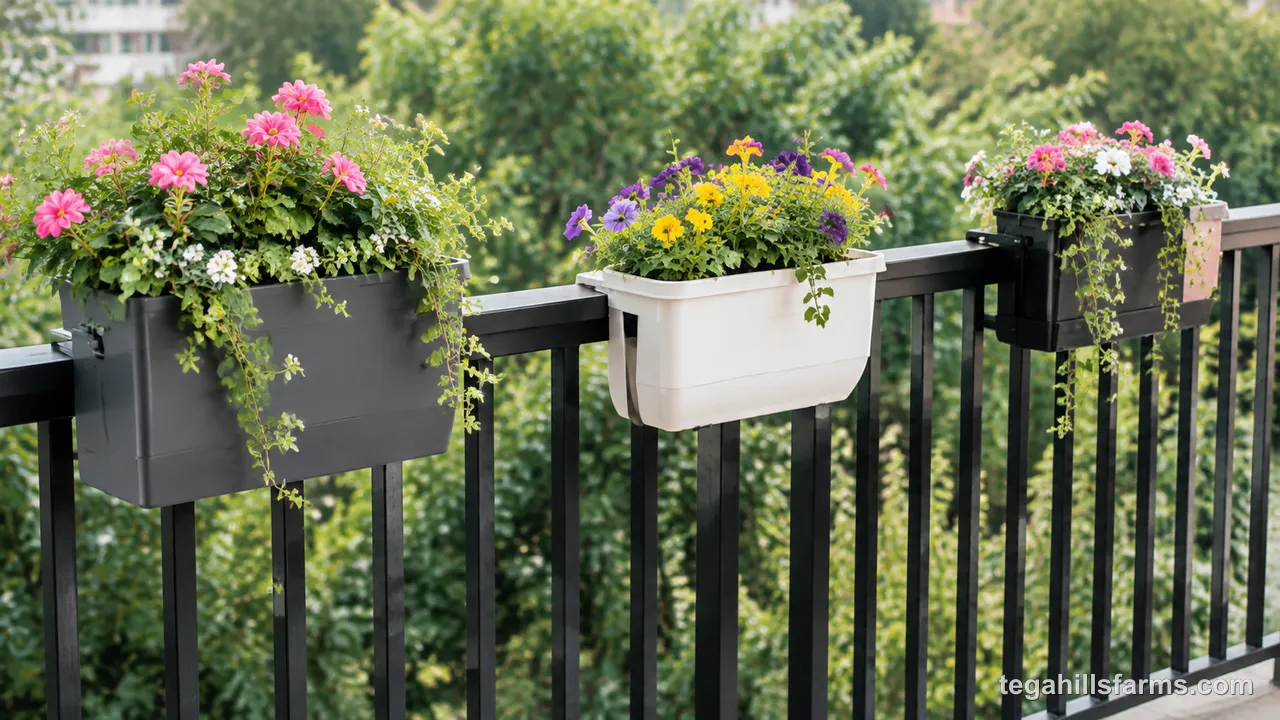
Matching your rail measurement against each planter’s fit, build, length, weight and watering setup narrows the field quickly:
| Planter | Rail fit | Material | Length | Weight | Watering |
|---|---|---|---|---|---|
| Dahey Railing Planter Box 15″ 3-Pack | Hooks, rails up to 2.7″ | Metal | 15.74″ | 3.3 lb | Drainage holes |
| Karlliu Railing Planter Box 24″ 2-Pack | Adjustable bracket, four mounting options | Powder-coated carbon steel, coco liner | 24″ | — | Coco liner, drainage |
| Emsco Group Bloomers Railing Planter 24″ | Stabilizers, 2×1 and 2×4 rails | Polyethylene resin | 24″ | 1.125 lb | Drainage holes |
| Emsco Group Bloomers Railing Planter White | Fasteners, 1.25″–3.875″ rails | Polyethylene resin | 24″ | 1.125 lb | Drainage holes |
| Veradek Demi Series Railing Planter | Adjustable bracket, 1″–5.5″ | Plastic-stone composite | 36″ | 18.4 lb | Pre-drilled drainage |
| Dogetgd Railing Planter Box 36″ 2-Pack | Two-tier bracket, 0.8″–2.5″ | Powder-coated metal | 36″ | 34 lb | — |
| LáLáGreen LaLaGreen Rail Planter 20″ 2-Pack | Hooks, hidden brackets | Rattan-pattern plastic | 20″ | — | Self-watering reservoir, drainage holes |
| Veradek Block Series Railing Planter | Adjustable bracket, 1″–6″ | Double-walled plastic | 35.75″ | 17.8 lb | — |
Light resin from Emsco Group lifts on and off easily and suits older rails, while the Veradek and Dogetgd boxes trade that convenience for steadiness in wind. The LáLáGreen reservoir and the Karlliu coco liner sit at opposite ends of watering: one holds moisture for weeks, the other breathes and dries faster. If budget is your first filter, narrowing to railing planters under $30 or stepping up to the best railing planters under $50 keeps the comparison within your spend.
How Do You Install a Railing Planter and Keep It From Falling?
A snug bracket and the right placement do most of the safety work, since tool-free hardware only holds as well as it’s fitted. Wind and the weight of wet soil then test that fit every day the box hangs, so mounting and stabilizing go hand in hand.
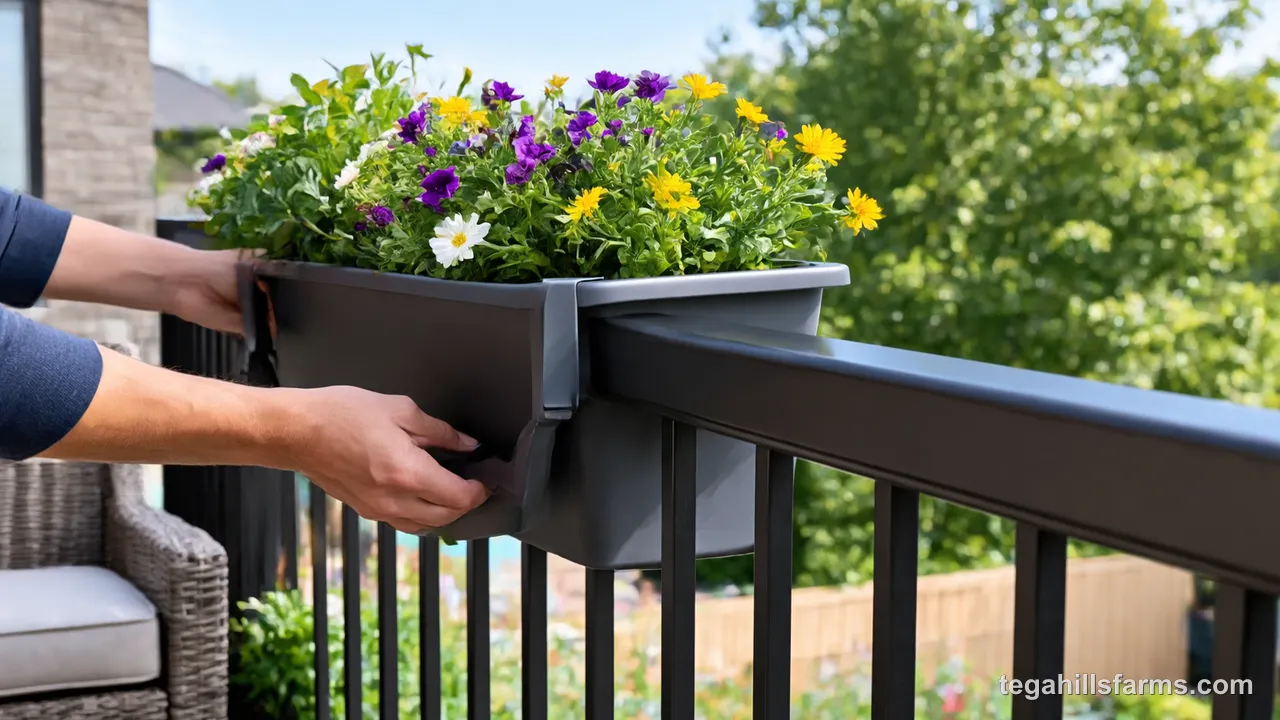
How Do You Mount a Railing Planter Without Tools?
Most rail boxes go up without tools in four steps: assemble the hooks or brackets, adjust them to your rail’s width, hang the empty box, then fill and plant it in place. Hanging it empty lets you check the grip before soil adds weight.
Inspect the rail first. Loose balusters, soft wood or a wobbly cap rail can’t anchor a filled box, so tighten or repair them before mounting. Tighten adjustable brackets until the box can’t slide along the rail, and fit any stabilizers or safety knobs the kit includes.
Placement matters as much as the hardware. Hanging the box on the inside of the rail means a failure drops soil and plants onto your own deck rather than onto people or cars below, which is why Veradek specifies inward-facing use and a maximum mounting height of 4 feet off the ground for its rail boxes.
How Do You Keep a Railing Planter From Falling Over?
Falls usually start with a bracket that has worked loose meeting a gust of wind or a top-heavy plant, so the fix is a tight fit plus a little extra anchoring. Run UV-resistant zip ties or the kit’s fasteners through the bracket and around the rail, and recheck bracket tightness after storms and at the start of each season, since wood rails shrink and swell.
Weight shifts the risk too. Soil soaked by a downpour can double a box’s load, so fill potting mix only to just below the rim and make sure drainage holes stay open. Tall, upright plants catch wind like a sail; on exposed upper floors, trailing and mounding plants keep the center of gravity low.
Squirrels and raccoons digging in soft soil can rock a light box off a narrow rail, and a layer of coarse mulch or netting discourages them. On windy sites, a heavier or lower-profile planter stays steadier than a light, tall one.
What Can You Grow in a Railing Planter?
Shallow-rooted plants that handle sun and wind do best on a rail, since a box holds limited soil and sits exposed on all sides. Sun direction and your USDA zone then narrow the list, deciding whether heat-lovers, cool-season greens or hardy perennials make sense for your spot.
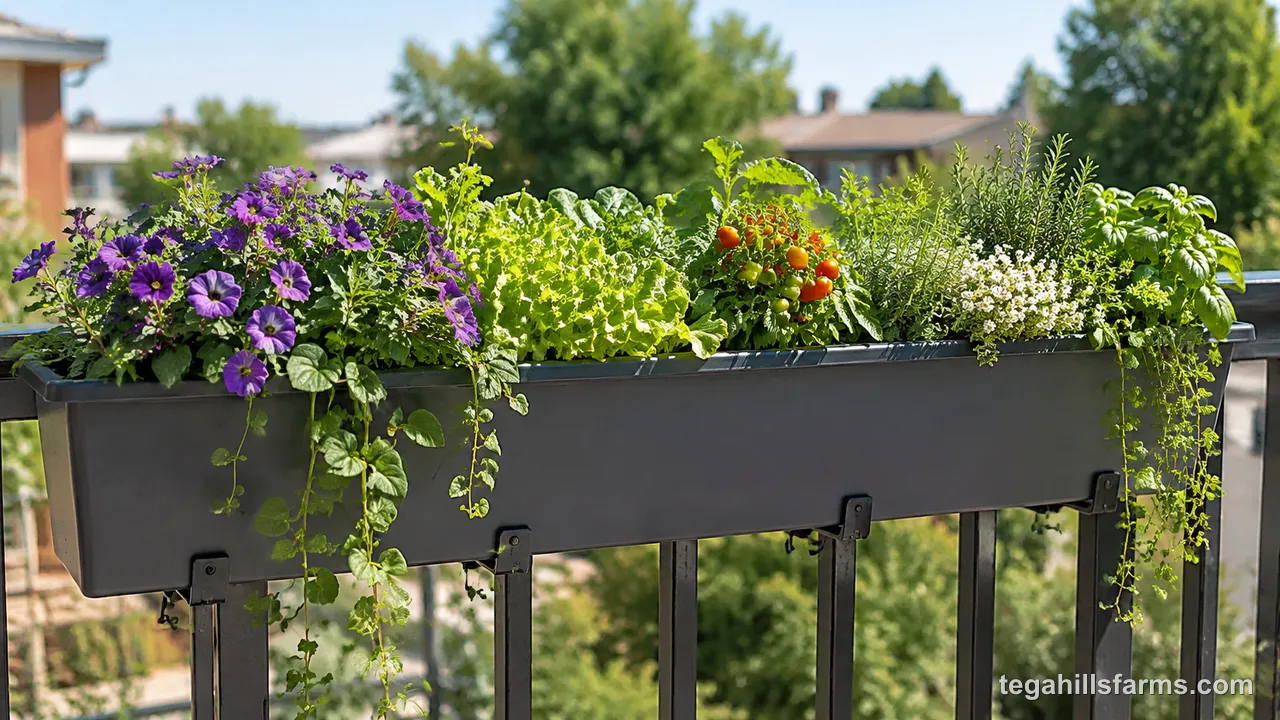
Which Flowers and Trailing Plants Suit a Shallow Box?
Petunias, calibrachoa, sweet alyssum, trailing lobelia, ivy geraniums and sweet potato vine all root well in shallow soil and spill over the front edge for color. On a hot, sunny rail, portulaca and lantana handle heat and dry spells well, while on a shaded rail impatiens and begonias are the safer picks.
Plant more closely than in a garden bed, since containers are meant to look full: set trailers along the front, upright plants behind, and space by the mature width on the plant tag rather than garden-bed spacing. Fill potting mix to about an inch below the rim and firm it gently, which leaves a basin for water to soak in instead of running over the edge onto the floor below.
Which Herbs and Vegetables Work on a Rail?
Basil, parsley, chives, thyme, oregano and cilantro all thrive in a shallow rail box, and mint does well as long as it gets a box of its own to keep it from crowding neighbors. Compact vegetables that fit include leaf lettuce, spinach, arugula, radishes, green onions and strawberries.
Depth is the limit to respect: tomatoes, full-size peppers and root crops like carrots need more soil than most rail boxes hold, so they belong in floor containers or raised beds. Herbs and vegetables also ask for more sun than shade-tolerant flowers, so a south- or west-facing rail suits them, and a rail box dries out faster than a ground pot, which means daily watering in midsummer heat. Kitchen gardeners can look at the best railing planters for herbs or the best railing planters for vegetables for boxes sized to those crops.
Plenty of apartment leases ban anything resting on the railing itself, and some HOAs extend that rule to anything hanging over the outside edge. A renter who mounts a box anyway can receive a written violation and an order to take it down mid-season, with the plants already established and nowhere ready to move them.
What If Your Rail Is Too Wide or Your Lease Bans Rail Planters?
Both problems have workarounds that keep you growing: mount the box on the inside face of the rail, on the wall or on the floor, and confirm what the lease or HOA rules actually prohibit before buying anything. The right fix depends on whether the obstacle is the rail’s shape or the rules.
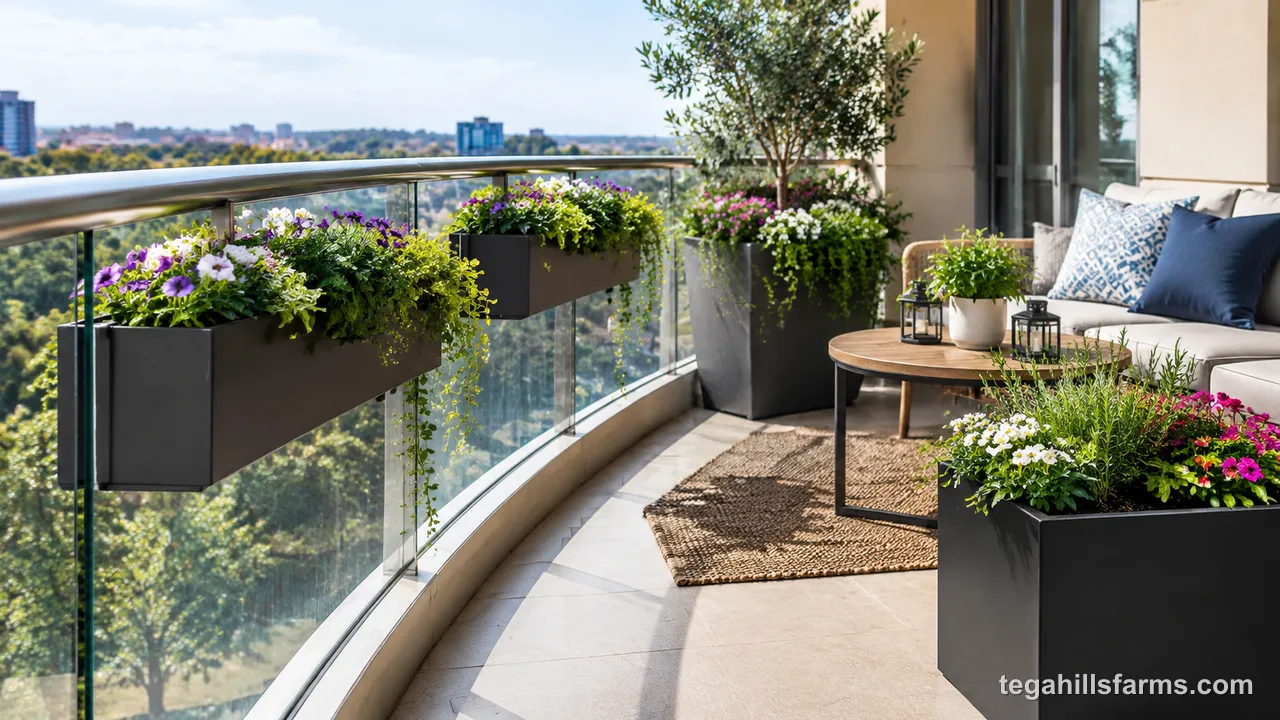
What Can You Do With a Rail Wider Than Most Brackets Allow?
When a rail is wider than a bracket can span, the box can hang on the inside face of the rail instead, using side-mount or baluster brackets that bolt or strap to the posts. Wall-mounted window boxes on the house side of the balcony and freestanding planter stands set at rail height give the same view without touching the cap.
Rail shape changes the approach too. Round iron rails let flat stabilizers roll, so hooks that wrap the rail or strap-style brackets grip better. Curved rails leave gaps under a straight box, which concentrates the load on two points; shorter boxes spaced along the curve sit more securely. Glass panels and glass-topped rails should never carry a clamp or hook, because pressure on tempered glass can crack it, so floor or wall planters are the safer route.
Which Options Work When a Lease or HOA Bans Rail Planters?
Read the exact wording first, because rules differ in what they ban: some leases prohibit anything resting on the railing, others anything hanging over the outside edge, and some HOAs regulate only what’s visible from the street. A planter hung on the inside face of the rail, a wall-mounted box or a freestanding container often stays within the rules while still giving you growing space.
Lining the wall beside the door with vertical wall planters uses space without touching the rail, and it suits herbs and trailing flowers. Floor containers from the best patio planters can sit right against the railing at nearly the same height for sun. When in doubt, send a short written request to the landlord or board and keep the reply, since a written approval protects you if management changes.
How Do You Stop Water Dripping Onto the Balcony Below?
Runoff onto the balcony below comes from water draining faster than the soil can hold it, so the fix is slower watering plus a way to catch what escapes. Water slowly at the base until the first drops appear at the drainage holes, then stop; whatever drains after that point is excess.
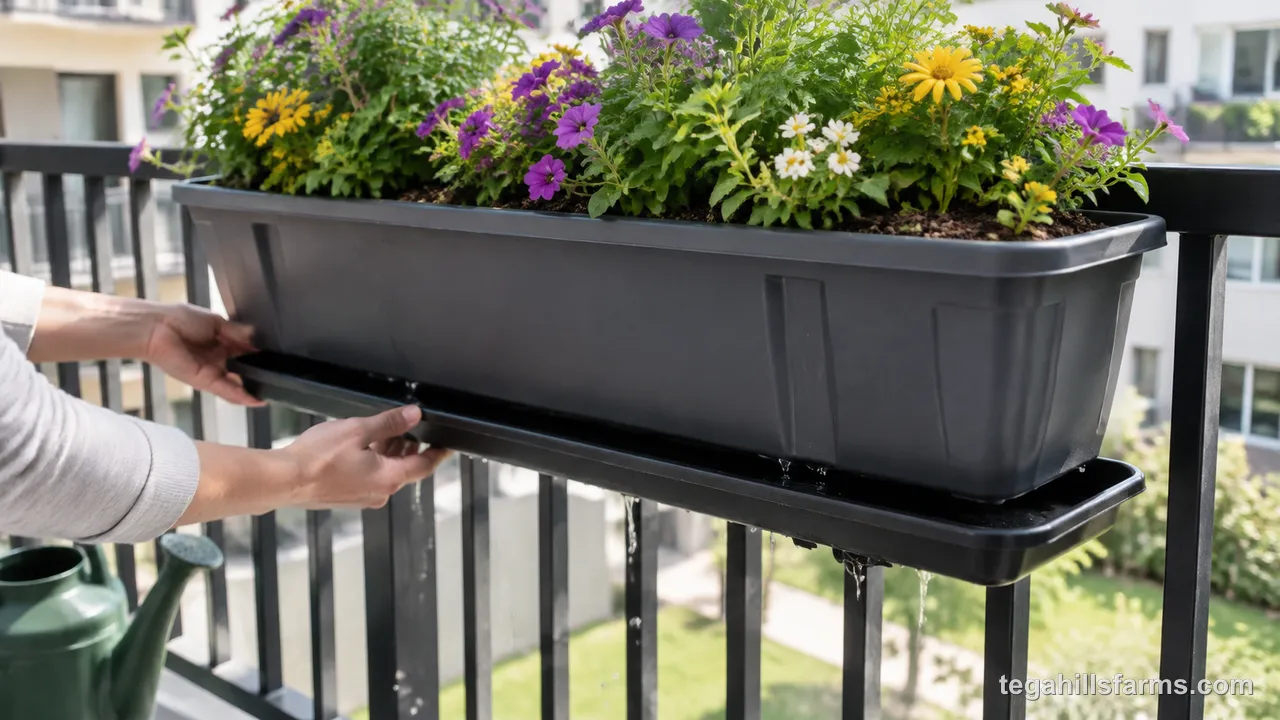
A drip tray under a box with bottom holes catches that excess, though it should be emptied after rain so roots don’t sit in standing water. Coco liners drip through the sides as well as the bottom, so a plastic sheet with a few slits laid inside the liner cuts runoff while keeping drainage. Reservoir boxes release little because water is stored below the soil, which makes the best self watering railing planters a tidy choice above a neighbor’s patio.
Season and sun change the routine: a south-facing box in July may need water daily, while the same box in April or October can go several days. Morning watering lets leaves dry and gives any drips time to evaporate before neighbors head outside.
When Do Railing Planters Wear Out and Need Replacing?
Replace a railing planter once its brackets loosen in ways tightening won’t fix, cracks run through the walls, or rust has eaten through the coating, because those are the points where a filled box can fail and fall.
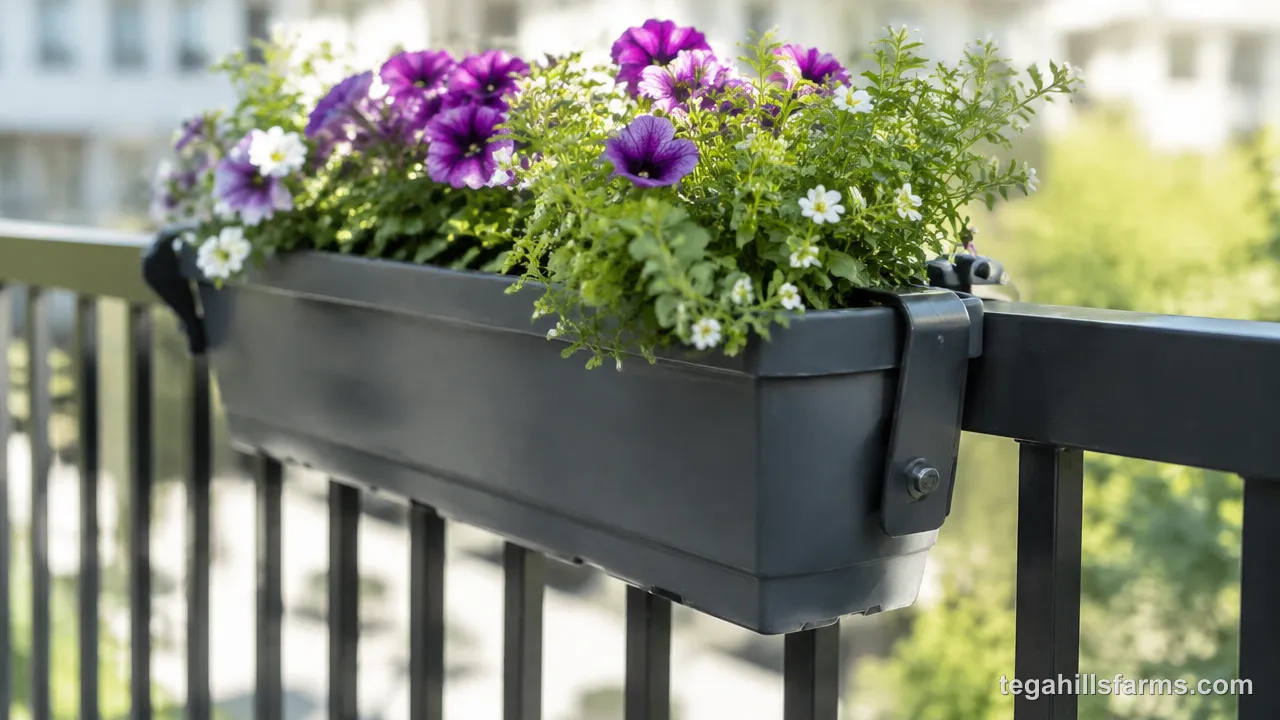
Metal shows wear as chips and bubbles in the powder coating, followed by orange rust streaks; small chips can be sanded and touched up, but rust through the floor or bracket arms means it’s time for a new box. Resin and plastic fade and turn chalky after years of UV, and brittle walls can crack when wet soil freezes and expands. Coco liners thin and tear after a few seasons and can be replaced on their own.
Check the rail too: dark stains, soft wood or worn paint under the bracket mean moisture is being trapped, and the box should come off while the rail is repaired. Climate shifts which materials age well. UV-resistant composite and high-grade plastic handle hot, sunny regions, double-walled or composite boxes cope with freeze-thaw winters, and coated metal needs the closest watch in wet, coastal air.
Railing Planter Questions Answered
Can you grow strawberries in a railing planter?
Yes, strawberries suit a rail box because their roots stay shallow and the fruit hangs clear of the soil, which keeps berries cleaner and out of slugs’ reach. Everbearing or day-neutral varieties keep fruiting through summer in a sunny spot, and the best railing planters for strawberries hold enough moisture for steady berry production.
How many plants fit in a railing planter?
It depends on the box’s interior length and each plant’s mature width, not on a fixed count. Space herbs and vegetables by the container spacing on the seed packet or plant tag, and set flowering annuals a little tighter for a full look. Overcrowding cuts airflow and invites mildew, so leave room between bushy plants.
Do railing planters damage wood railings?
They can if moisture stays trapped under a bracket or box, which stains and softens the wood over time. Foam pads or rubber strips under the brackets prevent scratches, and a box that drains away from the rail lets the wood dry between waterings. Check the rail each spring and fall, and refinish worn spots before rot starts.
Which way should a railing planter face?
Hang it on the inside of the rail, facing your deck or balcony, so a slipping box falls where nobody walks below. Inside placement also keeps it within reach for watering and harvest. For sun, a south- or west-facing rail suits flowers and vegetables, while an east-facing rail keeps leafy greens from scorching in afternoon heat.
Should you take a railing planter down for winter?
In colder USDA zones, bring empty resin, coco-lined and thin metal boxes into a garage or shed, since freezing wet soil stresses walls and brackets. Double-walled or composite boxes rated for deep cold can stay out with hardy perennials. Either way, empty drip trays and check bracket tightness before the first hard freeze.