

Stopping weeds in planters comes down to five habits: filling with sterile potting mix, laying a weed barrier before planting, mulching the soil surface, hand-weeding before weeds set seed, and planting densely so little bare soil stays exposed. Each method blocks weeds at a different stage, so combining them works better than relying on one.
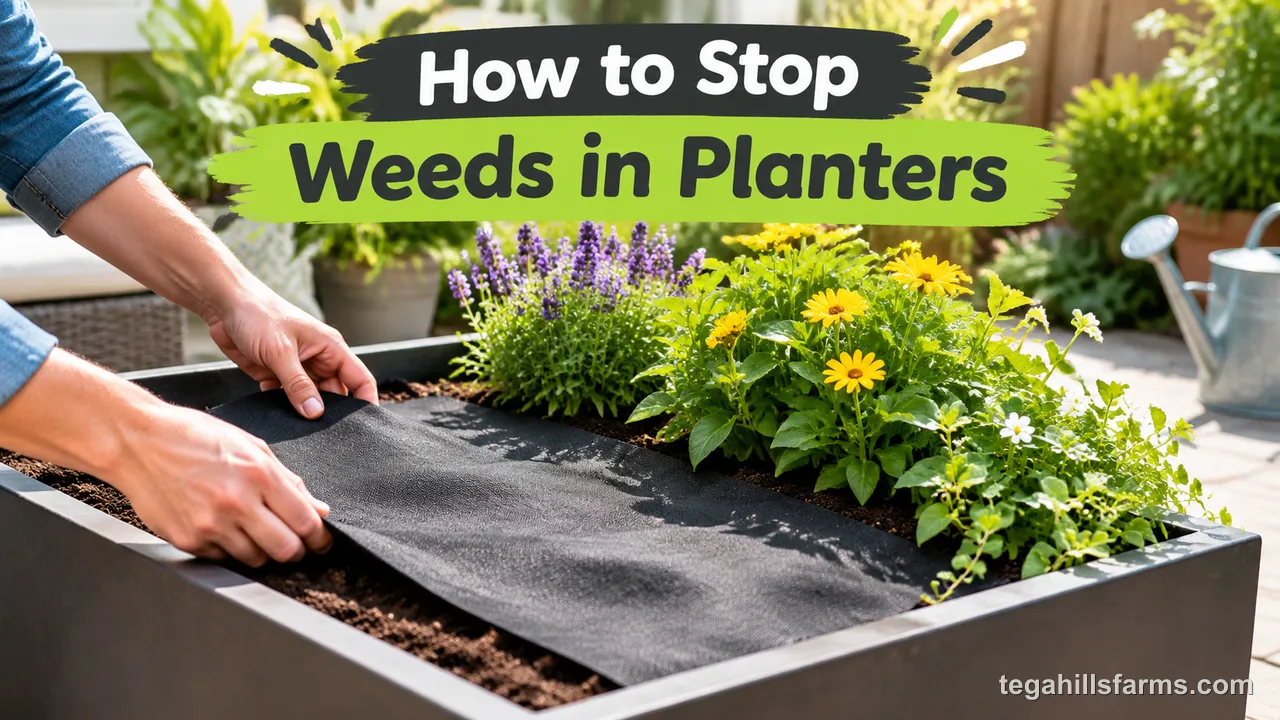
The right mix of methods depends on what you grow and how long the planter stays in place. A permanent raised bed of perennial herbs can carry a long-lasting barrier and woody mulch. A patio pot of summer tomatoes needs something you can lift out at season’s end.
Most container weed problems start before anything is planted, with seeds already sitting in the fill or blowing in from the yard. Once those seeds sprout among vegetables, every pull risks disturbing the roots of the crop you actually want.
Why Do Weeds Grow in Planters?
Most container weeds come from seeds hidden in garden soil or unfinished compost, or from airborne seeds that land on bare soil and find light, moisture and room to sprout.
Material and design matter when you work out how to choose a planter, and so does keeping weeds from taking hold once you fill it. A planter has no weed bank of its own, so every weed seed in it arrived from somewhere. Soil dug from a garden bed carries years of dropped seed, and compost from a cool pile can hold seed that never got hot enough to die.
Wind, birds and splashing water deliver the rest. Dandelion and thistle seeds float in on breezes, then germinate fastest wherever soil sits uncovered between plants. That is why prevention starts with what goes into the planter and how much of the surface stays exposed.
Start with Quality Potting Mix
Sterile bagged potting mix prevents most container weed problems, because it starts free of viable weed seeds that garden soil and homemade compost often carry.
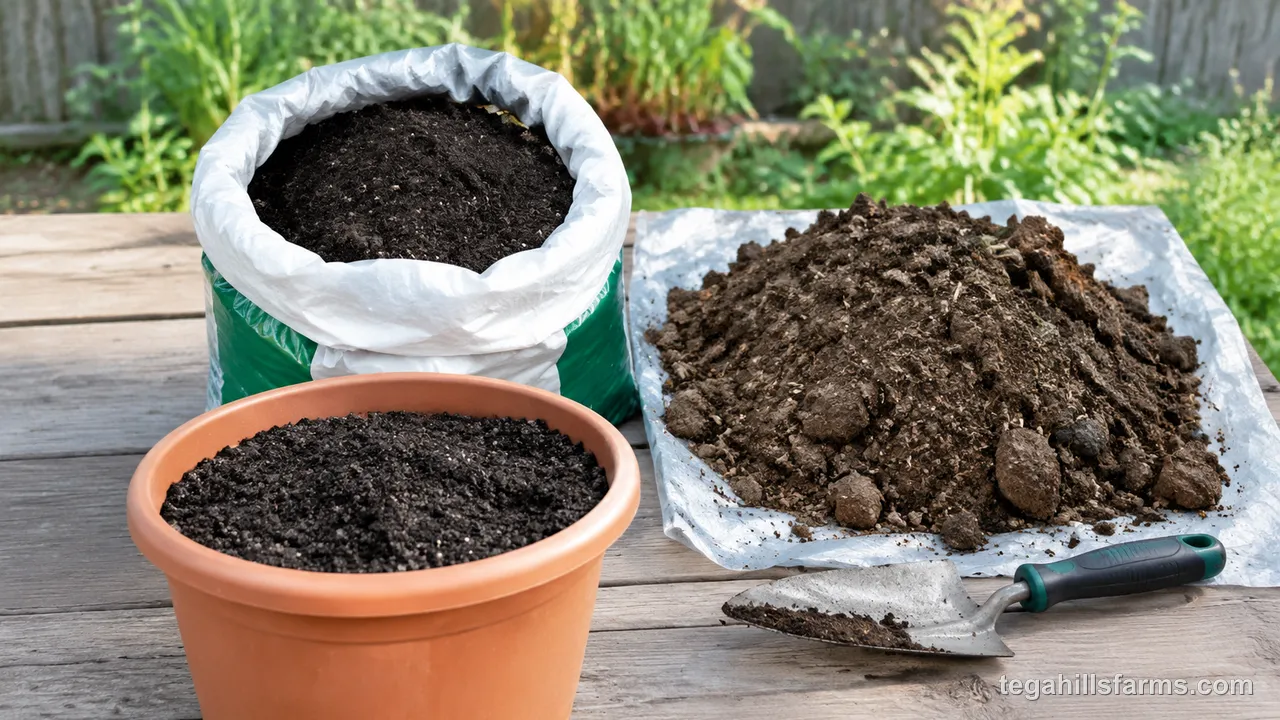
The fill decides how much weeding the planter needs for its whole life. Once contaminated soil is in a container with roots growing through it, you can’t sort the weed seeds out without emptying everything. Getting the fill right costs nothing extra in effort, and it removes the main source of weeds before the first seedling goes in.
Avoid Garden Soil in Containers
Garden soil brings weed seeds into a planter along with the dirt, because every weed that flowered in that bed over past seasons left seed behind in the top layer. Fill a container with it and those seeds sprout within weeks of the first watering.
Soil structure causes a second problem. Garden soil compacts in the confined space of a pot, which squeezes out air and slows drainage, so roots sit wet. Potting mix is built from lighter materials such as peat, coir, bark and perlite, which hold their structure and drain freely.
Check Your Compost Source
Compost adds nutrients to a planter, but only finished compost is reliably weed-free. Seeds die when a pile reaches high temperatures during hot composting; a cool backyard pile that never heats through can leave weed seed alive and ready to sprout in your containers.
Finished compost looks dark and crumbly, smells earthy, and shows no recognizable scraps of leaves or food. Bagged compost from a commercial producer has usually gone through a heated process. If your own pile is mostly grass clippings and kitchen scraps that sat without turning, mix it into in-ground beds where stray weeds are easier to manage, and keep it out of planters growing vegetables or herbs.
Install a Weed Barrier Before Planting
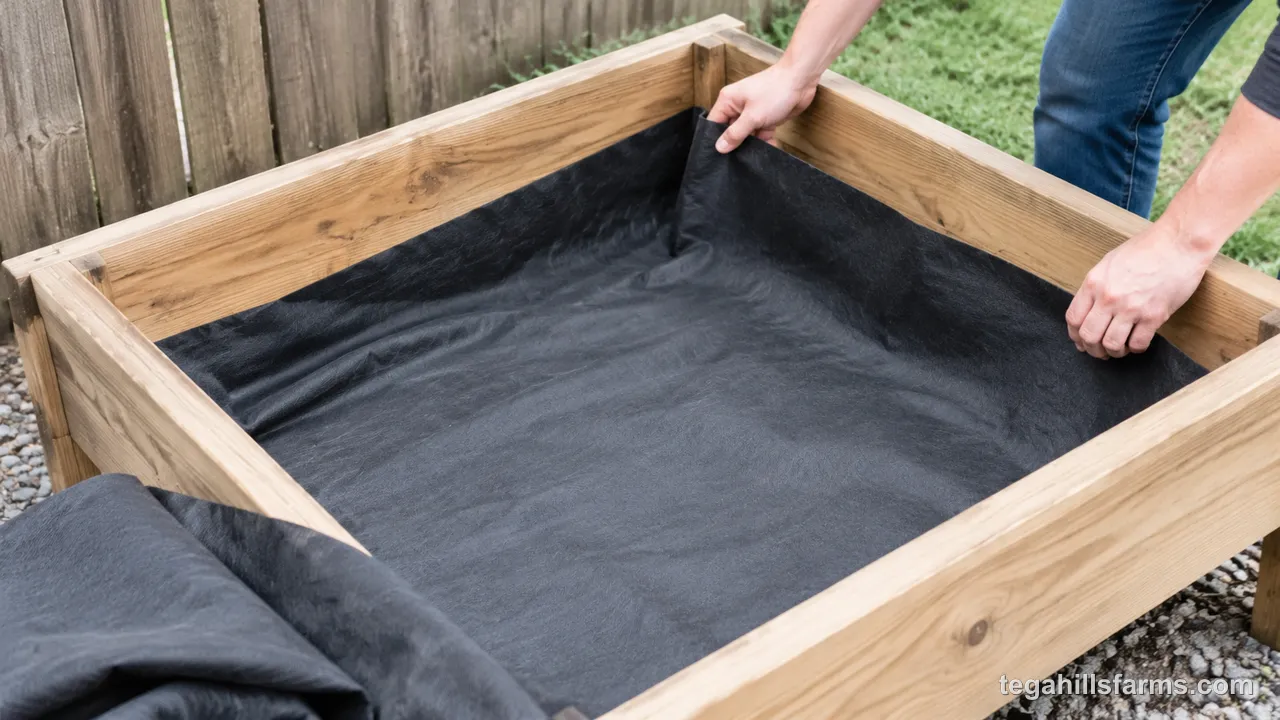
The two practical barriers for planters are permeable landscape fabric (weed membrane) for long-term beds and plain cardboard for a single season, both laid before any soil or plants go in.
What decides the choice is how long the planter stays in place and how freely water must leave it. Any barrier sits between the soil and the planter’s base, so it has to let water through. A barrier that seals the bottom undoes good planter drainage, leaving roots in waterlogged soil that rots them faster than any weed could crowd them out.
Landscape Fabric and Weed Membrane
Woven or non-woven landscape fabric blocks weeds rising from the ground below while letting water and air pass through, which makes it the standard choice for raised beds and bottomless planters set on soil. Lay it across the base, overlap any seams generously, and cut it to fit snugly against the sides so roots of perennial weeds can’t push up along the edges.
Permeability matters most. Plastic sheeting looks similar but traps water, so check that the product is labeled permeable. The fabric’s weak point is sunlight: UV breaks it down, so keep it fully covered with soil. In a planter that sits on a patio with drainage holes, a fabric liner also stops soil from washing out of the holes.
Cardboard as a Temporary Barrier
Plain cardboard smothers weeds beneath a planter for one growing season, then breaks down into the soil, which suits raised beds placed over lawn or weedy ground. Strip off tape and glossy labels, overlap the pieces so no gaps let light through, and soak the cardboard before adding soil on top.
Because it decomposes, cardboard won’t block weeds for more than a season or so, and that is the point: roots of your crops can eventually reach the ground below. By early spring the cardboard has usually softened, and loosening the soil 6 to 8 inches deep at that point mixes in what remains and opens the bed for planting.
Apply Mulch to Suppress Weeds
Mulch stops weeds by blocking light from the soil surface, so seeds that land there can’t germinate; the choice is between organic mulches that break down and feed the soil and gravel or stone that lasts.
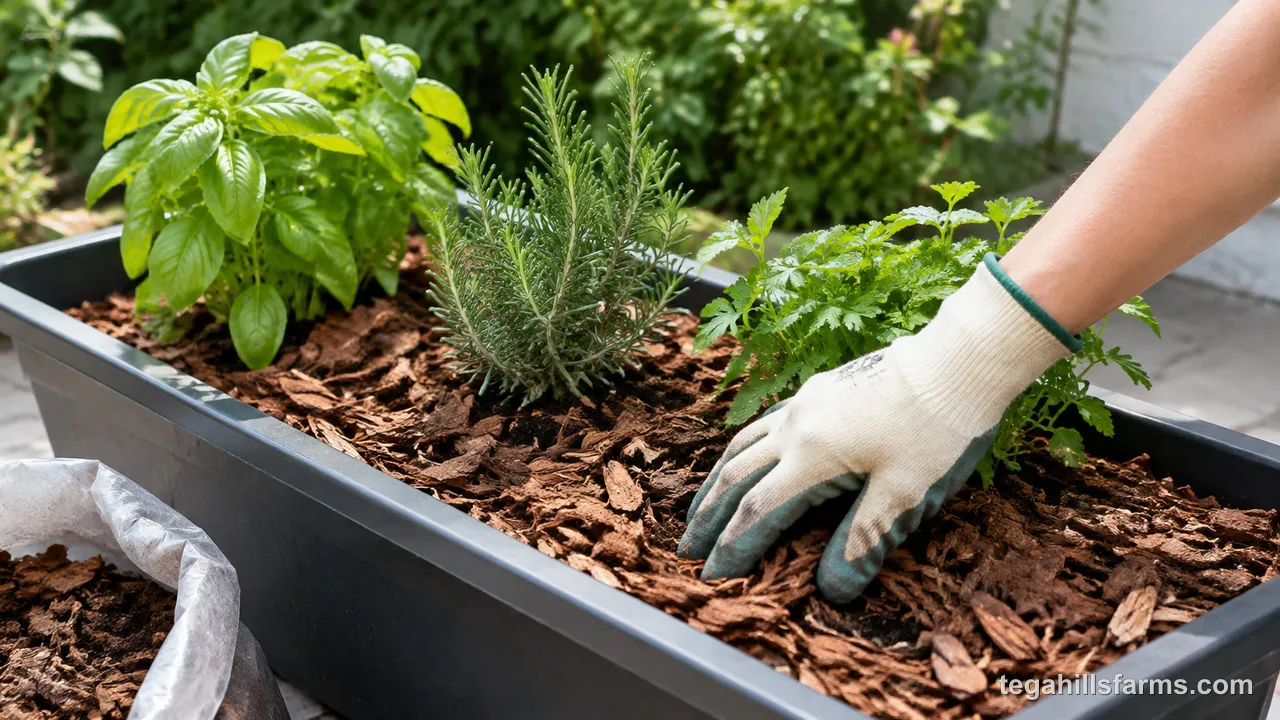
What decides the right mulch is what you grow and how the planter is watered. Vegetables and annual herbs get replanted every season, so a mulch you can work into the soil or rake aside makes replanting easier. Permanent plantings of shrubs, succulents or perennial herbs benefit from a mulch that stays put for years. Watering habits matter too, since mulch changes how fast the soil dries and how water reaches the roots.
Organic Mulch Options
Bark chips, straw and grass clippings all block weeds in planters, but they suit different situations. Bark chips last longest and look tidy, which makes them a good fit for perennial plantings and larger containers. Straw is light and loose, so it suits vegetable planters where you replant each season; buy straw rather than hay, since hay carries seed heads.
Grass clippings are free and break down quickly, adding nitrogen as they go. Spread them thinly and let them dry first, because a thick, wet layer mats down and turns slimy. Woody mulch mixed into the soil can cause nitrogen tie-up, so keep bark on the surface. All organic mulches hold moisture, which helps small pots that dry out fast in summer.
Gravel and Stone Mulch
Gravel works better than organic mulch in planters holding succulents, cacti and Mediterranean herbs such as rosemary and thyme, because these plants prefer dry conditions around their crowns. Stone never decomposes, so it keeps blocking light without topping up and won’t hold damp against plant stems.
The trade-off is heat. Stone absorbs sun and radiates warmth back into the planter, which suits drought-tolerant plants but can stress lettuce or leafy greens in a hot southern summer. Gravel also makes replanting awkward, since it mixes into soil when you dig. It drains freely and gives a clean, decorative finish, which is why it suits permanent containers on patios and entryways.
Hand-Weed Before Weeds Set Seed
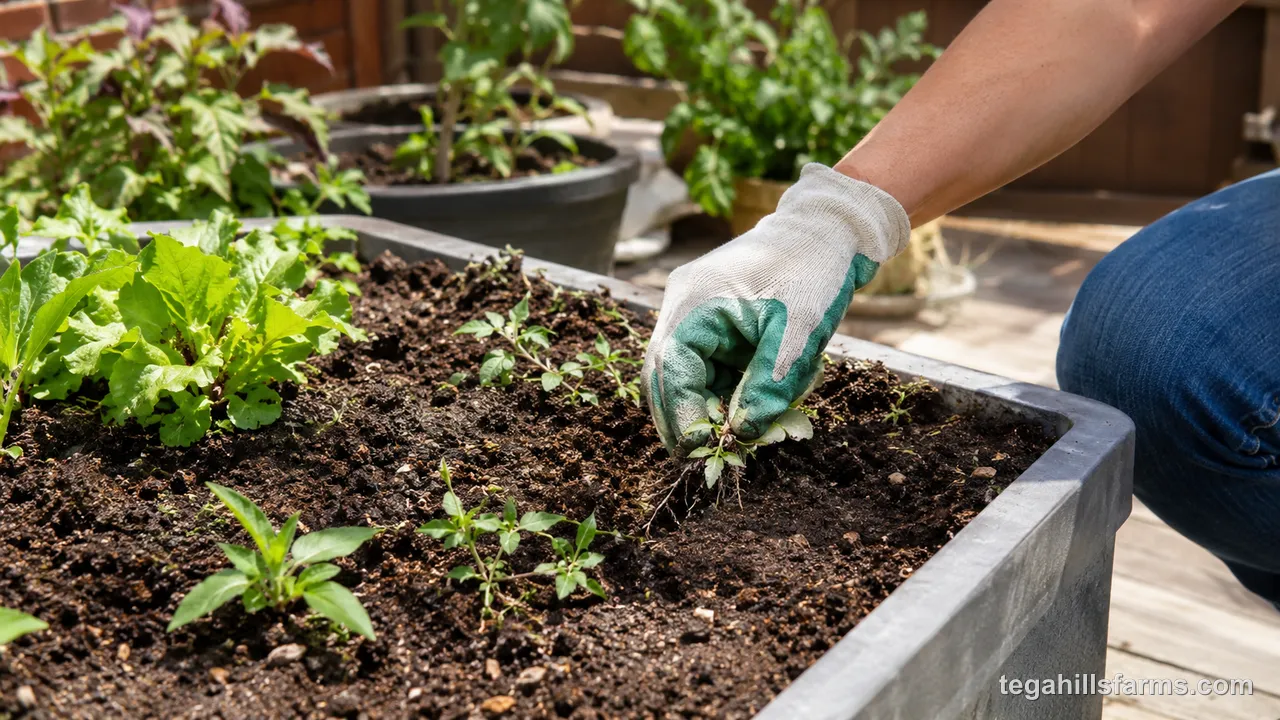
Effective hand weeding means removing each weed with its whole root while it is still small, before it flowers and drops seed back into the planter.
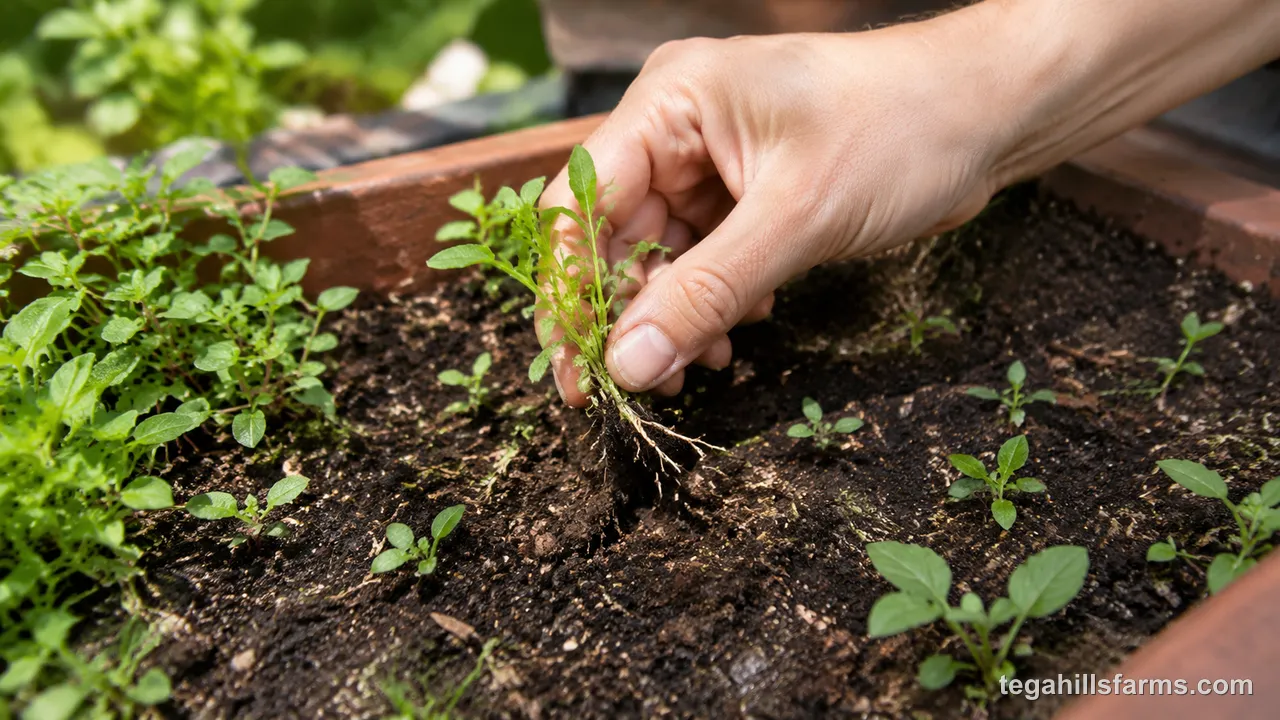
Timing and technique both decide whether weeding solves the problem or only delays it. Annual weeds return through seed, so missing a single flowering plant restocks the soil for next season. Perennial weeds return through roots, so a weed snapped off at the surface grows back within weeks. Gentle technique matters in a crowded planter too, because digging churns buried seed up to the light and loosens the roots of the plants you want to keep.
Pull Weeds While They’re Young
Seedling weeds come out with a light pinch because their roots are short and haven’t anchored into the soil yet. Wait a few weeks and the same weed has a root system tangled with your crop’s roots, so pulling it tears both.
Early removal also breaks the weed cycle. Most annual weeds flower and set seed quickly, and one plant can scatter enough seed to keep a planter weedy for seasons. A quick check every time you water catches seedlings while they are easy to spot. Weeding after rain or watering helps, since moist soil releases roots far more easily than dry, packed soil.
Remove the Entire Root
Perennial weeds such as dandelion and bindweed regrow from any piece of root left behind, so pulling only the top gives them a fresh start. Dandelions grow a deep taproot that snaps if yanked; loosen the soil beside it with a narrow trowel or weeding fork, then ease the whole root out.
Bindweed and similar creeping weeds break into fragments, and each fragment can sprout a new plant. Follow the root by hand as far as it goes, sifting the soil to catch broken pieces. In small containers, it is sometimes simpler to lift the plants you want, clear the weed roots, and replant. Bag perennial weed roots for the trash rather than the compost pile.
A planter mulched, barriered and weeded clean can still sprout weeds by midsummer wherever soil shows between young plants, because every gap of sunlit soil is an open invitation to airborne seed. Leave those gaps open through the season and you end up weeding the same spots every week while your crops fill in too slowly to close them.
Plant Densely to Crowd Out Weeds
Tight spacing stops weeds because a full leaf canopy shades the soil, and weed seeds that land in shade struggle to germinate or grow. When plants fill the surface, weeds have no light and no room to establish.
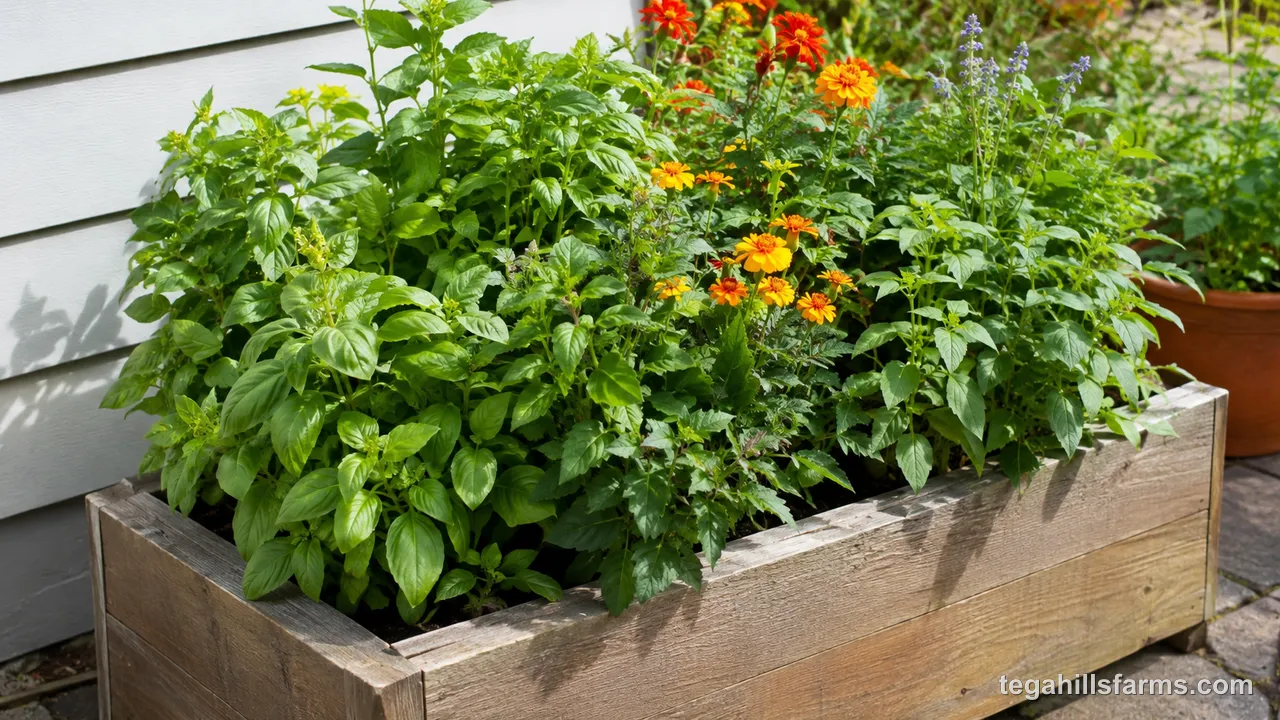
Plant closer than in-ground spacing guides suggest, since containers have richer fill and you water and feed them more often. Leafy greens, herbs and compact flowers suit dense planting well. Underplanting taller crops with ground cover plants such as creeping thyme or sweet alyssum fills the gaps around tomato or pepper stems.
Deciding what to plant in a planter with a mix of upright and trailing plants covers the soil faster than a single row of one crop. Density only works if roots have enough room, so work out what size planter you need before crowding it, because cramped roots compete with each other as well as with weeds.
Water Plants, Not Bare Soil
Watering only at the base of your plants keeps the open soil between them dry, and dry soil gives weed seeds little chance to germinate. Overhead watering with a garden hose or sprinkler wets the whole surface, which is exactly what dormant seed needs.
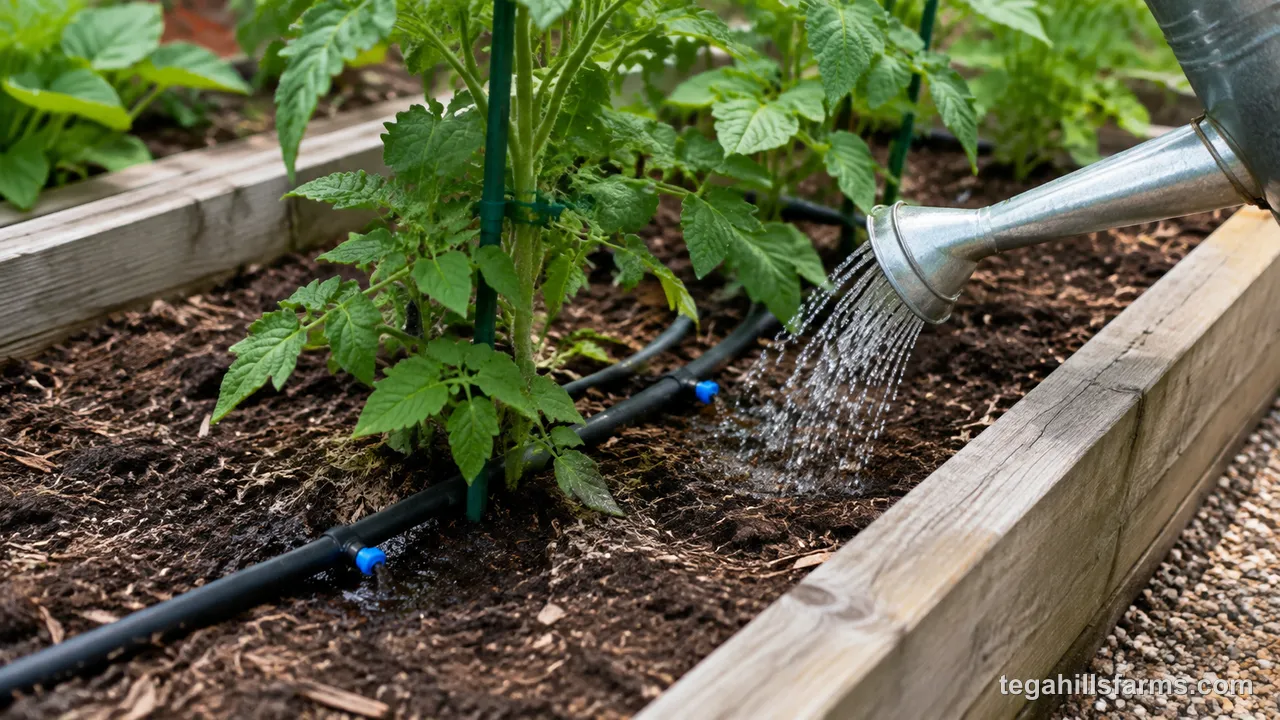
Drip irrigation and soaker hoses deliver water straight to the root zone, which makes them well suited to raised beds and long planters. For pots and window boxes, a watering can with a narrow spout lets you aim at each plant’s base.
Targeted watering also keeps mulch working. Water that soaks the mulch layer from above stays near the surface, where it can feed weed seeds sitting on top of it. Water placed under or beside the mulch reaches roots while the top layer stays drier and less welcoming to new weeds.
When to Replace Mulch and Barriers
Woody mulches such as bark chips need replacing every two to three years, while soft mulches such as garden compost or aged manure break down fast enough to need topping up annually. Once mulch thins enough to show soil through it, light reaches weed seeds again.
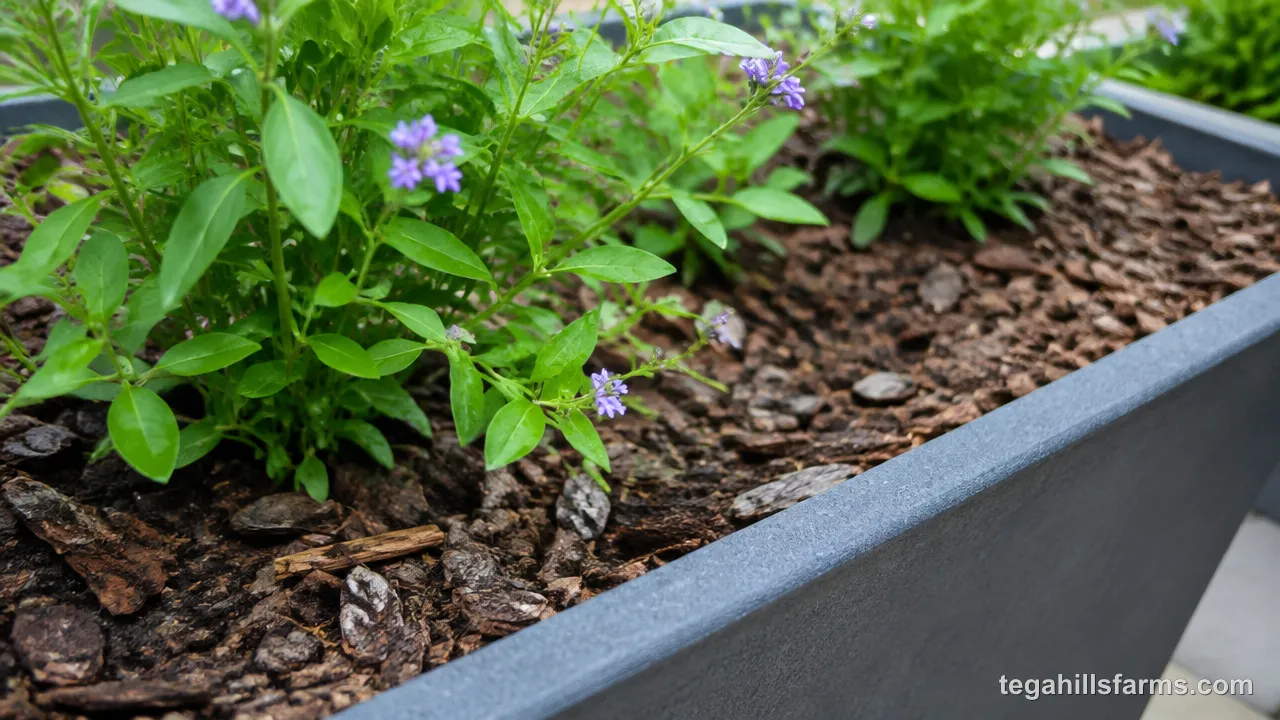
Seasonal maintenance makes this easy to track. Check mulch depth each spring before planting, and again in fall after you clear spent crops. Rake thin bark aside to add fresh material, or work broken-down soft mulch into the soil and lay a new layer.
Landscape fabric lasts several seasons when kept covered, but it degrades once exposed to sunlight or punctured repeatedly by trowels. Replace it when it tears, frays or lets weeds through, typically when you empty and refill a raised bed. Cardboard needs replacing each season you want a fresh barrier.
Common Questions About Weeds in Planters
How do I stop weeds in small pots?
Use bagged potting mix, then cover the surface with a thin layer of fine bark, gravel or straw. Small pots don’t need a fabric barrier, since nothing grows up from below. Pinch out seedlings when you water, and plant closely enough that leaves shade most of the soil surface.
Why are weeds growing from new bagged potting soil?
Bagged mix is usually weed-free, so sprouts often come from seeds that blew in after filling or from compost you mixed in. Lower-quality blends with unfinished compost can also carry seed. Pull seedlings early, mulch the surface, and choose a different brand if the problem repeats with every new bag.
Can I add a weed barrier to a planter that’s already planted?
You can’t add one beneath the soil without replanting, but a surface layer works well. Lay mulch around existing plants, keeping it slightly back from stems to prevent rot. For a raised bed with a persistent weed problem from below, empty and refill it with fabric in place at season’s end.
Is it safe to use herbicides in planters?
Herbicides are risky in containers because the plants you want sit inches from the weeds, and spray drift or root uptake can damage them. Avoid them in planters growing vegetables or herbs. For ornamental containers, choose a product labeled for that use and follow the label exactly.
Do weeds in planters attract pests?
Weeds can shelter aphids, slugs and other pests close to your crops, so regular weeding fits naturally into planter pest control. Dense weed growth also traps humidity around stems, which encourages fungal problems. Clearing weeds while young keeps airflow open and removes hiding spots before pests settle in.
Write Your Review
No reviews yet. Be the first to share your experience!