

Our top picks for the best pole saws for tall branches in 2026 are Supstable Cordless Pole Saw 6in (Best Overall), Seesii 2-in-1 Cordless Pole Saw 8in (Best Cordless), Seesii 2-in-1 Electric Pole Saws P6 Plus (Editor’s Choice), Walensee 14ft Pole Saw (Best Budget), Suchtale 14ft Manual Pole Saw (Best for Limited Hand Strength), Fiskars 8-12ft Tree Pruner & Pole Saw (Best Performance), LAANPOLE Telescoping Pole Saw 26ft (Also Great), Karveden 26ft Reach Pole Saw (Also Great), SKGPOLE 26ft Reach Pole Saw (Also Great), TONYINGO 30ft Reach Pole Saw (Also Great), and VINGLI 26ft Manual Pole Saw (Also Great).
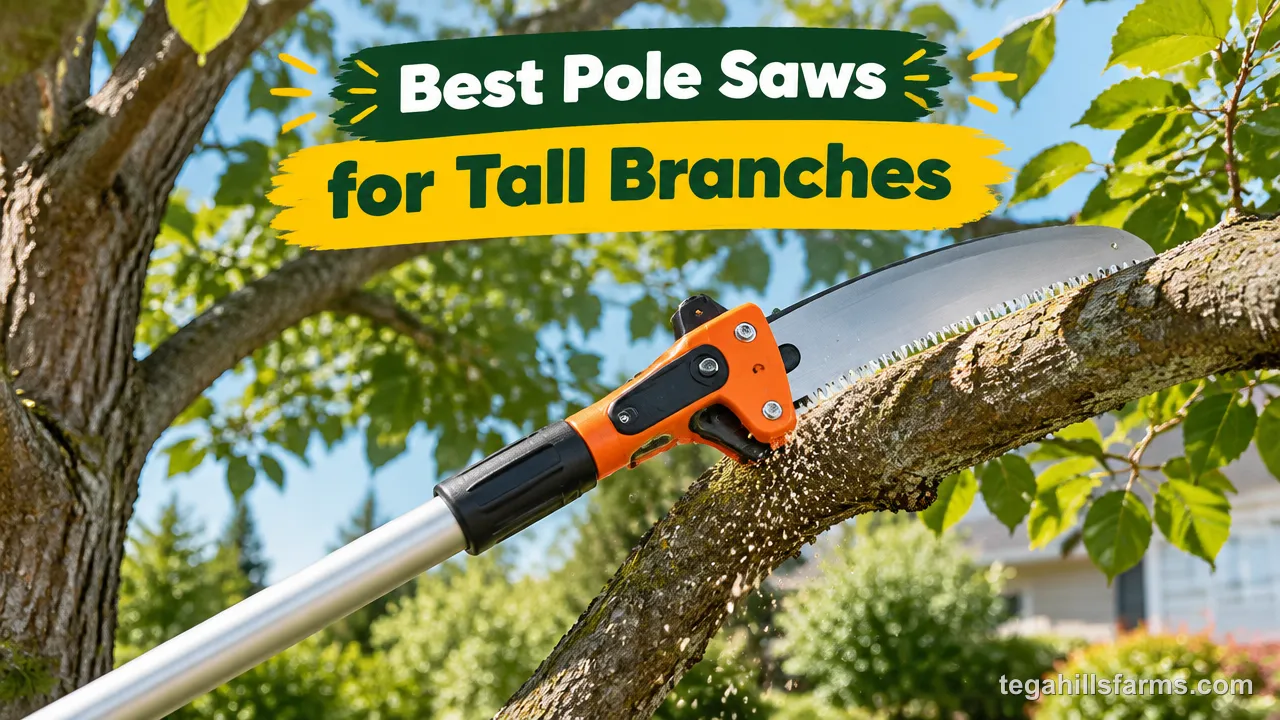
Three things decide whether a pole saw earns its place in your shed: how high it puts the cutting head, how thick a limb that head can get through, and how heavy the tool feels once the pole is fully out. Power type sits on top of those, because a battery chain bar, a manual saw blade and a rope-pull pruner each trade reach against cutting capacity in a different way.
The real risk with a tall limb is buying a tool that solves only half the problem. A long manual pole gets you to the limb but stalls in wood the blade can’t handle, while a compact battery kit cuts through it easily but may leave the limb just out of reach, which pushes you back toward the ladder you were trying to avoid.




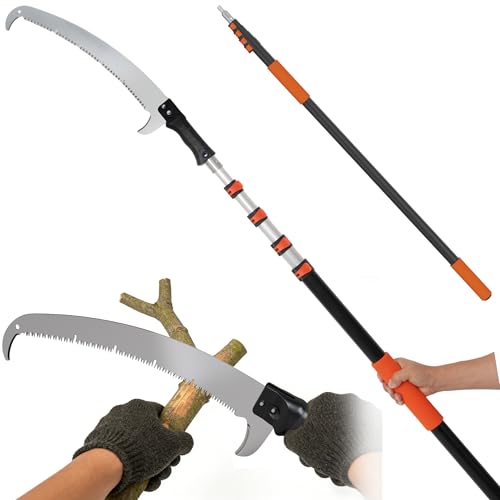

Before you choose, stand under the limbs you actually need to cut and judge two things: how far above your raised hands they sit and how thick they are where you would make the cut. Thick wood points to a battery kit, and thin, high limbs point to a long manual pole.
What Is the Best Tool to Cut High Tree Branches?
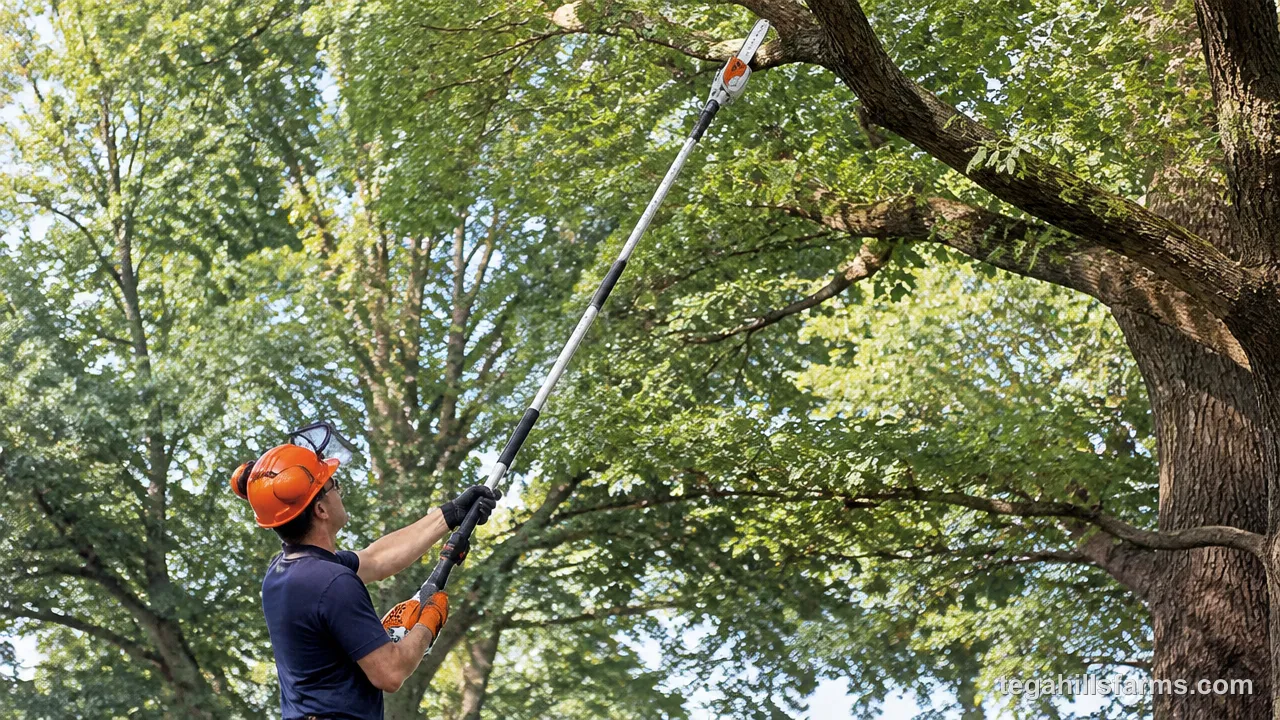
A pole saw handles any limb above your ground-level reach, because it lifts a saw head on an extendable pole up to the wood while your feet stay planted instead of climbing a ladder. The head is either a short chain bar driven by a motor or a toothed blade you work by hand, and the pole sets how high it goes, so the two together do the job of a ladder and a handsaw without the fall risk. Pole saws come in four power types: battery, gas, corded and manual. Reach and branch thickness decide which one fits, since a powered chain bar cuts thicker wood while a long manual pole gets higher on thin limbs. If you want the wider field beyond tall-branch work, our guide to the best pole saws covers every type and size.
11 Best Pole Saws for Tall Branches of 2026
Our top picks are Supstable Cordless Pole Saw 6in, Seesii 2-in-1 Cordless Pole Saw 8in, Seesii 2-in-1 Electric Pole Saws P6 Plus, Walensee 14ft Pole Saw, Suchtale 14ft Manual Pole Saw, Fiskars 8-12ft Tree Pruner & Pole Saw, LAANPOLE Telescoping Pole Saw 26ft, Karveden 26ft Reach Pole Saw, SKGPOLE 26ft Reach Pole Saw, TONYINGO 30ft Reach Pole Saw and VINGLI 26ft Manual Pole Saw. The battery kits put a chain bar on the pole that gets through thicker wood, but their poles stop well short of the long manual models, which reach higher and handle only thin branches. That split serves homeowners facing high limbs, light pruning or fruit tree care, whether they want a battery tool or a lighter manual pole.
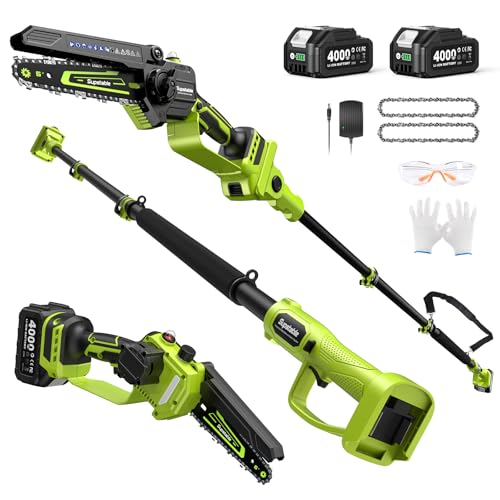
#1 Supstable Cordless Pole Saw 6in — Best Overall
Homeowners who want one battery tool for overhead limbs and ground-level cleanup get it here, since the 6-inch saw rides a pole reaching up to 16 ft or comes off for handheld work. A second battery keeps the work going while one charges.
Key Specs:
- Guide bar: 6 in, cuts branches up to 6 in
- Reach: up to 16 ft with the telescopic pole
- Batteries: 2 × 4.0Ah (4000mAh), up to 100 minutes of cutting
- Weight: 3.4 lb as a handheld saw
- Chain oiling: manual pump, 1 fl oz (30 ml) tank
- Warranty: 2 years
Detailed Review:
The 6-inch bar mounts on the telescopic pole for high limbs, then comes off as a one-hand mini chainsaw for storm limbs on the lawn or firewood rounds, so one tool covers both jobs. The saw stays light enough to steer for overhead trimming and shaping shrubs. Its brush motor drives the bar through branches as thick as the bar is long.
Compared with the Seesii 2-in-1 Cordless Pole Saw 8in, you get a shorter bar but a pole that extends well past that saw’s, which matters more when the limb is high than when it’s thick. On a tall-branch job, height is usually the harder problem to solve.
Two 4.0Ah packs share the runtime, so one charges while the other cuts. Chain stretch gets taken up on the spot with the tool-free tensioning knob, with no wrench to fetch from the garage.
Oiling is by hand: you press the pump before cutting and check the chain regularly during use, lowering the pole each time. On a long session that routine becomes part of the job, and skipping it costs you chain life.
Pros:
- Converts between pole saw and handheld mini chainsaw.
- Two batteries let one charge while the other cuts.
- Tool-free knob adjusts chain tension quickly.
- Gloves, goggles and extra chains come in the kit.
Cons:
- Manual oil pump needs attention throughout every session.
- Short bar limits each pass to modest limbs.
Who It’s For:
A homeowner with overhead limbs and ground-level storm debris gets two tools’ worth of work from one motor here. It also fits anyone who wants spare battery time in the box. If you’d forget to pump oil mid-job, the Seesii 2-in-1 Electric Pole Saws P6 Plus oils its chain automatically.
Editor’s Verdict:
Pick this one if you want a single battery saw that trims high and cuts low; just build the oil pump into your routine.
#2 Seesii 2-in-1 Cordless Pole Saw 8in — Best Cordless
If your high limbs run thick, the 8-inch bar and 800-watt motor give you more wood per pass while still converting to a handheld saw for ground work. On the pole, though, it gets noticeably heavier.
Key Specs:
- Guide bar: 8 in, manganese steel chain
- Motor: 800 W, brushless
- Pole: telescoping, 6 to 10 ft
- Batteries: 2 × 21V 4.0Ah, up to 50 minutes each
- Weight: 3.6 lb handheld, 7.2 lb as a pole saw
- Warranty: 3 years
Detailed Review:
An 8-inch bar takes a thicker limb than a short bar, which saves cutting a branch from both sides while you hold the pole overhead. The design targets small to medium branches and routine pruning rather than trunks, which fits routine canopy work.
The motor drives a manganese steel chain, and two 21V packs give you double the runtime of one, so a long trim session rarely stops for charging.
On the pole the tool weighs 7.2 lb, and that load sits at the far end of a pole that extends from 6 to 10 ft. The included shoulder strap takes part of the strain, and you’ll want it for anything beyond a handful of cuts.
Safety features include a security lock, safety baffles, a reinforced pole and an anti-slip handle, with gloves and goggles in the box. The adjustable cutting angle helps when a limb hangs over a fence and you can’t stand square to it.
Pros:
- 8-inch bar takes thicker limbs in a single pass.
- Two batteries run up to 50 minutes each.
- Adjustable cutting angle helps on limbs over fences.
- Shoulder strap, gloves and goggles included.
Cons:
- Pole tops out at 10 ft, limiting high reach.
- Pole-mounted weight tires arms faster than handheld use.
Who It’s For:
Someone with mature yard trees whose lower canopy limbs have grown thick will appreciate the longer bar. The kit suits buyers starting fresh with no batteries on hand. For limbs well above that lower tier, the Supstable Cordless Pole Saw 6in extends farther, trading bar length for height.
Editor’s Verdict:
Choose it when limb thickness worries you more than height, and plan on using the shoulder strap.
#3 Seesii 2-in-1 Electric Pole Saws P6 Plus — Editor’s Choice
At 3.2 lb with automatic chain oiling, this saw suits homeowners who trim often and don’t want a maintenance chore in the middle of every session. Its multi-angle head reaches awkward limbs over fences.
Key Specs:
- Reach: up to 10 ft
- Cutting range: branches ¾ in to 6 in (2–15 cm)
- Batteries: 2 × 21V 2.0Ah (2000mAh)
- Weight: 3.2 lb handheld
- Oiling: automatic
- Head: multi-angle adjustable
Detailed Review:
The chain oils itself while it runs, so a long session never stops for a pump check, and the bar and chain wear more slowly. The brush motor handles branches from three-quarters of an inch up to the bar’s length, which covers routine pruning and yard cleanup.
Tilting the multi-angle head squares the chain to a limb that crosses a fence or grows at an odd angle, which keeps the cut clean and spares your shoulders from twisting the whole pole. The light saw stays easy to control one-handed when you pull it off for shrubs.
Its pole stops at 10 ft, so the upper limbs on a mature tree may stay out of range. The 21V packs are 2000mAh against the 4000mAh packs on the Seesii 2-in-1 Cordless Pole Saw 8in, which means more swaps on a big cleanup. Having two in the box keeps the work moving while one charges.
The kit adds a second chain, a chain sleeve and a shoulder strap, so a dull chain or a long session doesn’t end the day early.
Pros:
- Automatic oiling removes the mid-job pump routine.
- Multi-angle head squares cuts on awkward limbs.
- Light saw is easy to control one-handed.
- Package includes two chains and a shoulder strap.
Cons:
- 10 ft pole leaves upper canopy limbs out of reach.
- 2000mAh batteries need swapping sooner on big jobs.
Who It’s For:
For a homeowner who prunes several times a season and dislikes maintenance chores mid-job, this saw keeps things simple. Fence-line trees and awkward limbs suit its tilting head. People whose problem limbs sit high in a mature canopy will run out of pole before they run out of tree.
Editor’s Verdict:
Buy it for the self-oiling chain and tilting head, and accept the shorter pole as the cost of that light, easy package.
#4 Walensee 14ft Pole Saw — Best Budget
Each stainless steel pole section adds about 1.3 ft, up to 14 ft, so this manual saw lets you build only the reach your limbs need for a low outlay. The blade detaches for hand-saw work.
Key Specs:
- Reach: 14 ft with 10 extension poles (7.7 ft and 10 ft versions also sold)
- Poles: stainless steel, powder-coated, about 1.3 ft each
- Blade: manganese steel, triple-ground teeth, dual hooks
- Weight: 4.6 lb
- Mount: reinforced locking screw at the saw head
Detailed Review:
Triple-ground teeth on a manganese steel blade are built for fast, clean cuts, and the dual hooks each do a job overhead. The front hook catches a cut branch hung up in the canopy and drags it down, while the rear hook steadies the blade on the limb as you start a stroke.
Reach comes from short stainless steel sections, so you add pieces until the head meets the limb rather than running a telescoping pole to full stretch. The powder coating resists rust, and the poles come apart for storage on a tight garage wall. Assembling sections is slower than flipping a lock, so changing height mid-job takes some patience.
Pull the blade off and it works as a hand saw for low limbs and shrubs. Every overhead cut comes from your arms working a blade at the far end of the pole, so a thick limb turns into a long, tiring job. I’d keep this one for thin to moderate branches and routine trimming.
Pros:
- Modular poles let you set reach section by section.
- Dual hooks pull down hung-up branches.
- Blade detaches for use as a hand saw.
- Powder-coated stainless poles resist rust.
Cons:
- Adding sections is slower than telescoping adjustment.
- Manual cutting tires arms quickly on thicker limbs.
Who It’s For:
Budget-minded homeowners with thin to moderate high branches and no interest in batteries will find enough tool here. Short storage space suits it too, since the poles come apart. If thicker limbs are the regular job, a battery chain saw on a pole does that work for you.
Editor’s Verdict:
Count on it for routine trimming at a low cost, and leave thicker limbs to a powered saw.
#5 Suchtale 14ft Manual Pole Saw — Best for Limited Hand Strength
Pruning shears worked by a rope through a 4-pulley system cut the effort of each overhead snip, which suits anyone whose hands tire before the job is done. They take branches up to about 1.2 in thick.
Key Specs:
- Cutting capacity: branches up to about 1.2 in diameter
- Pruning blade: 65Mn steel, pull-rope shears
- Pulleys: 4-pulley system
- Pole: 14 ft sectional, working reach up to about 10 ft
- Weight: 6.2 lb
- Assembly: threaded joints with wing nuts, no tools needed
Detailed Review:
The 4-pulley system multiplies your pull on the rope, so the shears close on a branch with less effort than a single rope would ask and you control exactly when the blade bites. You work from the ground pulling down rather than squeezing, which spares sore hands and wrists.
The 65Mn steel blade is sized for thin wood, covering fruit-tree side shoots, water sprouts and small laterals. Anything thicker goes to the integrated saw, and sawing overhead brings back the arm effort the pulleys remove.
Sections add or drop to set the working length. Threaded joints with wing nuts go together without tools and come apart for the car trunk or a shelf, though a new length means stopping to thread or unthread a piece.
At 6.2 lb it outweighs the Fiskars 8-12ft Tree Pruner & Pole Saw, so the Fiskars suits people whose shoulders tire before their hands do, while this one favors a weak grip.
Pros:
- Four pulleys cut rope effort on each snip.
- Pull-rope shears work from the ground.
- Integrated saw handles branches past the shears.
- Sections assemble and break down without tools.
Cons:
- Shears only take thin branches.
- Sawing overhead brings back the arm effort.
Who It’s For:
If gripping and squeezing wears your hands out fast, the rope-and-pulley action lets your body weight do the closing. It fits fruit-tree shaping and light trimming of small side branches. People clearing thick storm limbs need a powered chain saw instead.
Editor’s Verdict:
Reach for it when hand strength, not branch size, is what limits your yard work.
#6 Fiskars 8-12ft Tree Pruner & Pole Saw — Best Performance
The chain-drive gearing in this pruner adds power to every cut, and the 4.8 lb aluminum pole suits owners pruning fruit trees and ornamentals without a battery to charge. A low-friction coating keeps sap from gumming the blade.
Key Specs:
- Reach: extends from 7.9 to 12 ft
- Pole: aluminum, double locking system
- Weight: 4.8 lb
- Saw: 15-inch double-grind blade, rotating head
- Pruner: chain-drive gearing, low-friction coated steel blade
- Warranty: lifetime
Detailed Review:
Chain-drive gearing multiplies the force you put in, so the pruner blade closes on a branch with more power than a direct pull would give. The low-friction coating keeps sap and debris from building up, which matters on pines and fruit trees where a sticky blade starts to bind.
The aluminum pole keeps the whole tool under five pounds, light enough to hold up through a run of cuts without your shoulders giving out early. The double locking system holds the extension in place so the head doesn’t slide back mid-cut, and at its short setting the tool reaches low cuts without bending or kneeling.
For limbs past the pruner, the double-grind saw blade takes over, and the rotating head lets you angle the blade to the limb. The steel blades hold their edge through heavy use. Reach stops at 12 ft, so the top of a tall shade tree stays out of range.
Fiskars backs it with a lifetime warranty, which counts for a hand tool you expect to keep for years.
Pros:
- Chain-drive gearing adds power to every pruning cut.
- Low-friction coating resists sap buildup.
- Double locking keeps the extended pole from slipping.
- Light aluminum pole eases shoulder strain.
Cons:
- 12 ft maximum leaves the upper canopy out of reach.
- Manual saw still demands arm work on thicker limbs.
Who It’s For:
Yards with fruit trees, ornamentals and lower canopy limbs suit this pruner, especially where sap tends to foul blades. It works for anyone who wants a light, no-charge tool with a lifetime warranty behind it. Those who need to reach the crown of a tall shade tree will want a longer pole.
Editor’s Verdict:
Expect clean, powerful pruning cuts from a light pole, as long as your limbs sit within its moderate reach.
#7 LAANPOLE Telescoping Pole Saw 26ft — Also Great
Telescoping from 5 to 20 ft on an aluminum pole with a safety locking joint, this saw changes height quickly and stays steady at length. Its hook blade pulls tangled branches free.
Key Specs:
- Pole: telescoping aluminum, 5 to 20 ft
- Blade: carbon steel, precision ground and coated, hook design
- Lock: safety locking joint
- Grip: insulating, anti-slip material
- Weight: 4.8 lb
- Fitting: universal, accepts other saw heads
Detailed Review:
A safety locking joint holds each stage of the aluminum pole tight, so it doesn’t shake or collapse while you saw and more of each stroke goes into the cut instead of into flex. Because it telescopes, it shortens for a shrub and runs out again for a high limb without stopping to assemble anything. The light build stays easy to keep raised through a session of thin-branch trimming.
The carbon steel blade is precision ground and coated against corrosion and wear, and its hook catches tangled branches and pulls them out of the canopy instead of leaving them hung above you. A reinforcing screw secures the head to the pole so it won’t loosen partway through a job.
The insulating, anti-slip grip holds in wet conditions, but it does nothing about a wet or dirty pole touching a line, so it is no reason to work near power lines. The universal fitting accepts other saw heads, which lets the pole outlast its first blade or take a head suited to a specific job.
Pros:
- Telescoping pole changes height without stopping to assemble.
- Safety locking joint keeps the pole from shaking.
- Hook blade pulls tangled branches down.
- Universal fitting accepts other saw heads.
Cons:
- Manual cutting limits it to thinner branches.
- Insulated grip gives no protection near power lines.
Who It’s For:
When your trimming moves between shrubs, low limbs and high branches in one session, the telescoping pole keeps up without breaking down. Anyone who wants to add a different saw head later gets that option too. Limbs thick enough to need a chain bar are outside its range.
Editor’s Verdict:
Trust it for steady, ladder-free trimming of thin high branches across a wide range of heights.
#8 Karveden 26ft Reach Pole Saw — Also Great
With a 19-inch carbon steel blade on a 5 to 20 ft telescoping pole, this saw puts a long cutting stroke up at high limbs for owners who’d rather saw by hand than charge batteries. Flip-tab locks set the length.
Key Specs:
- Pole: 4-stage telescoping, 5 to 20 ft, flip-tab locks
- Blade: 19 in, 3X sharpened carbon steel, non-stick coating
- Thread: standard 3/4 in universal
- Grip: two foam sections on the pole
- Warranty: up to 1 year
Detailed Review:
A long blade drags more teeth through the wood on each stroke than a shorter one, so you need fewer strokes per cut, which counts when every stroke is your arms working at the end of a long pole. Next to the 17-inch blade on the TONYINGO 30ft Reach Pole Saw, it covers more wood per pass, while that saw’s pole extends farther.
Three-sided sharpened teeth and a non-stick coating keep the blade from dragging in sappy wood. The 4-stage pole sets any length in its range with flip-tab locks, so you shorten it for a mid-height limb and run it back out without tools.
Two foam grip sections give your hands an anti-skid hold, and a screw ties the saw head to the pole so it won’t work loose and fall. The standard universal thread takes paint rollers, dusters and bulb changers, and the saw comes off to work as a handheld saw on low branches, shrubs and logs.
Pros:
- Long blade covers more wood on every stroke.
- Flip-tab locks adjust length without tools.
- Saw head detaches for handheld cutting.
- Universal thread accepts household pole attachments.
Cons:
- Thicker limbs still take many strokes at full extension.
- Long blade needs room to stroke among dense branches.
Who It’s For:
Tall shade trees with thin and mid-size limbs are where a long blade on a long pole pays off, and owners who want one pole for gutters and light fixtures too get extra use from it. Anyone facing thick storm limbs should look at a battery chain saw instead.
Editor’s Verdict:
Use it when you want fewer strokes per cut on high limbs and a pole that doubles for household chores.
#9 SKGPOLE 26ft Reach Pole Saw — Also Great
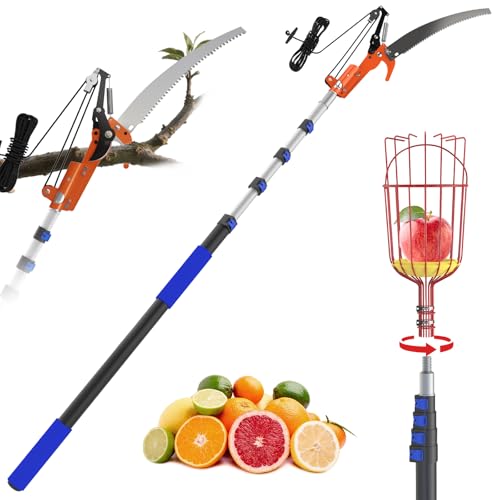
Backyard fruit trees get two jobs from one pole here: a 13.8-inch saw-and-scissors head trims limbs, and a 5.5-inch padded basket catches fruit. The pole runs from 5 to 20 ft.
Key Specs:
- Head: 13.8 in carbon steel blade with pruning scissors
- Fruit picker: metal basket, 5.5 in diameter, thick foam pad
- Pole: aluminum, telescoping 5 to 20 ft, four flap locks
- Thread: universal 3/4 in
- Grip: two non-slip foam handles
Detailed Review:
The 2-in-1 head pairs a carbon steel saw blade with pruning scissors, so you snip small shoots and saw thicker limbs without changing heads. A non-stick coating keeps the stroke smooth through sappy wood.
Swap to the fruit picker and the same pole harvests the tree it just pruned. The foam pad cushions apples, pears or citrus as they drop in, and the basket holds several fruits before you lower it. That padding keeps a ripe plum from splitting against the metal rim.
The aluminum pole extends with four flap locks, and two foam handles keep your grip secure at length. The threaded tip switches between SKGPOLE attachments quickly, and assembly follows a simple manual.
Its blade is shorter than the 19-inch blade on the Karveden 26ft Reach Pole Saw, so a thick limb takes more strokes. The trade buys you a head built for mixed snipping and sawing, which suits fruit trees more than storm limbs.
Pros:
- Saw and scissors share one head.
- Padded basket catches fruit without bruising.
- Four flap locks set length quickly.
- Universal thread swaps attachments easily.
Cons:
- Shorter blade needs more strokes on thick limbs.
- Switching between saw head and basket interrupts pruning.
Who It’s For:
Orchard owners and anyone with backyard fruit trees will use both the saw head and the basket through the year. It also suits gardeners who prefer snipping thin shoots over sawing them. Readers whose main problem is thick storm limbs will want a powered chain saw for that work.
Editor’s Verdict:
Get this pole when the trees you prune also need picking, since the basket makes it more than a saw.
#10 TONYINGO 30ft Reach Pole Saw — Also Great
For limbs high in a mature tree, the 4-stage pole extends from 5 to 24 ft and carries a 17-inch sharpened carbon steel blade. An extra screw locks the saw head to the pole.
Key Specs:
- Pole: 4-stage telescoping, 5 to 24 ft, flip-tab lock
- Blade: 17 in, 3X sharpened carbon steel, non-stick coating
- Safety: anti-slip handle, reinforcement screw at the saw head
- Thread: fits standard thread tools
- Use: detaches as a handheld saw
Detailed Review:
A pole that runs out this far puts the blade into the upper limbs of a tall tree from the ground, and the flip-tab lock on its stages lets you stop at any length in between. At full extension that much pole moves more with every stroke, so it pays to keep some length in reserve for the limbs that truly need it.
The blade has three-sided sharpened teeth and a non-stick coating, so it slides through palm and sappy limbs without binding. Rust resistance helps a tool that lives in a damp shed between jobs.
An anti-slip handle and an extra reinforcement screw at the saw head keep your grip and the blade where they belong high up, where a head working loose is the real hazard. The standard thread also fits paint rollers and dusters, and detached, the saw handles brush and logs at ground level.
Pros:
- Pole extends far into a tall tree’s upper limbs.
- Flip-tab locks set any length across four stages.
- Reinforcement screw keeps the saw head secure.
- Detaches for handheld cutting of brush and logs.
Cons:
- Full extension makes the blade harder to steer.
- Manual strokes at height tire arms on thick limbs.
Who It’s For:
Owners of tall shade trees or palms whose problem limbs sit well above the roofline get the most use from the long pole. It also suits someone who’d use the same pole for painting or dusting. Anyone with limited arm strength may struggle to control the blade at full length.
Editor’s Verdict:
Reserve it for the highest limbs in your yard, where its extra pole length matters more than speed.
#11 VINGLI 26ft Manual Pole Saw — Also Great
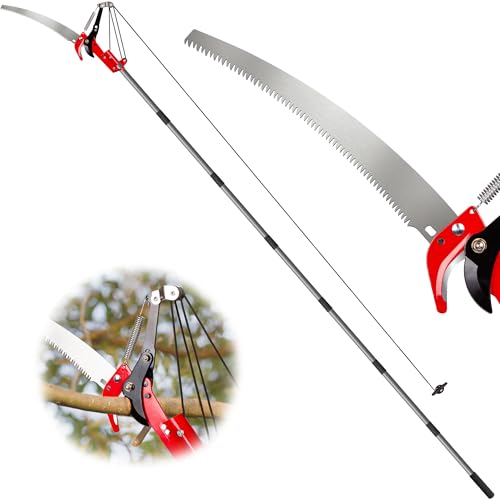
Gardeners with tall palms or oaks get eight lightweight fiberglass poles reaching 26 ft, topped by a curved saw blade and a spring-action pruning jaw that saw branches and snip twigs without swapping tools. A carrying bag holds it all.
Key Specs:
- Pole: 8 fiberglass sections, extends to 26 ft
- Head: curved 3-sided gear-ground saw blade plus spring-action pruning jaw
- Joints: seamless steel pipe joints, threaded metal connections
- Extras: replacement blade, carrying bag
- Grip: non-slip rubber insulated grip
Detailed Review:
Fiberglass resists corrosion and stays light for its length, and the sections stack up to a long reach. Seamless steel pipe joints and threaded metal connections keep the sections from wobbling or pulling apart, which matters more with each section you add.
The head pairs a curved, three-sided gear-ground saw blade for thicker branches with a spring-action pruning jaw for twigs and leaves, so you snip and saw without swapping tools. The spring reopens the jaw after each snip, which saves effort over a long run of small cuts. A replacement blade in the box keeps the saw going once the first one dulls.
The non-slip rubber grip has a matte texture for control, and the poles come apart without tools into compact sections that fit the carrying bag. The blade and pruner head are treated against rust, which helps a tool stored in a bag between jobs. Fiberglass at full length still flexes, so hold some pole back when a cut needs precision.
Pros:
- Fiberglass poles resist corrosion.
- Saw blade and pruning jaw share one head.
- Replacement blade comes in the box.
- Carrying bag stores the broken-down sections.
Cons:
- Building all sections takes time before each job.
- Full-length fiberglass flexes during strokes.
Who It’s For:
Gardeners who store tools in a closet, truck or small shed will like how compactly it packs away. Tall palms and oaks with branches to saw and twigs to snip suit its dual head. If changing height mid-job matters, a telescoping pole such as the TONYINGO 30ft Reach Pole Saw adjusts faster.
Editor’s Verdict:
Take it when you need the extra height and a saw-plus-pruner head, and don’t mind assembling poles first.
What Should You Look for in a Pole Saw for Tall Branches?
Every model on the shelf is a trade between reach, cutting power and weight, because adding one costs you some of the others. A longer pole gets the head higher but bends more and makes every ounce at the tip feel heavier, while a motor and chain bar that cut thicker wood add exactly that weight at the far end. Head features can take some strain off overhead work, but none of them cancels the physics of holding a tool out above your head. Sizing the tool to your tallest and thickest regular cut keeps you from paying for reach or power you never use.
How Much Reach Do You Need for Your Branch Height?
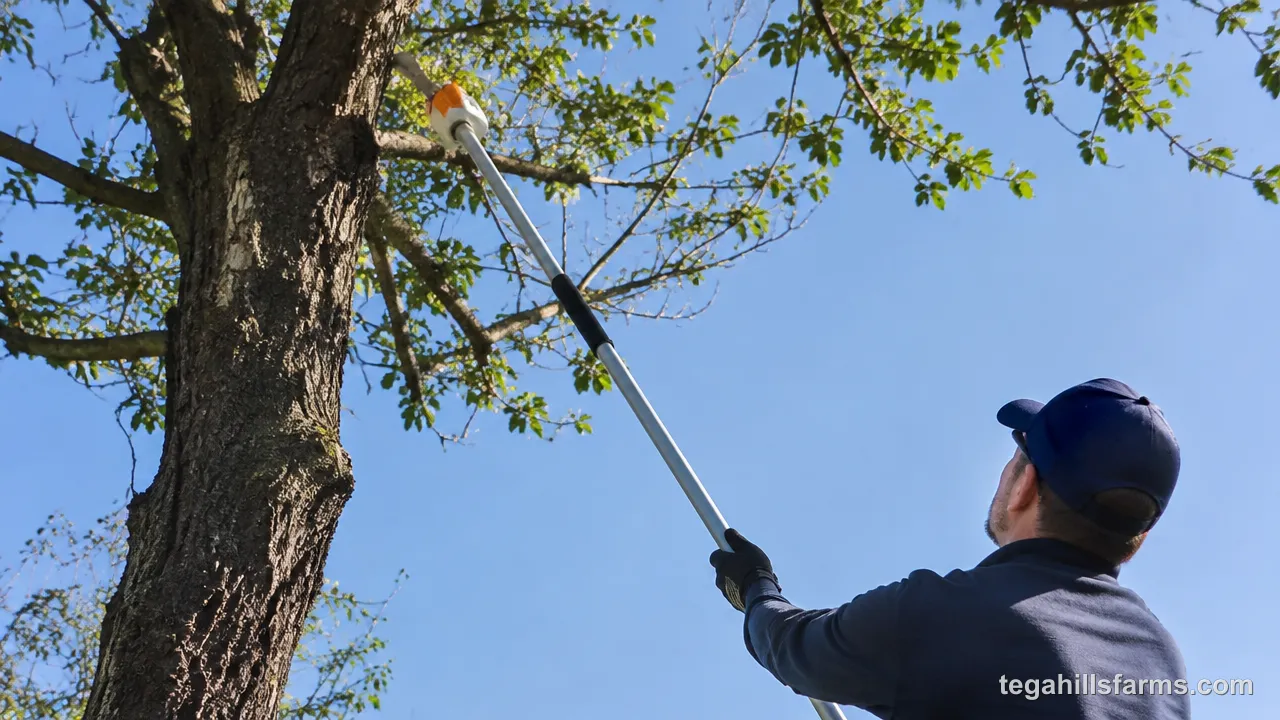
Your working reach is the pole’s length plus your own height and raised arms, so the head ends up well above the pole figure once you hold it up at an angle. Some product names quote total reach, which already counts you, while others quote only the pole, so check which number you’re looking at.
To size it, stand under the limb and judge its height against something you know, like the gutter line of a single-story house or the top of a fence. Then pick a tool that reaches it without full extension. That margin matters because a pole at full length flexes and whips with every stroke, the head wanders off the cut, and your arms carry the most leverage at the worst moment.
Telescoping poles slide out and lock with flip tabs or collars, so you change length mid-job in seconds. Sectional poles thread or bolt together piece by piece, which is slower to adjust but packs down into short lengths for storage. If you trim at several heights in one session, the best telescoping pole saws save you the most stopping and starting.
How Thick of a Branch Can You Cut With a Pole Saw?
Cutting capacity comes from the head, not the pole: a powered chain bar gets through thicker wood, while rope-pull pruning shears and manual saw blades are built for thin branches.
On a chain saw head, bar length roughly sets the thickest limb it can take cleanly, because the chain has to span the wood to keep clearing chips. A limb wider than the bar forces you to cut from two sides, which is awkward and risky with the pole held overhead.
Battery and gas pole saws cut thicker limbs than manual tools because the motor keeps the chain moving at a steady speed. A manual saw relies on your arms pushing and pulling a blade at the end of a long pole, and pruning shears are limited by how wide the jaw opens.
A limb thicker than the bar or jaw, or one heavy enough to swing when it lets go, needs a full-size chainsaw from a safe position or a tree pro. A pole saw gives you no control over where a big piece lands.
How Much Weight Can Your Arms Handle at Full Extension?
A tool held at the end of a long pole feels far heavier than its listed weight, because the head acts on a lever with your hands as the pivot. The farther out the weight sits, the harder your shoulders and forearms work to hold it steady and guide the cut.
A heavier head usually comes on a thicker, stiffer pole, since a thin pole would bend and bounce under a motor. Pole material changes both weight and stiffness: aluminum keeps weight down and stays fairly stiff, fiberglass resists corrosion and dents but tends to flex more over a long run, and steel sections are sturdy but add weight with every piece you add.
A shoulder strap moves part of the load from your arms to your torso, which makes the biggest difference on longer jobs with a motor at the tip. Spacing your hands wide on the pole, with the lower hand near the end, gives you more leverage against the head. If your arms tire quickly, the best lightweight pole saws keep the load at the tip down from the start.
Which Features Make Overhead Cutting Easier?
Overhead work gets easier with an angled or swiveling head, tool-free chain tensioning, automatic oiling, a hook that pulls cut branches down, and a shoulder strap. Each one removes a specific hassle you run into with your arms raised:
- Angled or swiveling head: sets the cut square to a limb over a fence or between other branches without tipping the whole pole, which keeps the chain or blade from binding.
- Tool-free chain tensioning: a knob instead of a wrench lets you tighten a stretched chain on the spot instead of walking back to the garage.
- Automatic vs. manual oiling: automatic oiling feeds the chain while it runs, while a manual pump works but puts the job on you. A dry chain dulls fast and runs hot.
- Hook on the blade: drags a cut or hung-up branch down from the canopy instead of leaving it lodged above you.
- Shoulder strap: worth having mainly on battery kits, since a motor at the tip wears you out faster than a bare blade.
Battery-kit buyers benefit most from the first three. Owners of manual poles get the most out of a good hook.
Battery, Gas, Corded or Manual: Which Pole Saw Power Type Fits Your Yard?
For most homeowners a cordless model is the practical pick, an engine-driven saw makes sense only for frequent heavy limbs, and a hand-powered pole handles thin branches with nothing to charge or fuel.
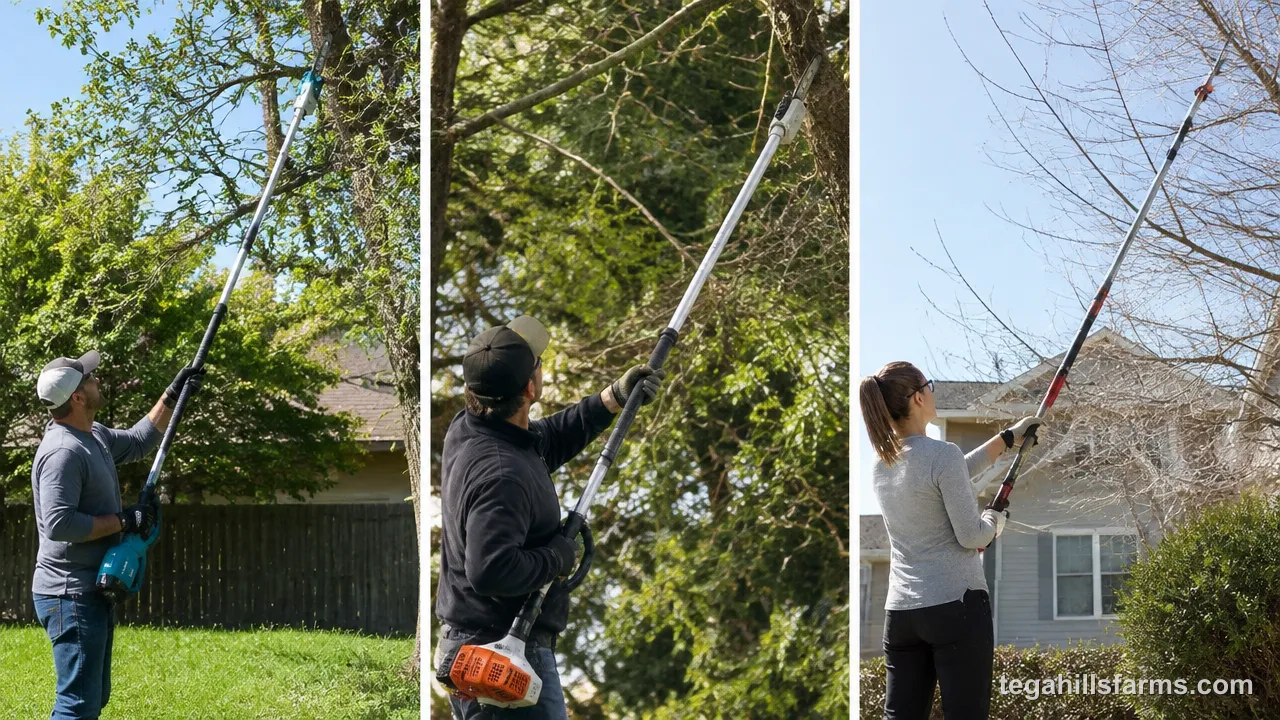
A battery pole saw starts with a trigger, runs quietly enough for an early-morning trim, and needs only a charged battery and chain oil. If you already own tools on one battery platform, a tool-only unit on that platform reuses the packs and charger you have. If not, a kit with batteries and a charger is the way in. The best battery pole saws suit someone who cuts a few times a season on a typical suburban lot.
Gas brings the most cutting power and runs as long as there’s fuel in the tank, which is why it fits frequent work on heavy limbs across a large property. It also brings fuel mixing, spark plugs, a carburetor that gums up when fuel sits over winter, and a pull start that can fight you on a cold morning, all hung at the end of a pole.
Corded models need an outdoor-rated extension cord plugged into a GFCI-protected outlet. Power is steady and there’s no battery to run down, but the cord limits how far from the house you can work and snags on brush and fence posts. The best corded pole saws make sense for a small lot where every tree sits close to the house.
Manual poles have no motor to maintain, make no noise and reach farthest for their weight. Every cut comes from your arms, though, and they handle only thin branches, so they fit frequent light pruning on high limbs, not storm-sized wood.
Side by side, the four types split on cutting power, upkeep and where they can work:
| Power type | Cutting power | Upkeep | Where it works | Fits |
|---|---|---|---|---|
| Battery | Thick limbs within bar size | Charging, chain oil | Anywhere | Occasional cutting, most yards |
| Gas | Heaviest limbs | Fuel, plugs, carburetor, winter storage | Anywhere | Frequent heavy cutting, large properties |
| Corded | Thick limbs within bar size | Chain oil, cord care | Within cord reach of an outlet | Small lots near the house |
| Manual | Thin branches only | Sharpen or replace blade | Anywhere | Light pruning, high thin limbs |
Which Pole Saw Should You Pick for Your Yard?
Match the tool to the thickest limb you cut regularly: a battery kit for thicker wood, a long manual pole for thin, high branches, and a pruner-style tool when grip strength is the limit. I’d steer most homeowners toward a battery kit first, because it covers the widest range of yard limbs without the upkeep of an engine.
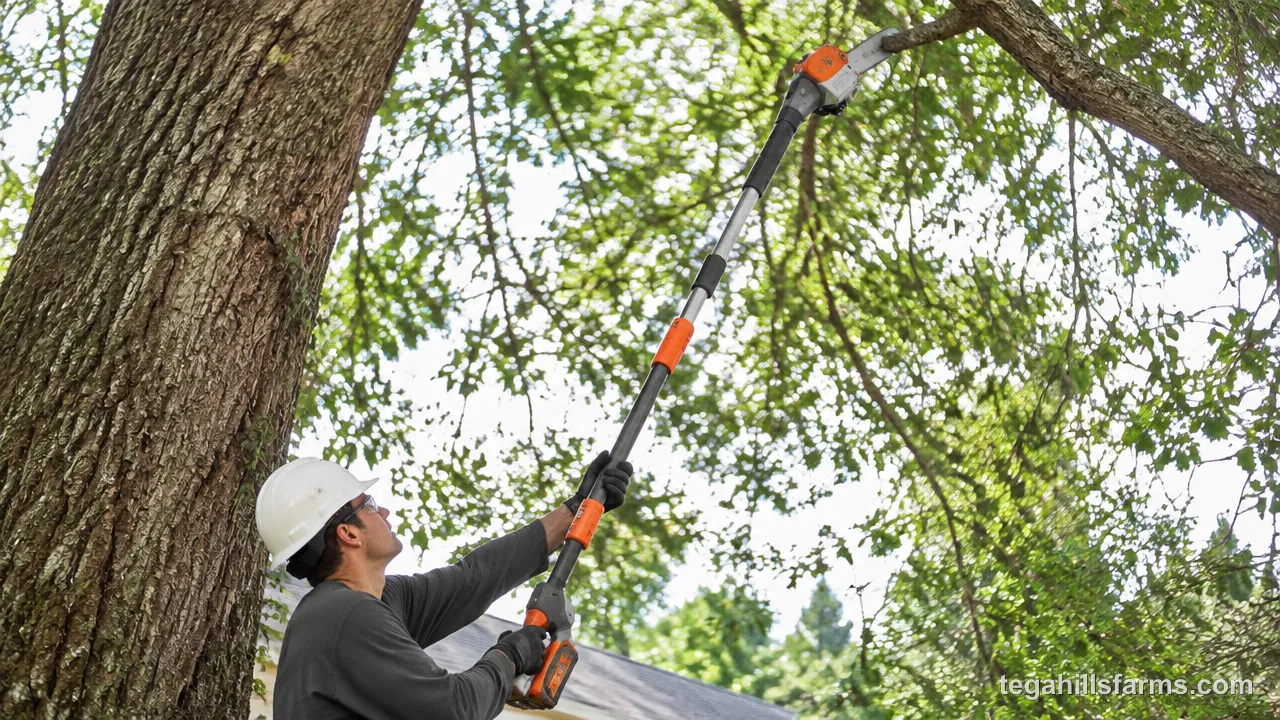
- Choose a battery pole saw if you cut thicker limbs a few times a year and want easy starts. The chain bar does the cutting work, and a charged battery is ready in a way a gas engine left over winter is not.
- Choose a long manual pole if the branches are thin and high and you’d rather not charge or fuel anything. Long poles reach farther than the battery kits, and the blade only needs sharpening or replacing.
- Choose a pruner-style manual tool if hand strength is limited. A rope and pulley multiply your pull so the shears close with less grip effort, though they only take thin branches.
- Choose a lighter tool if your arms tire quickly. The pole multiplies weight at the tip, so a lighter head matters more than any other spec once you’re working overhead.
A bigger saw or a tree service is the right call when the limb is thicker than any pole saw head can take or too heavy to control on the way down. For general yard work beyond high limbs, the best pole saws for homeowners lean toward the same balance of reach and easy upkeep.
Aluminum, fiberglass and carbon poles can all carry current once they’re wet or coated with grime, and an insulated grip at the bottom does nothing about a metal saw head touching a line at the top. A limb resting on the service drop to your house turns a routine trim into a shock hazard you can’t see from the ground, and the cut that frees it can bring the line down with it.
When Is a Branch Too Risky for a Pole Saw?
Four conditions put a job beyond a homeowner tool: a limb near power or service lines, wood thicker than your bar or blade can cut, a tree tall enough that you lose control of the head, and a damaged or leaning limb under tension. Any one of them is enough to stop and call an arborist.
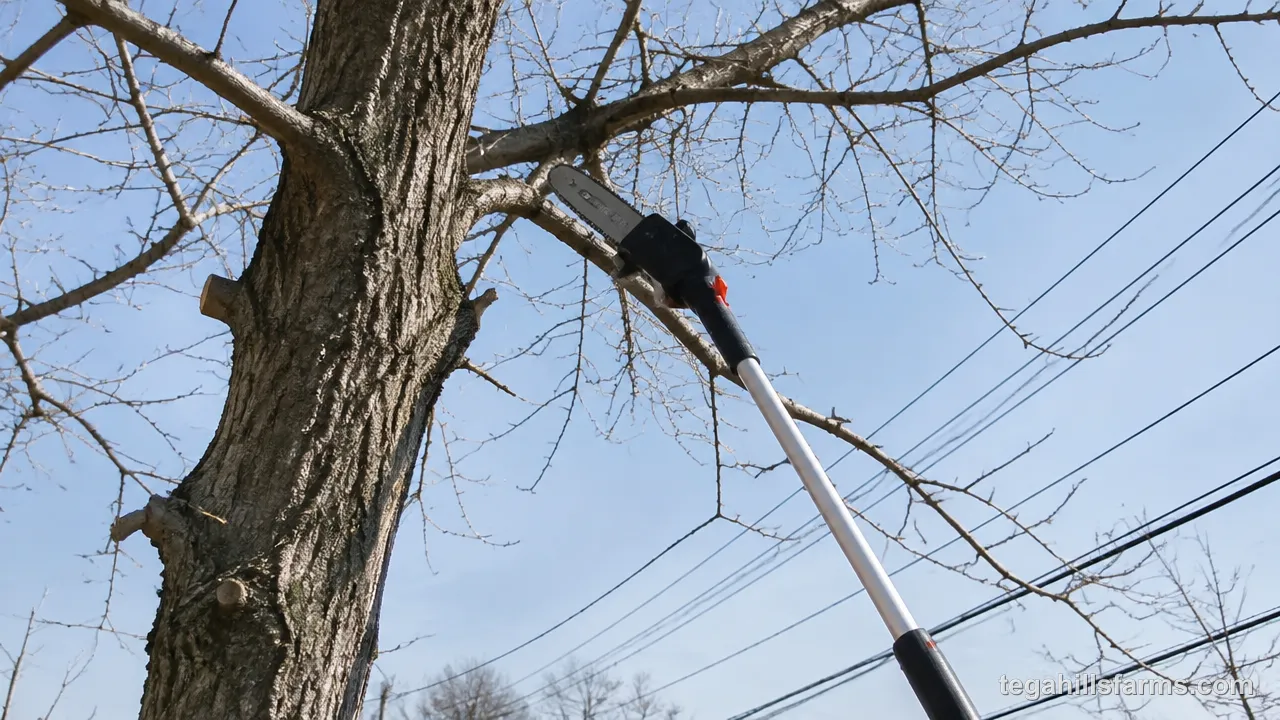
Lines are the clearest case, because a wet or dirty pole conducts and the limb itself can carry current into the saw. Leave anything touching or near a line to your utility or a line-clearance crew, and check with your local utility on who handles it.
Wood past the tool’s capacity stalls the cut halfway, and a half-cut heavy limb can tear loose and drop without warning, stripping bark down the trunk as it goes. Height works against you once the pole is near full length, since you can’t steer the head precisely or judge where a piece will land.
Storm-damaged, split or leaning limbs hold tension like a bent spring, so the cut that releases them can make the limb jump sideways or kick back toward you. An arborist ropes and lowers those pieces instead of letting them fall.
How Do You Make Safe Cuts on High Branches?
Start thicker limbs with an undercut, finish with a top cut slightly farther out, and stand where the falling piece can’t reach you. The undercut goes partway through from below, so when the top cut lets the limb fold, the bark tears at the undercut instead of peeling down the trunk. It also keeps the kerf from closing on the bar or blade and pinching it.
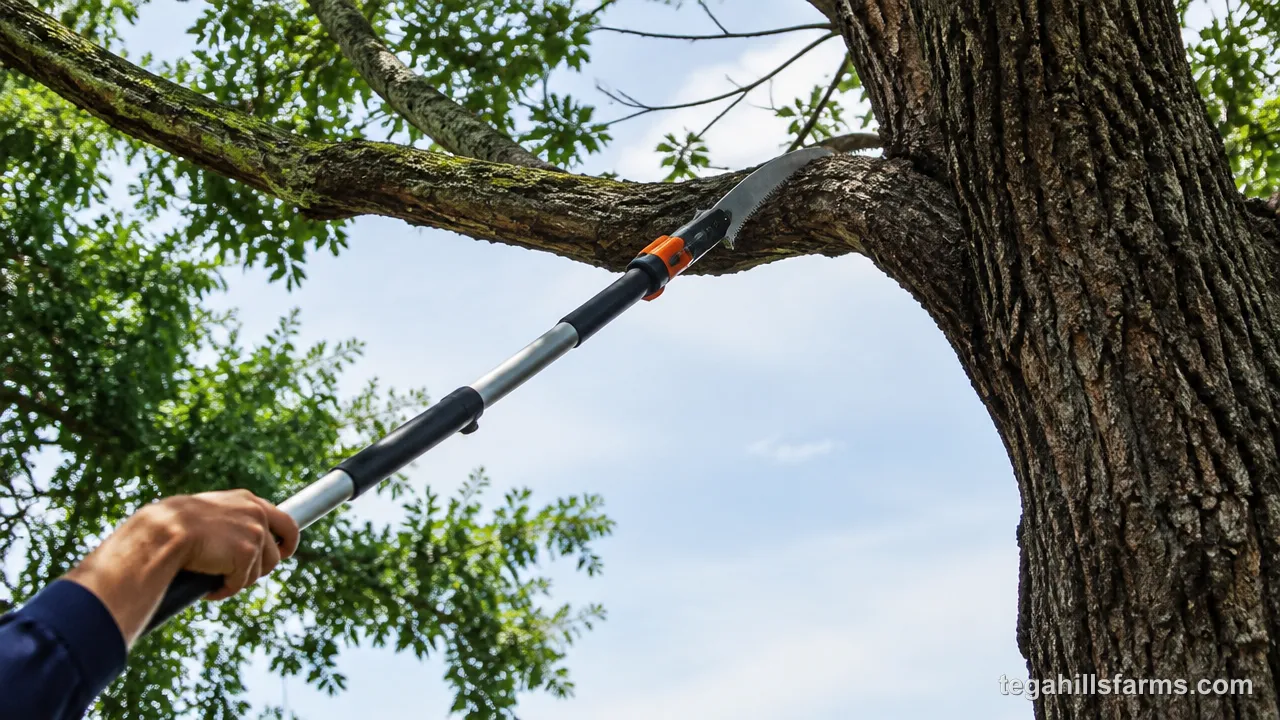
Stand to the side, outside the drop zone, because limbs bounce, roll and swing as they fall, and smaller branches farther out can come down with them. Work from below at a steady angle that keeps you out from under the limb, with both hands on the pole. One hand guides the head while the other controls the leverage, and a single hand can’t hold the pole when the cut releases.
Keep your feet on the ground. A pole saw shifts your balance with every stroke, and a ladder gives you nowhere to step when a limb drops. Storm debris adds broken and hung-up limbs to the job, and the best pole saws for storm cleanup pair reach with a chain bar sized for that wood.
What Is the Difference Between a Pole Saw and a Pole Pruner?
A saw head cuts with a chain or toothed blade and leaves a rougher face through thicker limbs, while a pruner closes shears with a pull rope and leaves a clean cut on thin branches.
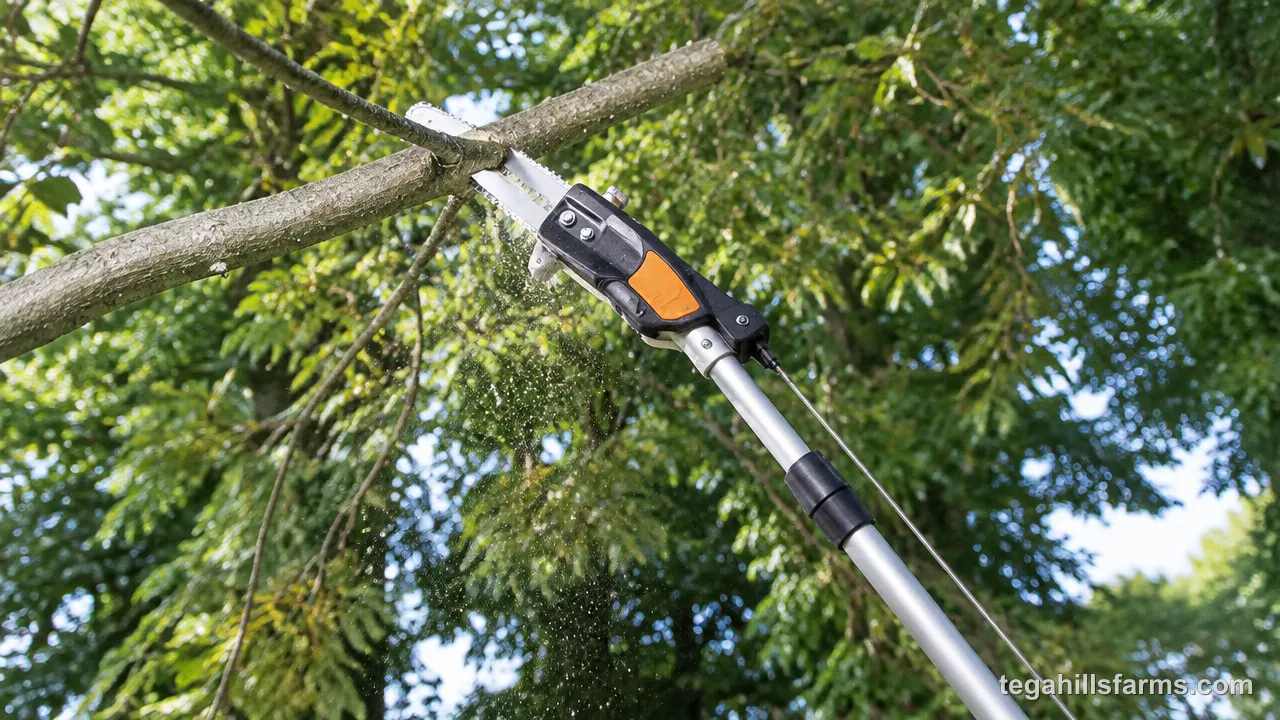
Shears fit shaping work, like cutting fruit-tree shoots back to a bud or thinning water sprouts, because a clean cut seals over faster and leaves less torn bark for disease to enter. For that kind of shaping and thinning, the best pole saws for pruning put the emphasis on clean-cutting heads.
Saws take over once a limb outgrows the jaw. Forcing a pruner onto thick wood crushes the bark instead of slicing it, strains the rope and pulley, and can bend or chip the blade.
Many tools sold as pole saws carry both a saw blade and shears, which covers mixed work on one pole. Fruit growers who prune and harvest the same trees get more from the best pole saws for orchard care, which add reach for a full canopy.
How Do You Tell When a Pole Saw Needs Chain or Blade Care?
A dull chain or blade shows up as slow cuts, fine dust instead of chips, a burning smell, or having to push the saw into the wood. A chain that sags away from the bar needs tensioning, and one that smokes or leaves the bar dry and hot needs oil.
Dull teeth tear wood instead of cutting it, which leaves ragged wounds on the tree and works the motor and your arms harder. A loose chain can jump the bar, and a dry one stretches and wears the bar groove fast.
Tension a chain whenever it sags, sharpen it when cuts slow down, and replace it when the teeth are worn short or damaged. Hardened gear-ground blades on manual saws are usually replaced rather than sharpened, so keep a spare on hand.
A pole joint that wobbles, slips or won’t lock is a reason to stop, because the head can drift off the cut or drop from overhead.



Write Your Review
No reviews yet. Be the first to share your experience!