

Our top picks for the best pole saws under $300 are Supstable Cordless Pole Saw 6in (Best Overall), Seesii 2-in-1 Electric Pole Saws P6 Plus (Runner Up), Greenworks 40V 8in Pole Saw (Best Easy-Start), Seesii 6-in-1 Pole Saw & Hedge Trimmer (Also Great), CRAFTSMAN V20 CMCCSP20B Pole Saw (Also Great), TaskStar 2-in-1 Cordless Pole Saw 8in (Also Great), AVADA 2-in-1 Pole Saw & Chainsaw 8in (Best Performance), BLACK+DECKER 20V MAX Pole Saw LPP120 (Also Great), Greenworks 40V 8in Pole Saw Hedge Trimmer (Also Great) and WORX WG311 2-in-1 Pole Saw 10in (Best Ergonomic Design). All of them run on electric power, and several detach from the pole as handheld mini chainsaws or swap to a hedge trimmer head, so one purchase can handle limbs overhead and cleanup on the ground.
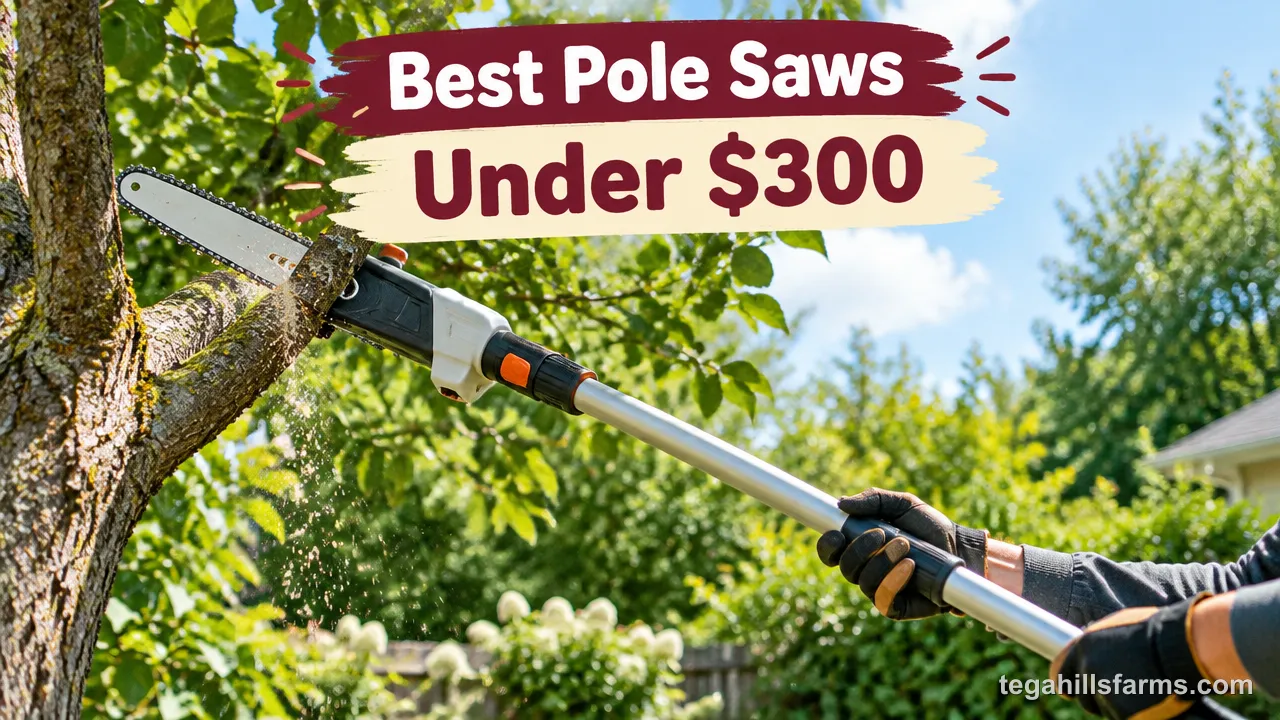
In a real yard, what separates them is how high you can cut while standing on the ground, how thick a limb the chain is rated to finish, and how the saw feels after you’ve held it over your head for a while. The battery matters as much as the saw. A model that shares packs with tools you already own saves you a second charger, and a kit with batteries included suits someone starting from scratch.
At this tier, the real risk is a saw that wears out early: a chain that dulls and loosens, a motor that bogs down in thick wood, or a pole that wobbles at full extension. Automatic oiling, brushless motors and solid pole locks keep a saw cutting season after season, and not every model here has all of them.


If CRAFTSMAN V20, DeWalt 20V MAX, BLACK+DECKER 20V MAX or Greenworks 40V tools already hang in your garage, start with the saw built for those packs before you look anywhere else.
What Should You Look for in a Pole Saw Under $300?
Real reach from the ground, the limb thickness the chain can finish and how the tool balances overhead decide whether a saw earns its place in your shed, and the battery platform decides what else you need to buy with it. Spec figures lead with the biggest numbers. In a home yard, what counts is how those figures hold up when the saw is at arm’s length above you for a stretch of pruning. Everything in this price tier sits inside the wider field of the best pole saws, so the same criteria apply to whichever model you end up shortlisting.
What Does Maximum Reach Really Mean on a Pole Saw?
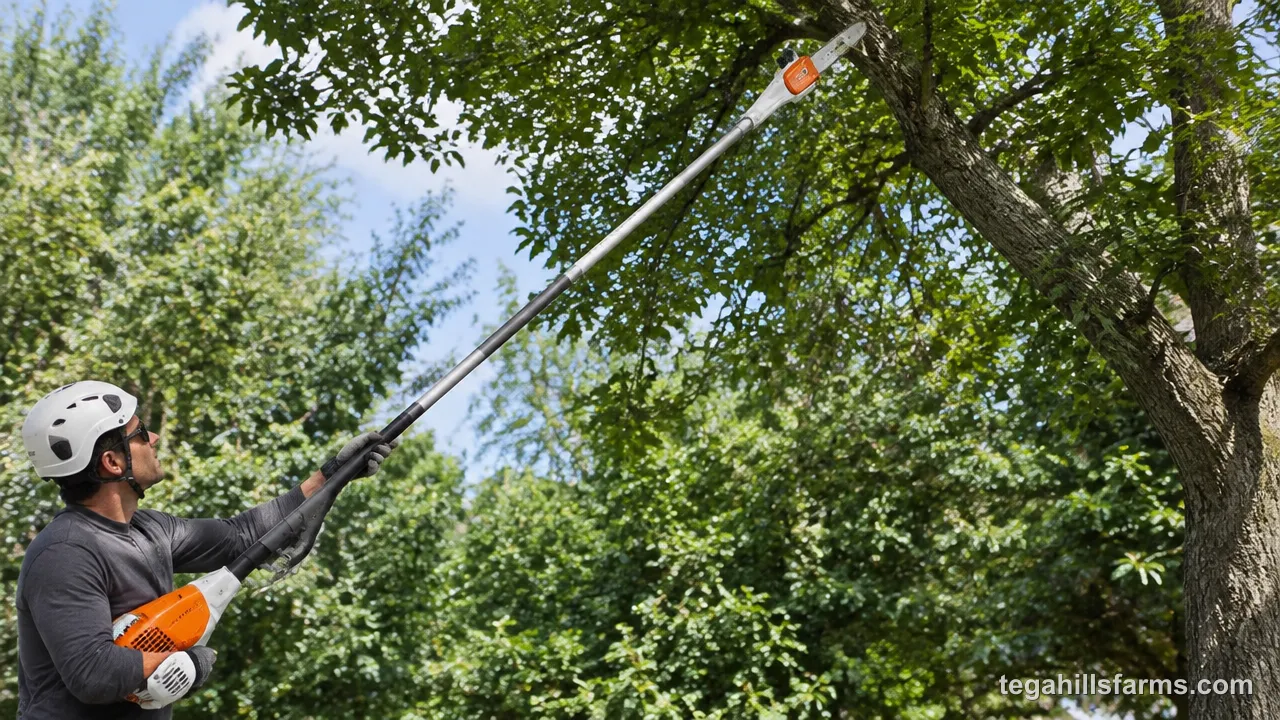
The figure on the box adds your own height and arm extension to the length of the pole. It tells you how high the chain gets with the tool held up, not how long the tool is. A typical basis is a 6-foot-tall person holding the pole at shoulder height. A shorter person, or anyone who keeps the pole lower, loses some of that height.
Comfortable reach is lower than maximum reach. At full extension a telescoping shaft flexes more and the saw head sits at the end of a longer lever, so the bar bounces as a cut starts and wanders from the line. Estimate the height of the limbs you actually need to remove, and choose a pole that reaches them with some extension left in reserve rather than one you’ll run fully extended every time. If your problem limbs sit high in mature trees, compare the best pole saws for tall branches, where reach is the first spec to check.
Why Does Cutting Diameter Matter More Than Bar Length?
The thickest limb a saw can take through is a separate rating from the blade size. That rating, the maximum cutting diameter, is the number to match against your trees. Two saws with the same bar length can carry different ratings, because the motor and chain speed decide whether the chain keeps moving once it’s buried in wood.
A brushless motor switches power electronically instead of through carbon brushes. It loses less energy to friction and heat and holds its speed under load, while a brushed motor slows sooner in thick or hard limbs. Chain speed, listed in feet per second, works the same way: a faster chain takes more small bites each second, which keeps it cutting instead of stalling. A longer bar on a weak motor just gives a struggling chain more wood to drag through, so the cut gets slower and rougher, not faster.
How Much Does Weight and Balance Matter When Cutting Overhead?
Every pound feels heavier once the saw sits at the end of a long pole, because the shaft works as a lever that multiplies the load on your shoulders and forearms. A head-heavy tool makes it worse. With most of the mass at the far end, every small correction takes more effort, your arms tire sooner, and tired arms let the bar drift from the cut line.
A shoulder strap moves part of the load from your arms to your torso, which frees your forward hand to steer instead of just holding the saw up. A rotating handle lets you set your grip to the angle of the cut, so your wrist stays straight and you keep control as the session goes on. Lighter saws give steadier cuts over a long stretch of pruning, but the weight usually comes out of the motor or the battery, which means less cutting strength or shorter runtime. If comfort matters more to you than power, start with the best lightweight pole saws.
Which Battery Platform Should You Buy Into?
If a 20V-class or 40V-class tool line already lives in your garage, buy the saw that runs on those packs. A bare tool leaves out the battery and charger, and it fits the charging routine you already have. It’s also simpler: one battery type on the shelf, one charger, and spare packs that move between your trimmer, blower and saw.
Voltage here is a compatibility question more than a power rating. Brands label their packs differently, so a 20V MAX pack and a 21V pack can hold similar cells. The number tells you which tools a battery fits, not how hard the saw cuts. A saw built for another brand’s batteries, such as one made to run on DeWalt 20V MAX packs, works well if you own those packs and leaves you buying a battery and charger if you don’t. If you’re starting from zero, a kit with batteries and charger included is the easier path. Everything matches out of the box, and you can pick a platform later based on the other tools you want to run.
Battery, Corded, Gas or Manual: Which Power Type Fits Your Yard?
Cordless saws fit most home pruning because they start instantly with no cord or fuel, plug-in models trade mobility for unlimited runtime, two-stroke engines add cutting power along with weight and upkeep, and hand-powered saws handle occasional light cuts.
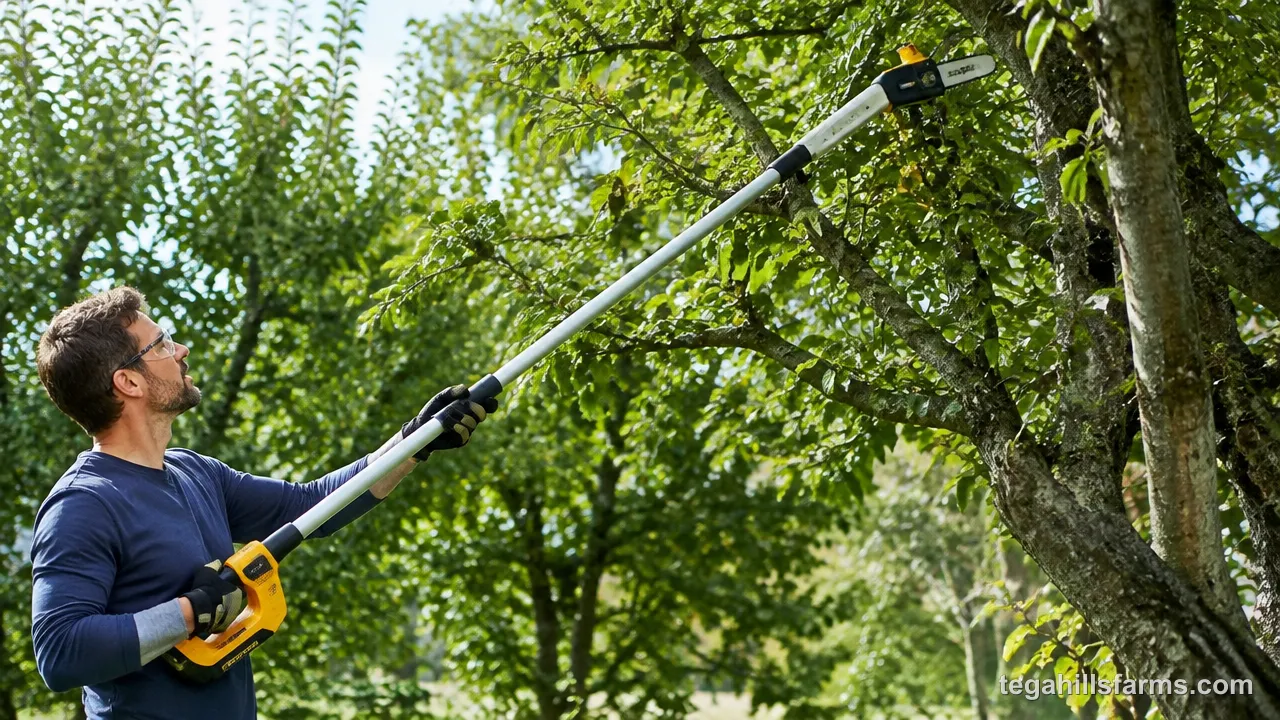
Here’s how the four power types compare on the things you live with after you buy:
| Power type | Runtime | Weight and noise | Upkeep | Best fit |
|---|---|---|---|---|
| Battery | Limited by the pack; spares extend it | Moderate weight, quiet | Charge packs, oil the chain | Regular pruning in small to mid-size yards |
| Corded | Unlimited while plugged in | Light, quiet | Oil the chain, manage the extension cord | Trees near an outdoor outlet |
| Gas | As long as the fuel lasts | Heavier, loud | Fuel mixing, spark plugs, winter storage | Large properties and heavy limbs |
| Manual | Your own stamina | Very light, silent | Blade sharpening | Occasional light cuts |
Battery saws suit homeowners who prune several times a season. The saw waits in the garage with no fuel going stale, it starts with a trigger, and a spare pack handles most runtime limits. Corded saws remove the runtime question but tie you to an outlet and an outdoor-rated extension cord on a GFCI-protected circuit, so they work when your trees sit close to the house. Gas saws make sense on large properties with heavy limbs, where the extra power is worth the fuel mixing, spark plugs, noise and winter storage. A manual saw needs only a sharp blade and your arms, which is enough for a handful of light cuts a year.
Nearly every pick here runs on battery, because that format handles routine home pruning without gas upkeep or a cord to drag around. The WORX WG311 is the exception. Its motor is rated in amps rather than battery voltage, which is how plug-in electric saws are rated. If you’ve settled on cordless, the best battery pole saws narrow the field by platform and runtime, and the best corded pole saws suit trees within easy reach of an outlet.
The 10 Best Pole Saws Under $300 of 2026
For home yards, my picks are Supstable Cordless Pole Saw 6in, Seesii 2-in-1 Electric Pole Saws P6 Plus, Greenworks 40V 8in Pole Saw, Seesii 6-in-1 Pole Saw & Hedge Trimmer, CRAFTSMAN V20 CMCCSP20B Pole Saw, TaskStar 2-in-1 Cordless Pole Saw 8in, AVADA 2-in-1 Pole Saw & Chainsaw 8in, BLACK+DECKER 20V MAX Pole Saw LPP120, Greenworks 40V 8in Pole Saw Hedge Trimmer and WORX WG311 2-in-1 Pole Saw 10in. They fall into three groups: convertible saws that detach from the pole as handheld mini chainsaws, saws built around one brand’s batteries, and combo kits that add a hedge trimmer. The deciding question is whether you want one versatile tool or another piece of a battery system you already run. They suit homeowners who trim now and then or every few weeks, from low limbs over the patio to branches high in a shade tree, with or without a battery platform in the garage. If your budget sits lower, compare the best pole saws under $100, or look at pole saws under $200 as a middle step.
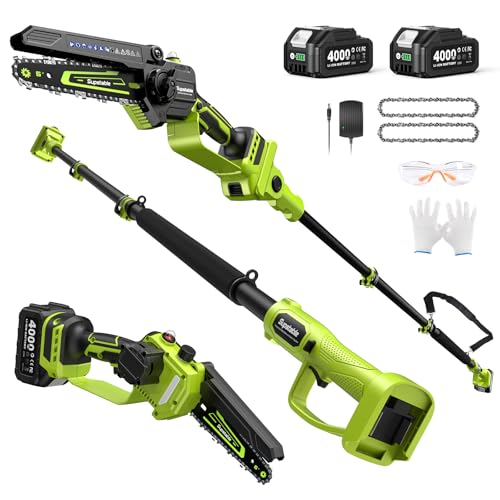
#1 Supstable Cordless Pole Saw 6in — Best Overall
If you want one saw for firewood rounds on the ground and limbs well above your head, this one converts from a 3.4 lb handheld mini chainsaw into a pole saw with up to 16 feet of reach. Two 4.0Ah batteries come in the box.
Key Specs:
- Bar length: 6 in
- Max reach: up to 16 ft
- Cutting capacity: branches up to 6 in
- Batteries: 2 x 4.0Ah, up to 100 minutes of cutting time
- Chainsaw weight: 3.4 lb
- Warranty: 2 years
Detailed Review:
The 6-inch bar works as a one-hand mini chainsaw for brush and firewood, then mounts on the telescopic pole when the limb is out of reach. The saw head itself is light, so most of the load you feel at full extension comes from the pole’s leverage, and the cutting end is easier to hold on line. The brush motor’s rating covers routine pruning and the smaller limbs that come down after a storm.
Oiling is manual. The 1 fl oz tank feeds the chain only when you press the pump, so you prime it two or three times before the first cut and keep checking lubrication regularly while you work. If you skip that check, a dry chain heats up, stretches and dulls quickly, so you’ll need to build the pump into your rhythm.
The second battery lets you swap mid-job instead of waiting on the charger. A tool-free knob sets chain tension in seconds. The kit adds extra chains, a charger, gloves, goggles and an empty oil bottle, so bar and chain oil is the only thing to pick up before you start.
Pros:
- Converts between handheld mini chainsaw and pole saw.
- Up to 16 feet of reach keeps you on the ground.
- Second battery allows a swap mid-job.
- Tool-free knob makes chain tension adjustments quick.
- Kit includes extra chains, gloves and goggles.
Cons:
- Manual oil pump means stopping regularly to lubricate the chain.
- Short 6-inch bar needs more passes on thick limbs.
Who It’s For:
Homeowners who split their time between firewood rounds on the ground and pruning overhead get two jobs out of one kit here. It also suits a first cordless purchase, since batteries and charger come included. Skip it if pumping chain oil during a job sounds like a step you’ll forget.
Editor’s Verdict:
Flexible and complete, it handles low and high cuts well, as long as you’re willing to pump the chain oil yourself.
#2 Seesii 2-in-1 Electric Pole Saws P6 Plus — Runner Up
For fence lines and limbs at awkward angles, the multi-angle cutting head lets you set the bar to the branch instead of twisting your wrists around it. It also converts to a 3.2 lb handheld saw.
Key Specs:
- Bar length: 6 in
- Max reach: up to 10 ft
- Cutting capacity: branches 3/4 in to 6 in
- Batteries: 2 x 21V 2,000mAh
- Chainsaw weight: 3.2 lb
- Oiling: automatic
Detailed Review:
Tilting the cutting head lets you approach a limb hanging over a fence or tucked behind a corner at the angle the cut needs, so your arms and back stay in a neutral position instead of bending around the obstacle. Detached from the pole, the light saw head runs one-handed through undergrowth and small rounds, and the included shoulder strap takes some of the load when it goes back on the pole.
The pole reaches a good deal lower than the Supstable’s. That gap shows on mature shade trees, whose lower limbs often start higher than a shorter pole can reach, while fruit trees, ornamentals and branches over a fence stay comfortably within it. In return, the Seesii oils its chain automatically, so you never stop to work a pump mid-cut the way the Supstable asks you to.
The brush motor’s rated range covers routine pruning cuts. Two 2,000mAh packs let you swap and keep going, and the kit adds two chains, a chain sleeve, gloves and goggles in a gift case, plus an empty oil bottle for bar oil.
Pros:
- Multi-angle head reaches over fences and around corners.
- Automatic oiling removes manual lube stops.
- Two batteries let you swap and keep working.
- Shoulder strap and gift case come in the kit.
Cons:
- Reach up to 10 feet limits work on tall trees.
- Smaller 2,000mAh packs mean more frequent battery swaps.
Who It’s For:
If your pruning centers on fruit trees, ornamentals and branches leaning over a fence, the tilting head makes the awkward cuts easier on your back. Owners of tall shade trees with high limbs should pick the Supstable instead, since its pole reaches well beyond this one.
Editor’s Verdict:
Easy to handle, well equipped and low on upkeep, this saw makes sense for yards where the trees stay modest in height.
#3 Greenworks 40V 8in Pole Saw — Best Easy-Start
Pulling a two-step trigger is all it takes to start this saw, which makes it an easy first pole saw for anyone tired of fighting a pull cord. The 8-inch bar runs at 31.2 ft/s.
Key Specs:
- Bar length: 8 in
- Chain speed: 31.2 ft/s
- Max reach: 11 ft
- Runtime: up to 15 minutes continuous per charge
- Weight: 7.8 lb
- Battery: 40V 2.0Ah, full charge in 60 minutes (2A charger)
Detailed Review:
Starting takes a two-step trigger, and with no gas to mix, there’s no stale fuel sitting in the tank between jobs. The built-in auto oiler keeps the chain lubricated on its own, so upkeep comes down to adding bar oil and keeping the chain sharp.
The bar size and chain speed give it enough bite for thick branches without the chain dragging. A charge covers a short stretch of continuous cutting, and the single pack then needs an hour on the charger before the next round. That suits a focused session on a few problem limbs better than a full afternoon of storm cleanup.
A balanced body and a large sponge grip soften vibration, which helps when the saw sits at the end of the pole for several minutes at a time. You’ll still notice the weight at full extension, especially late in a session. The three-piece aluminum shaft comes apart for storage on a shelf or in a tight shed, and Greenworks covers both the tool and the battery for 3 years.
Pros:
- Two-step trigger start with no gas to mix.
- Auto oiler keeps the chain lubricated.
- Three-piece aluminum shaft breaks down for storage.
- Tool and battery both carry a 3-year warranty.
- Sponge grip dampens vibration through long cuts.
Cons:
- Up to 15 minutes of continuous runtime per charge.
- Single 2.0Ah battery means waiting through a recharge.
- 7.8 lb weight builds fatigue on long overhead sessions.
Who It’s For:
Anyone already on the Greenworks 40V system will fit right in, and so will someone who wants a powered saw that starts with a squeeze and needs little more than bar oil. If you’re facing a big backlog of limbs to clear in one go, the single battery will stop you before the job is done.
Editor’s Verdict:
Simple to start and easy to store, this Greenworks rewards short, regular pruning sessions over marathon cleanups.
#4 Seesii 6-in-1 Pole Saw & Hedge Trimmer — Also Great
Yards with hedges that need shaping as often as trees need limbing get both jobs from this kit, which swaps the saw head for a 12-inch dual-action hedge trimmer without tools. Two 4.0Ah batteries power it.
Key Specs:
- Motor: 1000W brushless
- Chain speed: 26.2 ft/s
- Max reach: up to 15 ft
- Cutting capacity: 6-in branches (saw), 3/4-in branches (hedge trimmer)
- Warranty: 3 years plus lifetime technical support
Detailed Review:
The extension pole takes either the saw head or the hedge trimmer through tool-free locking clamps. The saw also detaches from the pole as a handheld mini chainsaw with a 6-inch bar for firewood and ground-level cleanup. One kit handles high limbs, tall hedge faces and logs on the ground, which means one set of batteries and one charger to manage instead of separate tools.
The brushless motor drives the chain through hardwood limbs without stalling partway through a cut. The hedge blade handles light stems, which suits shaping and tidying rather than cutting back a hedge that has gone wild.
The head pivots through 180 degrees with five lockable positions, so you can hold a flat angle across a hedge top or tilt into dense branches without twisting your wrists. A shoulder strap and non-slip handle spread the weight on long sessions, and the second battery lets you swap packs instead of stopping. I’d pick this kit for exactly that combination: one pole, two heads, and enough battery to finish both jobs in a single outing.
Pros:
- Swaps between pole saw and hedge trimmer without tools.
- Head locks in five positions across 180 degrees.
- Brushless motor cuts hardwood limbs without stalling.
- Two 4.0Ah batteries give up to 100 minutes.
- Shoulder strap spreads weight on long sessions.
Cons:
- Hedge blade only handles light stems, not overgrown hedges.
- More attachments to store and keep track of.
Who It’s For:
Homeowners with a mix of trees and hedges who would rather buy one system than two tools will get steady use from it. It’s also a sensible start for anyone without a battery platform yet. If you only ever trim trees, the hedge attachment will just take up shelf space.
Editor’s Verdict:
Trees and hedges both stay in shape with this Seesii, and the brushless saw head handles hardwood without complaint.
#5 CRAFTSMAN V20 CMCCSP20B Pole Saw — Also Great
Readers who already have CRAFTSMAN V20 batteries in the garage can add this saw as a bare tool and reach up to 14 feet with the extension pole. It hangs on a wall rail when the job is done.
Key Specs:
- Battery platform: CRAFTSMAN V20 (tool only)
- Runtime: up to 325 cuts per charge
- Max reach: up to 14 ft with extension pole
- Weight: 10 lb
- Storage: integrated hook for VERSATRACK wall system
Detailed Review:
This saw comes without a battery or charger, so it only makes sense if you already own V20 packs. If your drill, string trimmer or blower runs on that system, the pole saw fits your charging routine and adds no new battery type to the shelf.
CRAFTSMAN rates runtime in cuts per charge rather than minutes, and the count rises or falls with branch thickness and the size of the pack you fit. Treat it as a guide for routine pruning, not a promise for a pile of thick storm limbs. The extension pole lets you work well into the canopy without a ladder.
The angled head and blade meet overhead limbs at a better angle, which helps a cut start cleanly instead of skating across the bark. A soft grip on the pole extension gives your forward hand a secure hold for steering. The weight asks more of your shoulders on long overhead stretches, so working in shorter bursts keeps your cuts accurate. Afterward, the integrated hook hangs the saw on a VERSATRACK wall system (sold separately) and keeps a long tool up and clear of the garage floor.
Pros:
- Runs on CRAFTSMAN V20 batteries you may already own.
- Rated for up to 325 cuts per charge.
- Angled head helps overhead cuts start cleanly.
- Soft-grip pole extension improves steering control.
- Integrated hook hangs it on a VERSATRACK wall.
Cons:
- Battery and charger are not part of the package.
- 10 lb weight wears on shoulders overhead.
Who It’s For:
Owners of CRAFTSMAN V20 tools who want one battery system across the garage are the clear fit, especially if a VERSATRACK rail already organizes the space. Anyone with no V20 packs yet is better served by a kit that ships with a battery and charger.
Editor’s Verdict:
For a garage already running on V20 packs, this pole saw adds overhead reach without adding another battery system.
#6 TaskStar 2-in-1 Cordless Pole Saw 8in — Also Great
With an 8-inch bar on a 1000W brushless motor, this convertible saw suits yards where the limbs are thicker than routine pruning. As a handheld, it drops to 3.6 lb.
Key Specs:
- Bar length: 8 in
- Motor: 1000W brushless
- Pole length: 4.6 to 8 ft, telescoping
- Batteries: 2 x 4.0Ah, 80–120 minutes total runtime
- Weight: 7.2 lb as a pole saw, 3.6 lb handheld
- Warranty: 3 years
Detailed Review:
A bar this size puts more chain into each pass on thick limbs and firewood, and the brushless motor keeps it moving when the wood gets dense. The cutting head rotates 180 degrees, so you can angle the bar into a crotch or across a fence line without contorting your body.
The telescoping pole is shorter than the AVADA’s. That keeps the shaft stiffer and the saw easier to steer at full extension, but it leaves limbs near the top of a mature tree out of reach. For low and mid-height pruning, the shorter pole works in its favor, but on tall shade trees it becomes the limit that decides things.
Automatic oiling and a tool-free tension adjuster keep upkeep to adding bar oil and a quick tension check. Together the two packs cover a long session, but each battery needs time on the charger to refill, so a full day of cutting means planning around it. A safety switch, chain guard and anti-slip grip guard against accidental starts, and the kit adds an extra 8-inch chain, a blade sheath, gloves and goggles.
Pros:
- 8-inch bar on a 1000W brushless motor.
- Cutting head rotates 180 degrees for awkward limbs.
- Automatic oiling and tool-free chain tensioning.
- Two 4.0Ah batteries and charger included.
- Extra 8-inch chain comes in the kit.
Cons:
- Telescoping pole extends only to 8 feet.
- Each battery needs a recharge on the charger before it can be swapped back in.
Who It’s For:
This saw earns its place in yards with thick limbs at moderate height and a firewood pile that needs handheld cutting. Buyers starting without batteries get a full kit. If your problem branches sit high in tall trees, the AVADA’s longer telescoping pole gets you there with less stretching.
Editor’s Verdict:
Strong for its size and well equipped, this TaskStar handles heavy pruning at moderate heights with little upkeep.
#7 AVADA 2-in-1 Pole Saw & Chainsaw 8in — Best Performance
DeWalt 20V MAX owners can put the batteries they already have behind a brushless motor that drives the chain at up to 38 ft/s. Batteries and charger are not included.
Key Specs:
- Battery platform: DeWalt 20V MAX (battery and charger not included)
- Motor: 1200W brushless
- Bars: 8 in and 6 in
- Chain speed: up to 38 ft/s
- Reach: up to 15.9 ft (pole 5.6 to 9.9 ft)
- Weight: 5.7 lb
Detailed Review:
This saw runs on DeWalt 20V MAX packs, including the DCB203, DCB205 and DCB240. If those batteries already charge on your bench, the AVADA adds a pole saw without a second platform. If they don’t, you’re buying into DeWalt’s system before the first cut.
The brushless motor gives you a choice of two bars. Use the 8-inch for thicker limbs and the 6-inch for lighter pruning and ground work as a mini chainsaw. Fitting bars and chains takes no tools, and the automatic tensioner holds chain tightness so you aren’t stopping to adjust it. Once you fill the tank, the auto-lube system oils the chain while it runs.
The head tilts anywhere from 0 to 180 degrees for limbs along fences or in tight corners, and a shoulder strap comes in the box. The saw weighs well under the CRAFTSMAN V20, which makes a real difference at the end of a long pole. Both are bare tools, so choosing between them comes down to whether DeWalt or CRAFTSMAN packs already live in your garage.
Pros:
- Runs on DeWalt 20V MAX batteries.
- Brushless motor with 8-inch and 6-inch bars.
- Automatic tensioner and auto-lube cut maintenance stops.
- Head adjusts from 0 to 180 degrees.
- Light 5.7 lb build eases overhead work.
Cons:
- Battery and charger not included in the box.
- Two bars mean two chains to sharpen and store.
Who It’s For:
A DeWalt 20V MAX household that wants power and reach without a second charger on the bench is the natural home for this saw. If you don’t have any DeWalt packs, the TaskStar gets you cutting sooner, since its batteries and charger come in the kit.
Editor’s Verdict:
Light, quick and built around DeWalt packs, this AVADA is the saw I’d steer DeWalt owners toward first.
#8 BLACK+DECKER 20V MAX Pole Saw LPP120 — Also Great
The in-line power head lines the motor up with the pole, so the head stays slim enough to see between branches and place the cut where you want it. Battery and charger come in the box.
Key Specs:
- Bar length: 8 in
- Max cutting diameter: 6 in
- Runtime: up to 100 cuts of 1 1/2-inch pine per charge
- Usable length: 6.5 ft or 10 ft
- Overhead reach: up to 14 ft
- Weight: 10.05 lb
Detailed Review:
With the motor in line with the pole, the narrow head lets you see the limb and slip the bar between crossing branches without nicking the ones you want to keep. That visibility helps in dense crowns, where a bulky head hides the cut line and you end up guessing.
BLACK+DECKER measures runtime in cuts on small pine branches. Pine is a softwood, so hardwood limbs or cuts near the bar’s full capacity bring that count down. The pack belongs to the 20V MAX system, so it also runs the brand’s trimmers, blowers and drills, and the lithium-ion battery holds its charge while the saw sits idle between pruning jobs.
The center extension gives two usable lengths: a short setting that’s easier to control on limbs just overhead and a long one for higher reach. The unit breaks down for storage and transport, and the RC800 replacement chain keeps it serviceable when the original wears out. It’s heavier than the AVADA, and what you get in exchange is a battery and charger in the box instead of relying on packs you already own.
Pros:
- In-line head improves visibility between branches.
- Center extension gives two usable working lengths.
- Battery and charger included in the kit.
- Breaks down for storage and transport.
- RC800 replacement chain keeps it serviceable.
Cons:
- About 10 lb feels heavy at full extension.
- Cut count drops on hardwood and thicker limbs.
Who It’s For:
BLACK+DECKER 20V MAX owners, or anyone who wants a simple kit with a pack already included, will find it easy to live with. Pruning in dense, crowded crowns, where seeing the cut matters, plays to its strengths. If you want a light tool for long overhead sessions, look at the AVADA instead.
Editor’s Verdict:
Clear sightlines and a complete kit make the LPP120 a dependable choice for routine pruning on the 20V MAX platform.
#9 Greenworks 40V 8in Pole Saw Hedge Trimmer — Also Great
A 20-inch dual-action hedge blade on a 7-position pivoting head turns this Greenworks kit into a tall-hedge tool as well as a pole saw. Tree work runs on an 8-inch bar.
Key Specs:
- Battery platform: Greenworks 40V (2.0Ah battery and charger included)
- Pole saw bar: 8 in
- Hedge blade: 20 in, dual action
- Hedge head: 7-position pivoting
- Weight: 11 lb
Detailed Review:
Both tools run on the Greenworks 40V battery, so one pack and one charger handle the trees along the driveway and the hedge along the property line. The pole saw has an easy-adjust tensioner for quick chain tightening and an automatic oiler that feeds the bar and chain as it cuts.
On the hedge side, the dual-action blade moves both cutting edges at once for a cleaner shear, and the pivoting head lets you level a tall hedge top from the ground instead of from a ladder. Changing the head angle also lets you work the sides and the top without repositioning your whole body.
With no gas to mix and no emissions, both tools start instantly and run quietly, which keeps them ready after weeks in the shed. The kit weighs more than the Greenworks 40V 8in Pole Saw, which has the same bar size but no hedge trimmer, so overhead sessions tire your shoulders sooner. The single 2.0Ah pack also has to power both tools, so a spare battery helps on days you tackle trees and hedges together.
Pros:
- Pole saw and pole hedge trimmer on one 40V battery.
- Dual-action hedge blade on a 7-position pivoting head.
- Automatic oiler feeds the bar and chain.
- Easy-adjust tensioner speeds up chain tightening.
- Starts instantly with no gas to mix.
Cons:
- 11 lb weight tires shoulders on long overhead sessions.
- One 2.0Ah battery has to power both tools.
Who It’s For:
Greenworks 40V owners with tall hedges as well as trees to keep in check get two pole tools on one battery system here. It also fits a yard where curb appeal depends on neat hedge lines. If you only prune trees, the Greenworks 40V 8in Pole Saw does the same branch work in a lighter package.
Editor’s Verdict:
You can handle tall hedges and overhead limbs from the ground with this kit, as long as you can live with the added weight.
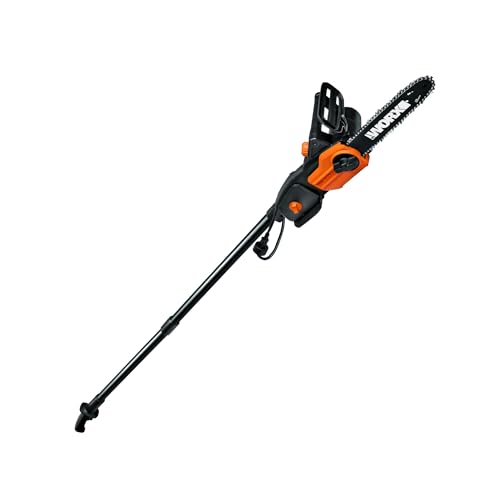
#10 WORX WG311 2-in-1 Pole Saw 10in — Best Ergonomic Design
Turning the rear handle through 180 degrees lets you keep a natural wrist angle whether the bar points straight up, sideways along a hedge row or down at a log. The 10-inch bar runs at 28 ft/s.
Key Specs:
- Bar length: 10 in
- Motor: 8 amp electric
- Chain speed: 28 ft/s
- Max reach: up to 10 ft
- Weight: 9.92 lb
- Handle: 180-degree rotating rear handle
Detailed Review:
The rotating rear handle changes how the saw sits in your hands rather than how it cuts. You turn the grip to match the angle of the limb, so your wrist stays straight while the bar works overhead or sideways. Over a long session, that keeps your rear hand from fighting the tool and helps you hold a steady line through the cut.
The motor’s amp rating marks it as a plug-in electric saw rather than a battery tool, so how long you can work depends on your extension cord, not a charge. That suits trees within reach of an outdoor outlet, and it takes battery charging and replacement off your upkeep list.
One knob handles chain tensioning, and automatic lubrication keeps the bar and chain oiled while the saw runs. The telescopic shaft adjusts to the reach each cut needs, and removing the pole turns the saw into a regular chainsaw for ground-level cutting. The weight is moderate for overhead work: comfortable in short stretches, but noticeable when you hold it at full extension for a long time.
Pros:
- Rear handle rotates 180 degrees for natural grip angles.
- 28 ft/s chain speed keeps cuts moving.
- Removes from the pole to work as a regular chainsaw.
- Single knob handles chain tensioning.
- Automatic lubrication keeps the chain oiled.
Cons:
- Reach tops out at 10 feet.
- Extension cord tethers you to an outlet.
- Nearly 10 lb grows heavy at full extension.
Who It’s For:
If your trees sit within cord range of an outdoor outlet and your pruning sessions run long enough to drain a battery, the rotating handle and steady plug-in power make overhead work easier on your wrists. If your trees are at the far end of a big lot, look at a battery saw such as the Supstable instead.
Editor’s Verdict:
Comfortable to hold at odd angles and free of battery limits, the WG311 rewards yards close to an outlet.
Which Pole Saw Should You Choose for Your Yard?
The batteries already in your garage and whether hedges need as much attention as trees settle most of the decision, and a convertible handles mixed low and high cutting for everyone else. A saw that matches your batteries saves you a second charger and keeps your tools on one system, while a kit with packs included is the cleaner start if you own none. My own call for most first-time buyers is a battery-included convertible, because it handles firewood on the ground and limbs overhead without tying you to a platform yet.
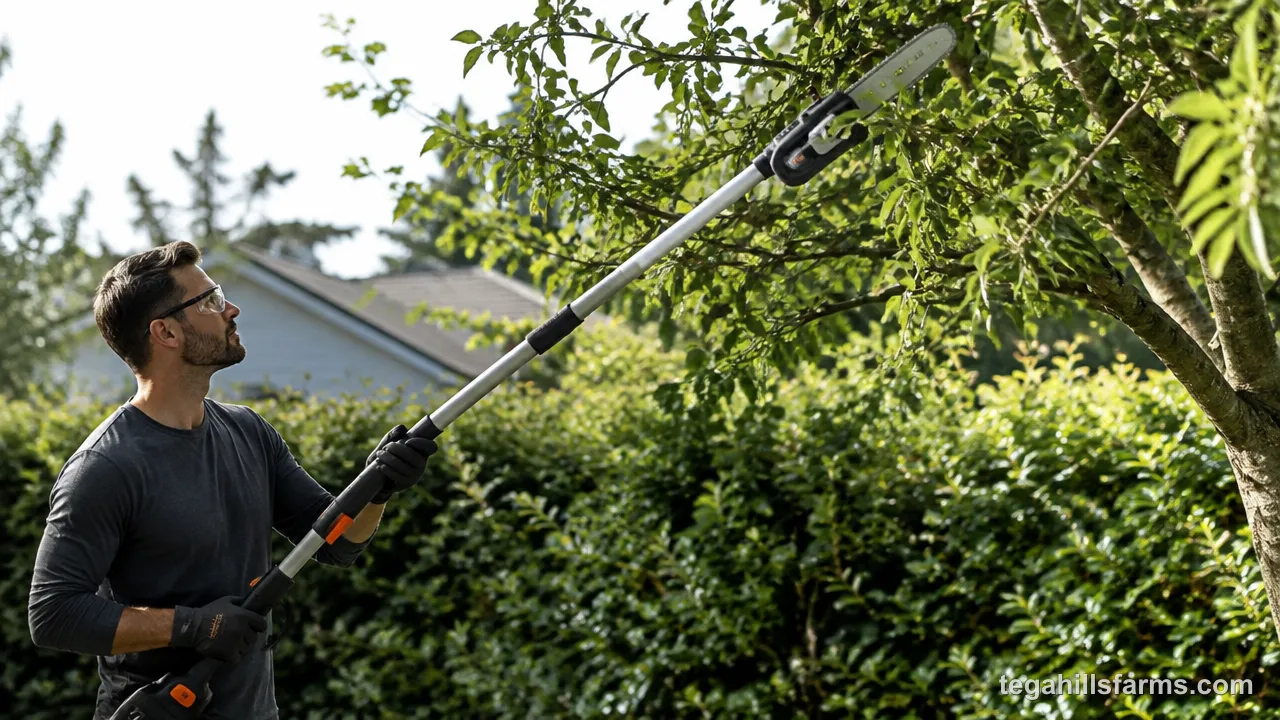
- Choose a convertible 2-in-1 (the Supstable, Seesii P6 Plus or TaskStar) if you want one tool for firewood rounds on the ground and limbs overhead, with batteries in the box.
- Choose a platform saw if those batteries already charge in your garage: the CRAFTSMAN V20 for V20 packs, the AVADA for DeWalt 20V MAX, the BLACK+DECKER LPP120 for BLACK+DECKER 20V MAX, and the Greenworks 40V 8in Pole Saw for Greenworks 40V.
- Choose a combo kit, either the Seesii 6-in-1 or the Greenworks 40V 8in Pole Saw Hedge Trimmer, if hedges need shaping as often as trees need limbing.
- Choose the Greenworks 40V 8in Pole Saw if you want minimal fuss, with a two-step trigger start and an automatic oiler.
- Choose the WORX WG311 if your trees sit near an outdoor outlet and you’d rather not manage batteries at all.
A pole saw is more than the job needs when your trimming stops at thin shoots and branches within arm’s reach. Loppers or a manual pole pruner handle those with no charging, chain oil or noise. Clearing limbs after high winds is a different job: downed wood is thick and plentiful, so the best pole saws for storm cleanup put cutting capacity and runtime ahead of reach. For general upkeep around the house, the best pole saws for homeowners weigh ease of use against power across a wider set of models.
A service drop often runs from the street to the house right through the tree that most needs trimming, and the limbs closest to it tend to be the ones blocking light or rubbing the roof. Cutting one of those limbs puts the pole, the chain and the falling wood within reach of a live wire, and a shock can travel back through the shaft to your hands even when you never see the contact.
Is It Safe to Use a Pole Saw Near Power Lines?
No. Every pole saw shaft can conduct electricity, fiberglass and carbon fiber included, because sap, dirt and moisture on the surface carry current even when the core material resists it. A damp morning or a pole stored in a humid shed makes that path easier. Battery or corded power changes nothing, since the danger comes from the line, not the saw’s motor.
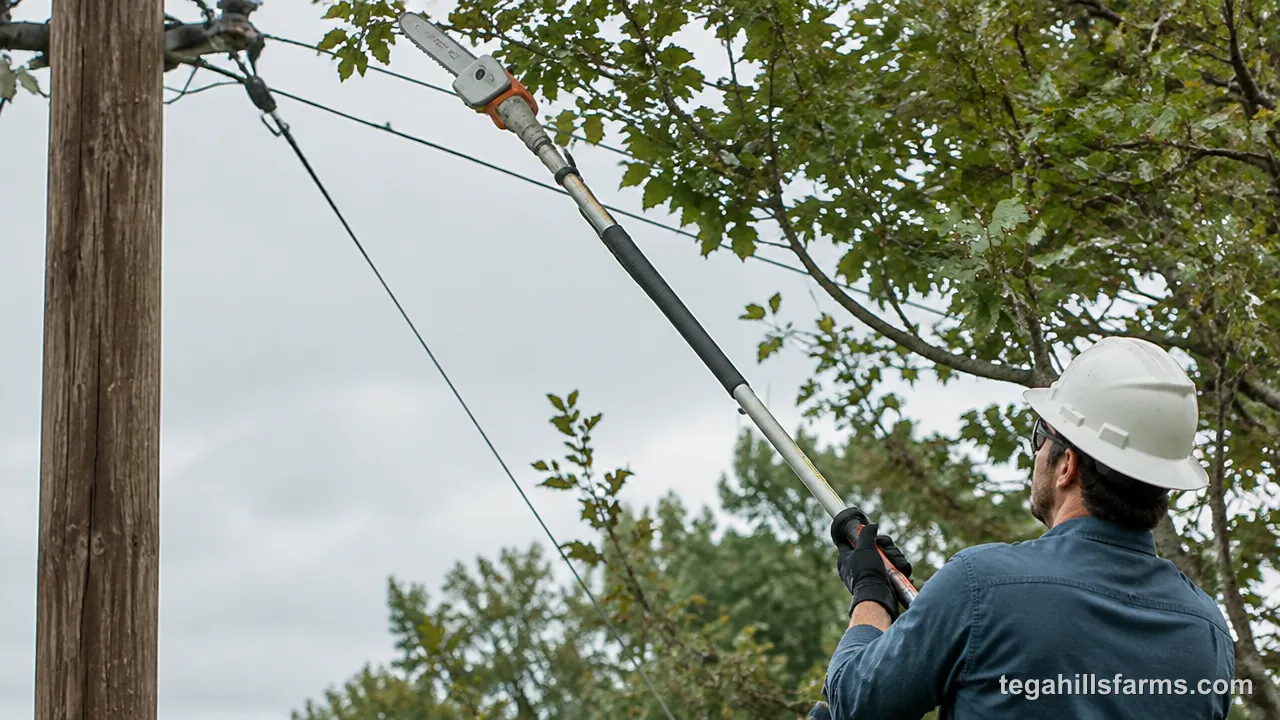
The common rule of thumb is to keep yourself, the pole and the branch at least 10 feet from any overhead line. The branch counts as much as the tool, because a cut limb can swing into a line, drop onto it or drag it down as it falls, and green wood conducts too. Limbs touching the service wires that run to your house, or the distribution lines along the street, are the utility’s job. Call your utility before cutting anything near those wires. Clearing around its lines is work it handles with crews trained and equipped for live wires.
How Do You Cut a High Branch Safely From the Ground?
Make an undercut from below first, partway through the limb, then a top cut slightly farther out from the trunk. That way the branch breaks away cleanly instead of peeling a strip of bark down the trunk as it falls. With the weight gone, a final trim just outside the branch collar leaves a clean wound the tree can seal over.
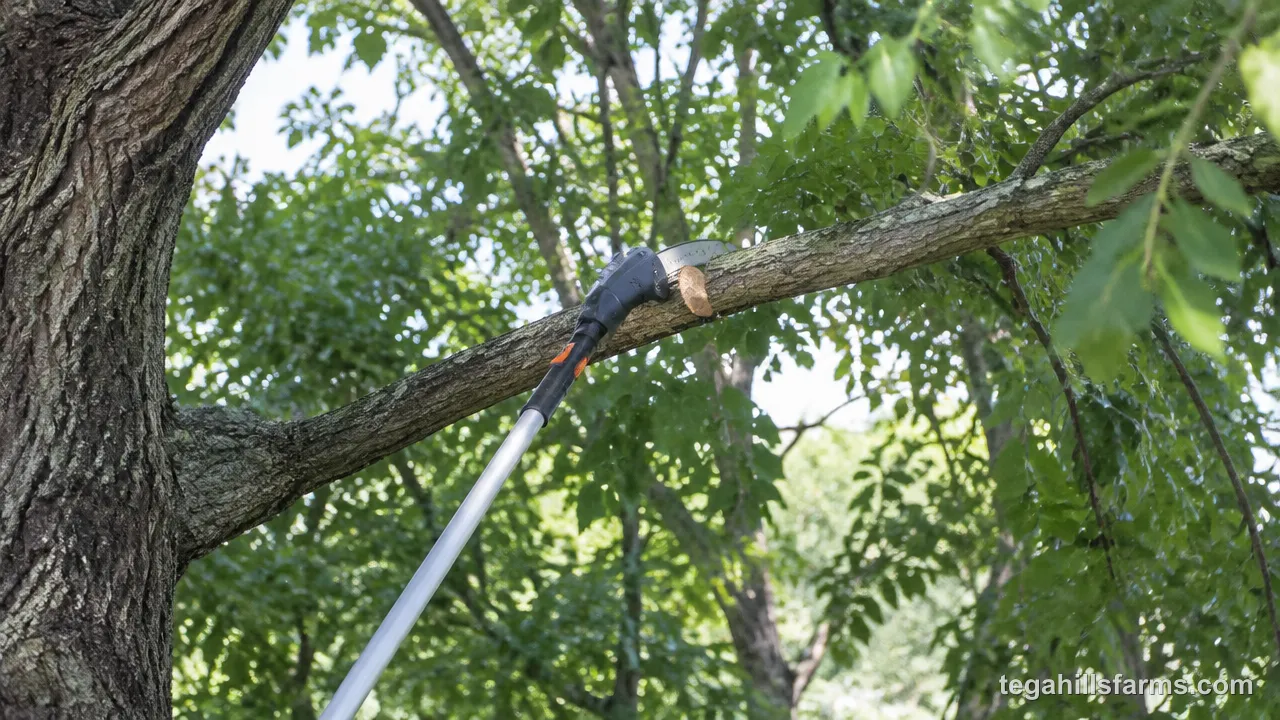
Stand to the side of the limb rather than directly beneath it, and decide where it will land before you start. A falling branch rarely drops straight down: it pivots, bounces from lower limbs and can swing back toward the pole. Let the chain pull itself through the wood. Pushing hard bends the shaft, binds the chain and makes the head jump when the cut breaks through. Use the shortest extension that reaches the cut, since accuracy falls as the pole flexes at full length. If careful shaping on fruit or ornamental trees makes up most of your work, the best pole saws for pruning put control ahead of raw cutting power.
When Is a Branch Too Big or Too High for a Pole Saw?
The job is beyond a homeowner saw when the limb is thicker than the saw’s rated cutting diameter, hangs over a roof or a line, is under tension, or can only be reached by climbing or rigging the tree. Each of those turns a routine cut into one where the saw, the falling wood or the tree itself can hurt you or damage your property.
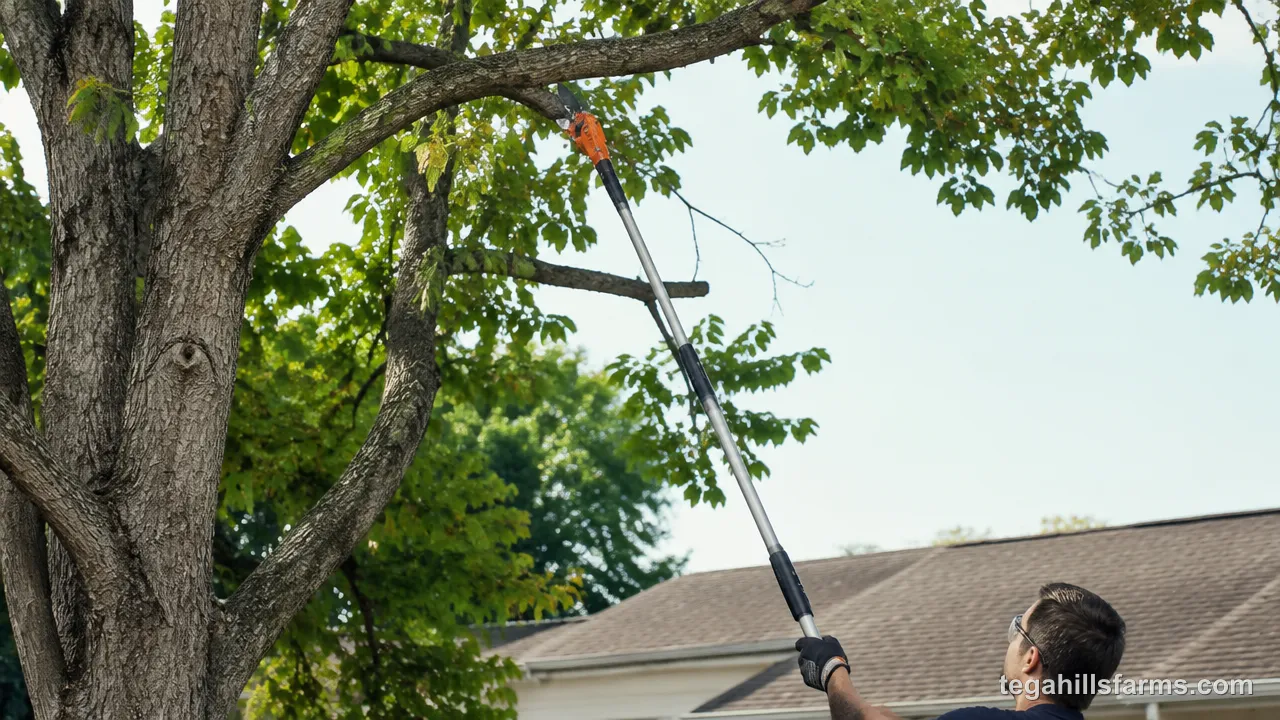
Forcing an undersized saw through a limb past its rating overheats the motor, stretches and dulls the chain, and lets the closing cut pinch the bar. Dead limbs and hangers caught in other branches behave unpredictably, snapping free before the cut finishes or springing sideways when the tension releases. Limbs over the house have to be lowered on ropes rather than dropped, and that rigging takes a crew and gear most homeowners don’t keep. In all of these cases, a certified arborist is the safer call, with the climbing and rigging equipment to control where the wood goes.
What Is the Difference Between a Pole Saw and a Pole Pruner?
Saws on a pole, powered or pulled by hand, cut through thicker limbs with a chain or toothed blade, while a pole pruner snips thin branches with a lopper-style hook and blade that you close with a rope or lever. The pruner makes a clean single bite on small stems. The saw removes wood as it cuts, so it keeps going where the pruner’s jaws can’t open wide enough.
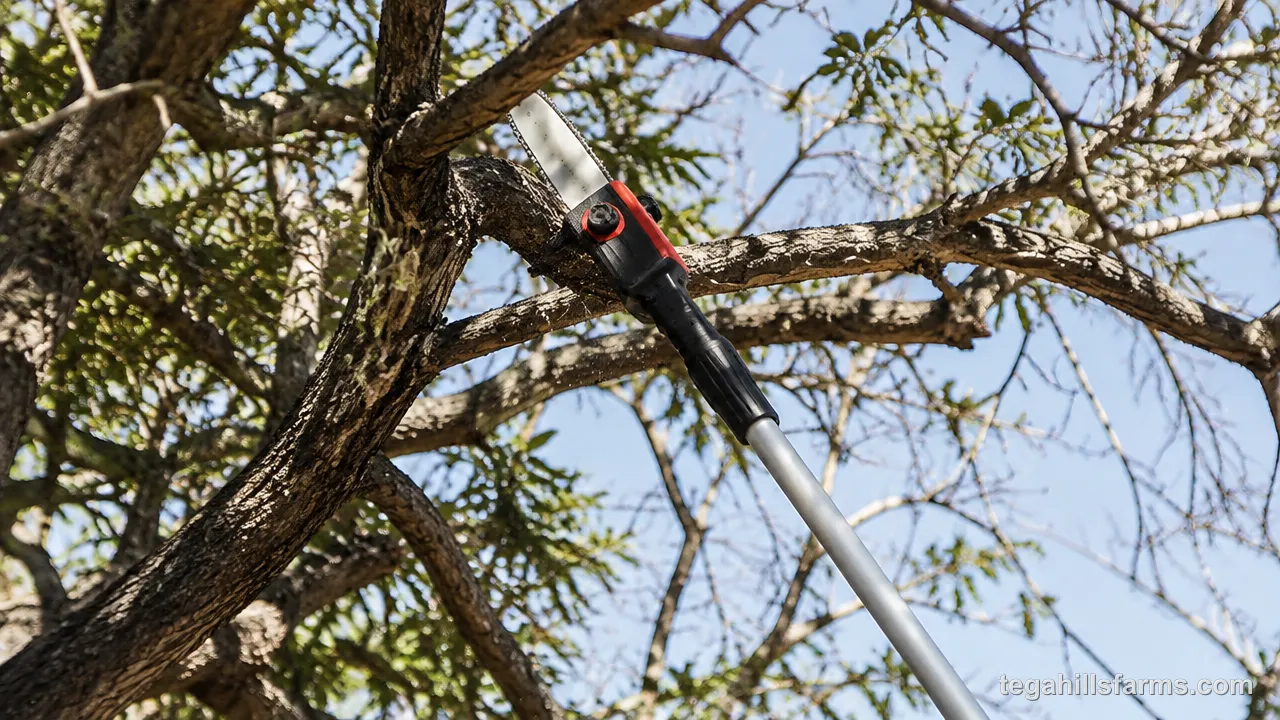
A pruner fits shaping cuts on fruit trees, shrubs and suckers, where a quiet, precise snip matters more than capacity. A pole saw takes over on limbs too thick for those jaws, on storm damage, and on anything you’d otherwise climb a ladder to cut with a hand saw. Powered saws bring noise, a battery or cord to manage, and chain oil to keep topped up, while a manual pruner asks only for a sharp blade and some arm effort. For light trimming a few times a year, a manual pruner can do the work with no upkeep beyond sharpening, and many manual models carry a pruning head and a saw blade on the same pole.
How Do You Tell a Durable Budget Pole Saw From One That Fails Early?
A saw that lasts usually has automatic chain oiling, a brushless motor, a battery from a brand that keeps selling compatible packs, and a pole that locks without wobble. Saws that wear out early tend to cut corners on at least one of these.
- Chain oiling: an automatic oiler feeds the chain whenever it runs, while a manual pump depends on you remembering. A chain that runs dry wears the bar and stretches quickly.
- Motor: a brushed motor wears its carbon brushes down with use, while a brushless motor has no brushes to wear, so it tends to hold up longer under regular cutting.
- Battery and platform: a pack from an established tool line can still be replaced years later, while an odd battery shape becomes a dead end once the seller stops carrying it.
- Pole locks: clamps that wobble when new loosen further each session, and a loose joint throws every cut out of line.
The early warning signs are a chain that dulls or loosens quickly, a motor that runs hot and slows on cuts it once handled, a battery that drains noticeably sooner than it did when new, and a pole section that slips under load. A clear written warranty and replacement chains you can actually buy, ideally listed by part number, lower the risk. A saw you can re-chain and get repaired stays in service long after its first chain wears out.


Write Your Review
No reviews yet. Be the first to share your experience!