8 Best Pole Saws: 2026 Expert Picks for Every Yard Size
Our top picks for the best pole saws in 2026 are the EGO Power+ Pole Saw PS1001 (Best Overall), Greenworks 40V 8in Pole Saw (Best for Small Yards), Greenworks 60V 10in Pole Saw (Best Battery Life), Greenworks 80V 10in Pole Saw (Best Performance), RYOBI ONE+ 18V 8 in. Pole Saw (Best for Beginners), Husqvarna 122LKP Gas Pole Saw (Best Gas-Powered), Sun Joe SWJ802E Pole Chain Saw (Best Budget), and WORX WG323 20V 2-in-1 Pole Saw (Best Compact).
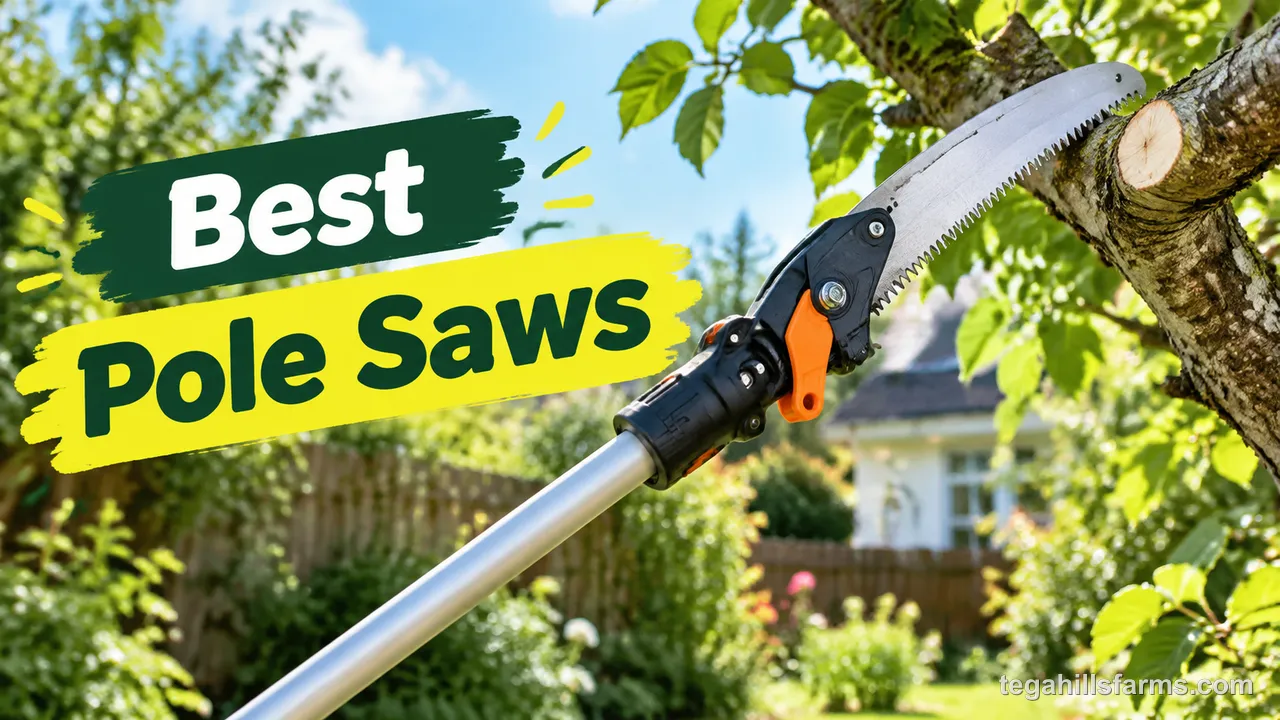
A pole saw earns its spot in the garage on four things: how high it reaches, whether its bar suits the limbs you actually cut, how it feels after several minutes held overhead, and whether it runs on a battery you already own. Motor claims matter less than any of those once the saw is up in a tree.
Most owners run into the same problems. Their arms give out before the battery does, a limb drops somewhere they didn’t expect, or they end up with a second battery system that fits nothing else they own. Each of those comes down to choosing a saw that matches the yard rather than chasing the highest spec on the box.


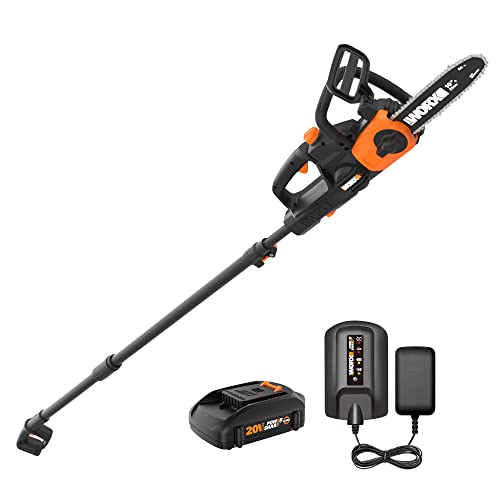
Before you compare models, check which battery brand and voltage already sit on your charger shelf. That one fact narrows the field faster than reach or bar length.
What Is a Pole Saw, and Which Power Type Suits Your Yard?
It’s a compact chainsaw head on a long shaft, built to cut limbs while your feet stay on the ground, and battery power suits most suburban yards. A pole pruner is a different tool. It uses a bypass blade, often pulled by a rope, to snip small green branches, while a saw’s chain handles thicker wood. Shafts come fixed, sectional or telescoping, and the best telescoping pole saws let you match the length to each limb instead of carrying full extension all afternoon. Gas still makes sense for heavy, all-day work far from an outlet. Corded models fit yards where the trees grow close to the house. If your trimming is closer to felling and bucking than overhead pruning, the best chainsaws are a better fit than anything on a pole.
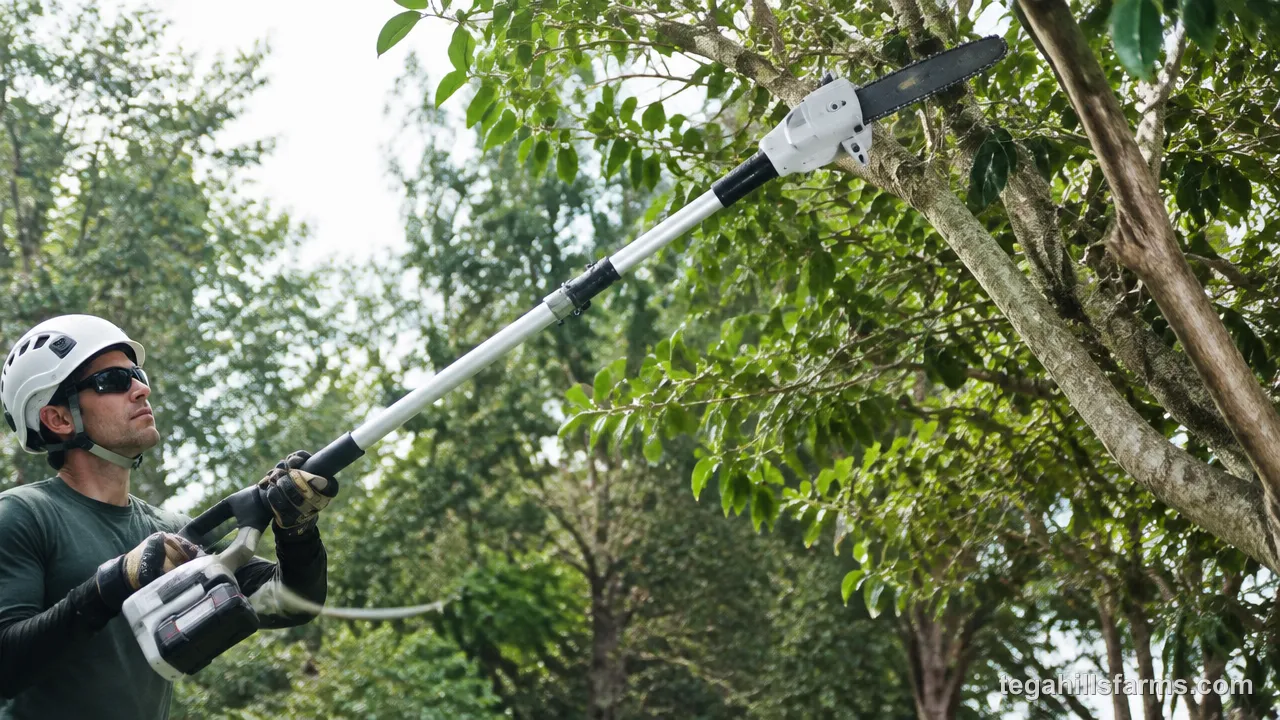
The 8 Best Pole Saws of 2026
Ranked in order, the picks are EGO Power+ Pole Saw PS1001, Greenworks 40V 8in Pole Saw, Greenworks 60V 10in Pole Saw, Greenworks 80V 10in Pole Saw, RYOBI ONE+ 18V 8 in. Pole Saw, Husqvarna 122LKP Gas Pole Saw, Sun Joe SWJ802E Pole Chain Saw, and WORX WG323 20V 2-in-1 Pole Saw. The battery you already own decides more than any single spec, because a saw on your existing platform needs no second charger. After that, reach trades directly against carrying weight: every extra foot puts more load at the tip your shoulders have to steady. Between them, these 8 saws handle small suburban lots, tall mature trees, gas-only jobs, tight budgets and first-time buyers. If you’ve already settled on cordless, the best battery pole saws narrow things further, and the best pole saws for homeowners focus on light, occasional trimming.
#1 EGO Power+ Pole Saw PS1001 — Best Overall
Homeowners with tall, mature trees get the most from this saw. Its telescoping carbon fiber shaft gives a total reach of up to 13 feet at 9.37 lb, and an LED cut line indicator helps you place each cut on limbs buried in shade.
Key Specs:
- Power: 56V ARC Lithium, 2.5Ah battery and charger included
- Reach: up to 13 ft total (up to 17 ft with the EP1000 extension pole, sold separately)
- Bar and chain: 10 in bar, 1/4 in pitch, 0.043 in gauge
- Chain speed: up to 66 ft/s (20 m/s), brushless motor
- Runtime: up to 100 cuts per charge
- Weight: 9.37 lb
Detailed Review:
The shaft telescopes, so you set its length to each limb instead of carrying full extension around the yard. The optional EP1000 extension pole adds height for the top of an old oak or maple. The shaft also carries a limited lifetime warranty, which counts on the part that takes the most leverage.
Next to the Greenworks 60V 10in Pole Saw, the EGO’s brushless motor drives its chain considerably faster, so each cut finishes sooner and your arms spend less time holding the saw overhead. The trade is runtime, because the Greenworks is rated for more cuts per charge, and that matters more on a long storm cleanup than on a pruning afternoon.
The LED cut line indicator lights the cut under a dense canopy, where chain and bark tend to blur together. Tool-free tensioning lets you take up a slack chain on the spot. The quick-adjust handle and shoulder strap hook move some of the weight off your forearms.
Every EGO 56V ARC Lithium battery fits this saw, so a larger pack from another EGO tool stretches each session. The included 2.5Ah battery handles regular pruning, but I’d add a bigger pack before working through a yard full of storm limbs.
Pros:
- Telescoping carbon fiber shaft adjusts to each limb’s height.
- LED cut line indicator helps under shaded canopies.
- Fast brushless chain shortens time spent overhead.
- Tool-free chain tensioning needs no wrench.
- Runs on any EGO 56V ARC Lithium battery.
Cons:
- Fewer cuts per charge than the Greenworks 60V.
- Extra height requires the EP1000 pole, sold separately.
Who It’s For:
Owners of established shade trees who want one saw for both low limbs and high canopy will use all of it, especially anyone already running EGO 56V batteries. If your trimming is limited to a few low branches near the fence, most of that telescoping reach will go unused.
Editor’s Verdict:
Buy it if you trim mature trees. The adjustable carbon fiber shaft, quick chain and lit cut line make overhead work faster and more accurate.
#2 Greenworks 40V 8in Pole Saw — Best for Small Yards
Small lots with ornamental and fruit trees suit this saw well. At 7.8 lb, with a three-piece aluminum shaft that comes apart, it’s easy to hold overhead and fits in a closet corner rather than along a garage wall.
Key Specs:
- Power: 40V, 2.0Ah battery and 2A charger included (full charge in 60 minutes)
- Bar and chain: 8 in bar, 31.2 ft/s chain speed
- Reach: up to 11 ft max extended
- Shaft: three-piece aluminum, comes apart for storage
- Weight: 7.8 lb
- Warranty: 3 years on tool and battery
Detailed Review:
It’s the lightest saw among these picks, a hair under the corded Sun Joe. A balanced body and large sponge grip back up the low weight, and that shows when you hold the head above a fence line for a while. Low vibration also keeps your hands steadier on the final cuts of the session.
The trade is cutting speed. Its chain runs noticeably slower than the EGO PS1001’s, so a thicker limb takes longer to get through. On the young trees and overgrown shrubs this saw is sized for, that difference costs you seconds, not effort.
Starting it takes a two-step trigger press, which suits someone who has never owned a powered saw. The built-in automatic chain oiler cuts chain wear, and with no gas to mix, upkeep comes down to topping off bar oil and charging the battery. A full charge takes about an hour.
The aluminum shaft breaks into three sections, so storage is simple in a crowded garage or shed. Its reach handles limbs over sidewalks, fences and patios, but owners of tall oaks or maples will outgrow it fast.
Pros:
- Very light build keeps arms fresher overhead.
- Three-piece shaft breaks down for compact storage.
- Two-step trigger start is simple for new owners.
- Battery recharges in about an hour.
- Tool and battery both carry a three-year warranty.
Cons:
- Slower chain speed than the EGO PS1001.
- Modest reach won’t touch high canopy limbs.
Who It’s For:
Suburban homeowners pruning young trees, overgrown shrubs and limbs leaning over a fence will find it easy to carry and easy to put away. Anyone already on Greenworks 40V batteries gets a natural add-on. Yards with tall, mature hardwoods need more reach than this saw offers.
Editor’s Verdict:
Pick it for regular light pruning on a compact lot, where low weight and easy storage matter more than reach or cutting speed.
#3 Greenworks 60V 10in Pole Saw — Best Battery Life
Long cleanup days favor this saw. It’s rated for up to 120 cuts on a single 2.0Ah charge and refills in 40 minutes on the rapid charger, so you spend more time cutting limbs and less time waiting on a battery.
Key Specs:
- Power: 60V, 2.0Ah battery and rapid charger (40-minute recharge)
- Runtime: up to 120 cuts per charge
- Motor and chain: brushless, 21cc gas-equivalent power, up to 43 ft/s, 6,823 rpm
- Bar: 10 in, 15-degree head pitch
- Reach: shaft extends to 9 ft, 14.5 ft total reach
- Weight: 12.1 lb
Detailed Review:
The cut count is the reason to buy it. It’s rated for more cuts per charge than either the EGO PS1001 or the Greenworks 80V, which matters when a storm leaves a yard full of hangers to clear. Its brushless motor delivers steady power that doesn’t fade as the battery drains, rated equal to a 21cc gas engine.
The controls are easy to live with. Push-button start replaces priming, choking and pull cords. A variable speed trigger lets you ease into small limbs instead of slapping the chain against them. The automatic oiler and transparent oil fill window show you when the reservoir needs topping off, and the angled head helps line up cuts on limbs above you.
The weight is the trade-off. It’s heavier than both the EGO PS1001 and the Greenworks 80V, which carry the same 10-inch bar length, and that extra weight sits at the end of a long shaft. The included shoulder strap helps, but your shoulders will feel it before the battery runs down.
The battery fits more than 75 Greenworks 60V tools. A four-year warranty covers both the tool and the battery, and the kit also includes a scabbard and wrench.
Pros:
- High cut count per charge suits long cleanups.
- Rapid charger refills the battery quickly.
- Push-button start skips priming and pull cords.
- Variable speed trigger gives control on small limbs.
- Four-year warranty covers tool and battery.
Cons:
- Extra weight tires shoulders sooner during overhead work.
- Chain runs slower than the EGO PS1001’s.
Who It’s For:
Anyone clearing storm debris or working down a long row of trees in one afternoon will get the most from its runtime, and Greenworks 60V owners can run it on batteries they already have. If you tire quickly holding weight overhead, a lighter saw will serve you better.
Editor’s Verdict:
Choose it when the job is long and runtime matters more than weight. You’ll stop for fewer recharges during a full cleanup session.
#4 Greenworks 80V 10in Pole Saw — Best Performance
Homeowners with thicker hardwood limbs should look here first. Its brushless motor is built for torque and drives a 10 in bar with 1/4 in chain, and the whole saw still weighs 9.92 lb, so the extra cutting muscle doesn’t come with extra strain.
Key Specs:
- Power: 80V, 2.0Ah battery and charger included
- Bar and chain: 10 in bar, 1/4 in chain
- Runtime: up to 83 cuts per charge
- Reach: extends over 9 ft, cuts branches up to 14 ft
- Weight: 9.92 lb
- Maintenance: automatic oiler, tool-free chain tensioning
Detailed Review:
Torque is what this saw is built around. A brushless motor with strong torque keeps the chain pulling through dense wood instead of bogging down halfway, which matters on oak, hickory and maple. The same motor runs quieter and has a longer motor life, so early-morning trimming bothers the neighbors less.
Against the Greenworks 60V 10in Pole Saw, it carries the same bar length while weighing noticeably less. You give up runtime in exchange, since the 60V is rated for more cuts per charge. For a few thick limbs, I’d take the lighter saw. For a full day of cleanup, the 60V’s longer runtime makes more sense.
Upkeep stays minimal. The automatic oiler keeps the bar and chain lubricated, and tool-free tensioning lets you take up chain slack without hunting for a wrench. Both features matter more when you’re working in heavy wood that stretches the chain faster.
The 80V battery and charger power more than 75 compatible Greenworks tools. If you already run 80V Greenworks tools, this saw fits into that setup without a separate battery system.
Pros:
- Brushless torque suits thicker hardwood limbs.
- Lighter than the Greenworks 60V with the same bar length.
- Runs with less noise during early trimming.
- Automatic oiler and tool-free tensioning keep upkeep low.
Cons:
- Fewer cuts per charge than the Greenworks 60V.
- Included 2.0Ah battery limits long storm cleanups.
Who It’s For:
Yards full of dense hardwood limbs make good use of its torque, and owners already invested in Greenworks 80V batteries can add it without a new charger. Anyone who only snips soft, thin growth now and then won’t use what this saw does well.
Editor’s Verdict:
Get it for thick hardwood limbs, where brushless torque and reasonable weight matter more than an extra handful of cuts per charge.
#5 RYOBI ONE+ 18V 8 in. Pole Saw — Best for Beginners
First-time owners who want fewer chores before each cut should start here. The oil-free design removes bar oil from the routine entirely, and the angled cutting head helps you keep the chain exactly where you aimed it.
Key Specs:
- Power: RYOBI ONE+ 18V, 1.5Ah battery and charger included
- Bar and chain: 8 in bar, full complement chain
- Reach: extends up to 9.5 ft
- Lubrication: oil-free design
- Chain tension: tooled adjustment
- Weight: 11.75 lb
Detailed Review:
The oil-free design is the reason to buy it. With no reservoir to fill, there’s nothing to forget before a cut, nothing to leak across the garage floor, and nothing to run dry halfway up a tree. For someone learning to run a pole saw, that’s one fewer thing to get wrong.
The angled cutting head helps you approach a limb from below without twisting your wrists, which gives better control during pruning and limbing. A full complement chain packs more cutters along its length, so each pass removes wood faster than a skip-tooth chain would.
Chain tension takes a tool to adjust, unlike the tool-free system on the EGO PS1001. A new owner can manage it, but it means keeping a wrench in your pocket during the session.
Weight is the main limit. It’s heavier than the Greenworks 40V 8in Pole Saw despite the same bar length, so long overhead sessions get tiring. The 8-inch bar fits pruning-size limbs, and the compact 1.5Ah pack favors short jobs. A spare ONE+ battery fixes that.
Pros:
- No bar oil to fill, spill or forget.
- Angled head improves control on overhead cuts.
- Full complement chain speeds up each cut.
- Shares batteries across the RYOBI ONE+ 18V line.
Cons:
- Heavier than the Greenworks 40V with the same bar length.
- Chain tensioning requires a tool.
- Small 1.5Ah battery favors short pruning sessions.
Who It’s For:
New pole saw owners who’d rather skip bar oil altogether, along with anyone who already has RYOBI ONE+ 18V batteries on the shelf, will settle in quickly. If you need to stay light through long overhead sessions, the Greenworks 40V 8in Pole Saw is the better fit.
Editor’s Verdict:
Start here if maintenance has kept you away from powered saws. Dropping the oil step makes this one simple to own from the first cut.
#6 Husqvarna 122LKP Gas Pole Saw — Best Gas-Powered
Gas-only jobs far from any outlet suit this saw. Its 21.7cc engine with Smart Start fires up with minimal effort and powers an X-CUT chain through limbs up to 8 inches thick, with up to 12 feet of reach.
Key Specs:
- Engine: 21.7cc gas, Smart Start
- Reach: up to 12 ft
- Cutting capacity: limbs up to 8 in thick
- Chain: Husqvarna X-CUT, automatic oiling
- Shaft: detachable, accepts click-on attachments (sold separately)
- Weight: 13.1 lb
Detailed Review:
Fuel sets the limit here, not a battery. You refill the tank and keep cutting, which matters along a pasture fence or a wooded property line where no charger or outlet is close by. Smart Start pairs a purpose-built engine and starter, so the pull takes less effort than older two-stroke tools.
The X-CUT chain holds its edge through long sessions, and automatic oiling extends the life of both bar and chain. Its cutting capacity handles thick storm-damaged limbs that would stall a light battery saw.
The shaft detaches and takes Husqvarna click-on attachments, including an edger and hedge trimmer sold separately. One engine running several tools saves shelf space and leaves fewer engines to maintain.
Gas also brings work with it. You mix two-stroke fuel, drain or stabilize it before winter, and keep up with spark plugs and air filters. At 13.1 lb, it’s also a hefty saw, so full-reach cuts tire your arms quickly. That upkeep pays off on big properties and makes little sense on a quarter-acre lot.
Pros:
- Runs as long as you have fuel.
- X-CUT chain holds its edge through long sessions.
- Detachable shaft takes edger and hedge trimmer attachments.
- Smart Start cuts down on pull effort.
Cons:
- Heavy build tires shoulders faster during overhead cuts.
- Fuel mixing and winter draining add routine chores.
Who It’s For:
Landowners trimming along pastures, long driveways or woodlots, far from any outlet, get what they need here. If you already maintain small engines and own Husqvarna click-on attachments, the shaft pulls double duty. Suburban owners who trim only occasionally will find the fuel upkeep isn’t worth it.
Editor’s Verdict:
Pick it when trimming happens far from outlets and long sessions matter more than a light, low-maintenance tool.
#7 Sun Joe SWJ802E Pole Chain Saw — Best Budget
When your trees grow within extension-cord reach of an outdoor outlet and you want to spend as little as possible, this is the sensible buy. Its 6.5-amp motor cuts branches up to 7.5 inches thick, and the telescoping pole delivers up to 15 feet of overhead reach at only 7.9 lb.
Key Specs:
- Motor: 6.5 amp corded, 6,000 rpm no-load speed
- Cutting capacity: branches up to 7.5 in thick
- Reach: pole extends to 9.4 ft, up to 15 ft overhead reach
- Head: rotates to 0, 15 and 30 degrees
- Lubrication: automatic, 2 fl oz oil tank
- Weight: 7.9 lb
Detailed Review:
The cord keeps the purchase low because there’s no battery or charger to buy. It also means nothing to recharge, nothing that loses capacity over winter, and no fuel going stale. Plug it in and it runs at full power for as long as you work.
The trade is range. You can only work as far as your outdoor-rated extension cord reaches from a GFCI outlet, and that cord drags across beds, catches on shrubs and has to stay clear of the chain. Trees at the back of a deep lot quickly turn into an extension-cord project.
The rotating head cuts at three angles, so you can reach a limb from the side when standing directly under it isn’t safe. An Oregon bar and chain with automatic lubrication handles the cutting. At 7.9 lb, it stays easy to steady at full extension.
It’s CSA approved and backed by a full two-year warranty. For pruning near the house a few weekends a year, it covers the job without the upkeep of a battery or engine.
Pros:
- No battery to charge, store or replace.
- Rotating head cuts at three angles.
- Light build eases overhead work.
- Oregon bar and chain with automatic lubrication.
- Low purchase cost suits occasional trimming.
Cons:
- Cord limits work to outlet range.
- Trailing cord snags on shrubs and fence posts.
Who It’s For:
Homeowners on a compact lot with an outdoor outlet near the trees, who trim now and then and want to keep spending down, fit it best. If your trees stand far from the house or managing a cord sounds like a chore, choose a battery model instead.
Editor’s Verdict:
Spend less here if your trees sit close to an outlet. The corded motor, rotating head and light weight handle routine pruning without battery upkeep.
#8 WORX WG323 20V 2-in-1 Pole Saw — Best Compact
Garages short on wall space suit this two-in-one design. The pole attaches in a few minutes without tools, turning a 20V PowerShare chainsaw into a pole saw with up to 12 feet of reach at 10.03 lb.
Key Specs:
- Power: 20V PowerShare, battery and charger included
- Bar: 10 in
- Reach: up to 12 ft with pole attached
- Chain care: automatic tension, automatic lubrication, oil level indicator
- Weight: 10.03 lb
- Design: 2-in-1, pole attaches without tools
Detailed Review:
The dual-use design is the reason to buy it. One tool takes down a limb from the ground with the pole attached, then cuts that limb into firewood-length pieces once the pole comes off. That replaces two tools on the shelf with one, which is the real storage savings.
Automatic chain tension keeps the chain correctly adjusted without tools, so you never stop to tighten it partway through a job. Automatic lubrication smooths each cut and extends tool life, and the oil level indicator shows how much bar oil remains. Oil comes separately, so buy a bottle with the saw.
The battery belongs to WORX PowerShare, which powers more than 75 tools across the 20V, 40V and 80V lines. It’s the same battery WORX uses in its Jawsaw and lawn mowers.
The compromise shows up overhead. Compared with the EGO PS1001, a dedicated pole saw, the WORX weighs more and reaches less high. If high pruning is the main job, a purpose-built pole saw makes more sense.
Pros:
- Doubles as a standalone chainsaw for ground cuts.
- Pole attaches in minutes without tools.
- Automatic chain tension removes manual adjustments.
- Oil level indicator shows when to refill.
- PowerShare batteries run many WORX tools.
Cons:
- Bar oil must be bought separately.
- Heavier and shorter-reaching than the EGO PS1001.
Who It’s For:
If you need a chainsaw and a pole saw but only have room for one, this makes practical sense, and WORX 20V PowerShare owners can skip buying another battery. People who prune high limbs every weekend should get a dedicated pole saw instead.
Editor’s Verdict:
Choose it for storage and versatility. One battery tool covers ground-level cutting and overhead trimming, and automatic tension keeps the chain properly set.
What Should You Look for in a Pole Saw?
Reach, bar length and weight held overhead decide whether a saw works in your trees, and each matters more than the power claims on the box. A strong motor with too little reach leaves you on a ladder anyway. A long shaft that’s too heavy ends the session early, and a short bar turns one cut into several awkward ones. Get those three right for your yard, and almost any saw from a reputable brand will cut cleanly.
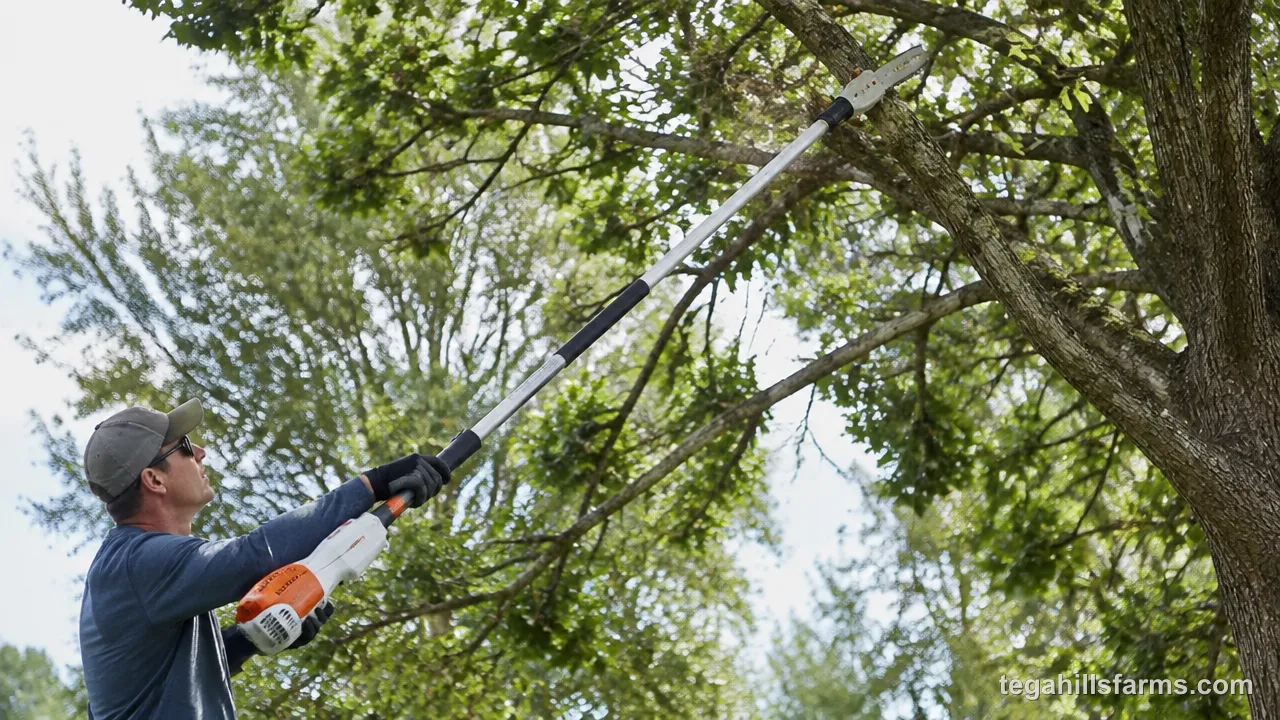
How Much Reach Do You Actually Need?
Measure from the ground to the lowest limb you can’t reach today, then buy a saw whose usable height clears it with some room to spare. Manufacturers quote either the tool’s physical length or the total reach, which adds your height and arm length, so two saws with similar shafts can list very different figures.
Usable cutting height is always lower than the quoted number. You never hold the shaft straight up. You hold it at an angle so you can stand outside the drop zone, and that angle costs several feet of height.
A longer shaft also adds weight and sway, and both get worse at full extension. A saw sized to your tallest limbs, rather than the tallest number on the shelf, cuts more accurately and tires you less. If your yard has old oaks or maples with limbs well above the roofline, the best pole saws for tall branches are built around that height. A suburban lot with young trees doesn’t need that reach.
Which Bar Length Handles Your Branches?
Bar length sets the thickest limb you can cut in a single pass, so match it to limb diameter, not to how high the limbs grow. The shaft gets you to the branch. The bar decides whether you can get through it.
An 8-inch bar handles routine pruning: water sprouts, crossing branches, and limbs hanging over a roof or driveway. A 10-inch bar gives you more margin for heavier limbs and lets the chain cut faster through thick wood, since more of it is in contact with the cut.
A limb thicker than the bar has to be cut from two sides, and doing that overhead is slow and risky. Storm-split limbs and branches under tension can pinch the bar or spring loose, so you’re better off cutting them from the ground with a full-size chainsaw or leaving them to a tree service.
Why Does Weight Matter More Than Power Overhead?
Arm fatigue usually ends an overhead session before the battery runs out, because every pound at the tip of a long shaft acts on a lever your shoulders have to hold steady. A saw that weighs a few pounds on the bench feels much heavier at full extension, and a tired arm places cuts less accurately.
Balance matters as much as total weight. A saw that sits evenly in your hands lets you rest the shaft against your body between cuts. A shoulder strap hook or included strap moves part of the load onto your torso.
Power type sets the baseline. Gas models carry an engine at the base and fuel in the tank, so they tend to be the heaviest. Corded saws skip the battery and are usually the lightest. Battery models fall between the two, depending on pack size. If shoulder or back strain limits how long you can work, the best lightweight pole saws are the place to start.
Battery, Gas, Corded or Manual: Which Pole Saw Type Fits Your Yard?
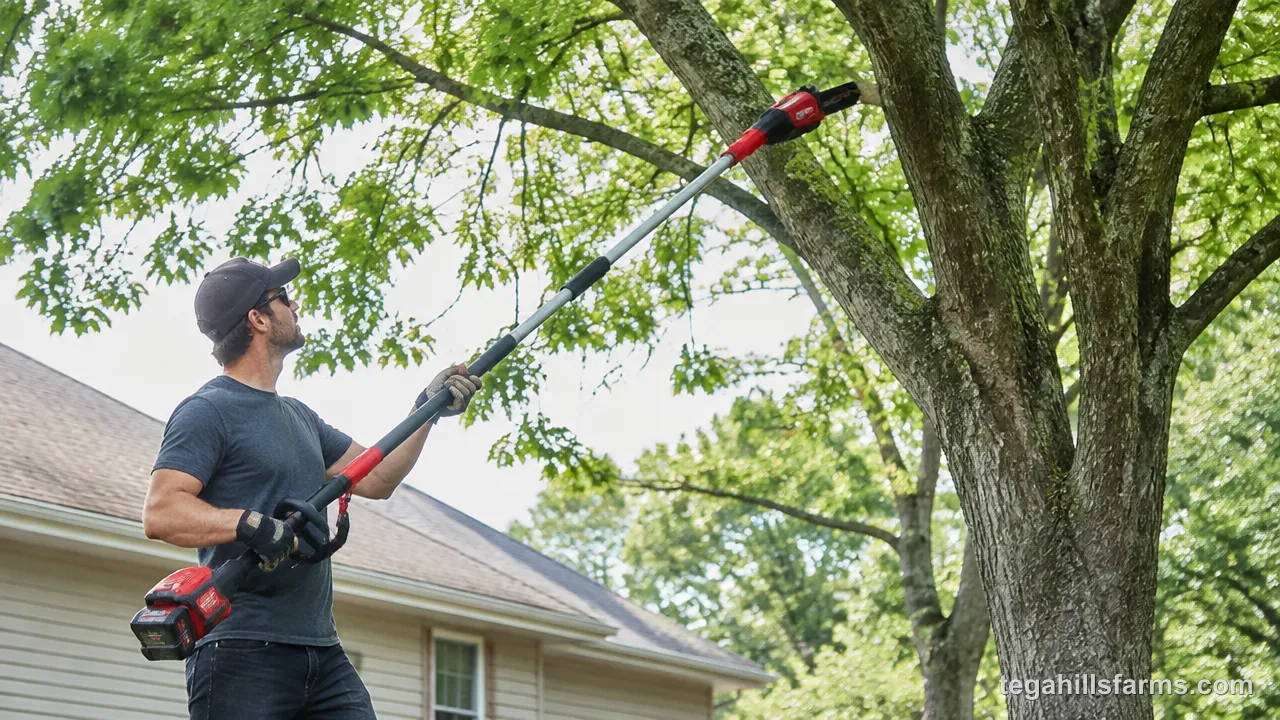
For most suburban yards, battery power is the right call, while gas, corded and manual saws each fit a narrower set of jobs. The differences come down to weight, noise, upkeep, runtime and where you can use each one.
| Criterion | Battery | Gas | Corded | Manual |
|---|---|---|---|---|
| Weight | Moderate | Heaviest | Light | Lightest |
| Noise | Quiet | Loud | Quiet | Silent |
| Upkeep | Bar oil, battery care | Fuel mixing, plugs, winter draining | Bar oil only | Blade sharpening |
| Runtime | Limited by battery | As long as fuel lasts | Unlimited while plugged in | Limited by your arms |
| Where it works | Anywhere | Anywhere | Within cord reach | Anywhere |
Battery saws start with a trigger, run quietly enough for early mornings, and need little more than bar oil. Their biggest advantage comes from staying on one platform: a pole saw that shares batteries with your mower, trimmer or blower gives you more runtime from packs you already own.
Gas makes sense for long jobs on large properties, fence lines and woodlots far from an outlet. You pay for that range with fuel mixing, stale gas and winter draining. If one of the best gas chainsaws already sits in your shed, you’re already mixing and stabilizing fuel, so a gas pole saw adds no new routine.
Corded saws have the lowest upkeep of the powered options, but only within reach of an outdoor outlet and an extension cord. The best corded pole saws fit compact lots where every tree stands close to the house.
Manual saws cover a handful of small limbs a year with nothing to charge or fuel.
My recommendation: a small lot with occasional trimming points to corded or manual. A typical suburban yard trimmed several times a season points to battery. Acreage with long trimming days points to gas.
Is It Safe to Use a Pole Saw Near Power Lines?
No, every shaft can conduct electricity, including fiberglass and carbon fiber, so stay at least 10 feet from overhead lines and never cut a limb that touches or leans on one. Dirt, moisture and sap on a shaft can carry current, and electricity can jump a gap without contact. The limb itself conducts too, especially when it’s wet.
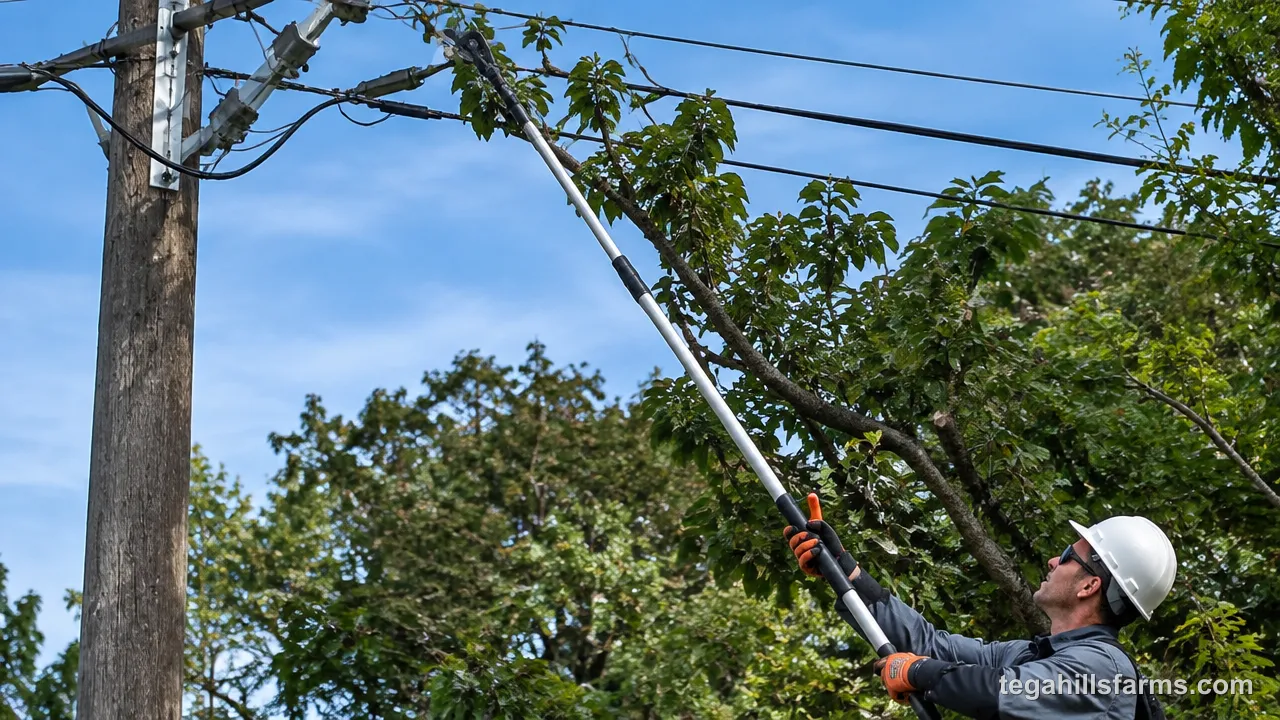
Any limb near a line is a job for the utility company or a line-clearance crew, not a homeowner. Very high limbs, very thick limbs and anything under tension also call for a pro. That includes a branch bent by a fallen tree or twisted by storm wind, which can whip loose the moment the chain releases it. Professional tree crews carry the kind of gear covered in the best chainsaws for arborists, along with rigging and training a homeowner doesn’t have.
For routine trimming, wear safety glasses or a face shield and a hard hat, since sawdust and small debris fall straight toward your face. Gloves improve your grip on the shaft. Stand to the side of the limb, never directly under it, and clear the drop zone of people, pets and anything you don’t want dented.
Which Pole Saw Should You Pick for Your Yard?
For most homeowners, I’d buy the EGO Power+ Pole Saw PS1001, because its telescoping shaft, fast chain and modest weight cover the widest range of trees without wearing you out. The other picks fit more specific yards:
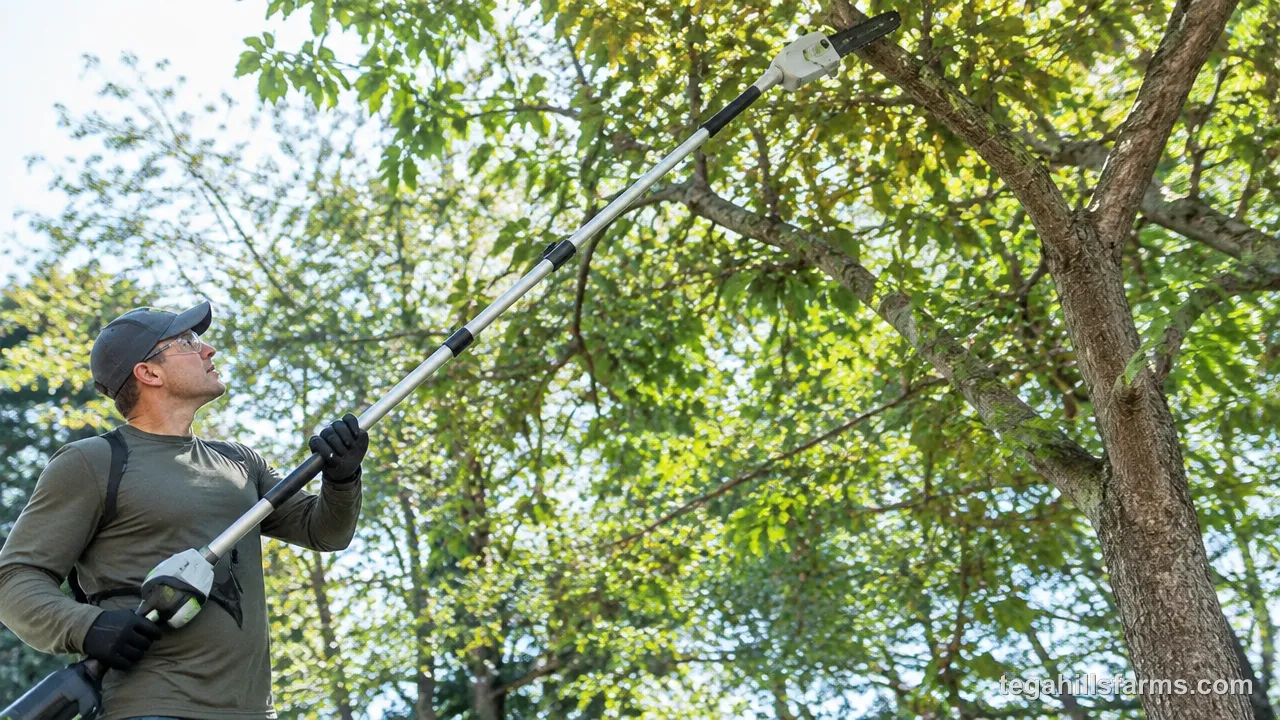
- Small lot and tight storage: the Greenworks 40V 8in Pole Saw breaks down small and weighs the least.
- Tall mature trees: the EGO PS1001 for reach, or the Greenworks 60V 10in Pole Saw when sessions run long.
- Thick hardwood limbs: the Greenworks 80V 10in Pole Saw for brushless torque at a manageable weight.
- Long jobs far from outlets: the Husqvarna 122LKP Gas Pole Saw.
- Tight budget with an outlet nearby: the Sun Joe SWJ802E Pole Chain Saw.
- First pole saw: the RYOBI ONE+ 18V 8 in. Pole Saw, with no bar oil to manage.
- One tool for ground and overhead cuts: the WORX WG323 20V 2-in-1 Pole Saw.
If an EGO, Greenworks, RYOBI or WORX battery already lives in your garage, that platform should outweigh any small spec difference between models.
A homeowner who trims a handful of limbs a year can go months without touching a charger or a fuel can. Meanwhile, the battery sits on a cold shelf losing capacity, or the gas in the tank goes stale and gums up the carburetor. When spring storms bring down a limb, the first job becomes fixing the saw instead of clearing the yard.
When Is a Manual Pole Saw Enough Instead of a Powered One?
A manual pole saw or rope-pulled pruner is enough when you cut a few small limbs a year, because there’s no battery to age, no fuel to go stale and almost nothing to maintain between seasons. It hangs on a hook and works the day you need it.
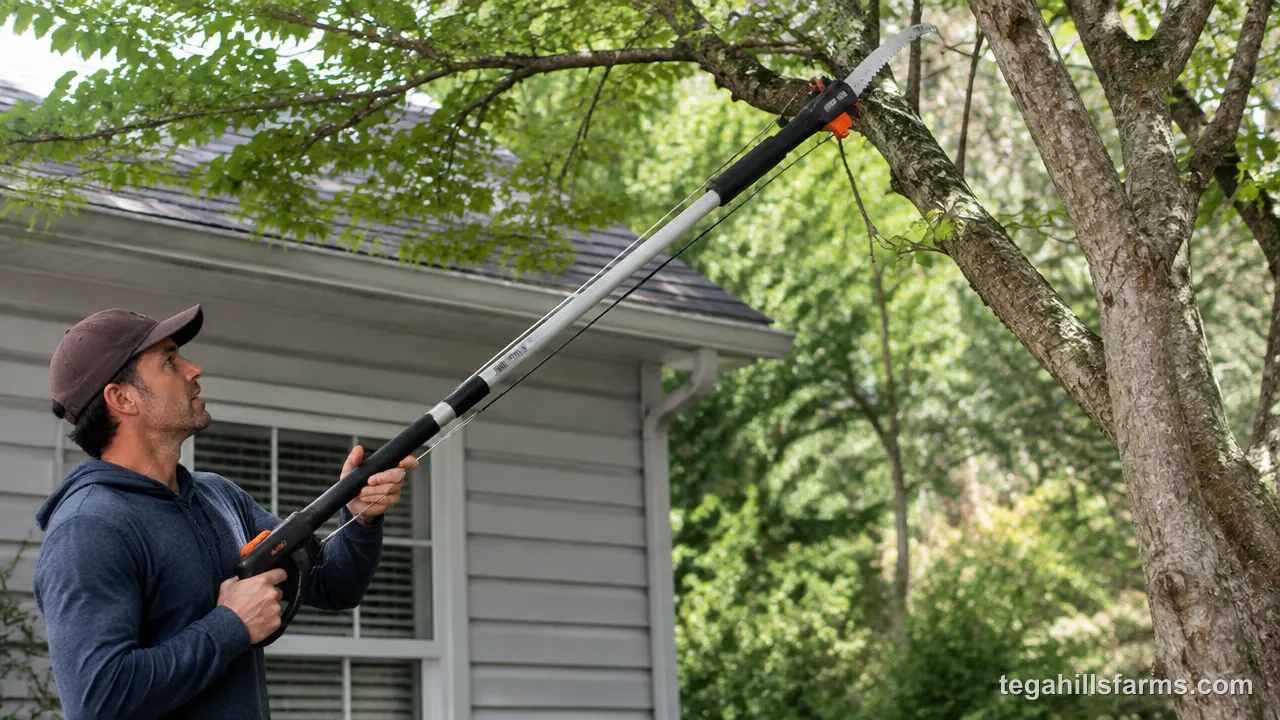
The limits are limb size and effort. A hand blade pulled back and forth overhead works fine on thin branches, but thicker wood takes a lot of strokes, and your shoulders tire well before the cut is done.
A pole pruner and a pole saw also do different jobs. The pruner’s bypass blade, pulled by a rope, snips small green branches cleanly, which suits fruit trees and shaping cuts. A saw blade or chain handles thicker, harder wood. Many manual tools combine both heads. For shaping and thinning work, the best pole saws for pruning cover both styles.
A powered saw becomes worth owning once you deal with storm limbs most years, cut wood thicker than a manual blade handles comfortably, or trim several trees each season.
Kit or Tool-Only: Which Version Should You Buy?
Buy the tool-only version when you already own batteries and a charger on the same platform, and buy the full kit with battery and charger when this saw starts a new platform for you. The battery is often a large part of what you pay for in a kit, so buying a second one you don’t need wastes money.
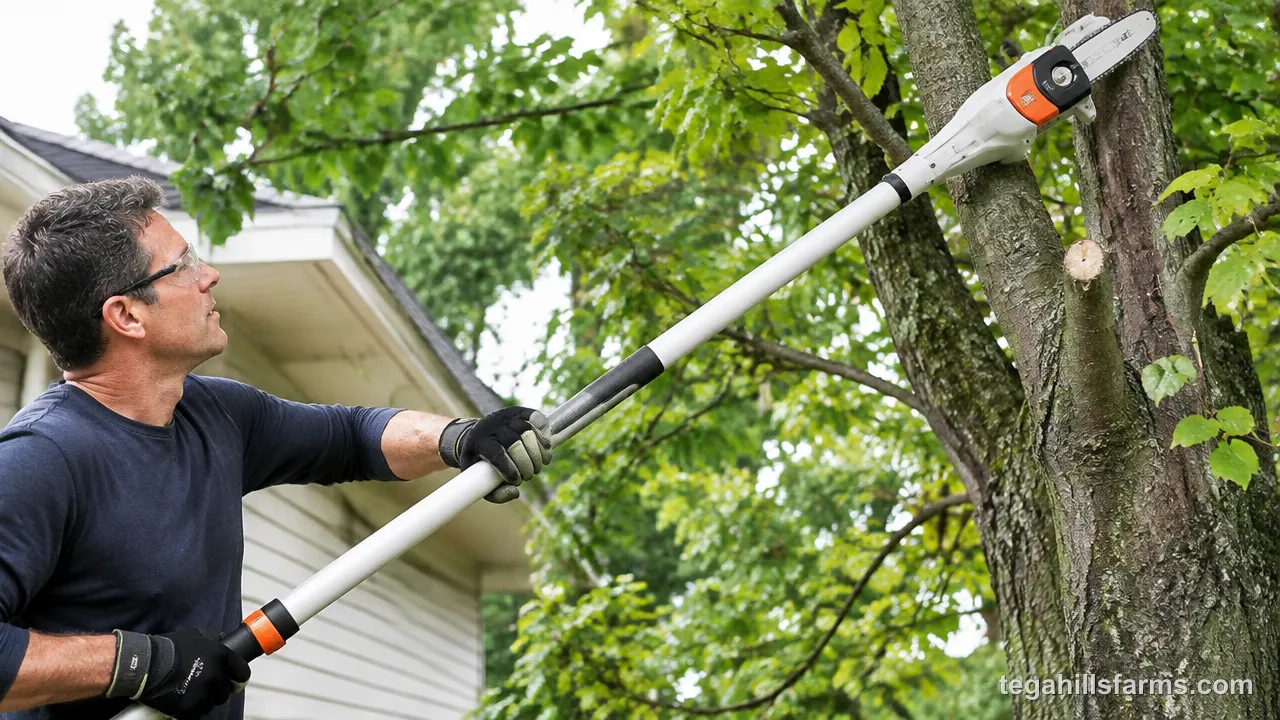
Voltage has to match brand and platform exactly. An EGO 56V battery won’t fit a Greenworks 60V saw, and even within one brand, separate voltage lines usually don’t share packs. Check the label on the battery you own before choosing a model, not after.
That check also shapes your next purchases. Each tool on the same platform means one less charger and battery to buy, while a second battery system means another charger, more spare packs and more winter storage to manage. If you’re shopping the best pole saws under $200, a tool-only version on a platform you already own leaves more of that budget for the saw itself instead of a battery.
Why Does a Pole Saw Feel Shaky at Full Extension?
The shaft flexes under the saw head’s weight, and at full extension that small bend turns into a noticeable swing at the tip. Cut placement suffers, the chain can skate along the bark before it bites, and your arms work harder just to hold the head still.
Stance fixes most of it. Plant your feet shoulder-width apart, keep the shaft at an angle rather than straight up, and keep your lower hand close to your body so your torso carries some of the load. A shoulder strap moves weight off your forearms, which makes small corrections easier.
Extend only as far as the limb requires. Every section you don’t need adds sway without helping the cut. Let the chain reach full speed before it touches the limb, then let the saw’s weight feed it through instead of pushing.
A lighter saw head does more for control than extra power. Less mass at the tip means less swing to manage, and a modest motor in a steady head cuts cleaner than a strong one that wobbles.
How Do You Keep a Pole Saw Cutting Cleanly Season After Season?
Check the bar oil before every session, keep the chain tensioned and sharp, and store the battery or fuel properly over winter. A chain that runs dry or dull wears out the bar and works the motor harder, and you feel that strain in your arms.
Fill the oil reservoir before you start unless the saw is oil-free, and check it again halfway through a long job. Set tension so the chain sits snug against the bar but still pulls freely by hand. A sagging chain can jump off the bar. After each use, clear sawdust from the bar groove and the oil port so oil can reach the chain.
A dull chain shows itself through smoke, fine dust instead of chips, a burnt smell, and the need to push the saw through the cut. Sharpen it with a round file sized to the chain, or replace it when the cutters are worn down or chipped.
Before winter, store batteries indoors at partial charge, away from an unheated garage. For gas saws, drain the tank and run the carburetor dry, or add fuel stabilizer and run the engine long enough to draw it through.
Pole Saw FAQs
What’s the difference between a pole saw and a pole pruner?
A pole saw cuts with a powered chain or saw blade and handles thicker, harder limbs. A pole pruner uses a bypass blade, usually pulled by a rope, to snip small green branches cleanly. Pruners suit fruit trees and shaping cuts, while saws handle storm limbs and heavier wood overhead.
Is battery or gas better for most homeowners?
Battery is better for most homeowners. It starts with a trigger, runs quietly, skips fuel mixing and winter draining, and shares packs with other tools on the same platform. Gas still makes sense on large properties where long trimming days happen far from any outlet and recharging between sessions isn’t practical.
Are fiberglass or carbon fiber shafts safe near power lines?
No. Treat every shaft as conductive, because dirt, moisture and sap can carry current, and electricity can jump a gap without contact. Stay at least 10 feet from overhead lines, never cut a limb touching one, and call your utility company or a line-clearance crew for anything close to the wires.
How thick a limb can a pole saw cut?
Bar length sets the limit more than motor size. The 8-inch and 10-inch bars common on homeowner pole saws handle routine pruning, and stronger gas and corded models are rated for heavier limbs. Anything thicker than the bar, split by a storm, or under tension is better cut on the ground or left to a tree service.
Which pole saw brand is best?
No single brand fits every yard. Husqvarna and Stihl both build long-standing gas lines, and Stihl sells mainly through local dealers, which helps with service. Between EGO and DeWalt, choose the battery system already in your garage, since each brand’s tools run only on its own packs.