

Our top picks for the best corded pole saws in 2026 are WEN 4019 Electric Pole Saw 8in (Best Overall), WEN CP0810 Corded Pole Saw 10in (Best Budget), WORX WG311 2-in-1 Pole Saw 10in (Best Ergonomic Design), Scotts PS45010S Corded Pole Saw 10in (Also Great), Sun Joe SWJ803E Telescoping Pole Saw (Best for Heavy Pruning), Earthwise CVPS43010 Pole Saw 10in (Also Great), and WEN 4021 Electric Pole Saw 8in (Also Great). Each one runs off a household outlet, so you have no fuel to mix and no battery to charge before you start on the overhanging limbs.
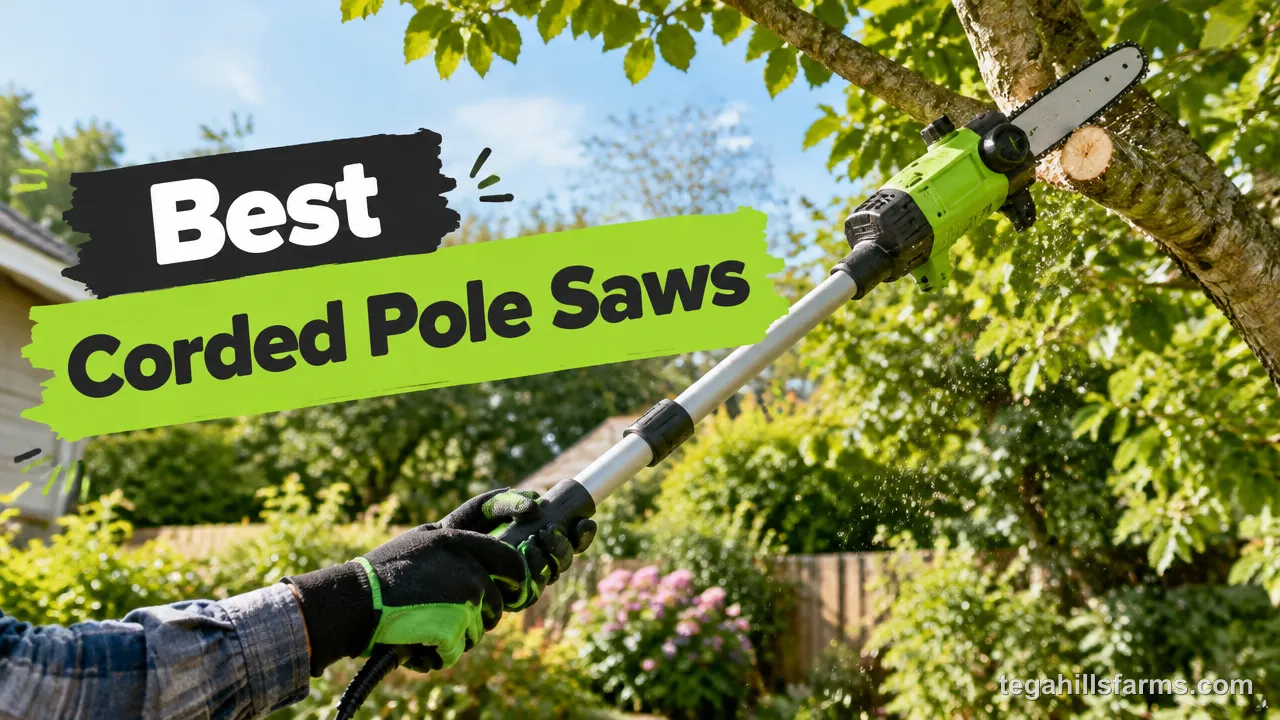
The differences between them come down to motor amperage, overhead reach, how much weight sits at the end of the pole, and how the chain gets oiled and tensioned. A few models add a pivoting head or a pole that comes off for ground-level cutting, and those features change which trees and cleanup jobs a saw handles well.
Every plug-in saw ties you to an outlet. The work stays within cord length of the house, and the cord has to stay clear of falling limbs. The motor also has a limit: thick, dense limbs can push a small electric saw past what it is built to do.



Before you shop, stand under the highest limb you plan to cut and judge whether you could reach it from the ground without stretching. That height rules out more saws than motor size does.
Is a Corded Pole Saw the Right Choice Over Battery or Gas?
Plugging in makes sense for a smaller yard with an outdoor outlet within cord reach, a few trees to prune each season, and no cordless tool lineup already sitting in your garage.
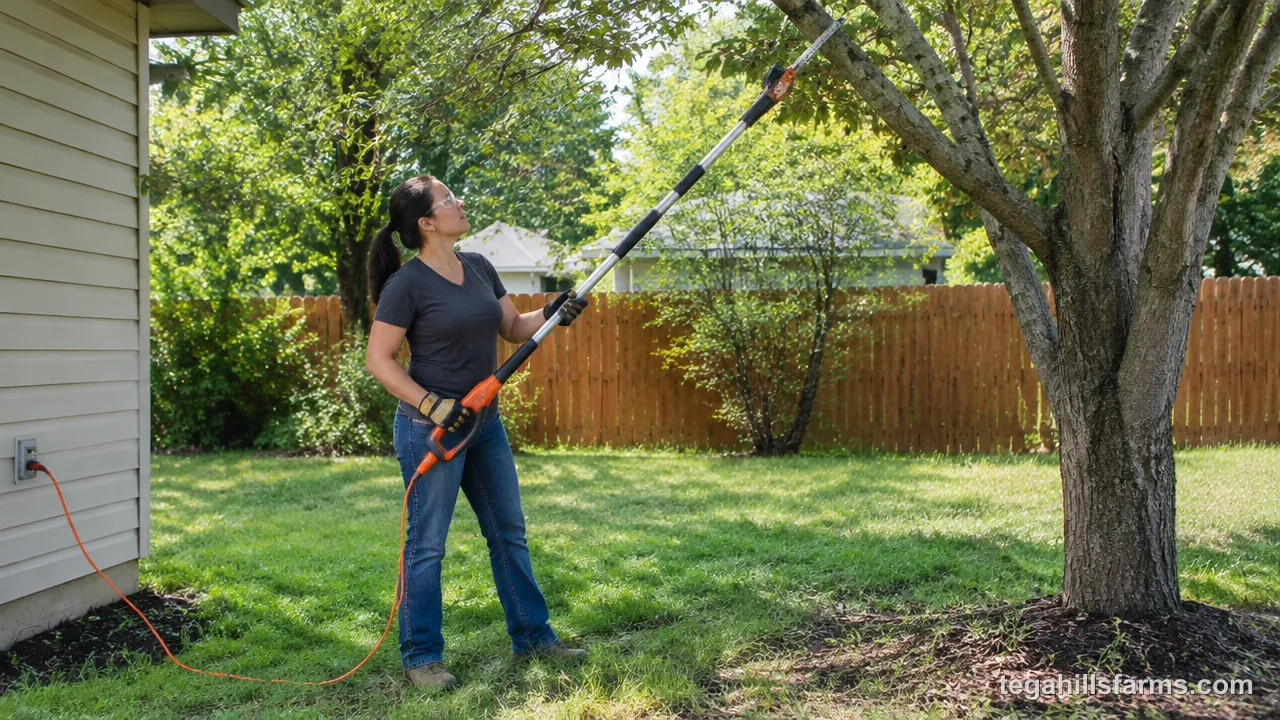
A cord gives you run time that never quits in the middle of a limb. With no fuel tank or battery pack on the motor end, these saws stay light at the top of the pole. Motor upkeep is close to nothing because there are no oil changes, no spark plug and no stale fuel to drain before winter. The outlet is the limit. Every cut happens within the length of your extension cord, and dragging that cord around fences and flower beds slows the work.
Battery models drop the cord, which matters on a lot where trees stand far from the house. The trade-off is that the battery and charger add cost, and every charge runs out sooner or later. If you already own a battery platform, the best battery pole saws let you reuse those packs. Gas models bring more power for thick limbs, but you pay for it in fuel, noise and regular tune-ups.
Corded saws appeal to anyone who wants to skip fuel and batteries, and shoppers weighing budget as a priority can also browse pole saws under $100. If your trees stand far from an outlet, the best pole saws in gas and battery form deserve a look before you commit to a cord.
What Should You Look for in a Corded Pole Saw?
Whether a plug-in saw suits your trees depends on how hard the wood fights the motor and how high the limbs sit above you. A saw sized for thin growth bogs down in a thick oak limb. A pole that comes up short pushes you toward a ladder, which is the one place a pole saw should never go. The chain system decides how long the saw keeps cutting cleanly between adjustments. The power cord itself is a setup and safety matter rather than a buying spec, because every saw here plugs into the same kind of outlet.
How Many Amps Do You Need for the Branches You Cut?
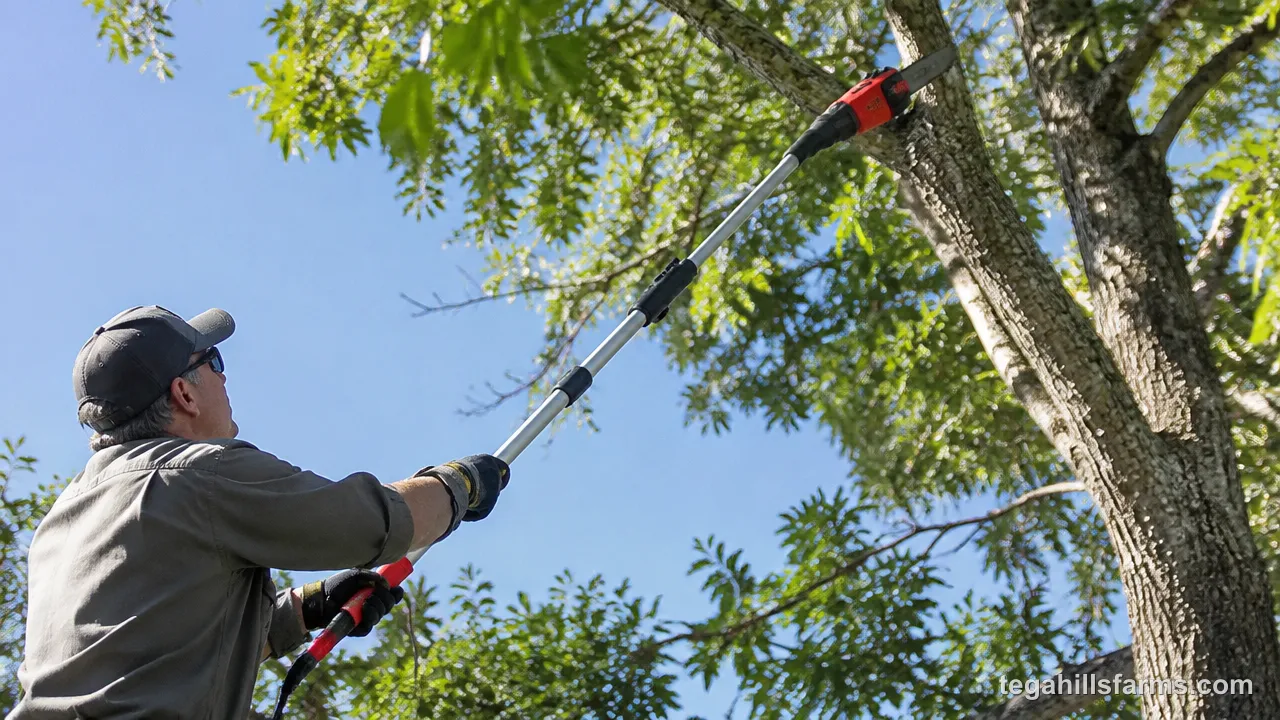
A higher rating lets the motor keep the chain moving at speed when a limb pushes back, so dense wood comes down cleanly instead of stalling the saw halfway through. Amperage measures the current the motor draws, and more current gives it more torque to hold chain speed under load.
Thin sucker growth and water sprouts barely load any motor, so a lower-amp saw clears them as fast as a stronger one. Dense hardwood limbs behave differently. The chain slows as it bites in, and a weaker motor bogs down, heats up and leaves a rough, pinched cut.
Bar length does not change that. A longer bar fits around a thicker limb, but the motor still has to pull the chain through all of that wood, so size the limbs you attempt to the motor first. Even a strong plug-in pole saw is a pruning tool. A large limb or a downed trunk belongs to a gas chainsaw.
How Much Reach and What Kind of Pole Do You Need?
Buy for the height of the limbs you actually trim, measured from where you stand, rather than for the longest model on the shelf. The overhead reach figure on the box adds your height and raised arms to the pole length, so it runs several feet past the pole itself. It also assumes you hold the pole close to vertical. Most cuts happen at an angle because you stand back from the trunk to stay out of the drop zone, and an angled pole reaches lower than the listed figure.
A longer telescoping pole reaches higher limbs, but it moves the motor and bar farther from your hands. That leverage makes the saw feel heavier than its weight and harder to hold steady on a cut. A shorter pole gives you more control and hangs more easily on a garage wall.
Total weight matters because you hold the whole tool overhead. Every extra pound adds to shoulder and forearm fatigue over a session, and a tired grip is when cuts start to wander. When height is the main problem, the best telescoping pole saws are built around adjustable length. For limbs at the top of a mature tree, look at the best pole saws for tall branches.
Why Do Bar Size, Automatic Oiler and Chain Tensioning Matter?
Length sets how thick a limb you can take in a single cut. Steady lubrication keeps the cutting edge from running dry and overheating, and correct tension keeps the chain from chattering or jumping off its guide.
An automatic oiler feeds bar oil from a reservoir onto the chain as it runs. Without that oil, friction heats the chain and bar, the chain stretches, and the bar wears unevenly. An oil-level window lets you check the reservoir before you raise the saw, so you don’t have to bring the pole down mid-job to find the tank empty.
Tool-free tensioning, usually a knob or lever, lets you snug the chain in the yard without a wrench. A loose chain slaps against the bar, cuts slowly and can derail. An overtight chain drags on the motor. Oregon is a common replacement brand for small-saw bars and chains, so a new one is easy to find when the old one wears out.
The 7 Best Corded Pole Saws of 2026
In order, our top picks are WEN 4019 Electric Pole Saw 8in, WEN CP0810 Corded Pole Saw 10in, WORX WG311 2-in-1 Pole Saw 10in, Scotts PS45010S Corded Pole Saw 10in, Sun Joe SWJ803E Telescoping Pole Saw, Earthwise CVPS43010 Pole Saw 10in and WEN 4021 Electric Pole Saw 8in. Motor strength, reach and weight pull against each other across these saws. Most of the 8-amp, 10-inch models put more weight at the end of the pole, with the Scotts PS45010S as the exception. The 8-inch WEN models give up cutting depth for a lighter, quicker feel overhead. All 7 saws suit homeowners with small to mid-size yards who prune from the ground within cord reach of an outlet, from light trimming to heavier limbs. That’s the same group of buyers the best pole saws for homeowners are aimed at.
#1 WEN 4019 Electric Pole Saw 8in — Best Overall
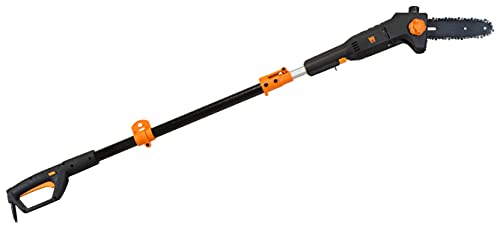
For a homeowner pruning a few yard trees from the ground, this saw keeps the load light: it weighs 6.7 pounds and still reaches up to 12 feet overhead. Tool-free chain adjustment keeps upkeep simple.
Key Specs:
- Bar and chain: 8 inches
- Pole length: 5.3 to 7.3 feet, telescoping
- Overhead reach: up to 12 feet
- Weight: 6.7 pounds
- Warranty: two years
Detailed Review:
The 6-amp motor drives the chain fast enough for clean cuts on the small and medium limbs that make up most routine pruning. With an 8-inch bar, the saw is set up for steady trimming rather than heavy wood, so a dense hardwood limb takes slower passes.
The low weight keeps a long session comfortable. With little mass at the end of the pole, your shoulders and forearms hold the saw steady longer, and the included shoulder strap moves part of the load onto your torso.
The pole telescopes from 5.3 to 7.3 feet for up to 12 feet of overhead reach. That covers lower canopy limbs and branches drooping over a walkway or driveway. Compared with the WEN CP0810, you give up reach and motor current for a lighter tool that is easier to steer between branches.
Chain adjustments need no tools, and the electric motor runs emission-free, so there is no fuel to drain before winter storage. The two-year warranty and blade cover complete the package.
Pros:
- Light weight makes overhead cutting less tiring.
- Tool-free chain adjustment speeds up tension checks.
- Shoulder strap and blade cover come in the box.
- Two-year warranty covers the tool.
Cons:
- 8-inch bar limits how thick a limb each pass handles.
- Shorter pole leaves high canopy limbs out of reach.
Who It’s For:
Homeowners with a few ornamental or fruit trees near the house will get the most from it, especially anyone who tires quickly holding a tool overhead.
Editor’s Verdict:
This saw pairs low weight with enough reach and motor for routine pruning, and the two-year warranty covers the ownership side.
#2 WEN CP0810 Corded Pole Saw 10in — Best Budget
If your problem limbs sit higher than a short pole can reach, this saw stretches up to 14 feet overhead and backs that reach with an 8-amp motor and a 10-inch bar. It does so without a premium price.
Key Specs:
- Motor: 8-amp, chain speed up to 36 feet per second
- Bar and chain: 10 inches
- Pole length: 6.7 to 9 feet, telescoping
- Overhead reach: up to 14 feet
- Weight: 8.4 pounds
- Warranty: two years
Detailed Review:
The 8-amp motor gives this saw more current than the 6-amp WEN 4019 while turning the chain at the same 36 feet per second. That means the chain holds its speed better once a thicker limb starts loading the bar. The longer bar also takes a deeper bite on each pass, so a limb that would tie up a shorter bar comes down in fewer strokes.
The pole telescopes from 6.7 to 9 feet for up to 14 feet of overhead reach, which brings limbs high in a mature yard tree within range while you stay on the ground. That extended length and a heavier body than the WEN 4019 put more leverage against your arms when the pole is fully out.
The shoulder strap is worth using on this saw because it shifts part of that load to your torso during overhead work. Tool-free chain adjustments, emission-free running, a blade cover and a two-year warranty all come with it, which is a lot of saw for an affordable price.
I’d pick it over the WEN 4019 when the problem limbs are high, and stay with the lighter saw when they aren’t.
Pros:
- Long overhead reach clears high limbs without a ladder.
- 8-amp motor holds chain speed in thicker limbs.
- 10-inch bar cuts deeper on each pass.
- Strap, blade cover and two-year warranty included.
Cons:
- Extended pole puts more weight far from your hands.
- Longer collapsed pole is bulkier to store.
Who It’s For:
Budget-minded homeowners with tall yard trees get strong reach and motor power without stretching their spending, as long as they can handle a heavier tool overhead.
Editor’s Verdict:
It delivers an 8-amp motor, a 10-inch bar and high reach at an affordable price. Plan on using the shoulder strap.
#3 WORX WG311 2-in-1 Pole Saw 10in — Best Ergonomic Design
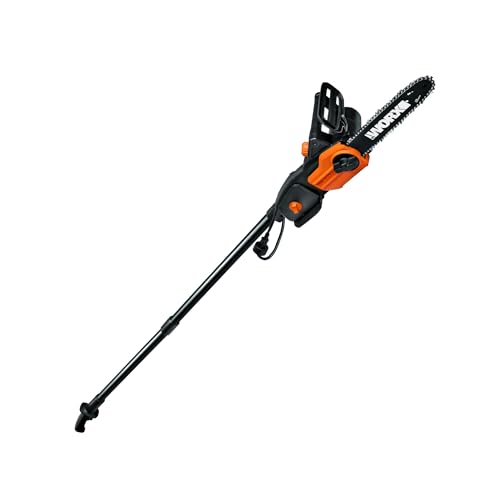
Anyone who wants one saw for overhead limbs and for cutting them up on the ground gets both here, since the pole comes off and the 10-inch bar runs as a regular chainsaw. The 180-degree rotating rear handle adds comfort at awkward angles.
Key Specs:
- Motor: 8-amp, chain speed 28 feet per second
- Bar and chain: 10 inches
- Overhead reach: up to 10 feet
- Weight: 10 pounds
- Chain care: automatic lubrication, knob-turn chain tensioning
- Handle: 180-degree rotating rear handle
Detailed Review:
The rear handle rotates through 180 degrees, so you can set the grip to suit the pole’s angle instead of bending your wrist to keep the bar square on a limb. That helps most on side branches and steep cuts close to the trunk, where a fixed grip forces an awkward hold.
Pulling off the extension pole turns the saw into a regular chainsaw, so limbs you drop can be cut into lengths for the burn pile or yard-waste bin without fetching another tool. Chain tension adjusts with a turn of a knob, and the automatic lubrication keeps the chain oiled in either setup.
Its chain runs at 28 feet per second, slower than the 36 feet per second of the WEN 4019 and WEN CP0810, so those saws move more chain past the wood each second. Overhead reach stops at 10 feet, short of both WEN models, which keeps this saw suited to lower and mid-height limbs.
At 10 pounds, it asks more of your arms overhead than the lighter WEN saws. The extra weight pays for the rotating handle and the removable pole.
Pros:
- Rotating rear handle sets a comfortable grip at awkward angles.
- Pole removes for ground-level chainsaw work.
- Knob-turn tensioning makes chain adjustments quick.
- Automatic lubrication keeps the chain oiled.
Cons:
- Heavier build tires arms sooner during long overhead sessions.
- Slower chain speed than the WEN models.
- Reach stops short of high canopy limbs.
Who It’s For:
A homeowner who prunes and then wants to cut the fallen limbs into pieces without fetching another saw will use both modes of this tool. The rotating handle also helps anyone whose wrists complain at odd angles.
Editor’s Verdict:
Choose it when comfort at odd angles and a second life as a ground-level chainsaw matter more than reach or low weight.
#4 Scotts PS45010S Corded Pole Saw 10in — Also Great
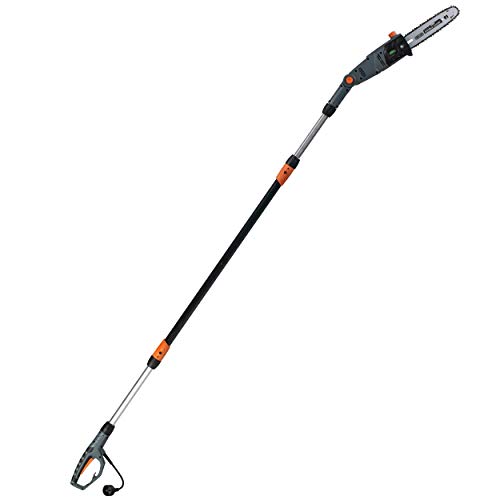
When the limbs you need to cut lean at odd angles, the head on this saw tilts to five positions so the 10-inch Oregon bar meets the wood squarely. At 7 pounds, it stays easy to hold up.
Key Specs:
- Motor: 8-amp
- Bar and chain: 10-inch Oregon
- Cutting head: 30-degree, 5-position adjustment
- Pole length: 9 feet 3 inches fully extended
- Weight: 7 pounds
- Chain care: automatic oiler with oil-level window, tool-free tensioner
Detailed Review:
Tilting the cutting head lets you hold the pole at a comfortable angle while the bar still meets a leaning limb squarely. That matters on branches over a fence, gutter or shed roof, where you can’t step to a better spot. A square cut binds less and leaves a cleaner stub than a slanted one.
The 8-amp motor drives a 10-inch Oregon bar and chain. That’s the same motor rating as the WEN CP0810 in a lighter 7-pound body. When the chain wears out, Oregon replacements are easy to find.
The automatic oiler has an oil-level window, so a glance before you raise the saw tells you whether the reservoir needs topping up. The chain tensioner adjusts without tools. The rubber overmolded handle with a foam grip gives your hands a softer, steadier hold through a long session.
Fully extended, the pole measures 9 feet 3 inches, which keeps mid-height limbs within range from the ground. The tilting head earns its place on limbs that hang over anything you need to protect.
Pros:
- Five head angles square the bar on leaning limbs.
- Oregon bar and chain make replacements easy to find.
- Oil-level window shows the reservoir at a glance.
- Light build keeps overhead cuts less tiring.
Cons:
- Pivoting head adds a joint to clean and check.
- Power cord keeps you within reach of an outlet.
Who It’s For:
Owners whose trees crowd a fence, roofline or shed will use the tilting head on most cuts, and the light body keeps overhead work comfortable. The oil-level window and tool-free tensioner also suit anyone who wants chain care to stay quick and simple.
Editor’s Verdict:
Light weight, a tilting head and easy oil checks make it a practical saw for limbs crowding fences and roofs.
#5 Sun Joe SWJ803E Telescoping Pole Saw — Best for Heavy Pruning
For homeowners clearing thick, overgrown limbs, the 8-amp motor and 10-inch bar are rated for branches up to 9.5 inches thick, with 8.5 inches recommended. You carry more weight overhead in exchange.
Key Specs:
- Motor: 8-amp
- Bar and chain: 10 inches, automatic lubrication
- Cutting capacity: branches up to 9.5 inches (8.5 inches recommended)
- Pole length: 5.8 to 8 feet, telescoping
- Overhead reach: up to 14 feet
- Weight: 10 pounds
Detailed Review:
Go by the recommended cutting capacity rather than the maximum. A limb near the top of the range loads the motor hard and slows the chain. Within the recommended size, the motor holds chain speed and the bar finishes cuts that would stall a lighter-duty saw.
Its overhead reach matches the WEN CP0810, but the pole collapses shorter, which helps on low limbs and in a crowded shed. The multi-angle cutting head lets you keep the bar square to a limb in tight spots. Automatic lubrication keeps the chain oiled through long cuts in thick wood.
That combination fits the heavier end of the best pole saws for pruning, where the work is overgrown limbs rather than light shaping. At 10 pounds, it pulls harder on your shoulders than the 7-pound Scotts PS45010S, so expect shorter stretches with the pole fully extended.
I’d only carry this much saw when the limbs are thick. For light trimming, the extra weight buys you nothing.
Pros:
- Rated cutting capacity covers thick, overgrown limbs.
- 8-amp motor keeps the chain moving in dense wood.
- Multi-angle head reaches limbs in tight spots.
- Automatic lubrication keeps the chain oiled.
Cons:
- Heavier build wears on shoulders during long sessions.
- Extra power is wasted weight for light trimming.
Who It’s For:
If your trees have gone years without pruning and the limbs have thickened, this saw can take them down from the ground.
Editor’s Verdict:
Its motor, bar and rated cutting capacity make it the saw to own when thick limbs are the regular job, not the exception.
#6 Earthwise CVPS43010 Pole Saw 10in — Also Great
Yards that produce a steady pile of fallen limbs suit this convertible saw, which switches from pole saw to handheld chainsaw in seconds. Its 10-inch bar handles both jobs.
Key Specs:
- Motor: 7-amp
- Bar and chain: 10 inches
- Cutting head: adjustable pivot, 5 angle settings
- Chain care: automatic oiler with oil-level window, tool-free tensioner
- Weight: 10.27 pounds
- Configuration: 2-in-1 pole saw and chainsaw
Detailed Review:
Converting between pole saw and handheld chainsaw takes seconds, so you can drop limbs with the pole attached and then cut them to length where they land. In handheld mode, the saw is built to cut up stumps and logs as well as trim branches.
The pivoting head has five angle settings, which keeps the bar square on limbs that lean or hang over a fence. The WORX WG311 also converts, but it runs an 8-amp motor against this saw’s 7 amps, so the WORX has more current behind its chain in dense wood.
The automatic oiler has an oil-level window for quick checks, and the tensioner adjusts without tools. The rubber overmolded handle with a foam grip cushions your hands, and a blade cover protects the chain in storage.
With the pole attached, it is one of the heavier saws to hold overhead, so long pruning sessions wear on your arms sooner than with the lighter Scotts PS45010S. In handheld mode, the same weight is easy to manage.
Pros:
- Converts to a handheld chainsaw in seconds.
- Pivoting head offers five angle settings.
- Oil-level window makes reservoir checks quick.
- Tool-free tensioner simplifies chain adjustment.
Cons:
- Pole-mounted weight tires arms on long overhead jobs.
- 7-amp motor has less pull than the 8-amp saws.
Who It’s For:
Property owners who clean up their own downed limbs and cut them to length where they land get two tools in one here. The pivoting head also helps where limbs hang over fences. If you only prune overhead and want less weight on the pole, a lighter saw built only for pole work suits you better.
Editor’s Verdict:
Two tools in one body, plus a pivoting head, make it a sensible buy for owners who handle cleanup as well as pruning.
#7 WEN 4021 Electric Pole Saw 8in — Also Great
Holding a long pole steady is easier with this saw’s adjustable center handle and shoulder strap, which suit anyone who prunes high limbs over a long session. It reaches up to 13.5 feet overhead.
Key Specs:
- Motor: 6.5-amp, chain speed up to 2,165 feet per minute
- Bar and chain: 8 inches
- Pole length: 6.5 to 9.5 feet, telescoping
- Overhead reach: up to 13.5 feet
- Weight: 8 pounds
- Included: scabbard, adjustable center handle, shoulder strap
Detailed Review:
The adjustable center handle gives your forward hand a grip partway up the pole, which steadies the cutting head and keeps the bar from wandering as a cut starts. The shoulder strap carries part of the load, so the effort spreads between your arms and torso and fatigue builds more slowly during overhead work.
Its overhead reach sits well beyond the WEN 4019’s and just short of the WEN CP0810’s. That range puts mid-canopy limbs within range from the ground.
A 6.5-amp motor turns the chain at up to 2,165 feet per minute on an 8-inch bar, a setup sized for regular pruning rather than heavy limbs. Compared with the WEN CP0810, it has less motor current and a shorter bar, so thick limbs take more passes.
Chain adjustments are tool-free, the motor runs emission-free, and a scabbard covers the chain between jobs. That leaves little routine upkeep beyond keeping the chain sharp and tensioned.
Pros:
- Adjustable center handle steadies the pole during cuts.
- Shoulder strap spreads weight off your arms.
- Long overhead reach handles mid-canopy limbs.
- Tool-free chain adjustments keep upkeep simple.
Cons:
- 8-inch bar needs more passes on thicker limbs.
- Long collapsed pole takes up more storage space.
Who It’s For:
Tall trees with mostly slender limbs suit this saw well, and so does anyone who likes a second hand position for steadier control. If you regularly cut thick hardwood limbs, the Sun Joe SWJ803E Telescoping Pole Saw brings a stronger motor to that job.
Editor’s Verdict:
Expect steady handling from the center handle and strap, and enough reach for tall trees, as long as the limbs stay slender.
How Do You Run a Corded Pole Saw Safely With an Extension Cord?
Plug into a GFCI-protected outlet, choose outdoor-rated wire heavy enough for the distance, and keep the line behind you, outside the zone where limbs fall.
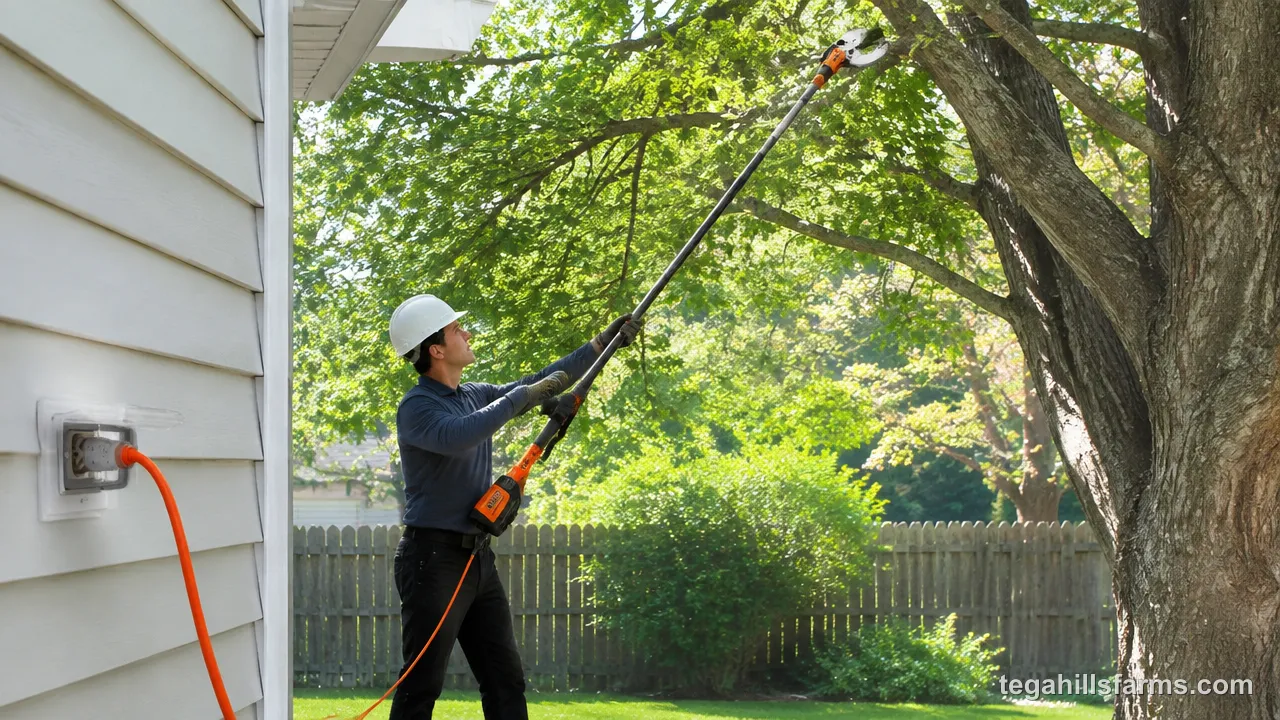
Wire gauge matters because a long, thin cord loses voltage before the power reaches the saw. The motor then draws more current to keep up, runs hotter and turns the chain slower, so the saw feels weak even when the motor is fine. A lower gauge number means thicker wire. The saw’s manual lists the gauge it needs for each cord length, so follow that chart rather than grabbing whatever cord is in the garage.
The cord also sets your working area. You can only prune within its length of the outlet, so plan the order of your cuts to avoid dragging it across beds and fences or through the spot where the next limb will land. A falling limb that hits the cord can cut or crush it.
A GFCI outlet shuts off power when current leaks to ground, which protects you if the cord is damaged or wet. Even with that protection, put the saw away when the grass, the wood or the cord is wet. Never use the saw from a ladder. A pole saw is made for working from the ground, and on a ladder you have no way to step clear of a falling limb. Before each cut, check that the cord hangs behind you and away from the cutting head so neither the chain nor the falling wood can reach it.
Which Corded Pole Saw Fits Your Yard and Trees?
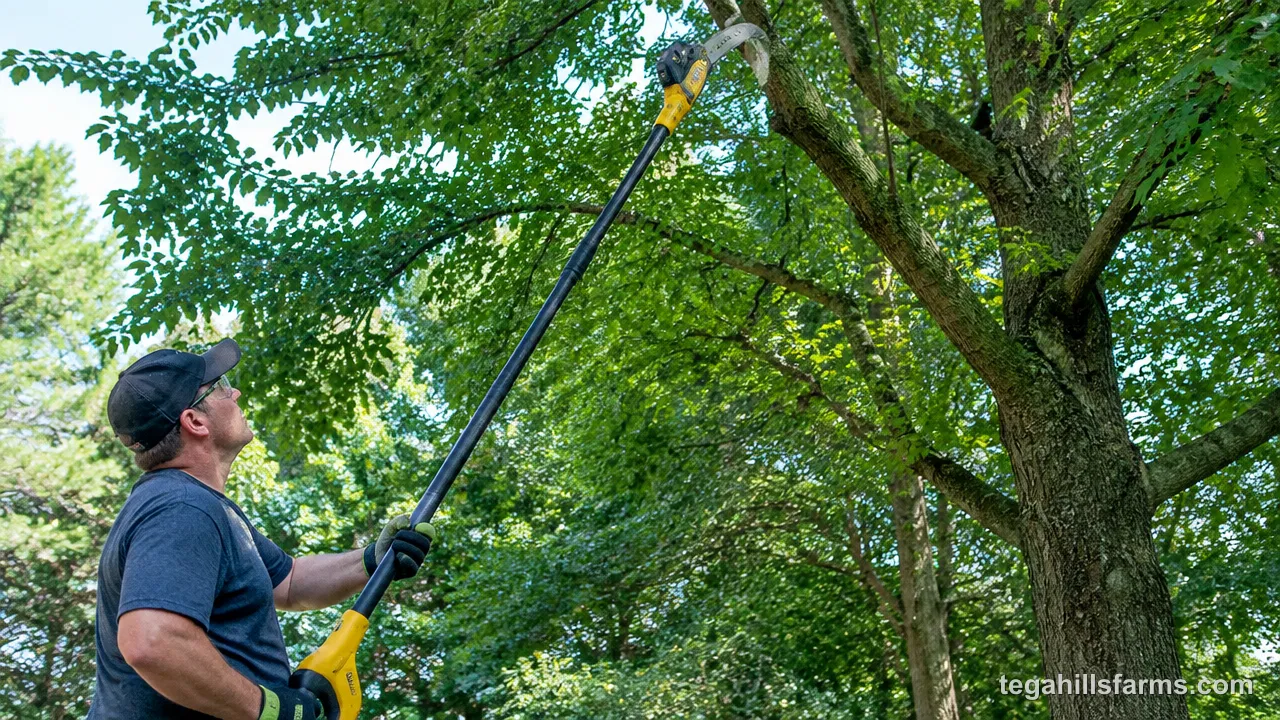
The right saw depends on your limbs more than the brand name: the WEN saws cover light handling and long reach, the Sun Joe covers thick wood, and the WORX and Earthwise models add ground-level cutting.
Each common situation points to a different pick:
| Your situation | Pick | Why it fits |
|---|---|---|
| Light handling for routine pruning | WEN 4019 Electric Pole Saw 8in or Scotts PS45010S Corded Pole Saw 10in | the two lightest saws in the group |
| High limbs in mature trees | WEN CP0810 Corded Pole Saw 10in or Sun Joe SWJ803E Telescoping Pole Saw | more overhead reach than the WEN 4019 or WORX WG311 |
| Thick, overgrown limbs | Sun Joe SWJ803E Telescoping Pole Saw | strong motor plus a rated capacity for thick branches |
| Limbs that lean or hang over fences and roofs | Scotts PS45010S, Sun Joe SWJ803E or Earthwise CVPS43010 | adjustable cutting heads keep the bar square |
| Cutting fallen limbs on the ground too | WORX WG311 or Earthwise CVPS43010 | pole comes off for handheld chainsaw use |
| Long sessions that need a steadier hold | WEN 4021 Electric Pole Saw 8in | center handle and shoulder strap share the load |
If I were steering a first-time buyer with ordinary yard trees, I’d start with the WEN 4019 and move to the WEN CP0810 only when the limbs sit higher than the shorter pole can reach. The Sun Joe SWJ803E is worth its weight only on thick, overgrown wood. The convertible WORX and Earthwise saws make sense when every pruning job ends with a pile of limbs to cut up on the ground.
A chain that has gone dull or dry turns a clean cut into a slow grind: the motor bogs, the bar heats up, and the saw spits dust instead of chips. Skip the oil checks and sharpening for a season, and the next thick limb takes far longer while the chain wears out well before its time.
How Do You Keep a Corded Pole Saw Cutting Cleanly?
A sharp chain pulls itself into the wood and throws fine chips. A dull one makes powdery dust and needs you to push the saw through the limb. Once you notice yourself pushing, sharpen before the next session. If the cutters are chipped or worn back unevenly, or the chain keeps stretching loose, replace it instead.
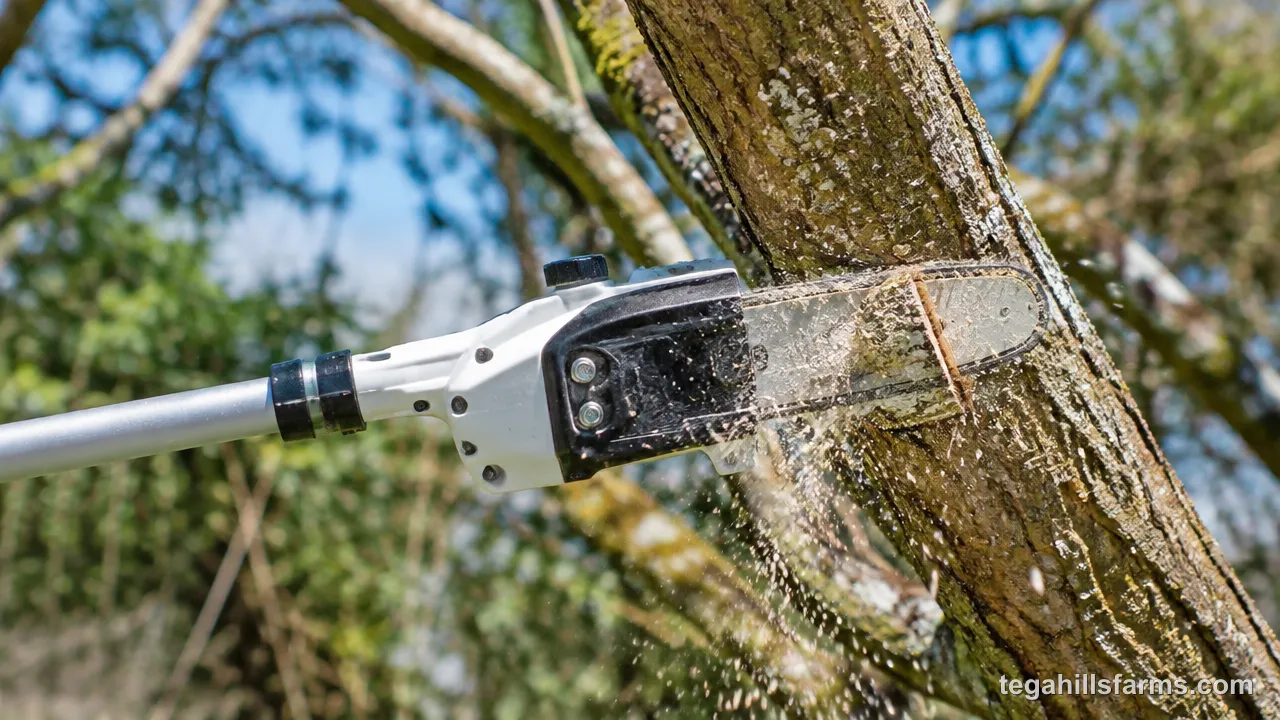
Before each session, check the oil reservoir through its window or fill cap and top it up with bar and chain oil. Then pull the chain by hand along the bar. It should sit snug against the bar yet slide freely. A dry chain overheats the bar, and a loose one can jump off mid-cut.
After use, unplug the saw and brush sawdust and pitch out of the bar groove, the oiler port and the sprocket area. Wipe the chain with a light coat of oil. Store the saw with the blade cover on in a dry spot, and coil the cord loosely instead of wrapping it tight around the pole, which kinks the insulation over time.
Does a Pivoting Cutting Head Make Cutting Easier?
Yes, for limbs that lean or hang over a fence, roof or gutter. An adjustable angle lets you hold the pole where your shoulders can sustain it while the bar still meets the limb squarely.
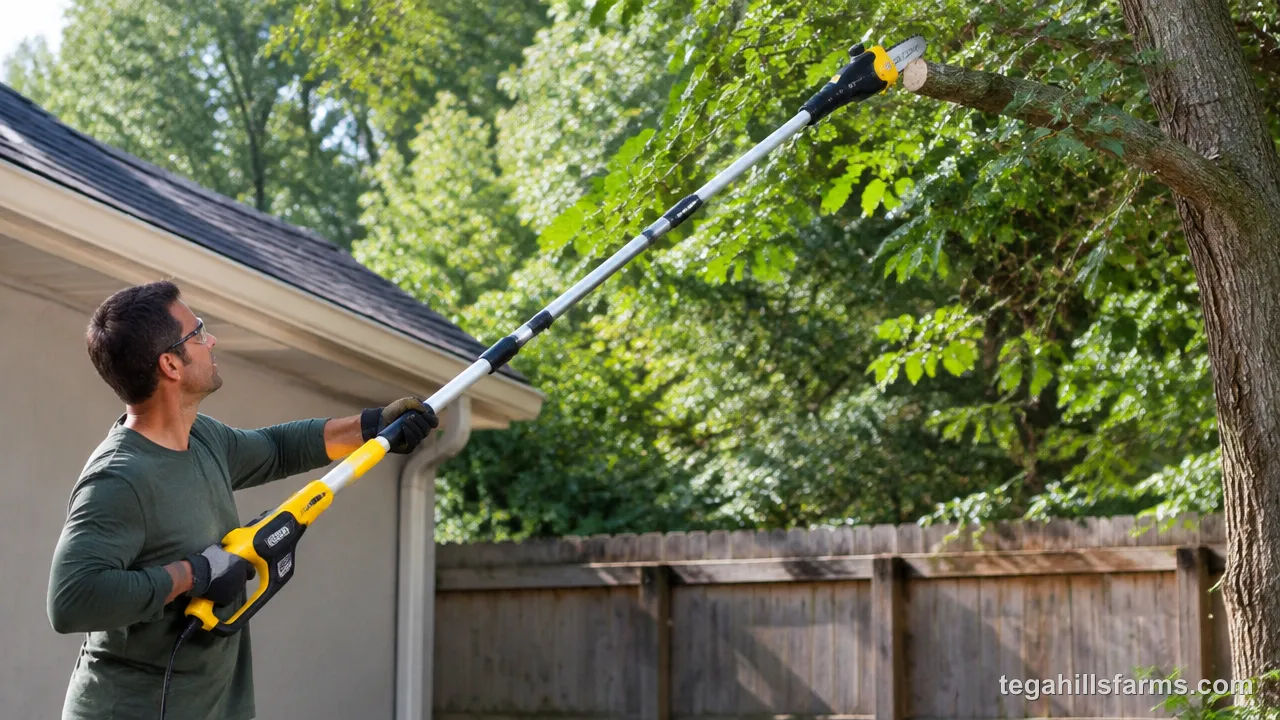
With a fixed head, the bar always lines up with the pole, so a leaning limb forces you to shift your feet, twist your wrists or cut at a slant. A slanted cut binds the bar, tears bark and leaves a ragged stub that heals poorly. Over a fence or roofline you often can’t step to the right spot at all, and a pivoting head solves that by changing the angle at the top of the pole instead of at your feet.
A fixed head is simpler, with no joint to loosen or clean, and it works fine on open trees you can walk all the way around. Owners with trees crowded against structures, or limbs growing at awkward angles, gain the most from pivoting.
When Is a Corded Pole Saw Too Small for the Job?
Once a limb is thick, dense or under tension, a plug-in saw has reached its limit, and the same goes for any work near power lines. Stop when the motor slows hard and stays slow, when the motor housing gives off a hot smell, or when the limb is thicker than the saw’s recommended capacity. Forcing a small motor through heavy wood overheats the windings and can burn it out, and the cut takes longer than switching tools would.
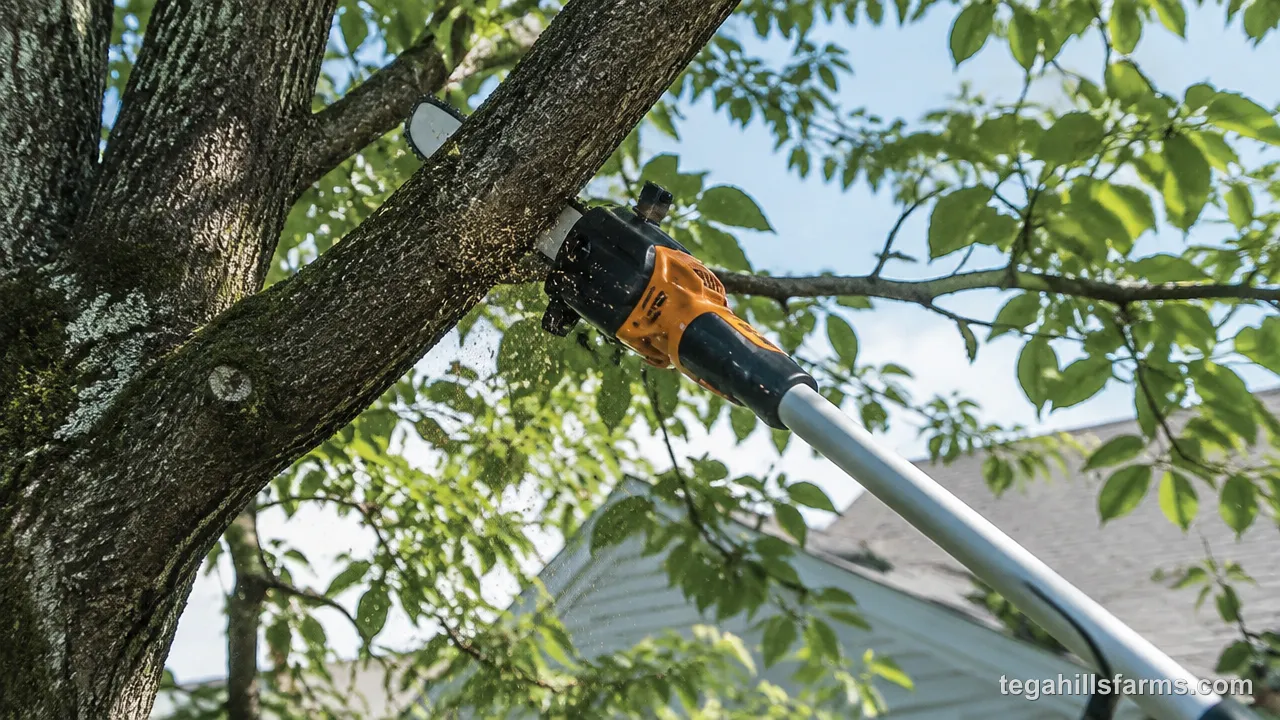
Limbs under tension, like a branch bent under a fallen trunk, can spring back or split when cut. Storm-damaged limbs often hang on other branches and shift without warning. Work near power lines is never a homeowner job, so call your utility. For thick wood on the ground, a gas or battery chainsaw is the right tool. For hung-up or tensioned limbs high in a tree, a professional arborist with climbing gear and rigging is the safer call. The best pole saws for storm cleanup help with smaller downed limbs once the dangerous ones are handled.








Write Your Review
No reviews yet. Be the first to share your experience!