

The 7 best battery chainsaws of 2026 are the Seesii 12-Inch Chainsaw (Best Value), the Seesii 40V Chainsaw 18-Inch (Best Performance), the EGO Power+ CS1611 Chain Saw 16″ (Editor’s Choice), the Supstable Mini Chainsaw 6 & 8 Inch (Best for Beginners), the DOOYUTOOL 10 Inch Cordless Chainsaw (Best Cordless), the Seesii 6 Inch Mini Chainsaw (Best Compact), and the SXGSXG Mini Chainsaw 12 Inch (Best for Small Spaces).
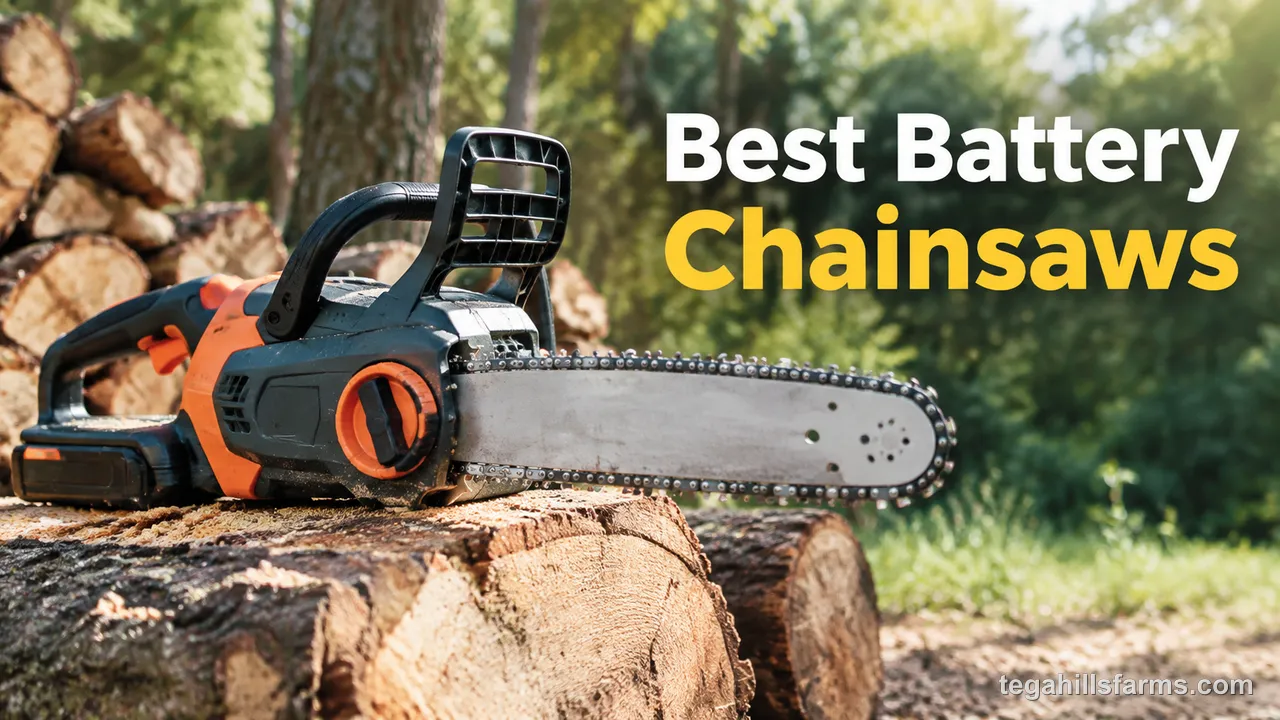
Choosing among them comes down to bar length, battery voltage and weight more than brand hype. A 6-inch mini pruner handles limb cleanup from a ladder, while a 16 to 18-inch bar with a 40V or 56V battery tackles firewood and storm-felled trunks. The right pick matches your typical cut, not the biggest spec on the box.
Many homeowners worry battery saws lack the muscle of gas or die mid-job. Modern brushless motors have closed that gap for yard-scale work, but runtime, chain oiling, and kickback protection still decide whether a cordless saw feels reliable or frustrating.




Below, you’ll find how battery saws work, what specs actually matter in the yard, and detailed reviews of all 7 picks to match your lot and workload.
What Is a Battery Chainsaw and How Does It Work?
A battery chainsaw is a cordless electric saw powered by a removable lithium-ion battery without fuel or cords, and whether it is right for your yard depends on your power and runtime needs. If you are weighing cordless against other power types, our guide to the best chainsaws breaks down gas, corded, and battery options side by side.
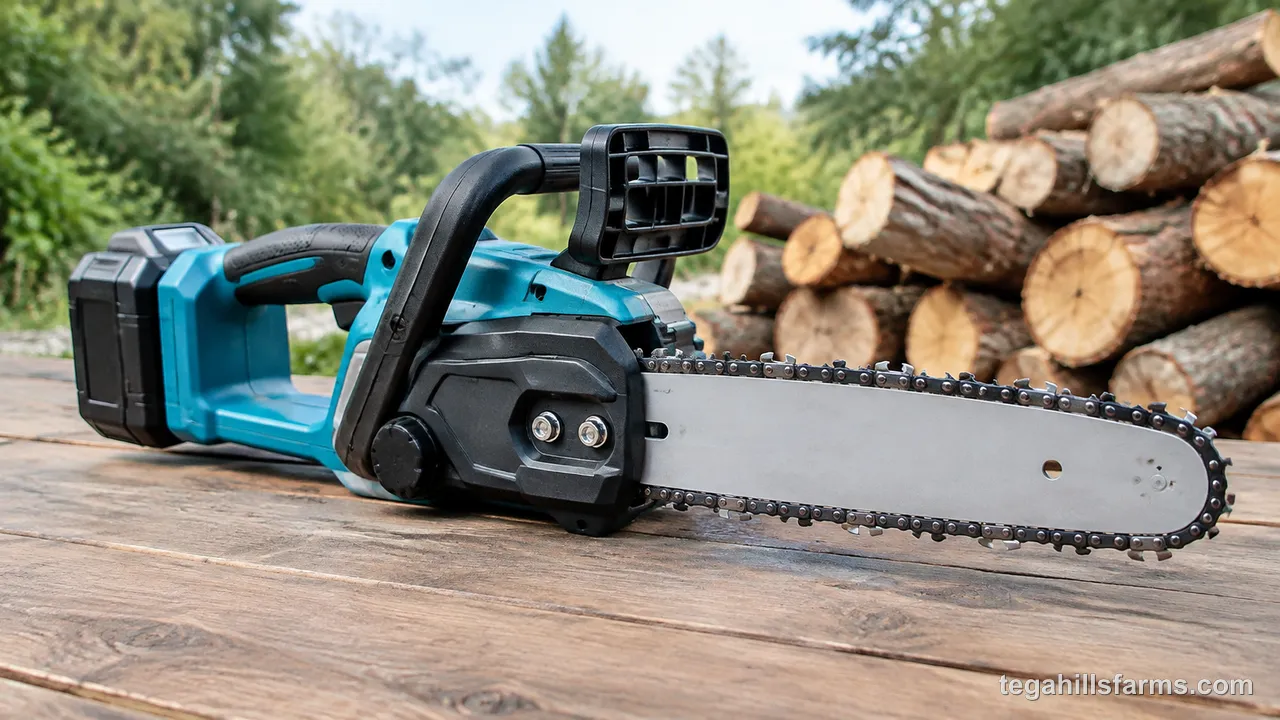
That simplicity changes daily use. You get push-button starting and quieter operation than gas, with tradeoffs in sustained cutting time and bar length compared to larger gas engines. For a closer look at fuel-powered alternatives, see our breakdown of best gas chainsaws.
How Does a Battery Chainsaw Differ From Gas and Corded Models?
Battery chainsaws offer push-button starts, lower noise and no fuel mixing, while gas saws deliver longer continuous runtime and corded models trade mobility for unlimited power. In practice, that means less maintenance for cordless owners and more raw endurance for gas.
Battery models start instantly, run noticeably quieter so you can cut earlier without disturbing neighbors, and need no carb tuning or winter fuel draining. Gas saws still win when you need to buck large hardwood all day without swapping batteries, and they tolerate longer bars and heavier chains. Corded electric saws run as long as you have an outlet within about 100 feet, but the cord limits reach and creates a trip hazard in brush.
For a typical quarter-acre to one-acre lot with pruning, storm cleanup and occasional firewood, battery is usually enough. For multi-acre felling or milling, gas still makes sense.
Is a Battery Chainsaw Right for Your Yard?
Yes, a battery chainsaw is right for most homeowners with small to medium yards who cut less than a few hours at a time and value low maintenance. It fits best when convenience and storage matter more than all-day endurance.
You should lean battery if you prune a few times a month, clear limbs after wind, and cut firewood from already-felled rounds rather than felling large standing trees. One or two charged batteries handle that rhythm, and lithium packs store easily over winter with no fuel to stabilize.
Skip battery as your only saw if you heat primarily with wood, clear thick acreage regularly, or need an 18-inch-plus bar daily. In those cases a gas platform or a high-voltage battery system with multiple large packs is the more practical foundation.
What Should You Look for in the Best Battery Chainsaws?
Choosing the best battery chainsaws means balancing battery voltage and amp-hours, bar length and motor power, and weight, safety and oiling. Those three decide runtime, what you can cut, and how comfortable the saw feels after 20 minutes.
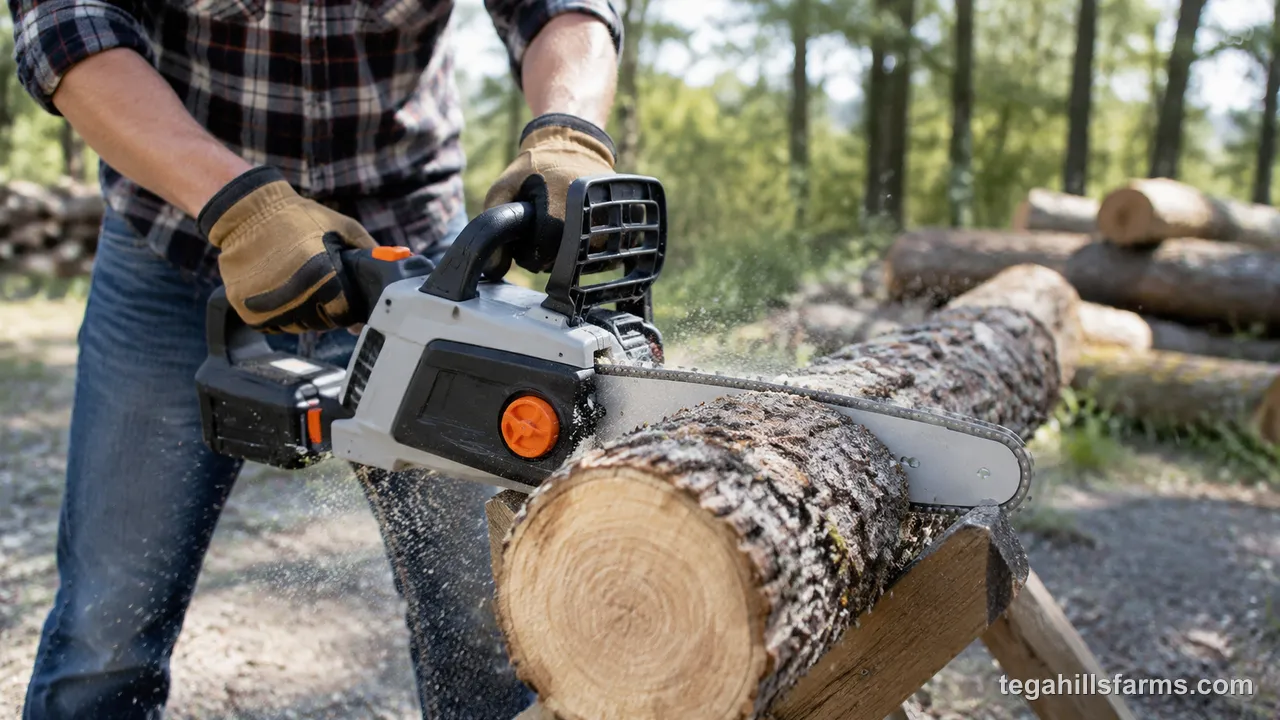
Get the battery right and you get consistent cuts without mid-job charging. Match the bar and motor to pruning versus bucking, and the saw does the work instead of you forcing it. Finally, ergonomics and auto-oiling determine whether you actually enjoy using it. For shoppers comparing platforms, our notes on best 40v chainsaws and best 56v chainsaws show how voltage steps affect real cutting time.
How Important Is Battery Voltage and Amp-Hours for Runtime?
Battery voltage sets the power ceiling and amp-hours (Ah) set the fuel tank size, together determining cuts per charge. Higher voltage drives a larger motor with less strain, while higher Ah stretches runtime.
A 40V or 56V system typically cuts more cookies from a log per charge than an 18V or 20V system, especially in hardwood, because the motor maintains chain speed under load. Ah matters just as much: a 4.0Ah pack lasts roughly twice as long as a 2.0Ah pack at the same voltage, though it adds weight.
Also consider the ecosystem. If you already own mowers, trimmers or blowers on a 40V or 56V platform, sharing batteries across tools saves money and ensures a spare is always charged. Check whether the kit includes a fast charger and how long a full charge actually takes in cool weather.
Which Bar Length and Motor Power Match Your Cutting Tasks?
Bar length should exceed your typical log diameter by a few inches, and motor watts should rise with bar length to keep chain speed up. For pruning, 6 to 8 inches is nimble; for firewood and limbing, 12 to 16 inches is the sweet spot; for felling small trees, 18 inches adds reach.
A 6-inch mini excels at one-handed pruning and cutting 3 to 4-inch branches where maneuverability matters. A 12-inch bar handles 8 to 10-inch rounds without burying the tip, which reduces kickback risk. A 16 to 18-inch bar lets you buck larger logs and fell 12 to 14-inch trunks, but needs more battery and muscle to control.
Brushless motors generally deliver better efficiency and longer life than brushed ones, and their wattage roughly correlates with torque. If you mostly cut softwood or limb, a compact motor saves weight; if you buck oak or maple, choose the larger bar and higher-output motor even if it weighs more.
Why Do Weight, Safety, and Oiling Matter More Than Top Speed?
Weight, safety and oiling matter more than chain speed because they decide fatigue, kickback protection and chain life during real yard sessions. A fast chain means little if the saw tires you out or starves the bar of oil.
Lightweight saws with balanced bodies let you cut overhead or on a ladder with better control, especially for homeowners without professional form. Look for a chain brake, kickback guard and hand guard that actually engage quickly, plus a throttle lock to prevent accidental starts during carry.
Auto-oiling keeps friction low and extends bar and chain life. A tool-free chain tensioner and clear oil window help you check tension and level before each session. Skip flashy top-speed claims and check how easily you can adjust, fill and carry the saw with gloves on.
The 7 Best Battery Chainsaws of 2026
The 7 best battery chainsaws of 2026 are Seesii 12-Inch Chainsaw, Seesii 40V Chainsaw 18-Inch, EGO Power+ CS1611 Chain Saw 16″, Supstable Mini Chainsaw 6 & 8 Inch, DOOYUTOOL 10 Inch Cordless Chainsaw, Seesii 6 Inch Mini Chainsaw, and SXGSXG Mini Chainsaw 12 Inch. They differ mainly in bar length, battery voltage, weight and whether they suit one-handed pruning or full-size bucking.
Use the labels to narrow by your lot size and how often you cut.
#1 Seesii 12-Inch Chainsaw — Best Value
This versatile 12-inch class saw hits the balance most suburban yards need: enough bar to buck firewood rounds without the weight and battery demand of an 18-inch felling saw. It suits homeowners who want one cordless saw for pruning, storm cleanup and occasional firewood without stepping up to a large-frame system.
Key Specs:
- Bar Length: 12 inch
- Power Source: Battery
- Chain Type: Low-kickback chain
- Oiling: Automatic oiling system
- Safety: Chain brake and hand guard
Detailed Review:
The Seesii 12-Inch covers the middle ground where most homeowners actually cut. The 12-inch bar clears 8 to 10-inch logs in a single pass, so you can buck fallen limbs and cut camp-style firewood without burying the nose or forcing the cut. That length also keeps the saw compact enough to maneuver between shrubs and along a fence line, which matters when you are trimming low branches or sectioning a storm-toppled limb in a tight side yard. The automatic oiling and tool-free tensioning simplify the routine that keeps a chain alive: check oil, check tension, cut.
Compared to the Seesii 40V Chainsaw 18-Inch in this roundup, this 12-inch model trades some felling reach for lighter handling and easier storage on a garage shelf. The 18-inch excels when you fell 12-inch-plus trunks, while the 12-inch stays nimbler for the repeated short cuts that fill a wheelbarrow. For a homeowner on a battery platform who cuts a few times a month, I would lean toward this size first because it handles the common tasks without asking you to manage a larger bar and heavier battery every time.
Pros:
- 12-inch bar covers pruning and firewood without going oversized
- Lighter, more maneuverable frame for tight yards and fence lines
- Auto-oiling reduces bar wear versus manual oiling
- Tool-free chain adjustment speeds up pre-cut checks
- Good starter size that stores easily in a small garage
Cons:
- Not ideal for felling trunks over about 12 inches
- Single-battery runtime limits all-day bucking
- Larger hardwood rounds require more passes than an 18-inch bar
Who It’s For: Homeowners with a quarter to one acre who need one battery saw for pruning, storm cleanup and cutting already-felled firewood. Skip it if you regularly fell standing trees over a foot in diameter.
Editor’s Verdict: A practical middle-size pick that does the most common yard cuts well without extra bulk. Start here if you want one cordless saw for general upkeep.
#2 Seesii 40V Chainsaw 18-Inch — Best Performance
Built for bigger cuts, this 18-inch, 40V-class saw brings the reach and torque to fell small trees and buck large rounds where compact pruners stall. It is the performance option for homeowners who heat with wood or clear heavier acreage and need a battery saw that approaches gas-style capability for yard-scale felling.
Key Specs:
- Bar Length: 18 inch
- Voltage: 40V
- Oiling: Automatic chain oiling
- Motor: Brushless motor
- Safety: Kickback protection and chain brake
Detailed Review:
An 18-inch bar changes what a battery saw can do in one pass. You can fell a 14-inch trunk, buck large rounds without rolling the log mid-cut, and limb with the bar well clear of your body. The 40V brushless drive helps maintain chain speed when the chain is buried in hardwood, so you get cleaner cuts with less bogging than smaller-voltage minis. That matters when you are sectioning oak or maple for firewood, where a stalled chain forces you to rock the saw and dulls the cut.
Compared to the EGO Power+ CS1611 Chain Saw 16″ in this list, this Seesii 40V stretches two extra inches for felling while staying in the 40V class many homeowners already use for mowers and blowers. The EGO balances weight and power at 16 inches; this Seesii leans toward reach. For a larger lot where felling and large-diameter bucking are regular tasks, I would pick the extra length despite the added weight, and keep a second charged battery ready for longer sessions.
Pros:
- 18-inch bar fells small trees and bucks large rounds in fewer passes
- 40V brushless motor holds speed better under load than smaller packs
- Auto-oiling extends chain and bar life during long cuts
- Fits a common 40V yard-tool battery ecosystem
- More control than forcing a short bar through big wood
Cons:
- Heavier and longer to store than 12-inch and mini models
- Demands larger batteries for sustained hardwood cutting
- Overkill for light pruning from a ladder
Who It’s For: Owners with larger properties, frequent firewood cutting or storm cleanup involving 12-inch-plus trunks who want cordless convenience without stepping to gas. Not for light pruners who value one-handed control.
Editor’s Verdict: The most capable cutter here for big wood. Choose it if your cuts regularly exceed 12 inches and you want battery power with felling reach.
#3 EGO Power+ CS1611 Chain Saw 16″ — Editor’s Choice
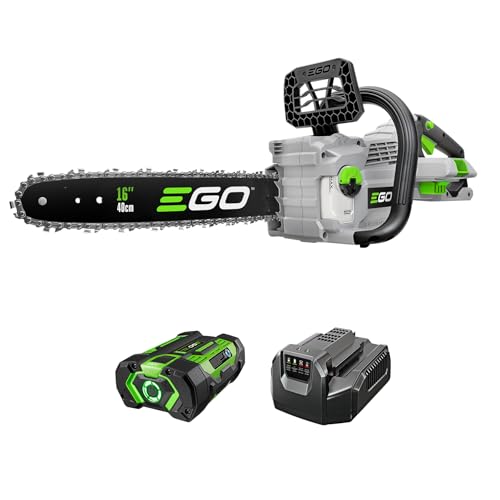
The 16-inch EGO Power+ CS1611 blends gas-like handling with cordless ease, making it the most well-rounded pick for all-around yard work. Its 56V platform balances runtime and cutting power without the bulk of an 18-inch frame.
Key Specs:
- Bar Length: 16 inch
- Voltage: 56V
- Model: CS1611
- Motor: Brushless motor
- Oiling: Automatic lubrication
Detailed Review:
At 16 inches, this EGO sits in the sweet spot for homeowners who do a bit of everything. The bar is long enough to buck 12 to 14-inch rounds and limb fallen trees with comfortable clearance, yet short enough to control during overhead pruning and side-yard cleanup. The 56V brushless system is EGO’s yard-tool backbone, so many buyers already own batteries from a mower or blower, which stretches runtime across tools without buying into a new charger. The automatic oiler and effective chain brake keep maintenance simple and safety predictable, both important when you are not cutting every week.
Compared to the Seesii 12-Inch Chainsaw, this 16-inch EGO gives you more single-pass capacity for firewood and storm limbs while adding a bit more weight. Compared to the larger Seesii 40V 18-Inch, it trims length for better balance when you cut at chest height or carry the saw across the yard. For a homeowner who wants one battery saw to handle pruning, bucking and occasional felling without specializing, I would point to this size and voltage as the best all-around compromise.
Pros:
- 16-inch bar handles firewood and limbing with good control
- 56V platform offers strong runtime within the EGO ecosystem
- Brushless efficiency helps in hardwood without excessive strain
- Auto-oiling and chain brake simplify safe ownership
- Balanced weight for both ground bucking and light overhead work
Cons:
- Larger and heavier than mini pruners for tight shrub work
- Needs compatible EGO 56V batteries for best results
- Two extra inches would help for true felling over 14 inches
Who It’s For: Homeowners who want one battery saw for most tasks, especially those already on the EGO 56V system or planning to share batteries with other yard tools.
Editor’s Verdict: The most balanced choice for mixed yard work. If you buy one battery saw for everything, this is the one to get.
#4 Supstable Mini Chainsaw 6 & 8 Inch — Best for Beginners
This 2-in-1 mini set gives new users two bar lengths in one kit, so you learn on the nimble 6-inch for pruning and swap to 8 inches when branches get thicker. It lowers the learning curve by keeping weight and kickback risk low while you build form.
Key Specs:
- Bar Length: 6 inch and 8 inch (interchangeable)
- Power Source: Battery
- Chain: Low-kickback chain
- Oiling: Manual/automatic oiling depending on configuration
- Safety: Hand guard and safety switch
Detailed Review:
Beginners benefit from a saw that forgives small mistakes. The Supstable kit does that by letting you start with the 6-inch bar for one-handed pruning of 2 to 4-inch limbs, where control matters more than raw power. The shorter bar reduces tip exposure and makes it easier to keep the chain clear of dirt and nails that dull teeth quickly. When you face a 6 to 7-inch limb, swapping to the 8-inch bar adds reach without forcing you to muscle a full-size saw. The compact body stores in a tote or truck box and starts with a button, so you avoid fuel and cord hassles while you learn chain tension and oiling habits.
Compared to the Seesii 6 Inch Mini Chainsaw in this roundup, this Supstable offers more versatility because you get both lengths in one purchase. The Seesii 6-inch is even more compact for the tightest pruning, while the Supstable covers a broader beginner range without buying a second tool. For first-time owners who mainly prune, clear brush and handle light DIY cuts, I would choose the kit for its gentle learning path.
Pros:
- Two bars in one kit adapt from fine pruning to thicker limbs
- Very light and easy to control for learning proper technique
- Low kickback chain helps new users cut more confidently
- Button start removes fuel and cord complexity
- Compact storage fits small garages and apartments with yards
Cons:
- Not suited for bucking firewood or felling
- Smaller chain and bar need more frequent oiling checks
- Requires battery swaps for extended brush sessions
Who It’s For: First-time chainsaw owners, DIYers and homeowners focused on pruning and light brush clearing who want a forgiving, lightweight cordless start.
Editor’s Verdict: The friendliest entry point here. Get the two-bar kit if you want to learn safely and still handle thicker branches.
#5 DOOYUTOOL 10 Inch Cordless Chainsaw — Best Cordless
Designed around DeWalt 20V battery compatibility, this 10-inch cordless saw slots cleanly into an existing DeWalt ecosystem for homeowners who already own drills, blowers or mowers on that platform. It bridges mini pruners and full-size bars with a handy middle length.
Key Specs:
- Bar Length: 10 inch
- Battery Compatibility: DeWalt 20V platform (battery not always included)
- Motor: Brushless motor
- Oiling: Automatic oiling
- Safety: Chain brake and safety switch
Detailed Review:
A 10-inch bar is a practical compromise: long enough to section 6 to 8-inch limbs and small firewood rounds in one pass, short enough to control with one hand when needed. For DeWalt owners, the real value is battery sharing. You can pull a charged 20V pack from a drill or blower, cut for a session, then return the battery to its charger without buying a new system. The brushless motor helps conserve charge, and auto-oiling keeps the chain running cooler, which matters when you make repeated cuts in quick succession along a hedge row or brush pile.
Compared to the SXGSXG Mini Chainsaw 12 Inch, also DeWalt-compatible in this list, the DOOYUTOOL 10-inch is lighter and easier to handle overhead, while the SXGSXG gives you two extra inches for larger rounds. Compared to the Supstable 6 & 8 Inch minis, this 10-inch steps up to true small-firewood capability. For a homeowner embedded in DeWalt 20V tools who wants a cordless saw without adding another charger, I would pick this length for its balance of reach and control.
Pros:
- Shares DeWalt 20V batteries many homeowners already own
- 10-inch bar handles 6 to 8-inch cuts without overreaching
- Brushless drive improves efficiency per charge
- Auto-oiling supports longer sessions with less wear
- Lighter than full-size bars for ladder and shrub work
Cons:
- Needs DeWalt 20V batteries for best value; bare-tool buyers must add packs
- Short of full firewood bucking length for 10-inch-plus rounds
- Smaller packs limit runtime in hardwood
Who It’s For: DeWalt 20V households that want a cordless saw integrating with existing batteries for pruning, brush clearing and light firewood.
Editor’s Verdict: The smart add-on for DeWalt owners. Choose it to expand your current battery system into yard cutting without a new platform.
#6 Seesii 6 Inch Mini Chainsaw — Best Compact
This ultra-compact 6-inch mini is built for one-handed pruning and packable portability, from backyard shrubs to camping cleanup. It goes where larger bars cannot and stores in almost no space.
Key Specs:
- Bar Length: 6 inch
- Power Source: Battery
- Design: One-handed compact body
- Chain: Low-kickback mini chain
- Safety: Safety lock and hand guard
Detailed Review:
When the job is 1 to 4-inch branches, a 6-inch bar is faster and safer than wrestling a full-size saw overhead. This Seesii mini shines for pruning fruit trees, trimming limbs along a fence, and cutting small brush where footing is uneven. The short bar keeps tip exposure minimal, which helps reduce kickback, and the light body lets you cut with one hand while the other steadies the branch. That one-handed control is a real yard outcome: cleaner cuts at the branch collar, less bark tearing, and less fatigue when you move along a hedge line. Storage is equally simple; it fits in a toolbox or under a truck seat.
Compared to the Supstable Mini with both 6 and 8-inch bars, this Seesii 6-inch is even more compact and focused purely on fine pruning. Compared to the DOOYUTOOL 10 Inch, it gives up firewood capability to gain featherweight handling. For a homeowner who already owns a larger saw or only needs pruner-scale cuts, I would keep this as the grab-and-go complement for quick trims and trail or campsite use.
Pros:
- Feathery weight allows true one-handed pruning
- Minimal tip exposure improves control in tight shrubs
- Fits in a toolbox or pack for transport and storage
- Button start and simple controls suit quick jobs
- Pairs well as a complement to a larger bar saw
Cons:
- Too short for firewood bucking or felling
- Requires frequent charging on longer pruning runs
- Small chain needs careful tension and oiling
Who It’s For: Homeowners, campers and gardeners needing a lightweight pruner for small limbs, shrubs and quick cleanup where a full-size saw is cumbersome.
Editor’s Verdict: The most nimble cutter here for fine work. Keep it for pruning and grab a larger bar when rounds get bigger.
#7 SXGSXG Mini Chainsaw 12 Inch — Best for Small Spaces
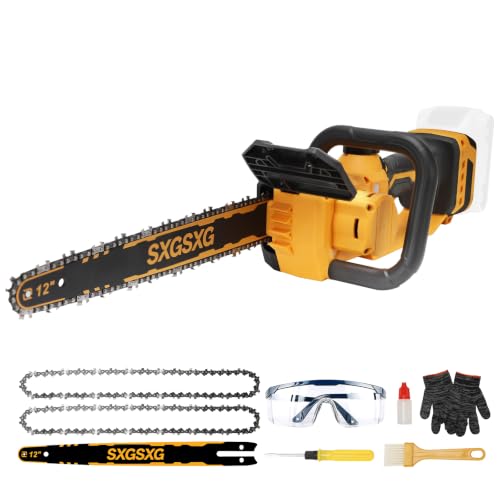
This 12-inch bare-tool mini delivers full-size cutting length in a compact, DeWalt-compatible body for tight storage and for owners already on DeWalt 20V packs. It is the small-space answer to needing real bucking capability without a large-frame saw.
Key Specs:
- Bar Length: 12 inch
- Battery Compatibility: DeWalt 20V platform (bare tool)
- Motor: Brushless motor
- Oiling: Automatic oiling
- Safety: Chain brake and hand guard
Detailed Review:
A compact 12-inch layout gives you the same practical firewood length as the Seesii 12-Inch value pick but in a shorter overall package that fits a small garage, shed or apartment storage closet. The DeWalt 20V compatibility is the key yard outcome: if you already own DeWalt batteries, you get immediate runtime without investing in a new charger, and you can rotate packs from other tools to extend cutting time. The brushless motor helps keep chain speed consistent in softwood and light hardwood, and auto-oiling protects the bar during repeated sections of fallen limbs.
Compared to the DOOYUTOOL 10 Inch in this roundup, the SXGSXG 12-inch adds two inches that matter when you buck 8 to 10-inch rounds without flipping the log. Compared to the full-size Seesii 40V 18-Inch, it saves considerable storage space and weight while giving up felling reach. For a DeWalt household with limited storage that still needs genuine firewood bucking, I would choose this compact 12-inch for its space-saving form and shared batteries.
Pros:
- 12-inch bar bucks 8 to 10-inch rounds in fewer passes than 10-inch minis
- Compact body stores easily where a full-frame saw will not
- DeWalt 20V compatibility leverages batteries you already own
- Auto-oiling helps bar life during repeated cuts
- Lighter to carry across the yard than 16 to 18-inch models
Cons:
- Bare-tool format requires separate DeWalt 20V batteries if you do not own them
- Compact frame can feel less planted than a full-size chassis in hardwood
- Still short for felling over about 12 inches
Who It’s For: Small-space homeowners and DeWalt 20V owners who need real bucking length without dedicating wall space to a large-frame saw.
Editor’s Verdict: A space-saving way to get 12-inch capability on DeWalt packs. Ideal when storage is tight but you still cut firewood rounds.
How Do You Choose the Right Size and Power for Your Cutting Needs?
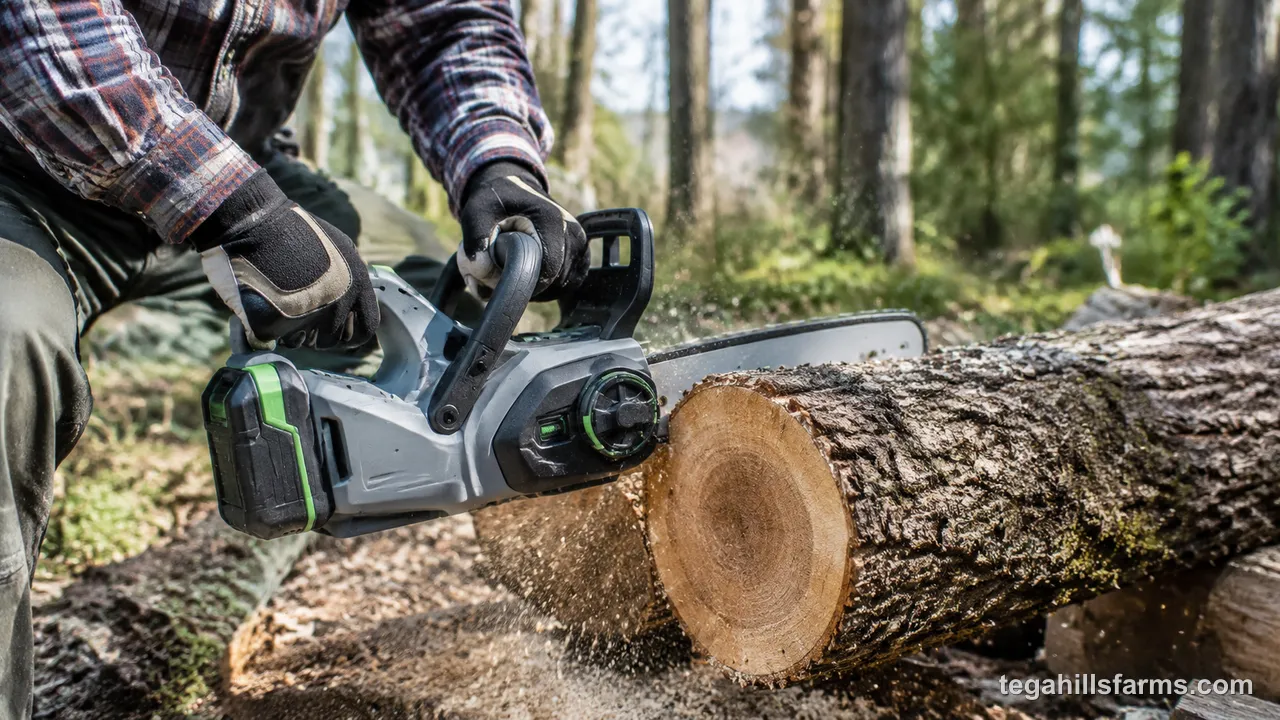
Choosing the right size and power means matching bar length to log diameter and battery voltage and count to job length. That pairing keeps the saw safe, efficient and within your budget. Before you buy, it helps to review how to choose a chainsaw and consider best chainsaws for homeowners to see which sizes fit typical suburban tasks.
What Bar Length Do You Actually Need?
You need 6 to 8 inches for pruning, 12 to 16 inches for firewood and limbing, and 18 inches for felling small trees. Pick by the wood you cut most, not the biggest tree on the property.
A 6-inch mini handles 1 to 4-inch branches with one-handed control and low kickback exposure. A 10 to 12-inch bar sections 6 to 10-inch limbs and small firewood rounds without rolling the log, which is what most storm cleanup requires. A 16-inch bar comfortably bucks 12 to 14-inch logs and limbs larger trunks at a safe distance; an 18-inch bar is for felling and bucking over 12 inches. Choose the shortest bar that still clears your typical cut, because a longer bar adds weight, chain length to oil, and kickback radius you may not need.
How Many Batteries and Which Voltage Will Get the Job Done?
Get one large-Ah battery for pruning, two mid-to-large packs for firewood sessions, and choose voltage by bar length: 20V for minis, 40V to 56V for 12 to 18-inch saws. Sharing batteries across tools stretches value.
For light pruning, a single 2.0 to 4.0Ah pack often finishes the job. For bucking a truckload of firewood or clearing a downed tree, plan on two packs so one charges while you cut, and favor 4.0Ah or larger for fewer swaps. Staying within one platform like DeWalt 20V, 40V or 56V ecosystems means your mower, blower and saw all use the same charger, which simplifies storage and winter care. If you are new to cordless yard tools, a kit with two batteries and a fast charger is worth prioritizing over a bare tool.
The picks above cover everything from compact 6-inch pruners to full-size 18-inch battery saws, with each choice balanced for weight, bar length, and battery runtime.
With those options in mind, the next step is zooming in on the small habits and rare details that determine whether your saw stays sharp and reliable season after season.
The sections below focus on battery care, chain upkeep, and safety checks that most roundups skip but owners feel every time they cut.
Battery and Chain Care Most Owners Overlook
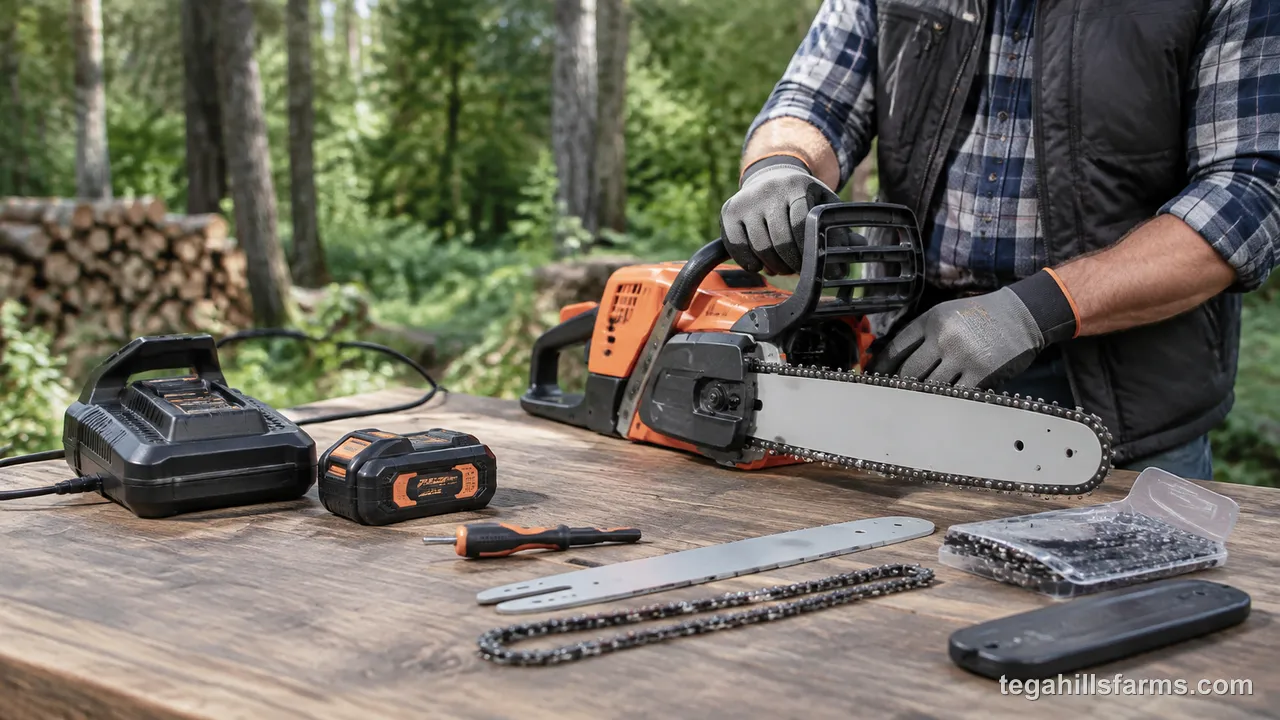
Battery and chain care hinge on proper charging and storage and daily chain checks. Those two habits prevent early battery failure and keep cuts clean and safe. For worn chains, bars or sprockets, having best chainsaws replacement parts on hand avoids downtime.
How Should You Store and Charge Batteries to Avoid Early Failure?
Store lithium batteries at a partial charge in a cool, dry place and avoid heat and deep discharge to extend life. That routine prevents capacity loss that shows up as shorter runtime next season.
Charge after the pack cools, not immediately after heavy cutting, and unplug when full rather than leaving packs on the charger for days. For winter storage, bring batteries indoors, aim for roughly 40 to 60 percent charge, and top up every few months instead of storing fully charged or fully dead. Keep packs out of direct sun, truck beds in summer, and freezing garages when possible. Labeling packs by purchase date helps you rotate use so one battery does not age faster than the others.
What Daily Checks Keep the Chain Sharp and the Bar Alive?
Daily checks that keep the chain sharp include tension, oiling, cleaning and edge inspection before and after each session. These minutes save hours of filing and a new bar later.
With the battery removed, check tension so the chain lifts slightly but does not sag, then fill bar oil and confirm it mists on a cardboard test. Clear sawdust from the bar groove and oil ports, flip the bar occasionally to even wear, and inspect cutters for nicks or dull edges that cause dust instead of chips. A sharp chain pulls itself into wood with light pressure; if you must force it, stop and sharpen. Wearing gloves and eye protection during these checks also builds the habit of full safety gear before you cut.
Frequently Asked Questions About Battery Chainsaws
How long does a battery chainsaw run per charge?
Runtime depends on voltage, amp-hours and wood hardness. Expect many pruning cuts on a small pack, but bucking hardwood drains batteries faster. Carrying a second charged pack doubles practical working time. For more on high-capacity options see our guide to best 40v chainsaws.
Are battery chainsaws as powerful as gas?
For pruning, limbing and small firewood, modern 40V to 56V brushless battery saws feel close to gas in the yard. For all-day felling or milling large hardwood, gas still sustains power longer without battery swaps.
Can I use any battery in any chainsaw?
No. Batteries are platform-specific. A DeWalt 20V pack fits DeWalt-compatible saws, EGO 56V fits EGO tools, and so on. Staying on one platform lets you share packs, but cross-brand packs are not interchangeable.
How loud is a battery chainsaw?
Battery saws are noticeably quieter than gas, though still loud enough to require hearing protection. Lower noise helps when cutting early or near neighbors, and it reduces fatigue on longer sessions.
Do battery chainsaws need bar oil?
Yes. Battery saws still need bar and chain oil like gas models. Auto-oiling helps, but check oil level before each use and tension the chain while the battery is removed.
What bar length is best for a first battery chainsaw?
For most first-time owners, 12 to 16 inches covers pruning through firewood without excess weight. Choose 6 to 8 inches only if you will prune exclusively, and 18 inches only if you fell small trees regularly.

Write Your Review
No reviews yet. Be the first to share your experience!