

Our top picks for the best chainsaw chains in 2026 are the FUNKYWOO Chainsaw Chain 18 in 4-Pack (Best Overall), Oregon Chainsaw Chain 16 in (Best Lightweight), Oregon Chainsaw Chain 20 in (Best for Professionals), Oregon Chainsaw Chain 12 in (Best Budget) and Husqvarna X-Cut S83G Chainsaw Chain 20 in (Best Durability).
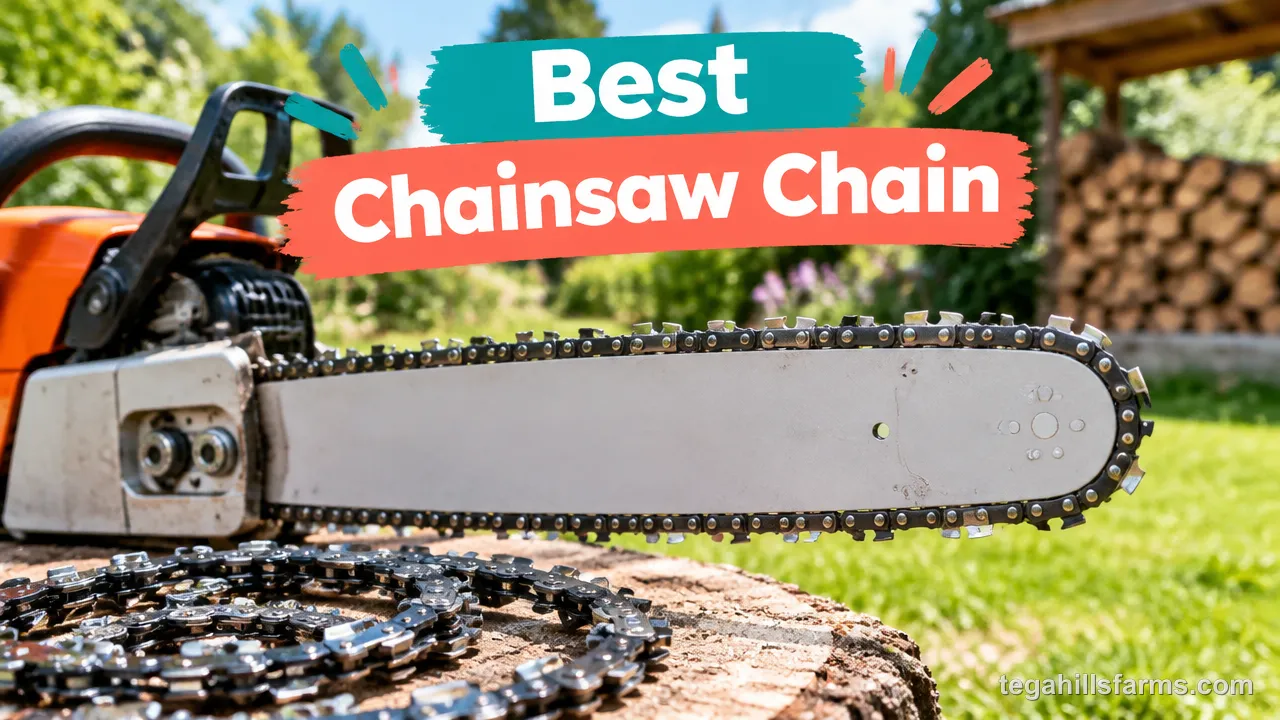
These chains run on everything from compact battery saws to 50–100cc gas saws. Each one works only on a saw whose pitch, gauge and drive link count match it exactly. Once the fit is right, cutter style decides how fast the chain cuts and how long the edge holds before you reach for a file.
New chains usually let owners down in one of two ways. Either the chain won’t seat on the bar, or it goes dull after a few cuts near the ground. The first is a numbers problem. The second comes down to cutter style and steel quality.

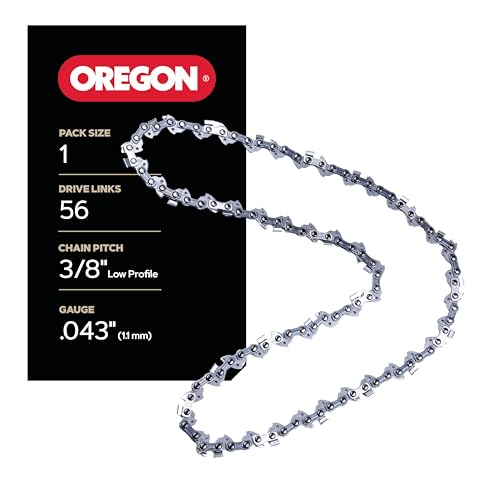
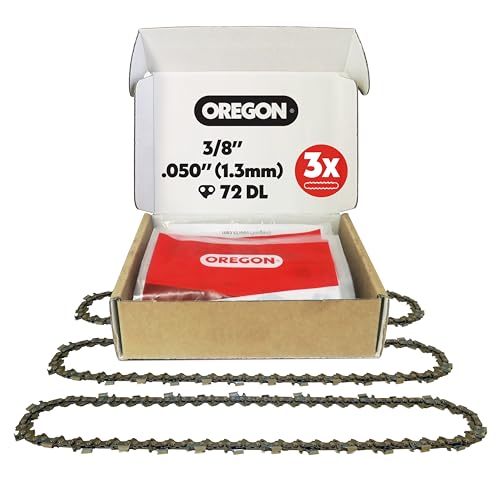


Before you order, read the numbers stamped on your guide bar or printed on the old chain’s box. The saw’s brand name alone won’t tell you what fits.
What Decides Which Chainsaw Chain Is Best for Your Saw?
Your saw’s pitch, gauge and drive link count must match the chain exactly, and after that cutter style and steel quality decide how fast it cuts and how long the edge lasts.
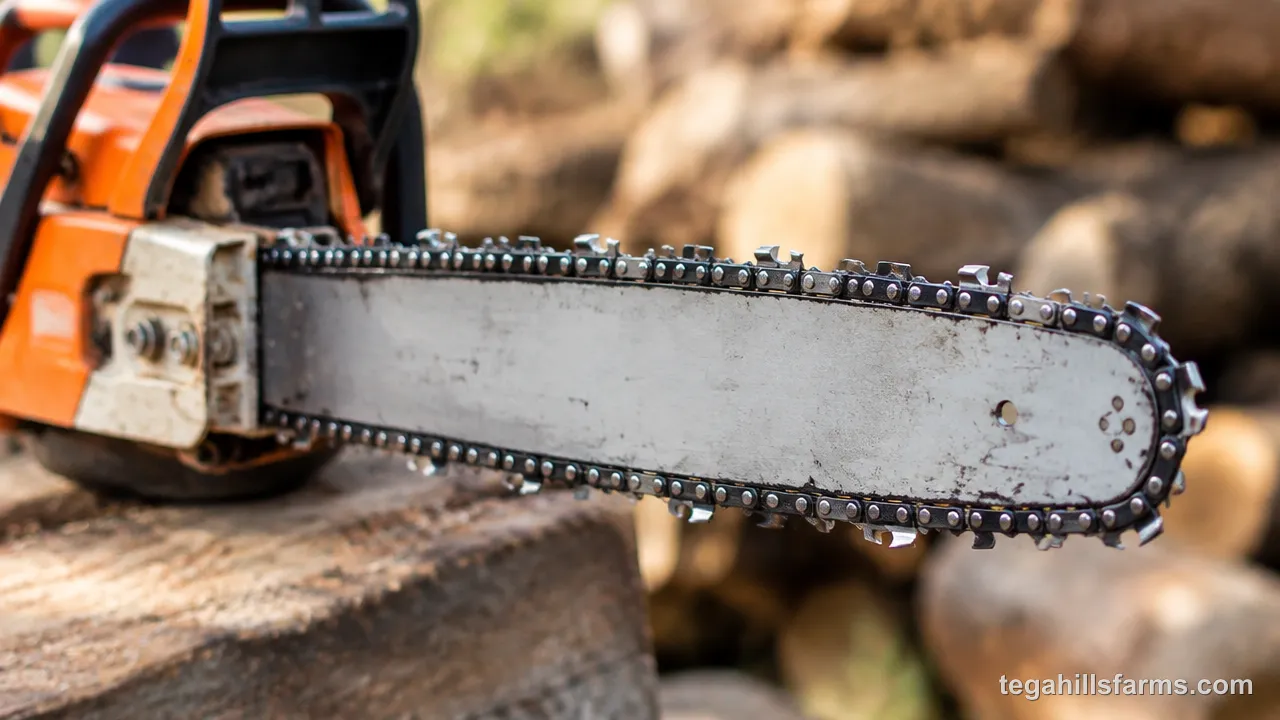
Fit comes before everything else because a mismatched chain can’t run at all. The wrong pitch won’t mesh with the drive sprocket, and the wrong gauge either rattles loose in the bar groove or jams in it. Among chains that fit, cutter style sets the balance between speed and dirt tolerance. Kickback protection changes how the bar tip behaves when it catches wood, and steel quality decides how many cuts you get between filings.
How often you cut matters too. Someone shopping the best chainsaws for homeowners needs a forgiving chain that tolerates dirt and occasional use. A daily user gives up some of that forgiveness for speed. A chain only performs as well as the saw it runs on, so check the best chainsaws first if you haven’t settled on a saw yet.
The 5 Best Chainsaw Chains of 2026
My picks, in order, are the FUNKYWOO Chainsaw Chain 18 in 4-Pack, the Oregon Chainsaw Chain 16 in, the Oregon Chainsaw Chain 20 in, the Oregon Chainsaw Chain 12 in and the Husqvarna X-Cut S83G Chainsaw Chain 20 in.
Bar length and gauge narrow the field first. The two Oregon low-profile chains with .043″ gauge belong on small battery and electric saws. The others use .050″ gauge for mid-size and larger gas saws.
After fit, it comes down to cutter shape:
- Semi-chisel (FUNKYWOO and Husqvarna): forgives dirt and holds an edge longer.
- Full chisel (Oregon 20 in): cuts faster in clean wood but needs careful filing.
Whether you sharpen your own chains should weigh as heavily as anything on the spec line.
#1 FUNKYWOO Chainsaw Chain 18 in 4-Pack — Best Overall
If you run a mid-size saw with an 18-inch bar and would rather swap a dull chain than file it on the stump, this pack keeps a sharp spare within reach. Each chain uses semi-chisel cutters that tolerate dirt and bark.
Key Specs:
- Bar length: 18 in
- Pitch: 3/8″ LP
- Gauge: .050″ (1.3 mm)
- Drive links: 62
- Cutter: semi-chisel, low-kickback, low-vibration
- Pack: 4 chains
Detailed Review:
Four chains in one box change how you deal with a dull edge. When a cutter catches dirt at the base of a log, you swap in a fresh chain and keep working. The dull ones get filed later at the bench, where a vise and good light make the job quicker and more accurate.
The semi-chisel cutters have rounded working corners. That shape lets them handle bark grit and the occasional brush with soil without losing their edge as fast as a square-cornered chisel. The low-kickback, low-vibration design also keeps the saw calmer in your hands, which you feel by the end of a long afternoon of bucking.
Each chain has an industrial hard chrome outer layer that slows wear, so you adjust tension less often. Hardened rivets hold the links together under load. Worn joints are what let a chain stretch, so stronger rivets keep it snug on the bar longer.
The pack is listed to fit Craftsman, Echo, Homelite, Husqvarna, Kobalt, McCulloch, Poulan and Remington saws that run 3/8″ LP pitch, .050″ gauge and 62 drive links. A brand name alone doesn’t settle fit, since one maker sells several bar setups. Confirm those three numbers on your bar or in the manual first.
Pros:
- Four chains let you swap instead of filing mid-job.
- Semi-chisel cutters tolerate dirt and bark well.
- Hard chrome layer slows wear between tension adjustments.
- Hardened rivets strengthen the connections between links.
- Fits many brands running 3/8″ LP and .050″ gauge.
Cons:
- Semi-chisel cuts slower than full chisel in clean wood.
- Brand fit list still requires checking your bar specs.
- Covers only one bar length per pack.
Who It’s For:
Homeowners who cut a few times a season on a mid-size gas saw and dislike stopping to file will get the most from this pack. It also suits anyone who cuts near the ground and dulls chains on dirt.
Editor’s Verdict:
Buy this pack if you want sharp spares on the shelf. Forgiving cutters, a chrome-hardened surface and broad brand fit make it the chain I’d point most 18-inch saw owners toward first.
#2 Oregon Chainsaw Chain 16 in — Best Lightweight
Battery saw owners get a chain built for their machines. This low-profile chain with a .043″ gauge fits 16-inch models from Makita, Ego, Greenworks, DeWalt, Milwaukee and Toro, and its bumper drive links curb kickback on a light saw.
Key Specs:
- Bar length: 16 in (40 cm)
- Pitch: 3/8″ LP
- Gauge: .043″ (1.1 mm)
- Drive links: 56
- Saw size: up to 42cc
- Weight: 0.4 lb
Detailed Review:
The narrow .043″ gauge and low-profile cutters take a smaller bite per pass. That is the load a battery motor or a small engine up to 42cc can pull without bogging down. Because the chain asks for less torque, the saw stays at speed and more of each charge goes into cutting.
The fit list is broad on the battery side:
- Makita XCU03, XCU04 and XCU09
- Ego CS1600, CS1604, CS1610 and CS1611
- Greenworks 20152 DigiPro 40V
- DeWalt DCCS670 and DCCS690
- Milwaukee M18 Fuel 272720
- Toro 60V 51850
It also fits gas models such as the Makita EA3200S. Still count the drive links on your old chain, because a saw sold with different bars can need a different chain length.
A bumper drive link sits between the cutters and works with the depth gauge to limit how much wood each cutter grabs. If the upper tip of the bar touches a branch, the chain bites less violently. That matters on a light saw, which has little mass to resist a sudden kick.
At 0.4 lb, the chain adds almost nothing to a small saw’s weight. Oregon has made saw chain since 1947 and designs this one in the USA.
Pros:
- Low-profile cutters suit small battery motors.
- Bumper drive links reduce bar-tip kickback.
- Fits many major battery saw brands.
- Light 0.4 lb chain adds little to a small saw.
Cons:
- The .043″ gauge won’t fit bars with a wider slot on mid-size saws.
- Bumper links make it cut less aggressively.
- Limited to saws up to 42cc.
Who It’s For:
If you already own a compact battery saw from Ego, Makita, Greenworks, DeWalt, Milwaukee or Toro, this is a direct replacement that keeps the saw’s easy handling. Newer users limbing around the yard benefit from the kickback control. Owners of mid-size gas saws need a thicker-gauge chain than this one.
Editor’s Verdict:
Pick this up as the replacement chain for a small battery or gas saw. It keeps cuts smooth and controlled without asking more of the motor than it can give.
#3 Oregon Chainsaw Chain 20 in — Best for Professionals
Full chisel cutters with offset depth gauges make this the chain for someone who cuts clean hardwood often and knows how to file. It fits 50–100cc saws on a 20-inch bar.
Key Specs:
- Bar length: 20 in (50 cm)
- Pitch and gauge: 3/8″ LP, .050″ (1.3 mm)
- Drive links: 72
- Cutter: full chisel with offset depth gauges
- Saw size: 50–100cc
- Pack: 3 chains, 2.4 lb total
Detailed Review:
Full chisel cutters have a square-cornered top plate that slices wood fibers instead of scraping them. That is why this chain moves quickly through clean, seasoned hardwood on a saw with the power to drive it. The same sharp corner rounds off fast against bark grit, dirt or a buried stone, and restoring it takes a steady hand and the right file.
Offset depth gauges keep the cutters from driving into the sidewall of the cut, so the saw tracks straighter and leaves a smoother face. In a large round with the bar buried deep, straight tracking keeps the bar from wandering and binding.
It fits Stihl models such as the 026, 028, MS 310, MS 311 and MS 391, and Husqvarna models such as the 357XP, 359, 365, 385XP and 395XP. It also replaces Stihl 33RS372E and Husqvarna 591119472, H46-72 and H47-72, so the part number on your old chain’s box is a quick way to confirm a match.
The Husqvarna X-Cut S83G shares the 20-inch bar, .050″ gauge and 72 drive links but uses semi-chisel cutters. Against it, this chain gives up edge life in dirty wood to gain speed in clean wood. I’d only steer you here if you sharpen your own chains, and the three-chain pack means a sharp spare is always waiting.
Pros:
- Full chisel cutters slice clean wood quickly.
- Offset depth gauges keep cuts straight and smooth.
- Three chains in the pack for rotation.
- Cross-references Stihl and Husqvarna part numbers.
Cons:
- Square corners dull quickly in dirty wood.
- Needs skilled filing to restore its edge.
- Too aggressive for small, underpowered saws.
Who It’s For:
Woodlot owners and serious firewood cutters who file their own chains and run a strong Stihl or Husqvarna gas saw will get the speed this chain offers. Anyone who cuts close to the ground, or would rather sharpen rarely, should look at the Husqvarna X-Cut S83G, whose semi-chisel cutters forgive dirt.
Editor’s Verdict:
Choose it for speed in clean wood, as long as you keep a file handy and your saw has the power to pull a full chisel chain.
#4 Oregon Chainsaw Chain 12 in — Best Budget
This is the affordable spare to keep beside a compact battery saw. With 45 drive links on a 12-inch bar and a bumper drive link that curbs kickback, it suits pruning and limbing jobs where control matters more than reach.
Key Specs:
- Bar length: 12 in (30 cm)
- Pitch: 3/8″ LP
- Gauge: .043″ (1.1 mm)
- Drive links: 45
- Saw size: up to 42cc
- Kickback control: bumper drive link with depth gauge design
Detailed Review:
A 12-inch bar keeps the saw’s weight close to your body. That makes overhead pruning and quick repositioning between branches less tiring, and the tip stays in view where you can watch it.
The Oregon Chainsaw Chain 16 in shares this chain’s 3/8″ LP pitch and .043″ gauge, but this one runs a shorter bar. It trades reach for a compact setup that steers easily through a crowded canopy. Logs wider than the bar need cuts from both sides, which slows bucking.
The fit list covers a wide range of saws:
- Black & Decker LCS1240
- Craftsman CMCCS620 and CMCCS630P1
- DeWalt DCCS620 and DCCS621
- Husqvarna 436 LI and 536 LIXP
- Worx WG380 and WG381
- Ryobi P548 and RY40500
- Ridgid R01101
- Makita XCU03 and XCU04
That reach across platforms makes it an easy spare to stock, even in a household that runs saws from more than one brand.
It carries the same bumper drive link and depth gauge setup as Oregon’s 16-inch chain, so it limits kickback the same way. As an affordable spare, it’s a chain I’d keep two of in a drawer. Swapping a dull chain for a sharp one beats forcing a small saw through green wood.
Pros:
- Affordable spare for compact battery saws.
- Bumper drive link limits kickback during limbing.
- Fits many brands, from Worx to DeWalt.
- Short bar keeps pruning cuts easy to control.
Cons:
- Short reach for trunks and thick rounds.
- The .043″ gauge rules out mid-size gas saw bars.
Who It’s For:
Yard owners who prune fruit trees, trim storm-damaged branches or clear brush with a compact battery saw will find this an easy spare to keep around. It fits a long list of saw brands, so one order can cover several saws.
Editor’s Verdict:
Keep one on hand for a compact saw. It’s a low-cost way to stay cutting when the original chain goes dull mid-pruning.
#5 Husqvarna X-Cut S83G Chainsaw Chain 20 in — Best Durability
For Husqvarna 455 Rancher and 460 Rancher owners who would rather cut than file, this semi-chisel chain stays sharp longer and shrugs off dirt. It also arrives pre-stretched.
Key Specs:
- Bar length: 20 in
- Gauge: .050″
- Drive links: 72
- Cutter: semi-chisel, low-kickback, pre-stretched
- Weight: 0.7 lb
Detailed Review:
Semi-chisel cutters have a rounded working corner that resists grit. The edge lasts through bark, dirt-caked rounds and storm wood that would quickly round off a full chisel. It also files easily, so the touch-ups you do make go quickly and forgive a slightly drifting angle.
The chain comes sharp out of the box, which lets you put off the first sharpening. Because it is pre-stretched, it holds tension better in its early hours instead of loosening as new links seat. Husqvarna balances its materials and manufacturing process for durability, and the design also reduces kickback.
Husqvarna designs and tests these chains alongside its own saws, aiming for precise cuts with less strain and fatigue. The listed fit is the 455 Rancher and 460 Rancher, using 72 drive links and .050″ gauge. Smooth operation in narrow spaces also makes it a sensible choice for tree work around fences and structures.
For a Rancher owner cutting storm-downed wood off the ground, this is the chain I’d fit first. You lose some speed in clean hardwood, but the extra time between filings matters more for occasional, dirty cutting.
Pros:
- Semi-chisel cutters shrug off dirt and bark.
- Arrives sharp, delaying the first filing.
- Pre-stretched links reduce early tension adjustments.
- Files easily when touch-ups are needed.
- Matched to Husqvarna 455 and 460 Rancher saws.
Cons:
- Cuts slower than full chisel in clean hardwood.
- Listed fit centers on two Husqvarna models.
Who It’s For:
Rancher owners cutting storm-downed or dirty wood, and homeowners who want to file as rarely as possible, are the natural buyers here. Arborists working in tight spots get smooth, controlled cuts as well.
Editor’s Verdict:
Fit this to a 455 or 460 Rancher and you’ll spend more time cutting and less time filing, which is the right trade for occasional, dirty work.
What Should You Look for in a Chainsaw Chain?
Mechanical fit with your saw rules out most chains before quality enters the picture, and the right choice among what’s left depends on the wood you cut and how willing you are to file.
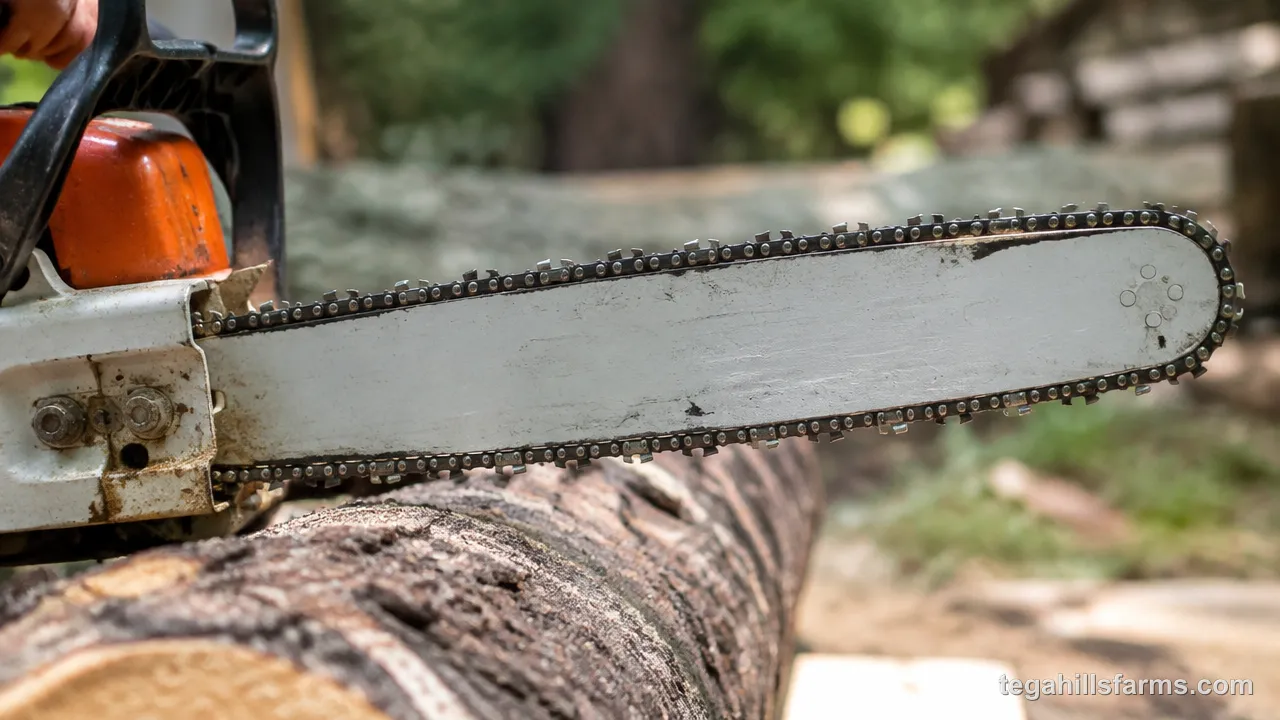
A chain that fits but cuts the wrong way for your saw’s power is a worse buy than a slightly slower chain that suits it. An aggressive chain on a weak engine bogs down, while a forgiving chain keeps the saw at speed. If the saw itself is still undecided, start with how to choose a chainsaw, since the bar and engine set every chain option that follows.
How Do Pitch, Gauge and Drive Links Decide Whether a Chain Fits?
All three numbers must match your bar and sprocket, or the chain won’t run safely:
- Pitch is the spacing between rivets, so it controls how the chain meshes with the drive sprocket and the bar’s nose sprocket.
- Gauge is the thickness of the drive link tang that rides in the bar groove.
- Drive link count is the number of tangs riding in that groove, which sets the chain’s loop length.
You’ll find these values stamped on the guide bar near the mount, listed in the saw’s manual, or printed on the old chain’s packaging.
A mismatch shows up quickly. A gauge too thin for the groove lets the chain lean and derail. A gauge too thick binds, heats the bar and starves the cutters of oil. The wrong pitch skips on the sprocket. A wrong drive link count leaves the chain too long to tension or too short to fit over the bar at all.
Battery saws typically use a low-profile chain with a narrow gauge, while mid-size gas saws commonly run thicker gauges. If you’re shopping the best battery chainsaws and already own chains for a gas saw, don’t assume they’ll carry over. Check all three numbers against the new saw’s bar before you buy spares.
Full Chisel, Semi-Chisel or Chipper: Which Cutter Style Suits You?
The three styles differ in speed and dirt tolerance:
- Full chisel cuts fastest in clean wood but dulls quickly in dirt.
- Semi-chisel tolerates dirty, frozen or knotty wood and holds an edge longer.
- Chipper is the most forgiving and is common on budget saws.
The difference lives in the cutter corner. A full chisel tooth has a square corner that severs wood fibers cleanly, so it pulls big chips from seasoned hardwood. That corner is thin, though. Even brief contact with dirt or a stone embedded in bark rounds it off, and filing it back takes skill because the square profile is easy to ruin.
Semi-chisel teeth have a rounded corner. It cuts a little slower but survives grit, frozen sap and knots far better. It also tolerates an imperfect filing angle, which is why I’d steer most home cutters toward it.
Chipper teeth are fully rounded. They are slower still but very hard to damage and very easy to sharpen.
The trade-off is speed against upkeep. If you cut clean logs and enjoy filing, full chisel rewards you. If your wood comes off the ground or you sharpen only when forced to, semi-chisel or chipper wastes less of your day.
Does a Low-Kickback Chain Matter for Everyday Cutting?
Yes, especially for newer users and for limbing work, where the upper tip of the bar often brushes branches. Kickback happens when the cutters at the bar’s nose catch wood and throw the bar up and back toward the operator.
A low-kickback chain limits that reaction in two ways:
- Bumper drive links fill the gap between cutters.
- Depth gauges limit how deep each cutter can bite.
With less bite at the nose, the chain can’t grab hard enough to whip the bar violently. The cost is aggressiveness, so the chain removes a little less wood per pass and feels slower in big rounds.
Low-kickback chains are identified with green labeling under the ANSI standard, which makes them easy to spot on the shelf. A more aggressive chain is reasonable for an experienced user bucking large logs on a powerful saw, where the tip rarely touches wood. For storm cleanup, pruning and anyone still learning saw control, the low-kickback design is the better default.
Which Chain Works Best for Firewood, Hardwood and Professional Work?
A semi-chisel chain handles mixed wood that’s been dragged across the ground, a full chisel chain pays off in clean, seasoned logs you’re willing to file for, and carbide only earns its place where dirt is unavoidable.
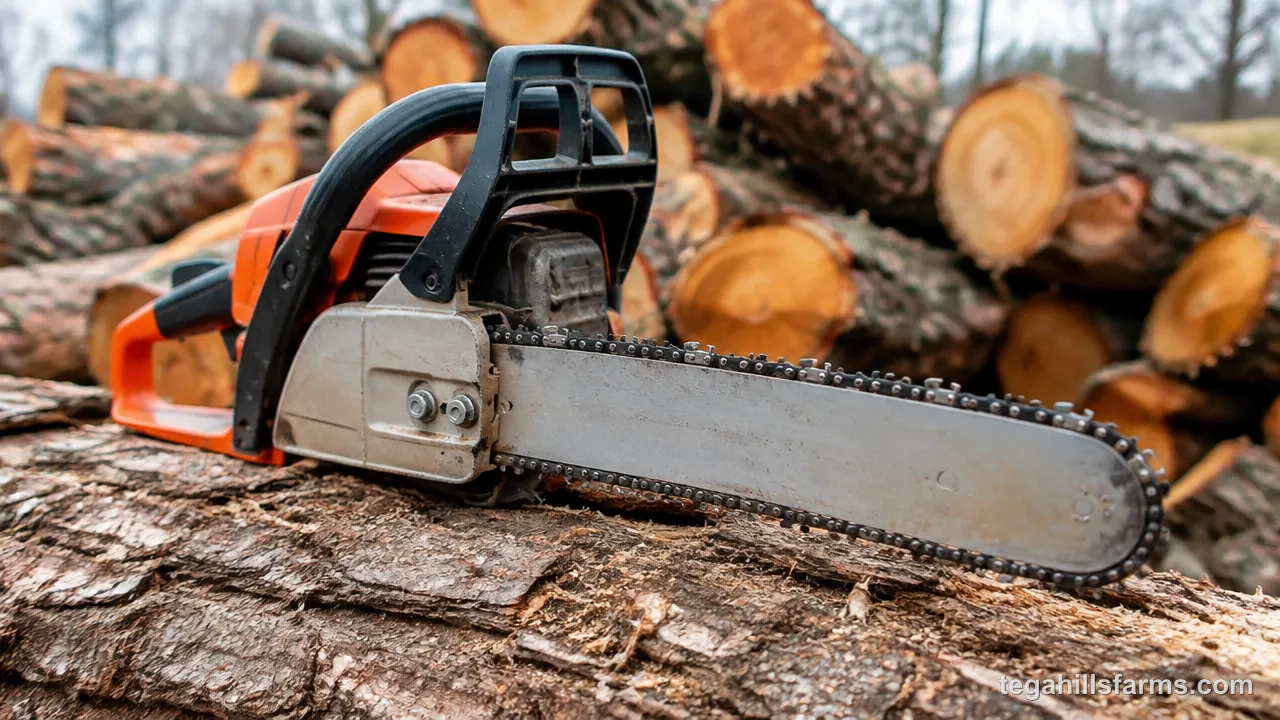
Firewood rounds often pick up soil when they’re skidded or stacked on bare ground. A semi-chisel chain keeps cutting through that grit between filings, and that steady edge matters more than peak speed when you’re working through a pile. Pair it with one of the best chainsaws for cutting firewood and the saw’s power and the chain’s tolerance stay in balance.
Clean, debarked hardwood rewards full chisel. The square cutters pull big chips and finish cuts quickly, but only if you can file them correctly.
Dirty, frozen or storm-downed wood calls for semi-chisel or chipper cutters. Branches tangled with roots and soil will ruin a full chisel edge in minutes.
Daily professional work generally favors full chisel chain from a major maker, because its steel and grinds stay consistent through repeated sharpening. Tree work in tight canopies is the exception: the best chainsaws for arborists run chains chosen for smooth, controlled cuts over raw speed.
An aggressive chain doesn’t make a standard saw cut faster. The engine can’t feed the deeper bite, so the chain slows down instead.
Carbide makes sense only where you can’t avoid dirt at all, such as stumps, roots and reclaimed lumber.
How Do You Keep a Chainsaw Chain Sharp Longer?
The edge lasts longest when you keep the chain out of dirt, file at the correct angle with depth gauges set to spec, and keep bar oil flowing every time the saw runs.
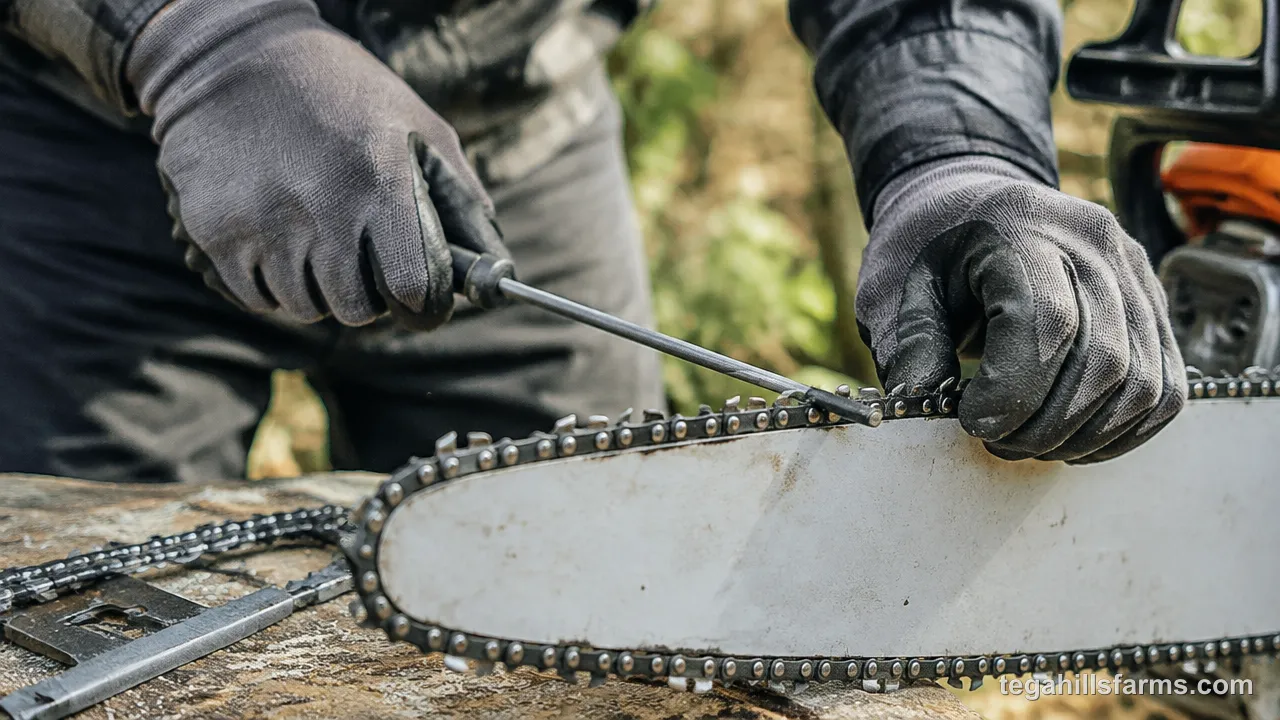
Dirt dulls a chain faster than wood ever does. Prop logs off the ground before cutting through, and stop before the chain touches soil.
File with a round file sized to your chain, at the angle on your file guide. Then lower the depth gauges when they stand too tall, or the cutters can’t bite even when they’re sharp. Bar oil carries heat away from the cutters, and a dry chain loses its temper quickly. Store the chain clean and lightly oiled so rust doesn’t pit the edges over winter.
A dull chain makes fine dust instead of chips, which pushes you to force the saw. That pressure wears the bar rails, the sprocket and the engine.
Sharpen whenever the dust appears. Replace the chain once filing no longer restores clean chips. If hand filing feels slow, chainsaw sharpeners can speed up the routine.
Aftermarket chains list the same pitch, gauge and drive link counts as name-brand chains, so on paper they look like identical replacements. Those numbers only guarantee the chain will seat on your bar, and they say nothing about the steel inside the cutters. A chain that matches on the box can still lose its edge halfway through your first log or stretch until it keeps jumping off the bar.
Is an Aftermarket Chain as Good as an OEM Chain?
For occasional cutting, a generic chain often does the job. For heavy use, OEM chains from Stihl, Oregon, Husqvarna and Carlton hold up better because their steel is more tightly controlled, so they stay sharp longer and file more consistently from tooth to tooth. Budget brands such as KAKEI and Sawworks sell multi-packs that can serve a homeowner who cuts a few times a season.
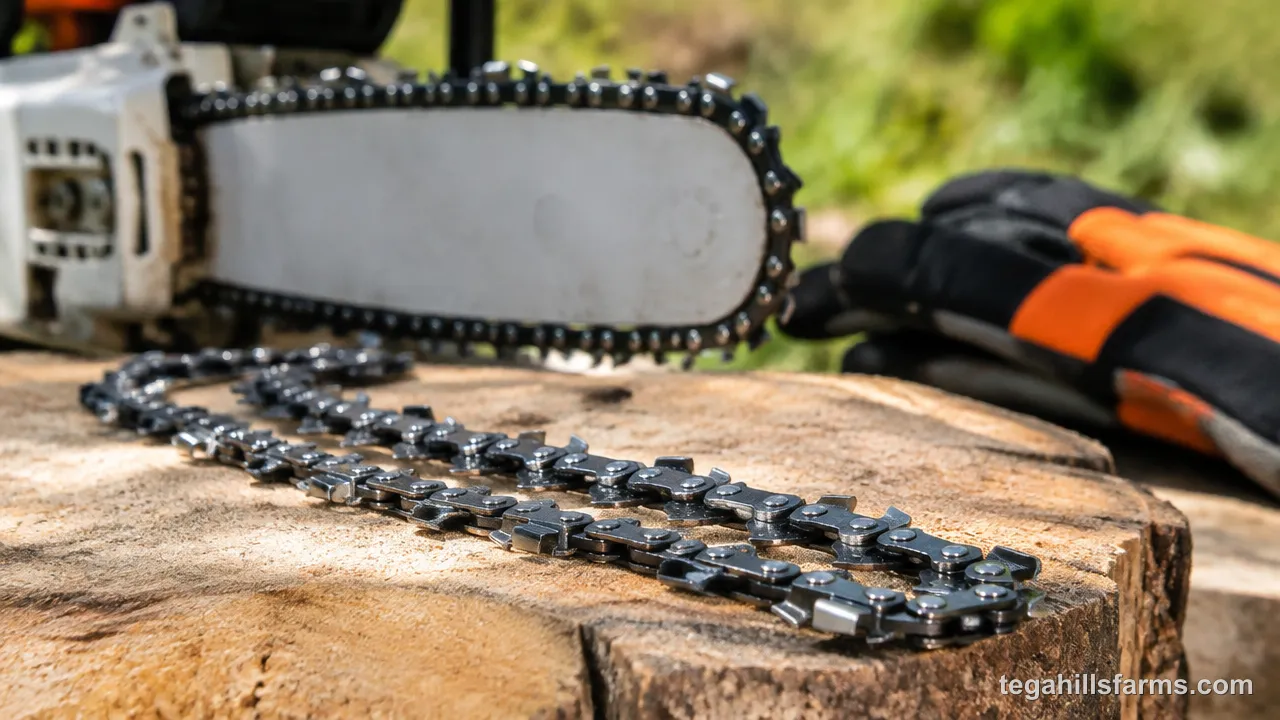
Quality problems show up in a few ways:
- Uneven finish: cutters vary in grind or finish along the loop, so some teeth cut harder than others.
- Early stretch: links loosen quickly and need retensioning after short use, which points to soft rivets or poorly fitted joints.
- Weak edges: edges roll over or chip after light contact with wood, which suggests the steel was hardened poorly.
Multi-packs fit a specific kind of owner. If you regularly dull chains in dirt and would rather swap than file in the field, a pack of spares saves the day’s work, even if each chain doesn’t last as long as an OEM one.
Is a Carbide Chain Worth It?
A carbide chain is worth it only for cutting where dirt, sand or ground contact can’t be avoided, such as land clearing, stump removal and reclaimed lumber with grit in the grain. Carbide-tipped cutters from makers such as Forester and Rapco resist abrasion that would dull a steel chain within a few cuts. If you’re equipping a saw from the best chainsaws for land clearing, carbide can keep it working through root balls and muddy brush.
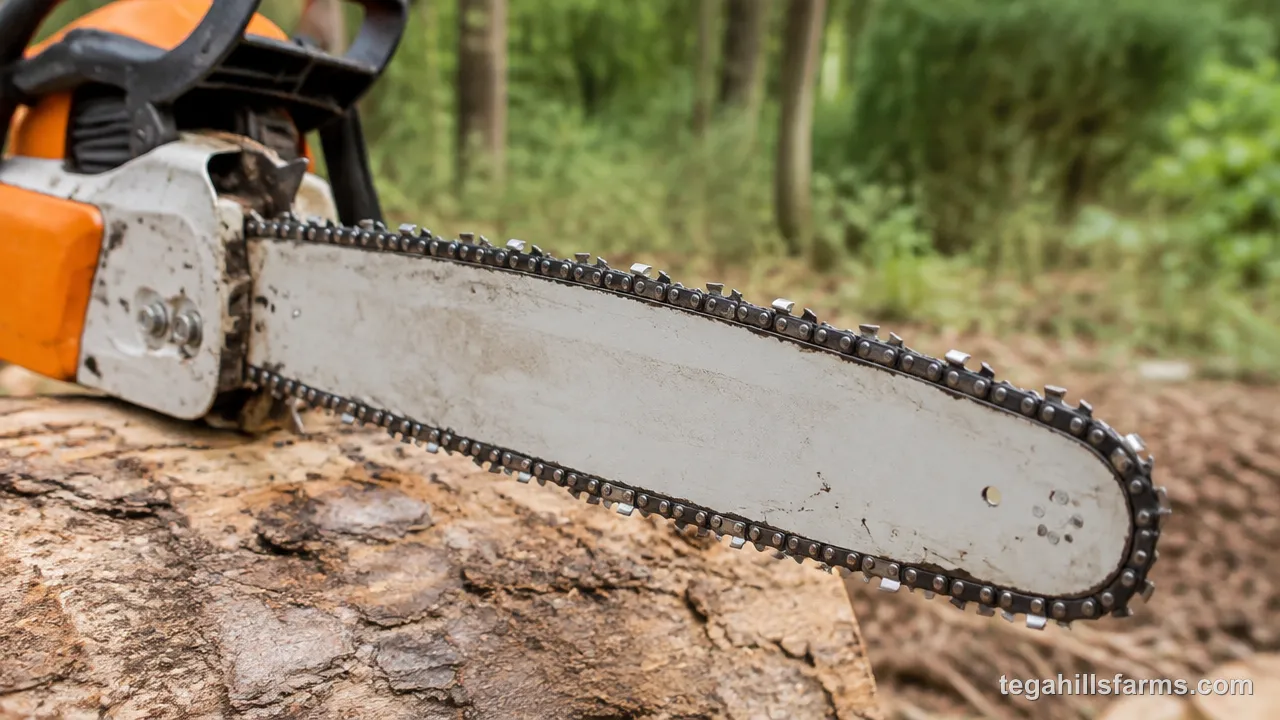
The trade-offs are real. Carbide cuts slower than a sharp steel chain in clean wood. It can’t be touched up with a round file, so sharpening needs a diamond wheel or a professional service. Carbide also demands a bigger commitment to buy in the first place.
For routine yard cutting, firewood and storm cleanup, a semi-chisel steel chain gives better speed and much simpler upkeep.
How Can You Tell a Chain Is Worn Out and Not Just Dull?
A chain is finished when sharpening can no longer bring back clean cutting. Look for these signs:
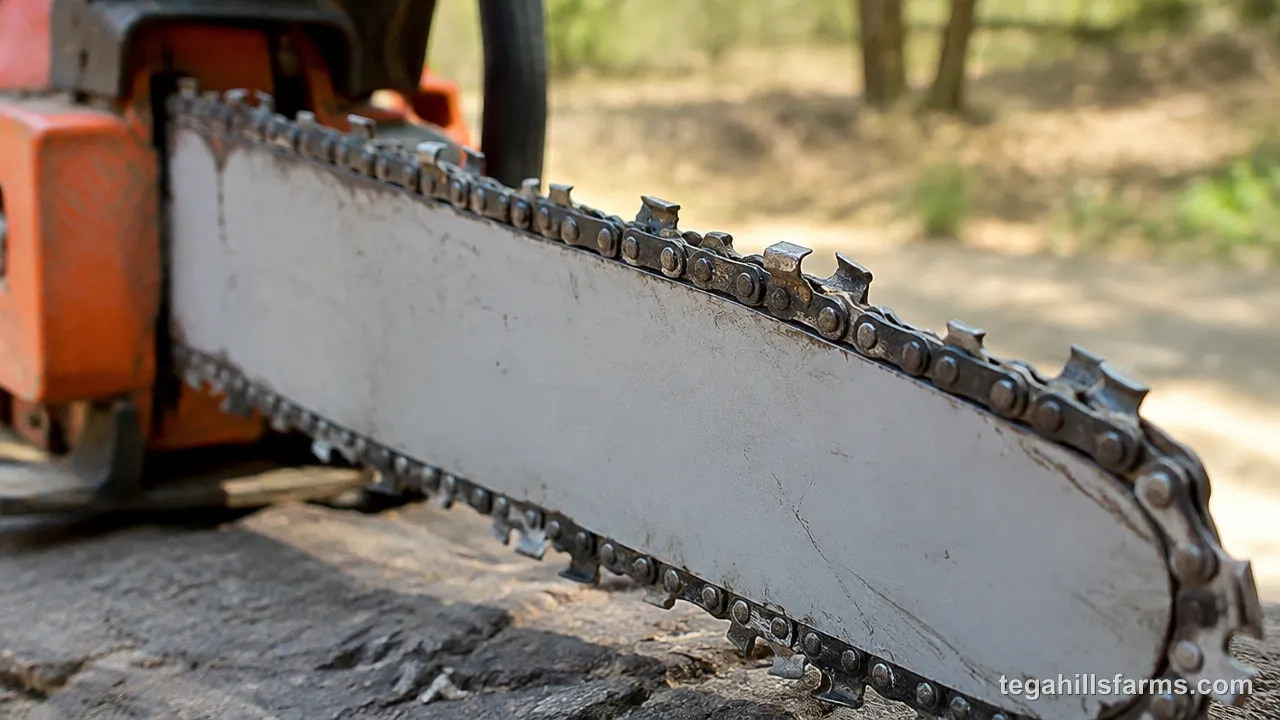
- Cutters filed to the wear marks: the marks stamped on the top plates show the cutter can’t be filed any further.
- Damaged links: cracked, bent or chipped links can break under load.
- Constant stretch: a chain that needs tension adjustment again and again has worn rivets and joints, and it won’t stay seated on the bar.
- Rivets worn through: the joints have no strength left.
- Pulling to one side: if the saw still pulls after a correct, even filing, the cutters on one side have worn unevenly beyond repair.
Running a chain past this point does more than slow the cut. A stretched chain wears grooves into the drive sprocket and chews the bar rails, which can force you to replace the best chainsaw bars and sprockets along with the chain. Loose, worn cutters also grab unevenly, which raises kickback risk.
Chainsaw Chain FAQ
What chainsaw chain brand do professionals use?
For daily cutting, I’d stick with Stihl, Oregon, Husqvarna or Carlton. Their steel and cutter grinds stay consistent from chain to chain, which keeps filing predictable and edges durable. Full chisel suits clean timber on a powerful saw, while semi-chisel takes over when the wood is dirty or frozen.
Which chainsaw chain stays sharp the longest?
Carbide-tipped chains hold an edge longest, especially in dirty or abrasive wood, but they cut slower and need special sharpening equipment. Among steel chains, a semi-chisel chain from a major maker keeps its edge longer than full chisel because its rounded cutter corner resists grit and minor contact with soil.
Will a chain from one saw brand fit another brand’s saw?
Yes, as long as the pitch, gauge and drive link count match your bar and sprocket exactly. The brand on the chain doesn’t matter; the numbers do. Read them from the guide bar, the manual or the old chain’s box, and compare them before you order.
How often should you replace a chainsaw chain?
Replace a chain when the cutters reach their wear marks, links crack or bend, or the chain keeps stretching after adjustment. How fast that happens depends on how much dirt you cut through and how carefully you file. A chain kept clean and sharpened properly lasts through many filings.
Does a chain with more drive links cut better?
No. Drive link count only sets the chain’s length, and it has to match your bar. A chain with more links fits only a longer bar. Cutting performance comes from cutter style, sharpness, correct depth gauge settings and having enough engine or motor power to pull the chain.
Write Your Review
No reviews yet. Be the first to share your experience!