

Our top picks for the best chainsaws under $200 in 2026 are the EGO Power+ CS1611 16″ Chainsaw (Best Overall), Oregon CS1500 (Best Budget), RYOBI 18V Brushless 8″ Pruning Mini Chainsaw (Best Lightweight), Greenworks 40V 16″ Brushless Chainsaw (Best Premium), SKIL PWR CORE 40 CS4555-10 14″ Chainsaw (Best Battery Life), BLACK+DECKER 40V MAX LCS1240 12″ Chainsaw (Best Cordless), Greenworks 40V 14″ Cordless Chainsaw (Best Compact), and Troy-Bilt TB4216 42cc Gas Chainsaw (Best Gas-Powered).
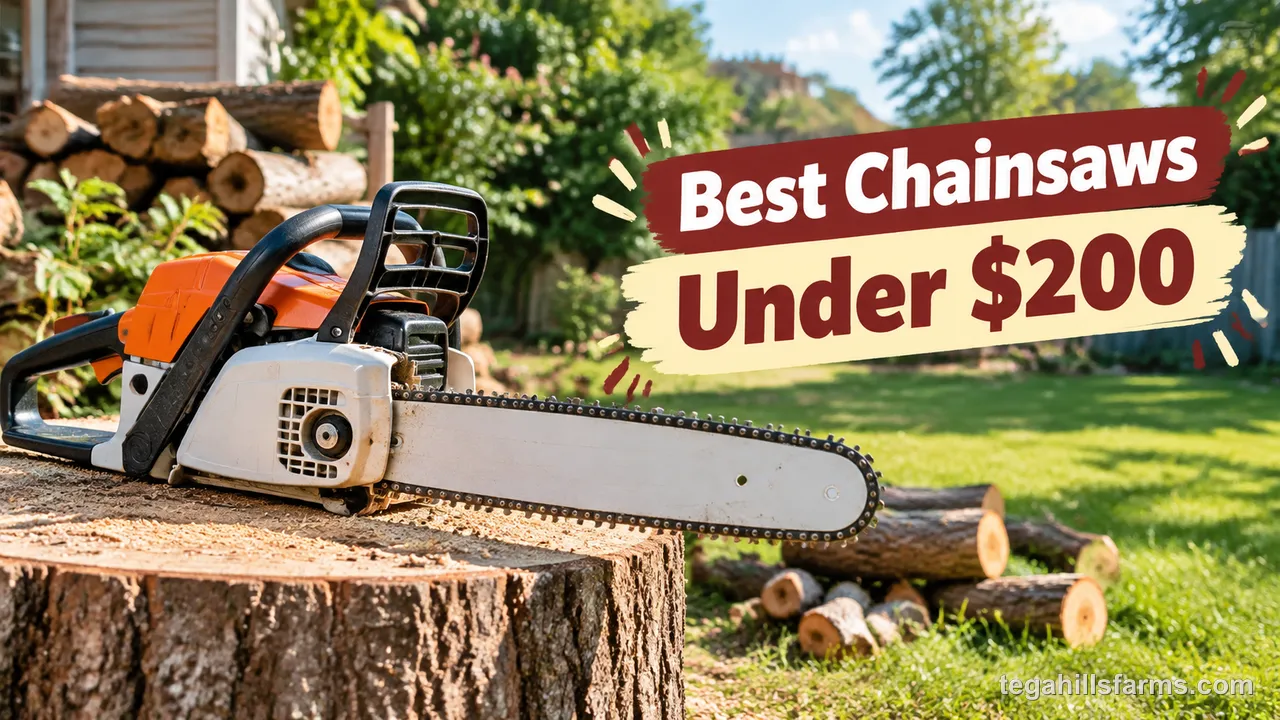
Power source, bar length and weight decide most of the match between a saw and a yard. After those come the features that keep a saw easy to live with: tool-free chain tensioning, automatic oiling, and a chain brake or low-kickback chain.
The real worry at this price is whether a saw will start when you need it, get through what the last storm dropped, and keep doing it without turning into a maintenance chore.




If batteries from a 40V or 18V tool line already sit in your garage, a saw from the same platform spares you from adding another pack and charger.
What Can a Chainsaw Under $200 Actually Do?
Expect light to moderate homeowner work: limbing, pruning, storm limbs and small firewood rounds, done in sessions sized to a battery charge or a free afternoon rather than a full workday. That is the same ground the best chainsaws for homeowners are built to cover, and it matches what most yards produce in a year.
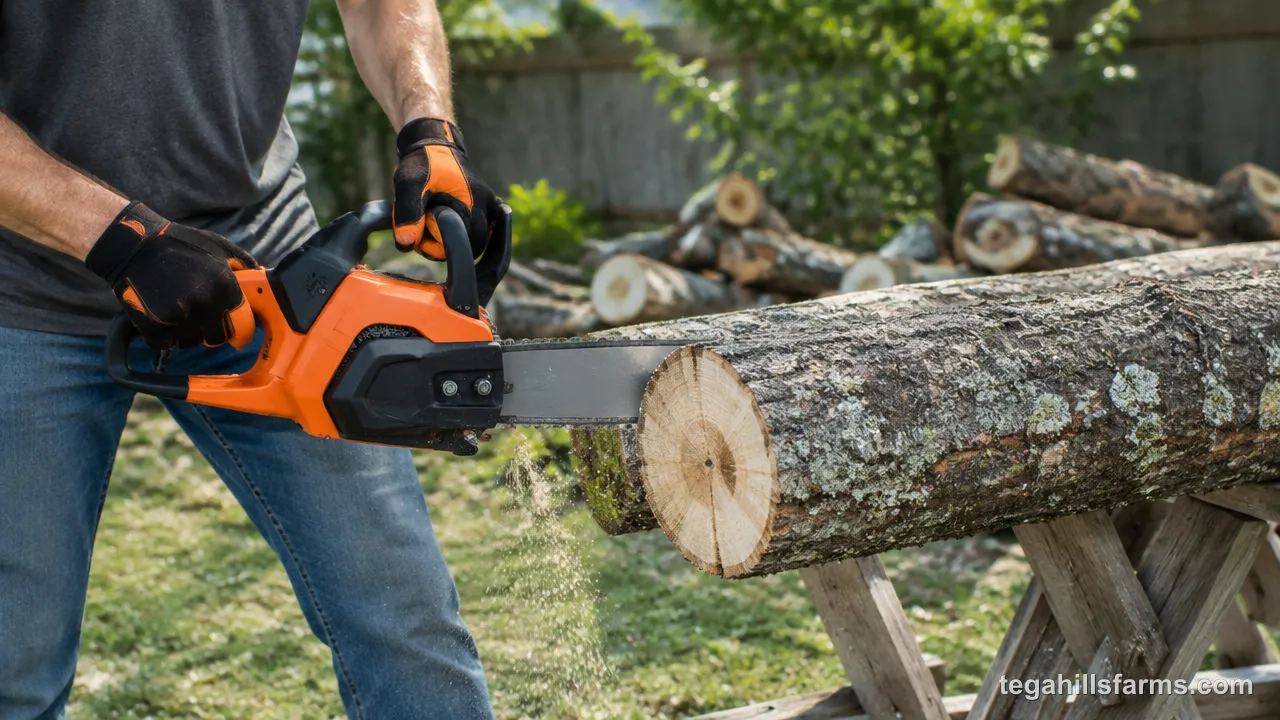
The limits show up with sustained heavy cutting. Motors and engines in this tier are built for occasional work, so long sessions in large-diameter trunks, dense hardwood or daily use push them past their design. You feel it as heat, a slowing chain and faster wear on the bar and sprocket.
Most saws at this price are now battery or corded electric, with only a few gas models left. For your yard, that means quick trigger starts and little upkeep, but your working time is set by a battery charge or the length of an extension cord. To see how this budget tier compares with the wider field, our roundup of the best chainsaws covers every power type and price level.
The 8 Best Chainsaws Under $200 of 2026
EGO Power+ CS1611, Oregon CS1500, RYOBI 18V Brushless 8″ Pruning Mini Chainsaw, Greenworks 40V 16″ Brushless Chainsaw, SKIL PWR CORE 40 CS4555-10, BLACK+DECKER 40V MAX LCS1240, Greenworks 40V 14″ Cordless Chainsaw and Troy-Bilt TB4216 cover battery, corded and gas power for the jobs a homeowner actually faces. The battery saws win on trigger starts, low noise and almost no engine upkeep, while the Troy-Bilt trades that convenience for engine-driven stamina, more weight and regular maintenance. If cordless convenience is your priority, the best battery chainsaws go deeper on that side; if fuel independence matters more, the best gas chainsaws focus on 2-cycle engines. These saws suit small to mid-size yards, owners who mostly limb and prune, storm debris cleanup and the occasional firewood pile.
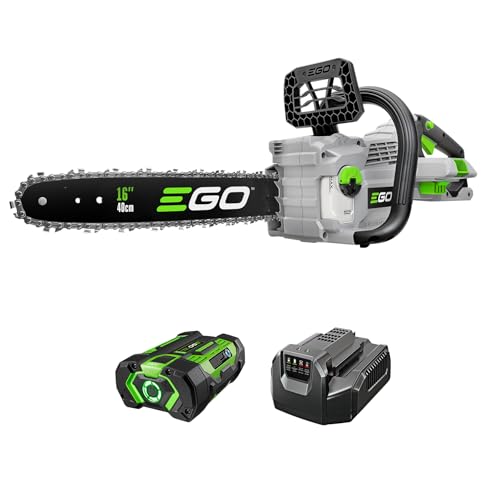
#1 EGO Power+ CS1611 16″ Chainsaw — Best Overall
This is the cordless saw I’d hand a homeowner who wants gas-like cutting without a pull cord. With the included 56V 2.5Ah battery, EGO rates it for up to 130 cuts on a 4×4, enough for a solid cleanup session on one charge.
Key Specs:
- Power: 56V battery, 2.5Ah pack and charger included
- Bar length: 16 in
- Chain speed: 66 ft/s (20 m/s)
- Chain: 3/8-in pitch, .043-in gauge, 52 drive links
- Weight: 9 lb
- Weather rating: IPX4
Detailed Review:
EGO rates this saw as a 40cc gas equivalent, which means it is built to stay in the cut on wood that stalls lighter battery saws. The 66 ft/s chain speed clears chips fast, so the bar keeps feeding through a limb instead of bogging down halfway.
The Troy-Bilt TB4216 runs the same 16-inch bar, yet the EGO weighs 9 pounds, far less than the gas saw, and your shoulders notice that on every limb cut above waist height. What you give up is the gas saw’s ability to keep going on a refilled tank. Once this battery is flat, the work waits on the charger or a second pack.
Tool-free tensioning lets you snug the chain without hunting for a wrench, and the spill-free reservoir keeps bar oil off the garage floor while the automatic oiler handles lubrication in the cut. IPX4 weather resistance means damp grass or a light drizzle won’t end the job. The low-kickback chain and brake indicator suit an owner still learning how a saw reacts when the tip catches wood.
Pros:
- Gas-equivalent power keeps the chain moving in thick limbs.
- One charge covers a full cleanup session.
- Tool-free tensioning makes chain adjustments quick.
- Spill-free reservoir keeps oil refills clean.
- Weather-resistant build handles damp working conditions.
Cons:
- Work stops when the battery runs flat.
- The long bar is more saw than light pruning needs.
Who It’s For:
Homeowners who want a single cordless saw for storm limbs, pruning and the occasional firewood pile will get the most from it, especially anyone already on EGO’s 56V platform who can share packs. Someone who only trims shrubs and small branches would be better served by a lighter, shorter saw.
Editor’s Verdict:
I’d buy this one first for a typical yard: strong enough for real wood, simple to maintain, and free of the fuel routine.
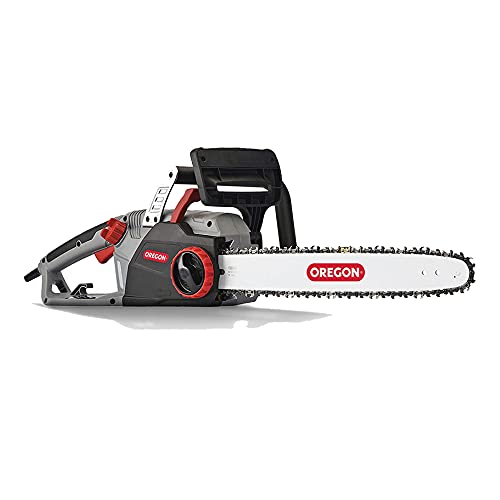
#2 Oregon CS1500 — Best Budget
Pick this one if your cutting happens within extension-cord reach of the house. Its built-in PowerSharp system sharpens the chain in 3 to 5 seconds, and the 18-inch bar reaches through thicker limbs than a short battery saw can, all for a modest outlay.
Key Specs:
- Power: 15-amp corded electric motor
- Bar length: 18 in
- Sharpening: built-in PowerSharp system
- Weight: 12.6 lb
- Certification: UL Certified
- Warranty: 2 years
Detailed Review:
A dull chain is what makes an inexpensive saw feel weak, and PowerSharp attacks that problem directly by putting the sharpener on the saw itself. You restore the edge in the middle of a job instead of filing teeth or dropping the chain at a shop, so the 15-amp motor keeps cutting at full strength through a long session.
The 18-inch bar reaches through thicker limbs and small logs with fewer cuts to finish a piece. That length also puts more weight out front and more bar tip to watch, so it asks for a steadier two-handed grip than a compact battery model.
Being corded, it starts the moment you squeeze the trigger and never runs out of charge, but every cut happens within reach of an outlet and an outdoor-rated extension cord. It also runs quieter than a gas saw, which helps on a tight suburban lot. Tool-free tensioning, an automatic oiler, a chain brake and a pre-assembled build mean you can start cutting the day it arrives.
Pros:
- Built-in sharpener restores a dull chain in seconds.
- Long bar handles thicker limbs and small logs.
- Starts instantly with no fuel or battery to manage.
- Runs quieter than a gas saw near neighbors.
- Low purchase cost for a full-size bar.
Cons:
- The cord keeps every cut near an outlet.
- Heavier than a compact battery saw, so it tires your arms sooner.
- Dragging a cord through brush takes constant attention.
Who It’s For:
Suburban owners with outdoor outlets who want a full-size bar without spending much will get real value here. It also suits anyone who dislikes sharpening chains by hand. If your trees sit at the back of a large property, a battery or gas saw makes more sense.
Editor’s Verdict:
Expect a lot of saw for the money, as long as your work stays within cord reach.
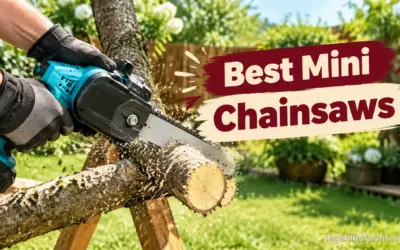
#3 RYOBI 18V Brushless 8″ Pruning Mini Chainsaw — Best Lightweight
Pruning, overhead trimming and cutting in tight spots between branches are where this little saw earns its place. Its 8-inch bar and compact body slip into crowded growth that a full-size saw can’t reach, and the whole tool stays light enough to hold steady at the end of your reach.
Key Specs:
- Power: 18V brushless (battery and charger sold separately)
- Bar length: 8 in
- Cutting capacity: limbs up to 6 in diameter
- Weight: 4.4 lb
- Trigger: variable speed
Detailed Review:
At 4.4 pounds, this saw is light enough to hold out at shoulder height without your forearms burning after a few cuts. RYOBI rates the body 30 percent more compact, so the bar slips into dense branches without the housing snagging on everything around it.
The 8-inch bar handles limbs and branches up to 6 inches in diameter. That covers pruning fruit trees, clearing a fence line and cutting up storm-snapped branches, but it is not a saw for bucking firewood or dropping a tree.
The variable speed trigger lets you start each cut slowly so the chain bites into bark instead of skating, which matters on small, springy limbs that flex away from the bar. A chain guard adds protection against kickback.
It ships as a bare tool, so you’ll need an 18V battery and charger before the first cut. That makes it a natural add-on for a RYOBI 18V owner and an extra step for anyone starting from nothing.
Pros:
- Light enough to hold overhead without quick fatigue.
- Compact body slips between crowded branches.
- Variable speed trigger gives controlled starts.
- Chain guard adds kickback protection.
Cons:
- Battery and charger are sold separately.
- Small bar can’t handle firewood or felling.
Who It’s For:
Gardeners who shape fruit trees, clear overgrown hedges or tidy fence lines will find it easy to live with, particularly if RYOBI 18V batteries already sit on their shelf. Anyone expecting to cut firewood or take down trees needs a full-size saw instead.
Editor’s Verdict:
Treat it as a pruning tool that happens to use a chain, and it does that job well.
#4 Greenworks 40V 16″ Brushless Chainsaw — Best Premium
This is the saw for heavier yard work on a cordless platform. The included 40V 4.0Ah battery holds its charge for more than a year in storage, and a brushless motor drives the 16-inch bar through firewood rounds and storm limbs.
Key Specs:
- Battery: 40V 4.0Ah, charger included
- Bar length: 16 in
- Weight: 10.36 lb
- Warranty: 3-year tool and battery
Detailed Review:
The brushless motor gives the chain steady torque through hardwood limbs and firewood rounds, which is where lighter cordless saws start to slow. Greenworks rates the 16-inch bar for trees and limbs up to 28 inches in diameter, which in practice means cutting from both sides on thick pieces.
The battery also runs Greenworks 40V tools, so a mower or blower from the same line can share packs with the saw. Starting takes two steps with no gas, priming or pull cord, and the chain brake, low-kickback design and overmolded grip keep longer sessions comfortable and controlled.
Next to the Greenworks 40V 14″ Cordless Chainsaw, this model brings a longer bar and a battery in the box but weighs 10.36 pounds to the smaller saw’s 8. That extra weight is what you carry in exchange for reach on thicker wood.
The automatic oiler uses a flip-up cap and a transparent window, and tool-free tensioning adjusts the chain in seconds. It sits at the upper end of this price tier, and the warranty covering both tool and battery is a real part of what that premium buys.
Pros:
- Brushless motor keeps torque steady in hardwood.
- Battery holds its charge through long storage.
- Shares batteries with Greenworks 40V tools.
- Warranty covers both the tool and the battery.
Cons:
- Premium price for a saw in this tier.
- Heavier than compact cordless saws for overhead work.
Who It’s For:
If your yard produces real firewood or regular storm limbs and you’d rather never mix fuel, this is the cordless saw to step up to, especially with Greenworks 40V tools already on hand. Someone who mostly prunes will find it more saw than the job needs.
Editor’s Verdict:
Spend the extra here only if heavier cutting is routine; for that work, the brushless motor and warranty justify it.
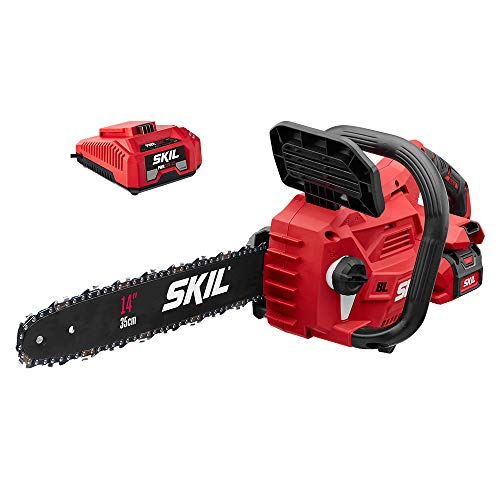
#5 SKIL PWR CORE 40 CS4555-10 14″ Chainsaw — Best Battery Life
Long cleanup sessions are where this 40V saw makes its case. SKIL wraps each PWR CORE 40 cell in cooling material for 25 percent longer run time and twice the battery life, and the Auto PWR JUMP charger takes the pack from empty to 30 percent in 15 minutes.
Key Specs:
- Motor: digital brushless
- Battery: PWR CORE 40 2.5Ah, Auto PWR JUMP charger included
- Bar length: 14 in
- Weight: 11.53 lb
- Tensioning: tool-free side dial
Detailed Review:
Heat is what usually cuts a cordless session short, and the cooling material around each cell keeps the pack delivering power longer before it tapers off. Cooler cells also wear more slowly across years of charging, which is where the battery-life gain comes from.
The fast charger changes how a job runs out of power. A short break while you drag brush to the pile puts usable charge back in the 2.5Ah pack, so one battery carries you further than its capacity alone suggests, as long as an outlet is near the work.
Compared with the BLACK+DECKER LCS1240, the SKIL weighs 11.53 pounds to its 10.4 but reaches further with a 14-inch bar against a 12-inch one. That is a fair swap if your limbs run thicker than pruning wood, and a poor one if you mostly cut overhead.
The digital brushless motor handles tough branches and stumps without gas upkeep, and a dial on the side sets chain tension without tools. Auto-lubrication, an anti-kickback brake that cuts power when kickback occurs and weather-resistant construction cover the safety and durability basics.
Pros:
- Cooled battery cells extend run time per charge.
- Quick charger restores usable power during a short break.
- Side dial adjusts chain tension without tools.
- Anti-kickback brake cuts power when the saw jumps.
Cons:
- Heavier than some cordless saws with longer bars.
- Included pack is small for all-day cutting.
Who It’s For:
Weekend workers who clear brush in long stints and want to keep cutting after a short charging break will appreciate it, as will anyone already using SKIL’s PWR CORE 40 batteries. Pure pruners will find its weight unnecessary for small branches.
Editor’s Verdict:
Choose it when downtime between charges bothers you more than a little extra weight in your hands.
#6 BLACK+DECKER 40V MAX LCS1240 12″ Chainsaw — Best Cordless
Occasional users are the right match for this 12-inch saw. Its 40V MAX battery holds a charge for up to 18 months, so a pack left in the garage after one storm is still ready for the next.
Key Specs:
- Battery: 40V MAX 2.0Ah, charger included
- Bar length: 12 in
- Runtime: over 60 cuts on 4×4 pine per charge, on average
- Weight: 10.4 lb
- Extras: battery state-of-charge indicator, full wraparound handle
Detailed Review:
A saw you pull out a few times a year needs a battery that hasn’t drained in storage, and this pack’s long charge retention handles that. The state-of-charge indicator shows what’s left before you walk out to the fallen limb, so you aren’t surprised mid-cut.
BLACK+DECKER rates the included 2.0Ah pack for over 60 cuts through 4×4 pine on average, which suits a few downed branches or a pruning session rather than a firewood pile. The 12-inch bar keeps those cuts quick and easy to control on limbs and small trunks.
The full wraparound handle lets you rotate the saw for side cuts and awkward angles while keeping a firm grip, which helps when branches grow at odd orientations. Automatic oiling and tool-less tensioning take care of routine upkeep.
It is no featherweight, so long stretches of overhead work will tire your arms. The kit arrives with battery and charger, which means it is ready to cut out of the box.
Pros:
- Battery stays charged through long storage.
- Charge indicator shows remaining power at a glance.
- Wraparound handle supports cuts at odd angles.
- Battery and charger included, ready to cut.
Cons:
- Small pack runs out on bigger jobs.
- Short bar limits the size of wood it handles.
Who It’s For:
Homeowners who reach for a saw only after a windstorm or for seasonal trimming will like how it stays ready between uses. It suits anyone who wants a complete kit rather than a bare tool. Firewood cutters and people clearing larger trees should look for more bar and battery.
Editor’s Verdict:
Count on it for the occasional limb and seasonal trim, where readiness matters more than long cutting time.
#7 Greenworks 40V 14″ Cordless Chainsaw — Best Compact
Small-lot owners who want full-size cutting in a saw that’s easy to carry should look closely at this one. Greenworks rates its brushless motor as comparable to a 42cc gas chainsaw and the 14-inch bar for trees and limbs up to 26 inches in diameter, with up to 75 cuts on 4×4 lumber per charge.
Key Specs:
- Power: 40V brushless (tool only, battery and charger sold separately)
- Bar length: 14 in
- Weight: 8 lb
- Chain brake: inertia-activated
- Warranty: 3-year limited tool warranty
- Included: scabbard and operator’s manual
Detailed Review:
The brushless motor gives a light saw enough torque to stay in a cut, and it also stretches runtime and tool life. That matters on a compact model, because a saw that is easy to carry is only useful if it doesn’t bog down once you reach the limb.
Next to the Greenworks 40V 16″ Brushless Chainsaw, it gives up some bar length and the included battery but weighs noticeably less. On a long limbing job, or a walk to the back fence and back, that difference shows up in your forearms.
Starting takes no priming, choking or pulling, and the comfort grip limits fatigue. Pro-style side-mounted tensioning keeps chain adjustments simple, the transparent oil window shows when the automatic oiler needs a refill, and the inertia-activated chain brake stops the chain during kickback.
It ships as a tool only, with a scabbard for storage and transport. Without a Greenworks 40V battery and charger already on hand, plan on adding both before the first cut.
Pros:
- Light enough for long limbing sessions.
- Brushless motor delivers strong torque for its size.
- Starts instantly with no priming or pulling.
- Scabbard included for storage and transport.
Cons:
- Needs a separately purchased 40V battery and charger.
- Shorter bar than the full-size cordless saws in this group.
Who It’s For:
Anyone working a modest yard who wants a saw they can carry all afternoon without wearing out their wrists should look here, especially owners of Greenworks 40V batteries. If you need a battery in the box, a kit model will get you cutting sooner.
Editor’s Verdict:
Buy it if you already own Greenworks 40V packs; it turns them into a light saw with real cutting torque.
#8 Troy-Bilt TB4216 42cc Gas Chainsaw — Best Gas-Powered
Rural lots far from an outlet are where this gas saw belongs. Its 42cc full-crank 2-cycle engine keeps cutting as long as you keep the tank filled, with no charger deciding when the job ends.
Key Specs:
- Engine: 42cc full-crank 2-cycle
- Bar and chain: 16 in, low-kickback
- Starting: SpringAssist pull start
- Oiler: adjustable, automatic
- Weight: 15.28 lb
- Handles: 3-point anti-vibration
Detailed Review:
A full-crank engine supports the crankshaft on both sides, a sturdier layout for an engine that will spend long stretches under load. Paired with the low-kickback bar and chain, it takes limbs apart quickly without ever pausing for a battery swap.
SpringAssist stores energy in a spring as you pull the cord, so the engine turns over with a smoother, lighter pull than a plain recoil starter. That helps most on cold mornings and for owners who dread yanking a starter rope.
At 15.28 pounds, it carries real weight, and the anti-vibration handles keep that weight and engine buzz tolerable over longer sessions. Against the much lighter EGO CS1611, which runs the same bar length, you trade portability and a quiet trigger start for fuel independence.
Ownership comes with 2-cycle upkeep: mixed fuel, spark plug and air filter checks, and draining or stabilizing fuel before storage. The adjustable automatic oiler lets you raise bar oil flow for long cuts in dense wood.
Pros:
- Runs as long as you have fuel.
- SpringAssist makes pull starts easier.
- Anti-vibration handles reduce hand fatigue.
- Adjustable oiler matches oil flow to the job.
Cons:
- Heavy to hold overhead or for long stretches.
- Mixed fuel and engine upkeep add chores.
- Louder than the electric saws.
Who It’s For:
Property owners clearing brush far from the house, or anyone who wants a saw that keeps going during a power outage, will get the most out of it. Someone uneasy about fuel mixing, pull starts or extra weight should stick with a battery model.
Editor’s Verdict:
Pick it if you’ll maintain a 2-cycle engine; kept tuned, it cuts on your schedule rather than a charger’s.
What Should You Look for in a Chainsaw Under $200?
Power source and bar length decide whether a saw fits your yard, while weight and a few convenience features decide whether you’ll actually reach for it instead of leaving it in the shed. Getting these right matters more at this price than chasing spec-sheet peaks, because a budget saw has little margin to cover a mismatch with your work. For a deeper walk through every factor beyond this tier, our guide on how to choose a chainsaw covers the full picture.
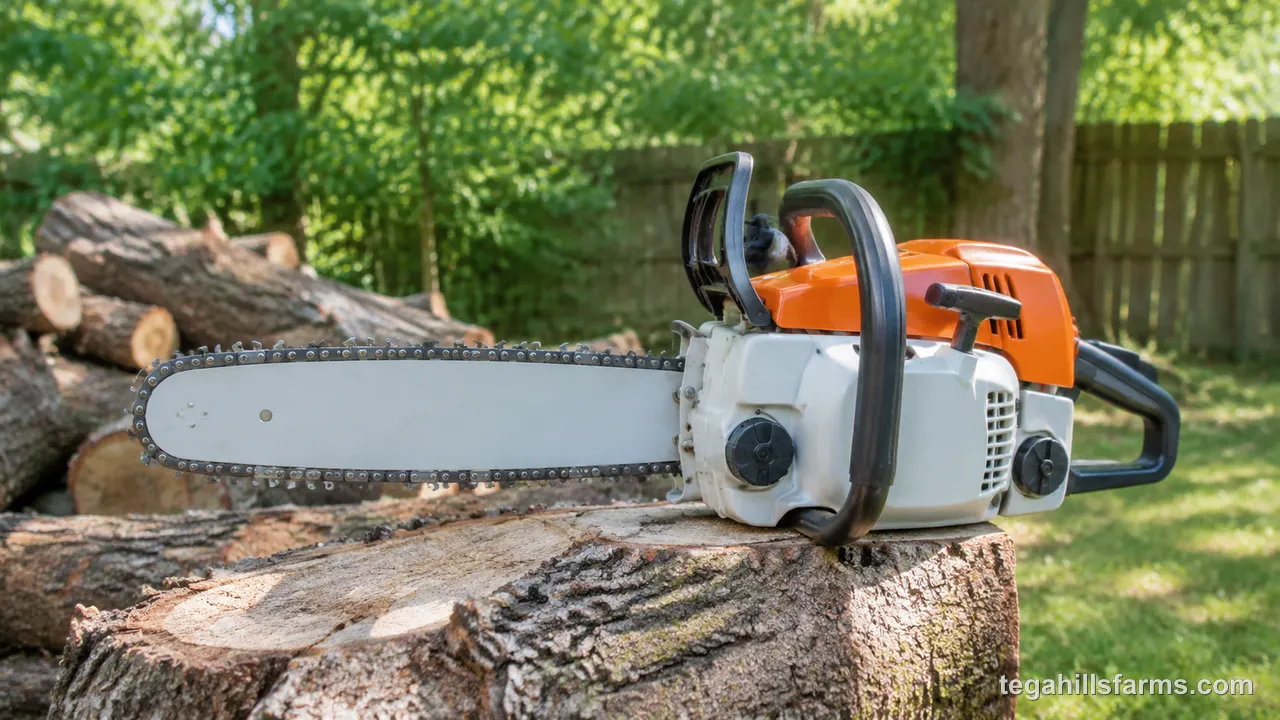
Should You Buy a Gas, Battery or Corded Chainsaw?
Battery suits most homeowners in this price range: it starts with a trigger pull, runs quietly and asks for little beyond bar oil and a charged pack. Its limit is runtime, and the platform you buy into decides which batteries you can share with a mower or trimmer later.
Gas gives you engine power and cordless freedom with no charger to wait on, which matters on a large property or during a power outage. The trade is a pull start, fuel mixed with 2-cycle oil, and regular attention to the spark plug, air filter and carburetor, plus more weight and noise.
Corded saws are the simplest of all: nothing to fuel, nothing to charge, and full power whenever the outlet is live. Every cut has to happen within reach of a GFCI outlet and an outdoor-rated extension cord, which works on a compact lot near the house and falls apart at the far end of a large one.
Corded fits a small yard with outlets nearby, battery fits most suburban yards, and gas earns its upkeep when distance or long cutting days rule out the other two.
How Long a Bar Do You Need?
Bar length sets the largest piece of wood a saw can cut, and the wood you can cut comfortably is smaller than the bar itself, because part of the bar sits inside the saw body and the tip is the part you want to keep clear of the wood.
Short bars, like the 8- and 12-inch saws in this group, suit limbing and pruning. They weigh less, balance closer to your hands and keep the tip, where kickback starts, easier to watch.
Longer bars reach through bigger limbs and firewood rounds in fewer passes, but they add weight up front and expose more bar to accidental tip contact, which raises kickback risk for a beginner. For general homeowner work such as storm limbs, a small tree and occasional firewood, a 14- or 16-inch bar is the usual middle ground, and the best 16 inch chainsaws show how far that size stretches before you need something bigger.
How Much Does Weight Matter?
Weight decides how long you can hold a saw in a safe, controlled position, and that matters most for pruning and overhead cuts, where a light saw keeps your arms steady through the whole job.
A heavier saw is harder to hold up but steadies itself in bigger cuts, because its mass helps keep the chain pressing through a log instead of bouncing on the surface. Gas saws usually weigh more than battery models with a similar bar, and the Troy-Bilt is a good example of that trade-off.
A battery pack adds noticeable weight too, so check whether a listed weight includes the battery before comparing models; a bare tool feels lighter on the shelf than it does in the cut. Match the weight to how long you hold the saw per job: a quick cleanup tolerates a heavier saw, while an afternoon of limbing rewards every pound you save.
Which Features Are Worth Having at This Price?
A chain brake and a low-kickback chain are the non-negotiables for a first saw, because they stop or soften the violent jump that happens when the bar tip catches wood. Without them, one bad cut can put the chain near your body before you can react.
Tool-free tensioning comes next. A knob or dial replaces the wrench, so you actually check tension before each session, and a correctly tensioned chain cuts straighter and stays on the bar.
Automatic oiling keeps the bar and chain lubricated in the cut, and a visible oil window tells you when to refill before the bar runs dry and overheats. A saw without a window works fine as long as you check the reservoir every time you start.
Weather resistance is a nice extra rather than a must. It helps a saw that works on damp mornings or lives in a humid shed, but it doesn’t change how the saw cuts.
Which Chainsaw Under $200 Fits Your Job?
The work you do most often should pick the saw: light pruning favors a short, light battery saw, while firewood and storm cleanup call for a longer bar and more power. A saw sized wrong for its main job either tires you out on small limbs or bogs down in wood it was never built for, and either way it ends up in the shed. Power source follows the same logic, since the distance from your outlet and how long you cut per session decide whether cord, battery or fuel fits.
Which Saw Suits Pruning and Small Limbs?
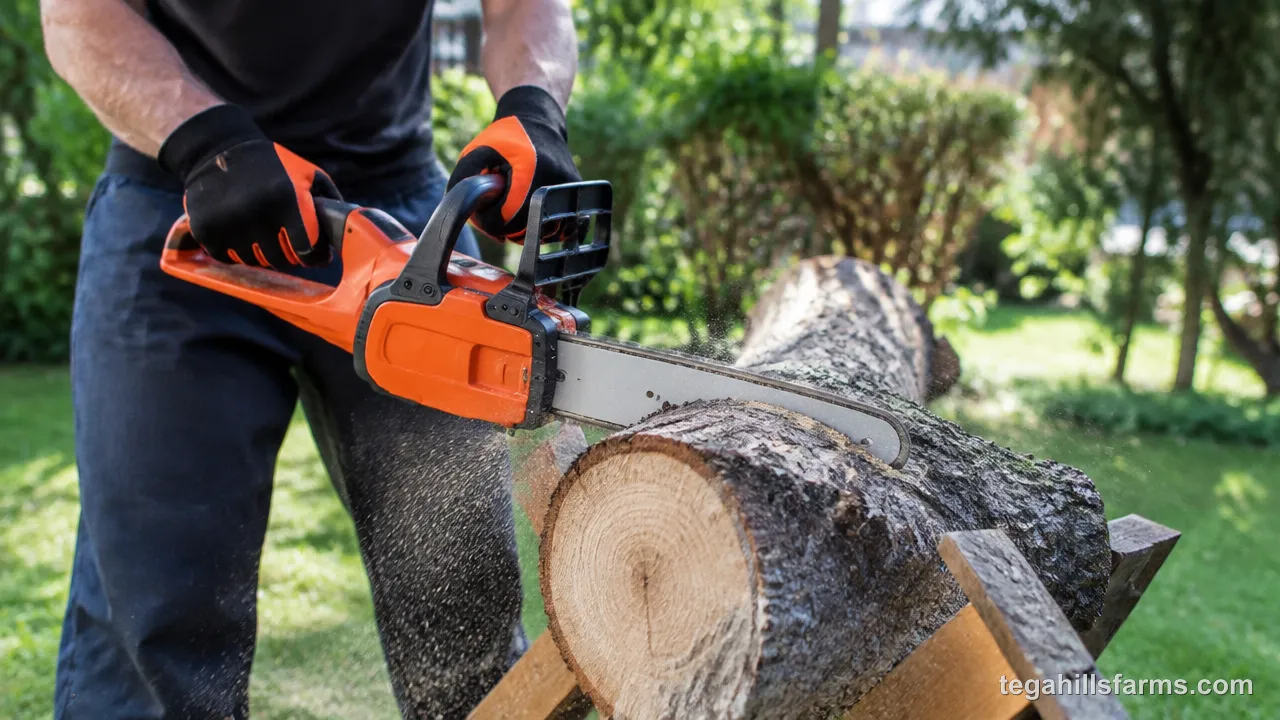
The RYOBI 18V Brushless 8″ Pruning Mini Chainsaw and the BLACK+DECKER 40V MAX LCS1240 12″ Chainsaw are the right fit for trimming near the house. Both run short bars on battery power, start with a trigger pull and stay quiet enough for work close to windows and neighbors.
Short bars are easier to aim between branches and keep the tip in view, so you control where the chain meets wood. Low weight lets you hold the saw at the angle the cut needs rather than the angle your arms can manage.
The RYOBI tops out on modest limbs. When a cut pinches the bar or needs several passes, step up to a full-size saw such as the Greenworks 40V 14″ Cordless Chainsaw, which keeps weight down while adding bar length. For trunks rather than branches, the best chainsaws for small trees cover saws sized for felling.
Can a Budget Saw Cut Firewood?
It can handle occasional firewood, such as a fallen tree in the fall or a few rounds for a fire pit, but not heavy cutting week after week. Battery runtime runs out on a big stack, motors heat up during long cuts through thick rounds, and chains dull faster in dense or dirty wood, so the saw slows just as the pile gets serious.
The Troy-Bilt TB4216 and the long-bar Oregon CS1500 fit bigger rounds better. The gas saw keeps running as long as there’s fuel, while the Oregon’s bar reaches through thicker logs, though only within cord reach of an outlet, which rules it out for a woodlot at the back of the property.
A spare battery stretches a cordless session, and keeping the chain sharp matters more for firewood than for any other job. If firewood is the main reason you’re buying, the best chainsaws for cutting firewood are built for longer sessions in bigger wood.
Will a Budget Saw Handle Storm Cleanup?
For downed limbs and broken branches, these saws work well; for large trunks, saturated wood or an all-day session after a major storm, they run short. Wet wood and mud-covered limbs dull a chain quickly, and fallen wood often sits under tension that pinches the bar mid-cut.
A spare battery keeps a cordless saw working while the first pack charges, which is the simplest way to stretch a cleanup day. A gas saw like the Troy-Bilt TB4216 doesn’t depend on grid power at all, which matters when an outage has left you with no way to recharge.
Trees leaning on power lines, hung up in other trees or lying on a roof call for a professional tree service, not a homeowner saw.
When Is It Worth Spending More Than $200?
Step up when you regularly cut large trunks, run the saw for long stretches, or work through dense or wet hardwood, because those jobs overheat budget motors and wear out light-duty parts. If you heat with wood or clear land every season, a saw in this tier will spend more time cooling down and getting chains sharpened than cutting.
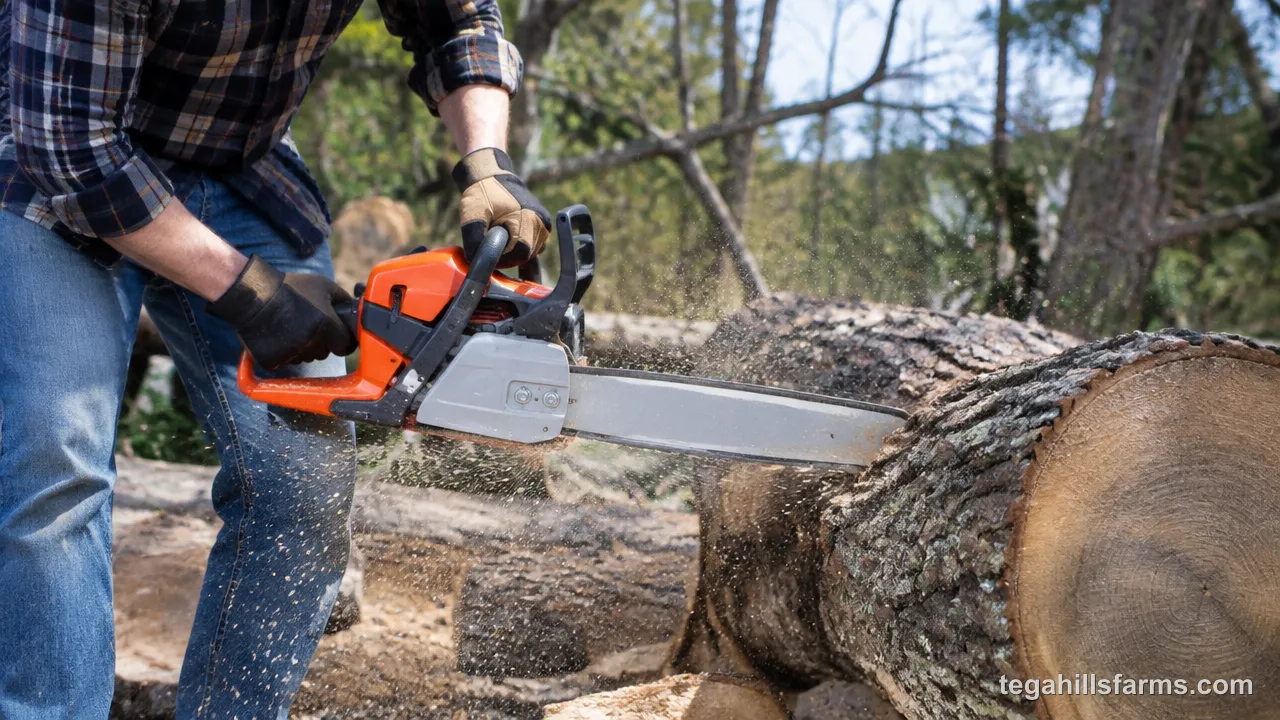
A higher tier brings stronger motors and engines, sturdier bars and housings, and longer service life under load. For gas saws, engine durability and dealer parts support matter most if you plan to keep one running for many seasons, since a well-supported engine can be repaired instead of replaced. If that describes your work, the best chainsaws under $300 add the power and build quality those jobs demand without jumping to professional gear.
How Do You Keep a Budget Chainsaw Running Longer?
A sharp, correctly tensioned chain, a full oil reservoir and proper storage between jobs decide how many seasons an inexpensive saw lasts. Light-duty saws have less margin than pro models, so neglect shows sooner: a dull chain strains the motor, a dry bar wears its rails, and stale fuel or a badly stored battery can end the saw’s season before the work does.
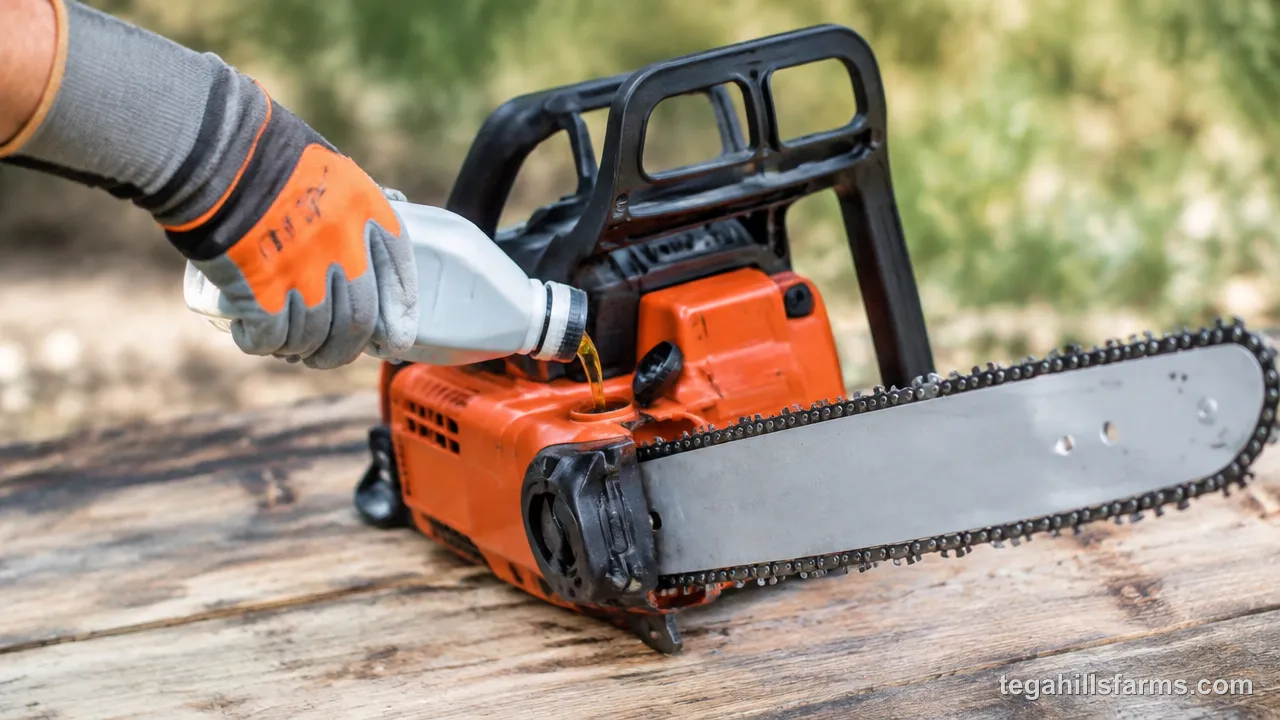
How Do You Care for the Chain and Bar?
A dull chain makes a weak saw feel weaker, and the cut shows it: fine dust instead of coarse chips, a saw that pulls to one side, and the need to push down on the bar to make progress. Forcing a dull chain overheats the motor and the bar, so sharpen at the first sign.
A few strokes with a file or one of the chainsaw sharpeners restore most dull chains. Replace the chain when teeth are worn short, chipped by a rock or nail, or uneven from side to side, and match pitch and gauge to your saw when shopping for chainsaw chains.
Check tension on a cold saw, because a chain tightened while hot shrinks as it cools and strains the bar and sprocket. It should sit snug against the bar yet still pull around by hand. Confirm the oiler works before every session; a dry bar overheats and wears its rails quickly.
How Should You Store Fuel and Batteries Between Jobs?
Mixed fuel left sitting in a 2-cycle saw goes stale and leaves varnish in the carburetor’s small passages, which is the usual reason a saw won’t start the next time you need it. Mix fuel in small batches you’ll use soon, add stabilizer if it will sit, and drain the tank and run the carburetor dry before the off-season.
Lithium-ion batteries store best at a partial charge in a dry, temperate spot indoors, not in a shed that bakes in summer or freezes in winter. Heat ages cells permanently, and charging a frozen pack can damage it, so bring batteries inside and let them reach room temperature before charging.
Corded saws ask the least: wipe off sawdust, store the saw level so bar oil doesn’t seep out, and keep the cord coiled loosely and dry.
An older saw from a major brand can still outcut a new budget model if its engine and bar were cared for. The catch is wear that hides inside a clean-looking housing, and a worn clutch or a tired battery turns a bargain into a repair bill bigger than the saw was worth.
Is Buying a Used or Refurbished Chainsaw Worth It?
A used or refurbished saw from an established brand can be worth it, since it may bring more power and better build quality than a new budget model, but only after a hands-on inspection. Manufacturer- or retailer-refurbished units that come with a warranty are the safer bet; private sales leave the risk with you.
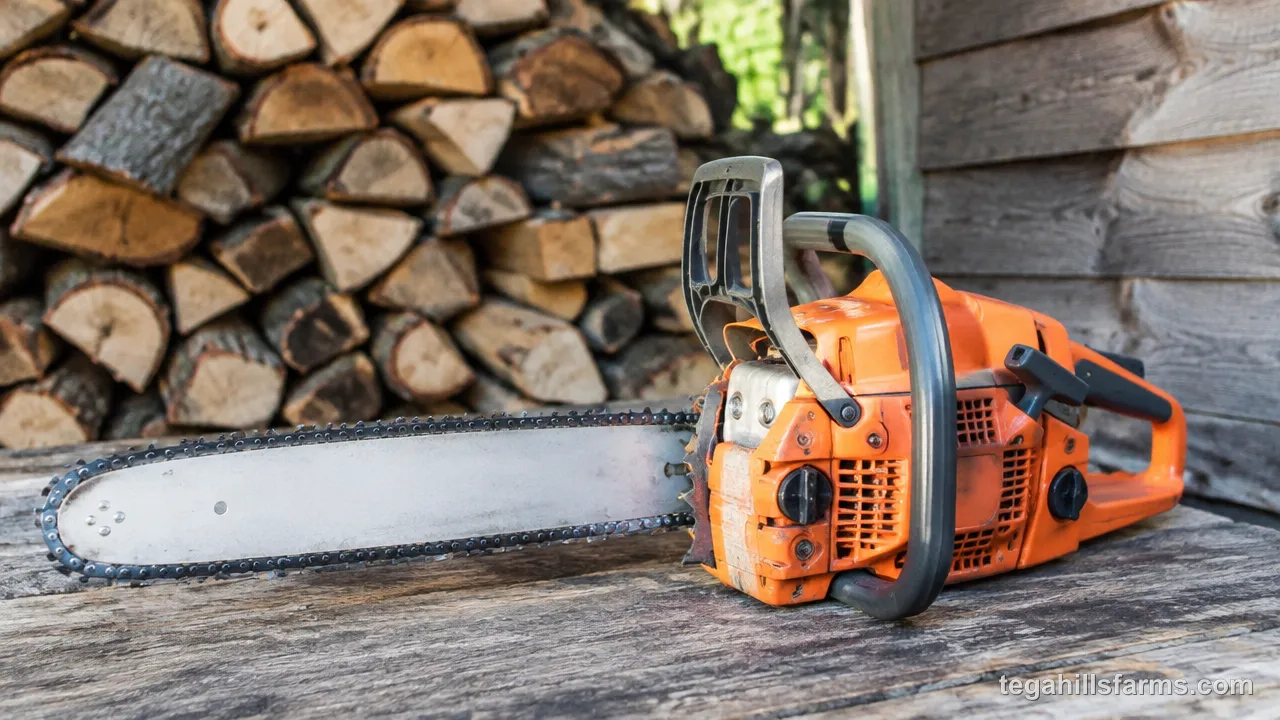
Good places to look include store returns and open-box sales, manufacturer refurbished programs, local marketplaces and online resale sites. Before paying, ask to start the saw. On a gas saw, the pull should meet firm, even resistance from compression; a cord that spins freely points to a worn engine. Check that the clutch and drum aren’t glazed or scored, that the bar rails are even and not flared, and that the chain brake stops the chain instantly. On a battery saw, run it under load and watch whether the charge drops unusually fast.
Walk away if the brake doesn’t hold, the bar is bent, the engine won’t idle, or the seller won’t let you run it. When no warranty is offered, a new budget saw is the safer choice.
Are Unknown-Brand Chainsaws Under $200 a Risk?
Yes, mainly because support disappears. A no-name gas saw often has no replacement chains, bars or parts you can order by model number, so the first worn sprocket, broken pull cord or clogged carburetor turns it into a throwaway.
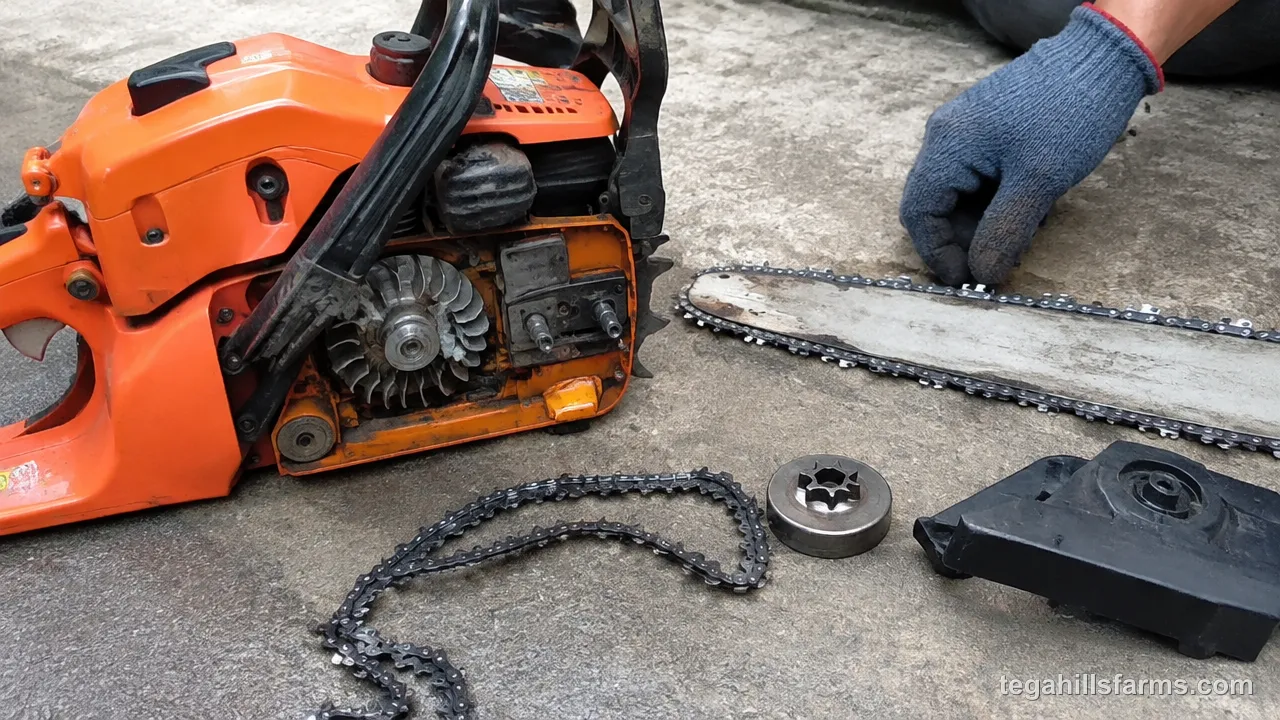
Build quality also tends to vary between batches, and manuals are often thin or poorly translated, which leaves a first-time owner guessing about fuel mix, chain tension and safe operation. Established brands keep parts in circulation, publish clear manuals and offer service through dealers or the manufacturer.
Before buying any saw, search for its replacement chain and bar by exact model and see whether they are easy to find. Check whether the brand lists a service network or parts support, and read a wide spread of reviews for that exact model, looking for consistency rather than a few glowing ones. A saw you can’t get parts for is only as good as its first season.
What Safety Gear Does a First-Time Chainsaw Owner Need?
Buy eye protection, hearing protection, cut-resistant gloves, chainsaw chaps and sturdy boots along with the saw. Together they cover flying chips, engine and motor noise, and the chain contacting your legs or feet, which is where most chainsaw injuries land.
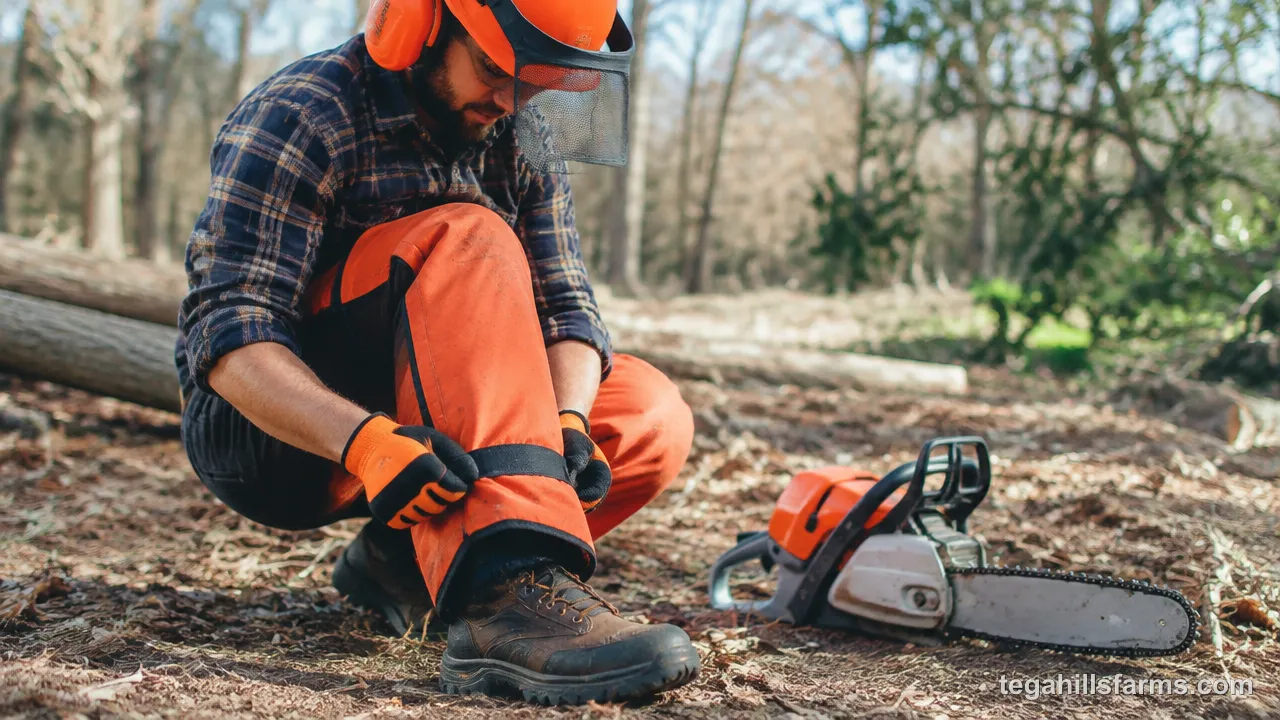
Safety glasses or a mesh face screen keep chips out of your eyes. Earmuffs or plugs matter most with a gas saw but are worth wearing with electric models too. Chaps contain fibers that jam the sprocket and stop the chain on contact, and they are the one piece where better gear earns its extra cost. Add a helmet with a face screen if you cut overhead or near falling limbs, and the best chainsaw accessories cover chaps, helmets and other gear worth adding.
Kickback happens when the upper tip of the bar touches wood and throws the saw back toward you, while pinching happens when the wood closes on the bar mid-cut. Keep both hands on the saw, stand to the side of the cutting line, avoid cutting above shoulder height, and support logs so the cut opens as you go.
Chainsaws Under $200: Frequently Asked Questions
Can a battery chainsaw replace a gas saw for homeowner work?
For pruning, storm limbs and occasional firewood, yes. A good battery saw starts instantly, runs quietly and skips fuel mixing and carburetor care. A gas saw still makes more sense for long cutting days far from an outlet, large rounds, or work during an outage when charging isn’t possible.
What bar length is best for a first chainsaw?
A midsize bar, around 14 inches, balances reach and control for most first-time owners. It handles storm limbs and small trees without the weight and kickback exposure of a long bar. If you mostly prune, go shorter; if firewood is the main job, a 16-inch bar earns its extra weight.
Is a corded chainsaw good enough for yard work?
Yes, if your cutting happens close to the house. A corded saw starts instantly, never runs down and needs no fuel or battery care. The limit is reach: you need an outdoor-rated extension cord and a GFCI outlet, and dragging cord through brush slows the work on larger properties.
How long should a budget chainsaw last?
With occasional use and decent care, an inexpensive saw from an established brand can serve for many seasons. Its life depends on keeping the chain sharp, the bar oiled, the tension right, and fuel or batteries stored properly. Hard daily cutting wears budget motors and engines out much sooner than weekend cleanup.
Do cheaper chainsaws need special chain oil?
They need bar and chain oil, the same as any saw, not used motor oil. Bar oil contains tackifiers that help it cling to a fast-moving chain instead of flinging off, which protects the bar rails. In cold weather, a winter-grade bar oil flows better through the automatic oiler.
Write Your Review
No reviews yet. Be the first to share your experience!