

Our top picks for the best chainsaws for small trees in 2026 are the EGO Power+ CS1611 16″ Chainsaw (Best Overall), Husqvarna 120 Mark III 16″ (Best Gas-Powered), Dong Cheng 40V 16-Inch Cordless Chainsaw (Best Budget), Husqvarna 130 16 in (Best Lightweight), Greenworks 40V 16″ Brushless Chainsaw (Best Battery Life), and RYOBI 40V Brushless Chainsaw 16 in (Best Premium). Every saw here runs a 16-inch bar, so the real choice comes down to power source, weight in your hands, and how much upkeep you want to take on.
Bar length against trunk size, gas versus battery power, handling weight, and the safety features that work when a cut goes wrong are what separate a saw that fits small-tree work from one that fights you all afternoon.
The worry most homeowners bring to this job is kickback, followed closely by a saw that won’t start after months on a shelf. Both problems shrink with the right machine, because a lighter, well-balanced saw is easier to control at the bar tip, and a battery saw or a gas saw with an easy-start system takes the guesswork out of the first pull.


If you already own 40V or 56V yard tools, check which battery platform they run on first, since a saw that shares those packs saves you a second charger and a second set of batteries.
What Makes a Chainsaw Right for Small Trees?
A good small-tree saw combines a bar that clears the trunk in one pass, low enough weight for steady control, and simple, reliable starting.
Extra power and a longer bar sound like insurance, but on thin trunks they mostly add weight you have to hold up and more bar tip sticking out ahead of the cut. The upper part of that tip is where kickback starts, so every extra inch of bar is another inch that can brush a branch you didn’t see. A heavier saw also tires your arms faster, and tired arms lose the fine control that keeps the bar where you aimed it.
A homeowner chainsaw sized to the job, by contrast, cuts through a sapling or a downed limb quickly and stays easy to steer between cuts. If you’re still weighing engine size, chain pitch and handle styles, our walkthrough on how to choose a chainsaw covers those fundamentals. For saws sized to every kind of job, from firewood to land clearing, see our guide to the best chainsaws.
6 Best Chainsaws for Cutting Small Trees at Home
The saws that earn a spot for small-tree work are the EGO Power+ CS1611 16″ Chainsaw, Husqvarna 120 Mark III 16″, Dong Cheng 40V 16-Inch Cordless Chainsaw, Husqvarna 130 16 in, Greenworks 40V 16″ Brushless Chainsaw, and RYOBI 40V Brushless Chainsaw 16 in. The deciding split runs between the gas saws, which start and run anywhere a fuel can goes, and the battery saws, which are quieter and skip engine upkeep. Handling separates them further: the Husqvarna 130 is far lighter than the EGO, Greenworks and RYOBI, which matters once you’re cutting limbs overhead or working through storm debris for hours.
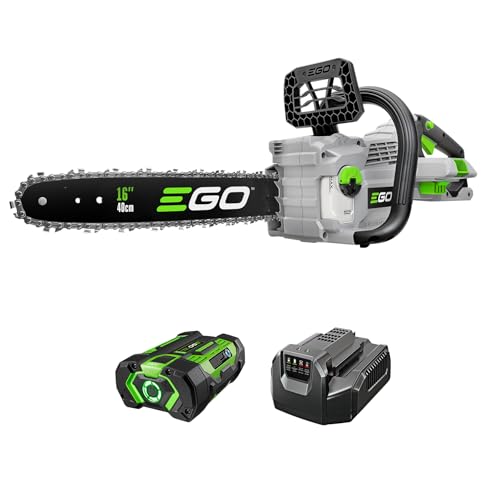
#1 EGO Power+ CS1611 16″ Chainsaw — Best Overall
Most homeowners clearing small trees will be well served here. The included 56V 2.5Ah ARC Lithium battery drives the 16-inch bar with cutting power rated as a 40cc gas equivalent, so thin trunks and storm limbs come down without fuel mixing or pull cords.
Key Specs:
- Bar and chain: 16 in, 3/8 in pitch, .043 in gauge, 52 drive links
- Power: 56V 2.5Ah ARC Lithium battery, 40cc gas equivalent
- Chain speed: 66 ft/s (20 m/s)
- Runtime: up to 130 cuts on a 4×4 per charge
- Weight: 9 lb
- Weather resistance: IPX4
Detailed Review:
The 40cc gas-equivalent rating and 66 ft/s chain speed keep the chain moving through green wood instead of slowing near the end of a cut, where a weaker saw tends to bind. Up to 130 cuts on a 4×4 from the included pack is a lot of cutting before the charger comes out.
Day-to-day handling is where this saw earns its place. Tool-free tensioning, automatic oiling and a spill-free oil reservoir take the fuss out of keeping the chain right, and refilling bar oil out in the yard doesn’t leave a mess on your gloves.
The Dong Cheng 40V 16-Inch Cordless Chainsaw is rated for up to 120 cuts on a 4×4, but it needs two 4.0Ah packs to get there. The EGO reaches its figure on a single, smaller pack, so there’s only one battery to charge and keep track of; the trade-off is a commitment to the EGO 56V platform for spares.
The IPX4 rating lets you keep working in damp conditions after a storm, and the low-kickback chain comes with a brake indicator, so you can see whether the chain brake is engaged before restarting. At 9 lb, it stays manageable for ground-level cutting. I’d hand this saw to a first-time owner before any gas model.
Pros:
- Gas-equivalent power from a single included 56V battery
- Tool-free tensioning makes chain adjustments quick
- Spill-free reservoir keeps bar oil refills clean
- IPX4 rating handles damp-weather cleanup
- Brake indicator shows when the chain brake is engaged
Cons:
- One smaller pack means pauses to recharge on long jobs
- Spare batteries tie you to the EGO 56V platform
- Weighs more than the Husqvarna 130 for overhead limbs
Who It’s For:
Homeowners who want a quiet, fuel-free saw for taking down small trees and cleaning up after storms will get the most from it, especially anyone already running EGO 56V yard tools. If your plan is long days of firewood cutting with no spare battery, a gas saw that refuels in seconds suits that workload better.
Editor’s Verdict:
Pick this saw if you want gas-class cutting without fuel mixing; tool-free tensioning and spill-free oiling keep routine upkeep minimal.
#2 Husqvarna 120 Mark III 16″ — Best Gas-Powered
Choose this one if you’d rather pour fuel than charge batteries. Its 38cc, 1.8 HP X-Torq engine pairs with an air purge system and a combined choke/stop control, so it starts with less fuss than older two-strokes and keeps running as long as there’s gas in the can.
Key Specs:
- Engine: 38cc, 1.8 HP, 2-cycle X-Torq
- Bar: 16 in (recommended bars 14–18 in)
- Weight: 10.7 lb
- Starting: air purge system, combined choke/stop control
- Safety: inertia-activated chain brake
- Vibration control: LowVib dampeners
Detailed Review:
The 38cc, 1.8 HP X-Torq engine has plenty of pull for small trunks and storm limbs, and it gives you a gas saw’s freedom: no charge to plan around, just a fuel can. The saw accepts recommended bars from 14 to 18 inches, so you can run a shorter bar for nimble limb work or fit a longer one if a bigger trunk shows up later.
Starting is where an occasional-use gas saw usually frustrates its owner. The air purge system primes the fuel system before the first pull, and the combined choke/stop control puts starting on one lever, which cuts down on the over-choking that floods an engine.
Cutting dead or dusty wood loads an air filter fast. The centrifugal air cleaning system spins larger debris out before it reaches the filter, so the engine breathes cleaner air between filter cleanings and lasts longer.
LowVib dampeners keep vibration away from your hands during longer sessions, and the inertia-activated chain brake trips if the bar kicks back. At 10.7 lb, it’s a sturdy saw to hold at arm’s length, so it suits ground-level felling and bucking more than overhead pruning. If gas is your clear preference, the best gas chainsaws include stronger engines for bigger timber.
Pros:
- Runs anywhere with no charging between sessions
- Air purge and combined choke/stop simplify cold starts
- Accepts recommended bars from 14 to 18 inches
- Centrifugal air cleaning keeps debris off the filter
- LowVib dampeners reduce hand fatigue
Cons:
- Two-stroke engine needs mixed fuel and seasonal upkeep
- Gas engine noise calls for hearing protection every time
- Its weight tires arms faster during overhead cuts
Who It’s For:
Buyers who already keep a fuel can around for other equipment and want a saw that never waits on a charger fit this Husqvarna well, as do those who may fit a longer bar later. Anyone sensitive to noise or unwilling to mix fuel should look at a battery saw instead.
Editor’s Verdict:
Expect a dependable gas saw that starts with less fuss than older two-strokes and leaves room to change bar length as your jobs change.
#3 Dong Cheng 40V 16-Inch Cordless Chainsaw — Best Budget
For light yard work on a tight budget, this cordless saw covers the essentials. A brushless motor running on two 20V 4.0Ah batteries (40V total) is rated for up to 120 cuts through 4×4 lumber per charge, and both packs come with the saw.
Key Specs:
- Bar: 16 in
- Power: two 20V 4.0Ah batteries (40V total)
- Motor: brushless
- Runtime: up to 120 cuts through 4×4 lumber per charge
- Chain brake: inertia-activated, stops the chain in under 0.1 seconds
- Model: DCCS40161(EA-04)
Detailed Review:
A brushless motor fed by two 20V 4.0Ah batteries gives this saw push-button starting and none of the engine chores that come with gas. Charge both packs fully before the first job so they share the load evenly, which also protects their long-term life.
Up to 120 cuts through 4×4 lumber on a charge is solid capacity for a saw in this tier. The EGO Power+ CS1611 16″ Chainsaw is rated for up to 130 cuts on one smaller pack, so the Dong Cheng trades a little cutting capacity and the convenience of a single battery for two included packs you can move to other tools.
The inertia-activated chain brake stops the chain in under 0.1 seconds on kickback, and a lock-out switch keeps the trigger from firing by accident. Tool-free tensioning and an automatic oiler handle the routine maintenance.
The batteries also work across Dong Cheng’s 20V and 40V tool lineup, which is where a budget saw stretches its value. The practical catch is the dual-pack design: the saw needs both batteries charged, so a single weak pack stops the job.
Pros:
- Two 4.0Ah batteries come included with the saw
- Chain brake stops the chain in under 0.1 seconds
- External knob adjusts chain tension without tools
- Batteries fit Dong Cheng 20V and 40V tools
Cons:
- Both batteries must be charged for the saw to run
- Fewer cuts per charge than the EGO CS1611
- Charging two packs adds time between sessions
Who It’s For:
Budget-minded homeowners trimming saplings and clearing storm debris now and then get a capable cordless saw plus batteries they can reuse across Dong Cheng 20V and 40V tools. If you already own another brand’s battery platform, staying with that brand saves buying a second set of packs and chargers.
Editor’s Verdict:
Count on steady everyday cutting and a quick-acting chain brake; just plan your charging so both packs are full before the job starts.
#4 Husqvarna 130 16 in — Best Lightweight
Overhead limbs and long sapling cleanups are where this saw shines. At 5.67 lb with a 38cc, 2 HP X-Torq engine, it keeps your arms fresher than heavier saws while still driving the chain hard through green wood.
Key Specs:
- Engine: 38cc, 2 HP X-Torq
- Weight: 5.67 lb
- Bar: 16 in (recommended bars 14–16 in)
- Starting: fuel pump, combined choke/stop control
- Safety: inertia-activated chain brake
- Vibration control: LowVib dampeners
Detailed Review:
At 5.67 lb, this saw is easy to hold out from the body when you’re limbing a felled trunk or reaching for a branch at shoulder height. Less weight at the end of your arms means less swing when the chain breaks through, and steadier hands make for cleaner, safer cuts.
Compared with the Husqvarna 120 Mark III 16″, this model pairs a lighter build with a 2 HP X-Torq engine instead of 1.8 HP, so you get more power in a lighter package. The trade-off is bar range: this saw tops out with a 16-inch bar, while the 120 accepts up to 18 inches.
The X-Torq engine holds its power even at low RPMs, which helps when a cut slows in knotty wood. A fuel pump and combined choke/stop control make cold starts easier and reduce flooding, and the same centrifugal air cleaning found on the 120 keeps debris off the filter.
LowVib dampeners take the edge off vibration during long limbing sessions, and an inertia-activated chain brake covers kickback. If saw weight sits at the top of your list, the best lightweight chainsaws cover battery options as well as gas.
Pros:
- Low weight eases overhead and limbing cuts
- X-Torq engine holds power even at low RPMs
- Fuel pump and choke/stop control lower flooding risk
- LowVib dampeners reduce hand and arm fatigue
Cons:
- Tops out at a 16-inch bar
- Needs mixed fuel and two-stroke engine care
Who It’s For:
Anyone who cuts above chest height, works along brushy fence lines, or tires quickly with a heavier saw will appreciate how this one handles. Those who expect to fit a longer bar for bigger trunks later are better matched with the Husqvarna 120 Mark III 16″.
Editor’s Verdict:
Reach for this saw when control matters more than bar length; its light build and LowVib dampening make long limbing sessions far less tiring.
#5 Greenworks 40V 16″ Brushless Chainsaw — Best Battery Life
Long cleanup days with no fuel to mix suit this battery saw. Its 40V 4.0Ah pack feeds a 1.5 kW brushless motor and holds its charge for more than 12 months in storage, so the saw is ready even after sitting through the off-season.
Key Specs:
- Battery: 40V 4.0Ah lithium-ion, charger included
- Bar: 16 in, handles trees and limbs up to 28 in in diameter
- Weight: 10.36 lb
- Warranty: 3 years on tool and battery
- Model: 20312
Detailed Review:
The 40V 4.0Ah battery and brushless motor are built for extended cutting time, so a full storm cleanup is less likely to end with a trip to the charger. The pack also holds its charge for more than 12 months in storage, which suits owners who use a saw in bursts and let it sit between seasons.
The brushless motor and 16-inch bar handle trees and limbs up to 28 inches in diameter, cutting from both sides on anything wider than the bar. Small trees leave a wide margin below that, so the motor isn’t working at its limit on everyday cuts.
Starting takes two steps with nothing to prime or pull, and the chain brake and low-kickback design handle the safety side. The automatic oiler has a flip-up cap and a transparent window, so checking bar oil before each session takes a glance, and tool-free tensioning keeps chain adjustments quick.
The battery works across Greenworks 40V tools, and a 3-year warranty covers both the tool and the battery. At 10.36 lb it carries more weight than the EGO Power+ CS1611 at 9 lb, so it suits ground-level cutting better than long stretches of overhead pruning.
Pros:
- 4.0Ah battery extends cutting time between charges
- Battery holds its charge for over a year in storage
- Transparent oil window shows the level at a glance
- Shares batteries with Greenworks 40V tools
- Three-year warranty covers tool and battery
Cons:
- Weighs more than the EGO CS1611 for overhead work
- One included pack means downtime while it recharges
Who It’s For:
Owners of Greenworks 40V mowers, trimmers or blowers can put their existing packs to work here, and anyone who picks up a saw only occasionally benefits from a battery that keeps its charge through long storage. People who mostly cut overhead may prefer a lighter saw.
Editor’s Verdict:
Buy it for the long shelf charge and warranty backing; it’s an easy saw to own when cutting happens in bursts between long idle stretches.
#6 RYOBI 40V Brushless Chainsaw 16 in — Best Premium
This one makes sense for anyone already running RYOBI 40V tools. It ships as a bare tool, so the packs you own power its brushless motor and 16-inch bar, while side access chain tensioning and on-board storage add everyday convenience in the yard.
Key Specs:
- Bar: 16 in
- Platform: RYOBI 40V, works with all RYOBI 40V batteries
- Motor: brushless
- Weight: 11.6 lb
- Tensioning: side access
- Model: RY40505BTL
Detailed Review:
This saw ships as a bare tool and runs on any RYOBI 40V battery, so its value depends on the packs you already own. The brushless motor and 16-inch bar give it gas-like cutting power for small trunks and storm limbs without a pull cord or fuel can.
The automatic chain brake stops the chain on kickback, and the automatic oiler handles bar lubrication while you cut. Side access chain tensioning lets you correct a slack chain from the side of the saw, which keeps a quick adjustment from turning into a project mid-job.
On-board storage keeps what you need with the saw rather than in a pocket. At 11.6 lb, it’s heavier than the EGO Power+ CS1611 at 9 lb, and that weight shows up most in overhead cuts; in exchange, RYOBI owners skip buying into a second battery system.
Sitting at the premium end, this saw makes the most sense as an addition to an existing RYOBI 40V lineup rather than as a first battery tool. Without a pack and charger it won’t run, so a newcomer needs both before the first cut.
Pros:
- Runs on every RYOBI 40V battery
- Brushless motor delivers gas-like cutting power
- Side access tensioning simplifies chain adjustments
- On-board storage adds convenience in the yard
Cons:
- Battery and charger are sold separately
- Heavier than the Greenworks and EGO battery saws
Who It’s For:
Households with a garage shelf of RYOBI 40V gear can add a capable saw without buying another battery system. Shoppers with no RYOBI packs would also need a battery and charger before the first cut, so a saw that ships with its own pack is the simpler start.
Editor’s Verdict:
Treat it as the natural chainsaw for a RYOBI 40V household, bringing brushless power, an automatic chain brake and on-board storage into one tool.
What Should You Look for in a Chainsaw for Small Trees?
Handling at the cut matters more than raw power, because small-tree work is mostly short, repeated cuts at awkward angles where control and reliable starting decide how the job goes.
A saw that looks strong on paper can still be the wrong fit if it’s too heavy to hold steady, too long for the trunks you actually cut, or too fussy to start after sitting in the shed. Each criterion ties back to something you’ll feel in the yard: how quickly the cut finishes, how tired your arms get, and how the saw behaves when the bar binds or kicks.
How Long Should the Bar Be for Small Trees?
A bar slightly longer than the trunk you’re cutting is the easiest to control, because it finishes the cut cleanly without leaving extra bar tip hanging out past the wood. That’s why a 16-inch bar covers most of the small trees and storm limbs a homeowner deals with.
Going longer adds weight at the front of the saw, which pulls your wrists down and makes the bar wander on angled cuts. A longer bar also puts more of the kickback-prone tip out ahead of the cut, where it can brush a neighboring branch. Going too short has its own cost: once a trunk is wider than the bar, you have to cut from both sides and line the cuts up, which takes more skill.
Battery saws also have a practical ceiling on bar length, since a longer chain draws power from the pack faster and shortens runtime. If you’re settled on this size, the best 16 inch chainsaws compare more options at that length.
Is a Gas or Battery Chainsaw Better for Small Trees?
For occasional small-tree work, a battery saw suits most homeowners better: it starts with a button, runs quietly enough for a suburban street, and skips fuel mixing, carburetor problems and winter engine prep. Gas still wins for owners who cut for long stretches far from a charger or who already keep mixed fuel for other two-stroke tools.
The trade-off sits mainly in runtime and upkeep. A gas saw refuels in seconds and keeps going, but it needs fresh fuel, air filter cleaning and off-season storage steps to start reliably. A battery saw has almost no engine upkeep, but a session ends when the pack runs down unless you own a spare. Brushless motors stretch that runtime, because they lose less energy to friction and heat than brushed motors, so more of each charge reaches the chain.
An existing battery platform often settles the question. If your mower or trimmer already runs on a 40V or 56V pack, a saw from the same brand turns that battery into a second tool, and the best battery chainsaws span every major platform.
How Much Should a Small-Tree Chainsaw Weigh?
Lighter is better for small-tree work, because most cuts happen with the saw held away from your body, and every extra pound turns into arm fatigue and a wobbling bar. That matters most during limbing and overhead cuts, where you’re supporting the saw at chest or shoulder height and a tired grip loses the fine control that keeps the bar on line.
A heavier saw is less of a problem for felling and bucking at ground level, where you can brace the saw against the log and let its weight help the cut. For cordless saws, remember that the battery pack adds to the working weight once it’s clicked in, so the weight you actually hold is the saw and battery together.
Which Safety Features Should a Small-Tree Chainsaw Have?
A chain brake, a low-kickback chain, a lock-out switch and correct chain tension are the features that matter when something goes wrong. Each one handles a different failure, so the safest homeowner saws combine all of them.
- Chain brake: stops the chain when the bar kicks back toward you, either through an inertia trigger or the front hand guard, so the chain is no longer moving by the time the bar reaches you.
- Low-kickback chain: uses guard links that limit how deeply the cutters bite at the bar tip, which reduces the force of a kickback when the tip touches wood.
- Lock-out switch: keeps the trigger dead until you deliberately release it, preventing the chain from starting while you carry or adjust the saw.
- Tool-free tensioning: makes it easy to keep the chain snug, and a correctly tensioned chain is far less likely to jump off the bar mid-cut.
Which Chainsaw Fits Your Yard and Experience Level?
Your existing batteries, your tolerance for weight, and how you feel about fuel decide the match faster than any single spec does.
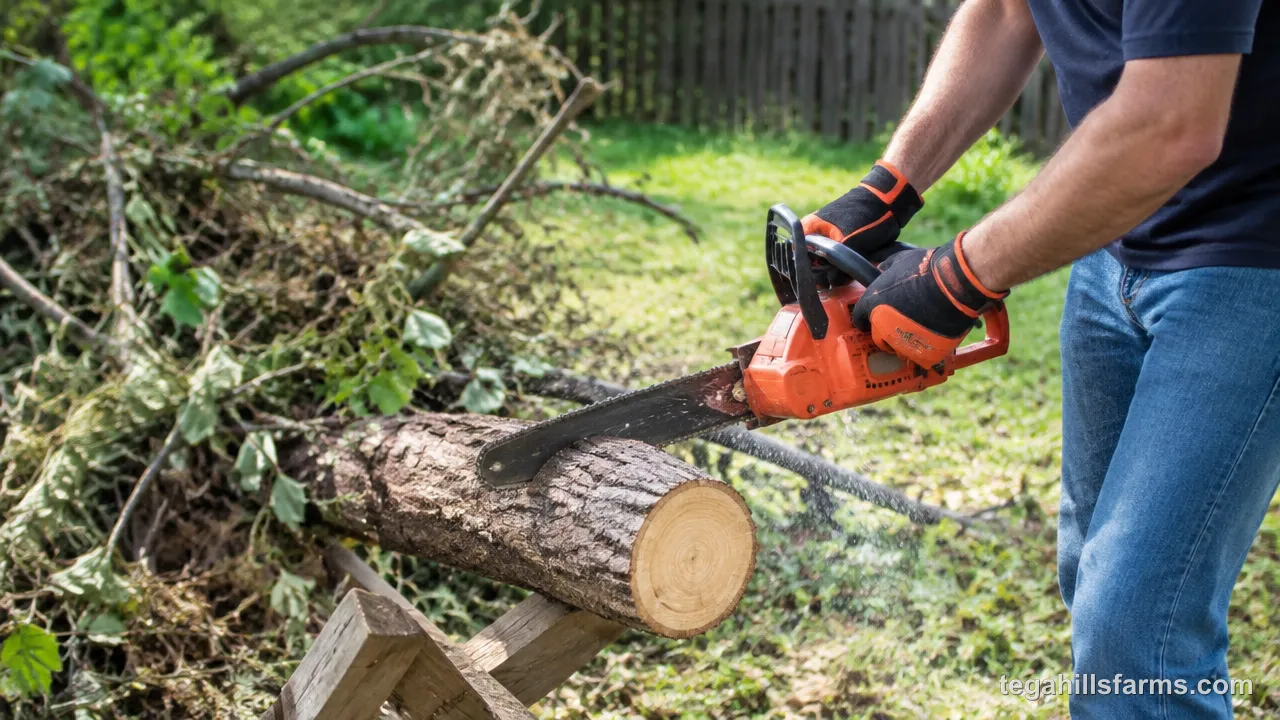
- Battery platform owners: EGO 56V users should pick the EGO Power+ CS1611 16″ Chainsaw, Greenworks 40V users the Greenworks 40V 16″ Brushless Chainsaw, and RYOBI 40V users the RYOBI 40V Brushless Chainsaw 16 in. The trade-off is that spare packs stay tied to that brand.
- Lightest handling: the Husqvarna 130 16 in keeps arm fatigue down on overhead and limbing cuts, at the cost of fuel mixing and a bar range that stops at 16 inches.
- Gas starting and fuel flexibility: the Husqvarna 120 Mark III 16″ runs anywhere a fuel can goes and accepts a longer bar later, but it carries more weight and needs two-stroke upkeep.
- Budget-minded buyers: the Dong Cheng 40V 16-Inch Cordless Chainsaw includes two batteries, though both must be charged for the saw to run.
- First-time owners: the EGO Power+ CS1611 pairs push-button starting with a brake indicator and simple tensioning, so there’s less to learn before the first cut.
If your plans reach beyond small trees to firewood and general yard work, the best chainsaws for homeowners cover saws suited to a wider mix of jobs.
A sapling with a trunk no thicker than your forearm often comes down faster with a sharp pruning saw than it takes to fuel or charge a chainsaw, put on chaps and walk the saw out to the tree. Reach for a chainsaw on every thin limb by habit and you end up taking on kickback risk, noise and cleanup for cuts a hand tool would have finished quietly in a minute.
When Is a Hand Saw Enough Instead of a Chainsaw?
A hand saw or pruning saw is enough for thin trunks, small limbs and a handful of cuts, while a chainsaw earns its keep once you’re felling several small trees or bucking a downed one into pieces. A sharp folding or curved pruning saw cuts green wood quickly, makes no noise, has no kickback zone, and needs nothing but an occasional cleaning.
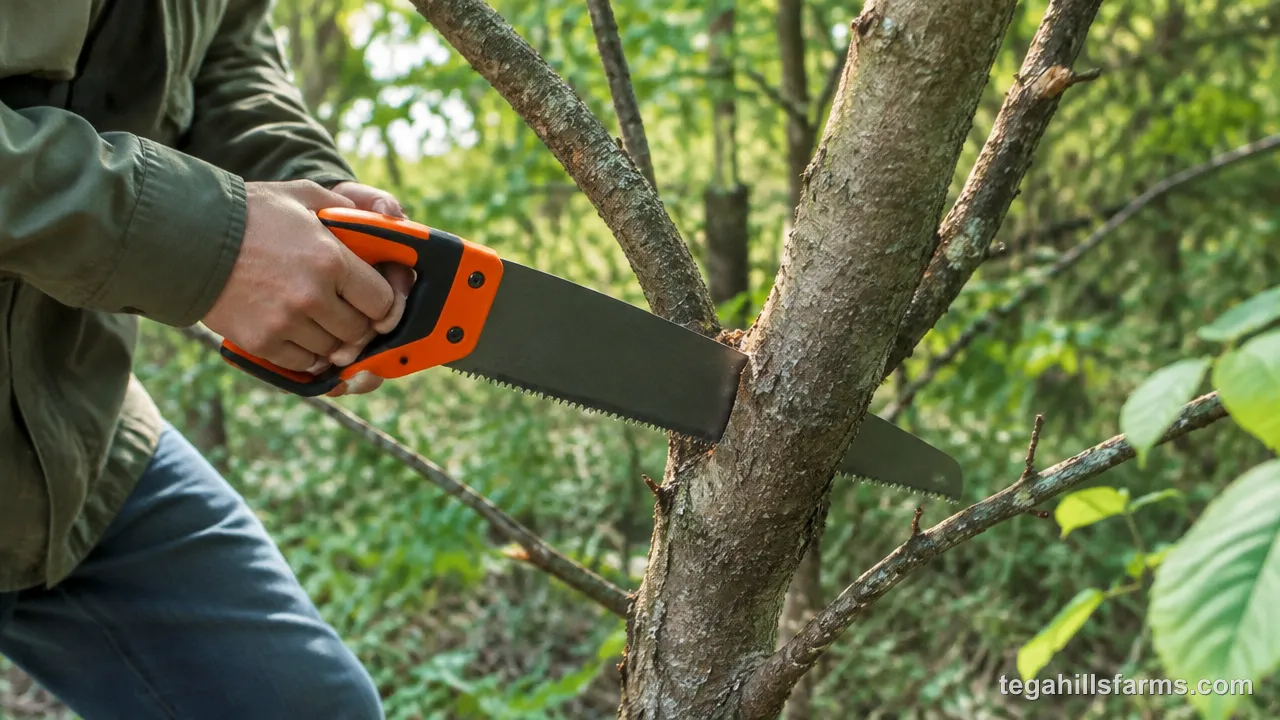
The tipping point is volume and thickness. A few clean cuts on young saplings or overhanging branches favor the hand saw, because setup time for a chainsaw outweighs the cutting time it saves. A fallen tree that needs cutting into stove-length pieces, or a fence line full of volunteer trees, is where a chainsaw turns an exhausting weekend into an afternoon.
High branches are a separate case. Climbing a ladder with a running chainsaw is one of the riskier things a homeowner can do, and a pole saw reaches overhead limbs from the ground instead. If those high cuts come up often, the best pole saws handle that work without a ladder.
What Safety Gear and Habits Matter When Cutting Small Trees?
Chainsaw chaps, a helmet with a face screen and hearing protection, safety glasses, sturdy gloves and boots with good grip are the baseline for every cut, small tree or not. Thin trunks feel harmless, which is exactly why injuries happen on them: people skip the gear for a quick job, cut one-handed, or reach across the bar.
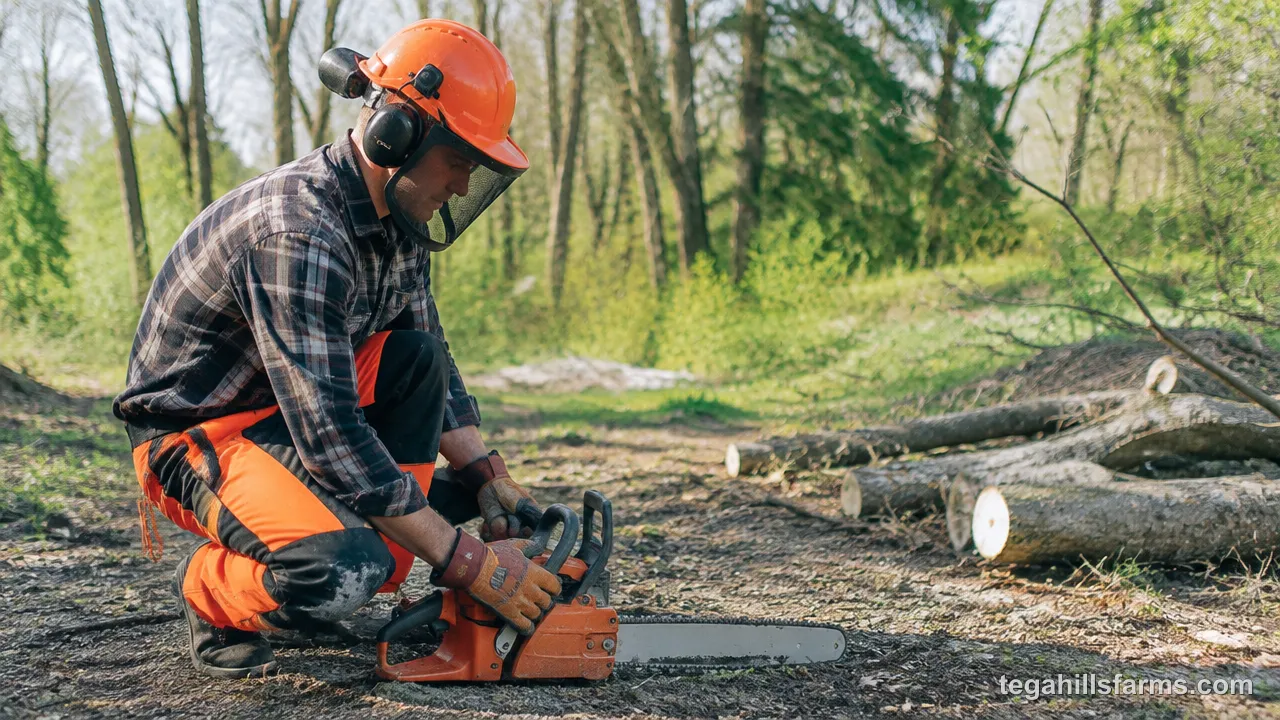
Small trees bring their own hazards. Saplings bent under other trees or storm debris store tension like a spring, and cutting into the wrong side can whip the trunk or pinch the bar. Short trunks also tempt you to cut near the ground, where the bar tip can strike dirt, rocks or roots and kick back.
Clear habits keep those risks in check:
- Plan an escape path at an angle away from the expected fall before the first cut.
- Keep both hands on the saw and your feet planted on stable ground.
- Clear brush around the trunk so the bar tip can’t catch hidden stems.
- Never cut above shoulder height.
Before the first cut with a new saw, read the manual, check that the chain brake engages, set the chain tension, and practice on a log lying on the ground.
How Do You Keep a Chainsaw Cutting Well and Know When Parts Are Worn Out?
A chain that throws fine dust instead of chips, pulls to one side, smokes, or needs you to push it through the wood has gone dull. Sharpening fixes most of that, either with a round file and guide or with one of the chainsaw sharpeners built for home use. Replacement makes more sense once the cutters have been filed down to the wear marks, teeth are chipped from striking dirt or rock, or the chain has stretched past its adjustment range. Fresh chainsaw chains go hand in hand with checking the bar: worn or spread rails, a burr along the edges, or a bent bar all make the chain cut crooked no matter how sharp it is. Beyond the chain and bar, routine upkeep depends on what powers the saw.
What Upkeep Does a Gas Chainsaw Need?
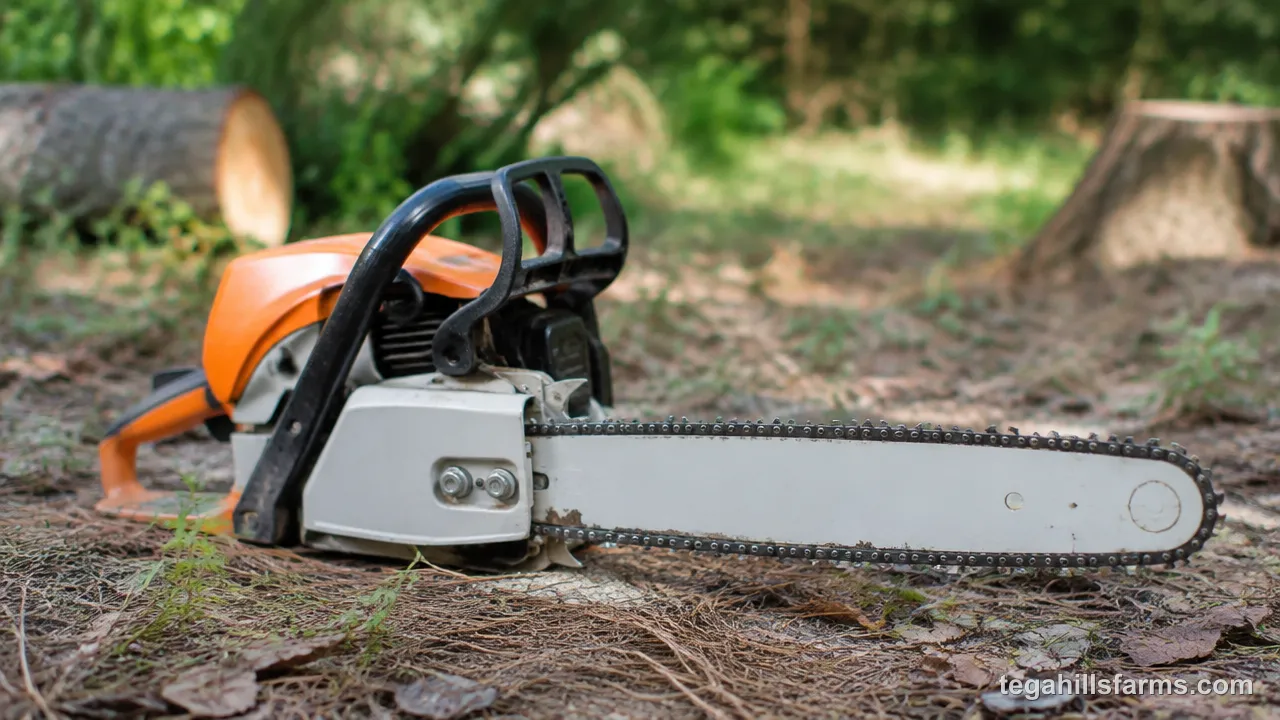
Fuel quality causes most gas chainsaw problems, so fresh fuel mixed at the ratio in your owner’s manual is the first habit to build. Gas with ethanol absorbs moisture and breaks down while it sits, which leaves varnish in the carburetor and a saw that won’t start. Ethanol-free fuel or a fuel stabilizer, plus premixed canned fuel for occasional users, avoids most of that trouble.
The air filter needs cleaning regularly, because a clogged filter starves the engine and makes it run rich and weak. Chain tension should be checked before each session and again as a new chain stretches, and the chain needs sharpening whenever it starts making dust instead of chips. A spark plug check each season keeps starting easy.
The tasks owners skip most are draining or stabilizing fuel before winter and cleaning the filter, and both show up the following spring as a saw that floods, sputters or refuses to start.
What Upkeep Does a Battery Chainsaw Need?
Battery saws skip engine work, but they still need bar oil, chain care and battery habits that protect the pack. Lithium-ion batteries last longest when stored indoors, away from freezing garages and summer heat, and when they sit partly charged rather than fully drained between seasons. Charge on the supplied charger and let a hot pack cool after hard cutting before topping it up.
Bar oil is the step cordless owners forget most often, because there’s no fuel tank to remind them. Running the chain dry wears the bar and chain quickly and can scorch both, so check the oil level before every session. Chain tension and sharpening follow the same rules as on a gas saw, since the chain doesn’t care what’s spinning it.
Battery saws have a shorter track record than gas engines, so long-term pack life is less proven than engine life. Caring for the battery between seasons is the best protection you have.
Is a Homeowner Chainsaw Enough, or Do You Need a Professional Model?
Yes, a homeowner-grade saw is enough for occasional small-tree removal and storm cleanup. Professional saws are built for daily, all-day cutting, and that capability adds weight, cost and complexity you won’t use on a few saplings each year.
The difference comes down to duty cycle and repairability. A professional model is designed to run for hours at a time, day after day, with stronger internals, better cooling, and parts meant to be rebuilt rather than replaced. A homeowner saw is designed for shorter sessions with rest in between, which matches how most people actually cut in their own yard.
Stepping up makes sense if you heat with wood and cut cords of firewood every season, clear acreage, or run a saw for a side business, because a homeowner saw worked that hard wears out faster and costs downtime. For trimming, small-tree removal and post-storm cleanup, the extra capability sits idle. If your workload does land in that heavier range, the best professional chainsaws are built for it.
Frequently Asked Questions About Chainsaws for Small Trees
Can a 16-inch bar cut a trunk thicker than 16 inches?
Yes, by cutting from both sides of the trunk so the two cuts meet in the middle. It works, but lining the cuts up takes practice, and an uneven meet can pinch the bar. If wider trunks are a regular job rather than a one-off, a saw that accepts a longer bar is the better tool.
Can a battery chainsaw cut wet or green wood?
Yes. Green wood is softer than seasoned hardwood and often cuts more easily, and a battery saw handles it well with a sharp chain. Sap and moisture do gum up the chain and bar faster, so wipe them down afterward, keep the bar oiled, and store the battery dry and indoors.
How do mini chainsaws compare with full-size saws for small trees?
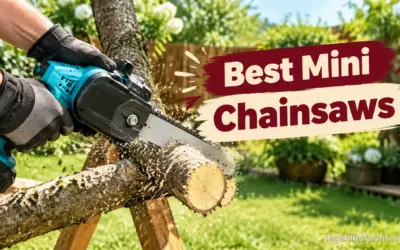
Mini saws are light, one-handed tools for pruning branches and thin saplings, while full-size saws handle real trunks with two-handed control. A mini saw is handy for shrubs and limbs, but it slows down fast on anything thicker. The best mini chainsaws suit pruning-heavy yards rather than tree removal.
Is a top-handle chainsaw a good choice for homeowners?
Usually not. Top-handle saws are compact tools built for trained arborists working in trees, and their short handle layout makes one-handed use tempting and kickback harder to control. A rear-handle saw is safer for ground-level work. The best top handle chainsaws make sense mainly for experienced users doing aerial pruning.
Can gas sit in a chainsaw tank between jobs?
For short gaps, fresh fuel with a stabilizer can stay in the tank. For longer storage, run the tank dry or switch to ethanol-free canned fuel, because untreated gas breaks down over time and leaves varnish in the carburetor. That residue is the usual reason a saw won’t start after sitting.
Write Your Review
No reviews yet. Be the first to share your experience!