

Our top picks for the best chainsaw sharpeners in 2026 are Oregon Universal Field Sharpening Kit (Best Overall), Hipa Chainsaw Sharpener Kit 12-Pack (Best Budget), Sharp Pebble Cordless Chainsaw Sharpener Kit (Best Cordless), Dremel 1453 Chainsaw Sharpening Kit (Best Lightweight), VEVOR 140W Electric Chainsaw Sharpener (Best for Professionals), KonKell 250W Electric Chainsaw Sharpener (Best Rust-Resistant), and Oregon 12V Sure Sharp Chain Sharpener (Best Compact). They run from hand files that roll up in a pouch to motorized grinders that bolt to a bench, so the right one depends on your saw and your routine more than on raw power.
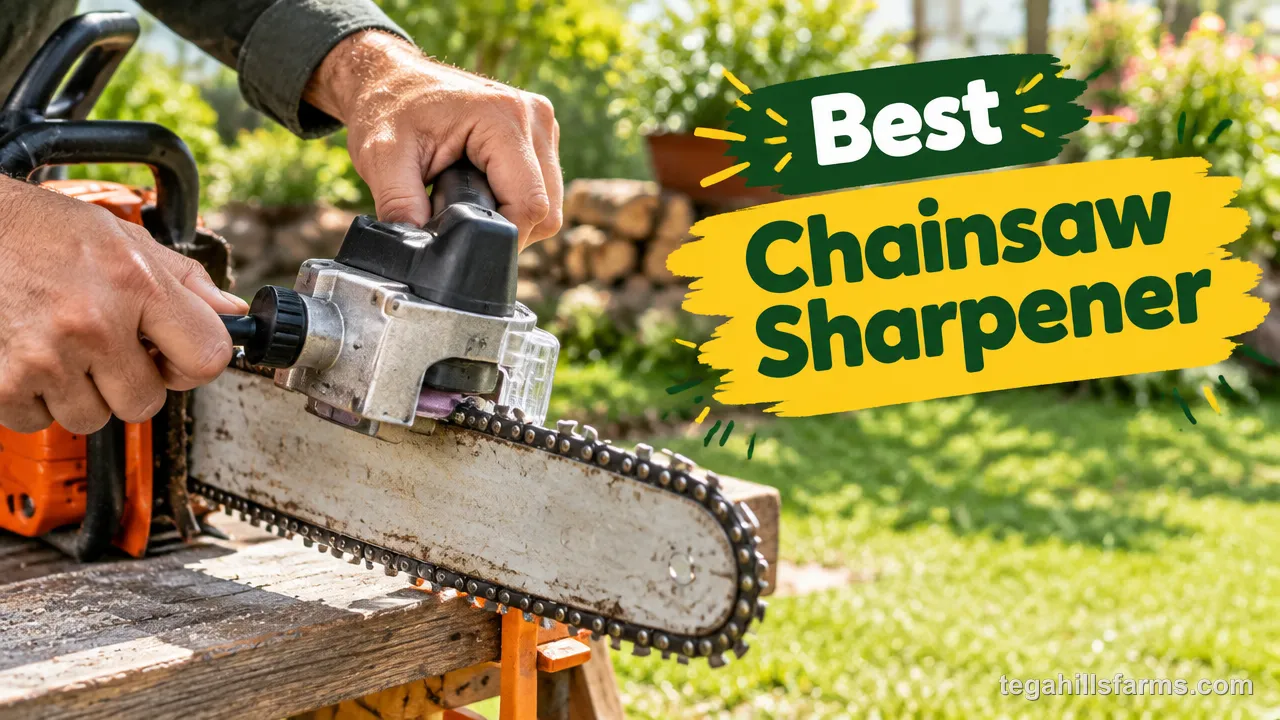
A sharpener earns its place when it matches your chain’s pitch and cutter size, when its mechanism fits how often you sharpen, and when it helps you set the depth gauges as well as the teeth. Miss any of those and you either fight the tool or slowly grind your chain into the wrong shape.
The worry most owners have is ruining a chain with the wrong file or an unsteady angle. That worry is fair, because teeth filed at uneven angles make the saw pull to one side and wear the chain faster, which is why guides, angle attachments and size-marked files matter more than speed.


If your saw comes out for a few weekends and the odd storm limb, a file kit with a guide does the job without a cord or a bench. If you cut firewood hard or keep several saws, a mounted electric unit pays back its setup time.
What Does a Chainsaw Sharpener Do and Which Types Exist?
This tool restores the cutting edge on each tooth by taking off a thin sliver of metal at the correct angle, so the chain bites and pulls itself through the wood again. A dull chain does the opposite: you end up pushing the saw, the cut wanders, and the engine or motor strains for every inch of progress.
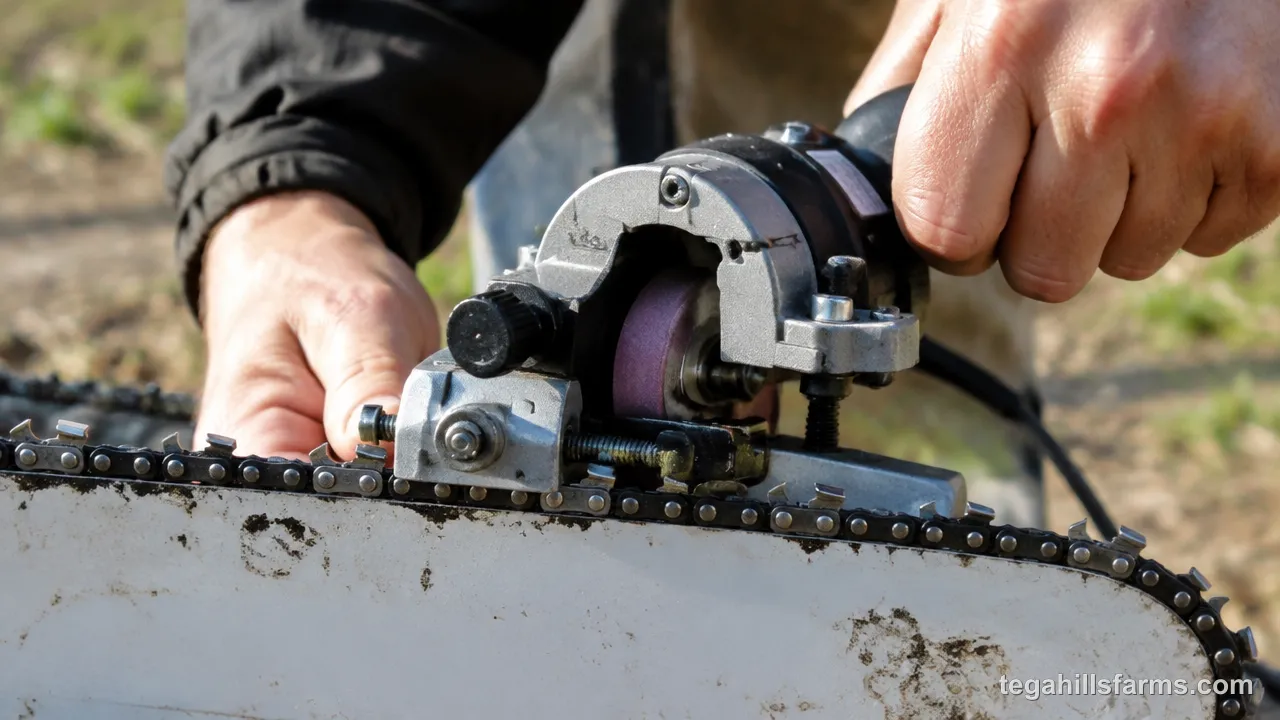
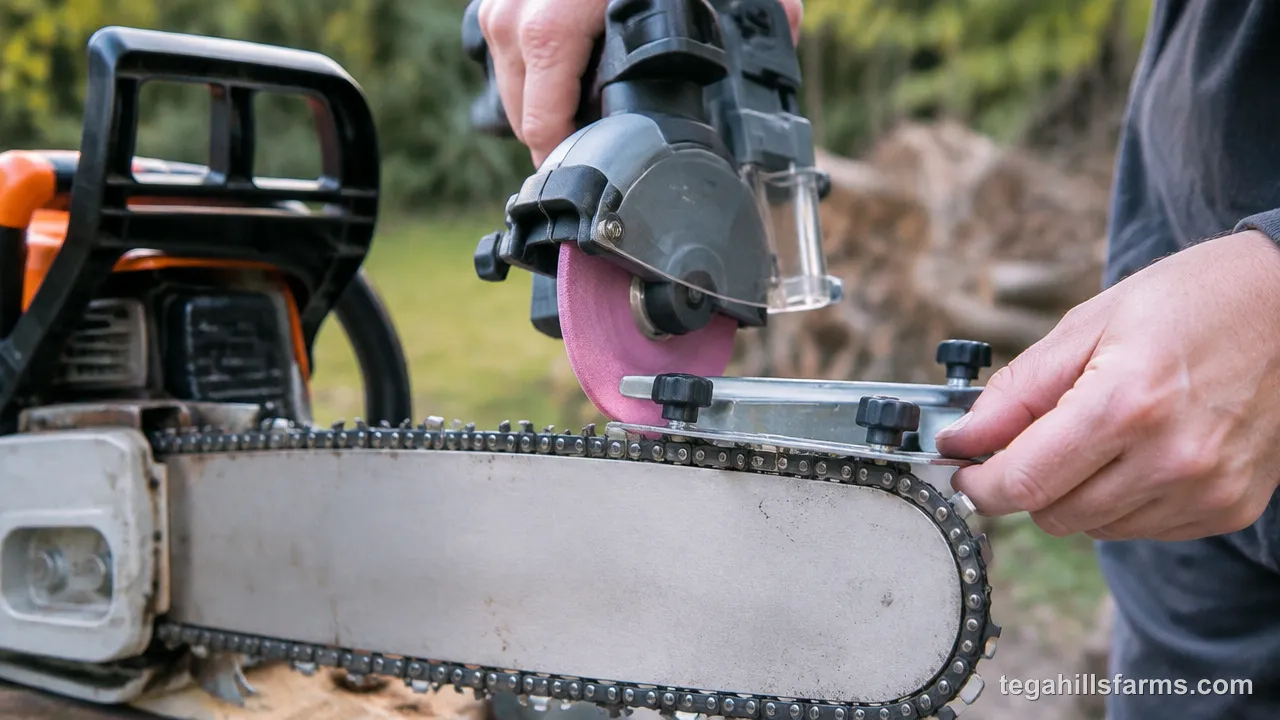
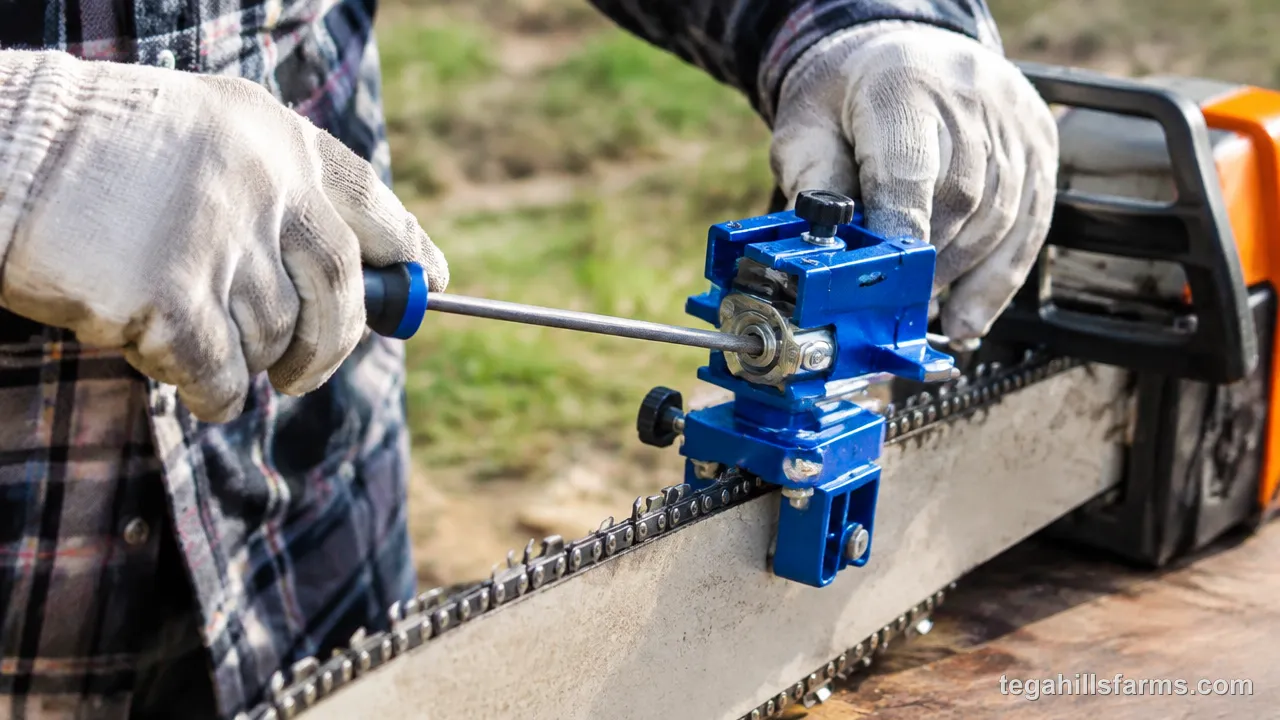
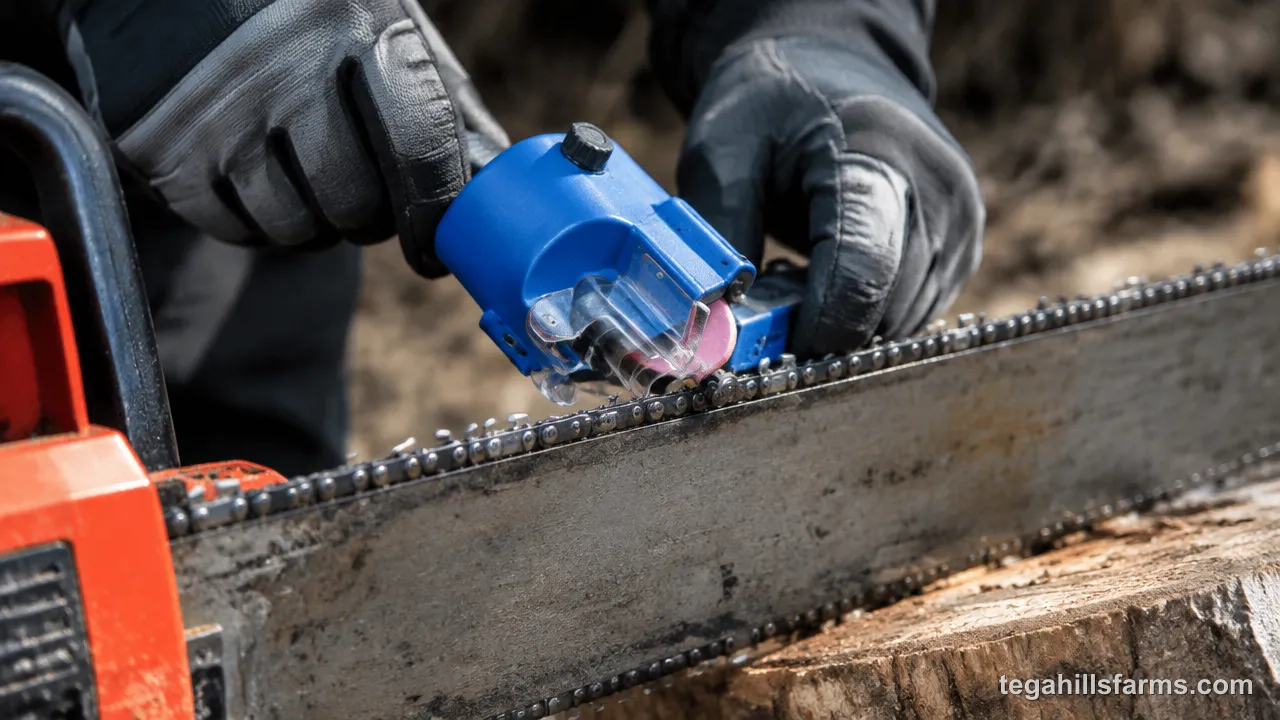
Four tool families handle the job. A round file in a file guide is the simplest and quietest, but it relies on your hand holding the angle stroke after stroke. A bar-mounted jig clamps to the bar and steers the file, trading setup time for steadier results. Handheld rotary and cordless sharpeners spin a small stone against each cutting tooth, so they work faster and ask less of your wrist, though you still guide them tooth by tooth. Bench grinders hold the chain in a fixed mount and give the most repeatable angle, at the cost of taking the chain off the saw and needing a workbench and power.
If you are still deciding which saw you will be keeping sharp, our guide to the best chainsaws covers the models worth owning.
The 7 Best Chainsaw Sharpeners of 2026
The lineup runs Oregon Universal Field Sharpening Kit, Hipa Chainsaw Sharpener Kit 12-Pack, Sharp Pebble Cordless Chainsaw Sharpener Kit, Dremel 1453 Chainsaw Sharpening Kit, VEVOR 140W Electric Chainsaw Sharpener, KonKell 250W Electric Chainsaw Sharpener and Oregon 12V Sure Sharp Chain Sharpener. What separates them is who holds the angle: with a hand-file kit it is your wrist, which needs no power but depends on technique; a cordless or rotary sharpener holds a steady angle on one saw at a time; and a bench-style electric unit locks the chain into a fixed mount, which suits people sharpening several chains in one sitting. Homeowners with one saw, people working out in the field, owners of several saws and heavy users who sharpen often each land on a different kind of tool, and a good sharpener belongs near the top of the best chainsaw accessories worth keeping in the shop.
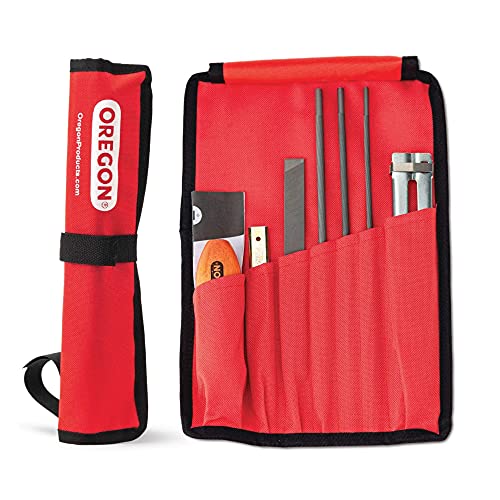
#1 Oregon Universal Field Sharpening Kit — Best Overall
If you want one dependable way to sharpen without power, this roll-up kit covers it. Its three round files in 5/32, 3/16 and 7/32 inch, plus a file guide that sets depth gauge height, handle the cutters and rakers on chainsaws and pole saws alike.
Key Specs:
- Round files: 5/32 in, 3/16 in, 7/32 in
- Flat file: 6 in
- Also included: file guide, universal file handle, instruction sheet with filing chart, rolled canvas pouch
- Weight: about 0.82 lb
- Model: 617067
Detailed Review:
The file guide is what makes this kit more than a bag of files. It rides on the chain while you stroke, holding the file at a consistent height and angle, and it also sets the depth gauges so the cutters keep biting properly after repeated sharpenings. That consistency is what keeps a hand-filed chain cutting straight instead of drifting to one side.
The filing chart on the instruction sheet matches each file to a chain and technique, which removes the guesswork for anyone who has never read a chain’s pitch. Between the three round files and the 6-inch flat file, you can dress both the cutters and the rakers without reaching for another tool.
Everything rolls into a canvas pouch with an inner pocket for each tool and a loop closure, so nothing rattles loose in a truck bin. Next to the Hipa Chainsaw Sharpener Kit 12-Pack, you get three round files instead of six, which means fewer options for odd chain sizes but a roll that is quicker to sort through.
Hand filing is still hand filing, so you need to learn the stroke and keep pressure even. I’d still point a one-saw owner here first, because nothing in the pouch needs charging, plugging in or replacing beyond the files themselves.
Pros:
- File guide sets angle and depth gauge height together.
- Filing chart matches each file to your chain.
- Rolled pouch keeps every tool in its own pocket.
- Works anywhere with no cord, battery or outlet.
Cons:
- Results still depend on your filing technique.
- Three round files leave out less common cutter sizes.
Who It’s For:
Anyone who sharpens at the woodpile or the edge of the yard, wants a kit that rolls up small, and is willing to learn a proper filing stroke will get steady results here. Pole saw owners get the same benefit. People who want speed over technique will be happier with a powered sharpener.
Editor’s Verdict:
A well-organized manual kit whose file guide does the hard part of hand sharpening, holding angle and depth gauge height steady from tooth to tooth.
#2 Hipa Chainsaw Sharpener Kit 12-Pack — Best Budget
Six labeled round files make this the kit to grab when your saws run different chains. It also packs a two-in-one depth gauge tool, a quick check gauge and a bar groove cleaner, so one high-visibility pouch handles sharpening and basic bar upkeep.
Key Specs:
- Round files: 1/8, 5/32, 11/64, 3/16, 13/64 and 7/32 in, size carved on each
- Flat file: 6 in
- Depth gauge tool: .025 in and .030 in settings
- Chain pitches: 1/4, .325, .354, 3/8, 3/8 LP, .404, 7/16 and 1/2 in
- Extras: quick check gauge, bar groove cleaner, wooden handle, orange pouch
Detailed Review:
The size carved on every round file solves the most common hand-filing mistake: grabbing the wrong diameter for the chain. With files running from 1/8 in to 7/32 in, the set reaches chain pitches from 1/4 in up to 1/2 in, which matters when a small pruning saw and a larger firewood saw share the same shelf.
The depth gauge tool offers .025 in and .030 in settings and works with the flat file to bring the rakers down after a few rounds of sharpening. The quick check gauge reads pitch size, filing angle, cutter tooth length and depth gauge size, so you can confirm what a chain needs before a file ever touches it.
The bar groove cleaner earns its spot in the pouch. Clearing the bar channel and oil holes keeps oil reaching the chain, which slows wear between sharpenings, and the orange pouch is easy to spot when you set it down in sawdust or leaves.
Like any hand-file kit, the steadiness of each stroke comes from your hand, and the wooden handle holds the round and flat files securely while you work. For a low-cost set, I think that trade is fair, since the gauges let you check your work after every pass.
Pros:
- Size carved on every round file prevents mix-ups.
- Two-setting depth gauge tool pairs with the flat file.
- Quick check gauge confirms pitch and angle before filing.
- Bar groove cleaner adds basic bar maintenance.
- Wide pitch coverage fits saws with different chains.
Cons:
- Like any hand file, a steady angle depends on you.
- More files means more sorting to find the right one.
Who It’s For:
If your garage holds a small pruning saw and a bigger firewood saw with different chains, this set keeps a file ready for each of them. Beginners learning to sharpen get gauges to check their work without spending much. Owners who would rather not file by hand at all are better served by a powered sharpener.
Editor’s Verdict:
Pick this up when you need many file sizes and the gauges to check your work, all in one inexpensive pouch.
#3 Sharp Pebble Cordless Chainsaw Sharpener Kit — Best Cordless
Without a cord, you can sharpen wherever the saw happens to be. The angle guide attachment holds each tooth at the same angle and depth, and four sharpening wheels in 5/32, 3/16 and 7/32 inch sizes cover common chains.
Key Specs:
- Sharpening wheels: four, in 5/32 in, 3/16 in and 7/32 in (two at 7/32 in)
- Included: cordless sharpening tool, chainsaw angle guide attachment, wrench, eBook
- Speed: adjustable
- Weight: 1.39 lb
- Model: CS2023
Detailed Review:
The angle guide attachment is the reason to choose this over a file. You set the grinding angle once and cycle through the chain, so every tooth ends up at the same angle and depth instead of drifting as your wrist tires, and the guide works the same for right- or left-handed users.
Adjustable speed lets you go gently on a lightly dulled chain and push harder when a tooth needs more material removed. Bearings in the motor keep the cutting disc stable, which is what leaves a clean finish on each cutter rather than a ragged edge.
Losing the cord matters most outdoors, at a woodpile or along a storm-damaged fence line, where an extension cord is one more thing to trip over. At 1.39 lb it outweighs the Dremel 1453 Chainsaw Sharpening Kit, but the Dremel needs a separate rotary tool to run, while this one arrives as a complete sharpener.
Compared with hand filing, the effort drops and the teeth come out more even, because the guide does the job your wrist would otherwise have to do. You still sharpen one tooth at a time, so plan on a careful, unhurried pass around the whole chain.
Pros:
- Angle guide keeps every tooth at the same angle.
- No cord to drag across the yard or woodpile.
- Adjustable speed handles light touch-ups and heavier dressing.
- Works for right- or left-handed users.
Cons:
- Sharpens one tooth at a time, unlike a bench mount.
- A cordless tool needs charging before you head out.
- Two wheels share a size, leaving three diameters.
Who It’s For:
Owners who sharpen out at the woodpile or on cleanup jobs, far from an outlet, get a steady angle without learning file technique. It also helps anyone whose hand filing keeps coming out uneven. If you want nothing to charge, a hand-file kit stays simpler.
Editor’s Verdict:
Choose this for even, repeatable sharpening without a cord, especially if hand filing has left your chains cutting crooked.
#4 Dremel 1453 Chainsaw Sharpening Kit — Best Lightweight
Owners of a compatible rotary tool get a chain sharpener for almost no added weight. The kit adds an angle guide attachment, an adjustment gauge and grinding stones in four sizes, and the whole set weighs about 0.05 lb, so it disappears into a toolbox drawer.
Key Specs:
- Included: sharpening angle guide attachment, adjustment gauge, 4 grinding stones
- Grinding stones: 4 sizes
- Grinding depth: up to 1.2 in (30 mm)
- Weight: about 0.05 lb (0.8 oz)
- Requires: a rotary tool
Detailed Review:
This kit is an attachment, not a standalone sharpener, so its value depends on whether a rotary tool already sits on your bench. If it does, the angle guide attachment holds the tool at a set angle to the tooth, which removes most of the wobble that makes freehand grinding risky.
The four grinding stones come in different sizes to match the cutters on different chains, and the adjustment gauge helps set the stone’s position before you start. That makes it practical for an owner keeping several saws sharp, since one rotary tool handles each chain with a quick stone change.
Rotary sharpening is fast, and that cuts both ways: a spinning stone removes metal much quicker than a file, so a light touch on each tooth matters more than speed. Grinding depth reaches up to 1.2 in (30 mm).
At about 0.05 lb, the kit weighs a fraction of the Oregon Universal Field Sharpening Kit at about 0.82 lb. Keep in mind the rotary tool brings its own weight and needs an outlet or a charged battery.
Pros:
- Angle guide steadies the rotary tool against each tooth.
- Four stone sizes match different chains.
- Kit adds almost nothing to a toolbox or truck bin.
- Uses a tool many owners already have.
Cons:
- Does nothing without a compatible rotary tool.
- Fast stones remove metal quickly if you press hard.
Who It’s For:
People who already keep a rotary tool for household projects will get the most from this, especially when several saws with different chains share the garage. Someone starting from scratch, with no rotary tool on hand, gets a complete sharpener with less hassle by choosing a self-contained unit.
Editor’s Verdict:
Add this to a rotary tool you already own and you have a capable, featherweight chain sharpener that stores in a drawer.
#5 VEVOR 140W Electric Chainsaw Sharpener — Best for Professionals
For anyone who sharpens chains often, a mounted grinder beats handheld tools on repeatability. This one pairs a 140W permanent magnet motor at 5700 rpm with three interchangeable grinding wheels and a quick measurement scale, covering chains from 1/4 inch to .404 inch pitch.
Key Specs:
- Motor: 140W permanent magnet, 5700 rpm
- Chain pitch: 1/4, .325, 3/8 and .404 in
- Grinding wheels: three, at 1/8 in (3.2 mm), about 0.18 in (4.5 mm) and about 0.24 in (6.0 mm)
- Extras: LED light, anti-slip handle, quick measurement scale
- Weight: 5.2 lb
Detailed Review:
A bench-style sharpener holds the chain in a fixed position and brings the wheel down at the same angle every time, which is the repeatability that matters when you sharpen several chains in one sitting. The quick measurement scale makes those settings easy to reproduce, so the last chain of the day comes out like the first.
The 140W permanent magnet motor spins at 5700 rpm and is built to grind efficiently without burning or softening the chain by mistake. Three interchangeable wheels let you match the cutter size, from 1/8 in up to about 0.24 in.
Next to the KonKell 250W Electric Chainsaw Sharpener, the VEVOR runs a smaller motor at a lower speed, but it handles .404 in pitch chains, which the KonKell’s 1/4 to 3/8 in range stops short of. If a larger saw with .404 chain lives in your shop, that difference decides it.
The LED light helps when the garage or shed is dim, and the anti-slip handle cuts fatigue over a long session. At 5.2 lb it wants a bench, so this is a shop tool rather than one that rides in the truck.
Pros:
- Fixed mount repeats the same angle chain after chain.
- Handles 1/4 to .404 in pitch chains.
- Three wheels match different cutter sizes.
- LED light helps in a dim garage or shed.
Cons:
- Chain comes off the saw for every sharpening.
- Needs a bench and an outlet, so it stays put.
Who It’s For:
Landscapers, firewood cutters and anyone running several saws will appreciate a setup that turns sharpening into a quick, repeatable routine. It also fits a home shop where dull chains pile up between jobs. Someone with a lightly used homeowner saw will find it more machine than the job needs.
Editor’s Verdict:
Mount it once and this grinder delivers the same angle on every chain, which is exactly what a heavy sharpening schedule calls for.
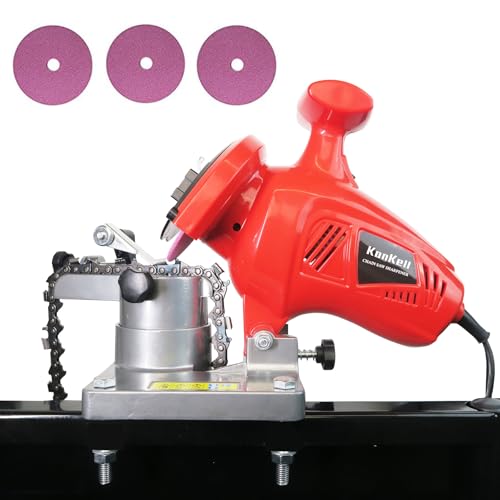
#6 KonKell 250W Electric Chainsaw Sharpener — Best Rust-Resistant
Built to resist rust and wear, this one suits a damp shed. Its 250W motor runs at 8400 RPM, and the adjustable grinding angle plus a mountable base keep chains from 1/4 to 3/8 inch pitch steady and precise while you work.
Key Specs:
- Motor: 250W, 8400 RPM
- Chain pitch: 1/4 to 3/8 in
- Grinding angle: adjustable
- Base: mountable
- Model: KK9031
Detailed Review:
Moisture is what slowly ruins tools in an unheated shed, and KonKell builds this unit from materials that resist rust, wear and tear for indoor and outdoor use. That matters for a sharpener that may sit for months between storm cleanups, because a corroded pivot or mount loses the precision you bought it for.
Next to the VEVOR 140W Electric Chainsaw Sharpener at 140W and 5700 rpm, this motor’s 250W and 8400 RPM finish each grind faster with less dwell on the tooth. The trade is coverage: its pitch range stops at 3/8 in, so a .404 chain sends you to the VEVOR instead.
The adjustable grinding angle lets you match the angle your chain calls for, which keeps it useful across a wide range of chain types inside that pitch range. The mountable base bolts the unit down so it doesn’t shift during a pass, and a steadier base grinds each cutter more evenly, especially on heavier chains.
Like any mounted grinder, it rewards a fixed spot on the bench more than a trip to the field. I’d set it up right where the saw is stored and leave it there.
Pros:
- 250W motor at 8400 RPM grinds quickly.
- Rust- and wear-resistant build suits damp storage.
- Adjustable angle handles different chain types.
- Mountable base keeps the unit steady during grinding.
Cons:
- Pitch range stops at 3/8 in, leaving out .404 chain.
- Chain comes off the saw for every sharpening.
Who It’s For:
Homeowners who store tools in a humid garage, shed or barn get a grinder that holds up between uses. It also fits frequent sharpeners whose saws run small to mid-size chains. Anyone running heavier, bigger-pitch chain will find the VEVOR 140W Electric Chainsaw Sharpener covers more ground.
Editor’s Verdict:
Expect a fast, sturdy grinder that shrugs off shed moisture, as long as your chains fall within its pitch range.
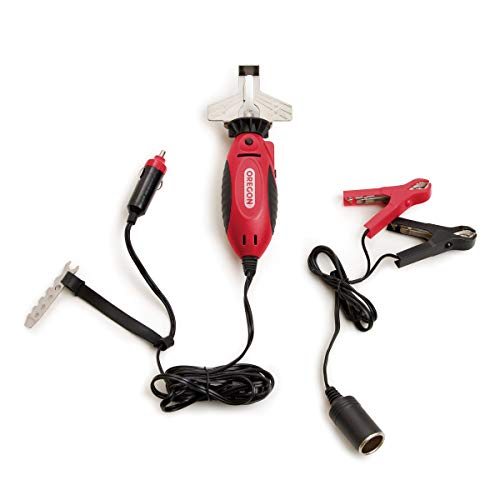
#7 Oregon 12V Sure Sharp Chain Sharpener — Best Compact
When the nearest outlet is far away, this sharpener runs off a vehicle. A 12-volt car adapter and battery clips power it, a simple angle adjustment guide keeps strokes accurate, and it handles round-ground 1/4, 3/8 Low Profile, .325, 3/8 and .404 inch chains.
Key Specs:
- Power: 12-volt car adapter and battery clips
- Cable: 16 ft
- Stones included: 5/32, 3/16 and 7/32 in, plus collet wrench
- Weight: 1 lb
Detailed Review:
Power is the whole story with this one. With a 12-volt car adapter and battery clips on a 16-ft cable, you can sharpen off a truck parked at the edge of a back lot or a storm job, with nothing to charge beforehand.
The simple angle adjustment guide keeps each pass at a consistent angle, and the included stones in 5/32, 3/16 and 7/32 in match the cutters on most round-ground chains. Replacement stones are available, so a worn stone doesn’t retire the tool, and the collet wrench makes swaps quick in the field.
Next to the Sharp Pebble Cordless Chainsaw Sharpener Kit, it carries the same three stone diameters at 1 lb versus 1.39 lb, and it draws power from a vehicle instead of its own battery. The trade is the cable: you sharpen within reach of the truck rather than anywhere you can walk.
It still sharpens one tooth at a time, so an even hand on the guide matters. I’d keep it in the truck rather than the shop, because that is where its design pays off.
Pros:
- Runs off a vehicle through car adapter or battery clips.
- Long cable reaches from the truck to the saw.
- Angle adjustment guide keeps passes consistent.
- Replacement stones keep the tool in service.
Cons:
- Needs a vehicle or battery nearby to run.
- Sharpens tooth by tooth, so full chains take patience.
Who It’s For:
Rural property owners, storm cleanup crews and anyone cutting far from the house will appreciate a sharpener that draws power from their truck. It suits people who keep a saw in the vehicle year-round. Those who sharpen only at a shop bench gain little from its portability.
Editor’s Verdict:
Keep this in the truck and a dull chain no longer ends the workday far from an outlet.
What Should You Look for in a Chainsaw Sharpener?
The right tool has to fit the chain on your saw, suit how often you sharpen, and keep the depth gauges in step with the teeth; miss one and the chain wears faster than a dull edge alone would wear it. Getting this right before buying saves you from grinding cutters into the wrong shape. If you are still picking the saw itself, start with how to choose a chainsaw, since the chain it comes with decides which sharpener fits.
How Do You Match File or Stone Size to Your Chain?
Read your chain’s pitch first, then use the file or stone diameter made for that pitch and cutter. Pitch is the spacing of the rivets that hold the chain together, and it is usually stamped on the bar or on the chain itself; if the stamp has worn off, judge it from how far apart the rivets sit. Gauge, the thickness of the drive links that ride in the bar groove, matters for buying a replacement chain but not for picking a file.
The file size changes the shape of every cutter you touch. A file that is too small leaves the top of the cutting edge unfinished, so the chain grabs and dulls quickly. One that is too large grinds away extra metal from each cutter and shortens the chain’s working life.
Kits with several file sizes and the size marked on each file, like the Hipa set, cut the risk of grabbing the wrong one. When a chain is past saving, compare the best chainsaw chains by pitch before you buy.
File Guide, Rotary, or Bench Grinder: Which Mechanism Suits You?
For one saw that gets an occasional touch-up, a file guide is enough; a handheld rotary or cordless sharpener suits owners who want a steadier angle without practicing a stroke; and a bench grinder pays off once you sharpen several chains at a time. Here is how the three compare in the shop and in the field:
| File guide | Handheld rotary or cordless | Bench grinder | |
|---|---|---|---|
| Precision | Depends on your hand | Steady with an angle guide | Fixed and repeatable |
| Speed | Slow | Fast | Fast |
| Chain off the bar | No | No | Yes |
| Hand skill needed | High | Moderate | Low |
| Noise and mess | Quiet, little mess | Motor whine, fine grit | Motor whine, grit at the bench |
| Portability | Pocket or pouch | Toolbox or truck | Stays on the bench |
A steady angle matters more than speed because a tooth filed steeper or shallower than its neighbors takes a different bite, and the saw follows the stronger side into a curve. A slower method that keeps every tooth alike cuts straighter and keeps the chain in service longer than a fast one that drifts.
Why Does the Depth Gauge Matter When You Sharpen?
The depth gauge, or raker, is the small hump ahead of each cutter that limits how deep the cutter bites, so it sets the thickness of every chip. Leave it alone through repeated sharpenings and even a freshly filed chain cuts poorly.
Each time you file a cutter, its top drops a little lower while the gauge stays at the same height. Eventually the gauges stand too tall, the cutters can’t reach the wood, and the chain rides on the rakers, cutting shallow and throwing fine dust despite sharp edges. Lowering the gauges with a flat file and a depth gauge tool brings back the full bite.
The Oregon Universal Field Sharpening Kit handles this with its file guide and flat file, and the Hipa set pairs a two-setting depth gauge tool with its flat file. If you choose a powered sharpener, add a flat file and a depth gauge tool to your kit so the rakers keep pace with the cutters.
Which Sharpener Fits Your Situation?
The choice rests on how often you sharpen and where you do it: frequency decides between hand files and motors, and location decides between plugging in, charging or running off a vehicle. Matching those two answers to the right tool keeps you from buying more machine than you need, or fighting a kit too basic for your workload.
One Saw and Occasional Sharpening
A file kit with a guide covers a homeowner saw that comes out for weekend chores and the odd fallen limb. It is inexpensive, needs no cord, rolls up on a shelf, and a few strokes per tooth bring back the edge.
The only real skill is stroke direction: push the file from the inside of the cutter outward and lift it on the return, while the guide holds the angle for you. Once that becomes habit, a touch-up fits easily into a break between cuts. A motorized grinder is overkill at this pace, since it spends most of its life on a shelf doing work a file would have handled.
Several Saws or Heavy Firewood Use
Sharpening often, or across saws with different chains, favors a mounted electric unit or a rotary sharpener with an angle guide, because both repeat the same angle on every tooth with faster passes and less strain on your hands. Firewood work dulls chains quickly: grit in the bark and long days of bucking seasoned wood wear the edge down, so you may sharpen more than once between fuel stops.
A file kit still works, but hand fatigue sets in, and tired strokes come out uneven. A fast, repeatable method keeps every chain cutting alike, which matters when you rotate saws through the day. For the saw side of that workload, look at the best chainsaws for cutting firewood.
Sharpening in the Field or Without Power
File kits and 12V or cordless sharpeners work where there’s no outlet, such as a storm cleanup job across town or a back lot. During a power outage, a file kit is the surest bet because it never needs charging, and the Oregon 12V Sure Sharp Chain Sharpener keeps working as long as a vehicle sits nearby.
Before touching the chain, switch the saw off and set the chain brake; on a cordless saw, pull the battery too, since a bumped trigger is all it takes to start the chain moving. Gloves help as well, because a slipped stroke across a sharp cutter opens a finger fast. If you’re weighing the best battery chainsaws for outage duty, store a file kit and a charged spare battery together.
How Do You Know When to Sharpen or Replace a Chain?
Sharpen when the saw throws fine dust instead of chips or needs extra push; replace the chain when cutters are cracked or filed too short to hold an edge.
Dullness shows up in a few ways. Sawdust replaces the coarse chips a sharp chain throws, you find yourself leaning on the saw to keep it cutting, and smoke or scorch marks appear at the kerf even with the oiler working. A saw that cuts in an arc usually has uneven teeth, with one side filed longer or at a different angle than the other.
Sharpening stops helping once the cutters are cracked or worn down so short that little edge remains, or when the chain has stretched enough that it won’t hold tension. A worn bar causes its own trouble: spread or uneven rails let the chain lean, so even a sharp chain wanders off line. When that happens, compare the best chainsaw bars before blaming the sharpener.
Sharpening as soon as cutting slows takes less metal off each tooth than a full reshaping later, which saves both the chain and the saw’s engine or motor from working against a dull edge.
A bar-mounted hand-crank jig straight out of the box can rock on its clamp before the first stroke, and every bit of that play shows up as teeth filed at slightly different angles. The chain then pulls into a curve on its next cut, and you end up back at the bench sooner than planned, grinding off metal to fix a problem the jig created.
How Can You Spot a Poor Sharpener or the Wrong Size File?
A poor sharpener gives itself away through play: a guide that wiggles on the file, a jig that flexes on the bar, or a mount that shifts when you press down. Files without size markings, or files that don’t match the size on the package, are the other warning sign.
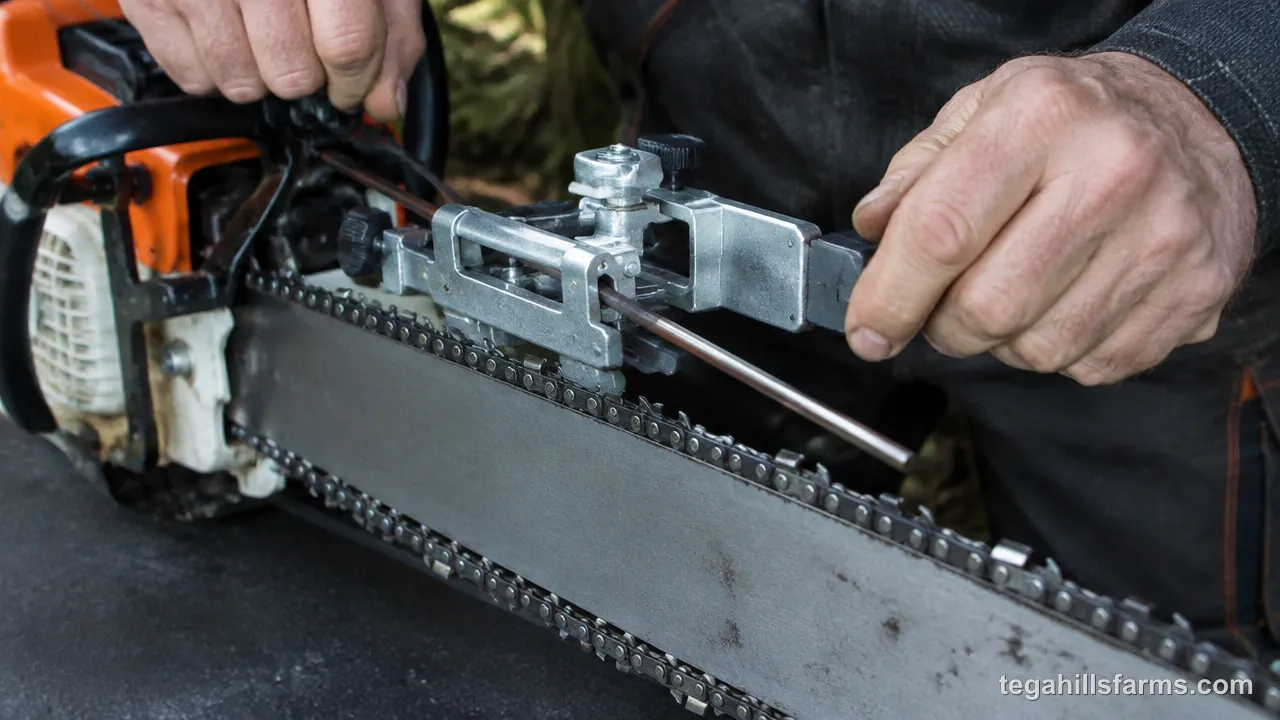
Cheap bar-mounted hand-crank jigs are the usual offenders. Thin clamps and loose pivots let the file drift a little on each stroke, so every tooth ends up at a slightly different angle, the chain cuts crooked, and you remove extra metal at the next sharpening just to even things out. A good guide fits the file snugly without rattling, a solid mount stays put when you bear down, and a sturdy handle doesn’t twist in your grip.
Check file size against the chain before the first stroke. Compare the marking on the file with the pitch stamped on your bar or chain, and look at how the file sits in the cutter: it should fill the curve of the tooth and ride just above the top plate. A mismatch reshapes the cutter a little more with every pass, and by the time the saw cuts poorly, the wrong shape is filed into every tooth.
Can These Sharpeners Handle Carbide or Dirt-Dulled Chains?
Carbide-tipped chains are a different job: carbide cutters are harder than steel files and ordinary grinding stones, so they need a diamond wheel or diamond file. Confirm your chain is standard steel before buying any of these sharpeners, and plan on a separate diamond abrasive if it is carbide.
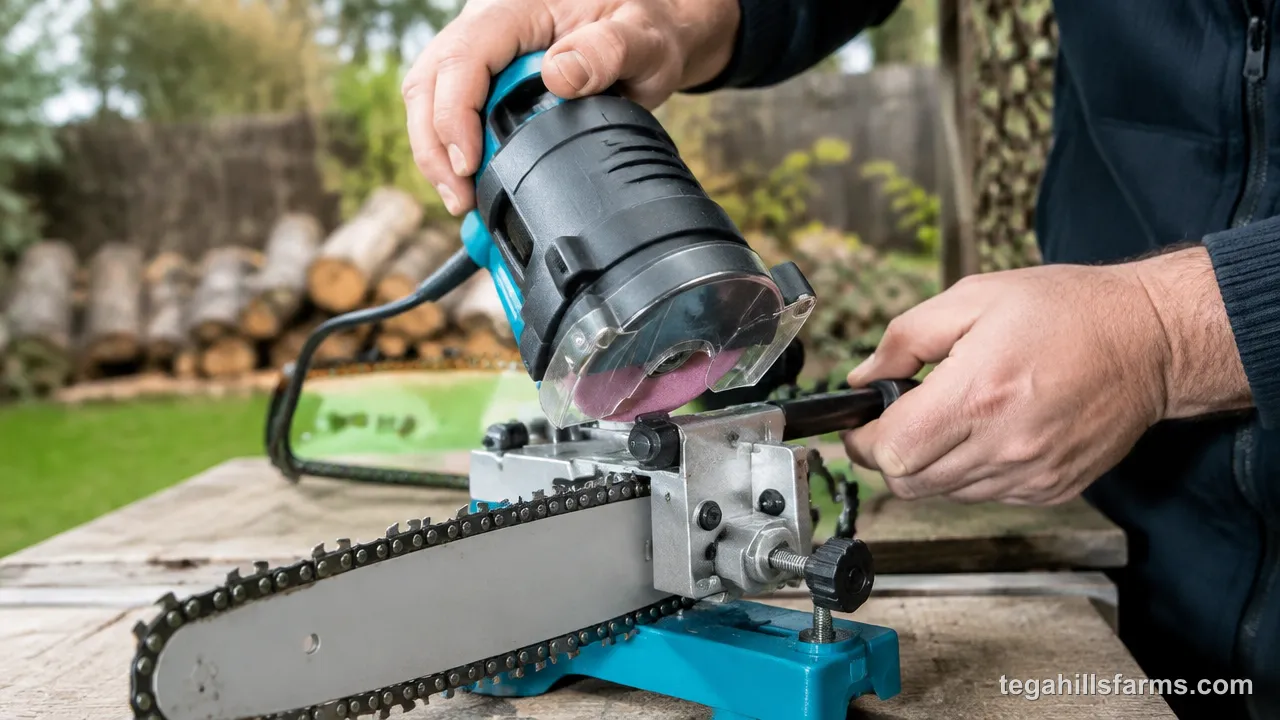
Chains dulled by soil or stone are a separate problem. Contact with dirt or a rock rounds over the cutting edge or chips it, so more metal has to come off to restore a clean edge. With a file, that means many strokes per tooth; a powered grinder makes the job practical. If the cutters are cracked or chipped back too far, replacing the chain is the better call.
This matters before buying if you often cut near the ground, such as stumps, roots or brush along a fence line. Those jobs hit dirt regularly, and a powered sharpener spares you a long session with a file after every slip.
Chainsaw Sharpener FAQs
Is a Harbor Freight chainsaw sharpener worth buying?
It can be, if you inspect it the way you would any budget sharpener. Look for a mount that stays put under pressure, a vise that grips the chain without rocking, and a wheel guard that doesn’t rattle. If the unit wobbles, it will grind uneven teeth, and a steady file kit becomes the better tool.
Which chainsaw sharpener is easiest for a beginner?
A powered sharpener with an angle guide, like the Sharp Pebble Cordless Chainsaw Sharpener Kit, asks the least of a beginner because it holds the angle for you. If you’d rather learn by hand, a kit with a file guide and size-marked files keeps mistakes small while you build a steady stroke.
Do chainsaw sharpeners really work better than hand filing?
They work more consistently, not necessarily better. A guided or mounted sharpener repeats the same angle on every tooth, which is hard to match by hand once your wrist tires. A skilled filer can still produce an equally sharp chain, and a file goes anywhere without power or setup.
How often does a chain need sharpening?
Sharpen whenever the saw starts throwing dust instead of chips or needs extra push, rather than on a fixed schedule. Clean wood lets a chain run a long while, but dirty bark, sand or a brush with the ground can dull it almost instantly. Touching up early takes less metal than a full reshaping later.
What should you do before sharpening for safety?
Shut the saw off, set the chain brake and let the engine or motor stop completely; on a battery saw, remove the battery. Wear cut-resistant gloves and eye protection, because filings and grinding grit fly. Clamp the bar in a vise or use a stable mount so the saw can’t shift mid-stroke.

Write Your Review
No reviews yet. Be the first to share your experience!