

Our top picks for the best chainsaw bars in 2026 are the Fifchall 14″ Chainsaw Bar & Chain (Best Overall), Oregon 20″ Bar & Chain Combo (Best for Professionals), ZIYIZE 18″ Bar & Chain Combo .325″ Pitch (Best Value), Oregon 18″ Bar & Chain Combo (Best Durability), Oregon 14″ Bar & Chain Combo (Best Budget), Husqvarna X-Force 18″ Chainsaw Bar (Best Precision Cutting), Husqvarna X-Force 20″ Chainsaw Bar (Best Premium), Greenworks 18″ Bar & Chain Combo (Best Ergonomic Design), and Greenworks 16″ Bar & Chain Combo 2904302 (Best Lightweight).
Fit comes before everything else with a replacement bar. Pitch, gauge, drive-link count, length and the saw’s mounting pattern all have to agree before oiling, rail wear or weight make any difference. Once those match, the choice comes down to how the bar handles wear, how much weight it puts at the front of the saw and whether spare chains come in the box.




The real risk is a bar that almost fits. A chain one gauge off wobbles and derails, the wrong drive-link count can’t be tensioned, and a mount meant for another brand won’t bolt on, so the saw model you own narrows the choice long before brand or length does.
What Does a Chainsaw Bar Do, and When Should You Replace One?
The guide bar is the steel rail that carries and supports the chain, and it needs replacing when the rails wear unevenly, the nose gets damaged, or you switch to a different cutting length.
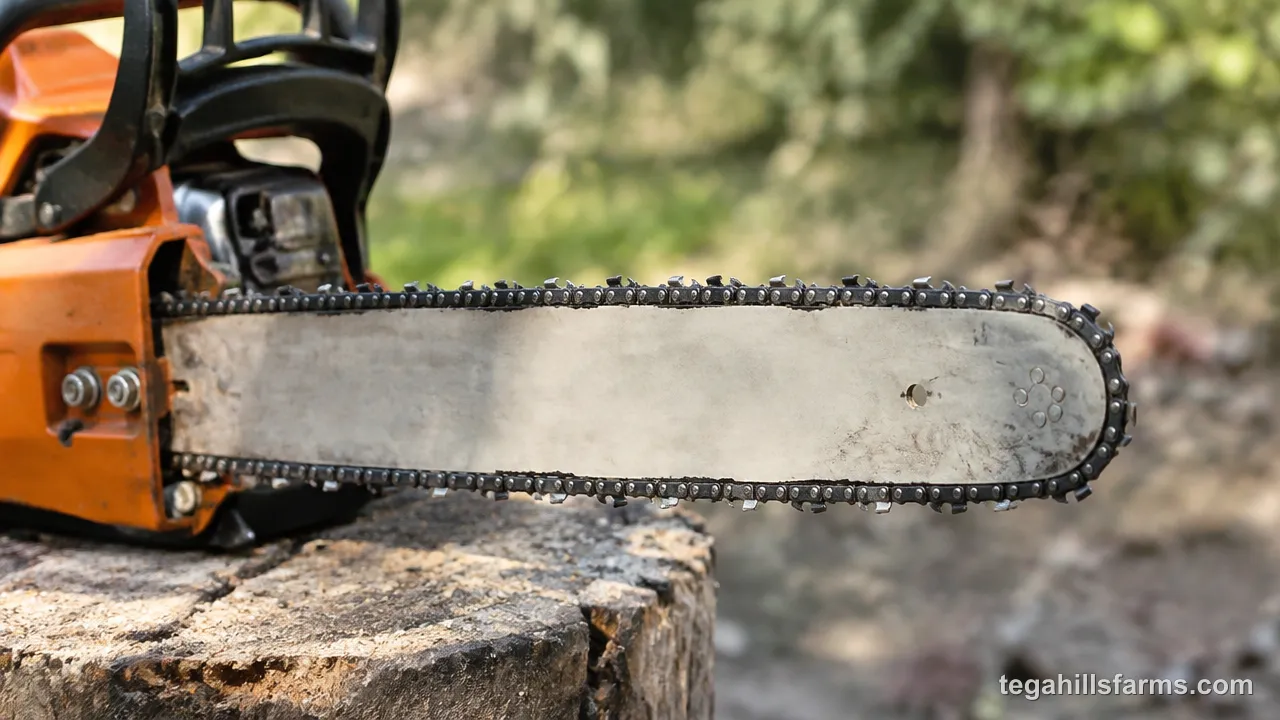
The drive links ride in the bar’s groove while the rails hold the cutters at a steady angle to the wood, and oil from the saw travels along that groove to lubricate the chain. As long as the rails stay square and the nose sprocket turns freely, the chain tracks straight and wears evenly. Once a rail drops lower or the nose starts to grind, the chain leans in the groove, cuts on a curve and wears out far sooner than it should, so a tired bar quietly costs you chains as well as clean cuts.
Replacement also makes sense when the job changes, such as moving to a longer bar for bigger firewood rounds or a shorter one for pruning. If you are still deciding on a saw rather than a replacement bar, start with our guide to the best chainsaws.
What Should You Look for in a Chainsaw Bar?
A bar is only useful when it matches both the chain and the saw, so compatibility outranks every other feature when you shop. A bar that misses one marking will not cut at all, while a bar that fits but suits the wrong job still makes long sessions harder than they need to be.
How Do Pitch, Gauge and Drive Links Need to Match Your Chain?
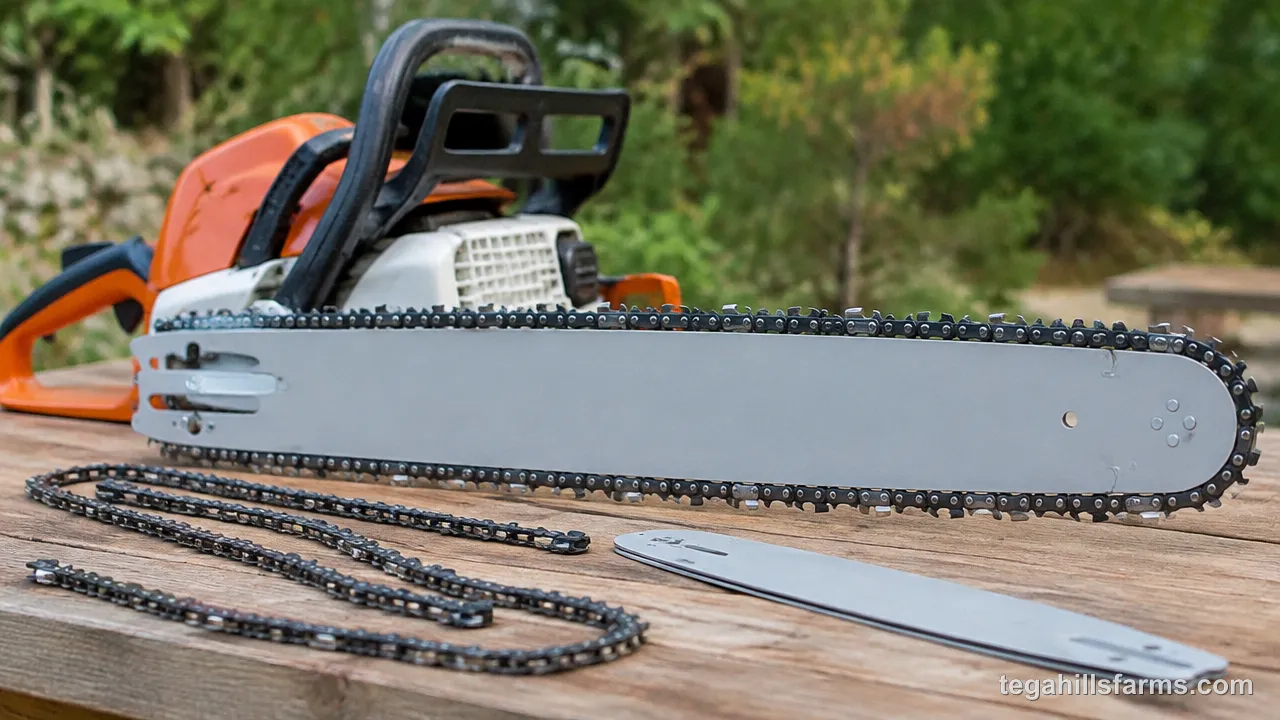
Pitch, gauge and drive-link count are the three numbers a chain and bar must share, and if any one differs the chain either won’t sit in the groove or won’t mesh with the sprocket. Pitch is the spacing of the chain, measured as the distance between three consecutive rivets divided by two, and it has to match both the drive sprocket and the bar’s nose sprocket. Gauge is the thickness of the drive links, which must suit the width of the bar groove.
A gauge that is too thin lets the chain lean and jump off the rails, while one that is too thick binds in the groove and wears both parts quickly. Drive-link count sets the length of the loop, so the wrong count leaves a chain that is either impossible to tension or too short to fit.
All three are usually stamped on the bar tail near the mount, the drive links carry a code that matches the chain’s spec, and the owner’s manual lists them too. Compact electric, battery and small gas saws mostly run 3/8″ low-profile chain at .043″ or .050″ gauge, while mid-size and larger gas saws move to .325″ or full 3/8″ pitch with .050″, .058″ or .063″ gauge.
Which Bar Length Suits Your Saw and Your Cutting?
The right length is the one the saw maker lists for your model, because bar length has to stay in proportion to the engine or motor pulling the chain. A longer bar puts more cutters in the wood at once, so an underpowered saw slows down, the chain stalls in hardwood, and the oiler can struggle to cover the full rail. It also adds weight at the front, which you feel in your wrists and lower back by the end of a session.
A bar that is too short has the opposite problem: logs wider than the bar need cuts from both sides, which takes longer and makes a straight kerf harder to hold. Limbing and pruning favor shorter bars for control, firewood rounds and storm debris sit in the middle, and felling large trees or milling slabs calls for long bars on big saws. The lengths most homeowner saws ship with handle limbs, cleanup and firewood without trouble.
Will a Bar Fit Your Saw Brand and Model?
A bar fits only when its tail matches your saw’s mounting pattern, so a bar built for a Stihl will not bolt onto a Husqvarna even when the length and chain specs agree. The mount covers the slot width, the position of the oil hole and the adjuster pin hole, and Stihl, Husqvarna, Echo and Makita/Dolmar saws each use their own patterns, with some models inside a brand differing again.
Aftermarket makers handle this with mount codes, such as Oregon’s A041 and D025, and some bars use an adaptor plate at the tail so one bar body can fit another saw. The plate only helps when it lines up with your saw’s studs and oiler port. Check your owner’s manual first, then confirm your exact model appears on the bar’s compatibility list. That same model-by-model check belongs in how to choose a chainsaw in the first place, since bar availability varies from saw to saw.
Do Bar Construction and Weight Make a Difference?
Yes, because construction decides how much abuse a bar takes and how much weight hangs at the front of the saw. Laminated bars, made from steel layers bonded around a core, are lighter and standard on most homeowner saws. Solid bars, machined from one piece of steel, are heavier but resist bending under heavy production cutting, which is why they show up on big pro and milling saws. Lightweight pro bars, including titanium-style and hollow designs, trim front weight further for climbers and fallers.
Weight out at the bar works on a long lever, so even a small saving reduces wrist and forearm fatigue over a long day, the same reasoning behind the best lightweight chainsaws. A replaceable nose tip lets you swap only the sprocket nose when it wears or seizes, which keeps a good bar in service instead of retiring it early.
9 Best Chainsaw Bars and Bar-and-Chain Combos for Every Saw and Job
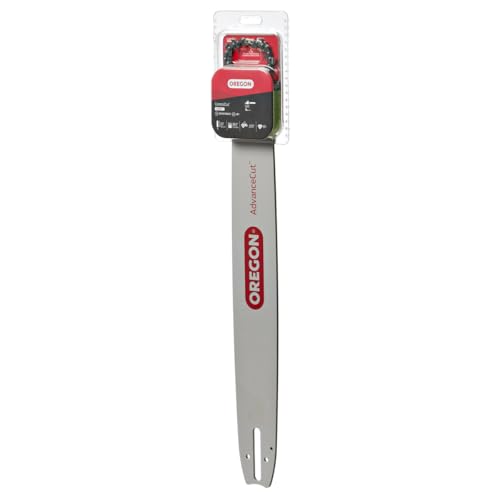
In rank order, the picks are the Fifchall 14″ Chainsaw Bar & Chain, Oregon 20″ Bar & Chain Combo, ZIYIZE 18″ Bar & Chain Combo .325″ Pitch, Oregon 18″ Bar & Chain Combo, Oregon 14″ Bar & Chain Combo, Husqvarna X-Force 18″ Chainsaw Bar, Husqvarna X-Force 20″ Chainsaw Bar, Greenworks 18″ Bar & Chain Combo and Greenworks 16″ Bar & Chain Combo 2904302. The Fifchall, the two shorter Oregon combos and both Greenworks combos run 3/8″ chain at .050″ gauge, while the ZIYIZE, the Oregon 20″ and both X-Force bars use .325″ pitch, so the saw you own settles the shortlist before bar length does. Owners of compact electric and battery saws, owners of mid-size gas saws, and Stihl and Husqvarna users who want a bar built to their saw’s spec each have a match.
#1 Fifchall 14″ Chainsaw Bar & Chain — Best Overall
If you run a compact electric, battery or pole saw on a 14-inch bar, this bundle covers a full season in one order. You get the bar plus three 3/8″ low-profile chains at .050″ gauge and 52 drive links, so a dull chain becomes a quick swap instead of a sharpening stop.
Key Specs:
- Bar length: 14 inches
- Pitch: 3/8″ low profile
- Gauge: .050″
- Drive links: 52
- In the box: 1 guide bar, 3 chains
- Chain safety: meets the ANSI kickback performance requirement
Detailed Review:
The three chains change how a compact saw gets used. One stays on the bar, one rides along sharp, and the third can wait for a file session, so a dull chain no longer ends the afternoon. The rivets are heat-treated and quenched, which strengthens the joints between links and helps the chain hold up under tension.
Fit is where this set earns its spot. It shares the spec family most compact corded and battery saws use, and the compatible list spans Craftsman, Echo, Greenworks, Sun Joe, Poulan, Ryobi and Makita, including the Echo CS310, Poulan PR4218, Ryobi RY40530 and Makita XCU04.
It also suits most 14-inch pole saw heads, which makes it a practical spare for anyone pairing a handheld saw with one of the best pole saws. Before ordering, match the length, pitch, gauge and drive-link count to the markings on your current bar, because one wrong number means the chain won’t seat.
The chain meets the ANSI kickback performance requirement, a reassuring detail on a saw that mostly sees occasional homeowner use. I’d point small-saw owners here first, since spare chains solve the most common reason a light cutting job stalls.
Pros:
- Three chains let you keep cutting while one gets sharpened.
- Compatibility list covers most major compact saw brands.
- Heat-treated, quenched rivets strengthen link connections.
- Fits most 14-inch pole saw heads as well.
Cons:
- Short bar limits it to limbs and smaller logs.
- Low-profile chain won’t suit larger saws on heavier chain.
Who It’s For:
Homeowners running a compact corded, battery or pole saw who would rather swap chains than stop to sharpen will get the most from this kit. It also suits households with more than one small saw from the listed brands. Owners of mid-size gas saws built around a heavier chain family should look at a different setup.
Editor’s Verdict:
Pick this set when you want one order to keep a compact saw cutting through a whole season of light yard work.
#2 Oregon 20″ Bar & Chain Combo — Best for Professionals
Stihl owners with a mid-to-large saw get a full working upgrade here. The L81 chain pairs Oregon’s LubriTec oiling with a low-vibration design, which keeps oil moving along the bar automatically and keeps long cutting days easier on your hands.
Key Specs:
- Bar length: 20 inches
- Pitch / gauge: .325″ / .063″
- Drive links: 81
- Motor mount: D025
- Fits: Stihl saws up to 62 cc, including the MS 260, MS 280 and MS 290
- Weight: 3.89 pounds
Detailed Review:
LubriTec oiling keeps the chain and guide bar lubricated automatically, which lowers friction and extends the life of both parts. On a 20-inch bar that matters, because oil has the full length of the rail to cover before it reaches the nose.
The L81 chain is built for low kickback and low vibration, and it meets the recoil performance requirements of ANSI B175.1-2012. Lower vibration means less numbness in your hands after a long session, which is why the chain suits landscaping crews who cut wood between other jobs and homeowners with high standards for their yard work. Crews comparing it with the chains on the best professional chainsaws will find it well suited to part-time cutting, where comfort over a long afternoon counts.
Fit is specific: .325″ pitch, .063″ gauge, 81 drive links and a D025 mount. It covers Stihl saws up to 62 cc, including the 026, 029, 036, MS 260, MS 280 and MS 290, while the MS 270 and MS 271 fit only in their older versions with the same .063″ gauge. Check your owner’s manual before ordering, and note that the chain is not Guard Mate compatible.
The ZIYIZE 18″ also runs .325″ pitch but at .050″ gauge, so chains between the two are not interchangeable even though the pitch matches.
Pros:
- LubriTec oiling keeps bar and chain lubricated automatically.
- Low-vibration chain eases hand strain over long sessions.
- Meets ANSI B175.1-2012 recoil performance requirements.
- Fits a long list of older and current Stihl saws.
Cons:
- Chain is not compatible with Guard Mate.
- Heavier gauge chain of this type won’t run on .050 bars.
- Longer bar adds weight at the front of the saw.
Who It’s For:
Landscapers who cut wood between other jobs, and homeowners running one of the listed Stihl saws, will notice the oiling and vibration benefits over a full afternoon. Confirm the gauge on newer versions of your model before ordering. Husqvarna owners need a bar built for that mount instead.
Editor’s Verdict:
Choose this combo if your Stihl takes the D025 mount and you cut long enough for oiling and vibration to matter.
#3 ZIYIZE 18″ Bar & Chain Combo .325″ Pitch — Best Value
Cost-conscious owners of mid-size Husqvarna, Dolmar, Makita or John Deere saws get more cutting time per dollar from this kit than from a bar and chain bought separately. Three pre-sharpened .325″ chains ride one factory-matched bar.
Key Specs:
- Bar length: 18 inches
- Pitch / gauge: .325″ / .050″
- Drive links: 72
- In the box: 1 guide bar, 3 chains
- Replaces: Oregon 180TXLBK095 (K095)
Detailed Review:
This set takes the guesswork out of matching. The bar and chains come pre-matched from the factory at .325″ pitch, .050″ gauge, 72 drive links and 18 inches, the four specs you read off your old bar or chain before ordering. Getting all four right is what prevents the jamming and derailing that mismatched parts cause, which makes this a forgiving buy for a first bar replacement.
The chains have chrome-plated cutters that resist the heat of long cuts, an anti-clog design that limits dust buildup, and rigid tooth engagement that keeps the chain from slipping. They arrive sharpened, and installation needs no special tools.
The fit list is wide. On the Husqvarna side it includes the 435, 440, 450 Rancher, 455 Rancher, 550XP and 560XP, and it also covers the Dolmar PS-510, John Deere CS52, Makita DCS5121, McCulloch CS 450 Elite and Echo CS-4510.
Husqvarna’s X-Force 18″ shares the same pitch, gauge and drive-link count but comes as a bar on its own, so this kit trades the OEM name for two spare chains in the box. If you go through chains during firewood season, that extra stock stretches your spending further.
Pros:
- Bar and chains are pre-matched on all four specs.
- Three chains arrive sharpened and ready to cut.
- Chrome-plated cutters resist heat during long cuts.
- Fits Husqvarna, Dolmar, Makita, John Deere and McCulloch saws.
Cons:
- Only suits saws running .325 pitch, .050 gauge chain.
- Aftermarket part, so check your exact model first.
Who It’s For:
Budget-minded owners of a mid-size Husqvarna, Dolmar, Makita, John Deere or McCulloch saw who burn through chains during firewood season will appreciate the spares. It also helps first-time buyers nervous about matching specs. Stihl owners need a bar built for their mount.
Editor’s Verdict:
Buy this kit when your saw is on the fit list and you want spare chains on hand without a second order.
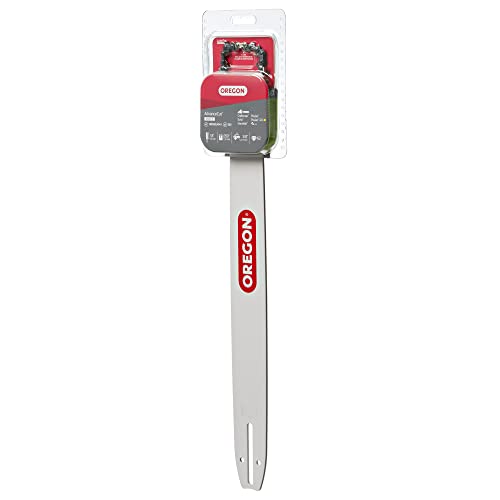
#4 Oregon 18″ Bar & Chain Combo — Best Durability
A small gas saw that does real work every fall needs a bar built to last through it. The reversible bar flips to spread rail wear, and LubriTec oiling keeps friction down along the whole loop.
Key Specs:
- Bar length: 18 inches (45 cm)
- Pitch / gauge: 3/8″ low profile / .050″
- Drive links: 62
- Motor mount: A041
- Fits: saws up to 42 cc from Echo, Craftsman, McCulloch, Homelite, Poulan, Makita, Ryobi and more
Detailed Review:
The reversible bar is the main reason this combo lasts. Flipping it at each chain change spreads wear across both rails, and the bar is heavy duty while staying lightweight, so it doesn’t overload a small saw. LubriTec oiling keeps the chain and bar lubricated automatically, which cuts friction in the groove.
The chain is low kickback and meets the recoil performance requirements of ANSI B175.1-2012. Oregon aims it at occasional commercial users as well as homeowners, and it is durable and easy to maintain, with forgiving performance that tolerates a less-than-perfect sharpening. An ID link on the chain makes ordering the right replacement simple.
Fit runs on the A041 mount for saws up to 42 cc, covering Echo, Craftsman, McCulloch, Homelite, Poulan, Makita and Ryobi models. That reach across brands helps households that own more than one older saw.
The Greenworks 18″ shares the same pitch, gauge and drive-link count, but it replaces the bar on specific Greenworks saws, while this Oregon covers gas saws from several brands on the A041 mount.
Pros:
- Reversible bar spreads wear across both rails.
- LubriTec oiling reduces friction along the groove.
- ID link makes ordering a replacement chain easy.
- Low-kickback chain meets ANSI B175.1-2012 recoil requirements.
Cons:
- Engine size limit rules out larger gas saws.
- Long bar on a small saw slows cutting in hardwood.
Who It’s For:
Anyone running a small gas saw from Echo, Craftsman, Poulan, McCulloch or a similar brand who wants a bar that stands up to a busy firewood season fits this combo well. Occasional commercial users get the same forgiving chain. Owners of larger, more powerful saws need a heavier setup.
Editor’s Verdict:
Go with this combo when a small gas saw sees steady seasonal work and you plan to flip the bar at every chain change.
#5 Oregon 14″ Bar & Chain Combo — Best Budget
Light yard work on a small saw doesn’t call for a big spend. This affordable combo pairs a reversible 14-inch bar with LubriTec oiling, so you can flip the bar to spread wear while the chain stays oiled.
Key Specs:
- Bar length: 14 inches
- Pitch / gauge: 3/8″ / .050″
- Drive links: 52
- Motor mount: A041
- Fits: saws up to 42 cc
- Weight: 1 pound
Detailed Review:
This combo keeps a small saw cutting at a modest cost. It pairs a lightweight, reversible bar with Oregon’s LubriTec oiling, so the bar can be turned over to share rail wear and the chain stays lubricated for less friction and longer life. At 1 pound for the combo, it keeps a compact saw easy to handle.
The chain is durable and easy to maintain, with forgiving performance that suits light yard work such as pruning, small limbs and cleanup after a storm. That forgiving character matters on a homeowner saw that may go weeks between sharpenings.
The fit list includes the Echo CS310, Greenworks 2020902ME, Homelite ZR43100, Makita UC4051A and XCU04, Poulan PL3314 and PR4218, and Ryobi RY3714 and RY40530. Your owner’s manual confirms the match, along with the A041 mount and the engine size limit.
The Fifchall 14″ uses the same pitch, gauge and drive-link count and shares several of those saws, but it ships with three chains, while this Oregon pairs the bar with a single chain.
Pros:
- Affordable way to refresh a small saw’s bar and chain.
- Reversible bar spreads wear across both rails.
- LubriTec oiling keeps friction low.
- Forgiving chain tolerates imperfect sharpening.
Cons:
- Single chain means downtime when it needs sharpening.
- Short bar limits capacity on thicker logs.
Who It’s For:
Light-duty users trimming limbs, cleaning up after storms and cutting the occasional small round will get steady service from this combo without overspending. It suits Echo, Poulan, Ryobi and similar compact saw owners. Anyone cutting large firewood regularly needs a longer bar on a stronger saw.
Editor’s Verdict:
Grab this combo when a small saw needs a fresh bar and chain for occasional yard work and you want to keep the outlay modest.
#6 Husqvarna X-Force 18″ Chainsaw Bar — Best Precision Cutting
Straight, clean cuts on a mid-size Husqvarna start with a bar that sits exactly where the saw expects it. This X-Force bar uses hardened materials and precision manufacturing for an exact fit, with a bearing system that keeps the nose running smoothly.
Key Specs:
- Bar length: 18 inches
- Pitch / gauge: .325″ / .050″
- Drive links: 72
- Weight: 1.59 pounds
- Fits: Husqvarna 435, 440, 445, 450, 450 Rancher, 543XP, 545 Mark III, 550XP Mark III
Detailed Review:
The bearing system with support shields keeps the nose turning smoothly and makes maintenance easier. Its no-grease hole design keeps dirt out of the bearings and removes the need to pump in fresh grease, so one end-of-day chore disappears.
The bar is made from tough, hardened materials, and precision manufacturing gives it an exact fit on the saws it was built for. That fit keeps the chain tracking straight through a cut, which pays off on finish cuts, square firewood ends and any job where a curved kerf would waste wood.
It comes as a bar only, set up for .325″ pitch, .050″ gauge and 72 drive links, so you’ll need a matching chain. It fits the Husqvarna 435, 440, 445 and 450, including their e versions, plus the 450 Rancher, 543XP, 545 Mark III and 550XP Mark III.
Against the longer Husqvarna X-Force bar, this one is shorter, runs 72 drive links instead of 80 and weighs 1.59 pounds against 2, and it adds the 435 to the fit list. That trade gives up reach for a lighter, quicker-handling front end.
Pros:
- Precision manufacturing gives an exact fit on listed Husqvarnas.
- No-grease hole keeps dirt out of the bearings.
- Support shields make maintenance easier.
- Hardened materials hold up to steady cutting.
Cons:
- Bar only, so a matching chain is a separate purchase.
- Fits only the listed Husqvarna models.
Who It’s For:
If you run one of the listed mid-size Husqvarna saws and care about square, clean cuts, this bar keeps the chain tracking the way the saw was designed to. It suits owners who’d rather skip greasing the nose. Stihl and Echo owners need a bar made for their mount.
Editor’s Verdict:
Fit this bar to a listed Husqvarna when straight cuts and a low-maintenance nose matter more than a bundled chain.
#7 Husqvarna X-Force 20″ Chainsaw Bar — Best Premium
When your firewood includes bigger rounds, a longer factory-spec bar saves passes. This 20-inch X-Force bar carries 80 drive links of .325″ chain and keeps the no-grease hole design that seals dirt out of the bearings.
Key Specs:
- Bar length: 20 inches
- Pitch / gauge: .325″ / .050″
- Drive links: 80
- Weight: 2 pounds
- Fits: Husqvarna 440, 445, 450, 450 Rancher, 543XP, 545 Mark III, 550XP Mark III
Detailed Review:
Extra reach is what this bar adds. Twenty inches lets you take larger rounds in a single pass and keeps you a little farther from the cut when bucking limbs on the ground. It shares the bearing system with support shields from the 18-inch version, and its no-grease hole keeps dirt out of the bearings while removing the need to regrease the nose.
Hardened materials and precision manufacturing give it an exact fit on the Husqvarna 440, 445 and 450, including their e versions, plus the 450 Rancher, 543XP, 545 Mark III and 550XP Mark III. Chain specs are .325″ pitch, .050″ gauge and 80 drive links, so order a matching chain with it.
Compared with the shorter Husqvarna X-Force bar, this one weighs 2 pounds against 1.59 and drops the 435 from its fit list. The added length and weight make a mid-size saw work harder, so it suits a saw with enough power to pull the longer bar comfortably.
As a premium OEM part, it appeals to owners who would rather pay for factory fit than work through an aftermarket compatibility list. I’d choose it only when the wood on your property calls for the extra length.
Pros:
- Longer bar handles larger rounds in fewer passes.
- No-grease hole keeps dirt out of the bearings.
- Hardened materials and precision fit on listed Husqvarnas.
- Support shields simplify maintenance.
Cons:
- Extra length adds weight at the front of the saw.
- Bar only, so the chain is a separate purchase.
- Premium OEM part that carries a premium price tag.
Who It’s For:
Husqvarna owners with one of the listed saws who regularly cut bigger firewood rounds and want factory fit without guesswork are the natural buyers. It rewards people who keep their saw for years. Anyone mostly trimming limbs will find a shorter bar easier to handle.
Editor’s Verdict:
Reserve this bar for a listed Husqvarna that regularly faces larger wood, where the added reach saves real cutting time.
#8 Greenworks 18″ Bar & Chain Combo — Best Ergonomic Design
Long cleanup sessions wear out your hands before they wear out the saw. This genuine Greenworks combo uses a durable, low-kickback, low-vibration chain that reduces fatigue so you can keep working longer.
Key Specs:
- Bar length: 18 inches
- Pitch / gauge: 3/8″ low profile / .05″
- Drive links: 62
- Weight: 1.6 pounds
- Fits: Greenworks GCS80450, GCS80420, 20332
Detailed Review:
The chain is what makes this combo comfortable over a long job. It is durable, low kickback and low vibration, and the lower vibration reduces the tingling and grip fatigue that build up when a cleanup session runs into the afternoon. Low kickback also cuts the chance of a sharp jolt when the nose meets a limb.
As a genuine Greenworks replacement part, it is matched to the GCS80450, GCS80420 and 20332, so the mount and chain fit without checking an aftermarket list. The specs are 18 inches, 3/8″ low-profile pitch, .05″ gauge and 62 drive links, with the combo weighing 1.6 pounds.
The Greenworks 16″ uses the same pitch and gauge but runs 56 drive links on a shorter bar for a different set of saws, so the two aren’t interchangeable. The 18-inch length gives the saws it fits more capacity for firewood rounds and fallen limbs.
The Oregon 18″ runs the same chain specs, but it targets gas saws on an A041 mount, so stick with this combo on the listed Greenworks models.
Pros:
- Low-vibration chain reduces hand fatigue on long jobs.
- Low-kickback design lowers jolt risk at the nose.
- Genuine part fits listed Greenworks saws without guesswork.
- Longer bar handles bigger rounds than compact bars.
Cons:
- Fits only the listed Greenworks saws.
- Longer bar adds front weight compared with shorter options.
Who It’s For:
People who own one of the listed Greenworks saws and spend whole afternoons on storm cleanup or firewood will feel the benefit of the low-vibration chain. It suits owners who want a factory match rather than an aftermarket part. Owners of gas saws should shop by their own mount.
Editor’s Verdict:
Stay with this genuine combo on a listed Greenworks saw when comfort over long cutting sessions is your priority.
#9 Greenworks 16″ Bar & Chain Combo 2904302 — Best Lightweight
Pruning and light cutting on a compact Greenworks saw go easier with less bar hanging out front. At 1.5 pounds, this genuine 16-inch combo keeps the saw nimble, and its low-vibration chain helps your hands last through a longer session.
Key Specs:
- Bar length: 16 inches
- Pitch / gauge: 3/8″ low profile / .05″
- Drive links: 56
- Weight: 1.5 pounds
- Fits: Greenworks CS80L01, CS80L211, CS80L2512, 20232
Detailed Review:
A shorter bar keeps weight and length down at the front of the saw, and at 1.5 pounds this combo helps a compact Greenworks stay easy to swing for pruning and light cutting. Less bar out front means less leverage working against your wrists, so you can hold the saw steady at awkward angles for longer.
The chain is durable, low kickback and low vibration. Together those traits cut fatigue over an extended session and lower the risk of a jolt when the nose touches a branch you didn’t see.
It replaces the bar and chain on the Greenworks CS80L01, CS80L211, CS80L2512 and 20232, with 3/8″ low-profile pitch, .05″ gauge and 56 drive links. Genuine-part fit means no cross-referencing against an aftermarket list.
The Greenworks 18″ shares the pitch and gauge but runs a longer bar with 62 drive links for different saws. This 16-inch combo gives up some cutting capacity in exchange for a handier front end.
Pros:
- Short bar keeps the saw balanced and easy to swing.
- Low-vibration chain reduces fatigue on extended jobs.
- Low-kickback chain lowers jolt risk near branches.
- Genuine part fits listed Greenworks saws directly.
Cons:
- Shorter bar limits capacity on thicker logs.
- Fits only the listed Greenworks models.
Who It’s For:
Gardeners who prune, clear small limbs and tidy up after windstorms with one of the listed Greenworks saws will appreciate how easy this combo is to handle. It also suits anyone who tires quickly holding a saw at shoulder height. Regular firewood cutters will want more bar.
Editor’s Verdict:
Order this combo when your Greenworks saw mostly handles pruning and small limbs and easy handling matters more than cutting capacity.
OEM or Aftermarket: Which Chainsaw Bar Should You Buy?
OEM bars from the saw maker remove any doubt about fit, while aftermarket bars from Oregon and others cover more saws with a single part and are easier to find for older or less common models.
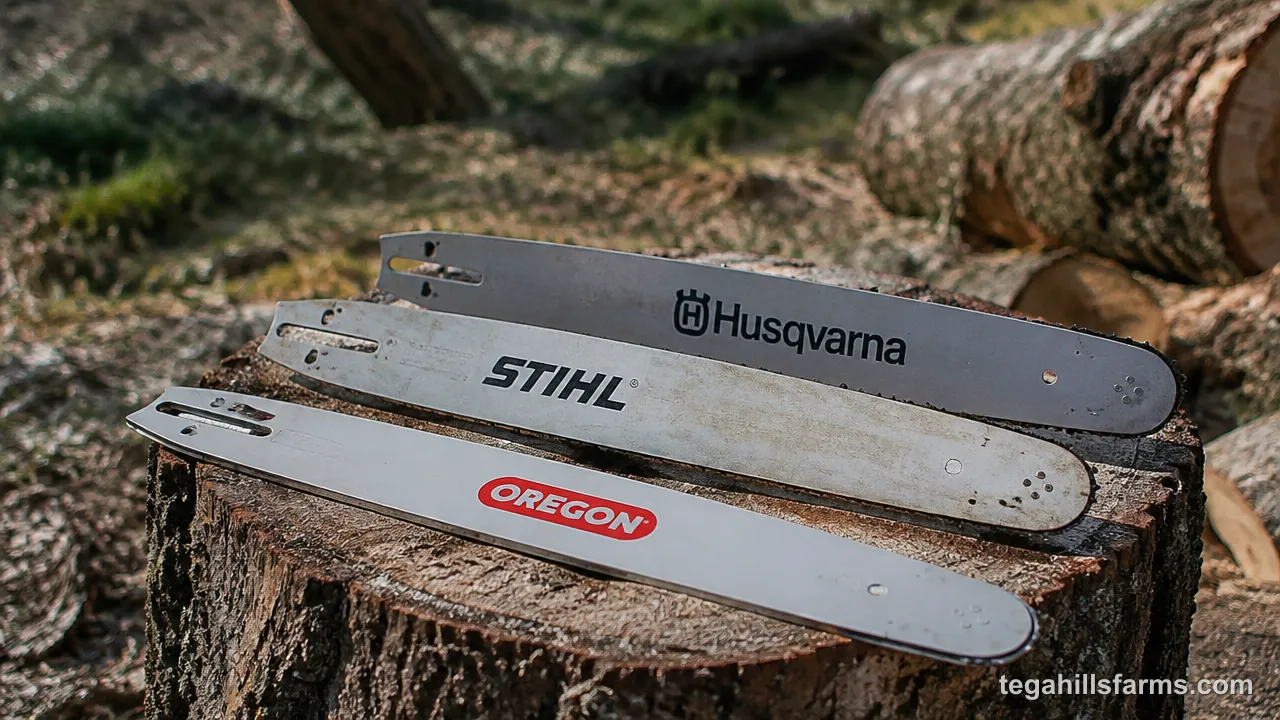
An OEM bar such as Husqvarna’s X-Force or a Stihl bar is cut to that brand’s mount and spec sheet, so it bolts on and tracks the way the saw was designed to run. The X-Force is built from hardened materials with precision manufacturing, which is the core argument for staying in-house: the rails, nose and oil path are made for one saw family.
Oregon works the other way, publishing one bar for several mounts and listing every model it fits. That suits households with saws from mixed brands, or an older saw whose original bar is hard to source. For a homeowner cutting firewood and storm debris, a correctly matched Oregon bar is a sensible choice, and its LubriTec oiling and reversible bars support a long service life. Daily professional users get more from the factory bar’s exact fit, especially on saws that run for hours at a time.
Either way, the bar still has to match your chain’s pitch, gauge and drive-link count.
Which Chainsaw Bar Fits Your Kind of Cutting?
Your workload decides the bar more than the saw’s badge does, because length, weight and durability pull in different directions. A bar that handles storm cleanup well can feel heavy overhead on a pole, and a light pruning bar wears out quickly under daily production cutting.
What Bar Works for Weekend Firewood and Yard Cleanup?
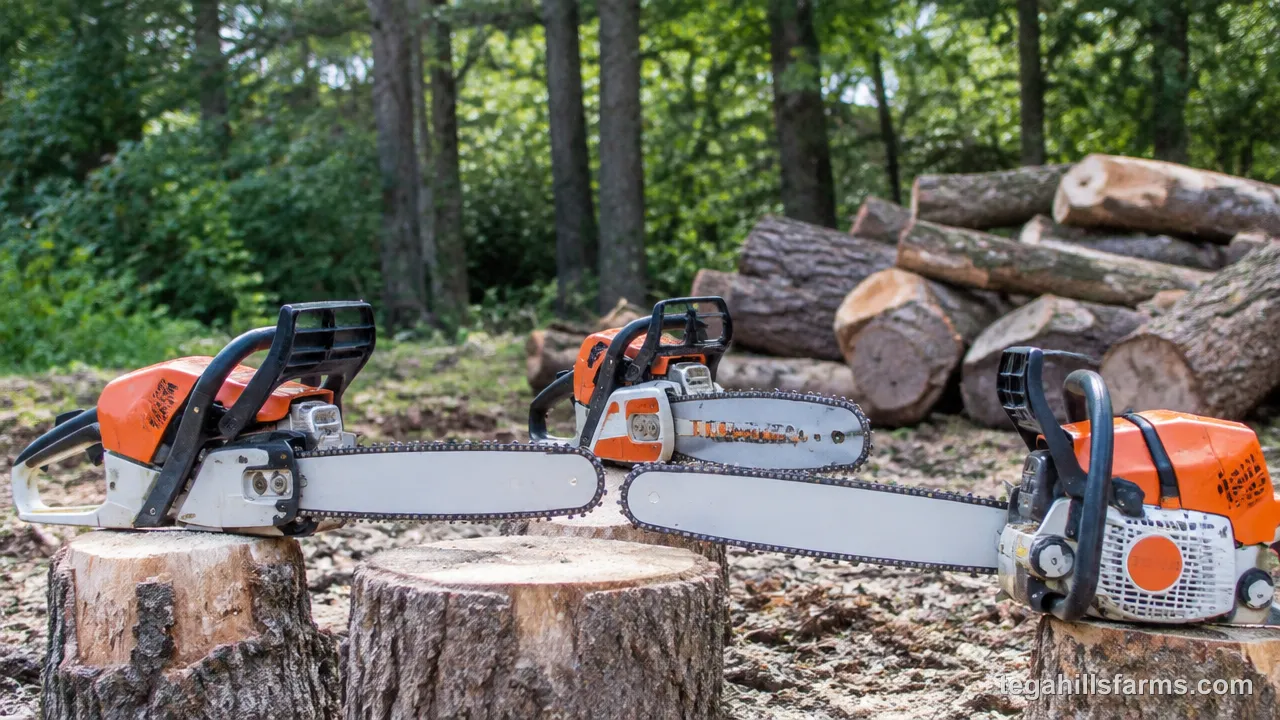
A mid-length, low-kickback bar and chain matched to a common homeowner saw handles limbs, storm debris and firewood rounds without asking much of you. Easy fit comes first, since a combo that lists your exact model saves a return trip. A low-kickback chain matters because cleanup work means cutting near the ground, in brush and through pinched limbs where the nose can catch.
Low vibration is the next priority, because firewood days run long and vibration tires your hands first. Keep replacement cost reasonable too, since a homeowner bar eventually wears out and a spare chain keeps the job moving. If the saw itself is due for an upgrade, compare the best chainsaws for cutting firewood before buying a new bar for an old one.
What Bar Suits Light Pruning and Pole Saw Work?
Pruning and pole saw work reward a short, light bar, because you are cutting small limbs at arm’s length or overhead, where reach and balance matter far more than how thick a log the bar can handle. Any weight at the tip of a pole saw is magnified by the pole’s length, so a compact bar keeps the head controllable and your shoulders fresher.
Fit is the catch. Pole saw heads usually run the compact low-profile chain family, so confirm the length, pitch, gauge and drive-link count on the existing bar, then check that your pole saw model appears on the replacement’s compatibility list.
What Do Arborists and Loggers Need From a Bar?
Daily professional cutting wears a bar at the rails and the nose first, so arborists and loggers judge a bar on how long its rails stay square, how well the nose sprocket survives and how little it weighs at the end of a long day. Climbing arborists feel bar weight most, since they work one-handed in the canopy on top-handle saws, while loggers and fallers need rails that hold up to hours of production cutting in dirty wood.
That is the market served by pro-focused bar makers such as Tsumura, Sugihara, Cannon and GB, alongside OEM bars from the major saw brands. Choosing among them comes down to the saw, the bar length you run and whether you want a lightweight or solid design. Matching the bar to one of the best chainsaws for arborists matters as much as the bar itself.
Most homeowners buck and limb from the same side every time, so the chain presses harder against one rail and grinds it down faster than the other. Once that rail sits lower, the chain tilts in the groove, binds in the cut and pulls to one side, and a bar with plenty of steel left ends up replaced long before its time.
Why Do Loggers Run a Chainsaw Bar Upside Down?
Loggers flip the bar so both rails take an equal share of wear. The bottom rail does most of the cutting, so a bar that never moves wears unevenly, and once one rail is lower than the other the chain leans, cuts on a curve and binds. Turning the bar over each time you sharpen or replace the chain puts the less-worn rail on the bottom and keeps the groove square, so the chain tracks true for longer.
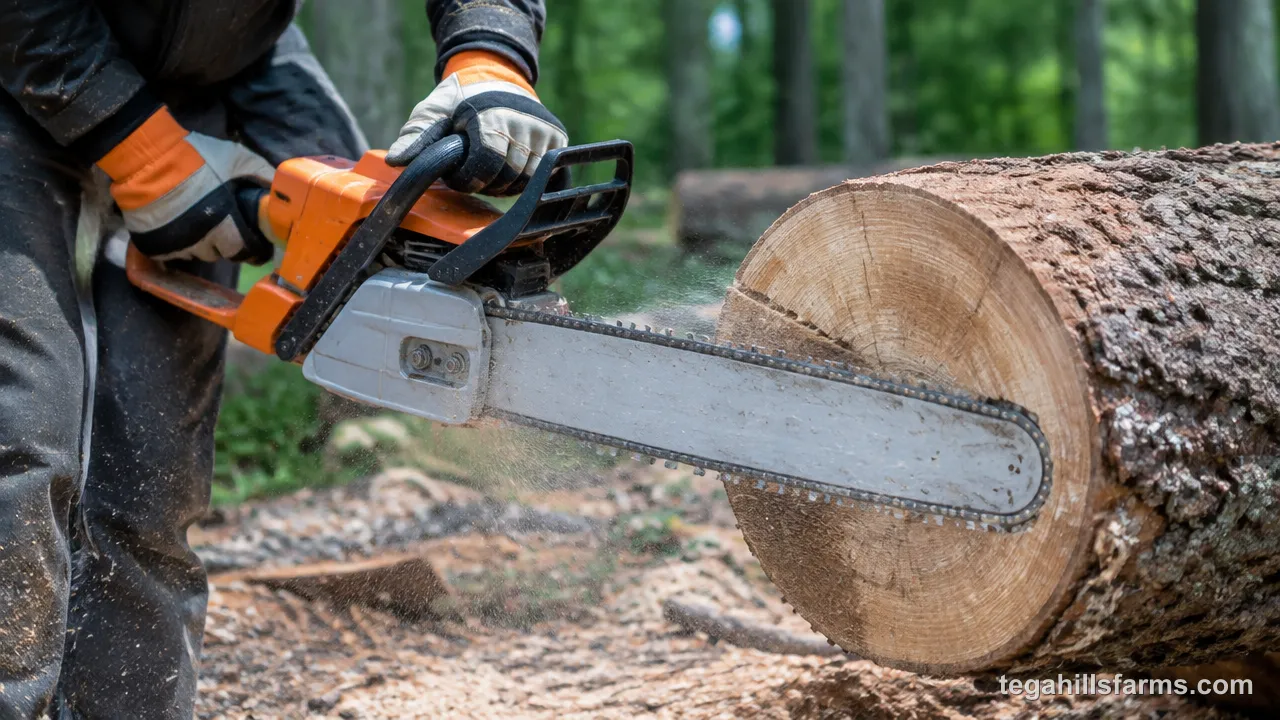
A reversible bar is built to run either way up, with matching rails and an oil hole and adjuster hole on both sides of the tail. Flipping it fits into a normal chain change: remove the side cover, turn the bar over, refit the chain and retension it. A bar with evenly worn rails can be dressed flat and kept in service, while a bar worn on one side often needs heavy filing or replacement because its rails no longer sit level.
How Can You Tell When a Chainsaw Bar Is Worn Out?
A bar with life left only needs cleaning and dressing, while one with damaged rails or a failing nose costs you straight cuts and chains until it’s replaced. The line between the two shows up on the bar itself, and the way you care for it decides how soon you reach that line.
What Are the Warning Signs of a Worn Bar?
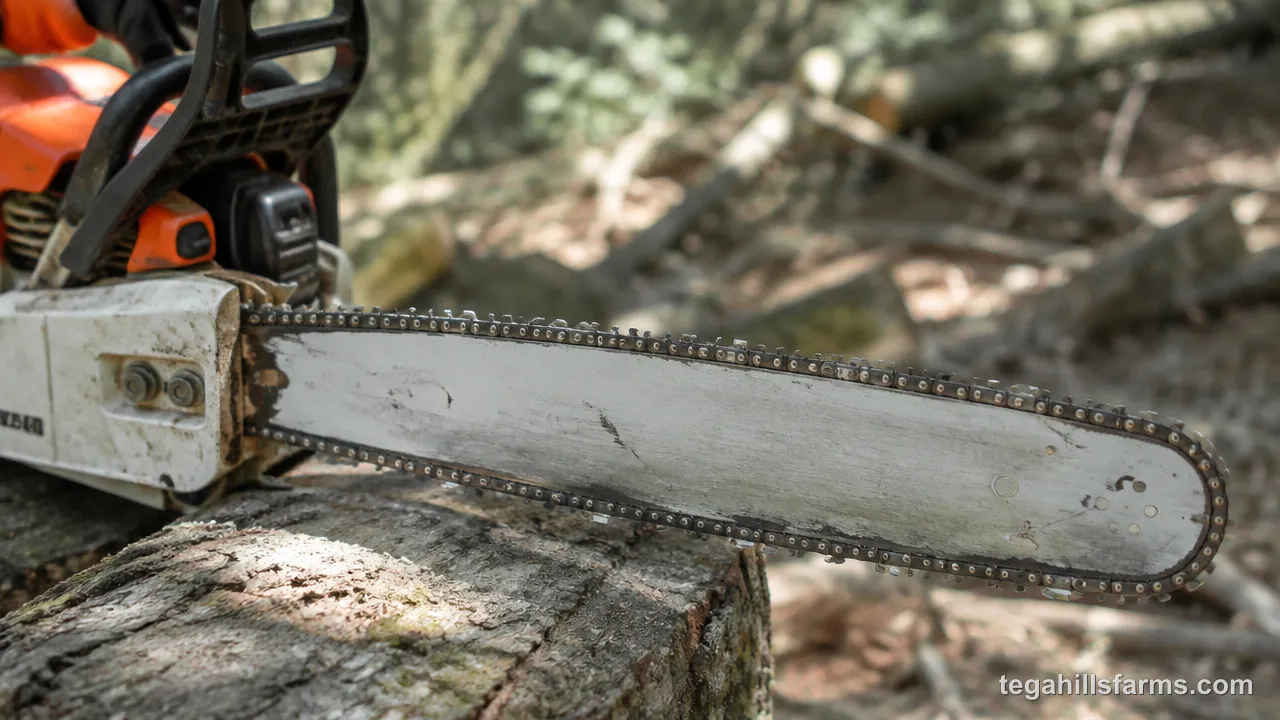
A bar is due for replacement when its rails are pinched, spread or uneven, the nose is damaged, or the saw keeps cutting crooked after a fresh sharpening. Spread rails let the chain rock side to side, while pinched rails squeeze the drive links and make the chain hard to pull around by hand. Burrs along the rail edges, a step between one rail and the other, and blue heat marks all point to wear the bar can no longer hide.
The nose is the other weak spot. A sprocket nose that wobbles, grinds or has chipped teeth chews through chains and can lock up mid-cut. Crooked cuts after sharpening are the clearest field test, because they mean the rails no longer hold the cutters level.
Fit fresh chainsaw chains to a new bar rather than reusing worn ones. An old chain has stretched and worn to the shape of the old groove, so it rides poorly in a new one and wears it faster.
Which Upkeep Habits Extend Bar Life?
Most bar life comes down to keeping oil flowing and the rails square. Clean the groove and the oil holes every time the chain comes off, because packed sawdust blocks the oil path and leaves the rails running dry; a groove cleaner or thin scraper does the job. Use a proper bar and chain oil, top up the reservoir every time you refuel or recharge, and check that the chain throws a light line of oil when you run it near a stump.
Dress the rails with a flat file when burrs start to form, file them back level if one rail sits lower, then flip the bar. When only one part has failed, replace that part: a worn sprocket nose, drive sprocket or adaptor plate can be swapped while the bar body stays in service. Groove cleaners, rail dressing files and spare sprockets belong among the best chainsaw accessories to keep in the shop.
Is a Milling Bar Different From a Standard Chainsaw Bar?
A milling bar is built for cutting along the length of a log to make slabs, which keeps the full bar buried in the wood for long, continuous passes. That puts heavy, sustained load on the rails and nose and demands steady oiling across a long bar, so milling setups use long, stiff bars on big, powerful saws fitted to a mill frame. Ripping chain, ground at a shallower angle for cutting along the grain, usually goes with it.
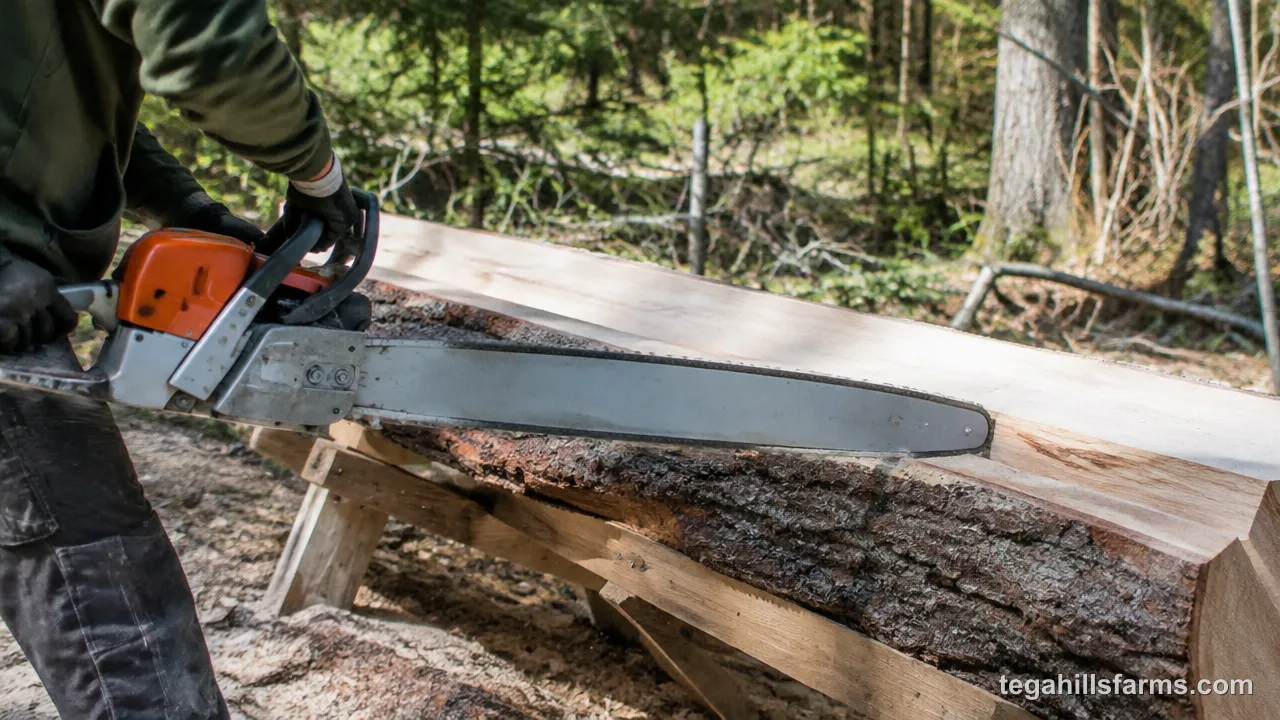
A standard homeowner bar is designed for crosscuts in short bursts, so it is too short for most mill frames and runs hot under continuous ripping, which wears the rails quickly. If milling is the plan, start with the saw: choose one with the power the mill maker recommends, then pick the bar length that saw is rated to pull.
Chainsaw Bar FAQs
Are Oregon bars as durable as Stihl OEM bars?
For homeowner cutting, a correctly matched Oregon bar holds up well, and combos like Oregon’s Stihl-fit 20-inch set add LubriTec oiling to reduce friction. A Stihl OEM bar guarantees the factory fit and spec, which matters most under daily professional use. Rail care and regular oiling affect lifespan as much as the brand name does.
Can I put a longer bar on my chainsaw?
Only if the saw maker lists that length for your model. A longer bar loads the engine or motor harder, slows the chain in hardwood and can outrun the oiler. It also needs a longer chain with the right drive-link count, plus the same mount, pitch and gauge your saw already uses.
Does a new bar need a new chain?
Yes, in most cases. A chain that has run on a worn bar has adapted to that bar’s wear, so pairing it with fresh rails shortens the new bar’s life and can cause rough tracking. Buy the chain in the same pitch, gauge and drive-link count so both parts wear in together.
Where can I buy a replacement chainsaw bar?
A local saw dealer is the easiest source for OEM bars and can check the mount against your saw in person. Online specialists such as Westcoast Saw and TreeStuff carry wide ranges of OEM and aftermarket bars, and HarvesterBars.com also sells bars and chains. Have your saw model and current bar markings ready before ordering.
Write Your Review
No reviews yet. Be the first to share your experience!