

The 6 best firewood chainsaws of 2026 are the EGO Power+ CS2005 20 in (Best Overall), the Husqvarna 450X Rancher (Best Easy-Start), the Greenworks 80V 18 in Chainsaw (Best Cordless), the Husqvarna 460 Rancher 24 Inch (Best Premium), the Husqvarna 455 Rancher 20 in (Best Ergonomic Design), and the NEO-TEC 62cc Gas Chainsaw (Best Gas-Powered).
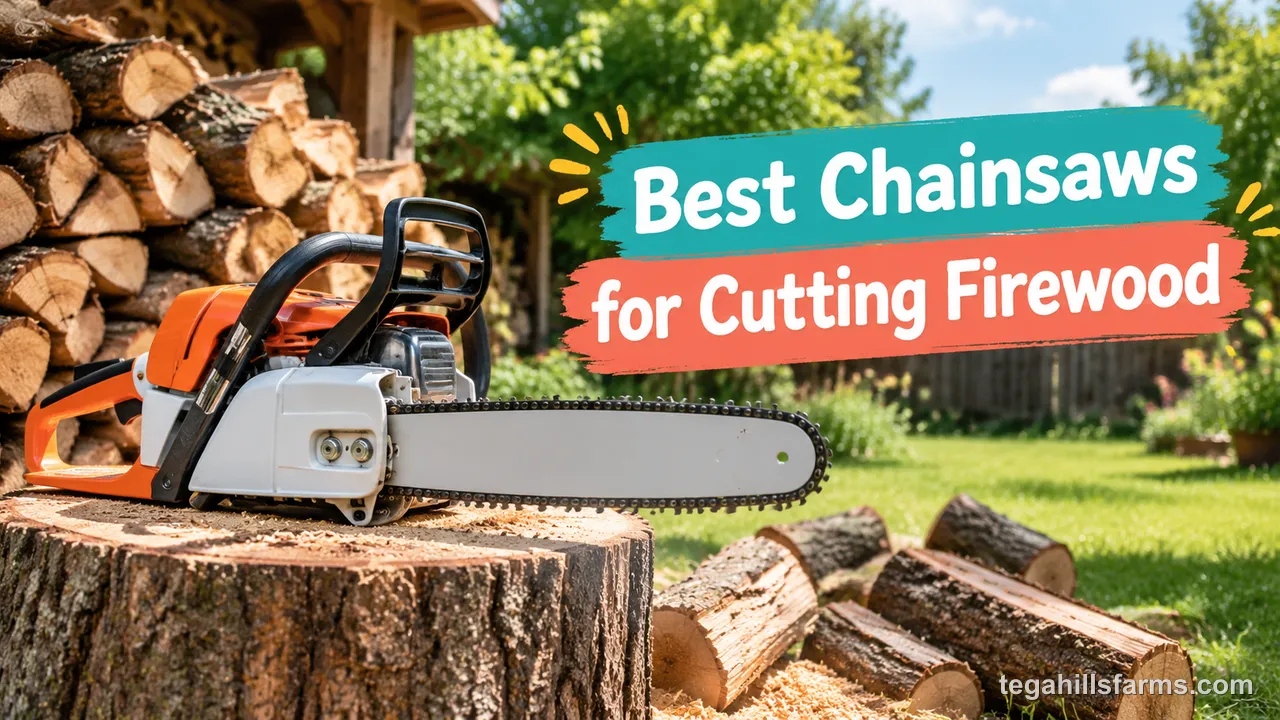
Which one fits comes down to how thick your logs run, how long you cut in a sitting, how much a saw weighs late in the session, and whether you want to deal with fuel.
The real worry for most buyers is a saw that bogs down in seasoned wood, or one that turns a Saturday into a wrestling match with a pull cord.


Start by deciding whether your woodpile is a weekend job or a season-long project. That one answer rules out several of these saws before you compare a single spec.
What Makes a Chainsaw Good for Cutting Firewood?
A good firewood chainsaw is built for sustained cutting through dense wood, with enough bar reach for your log sizes and a weight you can manage across a long session.
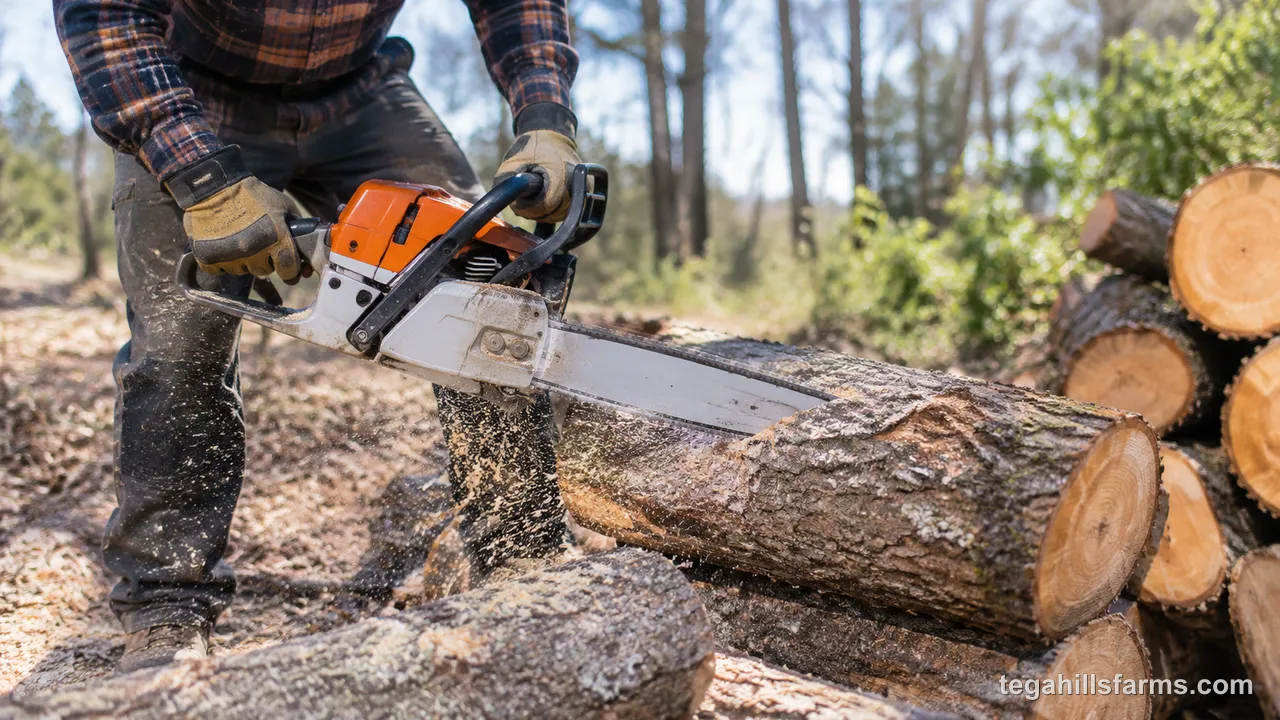
A light yard-trimming saw handles limbs fine, then overheats or stalls when you push it through a stack of seasoned oak. Firewood means repeated cuts in heavy wood, so power that holds up under load matters more than top speed. A saw that feels fine on the first log can feel heavy on the last.
Firewood is just one use, so our overview of the best chainsaws is worth a look if you also have other jobs around the property. If you’re newer to saws, how to choose a chainsaw is a good place to start before narrowing down by firewood needs.
What Should You Look for in a Firewood Chainsaw?
A good firewood saw balances bar reach, power under load, weight and balance, and safety and starting features, and each one changes how a day at the woodpile feels. A long bar means little if the saw is too heavy to lift, and big power means little if it won’t start.
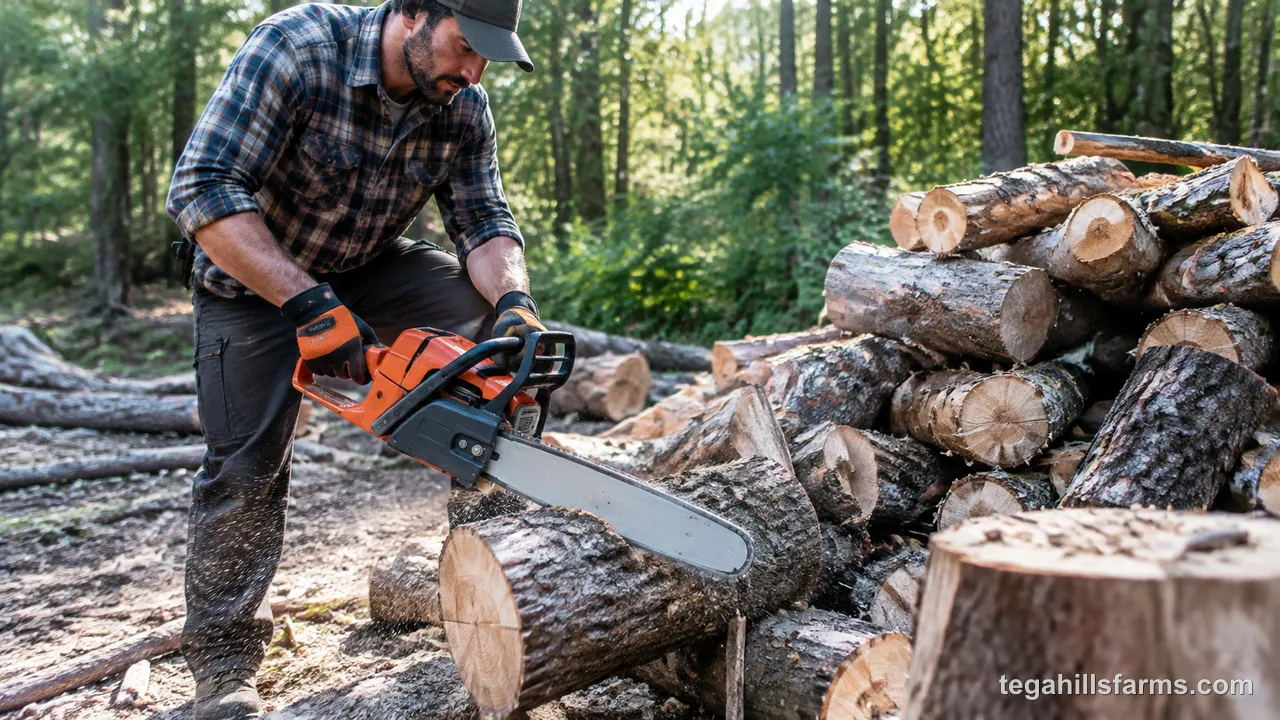
How Long Should the Bar Be for Firewood?
Bar length sets how thick a log you can cut straight through, and a mid-length bar handles most firewood without adding much weight.
A longer bar reaches wider rounds, but it adds weight at the front of the saw and demands more power to pull the chain. A long bar on an underpowered saw cuts slower, not better. A short bar is nimble, but thick rounds force you to cut from both sides, which wastes time.
Most firewood cutters end up shopping among the best 18 inch chainsaws or the best 20 inch chainsaws, because those lengths balance reach and handling. A longer bar is also easier to snag on dirt when you buck logs near the ground.
How Much Engine or Battery Power Do You Need?
Gas saws are rated by engine displacement in cc, while battery saws rely on battery voltage and a brushless motor to push through dense, seasoned wood.
More displacement gives a gas engine the torque to keep the chain moving when the bar is buried in oak or maple. On battery saws, higher voltage and larger amp-hour packs deliver more sustained output. A brushless motor wastes less energy as heat, so you get more cutting from each charge.
Extra power only pays off when the wood demands it. On small, softer rounds, a bigger engine or battery system just adds weight and fuel burn. Match the power to the hardest wood you cut regularly, not the rare monster log.
How Much Do Weight and Balance Matter?
Lighter weight, a well-placed handle and vibration damping keep your arms and hands fresh across a long bucking session.
A heavy saw is fine for a few cuts, but it wears you down over a full afternoon, and tired arms lead to sloppy, unsafe cuts. Handle design decides how well you control that weight. An offset front handle and a grip that doesn’t slip let you guide the saw with less effort.
Vibration damping matters because repeated cuts send buzz through your hands. Less vibration means less numbness when you finally put the saw down.
Which Safety and Starting Features Are Worth Having?
Five features change the buying decision: chain brake, kickback protection, easy-start systems, automatic chain oiling and tool-free tensioning. Each saves effort or risk you will notice on the first day at the woodpile.
- Chain brake: stops the chain quickly if the saw kicks back, protecting your hands and face.
- Kickback protection: reduces the chance of the bar tip jumping up when it catches wood.
- Easy-start systems: cut the pulls and flooding on gas saws, while battery saws skip the problem.
- Automatic oiler: feeds bar oil as you cut, so you aren’t stopping to oil by hand.
- Tool-free tensioning: lets you fix chain slack without hunting for a wrench.
Gas, Battery, or Corded: Which Suits Firewood Cutting?
Gas wins on endurance and power under load, while battery wins on quick starts, low noise and minimal upkeep. Corded saws are the odd one out, since cord reach and outlet access keep them away from most woodpiles.
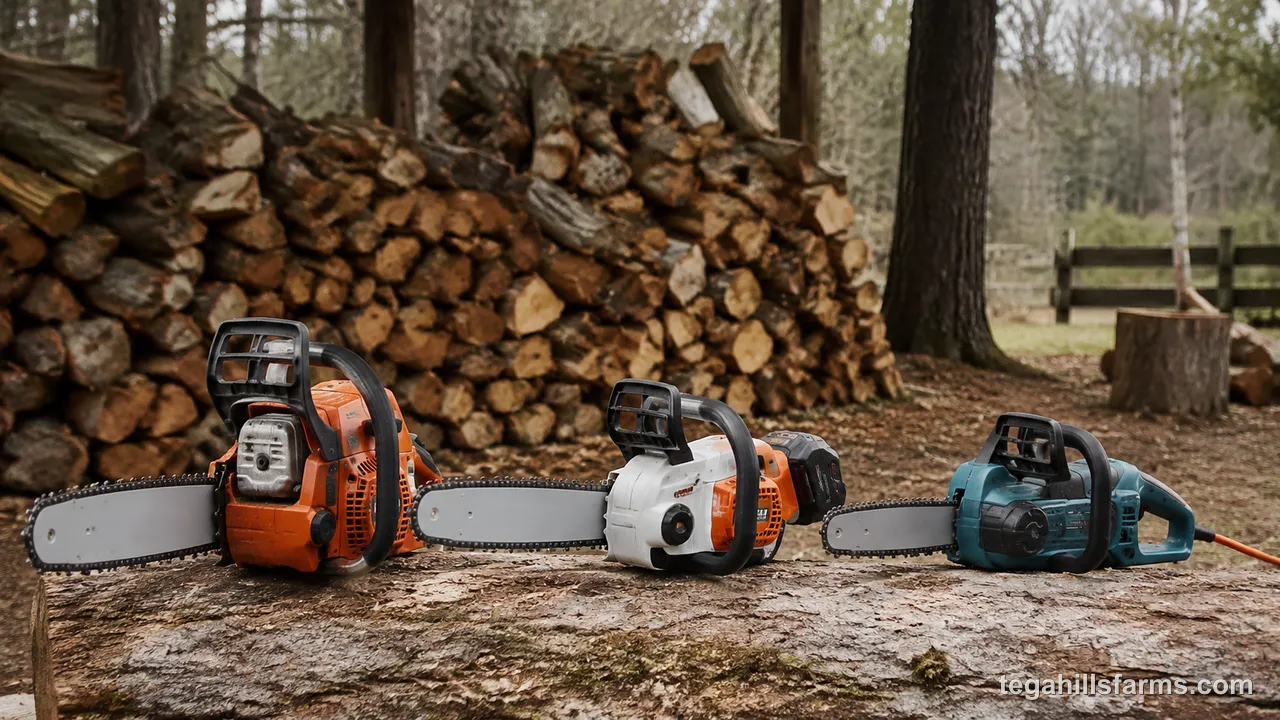
Choose by how far the wood sits from the house and how many hours you cut in a stretch.
When Does a Gas Chainsaw Make Sense?
A gas chainsaw makes sense for long cutting sessions, dense hardwood and remote wood lots, as long as you accept fuel mixing and carburetor care.
You refuel in under a minute and keep cutting, with no charger and no waiting. That matters when the wood is a long way from an outlet or you’re working through a big pile in one go.
The trade-off is upkeep. You mix fuel, a carburetor can gum up if fuel sits too long, and winter storage means draining or stabilizing the tank. Shoppers leaning this way can browse the best gas chainsaws to see how the category stacks up.
When Is a Battery Chainsaw Enough?
A battery chainsaw is enough when your loads are smaller, you want quick starts and lower noise, and you’d rather skip engine maintenance.
You press a button and cut, with no fuel, no pull cord and far less to service. The limit is capacity. A single pack can run short on a big pile of dense wood, so a spare battery is what decides whether the saw can keep up with a full day of cutting.
Check the battery platform too, since packs you already own for other tools may fit. Anyone leaning battery can compare platforms among the best battery chainsaws.
The 6 Best Firewood Chainsaws of 2026
The 6 best chainsaws for cutting firewood of 2026 are EGO Power+ CS2005 20 in, Husqvarna 450X Rancher, Greenworks 80V 18 in Chainsaw, Husqvarna 460 Rancher 24 Inch, Husqvarna 455 Rancher 20 in, and NEO-TEC 62cc Gas Chainsaw.
The main divide is battery convenience and light weight versus gas endurance and bar reach. Occasional homeowners will gravitate to the battery and mid-size options, while anyone cutting a larger seasonal woodpile should look at the gas saws.
#1 EGO Power+ CS2005 20 in — Best Overall
A battery saw that doesn’t feel like a compromise on a bigger woodpile. The brushless motor delivers power equivalent to a 55cc gas saw, so the 20 in bar and full chisel chain have the muscle to match, without fuel mixing or a pull cord.
Key Specs:
- Bar and chain: 20 in bar, full chisel tooth chain, 3/8 in pitch, 0.050 in gauge, 69 drive links
- Motor: brushless, power equivalent to a 55cc gas saw
- Battery: 56V 6.0Ah battery and charger included
- Runtime: up to 135 cuts on a 6×6 per charge
- Weight: 30 lb
- Extras: digital display, LED work light, IPX4 weather resistance
Detailed Review:
The brushless motor delivers power equivalent to a 55cc gas saw, with chain speeds up to about 82 ft/s (25 m/s). That is what keeps a 20 in bar moving through seasoned logs instead of bogging down. The full chisel tooth chain cuts fast, though it rewards a careful hand when sharpening.
Runtime is rated at up to 135 cuts on a 6×6 per charge with the included 6.0Ah battery, and any EGO 56V ARC lithium battery you already own will fit. One pack covers a solid chunk of work. A spare turns it into an all-day saw.
The digital display shows speed modes, battery charge and brake status. A front LED work light helps when daylight fades, and IPX4 weather resistance means a damp woodpile won’t trouble it.
Next to the Greenworks 80V, it brings a longer bar and a higher gas-equivalent rating. The trade is mass, since the Greenworks lists a much lower weight. For gas-class cutting without gas upkeep, I’d take that trade.
Pros:
- Brushless motor delivers 55cc gas-equivalent power
- Accepts any EGO 56V ARC battery
- Digital display shows charge and brake status
- LED work light helps at dusk
Cons:
- At 30 lb, it tires arms over long sessions
- One battery limits a full day of cutting
- Full chisel chain needs careful sharpening
Who It’s For:
Homeowners who split a sizable stack each fall and would rather skip fuel, oil mixing and carburetor care will like this saw. It also suits anyone already invested in EGO 56V batteries. Someone cutting far from an outlet all day with no way to recharge should look at a gas saw instead.
Editor’s Verdict:
Gas-class cutting without the fuel, the pull cord or the carburetor care, in exchange for some carrying weight.
#2 Husqvarna 450X Rancher — Best Easy-Start
Cold mornings and fussy pull cords are what this saw is built to take off your plate. Its consistent starting procedure works whether the 50.2cc X-Torq engine is cold or warm, and AutoTune handles the engine adjustments you would otherwise do by hand.
Key Specs:
- Engine: 50.2cc, 3.4 hp, 2-cycle X-Torq
- Bar: 20 in
- Weight: 14.9 lb
- Tuning: AutoTune automatic engine optimization
- Vibration control: LowVib dampeners
- Cooling: patented crankcase design
Detailed Review:
Starting is where this saw earns its keep. The procedure is easy and consistent whether the engine is cold or warm, so you spend less time on the cord and more on the cut. AutoTune adjusts engine settings automatically, which spares you from re-tuning as weather and temperature change.
The X-Torq engine is built to hold power at low RPMs, so the chain keeps pulling when you lean into a thick round. A patented crankcase design improves cooling, which supports engine life across the long runs a woodpile demands.
LowVib dampeners take some buzz out of the handles. At a listed 14.9 lb, it is a saw most homeowners can carry through a full session without dreading the next cut.
Next to the NEO-TEC 62cc, it gives up displacement but carries far less weight. That trade favors people who move around the woodpile a lot and value easy handling over maximum engine.
Pros:
- Starts the same way cold or warm
- AutoTune adjusts engine settings automatically
- LowVib dampeners cut handle vibration
- X-Torq engine holds power at low RPMs
Cons:
- Smaller engine than the larger Husqvarna Ranchers here
- Gas upkeep still means fuel mixing and storage prep
Who It’s For:
Owners who dread yanking a cord on a cold morning, or who only cut now and then, will appreciate how little fuss this saw asks. It suits anyone who wants gas power without tinkering with tuning. People feeding a large pile of dense hardwood all season would be better served by a bigger engine.
Editor’s Verdict:
Starts without drama and tunes itself, which is most of what a casual firewood cutter wants from a gas saw.
#3 Greenworks 80V 18 in Chainsaw — Best Cordless
Light handling is the draw here. At about 9.5 lb with a brushless motor rated to match a 50cc gas engine, it gives homeowners a saw that cleans up the yard and still takes on moderate firewood.
Key Specs:
- Bar: 18 in
- Battery: 80V 4.0Ah, charger included
- Motor: brushless, power equivalent to a 50cc gas engine
- Weight: about 9.5 lb
- Safety: mechanical chain brake
- Upkeep: automatic oiler and side-access tensioning
Detailed Review:
Weight is the story here. At about 9.5 lb, it is easy to carry, and you notice that late in a session when heavier saws start dragging your arms down.
The brushless motor is rated to deliver power equivalent to a 50cc gas engine, which covers limbs, storm debris and moderate firewood. The included 4.0Ah battery sets how much you cut before recharging, so heavier loads call for a spare. Shoppers weighing battery platforms can compare the best 80v chainsaws before committing.
A mechanical chain brake adds a safety stop, and the automatic oiler keeps the chain lubricated as you cut. Side-access tensioning makes bar and chain maintenance quicker.
Compared with the EGO, it runs a shorter bar and a lower gas-equivalent rating, but it is far easier to carry around the yard. That makes it a better match for mixed jobs than for a big seasonal stack.
Pros:
- Light enough for long cutting sessions
- Brushless motor rated like a 50cc gas engine
- Mechanical chain brake adds a safety stop
- Automatic oiler keeps the chain lubricated
- Side-access tensioning speeds up chain adjustments
Cons:
- Shorter bar limits very thick rounds
- Included battery runs short on big woodpiles
Who It’s For:
Homeowners juggling yard cleanup, storm limbs and the occasional stack of firewood will find this saw easy to live with. It suits anyone who wants a saw they can grab without planning around fuel. Folks cutting a big pile of dense hardwood every season will likely outgrow it.
Editor’s Verdict:
Easy to carry, easy to run, and sized for the yard-and-firewood mix most homeowners actually face.
#4 Husqvarna 460 Rancher 24 Inch — Best Premium
Big rounds and a deep woodpile are what this saw is built around. Its 60.3cc X-Torq engine and 24 in bar give you reach and low-RPM torque that smaller saws struggle to match, while Smart Start keeps the pull cord from becoming a chore.
Key Specs:
- Engine: 60.3cc, 3.6 hp, 2-cycle X-Torq
- Bar: 24 in (recommended range 13 in to 24 in)
- Weight: 13.2 lb
- Starting: Smart Start, combined choke/stop control
- Safety: inertia-activated chain brake
- Handling: 7 degree offset front handle, LowVib dampeners
Detailed Review:
The 60.3cc, 3.6 hp X-Torq engine is built to hold power at low RPMs, which is what you want with a 24 in bar buried in oak. The saw accepts bars from 13 in to 24 in, so you can run a shorter bar for lighter work. If displacement is your starting point, the best 60cc chainsaws are the natural group to compare it with.
Starting is simpler than the size suggests. Smart Start cuts the effort, and the combined choke and stop control helps prevent flooding. An inertia-activated chain brake is there to reduce injury from kickback.
Air injection spins larger dust and debris out before it reaches the air filter, which helps engine life in dusty, bark-heavy wood. A 7 degree offset front handle and LowVib dampeners keep this much saw controllable.
Against the 450X, it brings a bigger engine and a longer bar, and its listed weight is lower. What you give up is right-sizing: on small piles, that capacity goes unused.
Pros:
- Strong low-RPM power for big rounds
- Smart Start keeps pulling effort low
- Air injection helps protect the engine
- LowVib dampeners calm handle vibration
- Accepts bars from 13 in to 24 in
Cons:
- More saw than small woodpiles need
- Gas upkeep still means fuel mixing and carburetor care
Who It’s For:
Anyone burning wood to heat a home, and cutting big rounds of dense hardwood each season, gets real value from the extra engine and reach. Experienced cutters who want a gas saw that never feels strained will appreciate it. Occasional users with a small pile will find it more saw than they need.
Editor’s Verdict:
Serious engine and reach for people who burn a lot of wood; smaller piles will leave that capacity idle.
#5 Husqvarna 455 Rancher 20 in — Best Ergonomic Design
Long days at the woodpile are easier when the saw doesn’t punish your hands. A 7 degree offset front handle and LowVib dampeners give the 3.5 hp X-Torq engine a calmer, more controllable feel on repeated cuts.
Key Specs:
- Engine: 3.5 hp X-Torq
- Bar: 20 in (recommended range 13 in to 24 in)
- Weight: 13.2 lb
- Starting: Smart Start, inertia-activated chain brake
- Handling: 7 degree offset front handle, LowVib dampeners
- Filtration and oiling: air injection, automatic oiler
Detailed Review:
Comfort is the selling point. A 7 degree offset front handle improves grip, and LowVib dampeners reduce the vibration reaching your hands. Over a full afternoon of bucking, that is often the difference between finishing fresh and quitting early.
The 3.5 hp X-Torq engine keeps power up at low RPMs, so the 20 in bar keeps pulling through dense logs. The saw takes bars from 13 in to 24 in, which leaves room to adjust to the job.
Smart Start gets it running with minimal effort, and the inertia-activated chain brake reduces kickback risk. Air injection spins debris out before it reaches the filter, and the automatic oiler keeps chain lubrication steady.
Beside the 460, it gives up some bar length and engine size while weighing the same on paper. That is a fair trade if your logs seldom need the extra reach.
Pros:
- Offset front handle improves grip
- LowVib dampeners reduce hand fatigue
- Smart Start keeps pull effort light
- Air injection keeps debris off the filter
- Automatic oiler keeps the chain lubricated
Cons:
- Less bar reach than the larger Rancher
- Gas upkeep still means fuel mixing and storage
Who It’s For:
Regular firewood cutters who spend long stretches on the saw each season, and care more about comfort than raw size, will settle in with this one. It suits people who want a steady, predictable gas saw. If you routinely cut very thick logs, you’d want more reach.
Editor’s Verdict:
Comfort is the reason to choose this saw, and it pays off most across a long afternoon of cutting.
#6 NEO-TEC 62cc Gas Chainsaw — Best Gas-Powered
Plenty of displacement and a full kit make this a practical gas saw for firewood. Its 62cc two-stroke engine drives a 20 in or 22 in bar, and the box includes both bars, oils, a mixing container and gloves so you can start cutting once you’ve fueled up.
Key Specs:
- Engine: 62cc 2-cycle, 3.5 hp, max 7500 RPM
- Bars: 20 in and 22 in guide bars with chains included
- Weight: 22 lb
- Mix ratio: 25:1 fuel-oil
- In the box: engine oil, bar oil, mixing container, protective gloves, tool kit
Detailed Review:
The 62cc 2-cycle engine is rated at 3.5 hp with a max speed of 7500 RPM. You can fit the 20 in or 22 in bar: the longer one reaches thicker rounds, while the shorter is easier to manage on smaller work.
A dual-tank system holds about 18.6 fl oz of fuel and 8.8 fl oz of oil (550 ml and 260 ml), and the 25:1 fuel-oil mix ratio is clearly marked. A side-mounted tensioner allows tool-free chain adjustments, so you aren’t hunting for a wrench mid-cut.
At 22 lb, it is a heavy gas saw. The anti-vibration system and non-slip handle take some sting out of that, but the weight still shows up over a long day.
Versus the 460, it has a similar engine class at a far higher listed weight. The NEO-TEC offsets that with both bars and a full accessory kit in the box.
Pros:
- Large engine drives 20 in or 22 in bars
- Both bars and chains included
- Tool-free side chain tensioner
- Bundled oils, mixing container, gloves and tool kit
Cons:
- Heavy at 22 lb for long sessions
- Fuel mixing and carburetor care come with gas
Who It’s For:
Shoppers who want a big gas engine and a complete kit in one box, including a choice of bar lengths, will find plenty to like. It suits people comfortable mixing fuel and doing basic upkeep. Anyone sensitive to saw weight should look for a lighter machine.
Editor’s Verdict:
Arrives with everything needed to start cutting, and the extra weight is the price of that big engine.
Which Chainsaw Fits Your Firewood Workload?
Occasional cutters and new users do best with an easy-starting battery or mid-size gas saw, while heavy seasonal cutters on dense hardwood want a bigger gas engine or a battery saw with spare packs. The split comes down to how much wood you cut and how hard it is.
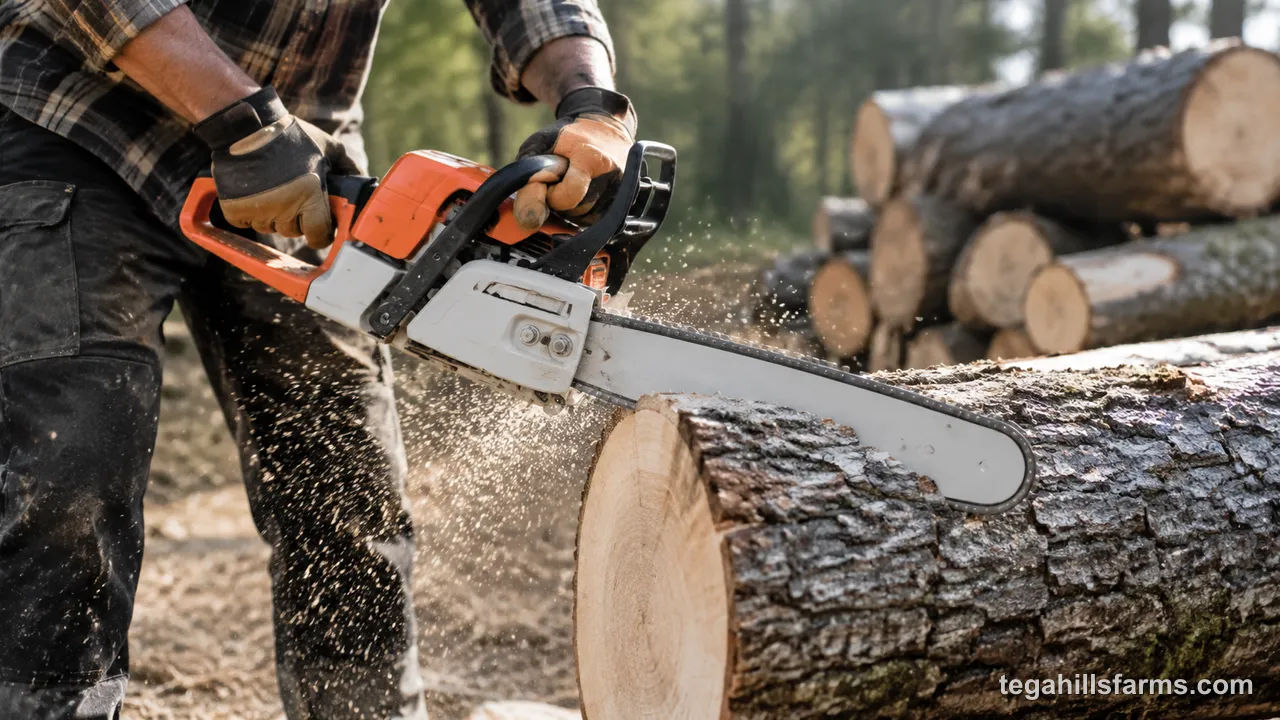
What Works for Occasional Firewood and New Users?
A lighter battery saw or mid-size gas saw is usually enough for occasional firewood, as long as it offers easy starting, manageable weight and a chain brake.
If you cut a little wood each season, a saw that starts on the first try and doesn’t tire you out matters more than raw power. Low upkeep helps too, since a saw you rarely use shouldn’t demand a lot of care between jobs. Battery saws are strong here because there’s no fuel to go stale in the shed.
New users should also look at the best chainsaws for beginners, which put safety features first.
What Works for Heavy Seasonal Cutting and Dense Hardwoods?
Oak, maple and a large seasonal woodpile favor more engine power, a longer bar and gas endurance or spare batteries.
Dense hardwood resists the chain, so a small engine bogs down and a short bar forces extra passes. Gas lets you refuel and keep going all day, while a battery saw needs enough spare packs to match the hours you cut.
Expect the chain to work harder under that load. Hardwood dulls teeth faster, so plan to sharpen between tanks or packs, keep the oiler full and check chain tension often. Cutters moving big rounds regularly should also scan the best chainsaws for cutting logs.
Run a saw through enough oak and the cut starts producing fine dust where chunky chips used to fly. Most people keep leaning harder on the bar, burning extra fuel or battery and raising the odds of a kickback, without realizing the chain is the problem. So what separates a chain that needs a touch-up from one that’s finished?
How Can You Tell When a Chainsaw Chain Is Dull?
A dull chain shows up as fine sawdust instead of chunky chips, a saw that pulls to one side, smoke at the cut and the need to press hard on the bar.
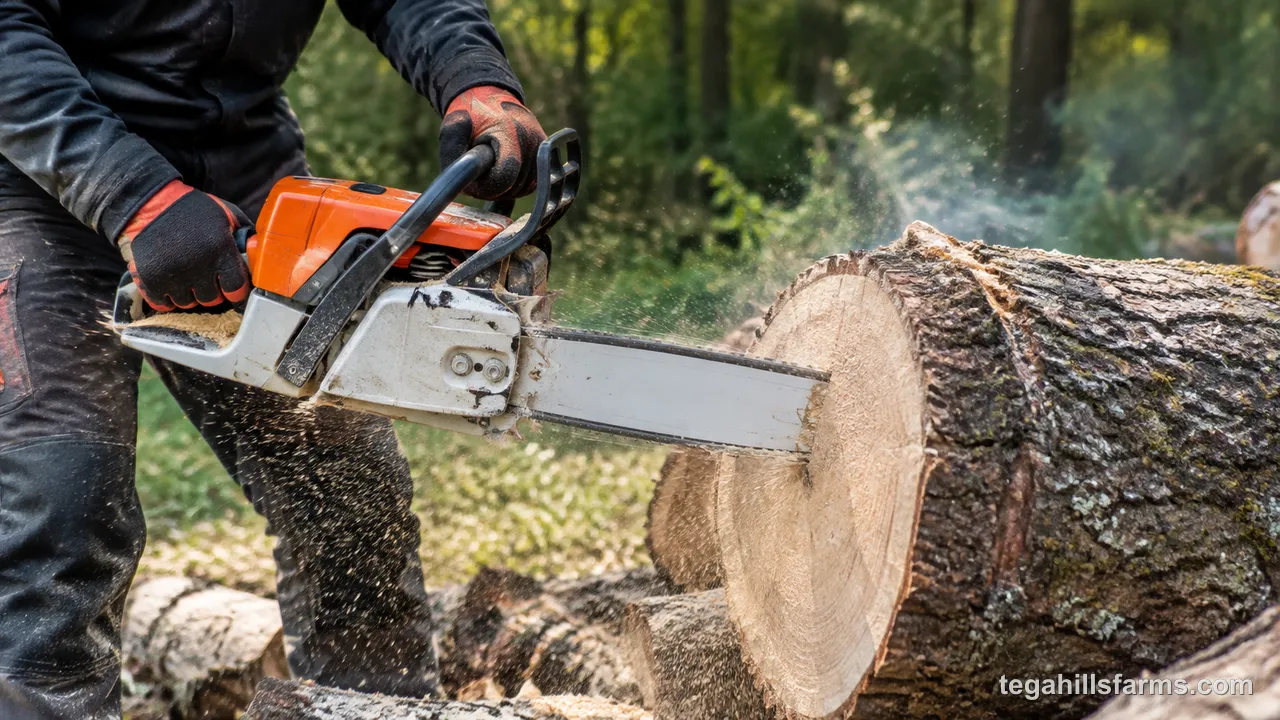
A sharp chain pulls itself into the wood and throws wide, curled chips. A dull one skates and grinds, which is why you end up forcing the saw. If it drifts left or right, the teeth on one side are usually duller than the other, and the cut comes out crooked.
Light dullness usually responds to a few careful passes with a file or a sharpener. Replace the chain once the teeth are worn down too far to sharpen, or when it’s damaged from hitting dirt or rock or has stretched repeatedly. Browse the best chainsaw sharpener options for touch-ups, and the best chainsaw chain options when it’s time to replace.
Is a Bigger Saw Always Better for Firewood?
No, a bigger saw is not always better for firewood, because extra weight, faster fatigue and unused capacity make an oversized saw a poor fit for modest piles.
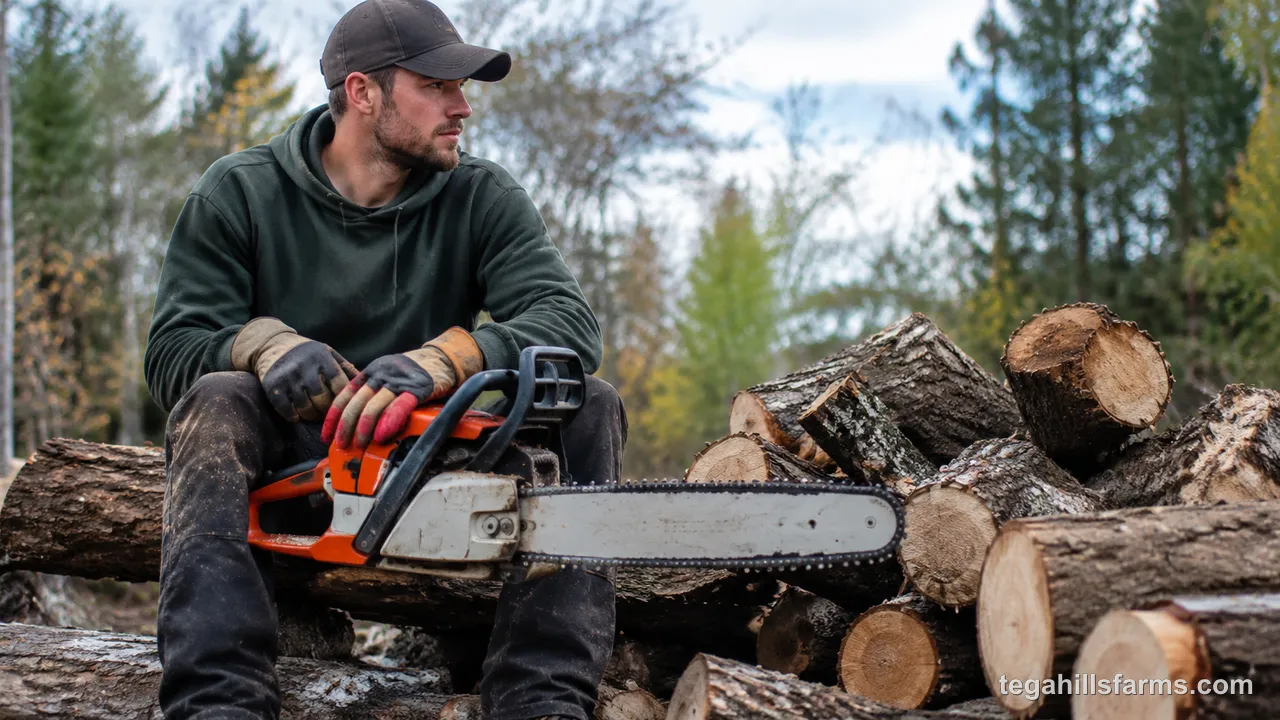
A right-sized saw matches the logs you actually cut. An oversized one is heavier to lift, harder to control on awkward cuts and burns more fuel or battery than the work needs. You pay for capacity you never use and tire out sooner.
If your woodpile is modest, a lighter saw is the smarter buy because it keeps you cutting comfortably and safely for the whole session. Weight also affects how quickly you tire, which is why the best lightweight chainsaws are worth a look. Save the big engine and long bar for the days when the wood really demands them.
What Else Do Firewood Cutters Ask About Chainsaws?
Is Stihl or Husqvarna better for firewood cutting?
Both brands build durable saws and have strong dealer networks for parts and service, so neither is a wrong answer. Husqvarna’s Rancher line is a solid fit for firewood. The better choice often comes down to which brand has a dealer near you and which saw feels right in your hands.
What do professional loggers tend to prefer?
Working loggers usually lean toward gas saws with larger engines because they run all day, refuel quickly and handle big timber. Many pros also value dealer support and easy parts access. For a homeowner’s woodpile, that level of saw is rarely necessary, and a mid-size gas or strong battery saw does the job.
How long do battery chainsaws run under continuous cutting?
Continuous cutting drains a battery faster than occasional cuts, and runtime depends on battery capacity, wood density and bar length. Hardwood shortens it noticeably. Plan on a spare battery for a full session, and recharge between rounds rather than running a pack completely flat.
What protective gear does a firewood cutter need?
Wear cut-resistant chainsaw chaps, a helmet with a face shield or safety glasses, hearing protection, sturdy gloves and non-slip boots. Chaps matter because the leg is where a slipping saw most often lands. Make sure each piece is made for chainsaw use before you rely on it.
Which accessories are worth buying for firewood cutting?
A spare chain, a sharpening kit, a supply of bar oil, a set of wedges and a sturdy sawhorse make a real difference. If you’re building out your kit, the best chainsaw accessories are worth a look. Start with sharpening gear, since a keen chain improves both safety and speed.

Write Your Review
No reviews yet. Be the first to share your experience!