

Storing a chainsaw right through winter prevents the two problems that ruin most saws in the off-season: stale fuel gumming the carburetor and moisture rusting the bar and chain. A proper layup takes about 20 minutes of cleaning, chain care, and fuel handling before the saw sits for months.
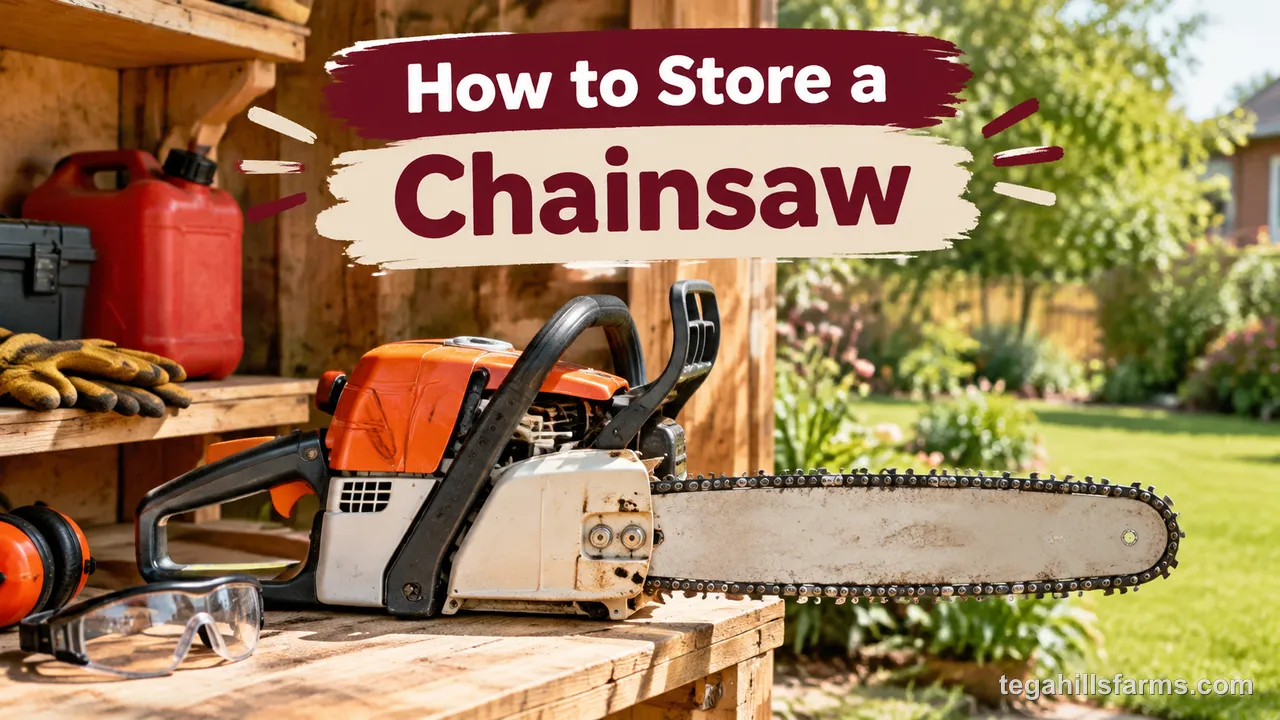
The difference between short-term and long-term storage comes down to fuel, chain tension, and where you leave the saw. Get those three right and the saw will start on the first or second pull in spring without a trip to the shop.
Many spring no-starts trace back to skipping the prep, not to a bad engine. Old gas left in the tank, a tight chain left under tension, and bar oil leaking across a shelf create the varnish, stretch, and mess you find months later.
Below is the full winter routine, step by step, from cleaning and chain care to the fuel decision and positioning that keeps the saw safe until you need it again.
What counts as long-term winter storage for a chainsaw?
Long-term winter storage means any idle period of 30 days or more, typically 3 to 6 months over winter, when fuel goes stale and metal can corrode without use.
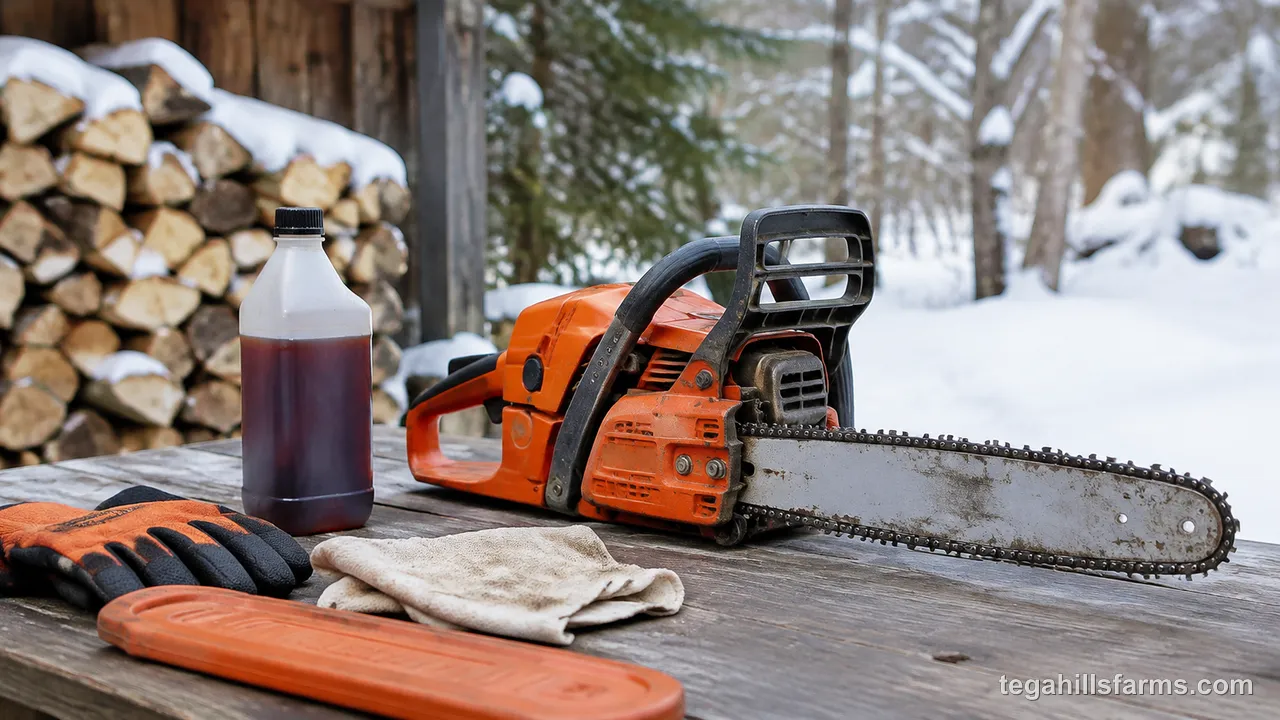
Short-term storage is a week or two between cuts, where you can leave fuel in the tank and the chain tensioned. Long-term storage is different because ethanol-blended gasoline starts to separate and oxidize, bar oil slowly seeps, and condensation can form on a cold saw brought into a warm garage. That is why the winter approach adds fuel stabilization or draining, loosening the chain, fogging the cylinder, and a leak-proof position rather than just setting the saw on a shelf. If you are still deciding what type of saw fits your yard and storage space, our guide on how to choose a chainsaw explains how fuel type and size affect winter upkeep before you commit to a long layup.
How should you prep a chainsaw before putting it away for winter?
Prepping a chainsaw for winter means deep cleaning and inspection, removing and loosening the chain and bar, and separate battery care for cordless models.
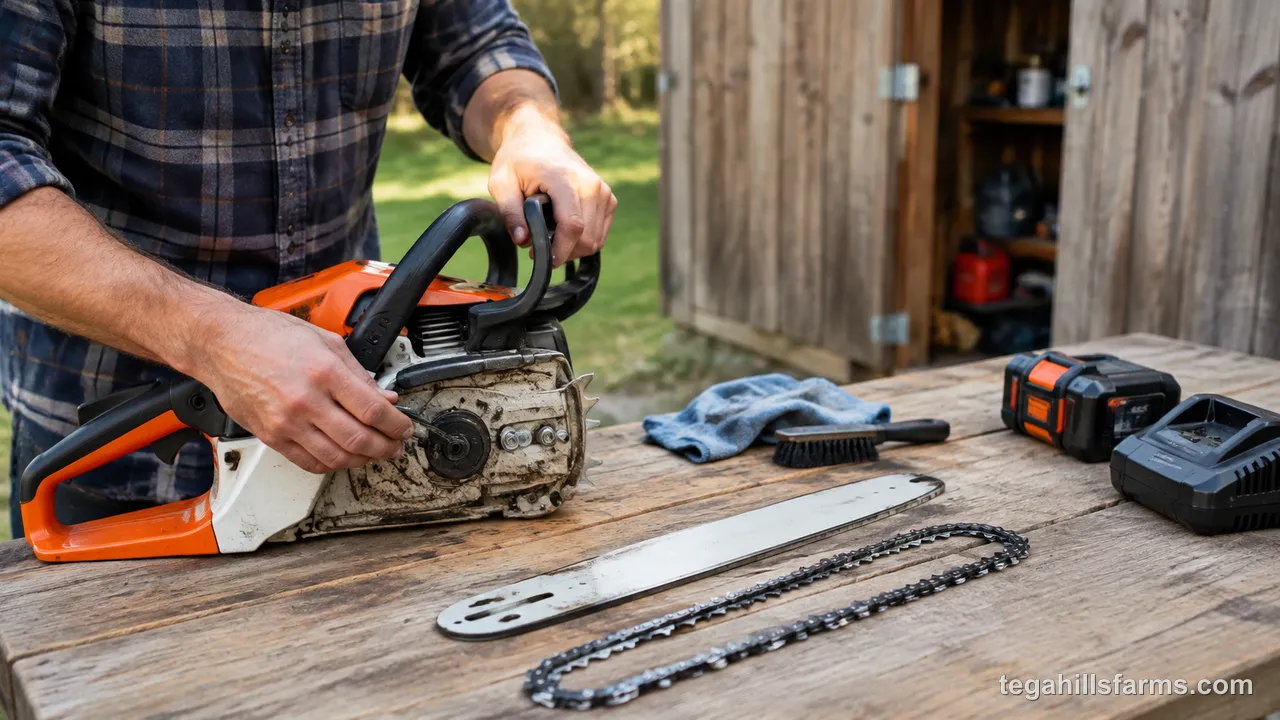
Each step addresses a different winter threat: cleaning prevents corrosion from trapped sawdust and sap, chain handling prevents rust and stretch, and battery care prevents capacity loss. Do them in order before you touch the fuel system so grit does not get into open fuel and oil tanks.
How do you deep clean and inspect the saw before storage?
Deep cleaning a chainsaw before storage is removing packed sawdust, oil, and sap from the bar groove, sprocket, air filter, and body so moisture and grit do not cause corrosion.
Start with the saw cool and the spark plug wire disconnected. Remove the side cover, bar, and chain, then scrape the bar groove and oil holes with a small screwdriver or bar tool until the passages are clear. Brush debris from around the sprocket and clutch area, clean the air filter by tapping out dust and washing a foam filter in warm soapy water, and wipe the entire body with a dry rag. For a full walkthrough on solvents and what not to pressure-wash, see our guide on how to clean a chainsaw. While it is apart, inspect the bar rails for burring, the sprocket teeth for wear, and the filter for tears — winter is the easiest time to replace them.
Should you remove, sharpen, and loosen the chain for winter?
Yes, you should remove, sharpen, and loosen the chain for winter because it prevents rust, avoids stretch from constant tension, and lets you start spring with a sharp chain.
Take the chain off the bar, soak it briefly to remove sap, dry it completely, then file or have it sharpened so you are not doing it in the cold next season. Coat the clean, dry chain lightly with bar oil or a rust inhibitor and store it in a sealed bag or container away from moisture. Loosen the bar nuts and back off the tensioning screw so the bar and chain are not under load all winter, which helps prevent the chain from taking a set and the bar from warping. When you reinstall in spring, you will need to reset that tension correctly, which is where our guide on how to tighten a chainsaw chain helps you get the snap-tight but still pullable fit.
How does prep differ for battery chainsaws?
Battery chainsaws skip fuel prep but need battery removal, contact cleaning, and cool, dry battery storage instead.
Compared to gas saws that need fuel stabilization and carburetor care, battery models have no carburetor or fuel lines to gum up, so prep is faster. Remove the battery pack entirely, wipe the contacts on both saw and battery with a dry cloth, and store the battery indoors at room temperature at about 40-60% charge rather than fully topped off or dead. Compared to gas, battery saws also need less bar care but the same cleaning — sawdust still packs the bar groove and sprocket. Meanwhile, a gas saw demands the extra fuel and spark plug steps covered next, while a battery saw is essentially clean, dry, and unplugged for winter.
Should you drain the fuel or use stabilizer for winter storage?
Whether to drain fuel or use stabilizer depends on how long the saw will sit and whether you can run the carburetor dry, with stabilized fresh fuel for 1-3 months and drained and run-dry for 3+ months being the cleanest split.
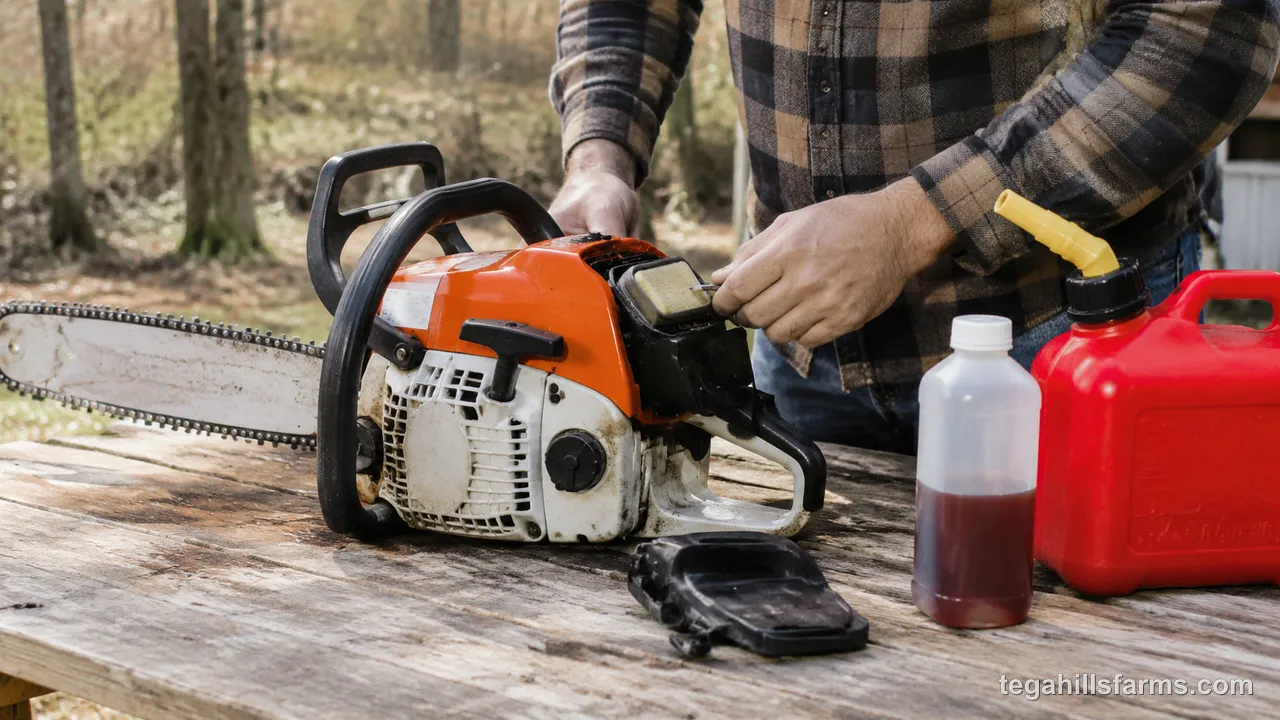
Both methods aim to keep ethanol fuel from turning to varnish in the carburetor. Stabilizer slows oxidation, draining removes the source entirely. Your choice also dictates what you do with the carburetor, spark plug, and bar oil tank before cover-up, and getting the sequence wrong is a common reason for a hard start in spring. If you want the full seasonal checklist in one place, our guide on how to winterize a chainsaw lays out the same fuel decision alongside the other cold-weather steps.
Is it better to empty the tank or store it with stabilized fuel?
For storage over 3 months, emptying the tank and running dry is more reliable, while fresh fuel treated with stabilizer works for shorter layups up to about 90 days.
Stabilized fuel keeps seals from drying and saves a step if you might need the saw mid-winter for storm cleanup — just add the correct dose of fuel stabilizer to fresh, not old, gasoline, run the saw for 2-3 minutes to circulate it, then shut down. Draining is safer for a true winter layup because no fuel is left to separate and leave gum in the jets; pour the tank back into an approved fuel can, then run the saw until it stalls to use the last fuel in the lines. Never store with old, untreated fuel that has been in the tank for weeks — that fuel is already starting to degrade and stabilizer cannot reverse it.
How do you handle the carburetor and fuel lines before storage?
Handling the carburetor for winter means running it dry after the tank is empty or stabilized to prevent varnish from clogging jets and diaphragms.
With the fuel decision made, start the saw and let it idle until it dies on its own if you drained the tank, or for a couple minutes if you stabilized — this pulls treated fuel into the carburetor or empties it completely. That dry or treated carburetor is what prevents the gummy residue that blocks the tiny fuel passages during months of sitting. Avoid leaving the carburetor half-full; a partially filled carburetor leaves the worst of both worlds — enough fuel to varnish but not enough to keep seals wet. If the saw already shows hard starting or rough idle from past storage, you may need to learn how to clean a chainsaw carburetor before the next season, but proper winter handling usually makes that unnecessary.
What about the spark plug and bar oil tank?
The spark plug and bar oil tank need a light fogging in the cylinder and leaving bar oil in but managing leaks, not full draining of both.
Remove the spark plug, add a few drops of two-stroke oil or fogging oil into the cylinder, pull the starter cord slowly a couple times to coat the piston and walls, then reinstall the plug finger-tight — this thin film prevents surface rust on internal steel. Inspect the spark plug electrode while it is out; clean light carbon or replace a worn plug now so spring startup is not delayed. For bar oil, do not drain it completely — the tank, pump, and lines benefit from staying wet — but expect slow seepage. Wipe the tank cap and vent, tighten it, and plan on the leak-proof position covered next to contain any drip, checking the chainsaw spark plug and bar oil system as part of that final wipe-down before you cover the saw.
Where and how should you position a chainsaw for winter storage?
Storing a chainsaw for winter requires a flat or oil-cap-up position that contains seepage and a dry, locked, out-of-reach spot away from ignition sources.
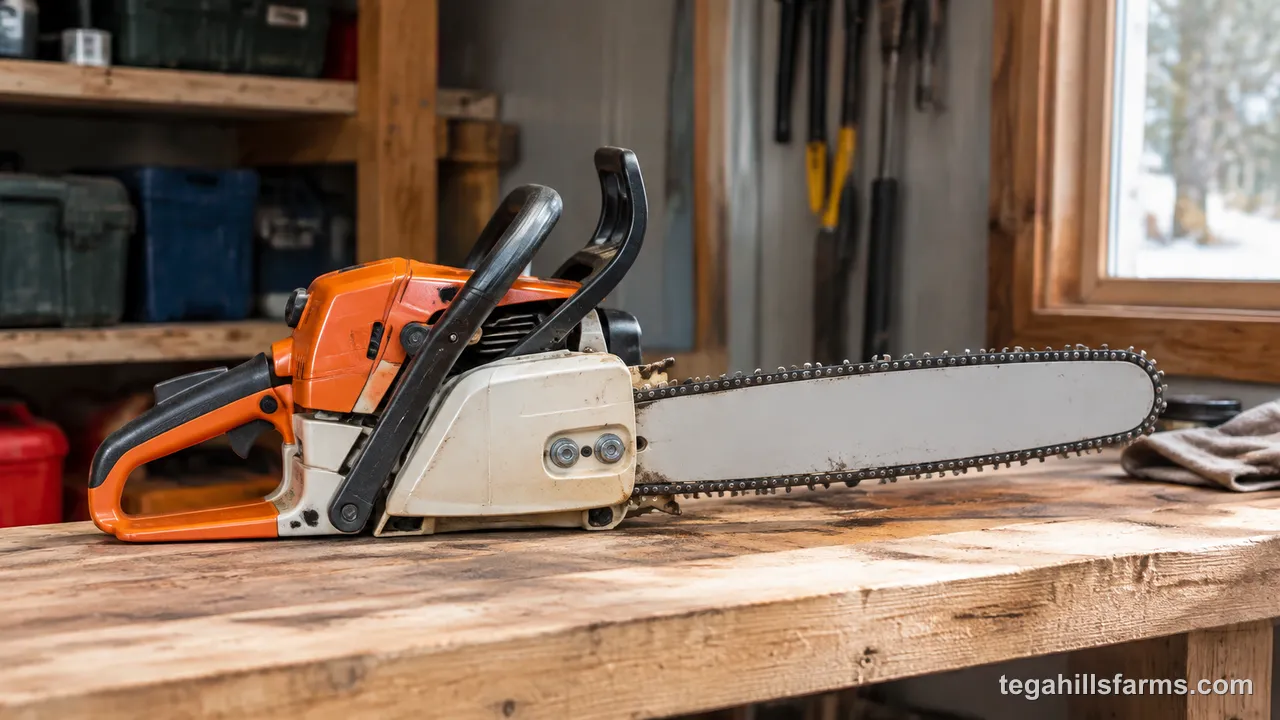
Position controls the slow bar oil leak that almost every saw has, while location controls safety, moisture, and temperature swings. Choose both before you walk away for months, because a saw left tilted cap-down on a high shelf can oil-soak everything below it and remain within reach of kids or pets.
Which position prevents bar oil leaks while stored?
Storing flat or slightly tilted with the oil cap facing up leaks least, compared to cap-down or vertical hanging which lets gravity pull oil past the vent.
Bar oil is designed to flow, so even a tight cap seeps slowly through the vent and pump when the saw sits for months, and many owners find a puddle if they ignore orientation. Laid flat on a tray or shallow pan with the oil cap up keeps the vent above the oil line and contains any drip. Hanging vertically by the rear handle looks tidy but puts constant head pressure on the oil system and often drips more; if you must hang it, empty the tank to about one-quarter and place cardboard underneath. Whichever you choose, add a rag under the bar or keep the scabbard on, and see our overview on chainsaw bar oil for why different oils seep at different rates and which leave less residue over winter.
Where is the safest spot in a garage or shed?
The safest winter spot is indoors in a dry, cool, locked cabinet or high shelf away from furnaces, water heaters, and living spaces, with the bar covered and fuel stored separately**.
A detached garage or shed that stays dry is ideal — avoid damp basements where condensation promotes rust, and avoid spots near open flame or heaters where fuel vapors could collect. Keep the saw out of reach of children and pets, with the chain brake engaged and a bar scabbard on to prevent accidental contact, which is a core part of chainsaw safety tips for any household. Store fuel cans on the floor in a ventilated area, not on the same shelf as the saw, and keep batteries indoors at room temperature if you have a cordless model. Cover the saw loosely with a breathable cloth, not airtight plastic that traps moisture, and leave space around it so air can circulate.
How do you get a stored chainsaw ready to cut again in spring?
You can get a stored chainsaw cutting again in spring with fresh fuel, retensioned chain, and a short 5-point check before the first start.
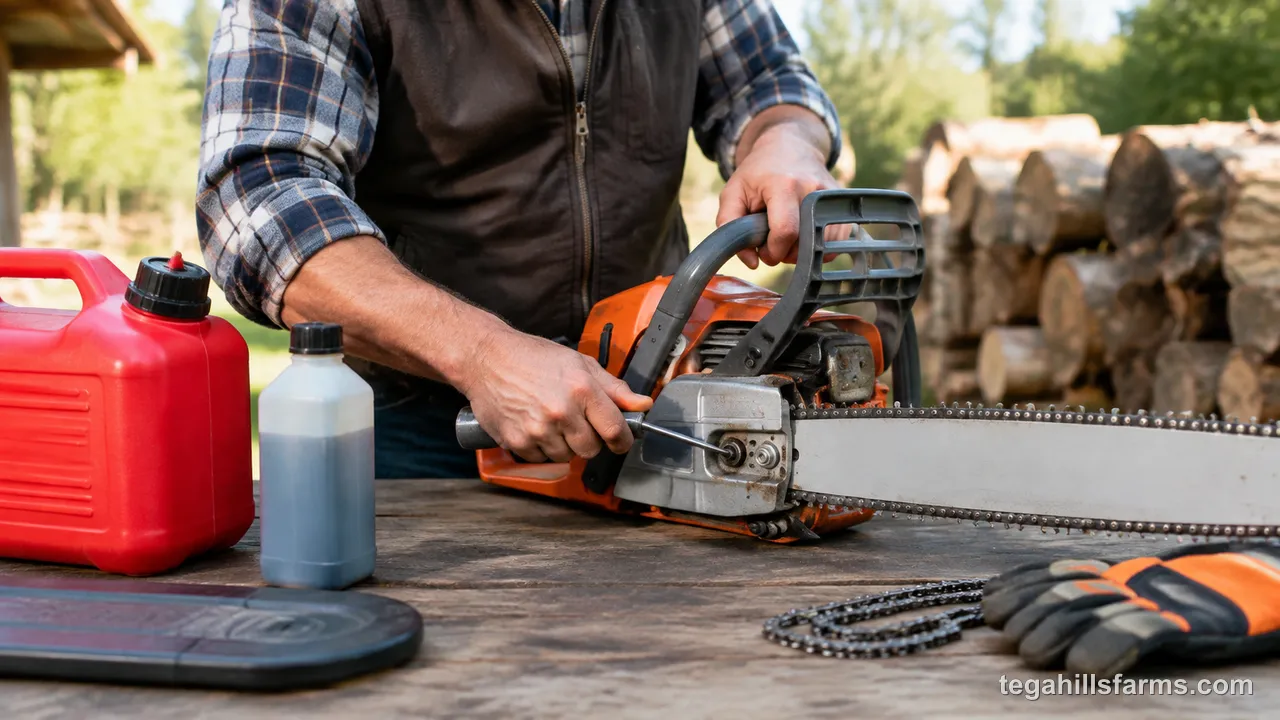
Start by reinstalling the sharpened chain and setting proper tension, filling the bar oil tank, and adding fresh, correctly mixed fuel — do not reuse the old fuel from fall. Inspect the air filter, bar groove, and spark plug, then prime and start per the manual with the chain brake on and the bar clear of the ground. Let it idle briefly, check that oil is slinging off the chain tip onto cardboard, and make a test cut on small wood before tackling large logs. If it cranks but will not catch after several pulls, work through the steps in chainsaw won’t start, where stale fuel and a dry carburetor are the top culprits. For a saw that sat especially long or ran rough last season, a seasonal chainsaw tune up — filter, plug, and bar dressing — restores reliable idle and cutting before heavy spring work.
You have now covered the full winter layup process above, from deep cleaning and chain care to the fuel decision and leak-free positioning. While that routine handles the expected upkeep, the real failures often come from small overlooked details that spread slowly during months of sitting idle. The next section zooms into those rare but costly storage pitfalls and how to spot them before they turn into a no-start in spring.
Rare storage mistakes that silently damage a chainsaw over winter
Rare storage mistakes that damage a chainsaw over winter are trapped moisture and pest nesting and saving old fuel that shortens engine life without obvious warning signs.
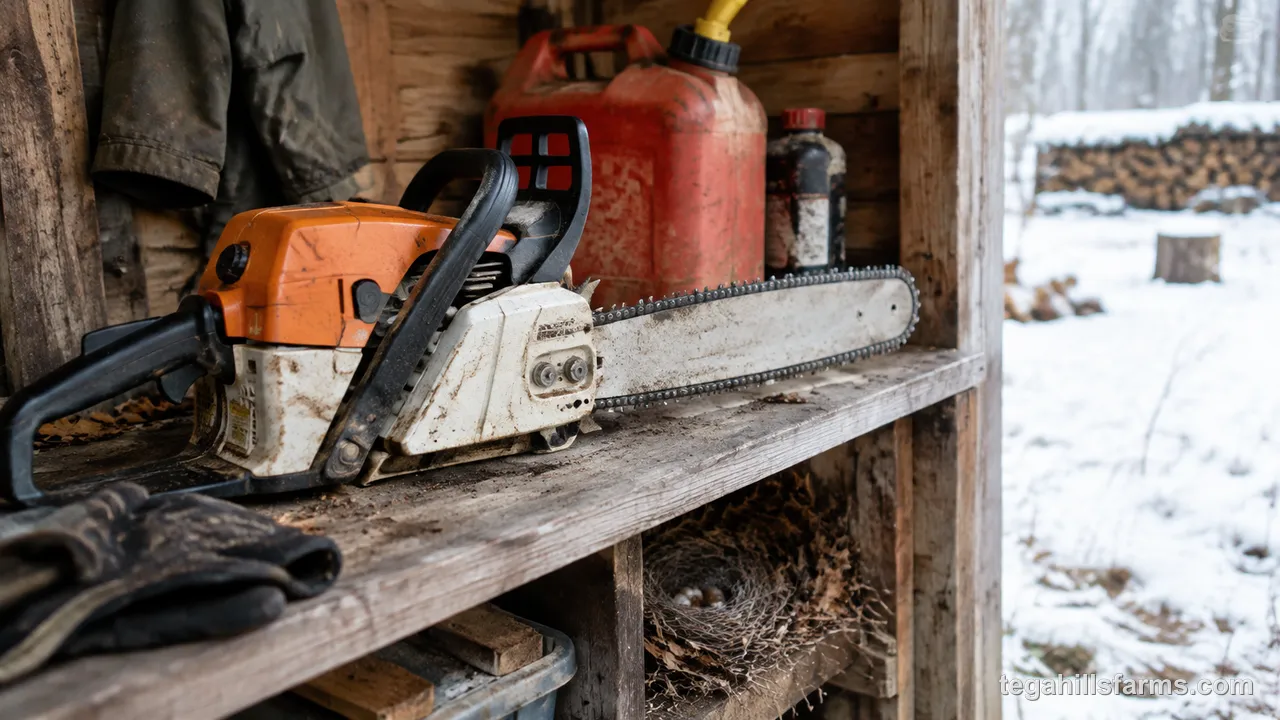
These issues rarely show up on day one, which is why they are missed. A saw can look fine under a cover in December and be rust-flecked or mouse-nested by March, and old fuel can quietly leave deposits that only appear as a no-start or lean seizure later.
How do moisture and pests ruin a stored saw?
Moisture and pests can ruin a stored saw through condensation rust, swollen filters, and mice nesting in the airbox and muffler.
A saw stored in a damp corner or under non-breathable plastic sweats as temperatures swing, leaving light surface rust on the bar, chain, and fasteners that quickly becomes pitting if left. Mice seek the warm, enclosed air filter box and exhaust port for nesting, packing them with shredded material that blocks airflow and can cause chainsaw overheating on the first spring run when the engine cannot breathe or cool properly. Prevent both by storing in a dry, ventilated spot, covering loosely with cloth, stuffing a clean rag lightly in the exhaust port and removing it before startup, and placing traps or repellent near but not on the saw. Check the air filter and muffler inlet in spring before pulling the cord — a quick look beats burning up a cylinder.
When should you dispose of old fuel and what does it mean for lifespan?
Old fuel should be disposed of when it is older than 30 days untreated or 90 days stabilized, smells sour, or looks darker, and using it shortens lifespan through varnish and lean running.
Stale gasoline loses volatility and leaves gum in the tank, lines, and carburetor that restricts fuel flow, causing hard starting, surging, and a lean condition that raises cylinder temperature. Never pour it on the ground or down a drain — take it to a county hazardous waste collection or auto shop that accepts old fuel, in an approved, labeled container. Running fresh, correctly mixed fuel each season keeps the fuel system clean and directly affects how long do chainsaws last, since most premature wear traces back to fuel-related heat and friction rather than the bar and chain themselves. Label your can with the mix date so you do not guess in spring.
Winter storage FAQ: quick answers before you put the saw away
Do I need to do full winter prep if I only store the saw for a month?
No, a one-month pause needs only basic cleaning, topped-off bar oil, and fresh fuel, not full winter fogging.
Run the saw dry of old fuel only if it will sit more than 30 days untreated. For a short break, clean the filter and bar groove, check chain tension, and leave stabilized fuel in the tank.
Will the bar oil leak even if I tighten the cap?
Yes, most saws still seep a little because oil vents and pumps are not airtight and oil flows with gravity over time.
Store oil-cap-up on a tray with the scabbard on. A small drip after weeks is normal and does not mean the tank or cap is broken.
Should I start the saw once a month during winter?
No, monthly starts do more harm than good if you just idle it for a minute.
A short idle adds moisture and does not circulate fuel long enough to help. Either prep it properly and leave it alone, or if you run it, cut wood for several minutes to bring it to full temperature.
Why does my saw start then die after winter storage?
A saw that starts then dies usually has stale fuel or a gummed carburetor restricting fuel after the prime burns off.
This classic symptom points to varnish in the carburetor jets. Drain the old fuel, add fresh mix, and clean the carburetor if it still will not stay running — our guide on chainsaw starts then dies walks through that sequence without guessing.
Can I store the saw in its original case all winter?
Yes, but only if the saw is completely clean, dry, and cool before you case it, and the case is stored dry.
A case traps any remaining moisture and sawdust against metal. If the garage is damp, leave the case cracked or store the saw on a shelf with a breathable cover instead.




Write Your Review
No reviews yet. Be the first to share your experience!