

A sharp chainsaw chain pulls itself into wood with light pressure, throws coarse chips, and cuts straight without forcing the bar. When it dulls, you push harder, create fine sawdust, and risk wandering cuts and extra wear. This guide shows how to recognize that drop-off, choose the right file and guides, hold the correct angles, and file the chain step by step.
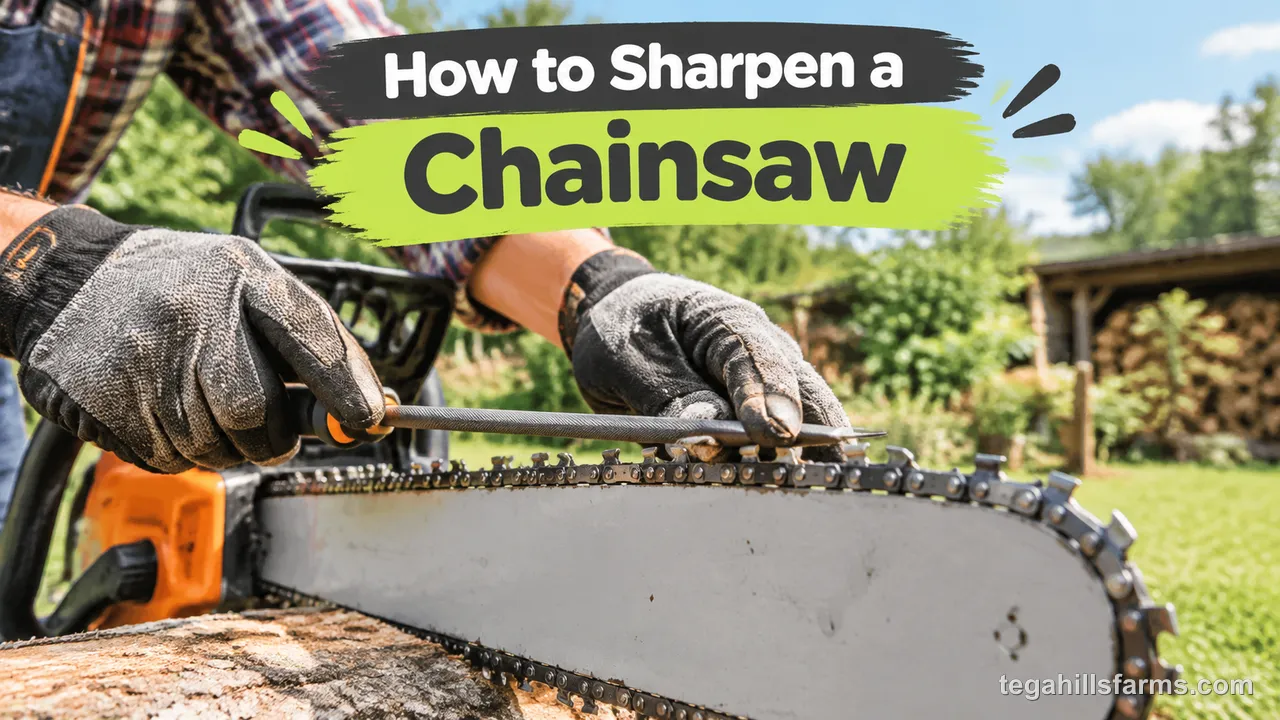
Below, you will see when to stop cutting and sharpen, which hand and powered tools actually help homeowners, and what precise angles restore the cutter geometry. Each tool and angle is explained by how it affects speed, edge life, and safety.
Filing the right way takes only a few minutes once you learn the sequence — clean and tension the chain, file every cutter with the same stroke count and angle, then check depth gauges. The key is consistency, not force.
Below, the process is broken into preparation, filing technique, and quick sharpness checks so you can get a work-ready edge at the tailgate or bench.
How do you know when your chainsaw chain needs sharpening?
A chainsaw chain needs sharpening when it produces fine sawdust instead of chips, requires heavy pushing, or pulls to one side. You will also feel more vibration and see the saw struggle to bite.
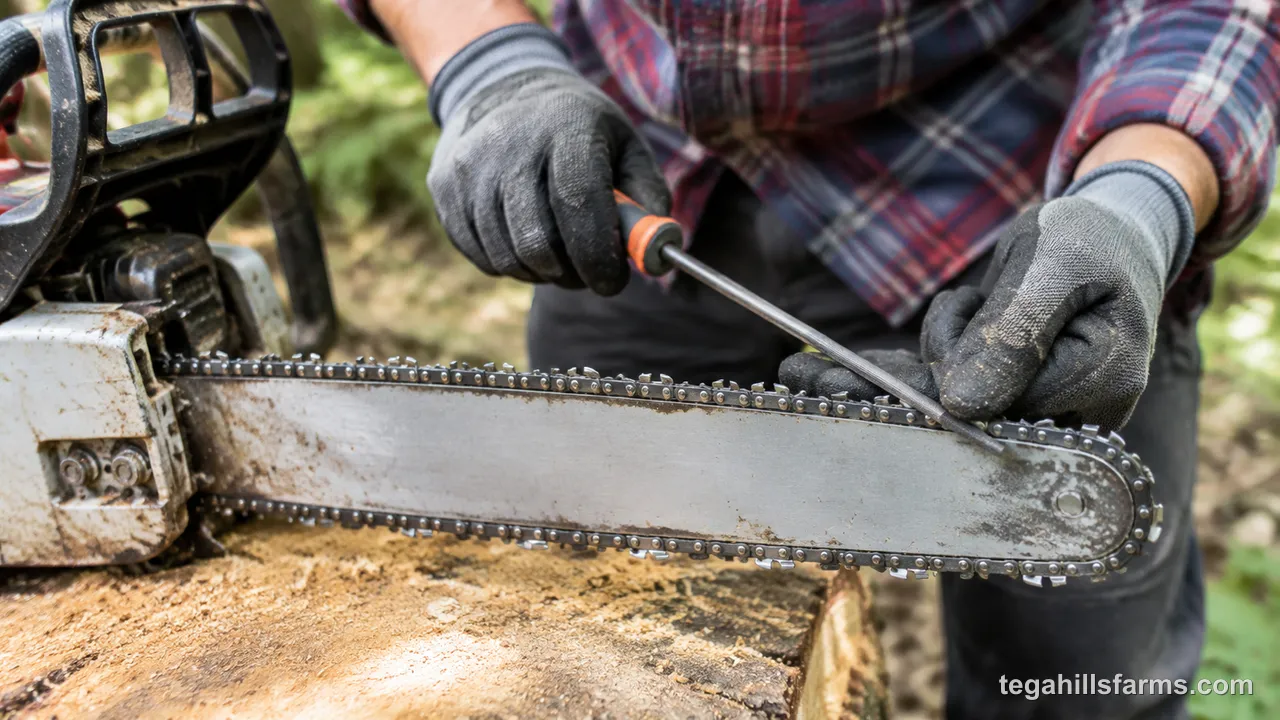
That change happens because dull cutters round over and stop slicing fibers. Instead of peeling thick chips, they scrape and generate heat. Extra friction accelerates wear on the bar and drive links, and it forces you to lean on the saw, which increases kickback risk and fatigue.
Watch for these telltale signs during a cut:
- Chips turn dusty or powdery, and cutting speed drops noticeably.
- You must push the bar to keep it feeding instead of letting it self-feed.
- The cut drifts or the bar wants to wander off your line.
- Smoke or a burning smell appears, even with lubrication present.
Heat is a useful early warning. A dull chain creates friction that can contribute to chainsaw overheating, especially in hardwood, and it starves the cut of efficient chip flow that normally carries heat away. Before you file, check lubrication too — low chainsaw bar oil will mimic dull-chain symptoms and accelerate dulling. If you are still learning what a sharp, well-matched chain should feel like on your saw, our guide on how to choose a chainsaw explains how chain pitch and bar length affect cutting performance.
What tools do you need to sharpen a chainsaw correctly?
You need a correctly sized round file with filing gauge or 2-in-1 guide and a rotary tool or electric sharpener as an optional powered choice, chosen by skill level and chain condition. A flat file and depth-gauge tool handle rakers after the cutters.
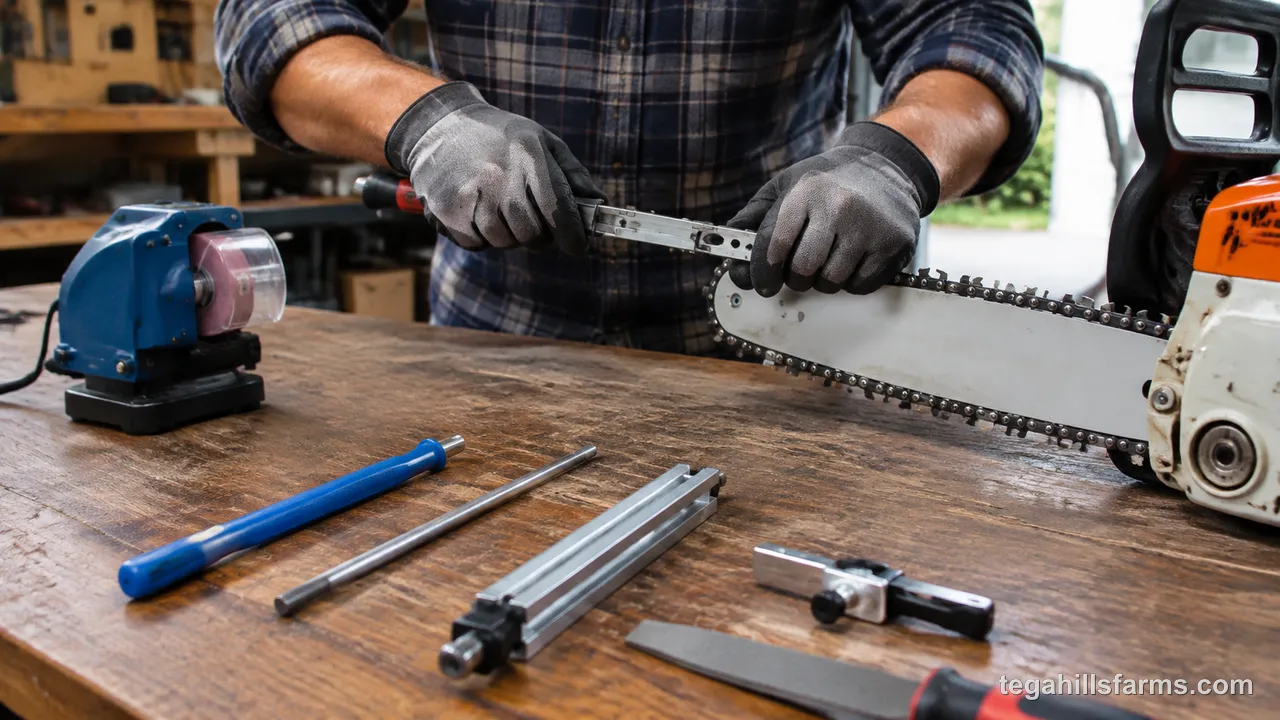
For most homeowners, a hand-file setup delivers the most control and the least risk of overheating the edge. Powered options remove metal faster but can blue the cutters if you linger. Either way, clean equipment cuts better — incorporating how to clean a chainsaw into your routine keeps filings and resin out of the file teeth and lets you see cutter damage clearly. As part of a regular chainsaw tune up, keep a vise or clamp, file handle, and a marker handy so every cutter gets the same attention.
Should you use a round file, filing gauge, or 2-in-1 guide?
A round saw chain file matched to your chain pitch gives the most accurate cutter profile, while a filing gauge and a 2-in-1 guide add consistency for beginners.
Use a plain round file when you can hold angles freehand and want maximum feel — it is light, cheap, and easy to carry into the woods. Add a filing gauge when you want a visual reference for the 30-degree top-plate angle and file height; the plate sits on the chain and shows where the file should ride. Choose a 2-in-1 guide if you want to file the cutter and lower the depth gauge in one pass — it sets both angles automatically and helps keep left and right cutters even. For example, a 3/16-inch round file fits many 3/8-inch low-profile chains, but always match the diameter stamped on the chain or bar. A 2-in-1 guide slows you down slightly per cutter but reduces uneven filing mistakes that cause a saw to cut crooked.
Are rotary tools and electric sharpeners worth it?
Powered sharpeners are worth it for heavily dulled or rocked chains, but not necessary for routine touch-ups where a hand file is faster and safer.
A rotary tool with a chainsaw stone works in the field if you have a steady hand and a guide — it speeds material removal when cutters are badly rounded or nicked. A bench-mounted electric sharpener is best for batch sharpening at home; it holds precise angles with a vise and stop, which helps when every cutter needs significant grinding. However, powered grinding generates heat that can soften the chrome edge if you press too long, and it removes more metal per pass, shortening chain life. For light dulling, three to five light hand-file strokes per cutter restore sharpness without that risk.
What are the correct filing angles for a chainsaw chain?
Correct filing restores a 30-degree top-plate angle and a 90-degree file-to-bar orientation with about 20% file protrusion. Those two settings rebuild the cutter’s slicing geometry.
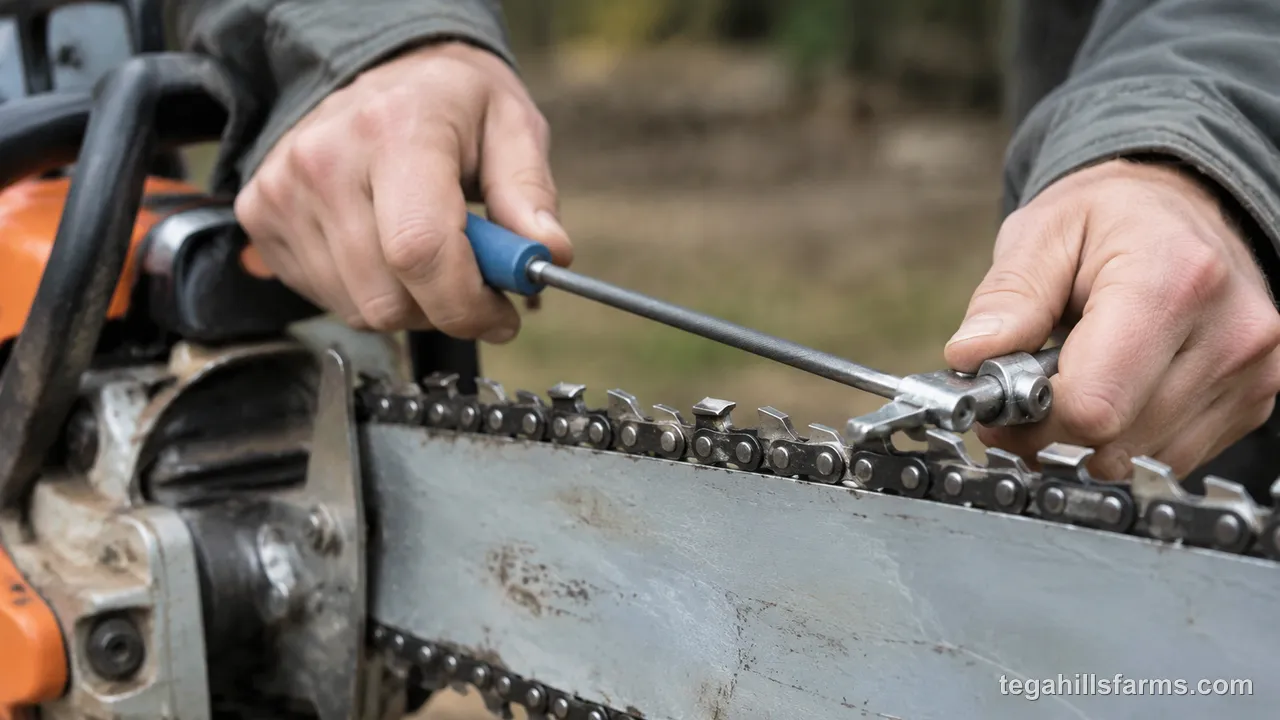
The top-plate angle controls how aggressively the cutter slices, while the side orientation and height control edge strength and depth of bite. Get them right and the chain self-feeds chips; get them wrong and it either grabs and chatters or scrapes and dulls quickly. Proper geometry also supports safer cutting — the right angles feed smoothly and reduce the need to force the bar, which ties directly to chainsaw kickback control and consistent use of chainsaw safety equipment like glasses, gloves, and chaps.
Why does the 30-degree top-plate angle matter?
The 30-degree top-plate angle sets the balance between cutting speed and edge durability for most crosscut chains.
At 30 degrees, the cutter has a sharp, keen point that peels wood fibers efficiently without becoming fragile. Go much steeper, and the point thins and chips or dulls faster in dirty or frozen wood. Go much shallower, and the cutter scrapes rather than slices, so feed rate drops and you push harder. Many chains stamp the angle on the top plate; align your file or guide mark to that line and keep it parallel through the stroke. Softwood chains sometimes use 25 degrees for extra durability, but for general firewood and yard work, 30 degrees gives the best blend of speed and longevity.
How should you hold the file at 90 degrees with the right protrusion?
Hold the file at 90 degrees to the guide bar with about one-fifth of the file diameter above the cutter’s top plate.
In practice, lay the file so it sits perpendicular to the bar when viewed from above, and check side view so roughly 20% of the file peeks above the cutter. That height forms the proper hook and gullet shape — too low and you flatten the edge, too high and you thin it excessively. Keep steady pressure on the forward stroke only, and lift on the return. File from the inside of the cutter outward, and count strokes so left and right cutters stay even; uneven cutters cause curved cuts and extra vibration.
How do you sharpen a chainsaw chain step by step?
Sharpening a chain means preparing and securing the chain, filing cutters evenly with consistent strokes, and checking sharpness as you go. Do those three in order and the edge comes out uniform.
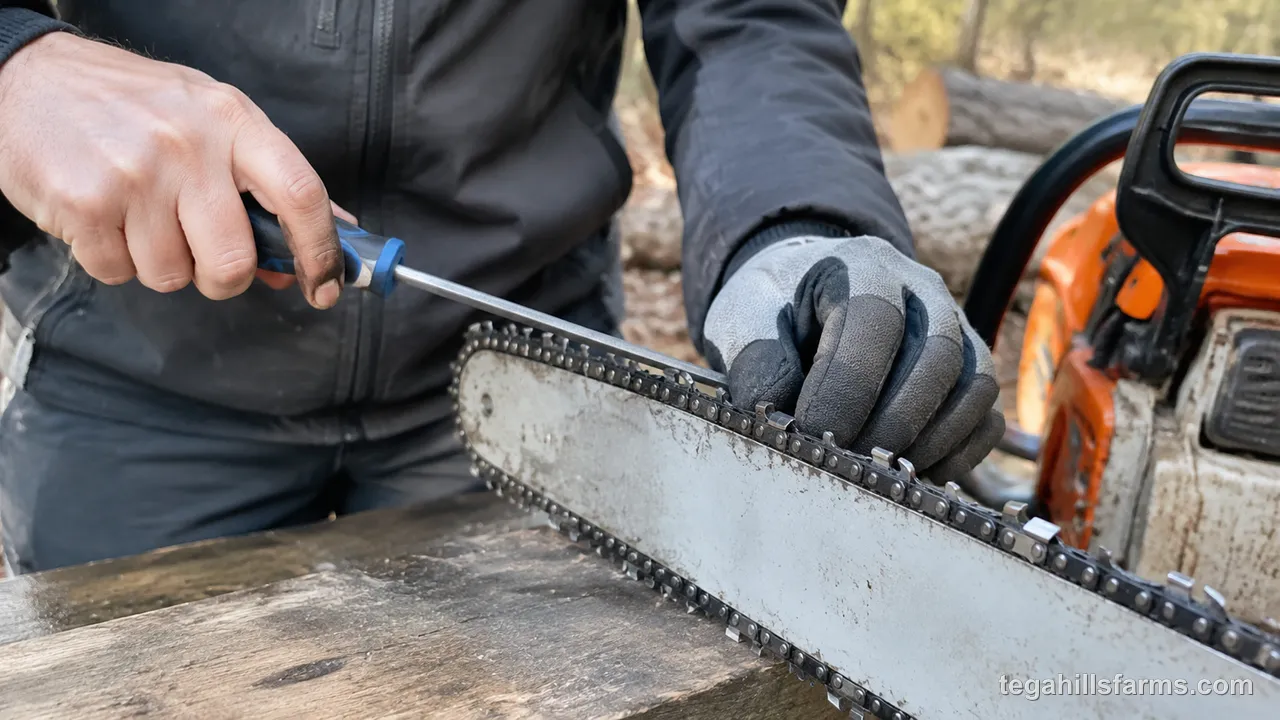
A quick field touch-up takes five to ten minutes once the sequence is familiar. Plan to work in good light, wear gloves, and keep the saw stable so your file angle does not wander. If the chain is loose on the bar, you cannot file accurately, so see our notes on how to tighten a chainsaw chain before you start. And follow basic chainsaw safety tips throughout — engage the chain brake, work with the engine off and spark plug cool, and keep the file handle secure.
How do you prepare and secure the chain before filing?
Prepare the chain by cleaning it, tensioning it snug on the guide rail, and marking your starting cutter.
Start by brushing off sawdust and resin with a soft brush and a rag; grit under the cutters dulls your file and hides damage. Next, tension the chain so it sits flat on the guide rail with no sag but still pulls freely by hand — you need firm support under each cutter while filing. Tighten the bar nuts just enough to hold that tension, and engage the brake to lock the chain. Mark the first cutter you will file with a paint pen or marker so you know when you have completed the loop. Finally, inspect for the worst cutter and use it as your reference for stroke count, so no cutter ends up shorter than the rest.
How do you file cutters evenly and consistently?
File cutters evenly by using the same angle, pressure, and stroke count on every cutter and filing every other tooth in one direction first.
Set your 30-degree reference and 90-degree orientation, then file with smooth, one-way strokes — push forward with light pressure, lift on the return, and do not saw back and forth. Give the dullest cutter a set number of strokes, usually three to five, until you feel a clean burr and see a uniform, shiny edge. Then apply that same count to every cutter on that side, advancing the chain as you go. When you finish one side, reposition to file the opposite-facing cutters from the other direction. Keep the file centered and level; rocking up or down changes the hook and makes the saw grabby.
How do you check sharpness as you go?
You can check sharpness visually and by feel without over-filing by inspecting the edge and testing chip flow.
Look at the cutter’s top plate and side plate under light — a sharp cutter shows a crisp, continuous edge with no reflected glint or rolled burr. Run a fingertip lightly across the edge (with a glove) to feel for a uniform bite, or look for fine, even filings collecting on the file. After a few test cuts in softwood, a sharp chain throws long, curled chips instead of dust and pulls itself in with minimal pressure. If chips are still dusty or the cut requires pushing, give each cutter one more light stroke rather than grinding heavily on a few teeth.
How do you check and adjust the depth gauges after sharpening?
Depth gauges need checking because filing shortens cutters but leaves rakers high, so you must lower rakers to about 0.025 inch below the cutter tip.
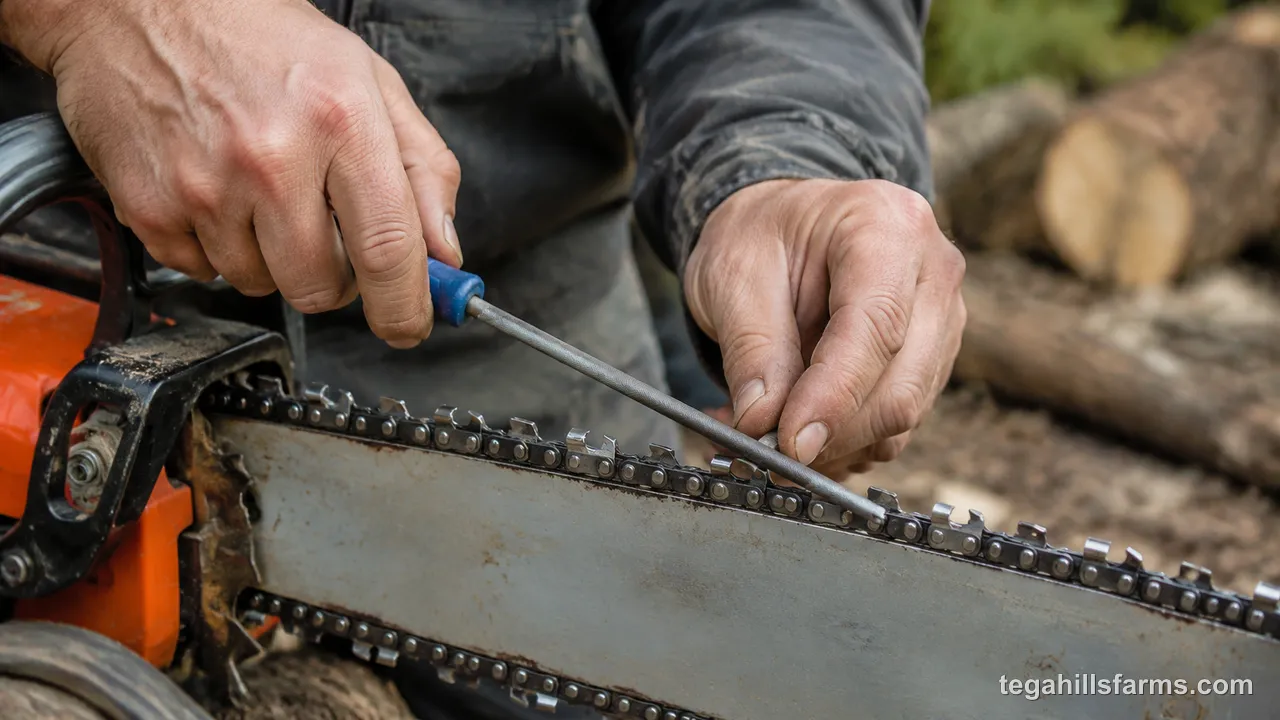
Use a depth-gauge tool that matches your chain — place it over the cutter and see if the raker protrudes above the slot. If it does, take two to three light passes with a flat file until it sits flush, then slightly round the raker’s leading edge to help chip flow. Check every raker: an inconsistent height makes the chain bite unevenly, vibrate, and cut rough. File conservatively — too-low rakers make the chain grabby and increase kickback tendency, which is why this step matters for control. Wearing chainsaw chaps during test cuts is good practice while you confirm the bite feels smooth and even.
Should you sharpen the chain yourself or pay a pro?
DIY filing wins for routine touch-ups and cost control, a pro wins for badly damaged chains, and replacement is smarter when cutters are worn short or cracked.
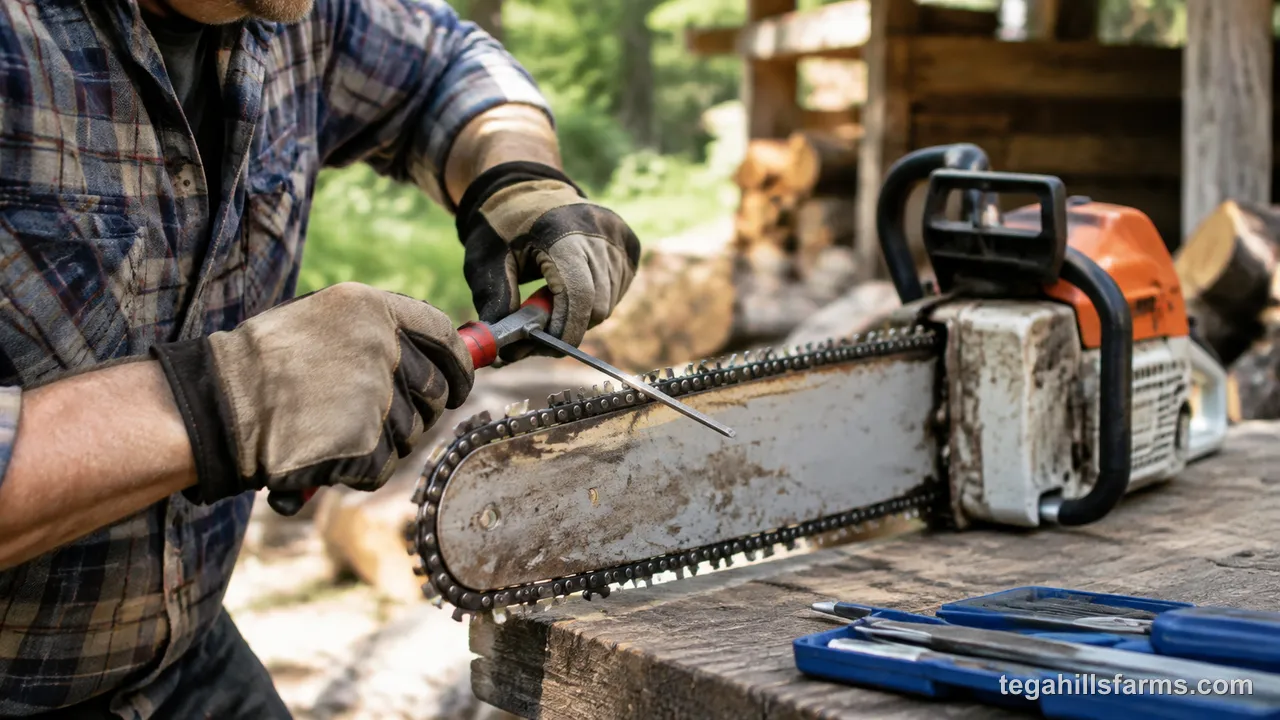
Filing at home costs only files and gauges, takes minutes, and keeps the chain matched to your saw if you file consistently. A shop with a precision grinder is better when the chain hit rock or metal, cutters are visibly nicked or uneven lengths, or the edge will not return after several hand filings. Replace the chain when cutter length is down to the wear marks, chrome is chipped, or links are stretched beyond proper tension — at that point grinding removes too much life for little gain. Thinking longer term, regular sharpening and proper tension help extend overall saw life, which ties to how long do chainsaws last, while frequent shop visits plus new chains factor into how much does a chainsaw cost over a season of heavy use.
You have now covered when to sharpen, which files and guides to use, the 30-degree and 90-degree angles, and the full filing sequence through depth gauge adjustment.
Beyond that core process, the difference between a chain that stays sharp and one that dulls quickly often comes down to small mistakes and upkeep habits that most guides skip.
The notes below zoom in on those micro-details so your next sharpening lasts longer and cuts safer.
What mistakes dull a freshly sharpened chain fast?
A fresh edge dulls fast from cutting dirt or abrasives, mis-set tension and lubrication, and poor storage habits.
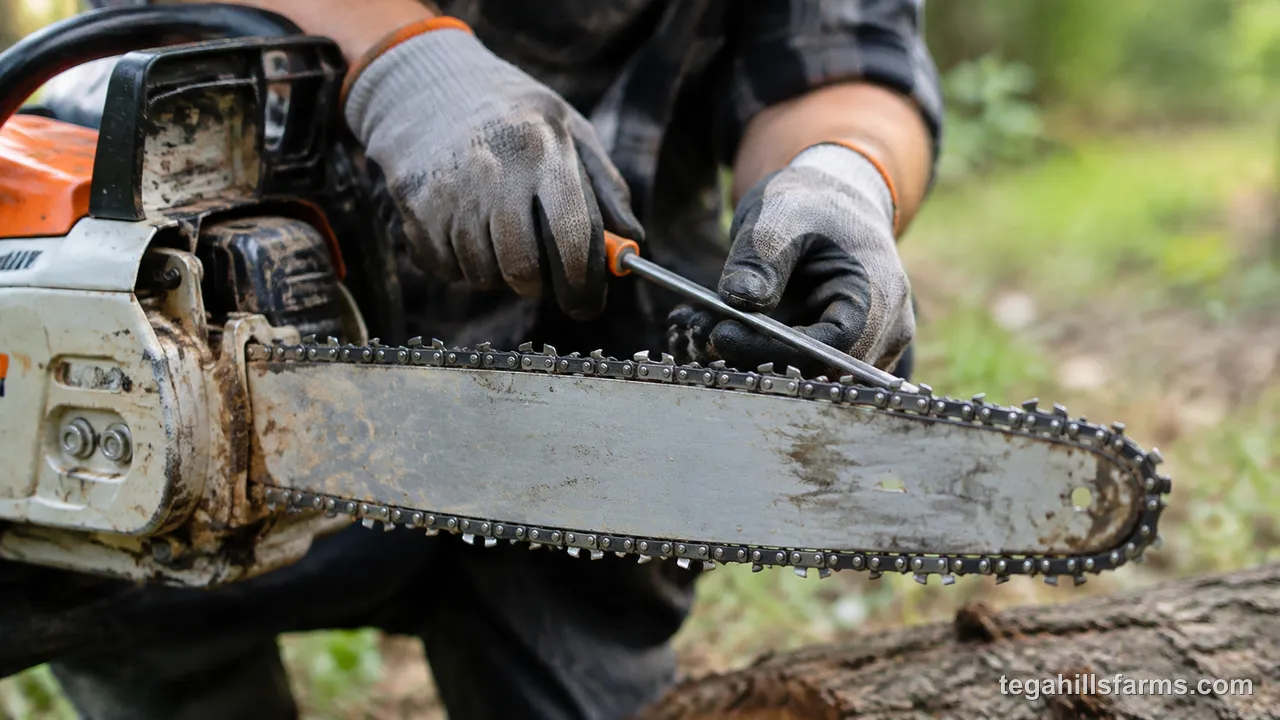
The most common error is letting the chain kiss soil, nails, or sandy bark — a single touch can roll a new edge. Running with a loose chain or low oil also grinds cutters against the bar, while filing with uneven pressure or without a gauge leaves some cutters high and working harder than others. Between jobs, moisture causes fine rust that pits the edge overnight, so dry the chain, lightly oil it, and follow guidance on how to store a chainsaw with the bar covered and chain lightly tensioned. Keeping the powerhead clean matters too — sawdust packing around the sprocket can starve the bar of oil, and learning how to clean a chainsaw carburetor and air filter area helps the saw hold RPM so you do not force a sharp chain through the cut.
Chainsaw sharpening questions, answered
How often should I sharpen my chainsaw chain?
Sharpen when chips turn to dust or feed pressure increases, typically every 2 to 4 hours of cutting clean wood and immediately after hitting dirt or metal. Touch up with three to five light strokes per cutter rather than waiting until the chain is very dull.
Can I sharpen a chain while it is still on the saw?
Yes. Sharpening on the bar is standard — clean and tension the chain, lock the brake, and file cutters in place. You only need to remove the chain for heavy grinding or deep cleaning of the bar groove and sprocket.
What file size do I need for my chain?
Match file diameter to your chain’s pitch. Common pairings are 5/32 inch for many 3/8-inch low-profile chains and 3/16 inch for 0.325-inch chains. Check the chain marking or owner’s manual and never guess by eye.
Do I need to flip the saw or file both sides differently?
File all cutters facing one direction first, then reposition to file the opposite-facing cutters from the other side. Keep the same 30-degree and 90-degree references, just mirrored, and use the same stroke count so lengths stay even.
Why is my chain still not cutting after sharpening?
The cause is usually uneven cutter lengths or rakers left too high. Also check chain tension, bar oil flow, and air and fuel health — a fouled chainsaw spark plug or clogged filter can make a sharp chain feel weak because the engine cannot hold speed under load.


Write Your Review
No reviews yet. Be the first to share your experience!