

The 8 best chainsaws for homeowners of 2026 are the Seesii 18-Inch Chainsaw (Best Overall), the EGO Power+ CS2005 20 in (Best Premium), the EGO Power+ CS1810 18″ Chainsaw (Best Value), the Greenworks 80V 18 in Chainsaw (Best Cordless), the Husqvarna 120 Mark III Gas Chainsaw 14″ (Best Gas-Powered), the Husqvarna 450 Rancher 20″ Chainsaw (Best Ergonomic Design), the Ryobi RY405011 40V 20″ Chainsaw (Best Lightweight), and the DEWALT 60V FLEXVOLT DCCS672X1 18″ Chainsaw (Best Performance).
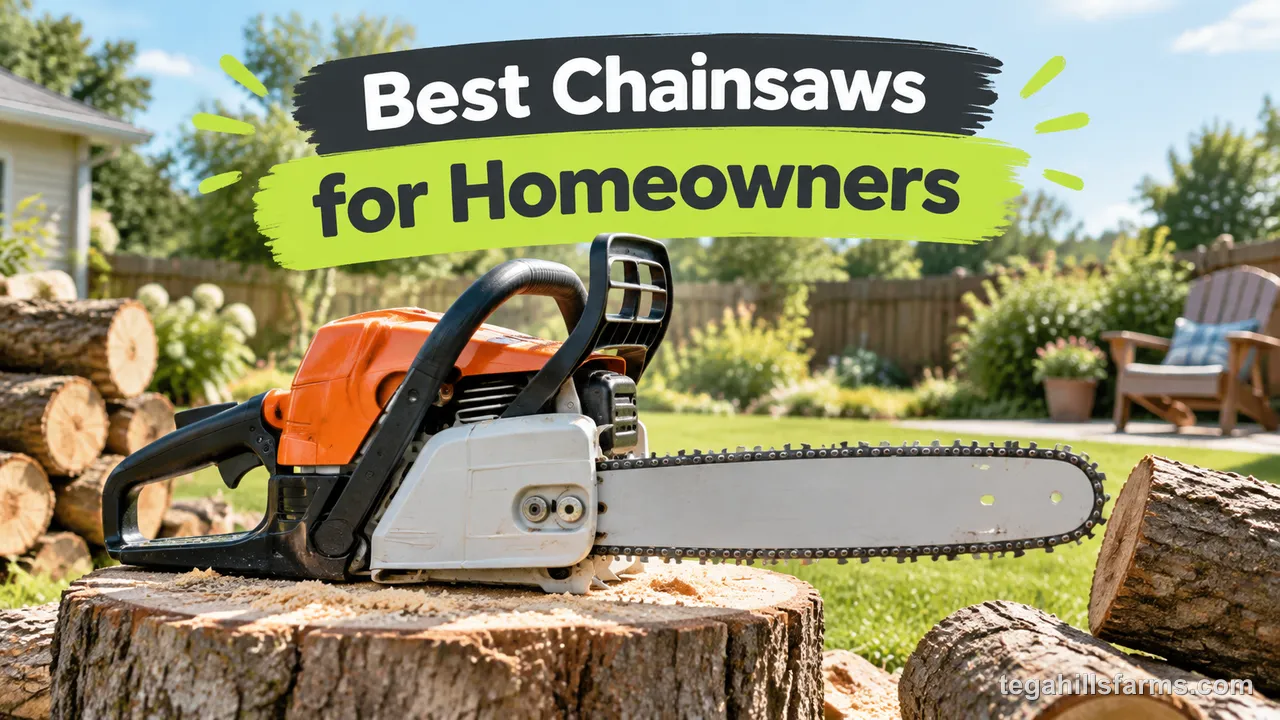
What separates them for yard work is the power source, the bar length and how much saw you have to hold up. Cordless models start easily and need little upkeep. Gas models give sustained power and refuel in seconds.
Most homeowners worry about two things: a saw that won’t start when a storm drops a limb across the driveway, and one that is too heavy or too big for the actual job. A saw that fits your yard, your storage space and your patience for maintenance will serve you better than one that is oversized for the job.


Before you compare saws, check which cordless batteries you already own. A battery platform that matches your existing tools can save you real money and shelf space.
What Makes a Chainsaw a Good Fit for a Homeowner?
A good homeowner chainsaw is light enough to handle comfortably, simple to start and maintain, and sized for limbing, storm debris and occasional firewood rather than daily felling.
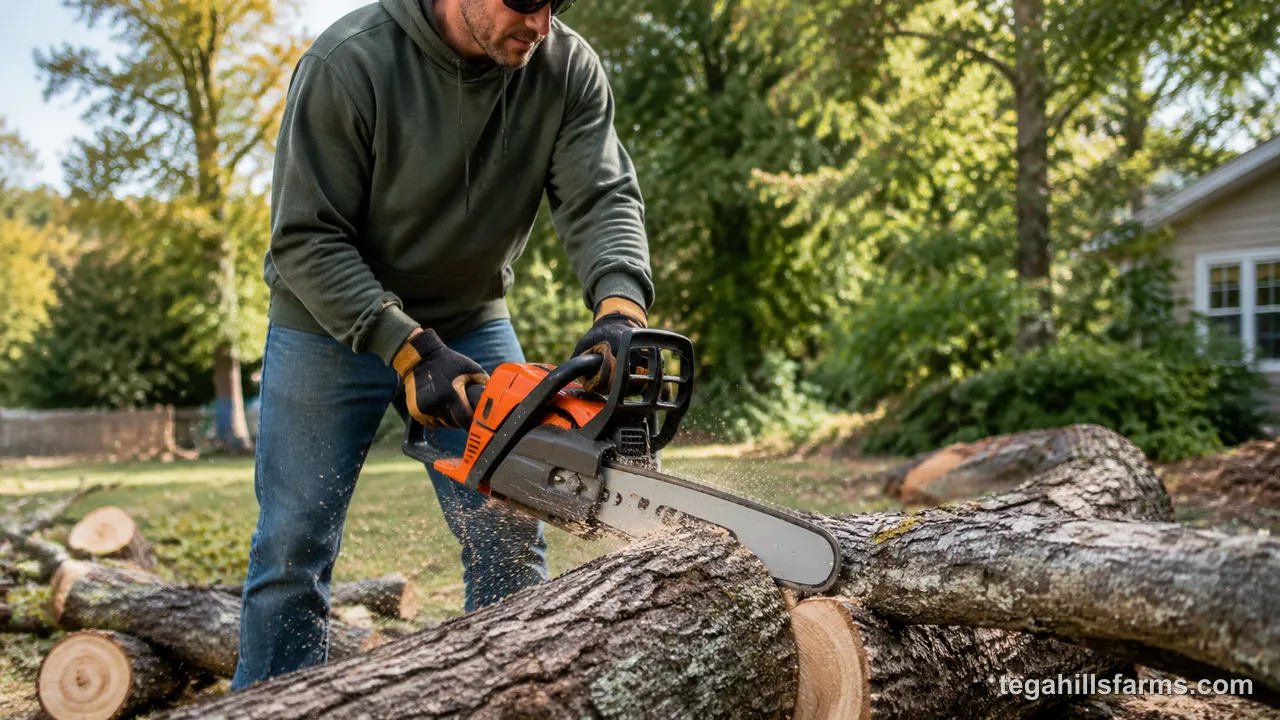
The specs that matter are guide bar length, weight, ease of starting and how much routine maintenance the saw asks for. Peak-power claims and engine-size comparisons matter less, because a saw you can control for an afternoon does more than a saw you can barely hold overhead.
If you want a wider look across every type and use case, see our roundup of the best chainsaws.
The 8 Best Chainsaws for Homeowners of 2026
The 8 best chainsaws for homeowners of 2026 are Seesii 18-Inch Chainsaw, EGO Power+ CS2005 20 in, EGO Power+ CS1810 18″ Chainsaw, Greenworks 80V 18 in Chainsaw, Husqvarna 120 Mark III Gas Chainsaw 14″, Husqvarna 450 Rancher 20″ Chainsaw, Ryobi RY405011 40V 20″ Chainsaw, and DEWALT 60V FLEXVOLT DCCS672X1 18″ Chainsaw.
Cordless models trade runtime and battery cost for easy starting and low upkeep, while the gas picks give sustained power and a faster refuel. The list covers small-yard owners who prune and limb, owners handling storm cleanup, and owners cutting firewood, across both battery and gas setups.
#1 Seesii 18-Inch Chainsaw — Best Overall
Everything you need ships in one box. Two 5.0Ah batteries, two chargers and a spare chain mean you can keep cutting while one battery recharges, which suits owners buying their first cordless saw.
Key Specs:
- Power: 40V, 2200W brushless motor
- Batteries: two 5.0Ah packs with two chargers
- Bar: 18 inches
- Chain speed: 30 ft/s
- Weight: 8.6 lb with both batteries installed
- Oiling: automatic, 80 ml tank
Detailed Review:
The kit is the draw. Two batteries and two chargers let you swap packs and keep cutting while the other recharges, and the spare chain means a dull one doesn’t end your day.
The 2200W brushless motor spins the chain at 30 ft/s. A full charge is rated for up to 200 cuts on 4-inch soft wood logs. That is a soft wood figure, and dense hardwood will drain a pack faster, so plan on a battery swap during longer firewood sessions.
An 80 ml auto-oiler keeps the bar lubricated without stops to add oil by hand. The tool-free tensioning knob lets you tighten a loose chain right where you’re cutting. The kit needs some initial installation before the first cut, but it’s a one-time job.
The 18-inch bar reaches bigger logs in fewer passes. It is more bar than light pruning calls for, and it takes more control overhead. If 18 inches is the length you’re leaning toward, our best 18 inch chainsaws roundup sets more options side by side.
Pros:
- Two batteries and two chargers included
- Tool-free tensioning knob adjusts the chain without a wrench
- Auto-oiler keeps the bar lubricated
- Weighs 8.6 lb with both batteries installed
Cons:
- Runtime rating is based on soft wood
- Longer bar is more than light pruning needs
- Needs some setup before the first cut
Who It’s For:
Someone new to cordless who doesn’t want to hunt down accessories will appreciate the complete kit. It fits yard cleanup, storm limbs and weekend firewood on the 40V platform. Owners who only trim small branches overhead will find the longer bar more saw than they need.
Editor’s Verdict:
Complete kit, ready to cut on day one, with enough bar for bigger limbs and logs.
#2 EGO Power+ CS2005 20 in — Best Premium
Big limbs and stumps are where this one earns its keep. The 55cc gas-equivalent brushless motor and 20-inch bar with a full chisel chain handle heavy work, and the included 6.0Ah battery and charger get you cutting right away.
Key Specs:
- Power: brushless motor, 55cc gas equivalent
- Bar: 20 inches, full chisel tooth chain
- Chain speed: 82 ft/s (25 m/s)
- Battery: 56V 6.0Ah, charger included
- Weight: 30 lb
- Weather rating: IPX4
Detailed Review:
The 55cc gas-equivalent brushless motor and 20-inch bar are aimed at large branches, stumps and tall trees. The full chisel tooth chain cuts aggressively through clean wood. Keep it out of the dirt, which dulls those teeth quickly.
A full charge on the included 6.0Ah battery is rated for up to 135 cuts on a 6×6. Any EGO 56V ARC battery fits, so a spare pack stretches a long day.
The onboard digital display lets you pick a speed mode and check charge status and the safety brake indicator. An LED work light helps at dusk, and IPX4 weather resistance helps with damp work.
The trade-off is weight. The listed 30 lb is a far heavier carry than the CS1810 at 10.14 lb, so overhead limbing will tire your arms quickly. Keep this one for bigger jobs.
Pros:
- Gas-equivalent power from a brushless motor
- 20-inch bar handles large limbs and stumps
- Battery and charger included
- Digital display shows mode, charge and brake status
- LED light helps at dusk
Cons:
- Heavy body tires arms on overhead cuts
- More saw than light pruning needs
- One included battery limits long sessions
Who It’s For:
Homeowners with big limbs, stumps or tall trees to take down, who want to stay on the EGO 56V platform, get gas-class power without the fuel can. Anyone who mostly trims small branches overhead would be better served by something lighter.
Editor’s Verdict:
Gas-class cutting power on a battery, as long as you can carry the weight.
#3 EGO Power+ CS1810 18″ Chainsaw — Best Value
Strong cuts at a light carry. At just over 10 lb, with an 18-inch bar and a 50cc gas-equivalent motor, it suits owners who already have an EGO 56V battery on the shelf.
Key Specs:
- Power: 2500W brushless motor, 50cc gas equivalent
- Bar: 18 inches, low-profile 3/8-inch chain
- Chain speed: 72 ft/s (22 m/s)
- Weight: 10.14 lb
- Battery: 56V ARC, sold separately
- Warranty: 5-year limited tool warranty
Detailed Review:
At 10.14 lb with an 18-inch bar, this is a saw you can hold out for limb work without your arms giving up. Against the CS2005 you give up a little bar length and a bit of the gas-equivalent rating, 50cc versus 55cc, but you carry far less weight.
The twist-dial tensioning needs no tools, so adjustments stay quick. Large metal bucking spikes bite into a log so the saw pivots with leverage and stays steady through the cut.
The saw is tool only. A 56V 6.0Ah ARC battery is the recommended pairing, rated for up to 330 cuts on a 4×4. Any EGO 56V ARC battery fits, so owners already on the platform skip the extra purchase. The value here comes from the platform, not the box.
A digital display shows cut speed controls and charge status, and an adjustable LED light helps at dusk. IPX4 weather resistance and a 5-year limited tool warranty back it up.
Pros:
- Light body reduces fatigue on limb work
- Twist-dial tensioning needs no tools
- Large metal bucking spikes steady log cuts
- Compatible with all EGO 56V ARC batteries
- 5-year limited tool warranty
Cons:
- Battery and charger are sold separately
- Shorter bar than the CS2005 limits reach on big logs
Who It’s For:
Anyone already running EGO 56V batteries gets the most from this tool-only saw. It covers limbing, storm debris and an occasional load of logs without wearing out your arms. If you’re starting without a battery or charger, plan for that extra purchase.
Editor’s Verdict:
Light enough for long limb sessions, but budget for a battery if you don’t own one.
#4 Greenworks 80V 18 in Chainsaw — Best Cordless
Easy starts and little upkeep are the draw. A brushless motor rated as a 50cc gas equivalent, an automatic oiler and side-access tensioning keep routine cleanup simple for owners who’d rather not mix fuel.
Key Specs:
- Power: 80V brushless motor, 50cc gas equivalent
- Bar: 18 inches
- Battery: 4.0Ah, charger included
- Weight: 9.48 lb
- Safety: mechanical chain brake
- Upkeep: automatic oiler, side-access tensioning
Detailed Review:
The brushless motor is rated for power equal to a 50cc gas engine, in a body that weighs 9.48 lb. That pairing suits storm debris and routine yard cleanup.
A mechanical chain brake adds safety. The automatic oiler keeps the chain lubricated so you aren’t stopping to add oil by hand. Both suit an owner who cuts a few times a season.
Side-access tensioning puts bar and chain maintenance within easy reach from the side of the saw. That keeps seasonal chain checks quick.
The 80V battery belongs to Greenworks’ own platform. If your other cordless tools run on a different brand, those batteries won’t carry over, so weigh this as a platform decision. The included 4.0Ah battery and charger get you cutting right away.
Pros:
- Brushless motor delivers gas-equivalent power
- Mechanical chain brake adds safety
- Automatic oiler cuts routine chain care
- Side-access tensioning simplifies bar and chain maintenance
- Battery and charger included
Cons:
- 80V battery won’t share with other brands’ platforms
- One included battery limits long cleanup days
Who It’s For:
Anyone tired of pull cords and fuel cans who wants a straightforward cleanup saw will like this setup. It handles yard projects and storm debris with routine upkeep kept simple. If you already own batteries from another brand, a saw on that platform makes more sense.
Editor’s Verdict:
Low-fuss yard cleanup, minus the fuel can, for owners happy to commit to the 80V platform.
#5 Husqvarna 120 Mark III Gas Chainsaw 14″ — Best Gas-Powered
Engine power without the bulk. The 38cc X-Torq engine, 14-inch bar and LowVib dampeners keep this gas saw manageable through a morning of pruning and cutting firewood-sized logs.
Key Specs:
- Engine: 38cc 2-cycle X-Torq
- Bar: 14 inches, 3/8 pitch, .050 gauge
- Weight: 10.7 lb
- Safety: inertia-activated chain brake
- Comfort: LowVib vibration dampening
- Oiling: automatic oiler
Detailed Review:
The 38cc X-Torq engine gets its torque from efficient combustion, and the 14-inch bar keeps the saw compact. That combination suits pruning, limbing and cutting small logs down to firewood size.
Starting is where this saw helps a beginner. The choke and stop switch are separate controls, and the stop switch resets itself when the choke is pulled out, which helps prevent accidental flooding.
LowVib dampeners sit between the engine and chassis to cut vibration, and the inertia-activated chain brake adds safety. Together they make a morning of cutting easier on your hands.
Gas ownership means mixing fuel, caring for the spark plug and air filter, and storing the saw properly for winter. Refueling is quick, though. Next to the 450 Rancher you give up engine size and bar length, but you carry less weight at 10.7 lb versus 14 lb.
Pros:
- Compact 14-inch bar suits limbing and pruning
- Separate choke and stop controls help prevent flooding
- LowVib dampeners reduce vibration
- Inertia-activated chain brake adds safety
- Automatic oiler keeps the chain lubricated
Cons:
- Needs fuel mixing and regular engine upkeep
- Small engine and short bar limit large-log work
Who It’s For:
Homeowners with a modest property who want engine power and quick refueling instead of waiting on batteries will fit here. It works for pruning, limbing and trimming up firewood. Those who dislike fuel mixing and seasonal engine upkeep should look at a battery model.
Editor’s Verdict:
Compact gas power that rewards owners willing to handle fuel and routine engine care.
#6 Husqvarna 450 Rancher 20″ Chainsaw — Best Ergonomic Design
Comfort over a long cutting session is the point here. Smart Start, an asymmetrical handle and LowVib vibration control take strain off the operator, and the 50.2cc X-Torq engine has the power for heavier work.
Key Specs:
- Engine: 50.2cc, 3.2 HP X-Torq
- Bar: 20 inches, recommended range 13 to 20 inches
- Weight: 14 lb
- Starting: Smart Start
- Comfort: LowVib, asymmetrical handle, soft inlay
- Air filtration: Air Injection centrifugal cleaning
Detailed Review:
Smart Start cuts down the effort needed to get the 50.2cc, 3.2 HP X-Torq engine running, and the inertia-activated chain brake reduces the likelihood of injury from kickback. Easy starting matters more than horsepower if you only cut now and then.
The comfort package is the point. A soft inlay, ergonomic trigger and asymmetrical handle sit alongside LowVib technology, which eases handling across the 13 to 20-inch bar range. Over a long afternoon of bucking, that adds up to less hand fatigue.
Air Injection technology throws larger dust and debris off before it reaches the air filter. That helps in dirty storm wood and supports engine life.
The trade-off is size. At 14 lb with a 20-inch bar, this is more saw than light pruning needs, and it weighs more than the 120 Mark III at 10.7 lb. In return you get a 50.2cc engine against the smaller 38cc.
Pros:
- Smart Start reduces starting effort
- Asymmetrical handle and soft inlay improve comfort
- LowVib dampening reduces vibration
- Air Injection keeps larger debris off the filter
- 50.2cc engine handles heavier cutting
Cons:
- Weighs 14 lb, tiring for overhead pruning
- Long bar adds more saw than light pruning needs
- Gas engine needs fuel mixing and upkeep
Who It’s For:
Owners who spend whole afternoons cutting firewood or clearing a wooded lot will notice the comfort details most. It also suits storm cleanup, where dirty wood is common. Someone mainly snipping small limbs overhead would tire of the extra weight.
Editor’s Verdict:
Comfort-focused gas power for long cutting sessions, at the cost of extra weight and bar for light pruning.
#7 Ryobi RY405011 40V 20″ Chainsaw — Best Lightweight
Light in the hand, long on bar. At 9 lb with a 20-inch bar, this tool-only saw lets Ryobi 40V owners reuse batteries they already have, and it arrives in a hard carrying case.
Key Specs:
- Platform: Ryobi 40V, tool only
- Bar: 20 inches
- Weight: 9 lb
- Power: brushless motor, rated above a 50cc gas saw
- Safety: mechanical chain brake, metal bucking spikes
- Extras: carrying case, replacement chain model RY20C1
Detailed Review:
At 9 lb with a 20-inch bar, this saw keeps body weight low for its reach. That helps when you’re limbing or working long stretches, and the soft grip handle adds comfort. The maker rates it for cuts up to 36 in. with more power than a 50cc gas chainsaw.
A mechanical chain brake and metal bucking spikes give kickback protection and a steady pivot point on logs. The automatic oiler keeps the chain lubricated for longer chain life.
A hard carrying case comes in the box, which makes it easier to move and store the saw safely. When the chain wears out, the Y70 3/8 in. LP 20 in. replacement (model RY20C1) fits.
This is a tool-only saw. Battery, charger and chain lubricant are sold separately, so it pays off for owners already running Ryobi 40V batteries and loses its appeal if you’d be buying everything fresh.
Pros:
- Low body weight eases overhead cuts
- Carrying case included
- Mechanical chain brake and metal bucking spikes
- Automatic oiler keeps the chain lubricated
- Soft grip handle adds comfort
Cons:
- Battery, charger and chain lubricant sold separately
- Requires Ryobi 40V batteries
- Long bar is more than light pruning needs
Who It’s For:
Anyone with Ryobi 40V batteries already in the garage gets a long-bar saw without buying another full kit. It works for limbing, bucking and general cleanup. If you’re starting from zero batteries, a complete kit avoids buying the extras one at a time.
Editor’s Verdict:
Long-bar cutting in a lighter body, suited mainly to owners already invested in Ryobi 40V.
#8 DEWALT 60V FLEXVOLT DCCS672X1 18″ Chainsaw — Best Performance
Torque is the headline. Far more torque than a 40.9cc gas saw, plus 26% more peak power, makes this 18-inch DEWALT a fit for owners who want tough cutting without engine upkeep.
Key Specs:
- Platform: 60V FLEXVOLT
- Bar: 18 inches
- Weight: 18.75 lb
- Peak power: 26% more than a 40.9cc gas saw
- Torque: up to 2.5X that of a 40.9cc gas saw
- Upkeep: onboard wrench, auto-oiling
Detailed Review:
DEWALT rates this saw at 26% more peak power than a 40.9cc gas saw and with far more torque. Torque is what keeps the chain moving when wood pinches the bar, so tough limbs and dense logs are where it earns its keep.
Upkeep is simple. The onboard wrench handles quick chain adjustment without hunting for a separate tool, and auto-oiling lubricates the chain continuously. The chain brake offers limited kickback protection.
The cost is weight. At 18.75 lb, it carries far more than the Greenworks 80V at 9.48 lb on a bar of the same length, so overhead work will wear you down quickly.
Cutting from the ground or on a sawhorse is where that weight matters least. If you prune overhead for long stretches, a lighter saw will serve you better.
Pros:
- Torque rated up to 2.5X a 40.9cc gas saw
- 26% more peak power than that gas saw
- Onboard wrench handles chain adjustment
- Auto-oiling keeps the chain lubricated
- Chain brake adds kickback protection
Cons:
- Weighs 18.75 lb, heavy for overhead work
- Locks you into the 60V FLEXVOLT platform
Who It’s For:
People who already own FLEXVOLT batteries, or plan to build around them, and want high torque for tough limbs and logs. Most of the cutting should happen from the ground, where weight matters less. Owners who prune overhead for long stretches should look for something lighter.
Editor’s Verdict:
Torque-heavy cutting for owners already on FLEXVOLT, with weight as the trade-off.
Gas, Battery, or Corded: Which Power Source Fits Your Yard?
Gas saws suit larger properties and heavy, frequent cutting, and battery saws suit easy starts, low noise and little upkeep. Corded saws tie you to an outlet and an extension cord, so they only work close to the house.
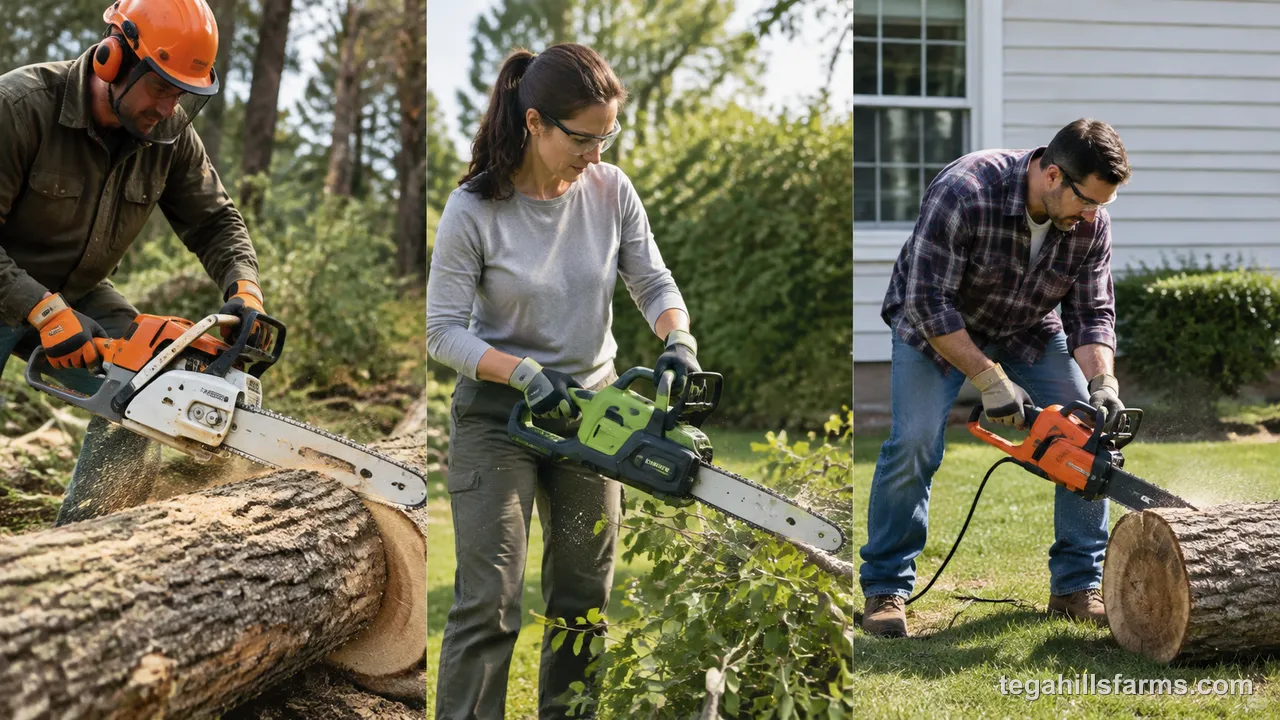
Starting effort, noise, runtime, refueling versus recharging, storage and upkeep all come down to yard size and how often the saw gets used.
When Does a Gas Chainsaw Make Sense?
Gas makes sense for larger properties or frequent heavy cutting, where you can refuel in the field instead of waiting on a charger.
The cost is upkeep. You’ll mix fuel, check the spark plug, clean the air filter and prepare the saw for winter storage so old fuel doesn’t gum up the engine. If you cut a few times a year, that routine can feel like a lot. If you’re out there often, it becomes second nature. Our best gas chainsaws roundup covers more engine-powered options.
When Does a Battery Chainsaw Make Sense?
Battery makes sense for owners who want easy starts, low noise and little upkeep for pruning, storm debris and occasional logs.
Runtime depends on battery amp-hours and the wood you cut, so dense or wet logs drain a pack faster. A spare battery is the simplest fix, and the battery platform matters if you already own cordless tools. In cold weather, store batteries indoors rather than in an unheated shed. Our best battery chainsaws roundup compares more cordless options.
What Should You Look for in a Homeowner Chainsaw?
The buying criteria that change the decision are bar length, weight and handling, safety features and convenience features that cut upkeep. Each ties to a real yard outcome, from how thick a limb you can cut to how much effort a season of use takes. Our guide on how to choose a chainsaw goes deeper on each.
How Long Should the Guide Bar Be?
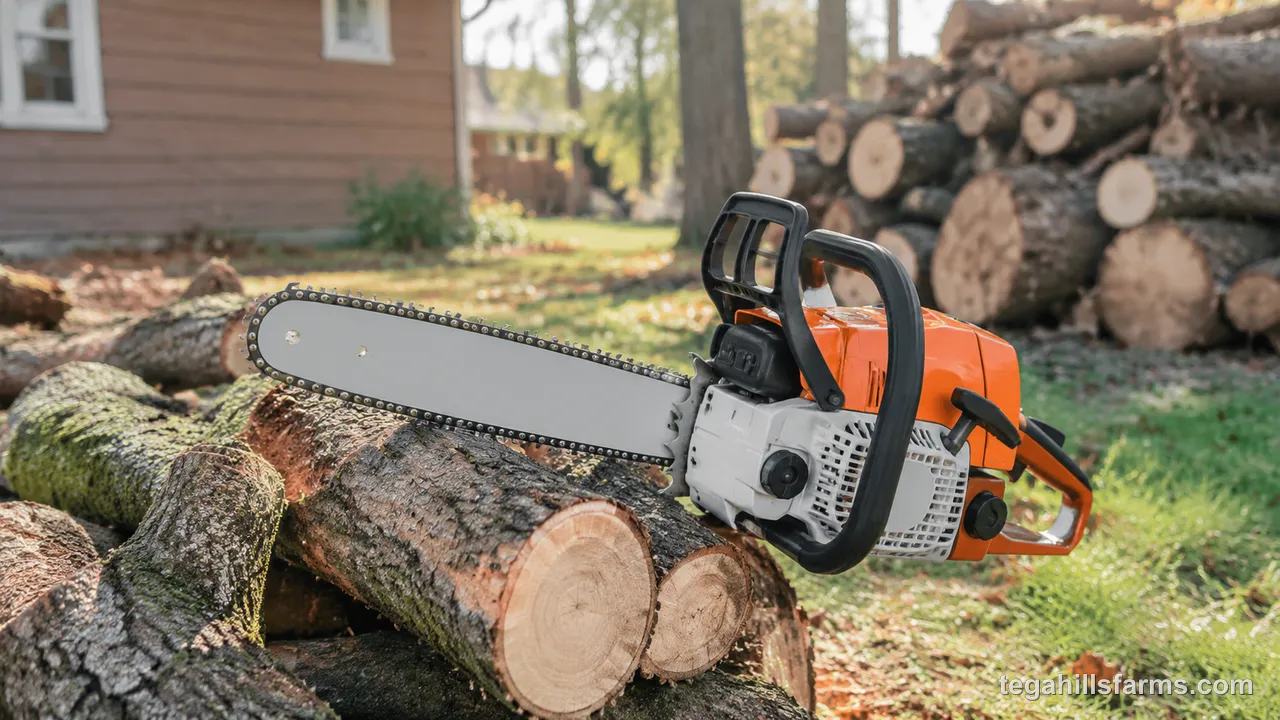
The guide bar is the rail the chain runs around, and its length sets the widest branch or log you can cut cleanly.
A shorter bar is easier to control for most homeowner tasks, so limbing and pruning feel steadier. A longer bar adds weight and kickback exposure without helping routine yard jobs. Match the bar to the thickest wood you’ll realistically cut, not the biggest tree on your property. If you’re replacing a worn bar, our best chainsaw bars picks cover options.
How Much Do Weight and Handling Matter?
Weight and handling decide how long you can cut before fatigue sets in, especially on overhead or awkward cuts.
A balanced saw stays steady when you angle it, and low vibration spares your hands over a long session. Noise matters too if neighbors are close or you cut for hours. A lighter saw suits new owners and longer sessions because you spend your attention on the cut instead of holding the saw up.
Which Safety Features Are Worth Having?
The chain brake, hand guard and kickback protection are the core safety features, and each cuts injury risk in a different way.
The chain brake stops the chain fast when the saw kicks back. The hand guard shields your front hand and helps trigger the brake. Bucking spikes brace the saw against a log, and a safety switch prevents accidental starts. A beginner-friendly saw includes all of these, while a bare-bones one may skip some.
Which Convenience Features Reduce Upkeep?
Tool-less chain tensioning, automatic oiling and easy-start systems take most of the routine maintenance off your plate.
Tool-less tensioning lets you tighten the chain in the yard without a wrench, and automatic oiling keeps the bar lubricated while you work. Easy-start designs cut the pulling effort. These matter most for owners who use the saw a few times a season, because chains loosen and starting gets forgotten between sessions.
Which Chainsaw Fits Which Yard Job?
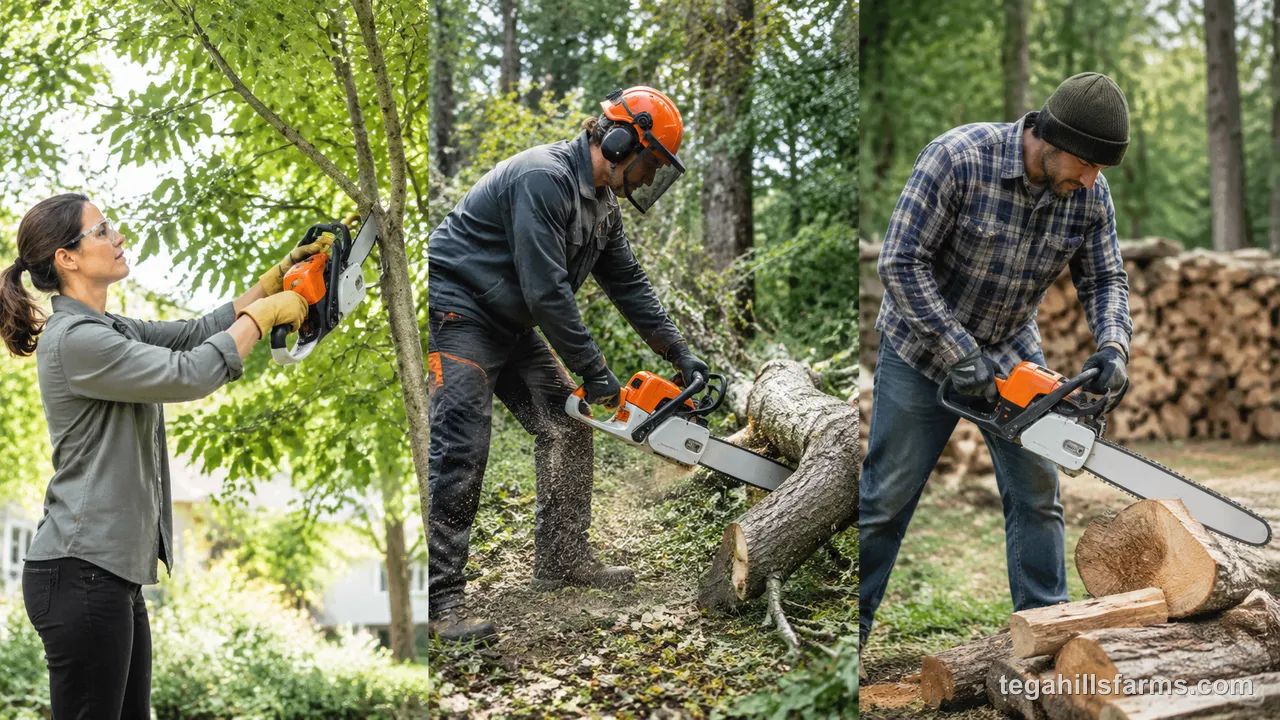
Match the job to the saw: pruning and limbing favor a light saw, storm cleanup favors staying power, and firewood favors steady power with a longer bar.
What Works for Pruning and Limbing?
A lighter saw with a shorter bar handles overhead and awkward limb cuts with less strain, and a larger saw is overkill here.
The shorter bar gives you better control, the lighter body spares your arms on long reaches, and less bar means less kickback exposure. The Husqvarna 120 Mark III and the Seesii 18-Inch Chainsaw both stay light for this kind of work. A 20-inch saw with a heavier body only adds fatigue on small limbs.
What Handles Storm Cleanup?
A saw that starts reliably, tolerates dirty wood and keeps going across a long job handles storm cleanup, and gas stamina or spare batteries get you there.
Gas saws like the Husqvarna 450 Rancher refuel in seconds, and its Air Injection system helps with dusty debris. A battery saw works if you keep a charged spare ready. Our best chainsaws for storm cleanup roundup covers more options for a long day of clearing.
What Suits Cutting Firewood?
Firewood rewards steady power, a longer bar and strong bucking spikes, since you repeat the same cut over and over.
Spikes like those on the EGO CS1810 and Ryobi RY405011 help the saw pivot through a log without slipping. How many cuts you expect per season changes the best choice: occasional logs suit battery, while a full winter’s supply favors gas or several spare batteries. Our best chainsaws for cutting firewood roundup goes further.
A chain that cut cleanly last fall rarely feels dull on any single afternoon, because the change creeps in until you’re leaning on the saw to finish a cut it used to pull through on its own. That extra push is where kickback risk and motor or engine strain start to build, so how do you know when the chain has crossed the line?
How Can You Tell a Chain Is Sharp or Due for Replacement?
A sharp chain throws chips, and a dull one throws fine dust and pulls the saw through the cut with extra pressure.
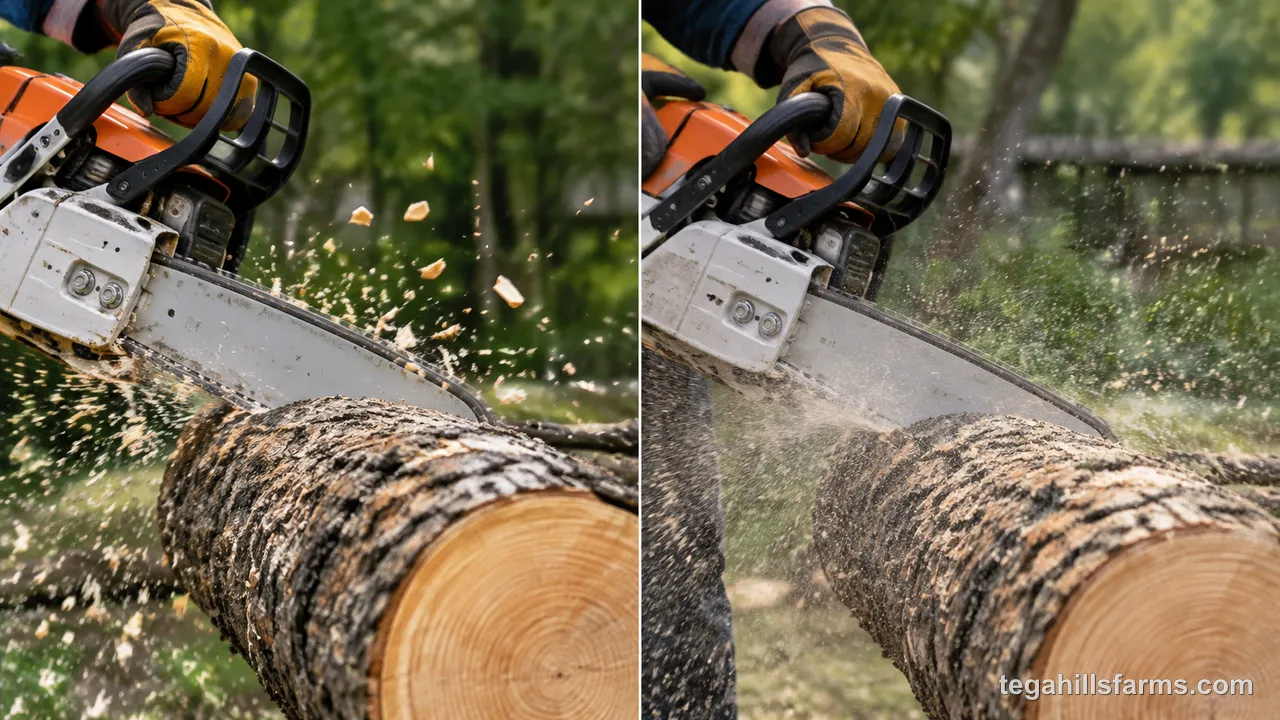
Other warning signs are the saw drifting to one side as you cut and having to force it down instead of letting the chain pull itself in. Light dulling can be fixed by sharpening, and our best chainsaw sharpener picks cover the tools. Replace the chain when teeth are chipped or cracked, when it has hit dirt or rock and sharpening no longer evens out the cut, or when so little tooth is left that it can’t hold an edge. Our best chainsaw chain roundup covers replacement options.
What Gear and Habits Keep Chainsaw Work Safe?
Safety starts with personal protective gear and a few handling habits, because the saw’s own features are not enough.
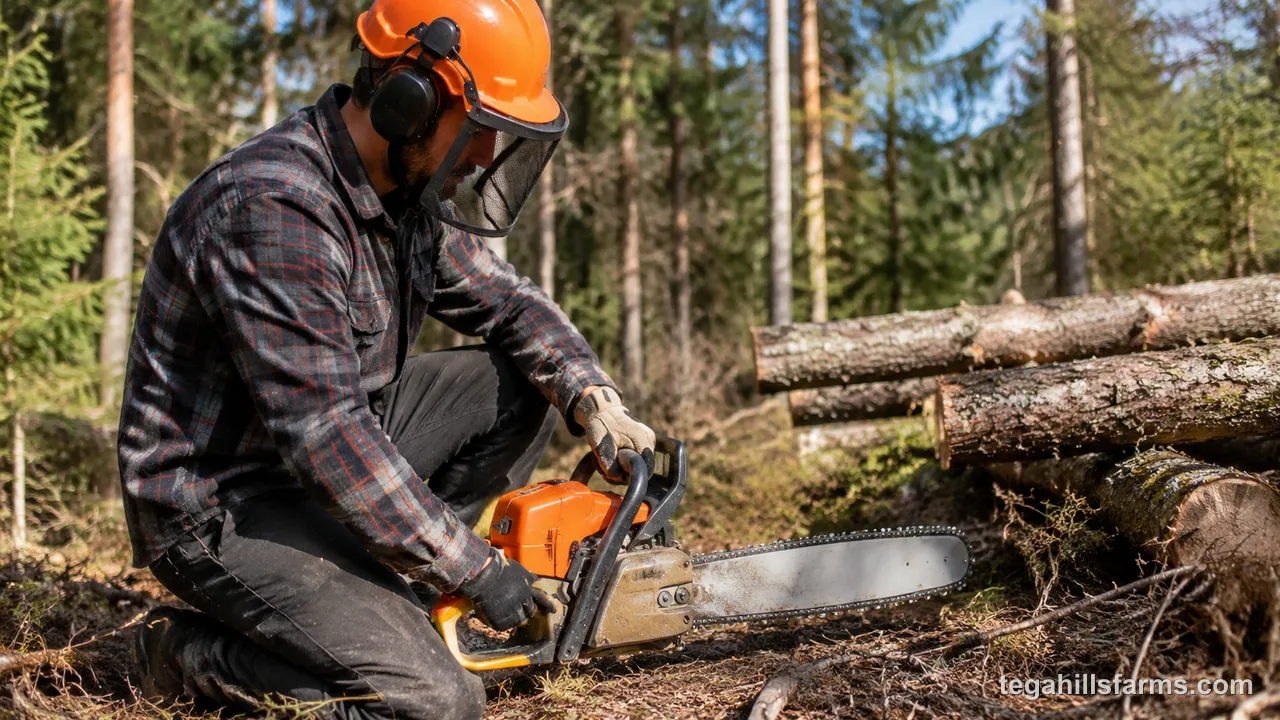
Wear chaps, a helmet with eye and ear protection, gloves and sturdy boots. Kickback happens when the tip of the bar touches something and the saw jerks back toward you, so keep the tip clear and use the full grip with both hands. Stand with your feet planted and your body out of the line of the bar, and let the chain brake work as designed. Our best chainsaw accessories guide covers gear worth having.
What Mistakes Lead Homeowners to Buy the Wrong Chainsaw?
Most wrong purchases come from a mismatch between saw and yard.
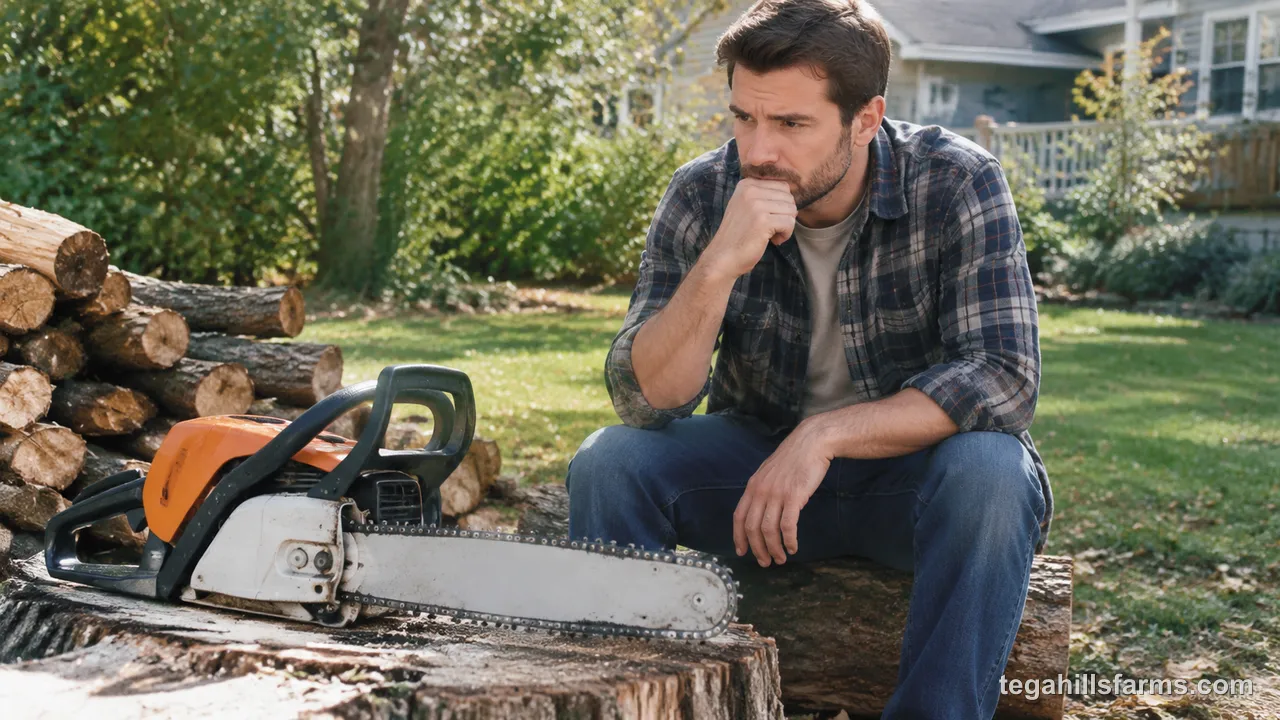
The common ones are an oversized saw for light pruning, a battery platform that doesn’t fit tools you already own, and ignoring storage and upkeep. I’d rather see a new owner start with a lighter saw than the biggest one on the shelf. Check your existing batteries before buying, think about where a gas saw and its fuel will live, and be honest about how often you’ll cut. Our best chainsaws for beginners roundup helps if you’re just starting out.
Chainsaw Questions Homeowners Ask
Why are some chainsaw brands sold only through dealers?
Brands like Stihl lean on authorized dealer networks so buyers get setup, advice and service in person. That also means you often can’t buy those saws from big online retailers. The trade-off is a narrower choice of where to shop in exchange for local support after the sale.
How does battery runtime change with wood type?
Dense, wet or hard wood makes the motor work harder and drains a battery faster than dry softwood. Larger-capacity packs last longer, and a spare battery lets you keep cutting while the other charges. Treat any cuts-per-charge rating as a best case tied to the wood it was measured on.
Can a battery chainsaw handle firewood?
Yes, for most home firewood. A brushless saw with a bar long enough for your log diameter and a spare battery cuts steadily. Heavy daily bucking of big, dense logs is where gas still has the edge for stamina and quick refueling.
What size bar should a beginner start with?
A shorter bar in the 14- to 16-inch range is a good start, since it’s lighter, easier to control and handles limbing and small logs. Go longer only if you regularly cut wood wider than the bar can reach.

Write Your Review
No reviews yet. Be the first to share your experience!