

Our top picks for the best mini chainsaws in 2026 are the DEWALT DCCS623B 8-Inch Pruning Chainsaw (Best Overall), Saker Mini Chainsaw 6 Inch Cordless (Best Cordless), Greenworks 24V 6″ Mini Chainsaw (Best for Limited Hand Strength), CRAFTSMAN V20 RP CMCCS630P1 12″ Chainsaw (Best Battery Life), WORX WG322 20V 10″ Cordless Chainsaw (Best Lightweight), BLACK+DECKER 20V MAX LCS1020B 10″ Chainsaw (Best Large Capacity), Milwaukee M18 FUEL Hatchet 8″ Pruning Saw (Best for Heavy Pruning), Makita XCU14Z 18V LXT 6″ Pruning Saw (Best Compact), and ECHO DHS-3006X1 56V Pruning Saw (Best Premium).
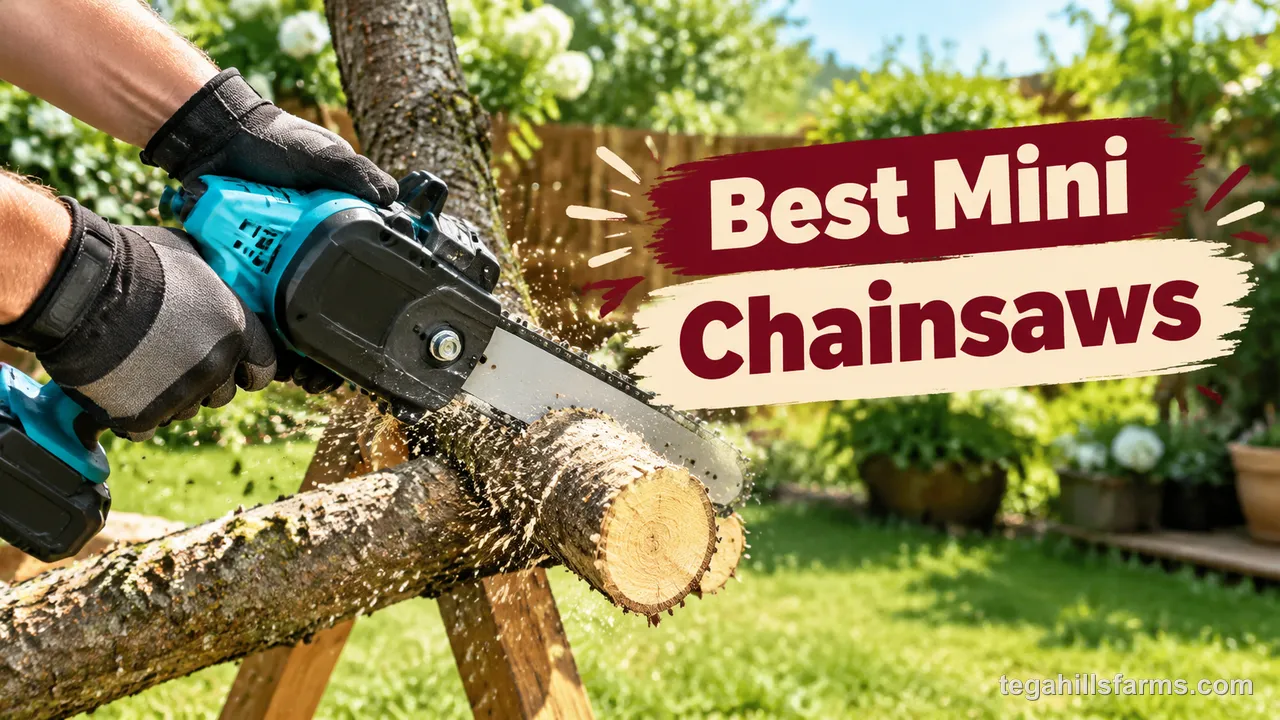
These saws split along the lines that decide how one fits your yard: bar length against the limbs you cut, the weight you can hold at arm’s length, and whether the saw runs on a battery family you already own.
The real risk is buying a saw too small for your limbs or too flimsy to last past a season. A short bar stalls in thick wood, and a mini saw’s chain cuts skin as easily as wood, so oil, tension and grip deserve the same attention you’d give a big saw.




If a drill or mower from DEWALT, Milwaukee, Makita, WORX, Greenworks, CRAFTSMAN, BLACK+DECKER or ECHO already sits in your garage, start your shortlist with that brand’s saw.
What Is a Mini Chainsaw, and How Is It Different From a Full-Size Saw?
A mini chainsaw is a compact battery-powered saw with a short bar and a light body, built for pruning limbs and small cutting jobs rather than felling trees or bucking big logs.
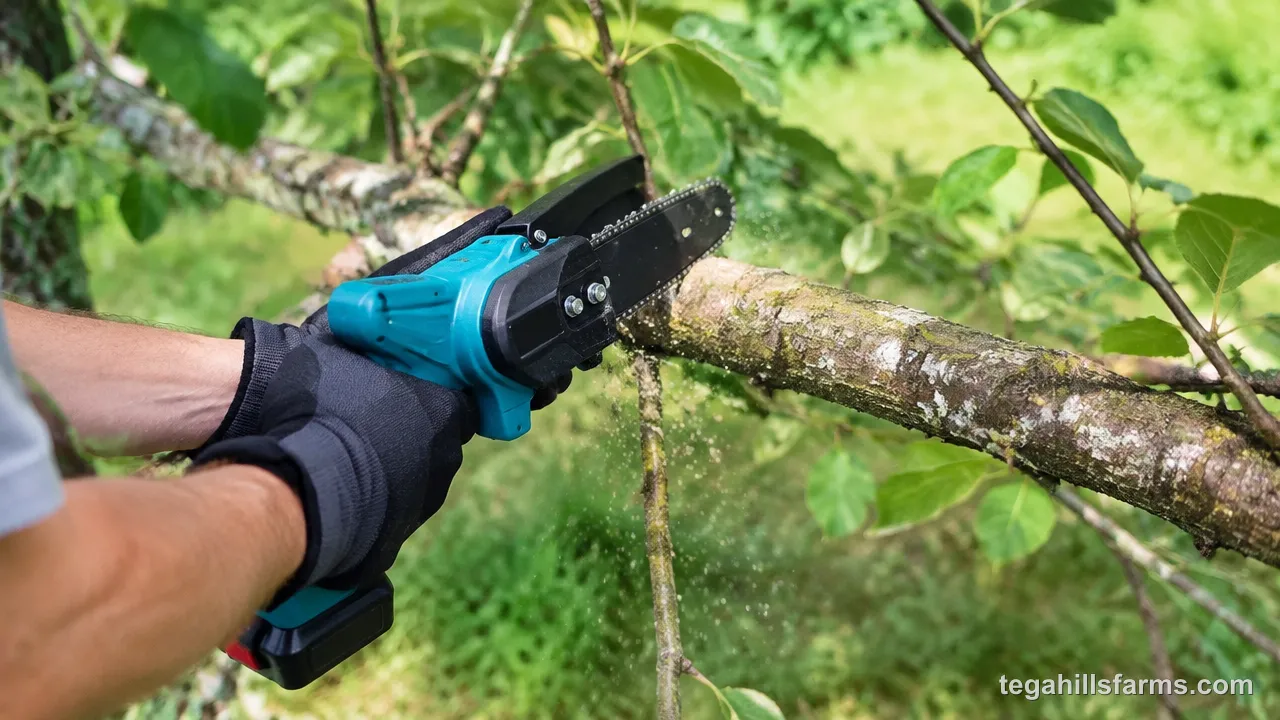
The short bar sets the ceiling on each cut. The light body, with a one-handed or top-handle style grip, lets you reach into shrubs, work along fence lines and fit between branches where a full-size saw can’t go. That same design is why it struggles in thick wood: there isn’t enough bar to span a log, and there isn’t enough battery to sustain long cuts.
Mini saws are sold under many names, such as pruning saw, handheld chainsaw, cordless mini chainsaw or top handle saw, so check bar length and weight rather than the name. Once the job grows past limbs into felling or bucking, the best chainsaws cover the full-size saws a mini model can’t replace. For branches you can’t reach from the ground, the best pole saws mount a small chain on a long shaft, which picks up where a handheld mini saw stops.
The 9 Best Mini Chainsaws of 2026
Ranked in order, the picks are DEWALT DCCS623B 8-Inch Pruning Chainsaw, Saker Mini Chainsaw 6 Inch Cordless, Greenworks 24V 6″ Mini Chainsaw, CRAFTSMAN V20 RP CMCCS630P1 12″ Chainsaw, WORX WG322 20V 10″ Cordless Chainsaw, BLACK+DECKER 20V MAX LCS1020B 10″ Chainsaw, Milwaukee M18 FUEL Hatchet 8″ Pruning Saw, Makita XCU14Z 18V LXT 6″ Pruning Saw, and ECHO DHS-3006X1 56V Pruning Saw.
Most of the 6- and 8-inch pruning saws stay light enough to hold out at arm’s length through a long trimming session. The 10- and 12-inch models cut thicker limbs, but they put more weight out front and tire your arms sooner. The range runs from readers with limited hand strength and tight-space pruners to owners cutting thicker limbs or already invested in a battery platform.
#1 DEWALT DCCS623B 8-Inch Pruning Chainsaw — Best Overall
This is the saw I’d hand most homeowners who prune. It weighs 4.6 lb, runs a brushless motor, and adds a tip guard that keeps the bar steady on upcuts in crowded branches.
Key Specs:
- Bar length: 8 in
- Weight: 4.6 lb
- Motor: Brushless
- Runtime: Up to 70 cuts per charge in 4×4 pressure-treated pine with a DCB230 battery
- Oiling: Automatic
- Battery: DEWALT 20V MAX, sold separately
Detailed Review:
A tip guard over the bar nose gives this saw a steady resting point on upcuts. When you cut from under a limb, a small saw tends to climb or push back at you. Paired with the compact body, the bar reaches into a shrub or along a fence line without the nose snagging neighboring branches.
The brushless motor stretches runtime and motor life, so you make fewer trips to the charger during a pruning session. That cut-per-charge figure assumes a DCB230 pack, so a smaller DEWALT battery from your drill kit will give fewer cuts and a larger one will give more.
Automatic oiling feeds the bar and chain while the saw runs, so the chain stays lubricated through a long string of cuts as long as you keep the reservoir filled. The low weight lets you hold the saw out at arm’s length longer than a heavier 10- or 12-inch model allows.
It ships as a bare tool with the battery sold separately. That doesn’t matter if DEWALT 20V MAX packs already charge in your garage, but it means a real added purchase if they don’t.
Pros:
- Tip guard steadies the bar on upcuts.
- Brushless motor stretches runtime and motor life.
- Automatic oiling keeps the chain lubricated mid-cut.
- Compact body slips into tight shrubs and fence lines.
Cons:
- Battery and charger are sold separately.
- Short bar limits it to limbs, not logs.
Who It’s For:
Homeowners already running DEWALT 20V MAX tools get the most from this saw, since it drops straight onto batteries they own. It suits regular pruning of shrubs, ornamental trees and fence-line growth where control matters more than cutting depth. If you want a saw ready to run out of the box, look for a kit that includes its battery.
Editor’s Verdict:
A well-balanced pruning saw that handles everyday limb work with steady control, provided DEWALT batteries are already on hand.
#2 Saker Mini Chainsaw 6 Inch Cordless — Best Cordless
Two batteries in the case make this saw easy to keep running. At 1.5 lb, with a 6-inch cuttable length on a 9-inch steel plate, it handles small branches and DIY cuts while one pack charges and the other runs.
Key Specs:
- Cutting length: 6 in (9 in total plate)
- Weight: 1.5 lb
- Battery: 20V 1500mAh lithium, two included
- Motor: Upgraded pure copper wire motor
- Extras: Carrying case with accessories
- Model: SK1806DBT02-U
Detailed Review:
Two 20V 1500mAh batteries come in the case, so you can run one pack while the other charges. A 1500mAh pack is small, and the second battery turns short individual runtimes into enough cutting for a branch cleanup or a weekend project.
The usable cutting length is 6 inches on a 9-inch steel plate, and you should size your jobs by the 6-inch figure. Saker uses a deep-quenched guide chain for smooth cuts and an upgraded pure copper wire motor that delivers more torque and longer run time with less wear.
Once the saw gets hot, let it cool down completely before you keep cutting, because pushing a hot motor shortens its life. Long continuous sawing isn’t what this design is for. Before putting it away for a long stretch, fully charge the batteries so they’re ready the next time.
The small case holds the saw and accessories together, and assembly takes about a minute, so it’s easy to keep in a closet or truck and pull out for quick jobs. The light body means holding it over a branch pile costs little effort.
Pros:
- Two batteries let you swap and keep cutting.
- Light body is easy to hold over a branch pile.
- Case stores the saw and accessories together.
- Assembly takes about a minute.
Cons:
- Small 1500mAh packs run short per charge.
- Motor needs cool-down breaks once it heats up.
Who It’s For:
DIYers, gift shoppers and anyone tidying a small yard will find this saw approachable. The batteries come with it, and everything stores in one case. It fits occasional branch cleanup and woodworking cuts. Anyone planning long sessions or thick limbs will outgrow it quickly.
Editor’s Verdict:
Treat it as a handy cordless helper for light jobs, with the spare battery doing much of the heavy lifting.
#3 Greenworks 24V 6″ Mini Chainsaw — Best for Limited Hand Strength
For anyone whose grip tires quickly, this saw keeps the effort low. It weighs 3.4 lb with its 2.0Ah battery, starts with a push button, and tightens its chain with one click, so neither setup nor cutting asks much of your hands.
Key Specs:
- Bar length: 6 in
- Weight: 3.4 lb with battery
- Motor: Brushless
- Battery: 24V 2.0Ah with 48 Wh charger, included
- Chain tensioning: One-click, tool-free
- Safety: Security lock, anti-slip handles, safety baffles
Detailed Review:
A security lock keeps the saw from starting by accident. Anti-slip handles help a weaker grip hold on, and safety baffles block splashes from reaching your hands. These details matter most for someone whose grip tires, because a saw that twists or fires unexpectedly is what makes cutting stressful.
One-click chain tightening lets you adjust tension with one hand, without hunting for a wrench or wrestling the bar into place. The 6-inch bar is rated to cut through 6-inch logs, which covers pruning, campfire prep and routine garden upkeep.
You start it with a push of a button. There’s no gas, fumes, carburetor, spark plug or pull rope. That means no cord to yank, no fuel going stale over winter, and a quieter, cleaner saw to run near the house.
The 24V battery works with more than 200 Greenworks indoor and outdoor tools, and the saw runs a brushless motor. If you already own Greenworks 24V tools, the included pack becomes a spare. If you don’t, this kit starts you on that platform with its battery and charger.
Pros:
- Push-button start replaces the pull rope entirely.
- One-click tensioning works with one hand.
- Security lock guards against accidental starts.
- Battery fits a wide range of Greenworks tools.
Cons:
- Short bar restricts it to small limbs.
- Battery platform ties you to Greenworks 24V tools.
Who It’s For:
Seniors, newer users and anyone with a weaker grip will appreciate how little this saw asks of their hands, from starting it to adjusting the chain. Greenworks 24V owners gain the most, since the battery moves between tools. Heavier limb work is better handed to a larger saw.
Editor’s Verdict:
It removes most of the strength barriers that keep people away from chainsaws, while staying capable enough for real pruning.
#4 CRAFTSMAN V20 RP CMCCS630P1 12″ Chainsaw — Best Battery Life
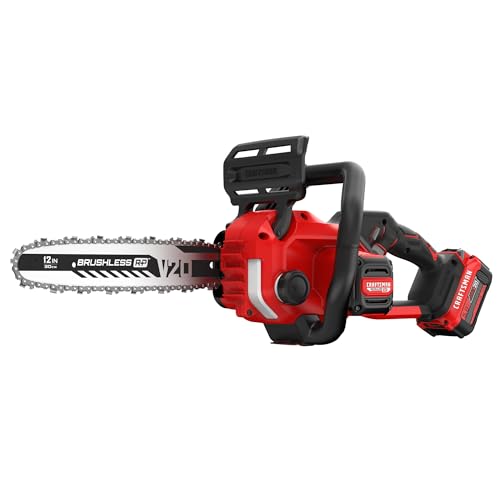
Choose this saw when the brush pile is big. Its brushless motor and included 5Ah battery deliver up to 105 cuts per charge, and the 12-inch bar takes on thicker limbs than a short pruning saw can.
Key Specs:
- Bar length: 12 in
- Weight: 9 lb
- Runtime: Up to 105 cuts per charge
- Motor: Brushless
- Battery: V20 5Ah battery and charger included
- Chain care: Auto-oiling, bolt-lock tensioning
Detailed Review:
The included 5Ah battery is a high-capacity pack, and it’s why this saw keeps cutting through big cleanup days. The brushless motor delivers up to 80% more peak horsepower than CRAFTSMAN’s CMCCS610D1, so the saw holds its pace through long strings of cuts instead of fading early.
The 12-inch bar lets you take thicker limbs in a single pass and still maneuvers in difficult areas. At 9 lb, though, the saw is noticeably heavier than the WORX WG322, which carries a shorter 10-inch bar, and you feel that difference on arm-extended cuts.
If you’re moving off gas, it’s 40% lighter than a 42cc gas saw with the 5Ah battery fitted, so the switch still lightens the load. Auto-oiling and bolt-lock chain tensioning keep upkeep down to topping off oil and snugging the chain.
The battery and charger both come in the box. V20 owners gain a spare pack, and newcomers can start cutting right away.
Pros:
- High-capacity 5Ah battery carries long cleanup sessions.
- 12-inch bar takes on thicker limbs with fewer cuts from both sides.
- Brushless motor outpowers the CMCCS610D1 on peak horsepower.
- Battery and charger come in the box.
Cons:
- Heavier body tires arms on extended cuts.
- Longer bar is harder to steer inside dense shrubs.
Who It’s For:
If your yard throws off storm limbs and big brush piles, this saw has the runtime to keep going through big cleanups. CRAFTSMAN V20 owners can share batteries, and anyone stepping down from a gas saw will appreciate the lighter feel. People who mostly snip small branches at shoulder height will find it heavy.
Editor’s Verdict:
Pick this for long, heavy pruning days, and accept the extra weight in exchange for battery life and bar length.
#5 WORX WG322 20V 10″ Cordless Chainsaw — Best Lightweight
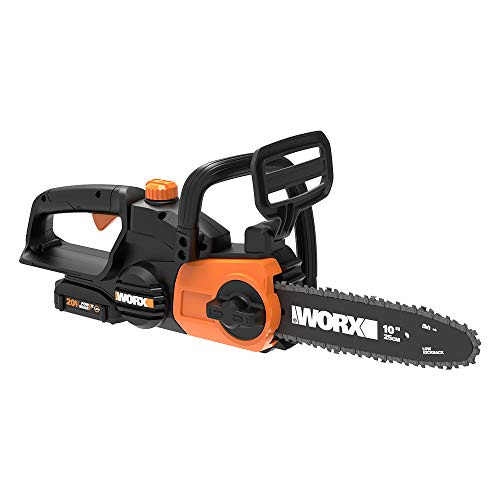
With a 10-inch bar at 6.2 lb, this saw gives you full-size reach without the arm strain of heavier battery models. Auto tension handles chain slack for you.
Key Specs:
- Bar length: 10 in
- Weight: 6.2 lb
- Chain speed: 12.5 ft/s
- Chain care: Automatic tension, automatic lubrication with oil level indicator
- Battery: 20V PowerShare battery and charger included
Detailed Review:
The automatic, tool-free tension system keeps the chain at the correct tension on its own, so you don’t have to stop and adjust it as the chain stretches during use. Automatic lubrication pairs with an oil level indicator that shows how much oil is in the reservoir before you start a cut.
Chain oil is sold separately. Fill the tank with chain oil before the first use, then run the chain for a few seconds without cutting so the oil works through the bar and chain.
A 12.5 ft/s chain speed on the 10-inch bar handles reasonably sized logs and branches with smooth cuts. The BLACK+DECKER LCS1020B runs the same bar length, but the WORX is the lighter saw, so you get similar reach with less weight to hold.
The PowerShare battery runs more than 75 Worx 20V, 40V and 80V tools, and Worx uses the same packs in its Jawsaw and lawn mowers. If a Worx mower or trimmer already lives in your garage, the battery and charger in this box become spares.
Pros:
- Auto tension keeps the chain adjusted without tools.
- Oil level indicator shows remaining oil at a glance.
- Light body for a saw with this bar size.
- PowerShare battery runs dozens of other Worx tools.
- Battery and charger are included.
Cons:
- Chain oil is sold separately.
- Longer bar is bulkier in tight shrubs than short pruners.
Who It’s For:
Owners of Worx 20V, 40V or 80V PowerShare tools can swap packs between this saw and the tools they already run. It suits branch and small-log cutting where you want a bigger bar but still care about arm fatigue. Someone pruning mostly inside dense shrubs may find a shorter saw easier to steer.
Editor’s Verdict:
Expect a smooth, low-fuss 10-inch saw whose automatic tension and oiling cut down on the chores between cuts.
#6 BLACK+DECKER 20V MAX LCS1020B 10″ Chainsaw — Best Large Capacity
Its 8-inch cut capacity on a 10-inch bar handles limbs too thick for short pruners. Owners who already have 20V MAX batteries get the most from it.
Key Specs:
- Bar length: 10 in
- Cut capacity: 8 in
- Weight: 7.6 lb
- Chain tensioning: Tool-free
- Battery: BLACK+DECKER 20V MAX (battery and charger not included)
- Extras: Guide bar scabbard
Detailed Review:
This saw pairs its 10-inch bar with a generous cut capacity, and you should plan jobs around the cut capacity, since it marks the thickness the saw is built to cut. That gives it range for limbs a short pruning saw would have to cut from both sides.
Tool-free chain tensioning means you make adjustments by hand in the yard, without fetching a wrench. An oiling system lubricates the bar and chain, so the reservoir is the only part of chain care you need to watch.
At 7.6 lb, it’s heavier than the WORX WG322 on the same bar length, and you notice that difference on arm-extended cuts. Plan on two-handed control and shorter stretches of work rather than long sessions with the saw held out in front of you.
It ships as a tool only, with no battery or charger in the box, and runs on BLACK+DECKER 20V MAX lithium-ion packs. If those batteries already power your trimmer or blower, this saw is an easy addition, and the included guide bar scabbard covers the chain for storage and transport.
Pros:
- Large cut capacity handles thicker limbs.
- Tool-free tensioning speeds up chain adjustments.
- Runs on existing BLACK+DECKER 20V MAX batteries.
- Scabbard covers the bar for storage and transport.
Cons:
- Battery and charger are sold separately.
- Heavier body wears on arms during extended cuts.
Who It’s For:
A household already running BLACK+DECKER 20V MAX tools gets an easy add-on here, because the saw uses batteries already on the charger. It suits limbs too thick for short pruners and occasional small-log cutting. If you need something to hold out for long stretches, a lighter saw will treat your arms better.
Editor’s Verdict:
Count on it for thicker limbs on a familiar battery, but only if that battery is already in your garage.
#7 Milwaukee M18 FUEL Hatchet 8″ Pruning Saw — Best for Heavy Pruning
Hardwood limbs that bog down lighter pruners are what this saw handles well, thanks to gas-like power from a brushless motor. Bucking spikes and a variable speed trigger keep it controlled.
Key Specs:
- Bar length: 8 in
- Weight: Under 5 lb without battery
- Motor: POWERSTATE brushless, comparable to a gas engine up to 25cc
- Chain: Full house chain
- Controls: Variable speed trigger, metal bucking spikes, lanyard loop
- Battery: M18, sold separately (bare tool)
Detailed Review:
The POWERSTATE brushless motor, its electronics and the battery work together to deliver power comparable to a gas engine up to 25cc. The saw also cuts faster than a 25cc gas pruning saw. That power is aimed at hardwood limbs, where a lighter pruner slows down and starts to bind.
The variable speed trigger lets you start a cut slowly so the chain bites instead of skating across the bark. Metal bucking spikes dig into the wood as a pivot point, and the full house chain reduces vibration while leaving clean cuts.
The translucent oil reservoir shows the oil level at a glance, the automatic oiler feeds the chain during cuts, and an easy-access tensioner makes adjustments quick. A lanyard loop gives a tie-off point for aerial work.
It has a smaller footprint than a standard chainsaw and an ergonomic grip, so it gets into tight spaces and stays controllable through the cut. It ships as a bare tool, which means it delivers the most value to owners who already run Milwaukee M18 batteries.
Pros:
- Brushless motor cuts hardwood limbs with gas-like power.
- Variable speed trigger allows controlled starts.
- Bucking spikes steady the saw against the wood.
- Translucent reservoir shows the oil level at a glance.
- Lanyard loop supports tie-off for aerial work.
Cons:
- Battery and charger are sold separately.
- Power-focused build adds weight over small pruners.
Who It’s For:
Hardwood trees in your yard, or limbs thick enough to stall lighter saws, make this a strong fit for someone already invested in Milwaukee M18 batteries. Its lanyard loop matters to anyone who works tied off. Casual users trimming soft shrubs won’t need this much saw.
Editor’s Verdict:
Built for dense hardwood and demanding pruning, it pairs gas-like power with fine trigger control for M18 owners.
#8 Makita XCU14Z 18V LXT 6″ Pruning Saw — Best Compact
At 2.1 lb, this pruning saw is easy to hold out at arm’s length for a long stretch of limbing. Brushless power and tool-free chain adjustment keep it simple.
Key Specs:
- Bar length: 6 in
- Weight: 2.1 lb
- Motor: Makita-built brushless
- Runtime: Up to 140 cuts in 2-inch cedar with an 18V LXT 2.0Ah battery
- Chain adjustment: Tool-free
- Safety: Retractable guard
Detailed Review:
The low weight adds little load when you hold the saw out to reach branches at chest and shoulder height, which is where a heavier saw wears you out quickly. The same light, compact body lets the saw slip between stems inside a hedge or ornamental tree.
The Makita-built brushless motor drives the chain for clean pruning and light limbing. Its cut rating comes from a small 2.0Ah LXT pack, so a larger LXT battery from your drill kit should carry it further between charges.
Tool-free chain adjustment lets you correct slack by hand, and a retractable guard covers the chain as a barrier. Both cut down on fiddling and exposure during a day of trimming.
The battery is not included. If you own Makita 18V LXT tools, that means one less charger and pack to store. If you don’t, it means buying into the platform before the saw cuts anything.
Pros:
- Light body reduces fatigue at arm’s length.
- Tool-free chain adjustment needs no wrench.
- Retractable guard shields the chain.
- Runs on Makita 18V LXT batteries you may already own.
Cons:
- Battery and charger are not included.
- Short bar keeps it to light limbing.
Who It’s For:
Makita 18V LXT owners who prune often get a compact saw that slips into shrubs and stays comfortable at arm’s length. It suits ornamental trees, hedges and garden cleanup. Anyone without LXT batteries, or anyone facing thick hardwood limbs, should look at a saw sold as a kit or a stronger one.
Editor’s Verdict:
Few saws make light limbing feel this effortless, and its small, nimble frame rewards anyone already on Makita batteries.
#9 ECHO DHS-3006X1 56V Pruning Saw — Best Premium
Raw power is the reason to buy this saw. Its 56V brushless motor with MAXOUT technology drives a 6-inch bar on an 80TXL cutting system, and the 2.5Ah battery and top-mount charger come in the box.
Key Specs:
- Voltage: 56V
- Bar length: 6 in
- Cutting system: 80TXL
- Weight: 10 lb
- Motor: Brushless with MAXOUT technology
- Included: 2.5Ah battery and top-mount charger
Detailed Review:
The brushless motor delivers gas-like power, and MAXOUT technology pushes it to maximum output. On a short bar, that much power keeps the chain moving through dense wood instead of slowing as the cut deepens.
The 6-inch bar runs ECHO’s 80TXL cutting system for efficient cuts. The Makita XCU14Z uses the same bar length, but the ECHO is far heavier, so you trade a light, nimble feel for 56V cutting power.
That weight changes how you work. Two-handed cuts at waist and chest height suit it, while long stretches of arm-extended trimming tire you faster than a lighter pruner would.
The kit includes the battery and charger, so ECHO 56V newcomers can start cutting on day one. It sits in the premium price tier, and whether it’s worth that depends on how often you face tough limbs. For occasional soft-shrub trimming, the extra power and price buy little.
Pros:
- Brushless motor delivers gas-like cutting power.
- MAXOUT technology pushes the motor to full output.
- Battery and top-mount charger come included.
- 80TXL cutting system keeps cuts efficient.
Cons:
- Heavy body for such a short bar.
- Premium price is hard to justify for light trimming.
Who It’s For:
Owners of ECHO 56V tools, or anyone who values power over lightness, will get the most from this saw. It fits steady pruning of tough limbs where a lighter battery saw bogs down. Someone with a weaker grip, or who mostly trims at shoulder height, will tire of the weight quickly.
Editor’s Verdict:
Worth the premium only if you regularly cut tough limbs and can handle the extra weight in your hands.
What Should You Look for in a Mini Chainsaw?
The thickness of the limbs you cut and the battery family you already own settle most of the decision, while motor features and weight decide how pleasant the saw is to live with.
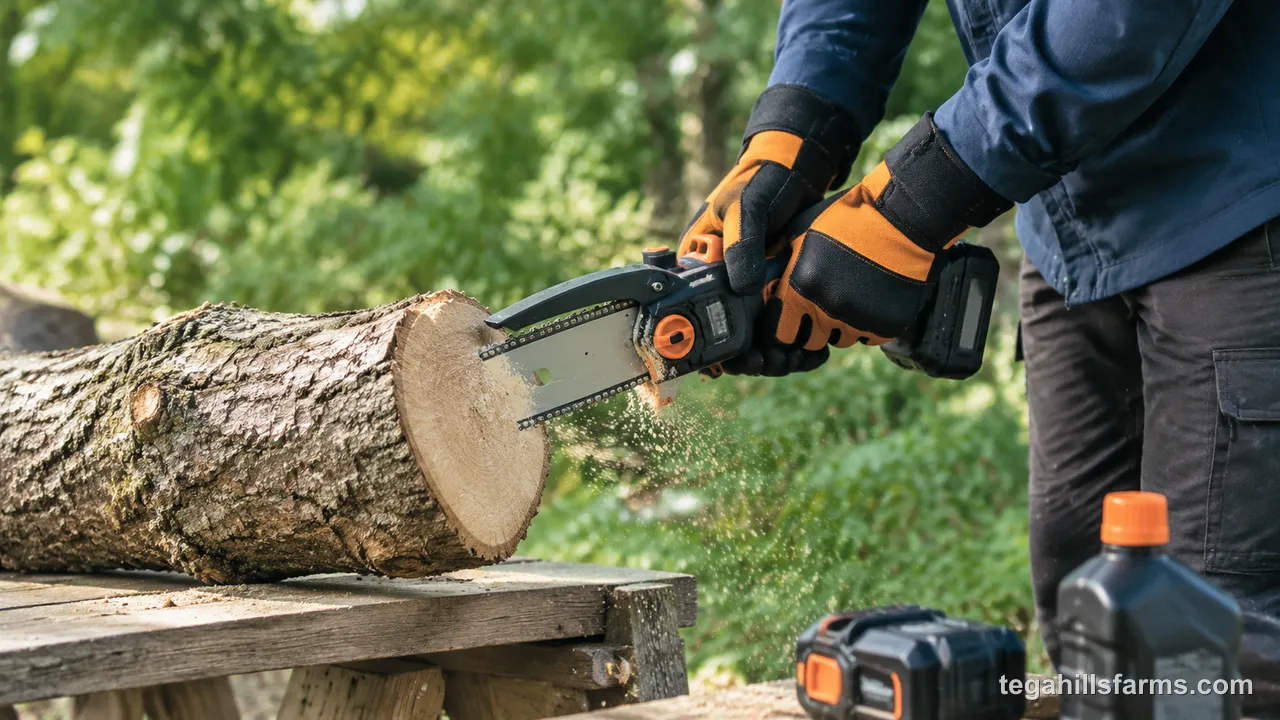
You find out quickly in the yard if you get either one wrong. A bar that’s too short leaves you sawing from both sides, and the wrong battery means a second charger and pack on the shelf. For the bigger decision between saw sizes and fuel types, start with how to choose a chainsaw.
How Long Should the Bar Be for the Branches You Cut?
Choose a bar comfortably longer than the limbs you cut most often, because the usable cutting length is always shorter than the bar itself. Part of the bar sits inside the saw body and the nose curves away, so the bar length overstates the limb thickness the saw can cut cleanly straight through.
Short 6- and 8-inch bars keep the weight close to your hands. That makes them easy to steer inside shrubs and comfortable to hold out at arm’s length. A 10- or 12-inch bar lets you take thicker limbs and small logs without cutting from both sides, but the extra length puts weight farther out front. The saw feels nose-heavy and is harder to thread between branches.
Treat a listed maximum cut diameter as a ceiling, not a working size. At that limit the motor works hardest and the chain binds more easily, so your everyday cuts should stay comfortably below it.
Which Battery Platform Saves You the Most Money?
The platform you already own saves the most, because the battery and charger make up a large share of what a cordless saw costs. A saw that slides onto Milwaukee M18, DEWALT 20V MAX, Ryobi 18V, Makita 18V LXT, Worx PowerShare or Greenworks 24V packs you already charge means no second charger and no extra batteries aging on the shelf.
Bare-tool versions only make sense for existing owners. Without a compatible pack, a bare tool needs a separately bought battery and charger before it cuts anything.
Voltage names don’t compare cleanly across brands. Some brands label packs by peak voltage and others by nominal voltage, so a 20V MAX pack and an 18V pack are closer than the numbers suggest. Packs don’t cross brands, though, so the practical rule is to stay inside one family. If you’re weighing larger cordless saws alongside these, the best battery chainsaws cover full-size options on the same platforms.
Do Brushless Motors, Auto Oilers and Tool-Free Tensioning Matter?
All three earn their keep on a saw you use often. On a saw you only pull out a few times a year, auto oiling and easy tensioning matter most, because each one prevents a specific kind of wear.
A brushless motor has no brushes rubbing inside it, so it wastes less energy as heat, runs longer per charge and wears more slowly than a brushed motor. You get more cuts per battery and a saw that holds up through years of use.
An automatic oiler feeds bar and chain oil while you cut, so the chain never runs dry because you forgot to pump a manual oiler. A chain that runs short on oil heats up, dulls and stretches fast.
Tool-free tensioning matters because a slack chain can jump off the bar and wears the drive sprocket and bar rails, and an adjustment that needs a wrench tends to get put off. If you cut occasionally, prioritize the oiler and the tensioner. If you cut often, you’ll get real value from all three.
How Much Do Weight and Grip Style Change the Work?
Weight decides how long you can hold the saw out before your arms tire, and grip style decides how much control you keep when the saw jumps. On arm-extended cuts, every extra pound pulls on your shoulders and makes the bar tip wander.
A compact pruning grip sits close to the saw’s center of mass. That makes the saw easy to steer into tight spots, and it also makes it tempting to run one-handed, even though one hand gives you far less resistance if the bar kicks back. A larger two-handed saw spreads the force across both hands and keeps your body behind the bar, which is why two hands stay the safer habit on any size of saw.
The battery changes the picture too. A big pack adds weight at the rear and shifts the balance, so a bare tool’s weight understates what you’ll actually hold.
If you have a weaker grip, trim at shoulder height often, or work in short, frequent sessions, choose the lightest saw that still handles your usual limbs.
Which Mini Chainsaw Fits Your Yard Job?
Match the saw to the thickest wood you cut regularly and to how long you’ll hold it, rather than to brand loyalty alone.
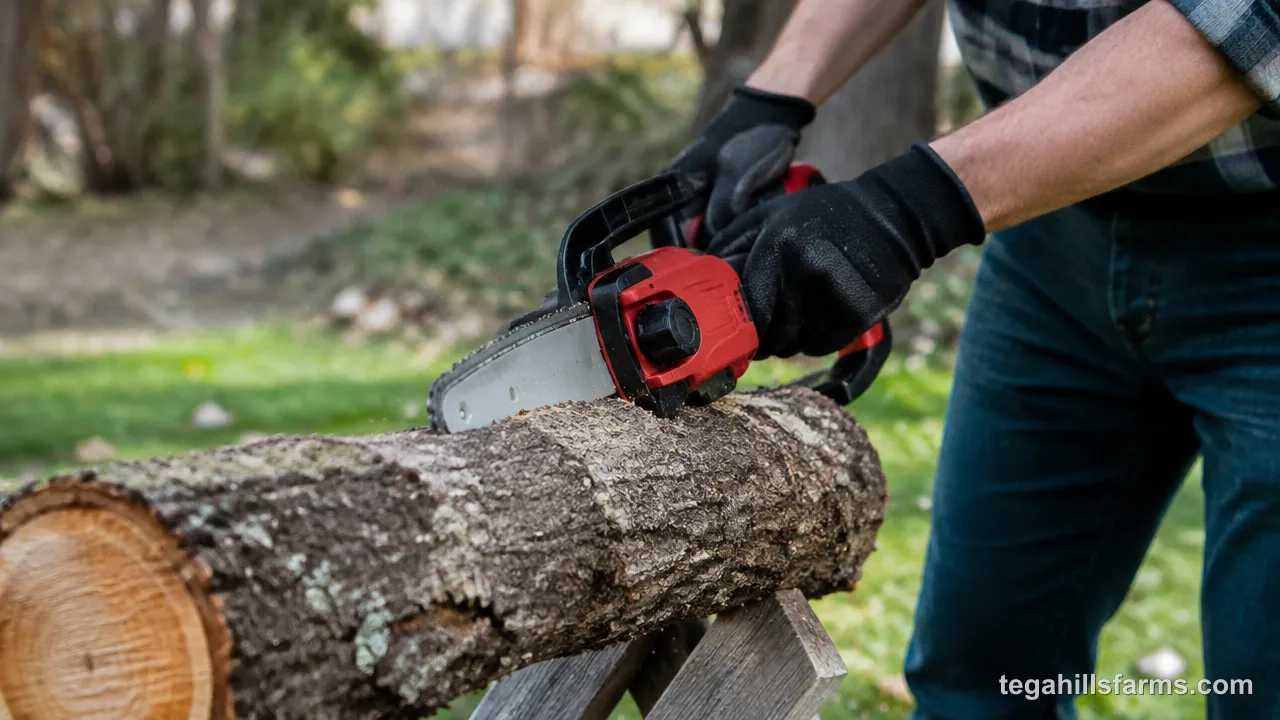
A saw sized for the occasional big limb wears you out on a day of light pruning, and a featherweight pruner stalls the first time you feed it firewood. For anyone still learning, safety features matter more than either.
Light Pruning and Garden Cleanup
Short, light saws are the right tool for trimming branches, shaping shrubs and clearing small storm debris. A 6- or 8-inch bar on a light body slips between stems inside a hedge or along a fence, and the low weight keeps your arms fresh through the many small cuts that pruning involves.
After a windy night, a compact saw also cuts fallen twigs and small limbs into pieces that fit a yard waste bin, without dragging out a bigger saw.
A short bar is enough as long as most limbs cut cleanly straight through. Your branches have outgrown it when you keep cutting from both sides, the chain pinches midway through, or the motor bogs on every other cut. At that point, a 10- or 12-inch saw saves time and strain.
Kindling and Small Firewood
A mini saw can handle kindling and small-diameter firewood, and a longer bar with a bigger battery is what makes it practical. A 10- or 12-inch bar takes thicker rounds with less fuss, and a high-capacity pack keeps the chain moving through the repeated crosscuts a woodpile needs.
Heat and runtime limit you as much as bar length does. Cutting rounds back to back keeps the motor under steady load, so a small saw needs more breaks and more recharges than the job seems to warrant.
Once you’re cutting stove-length rounds from whole logs or filling a woodshed for winter, the job belongs to a full-size saw, and the best chainsaws for cutting firewood cover the bars and engines that keep pace with that work.
Beginners and Users With Limited Hand Strength
A light saw with an accidental-start lock, anti-slip handles, one-hand chain tensioning and a push-button start gives newcomers and anyone with less grip strength the easiest way in. The lock keeps a bumped trigger from starting the chain, and anti-slip handles hold steady when your hands tire. One-hand tensioning replaces a fiddly two-handed adjustment.
A push-button start skips the pull cord entirely, and low weight means you can keep both hands on the saw without strain. These features reduce fatigue and the small mistakes that come with it, but they don’t make the chain any less sharp. You still need gloves, eye protection, two hands on the saw and steady footing.
If you want options beyond mini saws, look at the best chainsaws for seniors, which include lighter full-feature models.
How Do You Use a Mini Chainsaw Safely and Keep It Cutting?
Oil and chain tension keep the saw cutting, and kickback awareness plus protective gear keep you unhurt, because a short bar shrinks the job, not the risk.
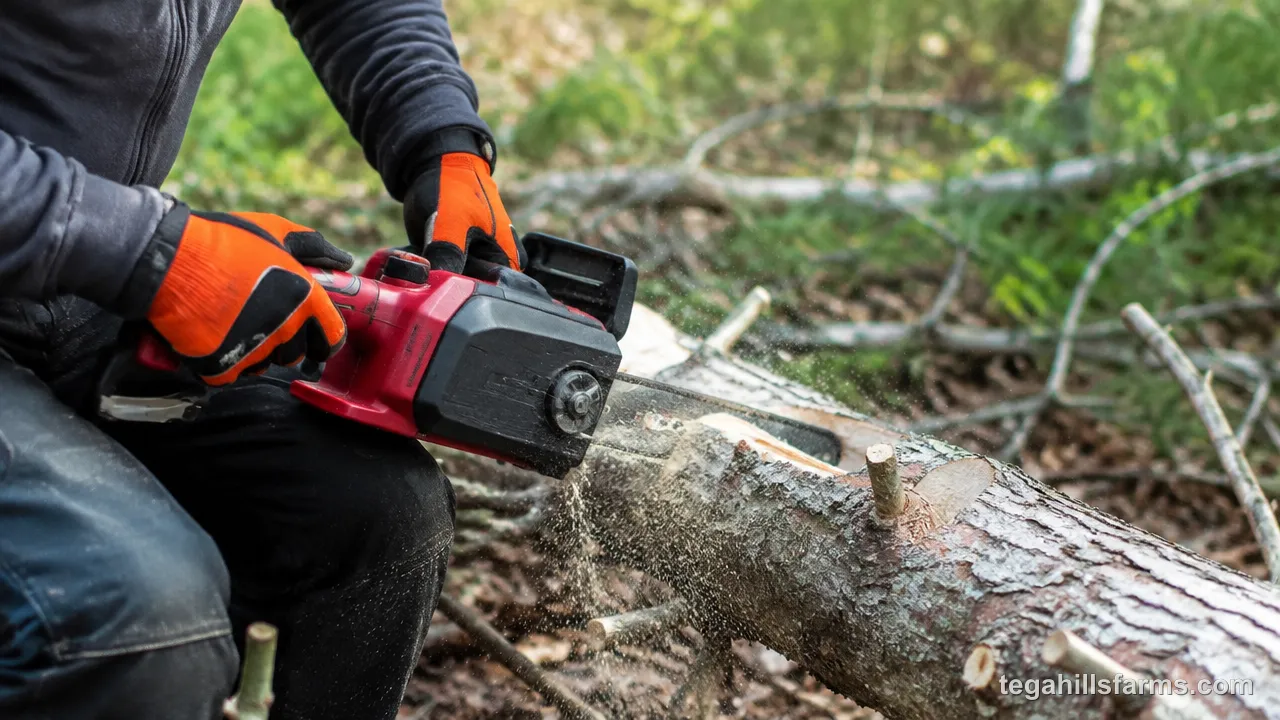
A mini saw’s chain runs sharp and fast, and the saw’s light weight invites one-handed cuts at awkward angles, which is exactly when control slips.
Why Do Oil and Chain Tension Matter So Much?
They matter, because a dry or badly tensioned chain wears the bar, chain and motor quickly. A dry chain overheats, dulls and stretches. A loose chain can jump off the bar, and one that’s too tight drags on the motor and wears the bar rails.
Fill the reservoir with bar and chain oil before every session and check the level as you work, even on saws with automatic oilers, since an auto oiler only feeds what’s in the tank. Check tension with the saw cool, then again after the first few cuts, because a warm chain expands and a new chain stretches as it beds in.
Between uses, store the battery off the saw in a dry spot away from summer heat and winter freezing, and follow the manufacturer’s charging advice for long storage.
How Do You Avoid Kickback and Overhead Cutting Mistakes?
Kickback happens when the upper part of the bar tip touches wood or the chain gets pinched, throwing the bar up and back toward you, and small saws do it too. A light saw has less mass behind the kick, but you’re also more likely to be holding it loosely or at an awkward angle when it happens.
Keep the bar tip out of the wood, avoid nose-first boring cuts, and take extra care on upcuts, where the chain pushes the saw back toward you. Use both hands, plant your feet on firm ground, and stand to the side of the cut line.
Wear eye protection and cut-resistant gloves, and for anything at head height, add a helmet with a face screen. Branches above your shoulders call for a pole saw rather than a handheld saw held overhead.
Unbranded mini saws from sellers like Seesii and Tietoc sell at very low prices, and two saws that look identical can ship with very different chains, batteries and support behind them. A bargain saw that dies mid-season leaves you hunting for a replacement chain or battery that nobody stocks.
Are Cheap Amazon Mini Chainsaws Worth Buying?
For occasional light jobs, a cheap unbranded mini saw can be worth it, as long as you treat it as close to disposable. For regular pruning, an established brand is the safer buy. Seesii, Tietoc and similar names often look identical in photos, yet the chain, bar and battery inside can differ from one seller to the next.
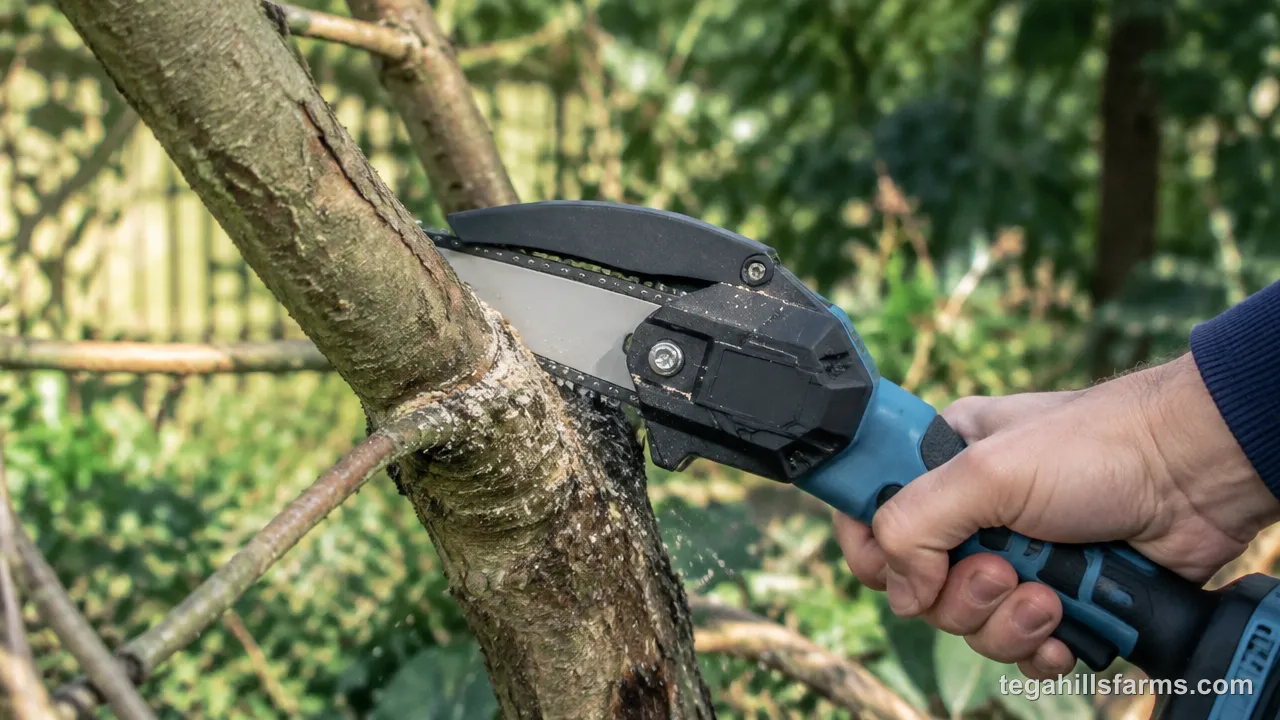
The differences show up over time. Lower-grade chains dull and stretch faster, and batteries lose capacity over the seasons. When something fails, matching spare chains and packs can be hard to find, and support depends entirely on the seller.
Before buying, read reviews that describe months of use rather than first impressions. Check whether the listing names the chain size so you can buy replacements, look for spare chains and batteries sold separately, and note whether the seller gives a real support contact.
A low-cost saw makes sense for snipping a few branches a year, craft cuts, or a backup in the truck, where an early failure costs you little.
When Is a Mini Chainsaw the Wrong Tool?
A mini chainsaw is the wrong tool for thick trunks, felling trees, bucking logs into rounds and long cutting sessions. In those jobs the short bar forces cuts from both sides, the small battery drains early, and the motor heats until it slows or needs a rest, which pushes you toward rushed, awkward cuts.
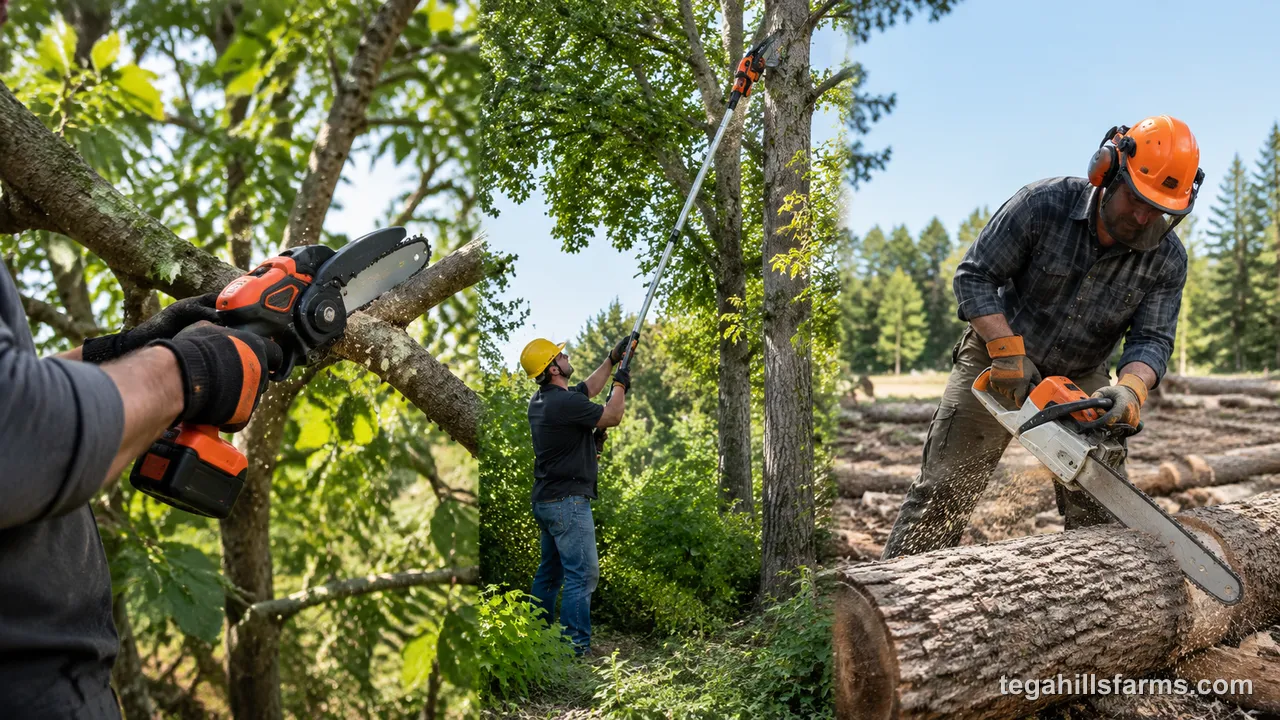
You’ll see the signs during use: you keep cutting from two sides, the chain pinches in the cut, the motor stalls or feels hot to the touch, or the battery runs out long before the pile is done. Each one means the saw is working at its limit rather than within it.
For long sessions and big wood, the best gas chainsaws give you longer bars and fuel you can top off in seconds. If the job is mostly turning downed trees into rounds, the best chainsaws for cutting logs match bar and power to that work. Limbs high in the canopy belong to a pole saw, which keeps you on the ground.
How Do You Know When the Chain or Battery Is Wearing Out?
A chain that throws fine dust instead of chips, pulls to one side or smokes is dull or worn. A battery that runs out sooner and takes longer to recover after heat is aging. Each sign points to a different fix.
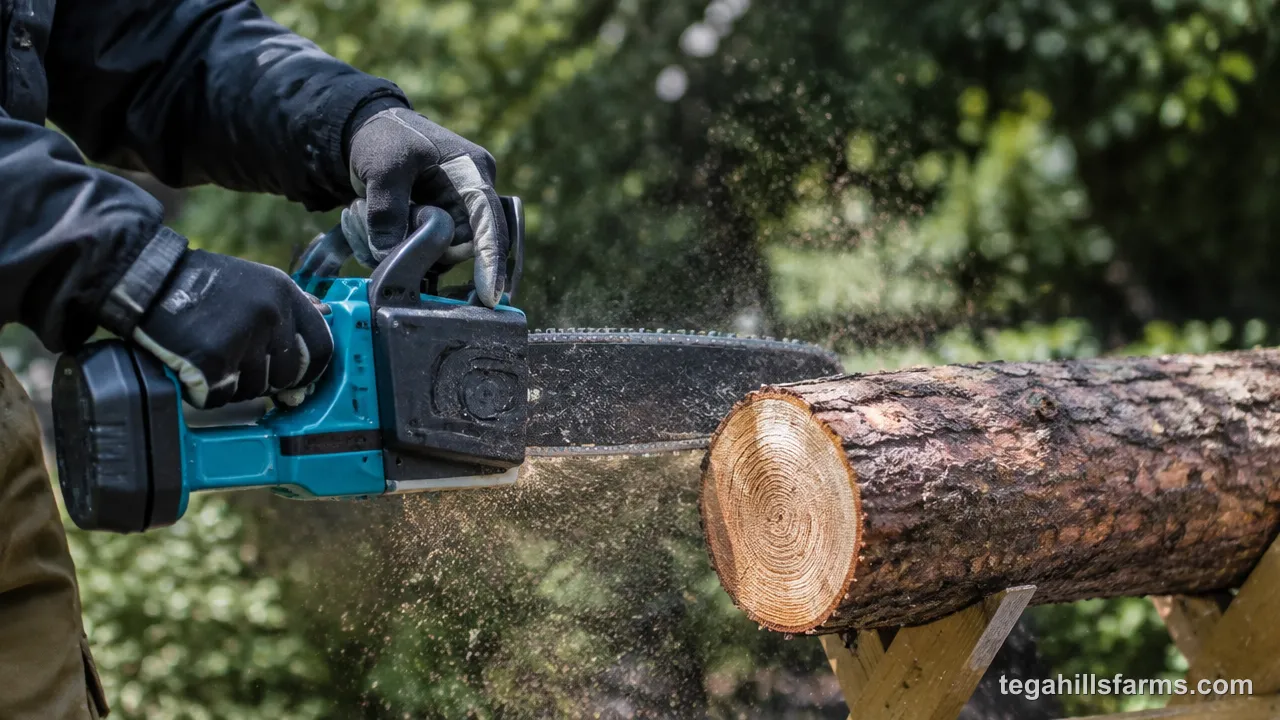
Dust instead of chips means the cutters are dull, and sharpening restores them. A cut that pulls to one side usually comes from unevenly sharpened cutters or a worn bar whose rails have spread, so check the bar before replacing the chain. A burning smell or smoke points to a dull chain, low oil or tension set too tight. A chain that keeps loosening after you tension it has stretched and should be replaced.
On the battery side, shorter runtime per charge and longer recovery after heat mean the cells have lost capacity. Sharpening or a new chain won’t help there, but a replacement pack from the same platform will.
Mini Chainsaw FAQ
Can a mini chainsaw cut firewood?
Yes, within limits. A mini saw handles kindling and small-diameter firewood well, and a 10- or 12-inch bar with a larger battery makes those cuts faster and keeps you going longer. Full-size rounds for a woodstove are a different job, where a short bar and small battery stall out and drain quickly.
Is a mini chainsaw good for beginners?
Yes. Mini saws are an approachable way to start, thanks to low weight, push-button starts and lockouts that prevent accidental starts. The chain is still sharp and can still kick back, so wear gloves and eye protection, keep both hands on the saw, and avoid cutting with the bar tip.
Is a mini chainsaw the same as a pruning saw?
Mostly, yes. Mini chainsaw, pruning saw, handheld chainsaw and cordless mini chainsaw all describe the same compact, short-bar battery saw built for limbs. The professional top-handle saws arborists use for climbing work are a separate, heavier class, so check bar size and weight rather than relying on the name.
What bar length should I pick?
Choose a bar comfortably longer than the limbs you cut most, since the usable cutting length is always shorter than the bar. A 6- or 8-inch bar suits shrubs, hedges and small branches. A 10- or 12-inch bar takes thicker limbs and kindling at the cost of extra weight.
Do mini chainsaws come with a battery?
Some do and some don’t. The Saker, Greenworks, CRAFTSMAN, WORX and ECHO saws include a battery and charger, and the Saker comes with two batteries. The DEWALT, BLACK+DECKER, Milwaukee and Makita models are bare tools, which only make sense if you already own batteries from that brand.
Can a mini chainsaw replace a pole saw?
No. A mini saw is for limbs you can reach from the ground at chest height. Holding one overhead or cutting from a ladder puts the bar and the kickback zone too close to your face. A pole saw puts a small chain on a long shaft, so you stay on the ground for high limbs.
Write Your Review
No reviews yet. Be the first to share your experience!