

Our top picks for the best 14 inch chainsaws in 2026 are the Greenworks 48V 14 in. Cordless Chainsaw (Best Overall), Husqvarna 120 Mark III Gas Chainsaw 14″ (Best Premium), NEO-TEC 31.8cc Gas Chainsaw 14 Inch (Best Budget), SKIL PWR CORE 40 CS4555-10 14″ Chainsaw (Best Battery Life), and WORX WG384 40V 14 in. Cordless Chainsaw (Best Cordless).
Once the bar length is set, three things decide the purchase: the power source, how the saw balances in your hands, and how much upkeep comes with it. A battery saw starts with a button but stops when the pack runs out. A gas saw cuts anywhere you can carry a fuel can, and in return you mix fuel and look after a carburetor.


Starting reliability and chain care decide whether a small saw gets used or gathers dust. An engine that floods after sitting all summer, or a chain that dulls and drags halfway through a storm cleanup, turns a quick job into a lost afternoon.
What Can a 14 Inch Chainsaw Actually Cut?
It handles yard limbs, small trees, storm debris and firewood rounds, as long as the wood stays a couple of inches thinner than the bar.
That margin matters for two reasons. The chain needs room to clear chips as it leaves the cut, and the upper tip of the bar is where kickback starts. When the wood is as wide as the bar, the nose buries itself, the chain packs with sawdust, and the tip can catch the far side of the log.
A bar this length is the homeowner middle ground. It keeps the saw light and easy to steer along fence lines and through brush. It is still long enough to buck the limbs a storm drops and the rounds a backyard woodpile needs.
This bar length sits at the compact end of what you will find among the best chainsaws, so it helps to know which jobs it covers before you compare models. If you haven’t settled on gas, battery or corded yet, work through how to choose a chainsaw before you narrow down to a bar length.
The 5 Best 14 Inch Chainsaws of 2026
The saws worth a look at this bar length are the Greenworks 48V 14 in. Cordless Chainsaw, Husqvarna 120 Mark III Gas Chainsaw 14″, NEO-TEC 31.8cc Gas Chainsaw 14 Inch, SKIL PWR CORE 40 CS4555-10 14″ Chainsaw and WORX WG384 40V 14 in. Cordless Chainsaw. Apart from the NEO-TEC, they land between 10.4 and 11.5 pounds, so weight barely separates them.
The real split is power source. The Greenworks, Skil and WORX start with a button and never need fuel. The Husqvarna and NEO-TEC keep cutting as long as you have mixed gas, and they need seasonal upkeep in return. The NEO-TEC’s wrap-around top handle also sets it apart for pruning and overhead cuts, and it suits the buyer working with the tightest budget.
#1 Greenworks 48V 14 in. Cordless Chainsaw — Best Overall
This is the saw for a yard owner who is done with pull ropes and fuel cans. It starts at the press of a button, and the kit ships with two 4.0Ah batteries and a dual-port charger, so one pack can charge while the other cuts limbs and storm debris.
Key Specs:
- Model: CS48L4410
- Power: 48V from two 24V batteries
- Bar length: 14 in
- Weight: 11.5 lb
- Motor: brushless
- Included: two 4.0Ah batteries, dual-port charger, scabbard
Detailed Review:
The brushless motor turns more of the battery’s energy into chain torque. It also runs quieter and wears more slowly, because no brushes rub inside it. A full charge handles up to 150 cuts through 4×4 lumber, which is enough for a typical round of storm limbs.
Starting is a button press. There is no carburetor to gum up over winter, no spark plug to foul and no starter rope to yank on a cold morning, so a saw that has sat in the shed since spring runs the moment you need it.
Upkeep comes down to the chain and bar. The automatic oiler feeds lubrication while you cut, and the easy-adjust tensioning lets you snug a stretched chain without hunting for a wrench. You still have to top off bar oil and keep the chain sharp.
The WORX comes with two 2.0Ah packs, while this kit pairs two 4.0Ah batteries with its dual-port charger, so you cut longer before a swap. That extra capacity also means more weight in your hands than the WORX. If you’re comparing the best battery chainsaws, weigh that longer runtime against how much of your cutting happens overhead.
Pros:
- Push-button start with no fuel, carburetor or pull rope.
- Two 4.0Ah batteries let one charge while the other cuts.
- Brushless motor runs quieter and wears more slowly.
- Automatic oiler keeps the bar and chain lubricated.
Cons:
- Heavier in hand than the WORX.
- Two packs to keep charged before every big cleanup.
Who It’s For:
Homeowners who clear storm limbs and trim small trees through the season will get the most from this kit, especially if they want a saw that starts every time it comes off the shelf. If you cut firewood far from the house all winter, a gas engine will serve you better.
Editor’s Verdict:
A well-rounded cordless kit: real cutting torque, nothing to tune or prime, and enough battery in the box to finish a typical cleanup without waiting on the charger.
#2 Husqvarna 120 Mark III Gas Chainsaw 14″ — Best Premium
Pick this one if your cutting happens far from any outlet. Its 38cc X-Torq engine gives steady torque for firewood rounds, and LowVib dampeners keep your hands from buzzing through a long afternoon of bucking.
Key Specs:
- Model: 970739614
- Engine: 38cc 2-cycle X-Torq
- Bar: 14 in, 3/8 in pitch, .050 in gauge
- Weight: 10.7 lb
- Safety: inertia-activated chain brake
Detailed Review:
The 38cc X-Torq engine burns its fuel efficiently, so you get strong power and torque without running through tanks quickly. The NEO-TEC has a 31.8cc engine, and this saw’s extra displacement keeps the chain moving through hardwood rounds instead of bogging. In exchange, you give up the NEO-TEC’s top-handle grip for overhead work.
LowVib dampeners sit between the engine and chassis, so less of the engine’s shake reaches your hands. At 10.7 pounds the saw stays manageable, and the lower vibration lets you keep bucking a pile without numb fingers.
The separate choke and stop controls fix the most common gas-saw headache. Pulling the choke resets the stop switch automatically, which helps prevent a flooded engine that refuses to start after too many pulls. The inertia-activated chain brake trips on its own when the bar kicks back.
Like any gas engine, this one still needs mixed fuel, a clean air filter, a healthy spark plug, and fuel drained before storage. If that routine doesn’t bother you, it earns a place among the best gas chainsaws in this size.
Pros:
- 38cc engine pulls steadily through hardwood rounds.
- LowVib dampeners reduce hand fatigue on long sessions.
- Choke-linked stop switch helps prevent flooding.
- Runs anywhere you can carry a fuel can.
Cons:
- Needs mixed fuel and seasonal carburetor care.
- Pull-starting takes more effort than a push button.
- Engine noise carries further than a battery motor.
Who It’s For:
Buyers who cut firewood away from the house, or who clean up fallen limbs at the far end of a big property, get the most from an engine that never waits on a charger. If mixing fuel and changing spark plugs sounds like a chore, a battery saw fits you better.
Editor’s Verdict:
Expect a gas saw that starts cleanly and runs smoothly, as long as you keep up the fuel and spark plug routine every gas engine asks for.
#3 NEO-TEC 31.8cc Gas Chainsaw 14 Inch — Best Budget
Budget buyers who prune more than they buck should look at this saw. Its 31.8cc engine pairs with a wrap-around top handle you can grip from above or the side, which steadies cuts overhead and between branches.
Key Specs:
- Model: NS832-14
- Engine: 31.8cc 2-stroke
- Output: up to 2 HP (1.5 kW)
- Bar: 14 in
- Starter: spring-assisted recoil
- Parts: compatible with select MS180 replacement parts
Detailed Review:
The 31.8cc two-stroke engine puts out up to 2 HP (1.5 kW), and its precision carburetor meters fuel to keep consumption down. That output suits pruning, limb removal and firewood prep at a steady pace rather than all-day hardwood bucking.
The wrap-around top handle lets you hold the saw from above or from the side. That keeps it balanced when you cut overhead, reach between branches or work a tight corner of the yard, and the balance cuts hand fatigue during a long pruning session.
A spring-assisted recoil starter takes some of the effort out of each pull, and the controls are simple enough for a first gas saw. Compatibility with select MS180 replacement parts matters more over time, because a chain, bar or filter you can actually find keeps a budget saw running instead of sitting in the garage.
This saw is not CARB certified and cannot be sold or shipped to California addresses. Everywhere else, the trade is plain: you get a low-cost gas saw that asks for the same fuel mixing and carburetor care as any two-stroke.
Pros:
- Wrap-around top handle steadies overhead and tight cuts.
- Spring-assisted recoil makes each pull easier.
- Accepts select MS180 replacement parts.
- Gas engine runs anywhere without charging.
Cons:
- Not CARB certified, so it won’t ship to California.
- Smaller engine than the Husqvarna for hardwood rounds.
- Mixed fuel and carburetor care come with it.
Who It’s For:
If you mostly prune fruit trees, trim fence-line brush and cut the odd firewood round on a tight budget, this saw covers the work. California residents can’t order it, and anyone bucking hardwood all weekend will be better served by the Husqvarna’s larger engine.
Editor’s Verdict:
For the money, this is a capable pruning saw with an easy recoil start and parts you can find, as long as you live outside California.
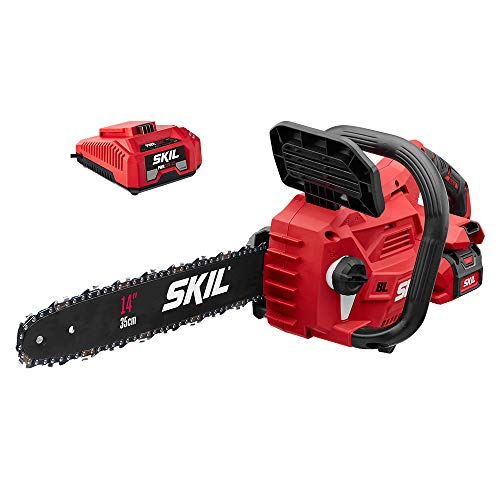
#4 SKIL PWR CORE 40 CS4555-10 14″ Chainsaw — Best Battery Life
Owners who hate waiting on a charger should start with this kit. Its PWR CORE 40 battery wraps every cell in cooling material for longer runtime, and the Auto PWR JUMP charger takes the pack from empty to 30 percent in 15 minutes.
Key Specs:
- Model: CS4555-10
- Battery: 40V PWR CORE 40, 2.5Ah
- Charger: Auto PWR JUMP
- Bar: 14 in
- Weight: 11.53 lb
- Motor: digital brushless
Detailed Review:
Heat is what wears down a lithium pack and makes it cut out under load. The PWR CORE 40 battery wraps each cell in cooling material, which stretches runtime by 25 percent and doubles the pack’s battery life, so the battery you buy now holds its capacity for more seasons.
The fast charger turns a coffee break into another stretch of cutting. The Greenworks ships with two 4.0Ah batteries, so this kit carries less stored energy out of the box. Its strength is fast top-ups and a single 2.5Ah pack built to last.
The digital brushless motor handles tough branches and stumps without the upkeep of a gas engine. A dial on the side sets chain tension with no tools, and auto-lubrication keeps friction down between the bar and chain.
The anti-kickback brake cuts power the instant the bar kicks, and the weather-resistant construction holds up to damp mornings of storm cleanup. It weighs about the same as the Greenworks.
Pros:
- Cell cooling stretches runtime and pack lifespan.
- Fast charger tops up a drained pack during short breaks.
- Side dial adjusts chain tension without tools.
- Anti-kickback brake cuts power when the bar kicks.
- Weather-resistant build handles damp work.
Cons:
- Kit includes only one battery.
- Smaller pack than the Greenworks’ 4.0Ah batteries.
Who It’s For:
Weekend cutters who work in bursts, pausing between brush piles, fit this kit well because the charger turns a short break into more cutting time. If you want to cut straight through without stopping to recharge, the Greenworks kit with its larger batteries suits you better.
Editor’s Verdict:
Built around battery longevity, this saw suits owners who would rather keep one pack healthy for years than juggle several.
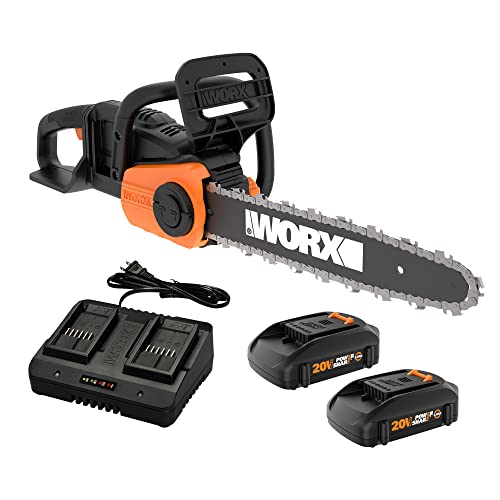
#5 WORX WG384 40V 14 in. Cordless Chainsaw — Best Cordless
This saw makes the most sense for anyone already running Worx yard tools. Its Power Share system pairs two 20V batteries into 40V, and those same packs swap into every Worx 20V and 40V tool, so your trimmer and blower batteries can feed the chainsaw too.
Key Specs:
- Model: WG384
- Power: 40V from two 20V 2.0Ah batteries
- Bar: 14 in
- Weight: 10.4 lb
- Chain care: automatic tensioning and lubrication
- Included: 20V dual charger, blade protection cover
Detailed Review:
Two 20V Power Share batteries combine into 40V for the chain, and the same packs fit every Worx 20V and 40V tool. A trimmer, blower and saw can all draw from one shelf of batteries, and the brushless motor is built for years of that shared duty.
Automatic tensioning keeps the chain at the right tightness without a wrench or dial, so it never runs loose enough to jump the bar. Automated lubrication feeds oil to the chain as you cut, which extends the life of the bar and chain.
Two first-day steps are easy to miss. The saw ships without bar oil, so fill the reservoir before the first cut, and the quick-stop chain brake must be disengaged before the motor will run. After that, the battery level indicator shows how much charge is left before a trip back to the shed.
It weighs less than the Greenworks, but its 2.0Ah packs are smaller than the Greenworks’ 4.0Ah batteries, so you swap sooner on a long cleanup. The lighter weight helps with overhead limbs, while bigger packs help with long sessions.
Pros:
- Batteries swap across Worx 20V and 40V tools.
- Automatic tensioning keeps the chain set correctly.
- Battery level indicator shows remaining charge.
- Lighter than the Greenworks and Skil saws.
Cons:
- Bar oil isn’t included, so fill before first use.
- Smaller packs than the Greenworks’ 4.0Ah batteries.
Who It’s For:
Households with Worx 20V or 40V batteries already on the shelf get a saw that runs on packs they charge anyway. Without any Worx tools, Power Share loses its pull, and a kit with larger batteries, like the Greenworks, may serve you better.
Editor’s Verdict:
Light, self-tensioning and flexible with batteries, this is a smart addition to a Worx yard; the oil-fill step is the only first-day hitch.
What Should You Look for in a 14 Inch Chainsaw?
How reliably the saw starts, how long you can hold it, and how much upkeep it brings decide the fit far more than peak power figures. A saw that sits in a shed between storms has to start on the first day you need it. It also has to stay comfortable once your arms tire and keep its chain in shape without constant fiddling. A strong spec sheet means little if the engine floods, the saw wears you out overhead, or a dry chain stalls the job.
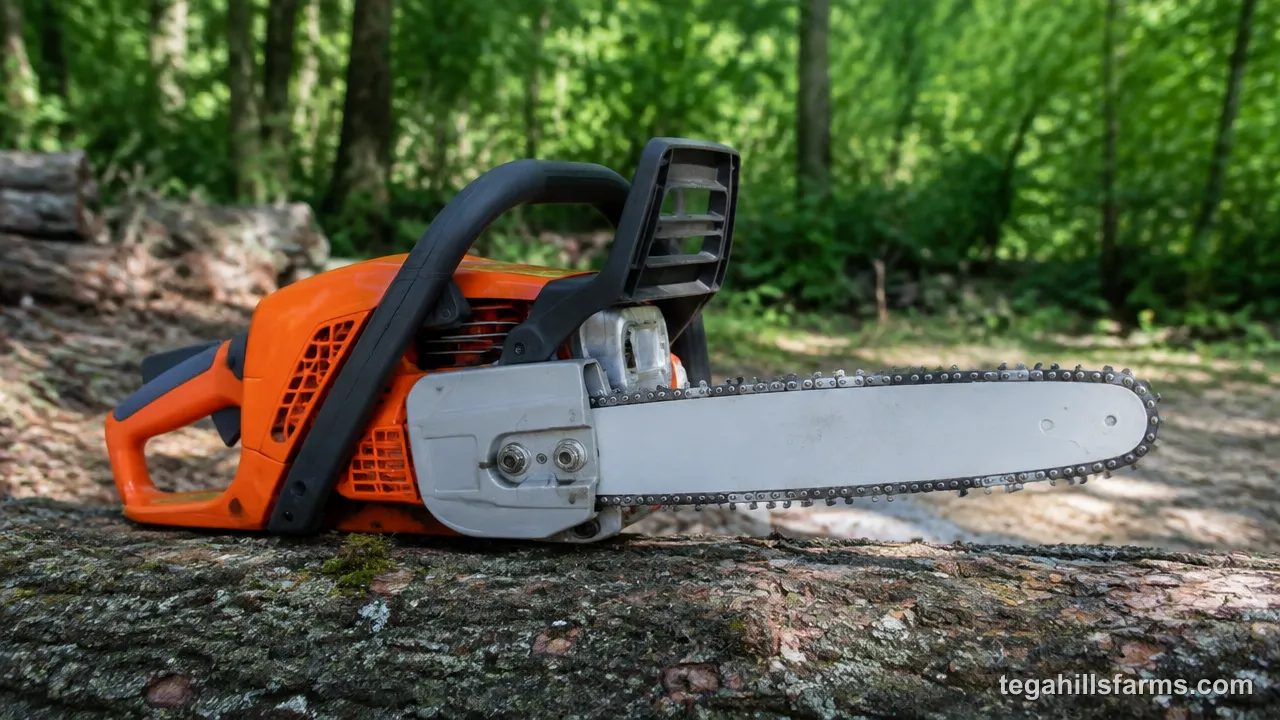
Gas, Battery or Corded: Which Power Source Fits Your Yard?
Gas gives you freedom from outlets and chargers. A battery saw gives you push-button starts and the lightest upkeep. A corded saw runs as long as you like, but only within an extension cord’s reach of the house.
On a gas saw, engine displacement in cc tells you how much torque is on tap, and a bigger engine holds chain speed in hardwood instead of bogging. That freedom costs you mixed two-stroke fuel, a carburetor that can gum up, spark plugs, a pull rope, exhaust and noise.
On a cordless saw, voltage sets how much power the motor can draw, and amp-hours set how long a pack lasts before a swap. A brushless motor gets more out of both. The battery platform often matters more than either number: if your trimmer and blower already run on one brand’s batteries, a saw on the same platform means one charger and a shelf of packs that work across the yard.
A corded saw never runs out of power. It does need an outdoor-rated extension cord and a GFCI outlet, and you spend part of every job keeping the cord clear of the chain.
How Much Do Weight and Handle Style Matter?
Weight decides how long you can cut before your arms give out. The difference shows most overhead or on a ladder, where every pound sits at the end of your reach. A saw that feels fine at waist height on a log can get hard to steady once you hold it above your chest.
Handle style changes the balance. A rear-handle saw puts your back hand behind the engine, which gives a long, stable stance for bucking and felling on the ground. A wrap-around top handle sits above the saw’s center of mass, so it balances better for pruning and tight spaces, though it still needs both hands.
Vibration dampening matters on longer sessions. Mounts between the engine and the handles keep shake from numbing your fingers, and that keeps your grip firm when you need it most. For limbs well over your head, a ladder and a chainsaw are the wrong pairing; the best pole saws let you trim from the ground instead.
Which Built-In Features Are Worth Having?
A chain brake, an automatic oiler and tool-less tensioning change everyday use the most, and missing any one of them shows up quickly in the yard.
Kickback happens when the upper tip of the bar catches wood and throws the saw up toward you. A chain brake stops the chain almost instantly, whether a jolt triggers it or your hand pushes the guard forward. Without one, the chain is still spinning when the saw reaches you.
An automatic oiler feeds bar oil while you cut. A dry chain heats the bar, stretches, dulls and wears out fast, and a saw without an oiler depends on you remembering to lubricate it.
Tool-less tensioning, by dial or automatic adjustment, lets you snug the chain in the field. Chains stretch as they warm up, and a loose one can jump off the bar mid-cut, which at best leaves you with a stopped saw and a chain to refit.
Which 14 Inch Chainsaw Fits Your Yard Job?
Battery saws suit pruning, light storm cleanup and first-time owners, while gas saws earn their upkeep on long firewood sessions and work far from any outlet.
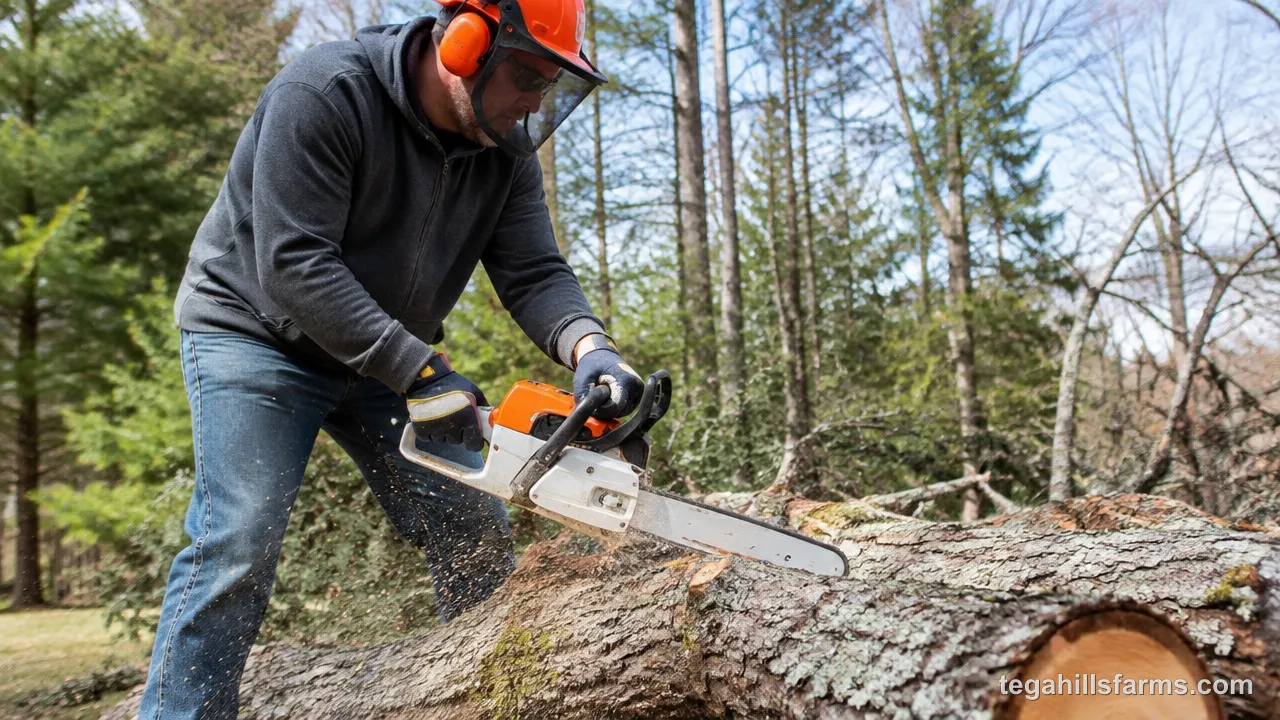
For weekend firewood and log bucking, gas pulls ahead because you refuel in seconds and keep going. The Husqvarna’s 38cc X-Torq engine and LowVib dampeners suit long sessions at the woodpile. If firewood is your main job, look at the best chainsaws for cutting firewood before you buy.
For pruning and overhead limbs, the NEO-TEC’s wrap-around top handle gives a secure grip from above or the side. The WORX is the battery choice here, with a battery level indicator that shows how much charge is left and a tool-free chain tightening system that keeps the tension right.
Storm cleanup far from an outlet comes down to runtime. The Husqvarna never waits on a charger, and on the battery side the Greenworks ships with two larger packs, so one charges back at the house while the other cuts.
A first-time owner who wants easy starts and little upkeep should lean toward the Greenworks or the Skil. The WORX makes more sense if Worx batteries already live in your garage. If you are weighing more than bar length, the best chainsaws for homeowners cover the wider range of sizes.
My call: a battery saw is enough for most yard jobs at this bar length, such as limbs, pruning and storm debris near the house. Gas is worth the upkeep once you cut firewood every season or work too far from power to recharge.
Is a 14 Inch Chainsaw Big Enough, or Should You Go Longer?
Yes for yard limbs, small trees and typical firewood rounds, but not once the wood is thicker than the bar minus a couple of inches of clearance.
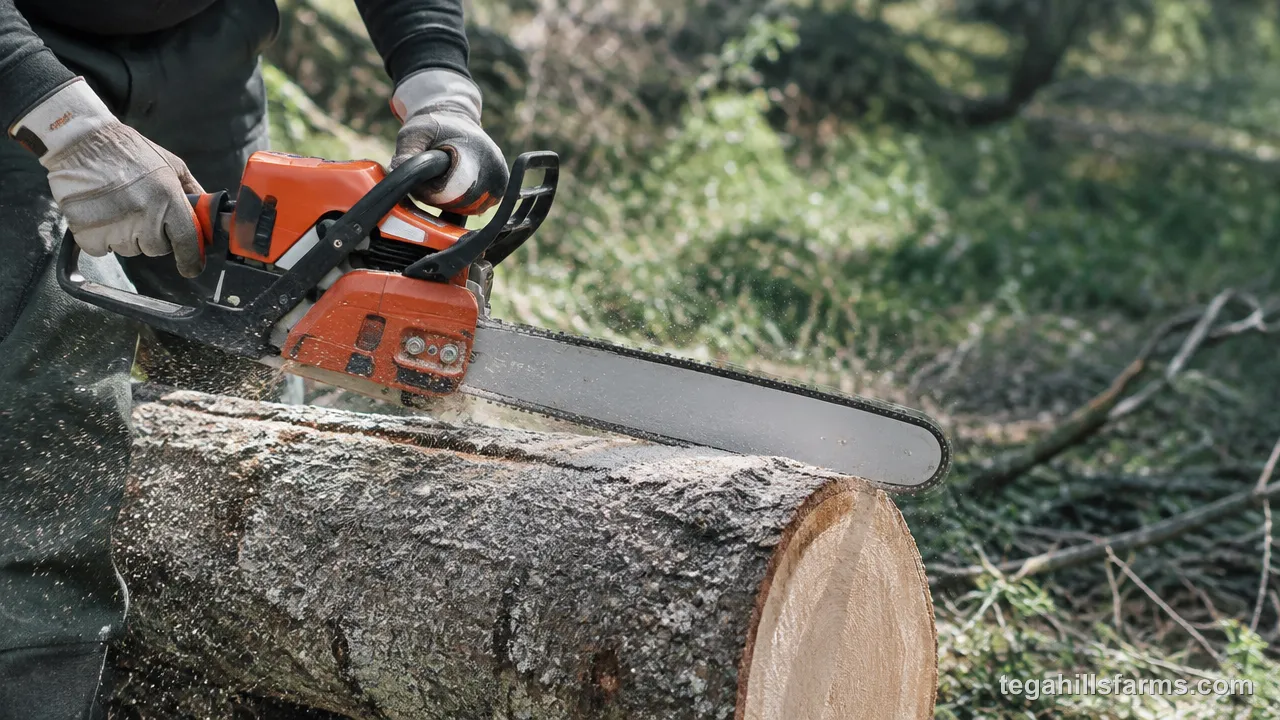
Forcing a short bar through thick wood means cutting from both sides and trying to meet in the middle. The two cuts rarely line up, the log settles onto the bar and pinches it, and the motor or engine strains against a chain that can’t clear its chips. A bar pinched near the tip also sets up kickback.
A longer bar is worth its extra weight when you regularly buck trunk sections or fell trees of real diameter. The best 16 inch chainsaws add reach for the next size of log, and the best chainsaws for cutting logs cover heavier work. For limbs, pruning and anything above waist height, a shorter saw stays easier to control.
A dull chain throws dust instead of chips, and because you have to push harder to make it cut, the saw bogs, wanders off line and kicks back more readily. Leave the bar dry or old gas sitting in the tank over winter, and next season’s first job starts with a saw that cuts crooked or won’t start at all.
How Much Upkeep Does a Small Chainsaw Need?
Every saw needs chain and bar care. The rest depends on what powers it: gas saws add fuel, carburetor and spark plug chores, while battery saws add careful pack storage. Going cordless shortens the list without emptying it, because a dull chain or a dry bar stalls a battery saw just as fast as a gas one.
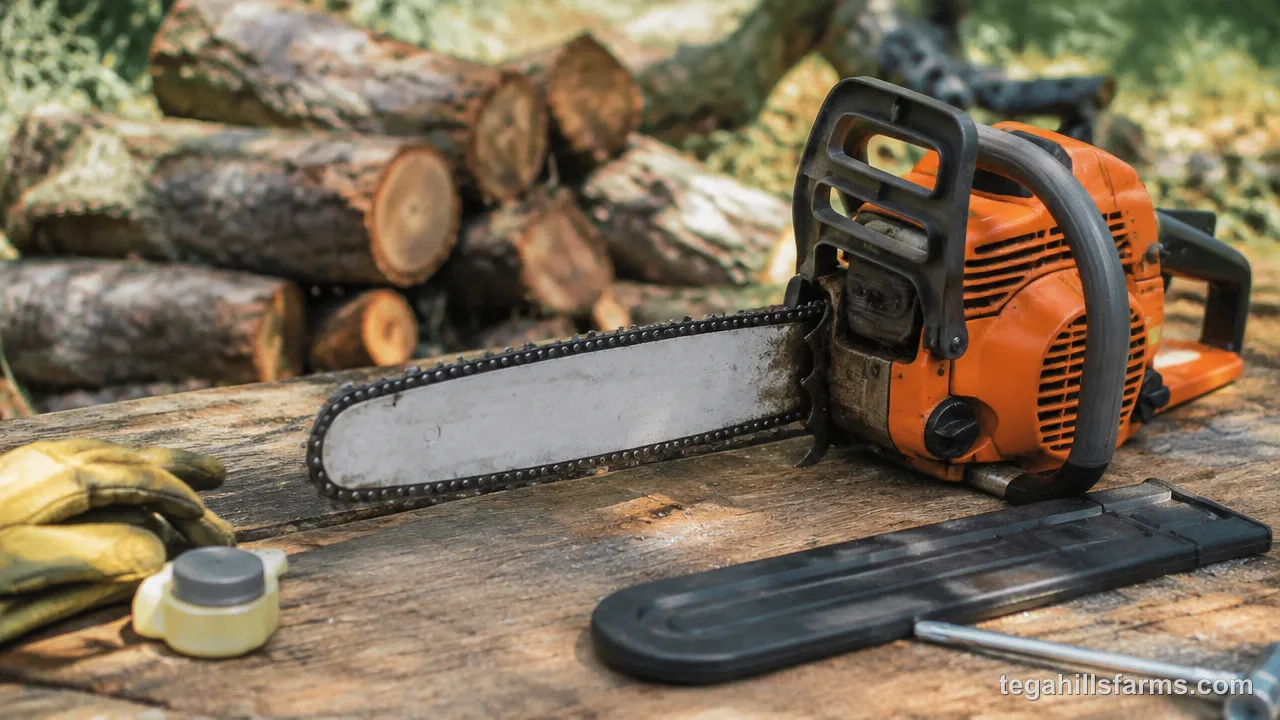
Chain Tension, Sharpening and Bar Oil
A chain needs sharpening when it throws fine dust instead of coarse chips, pulls to one side, or makes you push the saw through a cut it used to pull itself into. Sharpening beats replacing because a chain survives many sharpenings before its cutters wear too short, and a fresh edge restores the bite the chain had new.
Check tension before each use, with the saw off and gloves on. The chain should sit snug against the underside of the bar yet still pull around by hand. If it sags, it can jump off mid-cut; if it’s too tight, it drags, heats up and wears the bar.
Top off bar and chain oil every time you fill the fuel tank or swap a battery. A dry bar overheats, the rails wear, and the chain stretches faster. A round file with a file guide handles touch-ups in the yard, and bench-mounted chainsaw sharpeners make sense once you are keeping several chains in rotation.
Fuel Mix, Spark Plugs and Battery Storage Over Winter
Whether a saw starts next spring depends on how you put it away this fall. For a gas saw, mix fresh two-stroke fuel at the ratio in the owner’s manual, because old fuel separates and leaves varnish in the carburetor’s small passages. Before storage, either drain the tank and run the engine until it stalls, or add fuel stabilizer and run it long enough for treated fuel to reach the carburetor.
Check the air filter for clogging and the spark plug for fouling at the same time. Either problem turns easy pulls into a sore shoulder and a saw that only sputters.
Battery saws skip all of that, but lithium packs have their own needs. Store them partly charged rather than full or empty, and keep them indoors, away from freezing garages and hot attics, because temperature extremes shorten a pack’s life. A battery left dead in a cold shed all winter may refuse to take a charge in spring.
Is a Homeowner Saw the Same as a Pro Top-Handle Saw?
No. A professional top-handle saw is built for an arborist working in a tree all day, often from a harness, so it is compact, light and made for daily duty. Homeowner saws trade that build for lower cost, simpler controls and handling meant for occasional yard work.
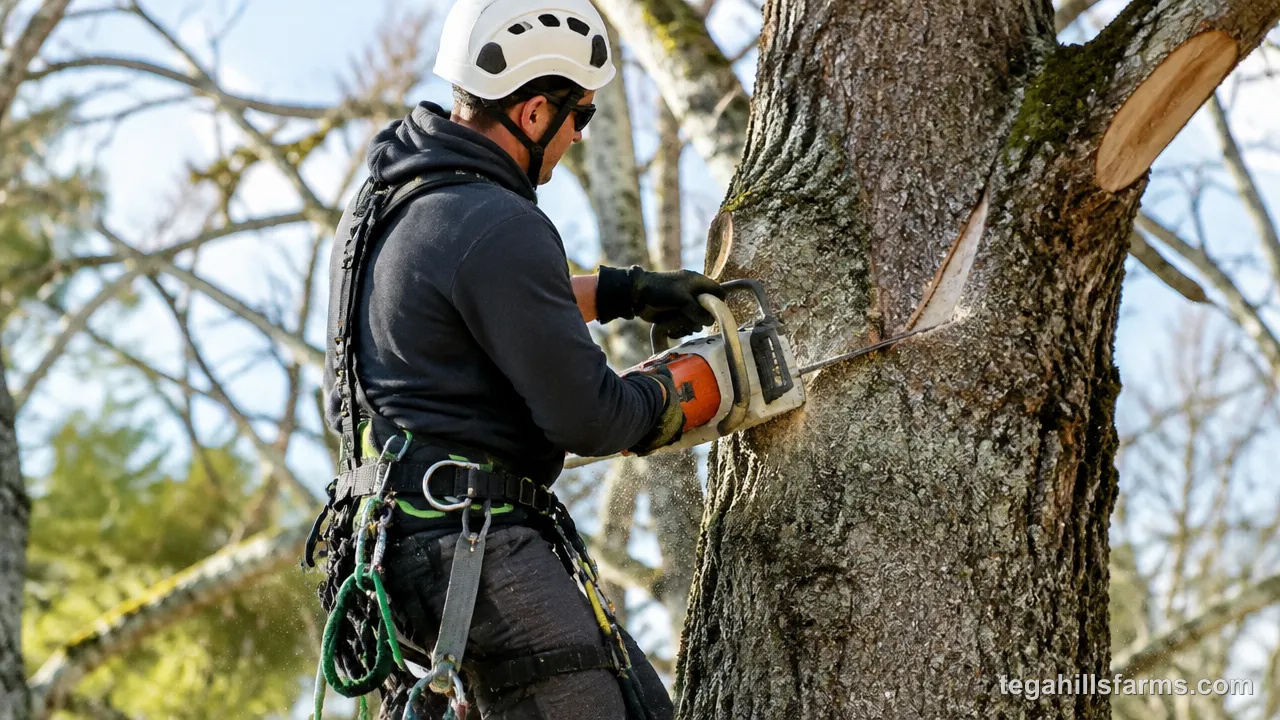
The NEO-TEC’s wrap-around top handle borrows the layout for pruning, but it stays a homeowner saw in duty and design. It gives you the overhead balance without the climbing-grade build.
A homeowner rarely needs a pro saw because the work it’s designed for, cutting aloft from a rope and saddle, is a job for trained climbers. On the ground, a pro top-handle saw offers little advantage and adds ownership and service demands that a homeowner rarely needs. If your work does put you in the canopy, the best chainsaws for arborists are a separate category with their own training requirements.
What Safety Habits Change How You Use a Small Chainsaw?
Most kickback starts at the upper quarter of the bar tip, so the habit that matters most is keeping that part of the bar out of the wood. Hold the saw with both hands, thumbs wrapped around the handles, and stand to the side of the bar’s path. Treat the chain brake as a backup, not a plan.
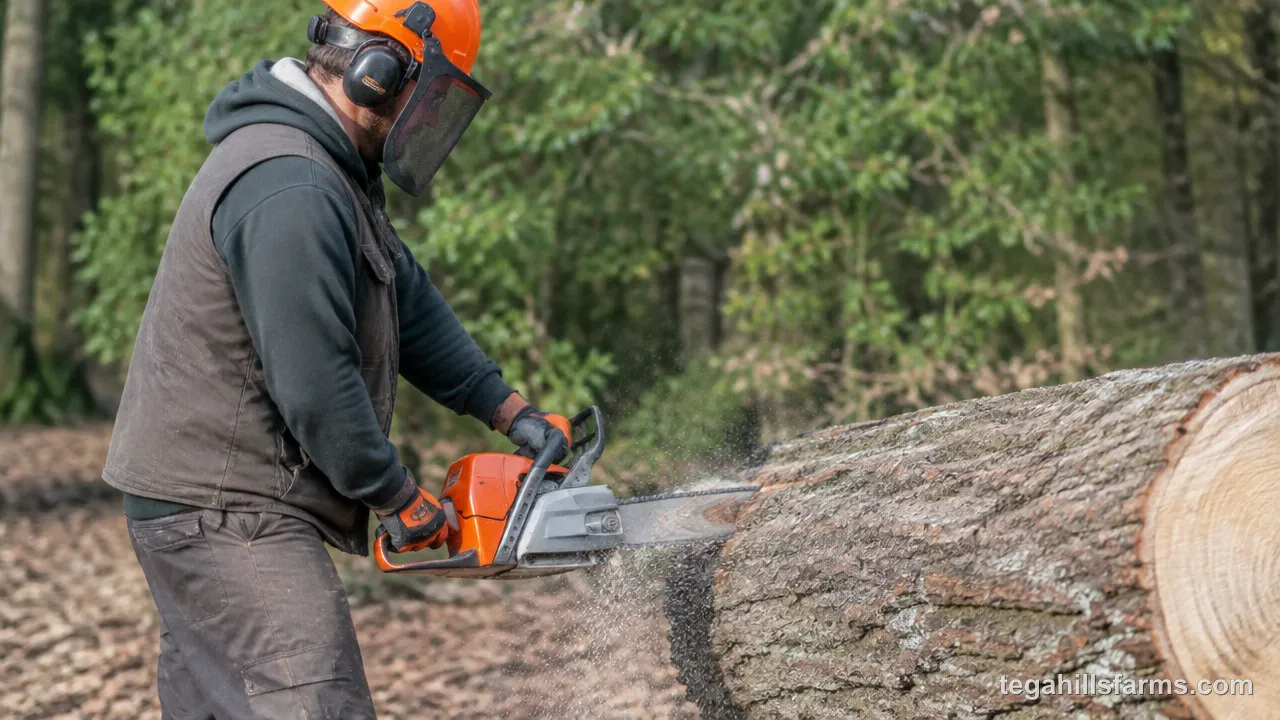
Cutting above shoulder height is a common way to lose control. The saw sits far from your body, your arms tire quickly, and a kick comes straight at your face. Bring the limb down or reach for a pole saw instead.
Run a gas saw outdoors only, because the exhaust carries carbon monoxide, which builds up quickly in a garage or shed even with the door open. Start a gas saw on the ground with the chain brake engaged, your foot through the rear handle and one hand pressing the front handle down. Drop-starting it in the air leaves a running chain swinging with nothing steadying it.
Does Where You Buy a Gas Chainsaw Matter?
Yes, mainly for what happens after the sale. A dealer typically assembles and adjusts the saw, shows you how to start it, and keeps parts and a repair bench in the back. When the saw floods, throws a chain or loses compression, you have one place to take it.
Big-box stores and online sellers lean on convenience and price. You get the saw quickly, but you handle setup yourself. When something fails, you’re either shipping the saw out or finding an independent small-engine shop that will work on that brand.
Emissions rules also affect where a gas saw can go. Some gas saws are not CARB certified and cannot be shipped to California addresses; the NEO-TEC is one of them. Check the certification before ordering so a California order doesn’t end in a cancellation.
My lean for a first gas saw is toward a seller with parts and service nearby, because a cheap repair close to home beats a long wait for a mailed part.
14 Inch Chainsaw FAQ
What size tree can a 14 inch chainsaw cut?
It cuts trees and limbs a couple of inches thinner than the bar in a single pass. That covers small yard trees, low limbs and storm debris. Thicker trunks call for cutting from both sides, which raises pinching and kickback risk, and any tree near a house or power line is a job for a professional.
Is a battery or gas chainsaw more reliable for a first-time owner?
A battery saw is the more reliable choice for a first-time owner. It starts with a button, has no carburetor to gum up and no spark plug to foul, and only needs the chain, bar oil and battery storage looked after. A gas saw is just as dependable once you keep up its fuel and maintenance routine.
Is a 14 inch chainsaw enough for firewood?
It’s enough for firewood rounds cut from limbs and small trees, which covers a typical backyard woodpile. If you heat with wood and buck thick trunk sections every season, a longer bar and a gas engine save time and strain. For occasional fireplace wood, this size handles the work comfortably.
How often does a chainsaw chain need sharpening?
Sharpen whenever the chain throws dust instead of chips or starts pulling to one side. A quick touch-up with a file after a few fuel tanks or battery charges keeps it cutting cleanly. Hitting dirt, a rock or a buried nail dulls a chain instantly, so sharpen right after any of those.
Which brands do owners trust most for gas chainsaws?
For a gas saw, I put more weight on parts and service near you than on the name on the housing. Husqvarna is the gas pick in this lineup for its X-Torq engine and LowVib dampening. Before choosing among the best chainsaw brands, ask your local small-engine shop which brands it repairs and stocks parts for.
Write Your Review
No reviews yet. Be the first to share your experience!