Best Chainsaws Brands in 2026 for Home & Farm Use Guide
The saw brands worth your money in 2026 are Stihl, Husqvarna and Echo for gas power, EGO for battery saws that come close to gas performance, and Milwaukee, Ryobi and Makita for owners already invested in one of their cordless tool families. All of them build saws a homeowner can depend on. They differ sharply in what powers them, how heavy they run and how much upkeep they ask of you.
You can judge most of the choice before you buy. Check whether the saw runs on mixed gas or a battery pack, how long a bar your wood needs, how much weight you can hold at waist height through a long session, and whether a dealer near you stocks parts for that brand.
Most buyers worry about one of two failures. One is a gas saw that won’t start after sitting all summer. The other is a battery saw that dies halfway through a downed oak. Both usually come from picking a power type that doesn’t fit the work, not from the brand name on the housing.
If you cut only a few weekends a year, the brand with a repair shop within driving distance often matters more than spec-sheet differences. A dull chain or a clogged carburetor gets fixed in days instead of weeks.
Which Chainsaw Brand Is Best for Home and Farm Use?
Stihl and Husqvarna lead for gas saws that handle farm and ranch cutting, while EGO leads for battery saws. The right brand depends on how much wood you cut and which power type fits that work.
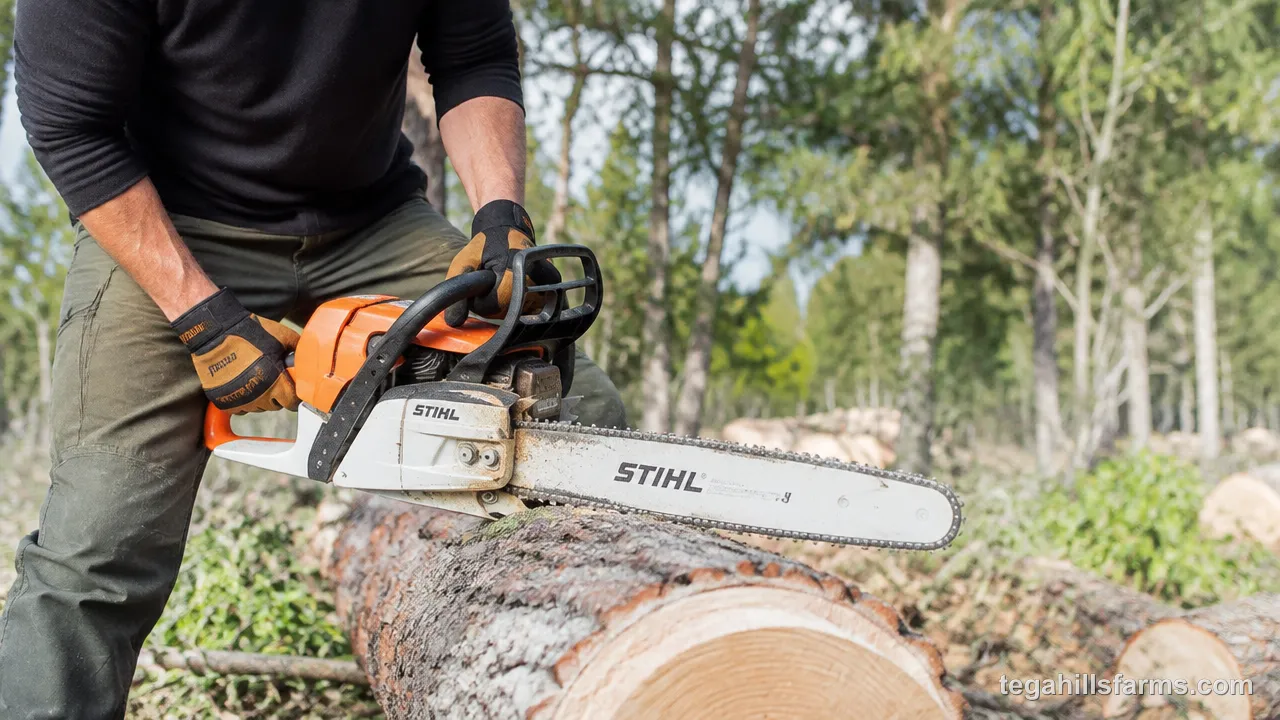
Echo belongs in the same group as the two big gas names, because its CS 590 Timber Wolf is built for the long firewood sessions farm owners face every fall. Milwaukee, Ryobi and Makita fit from the other direction. Their saws make the most sense when your garage already holds their batteries, because the pack you own decides which saw you can run without buying a second charging system.
The seven brands compare on what powers their main saws, the work each handles best, and how the saws feel in weight and noise:
| Criteria | Stihl | Husqvarna | Echo | EGO | Milwaukee | Ryobi | Makita |
|---|---|---|---|---|---|---|---|
| Main power type | Gas | Gas and battery | Gas | Battery | Battery | Battery | Battery |
| Strongest use case | Farm, ranch and firewood | Homeowner cleanup to ranch work | Firewood and land clearing | Home cutting and storm cleanup | Yard cleanup for Milwaukee tool owners | Light yard work for Ryobi tool owners | Light yard work for Makita tool owners |
| Weight and noise | Mid-size gas saws, loud | Light gas to quieter battery models | Heavy long-bar gas saw, loud | Large model heavy, far quieter than gas | Quieter than gas | Quieter than gas | Quieter than gas |
The gas brands give up quiet operation and low upkeep in exchange for power that holds steady until the tank runs dry, which is why they lead farm and ranch work. The battery brands give up run time per charge in exchange for quiet operation and trigger starts. That suits suburban lots and short cleanup jobs better than all-day bucking. Husqvarna covers both sides in a meaningful way, so a household with both a woodlot and a small yard can stay with one brand.
For model-level picks instead of brand-level guidance, the best chainsaws roundup covers individual saws across every power type.
Should You Pick a Gas or Battery Chainsaw Brand First?
Yes. Gas and battery saws suit different work: gas delivers sustained power for long farm and ranch sessions, while battery saws start with a trigger pull and run far quieter.
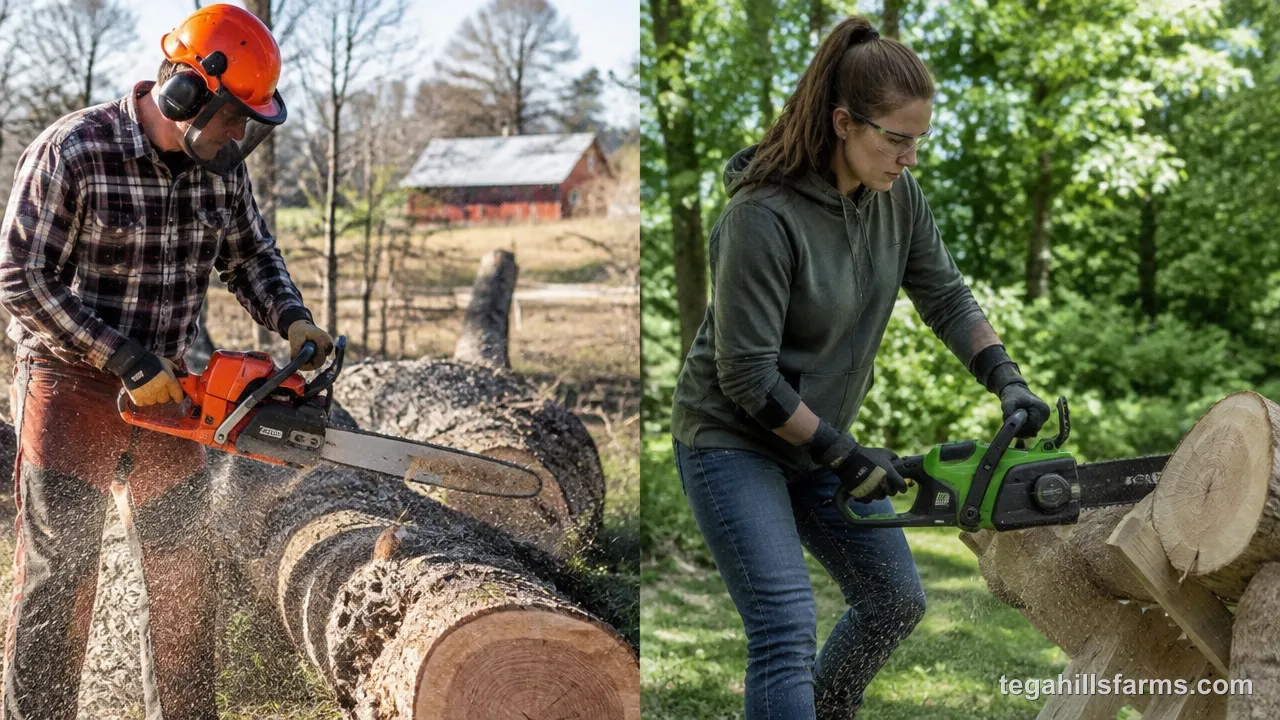
A gas saw runs a two-stroke engine on gasoline mixed with two-stroke oil, so an empty tank costs you a minute of refueling instead of an hour of charging. That endurance is why gas suits clearing fence rows, cutting storm-felled trees across a pasture and working through firewood season. The cost is upkeep. You mix fuel at the ratio in the owner’s manual, clean the air filter, replace the spark plug, and drain or stabilize the tank before storage, because old fuel gums up the carburetor and causes hard starts. Gas saws are also loud. The Husqvarna 130 registers 89 dB from 60 feet.
Battery saws reverse those trade-offs. Husqvarna’s own Power Axe 350i measures 67 dB from the same distance. You can hear that difference from the house next door, and it matters if you cut early on a weekend morning. A battery saw has no fuel to go stale and no pull cord, so one that has sat since spring starts as soon as you squeeze the trigger. Its limits are run time, since a charge ends a heavy session sooner than a fuel tank does, and platform tie-in, since the pack locks you into one brand’s tools.
Thick hardwood, long sessions and remote corners of a property point toward the best gas chainsaws. Pruning, storm limbs, small trees and close neighbors point toward the best battery chainsaws.
If you cut for hours at a stretch, start with the gas brands. If you cut in short bursts close to the house, start with the battery brands.
What Should You Look for in a Chainsaw Brand?
Six factors separate brands in real use: bar length, weight, noise and vibration, starting ease, dealer and parts support, and battery platform compatibility.
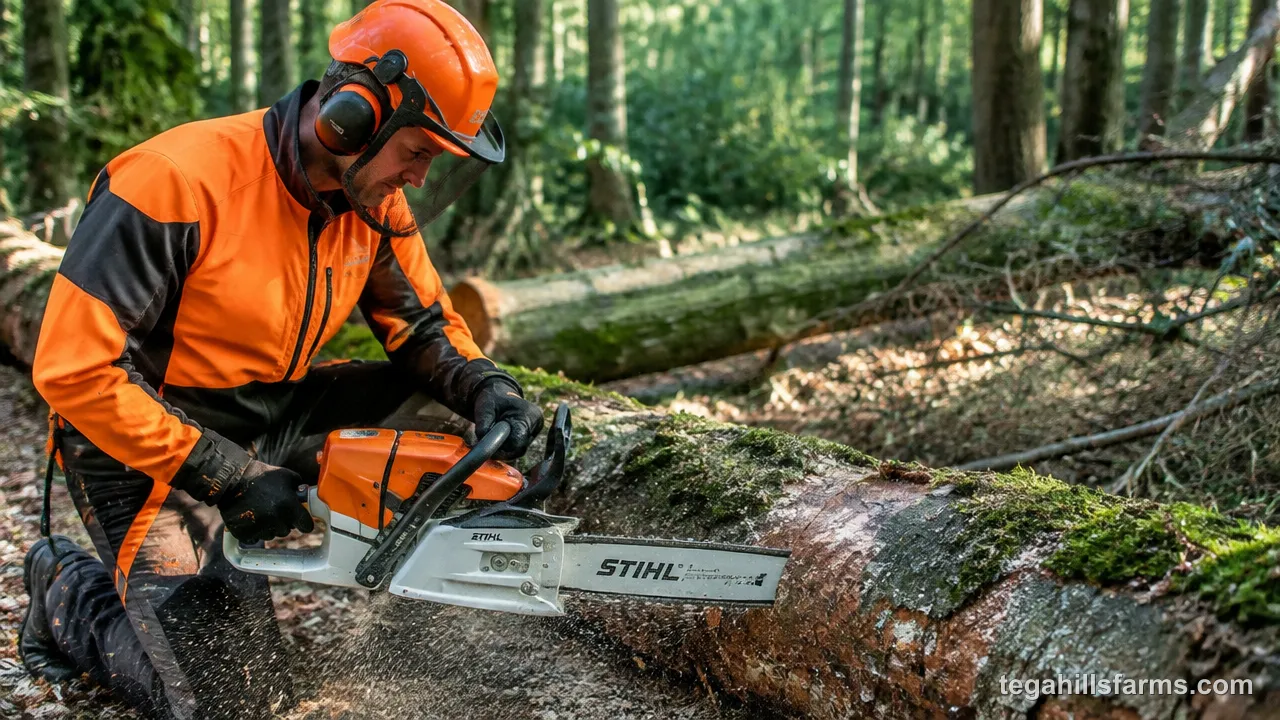
- Bar length: A bar longer than the thickest wood you cut regularly lets you finish each cut in one pass from one side. A bar much longer than you need adds weight at the tip and makes limbing awkward. This is why one brand’s lineup can suit a firewood cutter and miss someone pruning ornamental trees.
- Weight: EGO’s compact CS1201 weighs 8.8 pounds, and its 20-inch CS2005 weighs 19.1 pounds. That difference decides whether you can work at shoulder height or hold the saw through an afternoon of bucking without your forearms giving out.
- Noise and vibration: The gas Husqvarna 130 runs much louder than the battery Power Axe 350i, and gas engines send more vibration into your hands. Both add fatigue over a long session, and noise limits when you can cut near neighbors.
- Starting ease: Pull-start gas saws need a choke and priming routine, and a neglected carburetor makes starting harder. Battery saws start on the trigger.
- Dealer and parts support: A brand with a servicing shop nearby gets a bar, chain or carburetor problem fixed in days. A saw without local support can sit broken through the season you bought it for.
- Platform compatibility: For battery saws, the pack you already own often decides the brand before any spec does.
Matching these factors to saw size and engine type is the core of how to choose a chainsaw. The brand question gets easier once you know which size you need.
Which Gas Chainsaw Brands Deliver the Most Dependable Power?
Gas saws remain the default for long cutting sessions and farm and ranch work, because refueling takes a minute and the engine holds full power until the tank is empty. Stihl, Husqvarna and Echo all build saws that meet that standard. They differ in how wide each lineup runs, how much the saws weigh at the bar length you need, and whether a dealer who services the brand is within reach of your property. That last point matters more the farther you live from town.
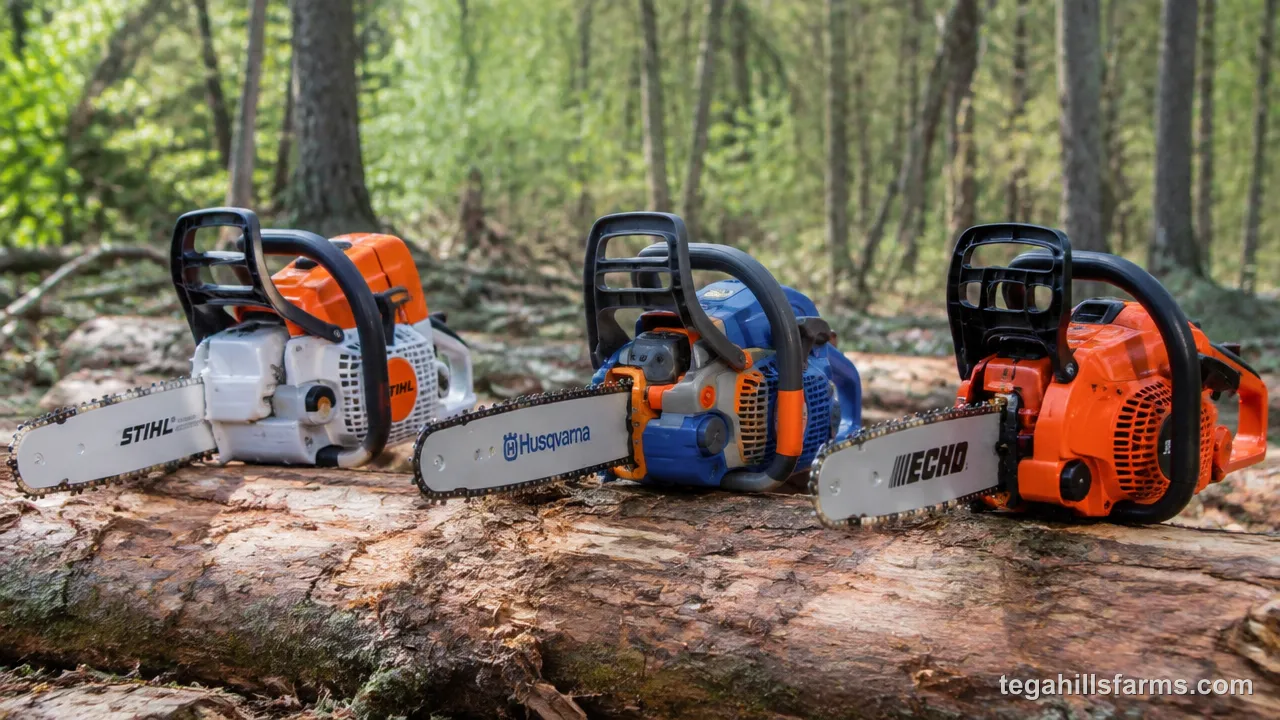
Is Stihl the Right Pick for Farm and Ranch Work?
Stihl is a strong pick for farm and ranch work if you accept gas upkeep. The MS 271 Farm Boss and the MS 391 are gas saws built for firewood, fence-row clearing and downed trees on working land. Their mid-size engines pull a longer bar through thick limbs and log rounds without stalling when the chain sinks deep.
That power changes how the job goes. A saw in this class lets you work steadily through rounds instead of nibbling around a trunk from both sides, and the time saved adds up over a winter’s supply of firewood. It also handles the thicker trunks that come down in storms across pastures and fence lines, where a light homeowner saw would labor through each cut.
The owner takes on the routine that comes with any two-stroke saw: mixing fuel, cleaning the air filter, sharpening the chain, checking bar oil, and preparing the saw for storage between seasons. Stihl sells through a dealer network, so the shop that sells you a Farm Boss is usually the one that services it, stocks its parts and can show you that upkeep.
I’d point someone who heats with a woodstove, maintains fence lines or clears storm damage on acreage toward Stihl first, especially with a dealer in the next town.
If you want a saw that starts with a button, runs quietly and needs little maintenance, Stihl’s gas lineup works against you. A battery brand fits that need better.
Is Husqvarna a Better Choice for Homeowners and Landowners?
Husqvarna serves both homeowners and landowners. Its lineup runs from the light Husqvarna 130 gas saw through the 455 Rancher and 460 Rancher for heavier farm cutting, plus the battery Power Axe 350i for owners who want a quieter cordless saw.
The 130 weighs 11 pounds dry, meaning without fuel and bar oil, and once warmed up it cuts through an 8-inch log in just over two seconds. That suits a homeowner clearing limbs after a storm or cutting back a tree line, because the saw stays manageable and still finishes cuts quickly. Its weakness is noise. At point-blank range it reaches 109 dB, so hearing protection is required and early-morning cutting near neighbors is a bad idea.
The 455 Rancher and 460 Rancher are aimed at owners who buck firewood or clear land regularly, where a light homeowner saw would labor through thick rounds. They follow the same fuel-mixing and maintenance routine as the 130, and that routine matters more when the saw runs most weekends.
The Power Axe 350i gives up some speed for quiet operation and convenience. It carries an 18-inch bar, weighs 14.5 pounds, and cuts an 8-inch log in just over five seconds in boost mode, or seven seconds with boost off. That is slower than the gas 130 on the same log, but you skip the pull cord, the fuel can and most of the noise.
The trade-off within the brand is noise against ease of use. The 130 suits homeowners comfortable with a small engine. The Ranchers suit landowners with steady heavy cutting. The 350i suits anyone who values easy starting and quiet over raw speed. Comparing these models side by side is simpler among the best Husqvarna chainsaws.
Does Echo Give You Pro-Level Cutting Without the Pro Premium?
Echo delivers near-pro gas cutting through the CS 590 Timber Wolf, a saw with a 20-inch bar, a chain speed of 65 ft/s and an average cutting time of 4.9 seconds. It’s the brand to consider when you want a long-bar gas saw for heavy firewood work without moving into a professional-grade lineup.
EGO’s battery CS2005, with a bar of the same length, runs its chain faster and finishes cuts sooner than the CS 590. That shows how far large battery saws have come. The Echo still keeps the gas advantages that count on a woodlot: a one-minute refuel and power that doesn’t fade the way a draining pack does across a long day.
At 18 pounds, the CS 590 is a saw you rest against the log and let do the work, not one you hold up at shoulder height. That suits bucking firewood rounds and clearing downed trees, where the long bar lets you cut wide trunks in one pass from one side. The owner accepts the usual gas routine of fuel mixing, air filter cleaning and chain sharpening, plus the noise of a large two-stroke engine.
Echo suits firewood cutters and landowners clearing brush and storm damage who want strong cutting speed from a gas saw. It doesn’t suit someone pruning small trees, cutting at shoulder height, or working in a neighborhood where engine noise draws complaints. If a smaller saw would fit your property better, the best Echo chainsaws include lighter options from the same lineup.
Which Battery Chainsaw Brands Are Worth Buying Into?
Choosing a battery saw brand really means choosing a battery platform, because the same pack runs that brand’s mowers, trimmers and blowers. Once you buy in, each cordless tool you add later costs less if it shares the pack and more if it doesn’t. Run time per charge and real cutting speed tell you more about a battery saw than the voltage or motor ratings on the box, because those two traits decide whether the saw finishes your job before the pack runs out.
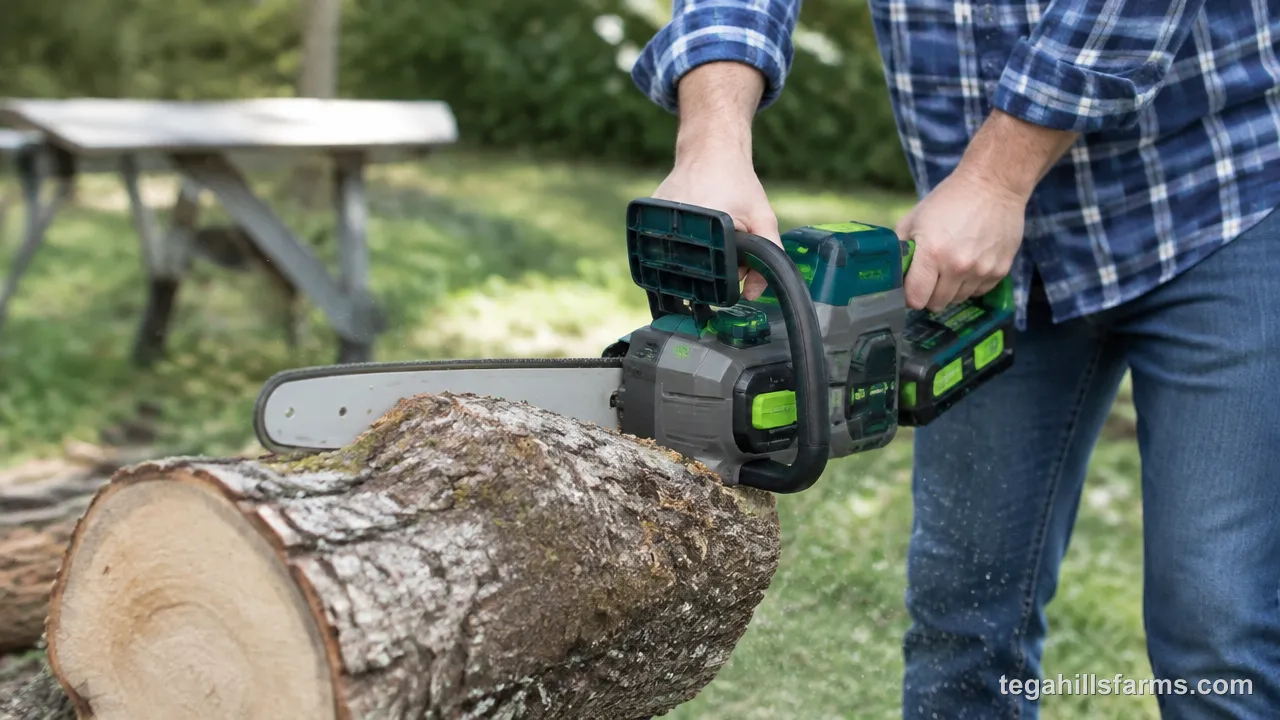
Can EGO Battery Chainsaws Replace Gas for Most Yards?
EGO can replace gas in most homeowner yards. Its CS2005 pairs a 20-inch bar with a chain speed of 82 ft/s and an average cutting time of 3.45 seconds, which puts it ahead of a full-size gas saw like the Echo CS 590 on cutting speed. Heavy, all-day farm cutting is where it falls short, because a battery pack runs down sooner than a gas tank, and a refill takes far less time than a recharge.
That speed matters most on firewood rounds and storm-downed trunks, where a faster chain clears each cut before your arms tire. The CS2005 is still a full-size saw and slightly heavier than the Echo CS 590, so it works best at waist height on the ground, not at shoulder height.
The CS1201 takes the opposite approach, with a 12-inch bar, a chain speed of 66 ft/s and an average cutting time of 8.1 seconds. It cuts more slowly, but its light build makes it the saw to grab for limbing a fallen branch, pruning, or cutting small trees along a fence. For many suburban owners, that type of work makes up most of their cutting.
On heavier farm jobs, one pack may not carry you through clearing a fence line or bucking a pile of rounds. Buying into EGO for that work means planning for extra batteries and charging time between sessions.
EGO suits homeowners who cut storm debris, small trees and firewood for a fire pit or supplemental woodstove heat, and who want quiet operation without engine upkeep. Owners already using EGO mowers or blowers get the most from the platform, and the best EGO chainsaws show where each model fits. Farm and ranch owners who cut daily or for hours at a time should stay with gas.
Are Milwaukee, Ryobi and Makita Smart Choices if You Already Own Their Batteries?
Milwaukee, Ryobi and Makita are smart choices when you already own their batteries. A saw bought as a bare tool runs on the packs and charger already in your garage, which lowers the cost of getting started and keeps charging on one system. For a homeowner doing occasional cleanup, that advantage outweighs most differences between their saws.
Which brand fits depends on the tools you already use. Milwaukee’s cordless line leans toward contractors and trade users, so its saws fit someone who already runs Milwaukee drills and wants a saw for storm cleanup at home or on a job. Ryobi covers a wide spread of homeowner yard and shop tools, which makes its saws a natural add-on for light pruning and limb cleanup. Makita’s cordless platform is common among contractors and woodworkers, and its saws suit the same light yard work for owners already invested in those packs.
Compared with dedicated outdoor-power brands like EGO or Husqvarna, most of these platform saws are aimed at lighter duty. They handle storm limbs and small trees well, but daily farm cutting or a winter’s supply of firewood calls for a saw built for that workload. If Milwaukee packs already fill your shelf, the best Milwaukee chainsaws separate the saws meant for yard cleanup from the ones built for heavier cutting.
Which Chainsaw Brand Should You Choose for Your Situation?
Match the brand to your workload, wood thickness, and tolerance for noise and upkeep: gas brands for long farm sessions, EGO for quiet battery cutting, and your existing platform when you already own its batteries.
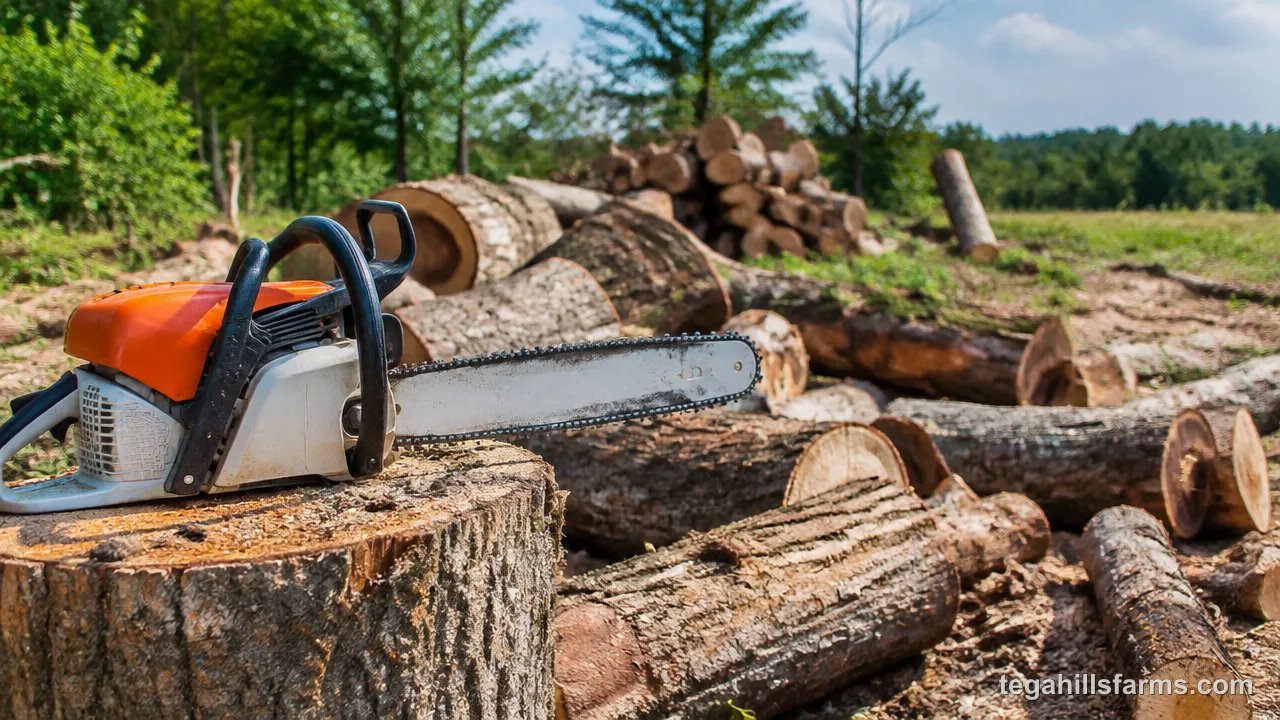
- Choose Stihl if you work acreage, cut thick hardwood for heat, and want gas power backed by a local dealer who services what you buy.
- Choose Husqvarna if your needs range from light homeowner cleanup to heavy ranch cutting, or if your household wants both a gas saw and a quiet battery saw from one brand.
- Choose Echo if you buck large firewood rounds and want a long-bar gas saw with strong cutting speed, and you don’t mind mixing fuel and wearing hearing protection.
- Choose EGO if you cut storm debris, firewood and small trees on a suburban or small rural lot and want quiet, trigger-start cutting without engine upkeep.
- Choose Milwaukee, Ryobi or Makita if their batteries already power your drills or yard tools and your cutting stays at limbs, pruning and storm cleanup.
As your property grows and your wood gets thicker, gas becomes the better fit, because long sessions and big trunks drain packs faster than a fuel tank. Close neighbors and little patience for maintenance favor battery, because quiet operation and reliable starts matter more than endurance on a small lot. A suburban owner usually lands among the best chainsaws for homeowners. Someone clearing fence lines and pasture trees should compare the best chainsaws for ranch use, where saw size and engine power carry more weight than brand loyalty.
A battery chainsaw rarely stays the only cordless tool in the garage, because the same pack fits that brand’s mower, string trimmer and leaf blower. If you pick a saw on cutting speed alone and your next mower runs on a different pack, you end up with two chargers, two sets of batteries and tools that can’t share power.
What Happens to Your Battery Investment if You Switch Brands?
Switching brands strands every pack and charger you already own, because one brand’s batteries don’t fit another brand’s tools. A shared platform saves money as long as you stay with it and costs you as soon as you leave.
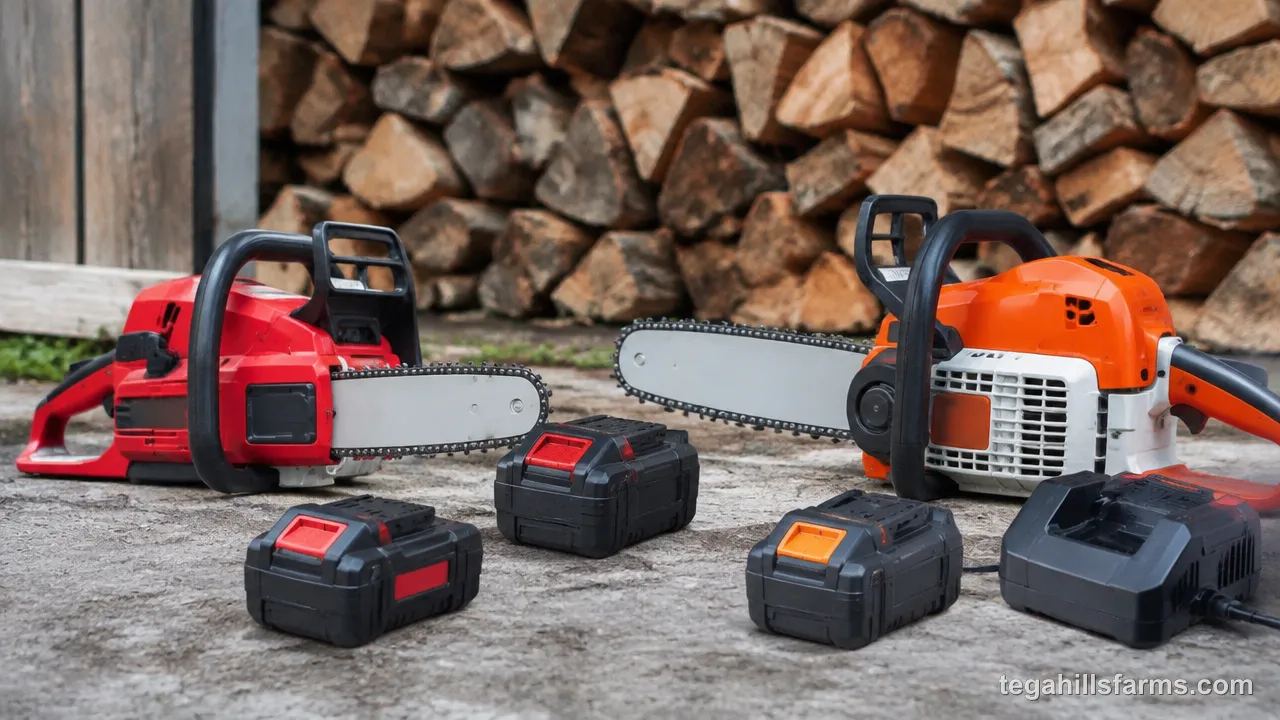
Before buying, list the cordless outdoor tools you expect to own in the next few years, such as a mower, string trimmer, leaf blower and hedge trimmer. Then check that the brand makes each one in a version you’d actually want. A platform with a strong chainsaw but a weak mower only pays off if you’d buy that mower anyway.
A single-purpose choice can still win for a heavy user. If cutting is your main job and yard tools are secondary, buy the saw that handles your wood best and accept a second battery system. Settling for a weaker saw just to match a pack you already own leaves you fighting the saw every time you cut.
Are Budget Chainsaw Brands Like VEVOR and Troy-Bilt Worth the Risk?
Budget brands like VEVOR, Troy-Bilt and BILT HARD can make sense for occasional light cutting, such as a few storm limbs a year. They become a wasted purchase when you cut often. How frequently you use the saw decides the risk more than anything else.
A few signs suggest a saw may wear out early or be hard to keep running: replacement bars, chains and filters that are hard to find, no repair shop in your area that works on the brand, and thin owner documentation on maintenance. A saw that needs one part you can’t get sits useless no matter how well it cut on the first day.
For a few cleanup sessions a year, a budget saw kept clean and sharp can do the job. For firewood, land clearing or weekly cutting, a brand with established parts support keeps the saw working season after season.
Chainsaw Brand FAQs
Is Stihl or Husqvarna more reliable?
Both build gas saws with long reputations for dependability, so reliability depends more on maintenance than on the brand name. Fresh or stabilized fuel, a clean air filter and a sharp chain keep either one running. The practical tiebreaker is service: buy the brand with a dealer near you, because quick access to parts and repairs keeps a saw working.
Can battery chainsaws cut as fast as gas saws?
Large battery saws can match or beat some gas saws. EGO’s 20-inch CS2005 cuts faster than the gas Echo CS 590 with a bar of the same length. Smaller battery saws cut more slowly, and every battery saw stops when its pack runs out, so gas still leads for long cutting sessions.
Which chainsaw brand is best for beginners?
EGO, or a battery saw from a platform you already own, is the easiest start. Trigger starting removes the choke and pull-cord routine, and lower noise makes learning less intimidating. A light gas saw like the Husqvarna 130 suits a beginner willing to learn fuel mixing and basic small-engine care from the start.
How do you keep a chainsaw ready for the season?
Keep the chain sharp, check bar oil before each use, and clean the air filter and bar groove after cutting. For gas saws, drain the tank or add stabilizer before storage. For battery saws, store packs indoors at the charge level the manufacturer recommends. Chainsaw sharpeners let you touch up a dull chain at home between shop sharpenings.
Do you need a local dealer for your chainsaw brand?
A local dealer matters most for gas saws, which need occasional carburetor, ignition and bar work that many owners prefer to hand off. Battery saws need less service, but a nearby source for chains, bars and packs still saves weeks of downtime during storm season, when demand for repairs and parts runs high.
More Guides on Best Chainsaw Brands
- Best Greenworks Chainsaws
- Best DeWalt Chainsaws
- Best Makita Chainsaws
- Best Ryobi Chainsaws