

Our top picks for the best professional chainsaws in 2026 are the PROYAMA 68cc Gas Chainsaw 22″ 24″ Bar (Best Overall), the Makita XCU04PT1 16″ Chain Saw Kit (Best Cordless), the Husqvarna 460 Rancher 24 Inch (Best Easy-Start), the Husqvarna 555 (Best Premium) and the Husqvarna 545 Mark II (Best for Professionals).
The choice among them comes down to four things: how much engine output you need for the wood you cut, how much weight you can hold through a long day, which bar range the saw accepts, and how reliably it starts and stays cool. Gas and battery power handle those demands differently, so the power source shapes everything else.
The real risk is buying the wrong amount of saw. A heavy pro saw that only comes out for storm cleanup adds fatigue and engine upkeep you don’t need. An underpowered saw bogs down in dense hardwood and wears its chain quickly.


Size the saw to the wood you cut every week, not to the biggest trunk that might come down once. The recommended bar range is the fastest way to check that fit.
What Makes a Chainsaw Professional-Grade?
Pro saws combine high engine output for their weight with magnesium crankcase and chain brake construction, plus vibration, cooling and air-filtration systems built for full days of cutting. A homeowner saw runs for short sessions a few times a season. A pro saw runs most of the day, so heat, dust and vibration are the real enemies.
That workload explains where pro models spend their engineering. Cooling systems keep the engine from overheating during long runs. Centrifugal pre-cleaning throws dust away from the air filter before it can clog. Dampeners isolate the handles from the engine’s shaking.
An inertia-activated chain brake stops the chain when kickback snaps the bar upward, even if your hand never reaches the brake handle. Field service matters too. Side-mounted chain tensioning and easy access to the filter keep you cutting instead of hunting for tools.
If you’re still weighing whether you need a professional-tier saw at all, our guide to the best chainsaws compares every category side by side.
What Should You Look for in a Professional Chainsaw?
A saw holds up in daily work when it is matched to the wood you cut most often, not when it simply has the biggest spec sheet. A mismatch shows up fast in either direction. An underpowered engine stalls in dense oak and slows every job. An oversized saw wears out your arms long before the woodpile shrinks.
How Much Engine Power Do You Need?
The right amount is whatever pulls the bar length your regular cuts demand. Larger engines drive long bars through hardwood and big logs. Mid-size engines handle limbing and general cutting with less weight to carry. Displacement, measured in cubic centimeters (cc), sets how much fuel and air each stroke of a two-cycle engine burns, and that sets the torque available to keep the chain at speed under load.
Horsepower and torque show up in the cut itself. When a long bar sinks into dense oak, the chain meets more wood at once. An engine without enough torque drops RPM, slows the chain and stalls, which is why each saw’s recommended bar range rises with engine size. Husqvarna’s X-Torq design also holds power at lower RPM, so the chain keeps pulling as the cut loads it.
Bigger is not automatically better. Extra displacement adds weight to every cut. A big saw running a short bar for limbing carries that weight without ever using the power.
Why Do Weight and Handling Matter?
A heavier power head wears down your arms, shoulders and back faster, and a tired operator loses control of the bar. Balance and handle design shape how that weight actually feels. A saw that sits level in the hand and keeps vibration away from the grips is easier to steer than its weight alone suggests.
The trade-off is power. Larger engines and longer bars add pounds, so a saw that makes short work of big logs turns into a chore over a full day of limbing. Offset front handles help by keeping your wrist in a more natural position when the bar is horizontal. If most of your work is pruning and limbing rather than bucking, the best lightweight chainsaws give up some bar capacity in exchange for far less strain.
Which Bar Length and Chain Setup Fit the Job?
The guide bar sets the diameter of wood you can cut in a single pass. Each saw’s recommended range tells you which bars its engine can actually power. A bar slightly longer than the logs you cut most often gives clean, single-pass cuts. Larger trunks can be cut from both sides with careful technique, but that approach is slower and carries more risk.
Running a bar above the recommended range forces the engine to pull more chain through more wood than it was built for. The chain slows, the clutch works harder and the engine wears out sooner. Running a bar below the range simply leaves the saw’s power unused.
Chain pitch and gauge must match both the bar and the drive sprocket. Pitch is the spacing between drive links. Gauge is the thickness of the drive links that ride in the bar groove. A mismatched chain either sits loose or binds. When it’s time to upgrade or replace, the best chainsaw bars list the pitch, gauge and drive link count they fit.
How Do Starting, Cooling and Vibration Control Affect Daily Use?
Easy-start systems, automatic carburetor tuning, centrifugal air cleaning and vibration dampeners each remove a common cause of lost cutting time. Reduced-effort starting, such as Husqvarna’s Smart Start, cuts down on hard pulls on cold mornings. A combined choke/stop control lowers the chance of flooding the engine.
AutoTune adjusts the fuel mixture as temperature, altitude and fuel quality change. That keeps the engine from running lean and hot, or rich and sluggish, as conditions shift through the day. Centrifugal air cleaning spins larger dust and chips out of the intake air before they reach the filter, which matters in dusty storm cleanup, where a clogged filter starves the engine.
Vibration dampeners isolate the handles from the engine and reduce the hand and arm strain that builds over long sessions.
5 Best Professional Chainsaws for Timber, Tree Care and Firewood
The professional chainsaws I’d recommend are the PROYAMA 68cc Gas Chainsaw 22″ 24″ Bar, the Makita XCU04PT1 16″ Chain Saw Kit, the Husqvarna 460 Rancher 24 Inch, the Husqvarna 555 and the Husqvarna 545 Mark II. Brand matters less here than engine class, recommended bar range, weight and the choice between gas and battery. The three Husqvarnas all use X-Torq engines and Smart Start, yet they cover very different work, from light limbing to felling with a long bar. Landowners cutting big timber, tree care crews, firewood cutters and anyone who wants a cordless option will each find a fit.
#1 PROYAMA 68cc Gas Chainsaw 22″ 24″ Bar — Best Overall
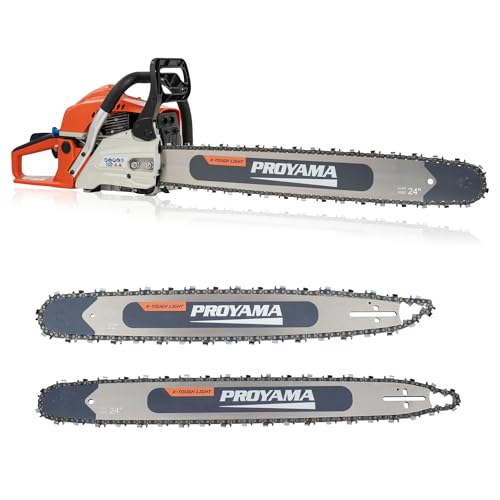
If you buck big logs and want one gas saw that runs a long bar, the PROYAMA pairs a 68cc, 4.5HP two-cycle engine with both 22-inch and 24-inch guide bars in the box. Plan on carrying real weight, though.
Key Specs:
- Engine: 68cc, 4.5HP 2-cycle
- Guide bars: 22-inch and 24-inch included
- Chain brake and case: magnesium alloy
- Weight: 17 lb
- Model: PCS68X
Detailed Review:
The engine is what sets this saw apart in heavy work. Its torque keeps the chain moving at full bar depth in thick hardwood, where a smaller engine bogs down and forces you to ease off the throttle. Because two bars come with it, the 22-inch can handle trimming and smaller lumber while the 24-inch takes over on large logs and thick branches.
The chain brake and case are magnesium alloy, which resists deformation and wear when the saw gets pinched, bumped against a log or worked hard all afternoon. A bent brake or a cracked case is the kind of failure that ends a cutting day, so this hardware matters more than any headline number.
Weight is the trade-off. At 17 lb, it outweighs the Husqvarna 460 Rancher, which runs a 60.3cc, 3.6HP engine at 13.2 lb. You gain displacement and horsepower but carry noticeably more on every cut. I’d point this saw at bucking on the ground, where the log takes the weight instead of your forearms.
The ignition system is built for quick starts, even in cold weather. A simplified internal layout with wear-resistant parts cuts down on tuning, oil consumption and repair visits between jobs.
Pros:
- Large two-cycle engine pulls steadily through thick hardwood.
- Includes both 22-inch and 24-inch guide bars.
- Magnesium alloy chain brake and case resist wear.
- Ignition designed for quick starts in cold weather.
Cons:
- Its weight wears on your arms during limbing.
- Full-size power head feels awkward for overhead trimming.
Who It’s For:
Landowners who buck their own firewood or clear downed hardwood will get the most from this saw, because the engine and long bar option pull through thick rounds without stalling. If you mostly limb or work above waist height, look elsewhere; the Husqvarna 460 Rancher weighs less and is easier to hold out.
Editor’s Verdict:
Plenty of engine and two bars make this a capable bucking saw for big wood, as long as you accept carrying the extra weight.
#2 Makita XCU04PT1 16″ Chain Saw Kit — Best Cordless
Cutters tired of fuel cans and pull cords get a quiet alternative here. Its direct-drive brushless motor runs on two 18V LXT batteries and delivers power on par with a 32cc gas chain saw, so you skip fuel mixing, pull starts and exhaust entirely.
Key Specs:
- Motor: Makita-built Outer Rotor BL Brushless, direct drive
- Power: comparable to a 32cc gas chain saw
- Batteries: two 18V LXT Lithium-Ion
- Chain speed: 0–3,940 FPM, variable speed trigger
- Chain adjustment: tool-less
- Model: XCU04PT1
Detailed Review:
Battery power changes how a saw fits into the day. With no fuel to mix, no pull cord and no emissions, the Makita starts the moment you squeeze the trigger. It also runs quietly enough for early work near houses or around a client’s yard.
The direct-drive brushless motor delivers power on par with a 32cc gas saw. The Husqvarna 545 Mark II, by comparison, runs a 50.1cc engine. That means the Makita gives up cutting muscle in large hardwood in exchange for quiet operation and far less routine upkeep.
The variable speed trigger lets you start a cut slowly, then bring the chain up to full speed, which gives clean control when notching or trimming small limbs. Tool-less chain adjustment lets you retension a stretched chain by hand in the field, without digging out a scrench.
Runtime is the real limit. The saw draws from two 18V LXT batteries, so all-day cutting depends on spare packs and a charger close by, and work stops whenever the packs drain. Staying on the 18V LXT platform softens that if you already own Makita batteries.
Pros:
- No fuel mixing, pull cord or exhaust fumes.
- Variable speed trigger gives control at the start of cuts.
- Tool-less chain adjustment speeds retensioning in the field.
- Shares batteries with other Makita 18V LXT tools.
Cons:
- Power comparable to a 32cc gas saw limits big-wood work.
- Long cutting days require spare batteries and recharging.
Who It’s For:
Crews and homeowners who already run Makita 18V LXT tools get the easiest fit, since the batteries move between tools. It suits quick cleanup, limbing near houses and jobs where noise or fumes are a problem. If you fell large hardwood all day, a gas saw will serve you better.
Editor’s Verdict:
Choose it for quiet, fuel-free cutting on lighter jobs, and keep a gas saw around for long sessions in large hardwood.
#3 Husqvarna 460 Rancher 24 Inch — Best Easy-Start
Anyone who dreads the pull cord gets relief here. Smart Start fires its 60.3cc X-TORQUE engine with minimal effort, and a combined choke/stop control lowers the risk of flooding it.
Key Specs:
- Engine: 60.3cc, 3.6HP X-TORQUE 2-cycle
- Recommended bar length: 13–24 in
- Weight: 13.2 lb
- Front handle: 7-degree offset with LowVib
- Air filtration: Air Injection centrifugal cleaning
Detailed Review:
Smart Start reduces the pull effort needed to fire the engine. The combined choke/stop control puts starting on a single lever, which cuts down on the flooded-engine misfires that waste the first minutes of a job.
The X-TORQUE engine holds its power at lower RPM, so the chain keeps pulling as a cut loads it instead of slowing as soon as the bar sinks deep. Compared with the Husqvarna 545 Mark II, this saw carries a larger 60.3cc engine and accepts bars up to 24 inches instead of 20, for only slightly more weight.
Air Injection keeps larger debris away from the filter, which protects the engine during dusty storm cleanup. The offset front handle and LowVib dampening make the saw easier to steer through long bucking sessions, especially with a bar near the top of its range.
The inertia-activated chain brake engages on kickback. I’d steer this saw toward owners who cut often enough to need gas power but don’t run a saw every day.
Pros:
- Smart Start fires the engine with little pull effort.
- Combined choke/stop control lowers flooding risk.
- Accepts bars from 13 to 24 inches.
- Air Injection keeps larger debris away from the filter.
- LowVib and offset handle ease long sessions.
Cons:
- Running it with a full-length bar adds strain on long days.
- Gas engine still needs fuel mixing and regular upkeep.
Who It’s For:
Part-time cutters who need real gas power but hate wrestling a pull cord are the natural match. It handles firewood, storm cleanup and felling mid-size trees, and the offset handle keeps long sessions manageable. If you limb all day, you may prefer a saw designed around that one job.
Editor’s Verdict:
This Husqvarna starts easily, keeps pulling at low RPM and accepts long bars, making it a dependable gas saw for owners who cut often but not daily.
#4 Husqvarna 555 — Best Premium
Felling crews wanting an engine that tunes itself should consider the 555. Its AutoTune carburetor adjusts engine performance to any environment, while a magnesium crankcase and three-piece crankshaft back up a 59.8cc, 4.16HP X-Torq engine built for long service.
Key Specs:
- Engine: 59.8cc, 4.16HP X-Torq
- Recommended bar length: 18–24 in
- Weight: 13 lb
- Construction: magnesium crankcase, three-piece crankshaft
- Chain: Husqvarna X-Cut
- Tensioning: side-mounted
Detailed Review:
AutoTune keeps the engine running right as conditions change, so you don’t stop for carburetor adjustments when the weather turns. Smart Start keeps starting low-effort. The side-mounted chain tensioner sits where you can reach it without flipping the saw over.
The build is where the premium price goes. A magnesium crankcase and three-piece crankshaft stand up to the stress of daily felling. The X-Torq engine’s cooling capacity is aimed at extended engine life rather than short bursts of work, and an X-Cut chain comes fitted.
Compared with the Husqvarna 545 Mark II, the 555 steps up from 3.6HP to 4.16HP, and its recommended bar range runs 18 to 24 inches instead of 13 to 20. That extra reach lets you take small and midsize trees with fewer cuts, while the weight stays nearly the same. The catch is the 18-inch minimum, which rules out the short bars that make limbing quick.
The inertia-activated chain brake reduces the likelihood of injury from kickback. I’d reserve this saw for cutters who fell regularly enough to put that construction to work.
Pros:
- AutoTune keeps engine settings right without manual adjustment.
- Magnesium crankcase and three-piece crankshaft built for durability.
- X-Torq engine has strong cooling capacity for long life.
- Side-mounted tensioning makes chain adjustments simple.
- Ships with a Husqvarna X-Cut chain.
Cons:
- Its 18-inch minimum bar rules out short limbing bars.
- Premium price is hard to justify for occasional cutting.
Who It’s For:
Professional cutters who fell and buck small and midsize trees regularly, and who want an engine that tunes itself, will get the most from it. If you limb with short bars, the Husqvarna 545 Mark II accepts a shorter bar range.
Editor’s Verdict:
Expect pro-level construction and self-tuning performance that justify its premium price for regular felling work.
#5 Husqvarna 545 Mark II — Best for Professionals
Tree care crews get a slimmed-down saw built for exactly their work. At 12.64 lb, with a 50.1cc X-Torq engine, Smart Start and AutoTune, it stays easy to carry between trees without giving up the features a full workday demands.
Key Specs:
- Engine: 50.1cc, 3.6HP X-Torq
- Recommended bar length: 13–20 in
- Weight: 12.64 lb
- Starting and tuning: Smart Start, AutoTune
- Air filtration: Air Injection centrifugal cleaning
- Vibration control: dampeners between engine and chassis
Detailed Review:
Husqvarna built the 545 Mark II around forestry and tree care crews, and the slim body shows it. The saw is easy to carry from tree to tree and to hold out while limbing a trunk. Smart Start and AutoTune handle starting and engine settings automatically, so whoever grabs it off the truck doesn’t need to fiddle with the carburetor.
The cooling system is designed for extended engine life, which matters when a saw idles and cuts in short bursts through a full shift. Air Injection protects the filter in dusty work. The dampeners between engine and chassis keep vibration away from your hands.
The Husqvarna 460 Rancher gets the same 3.6HP from a larger 60.3cc engine and accepts bars up to 24 inches, while the 545 Mark II tops out at 20. You give up that reach for a saw shaped around limbing and mid-size felling rather than big-log work.
The inertia-activated chain brake adds protection on every cut. If your work regularly involves trunks too thick for its bar range, this saw will slow you down.
Pros:
- Slimmed-down body is easy to carry and hold out.
- Smart Start and AutoTune simplify starting and tuning.
- Engine-to-chassis dampeners cut vibration in your hands.
- Air Injection protects the filter during dusty work.
Cons:
- A 20-inch maximum bar limits large-log bucking.
- Compact engine trades big-wood torque for easier handling.
Who It’s For:
Arborists working from the ground, forestry crews and anyone who limbs and fells mid-size trees through a full workday will find this saw a good fit, thanks to its slim body and vibration dampeners. If you regularly buck large logs, you need more bar reach, which the Husqvarna 555 offers.
Editor’s Verdict:
Light, self-tuning and well dampened, the 545 Mark II is built for crews who run a saw all day in tree care and limbing.
Gas or Battery: Which Works Better for Professional Cutting?
Engine-driven saws win for sustained cutting of large wood, while cordless saws win for quiet starts, no fumes and lighter upkeep on shorter jobs. A two-cycle engine delivers torque that a battery motor of this size can’t match. The Makita XCU04PT1 is comparable to a 32cc gas saw, while every gas saw here runs a far larger engine and accepts longer bars.
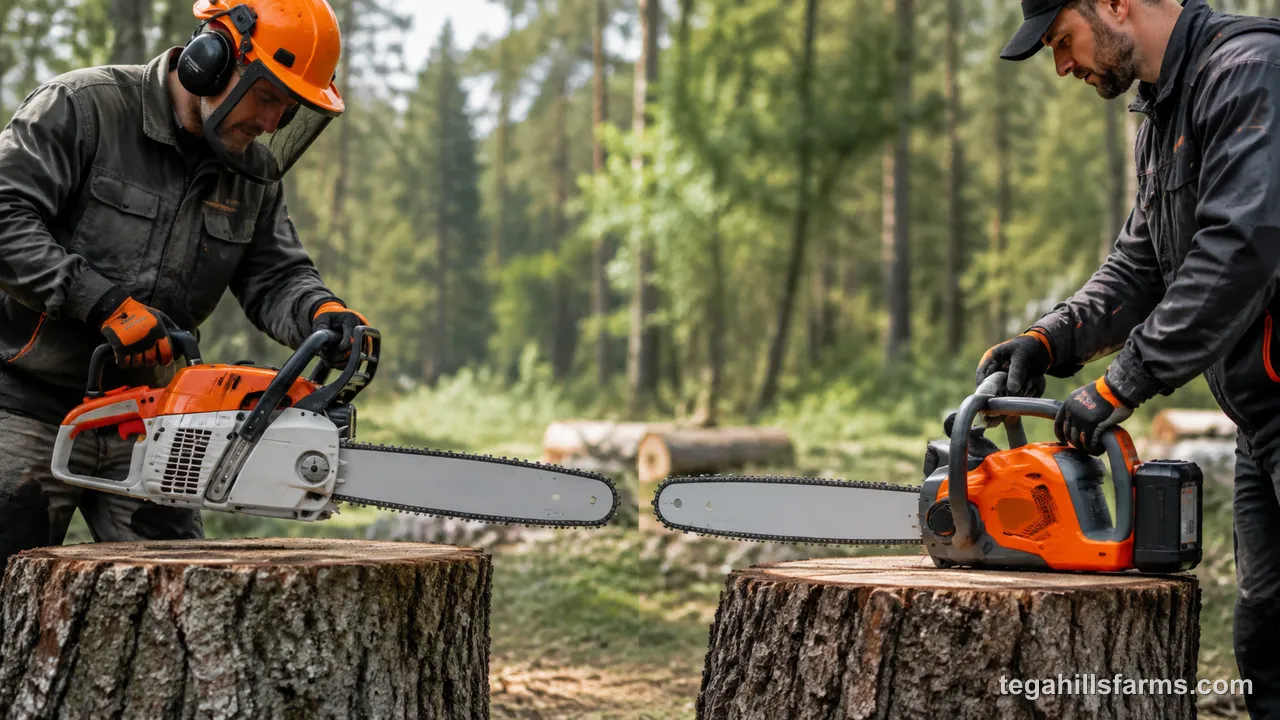
Refueling a gas saw takes a moment, and the next tank runs as long as the last. A cordless saw stops when its packs drain and needs spare batteries or a charger to keep going. In exchange, the Makita skips fuel mixing, pull starts, carburetor care and exhaust, and it runs quietly enough for work near homes.
If big-wood cutting fills your schedule, the best gas chainsaws remain the core tool. A cordless saw earns its place as a second saw for limbing, cleanup and noise-sensitive jobs, and the best battery chainsaws cover that lighter work well.
Which Chainsaw Fits the Kind of Work You Do?
The right saw for a job comes down to how much weight you hold up versus how much wood you need to pull through, and that balance shifts from limbing to bucking to felling. Pick a saw sized for the work you do most often, and rent or borrow for the occasional outlier rather than carrying extra weight every day.
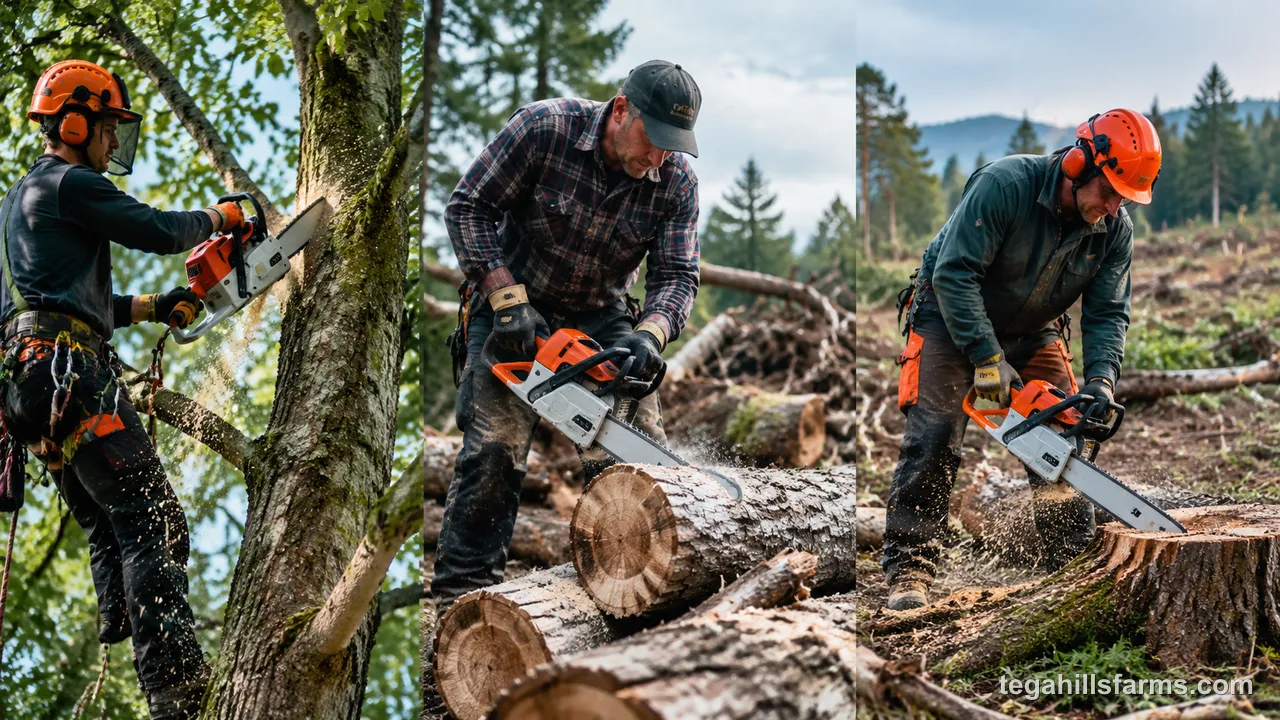
Which Saw Suits Tree Care and Limbing?
A light, balanced saw with strong vibration control suits work around branches, because you hold it at arm’s length and change cutting angles constantly. Among these saws, the Husqvarna 545 Mark II fits that job well, with its slim body, engine-to-chassis dampeners and a bar range short enough to stay nimble.
A shorter bar pivots faster through branch unions and is easier to keep under control near the tip. The Makita XCU04PT1 is the other option: its variable speed trigger gives fine control on small limbs, and it starts instantly when you need one quick cut.
Climbing work is a separate category. The best chainsaws for arborists include top-handle saws built specifically for one-handed use in the canopy.
Which Saw Is Best for Firewood and Storm Cleanup?
Repetitive bucking calls for steady torque, reliable starts after every refuel and a chain that stays properly tensioned. The PROYAMA and the Husqvarna 460 Rancher handle that work well. The PROYAMA brings the larger engine and a 24-inch bar for thick rounds, while the Rancher’s Smart Start and Air Injection keep it starting easily and breathing clean air during debris-heavy cleanup.
The Makita belongs on lighter cleanup. Tool-less chain adjustment and instant starts help with scattered limbs, but battery runtime limits how much of a big woodpile it can get through. For more options built around stove-length cutting, see the best chainsaws for cutting firewood.
Which Saw Handles Felling Large Trees and Land Clearing?
Big trunks call for more engine output and a longer bar, because a long bar needs torque to keep the chain at speed through a deep cut, and clearing work punishes weak construction. The PROYAMA and the Husqvarna 555 cover that end of the work. The PROYAMA brings its large engine and 24-inch bar, and the 555 adds a magnesium crankcase, three-piece crankshaft and a recommended range up to 24 inches.
The Husqvarna 460 Rancher also runs a 24-inch bar, which suits landowners who fell only occasionally. The cost is weight and fatigue. A heavy power head and a long bar load your arms and back on every cut, and fatigue is when mistakes happen. Plan breaks and fuel stops around the work instead of pushing through.
Most property work, like a few fallen limbs after a storm, a sapling along the fence line or stove wood stacked each fall, never calls for a saw built to fell timber all day. Buy too much saw for that kind of work and you end up hauling extra weight on every cut, servicing an engine that sits idle most of the year and quitting early because your arms gave out before the job did.
Do You Actually Need a Professional Saw, or Is It Overkill?
A pro-tier saw pays off when you cut often, cut large wood and run long sessions. For occasional yard cleanup, small limbs and tight storage, a lighter saw is the better buy. What decides it is how often the saw runs, not how big the trees on your property look.
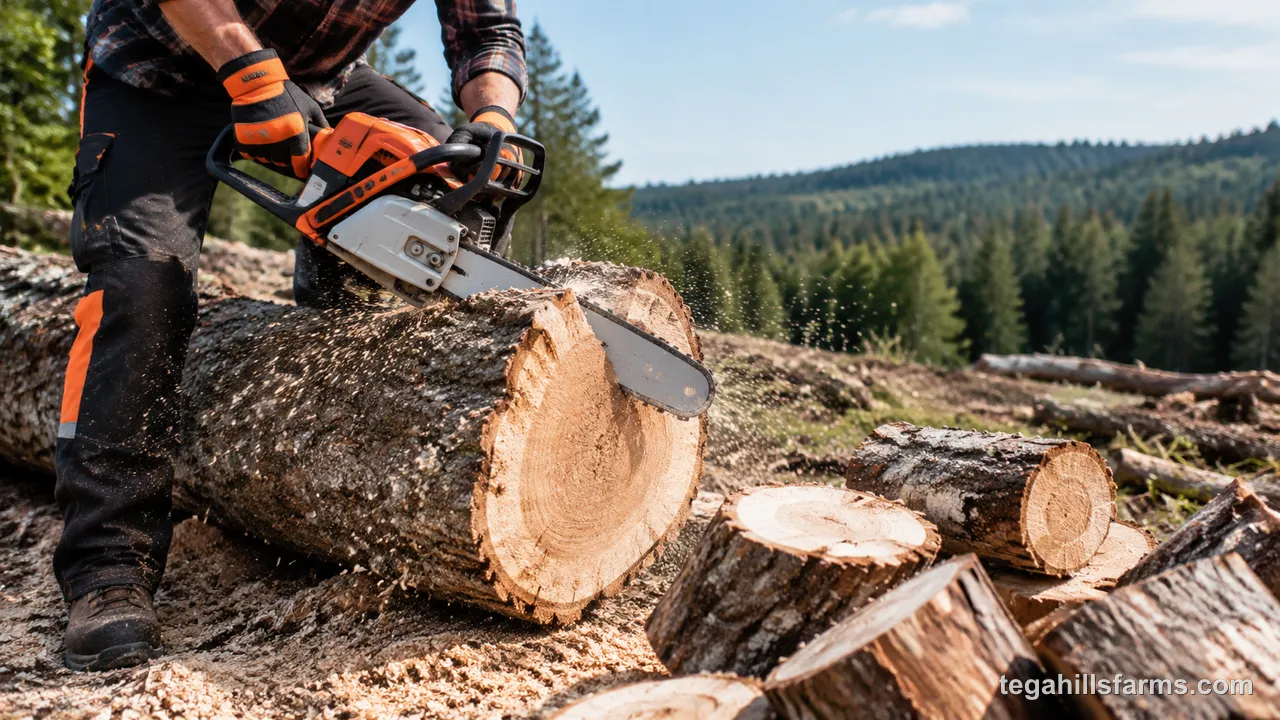
If you heat with wood, clear land, handle storm damage across acreage or cut for income, features like magnesium crankcases, AutoTune and centrifugal air cleaning earn their keep, because the saw works hard week after week.
If you cut only a few times a year, a large pro saw becomes a burden. You carry more weight on every cut and feel more fatigue than the job requires. You also own a two-cycle engine that needs fresh fuel and carburetor care after sitting. Old fuel left in a carburetor over the off-season is a common cause of hard starting, and a bigger engine doesn’t escape that problem. The best chainsaws for homeowners cover that middle ground with lighter saws that still handle storm cleanup and firewood.
How Do You Know When a Chain, Bar or Saw Needs Replacing?
A chain that throws fine dust instead of chips, pulls to one side or needs pushing into the cut is dull and needs sharpening. A chain with cracked links, broken cutters or so much stretch it won’t hold tension needs replacing. When you buy chainsaw chains, match the pitch and gauge to your bar exactly, because a mismatched chain rides poorly in the groove and wears the sprocket.
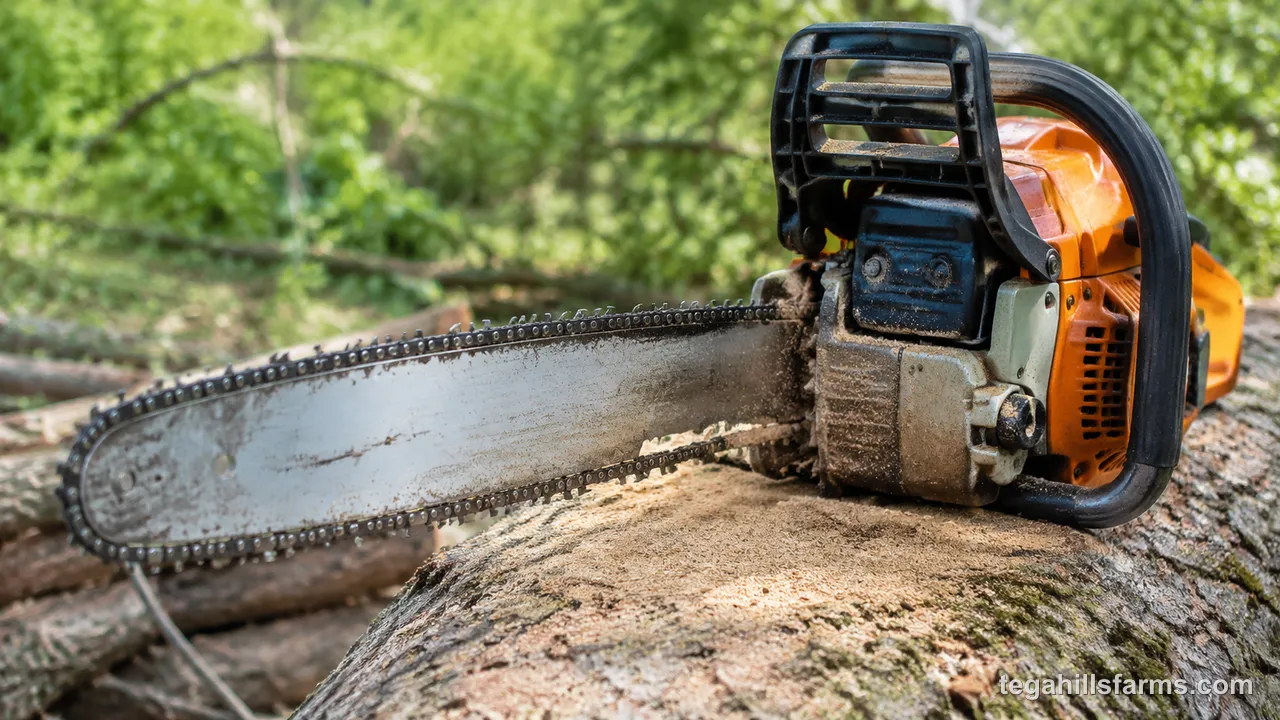
Check the sprocket every time you fit a new chain. Grooves or pointed teeth mean it will chew through the new chain quickly. On the bar, look for rails that are worn uneven, burred or spread apart. File off burrs, and flip the bar between sharpenings so it wears evenly. Replace it once the groove no longer holds the chain upright.
Regular touch-ups with one of the dedicated chainsaw sharpeners keep the cutters at the correct angle and extend chain life. The saw itself is past economical repair when the engine loses compression, the crankcase cracks or it won’t hold a tune despite a fresh filter, plug and fuel.
Frequently Asked Questions About Professional Chainsaws
Do loggers prefer Stihl or Husqvarna?
Neither brand holds a clear advantage for professional work; both build pro lines with durable crankcases, self-tuning carburetors and strong cooling. The deciding factors are usually a nearby dealer for parts and service, how the handles fit your grip, and which battery or accessory platform you already own. Buy the brand your local shop supports well.
What engine size suits felling versus limbing?
Felling and bucking large trees call for a saw in the larger pro class, such as the 59.8cc Husqvarna 555 or the 68cc PROYAMA, because long bars need torque. Limbing rewards a lighter, quicker saw like the 50.1cc Husqvarna 545 Mark II, which you can hold out and move between branches all day.
What safety gear does a professional chainsaw require?
Wear chainsaw-rated chaps or pants, a helmet with a face screen, hearing protection, cut-resistant gloves and sturdy boots, ideally steel-toed with cut protection. Add safety glasses under the face screen for fine chips. A saw’s inertia-activated chain brake helps with kickback, but it doesn’t replace the gear between your body and the chain.
How often does a chain need attention?
Check chain tension before each session and every time you refuel, since a chain stretches as it heats up. Touch up the cutters whenever the saw starts making dust instead of chips, and sharpen right away after the chain hits dirt, a rock or a nail. Top up the bar oil reservoir with every tank.
When is a pole saw better than a chainsaw?
A pole saw is the better tool for overhead limbs you would otherwise reach from a ladder. It keeps both feet on the ground and the cutting head away from your body. It handles pruning and high branches, not felling or bucking. For that kind of reach work, look at the best pole saws.
Write Your Review
No reviews yet. Be the first to share your experience!